
Over the years, I’ve tried as best as I could to get interested in virtual reality (VR). The idea of VR excites me to no end. However, the reality of VR so far continues to underwhelm and frustrate me. The two biggest concerns that I have had are with eye fatigue, user interface design, and poor tracking and interaction with virtual environments. Below are some of the hits and misses that I’ve had experience with in commercial VR.
2009: VFX1 Headgear


The VFX1 Headgear was a bittersweet discovery. When I was much younger, I lusted over it when I saw it advertised in computer magazines in the mid-1990s. Unfortunately, it was priced out of my league and I didn’t know anyone who could afford one either.
Fast-forward to my being a grad student at Kent State. One late afternoon as I was leaving the Satterfield Building–home of the English Department–I glanced at the recycling bins under the stairway by the exit and I saw a really big box emblazoned with the VFX1 Headgear on the side. Curious and expecting to find an empty box, I was shocked when I picked up the box and felt its weight. I opened it and discovered the headset inside. I brought it home and found the headset, cables, and manual, but there was no software or controller card. I was never able to find out who had thrown out the VFX1. I had hoped that I could find the person and see if they might still have that controller card in their computer, but I had no luck. I also tried to find the controller card through other venues–Craigslist, eBay, talking with vintage computer collectors–but I always struck out. I ended up selling it before we moved to Atlanta. Had I got it working, it would have not been an HD VR experience, but I had hoped to experience what it had been like when it launched.
2015: Cardboard VR
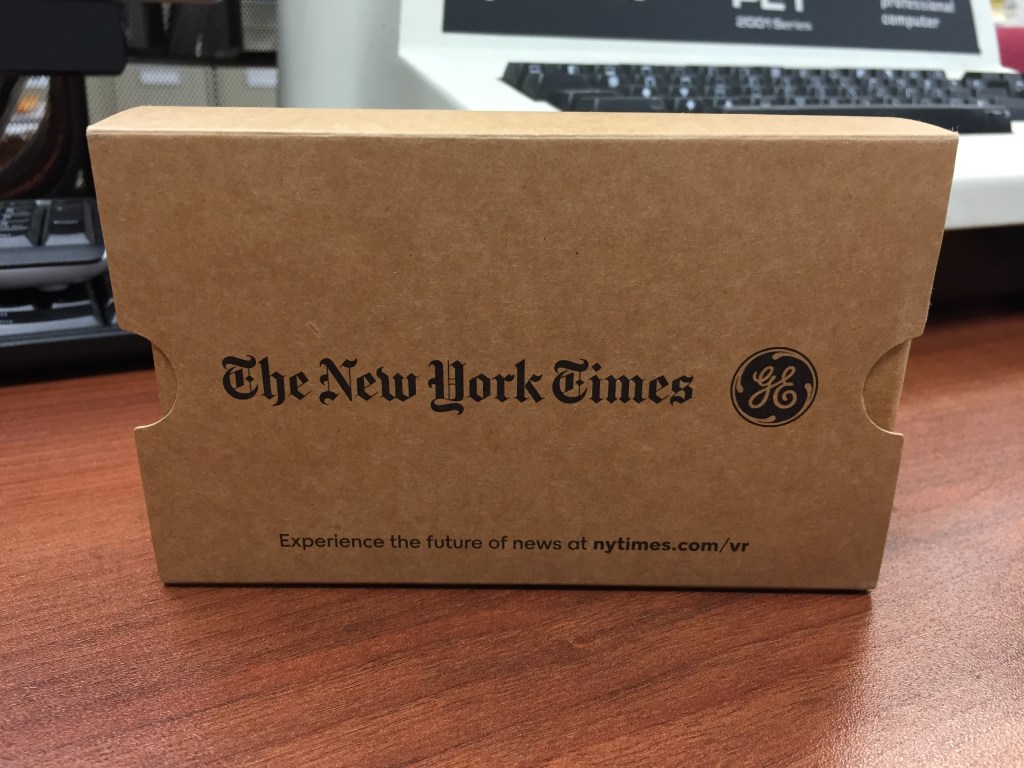
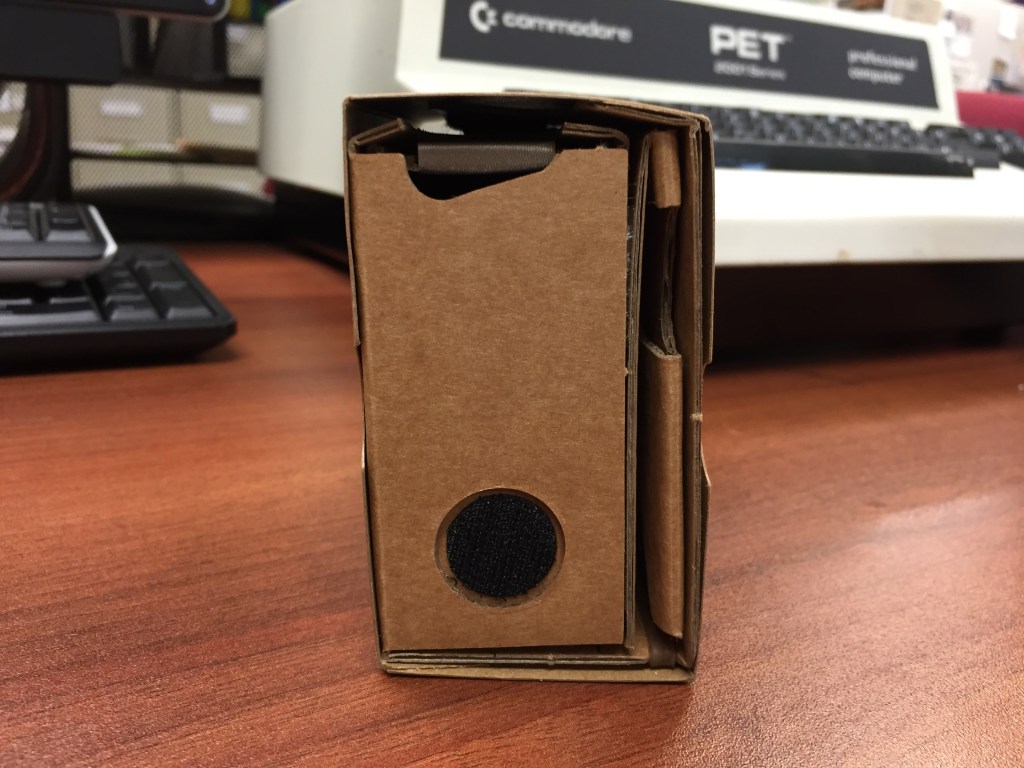
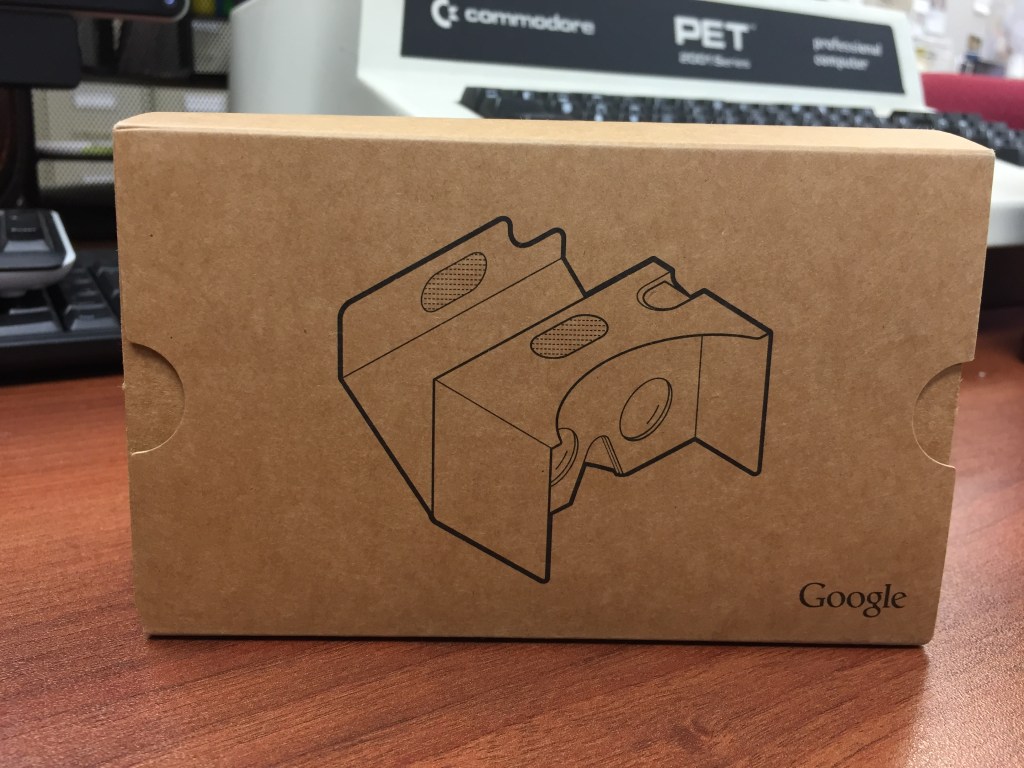


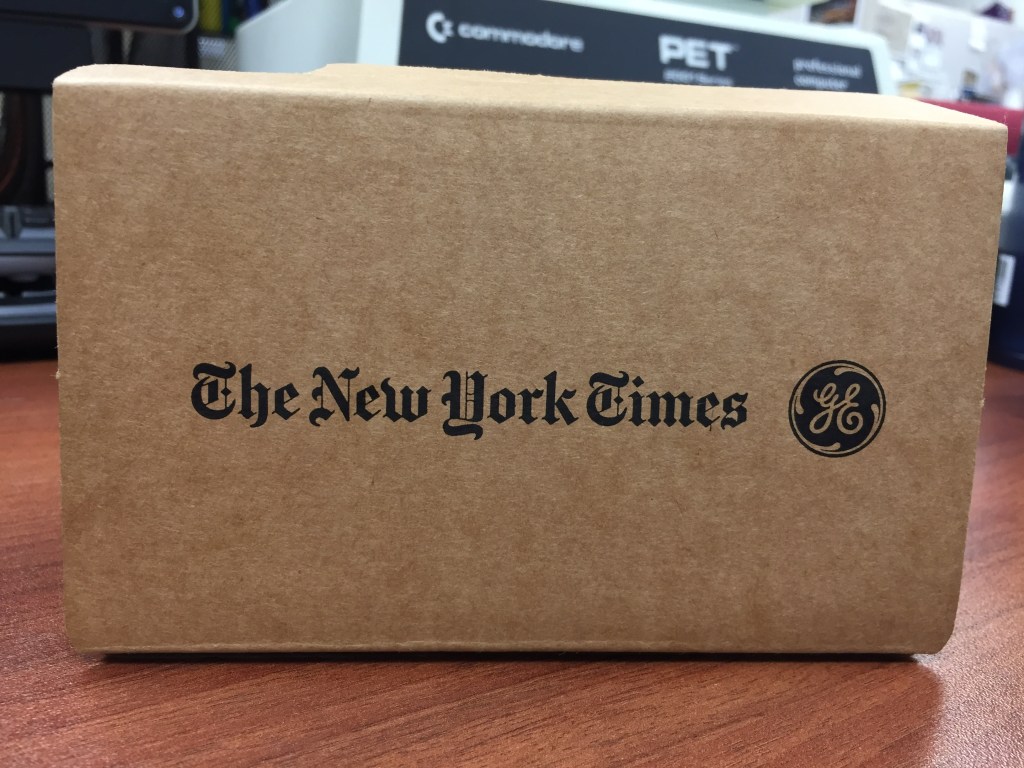

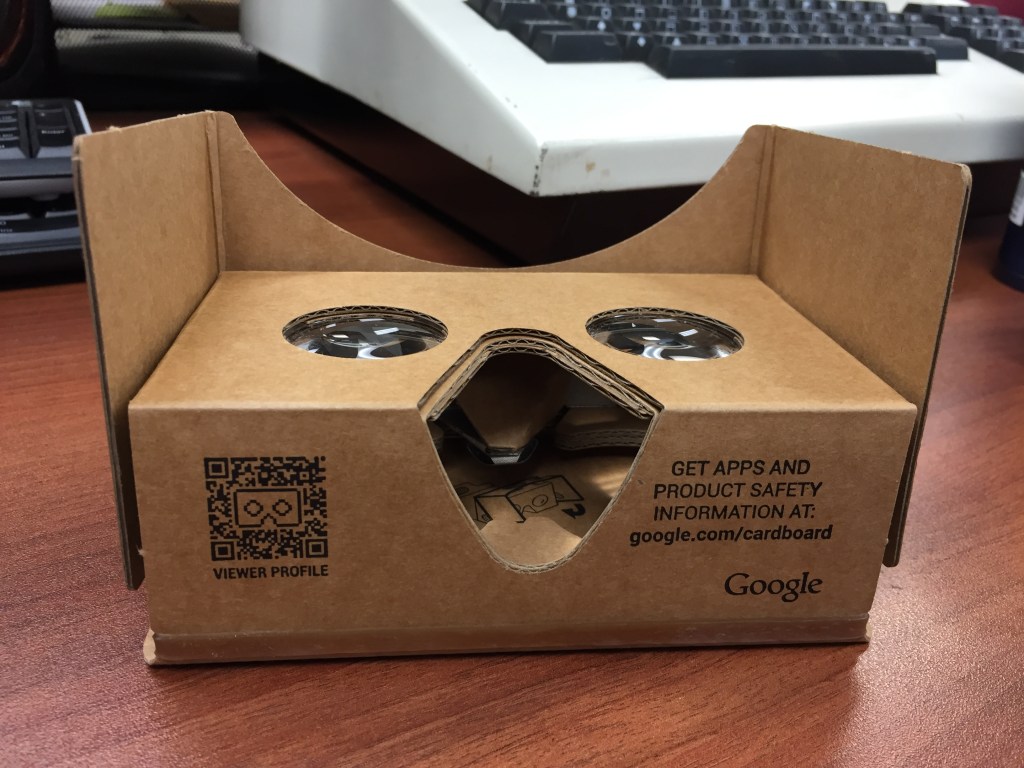
These Google-designed cardboard VR headsets are my favorites of all VR considering the simplicity of their setup and operation as well as cost. Also, they enabled me to easily introduce VR to my students–whether we used my phone or theirs. It just worked and gave immersive visual-focused with some sound experiences. I was let down when their development stopped.
2017: Oculus Rift CV1
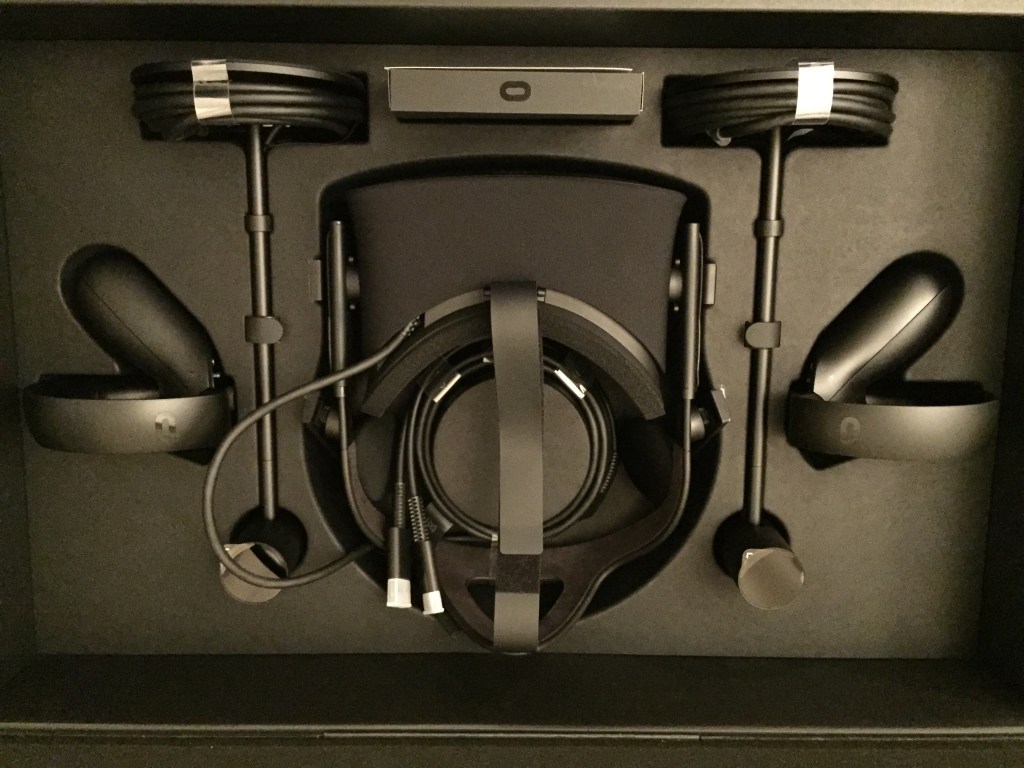

Best Buy ran a sale on the Oculus Rift CV1, so I decided to give more substantive and immersive VR a try. In this particular configuration, I had an NVIDIA GTX 1060 6GB video card running the Oculus Rift. I was never able to get the focus 100% for my eyes and my small apartment’s limited space didn’t give me a lot of room to work in. Also, I had some real problems with interacting with environments and objects in games. Despite what changes I made to the Constellation tracking units, there were gaps between what I tried to do and what the software/hardware thought that I was doing. I ended up selling the set on eBay where I was able to recoup the cost.
2019-2020: HP Windows Mixed Reality Headset


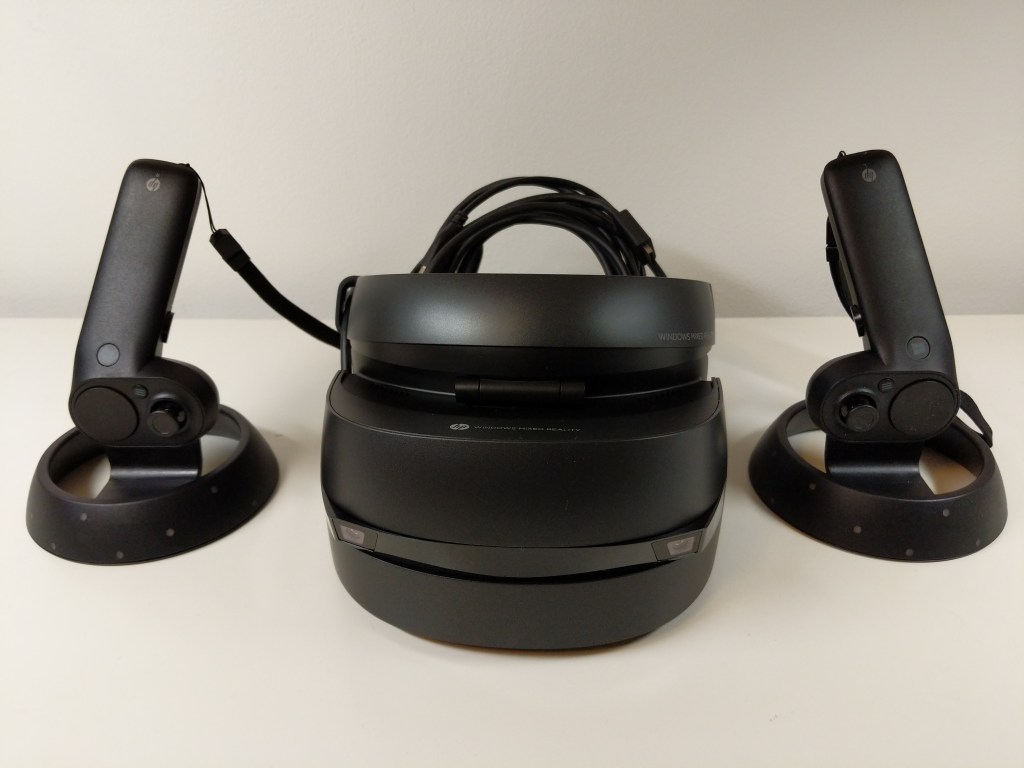


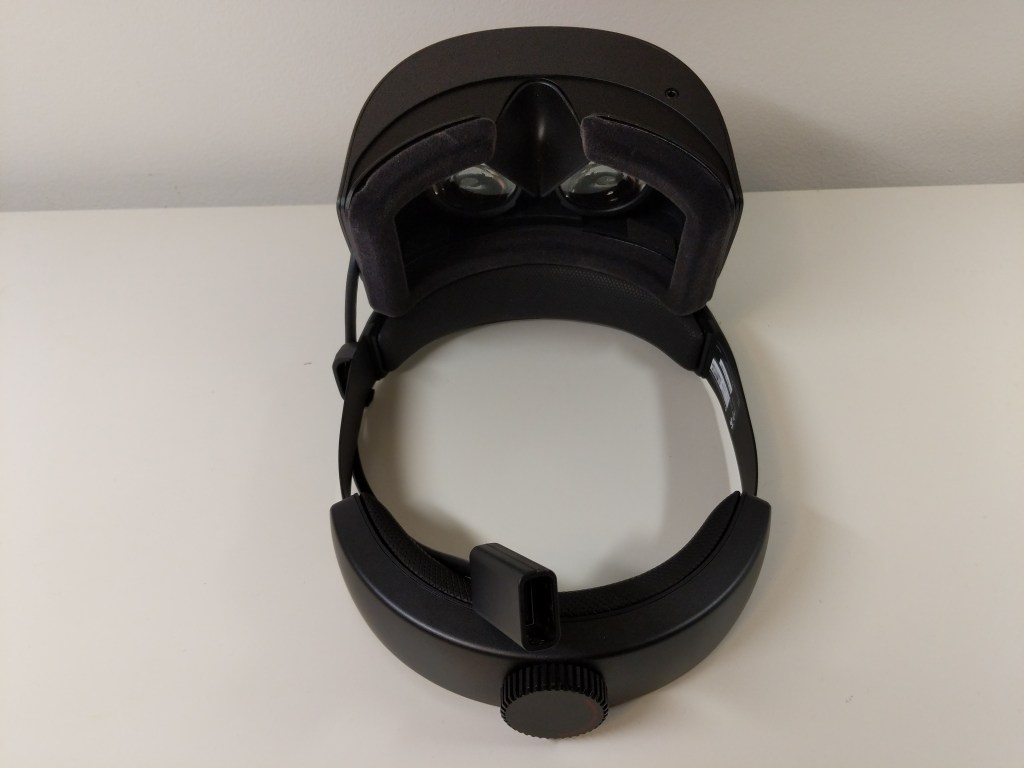
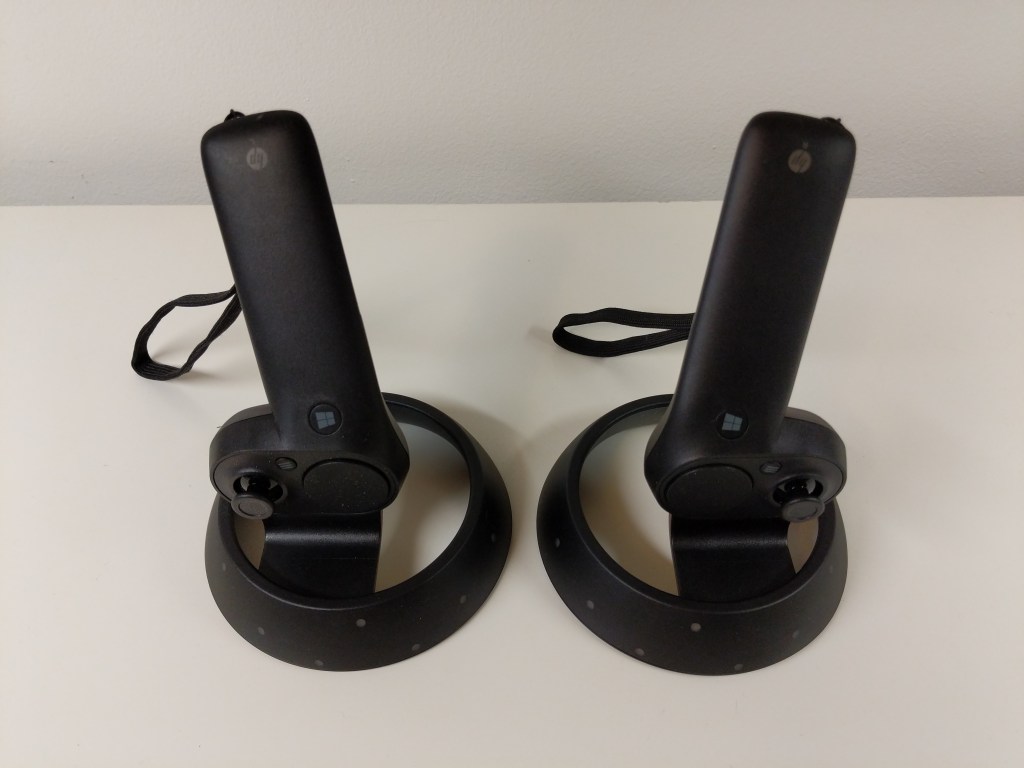

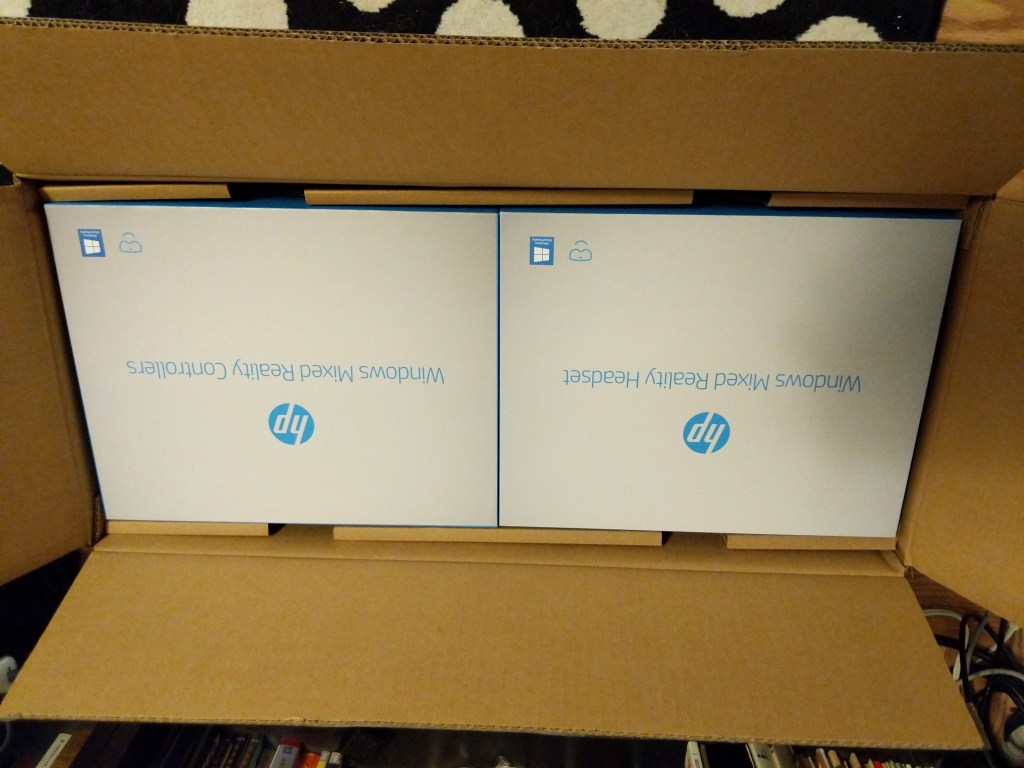

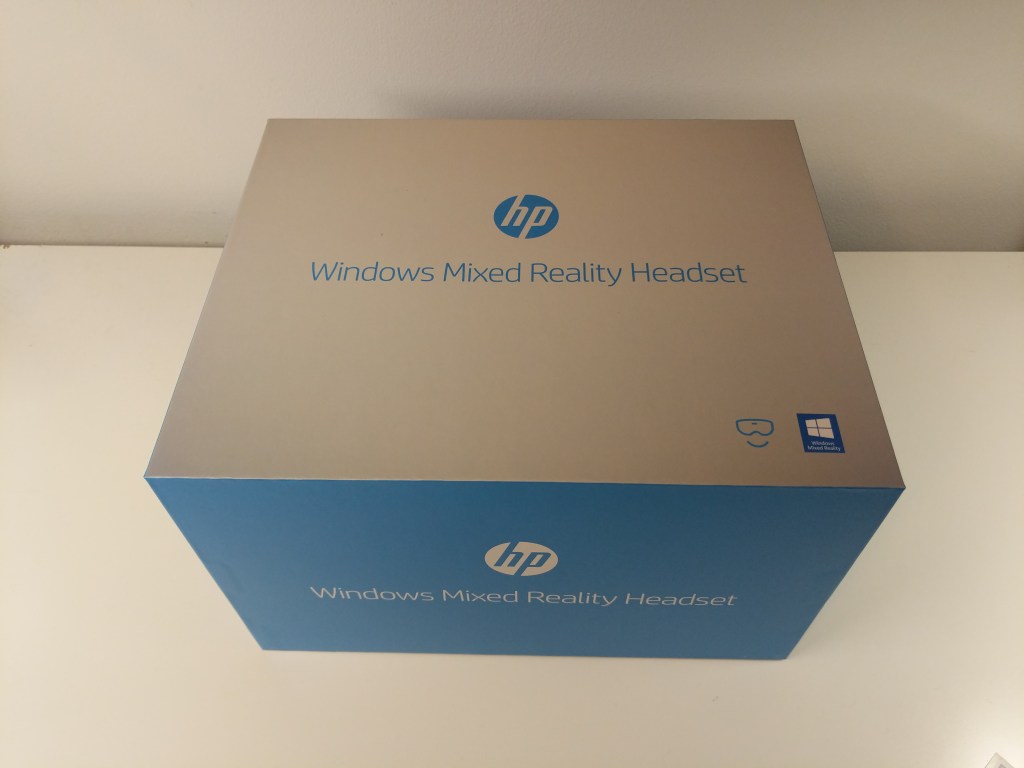

When the local Microcenter had a stack of HP Windows Mixed Reality Headset and Controller Sets on sale for the bargain basement price of $129.99, I immediately bought one thinking that it couldn’t hurt to try this higher resolution than the Oculus Rift CV1 set at such a low price and I could resell it on eBay for more than I paid for it if it doesn’t work out. I am happy to report that I was able to get better visual acuity with the HP headset than the Oculus. However, it’s inside-out tracking presented the same kind of problems that the Oculus’ opposite style tracking had when it came to my interacting with virtual environments and objects. The frustrations of reaching not far enough or too far repeatedly was eventually too much. I boxed it back up and put it for sale on eBay.
Future VR?
I would like to try VR again in the future, but it might have to wait until I can move out of NYC. There just isn’t enough space in the apartments that I can afford for two people and a cat to comfortably coexist in a space large enough to accommodate movement-in-space VR. Of course, playing shooters or simulators in which I sit down while peering around with the headset on would be fine (analogous to the VFX1), but I would like to experience VR beyond that and interact within space. In the meantime, I’ll keep following VR developments until I can try again.
