Author: Jason W. Ellis

  • Notes from LMC Conversation Panel on “Books, Libraries, and the Digital Future” with Jay David Bolter, Lauren F. Klein, and Me

    These are my speaking notes and discussion notes from today’s School of Literature, Media, and Communication Conversation following Robert Darnton’s talk yesterday on “Books, Libraries, and the Digital Future.” The panelists included Jay David Bolter, Lauren F. Klein (remotely), and me.

    We met with an audience of about 25 members of the Georgia Tech community in the Stephen C. Hall Building, Room 102 from 11:00am-12:00pm.

    1. My research in the area
      1. My interest in eBooks comes from two tangents.
        1. First, it comes from my research interests in video game narratives in older software for the Commodore 64, Amiga, IBM-PC, Apple II, and Apple Macintosh platforms. Part of this research focuses on the way characters read within the game—particularly, computer based reading on terminals, tablets, virtual displays, etc. and how these ideas filter into reality/production and vice versa.
        2. Second, it comes from my dissertation research on something that William Gibson wrote about obsolescence and how our technologies—typewriters, Apple IIc, etc.—are fated to become junk littering the Finn’s office—in an “Afterword” to his Sprawl trilogy of novels: Neuromancer, Count Zero, and Mona Lisa Overdrive [To read it, scroll to the bottom of this page]. The trouble with sourcing this text was the fact that it was not published in a physical book. Instead, I discovered from a Tweet that a mutual friend made with the writer that it come from an early eBook designed for the Apple Macintosh Portable by Voyager Company (what’s left of this company today creates the Criterion Collection of films).
          1. Gibson, William. “Afterword.” Neuromancer, Count Zero, and Mona Lisa Overdrive: Expanded Books. Voyager Company. 1992. TXT File. Web. 25 March 2012.
          2. Gibson has done other things with ebook and experimental writing such as his exorbitantly priced Agrippa: A Book of the Dead, a floppy disk based e-poem that erases itself after “performing” one time.
        3. Since working with Gibson’s ebook, I’ve begun studying other ebooks—rediscovering ones that I read a long time ago and rethinking what constitutes an ebook—thinking about encyclopedia precursors to Wikipedia and other software such as the Star Trek: TNG Interactive Technical Manual, which does on the computer things that Rick Sternbach and Michael Okuda could not do in their print Technical Manual.
        4. We can talk more about this later, but I support Aaron Swartz’s “Guerilla Open Access Manifesto.” In my research, I have deployed my own tactics for reading and manipulating text that enable scholarship that I otherwise would be unable to do. Read more about fair use and transformation.
    2. My response to Darnton’s talk
      1. Aaron Swartz’s “Guerilla Open Access Manifesto
      2. Peter Purgathofer’s Lego Mindstorms-MacBook Pro-Kindle-Cloud-based OCR assemblage for ripping text from Kindle ebooks
      3. DPLA  scans of Dickinson’s manuscripts (open) and copyrighted scholarly editions (closed).
      4. Issues of the Archive, Access, and Control.
    3. My suggestions for future research directions
      1. The relationship between haptic experience of pulp books and ebooks (e-reader, tablet, computer, Google Glass, etc.). How do we read, think about, and remember books differently based on the modalities of experiencing the book? We know that the brain constructs memories as simulations, so what are we gaining and losing through alterations to the methods of interacting with writing?
      2. A history of eBook readers—fascinating evolutionary lineage of ebook reading devices including Sony’s DD8 Data Discman (http://en.wikipedia.org/wiki/Data_Discman).
      3. How are our students reading? More students this year than last asked me if they could purchase their books for ENGL1101 and Tech Comm as ebooks. How many students are turning to ebooks due to their cost or ease of access (pirating)? I don’t mind students purchasing ebooks over traditional books, but I have them think about the affordances of each.
      4. As researchers, how should we assert our fair use of texts despite the intentions of copyright holders? We no longer own books, but instead, we license content. [Purgathofer mentions this, but Cory Doctorow and others have commented on this at length: one source. Another more recent source.]
      5. How do we use ebooks and traditional books differently/similarly? For example, Topiary (aka Jake Davis), one of the former members of LulzSec, said earlier today on ask.fm that he prefers ebooks for learning and studying, but he prefers traditional books for enjoyment.
    4. Other responses, comments, and questions
      1. Jay Bolter: What about the future of books, the status of the book, and the status of libraries? What will happen to literature and the literary community? What is the cultural significances of print/digital to different communities (e.g., general community of readers vs. community represented by the New York Review of Books)?
      2. Lauren Klein: What are the roles of the archive and how do readers access information in the archive? We should think about how people use these digital archives (e.g., DPLA). In her work, she deploys computational linguistics: techniques to study sophisticated connections between documents. How is the information being used? Deploying visualization techniques to enable new ways of seeing, reading, and studying documents.
      3. Grantley Bailey: What about people who grow up only reading on screens/ebooks? What will their opinions be regarding this debate?
      4. Aaron Kashtan: Commented about graphic novels and comics in the digital age and about how these media remain entrenched in traditional, print publishing. Also, Aaron is interested in materiality and the reader’s experience.
      5. John Harkey: Commented on poetry’s dynamism and its not being wedded to books/chap books. Poetry is evolving and thriving through a variety of media including the Web, as electronic art, and experimental literature. We should think about literature as vehicles of genres and artifactual heterogeneity (essay, collage, posters, augmented reality, etc.).
      6. Lisa Yaszek: Pan-African science fiction is likely a model for the future. In the present, no single nation can support a thriving publishing industry for SF, but together, African SF is taking off with the diffusion of  new technologies of distribution and reading (ubiquity of cellular phones, wifi, cellular data, etc.).
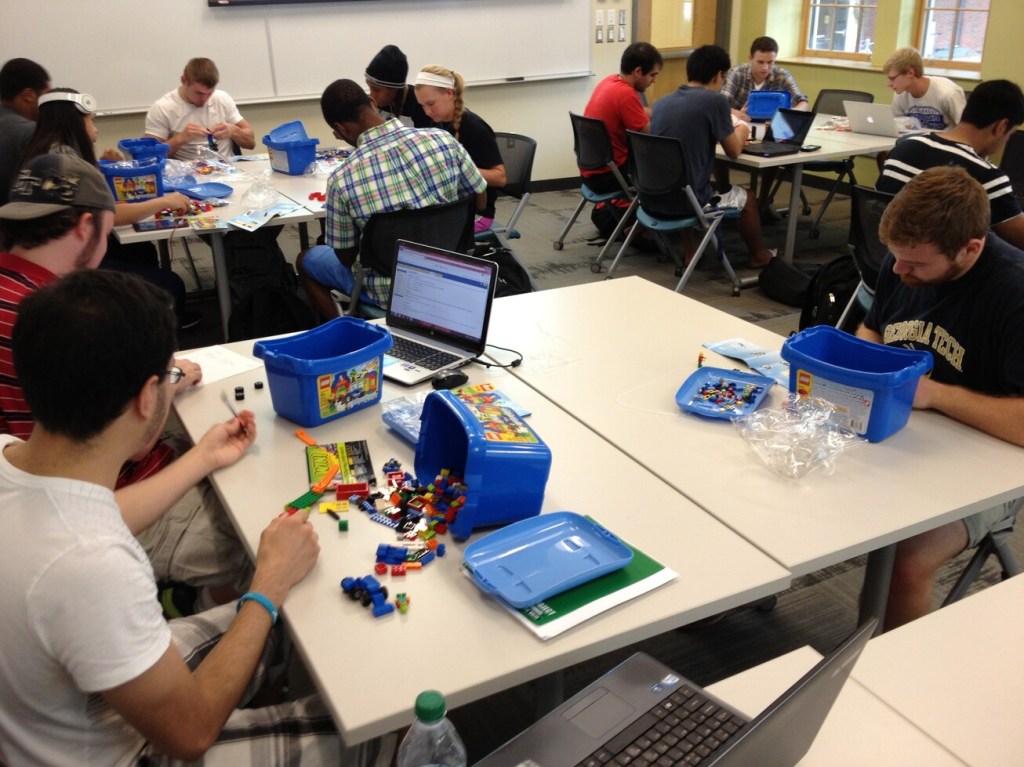
  • LMC3403, Technical Communication: Lego, Haptics, and Instructions

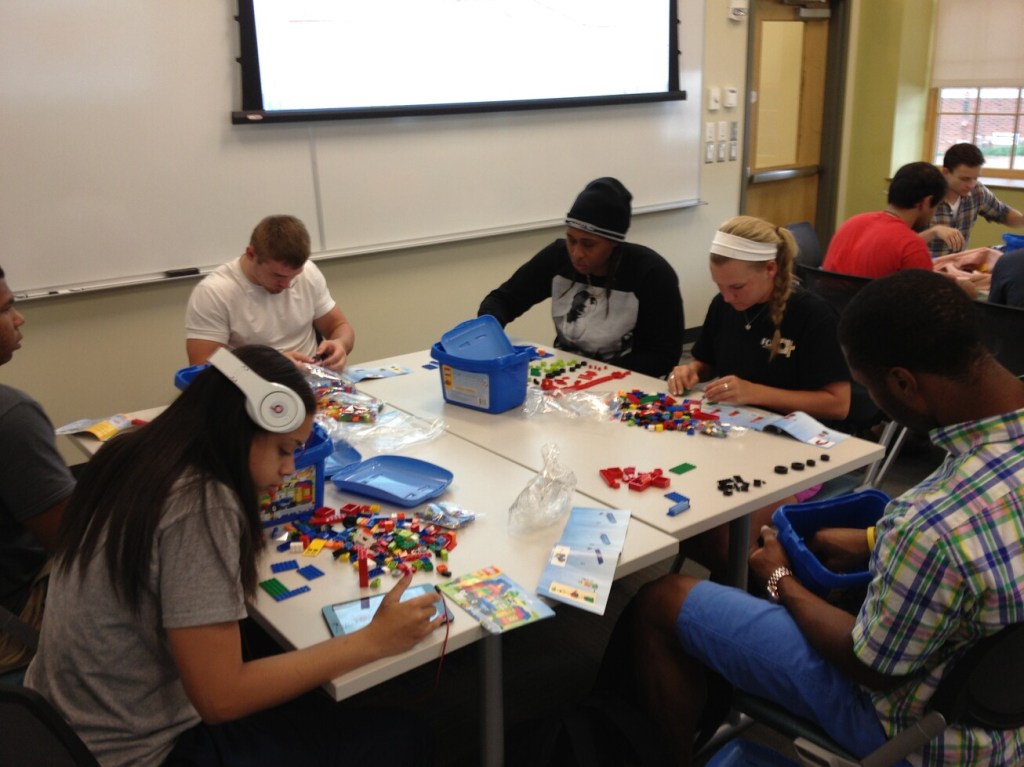
    LMC3403 Technical Communication students working with LEGO

    My LMC3403, Technical Communication students are well into their second unit project on reader-centered and process-driven fundamentals. In a fun assignment, I wanted the students to try out many different types of technical communication deliverables for different readers/audiences. Also, I wanted them to think differently about nonverbal communication with the heavy emphasis on haptics, physicality, and making.

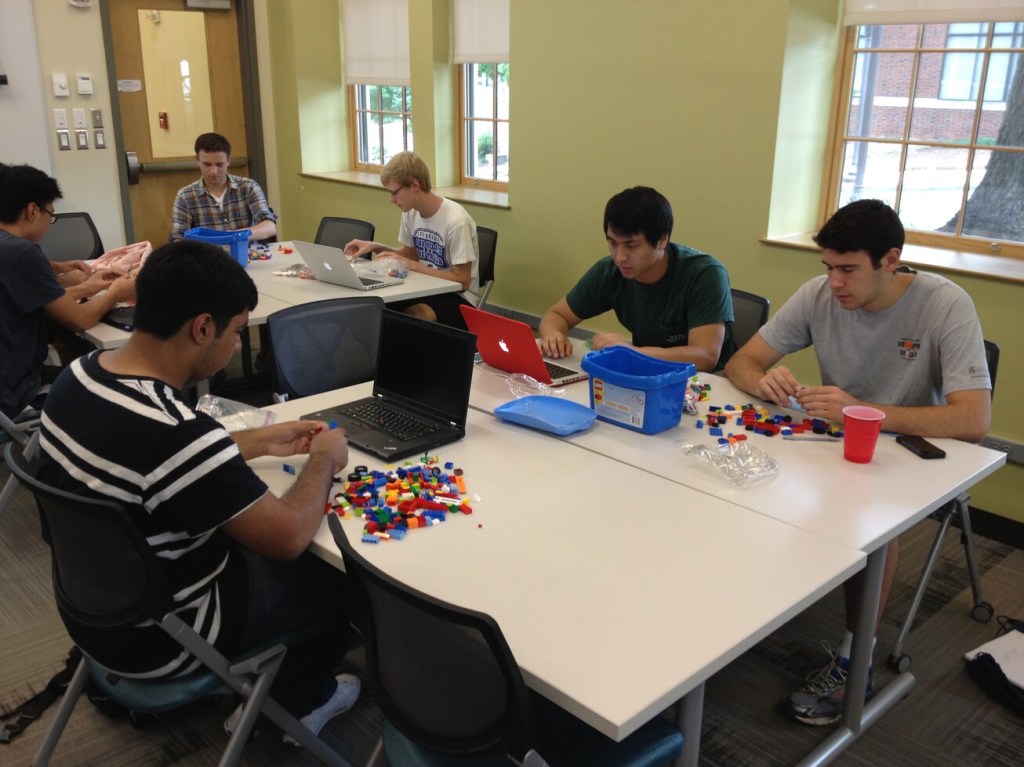
    LMC3403 Technical Communication students working with LEGO

    In this project, their primary task is to build a set of instructions for a Lego model of their own design.

    Their Lego model should represent something about their studies, their professional field, or their entrepreneurial spirit.

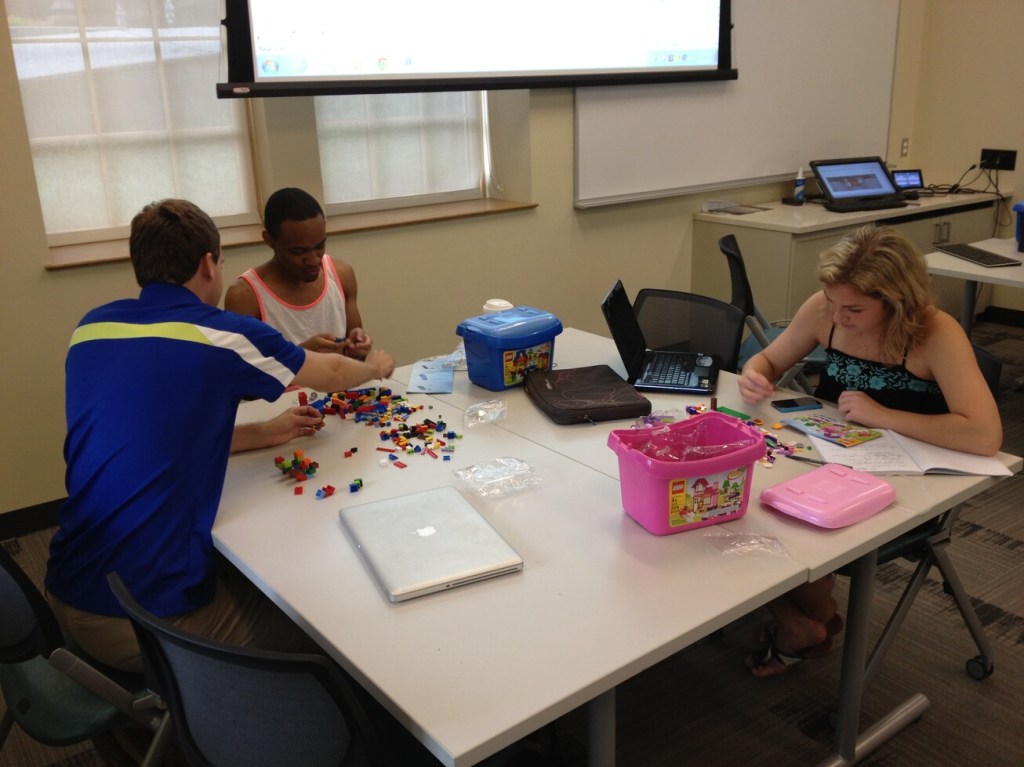
    LMC3403 Technical Communication students working with LEGO

    Their project began with the creation of a proposal memo that laid out their entire project: designing instructions, testing instructions, reporting on tests in a memo, revising instructions, and reflecting on the project in a memo.

    Throughout the process, they have to be mindful of different audiences (executives, managers, and customers).

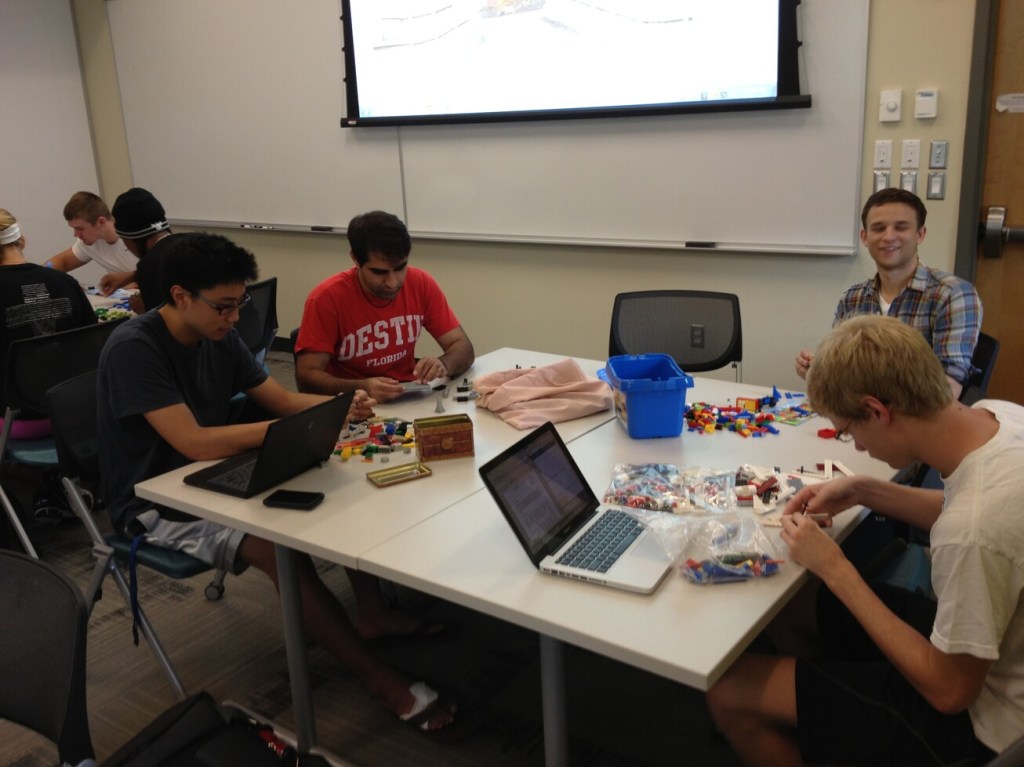
    LMC3403 Technical Communication students working with LEGO

    In these photos, the students are busy at work creating the first version of their Lego models.

    I was happy to overhear someone say, “It’s nice to actually do something fun in a class for once!”

    LMC3403 Technical Communication students working with LEGO
  • Steps for Installing Mac OS X 10.8 Mountain Lion and Ubuntu 13.04 Raring Ringtail in Dualboot Configuration on MacBook Pro Retina 10,1

    Ubuntu's Circle of Friends Logo.
    Ubuntu Circle of Friends Logo.

    There are a number of useful guides to installing Mac OS X and Ubuntu in a dual boot configuration on Macintosh hardware such as James Jesudason’s guide here or Alex Victor Chan’s guide here. However, I ran into a problem with Mac OS X 10.8 Mountain Lion not waking from sleep due to using the rEFInd bootloader (more information about this problem documented on this thread).

    The following is the process that I used for successfully having Mac OS X and Ubuntu play well together on my MacBook Pro Retina (MacBookPro10,1) (15.4″/2.6 Quad-core i7/8GB/512 GB SSD)

    1. Using a Mac OS X 10.8 bootable USB flash drive (create your own by following the DIY instructions here), partition your drive into two equal partitions with Disk Utility. Format the first partition as Mac OS Extended (Journaled) and the second as free space.
    2. Install Mac OS X on the Mac OS Extended (Journaled) partition.
    3. Boot into Mac OS X, download the rEFIt bootloader, and install it in Mac OS X. Reboot your Mac twice and you should see the rEFIt bootloader screen appear after the second reboot. It will have your Mac OS X installation highlighted. Press Enter to boot.
    4. Create a bootable USB Ubuntu disk with this guide for Mac OS X. It will involve downloading the Ubuntu 13.04 ISO image, converting it for Mac OS X, and using terminal commands to write the converted image to your USB drive. When it is all done, Mac OS X will not recognize the disk and ask you to initialize it. Choose “Ignore.”
    5. Reboot your MacBook Pro with the Ubuntu USB drive inserted. rEFIt will give you the option to boot Mac OS X (Apple icon) or Ubuntu (this might appear as two separate icons depicting four squares in a diamond configuration). Choose the first Ubuntu icon with the arrow keys on the keyboard, press Enter.
    6. Next, GRUB, another bootloader, will appear as white text over a black background (like DOS) and give you options to Try Ubuntu or Install Ubuntu. Unlike the other guides, I suggest selecting Install Ubuntu from this menu.
    7. The Ubuntu installer will guide you through the setup process. The only setting that you have to select is “Install alongside Mac OS X.” The Ubuntu installer will automatically find the free space partition that you created earlier, partition it in a way that Ubuntu anticipates, and install Ubuntu and its included software.
    8. At the end of the installation, it will return to a text-based screen and prompt you to remove the installation USB drive and press a key to reboot.
    9. After rebooting, rEFIt should show your Mac OS X installation (Apple logo) and Ubuntu represented by three stacked, colorful boxes (subtitled: EFI\ubuntu\grubx64.efi from EFI). Select the Ubuntu installation with the arrow keys and press Enter. GRUB will appear, select Ubuntu and hit Enter.
    10. The Ubuntu desktop should load very quickly, but it will appear very tiny at the native resolution of the MacBook Pro Retina’s 2880 x 1800 resolution. To adjust the resolution, click on the Gear/Wrench icon in the launch bar on the left to enter system settings. Click on Displays, choose a new resolution (I use 1680 x 1050), click Apply, and Confirm.
    11. The status bar at the top of the screen will show familiar icons for Bluetooth, WiFi, sound, and system/shut down (If Ubuntu does not automatically detect your WiFi card, you can download this package and its three dependencies from within Mac OS X, put them on a USB drive, reboot into Ubuntu, install each from terminal using the “sudo dpkg -i filename.deb” command for each–though, leave the Broadcom deb package for last. I downloaded the nightly build of 13.04, which I believe has this package on the installation disk.).
    12. To switch between installations, simply reboot the one that you are in and select the system that you want to run from rEFIt.

    Apple's friendly byte.
    Apple’s friendly byte.

    Now, you can run Ubuntu or Mac OS X on your MacBook Pro. Here are some important things that you should do in Ubuntu after installation.

    Also, it is possible to take GRUB out of the equation by installing Ubuntu with the “ubiquity -b” command from within the Live CD version of Ubuntu and configuring rEFInd or rEFIt, but I had trouble getting Ubuntu to boot following Jesudason’s guide for rEFInd (the fault is likely with what I did and not his thorough instructions). I can live with GRUB if it means that I can get my work done in these two computing environments on my MacBook Pro.

    If there is interest among Brittain Fellows, I can incorporate this into the series of DevLab Workshops that I am planning for the upcoming year.

  • Review of Donald E. Hall’s The Academic Self: An Owner’s Manual, Recommended for Graduate Students, Postdocs, and Junior Faculty

    Hall, Donald E. The Academic Self: An Owner’s Manual. Columbus: Ohio State UP, 2002. Print.

    I picked up Donald E. Hall’s The Academic Self from the Georgia Tech Library after completing my teaching assignment for Spring 2013–eleven years after the book had been published. Specifically, I was looking for books and articles to help me grapple with the challenges of this stage of my professional life as a postdoctoral fellow: teaching a 3-3 load, performing service duties, researching, writing,  receiving rejections (and the far less often acceptance), and applying for permanent positions. In the following, I summarize Hall’s arguments, provide some commentary, and close with a contextualized recommendation.

    Hall states in the introduction that the goal of The Academic Self is, “encourage its readership to engage critically their professional self-identities, processes, values, and definitions of success” (Hall xv). I found this book to be particularly useful for thinking through my professional self-identity. As I was taught by Brian Huot at Kent State University to be a reflective practitioner in my teaching and pedagogy, Hall argues for something akin to this in terms of Anthony Giddens’ “the reflexive construction of self-identity” (qtd. in Hall 3). Hall truncates this to be “self-reflexivity,” or the recognition that who we are is an unfolding and emergent project. I use this blog as part of my processes of self-reflection–thinking through my research and teaching while striving to improve both through conscious planning and effort.

    However, unlike the past where the self was static and enforced by external forces, modernity (and postmodernity–a term Hall, like Giddens, disagrees with) has ushered in an era where the self is constructed by the individual reflectively. From his viewpoint, the self is a text that changes and can be changed by the individual with a greater deal of agency than perhaps possible in the past (he acknowledges his privileged position earlier in the book, but it bears repeating that this level of agency certainly is not equally distributed).

    In the first chapter, titled “Self,” Hall writes, “Living in the late-modern age, in a social milieu already thoroughly pervaded by forms of self-reflexivity, and trained as critical readers, we academics in particular have the capacity and the professional skills to live with a critical (self-) consciousness, to reflect critically upon self-reflexivity, and to use always our professional talents to integrate our theories and our practices” (Hall 5). If we consider ourselves, the profession, and our institutions as texts to be read, we can apply our training to better understanding these texts and devise ways of making positive change to these texts.

    He identifies what he sees as two extremes that “continue to plague academic existence: that of Casaubonic paralysis and Carlylean workaholism” (Hall 8). In the former, academics can be caught in a ignorant paranoia like Casaubon of George Eliot’s Middlemarch (1871-1872), or in the latter, academics can follow Thomas Carlyle’s call to work and avoid the “symptom” of “self-contemplation” (qtd. in Hall 6).

    In the chapter titled “Profession,” Hall calls for us to apply our training to reflective analysis and problem solving of our professional selves and our relationship to the ever changing state of the profession itself. He questions to what extent the work of professionalism (seminars, workshops, etc.) are descriptive or prescriptive. “The ideal of intellectual work” varies from person to person, but it is an important choice that we each must make in defining who we are within the profession.

    He reminds us that, “much of the pleasure of planning, processing, and time management lies not in their end products–publication or project completion–it is derived from the nourishment –intellectual, communal, and professional–provided by the processes themselves” (Hall 46). He builds his approach to process on his personal experiences: “Unlike some, I know well when my work day is over. Part of the textuality of process is its beginning, middle, and most importantly, its end” (Hall 46).

    His talking points on process are perhaps the most practical advice that he provides in the book. In planning, he advises:

    1. begin from the unmovable to the tentative in your scheduling, know yourself–plan according to your habits and work on those aspects of your planning that need adjustment, and stick to your well planned schedule to yield the personal time that you might be lacking now without such a plan
    2. break goals and deliverables into their constituent parts [or building blocks (my Lego analogy) or code (my programming analogy)]
    3. monitor your progress and see daily/smaller goals as ends in themselves rather than simply means to a greater end
    4. take ownership of your goals, schedule, and commitments to others [this is something that I carry forward from my Mindspring days: Core Values and Beliefs: Do not drop the ball.]
    5. deal with and learn from setbacks–life, bad reviews, rejections, etc. [this is easier said than done, and the external effects of bad reviews goes beyond its effect on the writer]
    6. let change happen to our goals and research as our workplace, interests, and circumstances change
    7. taking ownership of our work in these ways can help protect us from and strengthen us against burnout

    Hall goes on to suggest ten steps for professional invigoration to help folks suffering from a stalled career or burnout. However, these ten pieces of advice are equally applicable to graduate students, postdocs, and beginning faculty: join your field’s national organization, read widely in your field, set precise goals, maintain a daily writing schedule [my most difficult challenge], present conference papers, write shorter artifacts to support your research [reviews or my case, this blog], know the process and timeline of manuscript publishing, foster relationships with publishers and editors, politely disengage from poor or dysfunctional professional relationship/praise and value positive relationships, and find support in your local networks.

    The final chapter, “Collegiality, Community, and Change,” reminds us, “always t put and keep our own house in order” (Hall 70). He suggests strategies counter to what he calls “the destructive ethos of ‘free agency’ that seems to pervade the academy today–the mindset that institutional affiliations are always only temporary and that individuals owe little to their departments or institutions beyond the very short term” (Hall 70). On professional attitudes, he encourages a focus on the local (institution) before national (beyond the institution), the current job as potentially your last job–treat it with that respect, meet institutional expectations, collegial respect of others, and learning the history of our institution/school/department from everyone with whom we work.

    Perhaps most notably, he writes, “If we measure our success through the articulation and meeting of our own goals, as I suggest throughout this book, we can achieve them without begrudging others their own successes. However, if we need to succeed primarily in comparison to others, then we are deciding to enter a dynamic of competition that has numerous pernicious consequences, personal and inter-personal” (Hall 74-75). As I have written about on Dynamic Subspace before, it was the overwhelming in-your-faceness of others’ successes on social media like Facebook that distracted me from my own work. Seeing so many diverse projects, publications, and other accomplishments made me question my own works-in-progress before they had time to properly incubate and grow. For all of social media’s useful and positive aspects for maintaining and growing networks of interpersonal relationships, I had the most trouble resisting the self-doubt that the Facebook News Feed generated for me.

    Finally, he encourages dynamic and invested change in departments and institutions. However, as junior faculty, it is important to research and weigh the possible repercussions for working to make change. Hall is not arguing against change by those without tenure, but he is warning us to proceed cautiously and knowledgeably due to a number factors: potential sources of resistance, jeopardizing our jobs, etc.

    Hall’s “Postscript” reinforces the overarching idea of ownership by calling on the reader to live with “intensity,” an idea that inspired Hall from Walter Pater’s 1868 The Renaissance: “burn always with [a] hard, gem-like flame” (qtd. in Hall 89). Hall’s intensity is one self-motivated, well-planned, dynamically agile, and passionately executed.

    Hall’s The Academic Self is a very short read that is well worth the brief time that it will take to read. It offers some solid advice woven with the same theoretically infused self-reflexivity that he encourages. It practices what it preaches. The main thing to remember is that the book is eleven years old. When it was published, the field of English studies was experiencing an employment downturn (albeit one not as pronounced as in recent years). Michael Berube’s “Presidential Address 2013–How We Got Here” (PMLA 128.3 May 2013: 530-541), among many other places–this issue just arrived in the mail today, so I was reading it between chapters of Hall’s book, picks up some of the other challenges that graduate students, postdoctoral fellows, and junior faculty have to contend with in the larger spheres of the profession and society. The other advice that Hall provides on personal ownership and collegiality, I believe, remains useful and inspirational. In addition to reading Hall’s book, you should check out his bibliography for further important reading in this vein.

  • Science Fiction, LMC3214: Final Paper Topics Were On a Broad Spectrum of SF Media

    I just finished grading my students’ final paper projects. Their task was to use several definitions of SF from a list that I had prepared for them (or others that they found on their own and properly cited) to evaluate whether a work that we had not discussed in class was SF or not. Through this analysis, they would come up with their own definition/litmus test for SF.

    I was very happy to read papers on a variety of SFnal works, including:

    • Joseph Kosinski’s film, TRON: Legacy (which I had reviewed for the SFRA Review before)
    • AMC’s production of The Walking Dead
    • H.P. Lovecraft’s At the Mountains of Madness
    • Orson Scott Card’s Ender’s Game
    • Tommaso Landolfi’s Cancerqueen (Cancroregina)
    • Octavia Butler’s Parable of the Sower
    • Halo: Combat Evolved (and its supplementary material in print)
    • David Brin’s Startide Rising
    • Marc Forster’s film, World War Z
    • Ridley Scott’s film, Blade Runner
    • Aldous Huxley’s Brave New World
    • Richard Schenkman’s film, The Man from Earth
    • X-COM: UFO Defense

    This list reveals that my students were interested in SF across a spectrum of media. There were papers on six literary works, four films, one television series, and two video games (this is further blurred by the video game/print crossover material).

    For those students who talked with me about their papers, I am particularly happy with the way their papers turned out. Having had those conversations, I can see a snapshot along their paper’s developmental process, which gives me better insight into the work that they likely did to push their arguments further than what we had discussed in class. Reflecting on this, I will add conference time to my future SF classes that meet over a full semester, but I will do more to have these smaller conversations with students–perhaps before class or during our daily break time–to get a better sense of their research and developing argument.