Author: Jason W. Ellis

  • 2012 Retrospective: My Big Year in Review

    2012 was a big year for me. I earned my PhD and I obtained my first job with that degree. I traveled for my research–first to California, then to Detroit,  and later to Germany. And, my wife, our cat, and I relocated from Ohio to Atlanta for my new job at Georgia Tech and we moved into my old house in Norcross, which had not sold during the past six years of graduate school.

    Unlike years past, I thought that it might be appropriate to jot down some of the milestones of 2012. Here are a few of those big things:

    • January 5-8: Y and I attended the MLA Convention for the first time and met up with a number of our friends and colleagues.
    • February: I spent two weeks in Riverside, California to read and research in the University of California, Riverside’s Eaton Collection in the Library’s Special Collections and Archives. This was an incredibly useful research trip that gave me the original research materials to complete my dissertation. Prior to leaving for my research trip–funded by the prestigious R. D. Mullen Fellowship–I had completed my dissertation’s theory chapter and compiled outlines for the other chapters.
    • April 2: I interviewed for the Marion L. Brittain Fellowship at my alma mater, Georgia Tech.
    • April 9: I delivered printed copies of my dissertation to my committee members. Since my trip to Riverside, I wrote approximately 68,000 words for a final word count of 81,948. Needless to say, I channeled the spirit of Philip K. Dick during this feverish time of hypergraphia. I could not have written this amount in such a short time had I not already created an efficient organization system for my research and deployed a number of digital humanities tools in my workflow. It was a terribly stressful time, because I drove myself relentlessly to complete it as quickly as possible. However, I would not have had it any other way.
    • April 19: I accepted an offer from Georgia Tech to join the rechristened School of Literature, Media, and Communication as a Brittain Fellow! My term of appointment is for three years.
    • May 15: I successfully defended my dissertation titled, “Brains, Minds, and Computers in Literary and Science Fiction Neuronarratives.” I came prepared with a suitcase of gear and donned with my only suit. During my opening statement, I showed off the ebook version of William Gibson’s Sprawl trilogy on a Powerbook 145.
    • June 4-15: I met my parents in Norcross to work on my house. We replaced the main water line, repaired the plumbing, installed a new dishwasher, worked on the house, and cleaned the yard. Prior to this trip, I had maintained a vegetarian lifestyle. During my second day of using a grubbing hoe, I decided that I needed to eat meat again.
    • June 28-July 1: I attended the SFRA Conference in Detroit. This was my second and final meeting as the organization’s vice president. I presented my paper, “Philip K. Dick as Pioneer of the Brain Revolution.”
    • July 10: Y and I said goodbye to our friends in Kent and drove straight through to our new home in Norcross.
    • August 11: While I was unable to attend the ceremony, I officially graduated from Kent State University with the degree of Doctor of Philosophy.
    • August 13-17: I attended new hire orientation at Georgia Tech, or as my cohort and I came to know it: Brittain Fellow Boot Camp.
    • August 21: I began teaching at Georgia Tech. I had three sections of ENGL1101. I designed my classes around the theme of becoming better communicators and professionals through neuroscience.
    • September 1: I began building the Lego Death Star set.
    • September 10: My Dad called me early in the morning to tell me that my Granny Ellis had passed away during the night. I wrote about it here.
    • November 15-18: I attended the first international Philip K. Dick conference at UT-Dortmund in Dortmund, Germany. I delivered a heavily revised version of my SFRA 2012 paper, “Philip K. Dick as Pioneer of the Brain Revolution.” The conference was a fantastic experience. I promise to write more about this in a separate post. In the meantime, you can see my pictures from Germany here.
    • November 22: My parents spent the Thanksgiving holiday with us in Norcross.
    • December 16: I filed my students’ grades and completed my first semester teaching at my alma mater. Looking backward, it was a tough semester, but it was extremely rewarding. I will reflect and write about this more soon.
    • December 17: I completed building the Lego Death Star set.
    • December 25: My parents spent Christmas with Y and me. They arrived bearing many gifts, and they took us out for more surprises. I believe that we all had a really wonderful time!
    • December 26+: I am preparing my teaching and publication materials. I also have a few job applications to complete. I have been using my chain saw and weed eater with saw blade a lot. When the weather and wind permit, I get to burn a small bit of excessive yard waste that I have to do something with.
    • December 29: Y and I met our friend (and fellow Georgia Tech alumna) Smitha for pastries and tea at Sweet Hut. We had a great time catching up.
    • December 30: Now, I am writing this post.
  • Down and Dirty Guide to Literary Research with Digital Humanities Tools: Text Mining Basics

    2010-10-05 - IMG_2791
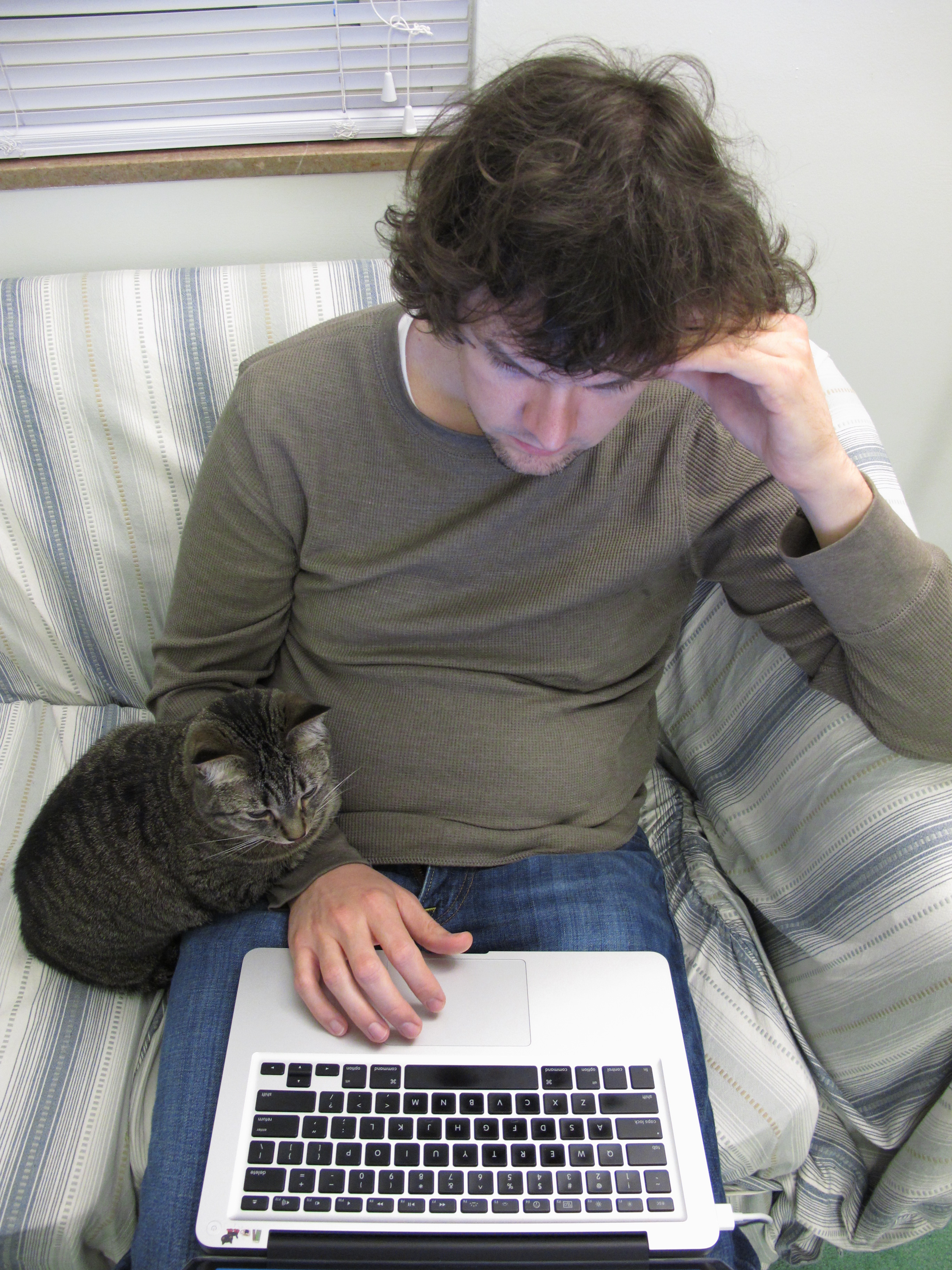
    Miao and Jason get things done with computers!

    As part of the final Digital Pedagogy seminar of fall 2012, Margaret Konkol, Patrick McHenry, Olga Menagarishvili, and I will lead the discussion on “trends in the digital humanities.” You can find out more about our readings and other DH resources by reading our TECHStyle post here.

    As part of my contribution to the seminar, I will give a demo titled, “Down and Dirty Guide to Literary Research with Digital Humanities Tools: Text Mining Basics.” In my presentation, I will show how traditional literary scholars can employ computers, cameras, and software to enhance their research.

    To supplement my presentation, I created the following outline with links to useful resources.

    Down and Dirty Guide to Literary Research with Digital Humanities Tools: Text Mining Basics

    1. Text Analysis and Text Mining
      1. My working definition of text mining: “Studying texts with computers and software to uncover new patterns, overlooked connections, and deeper meaning.”
      2. What is Text Analysis: Electronic Texts and Text Analysis by Geoffrey Rockwell and Ian Lancashire
      3. Text mining on Wikipedia
      4. Text Mining as a Research Tool by Ryan Shaw (an excellent resource with a presentation and links to more useful material on and offline)
    2. Advantages to Digital Research Materials
      1. Ask Interesting Questions That Would Otherwise Be Too Difficult or Time Consuming to Ask
      2. Efficiency
      3. Thoroughness
      4. Find New Patterns
      5. Develop Greater Insight
    3. Types of Digital Research Materials
      1. Your Notes
      2. eBooks
      3. eJournals
    4. Digitizing Your Own Research Materials
      1. What to Digitize
        1. Primary Sources
        2. Secondary Sources
      2. How to Digitize
        1. Acquire
          1. Camera > high resolution JPG
          2. Scanner > high resolution TIFF or JPG
        2. Collate as PDF
          1. Adobe Acrobat X Pro (now XI!)
          2. PDFCreator
          3. Mac OS X Preview
        3. Perform Optical Character Recognition (OCR) to generate machine readable/searchable plain text
          1. Adobe Acrobat X Pro
            1. Print PDF to a letter size PDF
            2. Tool > Recognize Text
          2. DevonThink
          3. Use Google
          4. Others?
        4. Save As/Export plain text > .txt files
        5. Engage the “Text” in New Ways
          1. New Ways of Seeing “Texts”
            1. Keyword Search
            2. Line Search
            3. Word Counts
            4. Concordance
            5. Patterns
          2. Tools to Help with Seeing “Texts”
            1. AntConc
            2. BBEdit (“It doesn’t suck” ®)
            3. MacOS X and Linux: cat, find, grep, and print (use “man cat” and “man grep” to learn more from the Terminal. More info herehere, here, here, and here.)
            4. DevonThink
            5. Notepad++
            6. Mac OS X Spotlight/Windows 7 Search
            7. TextEdit
            8. Others?
    IMG_0987
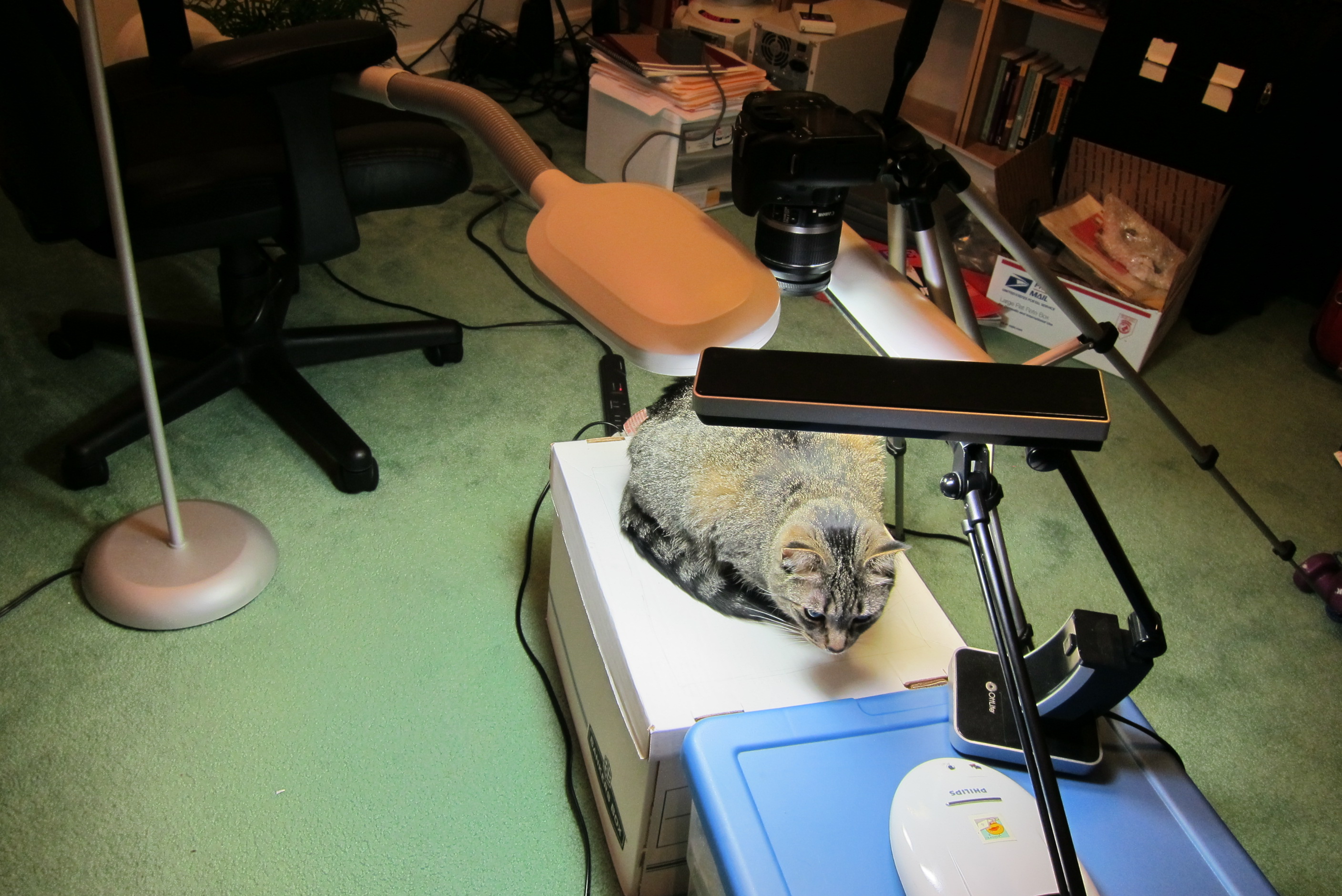
    Miao awaits digitization.
  • Learning and Teaching New Tricks in Technical Communication: Presentations on Single-Sourcing and Digital Literacy

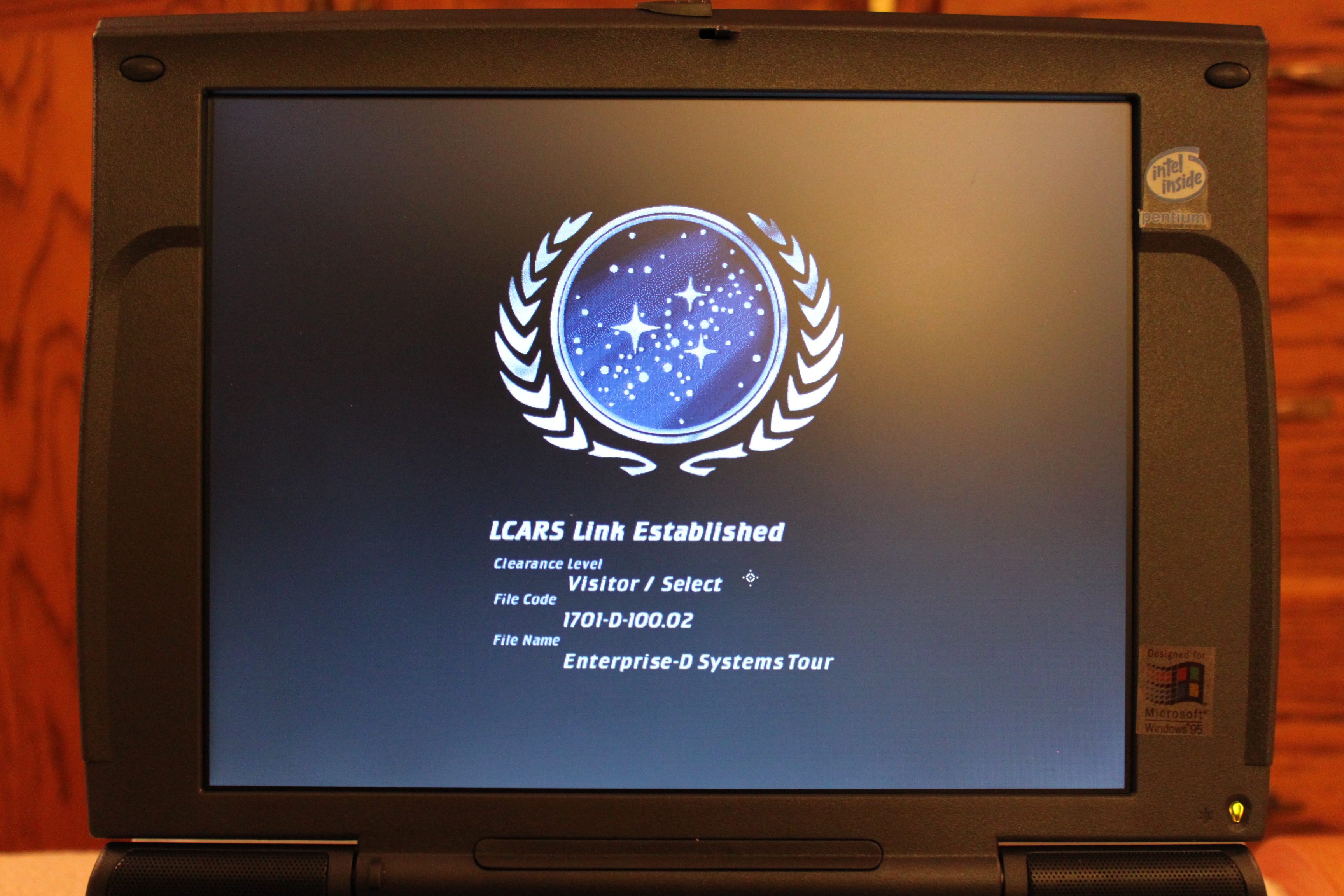
    LCARS Initialization Screen from Star Trek: TNG Technical Manual for Windows 3.1

    As a member of Georgia Tech’s Brittain Fellowship in the Writing and Communication Program, I have the tremendous opportunity to participate in seminars with my peers after the day’s teaching is done.

    All Brittain Fellows are required to participate in the weekly Digital Pedagogy seminar on Wednesday evenings and those Fellows who are specifically teaching technical communication or business writing are also required to join the weekly Technical Communication seminar on Monday nights. Since I am not teaching tech comm but eager to teach it in the near future, I volunteered to join the tech comm folks on Mondays.

    At the beginning of the semester in both seminars, we brainstormed and chose topics to present on. From the list of topics, two people elected to work together to choose readings and guide the discussion. For tech comm, we picked these topics to discuss during the fall semester: Rhetorical vs. Instrumental; Career planning; the Ethos or Soul of Technical Communication; Syntactics, grammar, conventions in tech discourse; Gender and Technical Discourse; Visual literacy; Accessibility issues; Single-sourcing and user experience (UX); Digital Literacy and Social media; Workplace Ethics, Technical Discourse, and Business Culture; Service learning; Orality and Nonverbal Communication in the workplace;  and Disciplinary distinctions and conventions.

    As you might guess from my research interests in digital discourses, I volunteered to present one week on Single-sourcing and user experience (UX) and another week on Digital Literacy and Social media.

    Rachel Mahan and I presented on single-sourcing and user experience on Oct. 29, 2012. After I introduced different approaches and theoretical issues surrounding single-sourcing, Rachel shared her personal workplace experience with single-sourcing. I also shared firsthand experience from fellow Georgia Tech alums Smitha Prasadh and Andrew Pilsch (many thanks!). You can find our discussion readings and questions on TechStyle here.

    Olga Menagarishvili and I presented on Digital Literacy and Social Media on Nov. 5, 2012. I lead the group through a number of tools for analyzing social media privacy, and Olga prepared a fun active learning “jigsaw” assignment to lead the group toward a deeper discussion of “layered literacies.” You can find our readings, discussion questions, and online resources on TechStyle here.

    I am now developing my first technical communication syllabus and assignments. I have some ideas about how to approach technical communication from simultaneously practical (workplace-oriented) and imaginative (science fictional) directions. I want to guide students to be exemplary technical communicators who capably demonstrate and understand the rhetorical, critical, and ethical dimensions of what that entails. We will see when the opportunity for me to do this will present itself.

  • Trying to Come to Terms with Disney’s Acquisition of Lucasfilm and Star Wars in About 1200 Words

    Earlier today, I heard about Disney’s move to acquire Lucasfilm and the Star Wars franchise from George Lucas for $4.05 billion. At first, I was incredulous. I thought that this was an Internet hoax born of Hurricane Sandy regurgitating seawater onto a New England data server unfortunately left behind by the first responders. There is a nice press release and a photo of Lucas holding a pen above a nondescript piece of paper to prove otherwise.

    Gauging from folks’ responses on the web, Facebook, and Twitter, there seems to be a lot of confusion about this news. I certainly feel it myself. Looking at it through the cold logic of capitalism, Lucas is in the movie making business. What he might have once claimed was art or a manifestation of myth-made-modern was in fact simply a way to make lots of money. To borrow from Jay and Silent Bob, Star Wars (and Indiana Jones–a property apparently not of significant worth in the big scheme of things to Disney) was George Lucas’ “motherfucking movie check.” Lucas made it big–maybe it was part talent, part strategy, and part luck–and now, he has the opportunity to cash out. His ‘art’ was a tremendous investment that he has now leveraged to a lucrative payday. His selling the Star Wars/Lucasfilm property to Disney is an obvious choice. Disney has long partnered with Lucasfilm on part rides and merchandising. Additionally, Disney has shifted its attention toward acquisition of popular cultural properties to supplement what little remains of their own creative impetus. Disney bought Pixar, Steve Jobs’ insanely creative 3D animation studio in 2006 for $7.4 billion. Then, Disney purchased Marvel Comics for around the same price as Lucasfilm in 2009. Of course Disney would want Lucasfilm to join its portfolio of cultural holdings. As a result, a substantial amount of American culture is now owned by a single mega-corporation, Disney.

    Looking at the situation from my Star Wars fanish eyes, I am uneasy about this transaction. Despite Lucas’ attempts at destroying his legacy through the investments he made in the culturally bankrupt Star Wars prequels and the failed continuation of the Indiana Jones series in the “Kingdom of the Crystal Skull,” I have always identified him as being the embodiment of the Star Wars universe. Of course, he originated the idea and benevolently maintained despotic control over that idea (compared to Paramount and Star Trek–Lucas is a saint in permitting and occasionally encouraging fan films and fandom in general). I suppose it always seemed in my mind that the author/text|Lucas/Star Wars were signs signifying the same thing. They were shared significations within my mind about what ‘Star Wars’ was and represented. For example, it seems in retrospect that nearly every pre-prequels Star Wars conversation (certainly EVERY post-prequel conversation operates in this way) eventually would come back around to Lucas’ vision, intentions, mistakes, successes, etc. as it related to the narrative space and its possibilities within the imaginations of me and my friends. In a similar way to Steve Jobs and Apple, it doesn’t feel right to separate the author from the work. Certainly, I can imagine the Star Wars universe–its stories, technologies, and cultural context–without invoking the authorial ghost of Lucas. However, the authorial ghost seems ever near and inseparable from the thing (Stars Wars) itself.

    I can rationally think of how many billions of dollars George Lucas made from the Star Wars films among other things. I can rationally think about the exploited labor and anti-environmental effects of the merchandising that forms feedback cycle of the cultural consumption of ideas and things. I understand that Lucas, through his life, success, and business decisions, has enacted a real-life version of THX 1138. Despite all of these things, I cannot divorce myself from the love that I have of the Star Wars universe, its characters, its technologies (especially the Millennium Falcon–something that I imagine flying far more often than I might have any right to), and its wonder. Perhaps its this love for Star Wars that via the signification system transfers to Lucas in some weird way. He might have mucked up the possible narrative that I imagined and that my friends imagined for the Star Wars prequels, but my delight in Star Wars fills me with positive emotions that inform and shape my dichotomous respect and disdain for Lucas. While he and his vision do not define everything in my mind about Star Wars, his work and choices endowed me with an imaginative appreciation for Star Wars and a curiosity that far exceeds the bounds of “a long time ago in a galaxy far, far away.” While I cannot give Lucas all the credit, I can safely say that Star Wars played a significant role in my being where and who I am today.

    Lucas made a significant choice today to sell Lucasfilm to Disney. Since Lucas is so interwoven into the very idea of Star Wars and its potential fulfilment in culture, I am left feeling uneasy about the transfer of his intellectual property to Disney, the cultural aggregator, shaper, and producer. If we want to think of this as one artist giving something to be reshaped and retold by another artist, then Lucas has given his property to Walt Disney’s zombie. The Disney of today is a shuffling undead shell of what it once was (and here I am not attempting to wax nostalgically as I did with Star Wars–Disney and his team of storytellers did fantastic things for culture and education through the era just before I was born–what followed after has by-and-large little to be desired). The Disney company today seeks the brains of other culture producers–Pixar, Marvel, Lucasfilm–on which it feeds and continues its ravenous lurching. I suppose it is this image on the edge of consciousness that disturbs me the most. I am saddened that Lucas gave up control of his property to producers and committees–a fate that I am not sure is any worse than his own revisionist impulse in the prequels. I admit that I am simply being romantic, but I believe that this romantic impulse for the bond between author and text represents something as deep perhaps as the supposed mythical qualities of the stories Lucas told us about the Skywalker clan.

    What does all of this mean for the future of Star Wars? Disney certainly didn’t wait for the ink to sign on the papers before they announced that a new Star Wars film would be released by 2015. Apparently, the acquisition included treatments that Lucas had been working on, but these will be re-developed by Disney. In a related note, I heard from today’s conference call that Disney CEO Iger said that Disney would focus on mobile gaming instead of big box/console games based on the Star Wars universe. This could have other repurcussions for the cultural impact and interactive engagement with its continuing stories. On this point, I am thinking about how these media are now interdependent and connected for conveying narrative and solidifying the cultural memory of those narratives. It would seem that Disney has hit the ground running with Star Wars, and I expect–for good or ill–a great many new things from Lucas’ universe. Unfortunately, he will not have any control over its further expansion, and I am doubtful that I will be as nearly as eager to be a participant in its expansion under the irksome visage of the Mouse.

  • My Georgia Tech ENGL 1102 Class Description and Reading List for Spring 2012, “The Promise and Peril of the Digital Age Explored Through Science Fiction”

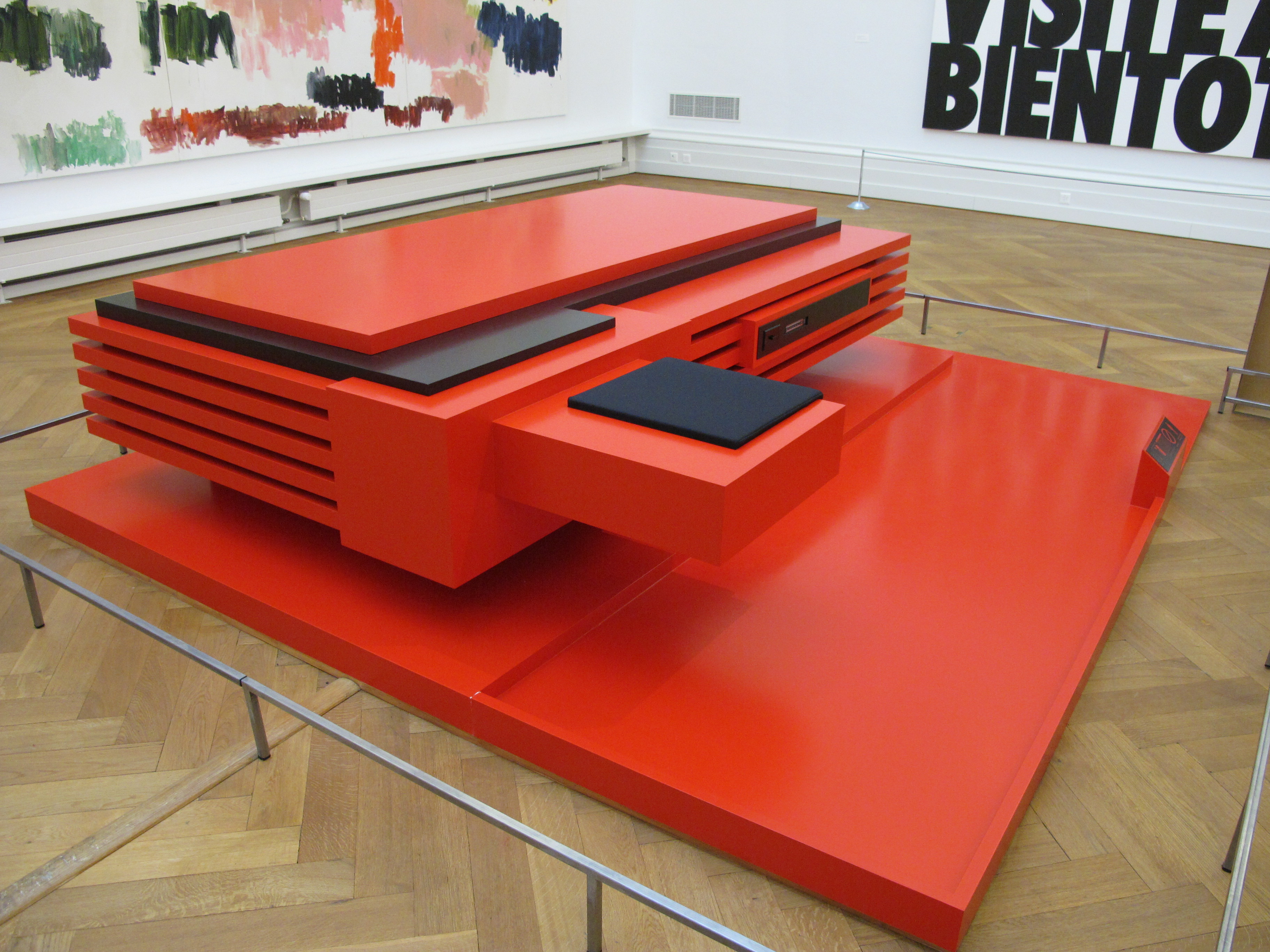
    Martin Widmer’s “Tomb [V’]” (2007).
    [UPDATE: I volunteered to teach three sections of ENGL1101 instead of three sections of ENGL1102 when the school made the request. This gives me an opportunity to immediately revise my ENGL1101 syllabus and try new things with my students!] In Spring 2013, I will be teaching three sections of ENGL 1102 (sections: P1, E, and M). For these sections, I will guide students toward completing and exceeding the desired educational outcomes with a class structured on the them, “The Promise and Peril of the Digital Age Explored Through Science Fiction.”

    Building on the rhetorical strategies and WOVEN modalities introduced in ENGL1101, this class further develops students’ communicative and critical thinking abilities by guiding students through challenging research-based projects. The research focus of this class is on the promise and peril of the contemporary digital age. Science fiction is a uniquely suited genre for considering the digital age, because it is the only literature that is firmly situated at the intersection of science, technology, and culture. Furthermore, science fiction is a literature about the present in which it is written rather than its imagined future. With this in mind, recent science fictions comment on our present and our near future in simultaneously promising and troubling ways. Drawing on science fiction across multiple media (including novels, films, and video games) and using newly acquired tools of critical theory from cultural studies and the study of science and technology, students will develop a number of research-based projects individually and collaboratively that explore how science fiction informs and critiques the on-going digital age. All of these projects will culminate in or include a digital component (e.g., blog posts, Twitter essays, Storify curations, online videos, and Omeka archives). Also, students will learn how to use digital humanities technologies to inform their thinking and research.

    Reading List:

    Oryx and Crake, Margaret Atwood, Anchor, 2004, 978-0385721677

    Ready Player One, Ernest Cline, Broadway, 2012, 978-0307887443

    Neuromancer, William Gibson, Ace, 2000, 978-0441007462

    River of Gods, Ian McDonald, Pyr, 2007, 978-1591025955

    Rainbows End, Vernor Vinge, Tor, 2007, 978-0812536362

    Online reading:

    Little Brother, Cory Doctorow [available here]

    Game List:

    CYPHER: Cyberpunk Text Adventure [available here]

    I am still developing the class syllabus and assignments. When these are completed, I will post copies in a subsequent post.