While Spring 2025 semester classes began this past Saturday at City Tech, my teaching schedule begins today. I’ll be teaching two classes in the Professional and Technical Writing Program: Introduction to Language and Technology (ENG1710) and Introduction to Professional and Technical Writing (ENG2700).
In Introduction to Language and Technology, I have students read an article (though, we begin with Ted Chiang’s “The Truth of Fact, the Truth of Feeling), which they write about in the following class and we discuss it. We work out what we mean exactly when we say “language” and “technology” before looking more closely at how these two aspects of humanity interrelate, interoperate, and influence one another. In parallel to our class discussions, students research and write a paper about one specific technology and its relationship to language. I’ll include a past final exam review below, which will need updating due to some additions to the reading list.
For Introduction to Professional and Technical Writing, I developed a dual approach that combines theory and praxis as a general welcoming of students to what the field they are entering is like. For each class, students read about the history, work, and deliverables created by technical communicators, which they write about in short in-class assignments and we discuss together. The final readings in the class include one paper about how reading Science Fiction can make you a better technical writer and William Gibson’s “Burning Chrome.” Additionally, students are given short deliverable assignments (e.g., write an email, a letter, a memo, a technical definition, an instruction manual, etc.) each week or so. They receive one grade on these first drafts, and they revise them and write reflections on them for creating a final portfolio, which receives a separate grade.
While the Millennium Falcon is prone to problems and breakdowns, Han Solo never gives up on her. There’s a lesson there about how we treat and take care of all of our technology.
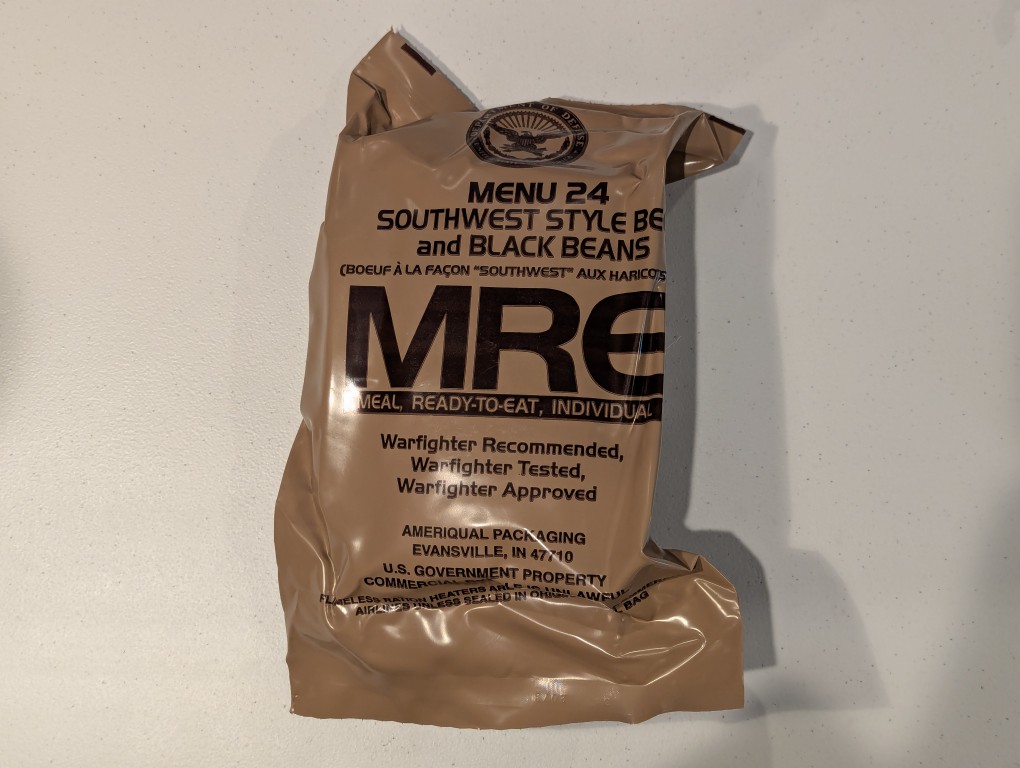
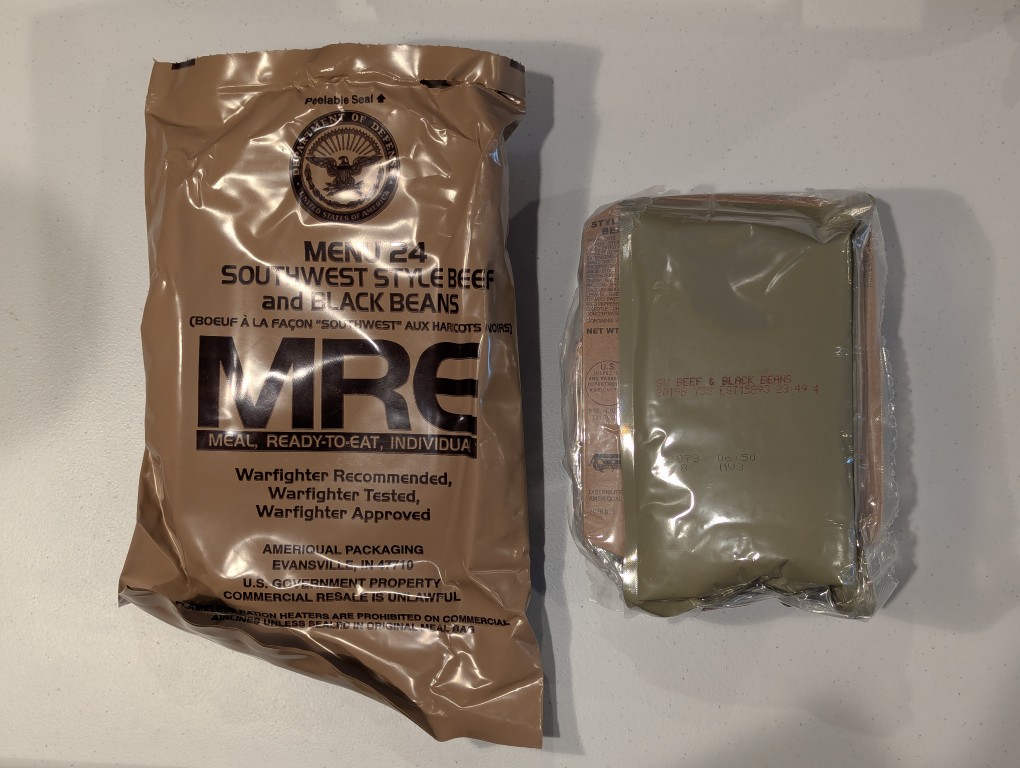
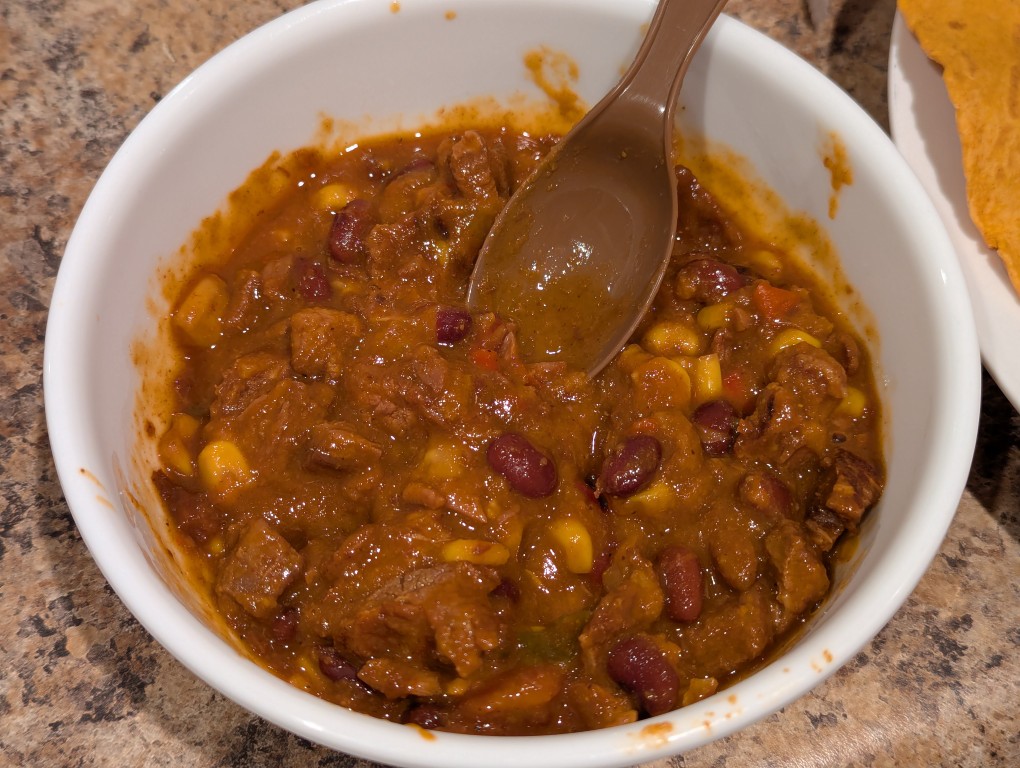
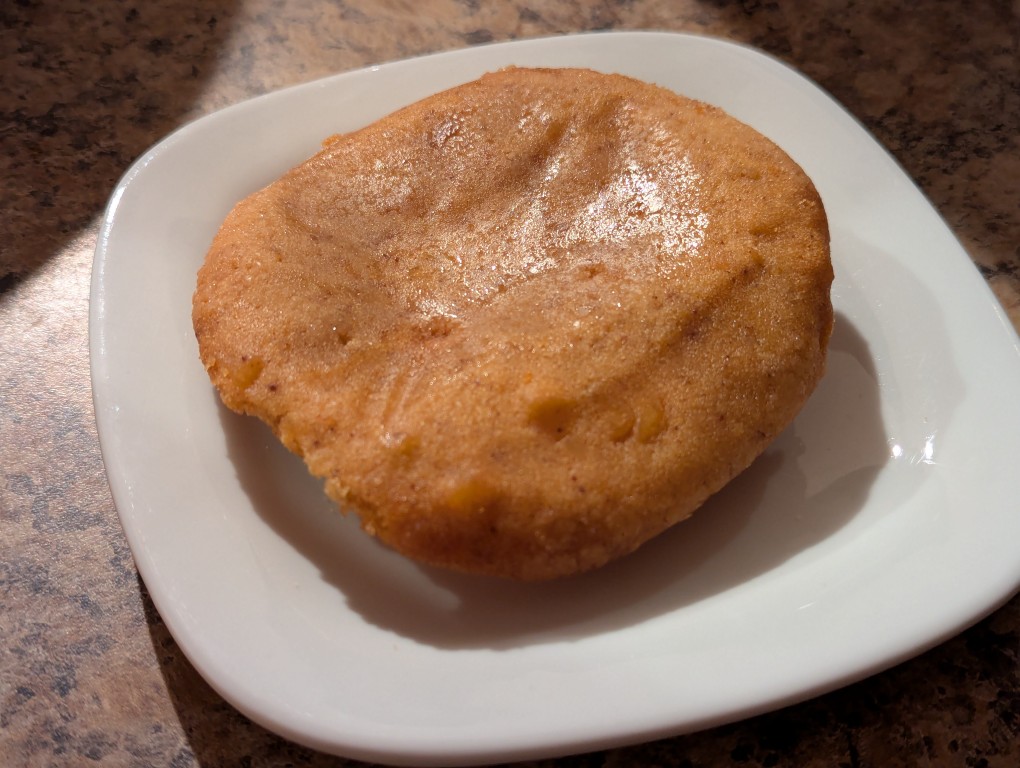
A few nights ago, I dug into another of my MRE favorites–Menu 24: Southwest Style Beef and Black Beans from the B Case (packed 3/22 with 3/25 inspection date) that I opened recently. The entree has a mild spicy flavor and the beef, beans, corn, and sauce work well together. As I’ve noticed in some recent cases, the tortillas are stuck together. The trick to loosen them up is to heat them with the supplied water-activated heater or microwave them (removed from the pouch, of course) for 10 seconds or so. The reason that I titled this post two desserts for the price of one is that this MRE includes Cherry Blueberry Cobbler and Applesauce Pound Cake. All around, this is a very tasty meal!
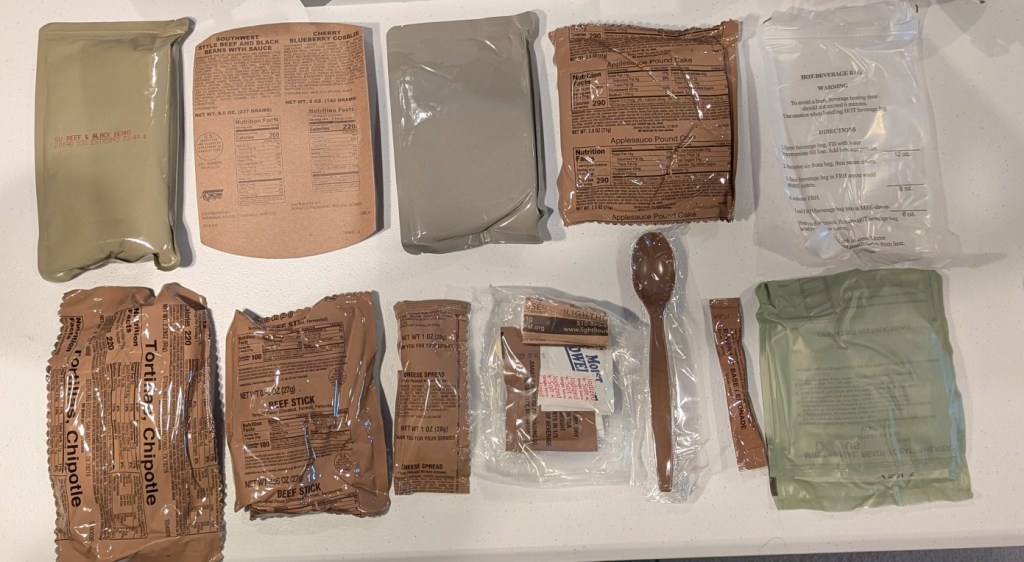
Menu 24 includes clockwise from the upper left:
Southwest Style Beef and Black Beans entree pouch
Cardboard sleeve
Cherry Blueberry Cobbler pouch
Applesauce Pound Cake
Hot Beverage Bag
Water-activated Heater
Beverage Base Lemonade
Spoon
Accessory Pack
Cheese Spread
Beef Stick
Tortilla, Chipotle
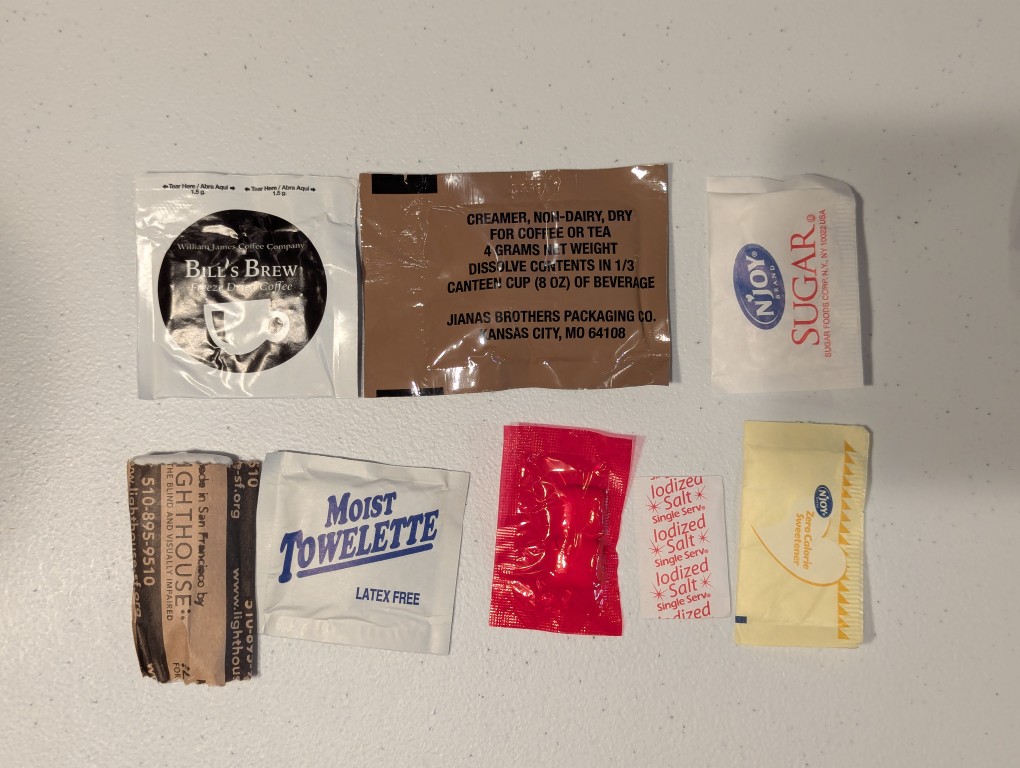
The Accessory Pack included clockwise from the upper left:
Bill’s Brew Freeze Dried Coffee
Creamer, Nno-Dairy, Dry
Sugar
Zero Calorie Sweetener
Iodized Salt
Chewing Gum
Moist Towelette
TP
To make my meal, I emptied the Southwest Style Beef and Black Beans into a bowl and microwaved it for 60 seconds.
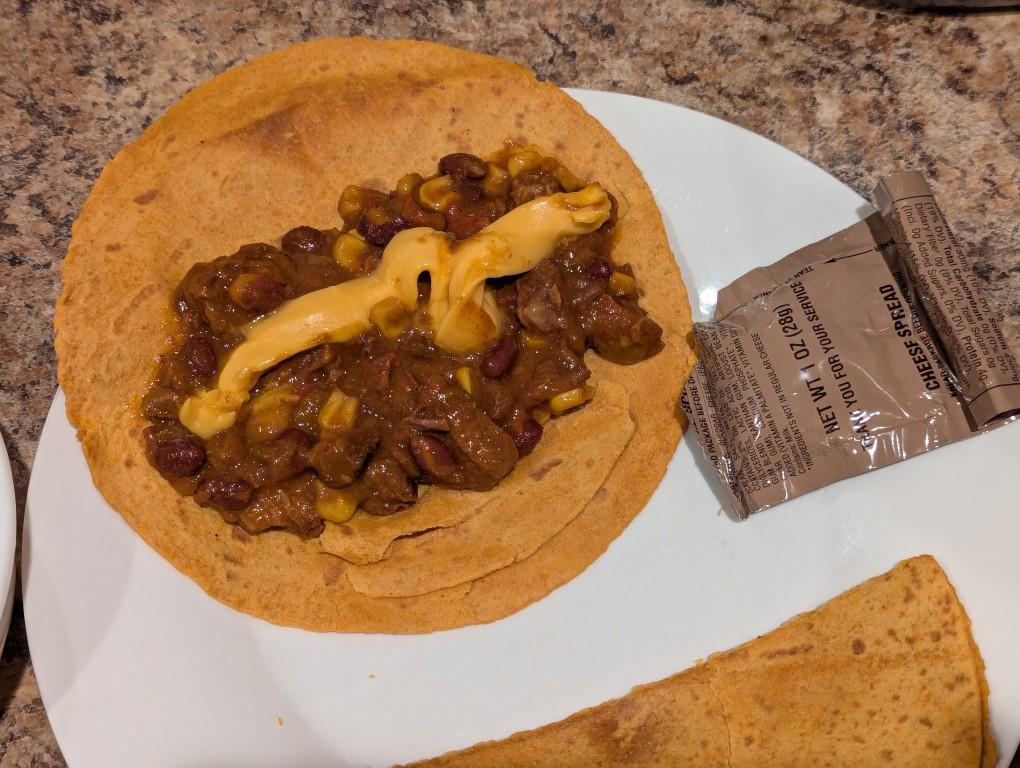
Then, I spooned it out onto the chipotle-flavored tortillas and added cheese on top of the beef.
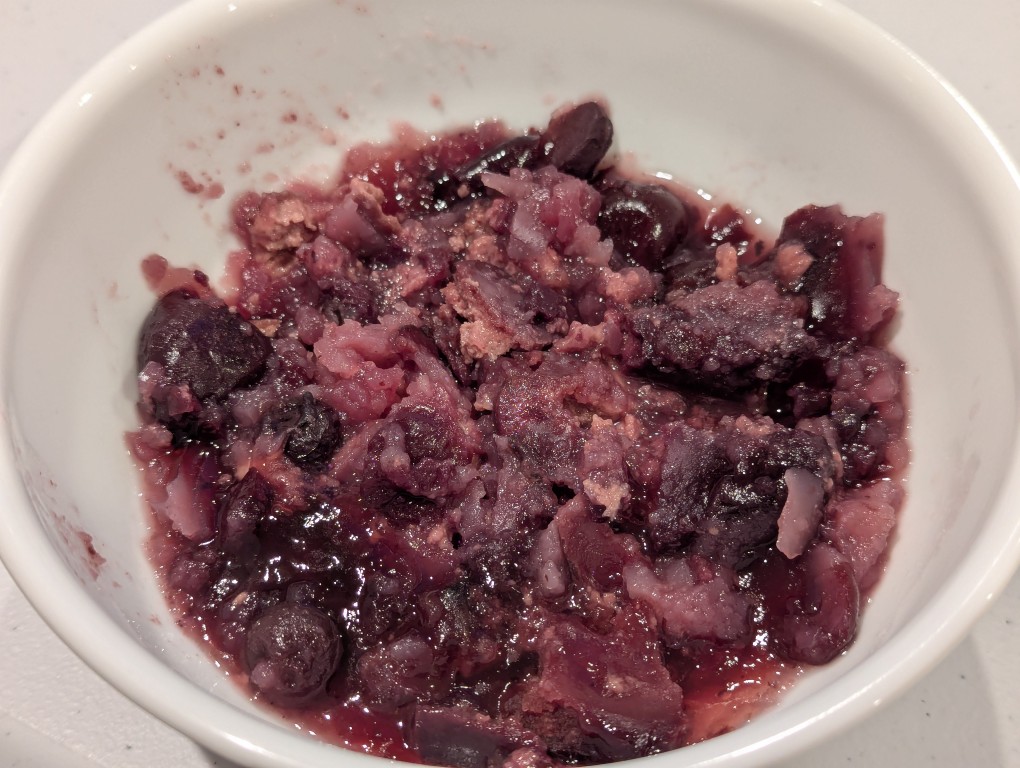
For dessert, I microwaved the cherry blueberry cobbler for 30 seconds in a bowl.
I enjoyed the applesauce pound cake as is out of the pouch!
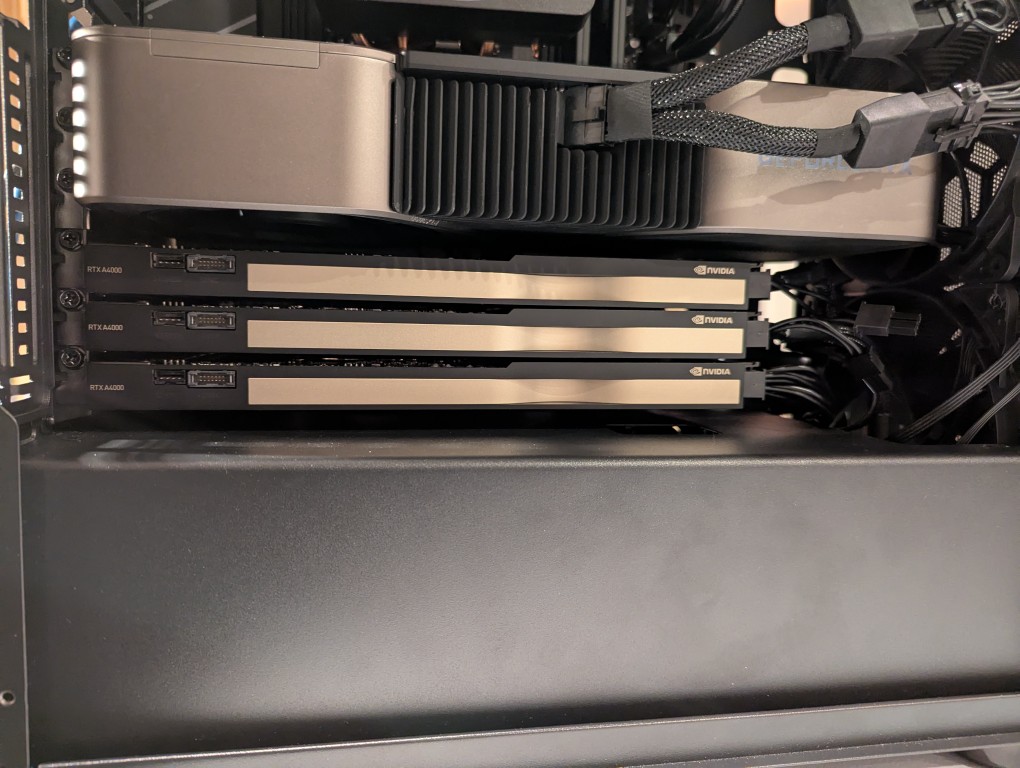
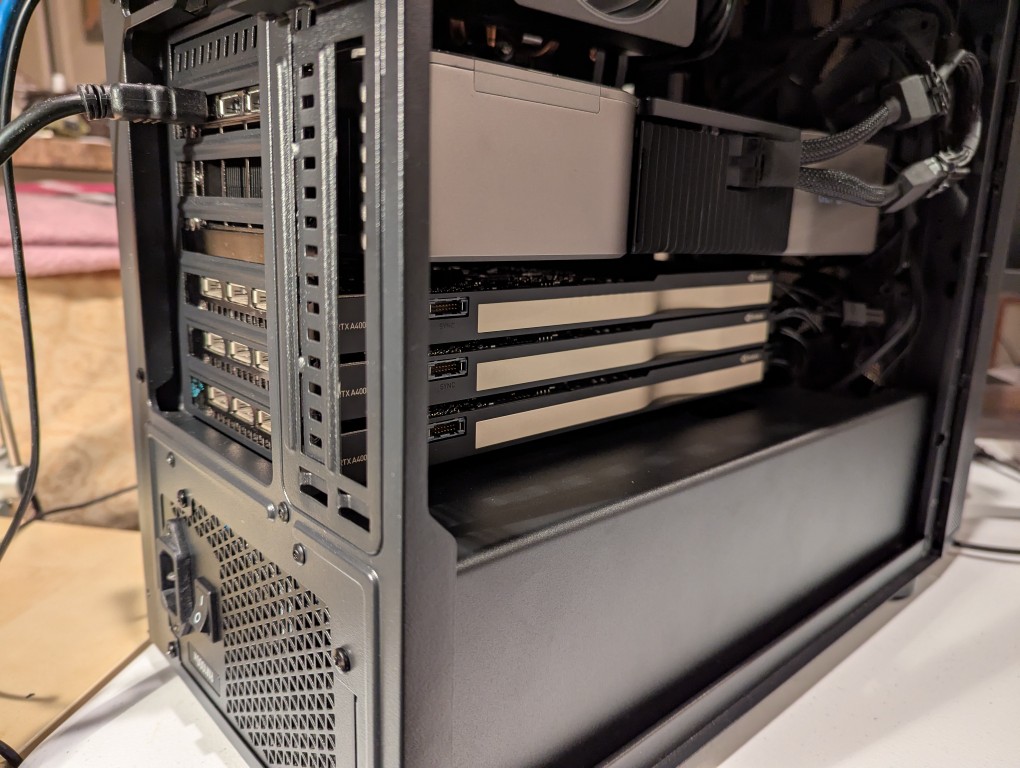
In my original write-up about building my new AI-focused workstation, I mentioned that I was concerned about the temperatures the lower three NVIDIA RTX A4000 video cards would reach when under load. After extensive testing, I found them–especially the middle and bottom cards–to go over 90C after loading a 70B model and running prompts for about 10 minutes.
There are two ways that I’m working to keep the temperatures under control as much as possible giving the constraints of my case and my cramped apartment environment.
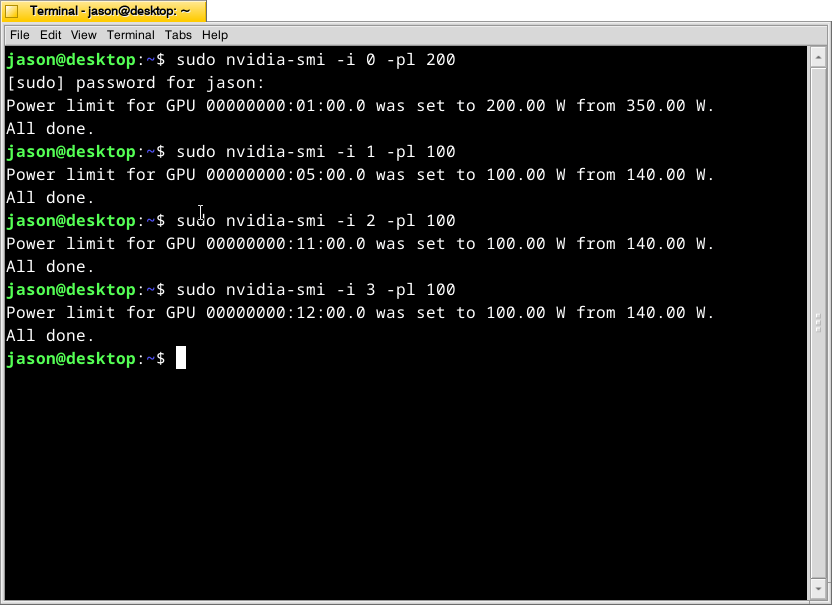
What this command, bundled with the NVIDIA driver, does is select a video card (the first video card in the 16x PCIe slot is identified as 0, the second video card is 1, the third is 2, and the fourth is 3) and change its maximum power level in watts (200 watts for card 0, 100 watts each for cards 1-3). If the power level is lower, the heat that the card can generate is lower. I set the 3090 FE (card 0) to 200 watts, because it has better cooling with two fans and it performs well enough at that power level (raising the power level leads to steeper slope of work being done).
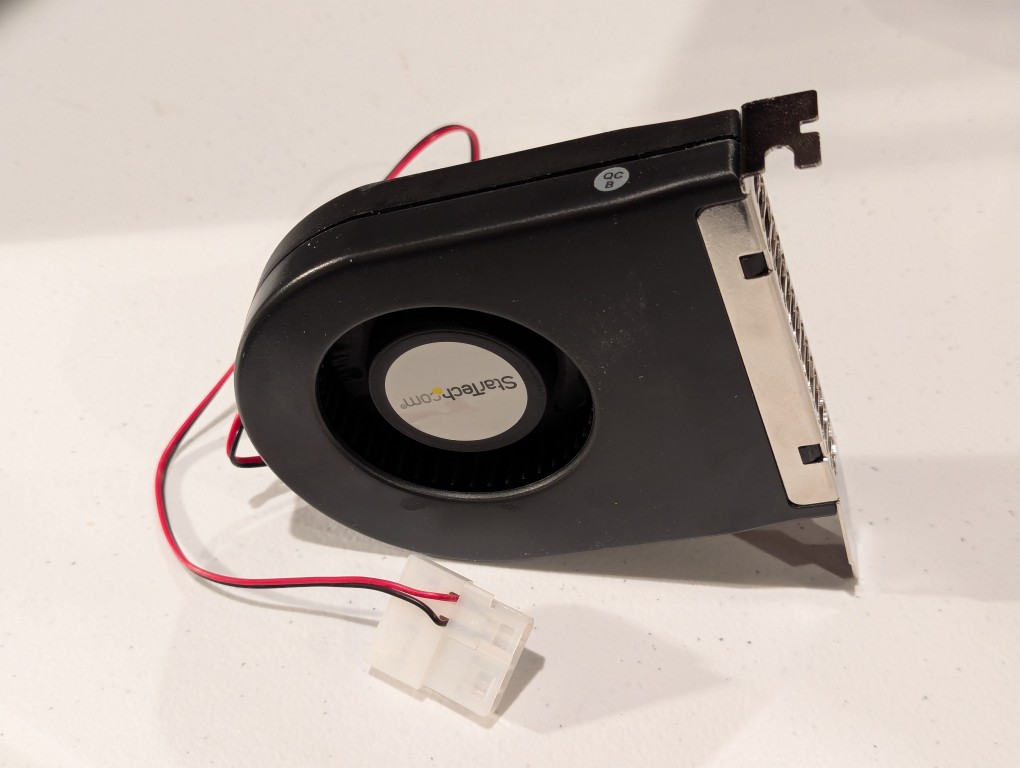
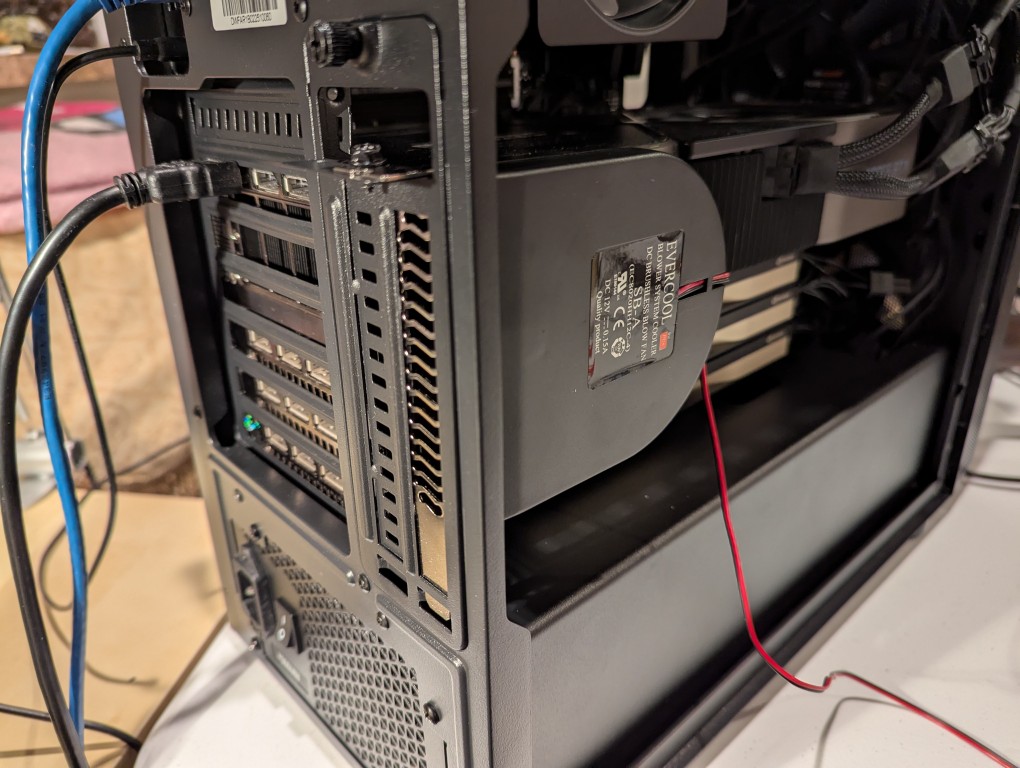
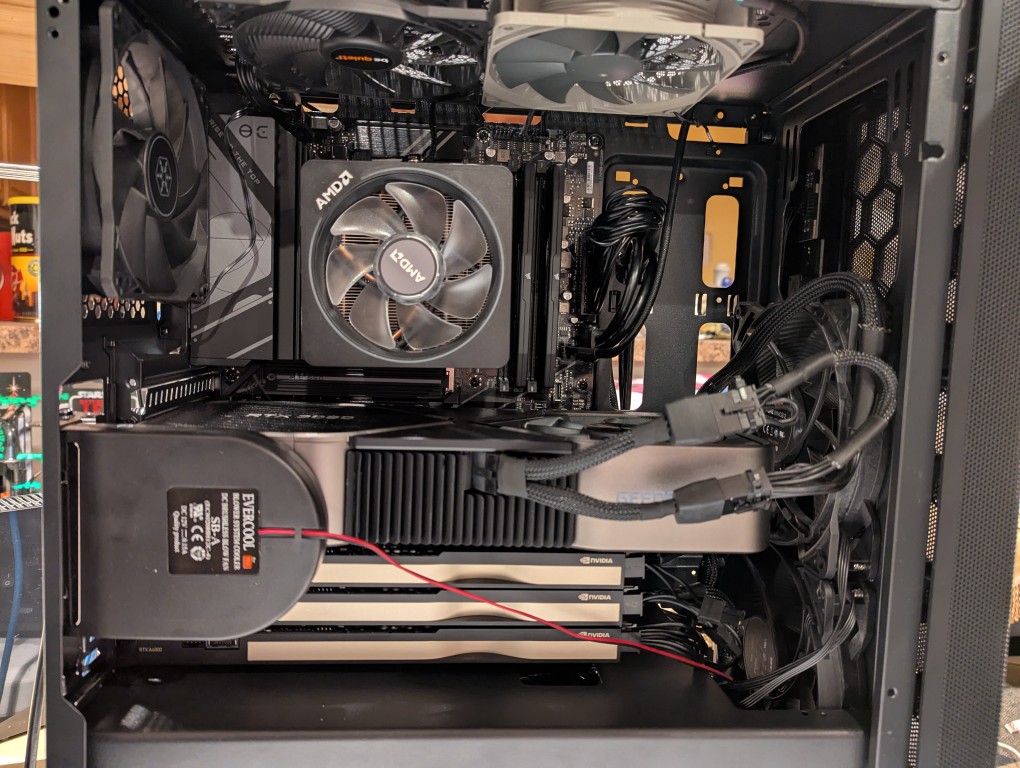
The second solution was to add more fans. The first fan is a PC case slot fan perpendicular to the video cards. This is a constantly on fan powered by a molex connector that has a blower motor that sucks in air from inside the case and ejects it out the back of the card. These use to be very useful back in the day before cases were designed around better cooling with temperature zones and larger intake and exhaust fans. The second fan was a Noctua grey 120mm fan exhausting out of the top of the case. This brings the fan count to two 140mm intake fans in the front of the case, two 120mm exhaust fans in the top of the case, one 120mm exhaust fan in the rear of the case in line with the CPU, and one slot fan pulling hot air off the video cards and exhausting it out of the back.
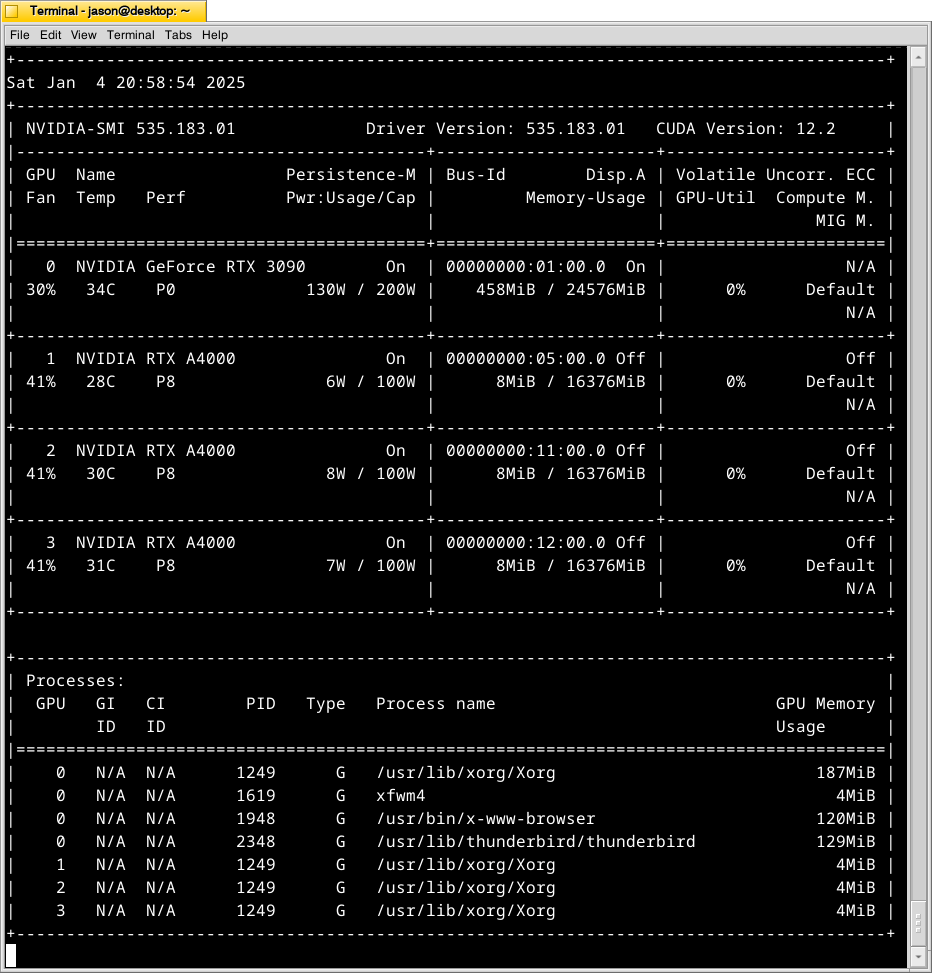
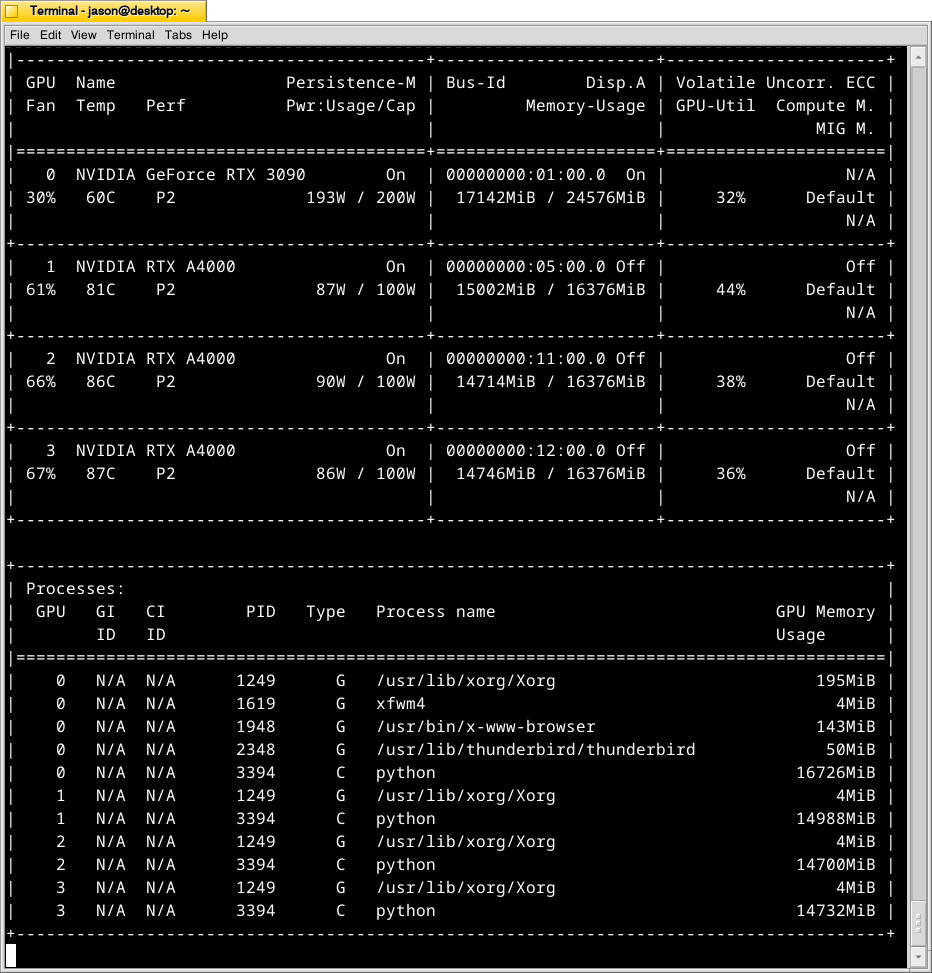
With these cooling-oriented upgrades, I’ve found that the temperatures are slightly better during operation, but perhaps helping in a way that I had not considered before is that the fans help cool the cards down faster after an operation is completed than the cards were cooling down on their own before. Also, the A4000 temps before seemed to be high, higher, and highest going from card 1 to 2 to 3. Now, the middle card or 2 has a slightly higher temp than the bottom card or 3. Below is the output from:
nvidia-smi -l 1
which displays information about the detected NVIDIA video cards including card type, fan speed, temperature, power usage, power cap, and memory usage. The first Terminal screenshot below shows the cards at rest before loading a model. The second Terminal screenshot below shows the cards after a model has been loaded and it is producing output from a prompt for some minutes.
Y made a good point that since it’s the winter, the ambient temperature in the apartment is much cooler–we usually keep it about 66F/19C. When summer comes, it will be much hotter in the apartment even with the window air conditioner going (we are on the top floor of a building that does not seem to be insulated based on sounding and spot temperature measurements).
The key to healthy computer components is cooling–forcing ambient air into the case and moving heated air out. Seeing how well the slot fan has worked, I’m thinking that a next step would be to drill one or two 120mm holes through the sheet metal side panel directly above where the A4000 video cards are and install high-CFM (cubic feet per minute) fans exhausting out. That would replace the currently installed slot fan. If I went that route, I can purchase PWM (pulse width modulation) fans so that I can connect them to the fan controllers on the motherboard, which will increase the speed of the fans according to the rising temperature inside the case when the computer is doing more work. This will reduce fan noise during low-load times but not affect cooling capacity.
On a final note, I will report that I initially tried forcing cooler ambient air into the case through those two rear perpendicular slots to the video cards where the slot fan is currently installed. My thinking was that I could force cooler air over the top of the cards and the blower fans on the cards would carry out the hotter air. What I did to test this was build an enclosed channel with LEGO that sealed against the two open slots and had two 70mm PWM fans pulling air from the channel and pushing it down onto the three A4000 video cards. Unfortunately, this actually increased the temperatures on all three A4000s into the mid-90s C! The heat produced by those cards fed back into the LEGO channel and hot air trickled out of the two slots. Lesson learned.
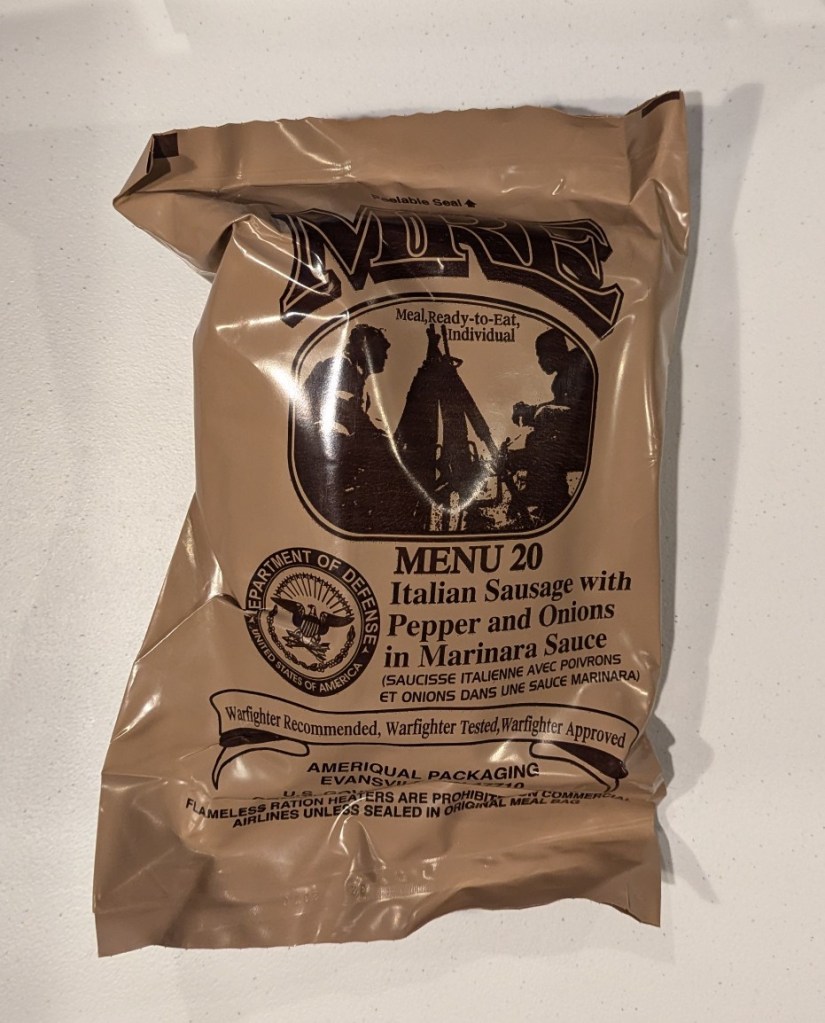
In the waning days of December, I wanted to have spaghetti, but I didn’t have any sauce on-hand to a make it. So, I thought to open one of the Italian-themed MREs in the B Case (packed 3/22 with 3/25 inspection date) that I opened recently to mix with some noodles that I had in the cabinet. Here’s Menu 20: Italian Sausage with Pepper and Onions in Marinara Sauce.
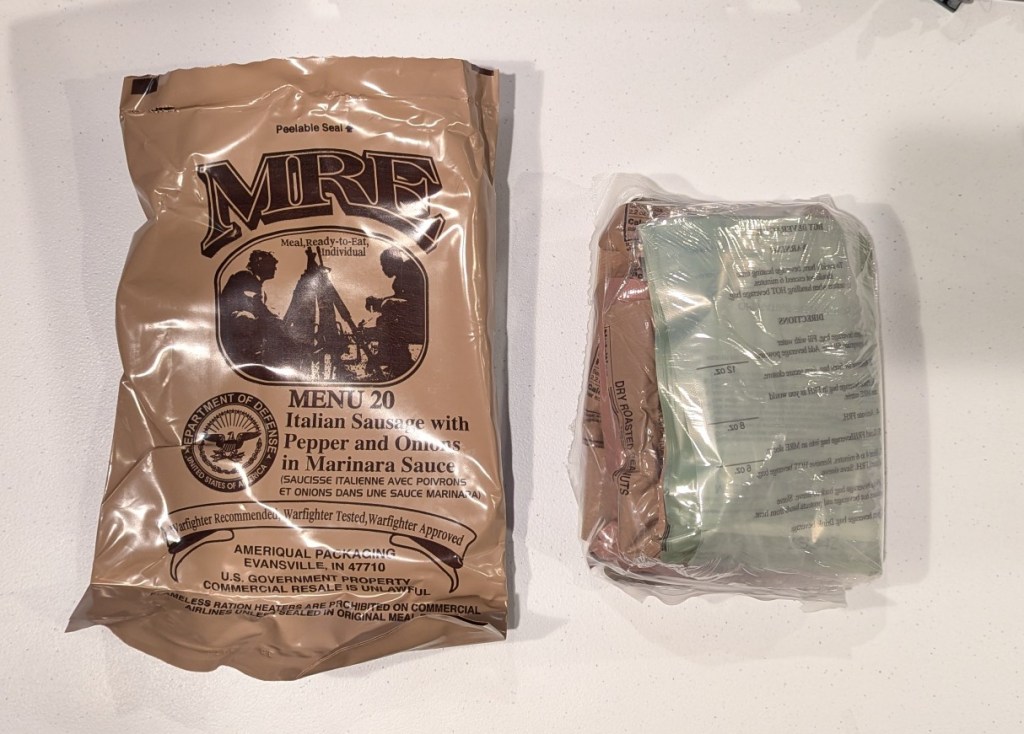
After opening the outer protective bag, all of the contents are tightly wrapped in a thinner plastic bag.
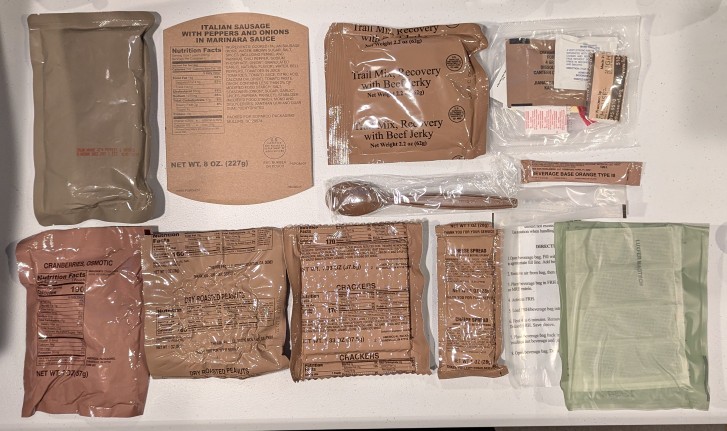
The contents of the MRE included the following going clockwise from the upper left:
Italian Sausage with Peppers and Onions in Marinara Sauce
Cardboard entree info card/sleeve
Trail Mix, Recovery with Beef Jerky
Spoon
Accessory Pack
Beverage Base Orange Type III
Water-activated heater
Hot beverage drink pouch
Cheese Spread
Crackers
Dry Roasted Peanuts
Cranberries (Osmotic)
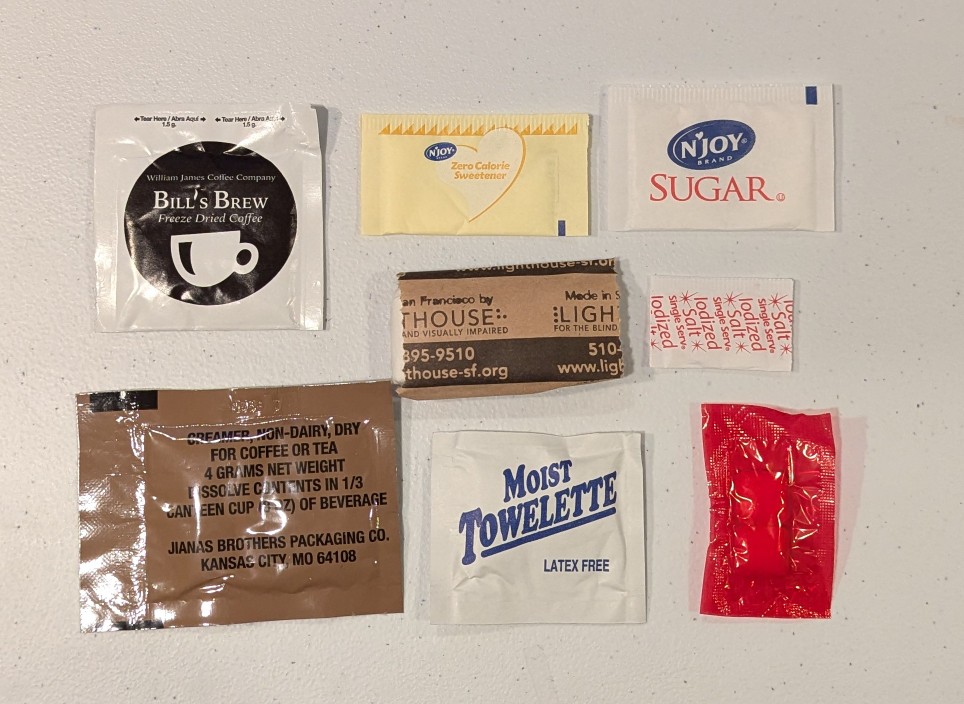
The accessory pack included these items clockwise from the upper left:
Bill’s Brew Freeze Dried Coffee
Zero Calorie Sweetner
TP
Sugar
Iodized Salt
Chewing Gum
Moist Towelette
Creamer, Non-Dairy
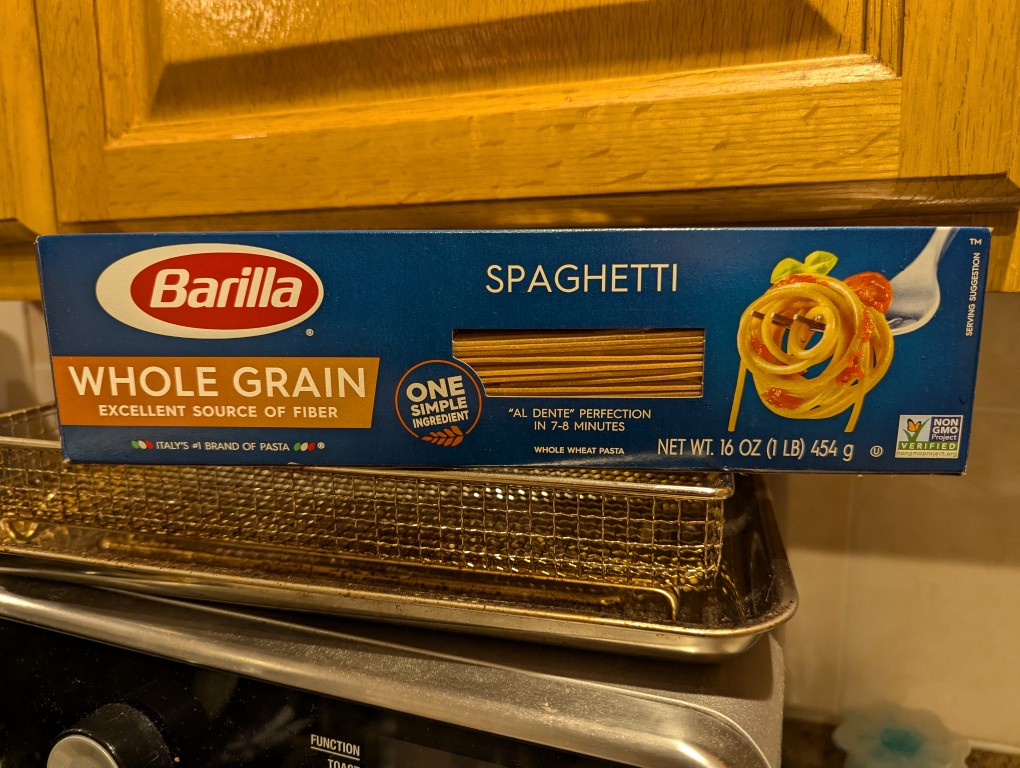
For dinner that night, I cooked a small pot of Barilla Whole Grain Spaghetti noodles for 7 minutes.
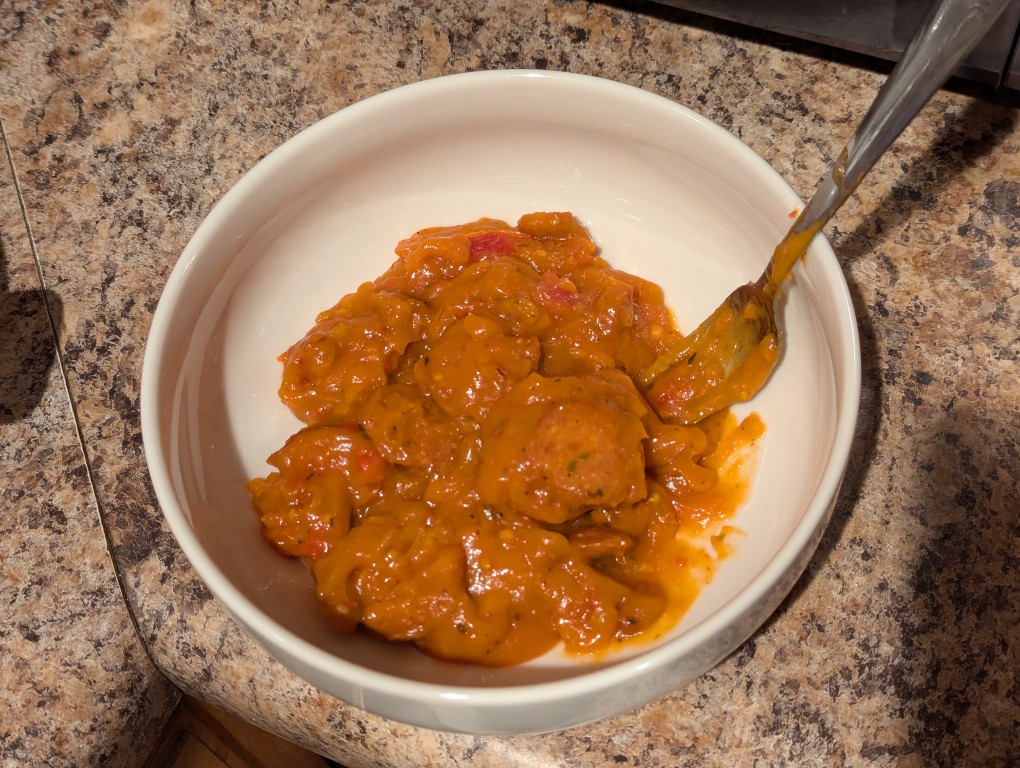
Then, I poured out the Italian sausage entree into a large bowl and microwaved it for 60 seconds.
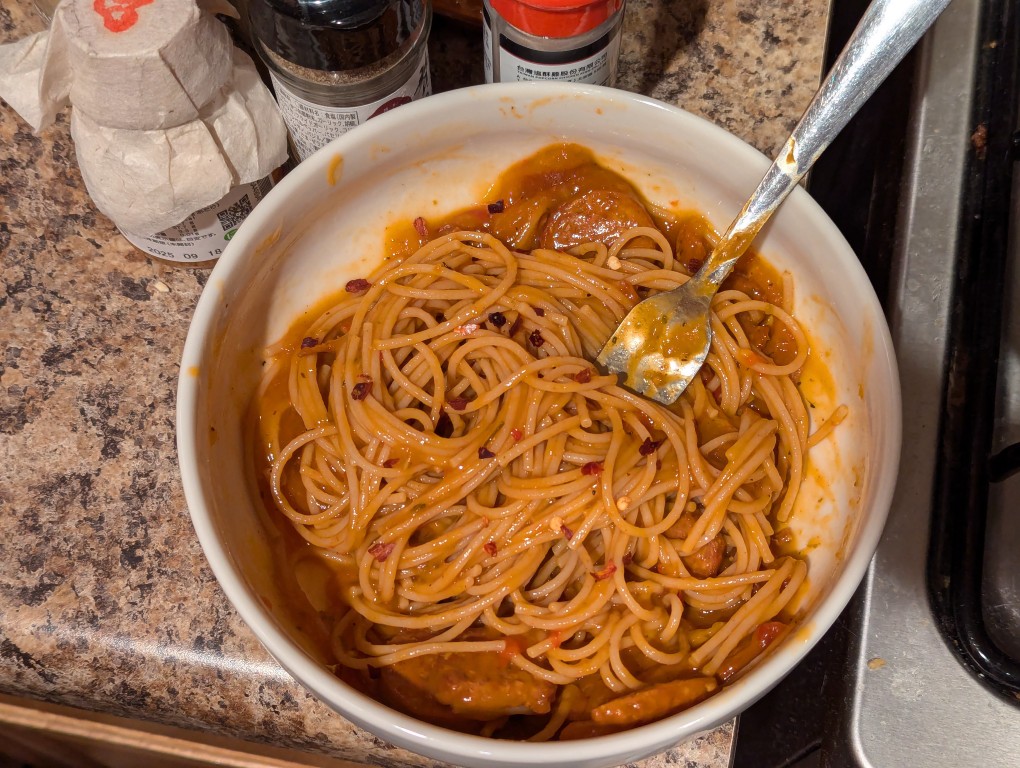
And added the cooked noodles and some crushed red pepper to make it spicier (after tasting the sauce first).
To supplement my meal, I ate the trail mix before thinking to take a picture of it. It was my first time having this particular kind of “recovery” trail mix in an MRE. It contained almonds, beef jerky chunks, and cranberries. It tasted good, but also a little interesting, perhaps due to the mixing of salty and sweet flavors.
In the field, you can crush up your crackers and add them to the Italian sausage. For that matter, you can add the cheese spread, too. Since I had noodles and I wanted spaghetti, I went that direction instead of using only what was in the MRE. That’s the thing about enjoying MREs–you can mix-and-match them with what you have on-hand and what you find in between different menu pouches.