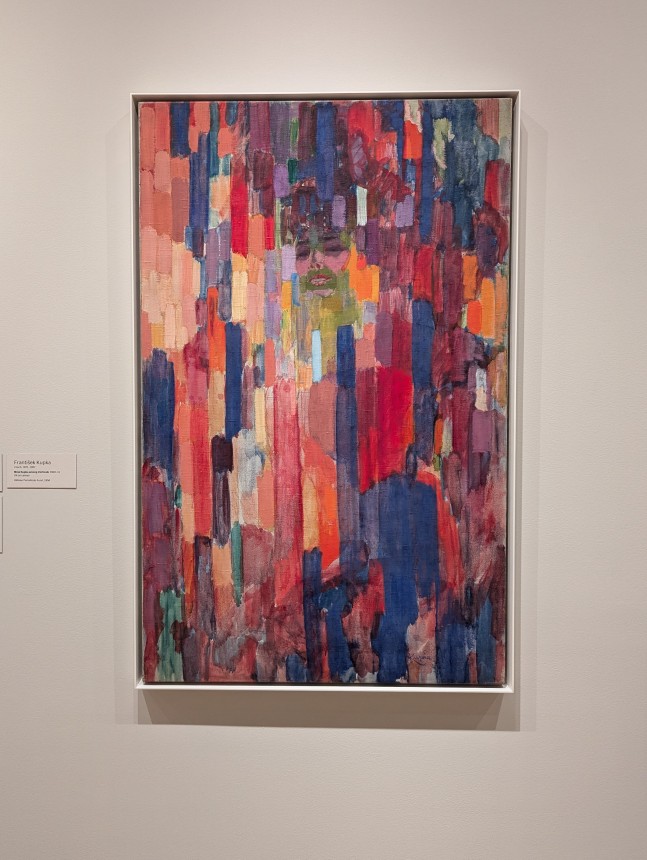
Czech painter František Kupka‘s Mme. Kupka Among Verticals (1910-1911) on display at the Museum of Modern Art in Manhattan evokes what we see much later as being dematerialized for matter transport in Star Trek. In particular, Star Trek: The Next Generation‘s season six, episode 2 titled “Realm of Fear” features Lt. Barclay (Dwight Schultz, aka Murdock from The A-Team) facing his fears of the transporter and unwittingly saving the missing crew members of the USS Yosemite who were trapped in the transporter’s matter stream.
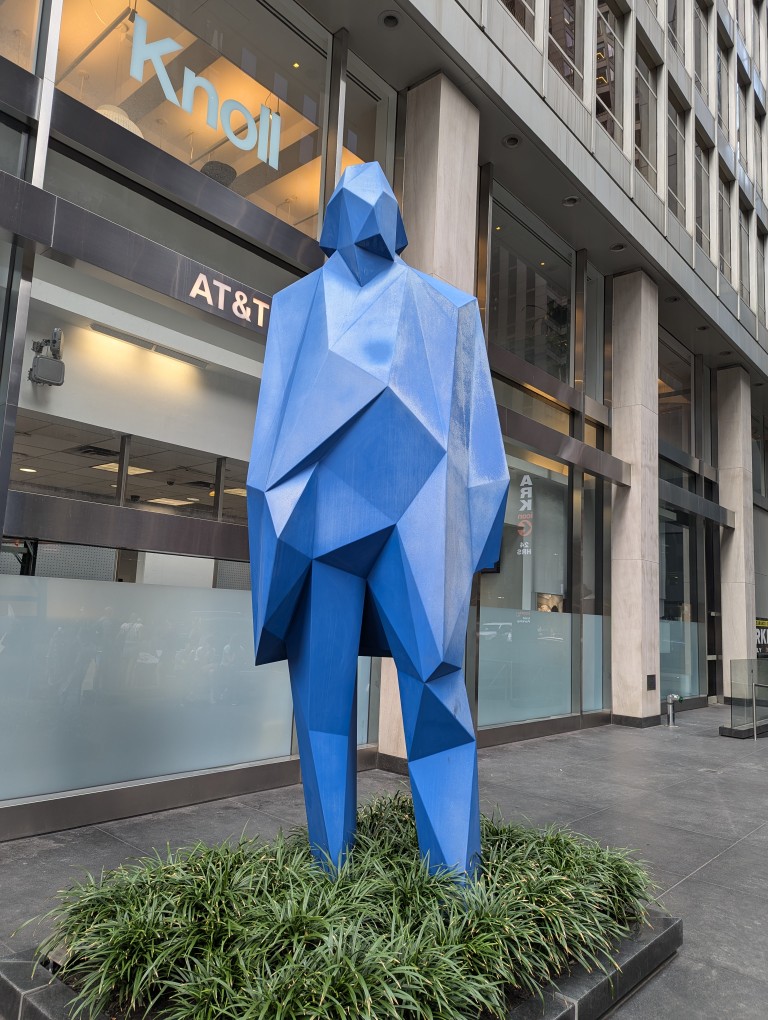
This blue sculpture looks like a blue polygonal figure that has stepped out of a mid-1990s Playstation game. The sculpture is called “Jean-Marc” and was made by Xavier Veilhan. It’s located in Manhattan near MOMA.
Jim Rennert’s Listen is an imposing sculpted figure where Robert Indiana’s Love sculpture used to be in Manhattan. Of the two, I think there’s a lot more value in its message of being silent so that you can listen to what others have to say. One must be silent to listen. Listening is the foundation of understanding, trust, and cooperation. Unfortunately, there were no crowds around this statue like there used to be for the LOVE sculpture. This important symbol seems to be less photogenic for some.
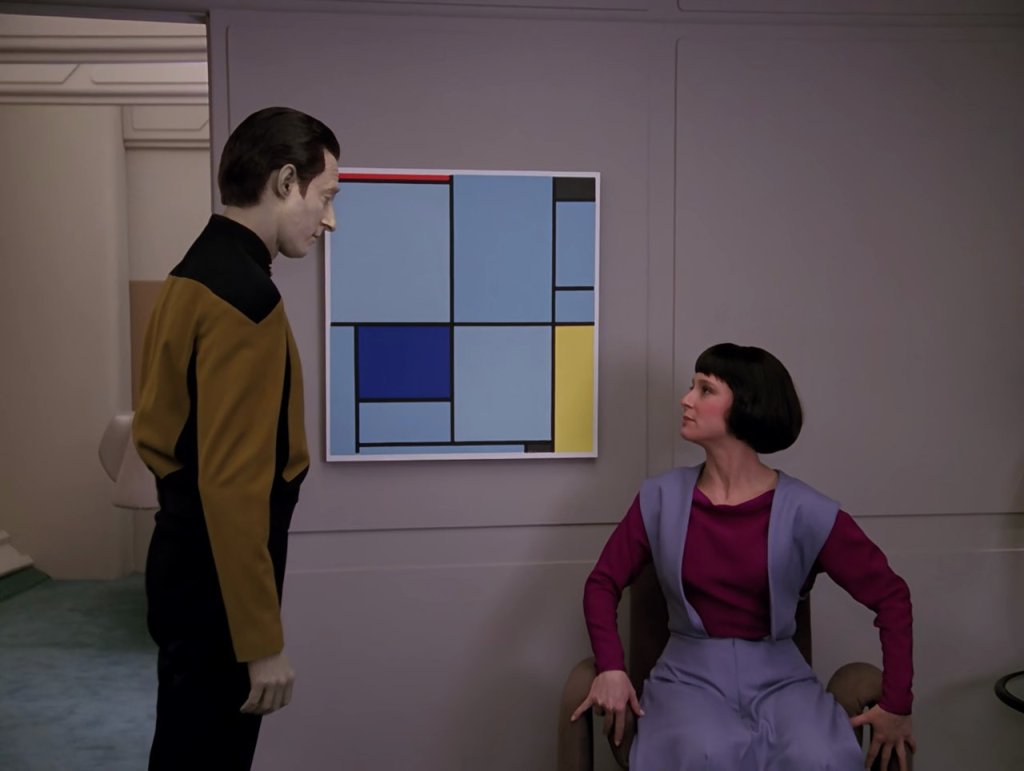
In “The Offspring,” the 16th episode of the third season of Star Trek: The Next Generation, we get to see Piet Mondrian’s “Tableau I” hanging on the wall of his quarters when he shows it to his daughter Lal. I think this might be the first time that I had really seen or had my attention drawn to a work by Mondrian. I thought it was quite striking as a work of art, and it seemed fitting that Data might be drawn to this work for its ordered lines despite Mondrian’s neoplasticism theory and its connection to nature and emotion as being the motivators for the artist’s composition.
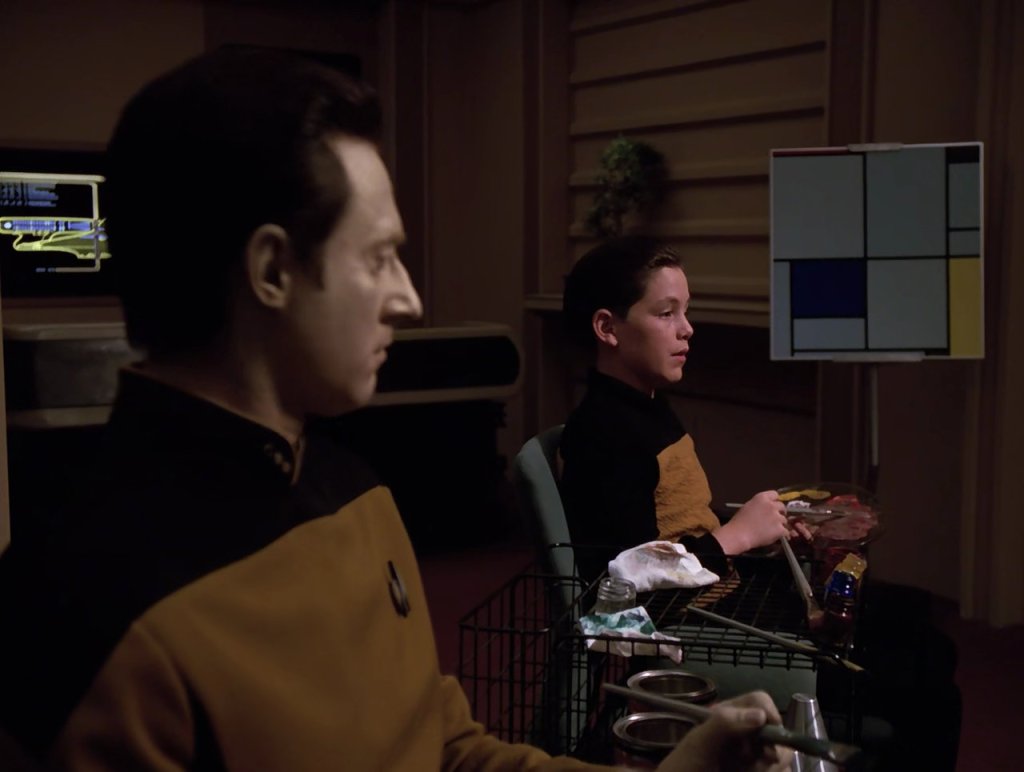
Mondrian’s “Tableau I” appears in Lt. Cmd. Data’s quarters–notably in the eleventh episode of season five titled “Hero Worship,” in which Timothy, a young boy traumatized by the loss of his parents, apes Data’s mannerisms in order to erase his emotional response to his loss. In one scene, Data and Timothy paint in Data’s quarters where “Tableau I” is on an easel to the side.
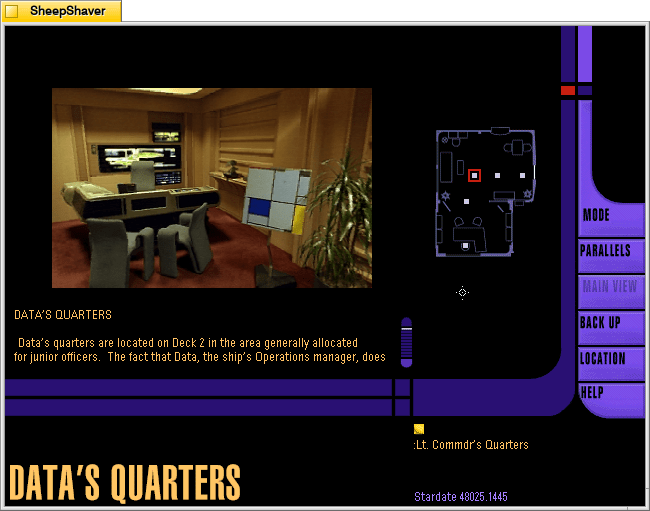
In the Star Trek: The Next Generation Interactive Technical Manual, Mondrian’s “Tableau I” is on an easel in about the same place as pictured in “Hero Worship.”
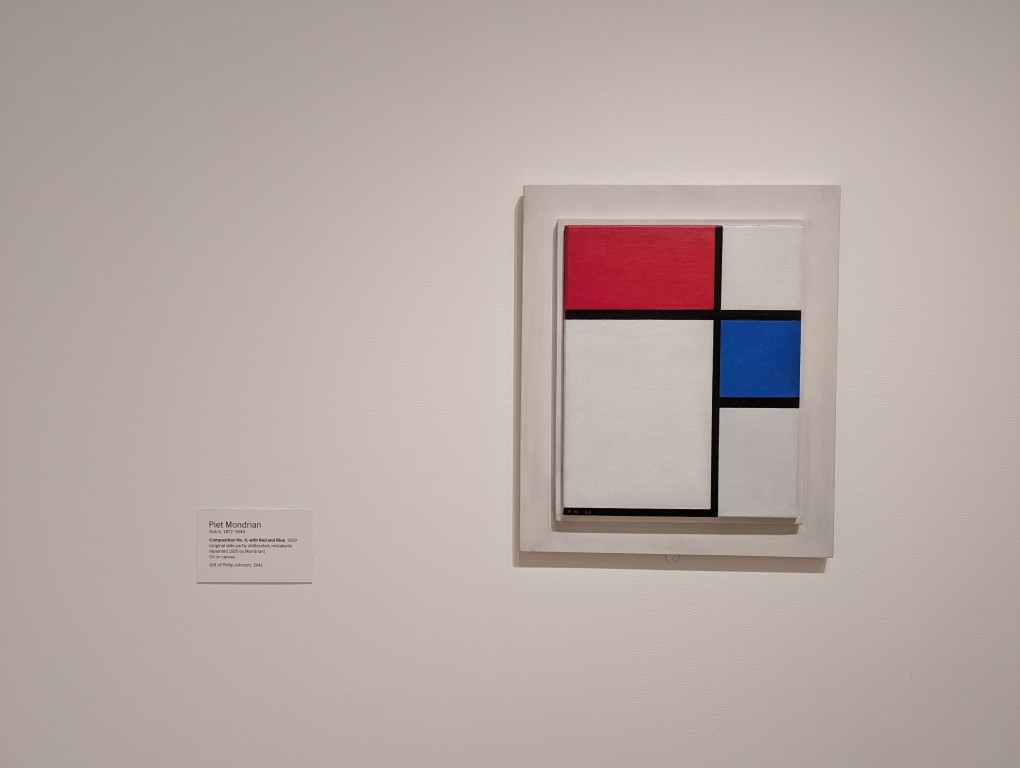
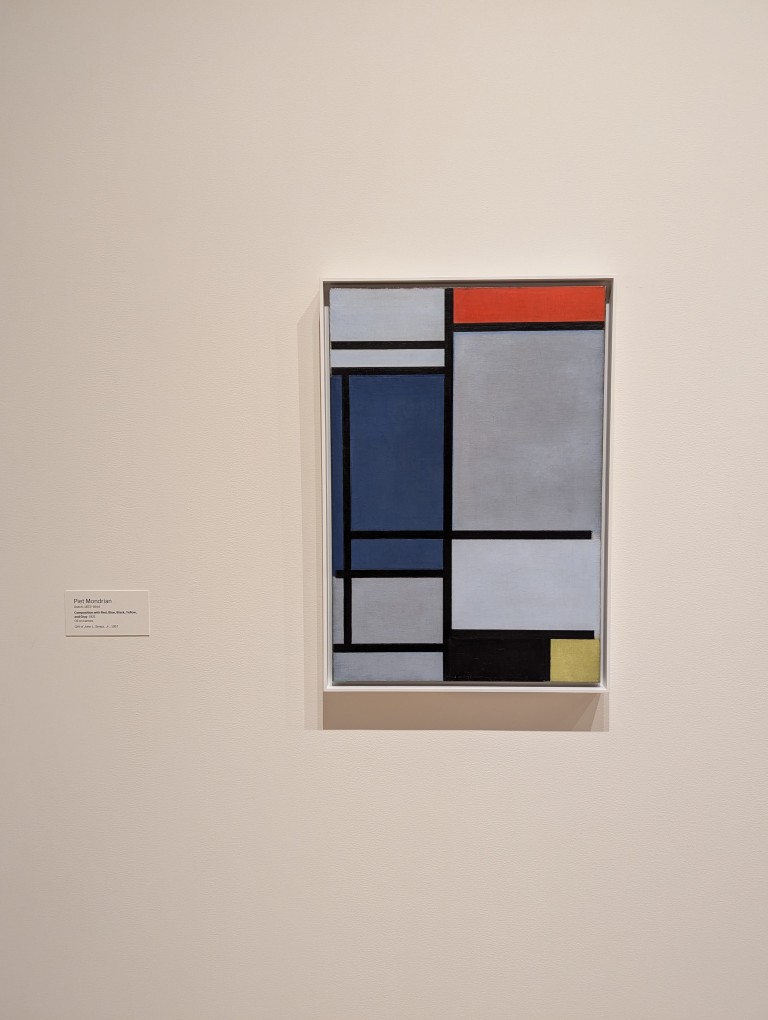
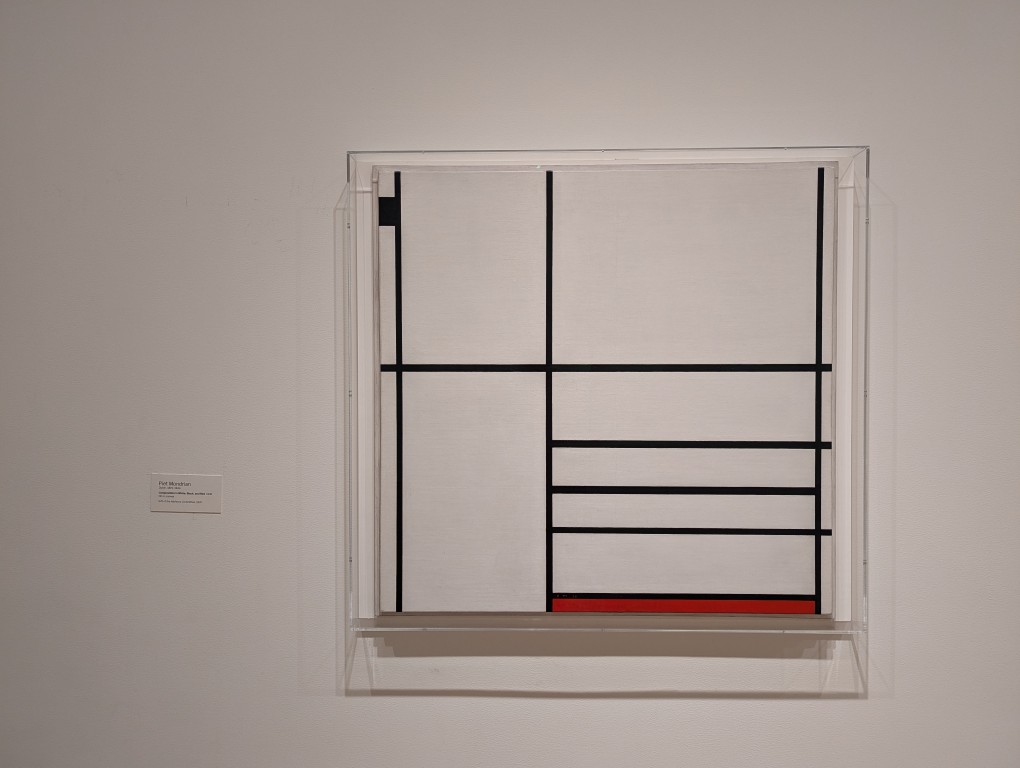
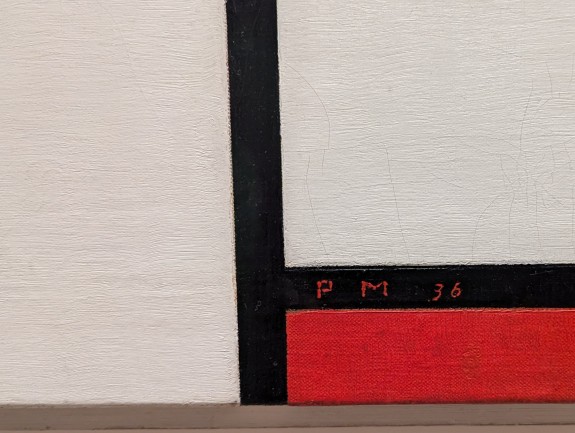
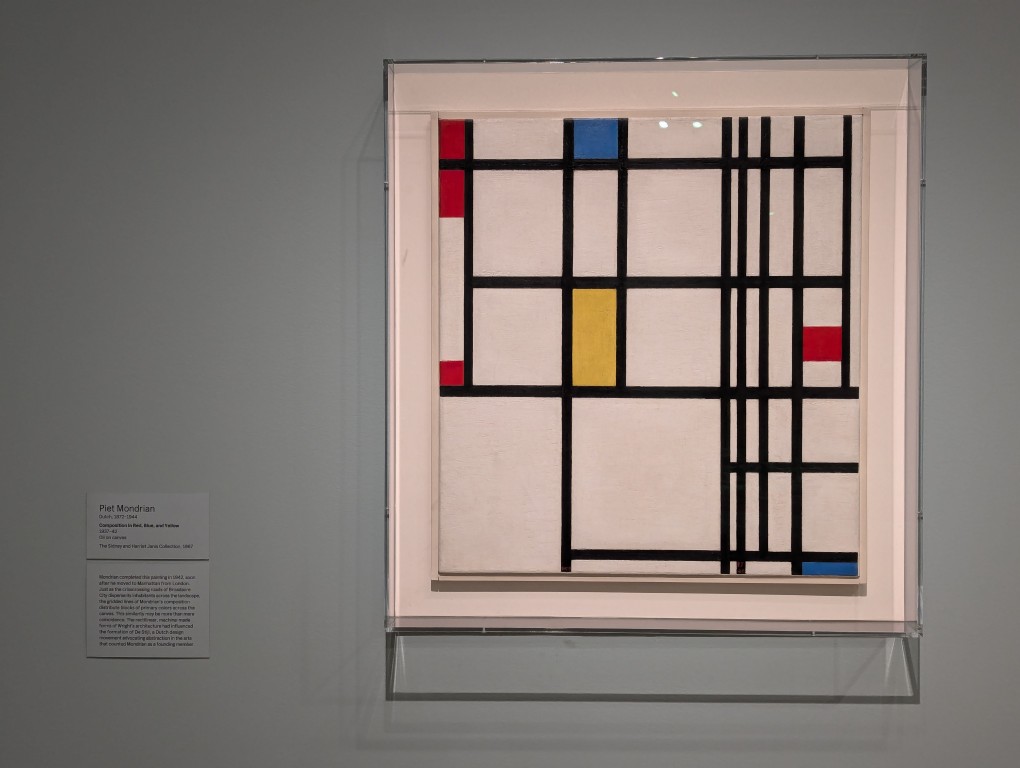
Yesterday, I was able to see some of Mondrian’s works in person at the Museum of Modern Art (MOMA) in Manhattan. Y and I went there to see our friends from Japan, Masaya and Saki. While I didn’t get to see “Tableau I,” because it hangs in the Kunstmuseum in The Hague, I did get to see some representative works of his neoplasticism.
Several streets in Carroll Gardens are bisected where the F and G subway lines escape their underground confinement and rise into the air for a short stretch between there and Park Slope. This is the end of one of those streets where the dead end sign hangs on the chain link fence above a brick wall. The roof of a subway train is tearing by from left to right at the bottom of the frame.