Category: Artificial Intelligence

  • All In on Artificial Intelligence

    An anthropomorphic cat wearing coveralls, working with advanced computers. Image generated with Stable Diffusion.

    As I wrote about recently about my summertime studying and documented on my generative artificial intelligence (AI) bibliography, I am learning all that I can about AI–how it’s made, how we should critique it, how we can use it, and how we can teach with it. As with any new technology, the more that we know about it, the better equipped we are to master it and debate it in the public sphere. I don’t think that fear and ignorance about a new technology are good positions to take.

    I see, like many others do, that AI as an inevitable step forward with how we use and what we can do with computers. However, I don’t think that these technologies should only be under the purview of big companies and their (predominantly) man-child leaders. Having more money and market control does not mean one is a more ethical practitioner with AI. In fact, it seems that some industry leaders are calling for more governmental oversight and regulation not because they have real worries about AI’s future development but instead because they are in a leadership position in the field and likely can shape how the industry is regulated through industry connections with would-be regulators (i.e., the revolving door of industry-government regulation in other regulatory agencies).

    Of course, having no money or market control in AI does not mean one is potentially more ethical with AI either. But, ensuring that there are open, transparent, and democratic AI technologies creates the potential for a less skewed playing field. While there’s the potential for abuse of these technologies, having these available to all creates the possibility for many others to use AI for good. Additionally, if we were to keep AI behind locked doors, only those with access (legally or not) will control the technology, and there’s nothing to stop other countries and good/bad actors in those countries from using AI however they see fit–for good or ill.

    To play my own small role in studying AI, using generative AI, and teaching about AI, I wanted to build my own machine learning-capable workstation. Before I made any upgrades, I maxed out what I could do with a Asus Dual RTX 3070 8GB graphics card and 64GB of RAM for the past few months. I experimented primarily with Stable Diffusion image generation models using Automatic1111’s stable-diffusion-webui and LLaMA text generation models using Georgi Gerganov’s llama.cpp. An 8GB graphics card like the NVIDIA RTX 3070 provides a lot of horsepower with its 5,888 CUDA cores and memory bandwidth across its on-board memory. Unfortunately, the on-board memory is too small for larger models or adjusting models with multiple LORA and the like. For text generation, you can layer some of the model on the graphic’s card memory and your system’s RAM, but this is inefficient and slow in comparison to having the entire model loaded in the graphics card’s memory. Therefore, a video card with a significant amount of VRAM is a better solution.
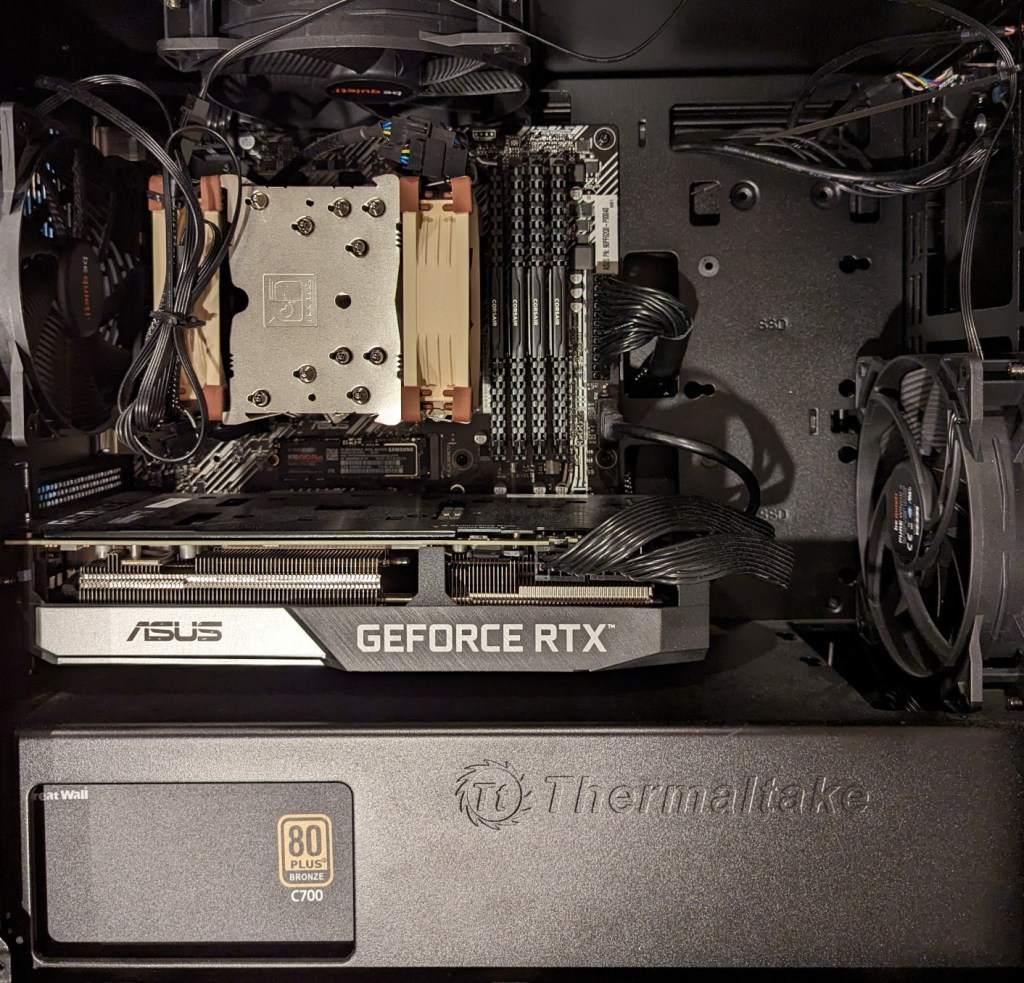
    Previous interior of my desktop computer with air cooling, 128GB RAM, and Asus Dual Geforce RTX 3070 8GB graphics card.

    For my machine learning focused upgrade, I first swapped out my system RAM for 128GB DDR4-3200 (4 x 32GB Corsair shown above). This allowed me to load 65B parameters into system RAM with my Ryzen 7 5800X 8 core/16 thread CPU to perform the operations. The CPU usage while it is processing tokens on llama.cpp looks like an EEG:
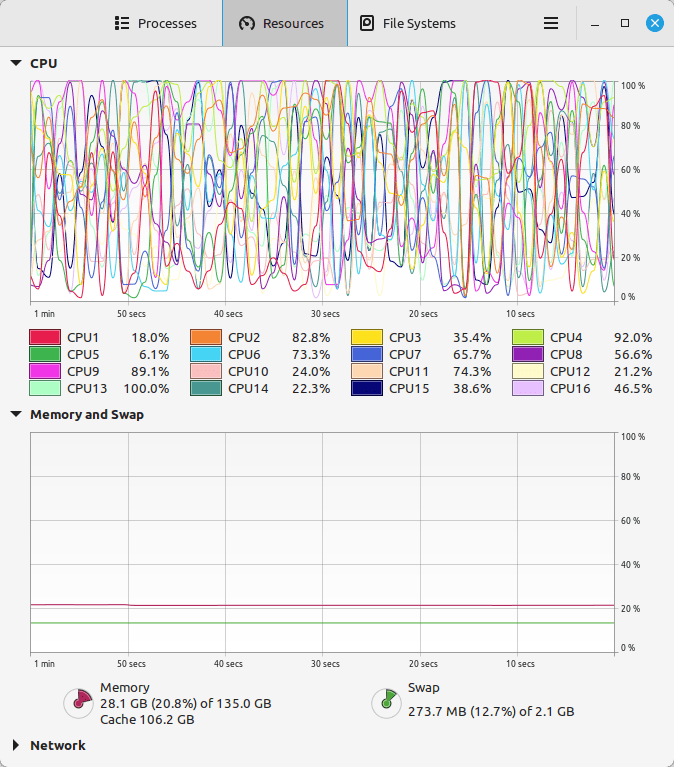
    CPU and memory graphs show high activity during AI inference.

    While running inference on the CPU was certainly useful for my initial experimentation and the CPU usage graph looks cool, it was exceedingly slow. Even an 8 core/16 thread CPU is ill-suited for AI inference in part due to how it lacks the massive parallelization of graphics processing units (GPUs) but perhaps more importantly due to the system memory bottleneck, which is only 25.6 GB/s for DDR4-3200 RAM according to Transcend.

    Video cards, especially those designed by NVIDIA, provide specialized parallel computing capabilities and enormous memory bandwidth between the GPU and video RAM (VRAM). NVIDIA’s CUDA is a very mature system for parallel processing that has been widely accepted as the gold standard for machine learning (ML) and AI development. CUDA is unfortunately, closed source, but many open source projects have adopted it due to its dominance within the industry.

    My primary objective when choosing a new video card was that it had enough VRAM to load a 65B LLaMA model (roughly 48GB). One option for doing this is to install two NVIDIA RTX 3090 or 4090 video cards with each having 24GB of VRAM for a total of 48GB. This would solve my needs for running text generation models, but it would limit how I could use image generation models, which can’t be split between multiple video cards without a significant performance hit (if at all). So, a single card with 48GB of VRAM would be ideal for my use case. Three options that I considered were the Quadro 8000, A40, and RTX A6000 Ampere. The Quadro 8000 used three-generation-old Turing architecture, while the A40 and RTX A6000 used two-generation-old Ampere architecture (the latest Ada architecture was outside of my price range). The Quadro 8000 has memory bandwidth of 672 GB/s while the A40 has 696 GB/s and the A6000 has 768 GB/s. Also, the Quadro 8000 has far fewer CUDA cores than the other two cards: 4,608 vs. 10,572 (A40) and 10,752 (A6000). Considering the specs, the A6000 was the better graphics card, but the A40 was a close second. However, the A40, even found for a discount, would require a DIY forced-blower system, because it is designed to be used in rack mounted servers with their own forced air cooling systems. 3D printed solutions that mate fans to the end of an A40 are available on eBay, or one could rig something DIY. But, for my purposes, I wanted a good card with its own cooling solution and a warranty, so I went with the A6000 shown below.
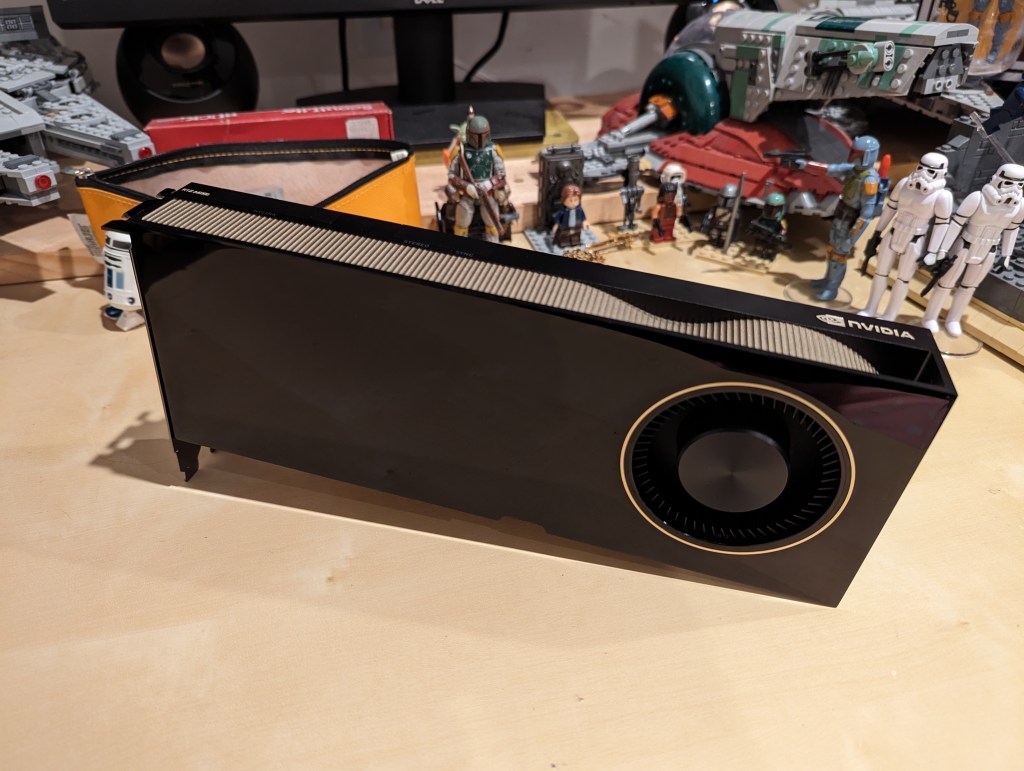
    nvidia A6000 video card

    Another benefit to the A6000 over the gaming performance-oriented 3090 and 4090 graphics cards is that it requires much less power–only 300 watts at load (vs ~360 watts for the 3090 and 450 watts for the 4090). Despite this lower power draw, I only had a generic 700 watt power supply. I wanted to protect my investment in the A6000 and ensure it had all of the power that it needed, so I opted to go with a recognized name brand PSU–a Corsair RM1000x. It’s a modular PSU that can provide up to 1,000 watts to the system (it only provides what it is needed–it isn’t using 1000 watts constantly). You can see the A6000 and Corsair PSU installed in my system below.
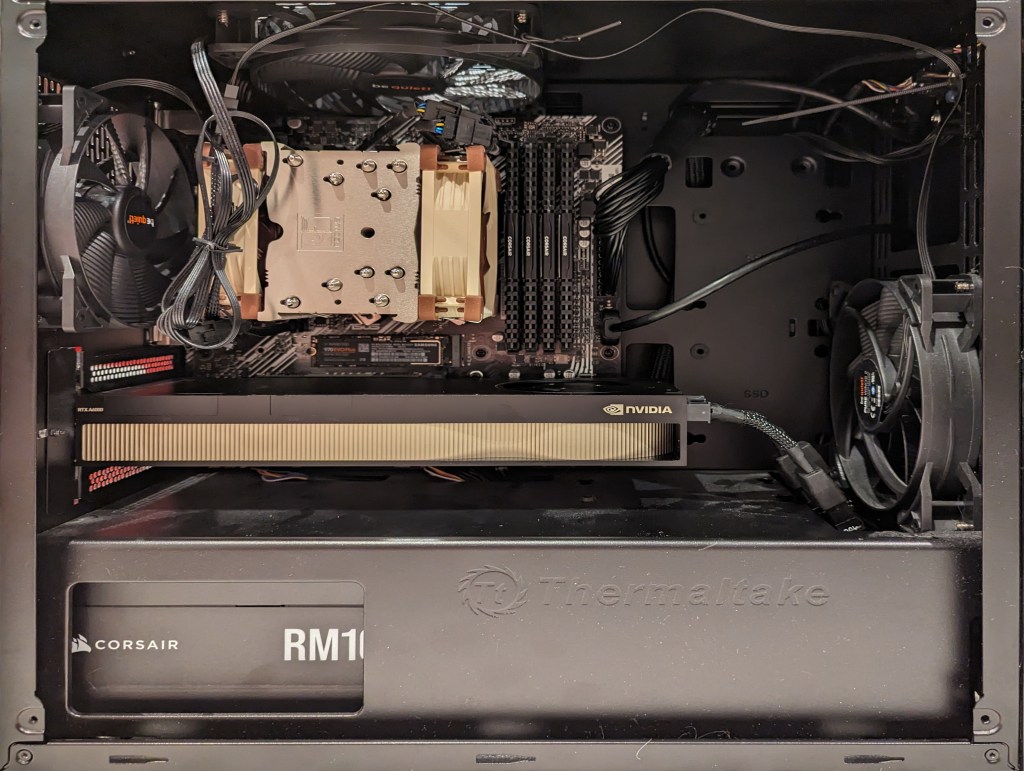
    new computer setup with 128GB RAM and A6000 graphics card

    Now, instead of waiting for 15-30 minutes for a response to a long prompt ran on my CPU and system RAM, it takes mere seconds to load the model on the A6000’s VRAM and generate a response as shown in the screenshot below of oobabooga’s text-generation-webui using the Guanaco-65B model quantized by TheBloke to provide definitions of science fiction for three different audiences. The tool running in the terminal in the lower right corner is NVIDIA’s System Management Interface, which can be opened by running “nvidia-smi -l 1”.

    text generation webui running on the a6000 video card

    I’m learning the programming language Python now so that I can better understand the underlying code for how many of these tools and AI algorithms work. If you are interested in getting involved in generative AI technology, I recently wrote about LinkedIn Learning as a good place to get started, but you can also check out the resources in my generative AI bibliography.

  • Summer Studying with LinkedIn Learning

    An anthropomorphic cat taking notes in a lecture hall. Image created with Stable Diffusion.

    I tell my students that I don’t ask them to do anything that I haven’t done or will do myself. A case in point is using the summer months for a learning boost. LinkedIn Learning offers new users a free trial month, which I’m taking advantage of right now.

    While I’ve recommended students to use LinkedIn Learning for free via the NYPL, completion certificates for courses don’t include your name and they can only be downloaded as PDFs, meaning you can’t easily link course completion to your LinkedIn Profile. Due to the constraints with how library patron access to LinkedIn Learning works, I opted to try out the paid subscription so that it links to my LinkedIn Profile. However, I wouldn’t let these limitations hold you back from using LinkedIn Learning via the NYPL if that is the best option for you–just be aware that you need to download your certificates and plan how to record your efforts on your LinkedIn Profile, your resume, and professional portfolio.

    After a week of studying, I’ve earned certificates for completing Introduction to Responsible AI Algorithm Design, Introduction to Prompt Engineering for Generative AI, AI Accountability Essential Training. And, I passed the exam for the Career Essentials in Generative AI by Microsoft and LinkedIn Learning Path. I am currently working on the Responsible AI Foundations Learning Path. These courses support the experimentation that I am conducting with generative AI (I will write more about this soon), the research that I am doing into using AI pedagogically and documenting on my generative AI bibliography, and thinking how to use AI as a pedagogical tool in a responsible manner.

    For those new to online learning, I would make the following recommendations for learning success:

    1. Simulate a classroom environment for your learning. This means find a quiet space to watch the lectures while you are watching them. Don’t listen to music. Turn off your phone’s notifications. LinkedIn courses are densely packed with tons of information. Getting distracted for a second can mean you miss out on something vital to the overall lesson.
    2. Have a notebook and pen to take notes. While watching the course, pause it to write down keywords, sketch charts, and commit other important information to your notes. The act of writing notes by hand has been shown to improve your memory and recall of learned information. Don’t keep notes by typing as this is less information rich learning than writing your notes by hand.
    3. Even though a course lists X hours and minutes to completion, you should budget at least 50% more time in addition to that time for note taking, studying, quizzes, and exams (for those courses that have them).
    4. While not all courses require you to complete quizzes and exams for a completion certificate, you should still take all of the included quizzes and exams. Research shows that challenging ourselves to recall and apply what we’ve learned via a test helps us remember that information better.
    5. After completing a course, you should add the course certificate to your LinkedIn Profile, post about completing the course (others will give you encouragement and your success might encourage others to learn from the same course that you just completed), add the course certificate to your resume, and think about how you can apply what you’ve learned to further integrate your learning into your professional identity. On this last point, you want to apply what you’ve learned in order to demonstrate your mastery over the material as well as to fully integrate what you’ve learned into your mind and professional practices. This also serves to show others–managers, colleagues, and hiring personnel–that you know the material and can use it to solve problems. For example, you might write a blog post that connects what you’ve learned to other things that you know, or you might revise a project in your portfolio based on what you’ve learned.
    6. Bring what you’ve learned into your classes (if you’re still working toward your degree) and your professional work (part-time job, internship, full-time job, etc.). Learning matters most when you can use what you’ve learned to make things, solve problems, fulfill professional responsibilities, and help others.
  • Updates to the Generative AI and Pedagogy Bibliography

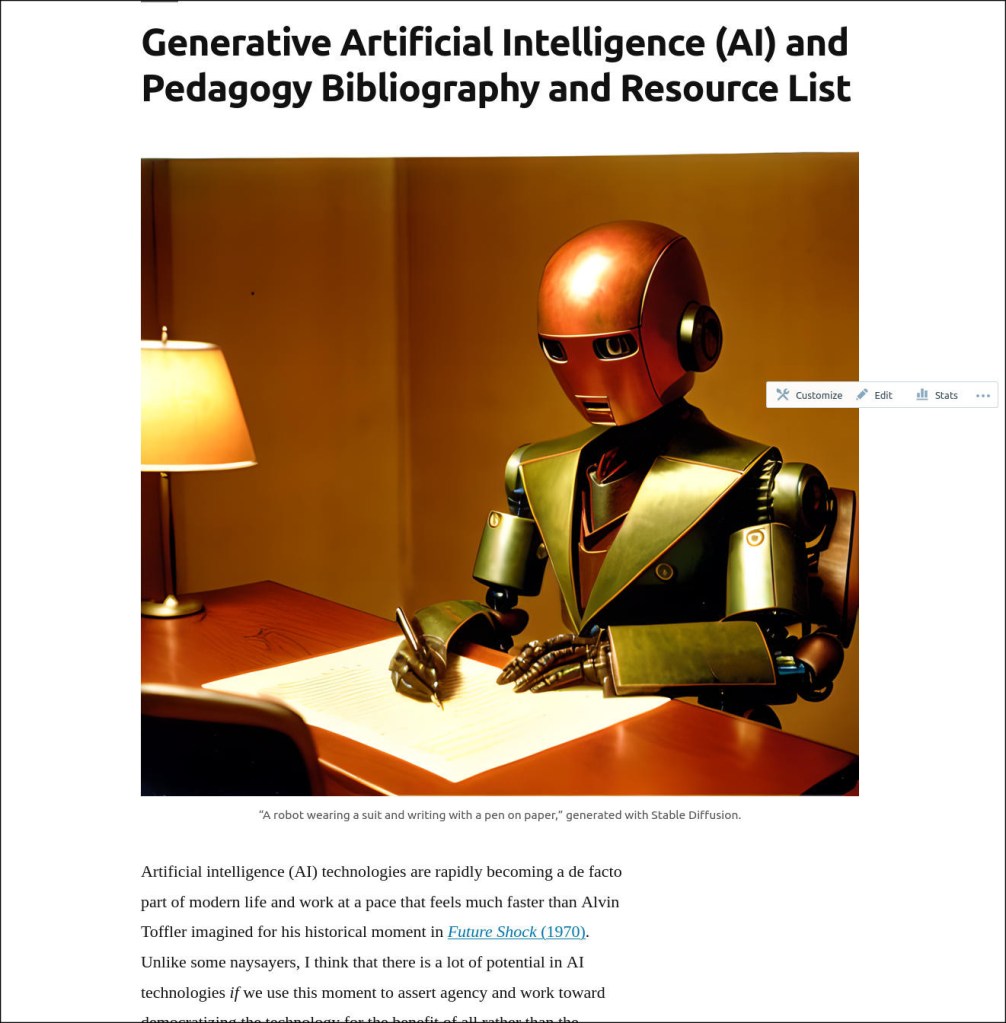
    A cute humanoid robot writing at a desk with bookshelf in background. Image created with Stable Diffusion.

    Over the weekend, I made some significant updates to the Generative AI and Pedagogy Bibliography and Resource List page, which includes background, debates, teaching approaches, applications, disciplinary research, and a list of online resources. I started it as a place to organize my own research while sharing it back out to others.

    It now features a table of contents at the top of the page under the introduction.

    I added about 50 articles and books to the bibliography, which now contains 232 sources.

    And, I added three links to the resource list at the bottom of the page which brings it to 42 links.

    I will periodically add more entries to the list as my own research progresses. But, it’s important to note that this bibliography isn’t meant to be exhaustive.

  • 2023 Spring Recess Updates

    I wanted to make the most of this year’s Spring Recess. Below are a few things that I accomplished during this late semester respite: a computer storage upgrade, installing Mac OS X Leopard on QEMU, finding Star Wars action figures on eBay, beginning a generative AI and pedagogy bibliography, and spending time with Y.

    Upgraded My Desktop Computer’s Boot Drive

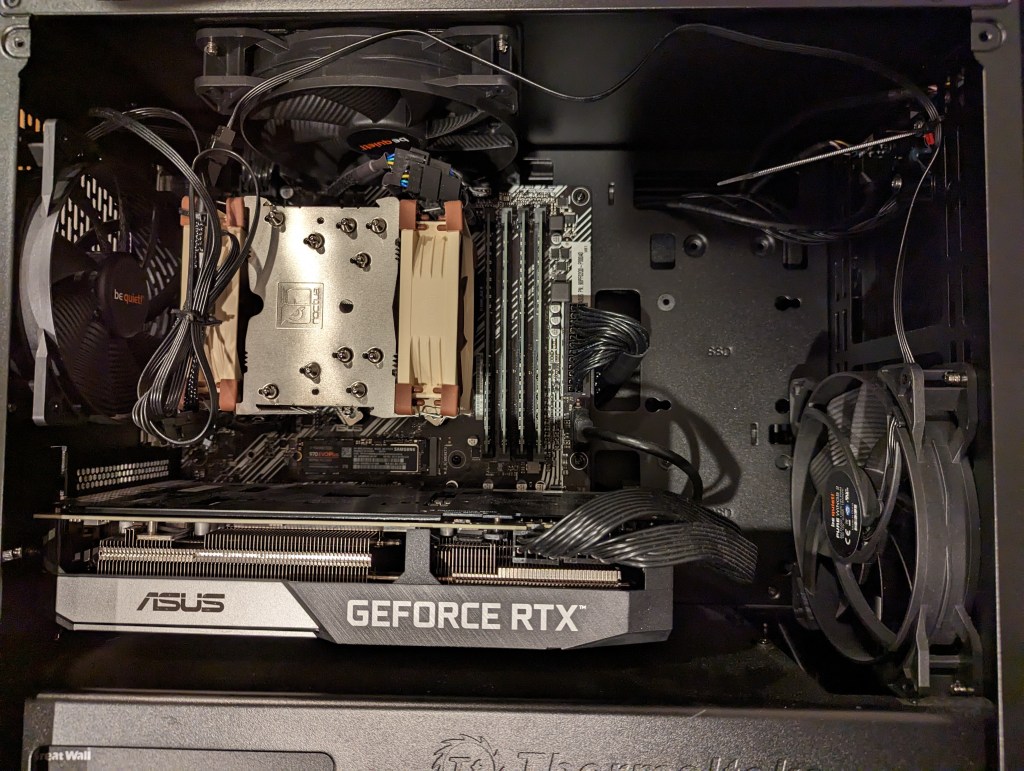
    Inside my desktop computer after installing 2TB NVMe SSD.

    I took advantage of a BestBuy deal on 2TB Samsung 970 EVO Plus NVMe SSDs to upgrade my desktop computer’s boot drive. Originally, I had a 512GB NVMe drive installed. I had pulled out the wifi card that was in the secondary M.2 slot awhile back. So, I moved the 512GB to that slot (under the video card as pictured above) and installed the 2TB Samsung drive into the primary M.2 slot (just above the video card as pictured above). With the hardware installation done, I reinstalled Linux Mint 21.1, which I run on my desktop and laptop computers.

    Installing Mac OS X 10.5 Leopard on QEMU

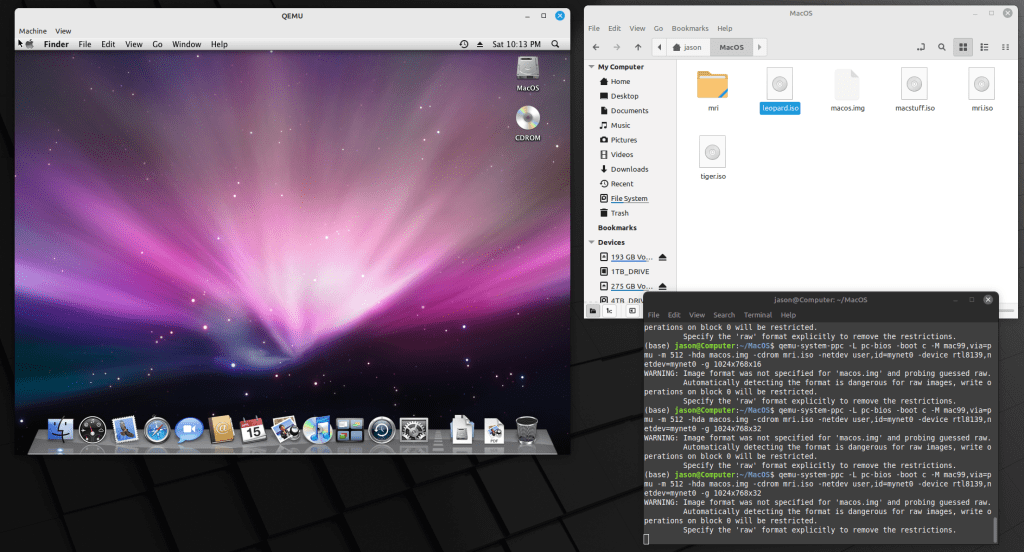
    Mac OS X 10.5 Leopard running in QEMU.

    Since I reinstalled Linux Mint, I thought that it was a good opportunity to play around with QEMU. For most of my Macintosh emulation needs (mostly System 7.5.5 for Apple’s HotSauce and Voyager’s Expanded Books but occasionally earlier versions that best support some Hypercard stacks and other older software), I rely on SheepShaver and Basilisk II. QEMU-System-PPC supports Mac OS 9.x through Mac OS X 10.5. After Mac OS X 10.9 Mavericks, Mac OS X 10.5 Leopard was my favorite version of Mac OS X, so I picked it for QEMU. After grabbing an ISO from archive.org, it was a short order to install and use Leopard. I had hoped to use an older version of OsiriX to look at the MRI that I had at the University of Liverpool (contemporary DICOM viewers have trouble opening the files), but I should have read the documentation first and seen that OpenGL was a non-starter on the regular version of QEMU.

    Star Wars Action Figures from eBay

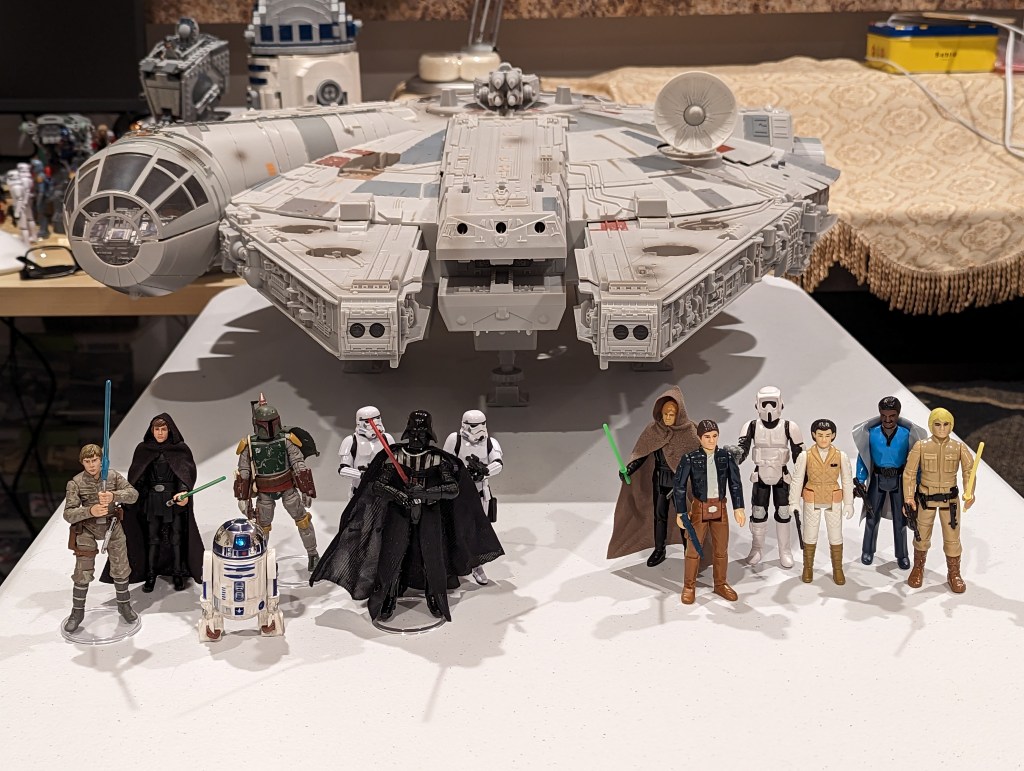
    Star Wars Vintage Collection and Kenner/Retro Collection action figures.

    At the beginning of Spring Recess, I hit eBay and racked up some good deals with bidding and best offers on 3.75″ Hasbro Vintage Collection action figures, Hasbro Retro Collection action figures, and Kenner action figures. I don’t like to collect action figures in their packages. I like to create scenes with them for display. With these new acquisitions, I plan to create some Empire and Return of the Jedi scenes with my 1979 Kenner Millennium Falcon (not pictured) and 2008 Hasbro Legacy Collection Millennium Falcon (pictured above, aka the Big Falcon).

    Compiling a Bibliography of Generative AI Technologies and Pedagogy Resources

    I compiled all of my current research on Generative AI technologies and how they might be used in teaching on this page. It’s not an exhaustive list, but it has a lot of recent publications. It can help someone get up to speed on what’s going on now with ChatGPT, Stable Diffusion, and other AI tools to create text, images, and music from prompts.


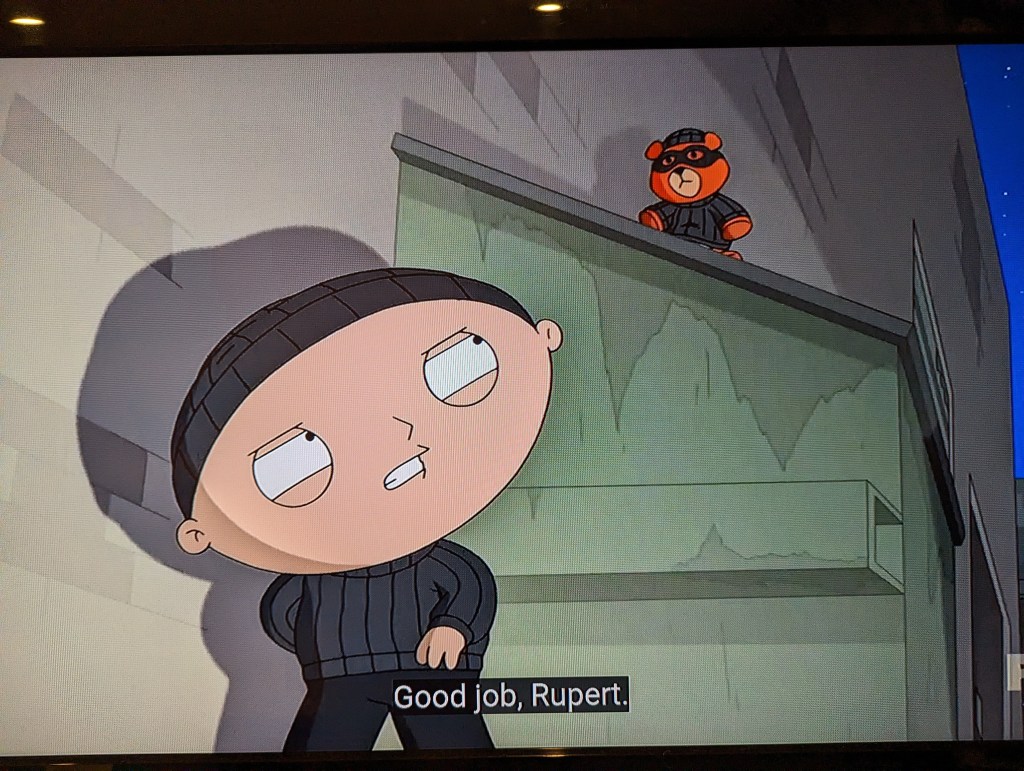
    Y and I also got to spend time catching up via video chat with my cousin Angie in Maryland and our graduate school friend Masaya in Japan. We enjoyed a walk in Green-Wood Cemetery just before we were awash in tree pollen. And, we watched a lot of Family Guy, too.

    Stewie and Rupert from Family Guy.
  • Recovered Writing, PhD in English, Dissertation Defense Opening Statement, May 15, 2012

    This is the sixty-fourth post in a series that I call, “Recovered Writing.” I am going through my personal archive of undergraduate and graduate school writing, recovering those essays I consider interesting but that I am unlikely to revise for traditional publication, and posting those essays as-is on my blog in the hope of engaging others with these ideas that played a formative role in my development as a scholar and teacher. Because this and the other essays in the Recovered Writing series are posted as-is and edited only for web-readability, I hope that readers will accept them for what they are–undergraduate and graduate school essays conveying varying degrees of argumentation, rigor, idea development, and research. Furthermore, I dislike the idea of these essays languishing in a digital tomb, so I offer them here to excite your curiosity and encourage your conversation.

    I prepared this brief statement to introduce the thinking behind the choices that I made on which writers to include and the emergent theme of the dissertation that would lead to my current research: technological ephemerality. This statement is part justification and part roadmap for where I am now and will be in the future.

    To set the stage for making this statement, imagine me sitting at the head of a conference table. Behind me on a podium is a Powerbook 145 with Gibson’s eBook of Neuromancer, Count Zero, and Mona Lisa Overdrive open and the big box for the Neuromancer video game adaptation from the late-1980s.

    Dissertation Defense Opening Statement

    Jason W. Ellis

    15 May 2012

                I would like to thank you all for reading my dissertation, “Brains, Minds, and Computers in Literary and Science Fiction Neuronarratives” and for meeting with me today. I am looking forward to your questions and our discussion. Before we begin, I would like to take this opportunity to describe my project’s goals, it’s origins, my methods of research, and what I hope it accomplishes. As you will see, my iPad figures prominently in these things.

    In my dissertation, I draw on my interdisciplinary interests in literary studies, science fiction studies, history of science and technology, and evolutionary psychology to situate science fiction’s emergence as a genre in the early twentieth century within the larger context of the human animal’s evolutionary co-development with technology. In a sense, I sought the raison d’être of the genre in a Darwinian and cognitive context. I believe the communal teaching aspect of science fiction to be an integral part of the genre itself, and it is this aspect that I gave the name “future prep.” From another perspective, I define science fiction as the kind of literature that performs this function. I also wanted to take one related thread from the genre’s overall development—that being brains, computers, and artificial intelligence—and trace it through the work of three significant writers, namely: Asimov, Dick, and Gibson.

    My dissertation originates in part from my long interest in the biology of the human brain. Perhaps this is a byproduct of the conceptual metaphors that I learned in school or in books that the brain was a type of computer and the computer was a type of brain. We know that these are imperfect analogies, but you can imagine that they can have a strong influence on the development of a curious mind. Even at an early age, I strongly felt the link between brains and computers as evidenced by a sustained performance that convinced my kindergarten classmates I was a robot. More recently, I fell into the physics of mind when I was in high school. Thanks to Stephen Hawking, I stumbled onto the work of his collaborator Roger Penrose, who had done other work arguing that the brain is not a Turning-type computer and that quantum phenomena must play some part in the emergence of human consciousness. Much later, during my MA at the University of Liverpool, I made a deal with a friend in the neuroscience program to give me a digital copy of my brain in exchange for my participating in his neural correlates of facial attractiveness study. However, the most recent and profound shift in my thinking came about in a serendipitous way. During the preparation for my PhD exams, I met with Professor Clewell to discuss my readings for the postmodern theory exam. I recall our conversation veering toward computers and the human brain. I learned from Professor Clewell about the emergent discourse surrounding the human brain and the human experience from a Darwinist/evolutionary rather than a Freudian/psychological or Marxist/social perspective. As invested as my work up to that point was in cultural theory, I was very intrigued by the interdisciplinary possibilities that neuroscientific topics and evolutionary psychology might provide for my work in literary history. Without a doubt, this was a pivotal moment in the development of my dissertation. It provided me a direction to expand the scope of my project from one author—originally on the fiction of Philip K. Dick alone—to three by developing a new theory of the genre in terms of the human brain’s evolution. This was new territory for the literary history of science fiction, and I wanted to trek an unexplored path into this uncharted territory.

    The next stage was to select the literary focus of my research. I chose Dick’s work, because I believe his awareness of the brain’s role in human experience and in our relationship with technology strongly connects to my theory of science fiction. Then, I selected Asimov as a connection between the early editors who shaped the genre and later writers including Dick, whose androids obviously respond to Asimov’s robots. Finally, I decided on Gibson, because he reinvented Dick’s concerns about technologization of the human experience in a more nuanced manner than Dick’s paranoiac division between the android and the human.

    Research and writing of my dissertation presented its own challenges, but I was very pleased that part of the subject matter inspired my own processes of work. In my reading and research, I leveraged computer technology to my advantage to build efficiencies and speed into my work. In particular, I wanted to make all of my research—primary and secondary sources—available on my computer, iPad, and iPhone. The primary reason for this was to make it easier for me to track my research and use digital tools such as textual analysis software and key word search on materials I had read or skimmed. Having the materials on my various computing devices made it easy to search the same or multiple documents very easily and quickly while taking notes or writing in Microsoft Word on my MacBook. Of course, my brain did the work of configuring, contemplating, and creating the dissertation itself.

    The issue of obsolescence, which I discuss a bit about in the concluding part of my dissertation, was also a driving force behind my efforts at digitization of my research materials. For example, the last half of the second chapter presented a unique problem—I needed to read the editorials of the old pulps—particularly Amazing Stories and Astounding—but these pulps are not widely available in library collections, and when they are, it can be difficult to handle and read them due to their extreme fragility. Luckily for my research, legions of science fiction pulp collectors have made much of this material available online as scanned copies. Obviously, there are tensions between the efforts of cultural preservationists and the Disney-fication of copyright law, but due to the nature of my research and its importance to the long literary history of science fiction, some of which is egregiously at risk of disappearing, I side with the preservations. Unfortunately, the scanned materials were not always complete, but they did provide me with some useful evidence and clues to more. I filled these missing holes with interlibrary loan requests that took several weeks to complete. For other primary sources, I was able to track down circulating text files—such as for Asimov’s, Dick’s, and Gibson’s novels, and others, I purchased either through Amazon’s Kindle shop or Apple’s iBook store. I should note that I used these non-paginated materials for research purposes, and I cross-referenced any findings there with the physical copies that I own or borrowed from the library—the only exception being Dick’s Exegesis.

    I also converted many sources on hand into digital copies for my personal use. Generally, I took photos of pages, created a PDF, and ran OCR software to generate searchable text. Due to my limited time, this was especially useful during my research trip to UC-Riverside’s Eaton Collection in February. In addition to my typewritten notes on my MacBook, I captured over 1000 pages of rare and interesting primary research for the Dick and Gibson chapters with my iPhone 4S’s built-in camera. Some of this research is included in the dissertation, but there is much left for me to review as I begin the process of transforming the dissertation into a publishable manuscript. This extra work paid off by revealing quotes overlooked during skimming or reading. While I am reading to you from my iPad, I also have my dissertation manuscript, primary sources, secondary sources, notes, and much more all available at the touch of my finger. However, I have to remain vigilant with my archival practices to ensure my access to my data now and in the future. It is also a challenge to find software that maintains compatibility and preserves my workflow.

    As Gibson warns us in his afterword to the Neuromancer e-book, technology’s fate is obsolescence. As he foretold, it was nearly impossible to access his e-book in its original version. First, I had to wait several weeks to receive a copy of the e-book’s disk from one of the three American universities that hold it. Then, I had to find an older Macintosh with a floppy disk drive to read the disk and in turn allow me to read the e-book. Unfortunately, there are no Macs with floppy disk drives anywhere near Kent State. I turned to eBay to find an early PowerBook, but unfortunately, the first one I purchased was destroyed during shipping. Eventually, I was able to read the e-book with this PowerBook 145, but it took time, money, and know-how. What does the future hold for those of us who want to read the stories these technologies have to tell us, and what effects do these technologies have on our cognitive development? These are questions I plan to investigate following the dissertation.

    In closing, I hope that my work on the literary history of science fiction accomplishes two things. First, I believe that science fiction’s roots run deep, and my dissertation is meant to show how it is a literature that emerges as a byproduct of powerful evolutionary forces of the development of the human brain in conjunction with the human animal’s co-evolution with technology. Second, I hope that my work facilitates further cross-discipline discussion and leads to additional research into the brain’s role in the emergence of human experience and the enjoyment of fiction—especially science fiction.