Category: City Tech

  • A Note on Bruce Sterling’s The Hacker Crackdown

    Bruce Sterling’s The Hacker Crackdown: Law and Disorder on the Electronic Frontier (1992) is a book that I should have read back when it was first published. In fact, I’m rather let down with myself that I did not know about this book back it was published at the same time that I was beginning high school and transitioning from an Amiga user to a PC/DOS enthusiast (if you can imagine such an animal).

    Sterling’s journalistic account of the Hacker Crackdown of 1990 and its immediate aftermath is as enlightening as it is enjoyable to read. He chronicles the passage of the BellSouth E911 document, the targeting of the Legion of Doom, the criminal case against the publisher of Phrack magazine, the  hentanglement of Steve Jackson Games (creator of GURPS Cyberpunk), and the launch of the Electronic Frontier Foundation (EFF).

    Sterling had my attention from the get-go, but I was really jazzed when he writes about FLETC (Federal Law Enforcement Training Center) and my hometown, Brunswick, GA. He visited FLETC to speak with Carlton Fitzpatrick about computer crime.

    Around that same time, I was delivering auto parts to the FLETC repair shop. I was out there at least every few days–virtually free to roam the facility in my Toyota pickup truck emblazoned with “Ellis Auto Parts” on its sides. Sterling might have been touring the facility when I was dropping off distributor points or a new starter.

    Also, around that  time, I was learning about DOS, Windows 3.1, and PC gaming. I had a Commodore Amiga 2000, but I was the only person besides my cousins who owned an Amiga. Of course the Amiga was a more advanced and capable computer than most IBM-compatibles, but I knew many more people with PCs and PC software. So, for a time, I indulged a hobby in PC computers (at least until I discovered the Apple Macintosh SE/30 and the computing universe that represented in Mrs. Ragland’s drafting class).

    Had I read this book back then, who knows what I might have done? I imagine myself taking a detour on one of my delivery missions to the auto shop–and its interior office walls emblazoned with centerfold girls–to drop in to meet Mr. Fitzpatrick. A detour taken while driving and learning a little bit more about computers and computer security could have taken my life on its own detour from where it is now.

    Had I seen computers and networks as an end in themselves–more than I did building, optimizing, and fixing them–my life would have been detoured.

    As it happens, my life detoured in other, unexpected, and interesting ways. At the time, I was focused on learning about plasma physics, and in my off time, the physics of consciousness. I wound up at Georgia Tech, but I quickly learned that I was better at writing about science than doing it full time. During that time, I fell in love with science fiction–especially the New Wave and cyberpunk. I studied how to make art with new media online with HTML and Adobe Flash, and for performance with video production. I worked with James Warbington on two 48-Hour Film Festivals, and I made DVDs for Poetry at Tech (Georgia Tech).

    It is own weird way, the detour comes back around so that I study the relationship between computers and the human brain, science fiction and computers, and writing pedagogy and digital media.

    While things have worked out remarkably well for me despite the weird turns on my life’s road, I still consider the “what ifs,” and sometimes, I try out the “what ifs” by incorporating the “what ifs” into my daily practices. One way besides creating what I tentatively call City Tech’s Retrocomputing Lab in my humble 64 sq. ft. of office space, I decided to take my enthusiasm with computers into the Linux realm. I’ve used different distros in the past on separate partitions or in virtual machines, but this time I wanted to go all-in–perhaps after getting riled up from reading Sterling’s The Hacker Crackdown, which isn’t a story about Linux, but it is in large part about the margins and despite Linux’s successes, it is still on the margins when it comes to the personal computer desktop.

    To follow through on this, I took Uber rides back and forth from Microcenter in Brooklyn (my first Uber rides–necessitated by the heat more than the distance–when the weather’s nice, I enjoy walking to Microcenter from where I live). I had discovered they had a Dell XPS 12 marked down from about $1000 to $450. I purchased one, created a backup of the Windows 8 installer (yes, it had Windows 8, not 8.1 installed), and nuked-and-paved it with Ubutu 14.04 LTS Trusty Tahr (now that I’ve fixed my cursor jumping problem initially encountered by simply turning off touchpad taps/clicks, I might venture into one of the newer versions).

    Of course, I am no more a hacker than I am a neurosurgeon (this latter point, my dissertation director Mack Hassler enjoyed reminding me of despite the subject matter of my neuroscience-focused literary dissertation), but I enjoy exploring, learning, and playing. Occasionally, I do hack things together. I make things–albeit, usually simple things put together with Deckmate screws and duct tape–and I would like to make things using the computer in ways that I have not really done before. Sure, I’ve taken programming classes before, but I created what I was told to make instead of what I wanted to make. This was a lack of imagination and inspiration on my part, and I do not want to continue making that mistake. So, here we go!
  • Retrocomputing at City Tech: Vintage Computers Organized on New Shelves

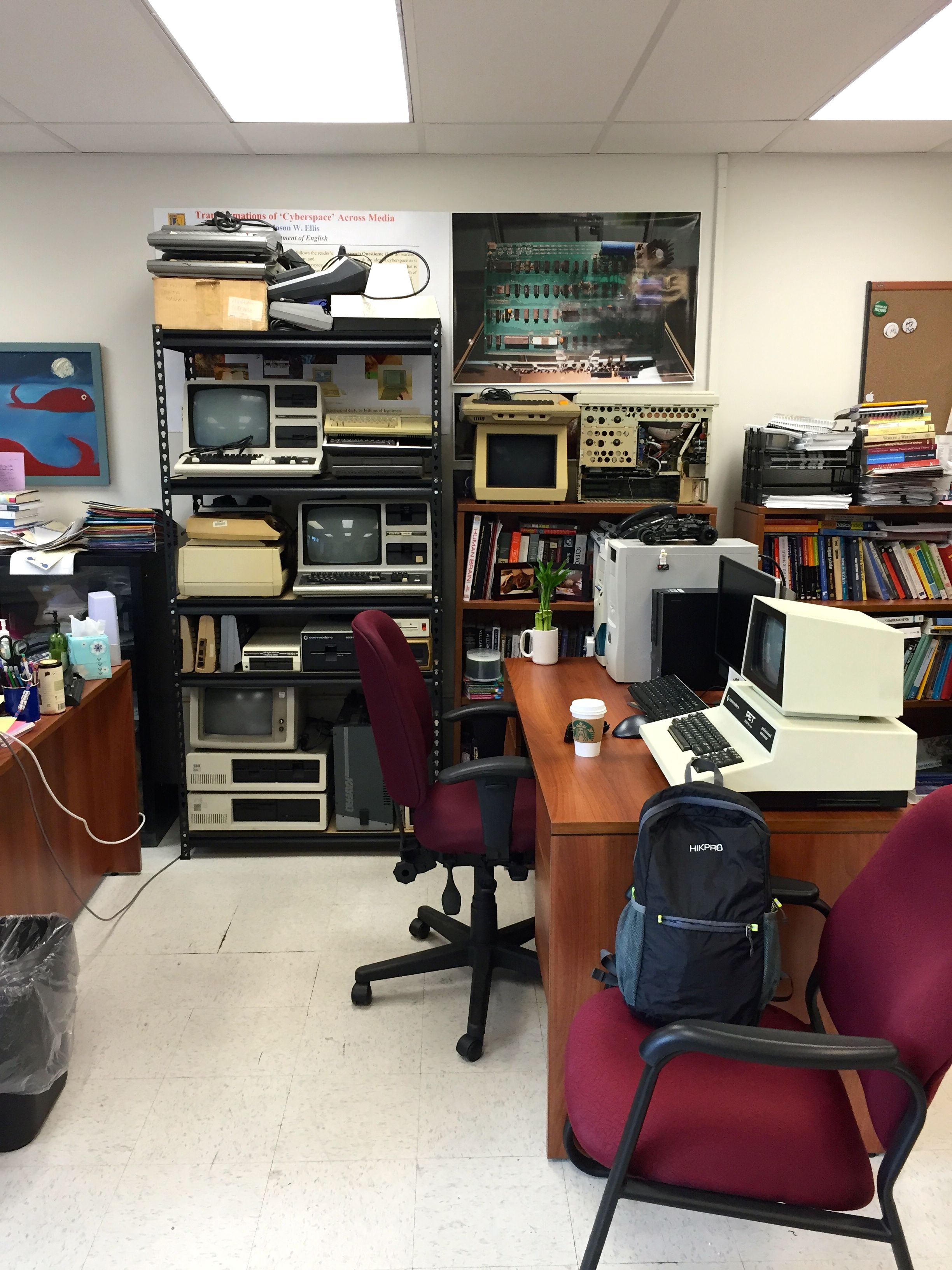
    My Retrocomputing Office Space
    My Retrocomputing Office Space

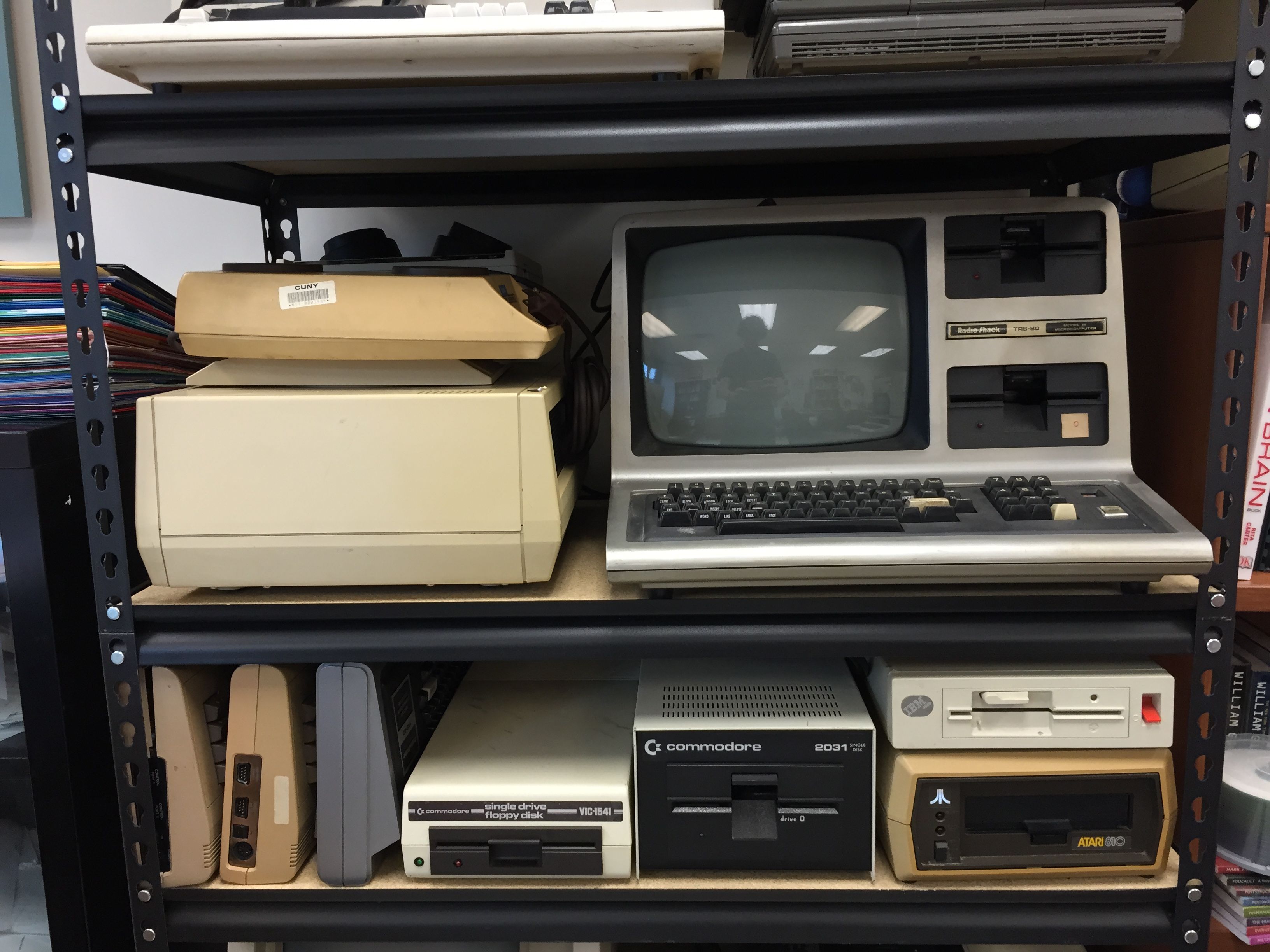
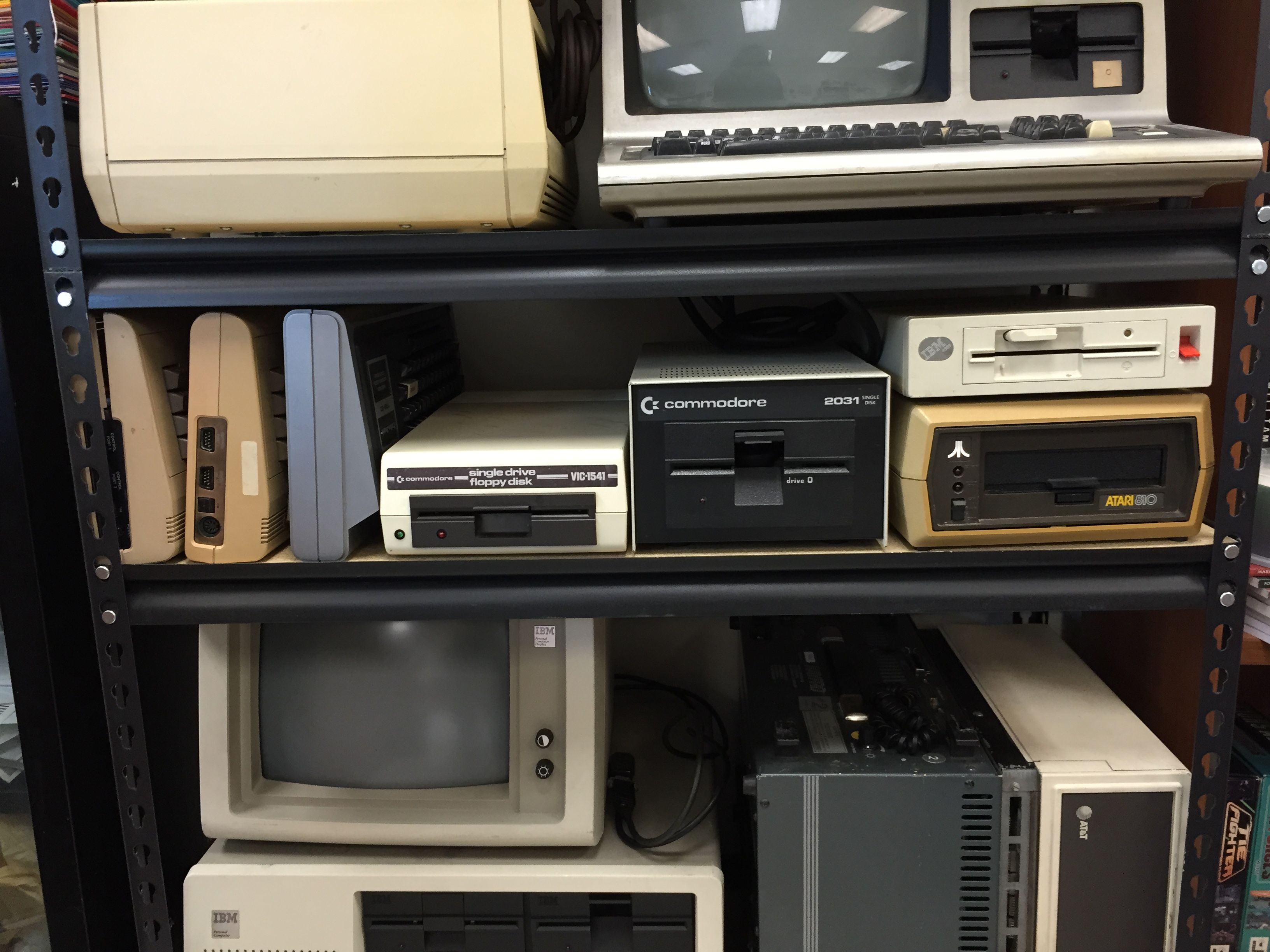
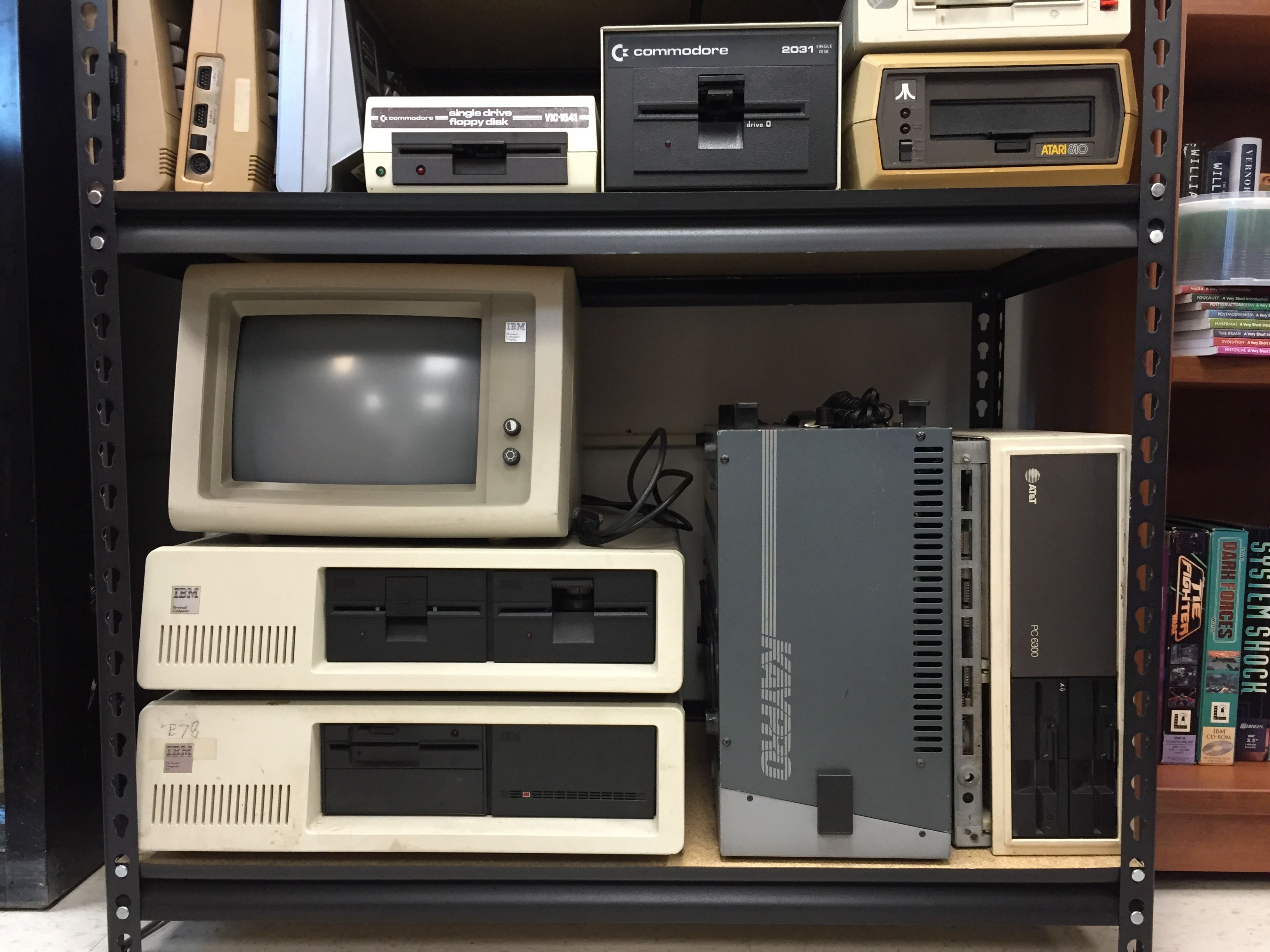
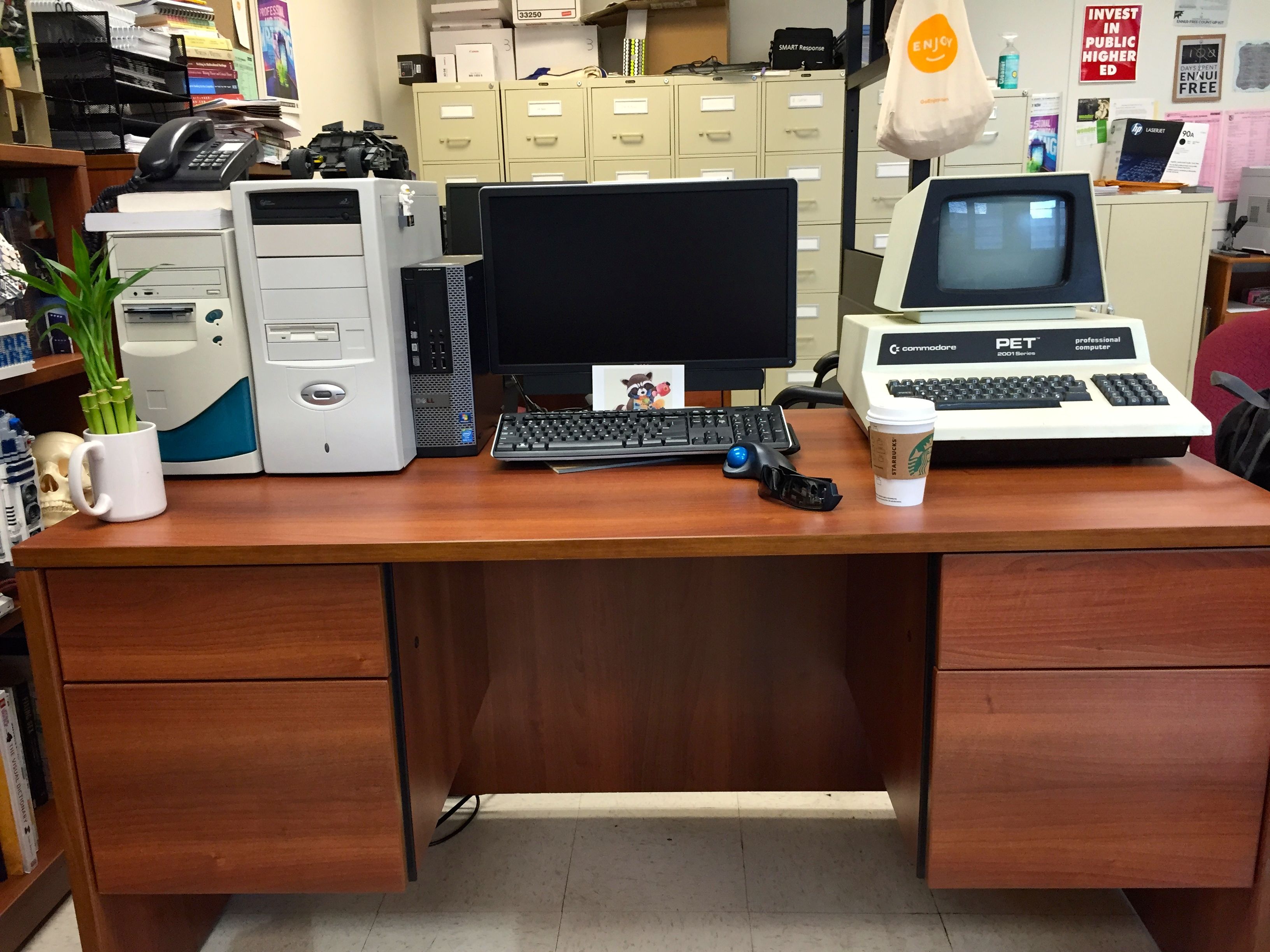
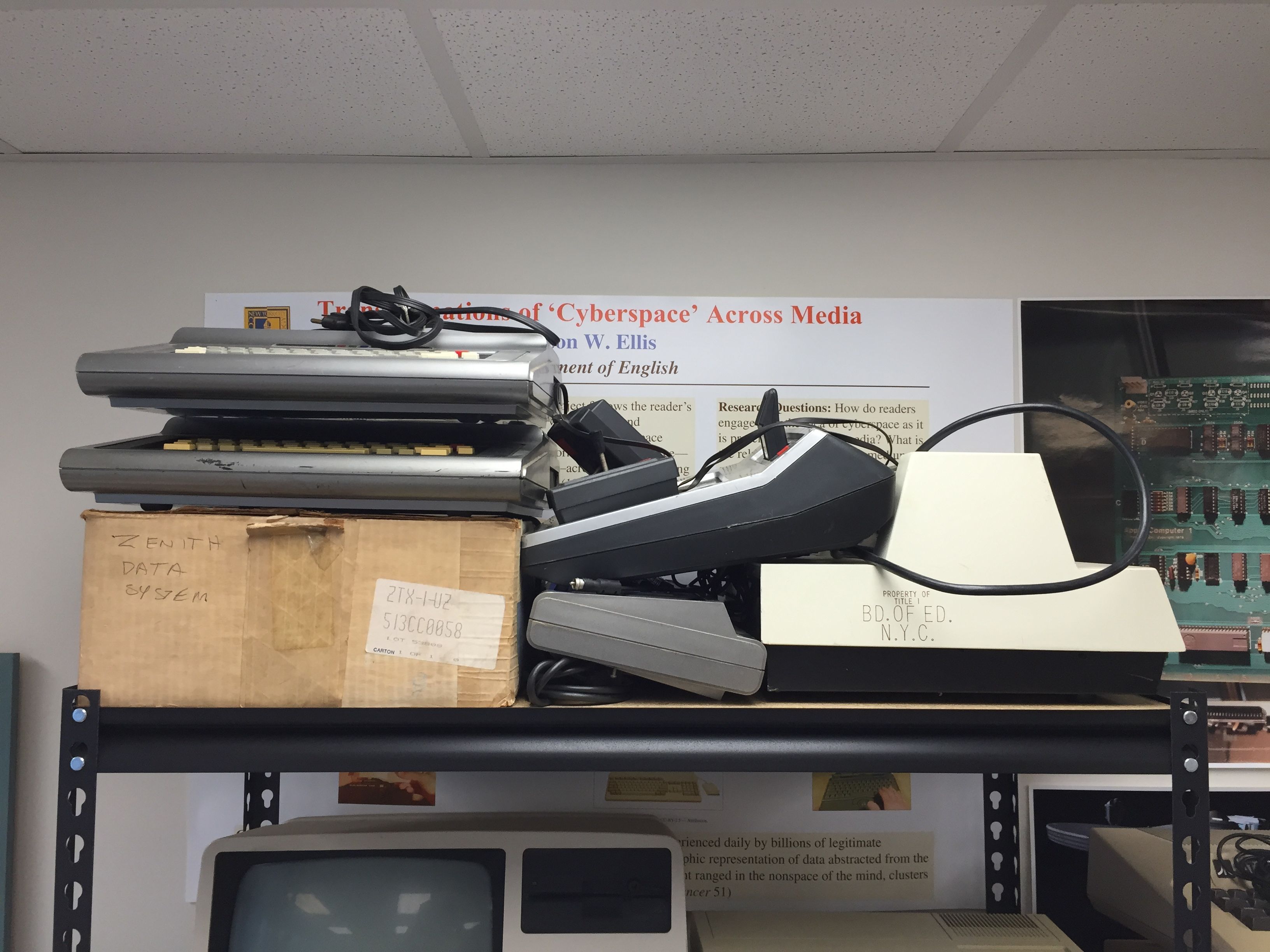
    Thanks to City Tech’s Stanley Kaplan, I now have a substantial new collection of early personal computers including IBM PCs, Radio Shack TRS-80s, a Commodore PET, Texas Instruments TI-99s, ATARI 800, and a number of other computers and peripherals in my office in Namm 520. Some of the smaller items are locked in my filing cabinet, but as you can see from the photos included in this post, I have the larger items arranged around my desk and on a new set of Edsal steel shelves that I purchased on Amazon.com. Now, I have to make some additional room for a large, removable magnetic disk from a TRIAD Computer System (c. late-1970s~early-1980s, the drive that reads this disk was about the size of a washing machine) and an Apple Macintosh Centris 650, which I shipped to myself from Brunswick when I recently visited my parents. In the coming months, I will catalog these machines, see what works, and plan how to use them (research, pedagogy, and exhibits). If you have older computers, disks, or user manuals and would like to donate them for use in my research and teaching, please drop me a line at dynamicsubspace at gmail dot com.

    IMG_0337
    Radio Shack Color Computer 3s, Zenith Data System, Odyssey, TRS-80, and PET Printer.
    IMG_0338
    TRS-80, Texas Instruments TI-99s, and Toshiba Laptop.
    IMG_0339
    Victor Computer and TRS-80.
    IMG_0340
    Commodore 64s, TRS-80, and Various Floppy Disk Drives.
    IMG_0341
    IBM PC, IBM PCxt, Kaypro, and AT&T Desktop.
    IMG_0342
    ATARI 800 and Compaq Portable PC sans case.
    IMG_0343
    Pentium 233 MHz PC, i7 PC, i7 Dell (office standard issue), and Commodore PET.
  • My SFRA 2015 Conference Presentation: The Cyberspace Deck as a Mechanism: Gibson’s Sprawl Trilogy as a Voyager Expanded Book

    The presentation that I will be giving tomorrow afternoon at 1:00PM at the annual Science Fiction Research Association Conference (this year at Stony Brook University on June 25-27, 2015) will be nothing like the title and abstract that I submitted earlier this year, but that’s a good thing. Over the past several months, my reading and research has focused on one small corner of that original abstract: The Voyager Company’s Expanded Book Edition of William Gibson’s Neuromancer with Count Zero and Mona Lisa Overdrive (1992). I began to see the cyberspace deck as an important image and mechanism connecting Gibson’s fictional world with our contemporary shift from written to digital culture.

    Above,  you can watch a demo video that will accompany my presentation as a backdrop to my talk, and below, you can find my paper’s abstract, useful links, and my works cited list for reference. I will have handouts of this information available at the session tomorrow, too.

    Title:

    The Cyberspace Deck as a Mechanism: Gibson’s Sprawl Trilogy as a Voyager Expanded Book

    Abstract:

    Instead of focusing on the epistemology or ontology of cyberspace, this paper explores the cyberspace deck in William Gibson’s fictions as a mechanism of inscription. It does this by charting Gibson’s inspiration in the Apple IIc, his comparison of it to the first Apple PowerBooks, and the publication of his cyberspace deck-infused fictions as the Voyager Company Expanded Book edition in 1992. Through discussing these connections, it addresses other issues of importance for the current shift from written culture to digital culture, such as the effect of reading on screens as opposed to print, and the effect of digital culture on the human brain.

    Useful Links:

    Conference Demo Video (embedded above): http://youtu.be/fU8K2DuTfeE

    Google Glass, iPad, PowerBook 145 Demo Video: https://youtu.be/-XrIqLdx3EU

    Mini vMac Emulation Software: http://gryphel.com/c/minivmac/index.html

    Emaculation Emulation Community: http://www.emaculation.com/doku.php

    Works Cited

    Casimir, Jon. “Voyager Seeks to Improve Thinking.” Sydney Morning Herald (23 May 1995): n.p. Web. 18 May 2015.

    DeStefano, Diana and Jo-Anne LeFebre. “Cognitive Load in Hypertext Reading: A Review.” Computers in Human Behavior 23 (2007): 1616-1641. Web. 22 June 2015.

    Gibson, William. “Afterword.” Neuromancer with Count Zero and Mona Lisa Overdrive. Santa Monica, CA: Voyager Company, 1992. n.p. 3.5” Floppy Disk.

    —. Burning Chrome. New York: EOS, 2003. Print.

    —. Count Zero. New York: Ace, 1987. Print.

    —. Mona Lisa Overdrive. New York: Bantam, 1989. Print.

    —. Neuromancer. New York: Ace, 1984. Print.

    —. Neuromancer with Count Zero and Mona Lisa Overdrive. Santa Monica, CA: Voyager Company, 1992. 3.5” Floppy Disk.

    —. Package. Neuromancer with Count Zero and Mona Lisa Overdrive. Santa Monica, CA: Voyager Company, 1992. 3.5” Floppy Disk.

    Kirschenbaum, Matthew G. Mechanisms: New Media and the Forensic Imagination. Cambridge, MA: MIT Press, 2008. Print.

    Markley, Robert. “Boundaries: Mathematics, Alientation, and the Metaphysics of Cyberspace.” Configurations 2.3 (1994): 485-507. Web. 23 June 2015.

    Matazzoni, Joe. “Books in a New Light.” Publish (October 1992): 16-21. Print.

    Mazlish, Bruce. The Fourth Discontinuity: The Co-Evolution of Humans and Machines. New Haven: Yale UP, 1993. Print.

    Sellen, Abigail J. and Richard H.R. Harper. The Myth of the Paperless Office. Cambridge, MA: MIT Press, 2002. Print.

    Virshup, Amy. “The Teachings of Bob Stein.” Wired (April 2007): n.p. Web. 5 Jan. 2015.

    Wolf, Maryanne. Proust and the Squid: The Story and Science of the Reading Brain. New York: Harper Perennial, 2007.

  • Spring Recess 2015: Reading, Exploring, and Making

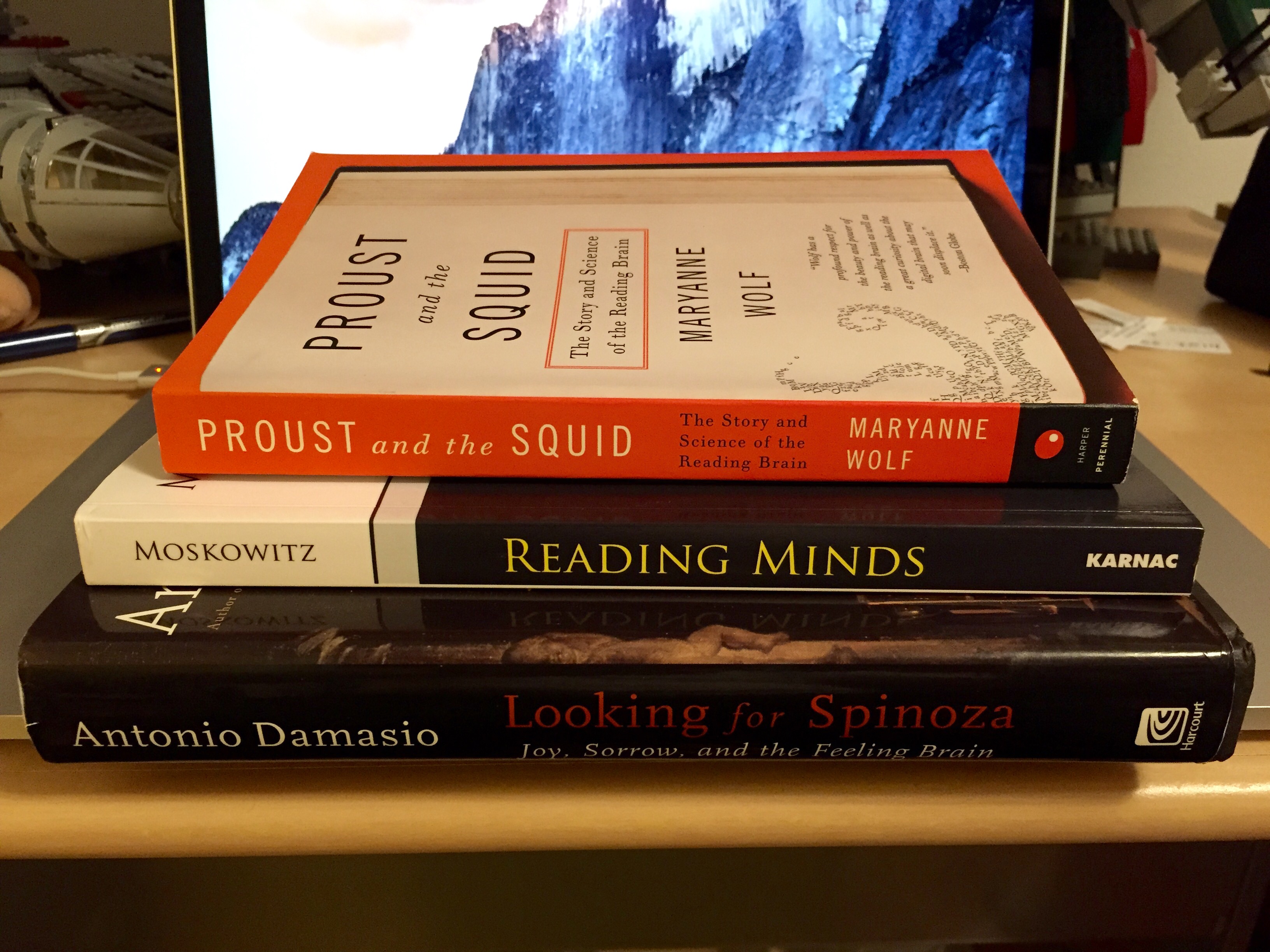
    Spring Break reading list.
    Spring Break reading list.

    I had a fun and productive time during this year’s Spring Recess in our new home of Brooklyn. I read three brain-related books: Maryanne Wolf’s Proust and the Squid, Michael Moskowitz’s Reading Minds, and Antonio Damasio’s Looking for Spinoza. I took the subway to Manhattan twice with Y and Little My to visit Kinokuniya Bookstore, Sun Rise Market, Uncle Sam’s Army Surplus, the New York Public Library, and Washington Square. I picked up an M65 field jacket and put together an EDC kit. I walked to Microcenter twice–each time scoring a free 16GB flash drive thanks to a new coupon promotion. To cap the week off, I completed a draft of my PARSE documentation for advancement at City Tech and posted assignments for tomorrow’s classes on OpenLab. Now, I feel ready to see this semester through to the end.

    A question for my students: how did was your week away from the college? Are you ready to see things through?

  • Second Donation to Georgia Tech Library Archive’s Retrocomputing Lab: Power Macintosh 8500

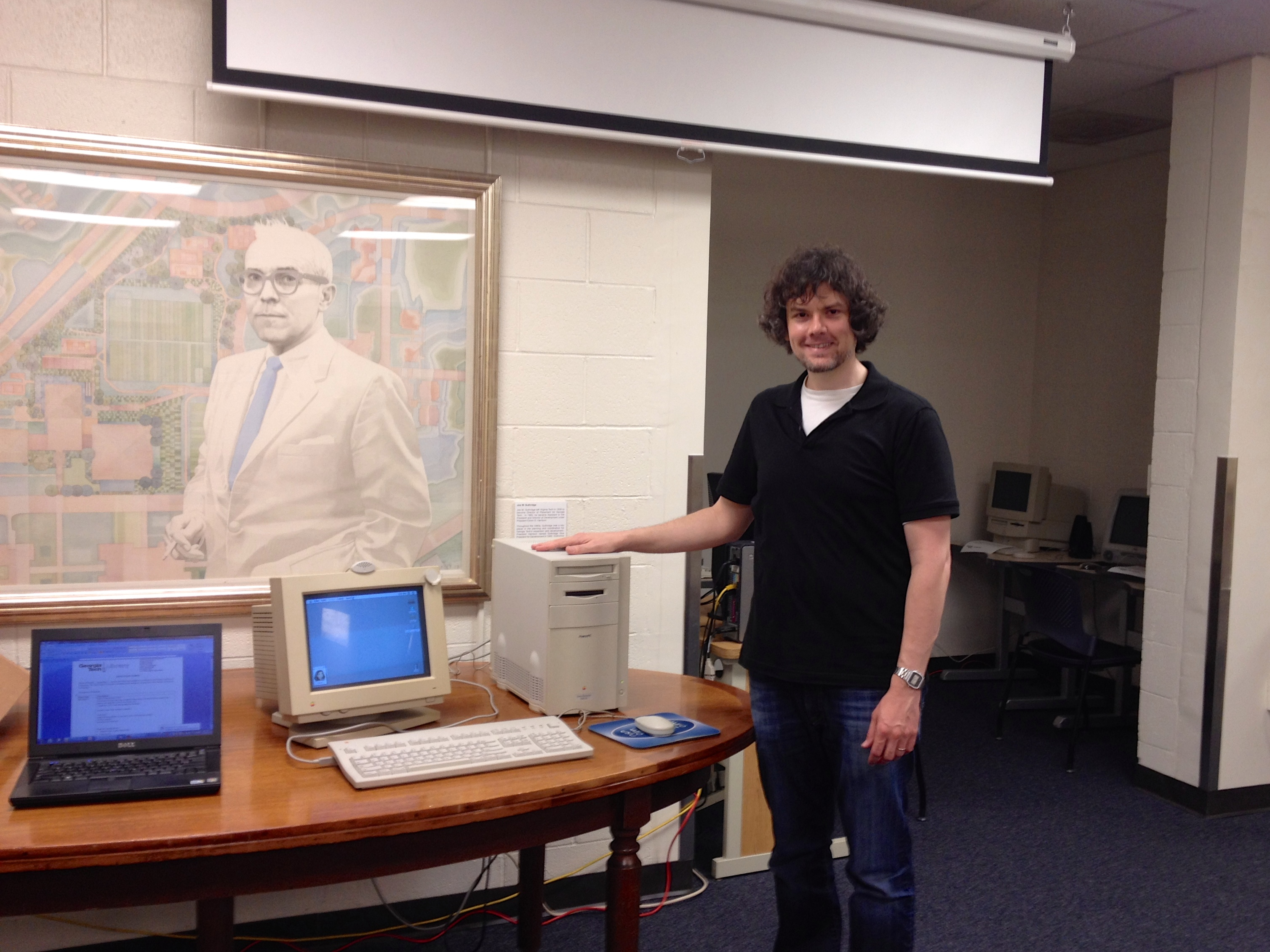
    Me and the Power Macintosh 8500/120 in the Georgia Tech Library Archives.
    Me and the Power Macintosh 8500/120 in the Georgia Tech Library Archives.

    When I met with Georgia Tech Library Archives’ Department Head Jody Lloyd Thompson and Digital Collections Archivist Wendy Hagenmaier to donate three vintage computers (a Dell Dimension 4100, Apple Performa 550, and Apple iMac) and other computing hardware a week and a half ago, I noticed that they had room for one more computer, so I pitched them the idea of my making another donation to fill the gap between the Performa 550’s 68030 processor and the iMac’s G3 processor:  an Apple Power Macintosh 8500/120. They agreed to accept, so I set about preparing the computer for them.

    IMG_5166

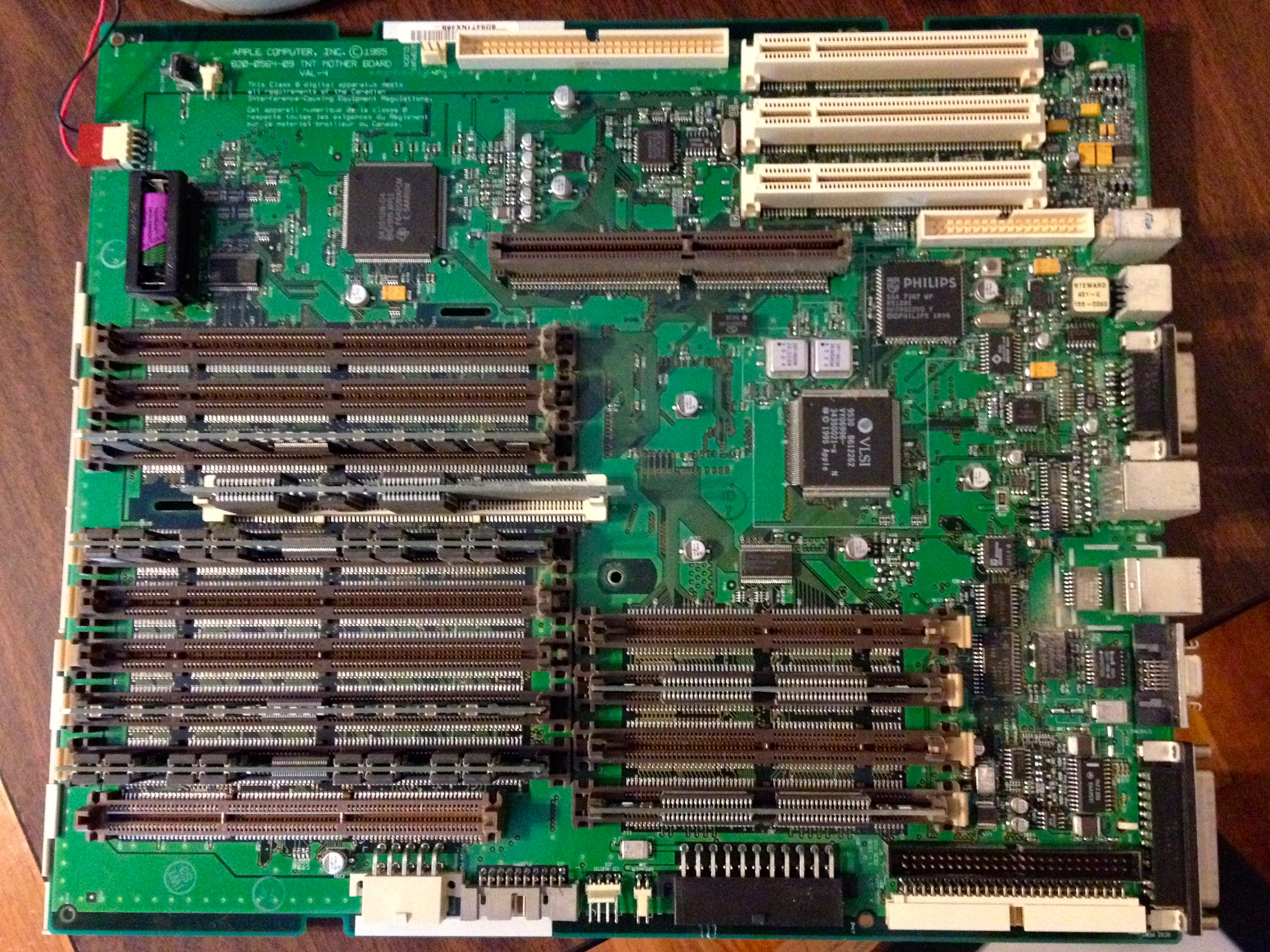
    My Power Macintosh 8500 was in very good shape, but like many vintage computers with persistent clocks, it needed a new lithium battery.

    To replace the Power Macintosh 8500's on-board battery (upper left corner of photo), you have to remove the motherboard.
    To replace the Power Macintosh 8500’s on-board battery (upper left corner of photo), you have to remove the motherboard.

    I replaced the battery, installed Mac OS 7.5.5, a number of different software titles (including Apple’s Plaintalk Speech Recognition–I threw in a Plaintalk powered microphone, Project X/Hot Sauce, and Cyberdog). I discovered that the plastic inside the case did not age well. The PowerMac 8500 has a lot of plastic components that are held together with flexible tabs or clips. When I applied a small amoung of pressure on the tip of these clips to release them, most of them would break. Luckily, the case ties together very well, so I only had to piece some parts back together with clear tape (the power button/light assembly) and metal duct tape (one drive plate cover on the front of the case). To help dissipate heat, I  added a rear slot fan made by Antec.

    I made a video demoing the finalized system, which I’m including embedded below (I apologize for the flicker, but my digital camera doesn’t have enough adjustment features to match the refresh rate on the Apple 14″ Color Display).

    In addition to the Power Macintosh 8500, I gave the Archives a box full of software and late-1990s/early-2000s video games for Macintosh. These might help facilitate more connections around campus (Computer Science, Media Studies, and Game Studies).

    As I’m leaving soon for City Tech, I believe that we can do more together in our work with vintage computing. I floated the idea of a symposium, conference, or some other kind of connected project. Also, from what little I have learned so far, there’s a lot of investment and interest in computer technology in NYC (and Brooklyn in particular). I am looking forward to making new connections with others studying retrocomputing and New Media. I know that many opportunities await.