Category: Equipment

  • Simple Sewing: Hook-and-Loop Patches for Your Backpack

    I outfitted the front MOLLE (Modular Lightweight Load-Carrying Equipment) webbing surface of my backpack with M-Tac’s Morale Patch Boards (3″ square and 4.5″ x 3.5″ rectangle) so that I could swap and change embroidered patches that I sewed hook backing to along the outer border of the patch.

    I enjoy displaying patches that mean something to me. Maybe someone else will see them and get a boost. But for myself, it’s carrying a little morale with me wherever I go.

    I cut slightly more hook material than needed, positioned the patch on the opposite side of the hooks, sewed around the border of the patch through the hook material, and finally, trimmed the excess hook material.

    Unless you’re planning to tape where you’re sewing patches directly to your bag, using hook-and-loop attachments like this will maintain its waterproof/water-resistance.

    Pro Tips:

    • Verify what you need to attach to your patches (hook or loop backing) before you sew!
    • Use a sharp needle of size 2, 3, or 4 as patches are generally heavier fabric and some have thermal heat backing.
    • Absent a thimble to help push the needle through the fabric, use the corner of the table, a LEGO brick, or something else sturdy and not easily damaged by the back of the needle pressing into it.
    • A cheap travel sewing kit with a few needles (though they might be smaller gauge needles than ideal), different color thread to match the border of your patches, and a needle threader should get you started. But, you can create your own kit with a spool of black thread, a pack of needles, and a thimble.

  • In Search of a Better Backpack, Review of The North Face Electra

    IMG_2073

    Despite being labeled for “Women,” I recommend The North Face Electra backpack for anyone needing a compact, EDC bag that can accommodate a 10.5″ tablet. This is my new work bag that carries the things that I need daily without incurring too much added weight.

    IMG_2082

    In a previous blog post, I wrote praise for the Magnoli Clothiers’ British Mark VII Gas Mask Bag reproduction, because it is a good everyday bag for carrying an iPad mini, notebook, lunch, and thermos. It is still a good bag, but I sold my iPad Mini after I got Apple’s new 10.5″ iPad Pro, which would not fit in the Mark VII without the removal of the supporting material stitched through the center of the bag. As you can see in the photo above, TNF Electra is slightly larger than the Mark VII. The Mark VII has just shy of 6L capacity whereas the TNF Electra has 12L capacity.

    I use the TNF Electra to carry the same, essential things as I used the Mark VII to carry, but the difference between the kits is the iPad upgrade from mini to Pro. Above, you can see the various pockets that differentiate the TNF Electra. It has a padded tablet sleeve in the main zippered compartment, the front flap has a Napoleon-style pocket that I use to hold my cellphone, a small zippered compartment in the lower left for change, keys, or another small item, and a slightly larger zippered compartment at the top of the back beneath the grab handle that holds all of my small, regular use items like hand sanitizer, eye drops, pen, pocket knife, etc.

    IMG_2083

    The TNF Electra weighs the same as a Jansport Superbreak–12 oz. However, the Superbreak has more than double the capacity–25L. The difference between the two packs is that the Electra has a smaller surface area against the back, and it has more substantial padding in the back and around the tablet sleeve. The Superbreak has thin back padding and no laptop/tablet sleeve. The TNF Electra’s zippers are more subtantial YKK brand than what Jansport uses on the current Superbreak packs.

    IMG_2074

    The TNF Electra features “Women-specific back panel and shoulder straps.” These have worked fine for me, too. The pack rides high on my back, which I prefer to a pack that is lower, because it allows my back to breathe more and remain cool on my long walks to-and-from work.

    IMG_2080

    The TNF Electra that I have is black heather and burnt coral metallic (it reminds me of Apple’s Rose Gold). Y liked my bag so much that we got her one in dark eggplant purple dark/amaranth purple.

    I like the TNF Electra, because it holds just what I need, is lightweight and compact, and helps me stay cool on my daily long walks.

    While its labeling and colors might signify its use by a specific gender, I think its better to focus on one’s needs than on the social signifiers made into a tool–in this case–a useful bag.

  • Magnoli Clothiers’ British Mark VII Satchel Review, an Excellent Everyday Carry EDC Bag Inspired by Indiana Jones

    IMG_1752

    A bag is a form of technology that helps us move our things from place to place so that we can get our daily work done. Every bag has affordances and constraints. Unfortunately, I find myself running up against what I see as unbalanced trade-offs in these affordances and constraints for my particular circumstances.

    I don’t begrudge a tool’s constraints. In fact, these constraints can be quite liberating. For example, Thomas Lux, my former poetry professor at Georgia Tech, would purposefully give his students specific constraints for a week’s assignment: there can be only so many words, there can be only so many lines, there must be the color green, etc. He explained that these constraints open up possibilities that would not have existed had he not instructed us to create a new work of poetry based around these constraints. Put another way, while affordances are the explicitly designed ways and interfaces for using a technology, constraints can open up new, unforseen possibilities along the lines of William Gibson’s important observation: “the street finds its own use for things.”

    IMG_1766

    Of the bags that I do own, I’ve unstitched a lot of the fluff on my small Timbuk2 messenger, and I’ve unriveted and cut the unnecessary branding and features of my STM Aero 13 backpack. I’ve made them more usable for me, but I come to realize that I didn’t like how large they are for everyday use. Certainly, if I’m going to the store for groceries, a larger bag is better (my stock Jansport Super Break II is usually deployed for these missions), but I’m thinking about the gear that I carry everyday.

    IMG_1759

    So, my bag problem came to be one about just the needed size for the things that I carry everyday. I should explain that these are the things that I carry to and from work. This is about a 2 mile round trip walk. This makes weight and comfort a prime consideration. Also, as I think is true for many instructors, if a large enough bag is available, I tended to bring a lot of work home with me in the form of books and stacks of papers. However, my interaction with this material often was simply via osmosis instead of material-in-hand engagement. I would carry things home with an intention of using the materials and then returning them to campus later, but this often didn’t happen. Life gets in the way (or simply exhaustion–probably from lugging 10 pounds of student work a mile down Court Street), and the books and papers would be returned via a return trip to be used ultimately on campus. Thus, I wanted an EDC bag that would obviate the possiblity of using it for carrying these kinds of materials. Also, I thought that this change might turn me to using my tech gear in a new way–digitizing and scanning only the most important and pressing work to carry home on a device or upload to the cloud.
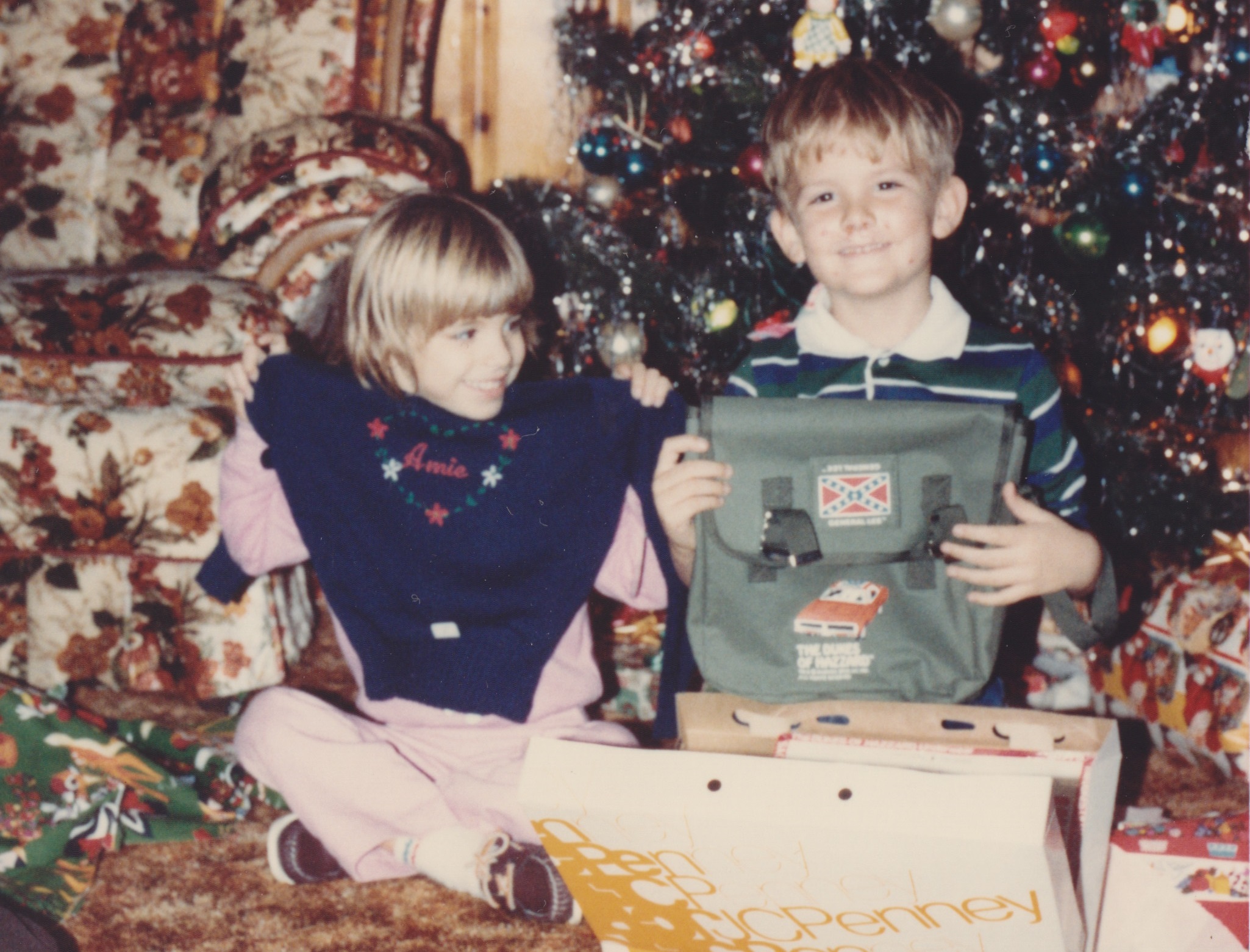
    2010-08-28 - Christmas 1982 2

    As you’re probably familiar with, the character Indiana Jones made famous the anachronistic British Mk VII gas mask bag (the bag did not yet exist during the period of the first three Indy films). When I was a kid, my cousin Amie and her folks gave me one of my most precious gifts–a Dukes of Hazard shoulder bag. I wore it everywhere and it always contained my most essential kit–toys, candy, and a leather whip. Yes, I fancied this bag as my Indy bag. When its strap broke, I tied my best knot to keep on adventuring with it. Looking through old photos like the one above when I received it, I was reminded about how much I liked its size and simplicity.
    FullSizeRender (4)

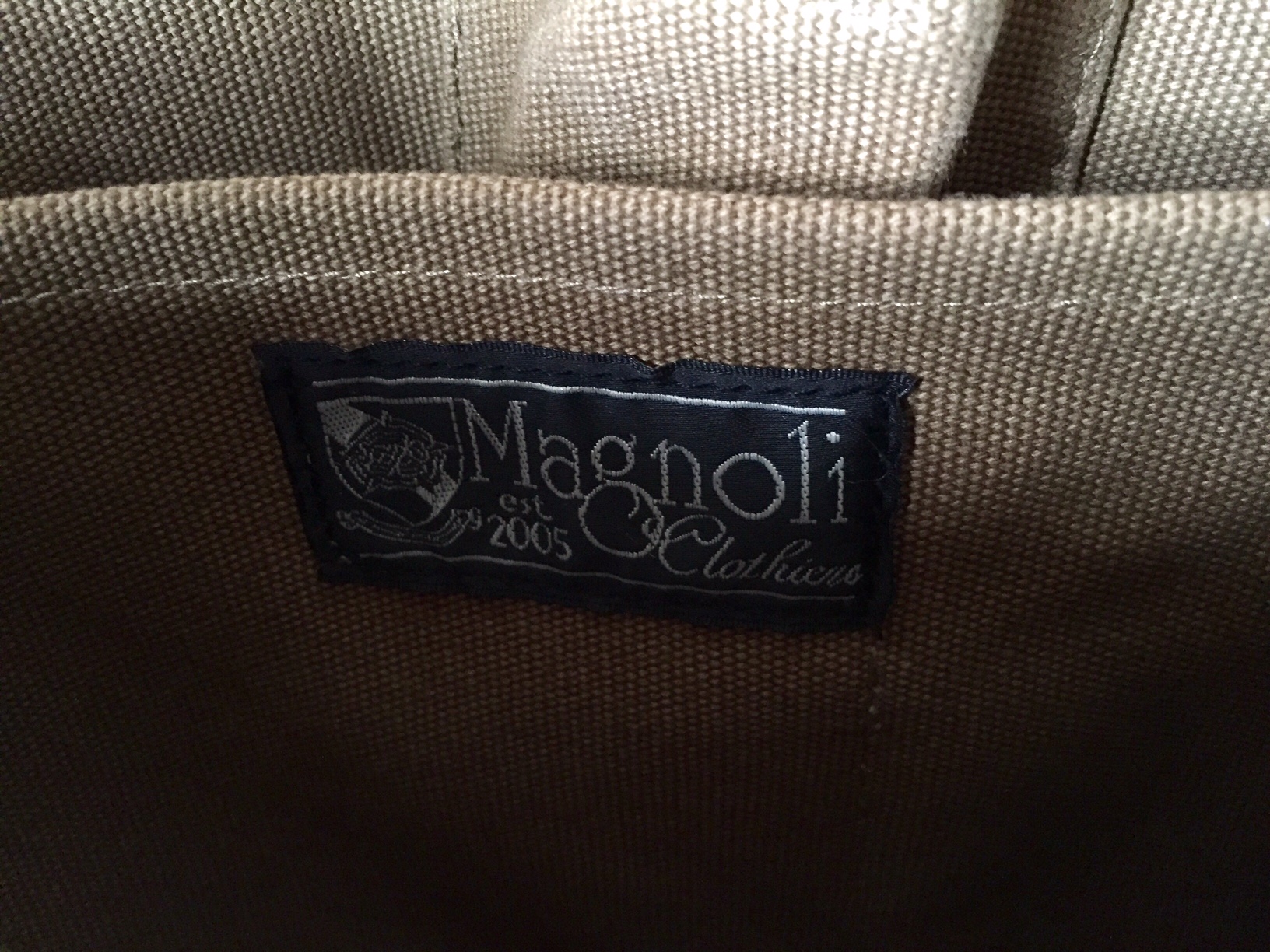
    In my searches, a name kept popping up: Magnoli Clothiers. It is an outfit based in New Zealand that specializes in making clothing and prop reproductions from film and television (and other bespoke tailoring services, too). Many folks online–especially in forums discussing Indiana Jones–recommended their reproduction of Indy’s bag called the British Mk VII Satchel. I figured that its low cost justified trying it out. Also, I liked that it didn’t include a shoulder strap. Magnoli Clothiers offers an add-on leather strap, which would make the Mk VII satchel match Indy’s customized look (the original Mk VII bag has a built-in canvas shoulder strap). For me, however, I decided to get a 55″ Rothco General Purpose Nylon Strap. It is adjustable and has metal hooks on either end to mate with the customized metal rings on either side of Magnoli Clothiers’ Mk VII satchel.

    The British Mk VII satchel measures about 11″ x 11″ x 3″. It has a number of compartments. The front-most pocket holds an Apple iPad Mini 4 with Smart Cover and a Muji A5 notebook. The large middle compartment is open at the bottom, but there is a divider making the left side slightly larger than the right. I put my 16 oz. Zojirushi thermos on the right and my lunch/supper fixings (usually MREs) on the left. Rolling about in the bottom of this compartment, I leave my pens, pencils, pocket knife, flashlight, eye drops, and Advil. In the back of the back against your body are two small pockets–my phone goes into one of these and my business cards in the other. Sewn between these pockets is a small pouch that holds a 1 oz. hand sanitizer bottle perfectly.

    IMG_1761

    Over the past two weeks, I’ve been having great success with the British Mk VII satchel. Its affordances (It carries my essential things to and from work) and its constraints (Its smaller volume made me change my workflow to be honest with my carry-home workload and essentially carry less to and from work) have worked out very positively for me. I’m curious about how it will hold up in the long term, but its already received bumps and brushes on the street, train, and campus without any appreciable wear. If you are looking for a small bag for essentials, drink, food, and personal electronics, I highly recommend the British Mk VII satchel.

    IMG_1558

  • Travel Light With Only a Regular JanSport Backpack, From My Experience at Dragon*Con 2011 in Atlanta

    When I flew to Atlanta for Dragon*Con 2011 this past weekend, I only carried a regular sized two pocket JanSport school backpack [pictured above]. Like many other folks, I have discovered the joy of lightweight traveling.

    As Y and I discovered during our trip to Europe over the Summer, carrying fewer things makes travel a lot easier and less stressful.

    In order to succeed at lightweight travel, you have to critically evaluate your travel needs and plan ahead for ways in which you can reuse, repurpose, and clean your things on the go.

    This is what I fit into the JanSport: two days of clothes, toiletries, 13″ MacBook, iPhone, compact digital camera, chargers, snacks, travel documents, and Mr. Bread (for photos).

    For the trip to Atlanta, I knew that I would be staying there for two days, so I had to bring enough clothes for that. I wore a polo shirt, Lucky jeans, and Teva hiking shoes on the trip down. Despite the heat, I knew that a nice pair of jeans are a great all-purpose and all-setting garment. Also, I needed my laptop for the SFRA panel on Sunday and a camera for the parade on Saturday. This meant that I also needed chargers for my laptop and camera batteries. I knew that I would bring my iPhone, but that doesn’t necessarily need its own charger–only a USB adapter to connect it to my MacBook for recharging.

    In addition to traveling light, it is smart to organize your things so that you don’t have to hunt for things on the road. I used a clothes washing bag to hold two polo shirts, underwear, and socks. I used another bag to hold electronic support gear (screen wipe, camera lens cleaning pen, chargers, thumb drive). My MacBook went into its own neoprene sleeve, which also carried my travel documents. Liquids went into a quart ziplock bag, and my other toiletries went into a small zip-up bag. The types of bags that I employed did require a little extra weight, but the sizes and colors allowed me to immediately recognize what bag held what things. Grocery bags and ziplock bags would work if you are weight conscious.

    Having only the backpack of things to carry around meant that I could easily board the puddle-jumper aircraft that I knew that I would be flying without having to gate check anything. Also, a backpack fits easily underneath the seat in front of you, which means that you can easily grab things without having to hunt through the overhead bins. Also, I knew that I would have to check out of my hotel before the SFRA panel on Sunday, so I didn’t want to have to carry a roller bag through the 40,000+ crowds at Dragon*Con.

    I am very pleased with my single backpack traveling experience to Atlanta. The con was certainly stressful enough for me, so having one less thing to worry about made me more relaxed.

    Considering it from another perspective, my choice to travel with less things meant that I made a lower impact on the environmental costs of getting me from Ohio to Atlanta and back again. Less weight means less fuels/energy consumed by my car, by the aircraft, by the Marta train.

    Planning and organizing might save you some travel stress, too. And you can contribute to less pollution, too, especially if more of us choose to travel with fewer things that we probably don’t need to travel with anyways.