Category: Georgia Tech

  • Notes from the State of Black Science Fiction Film Festival 2013

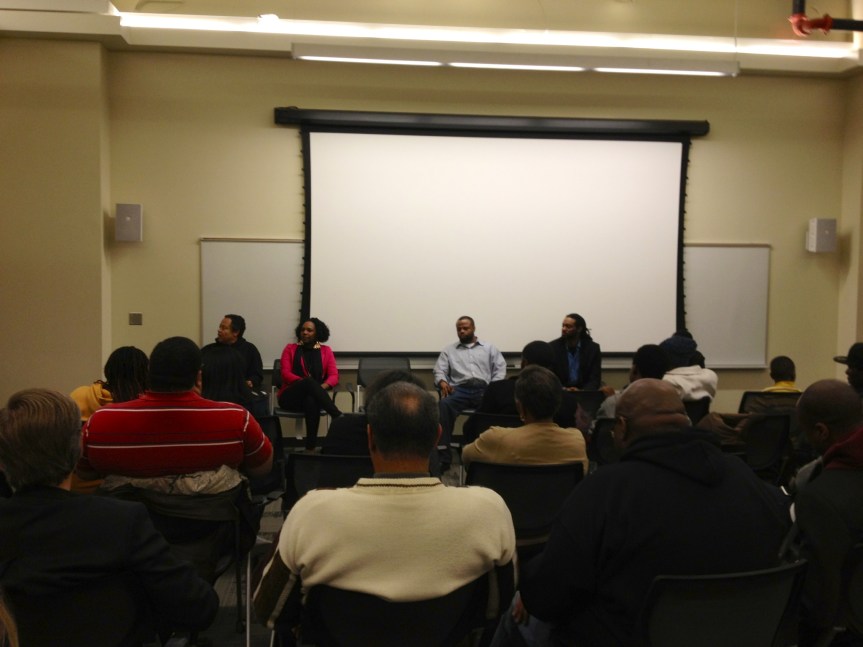
    Audience and panelists at the State of Black SF Film Festival.
    Audience and panelists at the State of Black SF Film Festival.

    Tonight, it was standing room only in Georgia Tech’s Hall Building Room 102 for the 2013 State of Black Science Fiction Film Festival. Co-presented by the School of Literature, Media, and Communication and the State of Black Science Fiction Collective, it presented a number of cutting edge and independent films and opened conversation between filmmakers, writers, and critics. Professor Lisa Yaszek introduced the festival and Georgia Tech’s long history with science fiction via her predecessor Bud Foote, and Milton Davis and Balogun Ojetade organized the festival, introduced the films, and lead the post-screening panel discussion.

    All of the films were exceptionally great! I have listed the films shown below with links to the video or more information where available.

    Clayton Ziga’s “I am Designer” imagines a world where adoptive children can be surgically and technologically redesigned to meet the wants of their adoptive parents.

    Matthew Savage’s dieselpunk, noirish short film “Reign of Death,” pits a gumshoe against an allegedly murderous robot. I really liked the integration of the CGI robot with the Sin City-esque visual feel of the moving picture.

    Tommy Bottoms showed off his webseries, “Eternal.” It was billed as “True Blood meets The Wire,” and it combines the gritty reality of life with action and humor. In the episodes that we saw, I have to say that my favorite line of the whole night came when the main character Josh Davis, not understanding how the vampires around him seemingly vanish in thin air, exclaims, “Fucking magic tricks!”

    We caught a glimpse of Teresa Dowell-Vest’s “Genesis: New American Superheroes,” which is about a couple who survived the Tuskeegee Experiment, went on to become scientists, and bestow science-derived gifts to their their five children: Tage/Power of Earth, Xavier/Power of Water, Xander/Power of Fire, Jordan/Power of Wind, and Quincey/Power of Technology and Knowledge.

    Bree Newsome treated the audience to her Southern tale of horror titled, “Wake.” A woman gets more than she bargains for when she conjures a man to marry after ridding herself of her controlling father. Besides being creepy, disturbing, and occasionally funny, I enjoyed its playful use of language.

    Balogun Ojetade showed the audience an excerpt from the larger steamfunk project titled, “Rite of Passage: Initiation.” In the scene, Harriet Tubman challenges her student Dorthy to a martial arts contest.

    Finally, Donnie Leapheart presented two episodes of his action-packed webseries Osiris. This SF thriller is about a seemingly immortal man fighting back against corporate interests who want to commoditize and sell his ability to live forever. The two episodes that we saw were slick and clever. I was also impressed by the high production value of this series made for the web.

    After the screening, Davis and Ojetade lead a panel discussion with Teresa Dowell-Vest, Donnie Leapheart, Tommy Bottoms, Bree Newsome, and Steve Barnes (writer, critic, and martial artist). What follows are my notes and paraphrasing from the conversation.

    Question: What makes something black SF?

    Bottoms: It can be the production side, actors, or story. However, anyone should be able to enjoy these films, not necessarily an exclusive black audience.

    Dowell-Vest: She aims to create a body of work that transcends race and is enjoyable to a broad audience.

    Leapheart: He embraces the idea of black SF, because he knows that there are black nerds, but they don’t get represented. Since SF is the biggest grossing genre for a broad audience, why are not more black filmmakers putting their voice out there in SF to reach that audience?

    Barnes: He breaks down the definitions of SF, fantasy, and horror to help develop the terminology of the discussion. Broadly speaking, all fiction is fantasy, because fiction is not real. However, what we think of as fantasy involves a world that is unlike our own and operates by a set of rules significantly different than our own. SF is a subset of fantasy that must follow the rules of science, but it can be allowed to break one rule–such as time travel–to produce stories around: what if, if only, and if this goes on. Horror is another subset of fantasy in which the dominant mode is fear and it generates dread in the audience. There are many different kinds of horror: SF horror, fantasy horror, psychological horror, etc.

    Question: How and why are black people portrayed negatively in the media?

    Newsome: Where do we start!?

    Bottoms: Right now, our culture embraces this as entertainment. At least in the past with Blaxploitation, social consciousness and positive endings were an integral part of the early wave of these films.

    Newsome: We are fighting and combating stereotypes. Media is not separate from the social world.

    Barnes: Negative portrayals are likely not something done with conscious intent, but are the way people actually thought. Put another way, they are not trying to make a group look negative. Instead, they are simply presenting their internalized beliefs. Furthermore, it has a lot to do with one group in a superior position defining itself against others.

    Leapheart: We can blame the media, whites, etc., but if you look online there are many negative videos produced by blacks with loads of views and other positive videos with very few views. Is art imitating life or life imitating art? Should we give people what they want (or think that they want), or do we keep doing our own thing?

    Dowell-Vest: She is concerned about the declining representation on television. At one point, we had a menu of options (e.g., Cosby, A Different World, In Living Color, etc.), but now it seems to be all on the shoulders of the character Olivia Pope in the show Scandal. If she were played by a white woman, would we be having this conversation? She sees a cycle of fight-struggle-complacency, and she worries that we are now in a period of complacency. True art and storytelling come from bucking the status quo.

    Barnes: In the history of network television, there have only been four successful black-starring hour-long dramas. This is why so much rides on Olivia Pope and Scandal. He also mentioned the TV series Deception.

    Newsome: Waits for a time when we don’t have to rely on only one show to represent all black people.

    Question: What is the future of black film (while considering Quintin Tarantino’s Django Unchained)?

    Bottoms: Don’t tell someone that they can’t make a film. If you think that you can do it better, then you go out and make it. He enjoyed Django Unchained despite the problems that some people had with its language–how else could you do it, he asked?

    Barnes: Loved Django Unchained. He went to see it with one of Louis Farrakhan’s body guards, who laughed his ass off. Only five directors could have pulled off this film, and four didn’t want to do it. Taratino grew up around black people, and he represented what he knew from his perspective. Anyone can write about others’ experiences, and we have a right to disagree with their perspective. A good thing about Django Unchained is that it proved that a movie with central black characters can sell to an international audience. He asked the audience a pointed question: When was the last time that you saw a film with slaves? Amistad? No, it debated their freedom. Beloved? They were ex-slaves. This is the third rail of cinema, and Taratino is crazy enough to go there and he made people laugh doing it. The film is not a perfect thing, but it is a good thing.

    Dowell-Vest: She is from Virginia, and for her, Nat Turner is very real history. There is something significant about that moment when the oppressed have their time or their revenge. It can be soul serving or spiritually serving. She felt that Taratino had given her what she needed.

    Newsome: You can’t say he can’t make something because of his race, because then, you say that I can’t make a kind of film due to my race.

    Leapheart: Concerned that despite the high a film like this might give us now, it is likely not the beginning of a new wave. Instead, its momentum will dissipate.

    Barnes: Yet, a film like this sets the ground for the future: experience, learning, jobs. It is up to you guys (the filmmakers on the panel) to make the future.

    Bottoms: There is this thing that I’ve heard about called the Internet, and it gives us new options, choices, and a chance for change. However, change takes time.

    Unfortunately, at that point, we had to close it down for the evening. This was an exciting event that reminded me it was very good to be back in Atlanta at Georgia Tech.

    The conversation continues at the State of Black Science Fiction group on Facebook here. See you there!

    Update: Dead video links removed on 9 Nov. 2023.
  • Down and Dirty Guide to Literary Research with Digital Humanities Tools: Text Mining Basics

    2010-10-05 - IMG_2791
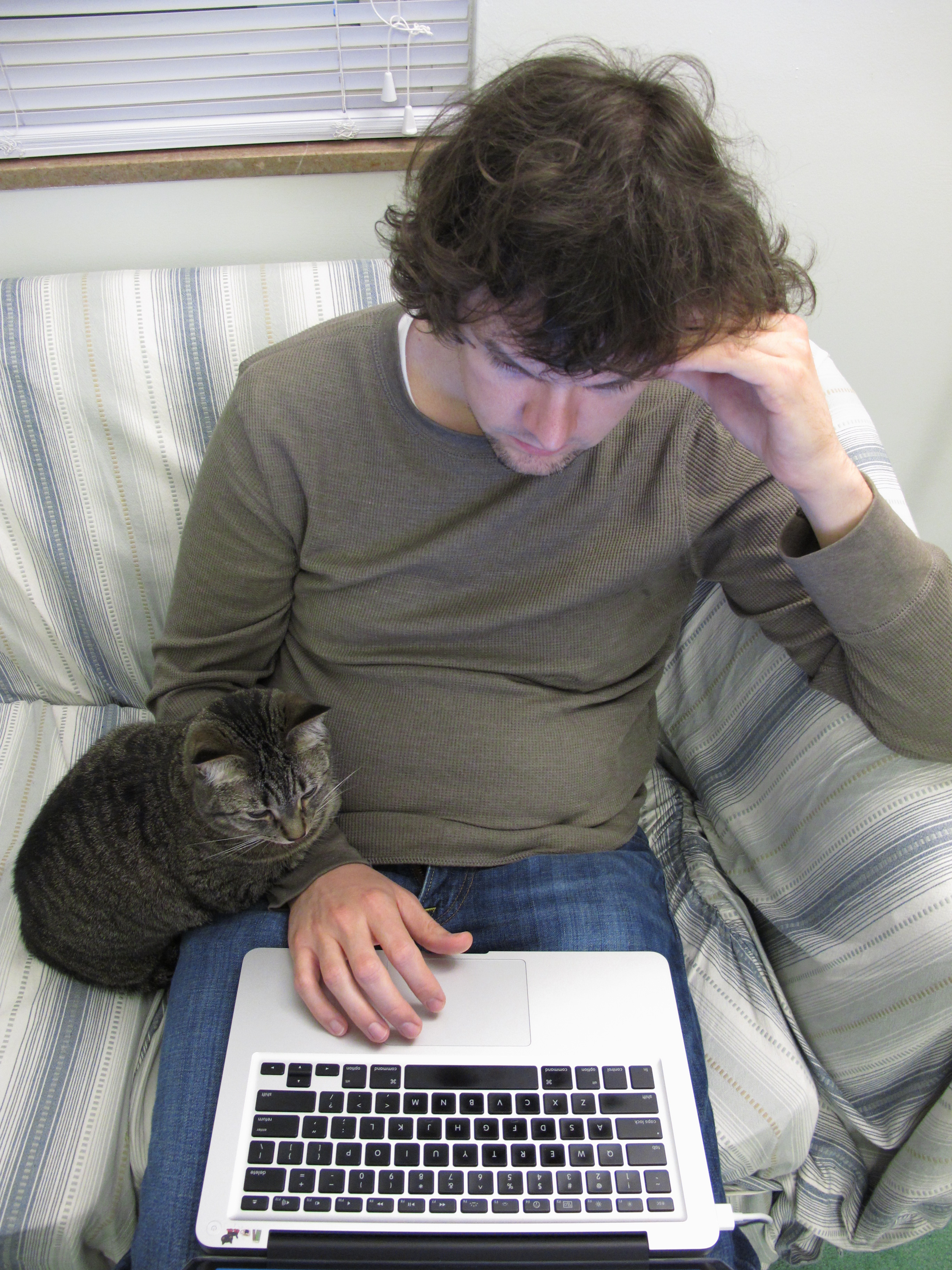
    Miao and Jason get things done with computers!

    As part of the final Digital Pedagogy seminar of fall 2012, Margaret Konkol, Patrick McHenry, Olga Menagarishvili, and I will lead the discussion on “trends in the digital humanities.” You can find out more about our readings and other DH resources by reading our TECHStyle post here.

    As part of my contribution to the seminar, I will give a demo titled, “Down and Dirty Guide to Literary Research with Digital Humanities Tools: Text Mining Basics.” In my presentation, I will show how traditional literary scholars can employ computers, cameras, and software to enhance their research.

    To supplement my presentation, I created the following outline with links to useful resources.

    Down and Dirty Guide to Literary Research with Digital Humanities Tools: Text Mining Basics

    1. Text Analysis and Text Mining
      1. My working definition of text mining: “Studying texts with computers and software to uncover new patterns, overlooked connections, and deeper meaning.”
      2. What is Text Analysis: Electronic Texts and Text Analysis by Geoffrey Rockwell and Ian Lancashire
      3. Text mining on Wikipedia
      4. Text Mining as a Research Tool by Ryan Shaw (an excellent resource with a presentation and links to more useful material on and offline)
    2. Advantages to Digital Research Materials
      1. Ask Interesting Questions That Would Otherwise Be Too Difficult or Time Consuming to Ask
      2. Efficiency
      3. Thoroughness
      4. Find New Patterns
      5. Develop Greater Insight
    3. Types of Digital Research Materials
      1. Your Notes
      2. eBooks
      3. eJournals
    4. Digitizing Your Own Research Materials
      1. What to Digitize
        1. Primary Sources
        2. Secondary Sources
      2. How to Digitize
        1. Acquire
          1. Camera > high resolution JPG
          2. Scanner > high resolution TIFF or JPG
        2. Collate as PDF
          1. Adobe Acrobat X Pro (now XI!)
          2. PDFCreator
          3. Mac OS X Preview
        3. Perform Optical Character Recognition (OCR) to generate machine readable/searchable plain text
          1. Adobe Acrobat X Pro
            1. Print PDF to a letter size PDF
            2. Tool > Recognize Text
          2. DevonThink
          3. Use Google
          4. Others?
        4. Save As/Export plain text > .txt files
        5. Engage the “Text” in New Ways
          1. New Ways of Seeing “Texts”
            1. Keyword Search
            2. Line Search
            3. Word Counts
            4. Concordance
            5. Patterns
          2. Tools to Help with Seeing “Texts”
            1. AntConc
            2. BBEdit (“It doesn’t suck” ®)
            3. MacOS X and Linux: cat, find, grep, and print (use “man cat” and “man grep” to learn more from the Terminal. More info herehere, here, here, and here.)
            4. DevonThink
            5. Notepad++
            6. Mac OS X Spotlight/Windows 7 Search
            7. TextEdit
            8. Others?

    IMG_0987
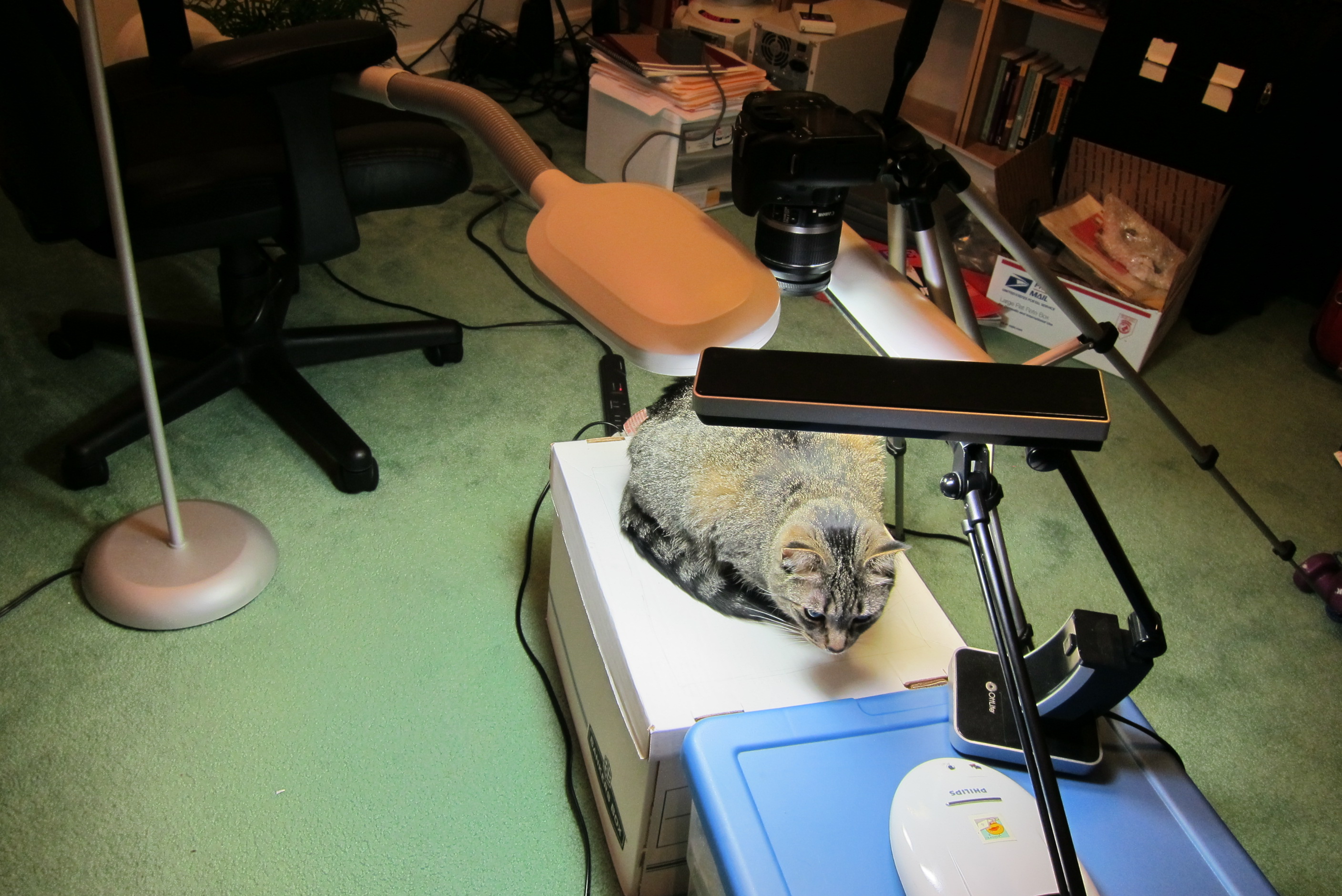
    Miao awaits digitization.

  • Learning and Teaching New Tricks in Technical Communication: Presentations on Single-Sourcing and Digital Literacy

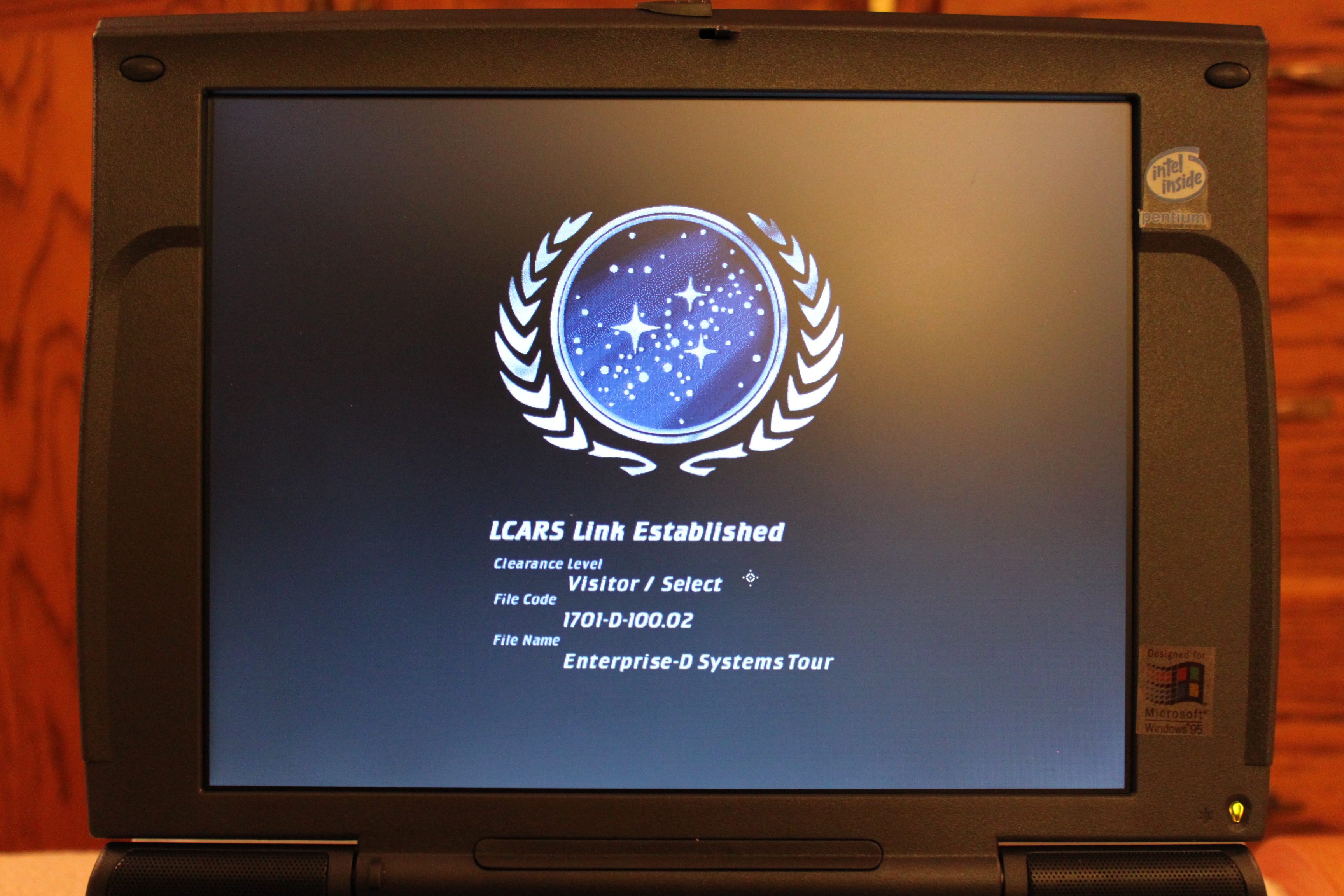
    LCARS Initialization Screen from Star Trek: TNG Technical Manual for Windows 3.1

    As a member of Georgia Tech’s Brittain Fellowship in the Writing and Communication Program, I have the tremendous opportunity to participate in seminars with my peers after the day’s teaching is done.

    All Brittain Fellows are required to participate in the weekly Digital Pedagogy seminar on Wednesday evenings and those Fellows who are specifically teaching technical communication or business writing are also required to join the weekly Technical Communication seminar on Monday nights. Since I am not teaching tech comm but eager to teach it in the near future, I volunteered to join the tech comm folks on Mondays.

    At the beginning of the semester in both seminars, we brainstormed and chose topics to present on. From the list of topics, two people elected to work together to choose readings and guide the discussion. For tech comm, we picked these topics to discuss during the fall semester: Rhetorical vs. Instrumental; Career planning; the Ethos or Soul of Technical Communication; Syntactics, grammar, conventions in tech discourse; Gender and Technical Discourse; Visual literacy; Accessibility issues; Single-sourcing and user experience (UX); Digital Literacy and Social media; Workplace Ethics, Technical Discourse, and Business Culture; Service learning; Orality and Nonverbal Communication in the workplace;  and Disciplinary distinctions and conventions.

    As you might guess from my research interests in digital discourses, I volunteered to present one week on Single-sourcing and user experience (UX) and another week on Digital Literacy and Social media.

    Rachel Mahan and I presented on single-sourcing and user experience on Oct. 29, 2012. After I introduced different approaches and theoretical issues surrounding single-sourcing, Rachel shared her personal workplace experience with single-sourcing. I also shared firsthand experience from fellow Georgia Tech alums Smitha Prasadh and Andrew Pilsch (many thanks!). You can find our discussion readings and questions on TechStyle here.

    Olga Menagarishvili and I presented on Digital Literacy and Social Media on Nov. 5, 2012. I lead the group through a number of tools for analyzing social media privacy, and Olga prepared a fun active learning “jigsaw” assignment to lead the group toward a deeper discussion of “layered literacies.” You can find our readings, discussion questions, and online resources on TechStyle here.

    I am now developing my first technical communication syllabus and assignments. I have some ideas about how to approach technical communication from simultaneously practical (workplace-oriented) and imaginative (science fictional) directions. I want to guide students to be exemplary technical communicators who capably demonstrate and understand the rhetorical, critical, and ethical dimensions of what that entails. We will see when the opportunity for me to do this will present itself.

  • Paul Newman’s Contact With Science Fiction Criticism

    I just read on the New York Times that Paul Newman passed away.  He was one of my favorite actors, most notably as Butch Cassidy in George Roy Hill’s 1969, Butch Cassidy and the Sundance Kid, and as Reg Dunlop in the best Hockey movie ever, released the year that I was born, Slap Shot (1977).  Of course, Newman’s accomplishments as an actor go far beyond those two memorable roles, and one role in particular stands out in my mind, because it was the one that, in a way, served as my point of entry into Science Fiction discourse.

    At Georgia Tech, I chose the Senior Thesis option to complete my B.S. in Science, Technology, and Culture, instead of the Senior Seminar.  The thesis option was better for me, because I wanted my work to serve as my graduate school writing sample.  Professor, and Chair of the School of Literature, Communication, and Culture, Kenneth Knoespel, Professor Lisa Yaszek, and Professor Doug Davis (at Gordon College) guided me in my research.  The paper that I produced, “Networks of Science, Technology, and Science Fiction During the American Cold War,” went a long way on my initial steps on the SF studies path (that sounds very Tao).  Elements of my thesis made appearances at Georgia Tech’s Monstrous Bodies Symposium, and my first SFRA conference in White Plains, New York.  So, what does that have to do with Paul Newman?  The epigraph that I chose for that paper was delivered by Paul Newman, portraying General Leslie R. Groves in the film about the first two atomic bombs, Fat Man and Little Boy.  In the film, he said to J. Robert Oppenheimer (Dwight Schultz), “Sometimes, just standing here, I keep wondering–Are we working on them, or are they working on us?  Give them dignity doctor, then we can start talking about who can do what and what they mean.”  What better way to begin a paper on the interaction between technology and culture during the Cold War?  Those lines represent the central question to which my thesis was responding.  

    I’m not familiar with Paul Newman acting in any SF films, but he certainly had many connections to SF through his fellow actors, as evidenced above by working with Dwight Schultz of Star Trek:  The Next Generation fame.  However, the Guardian says that he began working in television on Tales of Tomorrow in 1952.  It would have been interesting to see Newman in a Science Fiction film, and who knows, I might even draft him in a story that’s yet to be written.

  • Blake’s 7 Revisited

    I just began watching Blake’s 7 [Wikipedia article here] again during my (limited) free time. I’m up to episode ten of season one, “Breakdown.” It’s a great episode that features Julian “General Veers” Glover playing Kayn, a Federation stooge neurosurgeon that goes nanners at the end.

    Blake’s 7 is a terrific example of how good television SF can be. I’m not suggesting that it’s the best there ever was, but the first and last seasons–particularly the series finale–are stronger than most SF produced for television in that era.

    The series continues to live on through fan-produced and BBC-produced audio dramas that star some of the original actors including Paul Darrow as Avon (by far the best television SF character ever).

    This bit of nostalgia reminded me of the final paper that I wrote for LCC 3214 – Science Fiction at Georgia Tech back in 2002. It has only the faintest glimmer of potential, but it’s where a lot of this graduate school nonsense all began. Thankfully, Professor Lisa Yaszek doesn’t hold this essay against me heh. I’ve included it below for your enjoyment. Please laugh with me on this one.

    Jason W. Ellis

    LCC3214 Science Fiction

    Final Paper Assignment

    Blakes 7, the BBC science fiction television show that ran from 1977-1981, has many characters who are either computers/robots or cyborgs. These characters are either all technology or their person has been radically altered by technology. Their character traits or level of technical mediation often is reflective of their role as “good” or “bad.” These representations bring into question concepts such as “human” and “identity” in a world where technological mediation is dictated by an oppressive government.

    Roj Blake is the main character of Blakes 7 and he is a cyborg. His life experiences have been mediated with the use of chemicals and psychological treatments designed to alter his memories and divert his way of thinking in a way different from how he would have wanted it to be. When the series opens in the episode, “The Way Back,” the first scene is of a menacing black video camera, topped by a red indicator light, diligently scanning the prosaic passing by of pedestrians along a corridor. The black video camera serves as an always watchful eye over the citizens of the Earth Federation. Among the pedestrians is Blake. He is meeting with a young woman, Ravella, who is going to take Blake to meet with a man who has news of Blake’s family–at least as far as Blake knows. As they are walking Ravella asks Blake, “And eating and drinking — you’ve managed to do without?” Blake answers in an irritated voice, “Well, since you were so insistent I’ve done without food or drink for thirty-six hours.” Ravella asks him if he feels any different. Blake says that he does not. She then says, “All our food and drink is treated with suppressants. Going without for a day and a half, they should be wearing off.” Blake says laughing, “Not that again.” Blake doesn’t know that he has been modified by the Federation after he gained prominence as a renegade leader against the Federation. Instead of making a martyr out of Blake, the Federation turned him into a pawn for their uses. They had him admit his guilt and then denounce the work he had once done against the Federation. Later Blake finds his way back to who he really is, but as is shown in later episodes the Federation programming is still a part of him. This long term programming does not cause him to be “bad,” but it will allow control over his thought processes to an extent that the Federation can bring Blake to them as part of a ruse.

    An extension to Federation reprogramming of people to serve a purpose is the use of Mutoids. In the second season episode “Duel,” Space Commander Travis has set a trap for Blake. Travis’ helmsman is a female Mutoid. Prior to the space battle between Travis’ ships and Blake’s Liberator, the Mutoid takes a small vial of liquid and places it in a recess on her chest. During their discussion the Mutoid refers to Travis as “an unmodified” and Travis acknowledges her “need for blood serum.” The Mutoid also notes, “Opponents of mutoid modification call us vampires.” The reason for this reference is made later in the episode when the Mutoid is in need of serum and she tries to supplant her needs by draining the blood out of bat like creatures. Then the Mutoid captures Jenna of Blake’s crew and the Mutoid extends a long hypodermic needle from her arm gauntlet, but Travis stops the Mutoid before she is allowed to use it. On the night before Jenna’s capture Travis and the Mutoid are waiting up in a tree for daylight. Travis asks the Mutoid, “Tell me something, do you remember who you were?” Travis is referring to the Mutoid’s life before she was “modified.” Travis is clearly attracted to the Mutoid and he tries to interest her with information about her past, “Your name was Keyeira…You were very beautiful, very much admired.” Unfortunately for Travis the Mutoid had no interest in her past life. Her transformation from Keyeira to the Mutoid was complete and unencumbered. The chemical and technological alterations to her body made her a cyborg. Her mental programming however made her much more like a robot in that she was self aware, but uninterested beyond what her duty was. The role of the Mutoid is a tool. She is to follow orders and be a contributing officer of the Earth Federation.

    During the second season the viewer is introduced to a clone of Blake in the episode, “Weapon.” Clonemaster Fen makes two clones of Blake based on the Federation’s “DNA identity profile” of Blake which the Clonemasters were able to deduce “a full genetic pattern” which they used to build the multiple Blakes. Clonemaster Fen says of these new Blakes, “We may copy life. We may not create new forms. This man is a copy of Blake, a physical copy only, because he was not grown from a cell taken from Blake. And since he has not Blake’s experiences, he cannot be Blake. We have given him some background knowledge, the beginnings of identity, and the basis of understanding.” This clone of Blake is a being grown in a laboratory and has its memory imprinted by technological means. It is a cyborg in that it was not born of woman and that its knowledge and mind were developed inside a computer and implanted with technological equipment. This clone soon meets up with another cyborg, Rashel.

    Rashel is a labor-grade slave who Coser, the inventor of IMIPAK, brings with him on his escape from the Federation. At the beginning of the episode, “Weapon,” Coser and Rashel are watching their space craft explode. Rashel keeps answering Coser as “yes, sir.” Coser responds loudly to her, “And don’t call me, sir. You’re not a slave anymore. You’re with me now. I set you free.” Not much is said of how a labor-grade slave comes to be, but looking at how the Federation has a special corp devoted to reprogramming of persons to fitted roles in society, I venture that Rashel was likewise programmed. This could have taken the form of being raised with psychological conditioning and administered drugs as in Huxley’s Brave New World, or she was like the Mutoid in “Duel,” with a unique past which was taken from her when she was reprogrammed by the Federation. Coser who says he has freed Rashel has his own problems adjusting to Rashel’s new station as a free person. He constantly bosses her around and physically acts out in rage about her sometimes not understanding a situation or something that he has said. After Rashel has been assaulted by a monster inhabiting the planet they are on, she says, “Perhaps that was the only one.” Coser angrily says, “Perhaps, perhaps! Just get on with it, will you?!” Rashel yells back to Coser, “Stop treating me like a bond slave! [Coser picks up the projector] You set me free.” In a way it seems that Rashel was programmed to fill a certain role in society and those around her who know her station respond in kind. Coser has his own programming to overcome, but he is soon killed by the weapon he created so he doesn’t have the chance to deprogram the remains of Federation control over him.

    Rashel and the clone Blake team up to make the Federation leave the abandoned planet where the action takes place in “Weapon.” Using IMIPAK they “tag” Servalan and Travis so that if anyone activated the trigger on IMIPAK Servalan, Travis and anyone else within a million miles range who has been tagged would be killed. The Clonemasters who made the Blake clone follow “the Rule of Life.” The clone Blake slips into this mode of thinking in his conversation with Coser when they first meet. Blake laces his fingers together and says, “All life is linked.” Servalan and Travis after obtaining IMIPAK wish to use it to demand absolute control over all. If someone is tagged with the IMIPAK projector then they could be killed at any point of their life with the IMIPAK trigger. When Coser was talking to the clone Blake about the potential of IMIPAK he said, “Selected victims, groups, whole populations. You can be like God.” The clone Blake understands the potential of this weapon and it violates the primary foundation of the Clonemaster’s programming. When the life of Rashel is threatened by Travis, the clone Blake throws his arms around her and says, “No! All life must have reverence.” The clone of Blake and the freed labor-grade slave, Rashel are more positive roles of cyborgs compared to Mutoids and the negative reprogramming done by the Federation. The Clonemasters value life and instilled that in the clone of Blake. Rashel was given the opportunity of freedom despite the one who freed her not quite coming to terms with that. Together they start out as Rashel says at the end of “Weapon,” “Then we could start to explore our planet.”

    The Mutoid is the most cyborg of the characters in that her memory is erased and her body has been modified to handle much different situations than an unmodified human. The trade off is that her body is dependent on a blood serum. In being the most modified of the characters she is representative of the Federation and evil. The less technically mediated characters are those of Blake, Blake’s clone, and the freed labor-grade slave, Rashel. These characters break out of their assigned and programmed roles that the Federation has prepared for them. In doing so they become identified as “good” and they work against the Federation which is “bad.” Blake’s clone and Rashel work together to claim a planet for themselves by using a Federation weapon against that oppressive government. Blake reclaims his memories and identity after being forced to do so when the renegade organization he once led asked him back after he had been reprogrammed by the Federation to denounce them.

    After Blake, Jenna, and Avon take control of the alien space ship that Blake calls the “Liberator,” they are introduced to the ship’s computer, Zen. In the third episode, “Cygnus Alpha,” Zen introduces himself and the crew begin to see how he operates and what his and the ship’s capabilities and limitations are. Zen can control the ship on voice command. It can also monitor ship’s internal (how badly have we been damaged?) and external sensors (are there ships following us?). Zen’s integration with the ship is not completely revealed. One way of looking at Zen is that of a robot who follows certain rules and obeys orders. The difference is that the robot is built into the ship and is referred to as a “computer.” Zen is not merely a device to figure things out and process information. Zen is able to perform assigned tasks and monitor other maintenance systems onboard ship such as the automatic repair function. There is a negative side to Zen’s abilities in that it can be “taken over” and controlled by remote. Another computer/robot called Orac was able to do this, and the alien builders of the “Liberator” were able to take control of Zen and fly the “Liberator” back to its home station.

    Blake’s crew also encounters another computer called Orac who becomes one of the crew. This computer is able to view all Federation communications traffic as well as it has access to all computer stored information owned by the Federation. It is able to do this because it was built by the creator of the computer chips of most of the Federation’s computer systems. In his chip design there is a special part that Orac has access to–a kind of backdoor. Orac’s processing ability and it’s almost infinite access to information reveals that it is a very powerful computer. Again, Orac is also much like a disembodied robot in that it is able to perform assign tasks and it operates on a set of built-in rules. Orac is able to control other computer systems including Zen in the “Liberator.” Orac is subject to subversion on some of the carrier waves it uses for communication with other computer systems because it extends into dimensions outside of our own. An intelligence in another dimension once tried to use this carrier wave to enter our universe/dimension through Orac.

    Zen and Orac serve positive roles in that they serve Blake and his crew. But they are subject to the same kind of problems that affect any centralized computer system. If the central computer is compromised then the whole system is compromised.

    The prison ship serves as an analogy for the Federation in general. The ship relies on the central computer. Blake is trying to convince Avon to assist with the takeover of the ship. Blake knows that Avon’s skills are invaluable to his plan. Blake quizzes Avon on his abilities to operate the prisoner ship’s computer in the second episode, “Space Fall.” Avon responds, “ I could open every door, blind all the scanners, knock out the security overrides, and control the computer. Control the computer and you control the ship.” The Federation is also integrated to a great deal with it’s computer systems. In later episodes which culminate to the second season’s finale, “Star One.” Star One is the hidden base of the Federation’s central computer system. This computer system organizes and modulates all systems of production, economies, and weather systems on all the Federation’s worlds. It’s location is hidden even from upper command of the Federation because knowledge of its existence and its control would be the ultimate power in the Federation.

    Centralized computer systems are the norm in Blakes 7. Those that serve good are often more humanized than those that serve the forces of oppression and the Federation. Orac and Zen have names whereas the computers of the Federation are merely “computers.” Orac and Zen talk and have a higher level of interaction with the characters than do the computers of the Federation. Federation computers often involve Federation personnel reading off displays and dials what is going on. Orac and Zen have human elements of thought and action. The Federation computers require a human mediator to supply information and retrieve information.

    Computers and cyborgs in Blakes 7 both offer insight into the ideas of human and machine integration and interaction. Computers fill the role of the robot and information processing systems. Computers which are on the side of “good” are often more human than those on the side of “bad.” Cyborgs are presented as varying degrees of humanity reprogrammed and modified to serve a role dictated by the oppressive Federation. Some cyborgs are able to break out of this programming and in turn innovate their own programming. Others must maintain their role because of chemical necessity as is the case of the Mutoids. Those cyborgs who are less chemically mediated tend to be the more positive roles such as Blake, the clone of Blake and the labor-grade slave, Rashel.