Category: Kent State

  • Reading List for PhD Major Exam on 20th Century American Literature

    In June 2010, I will take my three PhD exams in the Kent State University English Literature PhD program.  For these exams, I convened a committee of trusted professors, each administering one exam. I choose to take my exams in these areas: 20th Century American Literature (administered by Kevin Floyd), Postmodern Theory (administered by Tammy Clewell), and the Philip K. Dick Canon (administered by Donald “Mack” Hassler). Below, I have included my 20th Century American Literature reading list. Go here to read my Postmodern Theory exam list, and here to read my Philip K. Dick exam list.

    PhD Major Exam Area:  Twentieth-Century American Literature

    Director:  Kevin Floyd

    Texts:

    CANONICAL

    1. Chopin, Kate. The Awakening (1899).
    2. Cather, Willa. O Pioneers! (1913).
    3. Gilman, Charlotte Perkins. “The Yellow Wallpaper”
    4. TS Eliot: “The Waste Land,” “The Love Song of J Alfred Prufrock”
    5. Anderson, Sherwood. Winesburg, Ohio (1919).
    6. William, Carlos Williams. Spring and All (1923).
    7. Fitzgerald, F. Scott. The Great Gatsby (1925).
    8. Faulkner, William. The Sound and the Fury (1929).
    9. Faulkner, William. As I Lay Dying (1930).
    10. Langston Hughes: “The Negro Speaks of Rivers”; “Epilogue”; “Harlem”; “Same in Blues”; “Theme for English B”; “Mother to Son”; “Song for a Dark Girl.”
    11. Countee Cullen: “Yet Do I Marvel”; “Heritage”; “Incident.”
    12. Hemingway, Ernest. A Farewell to Arms (1929).
    13. Hurston, Zora Neale. Their Eyes Were Watching God (1937).
    14. Dos Passos, John. The Big Money (1936).
    15. Steinbeck, John. The Grapes of Wrath (1939).
    16. Hemingway, Ernest. For Whom the Bell Tolls (1940).
    17. Wright, Richard. Native Son (1940).
    18. Williams, Tennessee. A Streetcar Named Desire (1947).
    19. Miller, Arthur. Death of a Salesman (1949).
    20. Salinger, J.D. The Catcher in the Rye (1951).
    21. Ellison, Ralph. Invisible Man (1952).
    22. Baldwin, James. The Fire Next Time.
    23. Edward Albee, Who’s Afraid of Virginia Woolf
    24. Eugene O’Neill, Long Days Journey Into Night
    25. Vladimir Nabokov, Lolita
    26. Ginsberg, Allen. “Howl” and “Kaddish.”
    27. Kerouac, Jack. On the Road (1957)
    28. Burroughs, William S. Naked Lunch (1959).
    29. Hansberry, Lorraine. A Raisin in the Sun (1959).
    30. Kesey, Ken. One Flew Over the Cuckoo’s Nest (1962).
    31. Plath, Sylvia. Ariel.
    32. Pynchon, Thomas. V. (1963).
    33. Sam Shepard, True West
    34. LeRoi Jones, Dutchman (1964)
    35. O’Connor, Flannery. “A good man is hard to find”; “everything that rises must converge”; “revelation”; “good country people”
    36. Le Guin, Ursula K. The Left Hand of Darkness (1969).
    37. Reed, Ishmael. Mumbo Jumbo (1972).
    38. Delany, Samuel R. Dhalgren (1975).
    39. Silko, Leslie Marmon. Ceremony (1977).
    40. Gibson, William. Neuromancer (1984)
    41. DeLillo, Don. White Noise (1985).
    42. Morrison, Toni. Beloved (1987).
    43. Gloria Naylor, Linden Hills
    44. Roth, Philip. American Pastoral (1997).
    45. Updike, John.  Rabbit, Run
    46. Butler, Octavia. Kindred (1979).
    47. Eugenides, Jeffrey. Middlesex (2002).
    48. Vonnegut, Jr., Kurt. Slaughterhouse-Five (1969).

    NON-CANONICAL

    1. Asimov, Isaac. I, Robot (1950).
    2. Bradbury, Ray. The Martian Chronicles (1950).
    3. Kornbluth, Cyril M. and Fredrick Pohl. The Space Merchants (1953).
    4. Ellison, Harlan.  “I Have No Mouth, and I Must Scream” (1967).
    5. Tiptree, James Jr. (Alice B. Sheldon), “The Girl Who Was Plugged In” (1973).
    6. Delany, Samuel R. Tales of Nevèrÿon (1979)
    7. Sterling, Bruce ed. Mirrorshades:  The Cyberpunk Anthology (1986).
    8. Stephenson, Neal. Snow Crash (1992).
    9. Powers, Richard. Galatea 2.2 (1995).
    10. Di Filippo, Paul. Ribofunk (1996).
    11. Cunningham, Michael. Specimen Days (2005).
  • PhD Exam Reading List Progress Thus Far

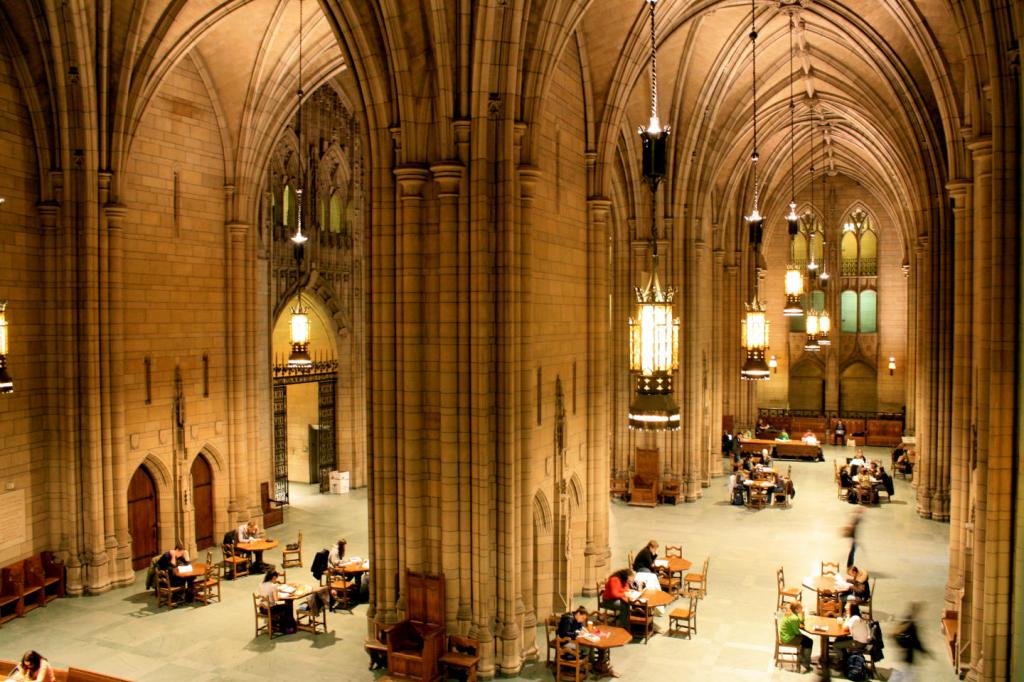
    inside the cathedral of learning at the university of pittsburgh, stone columns dwarf the students reading at tables below

    I’ve been working my ass off preparing for my PhD exams, but the numbers are saying that I haven’t done as much reading as I had thought. After finishing Alan Wilde’s Horizons of Assent a few moments ago, I decided to crunch the numbers on the number of books that I had read on my reading list. Here’s how it shakes out:

    Major Exam, 20th Century American Literature, 27/59, 32 remaining

    Minor Exam, Postmodern Theory, 15/29, 14 remaining

    Minor Exam, Philip K. Dick, 14/45, 31 remaining

    Total read, 56/133, 77 remaining

    I checked off 14 authors over the winter break between semesters (some of these ‘numbers’ include several short works by one author), and I am hopeful that having only one class to teach this coming semester will allow me the time and attention necessary to properly prepare myself for my exams (including my French language exam).

    I would probably get a lot of reading done if I locked myself in the University of Pittsburgh’s Cathedral of Learning (interior pictured above) and asked Y to bring me a picnic basket everyday, which I suspect will contain a sleepy Miao Miao cat who ate all of my food! Admittedly, that’s too far away, so I’ll sequester myself in my office. I do, however, need to venture out now to take the trash out and get some sleep. Adieu.

  • NASA Speaker Professor Jay Reynolds Visited My Writing Classes Today

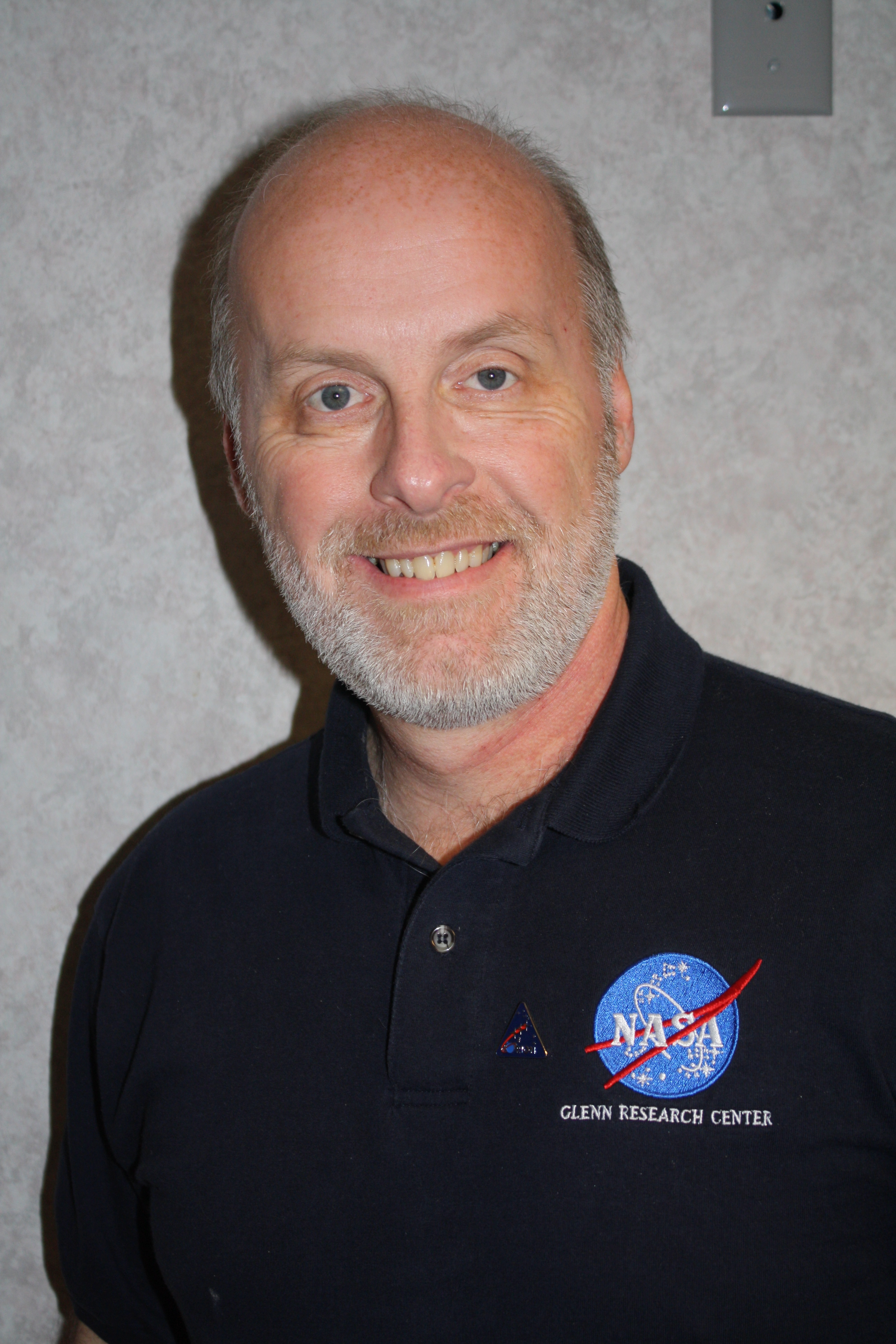
    Thanks to NASA’s Speakers Bureau, Professor Jay Reynolds of Cleveland State University and the Glenn Research Station agreed to visit my two intro writing classes today to talk about America’s return to the Moon, current research on Mars, and investigations of asteroids and protoplanets, which is what Prof. Reynolds is at the present involved in with the DAWN mission to observe Vesta and Ceres.

    I asked Prof. Reynolds to speak to my classes about some of the things taking place right now at NASA, particularly in relation to NE Ohio, where the majority of my students are from, and to give some context to the work that NASA does. He did an excellent job of this in his two presentations today for my students. Based on the subjects that he covered, I believe that he filled in many gaps that I either didn’t have the time to cover or those things that didn’t occur to me at the time as my classes worked their way through Arthur C. Clarke’s 2001: A Space Odyssey and Kim Stanley Robinson’s Red Mars as part of the “Space Exploration and Your Future” theme of my intro writing classes.

    Prof. Reynolds demonstrated his depth of knowledge about NASA and its missions while also engaging broader economic and political interests in response to questions put to him by my students. He displayed a contagious abundance of energy and excitement about his work and the work taking place at NASA that I believe carried over to some of my students in the two classes.

    At the beginning of his presentation, he began simply by asking my students what they thought of the unauthorized, yet mission making, Apollo 8 picture of the gibbous Earth next to the lunar surface [find it here] and the Apollo 17 image of the fully illuminated Earth [find it here]. What he stressed with these images was that our missions to the Moon turned into missions about the Earth. Our going out there gave us, meaning humanity, a new perspective on our planet and ourselves as co-inhabitants of what Carl Sagan termed a pale blue dot.

    He discussed the Space Shuttle, Saturn V, and Ares I and V launch vehicles [see my Lego versions here] in detail, which elicited many questions between the two classes. Other questions included: How safe are the launch vehicles? Why did we go to the Moon? Does anyone own the Moon? What do you do with Helium-3?

    Prof. Reynolds’ presentation ended with a discussion of asteroids and the importance of locating and tracking those objects which cross or may eventually cross the orbit of the Earth. This is related to the work that he does for NASA with the help of undergraduate and graduate students from Cleveland State University in conjunction with the DAWN mission [some related info here].

    I am thankful that NASA can make a special event like this possible, and I am especially grateful to Prof. Reynolds for taking the time and energy to drive down to Kent and spend the afternoon with my students. It was a terrific occasion to close out the Fall 2009 semester for my students.

  • Bruno Latour and James Burke

    I just finished reading Bruno Latour’s We Have Never Been Modern (1991/translation 1993), and I was struck by how similar his ideas about the interplay of Nature and Society–that they are not the poles, but orbit about the quasi-object and quasi-subject–that collectives and networks are definitive. However, I was more struck by how much his ideas seemed to reflect those of James Burke in his Connections (1978) and The Day the Universe Changed (1985) television series, albeit in much more philosophical terms. Burke’s demonstration that science, technology, culture, and society are all interconnected and construct one another. Or, to beat a dead cliche, nothing (but subatomic particles) are created in a vacuum. I do not know to what extent Burke’s work may have informed Latour’s theories, but I do know that Latour was a constant presence in my Georgia Tech literature and cultural studies classes. I am done for the evening, but I will think more about Latour tomorrow when I write up my notes.

  • Kurt Vonnegut’s Slaughterhouse-Five, Uncle Woodrow, and World War II

    I read Kurt Vonnegut’s Slaughterhouse-Five (1969) tonight for the first time, and one particular passage struck me in its depiction of memory of World War II.  At Billy and Valencia’s eighteenth wedding anniversary, the barbershop quartet, the Febs, begin singing “That Old Gang of Mine,” and Billy is assaulted by the pain of memory:

    Unexpectedly, Billy Pilgrim found himself upset by the song and the occasion.  He had never had an old gang, old sweethearts and pals, but he missed one anyway, as the quartet made slow, agonized experiments with chords–chords intentionally sour, sourer still, unbearably sour, and then a chord that was suffocatingly sweet, and then some sour ones again.  Billy had powerful psychosomatic responses to the changing chords.  His mouth filled with the taste of lemonade, and his face became grotesque, as if he were really being stretched on the torture engine called the rack. (172-173)

    I’ve seen this before when I was once asking my Uncle Woodrow Head about his experiences in the war before he succumbed to Alzheimer’s Disease.

    He told me about the time, prior to the Battle of the Bulge, General Patton inspected his auto group while he was working on the breaks of his jeep.  Despite others telling him to snap to attention, he said he had to get it fixed for when they rolled out.  Patton’s car pulled up to where my Uncle’s legs were sticking out from under his vehicle.  The general got out and told my Uncle that it was men like him that were going to win the war.

    He told me about guarding one of the major conferences of the war while manning an anti-aircraft gun with orders to shoot any airplane on sight.

    Then, he told me about his friends and the death he witnessed.  However, he stopped short and his face took on the “grotesque” that Vonnegut describes in the selection above–the only scene from the book that explicitly invokes memory instead of time warps.  The memory of the event overwhelmed my Uncle, a good natured and quiet man who I never before or ever saw again with a face transfigured by a memory so great and terrible that I cannot imagine it.