Category: Science Fiction

  • 2nd Annual City Tech Science Fiction Symposium Was a Great Success

    With nearly 100 registered attendees and more unregistered, the 2nd Annual City Tech Science Fiction Symposium on Extrapolation, Interdisciplinarity, and Learning on Wednesday, December 6, 2017 was a great success! We were honored to have Samuel R. Delany give the event’s keynote address, and we had excellent presentations and panel discussions from scholars, graduate students, and undergraduates! Below, I’m embedding video of all of the presentations from the symposium. Visit this site for a copy of the program.

  • Updated and Expanded LEGO Iron Man’s Hall of Armor

    IMG_1735

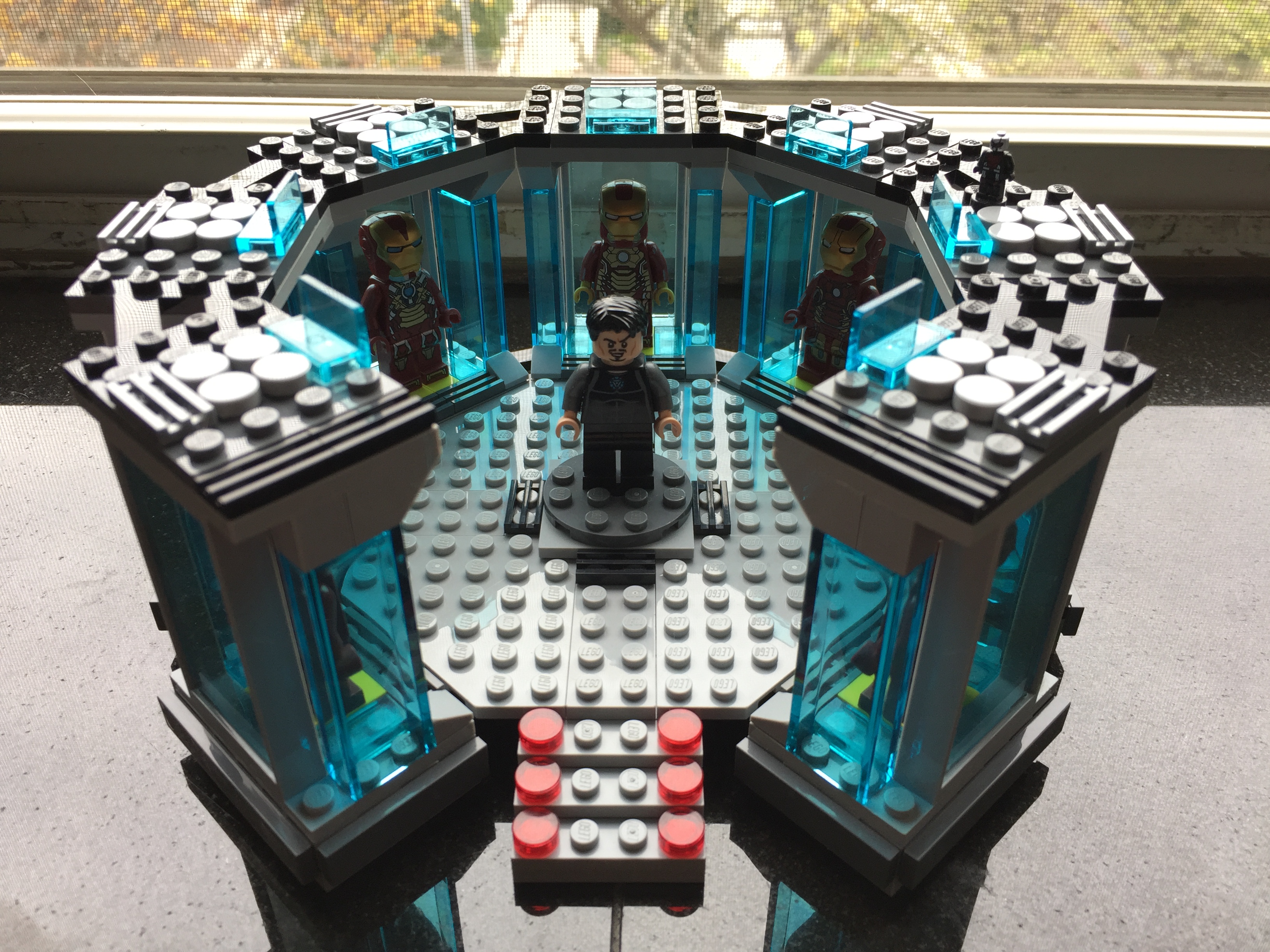
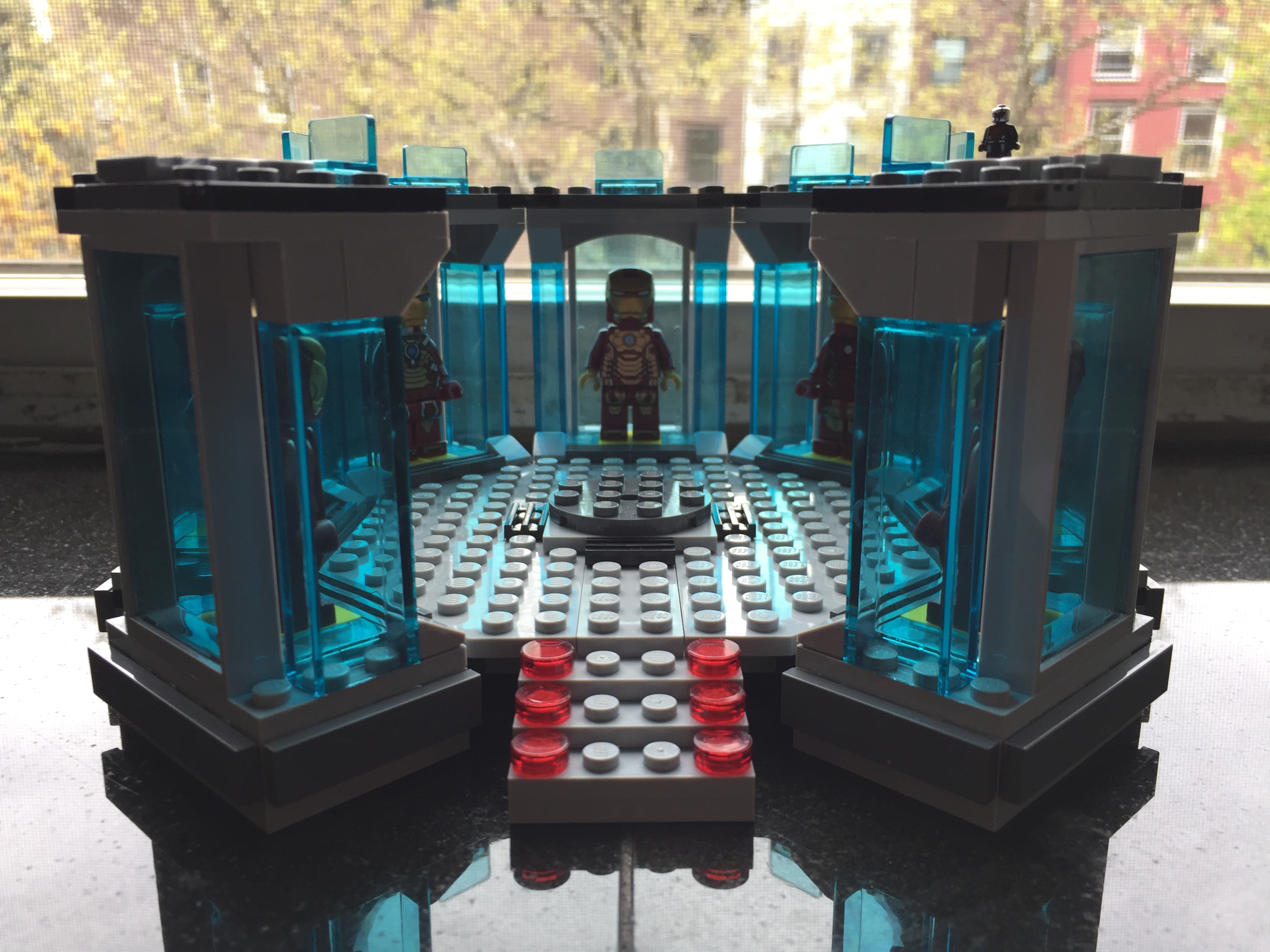
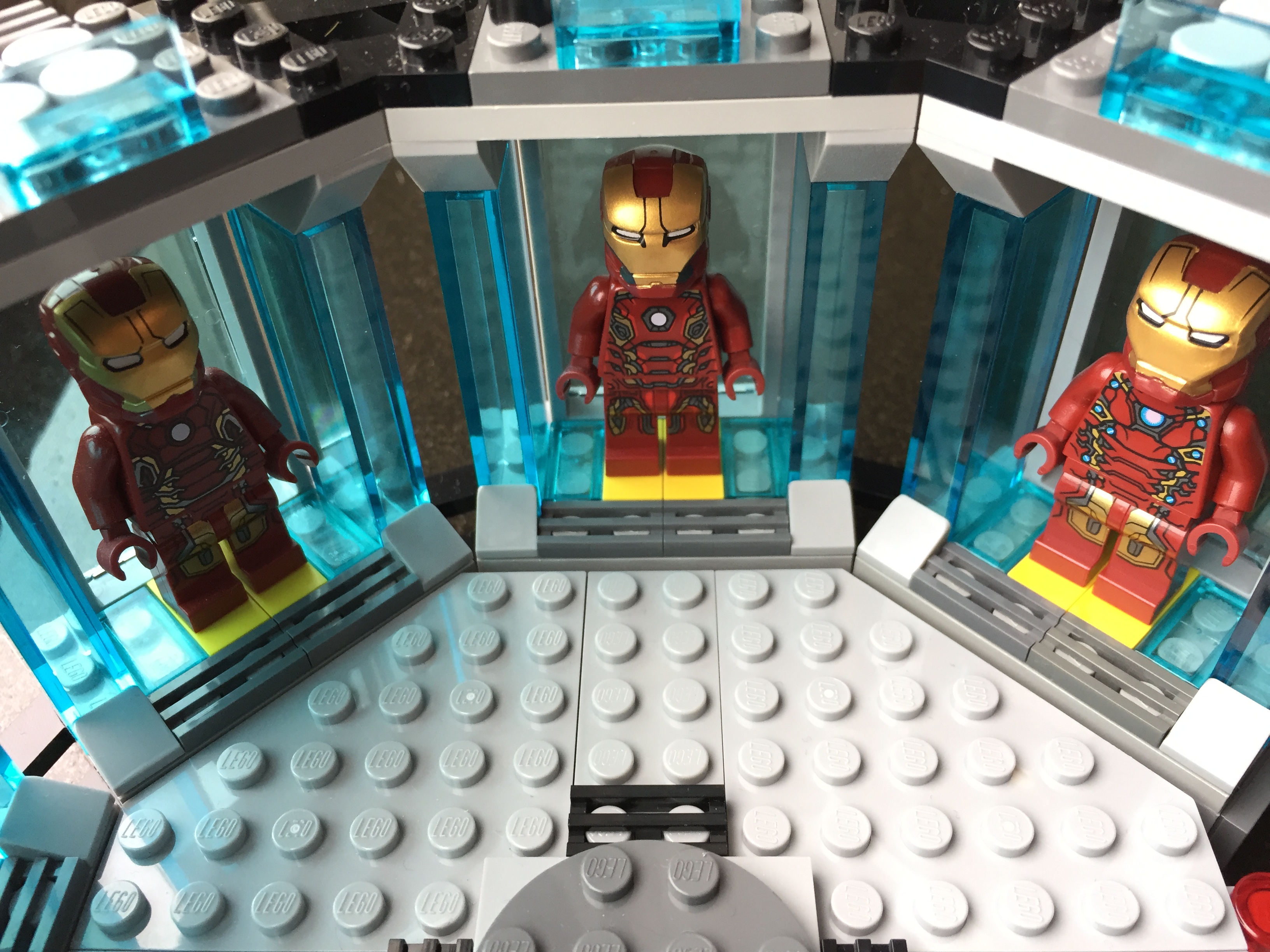
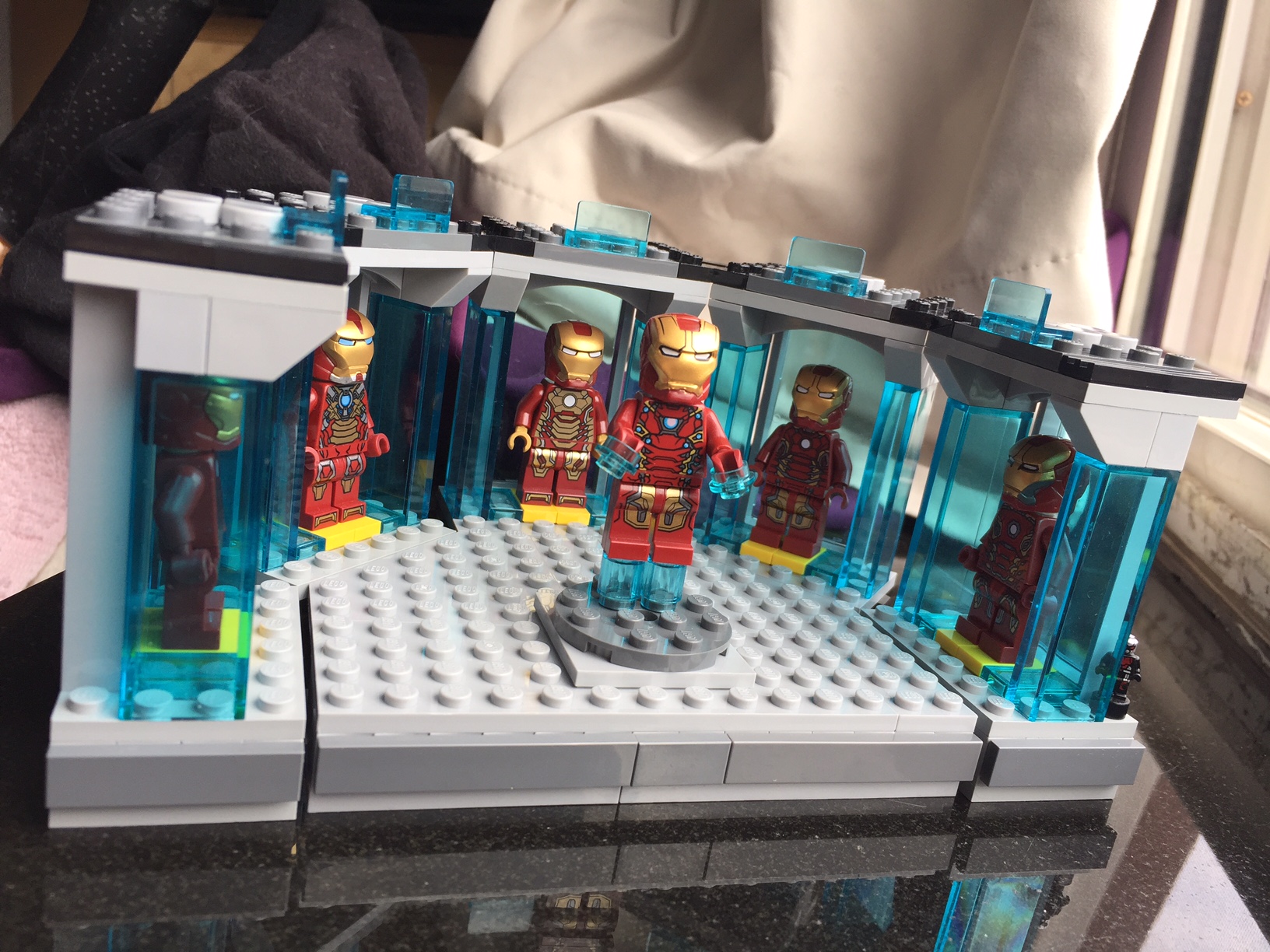
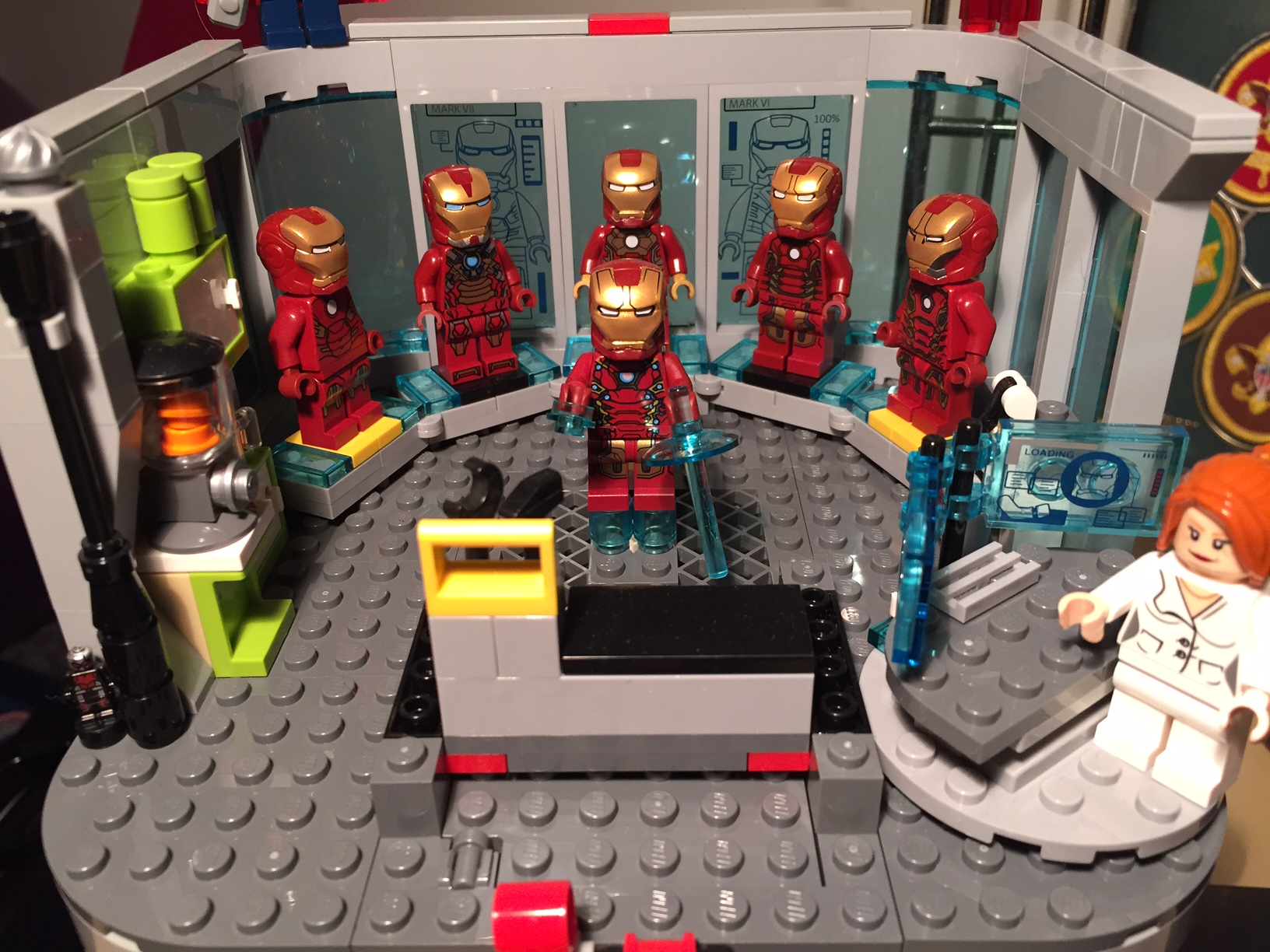
    While continuing to sort my LEGO brick collection, I discovered four more Plate (A) 4M 45° pieces. With these special elements in-hand, I updated and expanded my LEGO Iron Man’s Hall of Armor, which I wrote about previously here.

    IMG_1726

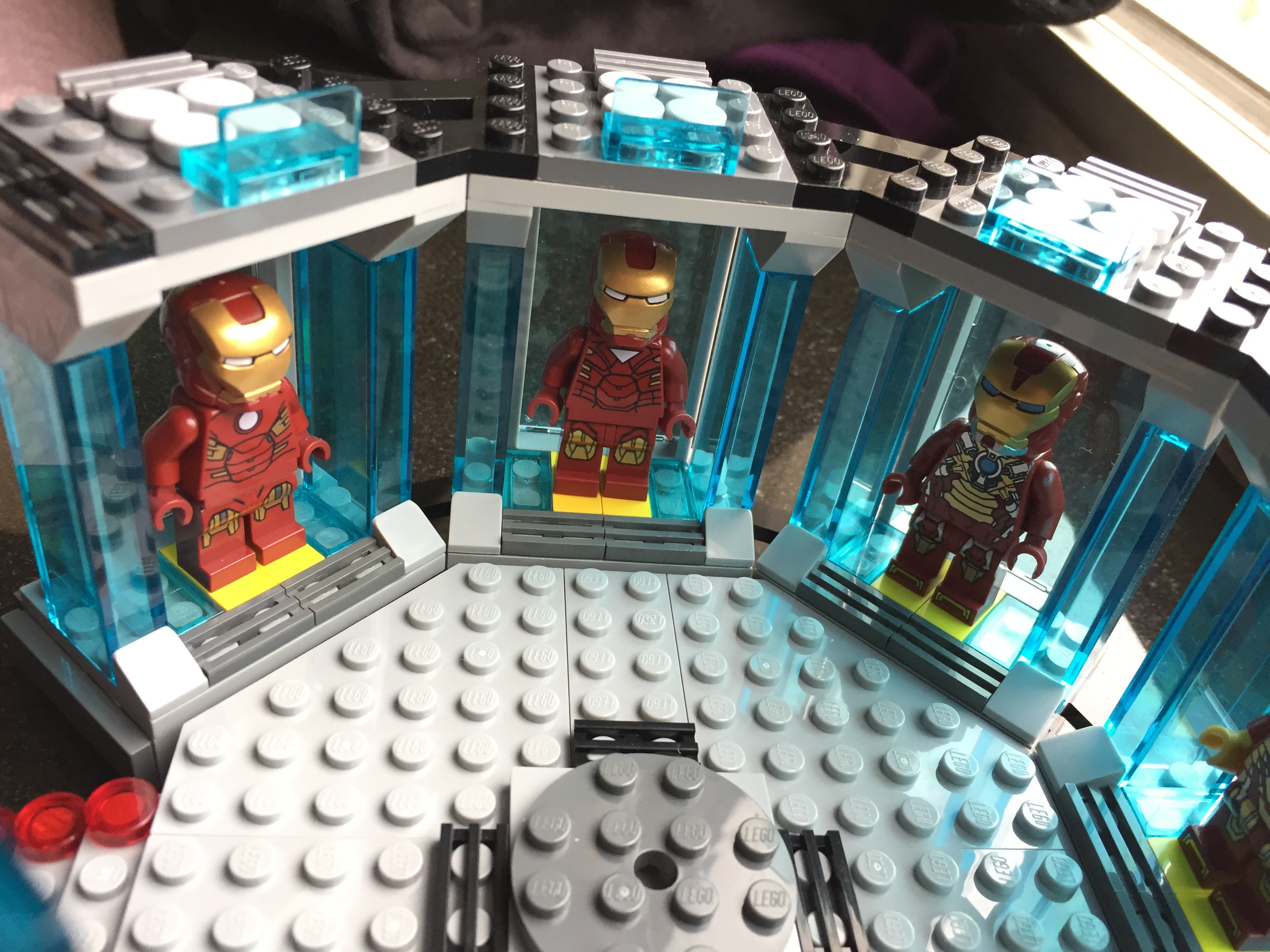
    I used a similar repetition for each armor suit pod, but I added one stud roof tiles (Roof Tile 1X1X2/3, Abs) at the base of each vertical transparent blue wall on either side of an armor suit.

    IMG_1728
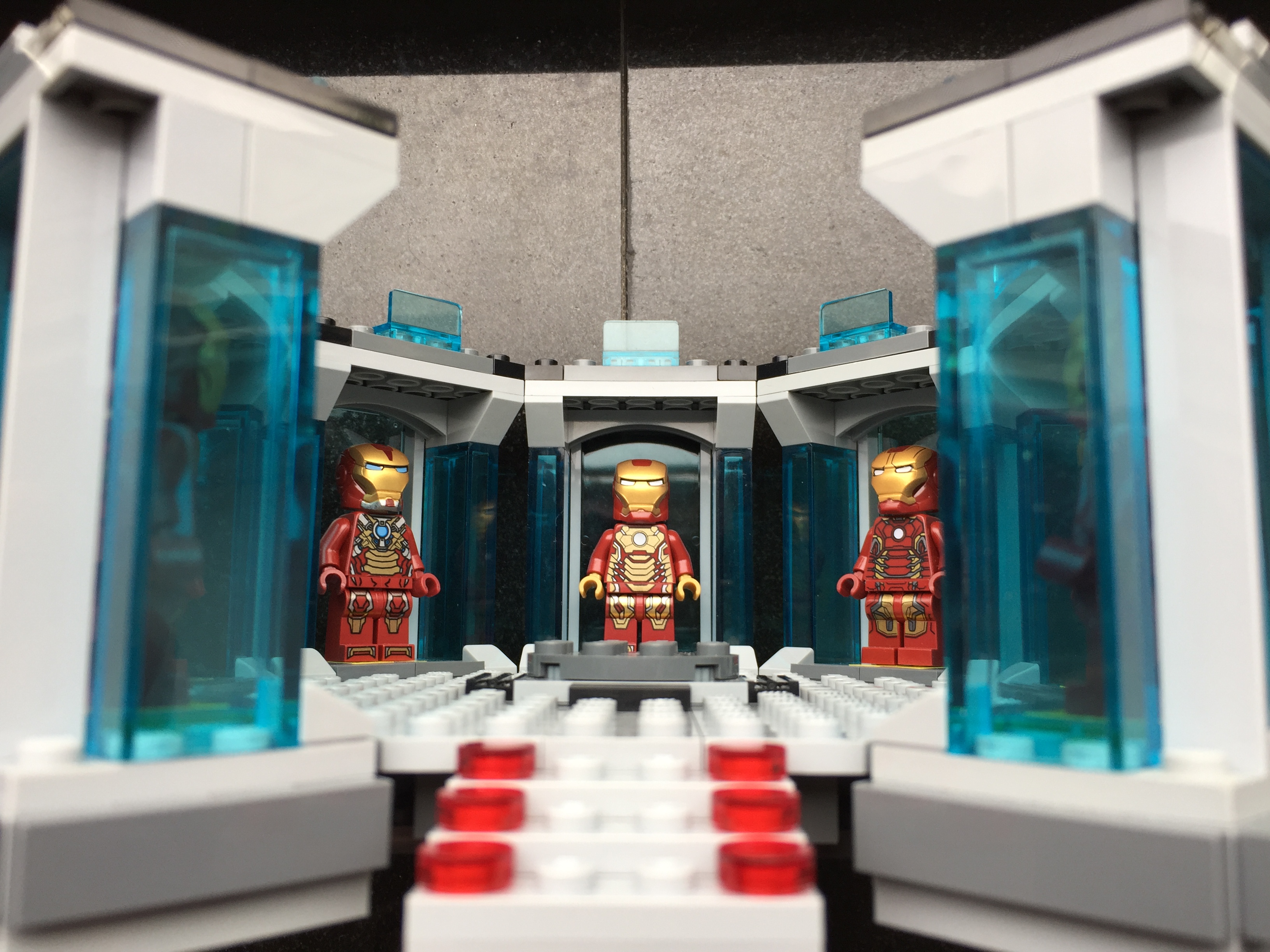
    Armors from left to right: Mark III (Iron Man film), Mark VI (Avengers), and Mark XVII “Heartbreaker” (Iron Man 3)

    To complete the model, I needed Iron Man’s armor with the triangular arc reactor window from the first Avengers movie (Mark VI armor). I ordered the 30167 polybag on ebay from a seller in Brooklyn (interestingly, it takes longer for mail to arrive from within my city borough than it does from California or even Germany at standard postal rates!).

    IMG_1729
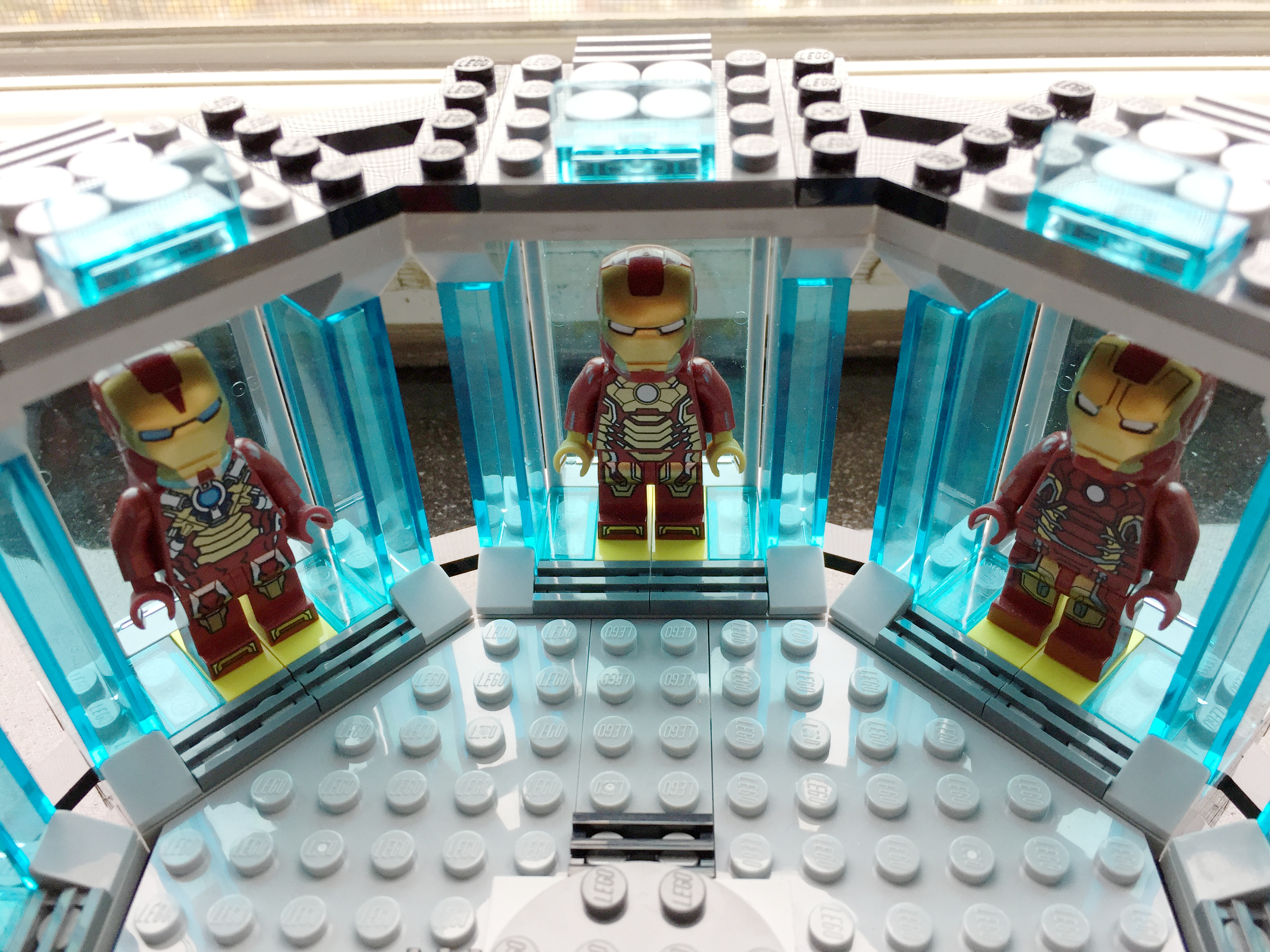
    Armors from left to right: Mark XVII “Heartbreaker” (Iron Man 3), Mark XLII (Iron Man 3), and Mark XLIII (Avengers: Age of Ultron).
    IMG_1730
    Armors from left to right: Mark XLIII (Avengers: Age of Ultron), Mark XLV (Avengers: Age of Ultron), and Mark XLVI (Captain America: Civil War).

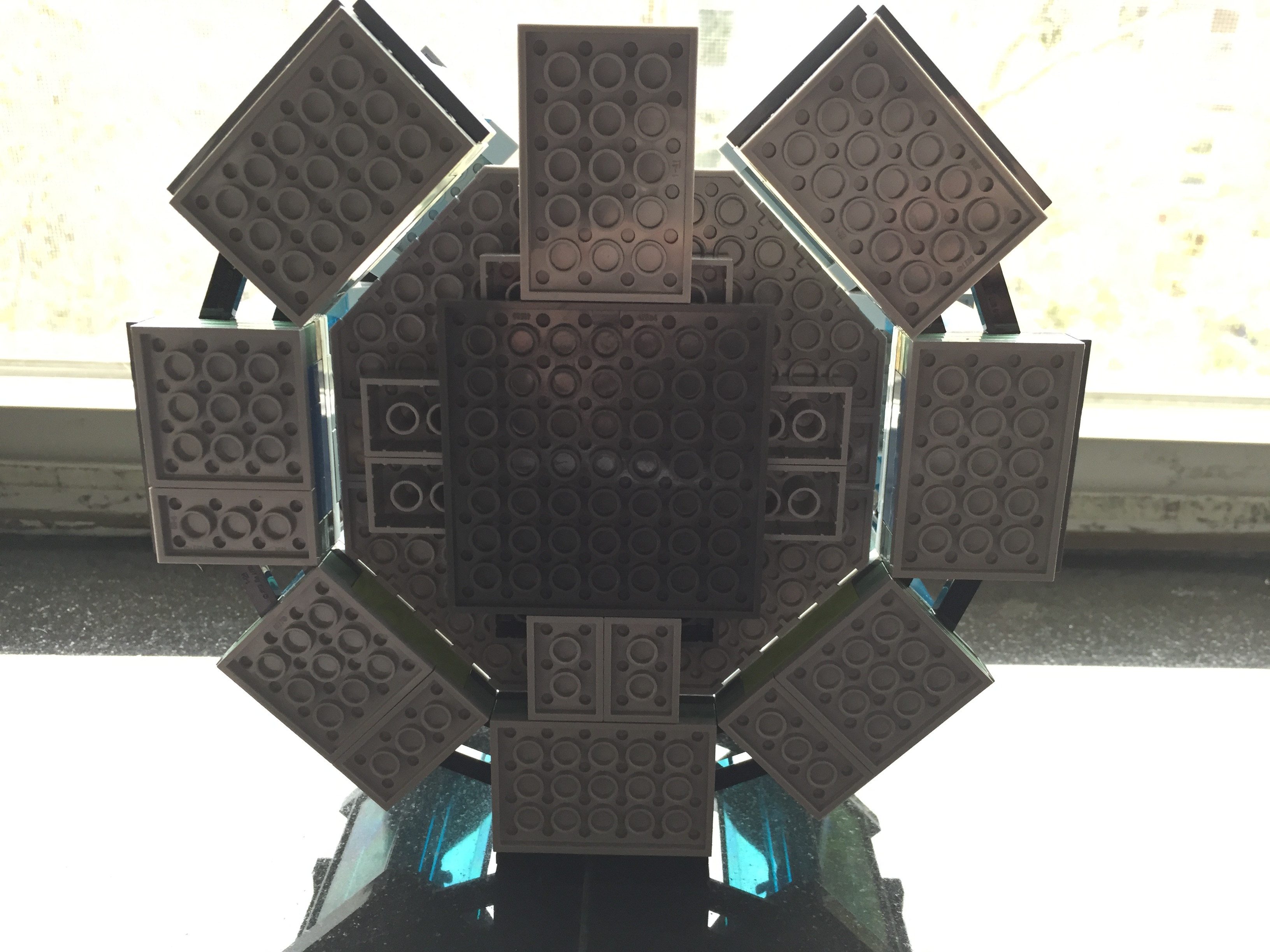
    I needed to redesign the base, so I opted to give it a symmetrical support underneath and and a stairway entrance in the southward position. It connects to the circular armor pod assembly with Technics connector pegs and bricks under the northward armor pod. While the center platform makes a tight and neat fit to the upper three pods, its plate studs do not line up with the side or bottom pods (there is a slight gap of about 1/16 to 1/8 of an inch).

    IMG_1731

    It is a sturdy model that can be lifted from any point. Due to its limited interior space and the size of my adult hands, it is difficult to remove and replace the Iron Man armor in each pod.

    IMG_1733

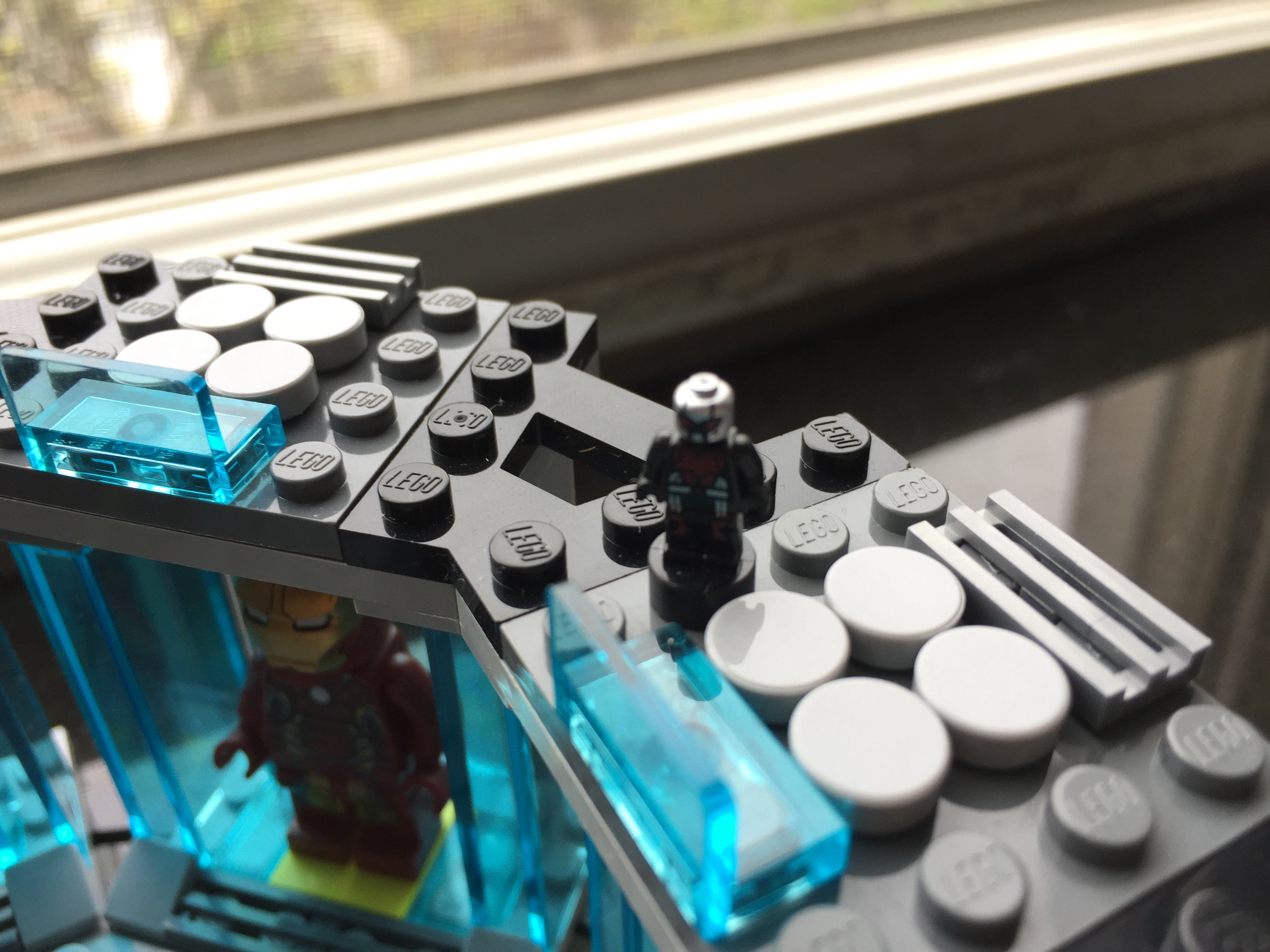
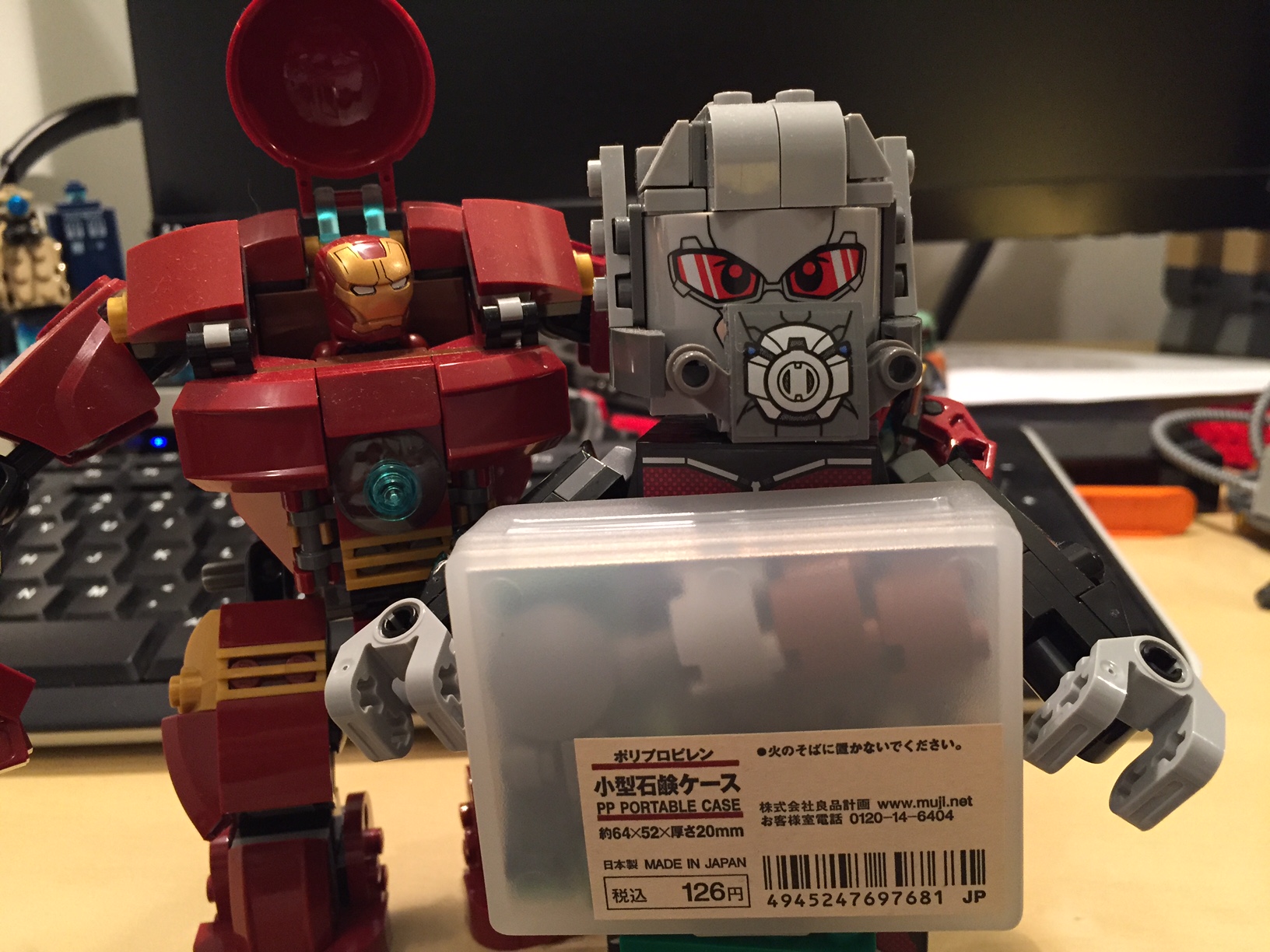
    My next idea for the set is to elevate it by about its current height and create a crank-driven lift in the central platform for Tony Stark’s grand entrance. This will take some more planning and time. I’m sure that Ant Man will be watching my progress.

    IMG_1736

  • Everyday Carry (EDC) LEGO with Tiny Sets, Minifigures, and Muji’s Portable Case

    IMG_1710

    Usually when folks talk about Everyday Carry (EDC), they are referring to preparedness, emergency readiness, and SHTF. It can also mean the kit that one carries on his or her person everyday for whatever reason. I would like to expand EDC to include LEGO.

    For me, and I suspect many others, LEGO is a source of imagination, thought, expression, and stress relief. Why not carry a selection of LEGO bricks, pieces, and minifigures with you for any eventuality–thinking through a problem, filling spare time, demonstrating an idea to others, or sharing fun with a friend.

    Muji’s Portable Case (64 x 52 x 20 mm) is a very good size for an essentials-only LEGO kit that can fit in a shirt pocket, pouch, or bag (shown above). The Portable Case easily holds two LEGO minifigures, a minifigure with bricks, or bricks alone. I have included photos of sample kits that I built to use with the Portable Case as a LEGO EDC: an off-road vehicle with obstacles, an aeronautics set, an Iron Man set, and a The Last Starfighter set with a Gunstar and Kodan Deck Fighter.

    Off-Road Vehicle

    Aeronautics Set (with control tower, two rockets, and airplane)

    Iron Man Set (with attacking robot and blasted wall)

    The Last Starfighter Set (with Gunstar, Kodan Deck Fighter, and asteroids)

    Of course, these are only a few of the infinite possibilities for building your own LEGO EDC. An Altoids tin would serve a similarly good purpose to hold a small selection of LEGO bricks, elements, and minifigures for building on the go. I imagine that children (and not just AFOLs) would dig something like this, too.

    I picked the Muju Portable Case due to its size and sturdy construction, but Muji has other size cases that would work well if you need to carry additional LEGO in your daily kit.

    EDC LEGO kits should be something that bring joy to the work of imagination and building. Carry what you need, and keep your kit fresh for the cognitive and imaginative work at hand. Also, we can spread the joy that comes from this mind-work with our hands to others with customized kits tailored to friends or coworkers’ needs.

  • Creating an Improved LEGO Iron Man’s Hall of Armor

    IMG_1640

    UPDATE: I expanded this design and reported on it here.

    As I wrote in my previous blog post, I have been sorting my LEGO bricks. This has helped me organize the LEGO pieces that I have, and it has helped me count the quantity that I have in a given type or color brick. This greater knowledge about the bricks in my collection inspired me last night to build a better Iron Man’s Hall of Armor (above) using the “A-frame” plates or “Plate (A) 4M 45°” from 75137 Carbon-Freezing Chamber.

    IMG_1084

    My original Hall of Armor (above) was a play-oriented set, but it admittedly required care in its handling. It borrowed heavily from the Malibu Mansion and Avengers Tower sets. The curve of the armor display was accomplished with the central pad locked to the base with a 2×4 plate, each adjacent pad was connected to it with a plate hinge and supported beneath by non-locking flat plates, and the ends were connected to the base plate with 1×1 round plates. It worked, but it was fragile and admittedly very busy in its appearance. I thought that I could do better with a different approach focused on using system and Technics pieces, repetition, and strength.

    First, I designed the display bad for each Iron Man armor suit. I based it around a 4×6 plate and leftover translucent blue elements from the Avengers Tower set.

    I connected the five armor display pads at the top and bottom of each using the Plate (A) 4M 45°. The center pad and the end pads are built up to 1 brick height to accommodate the 3-hole Technic connector brick beneath the center pad. This is where the platform between the armor pads will connect.

    The central platform has a 3-hole Technic brick at the narrow end. It connects to the hall of armor arc with three Technic connector bushings. I used 1×1 bricks with outward facing stud all along the front of the display (both ends of the Hall of Armor arc and the central platform). I affixed flat dark grey plates to these to create a contrast with the light grey of the platform surface.

    This new design is more for display than playability. It is a much stronger model than my previous one, and it uses LEGO elements in new ways that I had not experimented with on a MOC before. In particular, I was very happy when the central platform perfectly interconnected with the sweep of the Hall of Armor arc. Also, I was able to build a MOC that utilized repetition in the design of the armor display pads, because I had an inventory and organizing system for my LEGO bricks. Had I not sorted my bricks, I don’t think that I would have been able to come up with this design and implement it as quickly as I did.

    While you’re looking at the images, can you spot a spy in the model?

  • Making My Own Business Cards with a Rubber Stamp and Dip Pen

    IMG_1564

    This Saturday afternoon, I wanted to make something useful by doing something fun, so I made a small batch of custom business cards using a rubber stamp and one of Y’s nib or dip pens.

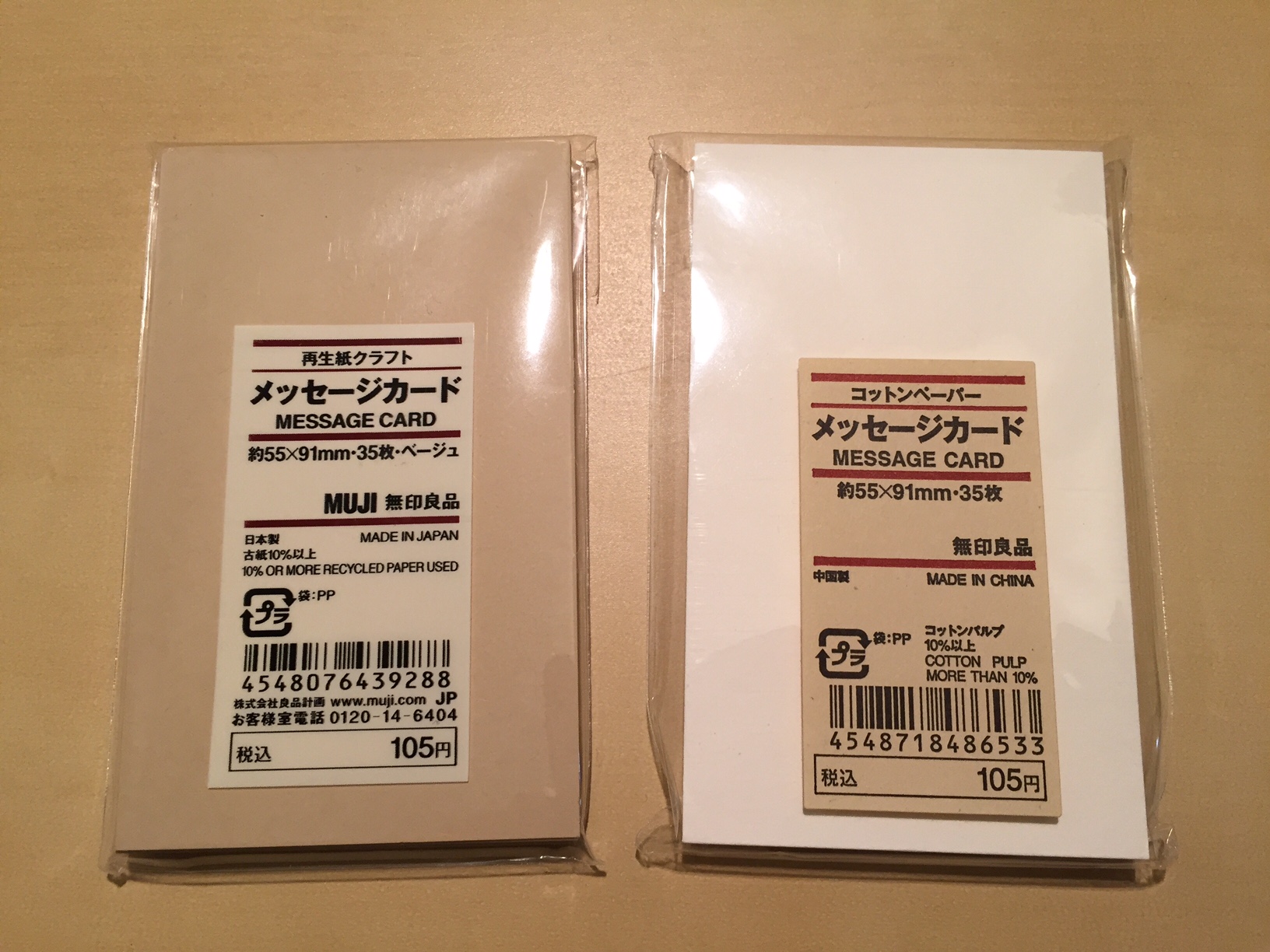
    First, I assembled the materials for my business cards. I picked up “Message Card” packs in white and kraft from Muji in Manhattan.

    message-card

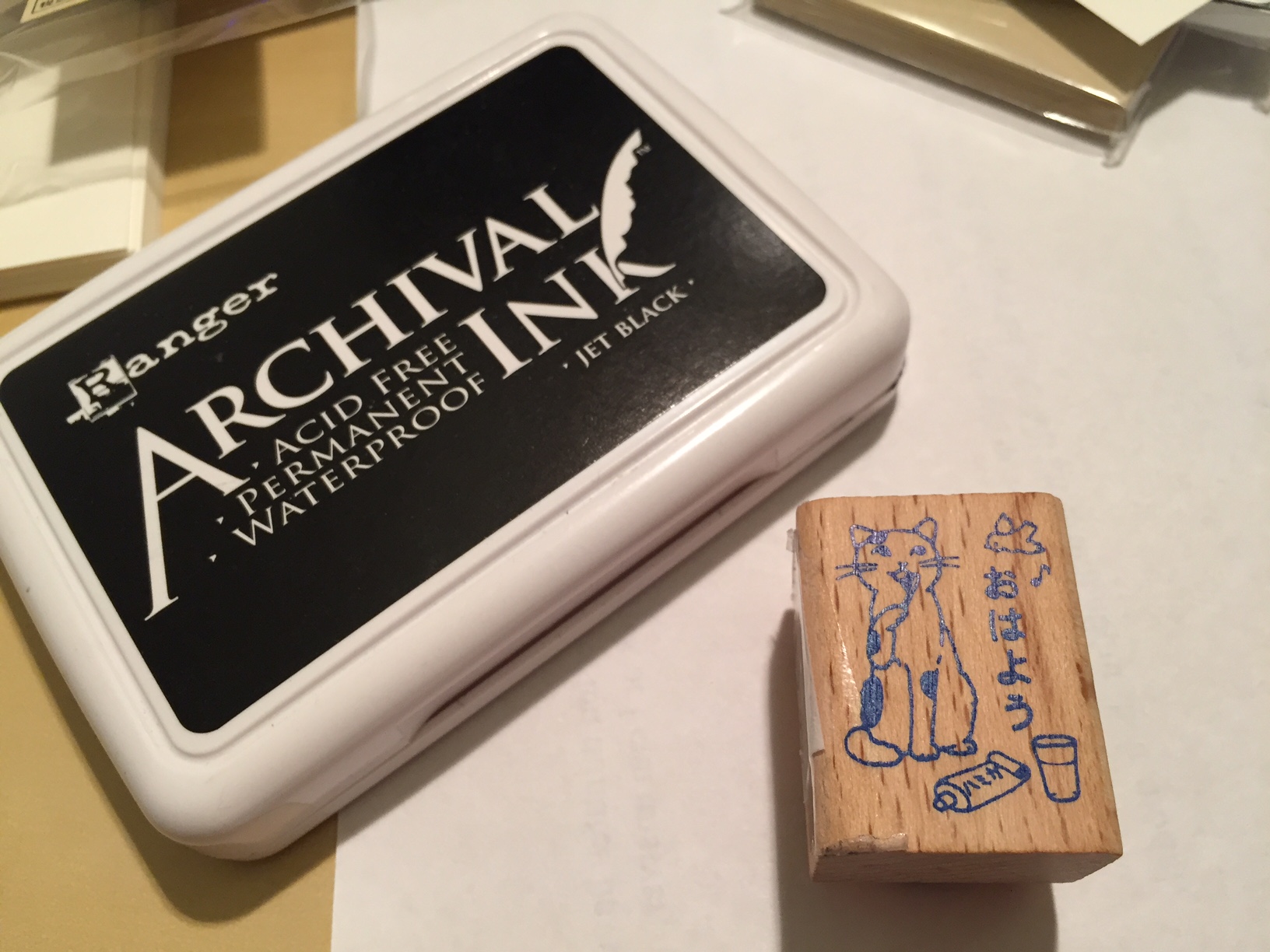
    Next, I found a cute neko hanko/pottering cat rubber stamp that I liked at Kinokuniya by Bryant Park. This particular rubber stamp shows a cat brushing his teeth with the message おはよう (prounounced as ohayo), and translated as “good morning.” (NB: Y told me that the trick to properly inking the stamp is to hold the ink pad upside down and bring the stamp into contact with the pad from below in an upward motion–tap tap tap.)

    IMG_1567

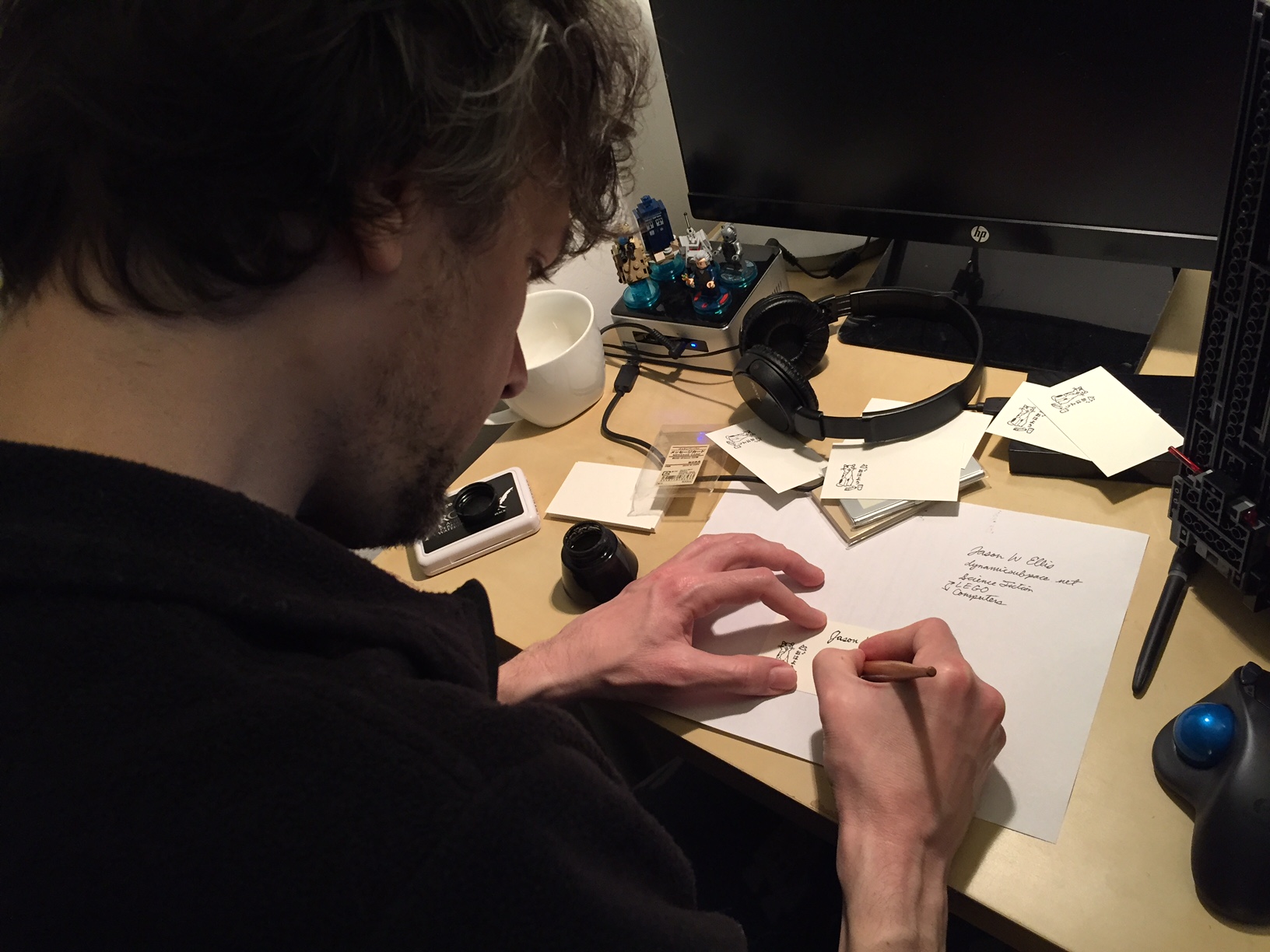
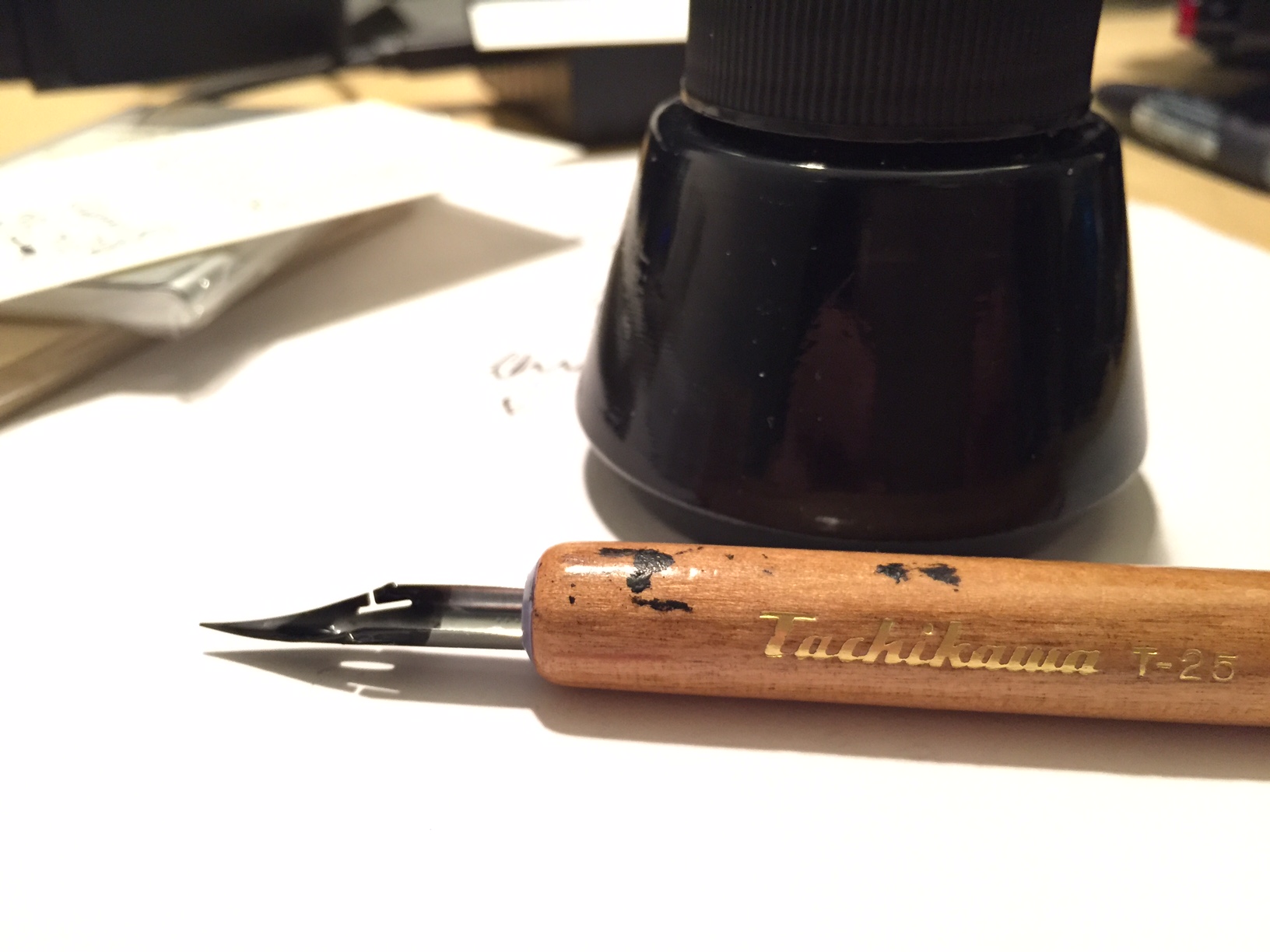
    Since I wanted to write each card’s message by hand, I figured that using a dip pen would lead to a more interesting end product due to my being a novice using that kind of pen. I knew that there would be more variability with my writing than if I used a ball point pen, which is the look that I wanted each business card to have. (NB: Y instructed me to dip the nib into the ink well and then to dab off excess ink on the rim of the ink well before beginning to write.)

    IMG_1566

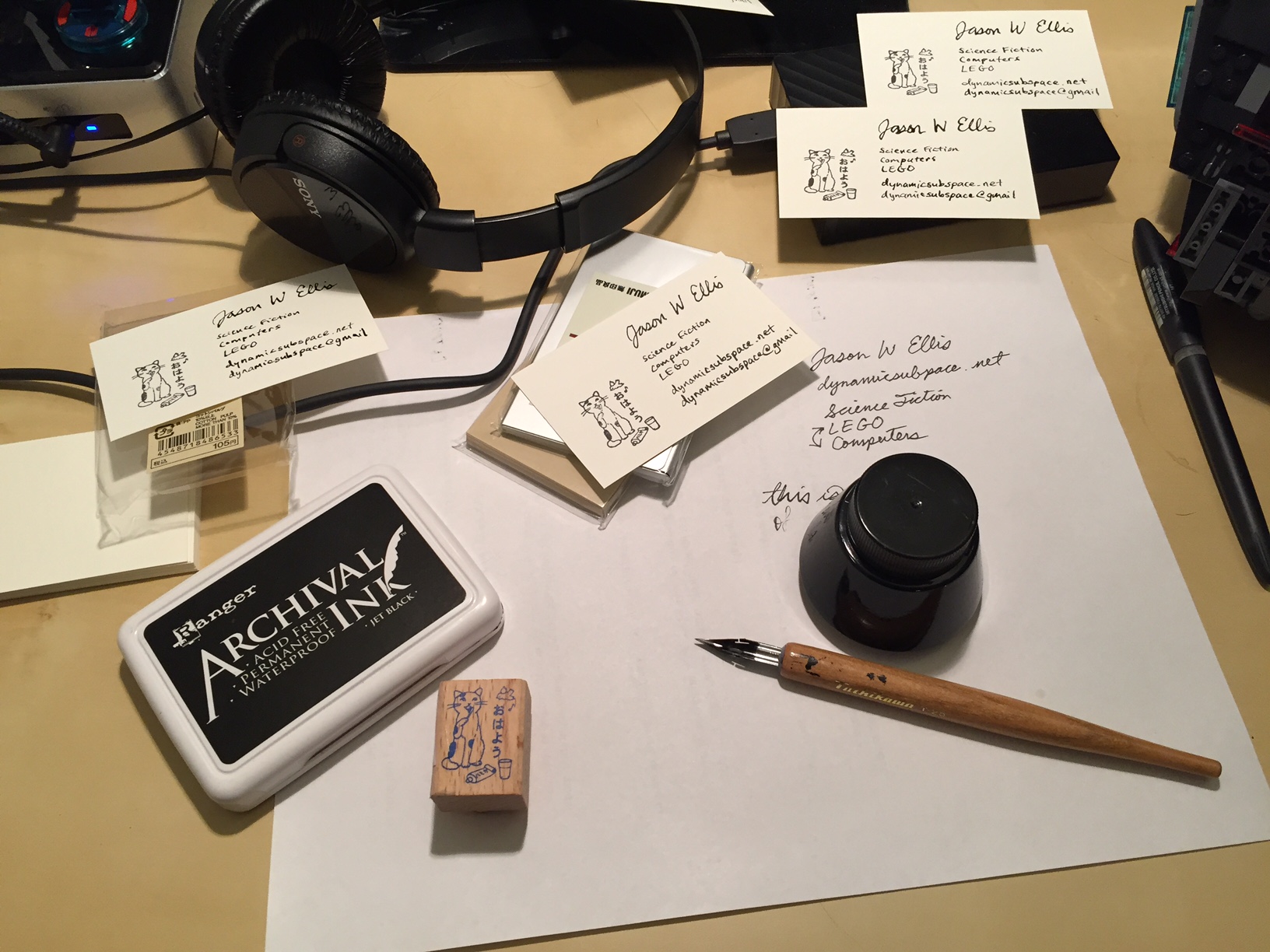
    With my materials gathered, I cleared a bit of desk space and put a scrap piece of paper down to catch any stray ink from the ink pad and stamp or the ink well and nib pen. Also, I used the scrap paper to plan out what exactly I wanted to write on each business card, which in this case was:

    Jason W. Ellis

    Science Fiction
    Computers
    LEGO

    dynamicsubspace.net
    dynamicsubspace@gmail

    IMG_1565

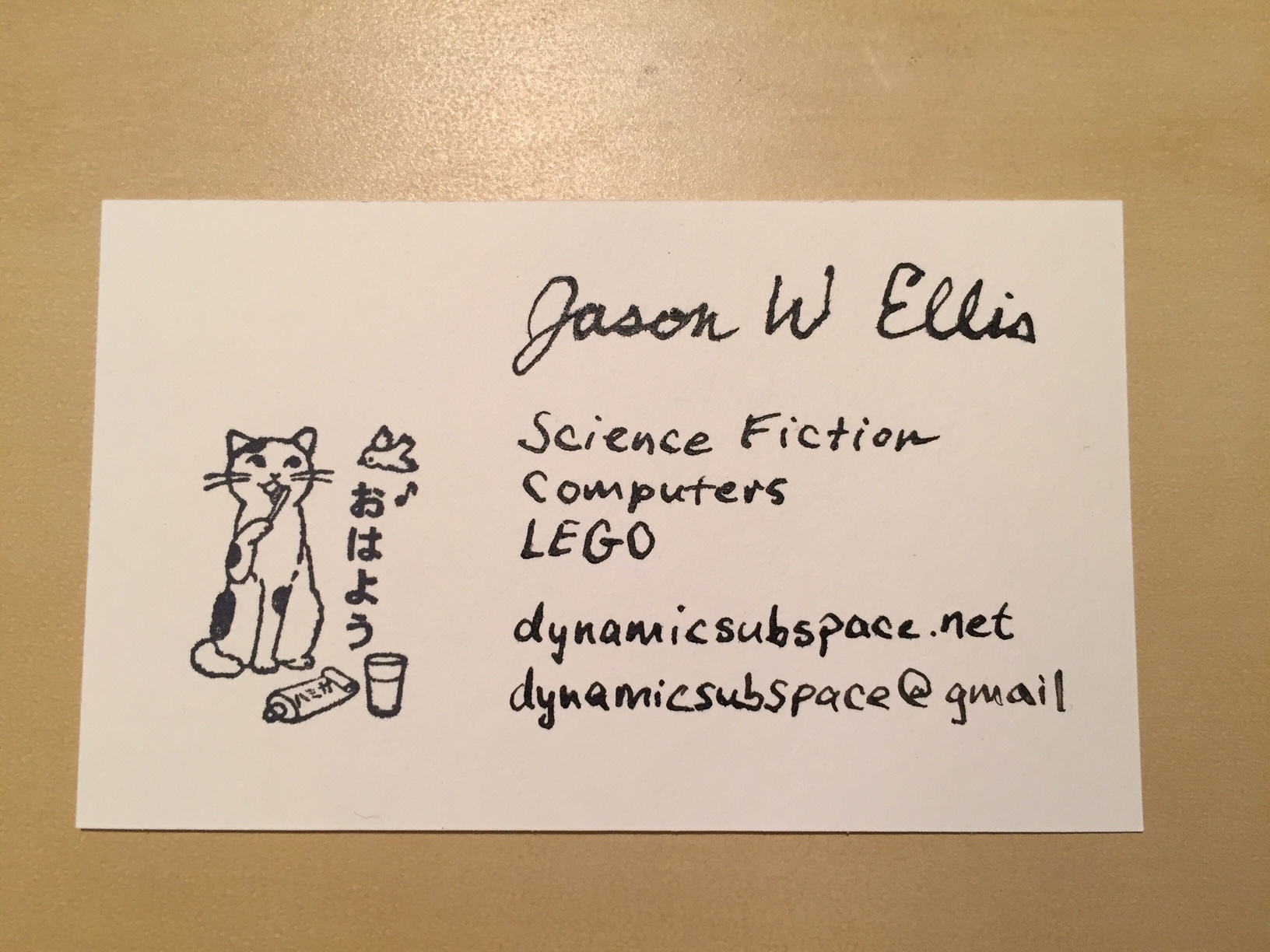
    With this first batch, I made ten business cards to give out to special contacts. Each card is slightly different. Because each is handmade, each card is unique. Perhaps this uniqueness and care put into each card will itself represent something important about me and my work ethic to those persons who receive one of these cards.

    Also, I found this work to be enjoyable and relaxing. Inking the stamp, pressing the stamp, dipping the pen into ink, dabbing excess ink on the edge of the ink well, carefully writing with the nib are all satisfying activities. I found stamping and handwriting to be pleasurable during the act of making the cards. It was gratifying to see the finished cards peppered all over my desk.

    business-card-complete

    If you make your own business card, share it with me on Twitter!