Category: Science Fiction

  • Mary Kay Bray’s Copy of Time Out of Joint

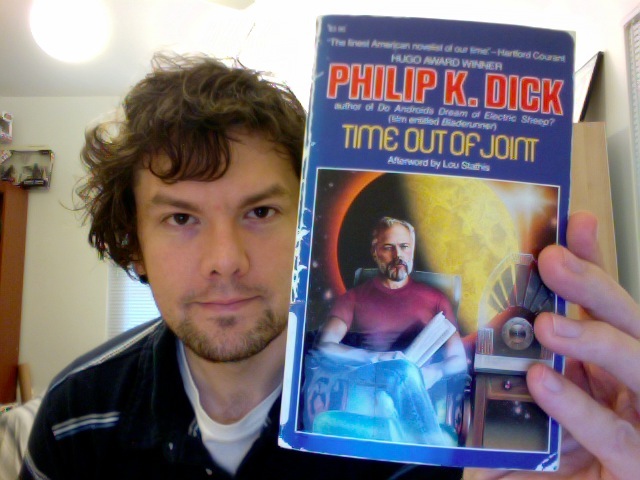
    I just cracked open the copy of Philip K. Dick’s Time Out of Joint that I requested via interlibrary loan for my PKD exam. I noticed that it arrived at the Kent State Library from the Watson Library at Wilmington College in Wilmington, OH, but I didn’t register where I had heard of Wilmington before. It has a colorful cover by Roy Colmer that portrays Phil Dick sitting with book in hand next to an old radio and eclipsing a distant planet in the background, but the real treasure was just inside the front cover:

    This copy of Time Out of Joint used to belong to Mary Kay Bray, the science fiction scholar who was active in the Science Fiction Research Association and whose name is honored with her memorializing SFRA award: the Mary Kay Bray Award for Best Feature, Essay, or Review in the SFRA Review. She taught at Wilmington College. After her death in 1999, her close friend Professor William L. Andrews of UNC, Chapel Hill funded this award in Bray’s name. I was honored with the 2007 award for two reviews I wrote: one on Heinlein’s Starship Troopers and one on Ian McDonald’s Brasyl. Since then, I have served on the awards committee two years. See the other award winners here.

    I was already looking forward to reading Time Out of Joint, but I am even more eager to do so now knowing that this particular copy of the novel belonged to a distinguished scholar and teacher with many friends in the SFRA. I only wish that I had had the chance to meet her in person. As it is, we are connected through time by science fiction.

  • Further Musings on Avatar: The Na’vi Aren’t As Primitive As We May Think

    Today, our good friend Masaya took Y and I out to lunch at Pufferbelly’s in downtown Kent. It was the first time that Y and I had been there, and it was certainly a wonderful treat.

    While we were all talking about the Oscars and Avatar’s loss for Best Picture, Masaya mentioned a conversation about Avatar that had taken place in Kevin Floyd’s Marxism class. Another student in the class had talked about the economic imperialism presented in the film. I have already addressed this to some extent in my earlier post on Avatar, and it is certainly something that my friends and I have discussed ad infinitum. However, this got me to thinking about something that I had overlooked before.

    Leo Marx, in his book The Machine in the Garden: Technology and the Pastoral Ideal in America, argues that America, following the engagement of the Enlightenment idea of progress, desires a return to the idyllic garden, an Edenic existence, the pastoral. However, our progress, precipitated by technological subjugation and domination of Nature, paradoxically moves us further away from our desired goal of a pastoral existence. And the more that we use technology, the more incapable we will be of reaching the idyllic pastoral.

    The Na’vi in Avatar live a pastoral existence, at one with nature. As Swaralipi mentioned in her comment to my earlier post on Avatar, she “will never forgive Cameron for depicting the Na’vis so simplistically in their pristine pre-colonial state.” This pre-colonial state, apparently untouched in a visible way by the human imperialistic incursion, is one form of the pastoral existence described by Marx. The Na’vi are interconnected with their world and environment, and as a result, live with that system as one within a plurality of lifeforms without regret and without malice. Seemingly, they have done this without the need of technology. In fact, they appear to be primitive–the post-Darwinian notion that social groups pass through a series of stages on their forward march to modernity.

    However, this outdated notion of social evolution is exactly what I want to argue against. The thing that I noticed during our talk today, which had been staring me in the face, was that the Na’vi are not primitive despite our attribution of primitiveness and backwardness on them. Instead, the Na’vi are much further advanced than we humans are with our starships, mechs, guns, and remotely controlled avatar technology. Perhaps the Na’vi developed a sense of modernity like we experience in our future human selves in the film (i.e., reflecting on the post-Darwinian social evolutionary scale they would be very old), or, more likely, the Na’vi developed in a much different way than humanity did on Pandora. Perhaps it was a co-evolution of lifeforms to integrate into the planetwide network governed by the goddess Eywa. Furthermore, the Na’vi are more connected to ‘technology,’ at least in the human sense, through the networking capability of the life on Pandora. They fuse with the planet, and they fuse with one another. Through their connection they are able to see, not just literally see the physicality of one another, into one another. It isn’t the brain-tunneling sequence when Jake enters his avatar body that is really exciting, it is instead the interfaces made throughout the film by the Na’vi–something that Jake learns to do in time on his path to appropriating the Na’vi myths in order to effect a anti-colonial revolution, as Swaralipi discussed in the previous post’s comments.

    So, my early idea is that the Na’vi are the technological gurus that we wish we could be. They have attained what is unattainable for the Americans described in Marx’s book. The Na’vi have the best of both worlds–through the ability to connect to Eywa, they have an amazing ability to communicate, remember, and coexist–something that Cameron expertly provides a sort of rational explanation for through Grace’s scientific investigations. Paradoxically, most of the humans just can’t make the leap to understand what the Na’vi have, and what Ewya/Pandora (if we can say the two are the same or pointing to the same signification) represents. The Na’vi are where we, and the other Americans in the film (something I would call, perhaps, wishful thinking on the part of Cameron), would like to be, but we cannot apparently figure out that Unobtainium and the rapacious exploitation of Pandora are not where we want to be. The capitalist drive has run the Enlightenment train of progress off the tracks, and the hybrid Jake Sully (human/avatar) is able to bridge the divide and show a way to what the Na’vi and their world have already accomplished, whether it be from some earlier design in the distant history of the Na’vi or a natural evolution that has taken place in that particular environment. Whatever the case may be, it is sufficient to say that the Na’vi represent the return to the garden with a kind of technology, at least what we think of as a kind of technology–networked communication–plugging in, that supports their natural and cooperative existence. Instead of the Na’vi’s connecting ability moving them further away from the garden, it enables their integration into the garden.

    And a concluding thought: Perhaps the Na’vi are one possible solution to what we think of as the Singularity, or they could be an anti-Singularity, a controlled and conscious response to the unknowable promises and perils made possible by unconstrained technological expansion.

  • Nay to the Naysayers: Avatar, Credit, and Intertextuality

    Even now, months after its premier and its loss for Best Picture at the Oscars, there are still folks online who won’t stop nitpicking Avatar’s ‘sources.’ This in and of itself isn’t that big of a deal. It is important work to uncover the intertextual sources of works of art, including Avatar. It is a necessary and significant contribution to map out the network within which Avatar and other works are situated as well as consider the influences exerted by and on the work within the ever shifting lines of connection. However, what I take issue with is that so many folk frame Cameron’s work in terms of stealing and plagiarism. I have read it on listservs and Facebook, and Google helpfully suggested “Avatar steals plot.” Cameron has a gift, like many other gifted science fiction authors, to synthesize and pull together disparate ideas from culture and merge them into a cohesive work that has a wide audience appeal. Avatar is his latest foray into the science fiction field, and it is by far his most successful attempt at doing so.

    Avatar includes themes of cultural imperialism, white man’s burden, and economic exploitation. It brings in ideas from other science fiction including waldo bodies, or remotely controlled organic bodies. He attempts to rationalize the Gaia hypothesis. The alien protagonists have accents, they seem stereotypically Native American-like (they wear feathers with an unknown origin–there was one point in the film I believe I saw a flock of birds escaping from a tree, but I do not know if they had what appear to be feathers), and they have a world consciousness/awareness. And yes, they are blue, as are many other fictional depictions of extraterrestrial life.

    Simply put, Cameron knows how to dip into what Damien Broderick calls the mega-text of science fiction. The mega-text, an idea Broderick himself borrows from Christine Brooke-Rose, is a corpus of ideas, terms, and usages that authors within a particular genre evoke, use, repurpose, and disseminate through their works. The cool thing about the mega-text is that for those people who read widely within a given genre, they will eventually learn the mega-text and better understand its employment in a given text without the necessity of too much further explanation. Samuel R. Delany has also written on this subject. For example, my earlier use of the word waldo would, for many, tell them that this is some kind of remotely controlled technology that mirrors the body or its functions in some way. The word, originally used in this context by Heinlein, was appropriated by others to convey the same idea, because readers of science fiction already knew what the word meant from Heinlein’s usage. Furthermore, the popularity of Heinlein’s work and the linguistic concision of the word probably also played a part in its adoption into the shared science fiction mega-text.

    Cameron’s Avatar shared in and gives back to this mega-text. Harlan Ellison aside, many authors and readers accept this circulation of ideas within science fiction. The mega-text could be said to be an ancillary or reductive idea from the bigger idea of intertextuality. This is the connections between works and history that has a long history, but has reached a high level of discussion in discussions of postmodernism.

    As Linda Hutcheon points out in her book The Poetics of Postmodernism, intertextuality is something that has always been with us. I believe it is something tied to language and writing alike, because communication necessitates a common understanding, and one aspect of that understanding is the conveyance, repetition, and memory of stories and concepts that go beyond the singular signified/signifier relationship. Language is intertextual, and our stories carry forth this intertextuality, too. But what makes postmodern intertextuality different from earlier forms of intertextuality? Postmodern intertextuality is the ironic twist, the challenging of the earlier citation, the questioning of the carried-over idea.

    Avatar is, I believe, a postmodern science fiction film in that it appropriates ideas and stories from other texts and situates them with an ironic turn. First, there is the irony of the needed element for space travel–Unobtainium. Interestingly, this is something that falls on deaf ears for many non-science fiction reading or watching friends of mine. However, I believe it is the subtle way in which Cameron introduces this to the audience that it works for the audience as a believable macguffin despite the name. So, the Unobtainium creates the framing irony for the entire film–the thing humanity wants, but ultimately cannot have.

    A second irony is Jake’s Na’vi avatar body. As a paraplegic, he cannot use his legs, and the only way he can once again enjoy the sensation of walking is by the amazing technological intervention of the avatar technology. Despite the high cost of getting his legs working again in what he describes as a dire economy, he is lucky in a sense to get to take his twin brother’s place on the avatar project.

    And a third irony, which I will conclude this post with, considers Poul Anderson’s formulation of avatar technology in “Call Me Joe.” The first hit in Google for “Avatar steals plot” is a reference to this story, which is about a crabby disabled man who explores the surface of Jupiter with an organically created and remotely controlled body. Over time, the human man’s brain atrophies while his ‘mind’ transfers into his body that is capable of living in the unfriendly for human environment of Jove. This does bear striking similarities with Jake Sully in Avatar, but there are ironic twists to this ‘going native’ story. The first is motivation. Anderson’s waldo driving character is fed-up with humanity and his disability. Jake Sully in Avatar has no ties to others, but he isn’t escapist like Anderson’s character. Instead, he, from the very beginning on Pandora, demonstrates an awareness and wonder at the things he sees and the sensations that he feels both in his human body and while inhabiting his Na’vi body. Jake seeks personal and spiritual fulfillment, something that Pandora and the Na’vi offer him and he fights to retain from his human masters. Jake doesn’t wish to escape his bounds, instead he seeks a meaning to his life through responsibility to a people undeserving of humanity’s exploitation of their planet. The irony for the audience is that Jake, of Clan Jarhead, is more than the stereotypical grunt (something explored in Cameron’s Aliens). Jake’s enjoyment of the process of becoming one of the people and his attraction to Neytiri causes him to loose sight of his original mission and the impending danger to the Na’vi and his life among them. He becomes part not only of an alien being in an alien environment (as Anderson’s character does), but also of a social network, a family, a people, an interconnected system of life that spans Pandora. This is the challenge that Cameron brings to what may be an inspirational story by Anderson–the difference between the lone warrior from the pulps into a contemporary growing awareness (or re-awareness) of the interconnectedness of all life and our social structures.

    Cameron didn’t rip off Anderson or anyone else in developing his script for Avatar. There were important transformations to his mega-text derived ideas, and he challenged some of their earlier uses. He took good ideas that have been in circulation for awhile and turned them in significant ways and he did it in such a way that a lot of people were able to connect to his story in ways that people didn’t connect or even know about Anderson’s mid-century story.

    So please, let’s move along to more important matters such as the cultural implications of Avatar. What does Avatar add to the mega-text, and what are its cultural implications? What are people walking away from the theaters with? Is it changing their attitudes to imperialism and exploitation, or is it instilling in them a desire to leave Earth for Pandora via Poul Anderson’s escapism?

    Read more about Avatar on the official website here, wikipedia article on the film here, and the post-zero about Anderson’s possible influence on the film here.
  • Flying Around CERN in the Millennium Falcon

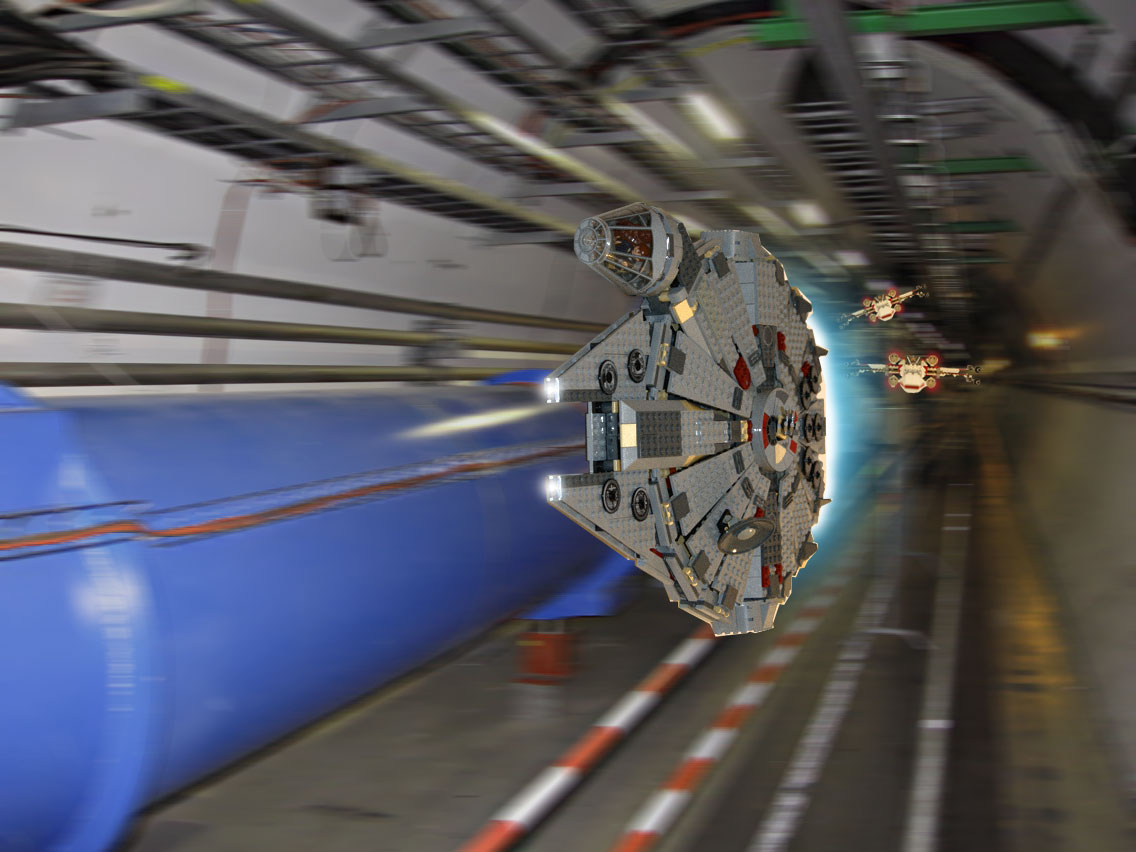
    This is a very rough cut of an image that I’ve had in mind to make for awhile, but I thought I would show off this early draft. There’s a poster of the Falcon flying into the heart of the second Death Star in ROTJ, so I thought I could recreate it with Lego. I pulled this image of the LHC tunnel 1 and applied a motion blur. Then, I cut out  photos of my 4504 Millennium Falcon and 6212 Luke’s X-Wing Fighter. I added engine effects and lights to the front of the Falcon. With more time and effort, I believe that I can turn out a very nice composite reproduction of the ROTJ poster. Though, I will need to take a new picture of the Falcon with Billie Dee and Nien Numb at the controls. If you know of a better tunnel image with exposed pipes, please mention it in the comments.

  • Lego Star Wars Millennium Falcon 7190 Custom Rebuild

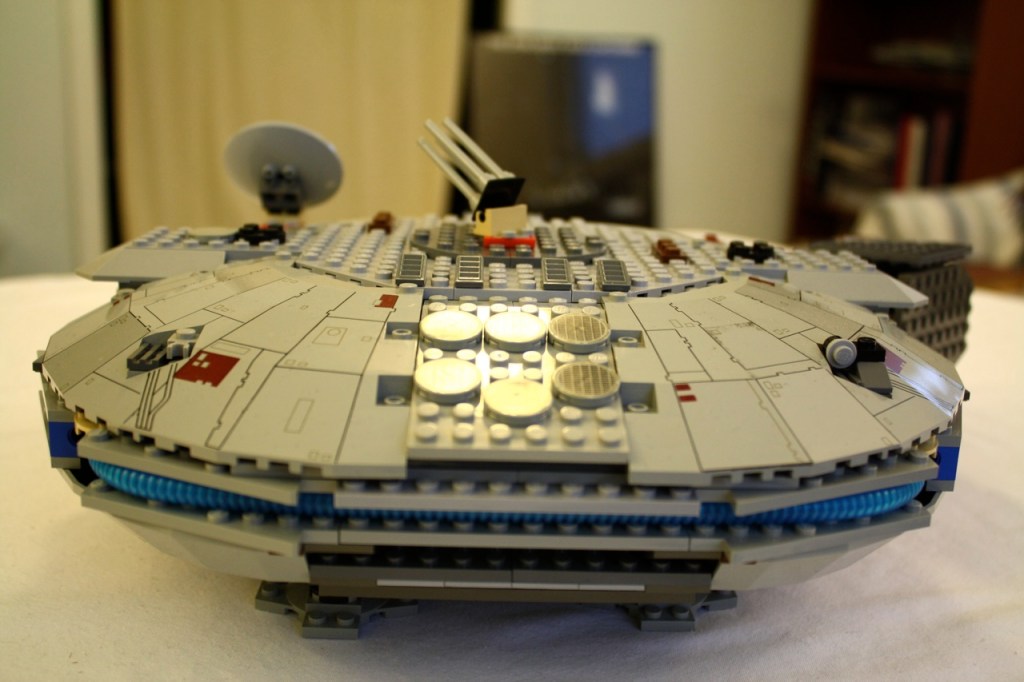
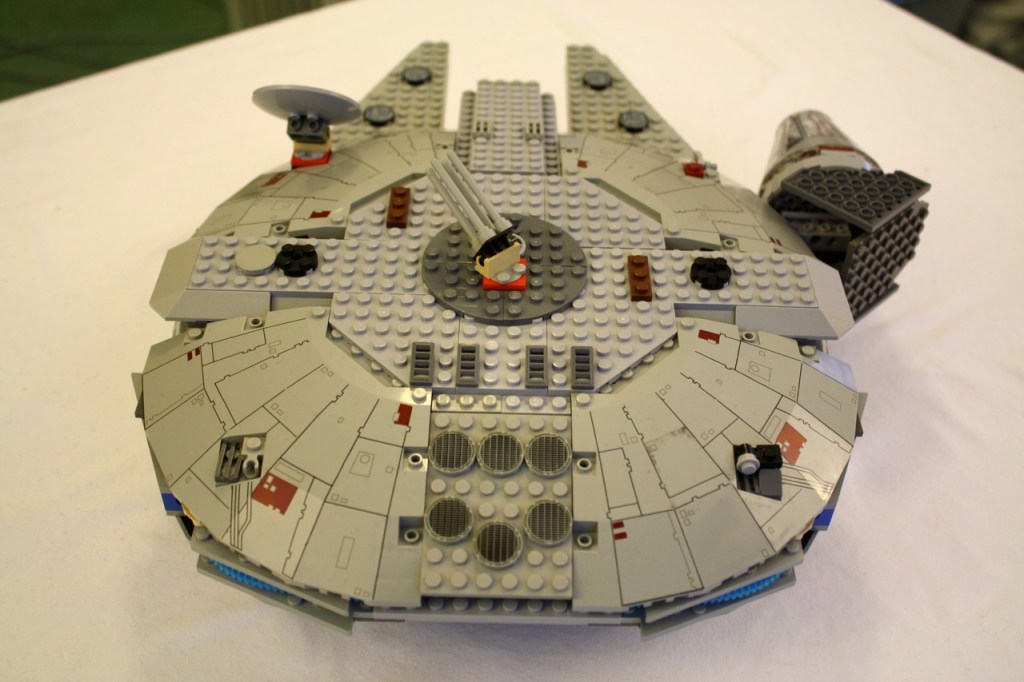
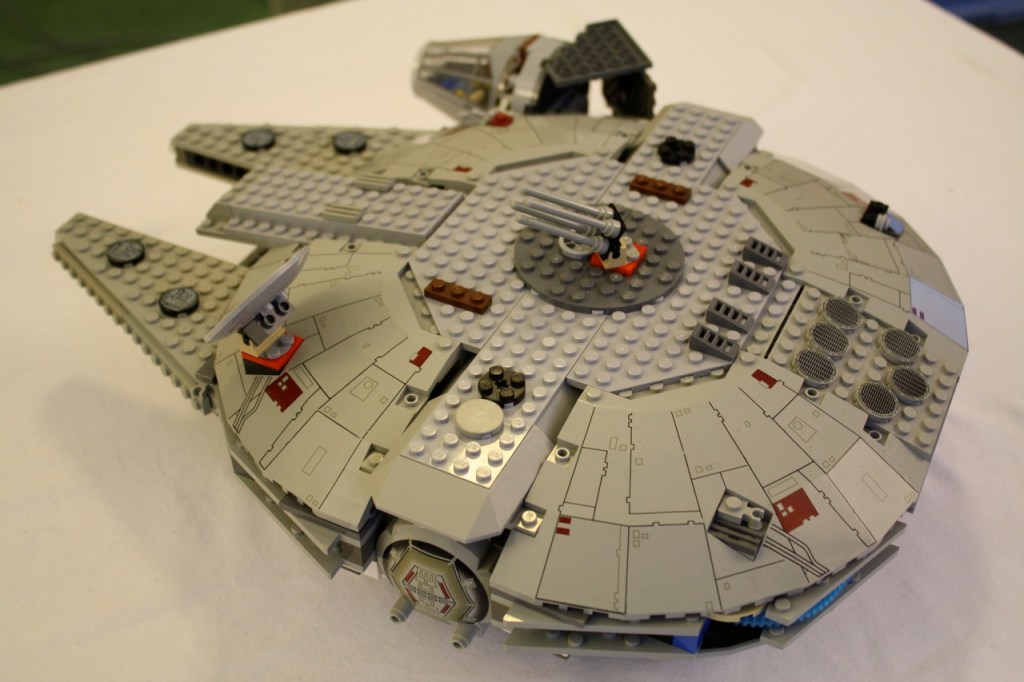
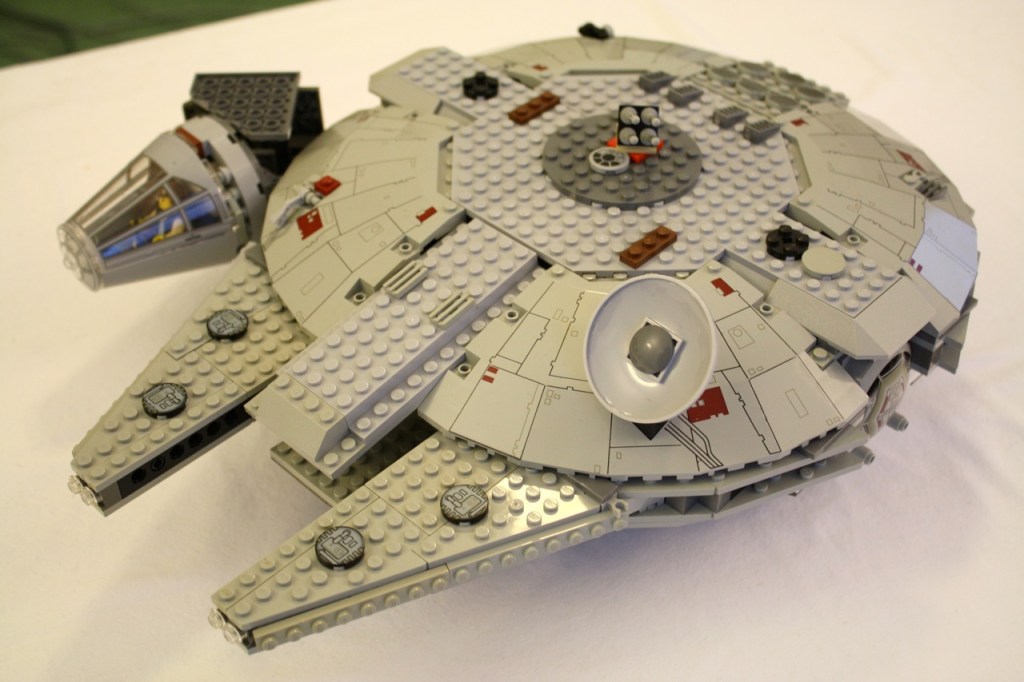
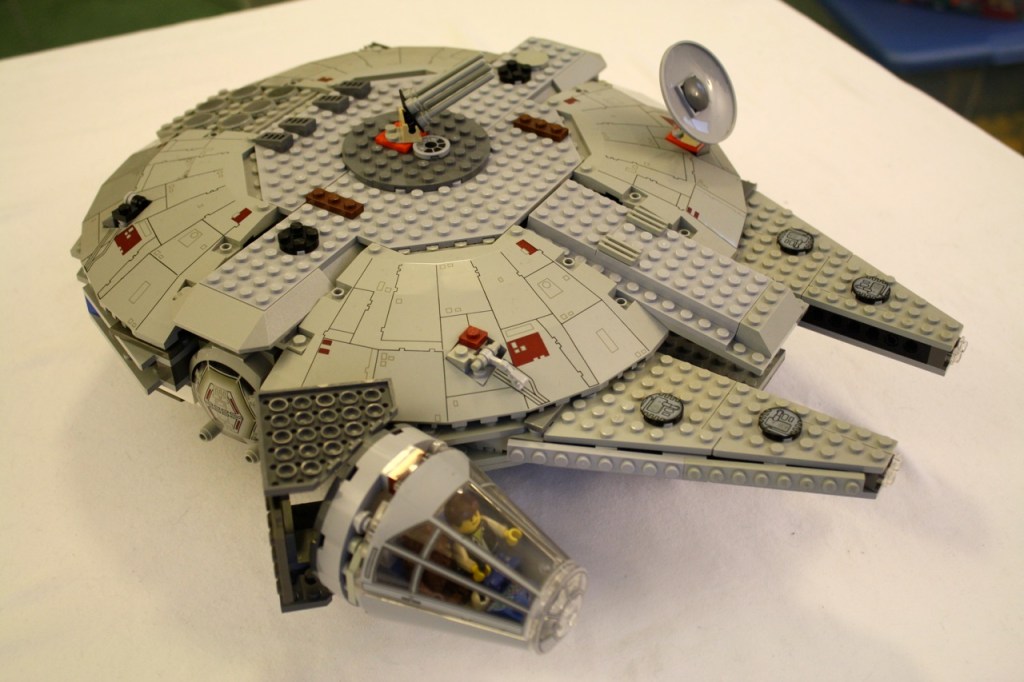
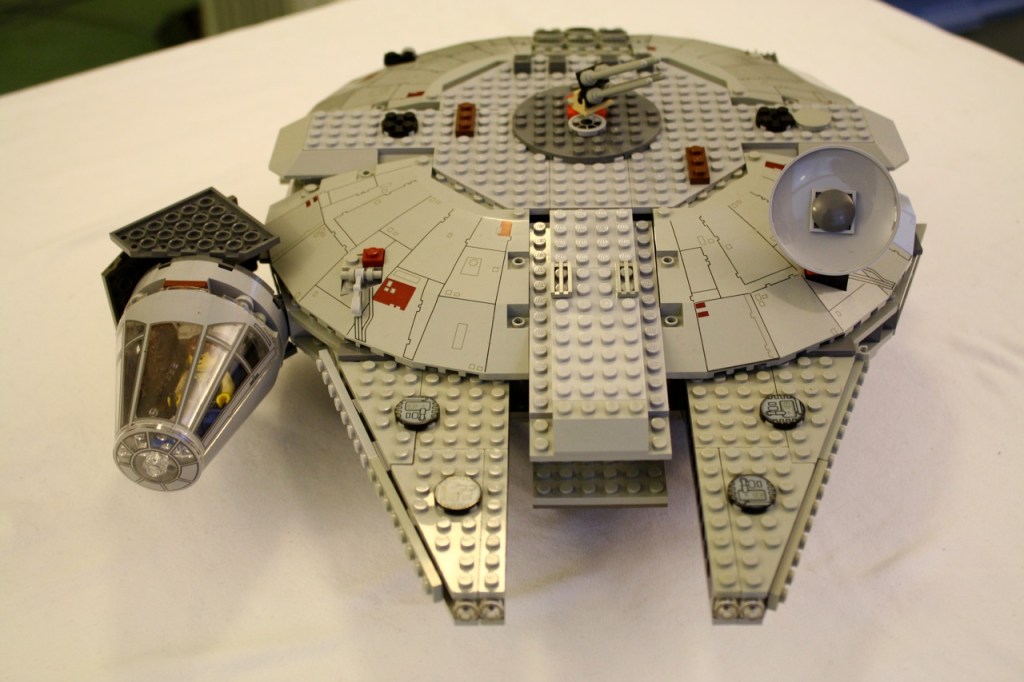
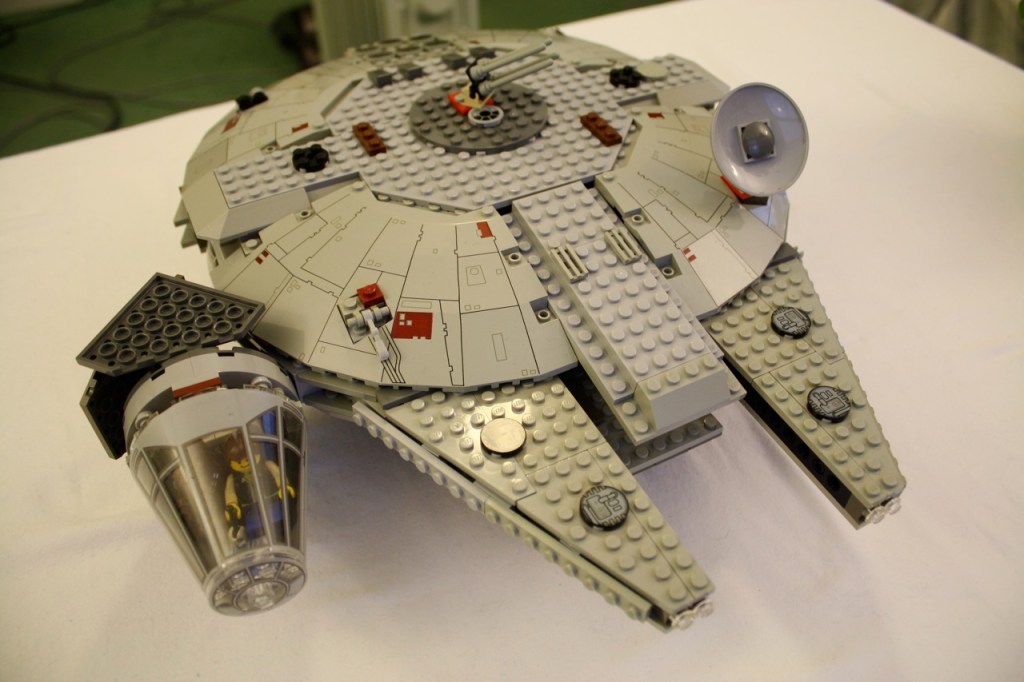
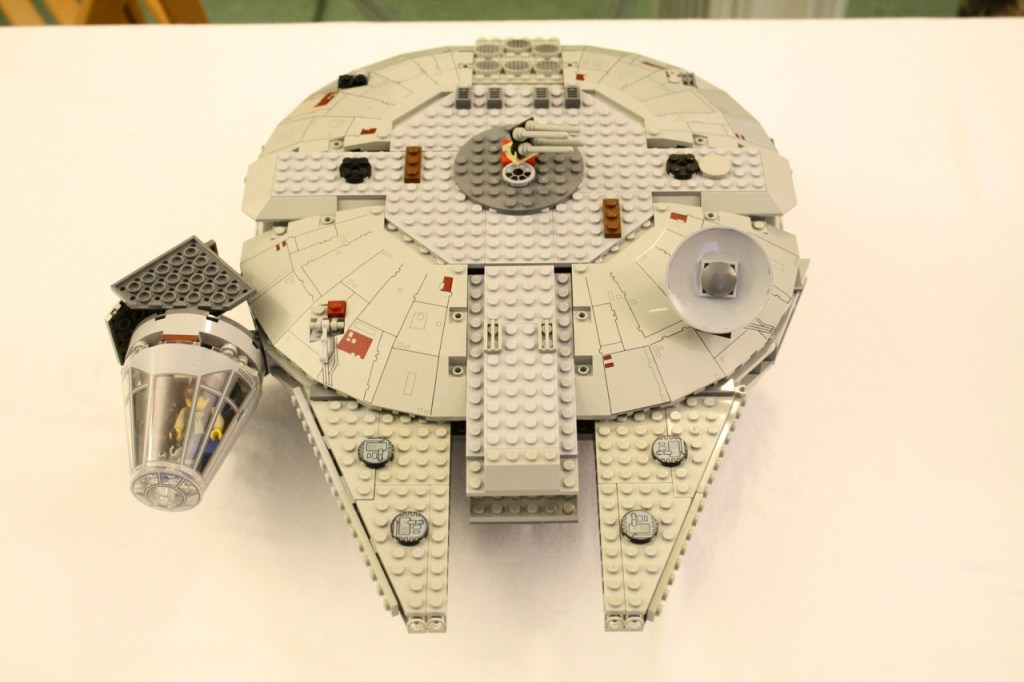
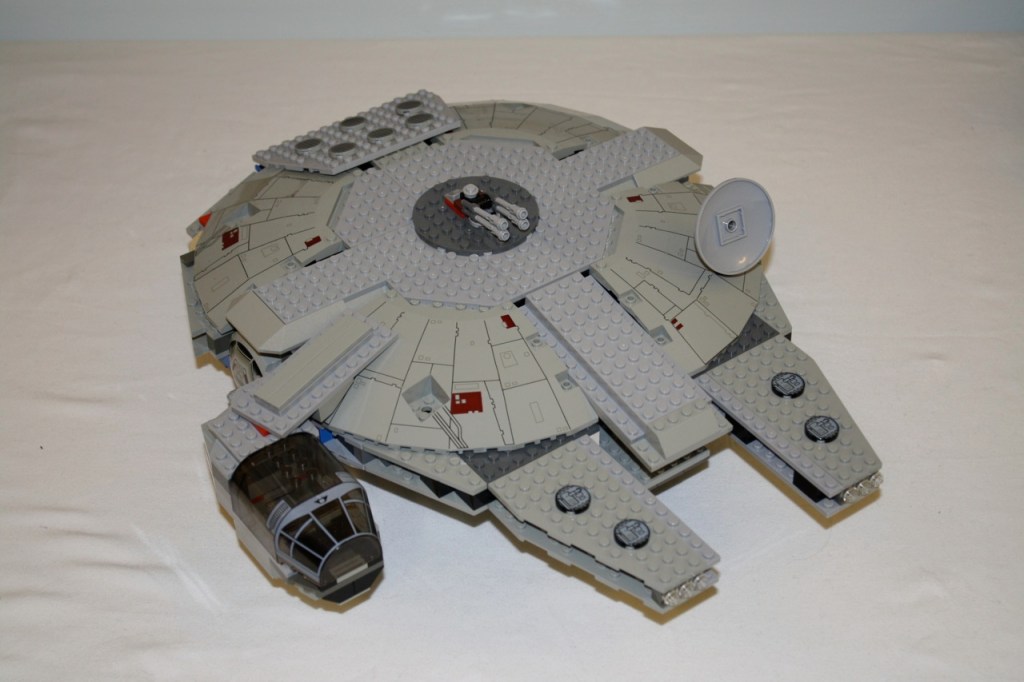
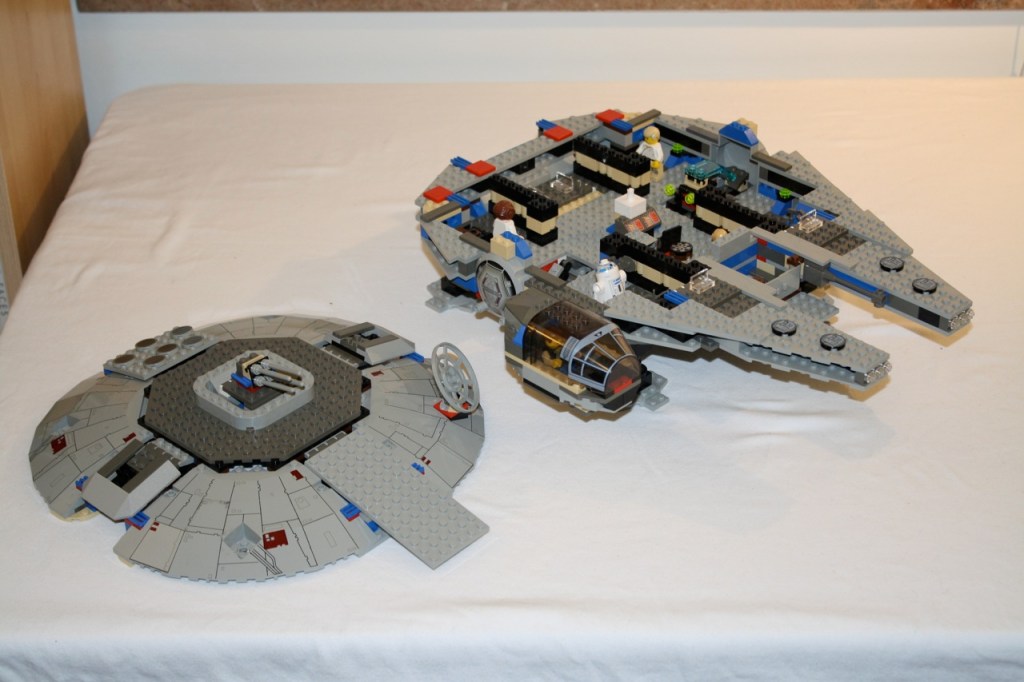
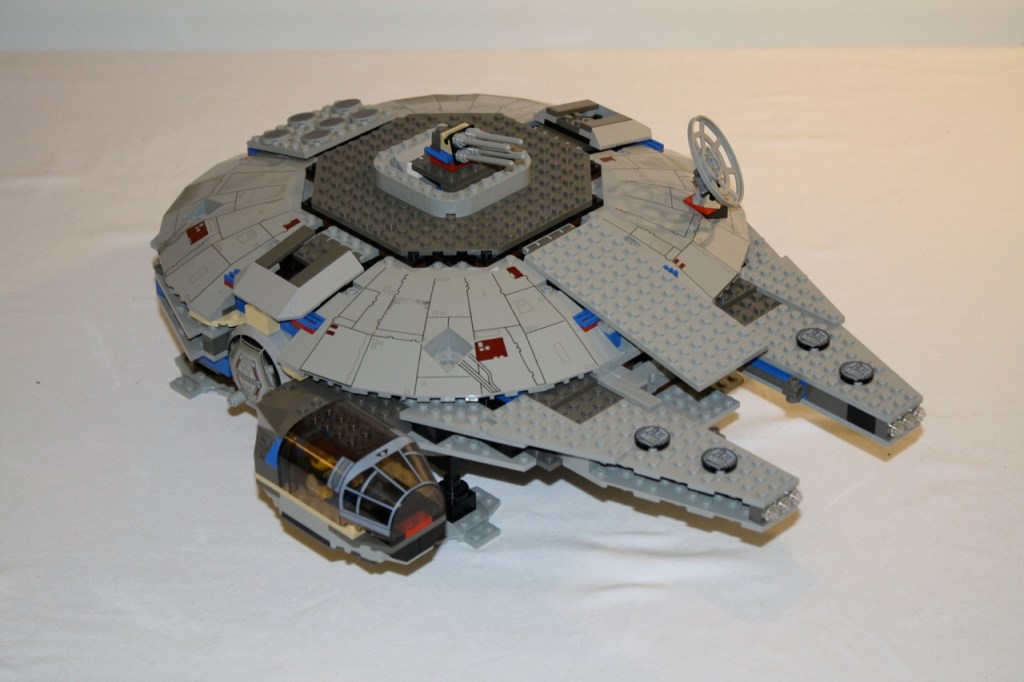
    And here it is–my custom rebuilt Lego Star Wars Millennium Falcon 7190 model. It took me several months of tinkering to get it in the shape that it is now–beat-up, derelict, and having it where she needs it.

    In the following, I will show how the model began, how it evolved, and then a more thorough description of the changes that I made to the model.

    Below, you can see how the 7190 Falcon looked after I initially built it. It gestures toward what the Falcon should look like, but it has too much non-battleship gray color and the design is aimed toward play more than appearance.

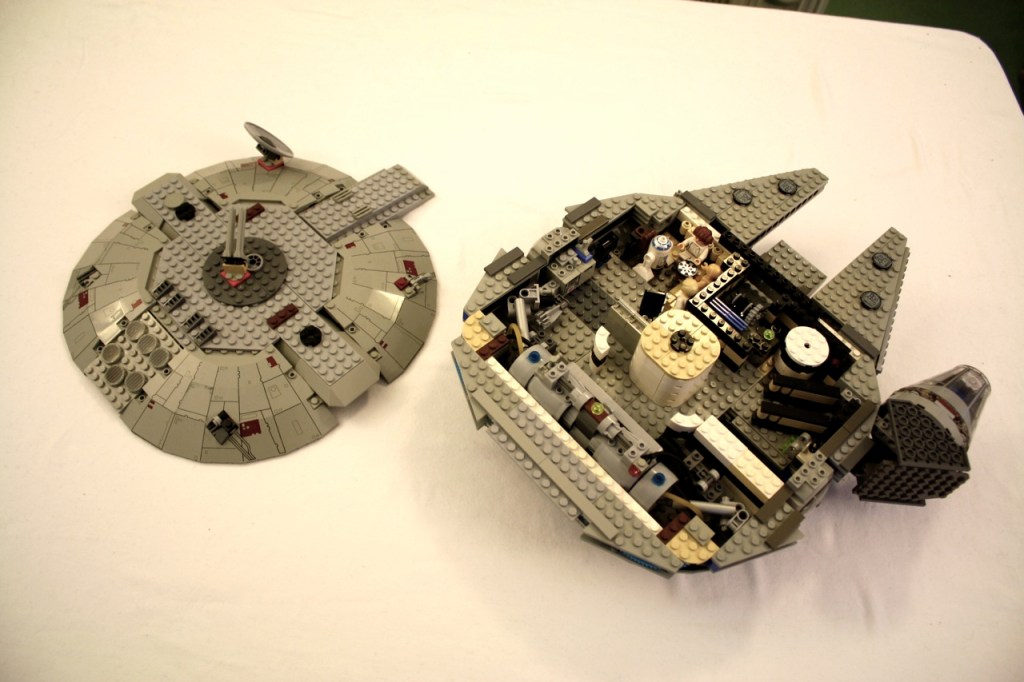
    Below are two pictures of the interior with the upper hull removed. Again, the emphasis is on play instead of accuracy. The interior is segmented by straight walls and there is no visible engine, which I believe a big, fast ship like the Falcon should have.

    Initially, I hadn’t planned on redesigning the interior. I thought that there was more to be done with the exterior, with the large quarter panel pieces that could make the 7190 rival the newer 4504 model.

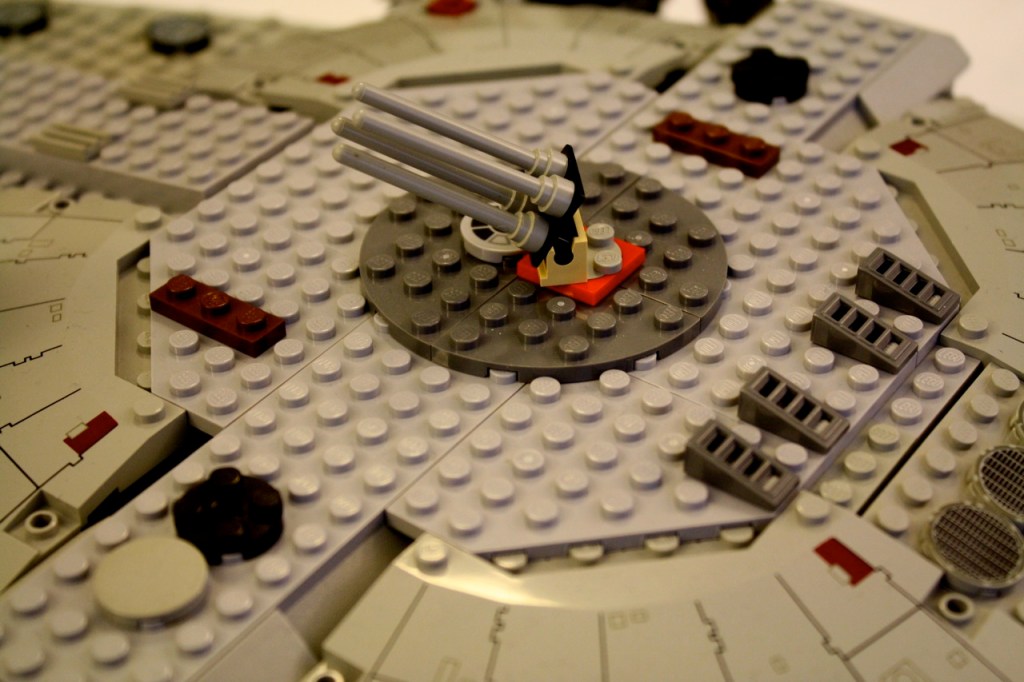
    Below you can see how I have selected a single color for the upper hull, reduced the profile for the gun turret, increased the size of the engine compartment at the rear, and changed the forward cargo loader from a single flat piece to a more accurate raised profile.

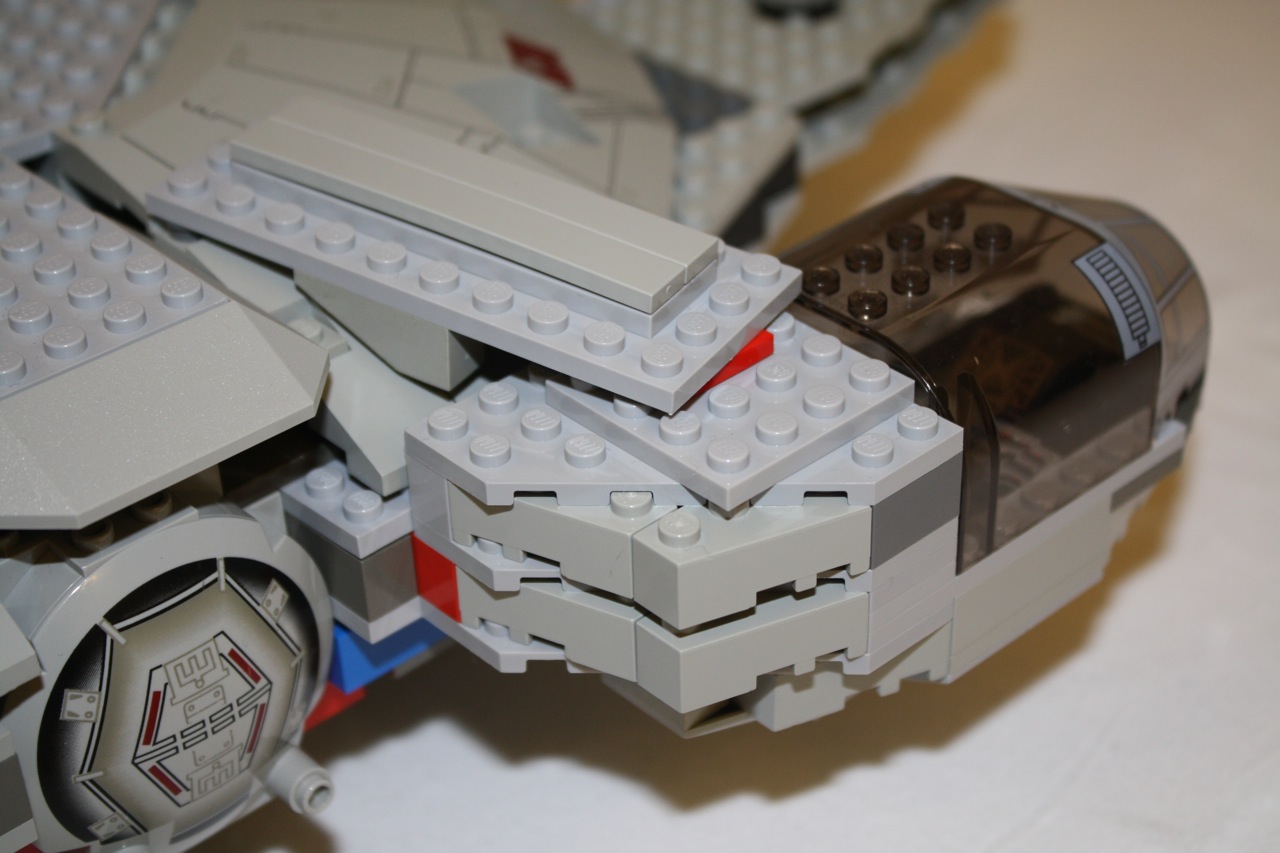
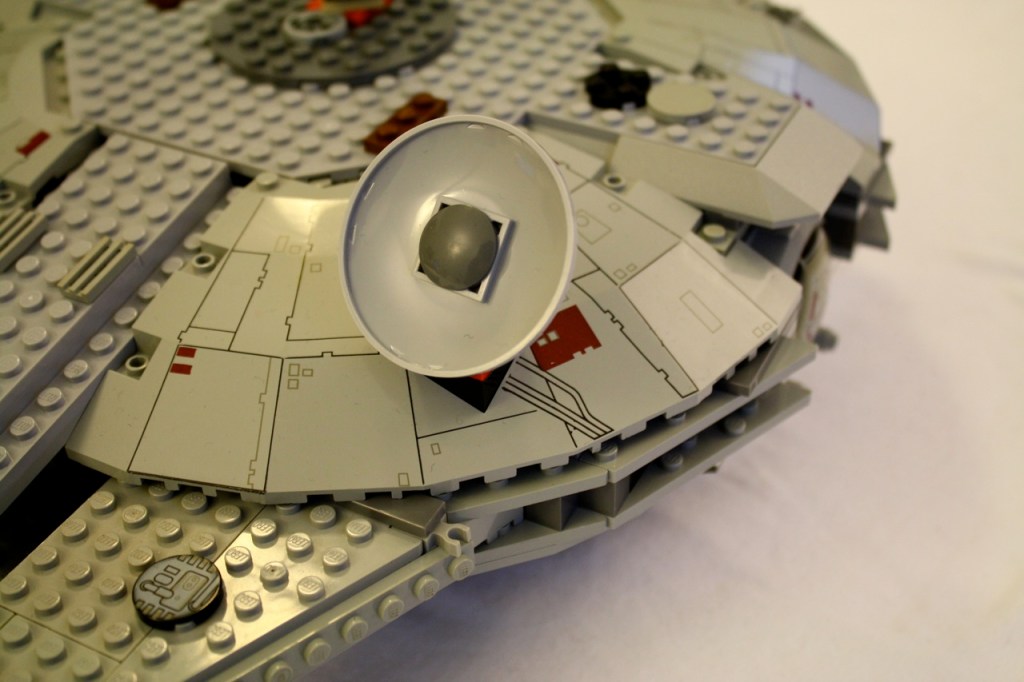
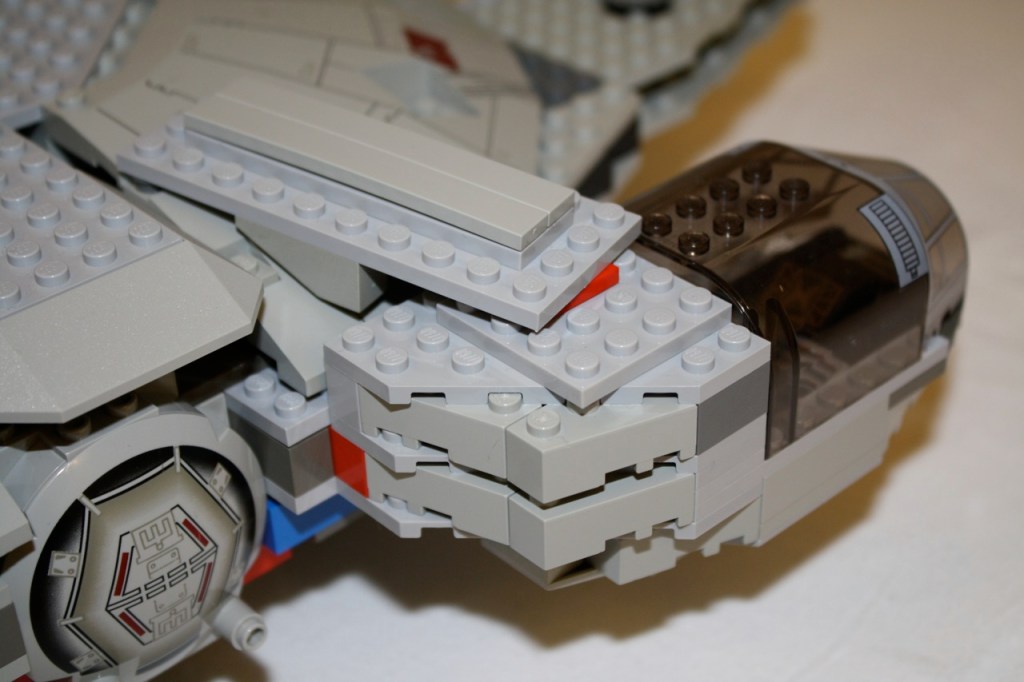
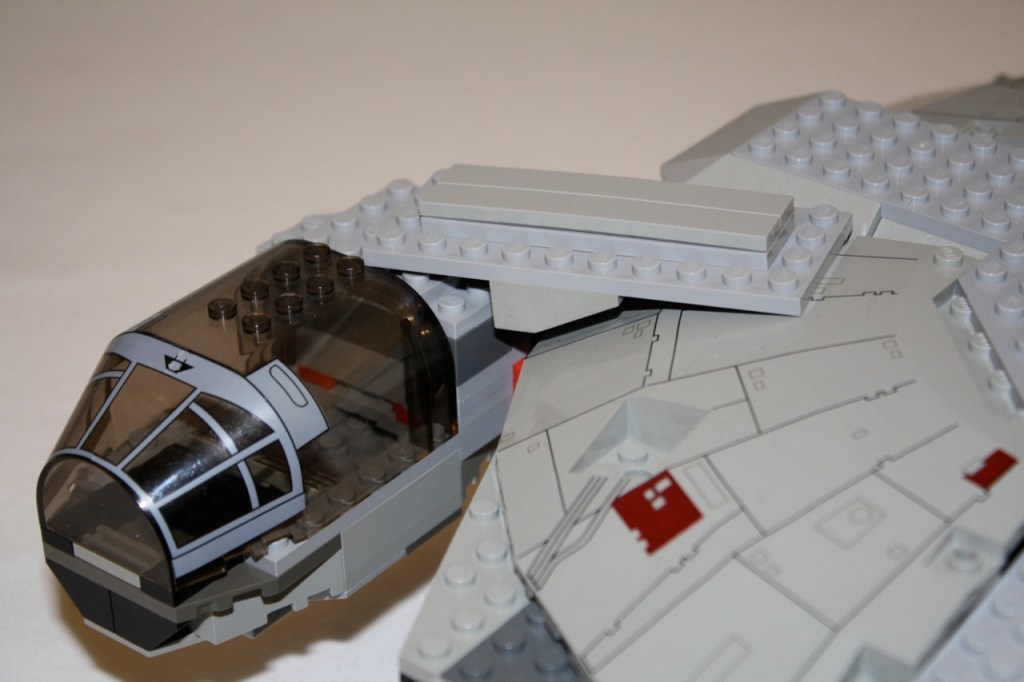
    Also, I improved the cockpit so that it bends into the main hull and connects to it with a single flat round brick. Below are detailed photos of the cockpit redesign.

    In the final version of the 7190 redesign, I opted to replace the cockpit with the same one found on the 4504 model, the parts of which I found on bricklink.com, an excellent resource for finding sets and bricks at reasonable prices. In the future, I may reincorporate the curve and passage way in the above pictures into the 7190 redesign. However, I do have some other ideas about how to make it look more accurate, following the ideas in the 4504 model, but I need additional pieces to make this work.

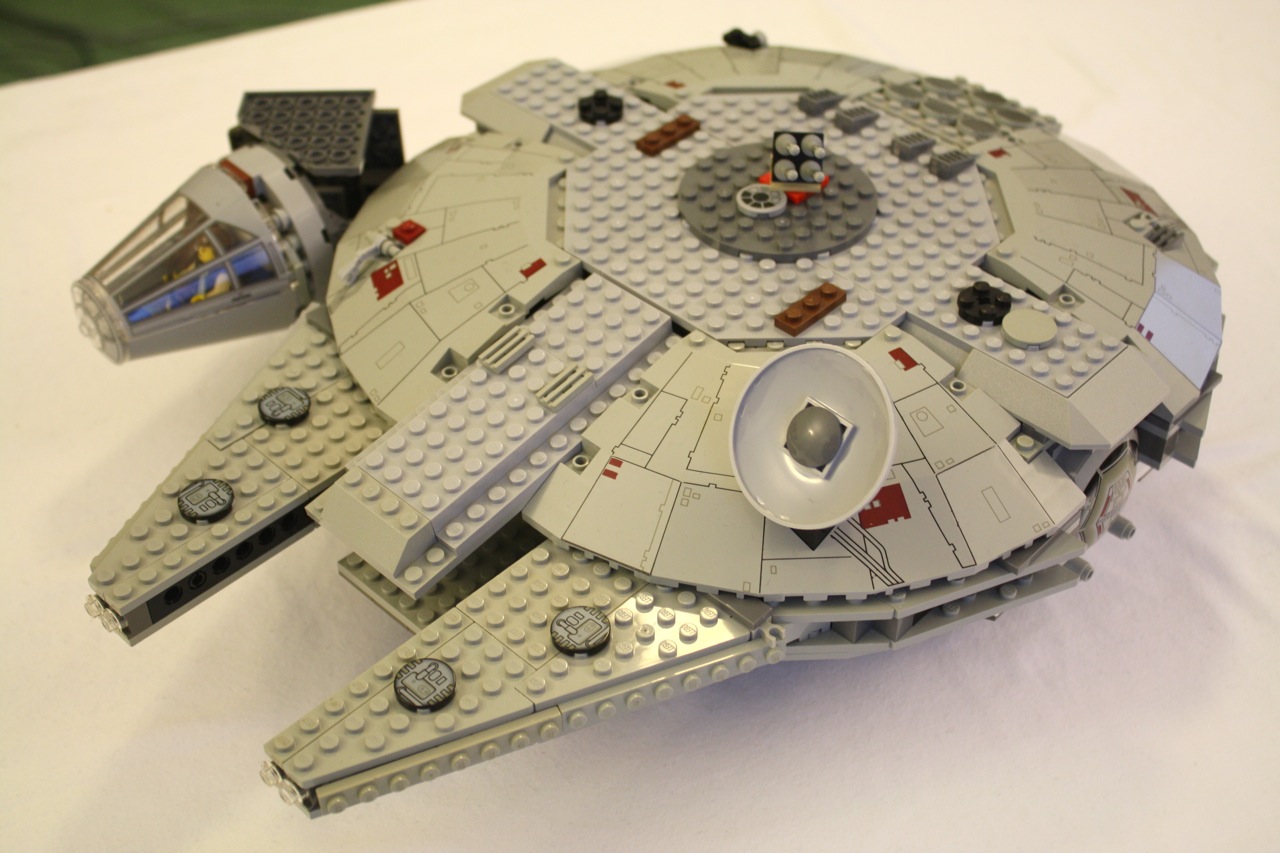
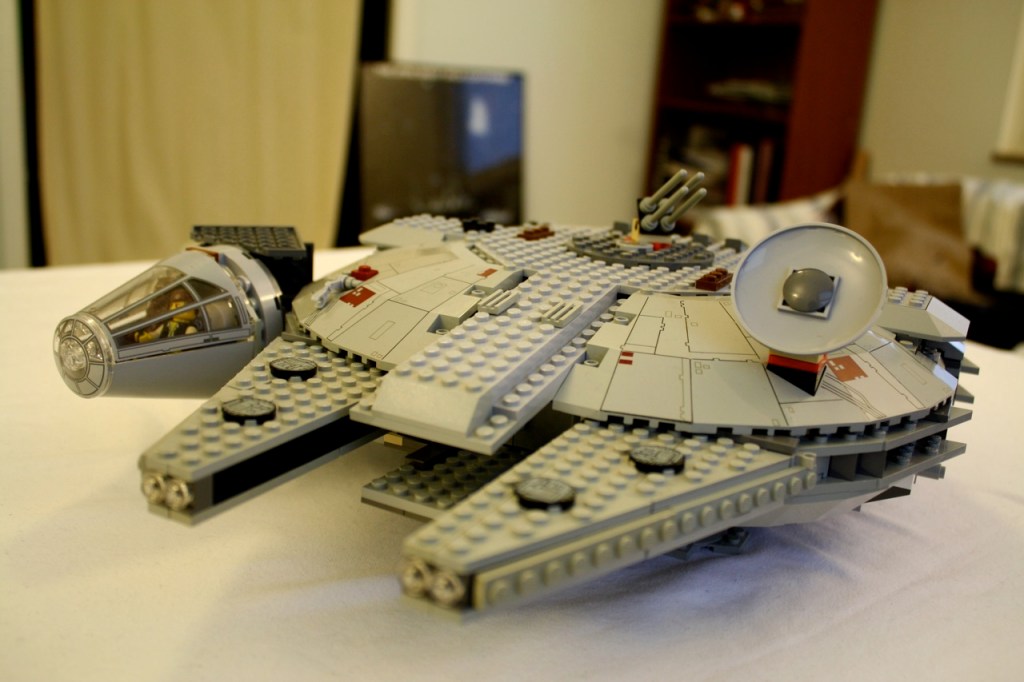
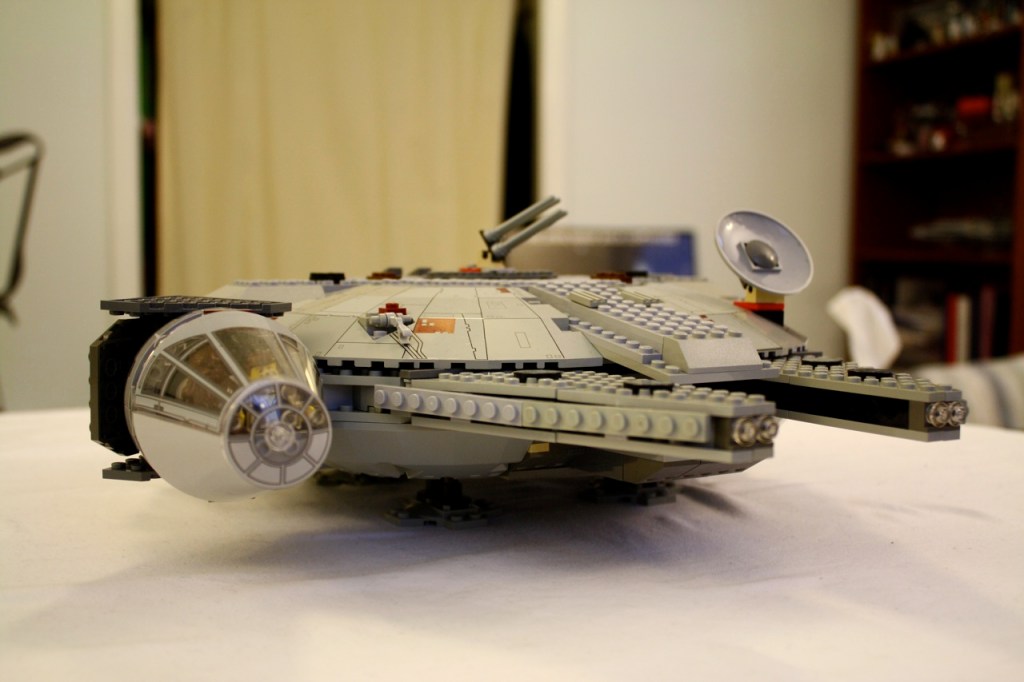
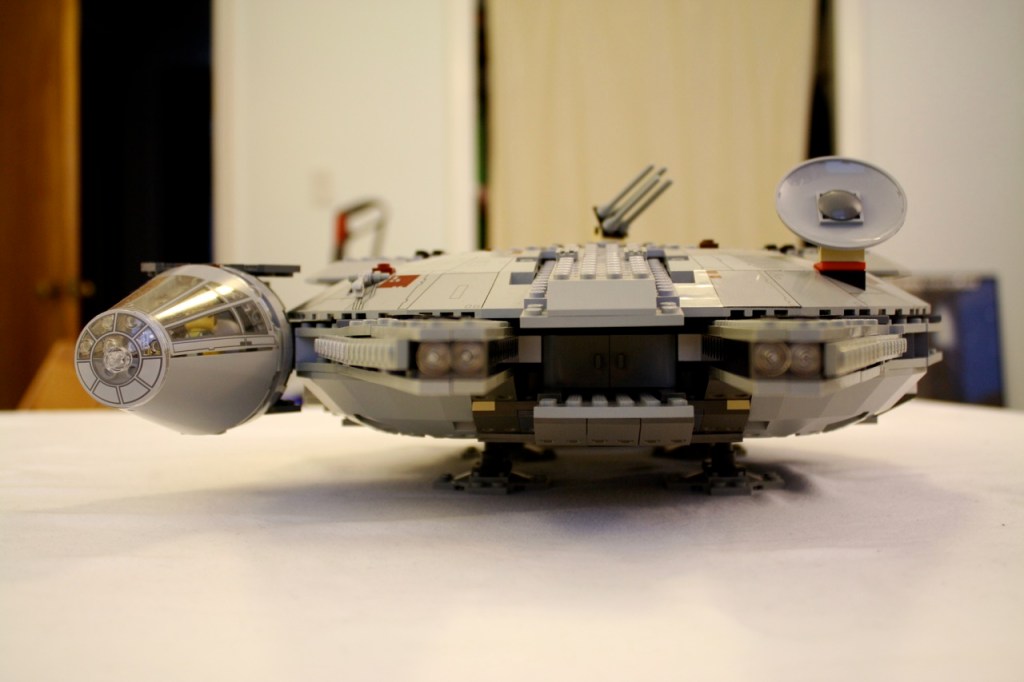
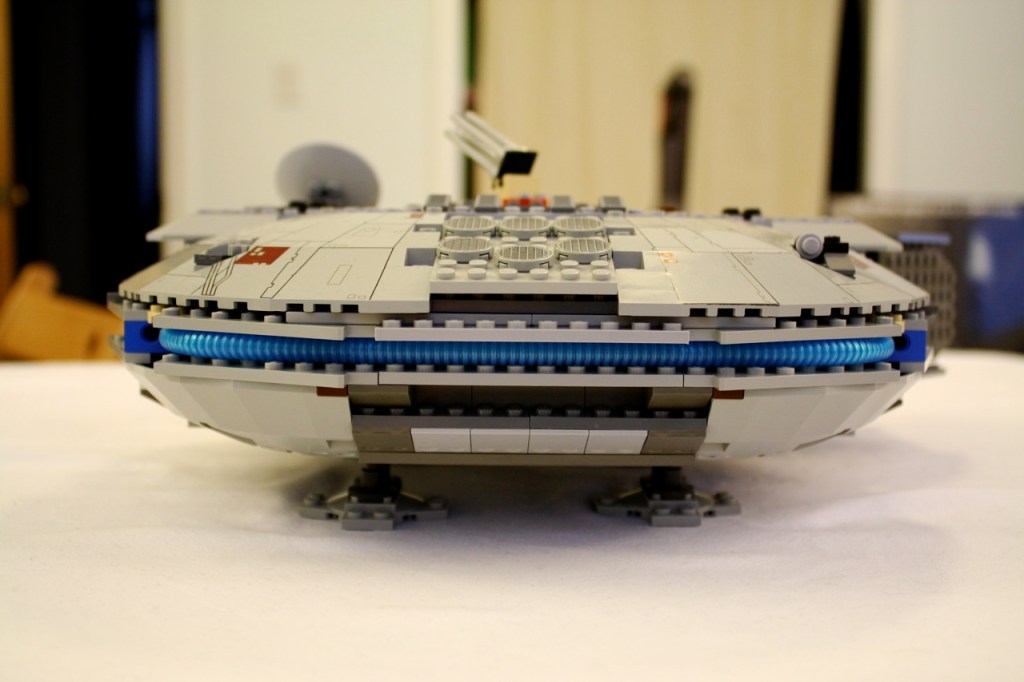
    So, here are more detailed photos of the 7190 redesign as it now stands. I will include exterior shots first, and then I will show the extensive and exciting interior redesign that I made.

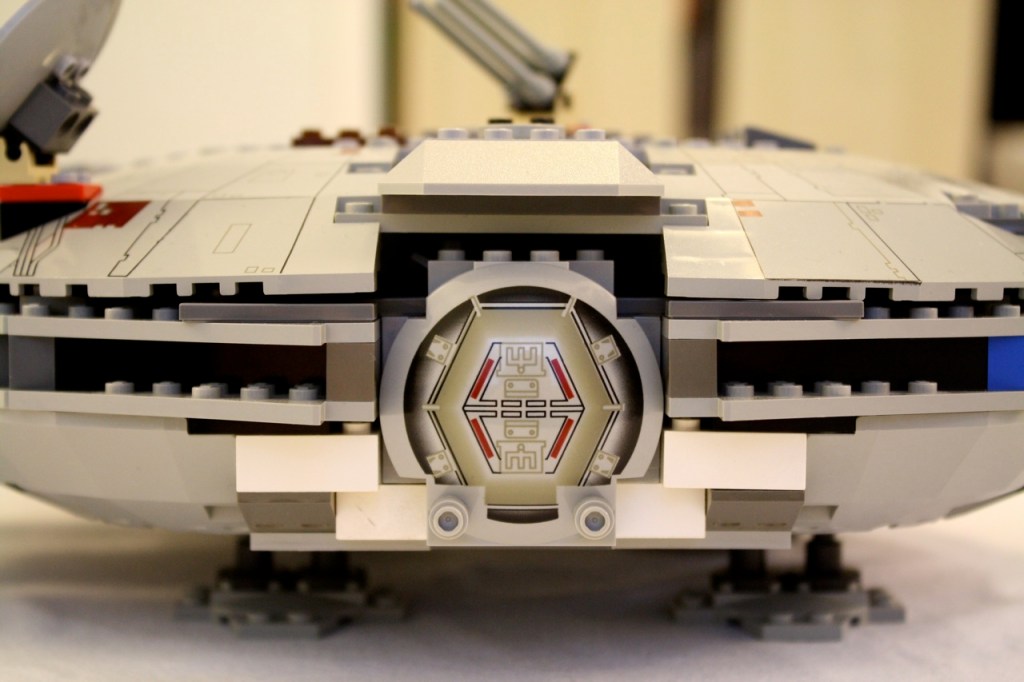
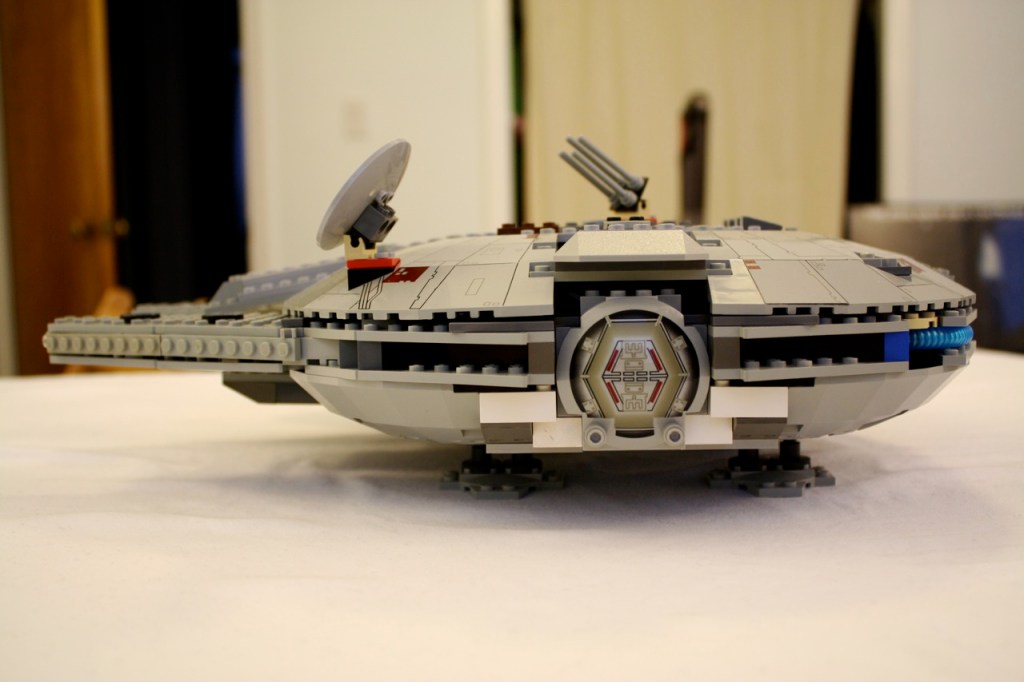
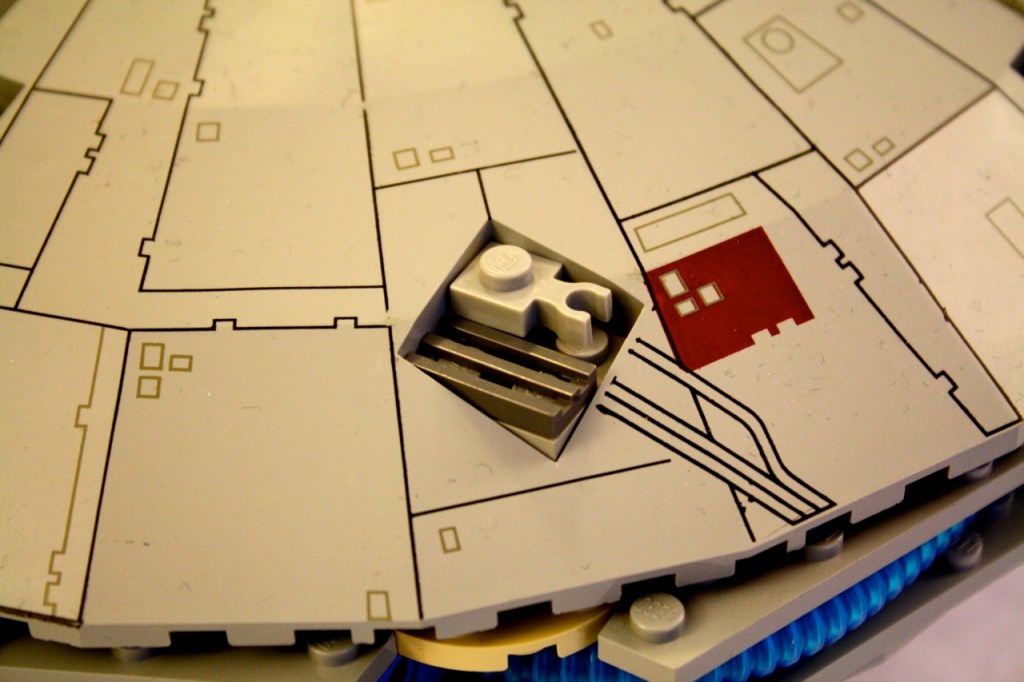
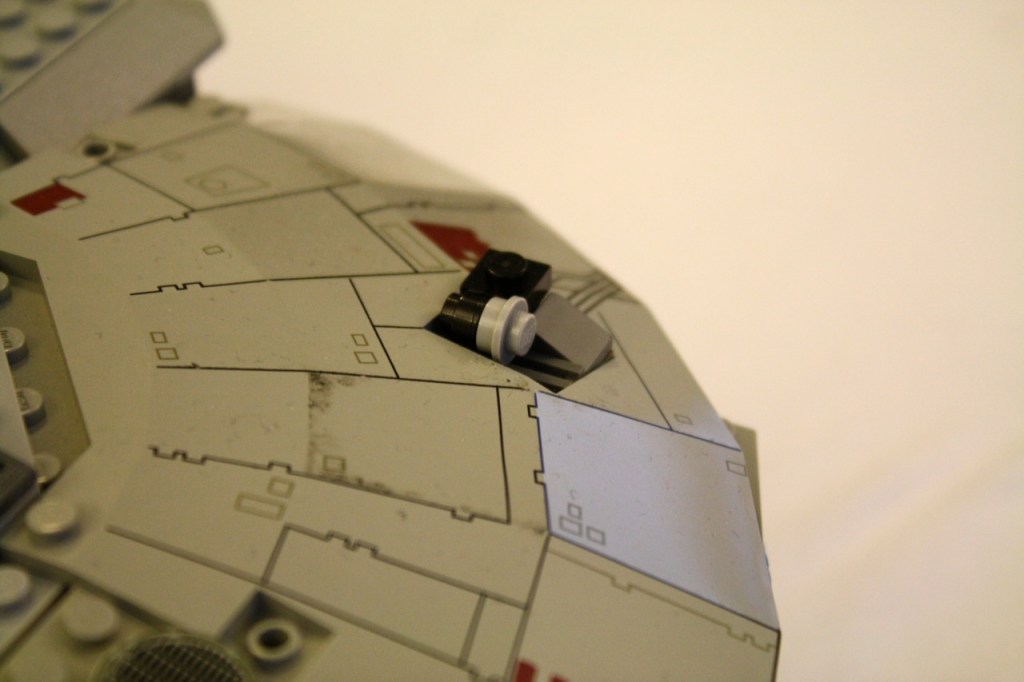
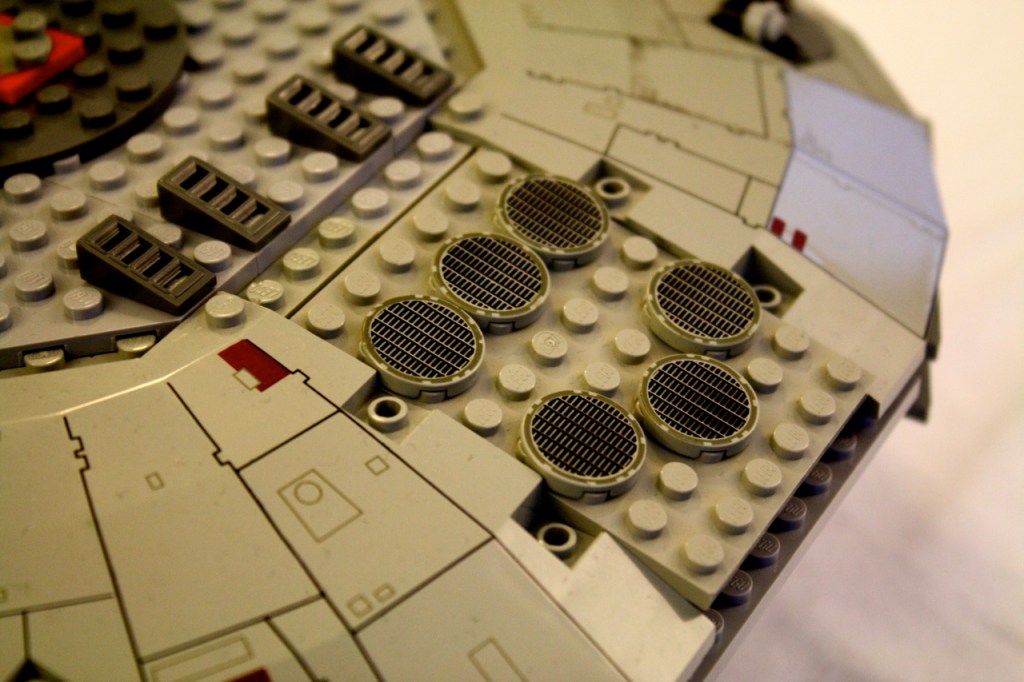
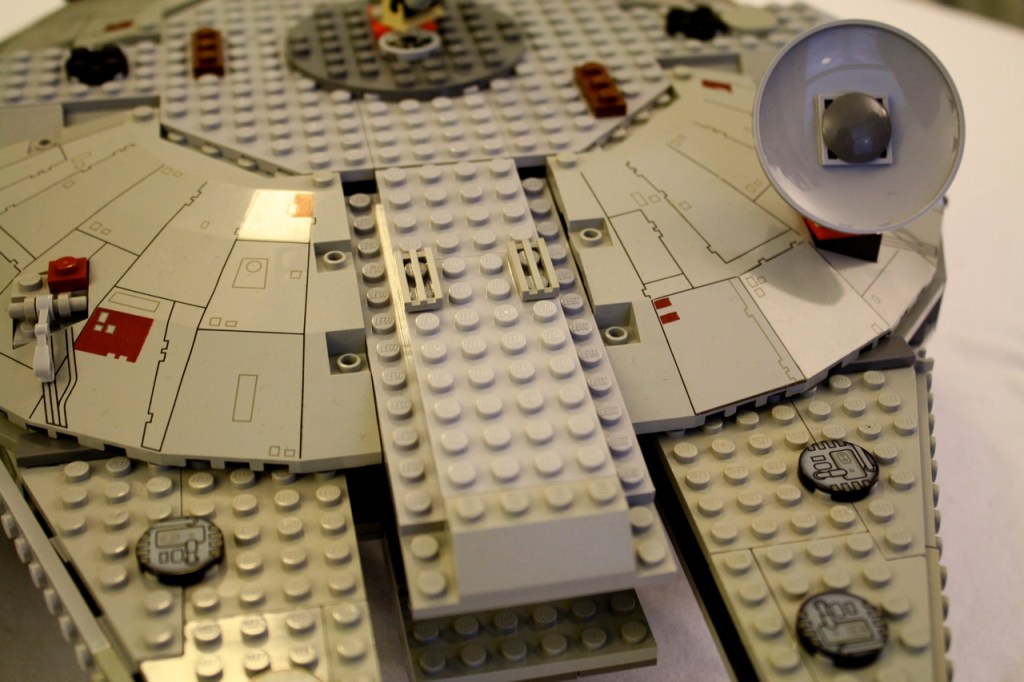
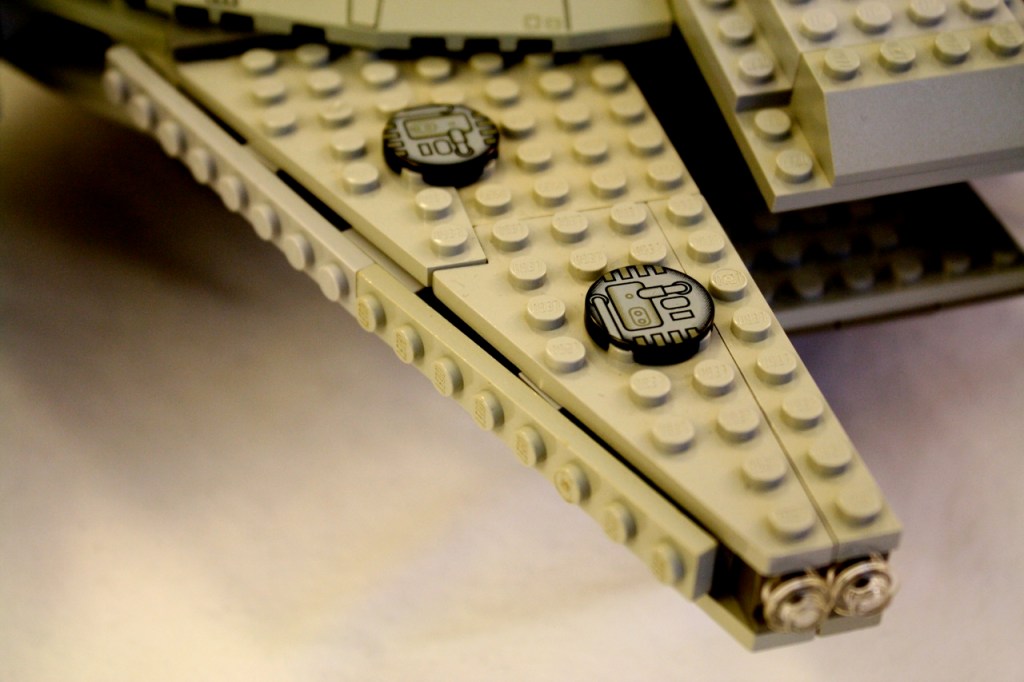
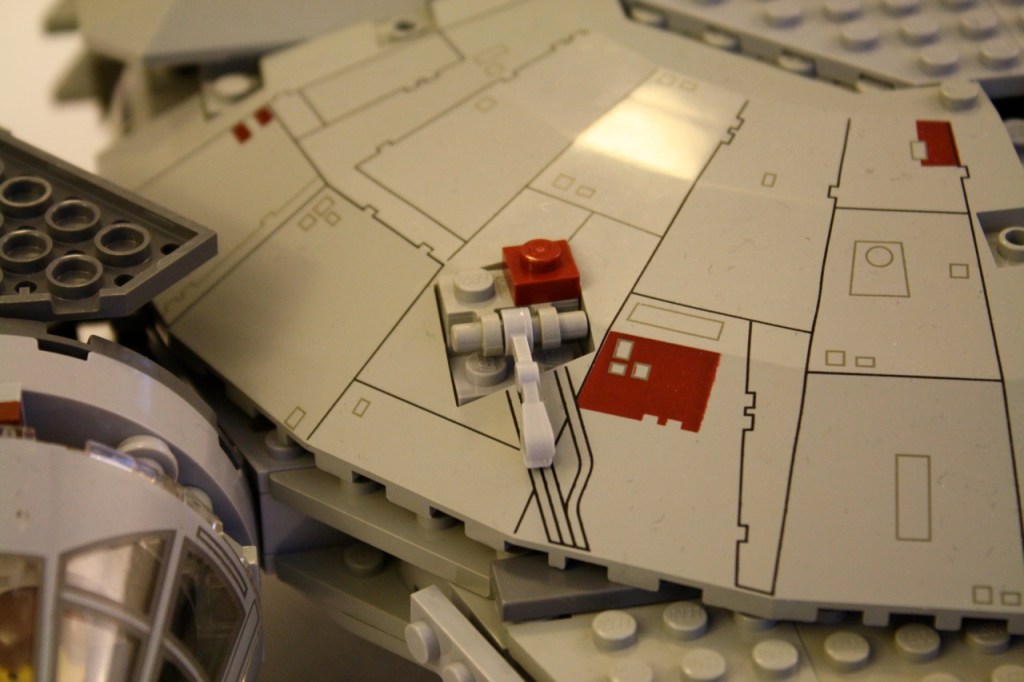
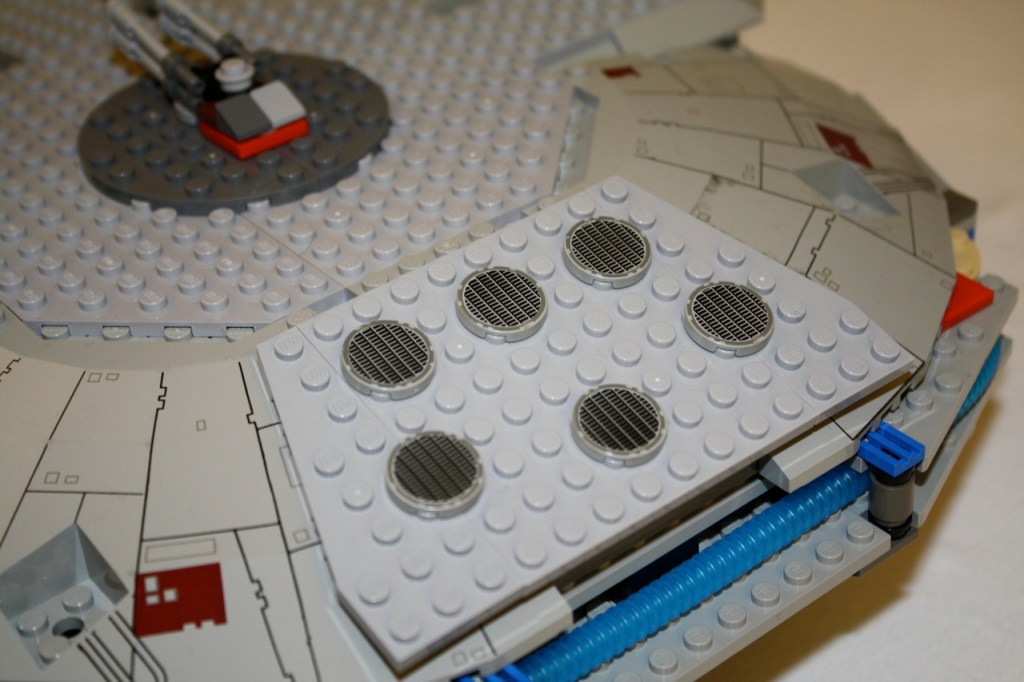
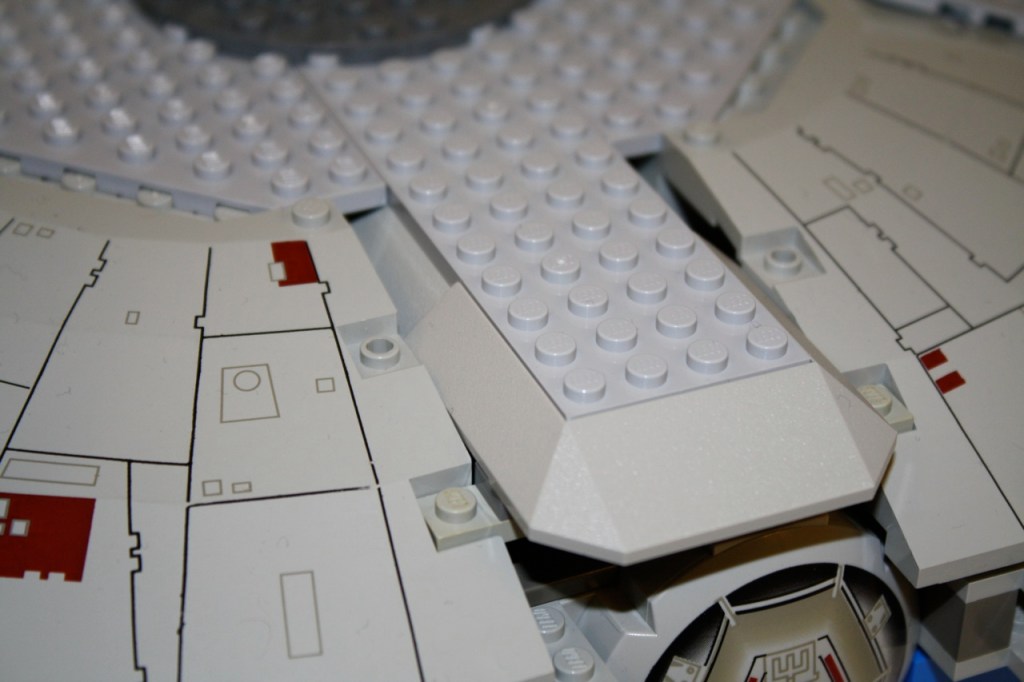
    As you can see in the two photos above, I streamlined the front prongs into the main hull, extended the port and starboard hatch covers so that they are level, added surface color and detail to more accurately match the Falcon, and utilized the natural design of the quarter panel spacing for the rear engine compartment exhaust grills.

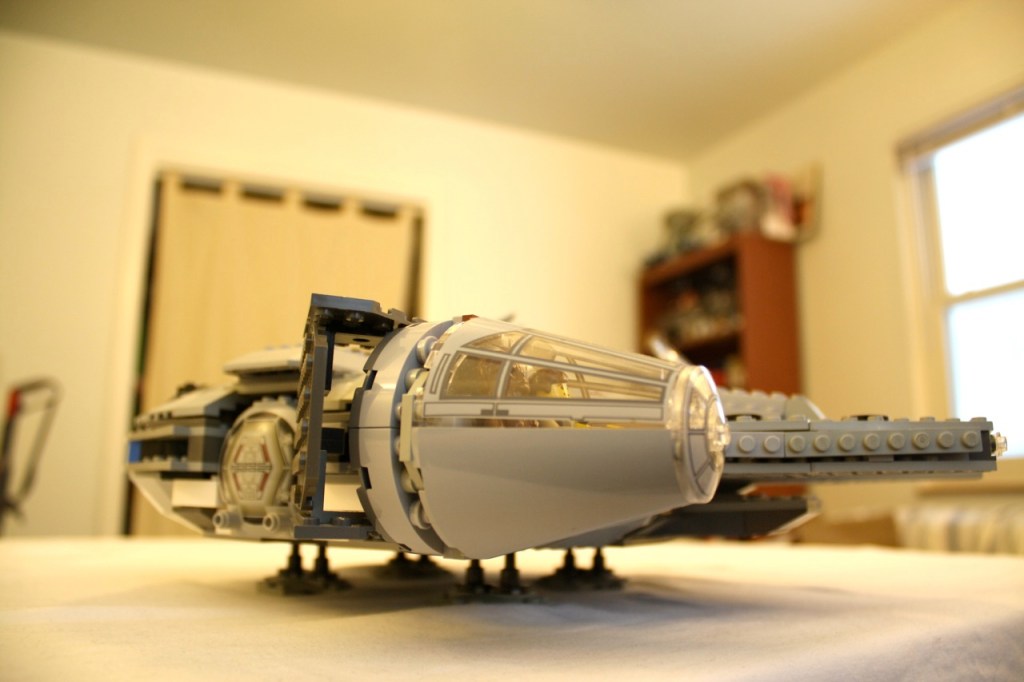
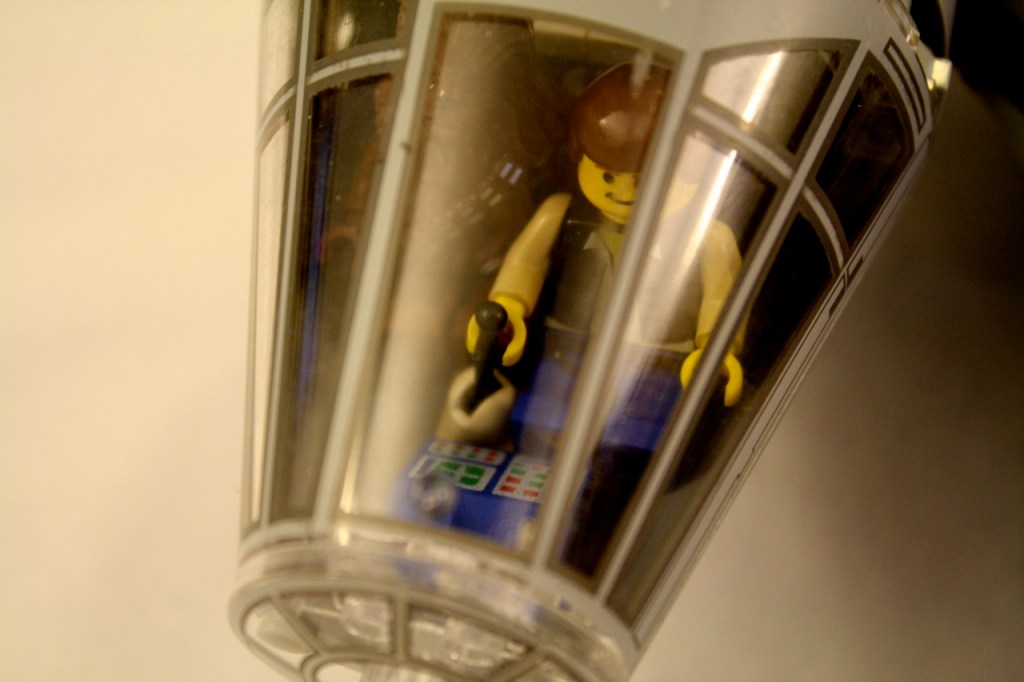
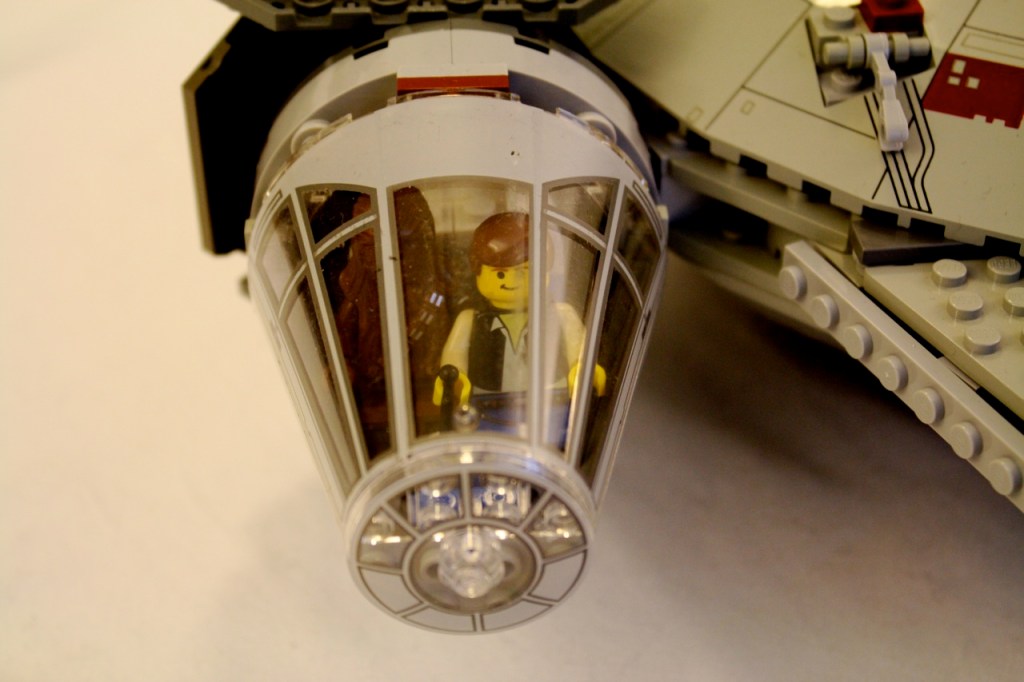
    The cockpit is the same as the one in the 4504 model, but I used a different computer display brick in front of Han and Chewbacca. Also, I designed the cockpit-to-hull connector to indicate the connection while making it easy to remove the upper main hull. I believe that I will continue working on this in the next iteration of the model.

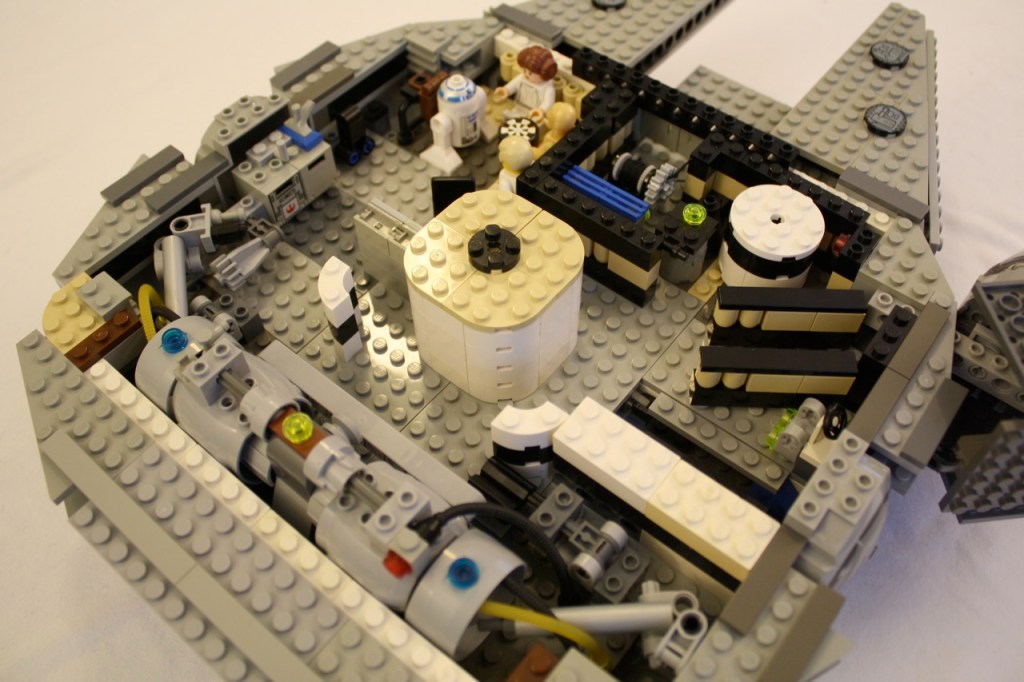
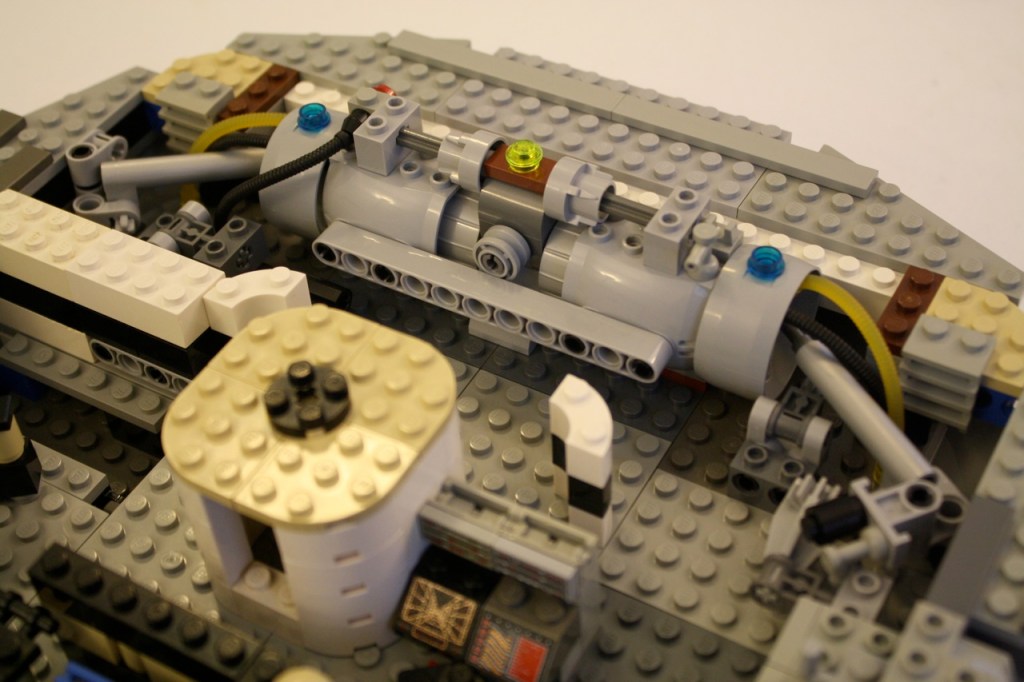
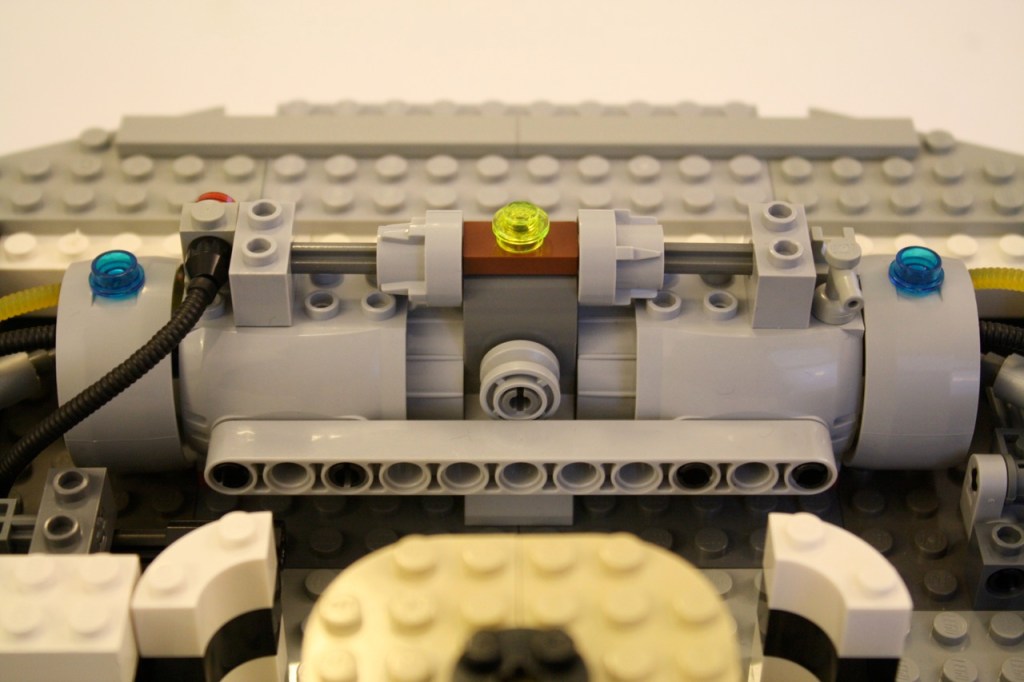
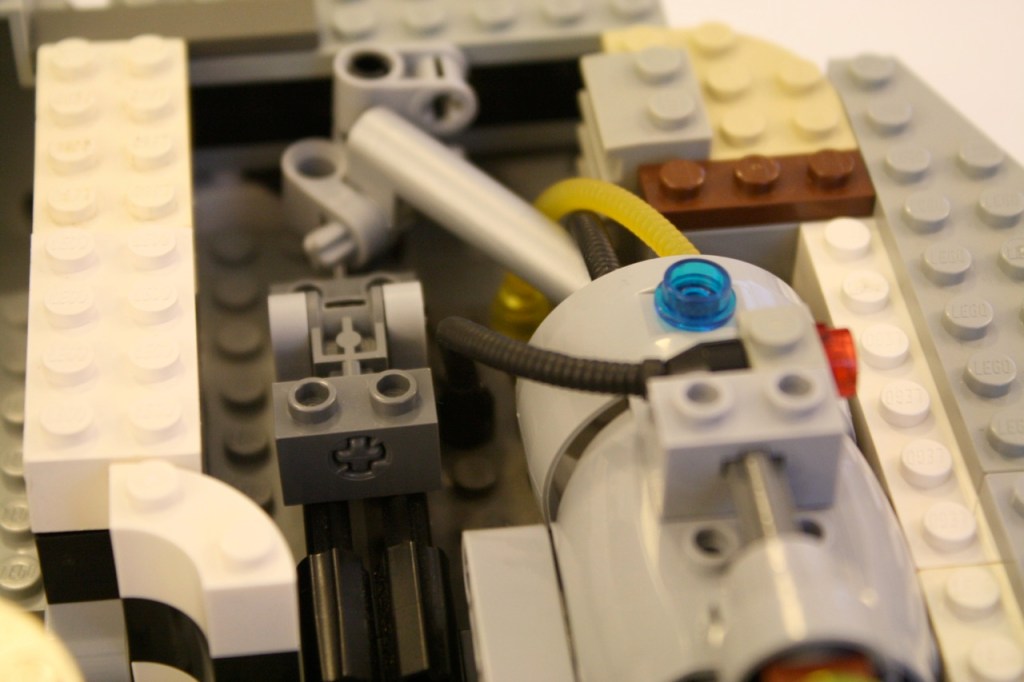
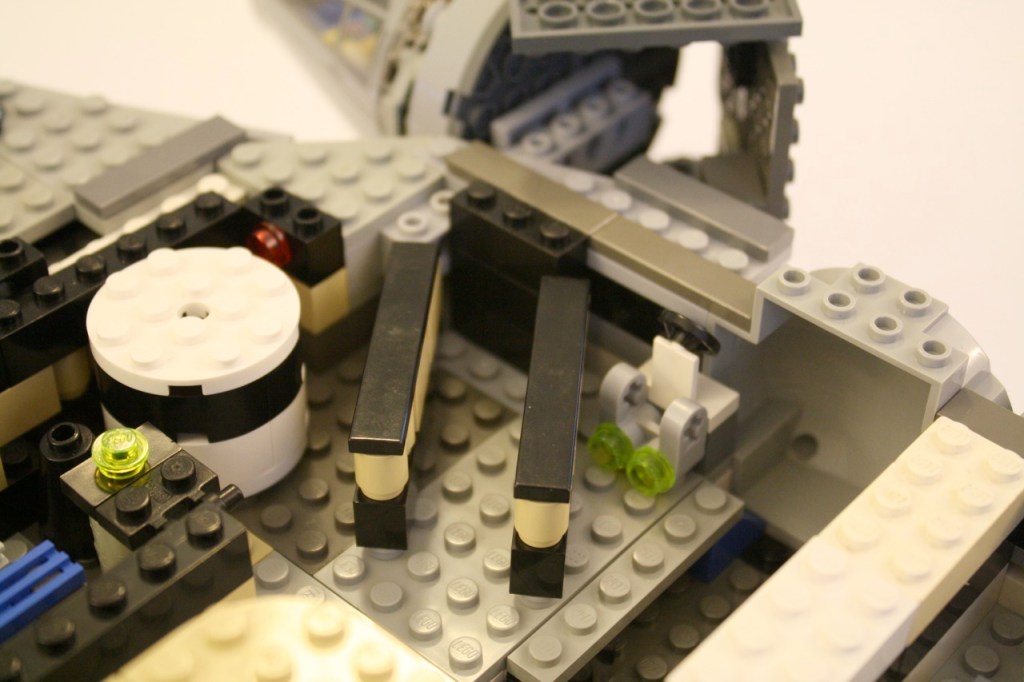
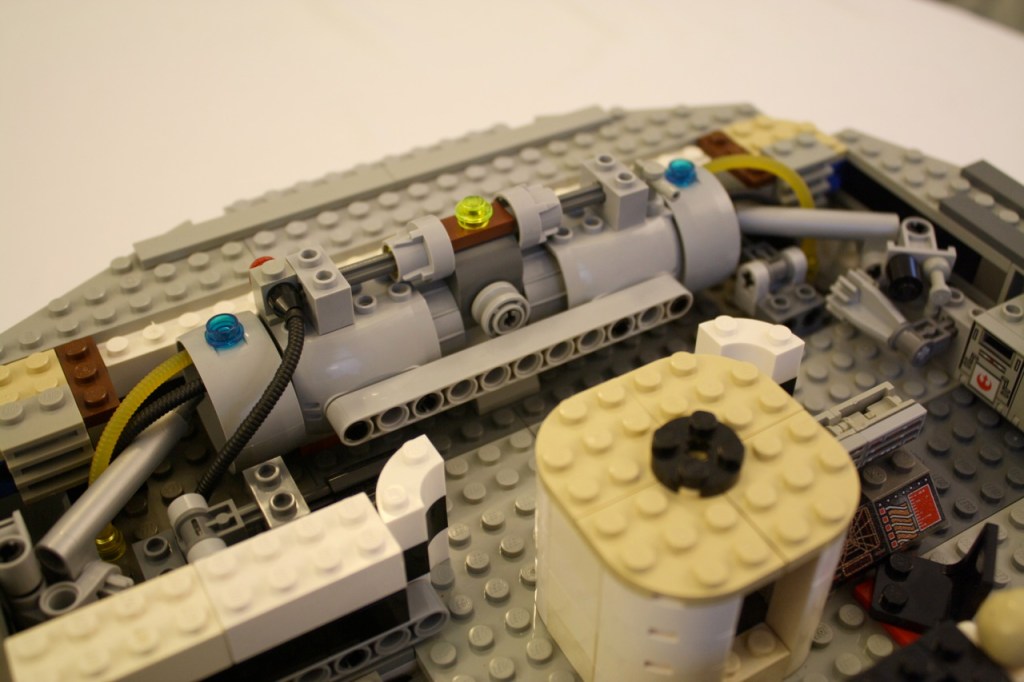
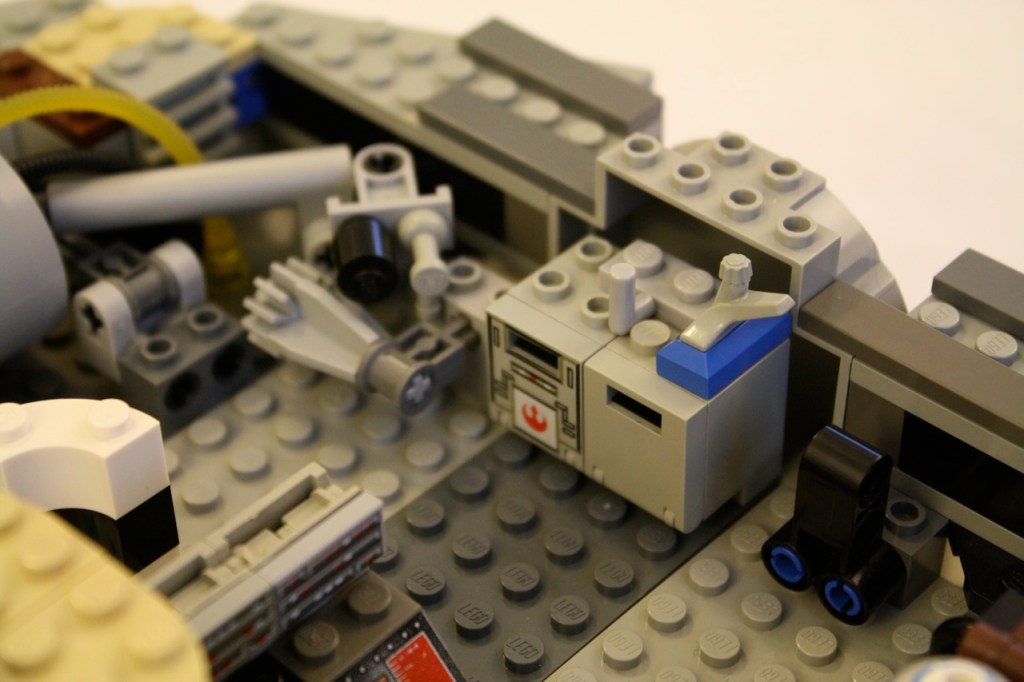
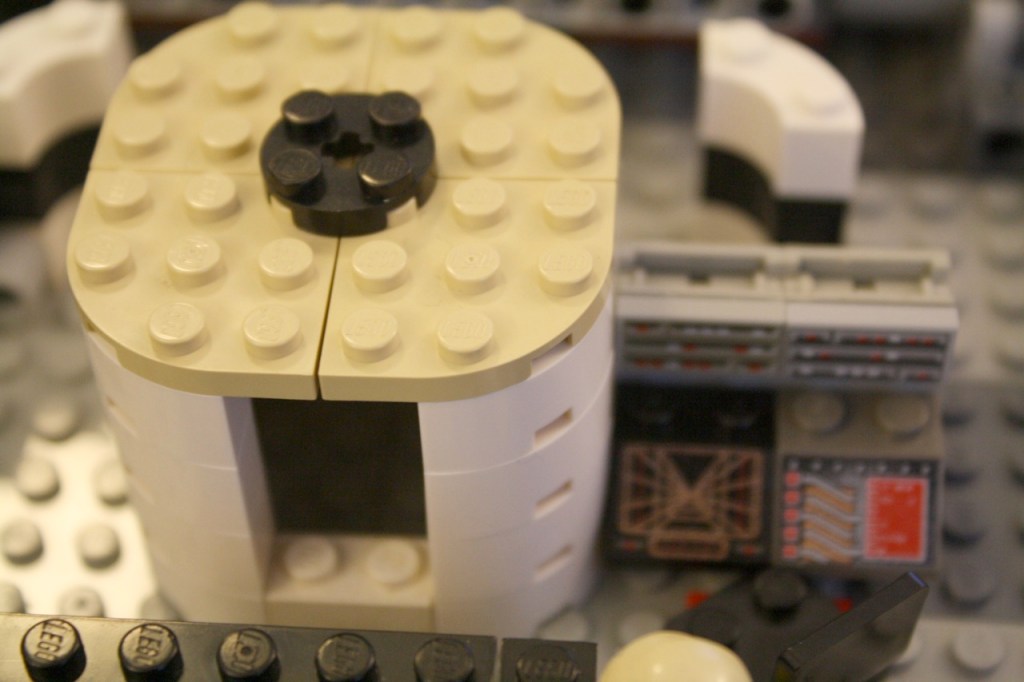
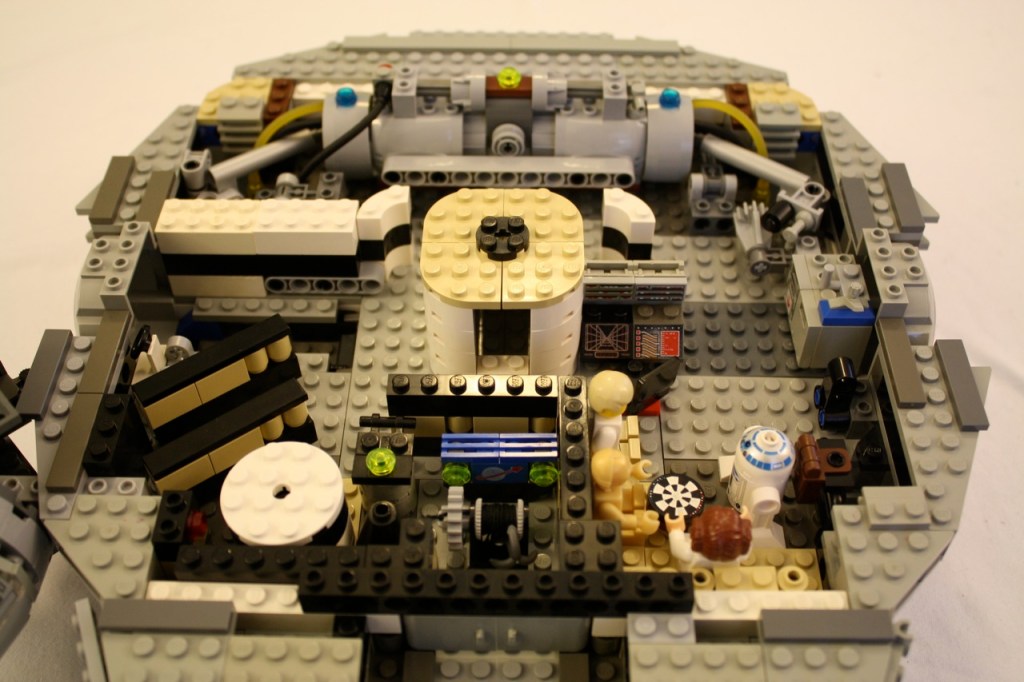
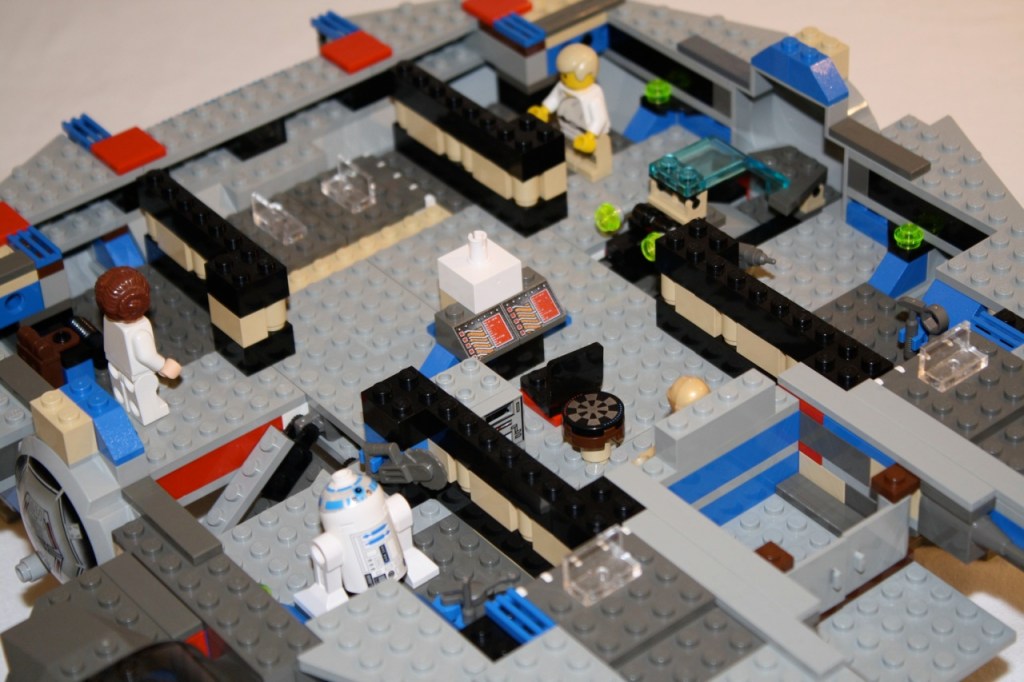
    Below are images of the interior of the Falcon based on the films and my own ideas about the engine for such a large and fast ship. I departed from the designs in the 4504 model with my design of the engine with built-in hyperdrive.

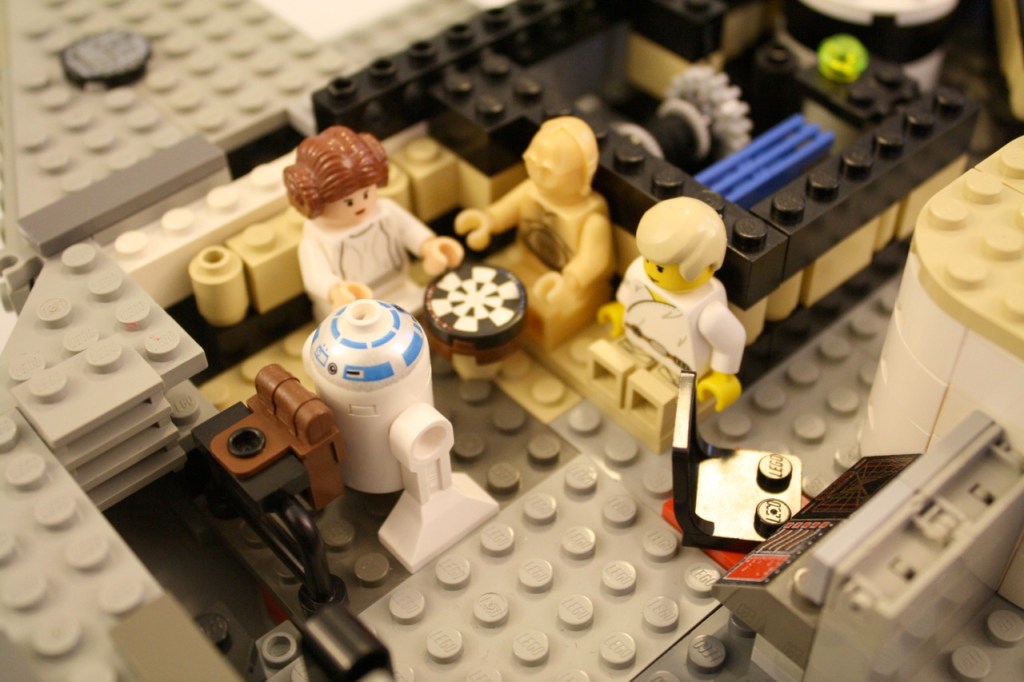
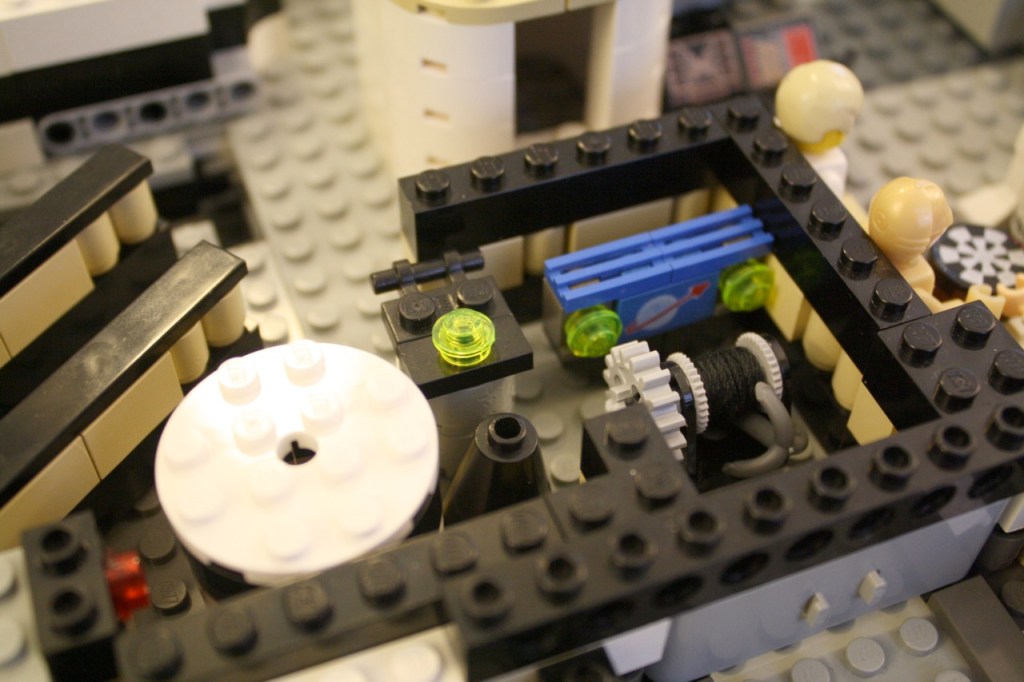
    Below, an all-inclusive shot of the interior of the Falcon. In the upper left, you can see everyone gathered around the Dejarik table. In the middle front you can see the cargo storage area followed by the passage way leading to the cockpit. The central column holds the gunner stations. In the rear, you can see the main engine with integrated hyperdrive.

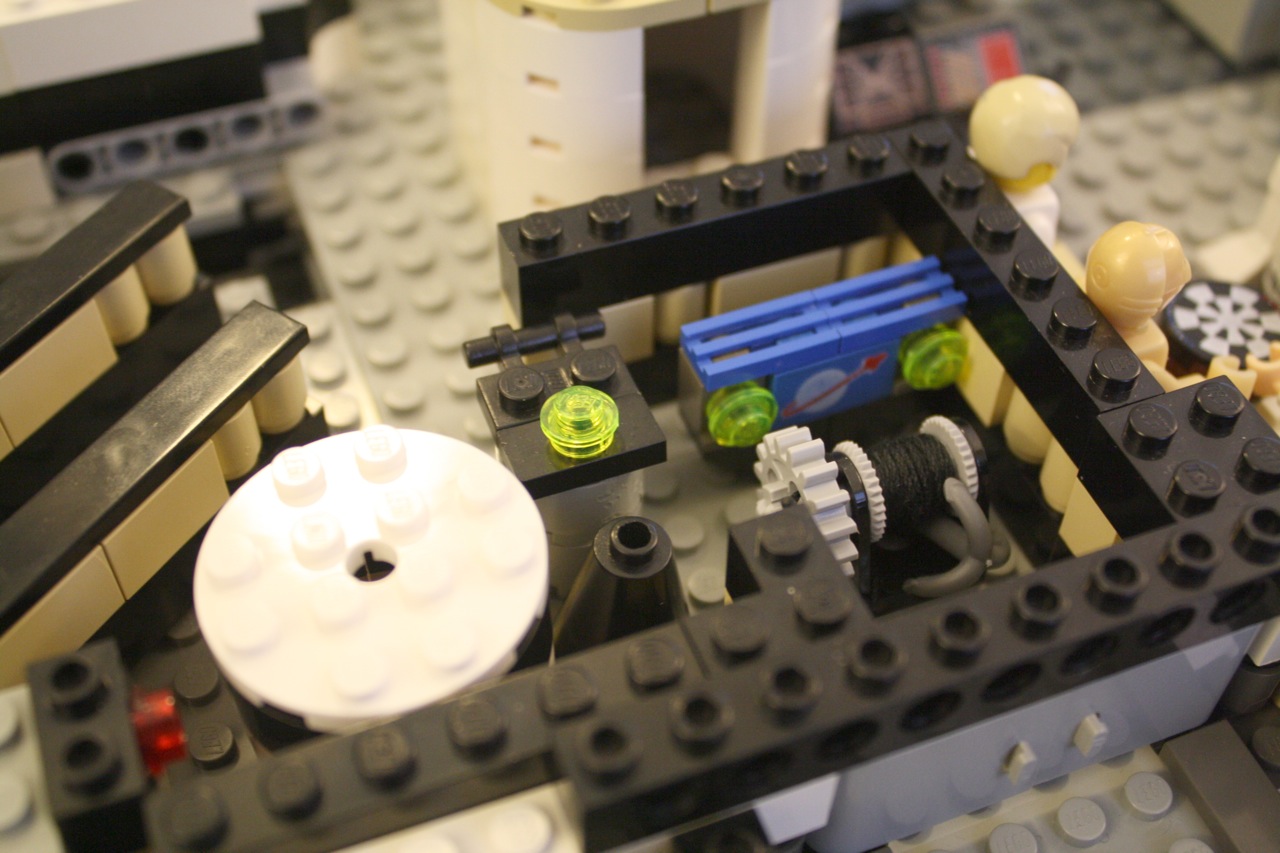
    Below, a detailed shot of the cargo area with a nod to the Lego Space series.

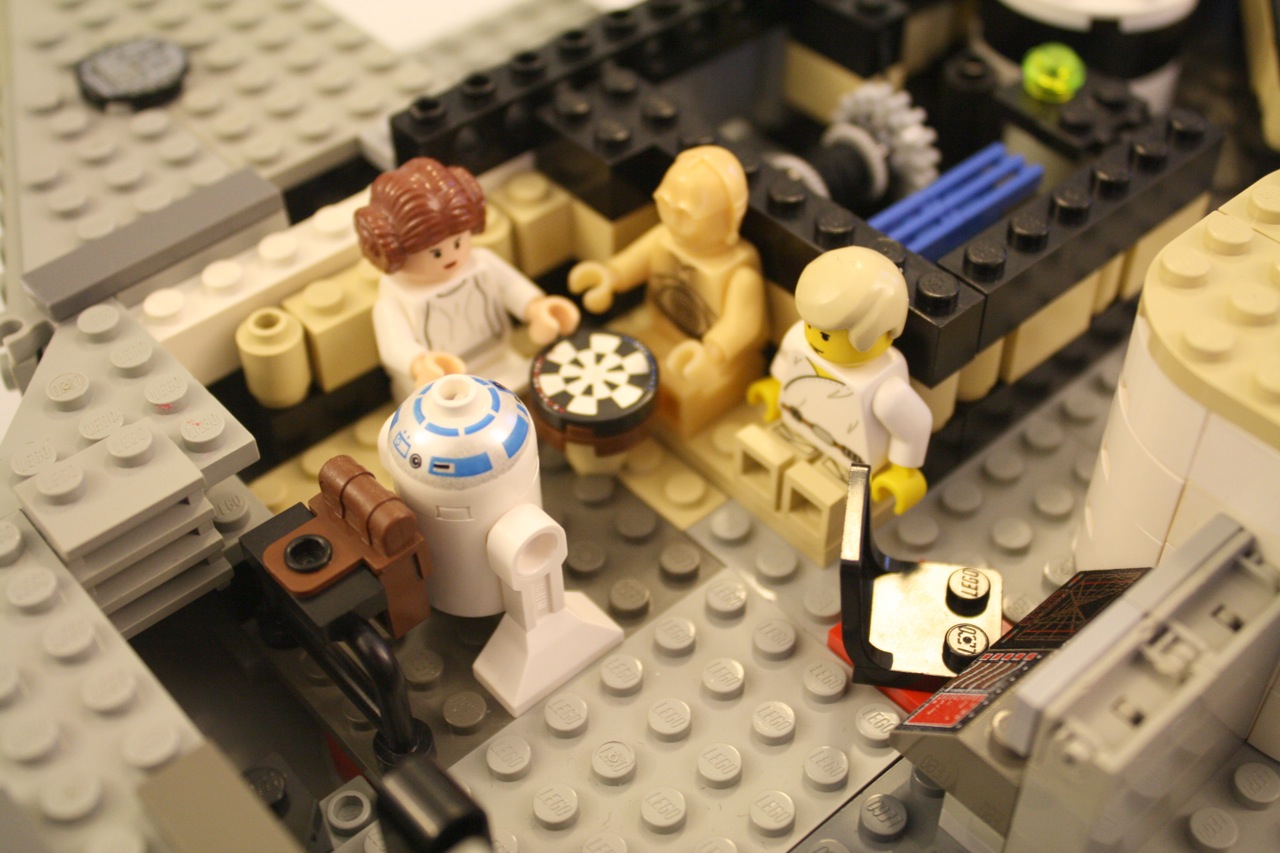
    Below, a detailed shot of the crew area and Dejarik table and navigational computer.

    Below, a detailed photograph of the main engine and its support structure, integrating it into the framework of the space craft.

    Building my custom version of the 7190 Falcon model is something that I’ve wanted to do ever since I first owned the 7190 when it first came out at the end of the twentieth-century. The nice thing about Lego is that I can continue changing and altering the design as my imagination shifts and permutates.

    Besides the awesomeness of building with Lego bricks, you may be wondering why I have devoted a good deal of space to my Lego work on dynamicsubspace.net. This is something that I am continuing to work on, but I see Lego as a transitional example of what Haraway calls the Informatics of Domination. Lego serves as a metaphor for the dilemma and its solution. Lego is a double edged sword, swinging both ways, but holding a promise greater than its representative ills. Expect to read more about these ideas in the near future.
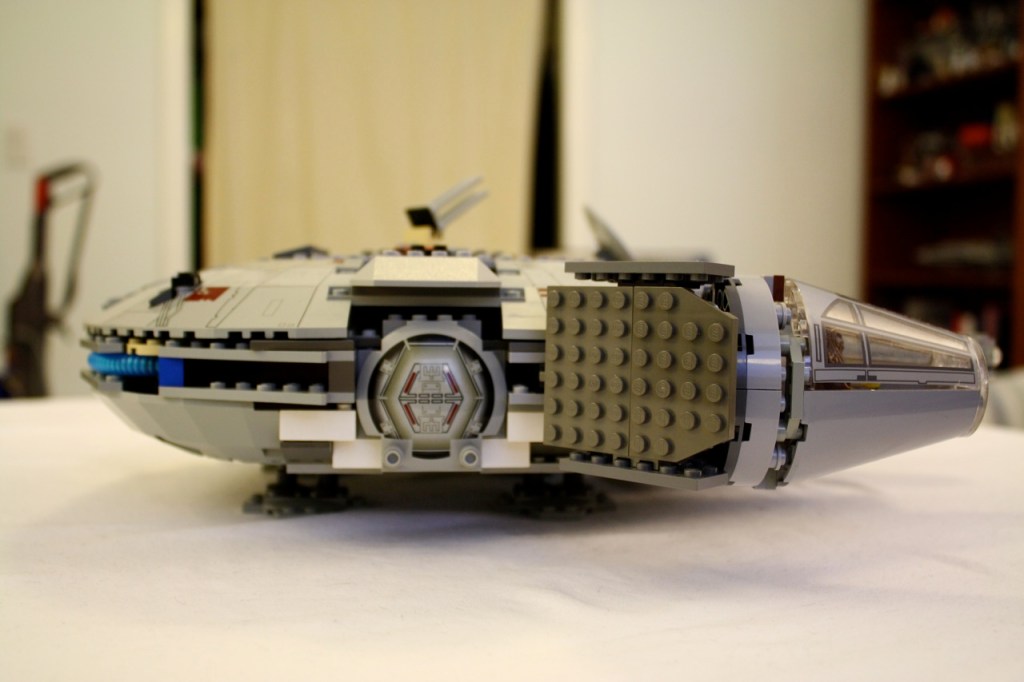
    Below, I have included a gallery of more images of my custom 7190 Millennium Falcon. Enjoy, and thanks for visiting.