Category: Science Fiction

  • Second Reading of Richard Powers’ Galatea 2.2

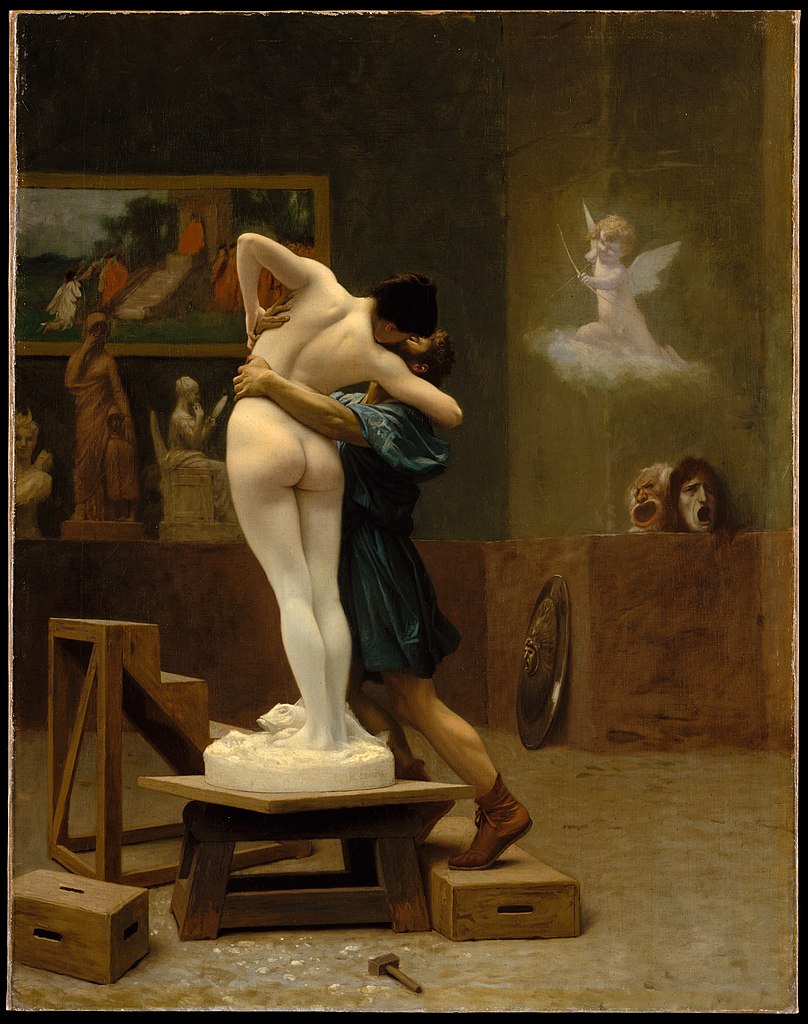
    Jean-Léon Gérôme’s Pygmalion and Galatea, 1890.

    Before this Wednesday’s upcoming forum discussion, I wanted to revisit Richard Powers’ Galatea 2.2, which I had read 14 years ago for my PhD dissertation titled, “Brains, Minds, and Computers in Literary and Science Fiction Neuronarratives.” On rereading Powers’ novel, I paid more attention to the iterative development of Helen. What I’ve learned about AI and developments in Generative AI in the past three years provided a stronger foundation for considering the technical aspects of the narrative. Lived experience gave me a better understanding of some of the non-technical aspects of the narrative, too.

  • Forum on Generated Text and the Future of College Writing at BMCC, April 2, 2-4pm

    decorative flyer, text in body

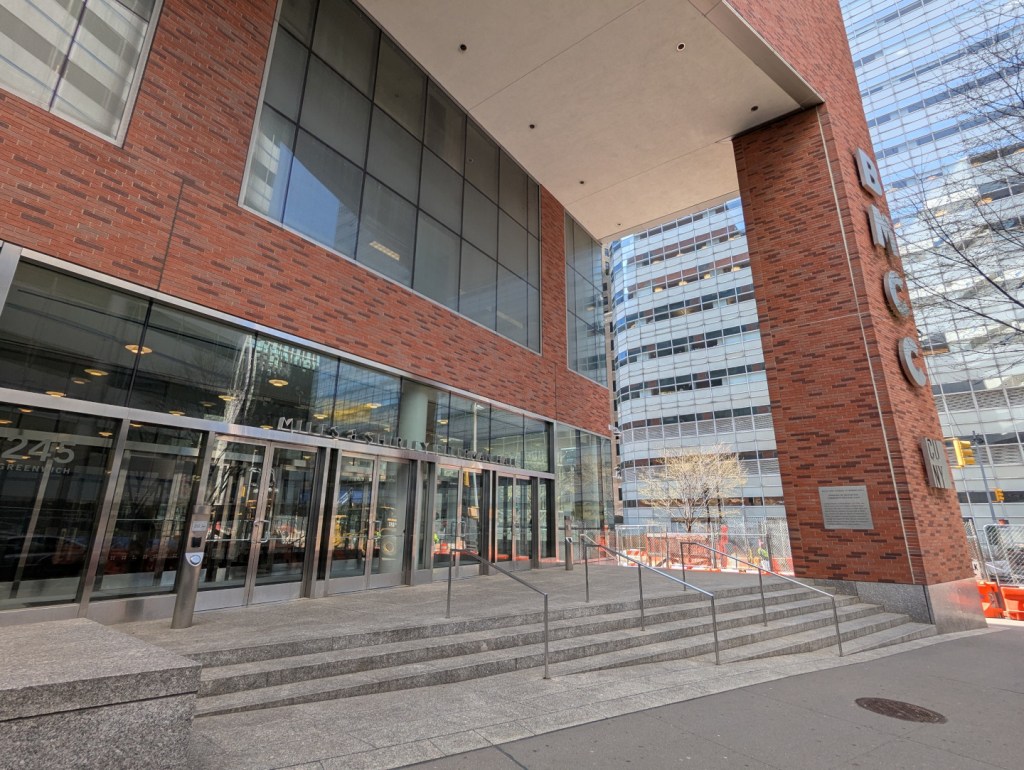
    I’ll be speaking on a discussion panel about Artificial Intelligence, Generative AI, and College Writing at Borough of Manhattan Community College, CUNY (BMCC), Fiterman Hall 1304 on Wednesday, April 2 from 2-4 PM. If you’re free, it would be great if you could join us for what I think will be a lively in-person conversation. Details are below and the event flyer is posted above and below.

    The Spring 2025 Robert Lapides Faculty Forum

    Wednesday April 2 Fiterman Hall 1304 (245 Greenwich St.) 2-4 pm

    A Step Toward the Unified Macro-Mind or a Cybernetic Lawnmower in the Groves of Academia? :
    Generated Text and the Future of College Writing

    Recently, Large Language Models and generated texts have sent shockwaves through the academic community. Do they represent the initial glimmerings on a new horizon of transhuman creativity or are they, in Noam Chomsky’s phrase, merely “glorified autofill,” a “high-tech plagiarism” based on a self-cannibalizing database? Where old-fashioned plagiarism now seems like a relatively simple matter of ethics and originality, Artificial Intelligence and the looming specter of the Literary Chatbot bring a whole host of more tangled issues of Perception, Knowledge, Autonomy, and Class Warfare into the classroom.

    Many believe the neural net models of cognition don’t begin to pierce the mystery of the mind—Roger Penrose and others remain unconvinced that human thinking can be reduced meat-puppet computation, while John Searle’s Chinese Room parable undermines the idea that mere symbol-juggling can ever result in emergent consciousness. Still, techno-optimists believe we are at the precipice of an age of cyborg enhancements in which human potential will be radically expanded and the primate mind will be uploaded into Cloud-dwelling immortality.

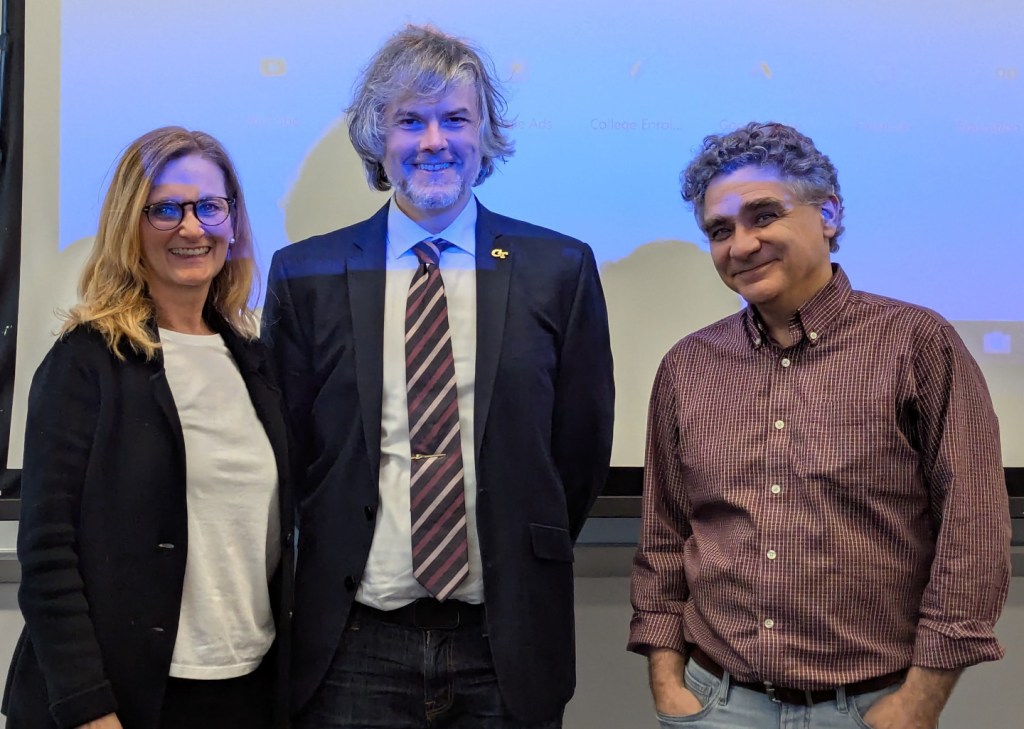
    We will be discussing these issues and many others in an open symposium with CUNY professors Jason Ellis, Carlos Hernandez, Lisa Sarti, and Shane Snipes. We encourage our colleagues to come to voice their concerns and hopes on this increasingly crucial and urgent matter.

    pictures of four scholars speaking at the event

    The event is named in memory of Robert Lapides, a past English department professor at BMCC. Reading his obituary, you get the sense that he did good work that saved voices from the past from erasure, and created space for voices in the present to carry the work forward.

    “Robert Lapides, professor emeritus in the English Department, husband of Professor Diane Dowling, died on January 1, 2021. At BMCC for over 40 years, Professor Lapides will be remembered for his passion, his life-long fight for social, economic, and racial justice, and his commitment to building communities where differences can be expressed. Never afraid to speak up or ask questions, he was genuinely interested in his students and colleagues. His intense curiosity about people, places, politics, history, literature, psychology, religion–about what it means to be human–informed all his efforts. He encouraged his students to embrace their humanity, including the parts of themselves they felt they needed to hide, building their courage to write honestly. His legacy can be found in his influence on the many students and colleagues he worked with, the online communities he created, in his faculty magazine Hudson River, and for editing Lodz Ghetto, collected writings left behind by Jews confined to the Lodz Ghetto in WWII. Until the end, he was working on his book about the creative development of Charles Dickens, which will be published posthumously” (from Ellen Moody’s Under the Sign of Sylvia blog, 25 Mar. 2021).

  • Octavia Butler’s Observation on Leaders in Parable of the Talents

    Octavia E. Butler (1947-2006), the celebrated science fiction writer, imagined a near-future dystopia set approximately in the United States of our time now. As I tell my students, she was extrapolating from her here-and-now to write stories set the future. While she was imagining what the future might be like, she was also writing about her present due to it being her initial starting conditions. For her novels Parable of the Sower (1993) and Parable of the Talents (1998), she wrote in recognition of the effects of climate change–especially in California, concern for the push for de-regulation by the wealthy, and response to an earlier president who used the campaign phrase “Make America Great Again,” Ronald Reagan. The following passage is the epigraph to chapter eleven in Parable of the Talents. It has stayed with me. All of her points can allude to today and serve as a warning for considering our leaders in the future:

    Choose your leaders
       with wisdom and forethought.
    To be led by a coward
       is to be controlled
       by all that the coward fears.
    To be led by a fool
       is to be led
       by the opportunists
       who control the fool.
    To be led by a thief
       is to offer up
       your most precious treasures
       to be stolen.
    To be led by a liar
       is to ask
       to be told lies.
    To be led by a tyrant
       is to sell yourself
       and those you love
       into slavery.
    
  • Working on the Millennium Falcon

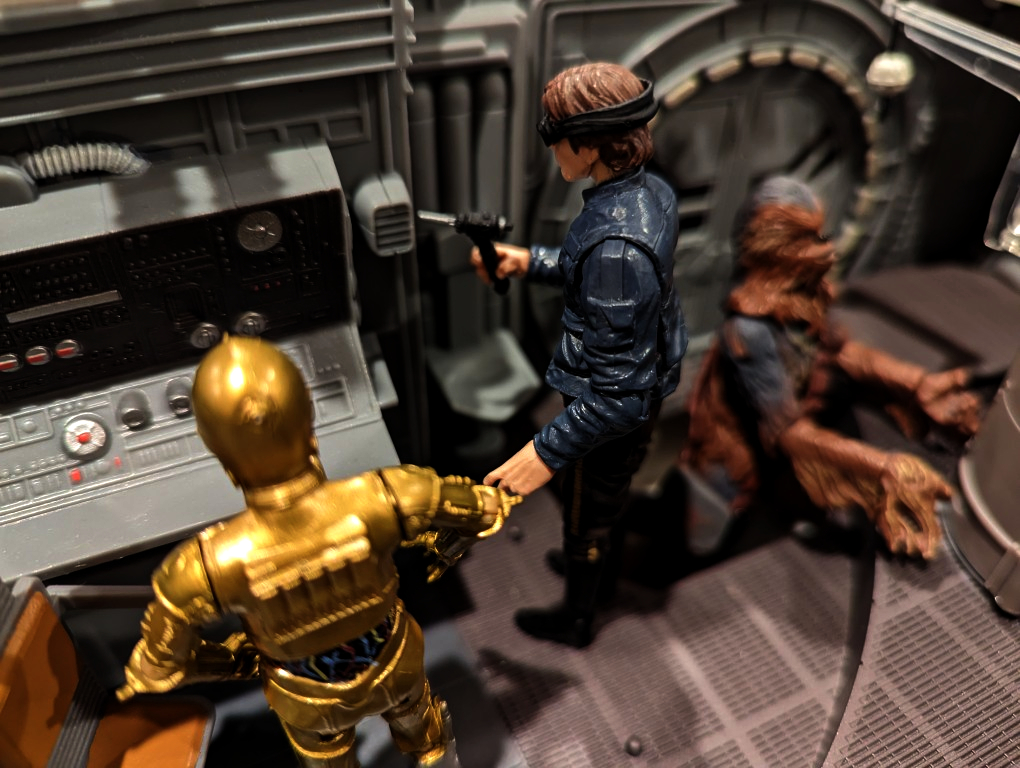
    droid, man, and a wookie inside a spacecraft making repairs

    While the Millennium Falcon is prone to problems and breakdowns, Han Solo never gives up on her. There’s a lesson there about how we treat and take care of all of our technology.

  • Videos From The Ninth Annual City Tech Science Fiction Symposium on SF, Artificial Intelligence, and Generative AI

    audience of people listening to a panel of five people read stories in a large auditorium-style classroom.

    If you weren’t able to make it to this year’s City Tech Science Fiction Symposium but are interested in the intersection of SF, AI, and GenAI, you can listen to the presentations, stories, and discussions in the videos from the event below, and you can see some photos taken by Hugo Award winner Andrew Porter on the Science Fiction at City Tech website here.

    9:00AM Opening Remarks
    Jason Ellis and Justin F. Vázquez-Poritz

    9:20AM Paper Session 1
    Moderator: Wanett Clyde
    Jason Ellis, “A History of Generative AI in SF”
    Jacob Adler, “The End Zone: A.I. as a Commentary on the Human Condition in 17776”
    Martijn J. Loos, “A Plea for Theory: The Relationship Between Real-World AI and its Representation in Science Fiction”

    10:50AM Paper Session 2
    Moderator: Kel Karpinski
    Virginia L. Conn, “The Tyranny of Neutrality in AI 2041”
    Nathan Lamarche, “Monotheistic Ethics in Caprica: The Consequences of AI Development on Queer Futurity”
    Adam McLain, “Computational Poetics: Franny Choi’s Soft Science and the Dialogues to Come”

    1:10PM Student Panel
    Moderators: Jill Belli and Vivian Zuluaga Papp
    Lucas Felipe
    Journey Ford
    Malik Joseph
    Christine Retirado
    Ronald Hinds

    2:10PM Asimov’s/Analog Writers’ Panel
    Moderator: Emily Hockaday
    Sarah Pinsker
    Mercurio D. Rivera
    Sakinah Hoefler
    Matthew Kressel

    4:00PM Keynote Address
    Speaker:
    Marleen S. Barr, “Science Fiction/AI/Feminism: A Temporal Progression”
    Moderator: Leigh Gold