Category: Technology

  • My Interview with Emily Hockaday, Senior Managing Editor of Asimov’s, Published in New American Notes Online

    screen shot of a printer color offset of the definition of an "interview" as the title image for Issue 17: The Interview in New American Notes Online website

    Issue 17 of New American Notes Online (NANO) on “The Interview” was recently published.

    My interview with Emily Hockaday, senior managing editor of Asimov’s Science Fiction Magazine, on Artificial Intelligence (AI), Generative AI, and science fiction publishing is a part of the issue.

    Click through here to see the other interviewees and topics covered in this special issue.

    Editor Sean Scanlan sent out this press release for the issue:

    A new issue of NANO: New American Notes Online has been published

    Special Issue 17: The Interview

    Publication date: June 2025

    ISSN: 2160-0104 (Online)

    NANO is an indexed, Open Access, and Open Source humanities journal. NANO never charges to submit or to read content. NANO is published by City Tech, part of the City University of New York.

    NANO announces its new issue, an exploration of the ways that interviews connect people.

    The interview is woven into our hyper-connected world through podcasts, Zooms, magazines, newspapers, social media, and they still occur in private settings. Interviews are ubiquitous. They can be formal and informal, closed or open-ended; they can yield quantitative and qualitative results; they can invoke power and symbolic capital. But, the interview can also be less about gate-keeping and more about the tension inherent in knowledge production and sharing. The eight interviews in this special issue of NANO create spaces of exchange, where the goal is not interrogation but collaboration, curiosity, and mutual understanding.

    Two interviews focus on teaching. A multimedia project by Shauna Chung, Naila Butt, Sandy Fougeres, and Khemraj Persaud describe ways that interviews fuse writing and workplace readiness while the scholar Laura Westengard reveals the communal spaces where gothic and queer reinforce each other.

    Two interviews focus on visual art. Jennifer Lockard Connerley discusses ways that academia and spirituality enhance portraiture while Bill Saylor reveals how his environmental and natural abstractions arise.

    Two interviews focus on translation. Dana Crăciun acknowledges the difficulty of translation while Johannes Göransson eyes translation’s inherent creativity.

    Two interviews focus on creativity and theory. The writer and editor Emily Hockaday discusses the challenges of running a science fiction magazine in the age of AI while Marcus Boon reflects on his interdisciplinary practices.

    Editor’s Introduction for NANO Special Issue 17: The Interview

    by Sean Scanlan

    https://nanocrit.com/index.php/issues/issue17/Editors-Introduction-for-NANO-Special-Issue-17-The-Interview-Issue-by-Sean-Scanlan

    How the Interview Can Become a College Writing Tool for Workplace Readiness

    by Shauna Chung, Naila Butt, Sandy Fougeres, Khemraj Persaud

    https://nanocrit.com/index.php/issues/issue17/How-the-Interview-Can-become-a-College-Writing-Tool-for-Workplace-Readiness-by-Shauna-Chung-Naila-Butt-Sandy-Fougeres-Khemraj-Pe

    An Interview with Marcus Boon, Author of In Praise of Copying 

    by David Banash

    https://nanocrit.com/index.php/issues/issue17/An-Interview-with-Marcus-Boon-Author-of-In-Praise-of-Copying-by-David-Banash

    An Interview with Jennifer Lockard Connerley: Portrait of the Artist as a Young Academic

    by Tara Robbins Fee

    https://nanocrit.com/index.php/issues/issue17/An-Interview-with-Jennifer-Lockard-Connerley-by-Tara-Robbins-Fee

    An Interview with Emily Hockaday, Senior Managing Editor of Asimov’s Science Fiction Magazine

    by Jason Ellis

    https://nanocrit.com/index.php/issues/issue17/An-Interview-with-Emily-Hockaday-Senior-Managing-Editor-of-Asimov-s-Science-Fiction-Magazine-by-Jason-Ellis

    An Interview with Dana Crăciun, the translator of Salman Rushdie’s works into Romanian 

    by Carmen Neamțu

    https://nanocrit.com/index.php/issues/issue17/An-Interview-with-Dana-Cr%C4%83ciun-the-translator-of-Salman-Rushdie-s-works-into-Romanian-by-Carmen-Neam%C8%9Bu

    An Interview with Laura Westengard, Author of Gothic Queer Culture

    by Leigh Dara Gold

    https://nanocrit.com/index.php/issues/issue17/An-Interview-with-Laura-Westengard-Author-of-Gothic-Queer-Culture-by-Leigh-Dara-Gold

    An Interview with Johannes Göransson

    by Matt Miller

    https://nanocrit.com/index.php/issues/issue17/An-Interview-with-Johannes-Goransson-by-Matt-Miller

    An Interview with Bill Saylor

    by Sean Scanlan

    https://nanocrit.com/index.php/issues/issue17/An-Interview-with-Bill-Saylor-by-Sean-Scanlan
  • A Simple Moveable Platform for an Oscillating Spindle Sander
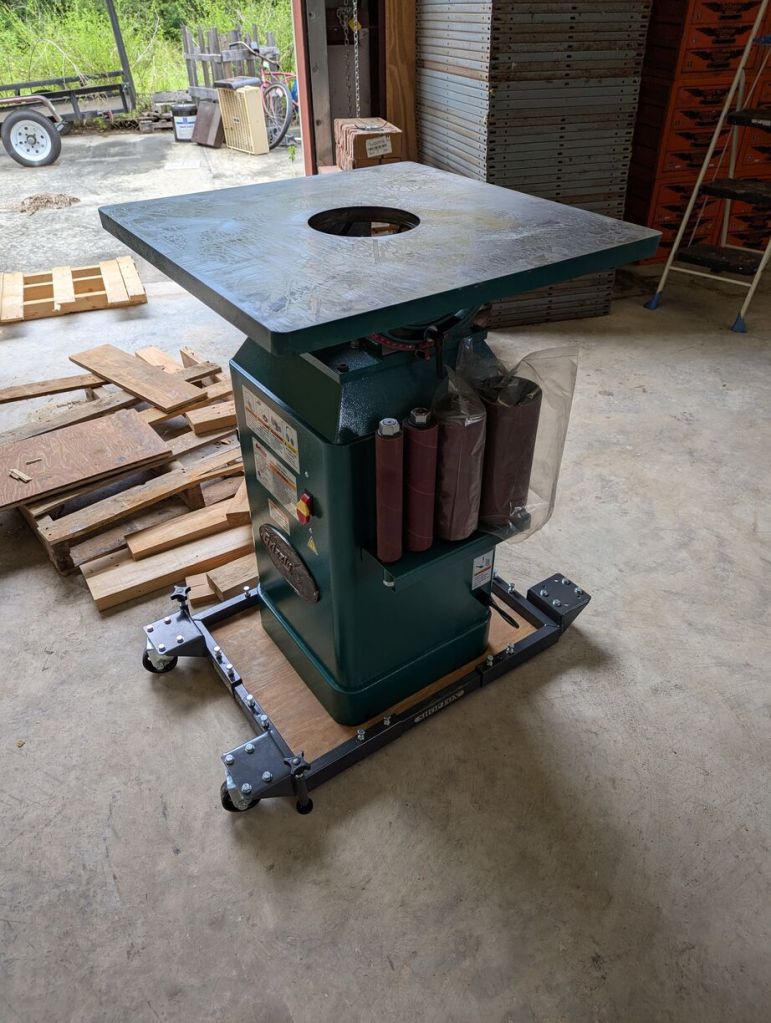
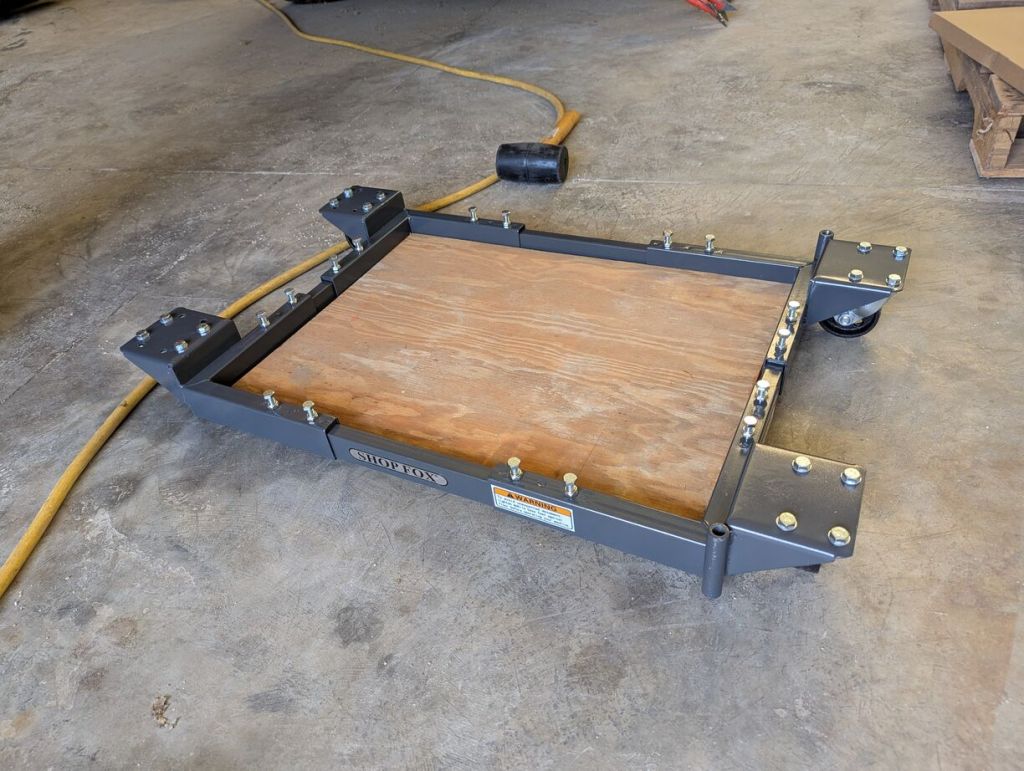
    Another project for my dad and I was setting up his Grizzly oscillating spindle sander, which had been sitting on a broken pallet for some time.
    He had a rolling Shop Fox equipment stand, but it was slightly too large for the sander’s base. So, we cut a piece of 3/4″ plywood to fill its support area and distribute the weight of the sander.

    Then, we layered some boards to create a ramp from the pallet the sander was on down to the Shop Fox equipment mover.

    When he’s ready to use the sander, the Shop Fox mover has floating feet that can be lowered to take the weight off the front caster wheels.

  • How to Lift and Lower Heavy Equipment with Car Screw Jacks

    My dad has a dozen or two of screw bottle car jacks that he used to press and hold every tongue-and-groove cypress board covering the walls and ceiling of the upper floors of their house. We made use of four of them to move two pieces of his heavy machinery into place in his shop.

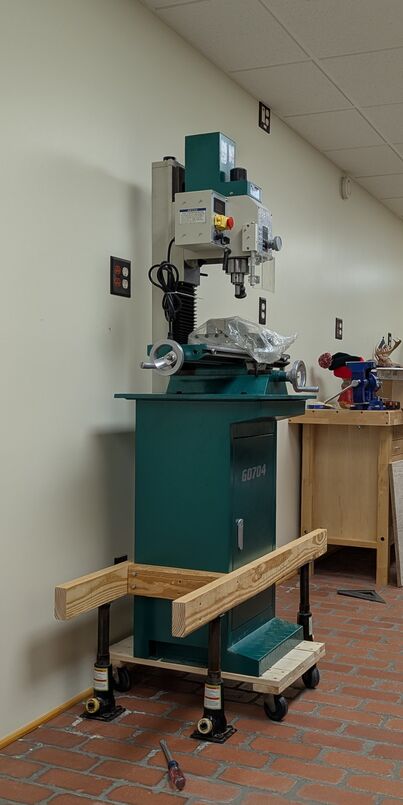
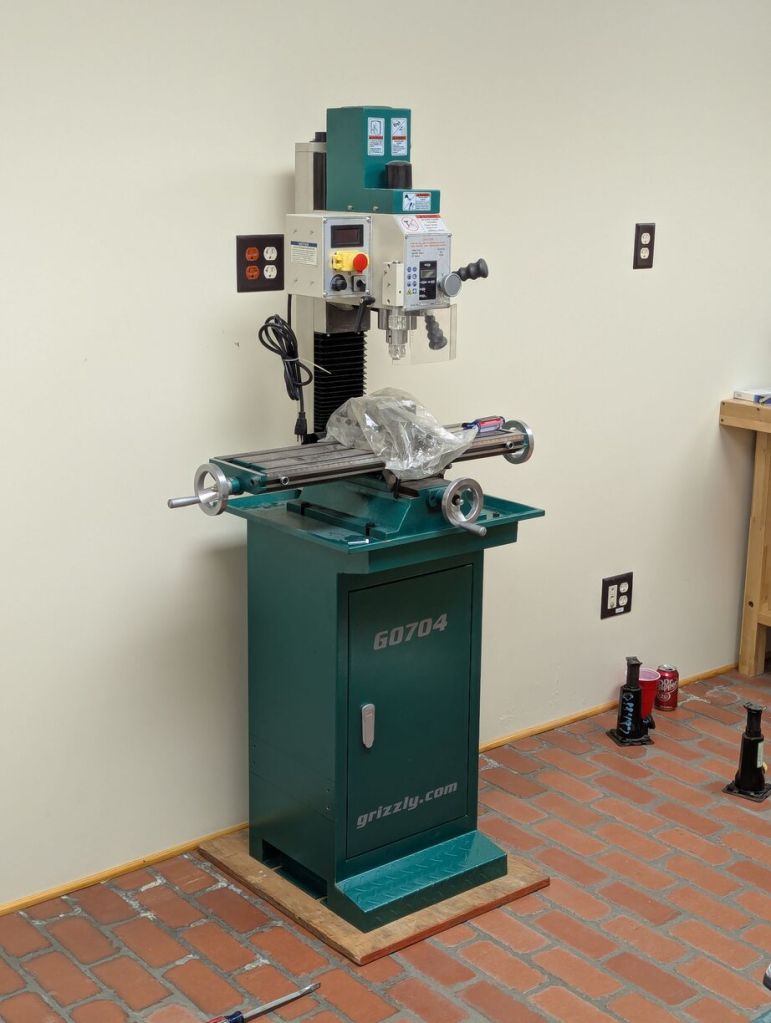
    Some time back, he purchased a milling machine and lathe from Grizzly. He had managed to get them into his shop on furniture movers. Of course, they can’t be run on those platforms, so we needed to find a way to place them flat on the shop’s floor.

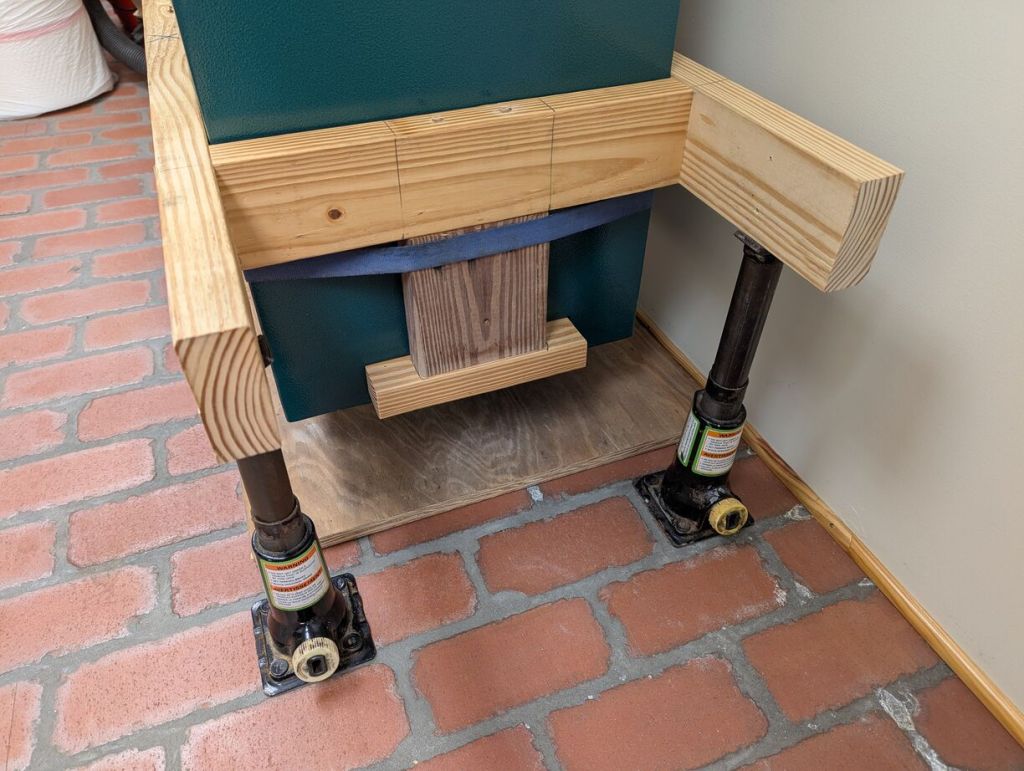
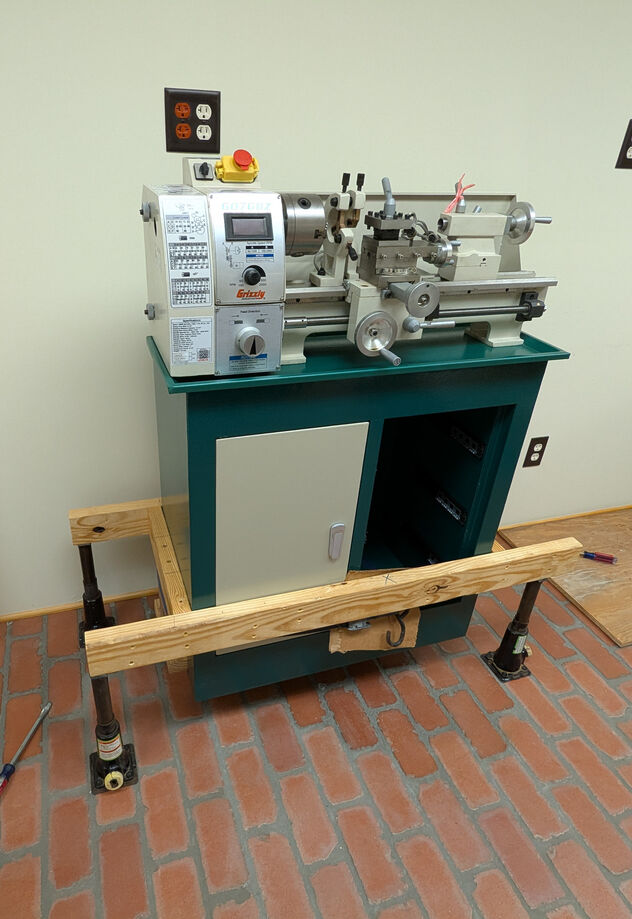
    For the milling machine, which was heavier than the lathe, we drilled four holes through the metal cabinet and constructed a wood box with bolts going through the short sides of the wood box into the metal cabinet. We placed the four jacks under the long arms of the box, raised it a fraction of an inch to remove the furniture mover and then lowered the jacks until the cabinet rested on a 3/4″ plywood base that we cut to fit. Then, we removed the box from the cabinet after unbolting it and unscrewing the deck screws we had built the box with.

    If you do something similar to this, be mindful of the total reach/height of the jack and its minimum. We built the box around the cabinet at a height that allowed for a slight lift and enough lowering to allow the jacks to be removed after the cabinet was lowered.

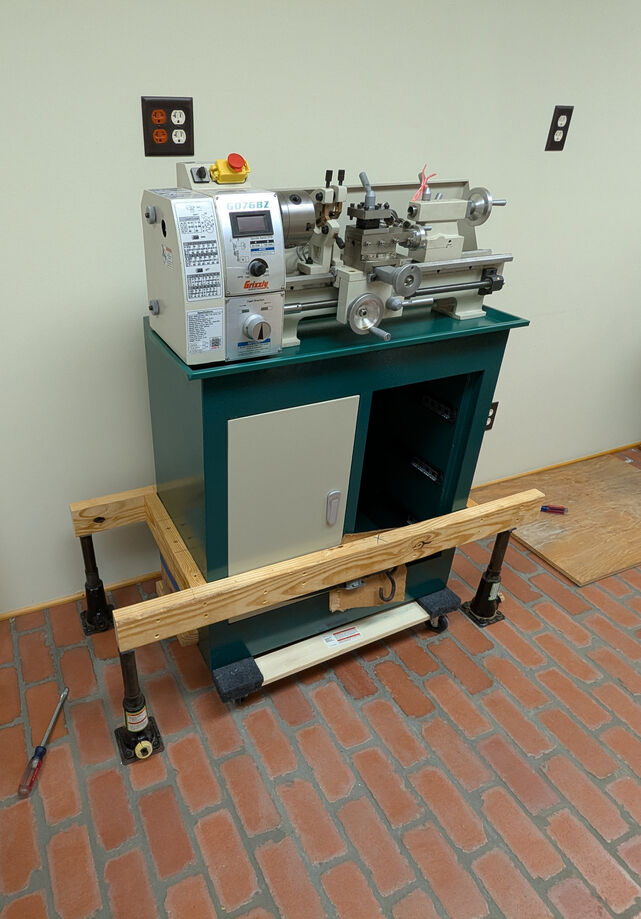
    For the lathe, we did something similar, except we couldn’t drill through its cabinet to bolt the box to the cabinet as we had done with the milling machine because it is double walled and could potentially create problems with bolt alignment (and we would need much longer bolts).

    With the lathe being lighter than the milling machine, we felt safe building the box around the lathe’s cabinet and adding two “tongs” that fit into the recesses at the bottom of the cabinet. To make sure the tongs remained in place, we put a tie strap around these and the cabinet.

    We lifted the lathe slightly to remove the furniture mover.

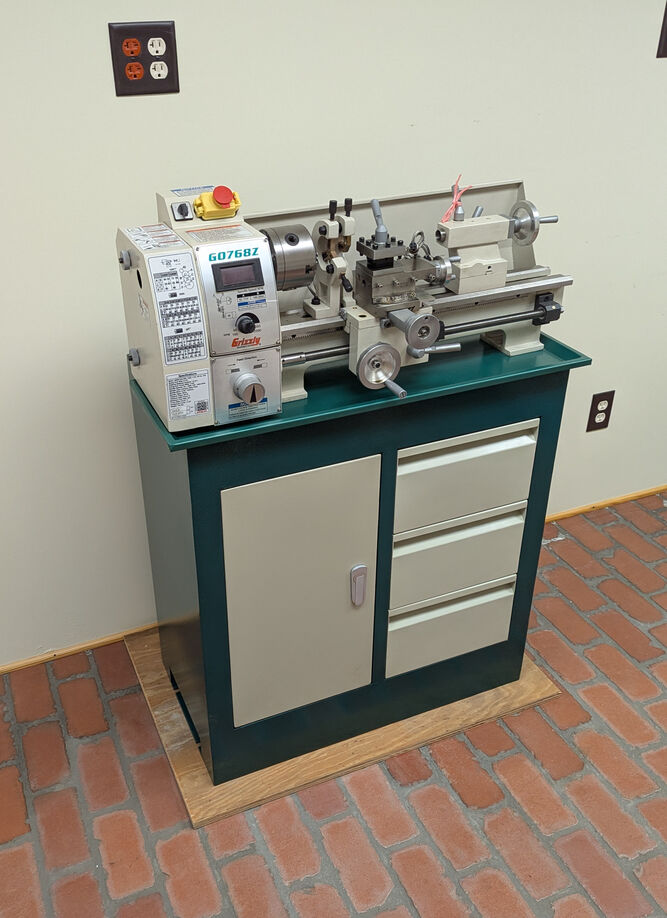
    And then lowered it onto a custom piece of plywood for it to rest on the floor.

    When you don’t have the muscle or manpower, use the tools at hand to get things done. As William Gibson writes, “the street finds its own use for things.”

  • How to Build a Moveable Workbench Out of a Wood Wire Spool

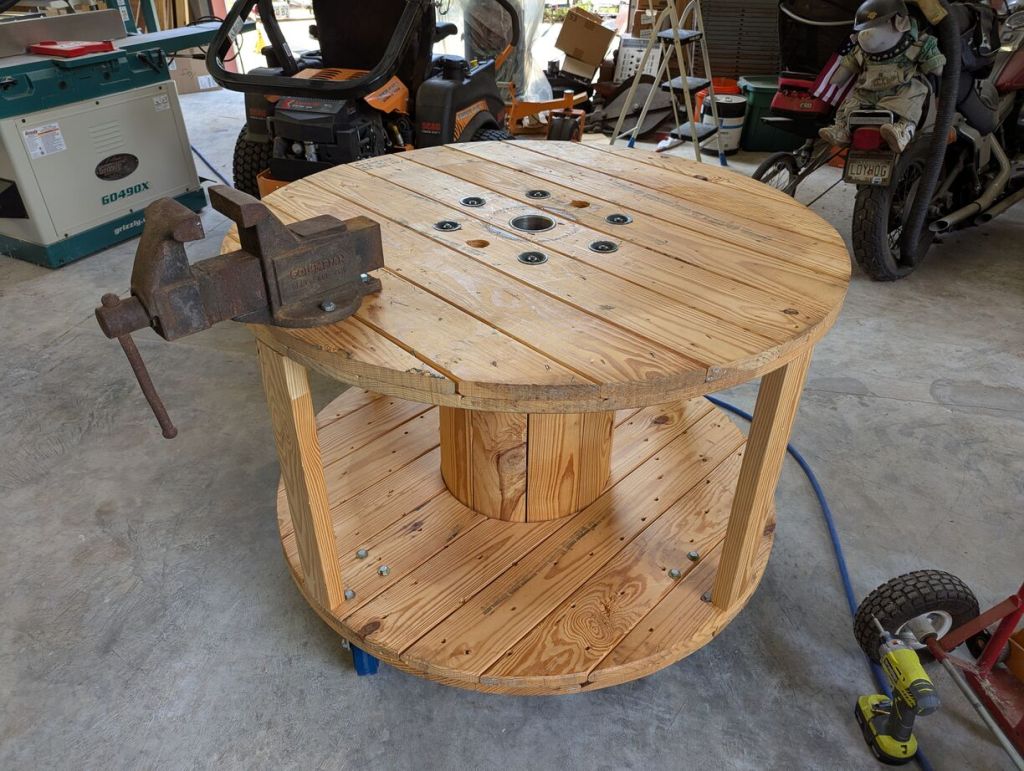
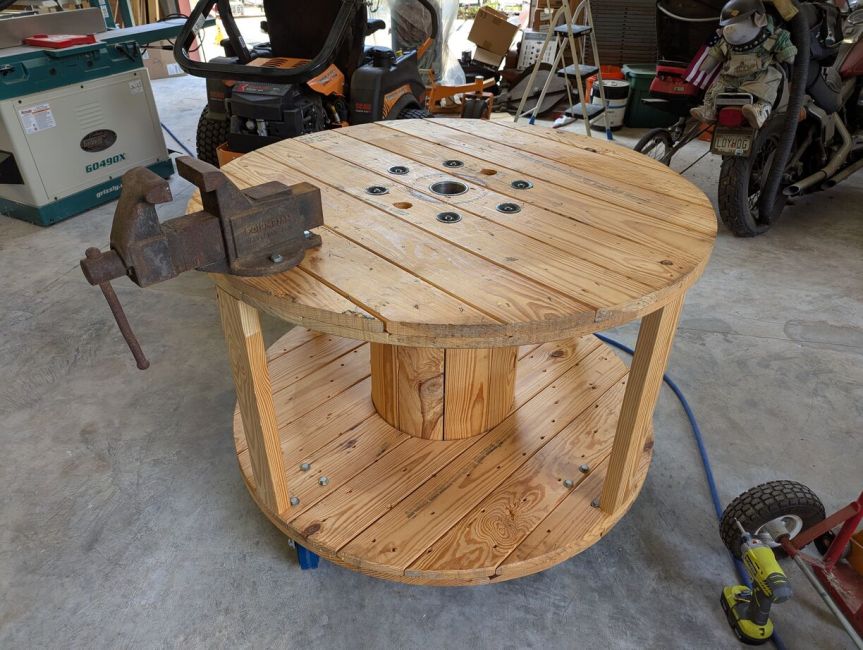
    round wood workbench on caster wheels with a metal vice mounted on top

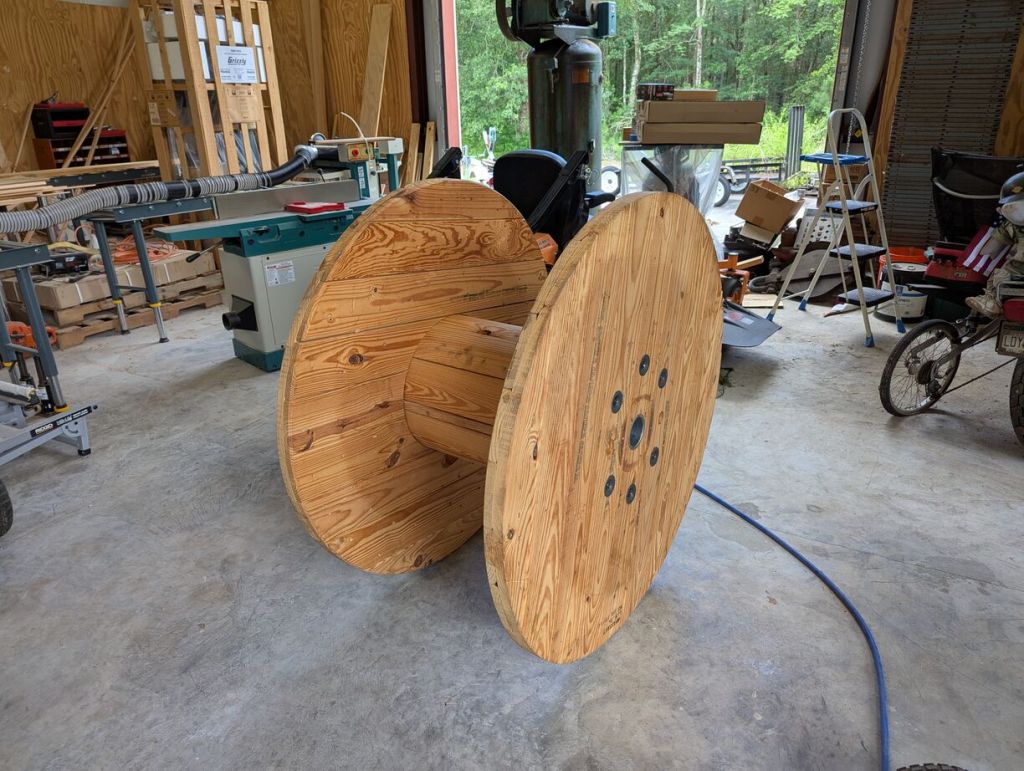
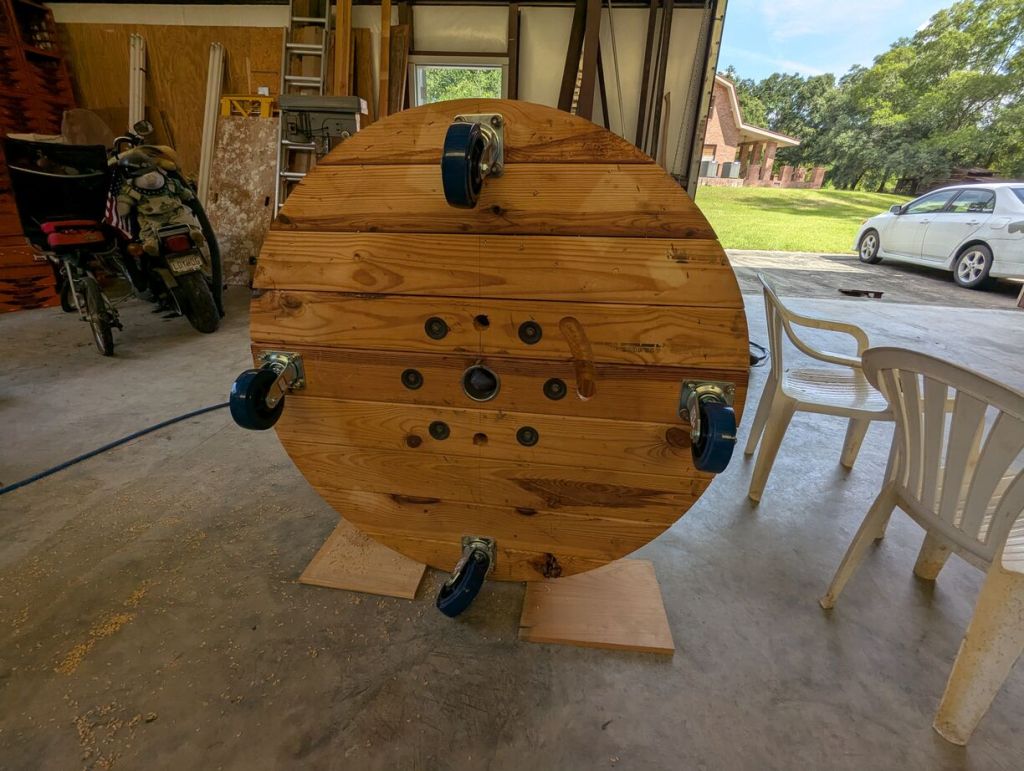
    When I recently visited my folks in Georgia, one of my projects was helping my dad clean up his shop so that he could more easily work in it. Over the years, it had become more and more cluttered. Perhaps most urgently, many tools were strewn about on the floor. I proposed turning a 48″ diameter wood spool that he had gotten from an electrical supply company into a moveable workbench. While the spool would take up roughly the same space, it would create two surfaces for storing tools and getting work done at elbow height. And, giving him a place to put tools when not in use where he could get them without bending over, would be a positive development, too.

    48" wood spool for holding electrical wire

    The wood spool is approximately 48″ diameter and 28″ tall.

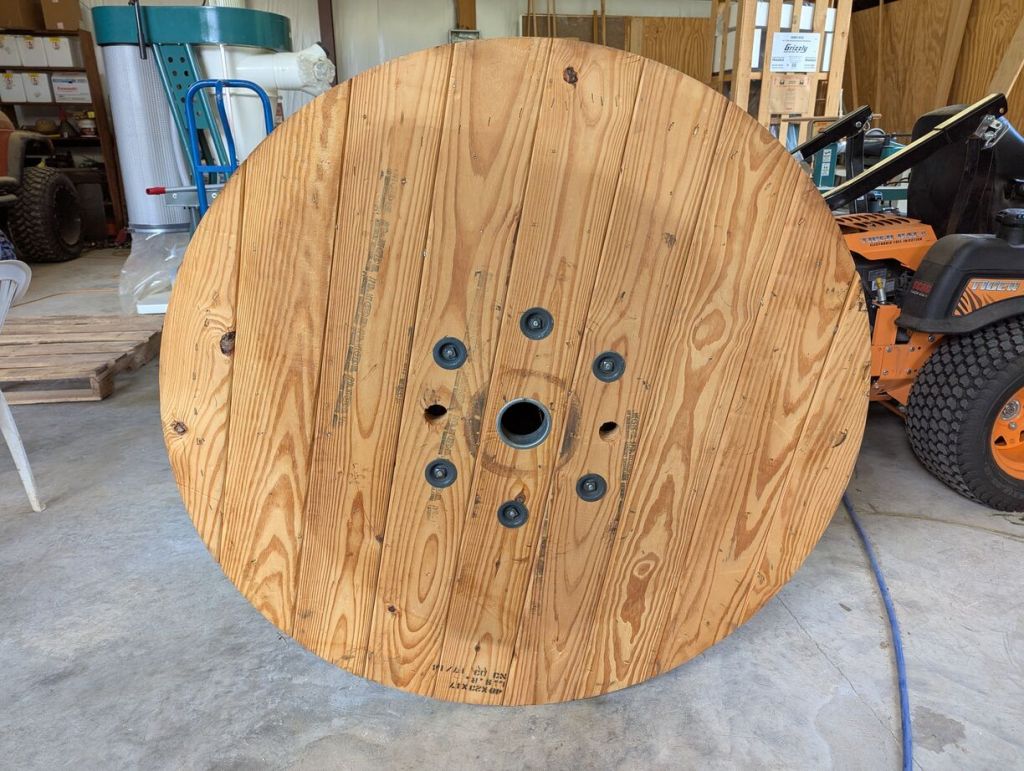
    top surface of round wood spool

    This side was cleaner and had no obvious problems for working on a roughly flat surface. It would be the top of the workbench.

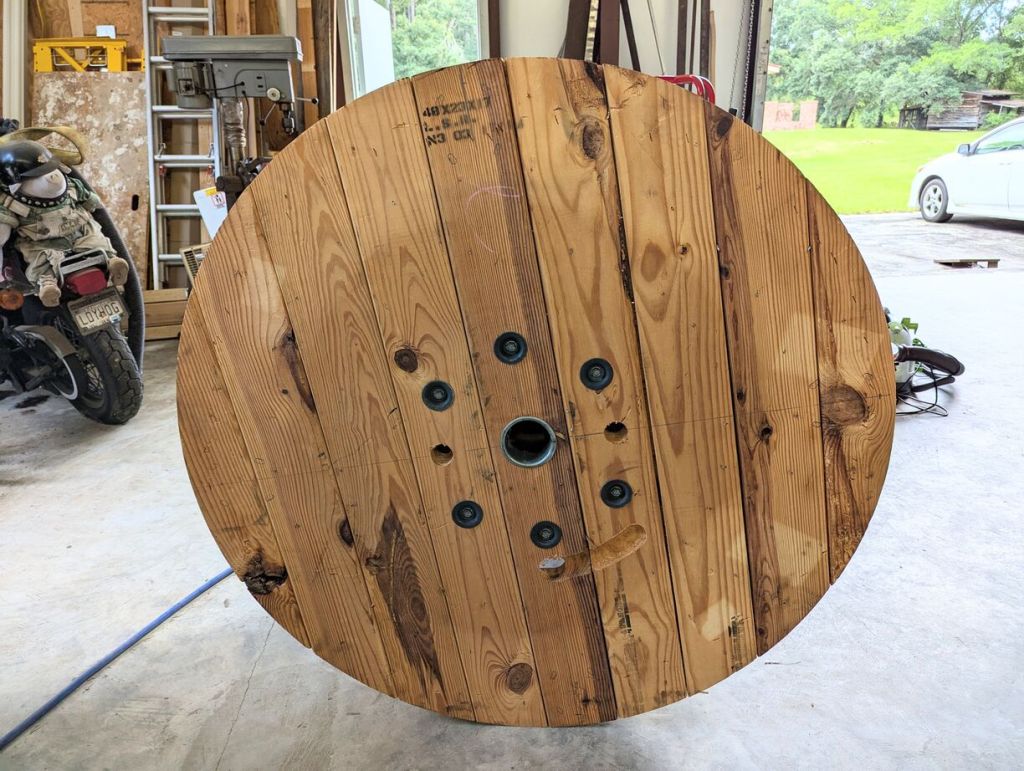
    bottom surface of wood spool

    We designated this side the bottom due to its rougher appearance and extra hole with arced routing (to secure the wire it once held?).

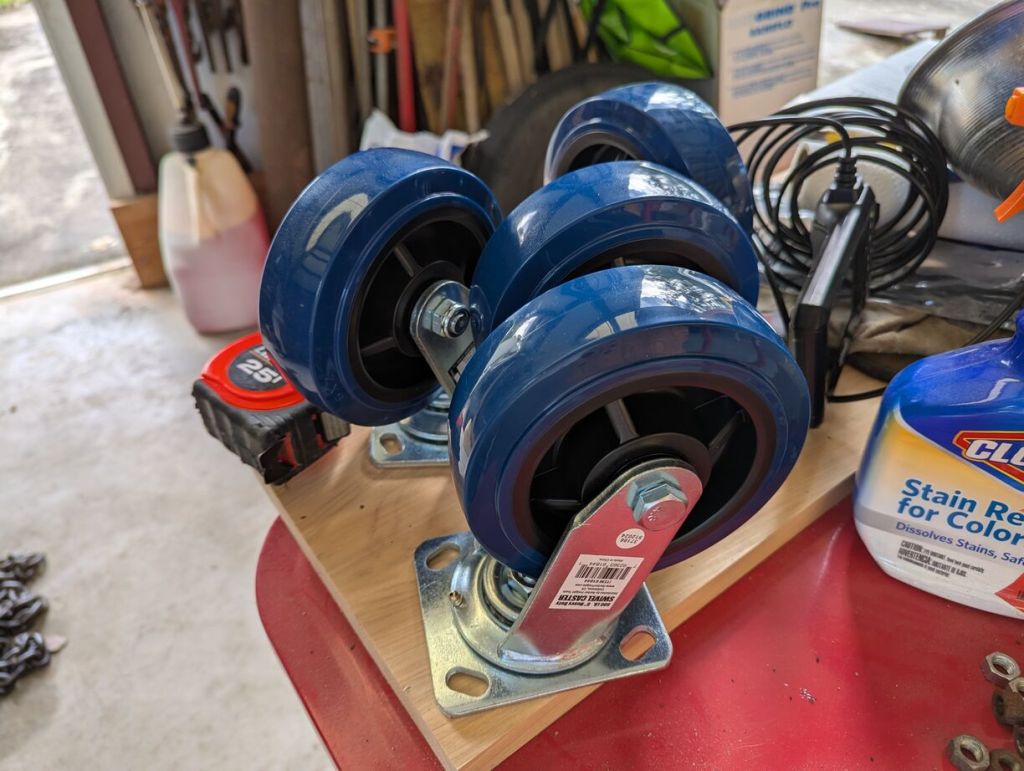
    set of four 6" caster wheels

    We picked up four 6″ caster wheels with grease fittings from Harbor Freight. These measure approximately 7″ tall including the base. Connected to the spool, these wheels will give the completed workbench an approximately 35″ height.

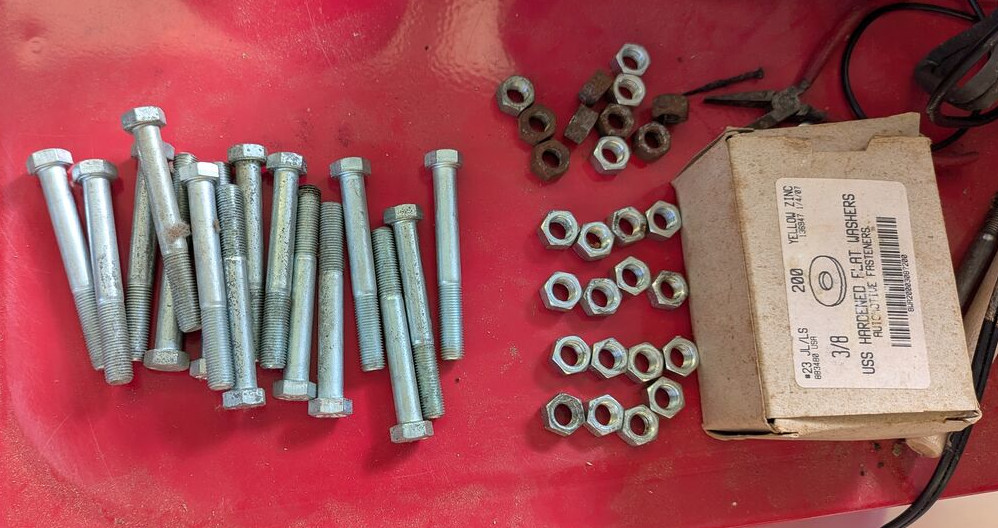
    bolts, nuts, and washers on a red metal surface

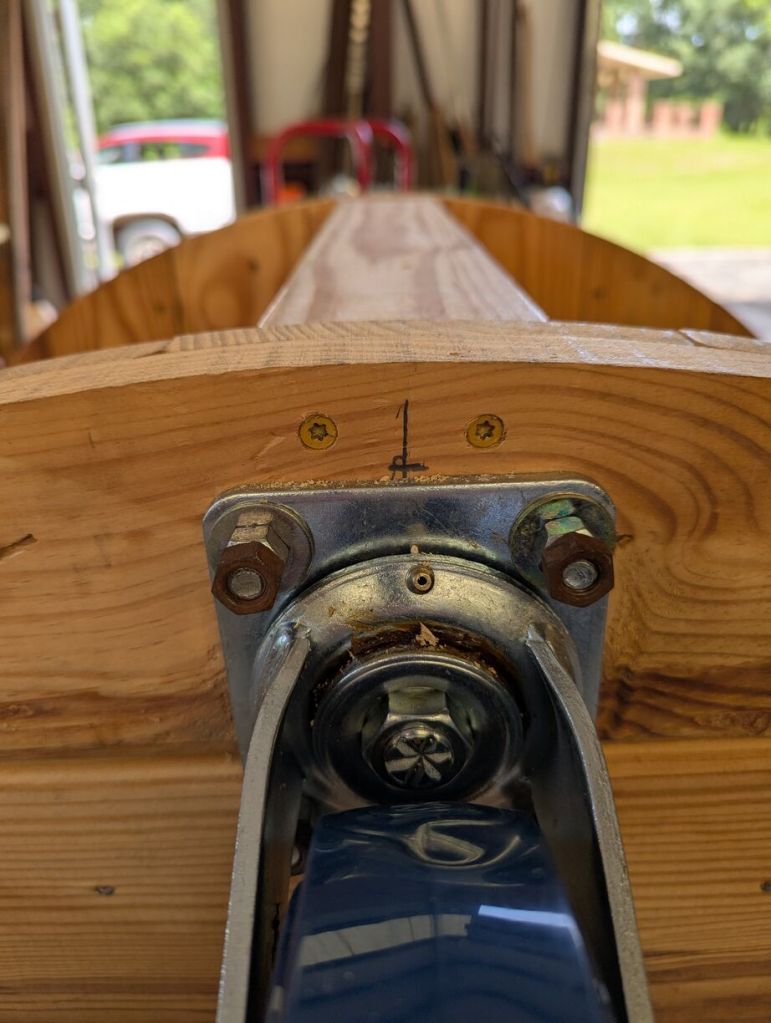
    After closing Ellis Auto Parts, my dad kept a lot of hardware that wasn’t sold, so we were able to find all of the bolts, nuts, and washers that we needed. To connect the wheels to the wood spool, we used 3/8″ x 3″ bolts with washers on top and bottom, and we used two nuts per bolt to lock the bolt (we couldn’t find any 3/8″ lock washers).

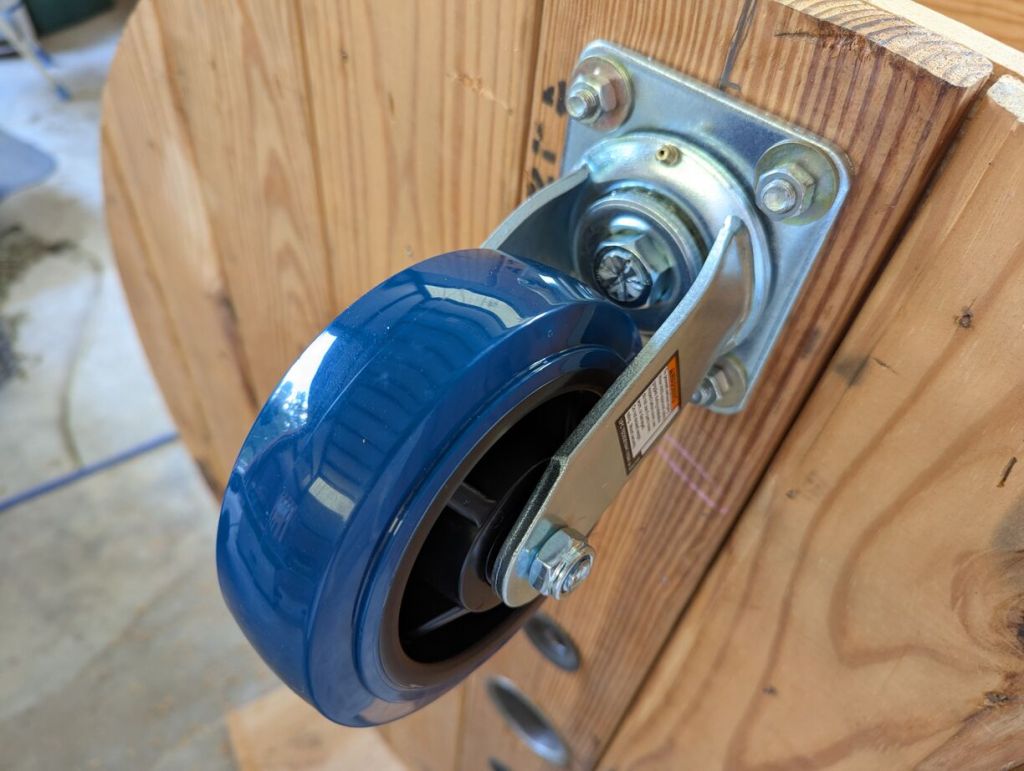
    caster wheel installed with one set of nuts before locking nuts installed

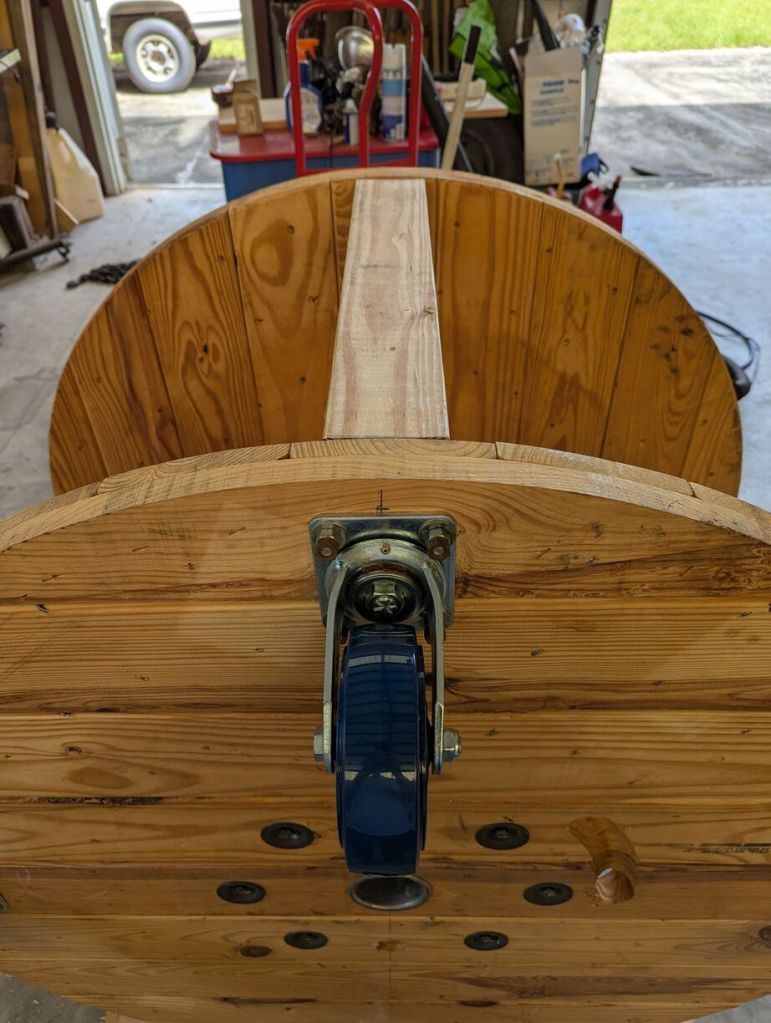
    To install the wheels on the bottom of the spool, I first selected one diameter line and marked it with a pencil. Using a square, I drew a perpendicular line through the center for the other two wheels. I knew that we were going to reinforce the workbench top with 2″ x 4″ boards cut to length, so I allowed enough room for drilling holes and driving screws through the spool ends into the 2″ x 4″s. I marked that distance (2″) from the outer edge along the diameter lines that I previously drew. Then for each wheel placement, I held a wheel where I had marked, centered it, and used a pencil to draw in the four holes at the corner of the caster wheel base.

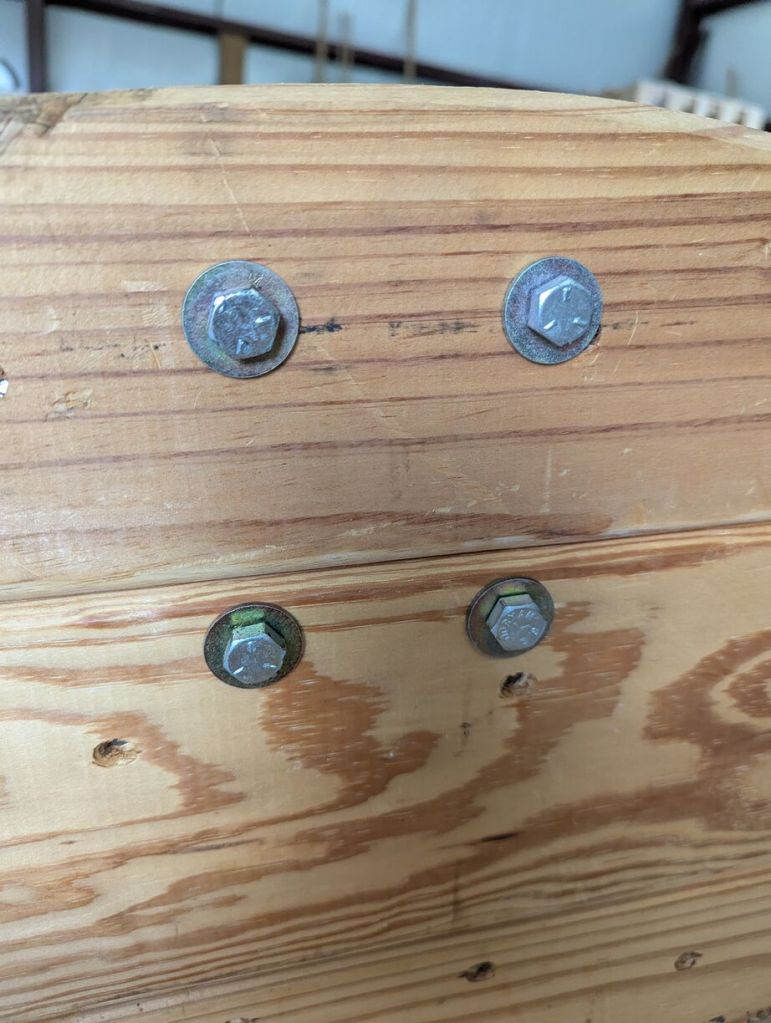
    closeup of bolts and washers through lower surface of workbench holding the wheels on

    I drilled the four holes with a 7/16″ bit and installed the wheels with the 3/8″ bolts with a washer on top, a washer on bottom, and two nuts per bolt.

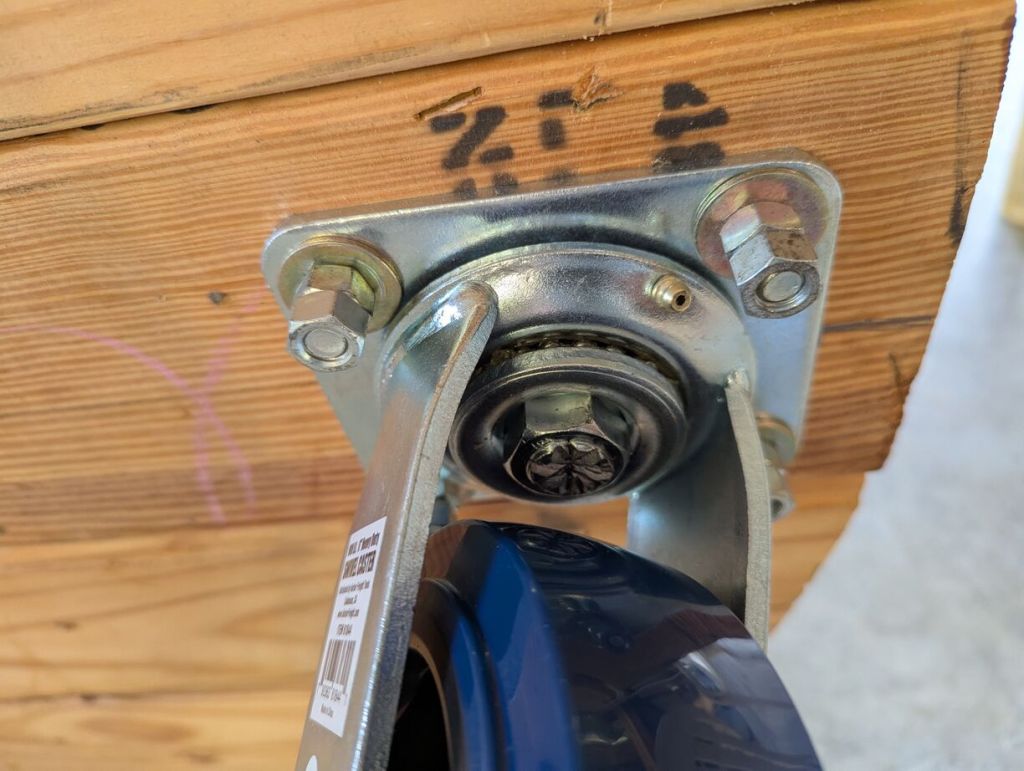
    closeup of 2 sets of nuts on each bolt holding caster wheels on bottom of workbench

    Since we didn’t have 3/8″ lock washers, we opted to use two nuts on each bolt to lock them in place.

    workbench wheels are installed on bottom of round workbench

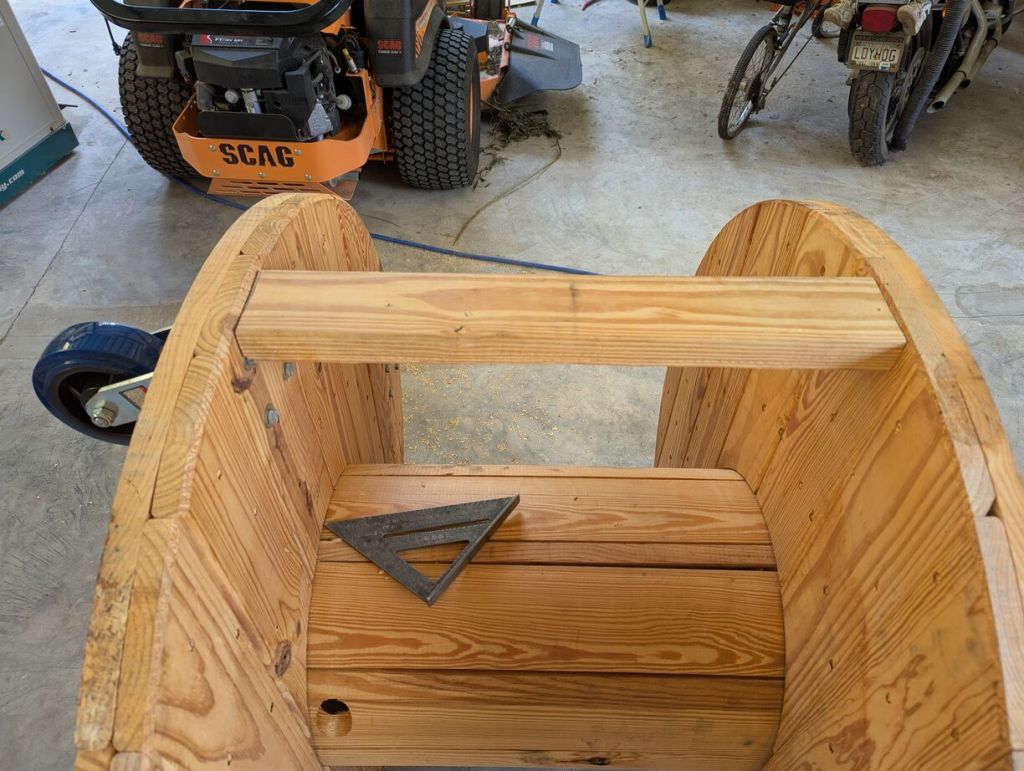
    With the wheels installed, we began installing the 2″ x 4″ supports inline with each wheel.

    fitting 2x4 before installing
    2x4 in place before installation

    Because the spool was built imperfectly, we cut each 2″ x 4″ support to length as needed. We cut them about 1/16″ – 1/32″ too long so that we could wedge them into place with a mallet for a tight fit.

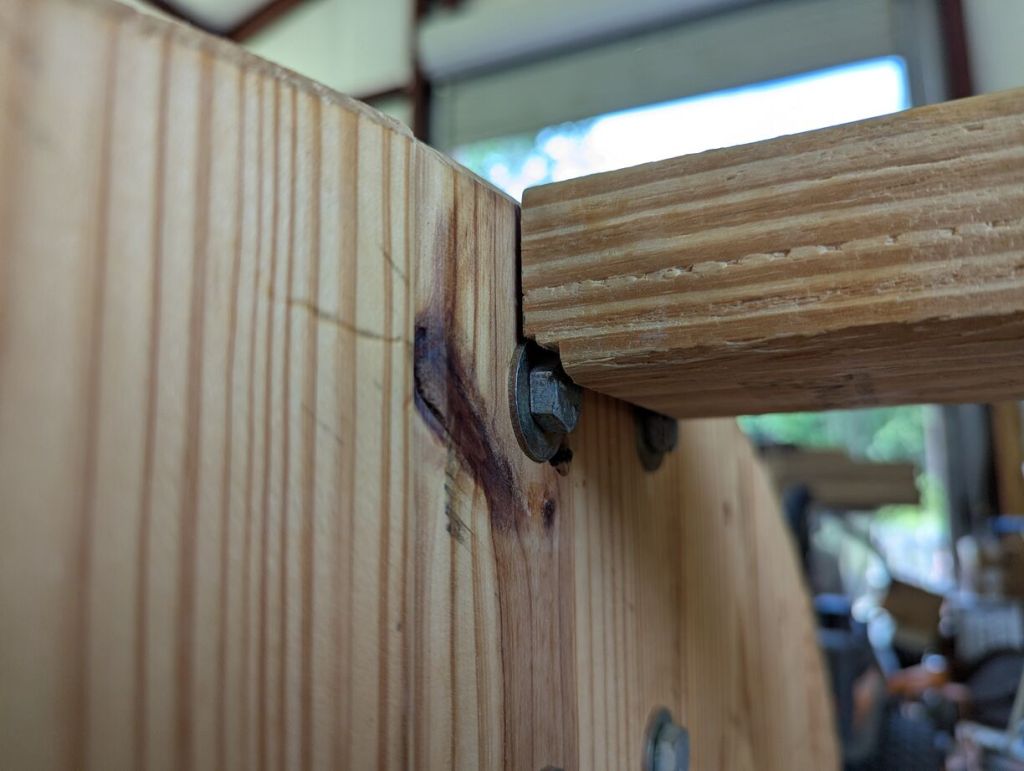
    2x4 notched to allow space for bolts and washers

    Using a table saw, we cut notches as needed on each 2″ x 4″ support to clear the wheel’s bolt heads and washers.

    closeup of screws driven through top surface of workbench into 2x4

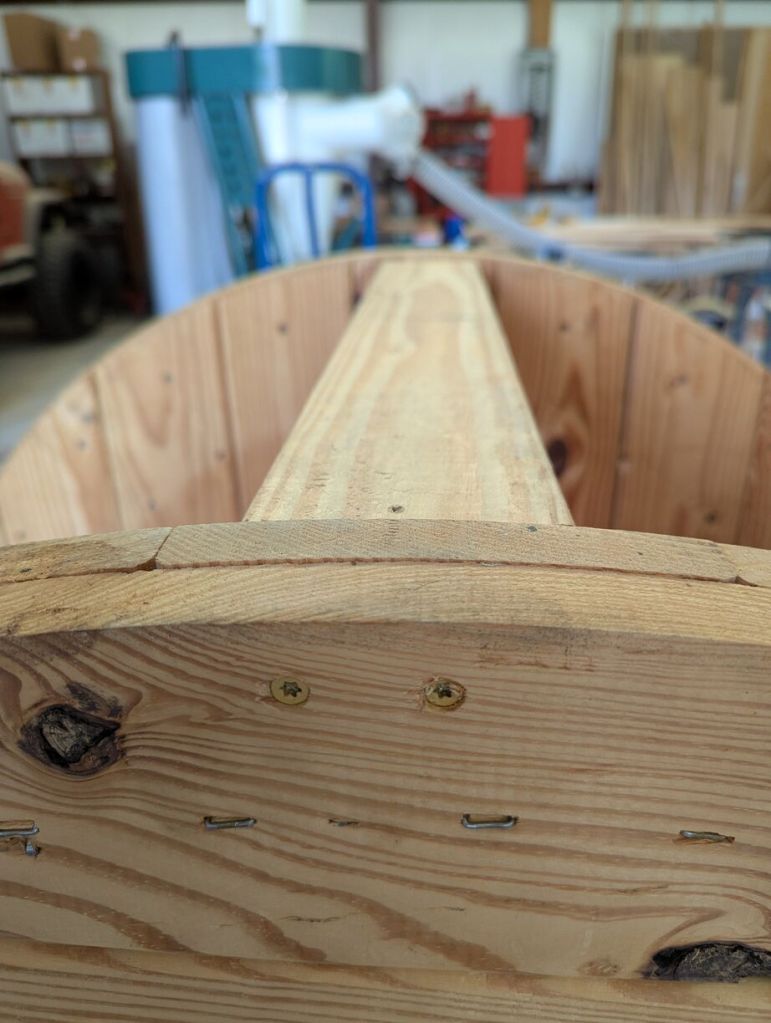
    We pre-drilled two holes for each screw that would go through the top and bottom of the spool into the 2″ x 4″ boards. We used 3″ long deck screws to fasten the 2″ x 4″ boards in place.

    closeup of screws above caster wheels driven into 2x4

    Each 2″ x 4″ is held in place by 3″ long deck screws that were driven in after pre-drilling holes for each.

    round wood workbench on wheels on its side

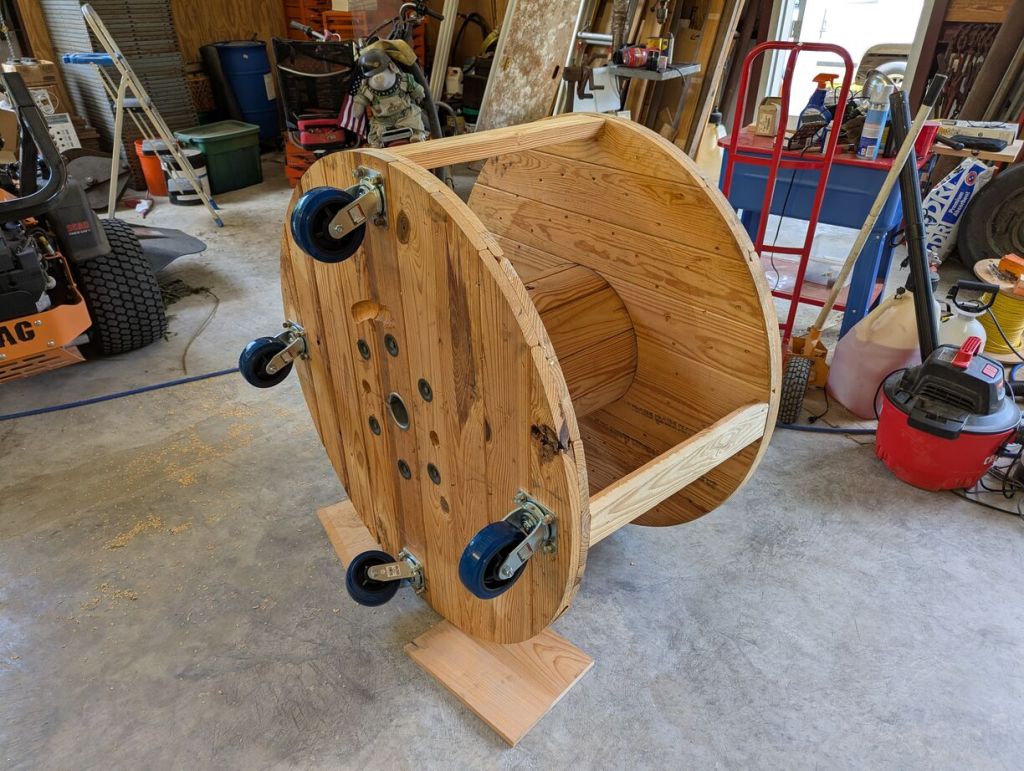
    With the wheels attached and the 2″ x 4″ supports installed, we tilted the workbench over.

    round wood workbench on wheels
    round wood workbench on wheels

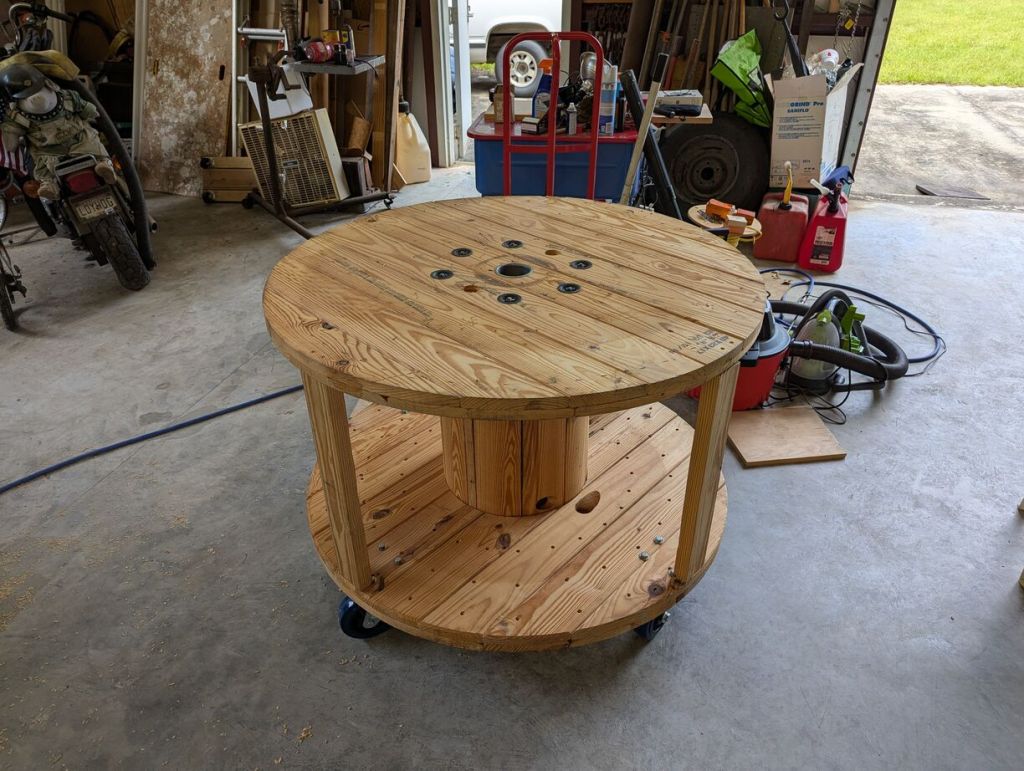
    The workbench rolls around effortlessly after being completed.

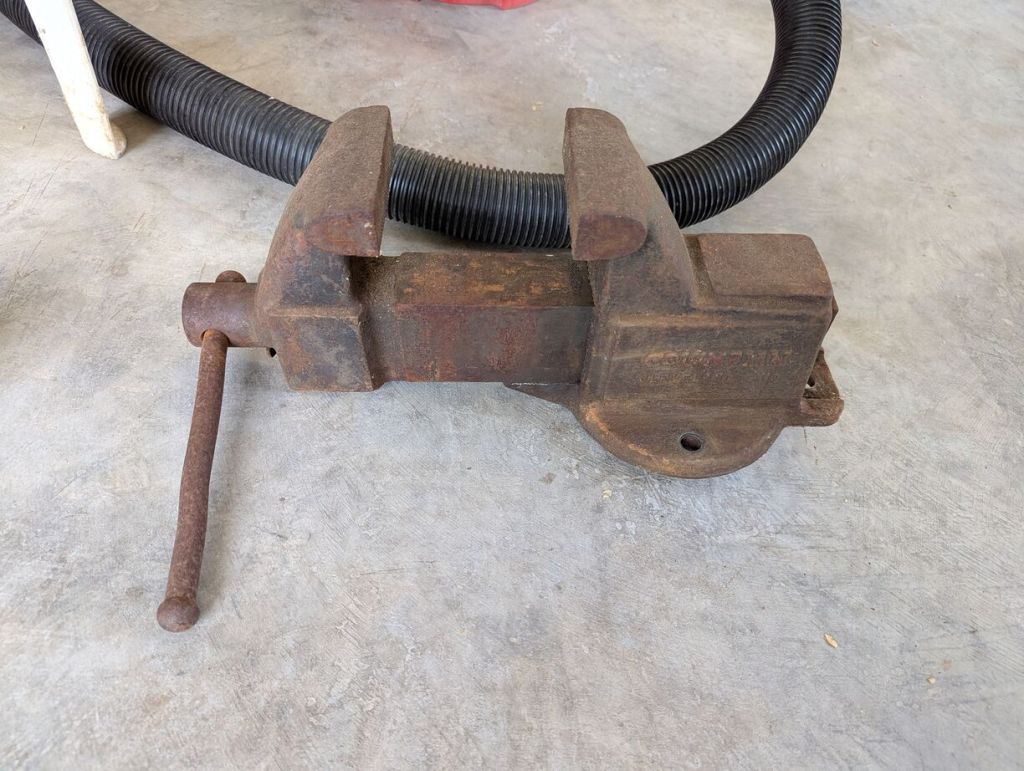
    large metal vice sitting on the concrete floor

    My dad also had a Columbian vice manufactured in Cleveland, Ohio. It’s about as heavy duty as you can get. It would certainly help him with some work, so we decided to install it on the workbench above one of the 2″ x 4″ supports.

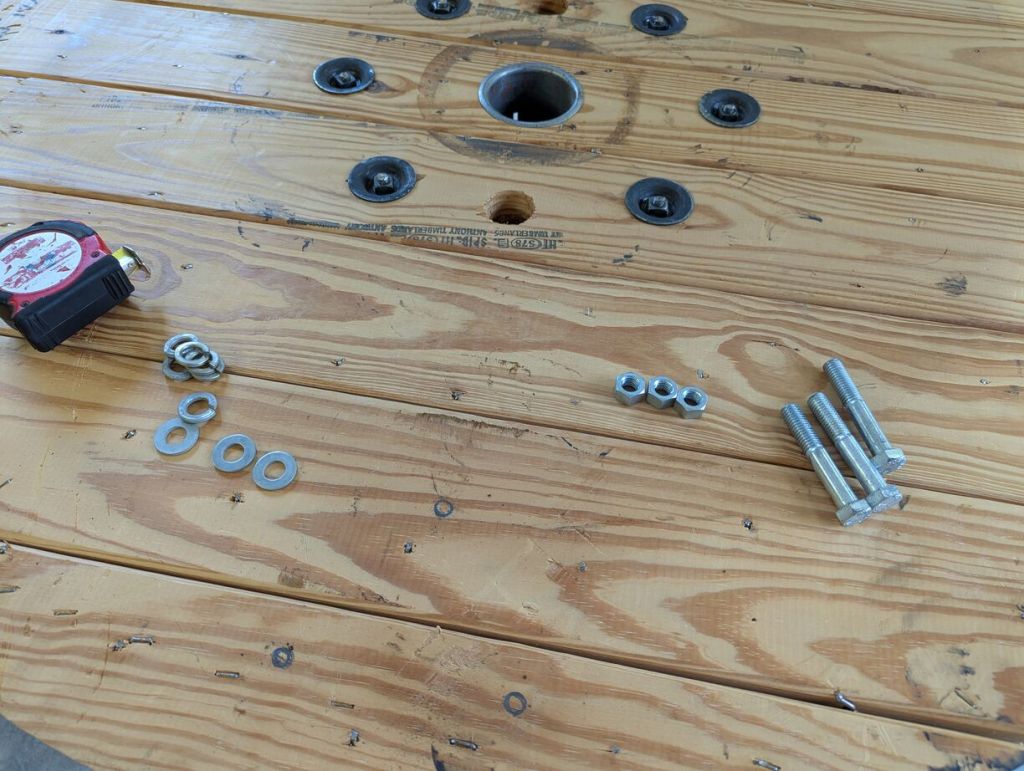
    bolts, nuts, washers, and lock washers on a wood surface

    For the vice, we used three sets of 9/16″ bolts, washers, lock washers, and nuts.

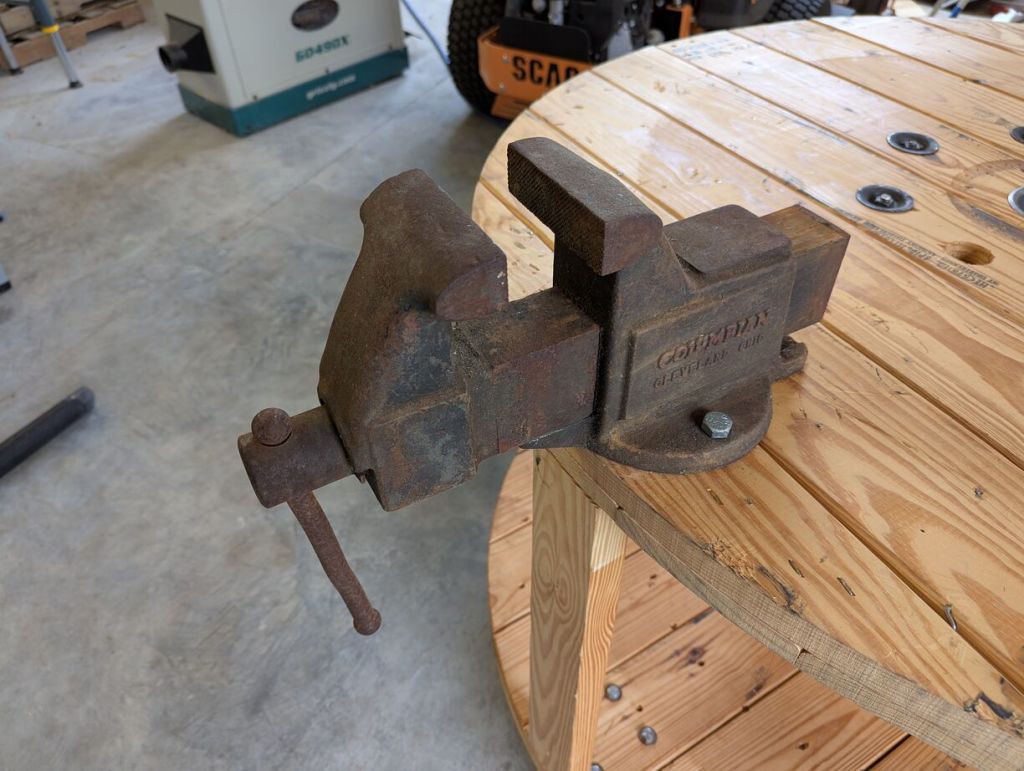
    vice mounted on top of round workbench

    I marked the location of the holes using the base of the vice as a pattern, drilled 5/8″ holes, and installed the bolts through the top and washers, lock washers, nuts on the bottom.

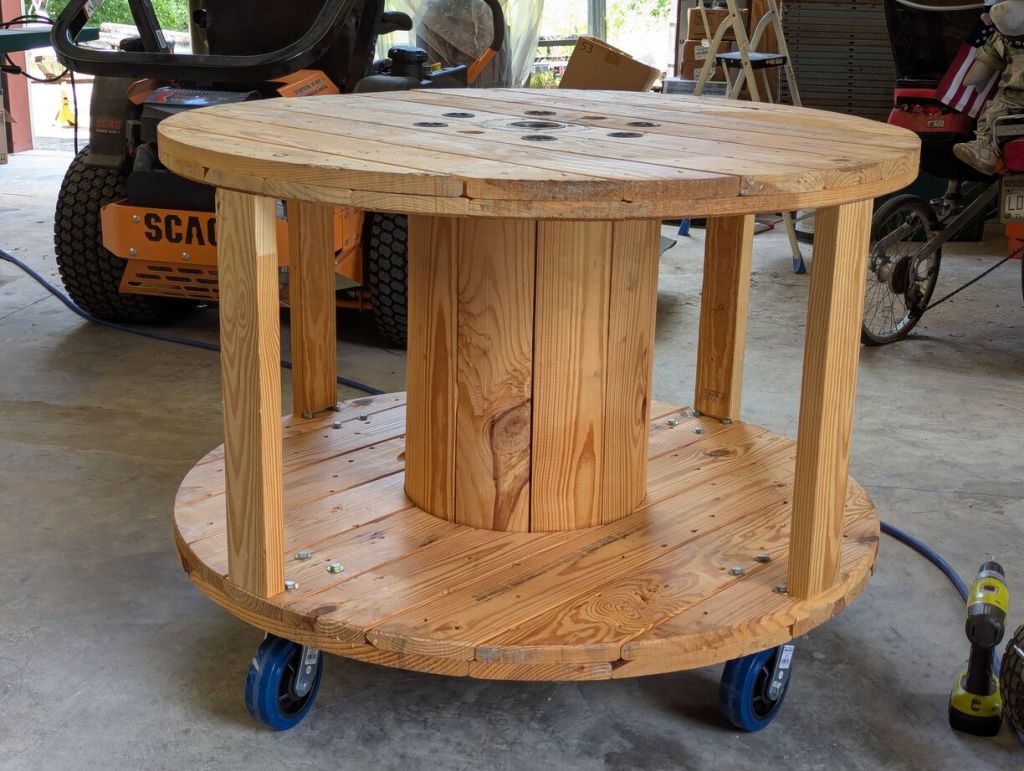
    round wood workbench on caster wheels with a metal vice mounted on top

    Our mobile workbench made out of a wood spool for holding heavy duty electrical wire is completed and ready for work.

  • How to Rat Proof a 2013 Toyota Corolla

    white 2013 toyota corolla with missing paint in spots, metal building in the background

    Last year, I wrote about removing a mouse infestation in my 2013 Toyota Corolla before driving it from Georgia to New York. At that time, I didn’t rat proof the Corolla, but since I recently did that work on my folks’ RAV4 as I wrote about yesterday, I figured that I should do the extra work to mouse proof the Corolla while I was primed to do it.

    Preventing mice from entering the Corolla is slightly more involved than the 2017 RAV4 as I couldn’t find any evidence for mice entering the pressure vents on the RAV4, but I did find that in the Corolla. So, I wanted to prevent mice from entering the cabin air vent under the windshield cowl and the two rear pressure vents on the rear quarter panels inside the trunk of the Corolla.

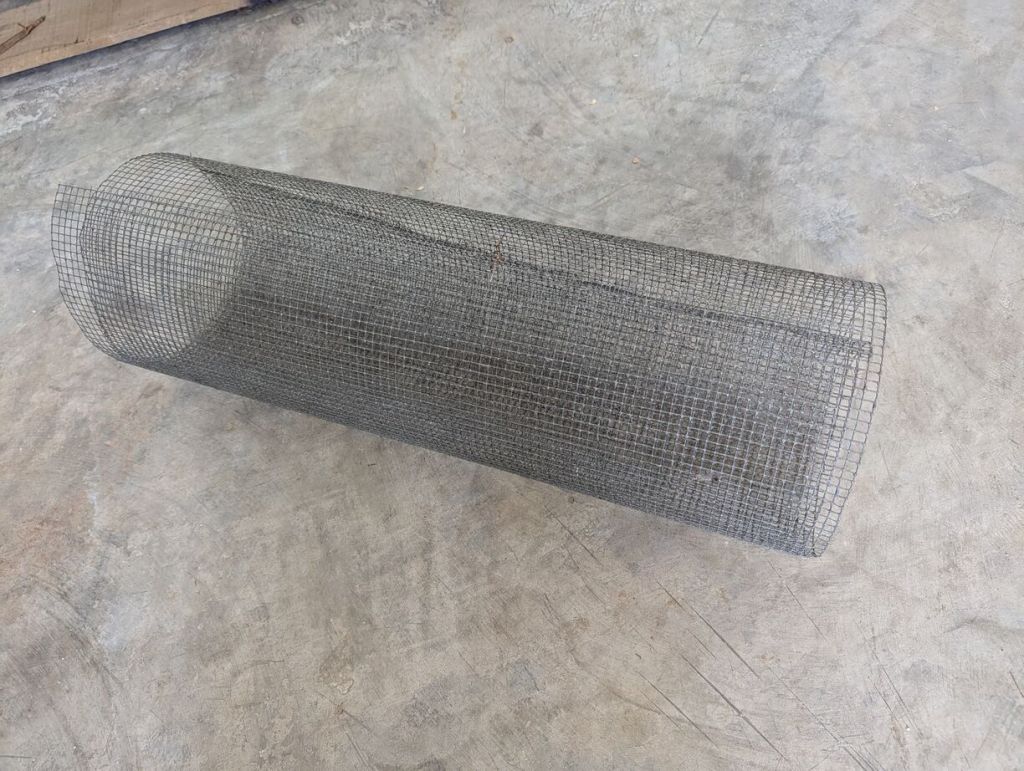
    metal mesh

    I used metal wire with a 1/4″ grid.

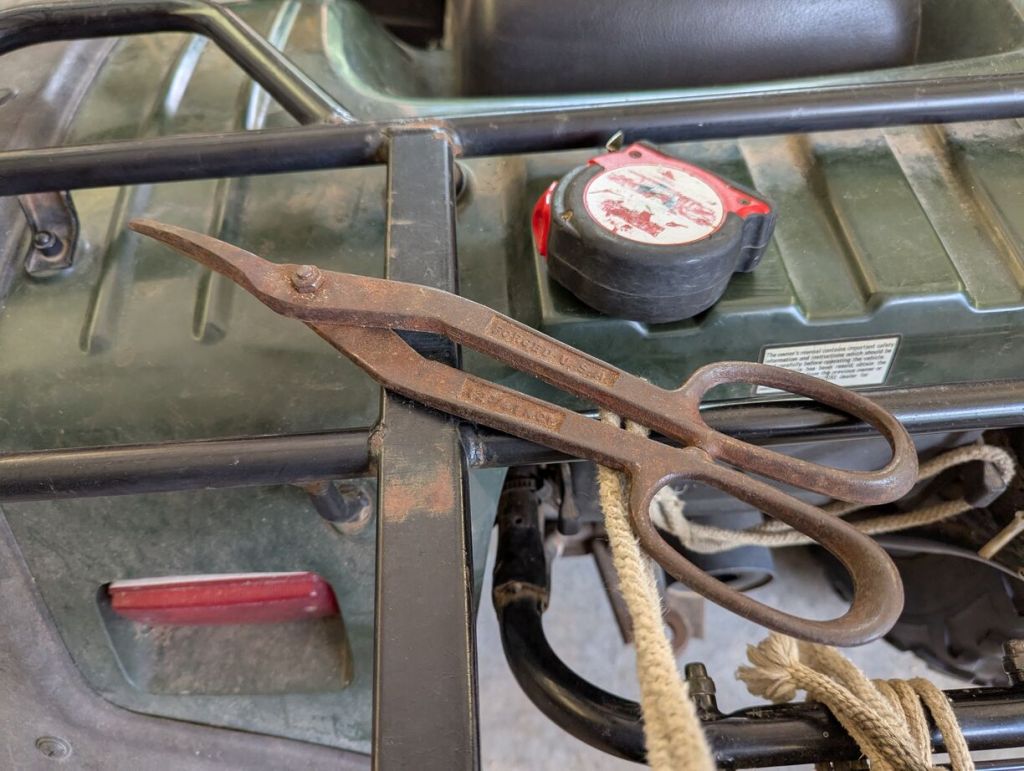
    tin snips and ruler

    I used tin snips to cut the metal wire.

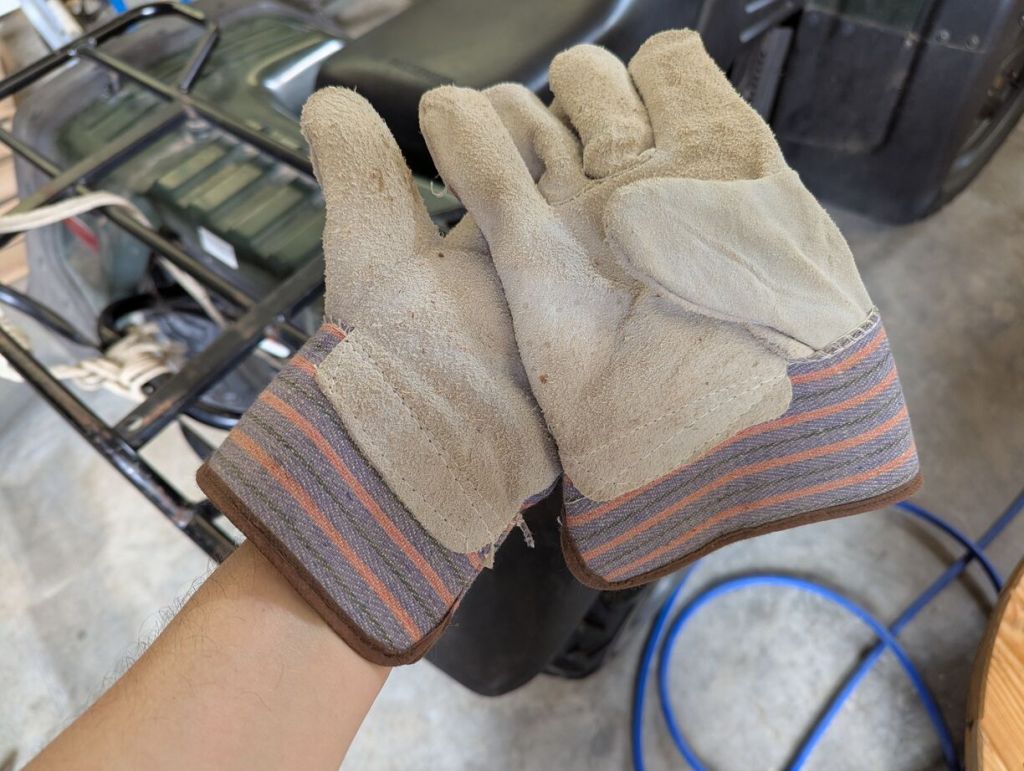
    leather work gloves

    And, I wore leather gloves while working with the metal wire, because the cut end easily cut and poke skin.

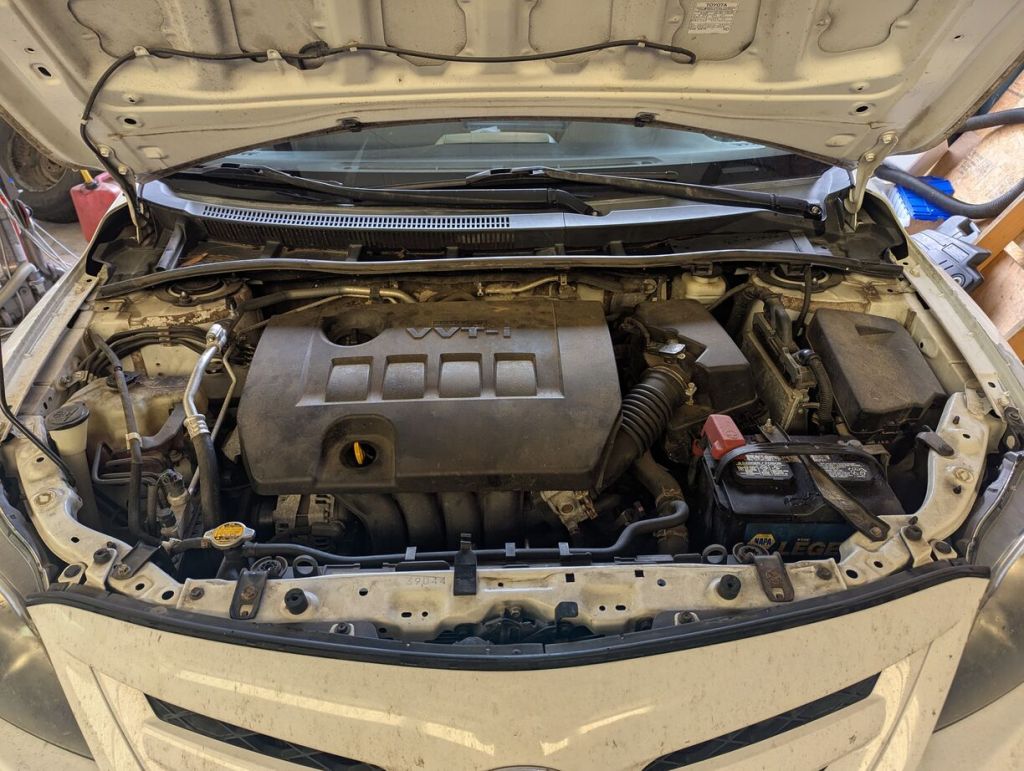
    hood up on the corolla

    The first place to prevent rodents from entering the vehicle’s cabin is the cabin air intake under the windshield cowl. Unlike the 2017 RAV4, you don’t have to take off the windshield wiper arms to access it (I wasn’t paying attention to how the cowl was designed with a break, which would have saved me this trouble). The cowl is held on with plastic push pins and built-in snaps. Due to the plastic being brittle, the pins broke, but the built-in snaps remained usable.

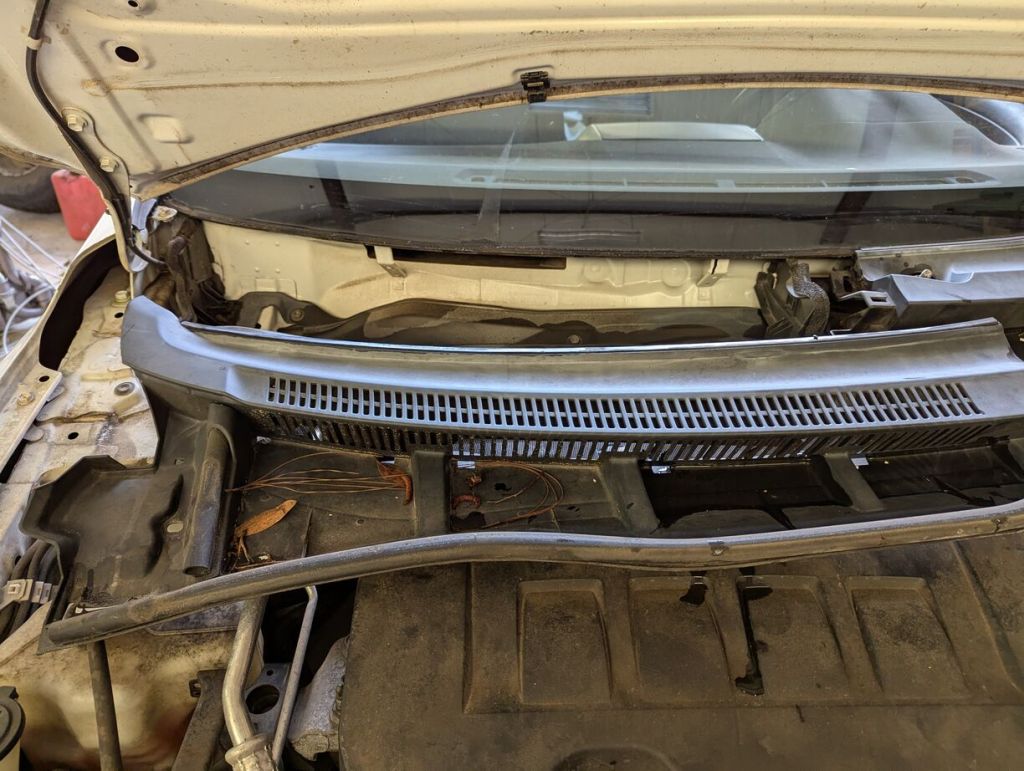
    hood up on the corolla, windshield cowl on passenger side removed and pulled down

    Pulling the cowl out of the way, you can see the cabin air intake below the windshield on the passenger side of the vehicle.

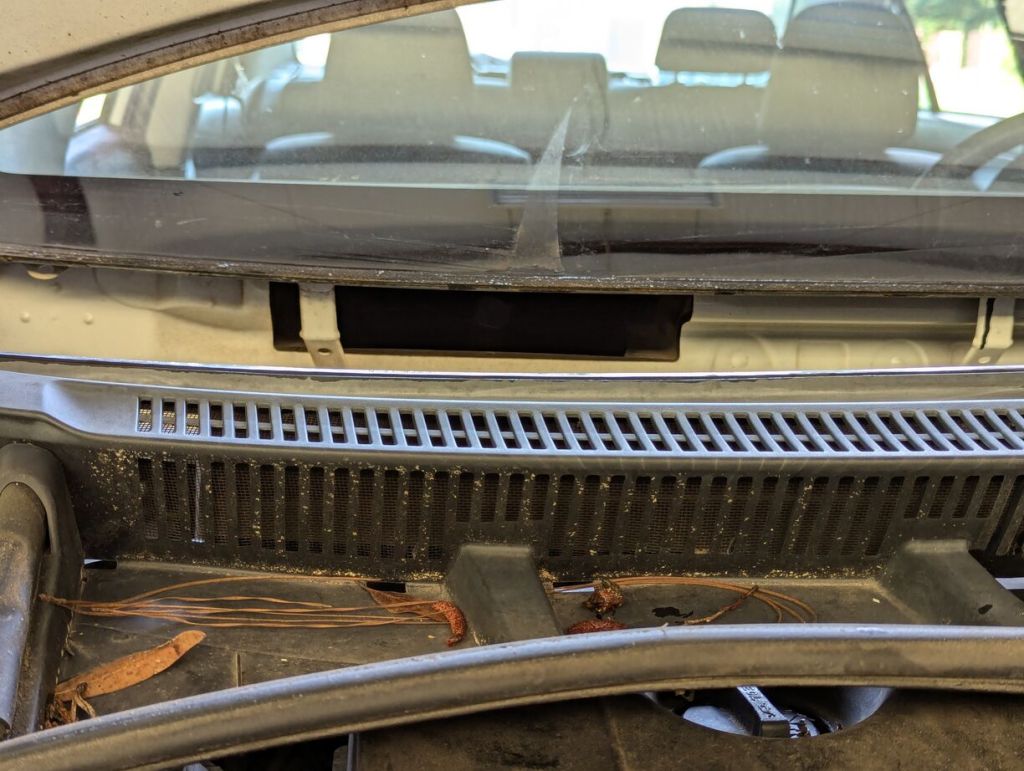
    cabin air intake under windshield

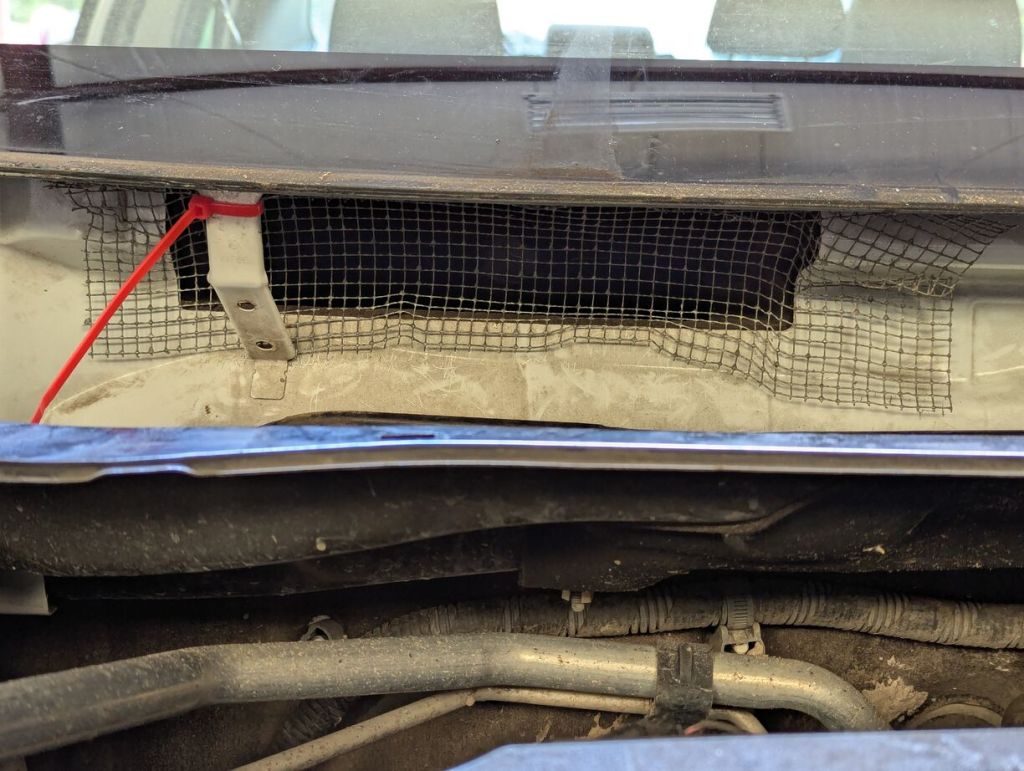
    With the Corolla, the cowl has a metal mesh built-in mean to stop the entrance of rodents into the vehicle’s cabin. Unfortunately, mice can squeeze through where the cowl contours against the metal body of the vehicle on the edges, which is likely how some of the rodents got into my Corolla.

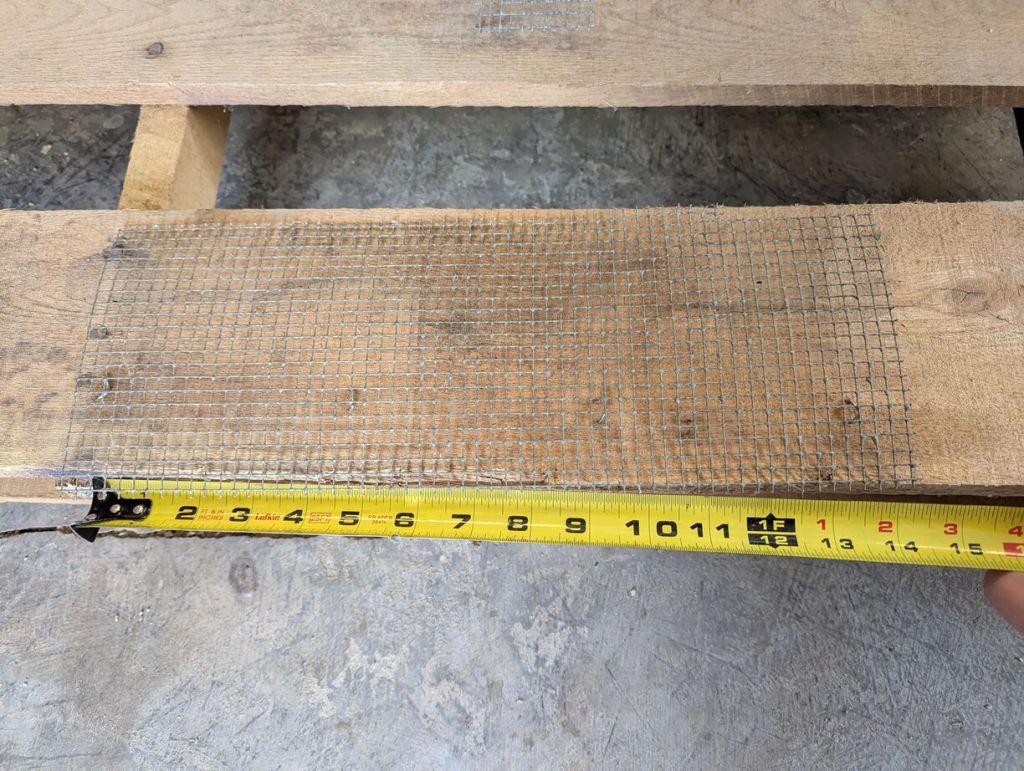
    rectangular piece of wire mesh cut with ruler underneath showing 14"

    I cut a 14″ x 6″ sheet of metal mesh to cover the cabin air intake.

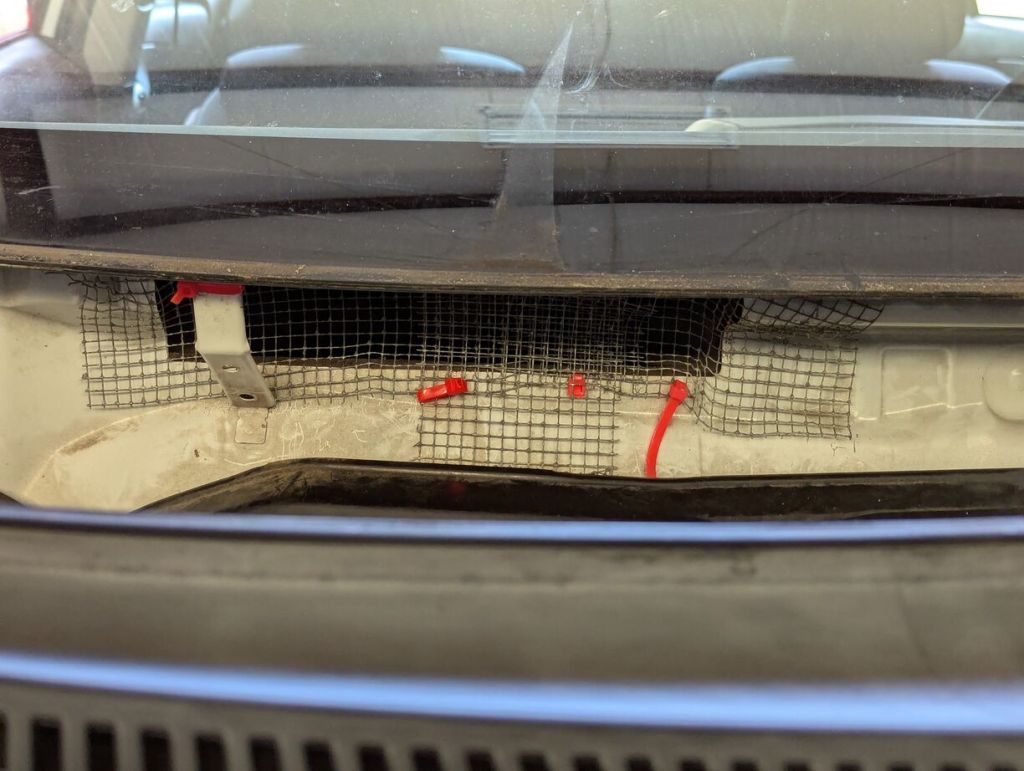
    wire mesh pushed into and over the cabin air intake

    I shaped it with my hands and a hammer to enter the opening and contour around the body, and I used one zip tie to secure this first sheet.

    more wire mesh pushed into and over the cabin air intake and secured with zipties

    To further reinforce it, I cut a narrow and long piece that I wedged under the body lip under the windshield and under the lip where the cowl’s bottom edge sits. This applies pressure to the middle of the mesh covering the cabin air intake to ensure the mesh can’t move.

    I pushed the cowl back into place and secured its left edge with a zip tie through the push pin hole that had broke during removal.

    corolla trunk open with floor liner removed and upholstery on the sides pulled back

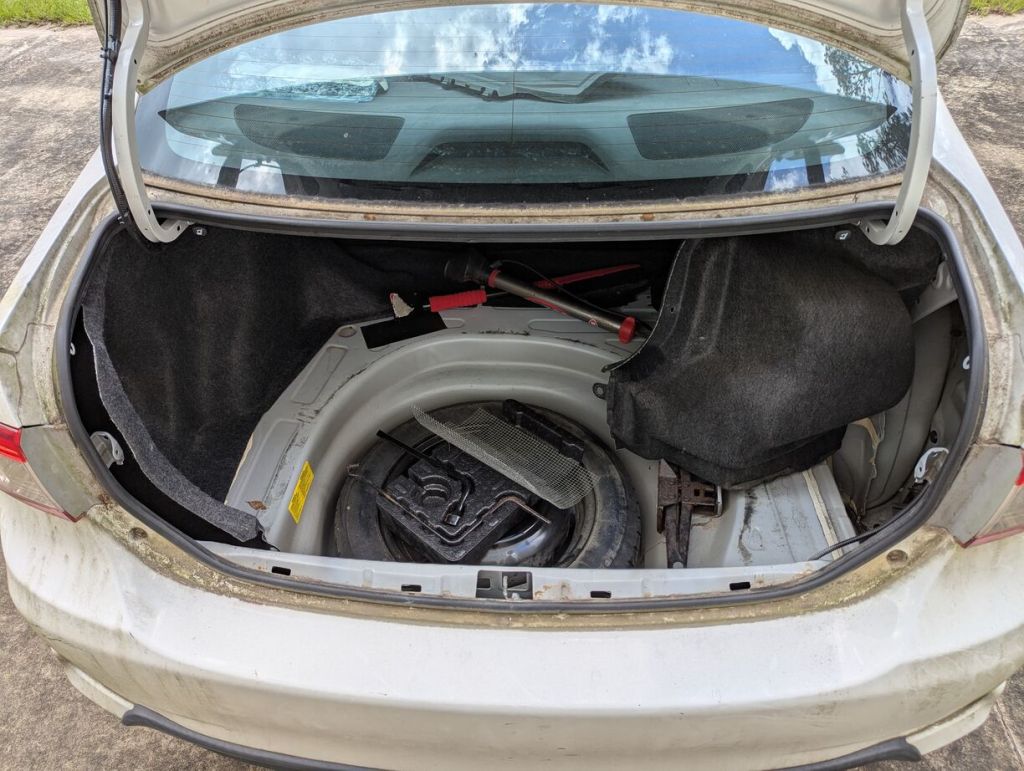
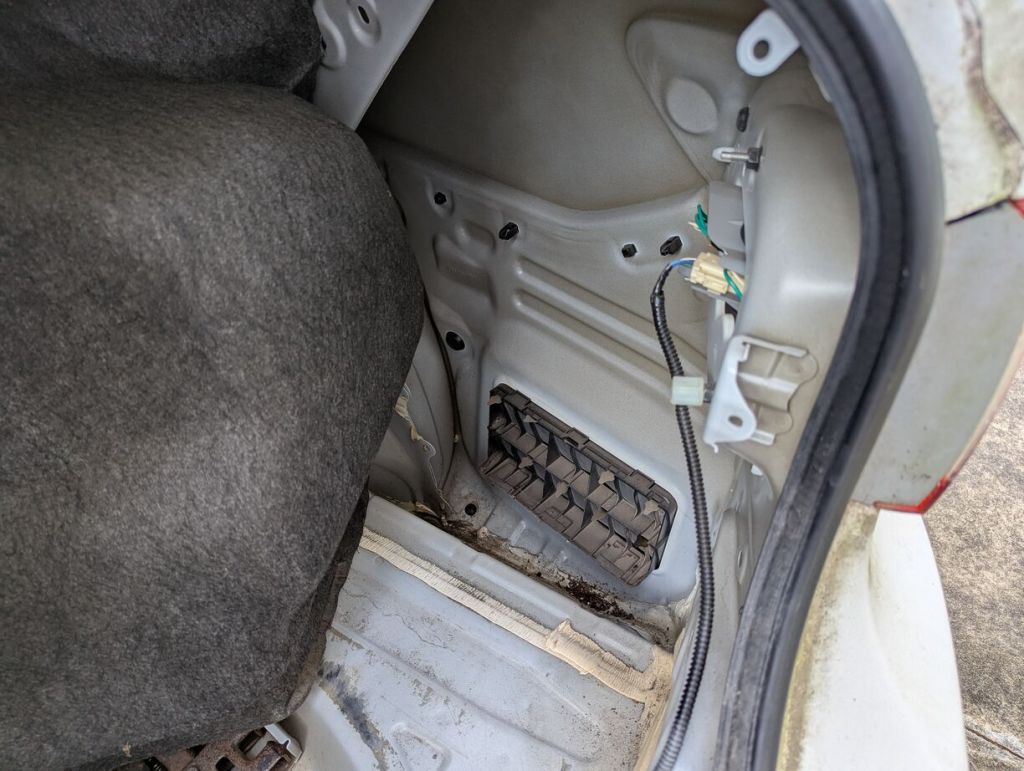
    Next, I worked on the pressure vents in the driver and passenger rear quarter panels, which are accessible via the trunk. To find them, remove the trunk floor covering the spare tire, pull out the plastic latch cover above the bumper, and pull out the pins holding the upholstery over the trunk’s sides. You’ll find one pressure vent on either side behind the upholstery.

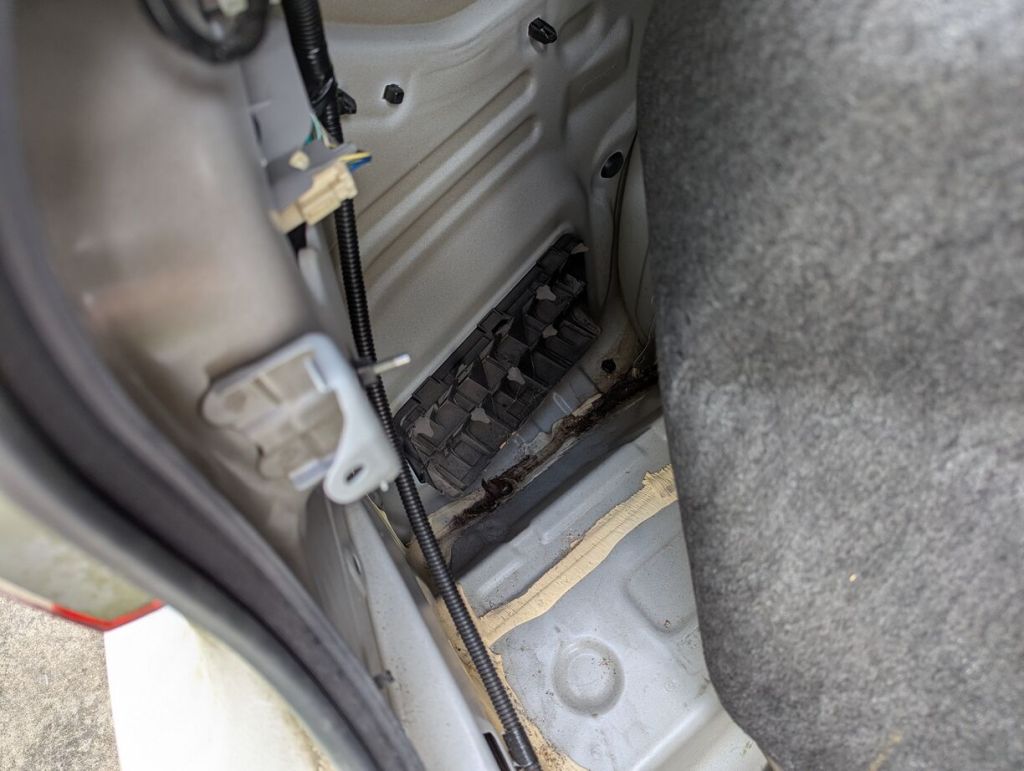
    pressure vent on driver side rear quarter panel

    I worked on the driver’s side pressure vent first.

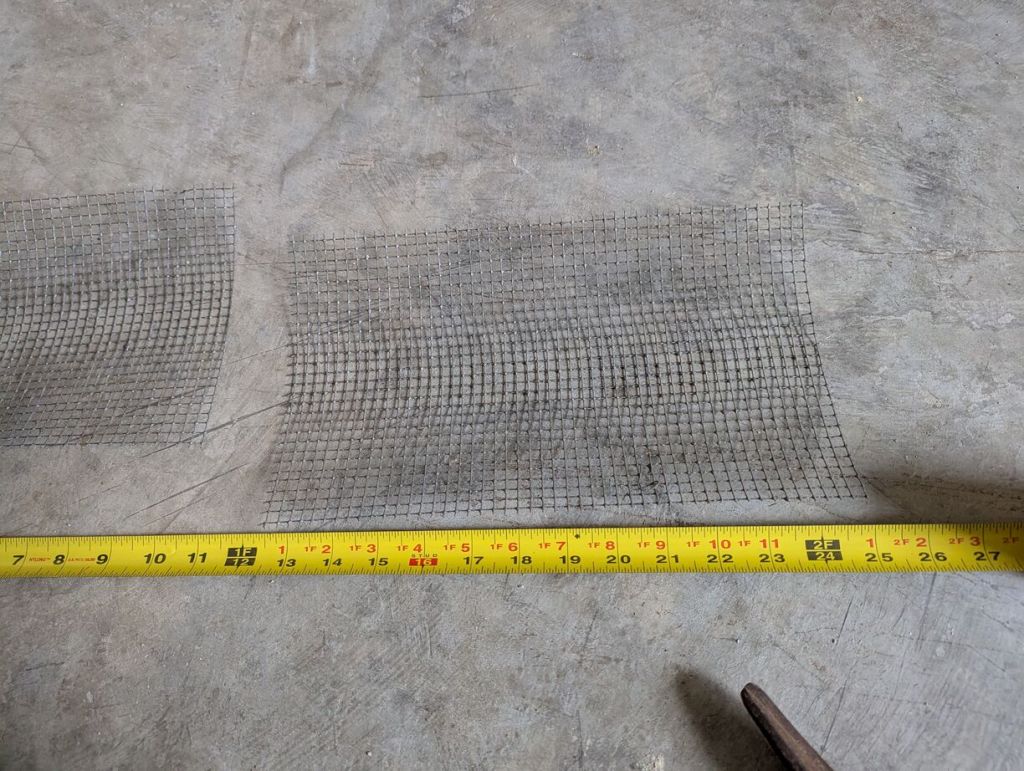
    cut piece of wire mesh about 14" x 7"

    I cut a 14″ x 7″ piece of metal mesh to cover this opening.

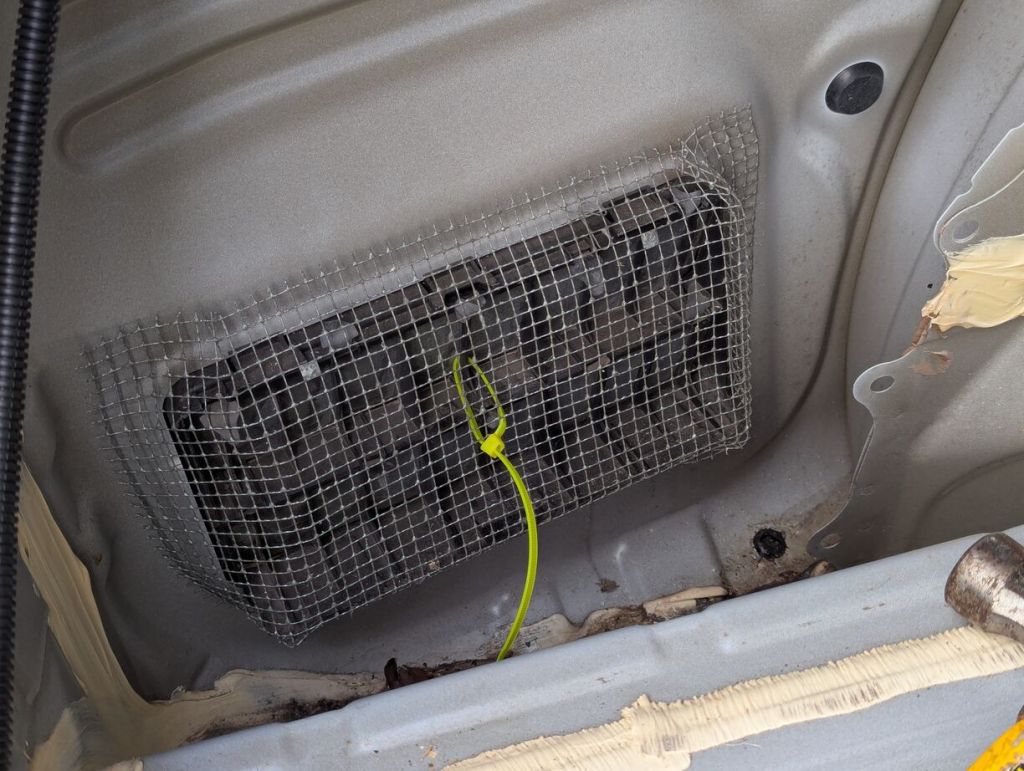
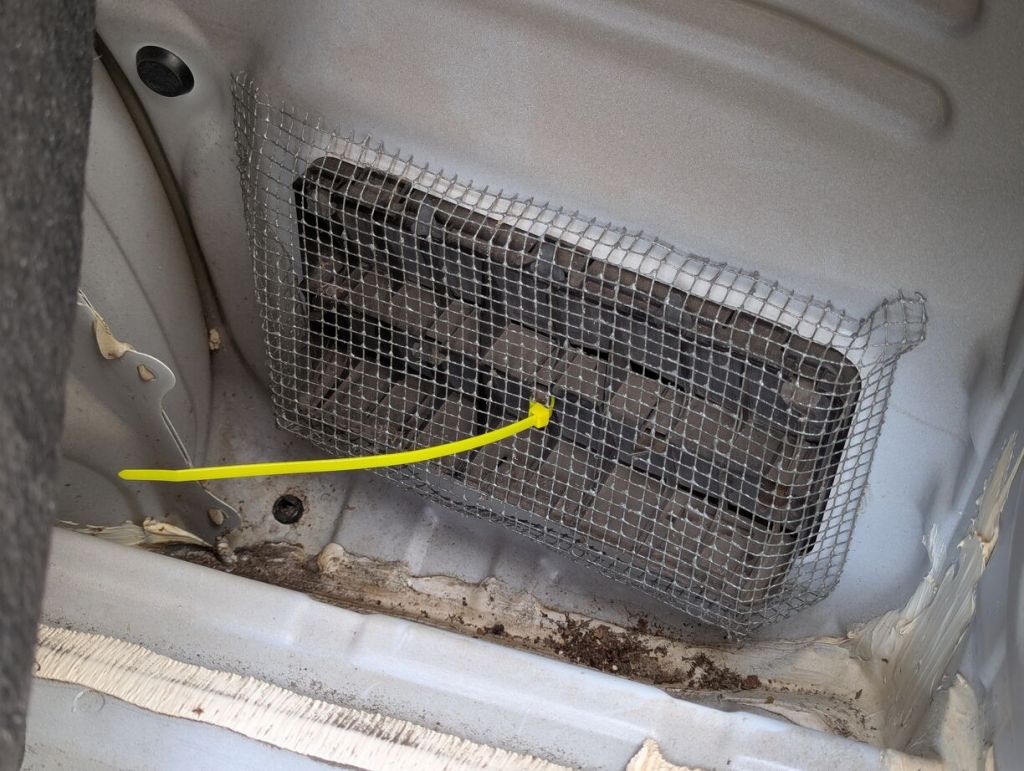
    wire mesh shaped over pressure vent and secured with zip tie

    Using my gloved hands and a hammer, I shaped the metal mesh to contour around all sides of the vent against the metal body, and I used a zip tie to hold it securely in place.

    passenger side pressure vent in rear quarter panel

    I worked on the passenger side pressure vent next.

    wire mesh shaped over pressure vent and secured with zip tie

    I cut the same size piece of metal mesh, shaped it around the vent against the body and fastened it with a zip tie run through the middle of the vent.

    I hope that we don’t have to deal with rodents in the Corolla again. When we purchase a new vehicle, I will secure these openings in that vehicle as the first thing that I do.