Category: Technology

  • How to Keep Mice Out of a 2017 Toyota RAV4 SUV

    side view of a red 2017 Toyota RAV4 SUV

    Recently, my folks were unable to drive their 2017 Toyota RAV4 due to an unexpected and unbearable smell inside it. This post details what I did to resolve the situation and prevent it from happening again.

    Resolving the Odor

    Suspecting mice, I used a video endoscope that I purchased online for about $25 to find their nest under the center console below the radio and AC controls.

    To remove it and clean that area, it required disassembling the console and removing the panel covers under the dashboard on the driver and passenger sides. The main tools that I used were a plastic wedge tool to pop the plastic clips loose, a Philips head screwdriver to remove a few hidden screws toward the front of the console, and a socket driver with extension to remove four bolts in the armrest compartment. See this guide for more details and pictures of this process.
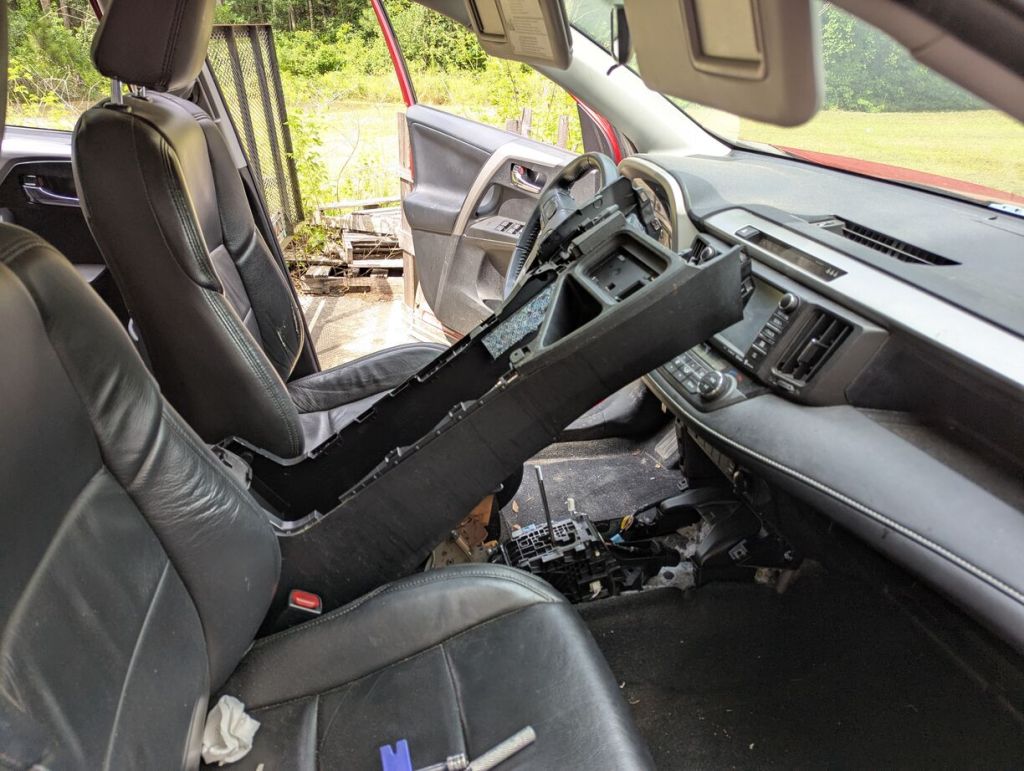
    center console of 2017 rav4 disassembled

    The mouse nest was positioned under the plastic air ducts that send air from the AC to the rear of the RAV4.
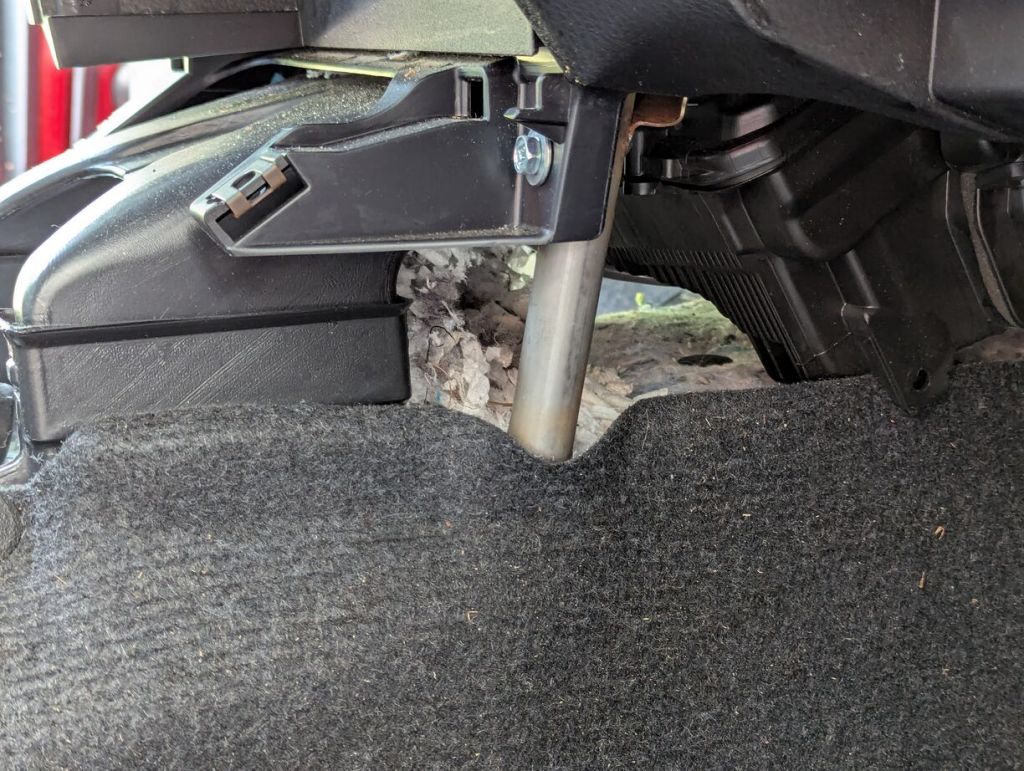
    rat nest under disassembled center console of 2017 rav4

    I removed all of the insulation underneath the nest as it had absorbed the odor from the nest.
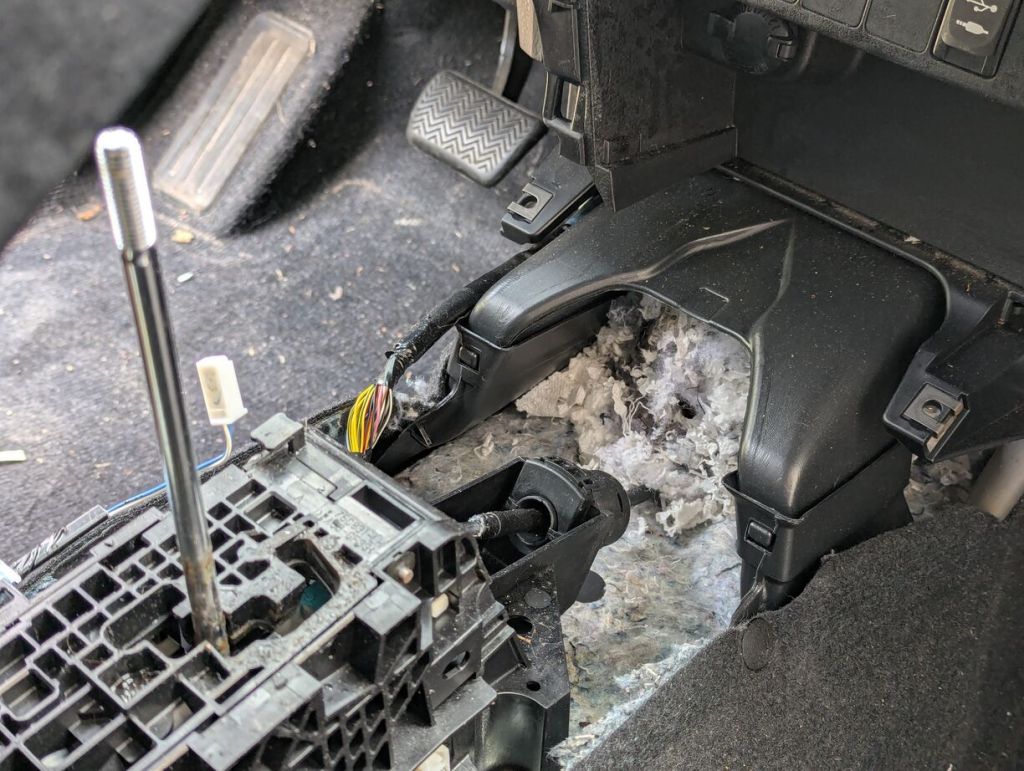
    rat nest under disassembled center console of 2017 rav4

    To improve the smell inside the vehicle, I shampooed the carpets with a Bissell Little Green Portable Carpet Cleaner, vacuumed after it had dried, wiped down all the surfaces, and put out activated carbon pouches throughout the car.

    To ensure the AC system was clean, I emptied a bottle of A/C Pro Vent & Duct Cleaner Odor Neutralizer–half in the ducts and half into the blower with the cabin air filter removed. This released a lot of build up, which clogged the AC system drain. After failing to unclog it with a pliable wire, I used compressed air to unclog the drain (admittedly this probably pushed some of the matter back into the AC system, but I immediately ran the AC for about an hour to have ample water flow out the system). I replaced the cabin air filter with a new Fram filter.

    Finally, I opened the sunroof and windows while letting the car sit in the sun over several days.

    When the car is left to sit, it still has a slight smell, but this is quickly dealt with by opening the sunroof and windows, turning the AC on high, and leaving the car to ventilate for a minute or two. I think with time, the odor will decrease.

    Preventing Mice from Reentering the Vehicle

    Having spent days cleaning the mouse infestation from the RAV4, I didn’t want to have to go through this again. I read that the cabin air intake under the windshield cowl is the likely point of entrance.

    To access it, you need to remove both windshield wiper arms. There are windshield wiper arm puller tools that you can find for about $20, but I found applying ample WD-40 to the nuts (to remove them) and the bolts (after removing the nuts) permitted the removal of both arms. It’s important though before you remove them to mark the bolt head to align with the direction of the wiper arm (I scratched a line on top of the bolt with a flat head screwdriver).
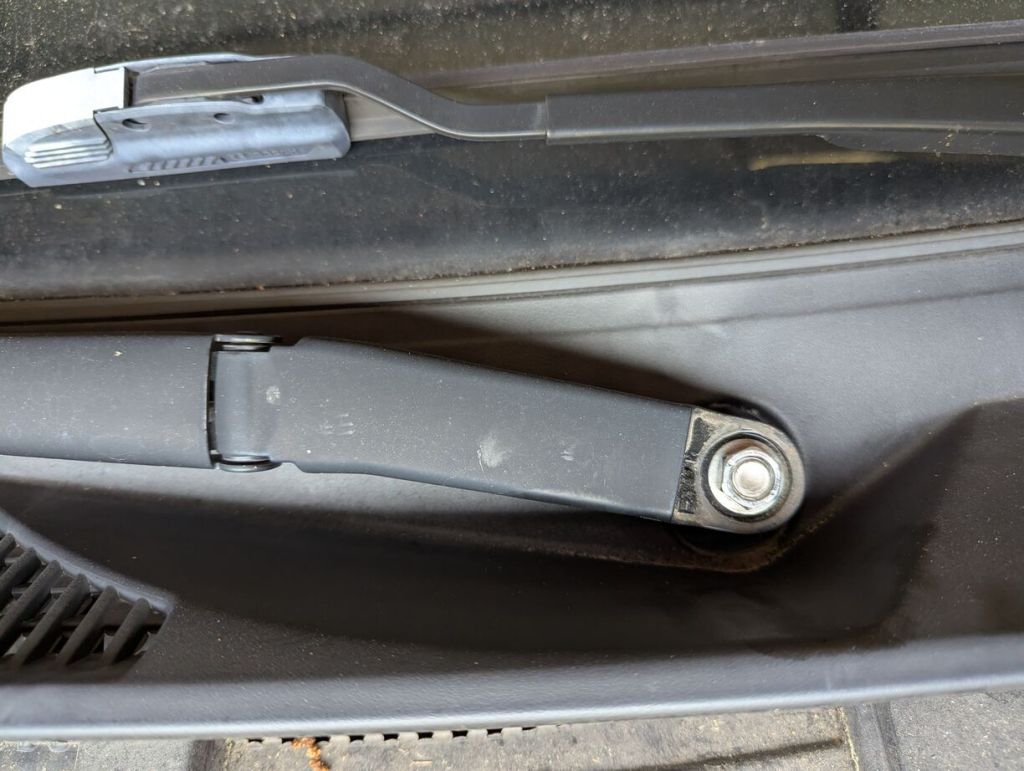
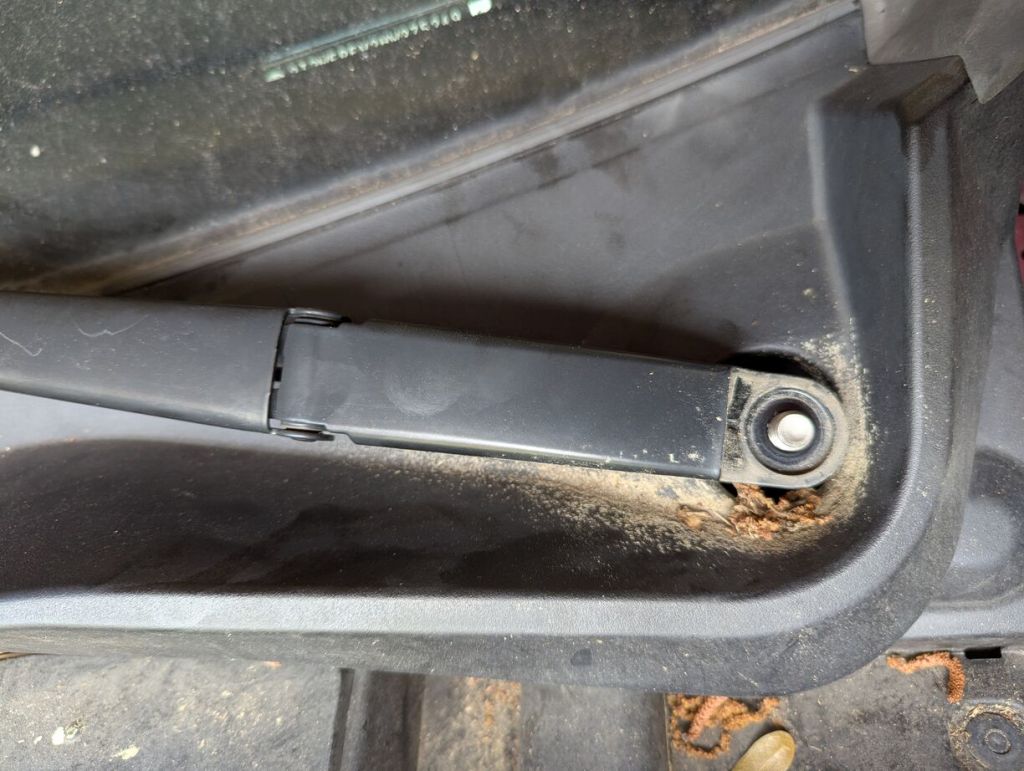
    closeup of windshield wiper arm bolt assembly
    closeup of windshield wiper arm bolt assembly with nut removed

    With the wiper arms removed, there are a couple of plastic push pins that need to be removed and plastic tabs to pop out. Pull the cowl forward enough to see the cabin air intake on the passenger side. See this guide for more pictures and details for removing the cowl.
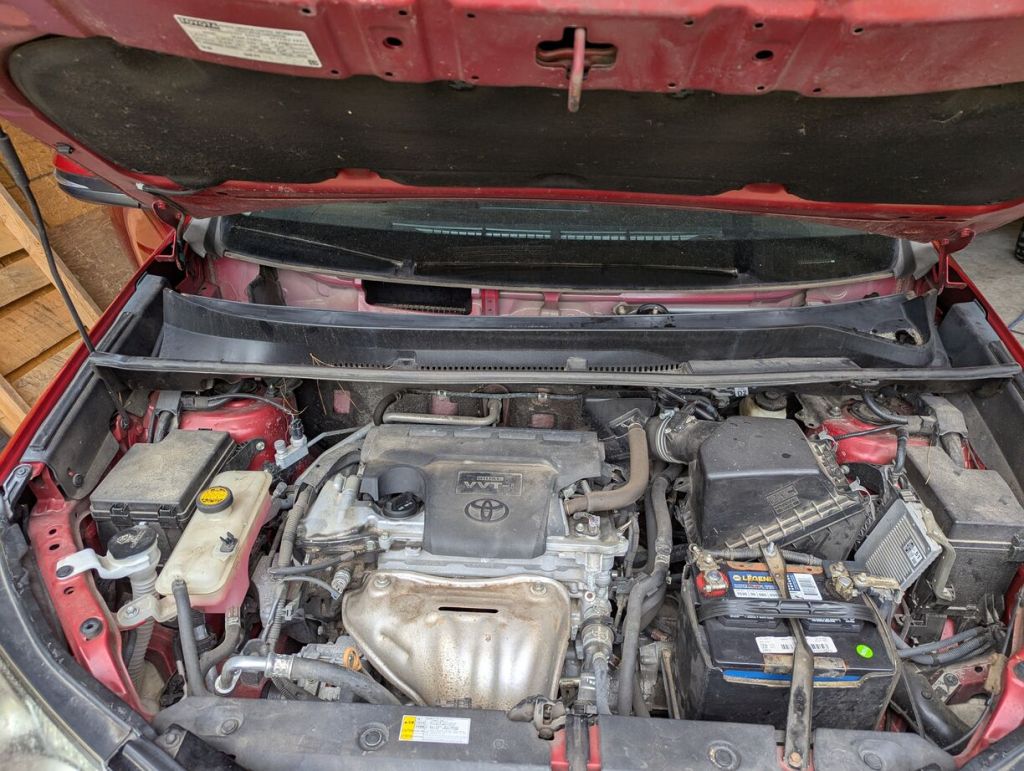
    under hood of 2017 rav4 with windshield cowl removed to reveal cabin air intake on left side

    After releasing the cowl, pull it down and out of the way.
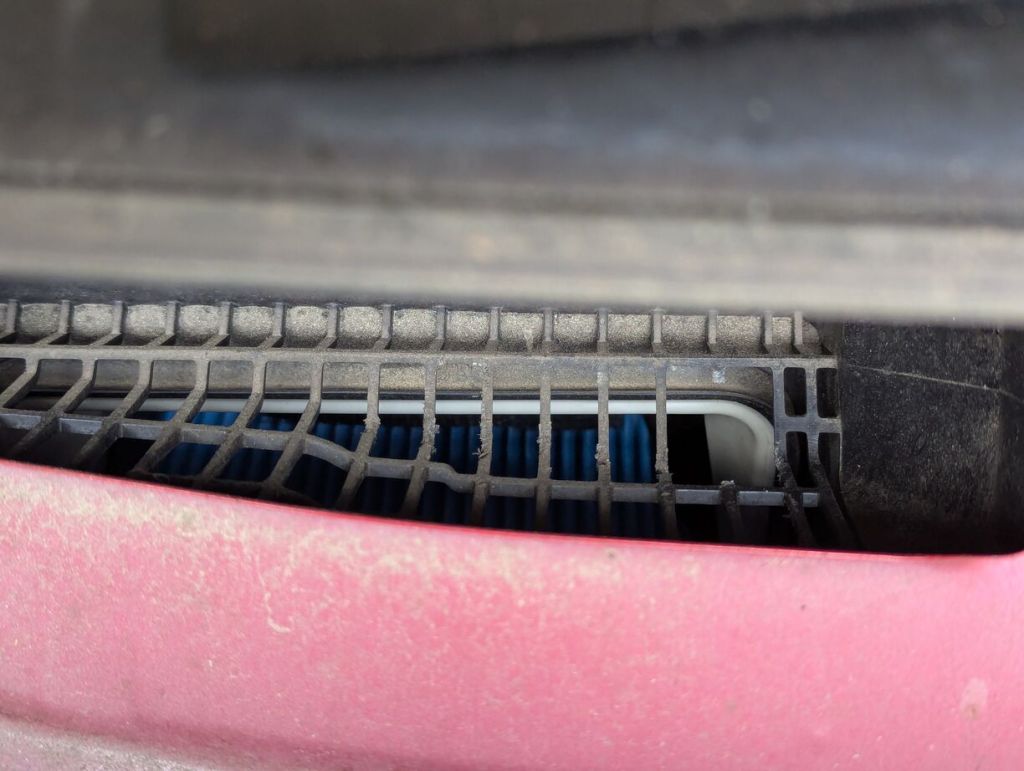
    cabin air intake plastic grill with section missing likely chewed through by mice

    It’s easy to see all of the teeth marks on the plastic grill covering the cabin air intake. Obviously, plastic is insufficient for keeping rodents out of a vehicle.
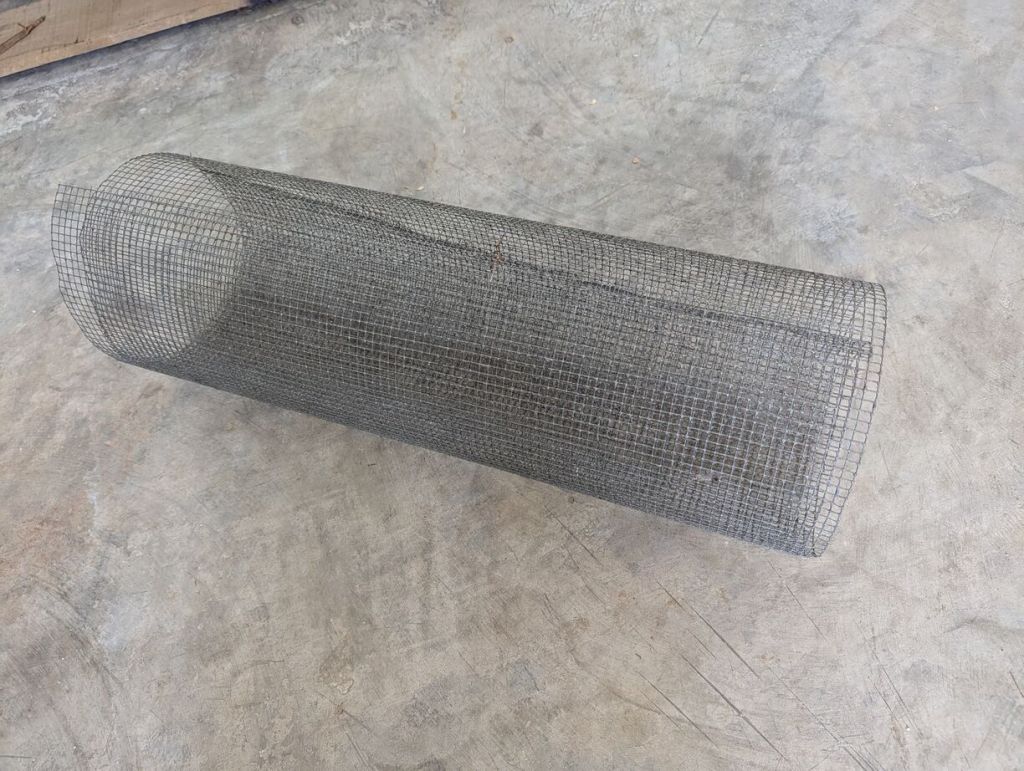
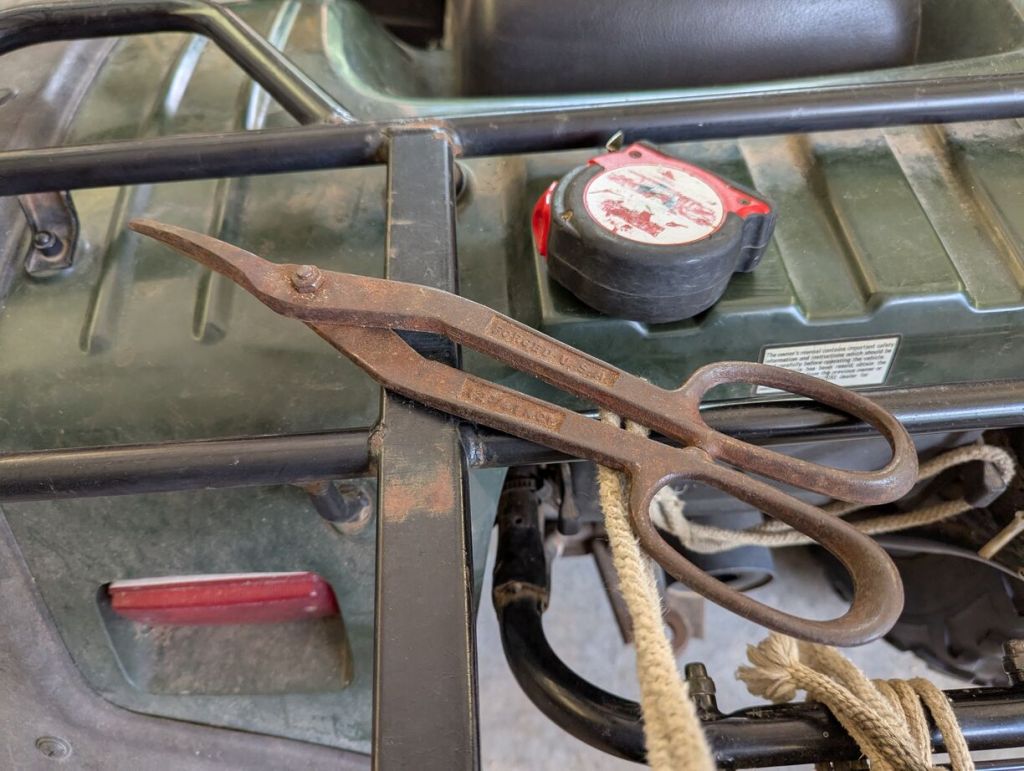
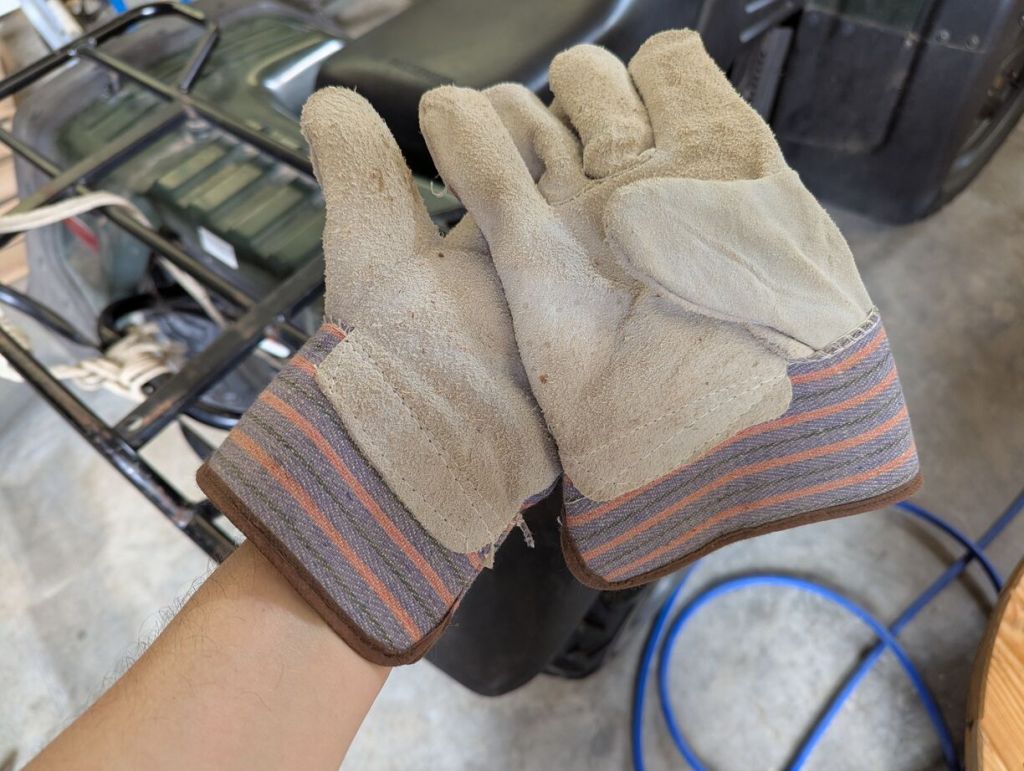
    Wearing leather gloves and using large metal tin snips, I cut pieces of wire mesh to fashion into a cover over the air intake. I used a hammer to tap and push on the wire to mold it to the contours of the vehicle body, and I secured it with zip ties. I added extra wire mesh below the opening to push against the lower lip of this area to push and hold the wire mesh cover in place.
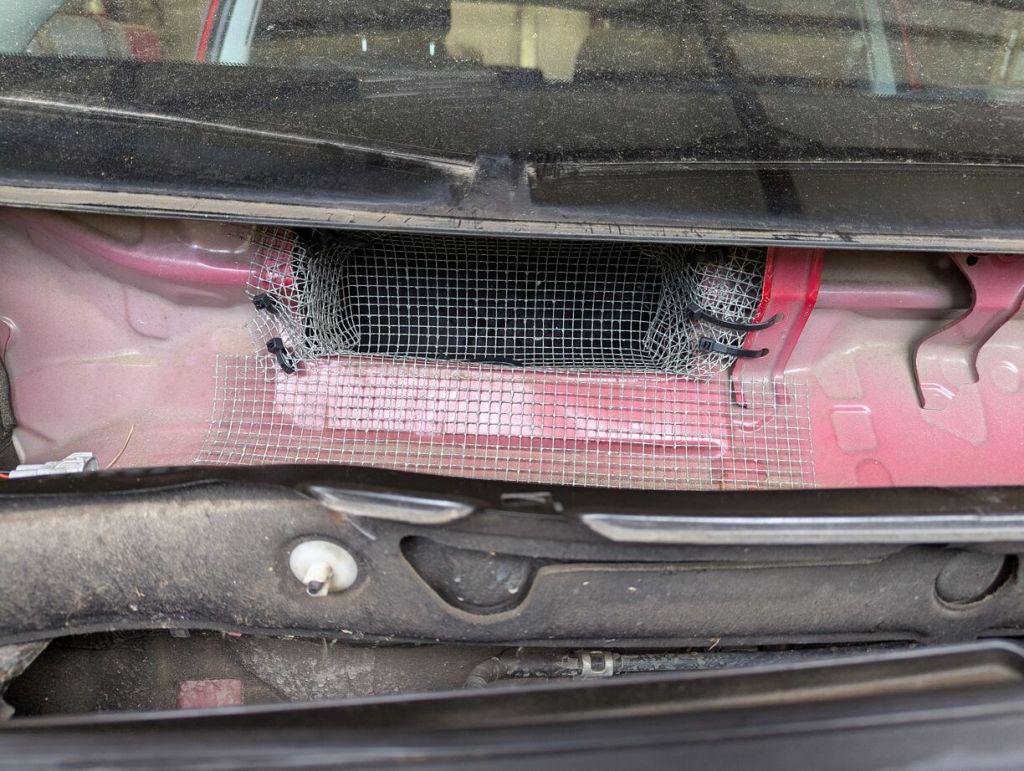
    metal mesh covering cabin air intake

    Just for peace of mind, I added a larger flat piece of wire mesh over the intake to ensure nothing could get inside through this opening.
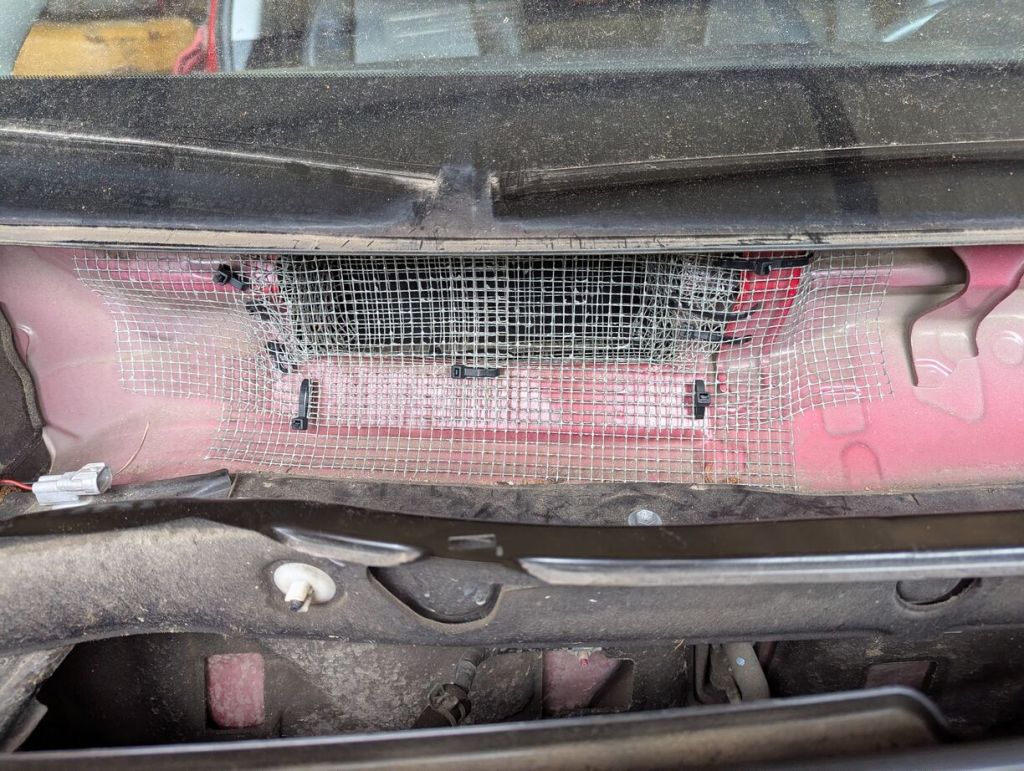
    metal mesh covering cabin air intake

    The plastic pins securing the cowl broke during removal, so I used longer zip ties to hold the cowl in place through the pin holes.

    I used the video endoscope to explore the AC system ducts and areas under panels in the front and rear of the vehicle, but I couldn’t find any other evidence of rodent infestation. I hope that this guide might be useful to others dealing with this design issue with Toyota vehicles.

    Stay tuned, because I will post how to do this for a 2013 Toyota Corolla tomorrow.

  • Generative AI for College Students Series: Baked In Biases in AI Tools Reflect and Amplify Prejudices

    Image created with Stable Diffusion.

    Please keep in mind that new technology like Generative AI (Gen AI) shouldn’t simply make your thinking or work easier, much less take the place of the uniquely singular abilities of human beings to grow cognitively, think creatively, or evaluate critically. If you use Gen AI to simply avoid work, you are doing it wrong. Instead, using Gen AI in the spirit of Douglas Engelbart’s “augmenting human intelligence” and Donna Haraway’s configuration of the cyborg point the way to beneficial heightening of human possibility instead of harmful erasure of the cognitive distinctions of humanity. If you use Gen AI, use it wisely and use it well. This post is the ninth in this series.

    Science and technology are not neutral and bias free. While we might aim to elevate them above human biases, they are part of human culture and carry the weight of the best and worst of ourselves. Similarly, generative AI tools, trained on vast datasets that reflect the biases of society, can reproduce and amplify these distortions in their responses. This raises important questions about the role of AI in academic writing and the potential for perpetuating prejudice.

    AI tools are not neutral; they reflect the biases present in their training data. For example, if a dataset contains stereotypical portrayals of certain groups, the AI will likely reproduce those stereotypes in its responses. This can result in biased or offensive content that undermines the credibility of a student’s work. Moreover, because AI-generated text is often polished and coherent, students may be less likely to question its content, thereby unintentionally perpetuating harmful ideas.

    Consider a student writing a paper on gender roles in society. They prompt an AI tool to provide an analysis, and the AI responds with a well-written paragraph that reinforces outdated stereotypes. The student, assuming the AI is neutral, incorporates this analysis into their paper, potentially spreading biased ideas. This scenario highlights the danger of relying on AI without critically evaluating its responses.

    It bears noting that while we influence the development of technology, it in turn influences human culture. In the case of AI tools, the technology is not only shaped by society but also actively reshapes it by amplifying existing biases. Students must recognize this dynamic and take steps to mitigate its impact on their work.

    To address this problem, students should actively seek out diverse perspectives and critically evaluate AI-generated content. They can do this by comparing AI responses to credible sources and looking for inconsistencies or biases. Additionally, educators can play a crucial role by teaching students to recognize and challenge biases in AI-generated text. This might involve incorporating discussions of AI bias into the curriculum and providing tools for analyzing and addressing it.

    While AI tools can be valuable writing assistants, they are not immune to the biases of the data they are trained on. The cyborg student must approach these tools with a critical eye, recognizing the potential for bias and taking steps to mitigate its impact. By doing so, they can produce work that is not only well-written but also equitable and inclusive.

  • An Underground Passage in Park Slope, Brooklyn

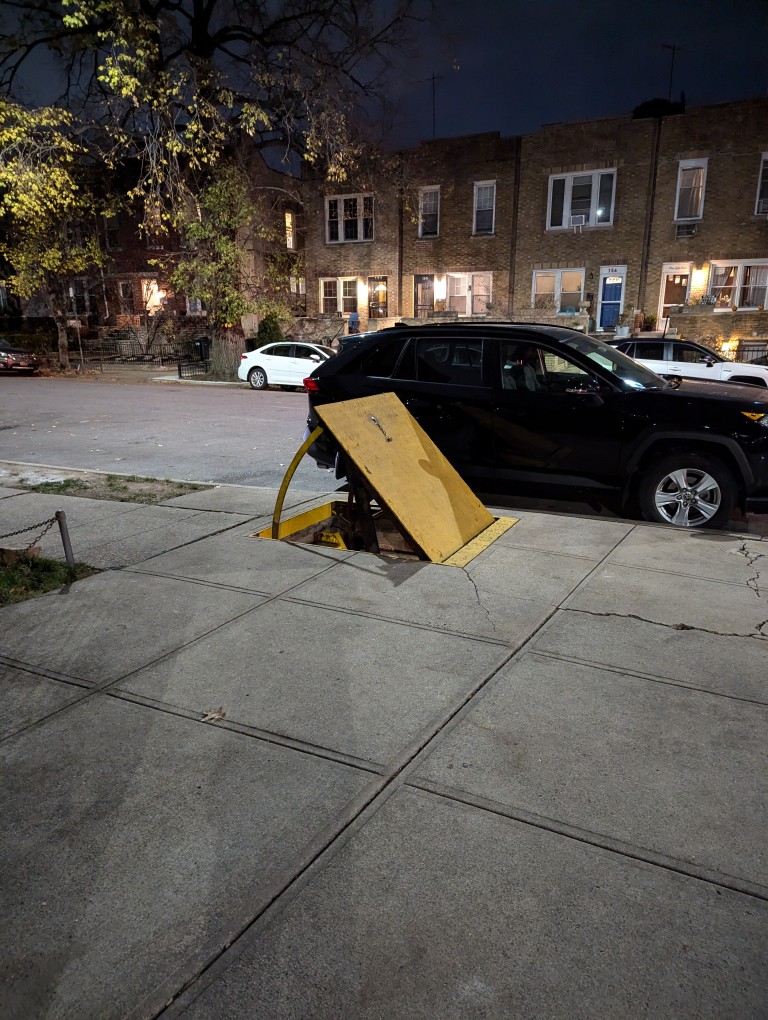
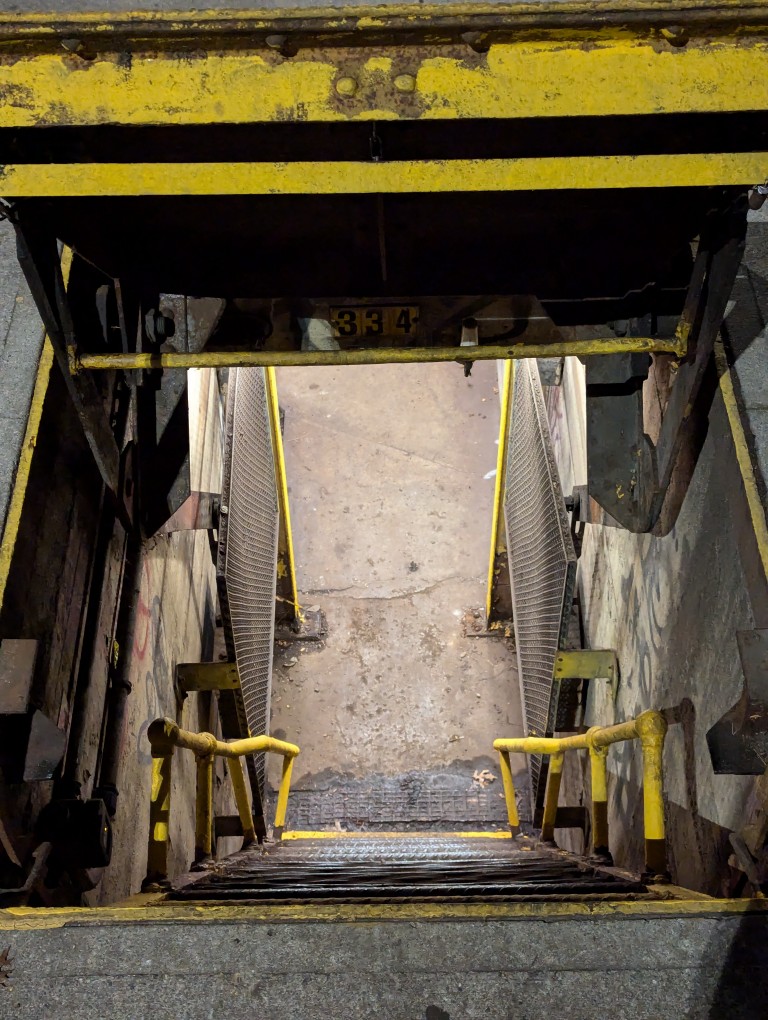
    a metal cover is held open at about 45 degrees allowing access to a passageway built into the sidewalk going underground

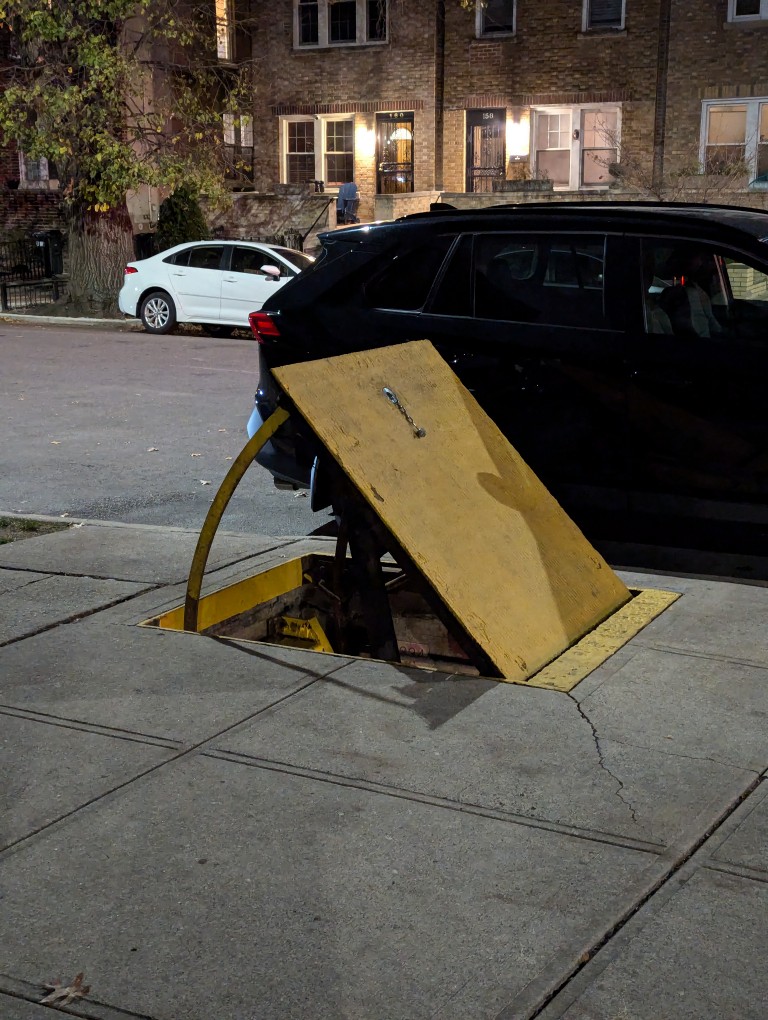
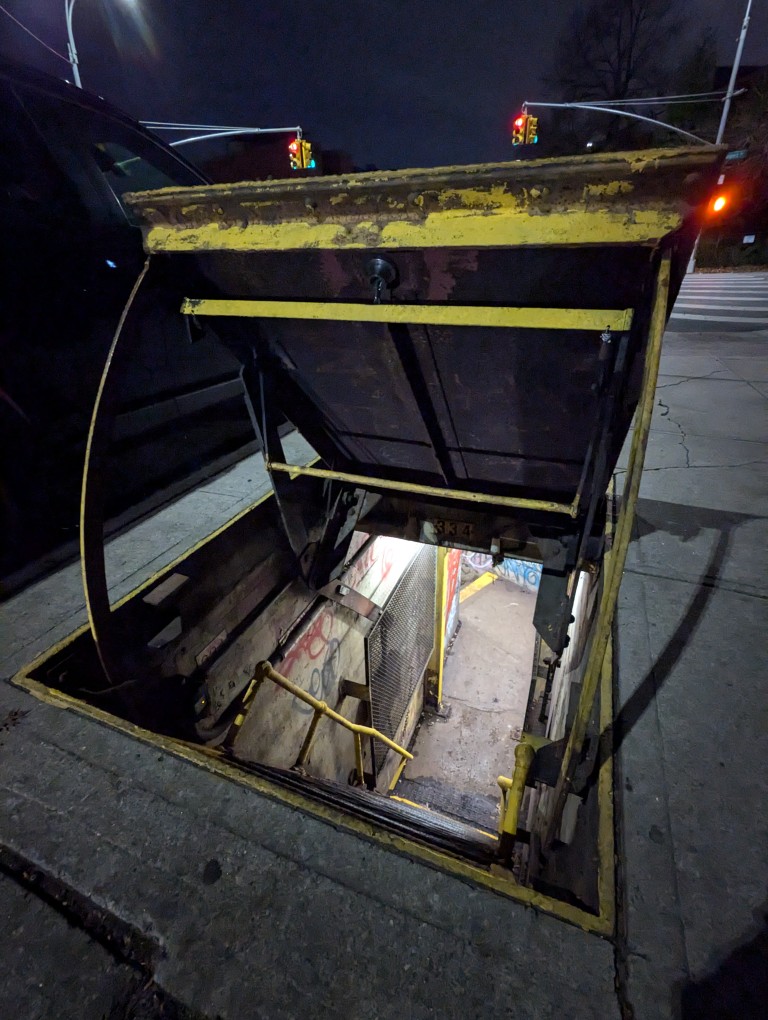
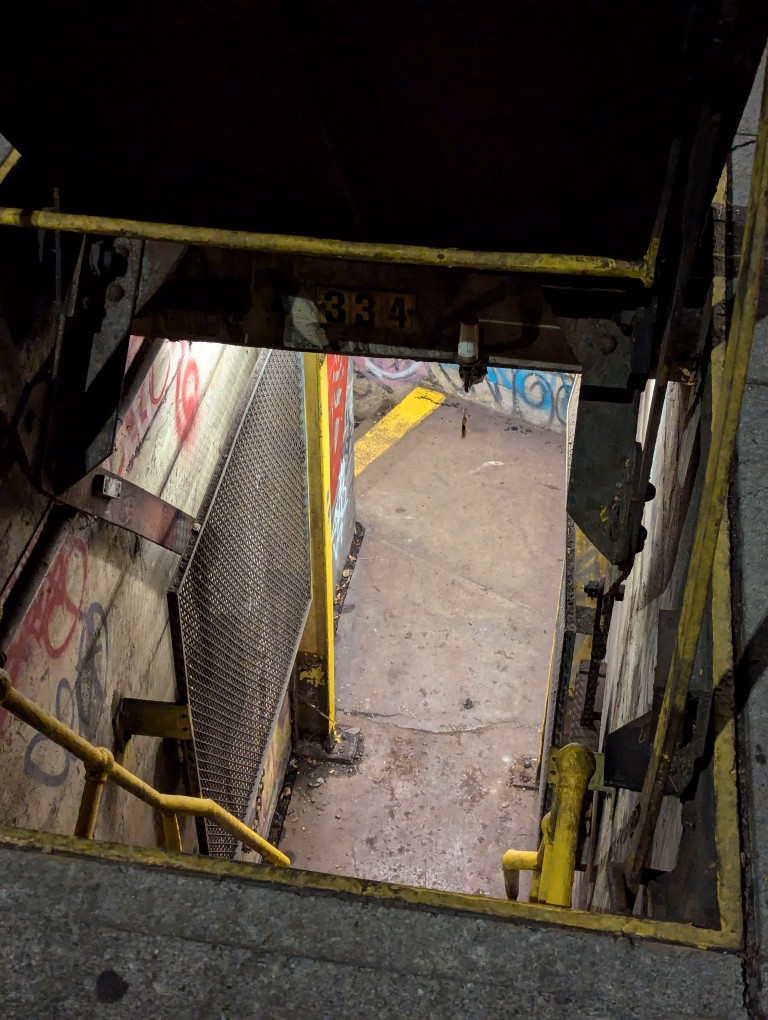
    At the corner of Prospect Avenue and Terrace Place in Park Slope, Brooklyn last December, Y and I saw this passageway opened to an underground passage way. I didn’t look closely at the raised metal cover, so I’m not sure if it was ConEdison, MTA, or another utility. No workers were around, so they didn’t offer a clue either. Looking below inside, the walls of the passageway were covered with spray painted graffiti.

    closeup of a metal cover is held open at about 45 degrees allowing access to a passageway built into the sidewalk going underground
    peering into the passageway under the sidewalk and the steep metal steps going down about 10 feet
    peering into the passageway under the sidewalk and the steep metal steps going down about 10 feet
    peering into the passageway under the sidwalk and the steep metal steps going down about 10 feet
  • Remember to Ventilate Your Flameless Ration Heater When In an Enclosed Space

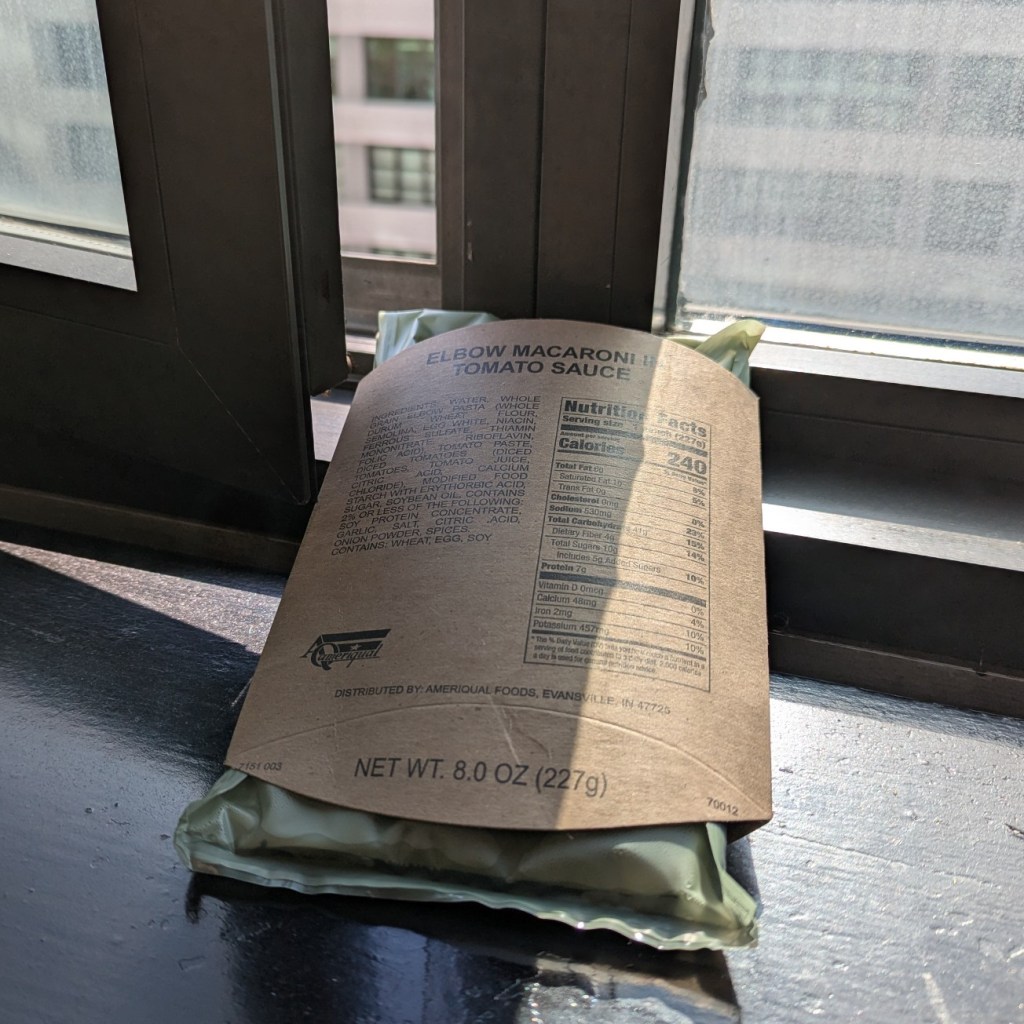
    water-activated mre heater warming an elbow macaroni in tomato sauce entree inclined on a window's sill and next to open window

    While its instructions state that “When ten or more heaters are used inside a vehicle or shelter, ensure the ventilation system is operating or a top hatch or door is open,” it gives me peace of mind to let my flameless ration heater (a water-activated magnesium, iron, and salt chemical heating device for MREs) do its thing on my supper next to a cracked window when I’m indoors as part of its reaction produces hydrogen. Also, it pays to remember that these things get HOT!

  • Video of Final Exam Review for My Spring 2025 Introduction to Language and Technology Class

    Last night, I recorded this final exam review for my Introduction to Language and Technology ENG1710 students. These are the slides that I’m using in the background. The following are the readings that my students and I discussed over the past 14 weeks that comprise the exam review:

    1. Lewis Carroll, “Jabberwocky”
    2. Ted Chiang, “The Truth of Fact, the Truth of Feeling”
    3. Victoria Fromkin, “What is Language?” from An Introduction to Language
    4. Stephen Jay Klein, “What is Technology?”
    5. Salikoko S. Mufwene, “Language as Technology: Some Questions That Evolutionary Linguistics Should Address”
    6. Walter J. Ong, “Writing is a Technology That Restructures Thought,” in The Written Word: Literacy in Transition,
    7. Bruce Mazlish, “The Fourth Discontinuity”
    8. Jacques Derrida, “Linguistics and Grammatology,” translated by Gayatri Chakravorty Spivak
    9. Donna Haraway, “A Cyborg Manifesto”
    10. N. Katherine Hayles, How We Became Posthuman, Chapter 1: “Toward Embodied Virtuality”
    11. Marshall McLuhan, Understanding Media: The Extensions of Man, Chapter 1: “The Medium is the Message”
    12. Friedrich Kittler, “Gramophone Film Typewriter”
    13. J. David Bolter and Richard A. Grusin, “Remediation”
    14. Lisa Gitelman, Always Already New, “Introduction”
    15. Fred Turner, “Where the Counterculture Met the New Economy: The WELL and the Origins of Virtual Community”
    16. Lev Manovich, Language of New Media, Chapter 1: What is New Media?”
    17. Alexander Galloway, “What is New Media? Ten Years After The Language of New Media”
    18. Laurie McNeill and John David Zuern, “Online Lives 2.0: Introduction”
    19. Anil Dash, “The Lost Infrastructure of Social Media”
    20. David Nofre, Mark Priestley, and Gerald Alberts, “When Technology Became Language: The Origins of the Linguistic Conception of Computer Programming, 1950-1960”
    21. Marie Hicks, Introduction to Programmed Inequality: How Britain Discarded Women Technologists and Lost Its Edge in Computing
    22. Jacques Derrida, “Signature Event Context”
    23. William Hart-Davidson, “On Writing, Technical Communication and Information Technology: The Core Competencies of Technical Communication”
    24. Dan Milmo, Seán Clarke, and Garry Blight, “How AI Chatbots Like ChatGPT or Bard Work—Visual Explainer”
    25. Alan F. Blackwell, “Are You Paying Attention?” from Moral Codes
    26. Lorena O’Neil, “These Women Warned of AI’s Dangers and Risks Long Before ChatGPT”
    27. Maria Christoforaki and Oya Beyan, “AI Ethics—A Bird’s Eye View”