Category: Video Games

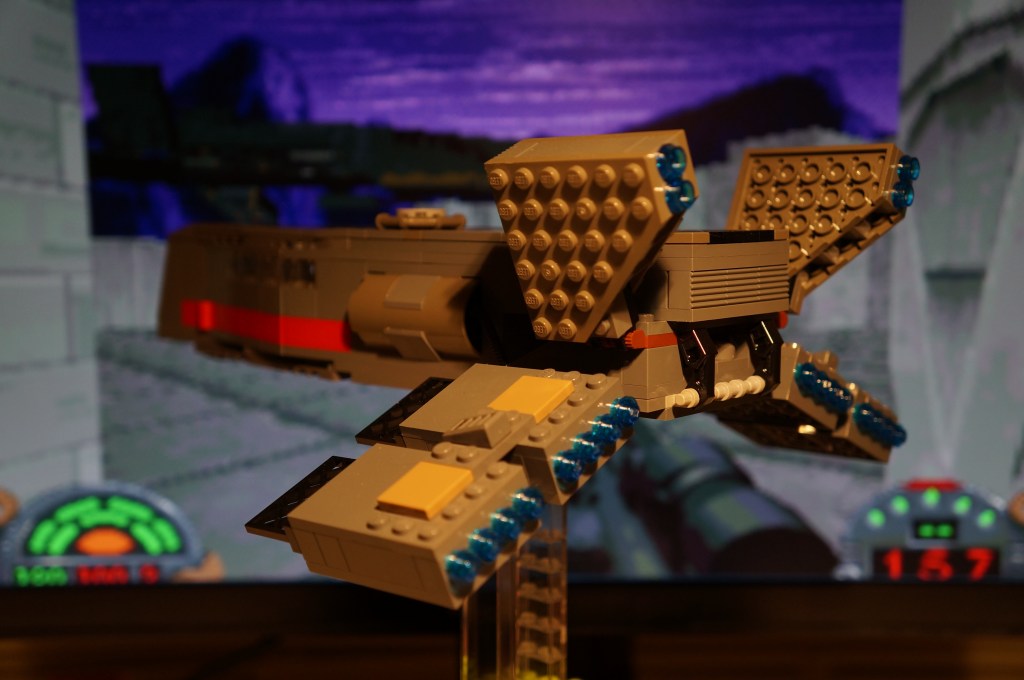
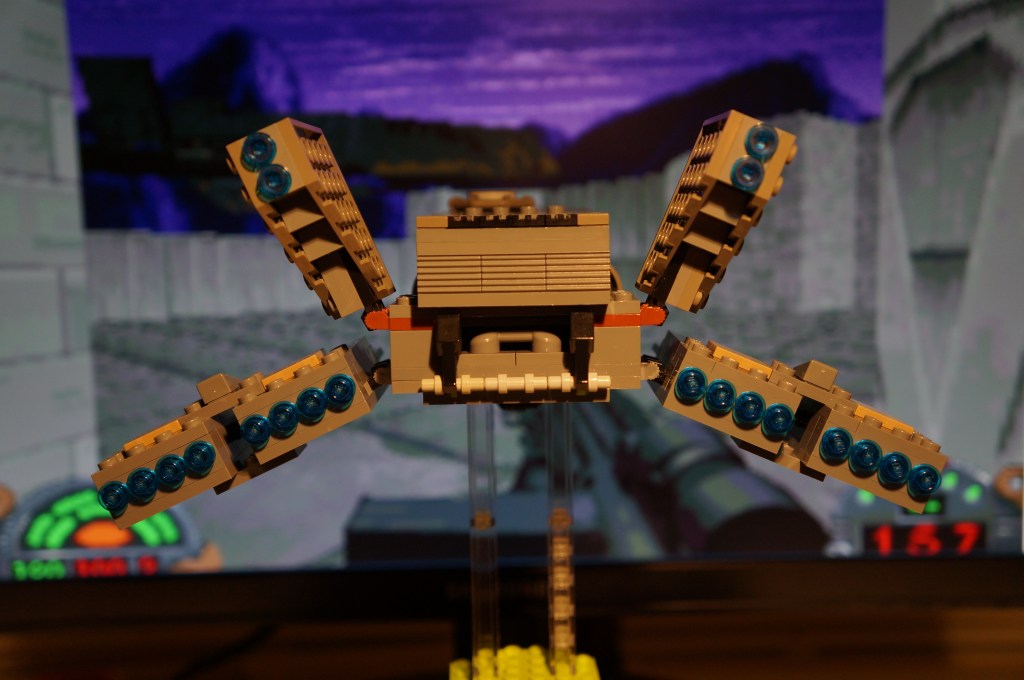
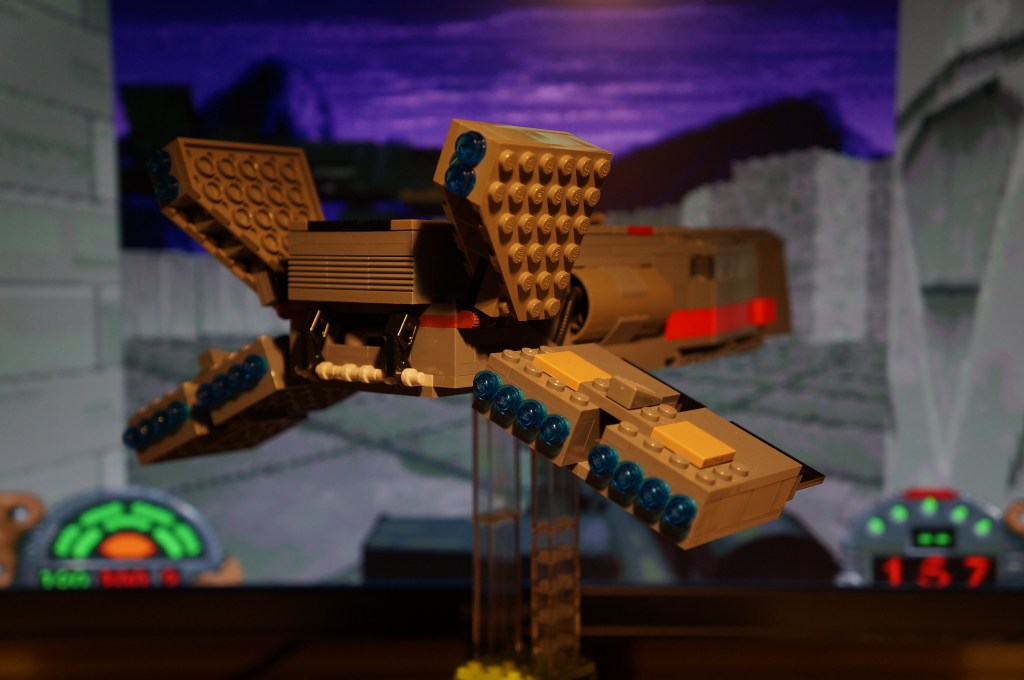
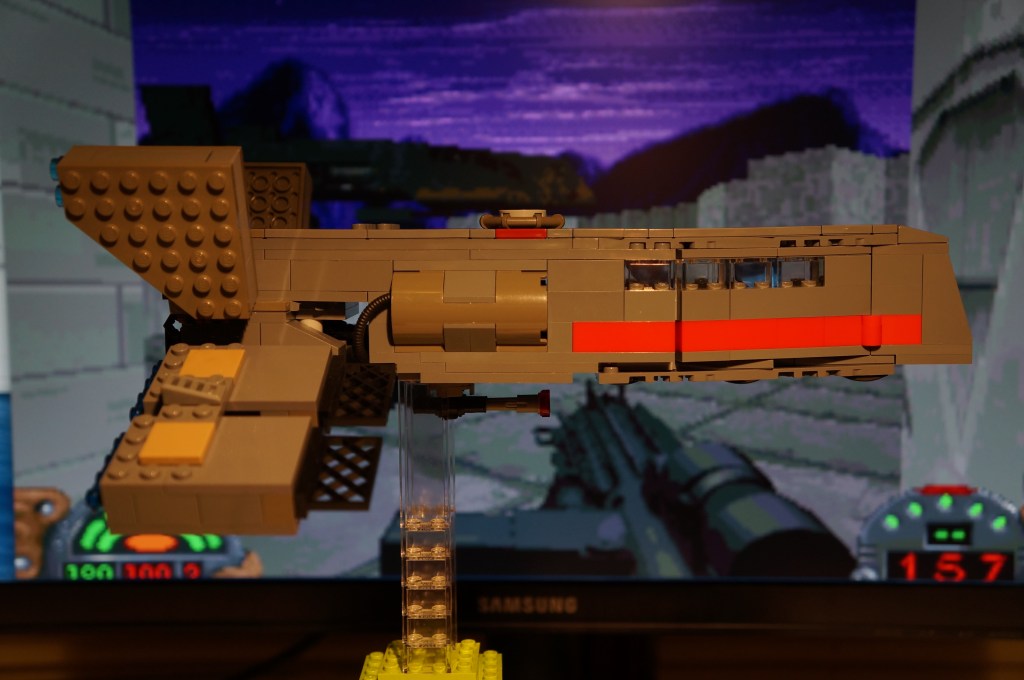
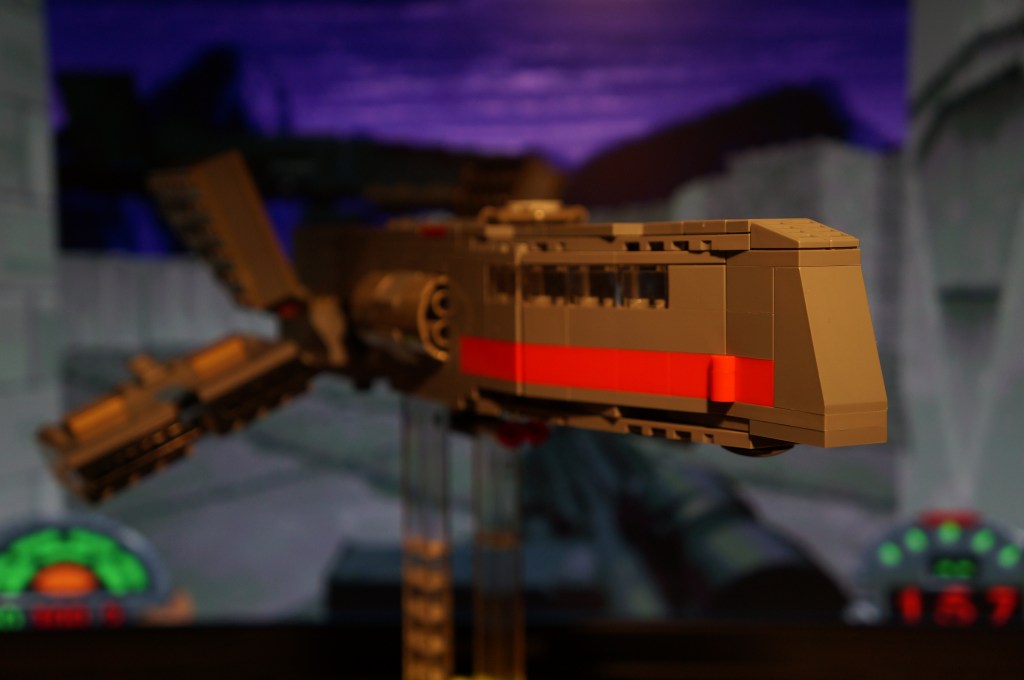
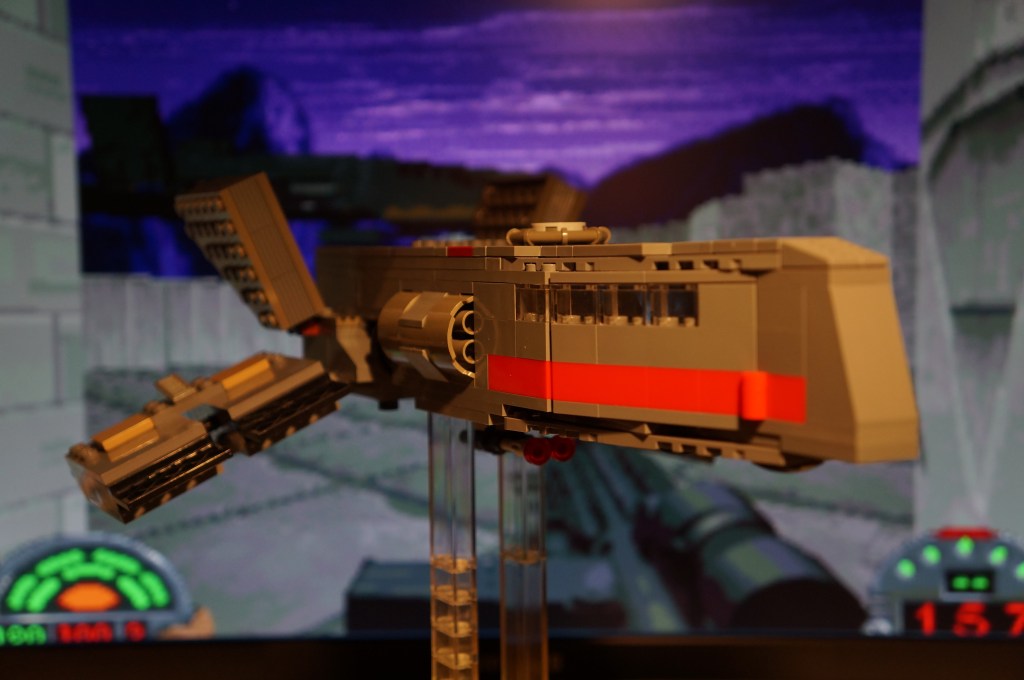
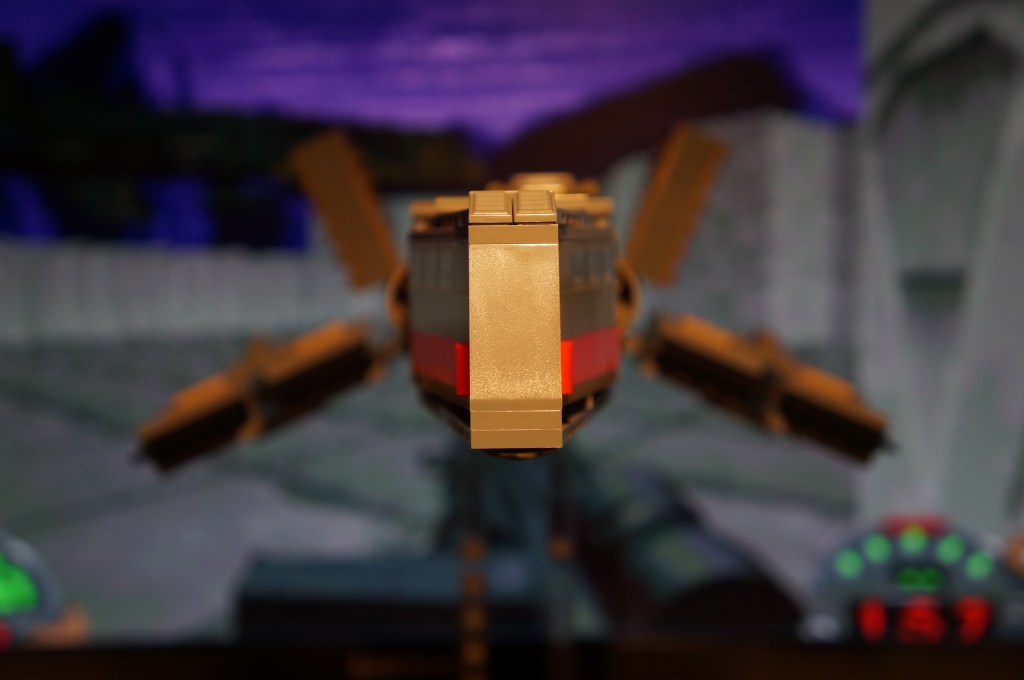
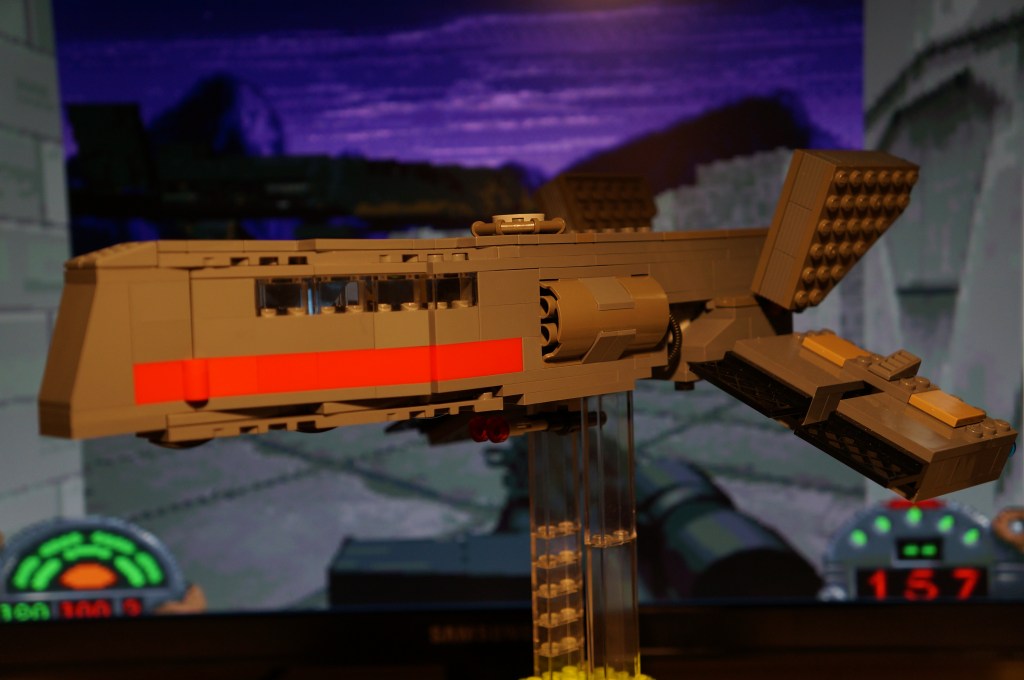
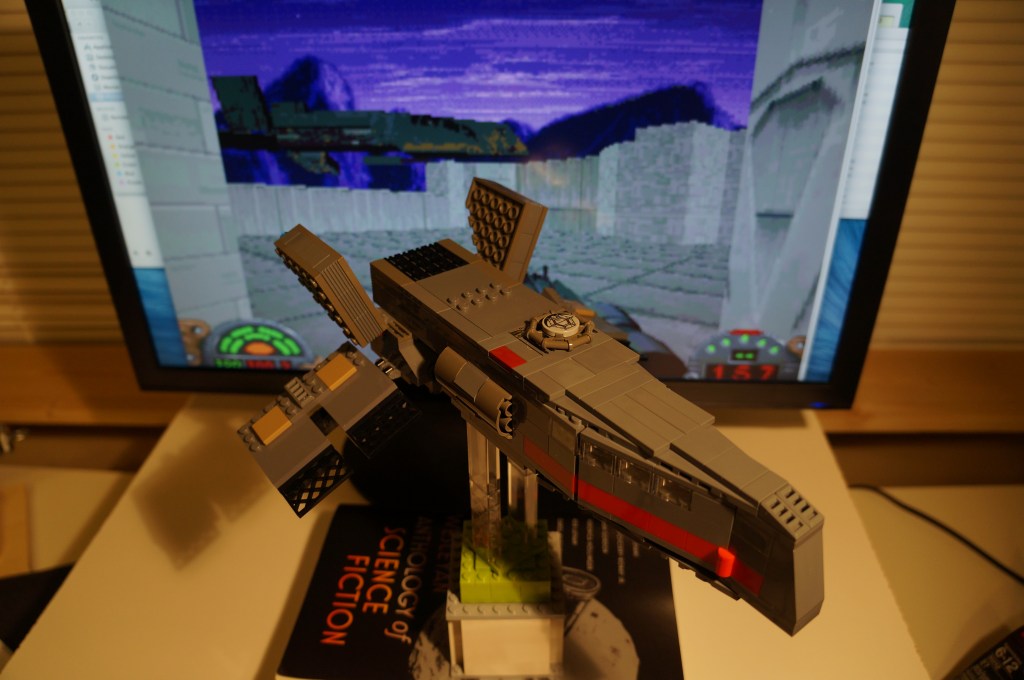
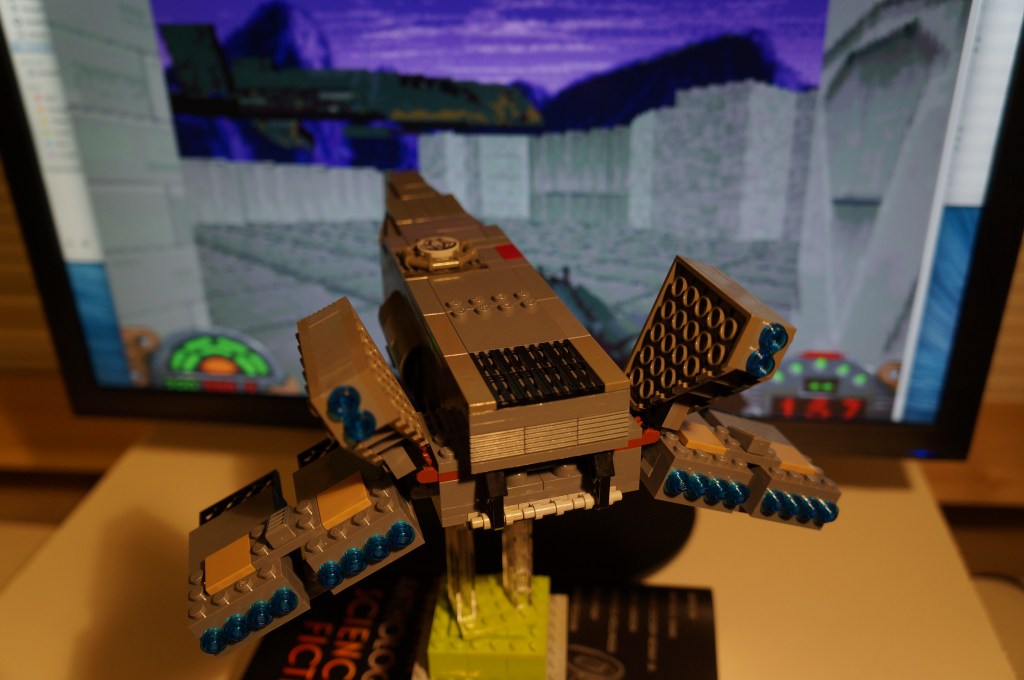
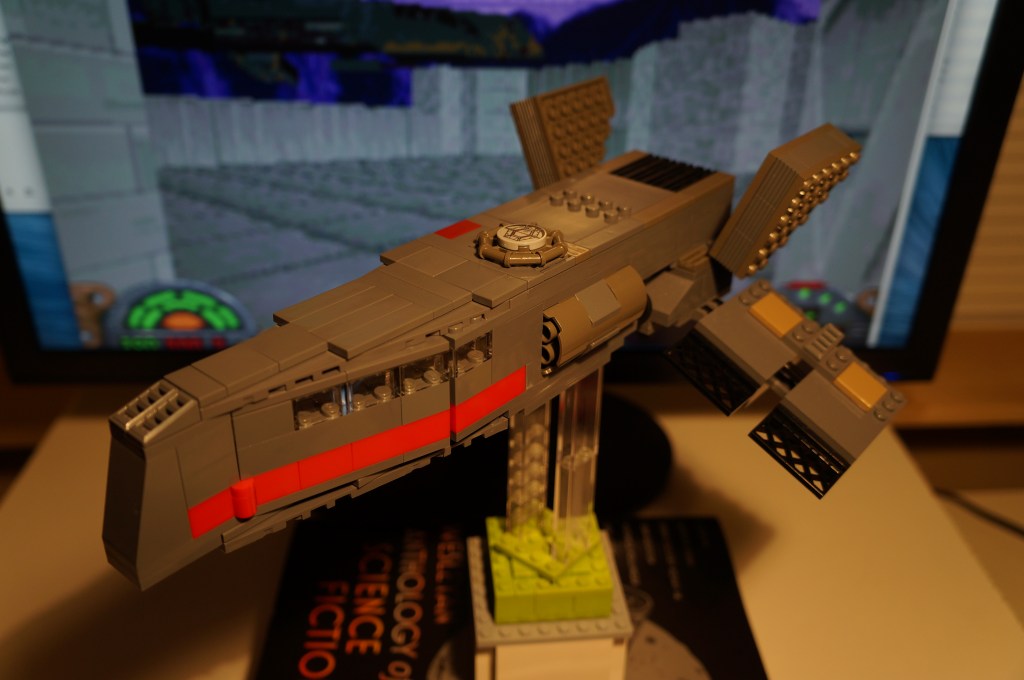
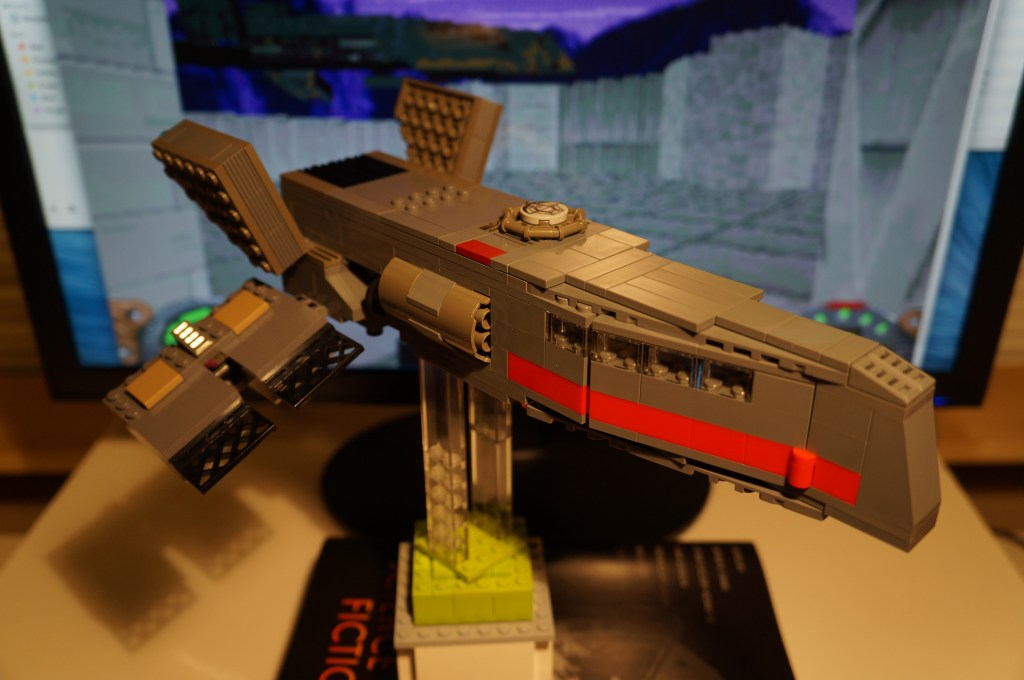
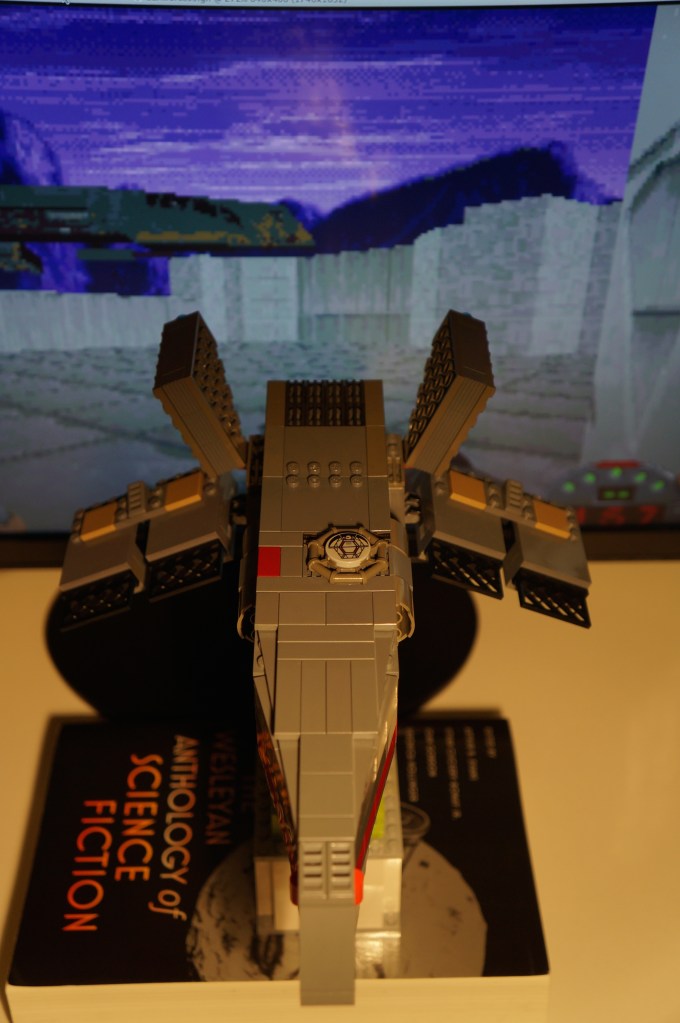
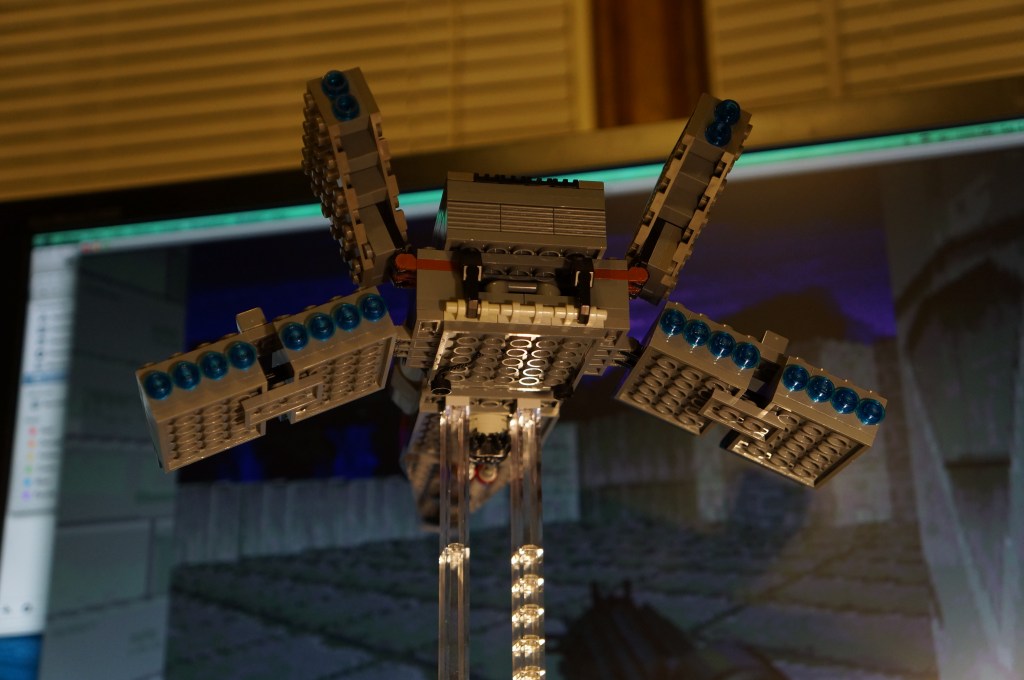
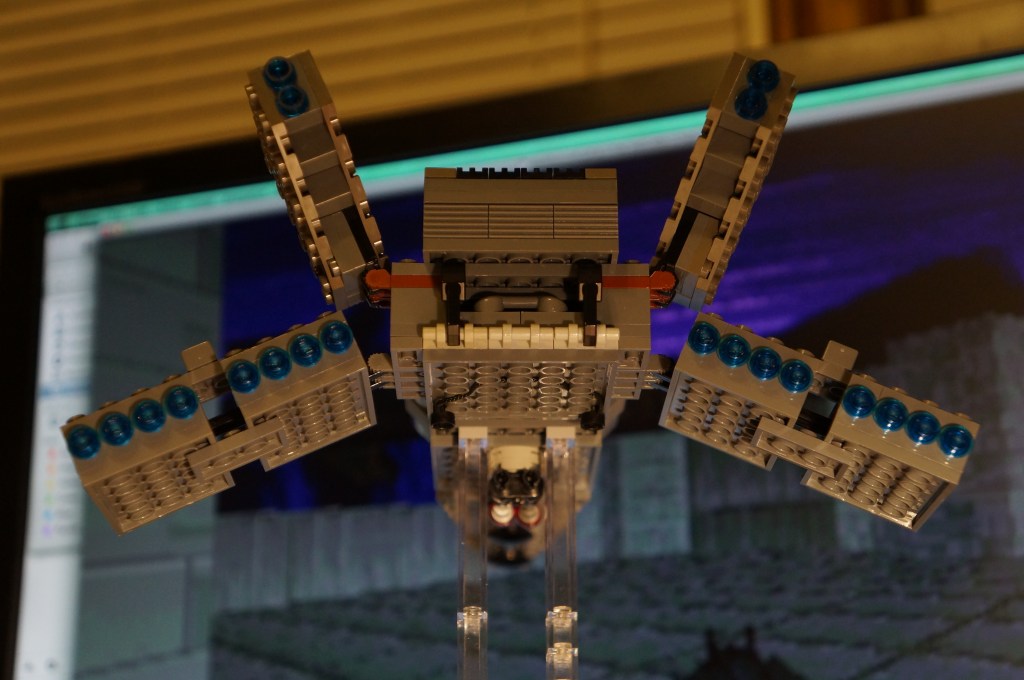
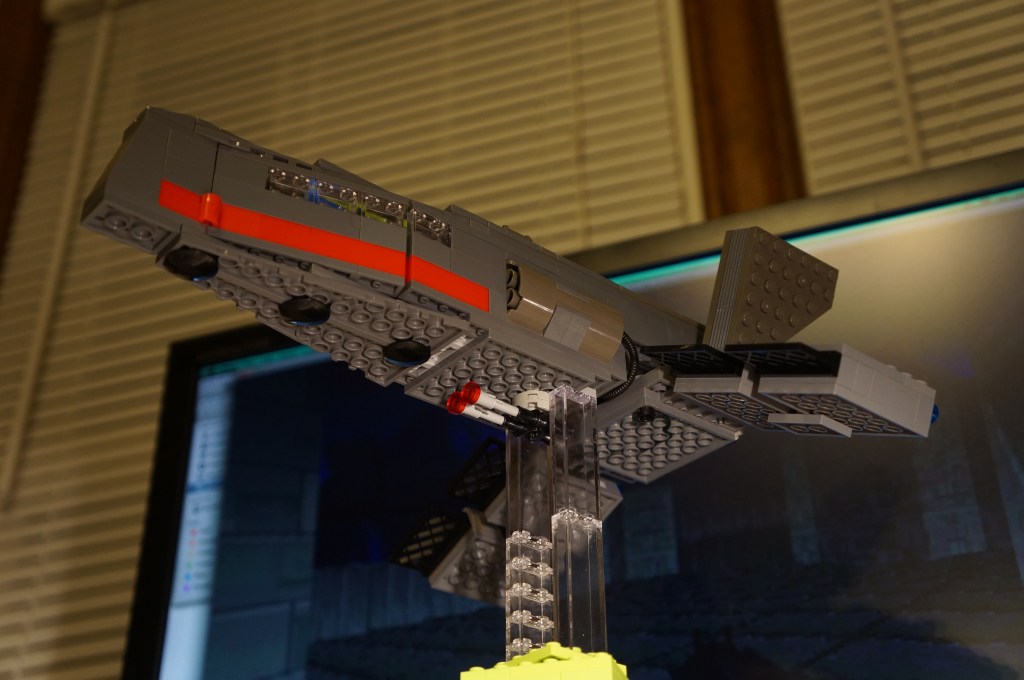
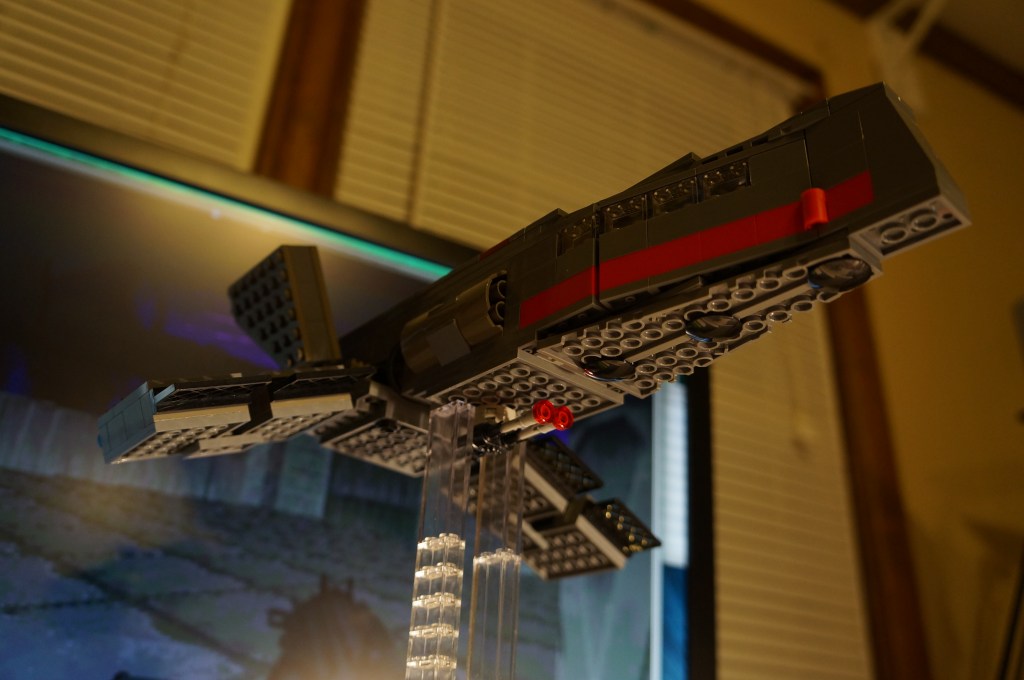
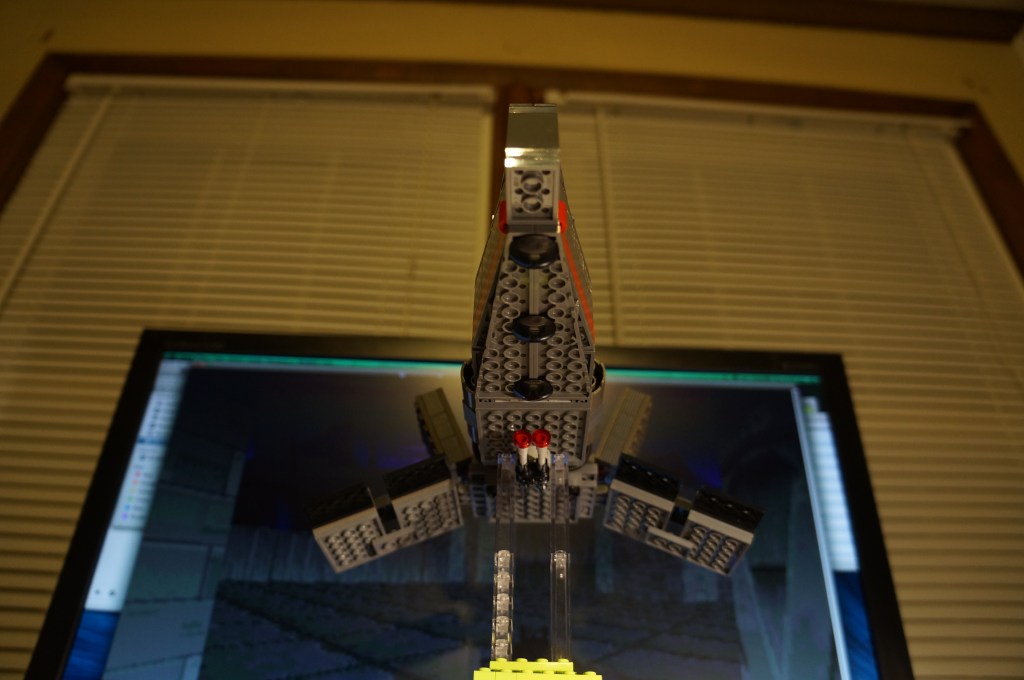
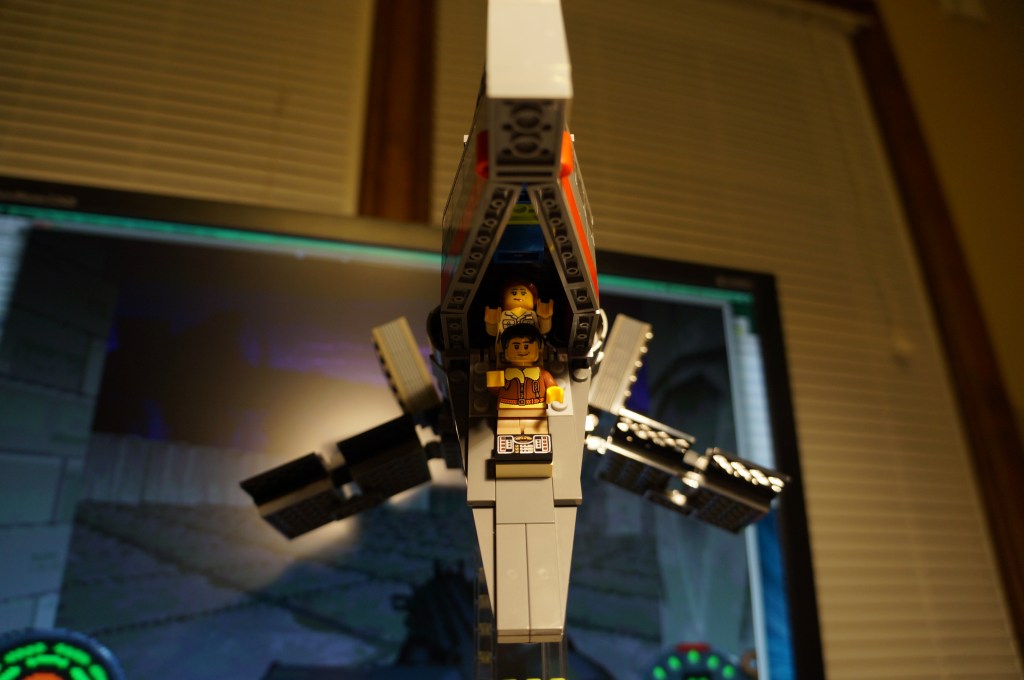
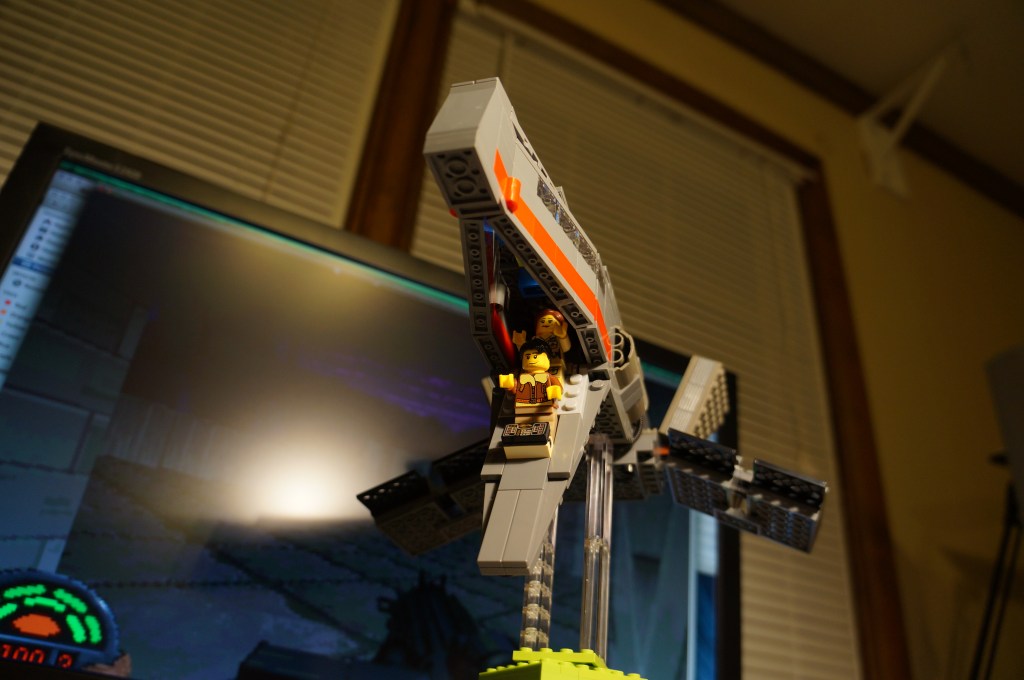
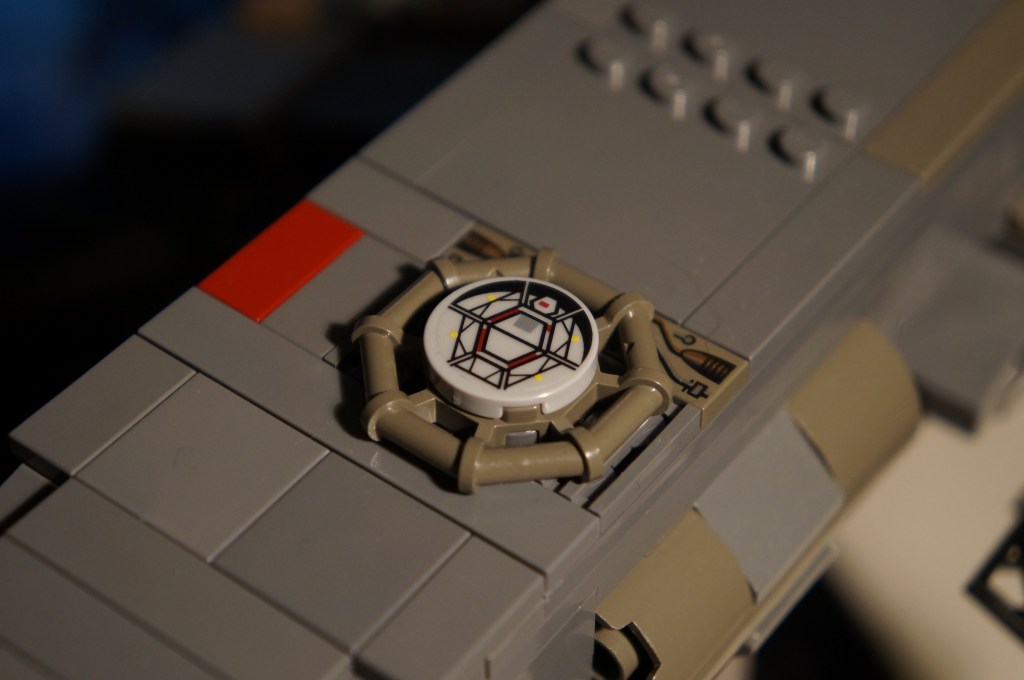
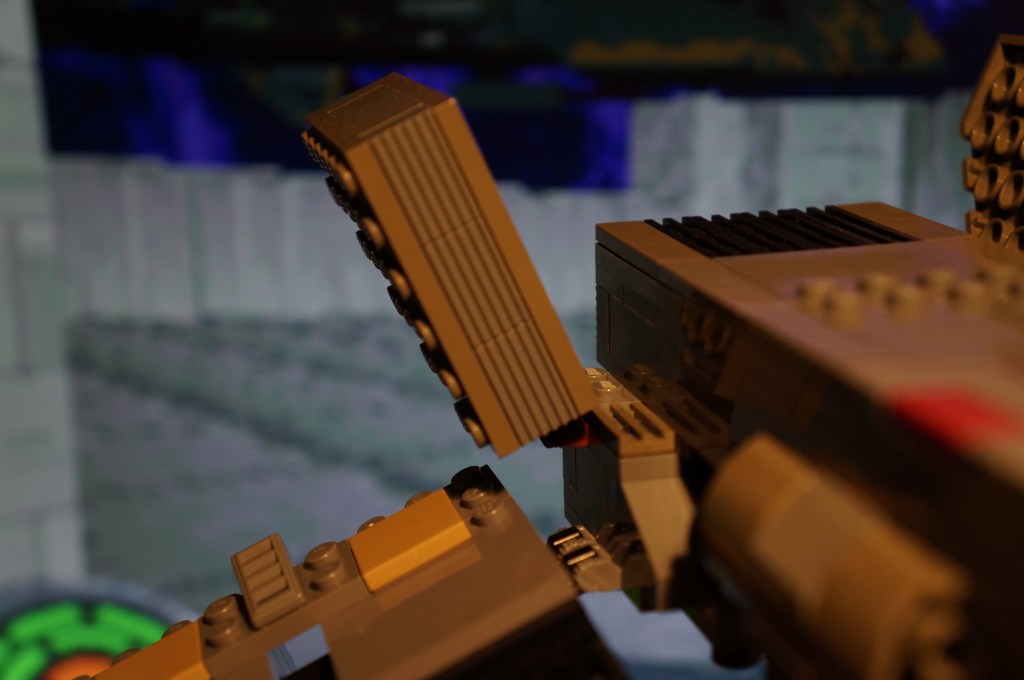
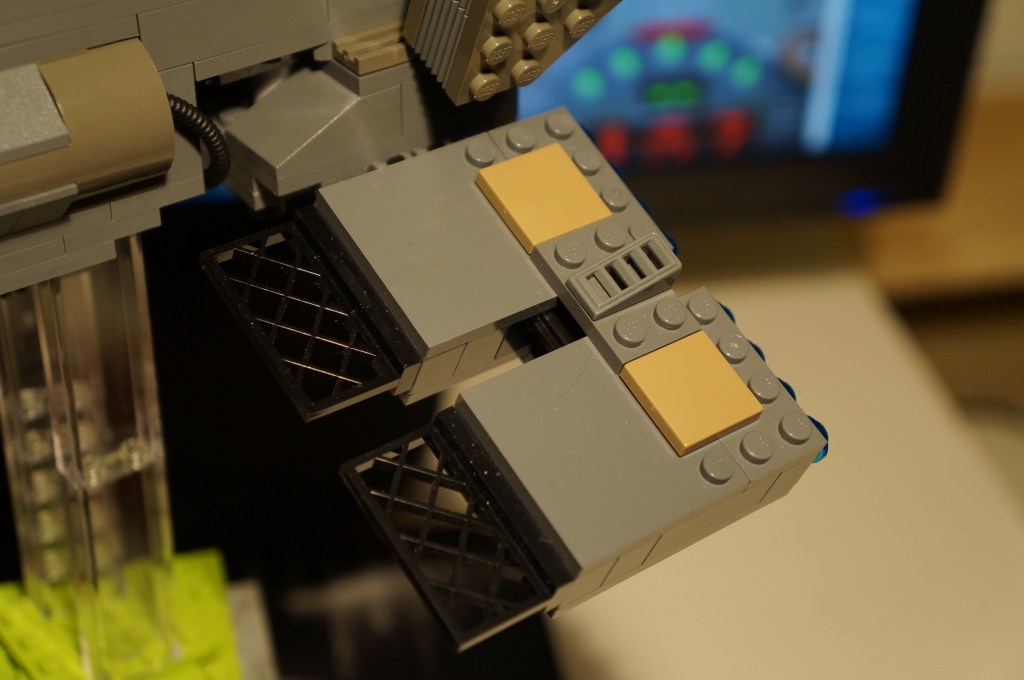
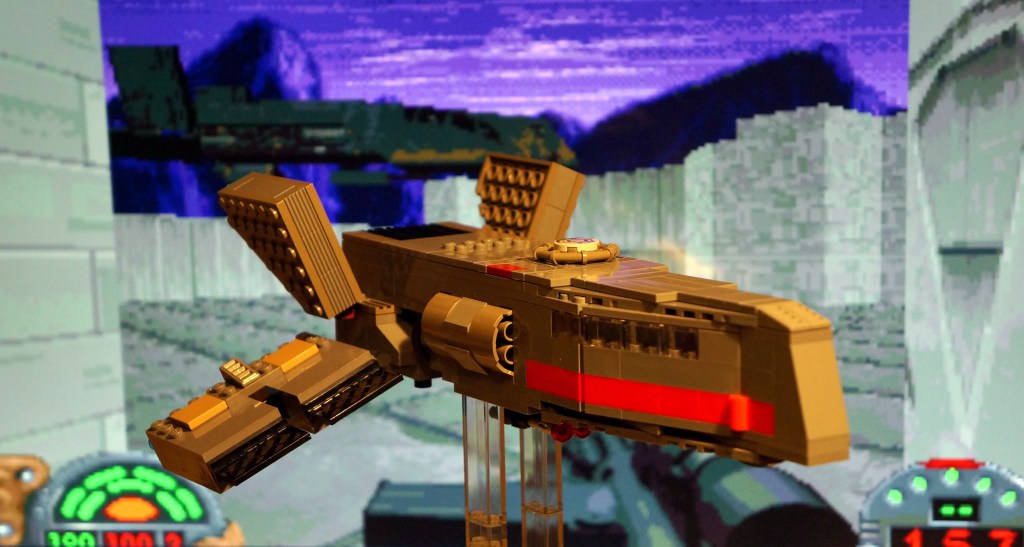
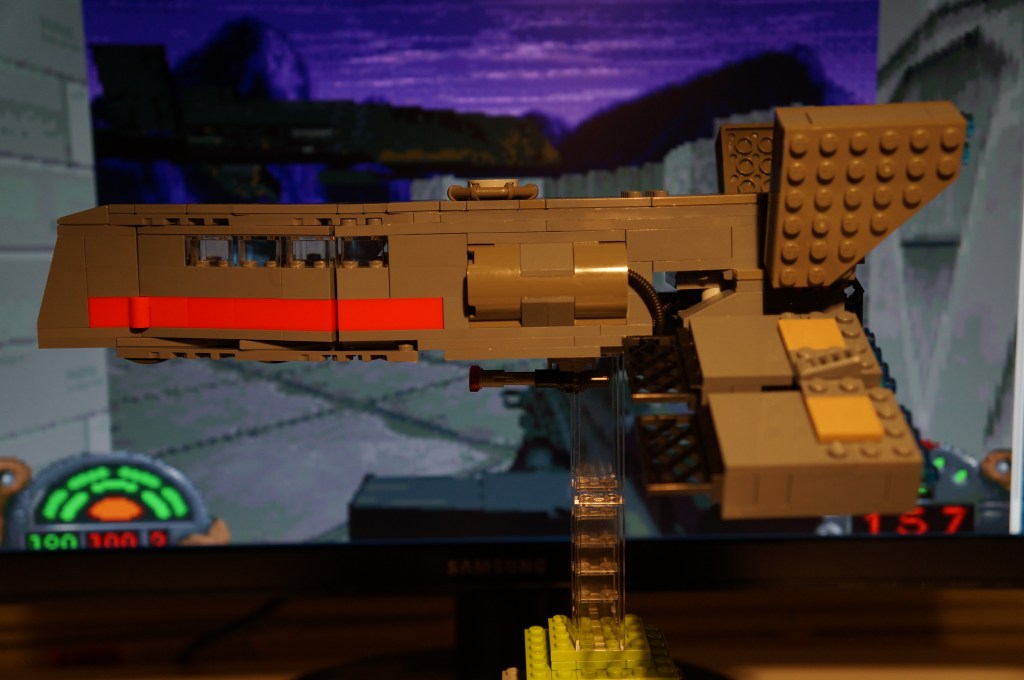
  • Star Wars LEGO MOC of Kyle Katarn’s Moldy Crow HWK-290 Light Freighter from Dark Forces

    Moldy Crow LEGO MOC in front of Dark Forces video game screen.

    One of my favorite mid-1990s video games is Star Wars: Dark Forces for PC. In the game, you play as Kyle Katarn, a mercenary employed by the Rebel Alliance, who stumbles on the Dark Trooper project through one of his missions (none of Dark Forces is considered canon, but the Dark Troopers were brought into canon via the second season of The Mandalorian). I played Dark Forces often on my 486DX2/66MHz machine, but I was unable to beat it back then (the video game Force is weak in this one). Thanks to DOSBox, I finally beat it about 25 years after I first played it!

    The Star Wars universe created by George Lucas is, like his earlier film American Graffiti (1973), about motion, movement, travel, and vehicles. The importance of movement in Star Wars is what elevates vehicles like Han Solo’s Millennium Falcon to be a character in their own right. The same is true for Katarn’s HWK-290 light freighter named The Moldy Crow. I liked its angular, bird-like appearance. It reminded me also of He-Man’s Talon Fighter from 1983’s Point Dread and Talon Fighter playset. The image of the Moldy Crow stuck with me, and when I was building with LEGO in Atlanta in 2014, I thought of a way to capture the Crow’s design in a LEGO MOC (my own creation).

    Rotational Side Views

    Top Views

    Bottom Views

    Crew Compartment

    Details

    Reflection

    Unfortunately, I sold my LEGO Moldy Crow on eBay before Y and I moved to Brooklyn (along with a boatload of other LEGOs). I wonder if the buyer still has it or modified it in some way.

    A lot of the bricks that I used in the build were older style dark grey, which I don’t have many of any more. I would like to take another stab at The Moldy Crow with my newer bricks and use techniques that I’ve learned over the years since then. Another project added to an already long list!

  • “It’s All Going According to Plan:” Deleting My EA Origin Account After Frustration with Star Wars: Battlefront II

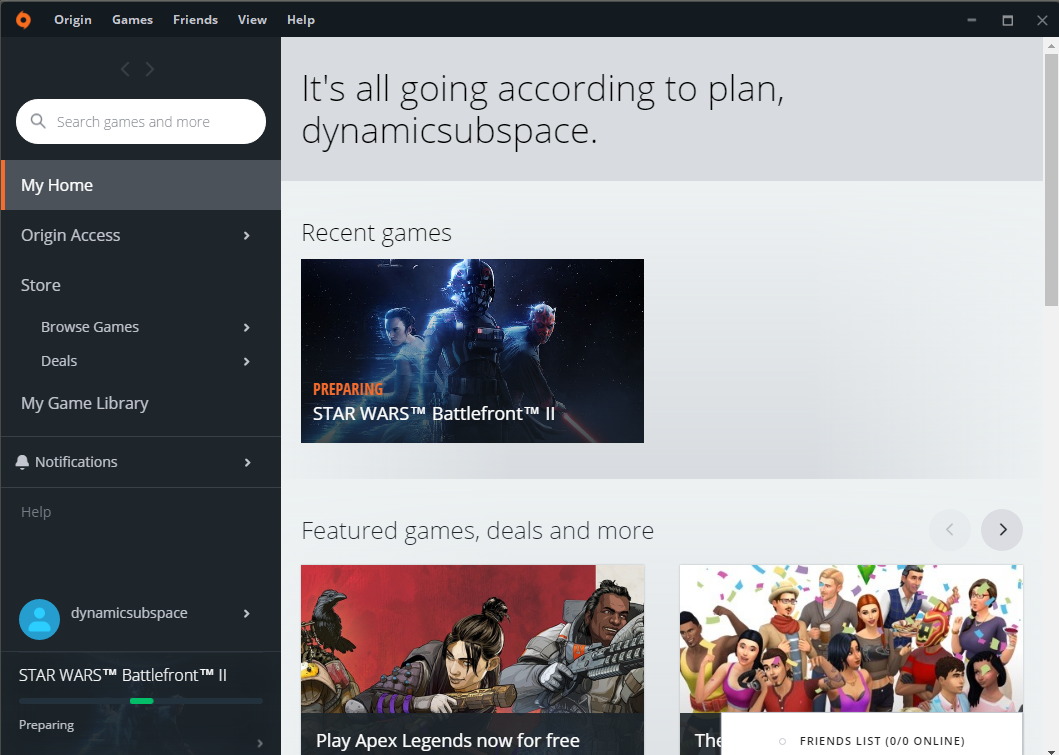
    ea origin all going to plan.png

    Yesterday, I deleted my EA Origin account, because I was fed up with how things were “going according to plan.” EA’s and other forced online game portals plan seems to be two fold: 1) require players to login to a service to play a local-instance, single-player video game, and 2) waste as much time and bandwidth resources of players as possible in the function of updating the front end portal and the games accessed via the portal by denying users the choice to update if and when they choose to do so.

    The straw that broke the camel’s back for me was the above message from EA–“it’s all going according to plan” and the unending “preparing” to download a very large, required update for Star Wars: Battlefront II.

    Finding a few free minutes before bed, I wanted to fly the Millennium Falcon through the wreckage of blasted cruisers and obliterate as many TIE Fighters as possible. I play against computer-controlled adversaries. I don’t play against other players over the Internet. Everything regarding my game play experience takes place locally on my PC.

    Nevertheless, EA requires me to login to Origin before playing Star Wars: Battlefront II. Before logging in, Origin required a software update. I did this. Since I hadn’t logged in for a few months, I had forgotten my password. I had to reset it. I logged in. Then, Origin required a large update to Star Wars: Battlefront II before I could play the game. I waited. I waited some more. I only wanted to play the game for about 10 minutes before bed time. Now, I had invested about 20 minutes on updating software and resetting passwords.

    While it was “preparing to update” as seen above, I began researching how to delete my EA Origin account. I discovered that they make this as difficult as possible. You have to chat with a representative instead of clicking a link after logging into your account. I began doing this while still Origin was still “preparing.” The representative, who was nice enough, followed his script to try to dissuade me from deleting my account and instead deactivate it. I persisted with deletion and after another 10 minutes, I was told that it would take some additional time to delete my account but I didn’t need to stay on the chat while this was done.

    Finally, the representative asked me if I would like to share why I wanted to leave EA Origin. I told him this:

    I simply don’t like having to login to a service to play a game–especially when logging in might involve downloading gigabytes of installation updates. I understand why EA and other game publishers do this, but I don’t want to have to do this. I should be able to launch the game that I want to play and just play it. So, I wanted to delete my account and give up on EA Origin and Star Wars Battlefront II. I’ll seek out those games that let me play them on my terms.

    I am vociferously against the shift to enforced online-only gaming for games that have a single-player mode. Games should be able to be enjoyed locally without hindrance if there is a single-player mode built into the game as there is with Star Wars: Battlefront II.  Of course, I understand the need to login to a service when the game is enjoyed in multiplayer mode, but not all players opt for this kind of game play experience. Some of us enjoy playing the various single-player experiences within the game.

    I purchased the game when it was on sale, so I will consider the money that I spent on it already invested in the times that I was able to fly the Millennium Falcon through the blasted wrecks of space battles.

    However, I will never purchase another single-player option game from EA or any other video game publisher that doesn’t give me a modicum of respect to enjoy the game on my terms–no logging into online services (if I’m not playing against others online, I don’t need to login) and no required updates (I should be able to choose how and when I update the software on my computer).

    I encourage others to avoid these games and seek out those made by publishers who respect players who value single-player game experiences.

    As a final note, I was saddened to hear that Disney CEO Bob Iger signaled the company’s happiness with EA’s work with the licensed Star Wars intellectual property, even after the debacles with the launch of Star Wars: Battlefront II and my own frustrations with the game. I wish that Disney would partner with a company that puts customers/players first–both in terms of game play experiences and respect of the player’s approach to gaming and software maintenance.

  • An Entreaty to Gamergate: Giving Ourselves Permission to Change for an Inclusive Video Game Culture

    Originally, I wrote a draft of this essay last year for a special roundtable on important issues in “play and competition” for the journal NANO: New American Notes Online. However, I wanted to send these thoughts into the world as soon as possible—especially in light of tonight’s Law and Order: Special Victims Unit episode based on the experiences of Gamergate victims (NBC, Wednesday, Feb. 9, 9:00PM). I will write an update to the essay below as part of an upcoming Nano roundtable in a future issue of that journal.

    If you are not familiar with Gamergate or how it has developed over time, you can catch up with these reports: Gawker; The New York Times here, here, and here; The Guardian; Newsweek; The Washington Post; and ArsTechnica (lots of coverage).

    An Entreaty to Gamergate: Giving Ourselves Permission to Change for an Inclusive Video Game Culture

    Jason W. Ellis

    I recently visited Adam Yauch Park near where I live in Brooklyn, New York, because I sought inspiration for this essay about inclusion and video game culture. As you might know, Yauch, whose stage name was M.C.A. and who was a founding member of the hip-hop group The Beastie Boys, passed away from cancer in 2012. I felt that visiting this park in a corner of Brooklyn where I now call home would help ground my thinking about the way exclusionary actions and beliefs threaten and continue to threaten video game culture as a community for anyone who likes to play games, talk about games, and build games. What drew me to this park is that fact that M.C.A. and The Beastie Boys represent something that I feel to be very important to the human condition: the ability to change over time, admit to past mistakes, and make amends for those transgressions. As you might know, The Beastie Boy’s infused sexist attitudes (e.g., “Girls” and other lyrics—notably on songs from their first album) and homophobic prejudices in a proposed album title (Licensed to Ill was originally titled Don’t Be a F****t). As they grew older and listened to challenges from their fans and critics, they reflected on their past actions and changed their attitudes and behavior for the better—to be more inclusive and respectful to others by changing lyrics during performances (Tyler-Ameen par. 10) and writing socially and politically progressive songs on their later albums (e.g., “Song for the Man” on Hello Nasty, and “It Takes Time to Build,” “Right Right Now Now” on their album To the 5 Boroughs, and “In a World Gone Mad,” released online as an mp3 download).

    The Beastie Boy’s shift toward inclusivity and away from the exclusivity of their early career provides a useful guide for thinking about one of the most pressing issues in video game culture made paramount by the largely misogynistic Gamergate movement. In particular, two songs come to mind where M.C.A. uses his low, course voice—the most mature voice of the trio—to establish The Beastie Boy’s program for inclusivity. In “Sure Shot” from 1994’s Ill Communication, M.C.A. sings, “I want to say a little something that’s long overdue/The disrespect to women has got to be through/To all the mothers and sisters and wives and friends/I want to over my love and respect to the end.” These lines promote the idea that empathy, understanding, and welcoming constitute respect for others. Related to this is an idea that comes from “It Takes Time to Build” from 2004’s To the 5 Boroughs, where M.C.A. lays it down: “Waiting like a batter who is on deck/When it’s time to wreck shop then shop I’ll wreck/So let’s calibrate and check our specs/We need a little shift on over to the left.” While M.C.A. explicitly takes issue with Bush-II era politics, his entreaty for a shift to the left—of opening minds instead of closing them, of listening instead of speaking, of empathizing instead of victim blaming—is something that we must continue to strive toward if we are to move into the future constructively rather than destructively.

    The ongoing actions taken by misogynistic Gamergate supporters and instigators against feminist voices—voices calling for equality and righting cultural stereotypes, prejudices, and attitudes—in the video game community demonstrate the pressing need of inclusivity. I define inclusivity to be the unconditional acceptance of everyone as members of a community of game developers, game players, and game fans. In all of these overlapping groups, inclusivity particularly applies to the unconditional acceptance of historically marginalized groups from gaming culture, including women, LGBTQ persons, people of color, and persons with disabilities. To illustrate the marginalization as evident in the production and consumption of games, consider that while 48% of game players are female (ESA 3), only 22% of game developers are female (IGDA, Developers 9). Or, as Patrick Yacco reports from an interview with game designer and critic Mattie Brice: “While there is little data regarding LGBT characters and players, Brice believes that ‘most developers find it too much of a risk to include queer people in games, even when it comes to avatars with little to no narrative arc in the games’ stories,’ leading to a paucity of queer characters. She adds, ‘The majority of queer people are stereotypes many people are tired of seeing’” (Yacco par. 8). Or, at 79%, the overwhelming majority of game developers are white (ESA 9), and at 75.1%, the overwhelming majority of video game characters are white (Williams et. al. 825). This is despite the fact that some evidence shows that African-American and Latino gamers spend more time playing (Packwood par. 8), are more likely to purchase games more frequently than their white counterparts (Good par. 3), and have a greater percentage of homes with video games than their white counterparts (Nielsen 5). Furthermore, Williams et. al. conclude their study of gender and race that, “Nevertheless, the current study demonstrates that the world of game characters is highly unrepresentative of the actual population and even of game players. For developers, this is a missed opportunity. For players, it is a potential source of identity-based problems” (Williams et. al. 831). Or, the fact that the conclusion of the IGDA’s 2004 white paper on game accessibility begins with this paragraph acknowledging the need for political will to potentially overcome financial over ethical concerns: “It goes without saying that the efforts of game accessibility must have a realistic financial grounding, otherwise they risk not become implemented in mainstream games. What is important is: to achieve this we need to work on a political level” (IDGA, Accessibility 26). Yet, the report backpedals in the next paragraph and again asserts the financial calculus: “Efforts of individuals or small companies to create accessible games are important and interesting from many perspectives. However, to get mainstream games to be accessible to as many as possible we need first to resolve the financial issues, which are related to the time and effort accessibility development takes, and the increased number of sales you get by doing it” (IDGA, Accessibility 26). This sampling represents only a small part of the quantified data regarding marginalization in gaming culture. Reading online screeds, comments, and tweets reveals the semi-anonymous vitriol against inclusion of these groups. Listening to the lived experiences of these marginalized peoples and the challenges to building their own communities and attempting to enter exclusionary communities provides a deeper insight that these other sources cannot capture.

    Obviously, one person excluded from gaming culture might occupy one or more of these marginalized identities. Their exclusion from gamer culture takes the form of misogyny, homophobia, racism, religious intolerance, and an overwhelming lack of empathy, understanding, or even acknowledgement. Some exclusive practices are organized by anonymous mobs of ethically unhinged persons who threaten anyone, any idea, or any game seen as antagonistic or different than those games celebrating male power fantasies supported by violence.

    For example, Gamergate (or #gamergate on Twitter) continues to play out online and in real life (of course, both being lived experience). What began as false allegations by an ex-boyfriend against the award winning indie game developer of Depression Quest, Zoe Quinn, exploded into an unrelenting assault on women and their supporters dubbed by Gamergate supporters as “Social Justice Warriors.” Organizing on sites including 4Chan and Github, Gamergate supporters organized attacks against anyone seen as potentially upending, challenging, or critiquing male power fantasies in games or game fandom. Instead of recognizing the work of Quinn and others (such as developer of Revolution 60, Brianna Wu; editor-at-large of Gamasutra, Leigh Alexander; or founder of Feminist Frequency and creator of “Tropes vs. Women in Video Games” video series, Anita Sarkeesian) as adding to gaming culture, they were seen as threats to the status quo needing silencing or in the most extreme elimination. Continuing over the past several months (though, the threats extend further back), people have been doxed (having their private information released online), harassed in the worst possible ways, and threatened with assault, rape, and murder. Even more alarmingly, as of a few moments ago, even mass murder was leveled as a threat against Utah State University where Sarkeesian was scheduled to speak. She has since canceled, because the police declined to perform security checks due to Utah’s open-carry-gun laws, which understandably made Sarkeesian feel unsafe in an already threatening situation (Wingfield par. 2). As M.C.A. entreats us, “the disrespect to women has got to be through.”

    The disrespect and exclusion of women from game culture (space here does not permit me to further describe other examples such as the “fake geek girl”) is only one (albeit alarmingly so) component of the overall exclusion of Othered individuals from gaming culture. Exclusion leveled against women, LGBTQ folks, people of color, ethnic groups, and religious persons confront largely explicit exclusion from participating in games culture writ large. Stereotypes presented in message board visual memes, hate speech written and spoken, and exclusive cliques, teams, and guilds all serve to warn marginalized persons that they are unwelcomed participants in game culture.

    The other form that exclusion takes, of course, is implicit. On the one hand, these are the game design decisions that developers, publishers, or advertisers make (the tail wags the dog as surely in video games as in other spheres). They include choices such as: Who is the hero? Who is the villain? Who are non-playable characters (NPCs)? Where does the story take place? What level of control do players have in the visual appearance, gender, sexual orientation, race, etc. of their playable character? How central are these considerations to the development of the narrative and its interactive progression? When developers are overwhelming white and male (cite), they might not know from their privileged position how important considerations are for audience identification, engagement, and empowerment afforded by providing the possibility of identifying with in-game characters, nuanced and informed handling of cultures and identities as part of a game narrative, and supporting an inclusive and respectful community of gamers.

    Another implicit concern has to do with issues of accessibility and accommodation. To what extent are video games and video game platforms playable by persons with disabilities? To what extent are gamer communities receptive to the voices and needs of gamers with disabilities? Do message boards for game fan communities adhere to usability guidelines to enable everyone regardless of challenges to participate in this shared culture?

    These exclusions—explicit and implicit—are opportunities for us to confront and correct them in the work that we do together as faculty, students, and the public. Video games are an important part of our culture that we should bring into the classroom as new texts to experience, confront, question, and in a word, grok (meaning to understand completely and holistically within a larger historical and cultural context—see Robert Heinlein’s Stranger in a Strange Land). Together with our students, we can explore how games and game culture are a part of real life and lived experience. We can discover how we learn from video games and how we have lessons to offer to others about games as they currently exist and as they have yet to be made. We can critique how game culture as it has evolved to be exclusionary is not how it has always been or how it always will be. Simply helping our students understand that their choice to behave a certain way to others in game culture is a decision that they should make after having the tools and knowledge to make informed and ethical decisions will be an important shift, as M.C.A. puts it, “over to the left.”

    Deeply embedded in this challenge is an observation by the celebrated science fiction writer Philip K. Dick, who writes, “A human being without the proper empathy or feeling is the same as an android built so as to lack it, either by design or mistake. We mean, basically, someone who does not care about the fate that his fellow living creatures fall victim to; he stands detached, a spectator, acting out by his indifference John Donne’s theorem that ‘No man is an island,’ but giving the theorem a twist: That which is a mental and moral island is not a man” (Dick 211). For Dick, it is our capacity for empathy that makes us human and not machine-like androids. However, he cautions us that human beings can become android-like if we lack empathy and ignore the suffering of others. Social justice advocate Mark Bracher argues in his body of work that literature is one important avenue to teach students how to feel empathy for the suffering of others. In a recent essay, he asserts, “From the perspective of these and other philosophers [Sandra Bartky, Richard Rorty, Martha Nussbaum, and Robert Solomon], the question of how the study of literature might contribute to the production of social justice is thus not a question of how it can inculcate new values, provide new knowledge, or develop new analytical skills but of how it might help people overcome their indifference to, and instead experience compassion for, the billions of people who live in misery on our planet. If literary study could systematically help students overcome their indifference to the suffering that surrounds them and experience compassion for the sufferers, it would make a significant contribution to social justice” (Bracher 471). Likewise, I argue that video games provide an even more important cultural point of contact for these issues and for teaching students how to empathize, because 1) video game culture as it now stands is overwhelmingly exclusionary and provides many engaging teachable examples, 2) the interactive aspect of game play provides different kinds of characterological, narratological, and psychological engagements on the part of the player, and 3) video games are significant carriers of culture for an increasing number of people worldwide of all age groups.

    As part of our engagement with students playing video games, we need to help them reflect on what they do in video games. Of course, this is not a concern for all video games, but it is for the popular first-person shooter (FPS), real-time strategy (RTS), and other games brokering violence. In my previous work, using cosmopolitanism as a lens is one approach to rethinking and re-engaging a video game apparently meant to be something else. For example, World of Warcraft. “which is overtly about war, death, and defense of one’s own race and faction, carries an implicit cosmopolitanism hidden within the game’s mechanics (quests), in-game achievements (associated with travel and exploring the entire world of Azeroth), and the over-arching game narrative in which the two opposing factions, which are comprised of the only playable races, tentatively cooperate against the subversively encroaching Burning Legion. Furthermore, it is these cosmopolitan imbued in-game elements that may serve an educational and pedagogical function for game players” (Ellis 157). That is, helping students see others as human beings sharing the same world despite arbitrary borders. More to the point with Dick’s ideas is the need of teaching empathy. While video games are often registered as mindless fun, we need to work with our students to identify with and consider Othered characters in games so that they might feel something instead of tuning out their empathy for others and disabling their ethical compass. Through games, we can help our students be more human and less like androids. Similarly, we can work with the public using outreach in person or with new media outreach (Twitter, YouTube, blogging, etc.).

    As far as how digital play might play a role in restructuring how we structure learning, I am sure that it will in some way. More learning is taking place now via games and reward/achievement systems than ever before. More research is taking place on how the reward centers of the brain might be harnessed to improve learning outcomes, too. My concern about these developments is three fold. First, we need qualitative alongside quantitative assessment of student learning outcomes, and we need to be a part of the process that develops the implementation of these pedagogical methods instead of having them imposed from less qualitative disciplines. Second, we cannot ignore the material conditions of our students and their access to technology that supports studying digital play. Also, we cannot assume anything about our students’ backgrounds and experiences that inform their engagement with digital play. Third, we cannot ignore the material conditions of the faculty who design, implement, and improve gamification of learning environments. Faculty cannot be exploited to pursue the next buzz-worthy wave of digital pedagogy.

    Finally, I think the most important lesson for all involved—faculty, students, and the public—is that, like The Beastie Boys, we are not bound by our initial conditions. M.C.A. and his band mates Ad-Rock (Adam Horovitz) and Mike-D (Michael Diamond) became who they are through learning and experience. In 1986 when their first major album License to Ill was released, they were disrespectful towards women and LGBTQ people, but they became inclusionary over time—admitting to past mistakes and misjudgments and working to put things right through their rhymes, public work, and open acknowledgments. For example, Ad-Rock published an open letter to the gay and lesbian community in Time Out New York on December 16, 1999, in which he wrote, “There are no excuses. But time has healed our stupidity. … We hope that you’ll accept this long overdue apology” (qtd. in MTV News Staff par. 1). The Beastie Boys can serve as an exemplary model for how we should all aspire to be—permit ourselves to change our minds based on new evidence, connect with people who we might not have made connections with before, attempt to understand others who we might believe are different than ourselves, welcome others, and finally, encourage others to follow our example and actions as inclusive teachers, designers, makers, players, and critics.

    Works Cited

    The Beastie Boys. “It Takes Time to Build.” To the 5 Boroughs. Capital, 2004. MP3.

    —. “Sure Shot.” Ill Communication. Capital, 1994. MP3.

    Bracher, Mark. “Teaching for Social Justice: Reeducating the Emotions Through Literary Study.” jac 26.3-4 (2006): 463-512. Web. 14 Oct. 2014.

    Dick, Philip K. “Man, Android, and Machine.” In The Shifting Realities of Philip K. Dick: Selected Literary and Philosophical Writings. New York: Vintage Books, 1995. 211-232. Print.

    Ellis, Jason W. “Engineering a Cosmopolitan Future: Race, Nation, and World of Warcraft.” In The Postnational Fantasy: Essays on Postcolonialism, Cosmopolitics and Science Fiction. Eds. Masood Ashraf Raja, Jason W. Ellis, and Swaralipi Nandi. Jefferson, NC: McFarland, 2011. Print. 156-173.

    Entertainment Software Association. Essential Facts about the Computer and Video Game Industry: 2014 Sales, Demographic, and Usage Data. theesa.com. 2014. Web. 15 Oct. 2014.

    Good, Owen. “Survey: Hispanic Gamers More Inclined to Buy Games.” Kotaku. 1 April 2010. Web. 15 Oct. 2014.

    MTV News Staff. “Beastie Boy Apologizes for Past Lyrics.” MTV.com. 17 December 1999. Web. 9 Feb. 2015.

    International Game Developers Association (IGDA). Accessibility in Games: Motivations and Approaches. igda.org. 29 June 2004. Web. 15 Oct. 2014.

    —. Developer Satisfaction Survey 2014: Summary Report. igda.org. 25 June 2014. Web. 15 Oct. 2014.

    Nielsen. Ethnic Trends in Media. Nielsen.com. March 2009. Web. 15 Oct. 2014.

    Packwood, Damon. “Hispanics and Blacks Missing in Gaming Industry.” New American Media. 13 Sept. 2011. Web. 15 Oct. 2014.

    Tyler-Ameen, Daoud. “Adam Yauch, Co-Founder of The Beastie Boys, Dies.” NPR. 4 May 2012. Web. 10 Feb. 2015.

    Williams, Dmitri, Nicole Martins, Mia Consalvo, and James D. Ivory. “The Virtual Census: Representations of Gender, Race, and Age in Video Games.” New Media Society 11.5 (2009): 815-834. Web. 15 Oct. 2014.

    Wingfield, Nick. “Feminist Critics of Video Games Facing Threats in ‘Gamergate’ Campaign.” The New York Times 15 Oct. 2014. Web. 15 Oct. 2014.

    Yacco, Patrick. “Game Developers Conference Tackles LGBT Representation in Video Games.” The Advocate. 14 Mar. 2014. Web. 15 Oct. 2014.
  • Second Donation to Georgia Tech Library Archive’s Retrocomputing Lab: Power Macintosh 8500

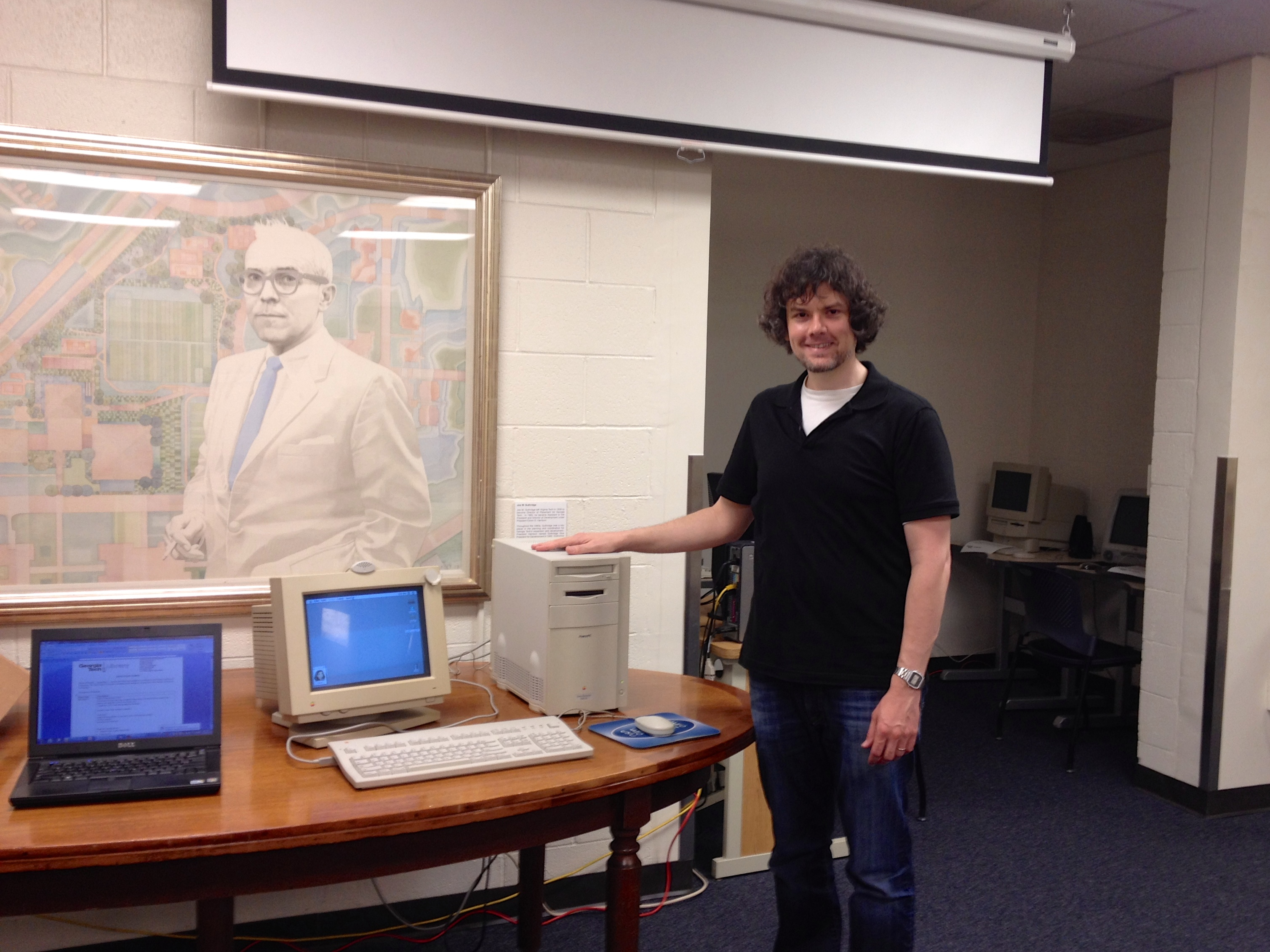
    Me and the Power Macintosh 8500/120 in the Georgia Tech Library Archives.
    Me and the Power Macintosh 8500/120 in the Georgia Tech Library Archives.

    When I met with Georgia Tech Library Archives’ Department Head Jody Lloyd Thompson and Digital Collections Archivist Wendy Hagenmaier to donate three vintage computers (a Dell Dimension 4100, Apple Performa 550, and Apple iMac) and other computing hardware a week and a half ago, I noticed that they had room for one more computer, so I pitched them the idea of my making another donation to fill the gap between the Performa 550’s 68030 processor and the iMac’s G3 processor:  an Apple Power Macintosh 8500/120. They agreed to accept, so I set about preparing the computer for them.

    IMG_5166

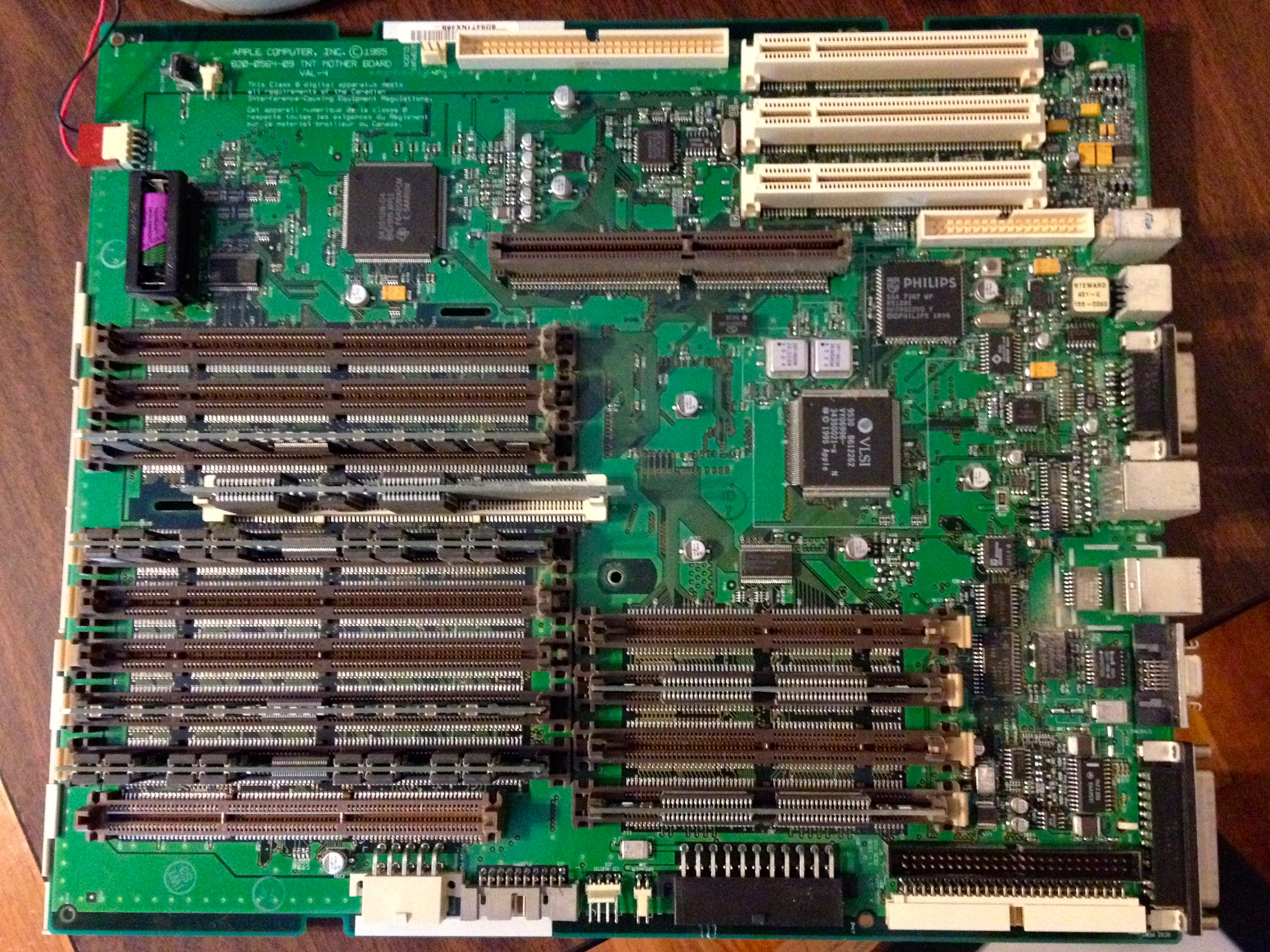
    My Power Macintosh 8500 was in very good shape, but like many vintage computers with persistent clocks, it needed a new lithium battery.

    To replace the Power Macintosh 8500's on-board battery (upper left corner of photo), you have to remove the motherboard.
    To replace the Power Macintosh 8500’s on-board battery (upper left corner of photo), you have to remove the motherboard.

    I replaced the battery, installed Mac OS 7.5.5, a number of different software titles (including Apple’s Plaintalk Speech Recognition–I threw in a Plaintalk powered microphone, Project X/Hot Sauce, and Cyberdog). I discovered that the plastic inside the case did not age well. The PowerMac 8500 has a lot of plastic components that are held together with flexible tabs or clips. When I applied a small amoung of pressure on the tip of these clips to release them, most of them would break. Luckily, the case ties together very well, so I only had to piece some parts back together with clear tape (the power button/light assembly) and metal duct tape (one drive plate cover on the front of the case). To help dissipate heat, I  added a rear slot fan made by Antec.

    I made a video demoing the finalized system, which I’m including embedded below (I apologize for the flicker, but my digital camera doesn’t have enough adjustment features to match the refresh rate on the Apple 14″ Color Display).

    In addition to the Power Macintosh 8500, I gave the Archives a box full of software and late-1990s/early-2000s video games for Macintosh. These might help facilitate more connections around campus (Computer Science, Media Studies, and Game Studies).

    As I’m leaving soon for City Tech, I believe that we can do more together in our work with vintage computing. I floated the idea of a symposium, conference, or some other kind of connected project. Also, from what little I have learned so far, there’s a lot of investment and interest in computer technology in NYC (and Brooklyn in particular). I am looking forward to making new connections with others studying retrocomputing and New Media. I know that many opportunities await.

  • Recovered Writing: Undergraduate Technologies of Representation Final Essay Response on Communication Tech and World of Warcraft, Dec 8, 2004

    This is the fourteenth post in a series that I call, “Recovered Writing.” I am going through my personal archive of undergraduate and graduate school writing, recovering those essays I consider interesting but that I am unlikely to revise for traditional publication, and posting those essays as-is on my blog in the hope of engaging others with these ideas that played a formative role in my development as a scholar and teacher. Because this and the other essays in the Recovered Writing series are posted as-is and edited only for web-readability, I hope that readers will accept them for what they are–undergraduate and graduate school essays conveying varying degrees of argumentation, rigor, idea development, and research. Furthermore, I dislike the idea of these essays languishing in a digital tomb, so I offer them here to excite your curiosity and encourage your conversation.

    This is my final post of material from Professor Kenneth J. Knoespel’s LCC 3314 Technologies of Representation class at Georgia Tech. LCC 3314 is taught in many different ways by the faculty of the Georgia Tech’s School of Literature, Media, and Communication, but I consider myself fortunate to have experienced Professor Knoespel’s approach to the course during the last phase of my undergraduate tenure. The ideas that we discussed in his class continue to inform my professional and personal thinking. Also, I found Professor Knoespel a great ally, who helped me along my path to graduation with side projects and independent studies.

    This is my final paper assignment (I think given in lieu of a final exam) in LCC3314. The more exciting portion is question 2, which concerns Blizzard’s World of Warcraft. I break down how you navigate its space and I describe elements of its operation. It bears noting that at the time that I wrote this, WoW had been out for less than a month. I was rabidly playing it on my PowerMac G5 at 2560×1600 resolution on a 30″ Apple Cinema Display. While it might not have been the best essay, it certainly was one that I enjoyed writing to no end! I wish that I had found a way to make time for WoW since my days in Liverpool. I have played WoW on only rare occasions since returning to the States, but I continue to write about it from my memory of Azeroth.

    Also included below is my response to question 1, which seems to be focused on the telegraph, telephone, and cellular phone. In this question, I explore the material experience of using these different communication media and technological devices. I suppose WoW is another kind of communication technology wrapped up in a highly interactive gaming environment (cf. Hack/Slash).

    Jason W. Ellis

    Professor Kenneth J. Knoespel

    LCC3314 – Technologies of Representation

    December 8, 2004

    Final Paper Assignment

    1. On the telegraph, telephone, and cellular phone

    The telegraph, telephone, and cell phone each have a particular interface that works with different human senses and thus provide different experiences for the body.  The differences between these communication technologies lie in the physicality of the artifact as well as the technology underlying the technology for encoding and decoding communication.

    The telegraph is a wired point-to-point textual communication technology.  Telegraph operation involves trained operators who can encode and decode the Morse code messages transmitted over wires with telegraph machines.  The process of sending a telegram involves finding a business that offers telegraph service, going there in person, telling the telegraph operator the message to send, the telegraph operator encodes the message with the telegraph machine, it is received by the appropriate destination telegraph operator, that operator decodes the message, a delivery person is dispatched with the message, and the message is hand delivered to the recipient.  The experience of the telegram sender is standing at a counter and speaking with an operator.  The receiver interfaces with a delivery person who hands them a piece of paper containing the message.  The technology that makes the sending and receiving messages over great distances possible is removed from the experience of the sender and receiver.  The sender and receiver also have to rely on a network of operators and delivery persons.  These people are in a unique position to view the correspondence between the sender and receiver.  This fact is probably something that senders of telegrams were well aware of.

    The telephone is a wired point-to-point oral communication technology.  Telephones encode auditory information into electrical signals which travel over copper wires in a phone network to the receiving telephone that decodes the electrical signals into auditory information (the spoken voice).  Telephones allow users to hear the person’s voice that they are speaking with.  One problem with telephones is that the technology uses a narrow band of audible sound that can cause “m” to sound like “n” or “b” to sound like “d.”  Initially, telephones were prohibitively expensive and were direct wired from location to location.  After telephone networks were made possible with human operator switching technology, voice phone calls could be routed from the call initiator to the call receiver.  Therefore, over time the phone network mediation shifted from human operators to electrical switching technology.  When you would make a call you would speak to an operator first, and then the person that you were calling.  Now, one can dial a number and the phone network’s automatic switching technology connects the caller with the receiver.  Someone who makes a phone call assumes privacy when the call is made from home or within an enclosed space such as a phone booth.  The physical interaction between the user and the telephone is that a headset is lifted off the base and held to the ear and mouth.  The user taps out a phone number on the base or dials a number with a rotary phone base.  The telephone user experiences an interaction with a disembodied voice.

    The cell phone is an unwired point-to-point oral and textual communication technology.  Modern cell phones are a synthesis of the telegraph, telephone, digital photography, video technology, and radio technology.  Cell phones facilitate voice conversations between cell phone to cell phone or cell phone to wired telephone.  They also allow for text messaging, audio messaging, picture messaging, and video messaging.  Widespread cell phone use is shifting voice phone conversation into a more commonplace activity.  Additionally, the private sphere of telephone conversation is shifting to the public sphere of wherever the cell phone user answers or makes a phone call.  Cell phones also connect to the Internet and Internet-based text messaging networks such as AOL Instant Messenger.  The cell phone has become a place of contact for the individual in more ways than merely talking on the phone.  It builds connections between the individual and others as well as between the individual and information (e.g., online weather information, movie listings, online news websites, etc.).  With ear bud speaker/microphones that plug into cell phones or wireless Bluetooth headsets, one can interface with the auditory communication features of their cell phone without needing to hold the cell phone up to the ear and mouth as one would with a traditional telephone.  The cell phone users also interface with a disembodied voice, but the cell phone also has other means of interaction with people as well as information.

    The telegraph is not an interactive means of communicating in the way that the telephone and the cell phone are.  With the telephone or the cell phone, one can have a real-time conversation with someone else whereas with the telegraph, there is a delay between sending a message, delivery, and if need be, a return message.  The amount of information capable through transmissions has increased over time.  The telegraph had a finite amount of information that could be conveyed because of the time and cost of sending messages with Morse code.  The telephone increased the amount of conveyed information because it was a disembodied voice that could carry nuances of speech and emotive information (e.g., happiness, sadness, anger, etc.).  The cell phone has brought these communication systems full circle with the creation of a synthesis of voice and text.  Along with oral communications, there is so much textual and graphic information that can be conveyed through a cell phone.  Barbara Stafford writes, “we have been moving, from the Enlightenment forward, towards a visual and, now, an electronically generated, culture” (“Presuming images and consuming words” 472).  The cell phone represents the bringing together of communication, both between people and between people and sources of information.  Walter J. Ong writes in Orality and Literacy, “By contrast with vision, the dissecting sense, sound is thus a unifying sense.  A typical visual ideal is clarity and distinctness, a taking apart…The auditory ideal, by contrast, is harmony, a putting together” (71).  The modern cell phone brings together the visual and the oral in a way that previous communication technologies had not.  This unification ties two of the powerful human senses (sight and sound) to the cell phone that distinguishes it from the telegraph and telephone.

    An interesting development in these technologies is that the perception is that better communication technologies lead to better communication between individuals (i.e., a bringing together of individuals).  George Myerson writes in Heidegger, Habermas, and the Mobile Phone, “There’s no real gathering at all.  Instead, there are only isolated individuals, each locked in his or her own world, making contact sporadically and for purely functional purposes” (38).  Thus, the cell phone has disconnected the individual from the wall phone where one might be “waiting on an important call.”  Casualness and importance are intertwined in the use of the cell phone.

    I used Paul Carmen’s paper on the telegraph, Amanda Richard’s paper on the telephone, and Kevin Oberther’s paper on the cell phone as starting points for this essay.

    2. On World of Warcraft

    Blizzard Entertainment’s World of Warcraft video game was released on November 23, 2004 for both Windows and Mac OS X.  It is a massively multiplayer online role playing game (MMORPG) that immerses the player in a 3D fantasy world where the player is able to create a character based on several layers of identity (e.g., allegiance:  alliance or horde, races:  humans, dwarves, night elves, gnomes, orcs, tauren, trolls, or undead, and classes:  warrior, mages, druids, hunters, rogues, etc.).  After building one’s character (including designing a unique appearance), you choose a realm in which to play.  These realms correspond to computer servers that are in a particular time zone.  Other players around the world pick one of these realms to play in that best corresponds to when they will be playing, or when their friends will be playing.  The player is able to meet up with friends within a realm to go on adventures together, and if the player doesn’t know anyone, he or she can communicate with other players to form groups (large and small) to go on adventures with.  The objective of the game is to gain levels, complete quests, and to battle the forces opposite of your allegiance.  Working with others is the key to success in World of Warcraft.

    When the player first enters the game, a movie clip is played that gives some introductory backstory information so that the player has a general idea about what is going on.  This movie is actually a fly-through of the area in which the player is going to begin playing.  This gives the player a chance to get his or her bearings before they are “on the ground.”

    The screen space has pertinent information regarding the character as well as the character’s location within the game.  The upper right corner of the screen has a round map that has the cardinal directions with the character centered on this small map.  The character is represented as an arrow so that the player can see which direction they are pointing without having to move around to get one’s bearings.  This player-centered map is similar to the Blaeu Atlas because it is centered around the idea of the person needing to do the orientating is “inside the map.”  The Blaeu Atlas has lines emanating from points on open water toward landmarks.  These lines assist the person on the ocean to determine their approximate position from the landmarks that they see on particular lines of sight.  The system within the game takes this a step further by providing instant feedback of the direction the player is pointed in as well as the location of the player in relation to roads and landmarks.  Another feature that assists the player with recognizing one’s location is that as the character enters a new area or approaches a landmark, the name of that place will fade into the center of the screen for a few moments and then disappear.

    Walking around is accomplished by using the keyboard with the mouse.  The W, A, S, and D keys (corresponding to forward, left, backward, and right) are used for walking around.  The mouse orients the “camera” around the player’s character on-screen.  Moving the camera around allows the player to better see up, down, or to the sides without having to walk in that direction (i.e., if the character’s neck were in a brace).

    The ground, buildings, hills, mountains, and caves are textured so that they appear like one would think these things would like.  There are clouds and sky above, and the ponds and lakes have shimmering water.  There are small and large animals in the forests that the player can interact with.  Other players’ characters are walking around in the same area that you may be in.  There are also characters that are controlled by the game and the central game servers called non-player characters (NPCs).  These are characters that you can buy equipment from and some will invite you to undertake quests in return for rewards.  Because the world that the game is set in involves fantasy, magic, and mythical beings, the buildings and inhabitants can be fanciful.

    The organization of the map, equipment, and battle function icons around the peripheral of the play area of the screen (the world and the character centered on the screen) works very well.  They do not take up that much area so that the player feels immersed in the game, but they are large enough to be meaningful and they all have unique icons (i.e., adheres to HCI principles).  The player interaction with other players and the NPCs is good, but it does require referring to the help system or the user manual.  When playing World of Warcraft on Mac OS X, they choose to do something differently than one would expect.  Within the Mac OS X Finder, you hold down the Control key while clicking with the mouse to emulate a right mouse button (because most Macs do not have a mouse with two buttons).  Inside the game however, you have to hold down the Command key (also known as the Apple key) while clicking with the mouse in order to perform a right click (which is used for picking up loot and for communicating with players and NPCs.  If the Blizzard developers had kept this consistent with what the player was expecting from using the operating system, interaction in the game space would have been more transparent.

    The world in which the player navigates through is immersive.  The player’s character is modeled in three dimensions and the world that the character walks through is also modeled in three dimensions.  Physical principles such as gravity and optics are built into the game’s underlying technology.  Features in the distance are faded from view while those things up close have a tremendous amount of detail.  Because believability and level of detail can reach a point of diminishing returns, the look of the game is not photorealistic.  The Blizzard developers strike a balance between the look and feel of the world within the game and the amount of realism necessary for an immersive 3D environment.  Some physical laws are suspended however because of the mythic and fantasy elements of the world.  These elements have to be accepted on faith by the player in order for the game to have any meaning for the player.

    The narrative is carried by the exploration and fulfillment of quests by the player/character.  Because the environment is so expansive (like the real world), the narrative created by the exploration of the player is successful.  The terrain that the character walks through is based on models that do not change.  There are certain assumptions about perspective that are upheld within the game.  If a cliff appears to rise about three hundred yards ahead, that distance will not shift.  This is a technical consideration regarding the way that the “camera” focuses and presents perspective of the 3D world.  The game models a space of fantasy but it must present it in a familiar way to the experiences of its intended audience.

    There is a learning curve inherent in playing a game like World of Warcraft.  As Barbara Stafford writes in “Presuming images and consuming words,” “It is not accidental that this overwhelming volume of information—likened to drinking from the proverbial firehose—coincides with a mountain concern for bolstering and maintaining language ‘literacy’” (462).  Stafford is writing about the literacy of visual images.  There are subtle cues embedded in the game that the player has to recognize in order to play the game successfully (e.g., exclamation points over NPCs that have quests to offer and question marks over NPCs who are connected to quests in progress).  Iconic information provides the best way for quick access to game controls and functions.  The player has to develop a level of literacy of these icons in order to be a proficient game player.

    Additionally, the 3D environments presented in the game are similar to the descriptions of Renaissance gardens in Kenneth J. Knoespel’s “Gazing on Technology.”  The 3D environment of the game is promoting the underlying technology that makes 3D computer graphics possible in the same way that Renaissance technology was employed in building those gardens.  Knoespel writes, “Gardens, whether set out in Renaissance poetry or on the estates of the nobility, offer a controlled means for assimilating the new technology.  In each case, the audience views the machinery at a privileged distance as it would an entertainer…In fact, the garden conceals technology in its mythological narrative” (117-118).  The player does not have to understand how his or her 3D graphics accelerator works in order to enjoy the immersive experience of playing World of Warcraft.  This game is the “controlled means for assimilating the new technology” of 3D computer graphics.