Tag: auto

  • Beware Banging on Sun Drenched Brittle Plastic in a 2013 Toyota Corolla: Replacing Center Console AC Vents

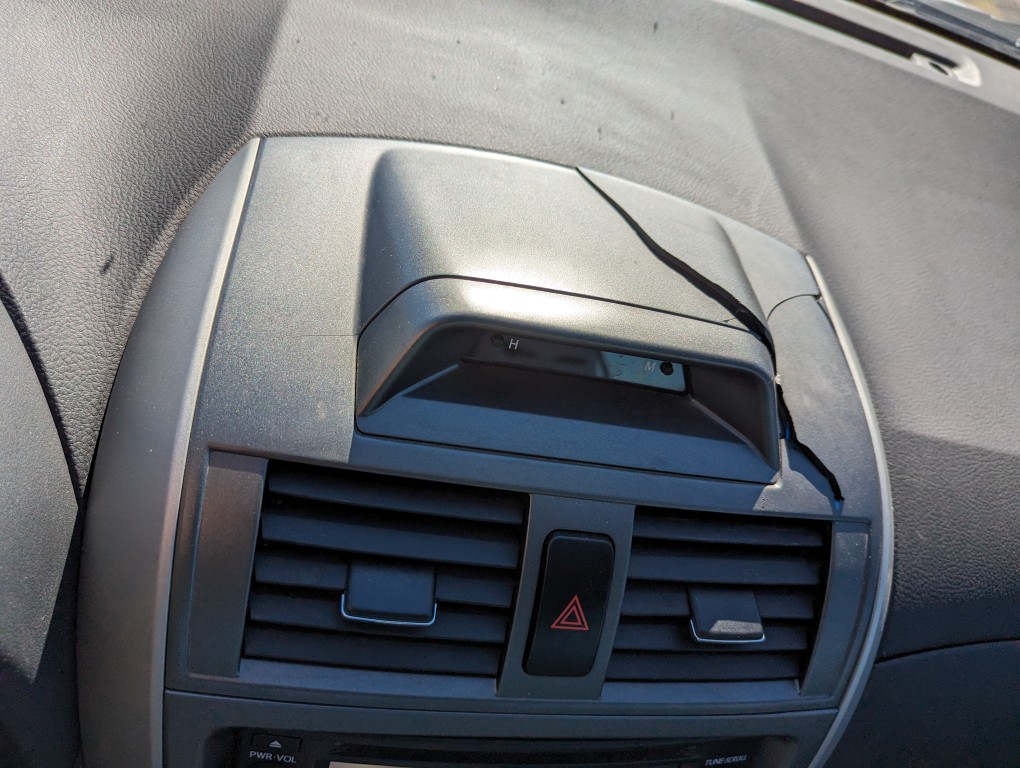
    Broken 2013 Toyota Corolla center console air vent component.

    Before driving back to Brooklyn, my 2013 Toyota Corolla’s center console began rattling something fierce! It began as an occasional annoyance, but it quickly became insistent and unavoidable.

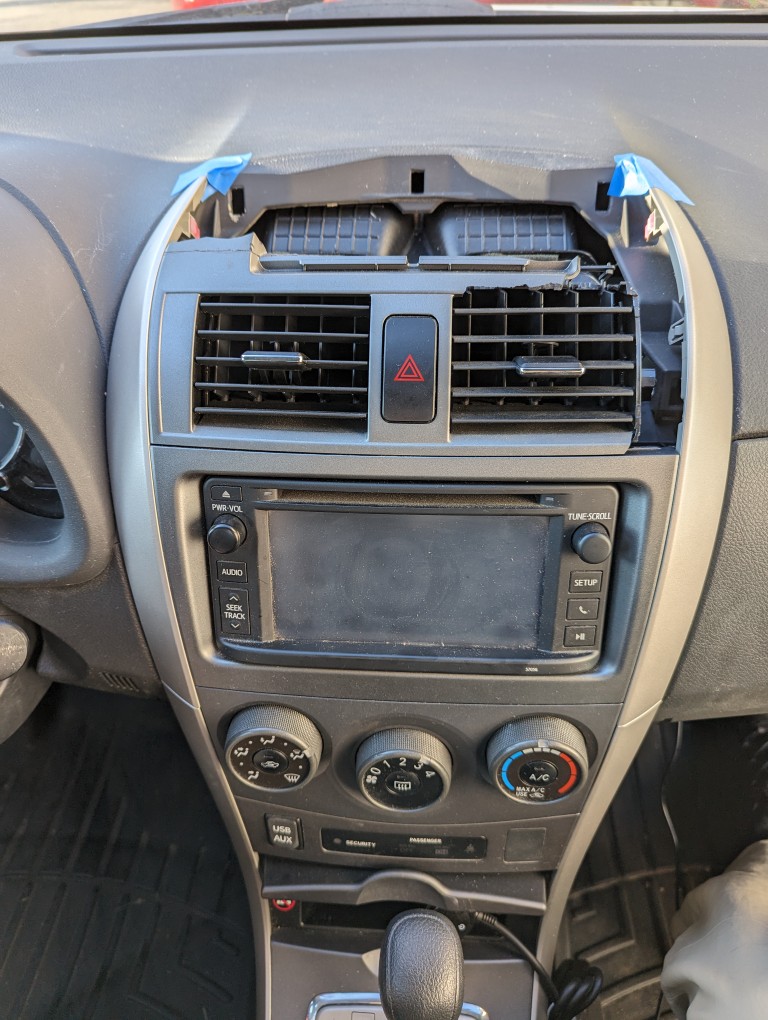
    The rattle, of course, manifested while I was driving. So, I began holding and pressing around the center console that I had recently disassembled a few days earlier to try to identify the culprit of the noise. I figured out that the sound came from the air vent assembly at the top of the center console. Impatient, I rapped and then banged on it with my fist. One ill-placed strike busted the air vent assembly’s top in a spray of plastic puzzle pieces. The picture above shows them carefully reassembled. Of course, the rattle was amplified by this destruction, so I ripped out the top of the assembly and made the long drive with the top off. When I got to Brooklyn, I ordered a replacement (sans clock assembly as it was significantly cheaper) on eBay. When it arrived, I installed it and restored the interior look of the car.
    Broken 2013 Toyota Corolla center console air vent component.

    Above, you can see what the air vent assembly looked like when I drove back to Brooklyn. I completely removed the top so that it wouldn’t make any rattling during the long drive.

    Broken 2013 Toyota Corolla center console air vent component. Center console covers removed on both sides.

    To begin the replacement, I pulled the silver plastic covers from the top of the center console. These pull off directly toward you and are held in by plastic clips. Using a thin plastic shim helps you get a hold on these. On the right side, you can open the top glove box to make their removal easier.

    Broken 2013 Toyota Corolla center console air vent component.

    This is a close-up of the broken air vent assembly before removing it.

    2013 Toyota Corolla center console caution lights switch in the air vent assembly.

    As I pulled the air vent assembly out directly towards me, I unplugged the cable from the back of the caution lights switch, because this would need to be re-installed in the new air vent assembly.

    2013 Toyota Corolla center console caution lights switch.

    The caution switch is held in by two plastic clips–one on the top and one on the bottom. If these hold tight, you can use a plastic shim to depress the clip from the back and free the top and then bottom of the switch so that it pulls out easily.

    2013 Toyota Corolla center console caution lights switch and clock cables.

    Since I had a clock in the old air vent assembly, there was a corresponding plug on the same run as the caution lights switch cable. I used a twist tie to secure it. I pushed this cable between the two air vents so that there would be minimal possible movement by them once I put everything back together.

    This is the replacement air vent assembly that I purchased on eBay for $21. Unlike my old console kit, it doesn’t have a place for a clock, which is fine for me. This saved about $20. Also, it doesn’t include the caution lights switch, which is also okay as I will be reusing my old one.

    The first step for reassembly is installing the caution lights switch in the air vent console assembly. I ran the cable through the hole of the air vent where the caution switch goes, plugged the cable into the old switch, and pushed the switch into the hole. Unfortunately, the hole for the switch was slightly too large and the switch’s plastic prongs wouldn’t catch and hold it properly. I solved this problem by cutting small pieces of masking tape and putting two layers on top of each prong–top and bottom. Then, I pushed the switch in and it held securely in place.

    Replacement 2013 Toyota Corolla center console assembly lined up.

    The penultimate reassembly step was to line up the air vent assembly with the air ducts and clip receptacles. Perhaps because this was a new replacement, it was very tight to push back in. I took my time and checked and double checked the alignment as I worked it into place.

    Replacement 2013 Toyota Corolla center console assembly secured.

    Eventually, it clicked on both sides and was flush with the radio below and dashboard above.

    Replacement 2013 Toyota Corolla center console assembly completed.

    Finally, I pushed the center console’s side covers in place and double checked the caution light switch to make sure it was working.

    I think it looks better than new now–at least that one part!
  • Prepping the 2013 Toyota Corolla for the Long Drive from GA to NY

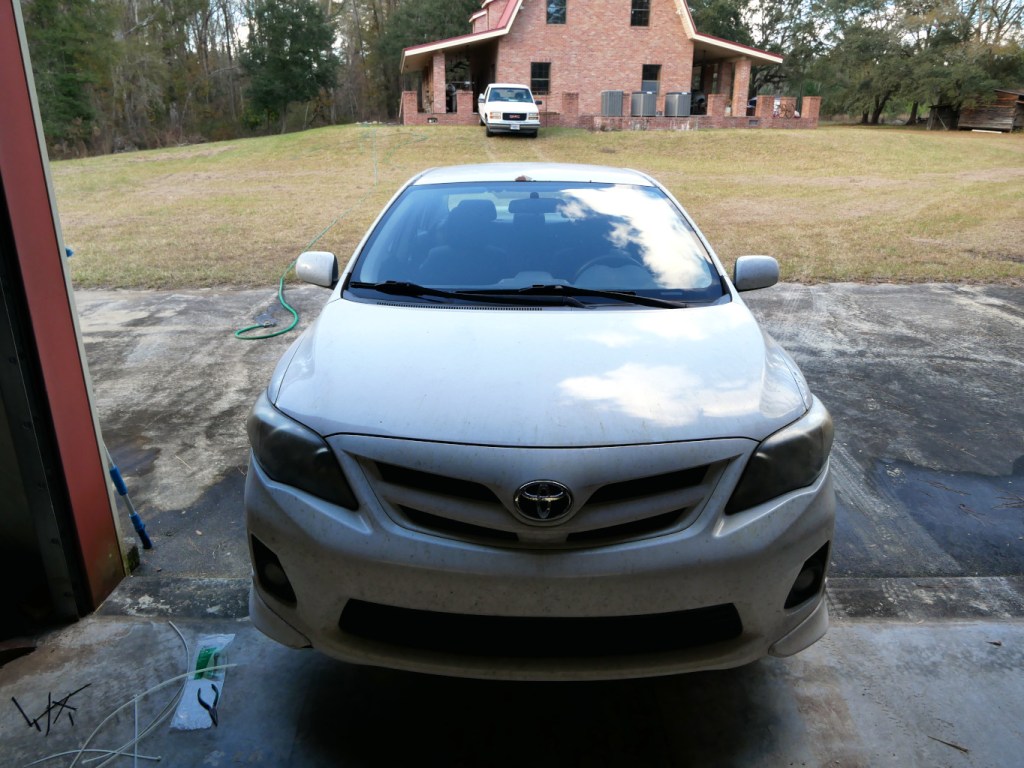
    Working on the front bumper of 2013 Toyota Corolla.

    Before making the trek from Georgia to New York, I had a few things to do to the car’s interior. As I mentioned yesterday, Woodard’s Auto Center worked on the engine, drive train, and wheels, which with over 100k miles, it sorely needed. However, the car’s front bumper and interior needed some attention, too.

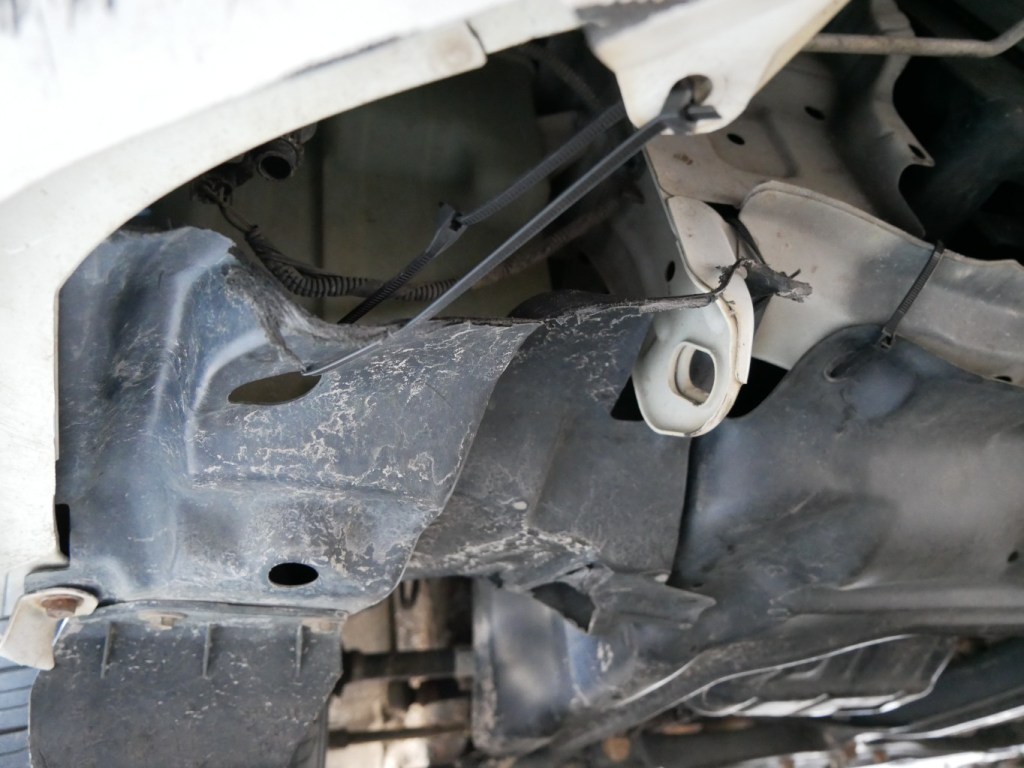
    Front bumper and lower engine compartment covers held in place with zip ties on 2013 Toyota Corolla.

    The first thing that I tried to address was the mess pictured above under the front of the car. My dad had accidentally hit a ditch in the yard some years back that pulled the passenger side bumper off and popped out the bumper from the front grills. The grills were easy to fix–pull them all out, align, and pop them in starting at one end and working toward the other. The trouble was getting the bumper connected to the car’s chassis since some of the bumper’s plastic parts and lower engine compartment cover had been ripped out and torn underneath the car. But, this is what we have zip ties for! I removed the ones shown above that I had used when I visited home a few years back. I did have to make one new hole with a drill to create a loop for one zip tie, but the others were able to use existing openings.

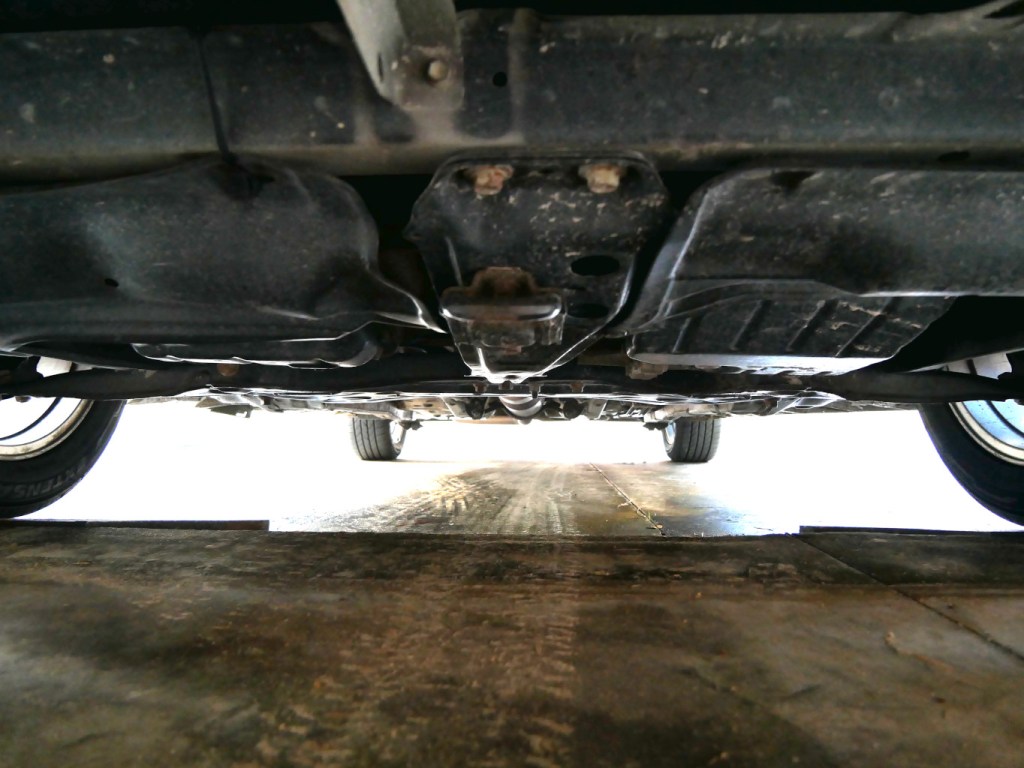
    Looking underneath 2013 Toyota Corolla.

    Now, there’s nothing hanging precariously–everything is pulled tight and secured to something substantial on the chassis.

    Then, I turned my attention to the car’s interior.

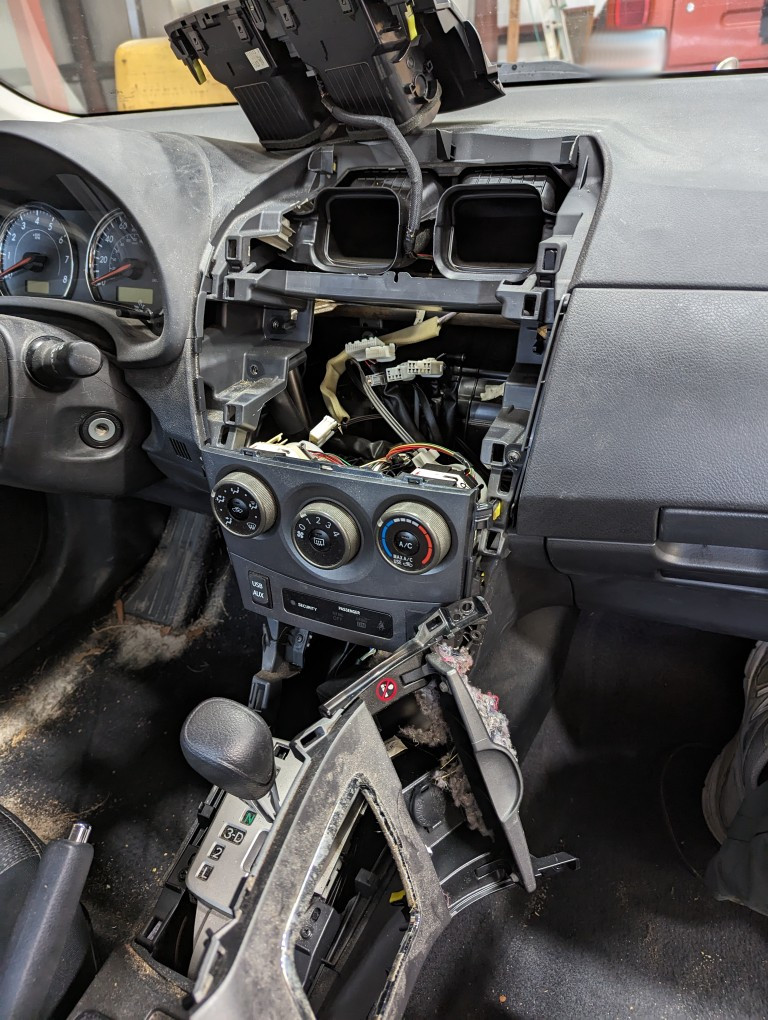
    2013 Toyota Corolla center console disassembled to reach a rat's nest.

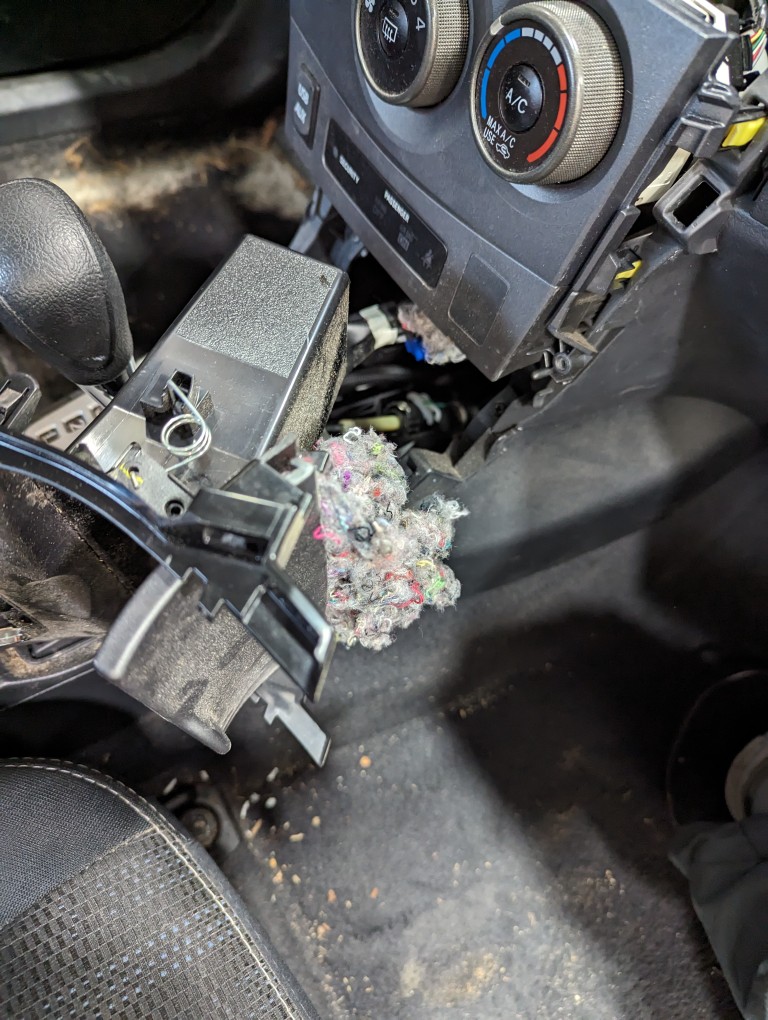
    During the past nine years, rats or mice had infiltrated the car and built nests at the expense of the car’s interior insulation and air duct work. So, one of the first things that I did was pull apart the center console to vacuum and clean out the nest that I knew was there nestled on top of the storage compartment above the gear shifter and below the AC controls.

    2013 Toyota Corolla center console disassembled to reach a rat's nest.

    After copious use of disinfecting wipes, vacuuming everything several times over, and shampooing the carpet and seats, I turned my attention to the cabin air filter. As others have experienced, rats and mice find their way into these Toyota vehicles via the cabin air intake below the windshield wipers. Which means they work their way toward the cabin air filter before working through it to make their way into other areas of the vehicle. I don’t think the mice had been in the car for some years as I had removed the cabin air filter two years ago, found a rat’s nest, vacuumed it out, and replaced the filter.

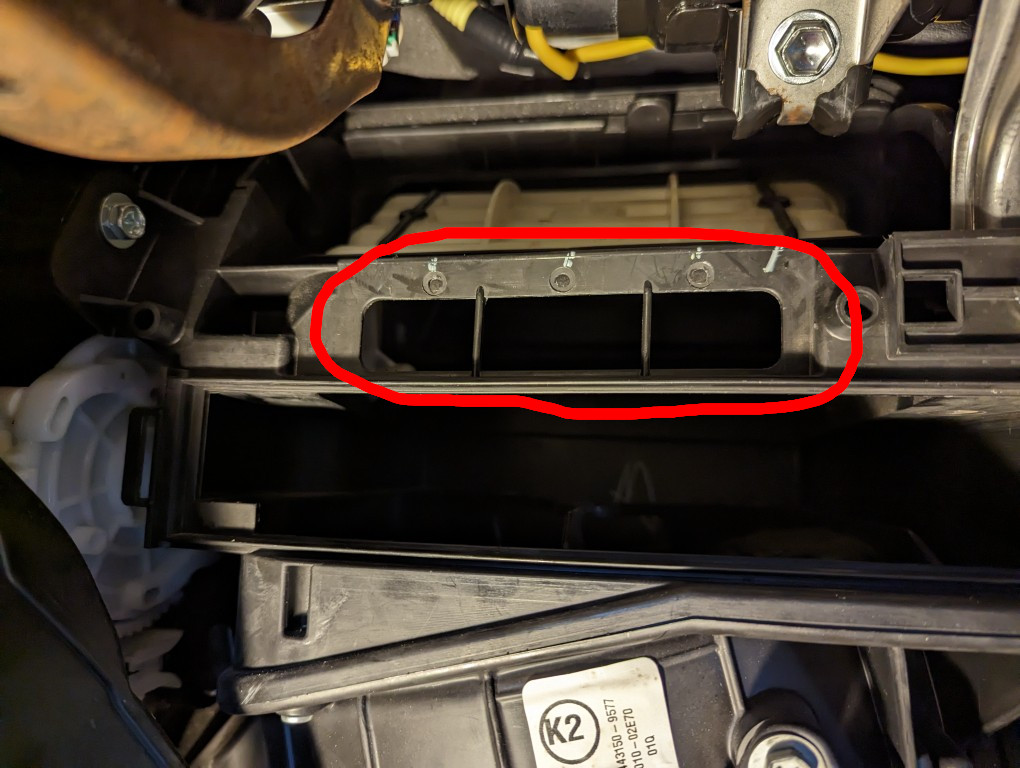
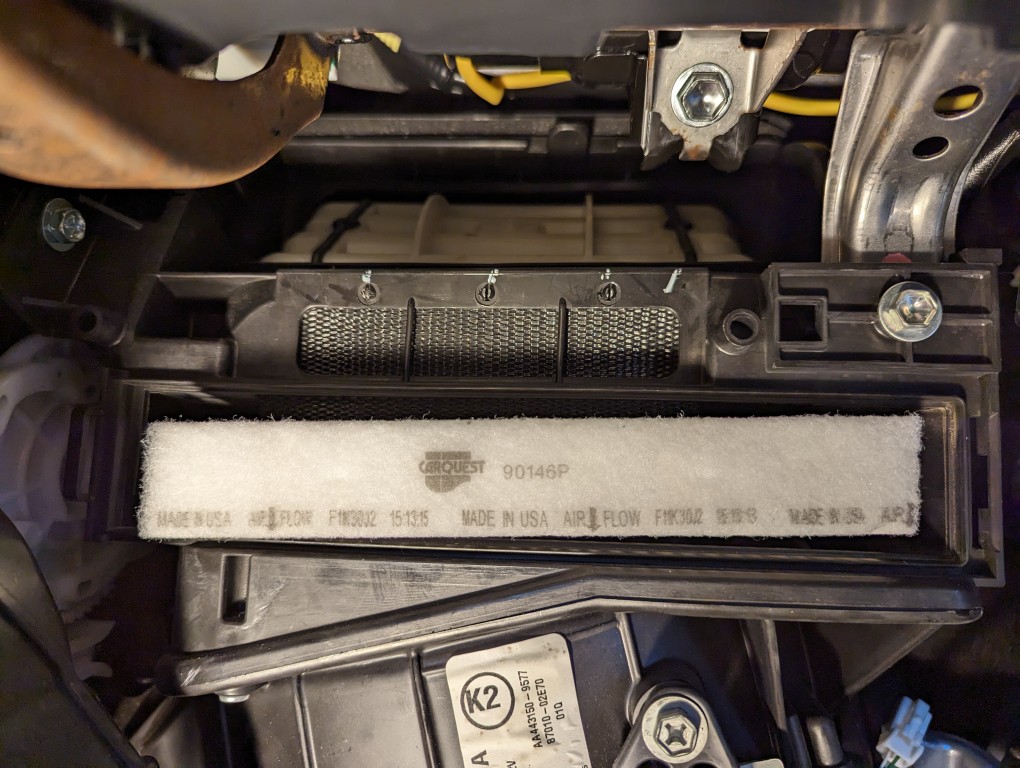
    2013 Toyota Corolla cabin air filter assembly missing foam cover for duct above filter.

    When I opened the cabin air filter compartment, there were no signs of rats creating a new nest there or any attempts at tearing it up. However, I noticed that they had ate their way through a thin piece of foam that had covered a duct above the cabin air filter so that outside air came through that duct before going through the cabin air filter. I created a new flap to cover this duct out of a piece of nylon strap that I found laying around my dad’s shop.

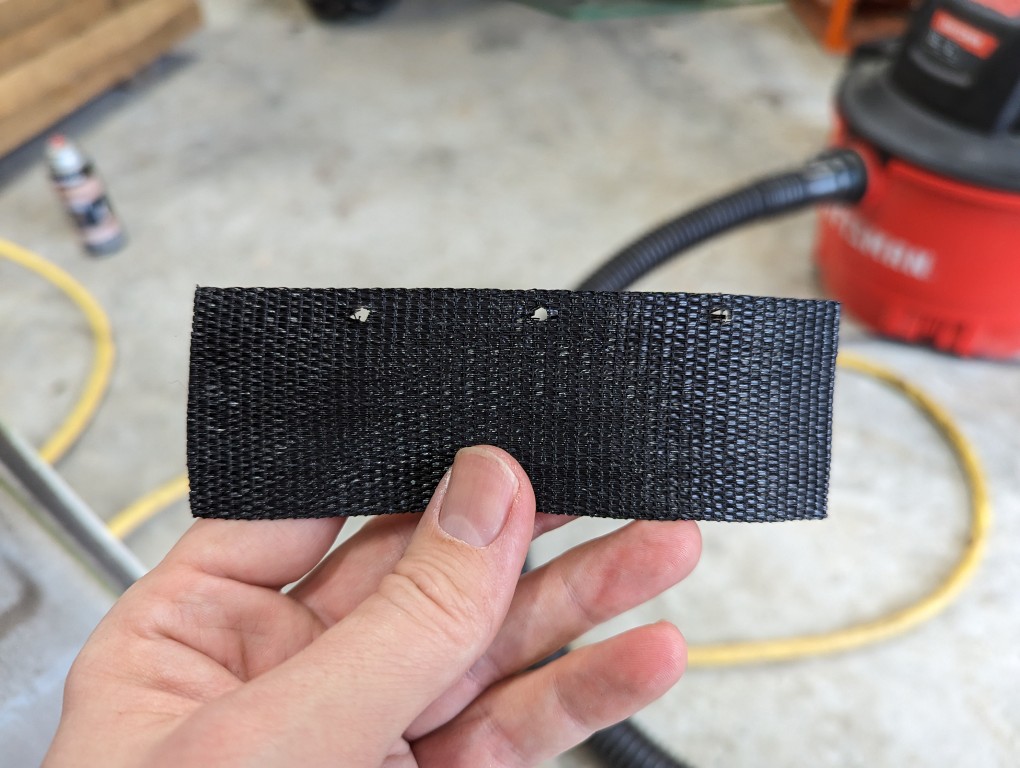
    2013 Toyota Corolla cabin air filter assembly DIY replacement duct cover above filter.

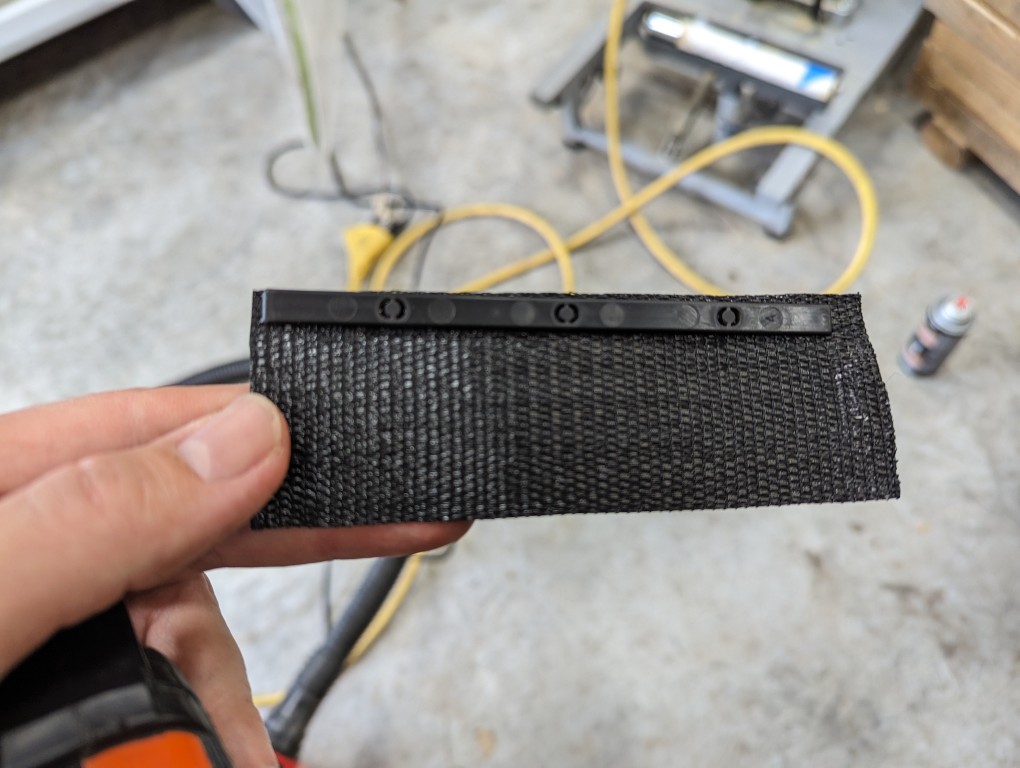
    Behind those three holes inside the handler is a thin piece of plastic with three prongs that snap through those holes. I pulled it out and the remaining strip of foam. I matched up that piece of plastic with a piece of nylon strap cut to the length of the duct space. I used a belt hole punch to put three holes in the nylon strap.

    2013 Toyota Corolla cabin air filter assembly DIY replacement duct cover above filter.

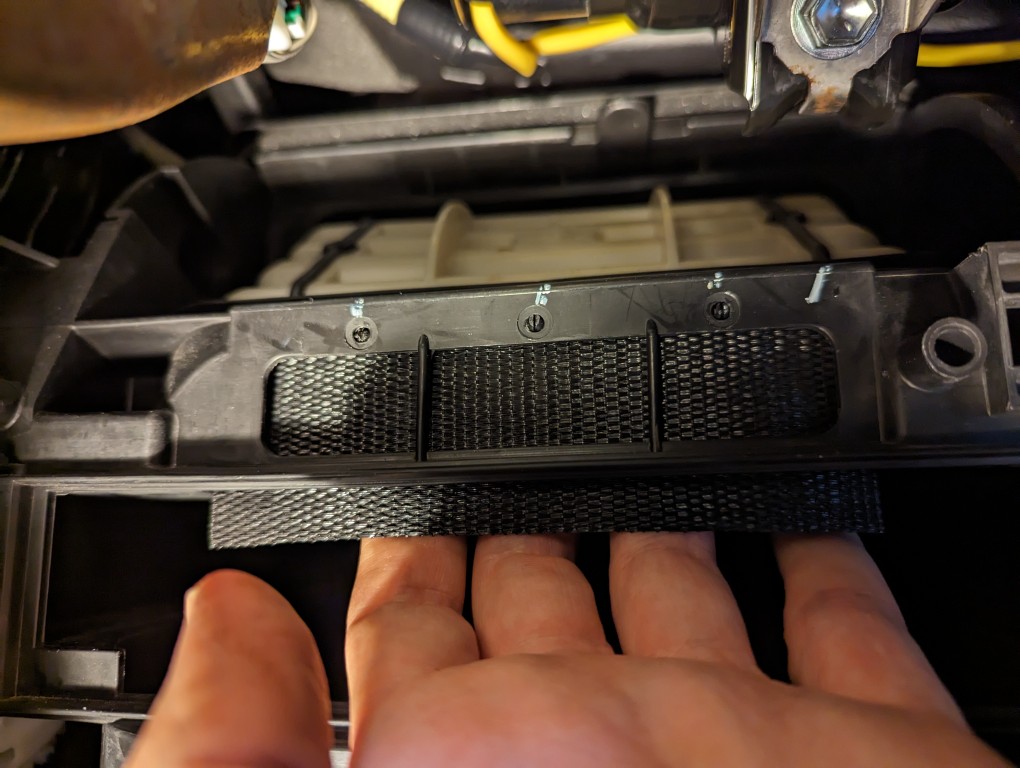
    I pushed the new nylon duct cover through the cabin air filter opening and up to where the plastic prongs would meet with the three corresponding holes and popped each into place in turn.

    2013 Toyota Corolla cabin air filter assembly DIY replacement duct cover above filter.

    While holding the bottom of the bottom of the new duct cover, I slid the cabin air filter into place.

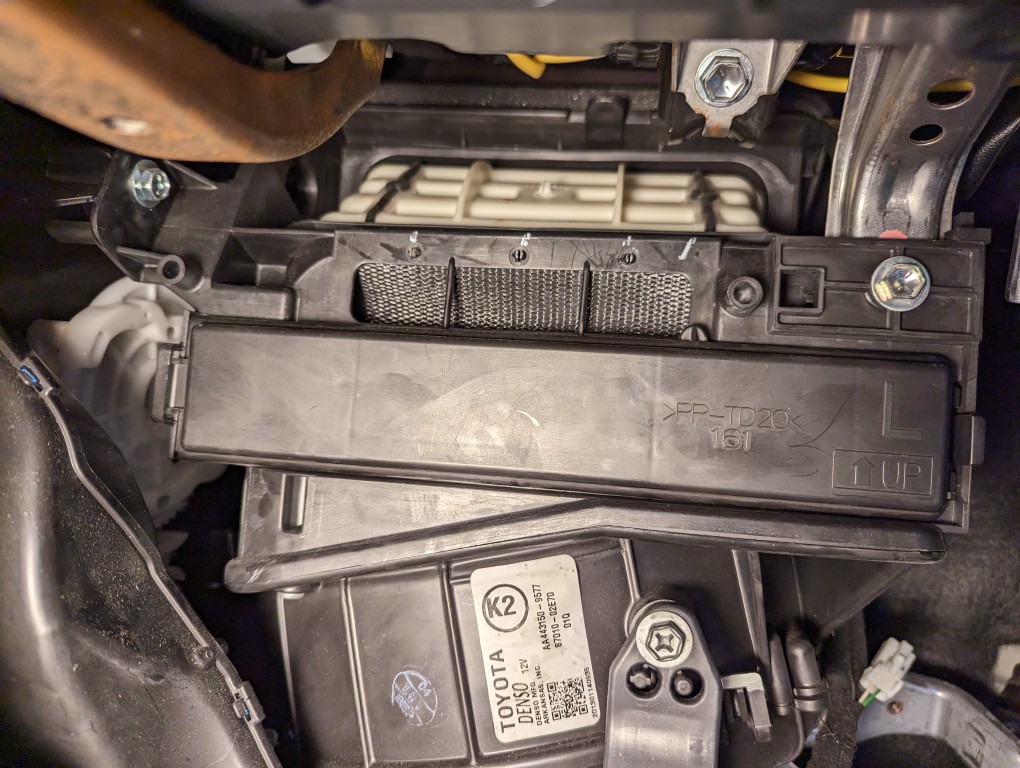
    2013 Toyota Corolla cabin air filter assembly DIY replacement duct cover above filter.

    Then, I buttoned up the cabin air filter (immediately before my trip, I replaced this old CarQuest filter with a Fram True Air cabin air filter CV10285) by returning its plastic cover and snapping it into place. As you can see in the photo below, I noticed the duct flap had come loose at the bottom. After the photo, I opened the filter compartment cover again and pulled the duct cover tight before closing it up the last time.

    2013 Toyota Corolla cabin air filter assembly DIY replacement duct cover above filter.

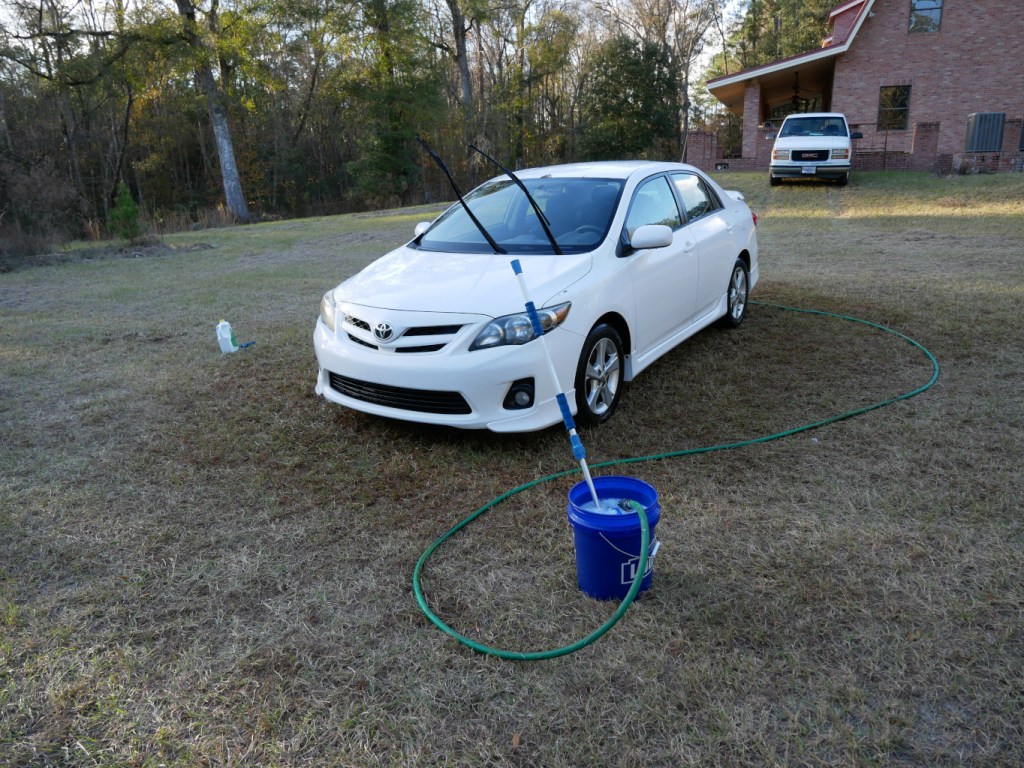
    While I was wrapping things up, I pulled out the rear seat to fix the seat belts; pulled out and cleaned everything in the trunk–discovering another rat’s nest in the process; and installed a dash cam with an extra rear-facing camera–running its wires behind the weatherstripping and cabin upholstery. I used Armor All Protectant Wipes and Glass Wipes to clean the build-up off the interior’s hard surfaces. There were also several layers of country road that had to be scrubbed off the car’s body.

    Washing the 2013 Toyota Corolla.

    This past week, the car carried me majestically to my destination. I kept it on the speed limit out of concern for my safety, the aging engine’s struggles, and fuel economy.

    Now, the tests are dealing with local drivers and their aggro, hunting for parking like a Neanderthal, and maintaining the alternate side parking schedule. Depending on how long I can put up with those things, Y and I can enjoy jetting around a little easier than we have done the past nine years for awhile. Eventually, though, I will lead the car back to the south where it can resume its carefree life in the country, but hopefully sans rats.

  • Driving Across the Verrazzano-Narrows Bridge from Staten Island to Brooklyn

    When Y and I moved to Brooklyn, we gave our Toyota Corolla to my folks who have been driving it for the past nine years. On my recent trip to visit them, they let me borrow the car so Y and I could get around and out of the city during my sabbatical. One of the highlights of the 14 hour drive back to New York City was crossing the Verrazzano-Narrows Bridge from Staten Island to Brooklyn on the lower deck.

    Also, I want to give a shout out to Woodard’s Auto Center in Nahunta, Georgia for getting my old car up to snuff–new plugs, new battery, new tires, oil change, and winterize–for the long drive north. If you’re in their neck of the woods and need your car or truck serviced, Mr. (Jimmy) Woodard and his sons Jim and Tim are highly recommended!

    Tomorrow, I’ll share some of the things that I did to the car’s interior to make the drive as comfortable as possible and avoiding a potential fire due to a rat’s nest.