While cleaning up outside after Hurricane Helene, I spotted this praying mantis resting on top of one of the brick columns supporting our porch roof.
While cleaning up outside after Hurricane Helene, I spotted this praying mantis resting on top of one of the brick columns supporting our porch roof.
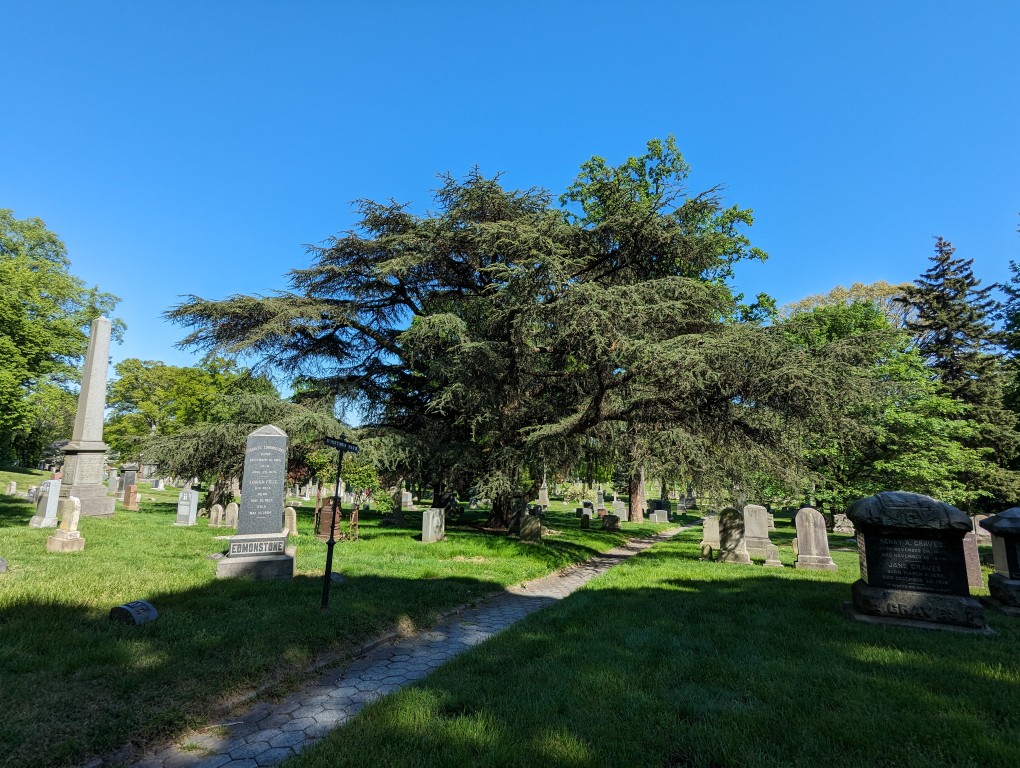
Y and I know this blue atlas cedar as “Big Tree Friend.” It grows somewhere in the middle of Green-Wood Cemetery. We walk around–turning here and there–until we eventually find it.
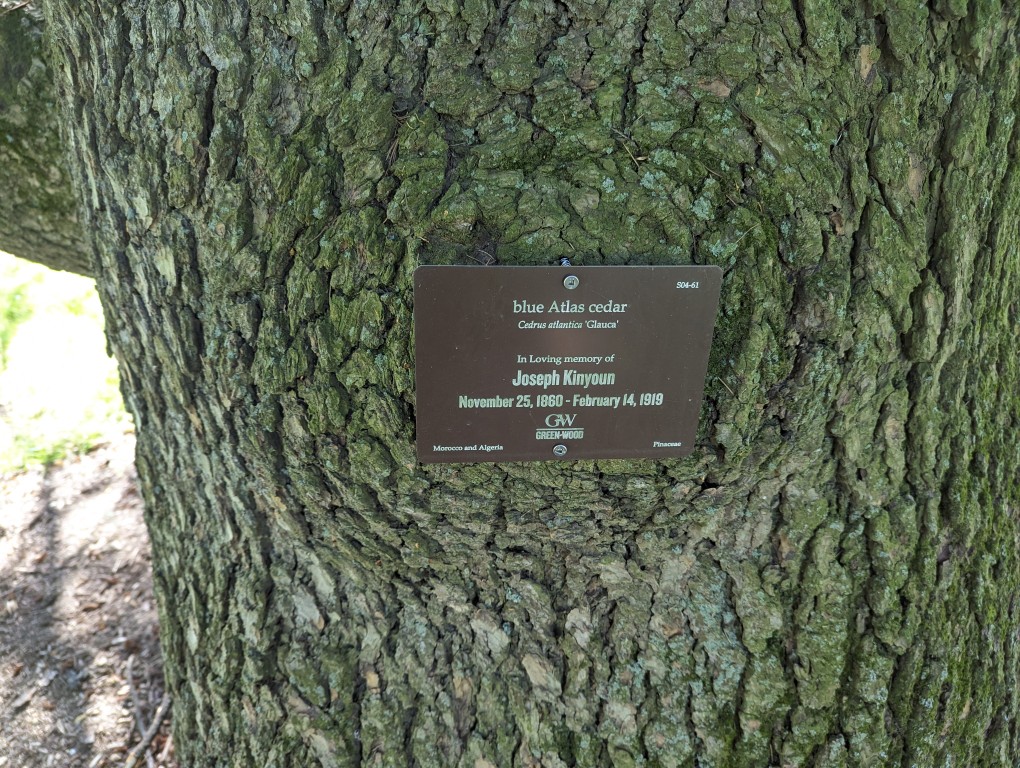
It has been growing in Green-Wood Cemetery for over 100 years–assuming it was planted soon after the death of the person it memorializes, Joseph Kinyoun (Nov. 25, 1860-Feb. 14, 1919). Its circumference is so large that I don’t think Y and I could join hands around it.
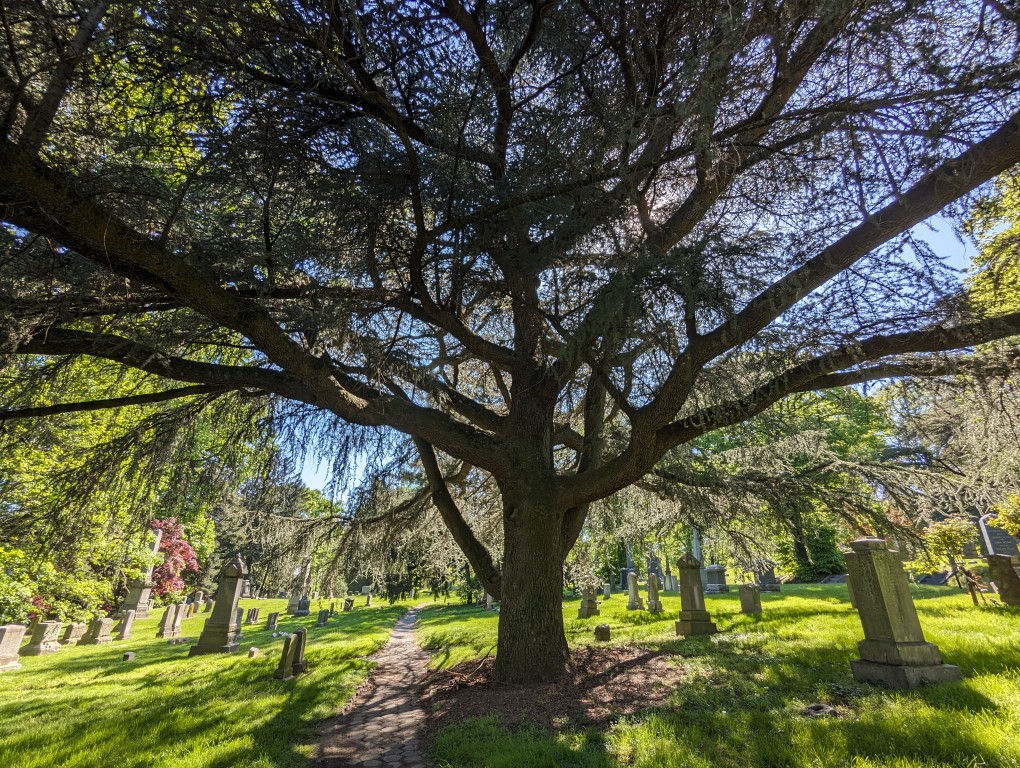
When you stand beneath it, it complete envelops you.

On a hot day, it’s a good friend to have shade you.
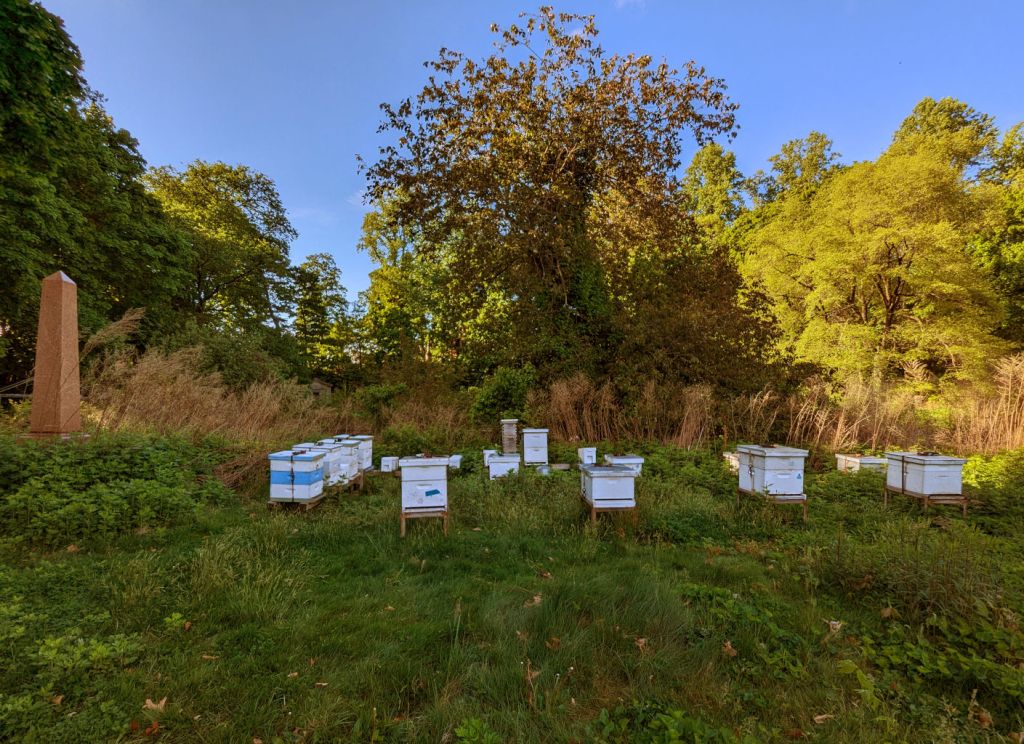
The wee bee that I shared yesterday likely lives in one of these beehives in the back lot apiary nestled in this grassy and overgrown corner of Green-Wood Cemetery. These bees are doing the work keeping the lush oasis going.
Thinking of bees, I recently read Sarah Kliff’s article in The New York Times (30 Apr. 2024) that points out that domesticated honey bees, which are not native to North America, are are not at danger of extinction as is sometimes shouted from the rooftops. Instead, they have sustained their numbers despite losses from colony collapse disorder, which has been a problem of domesticated honey bees since at least the late 1800s. However, less diverse habitats, insecticides, and disease can harm honey bee colonies and the success of honey bees can in turn harm native bee species according to the Xerces Society for Invertebrate Conservation.
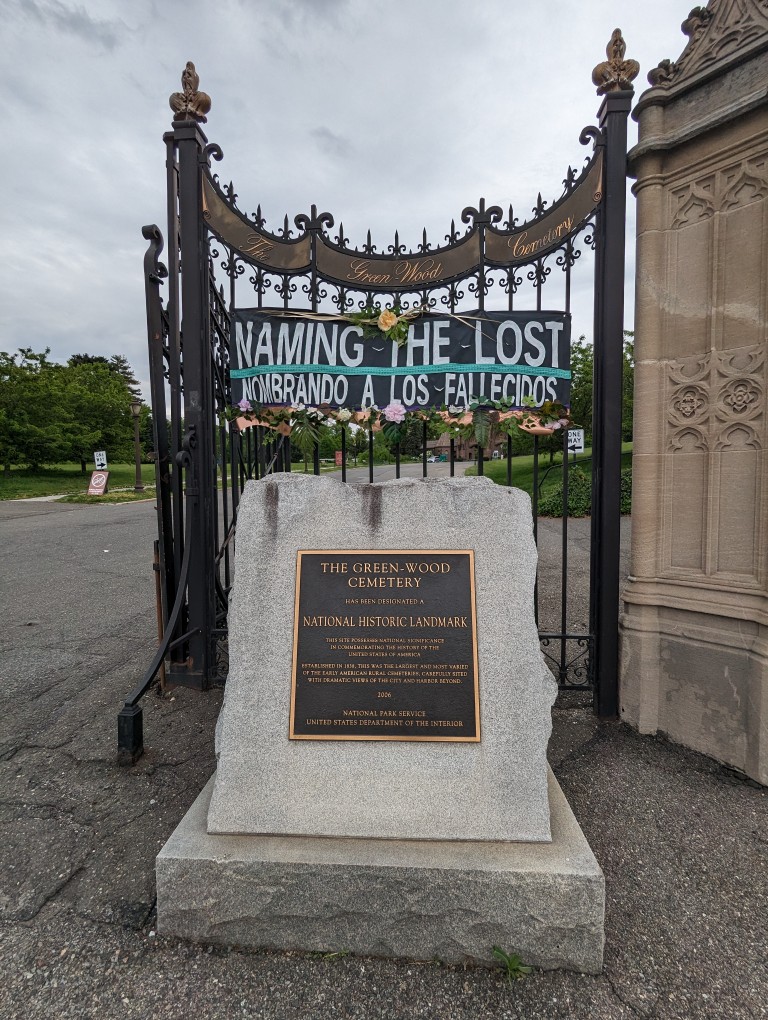
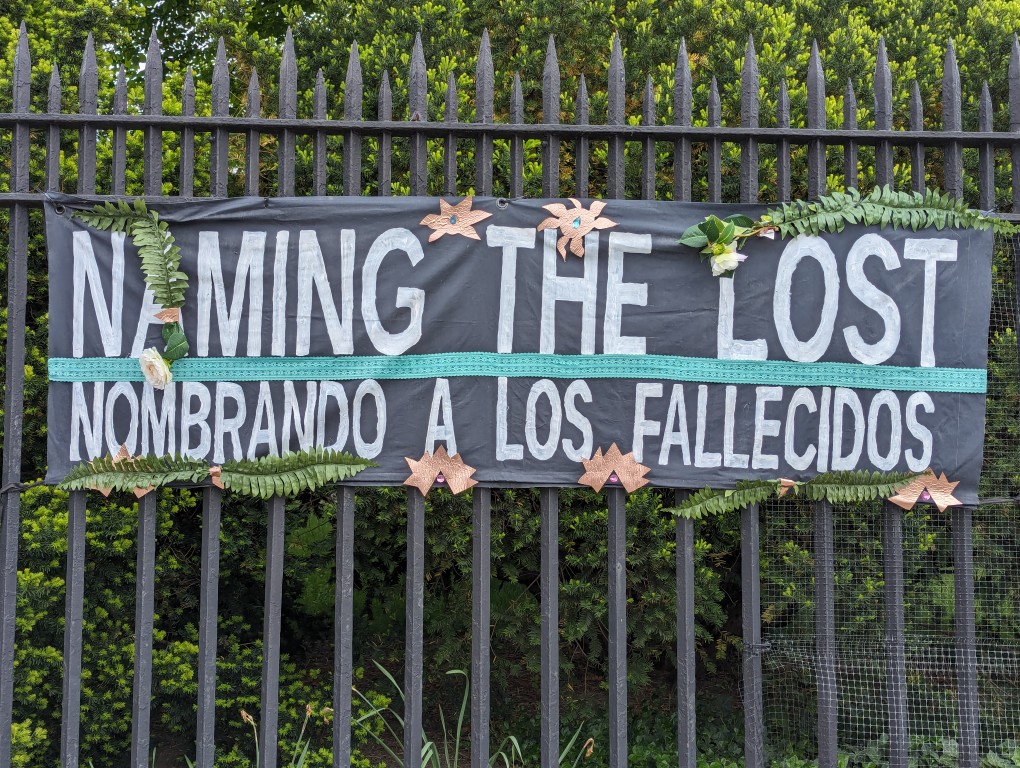
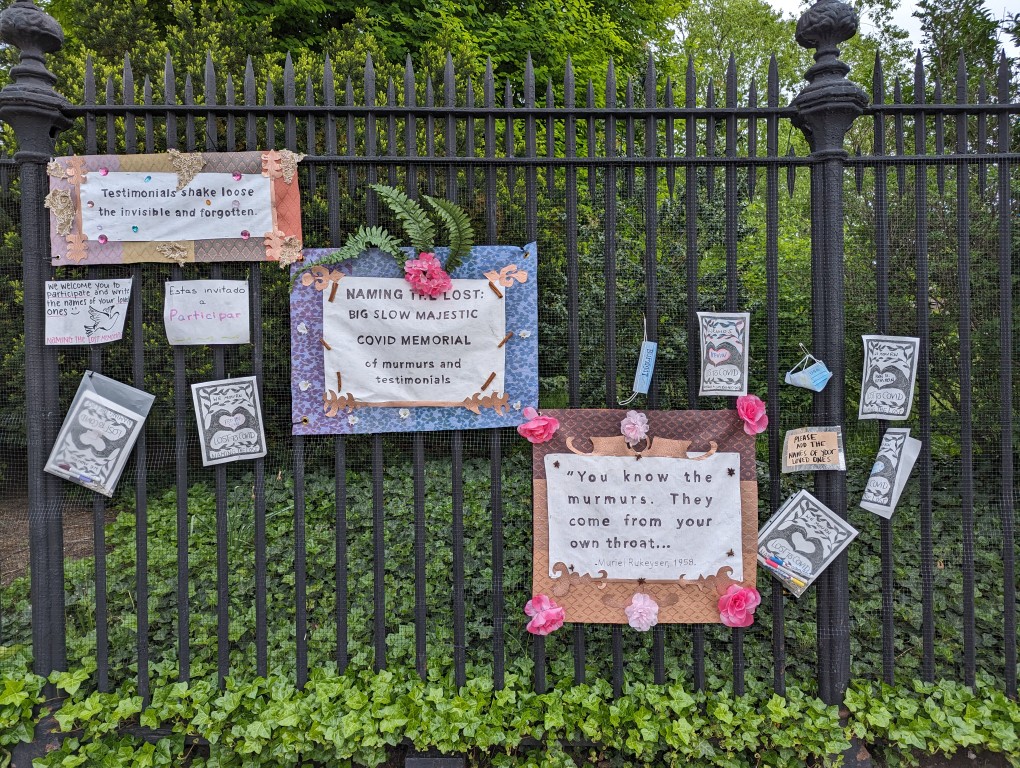
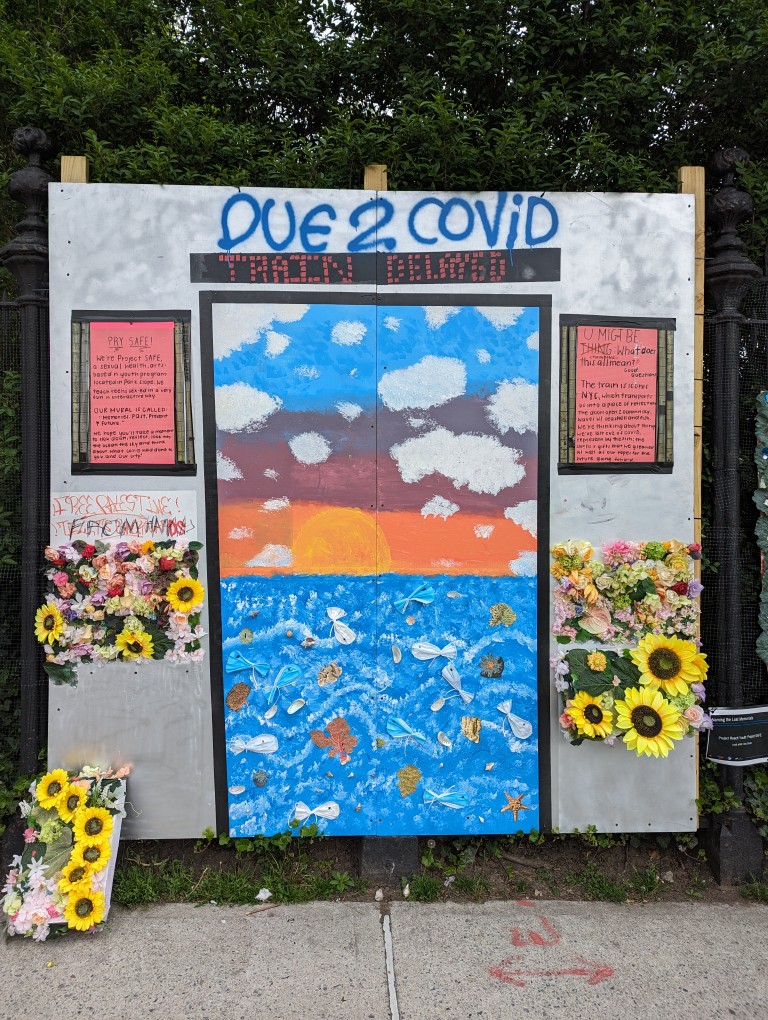
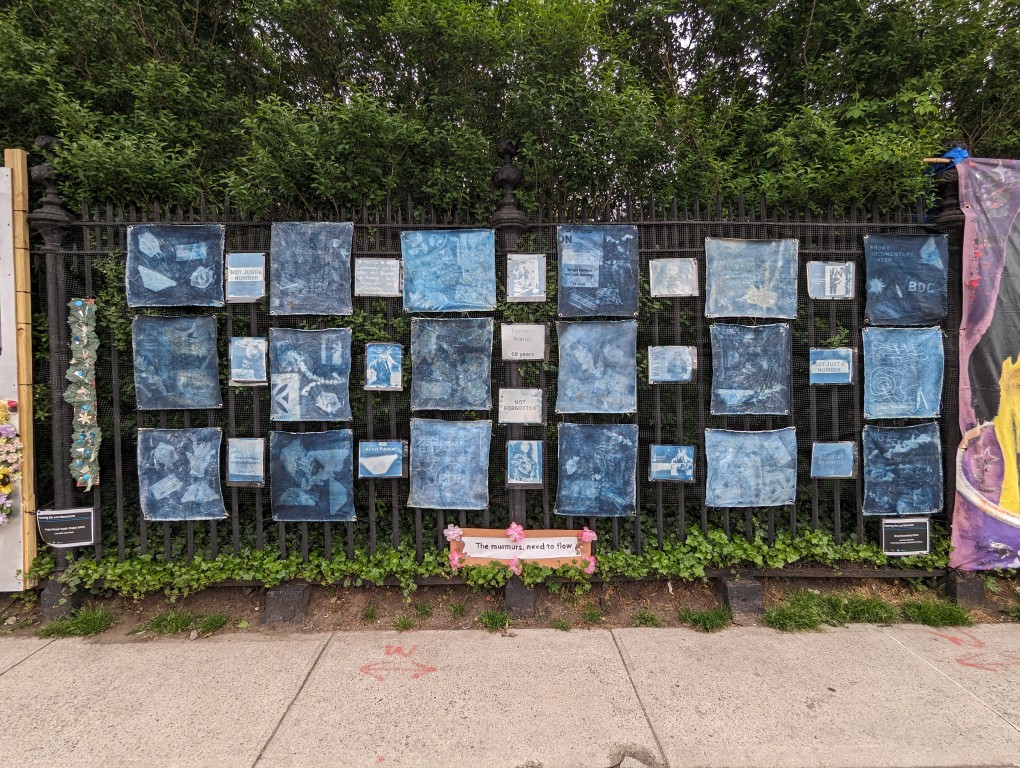
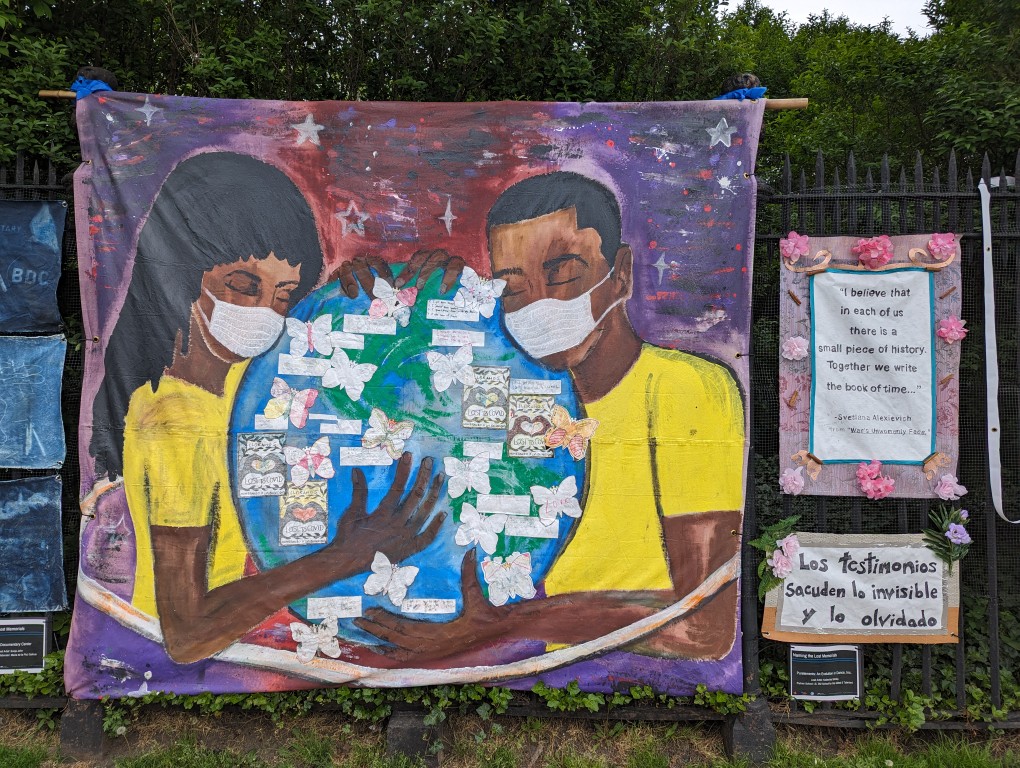
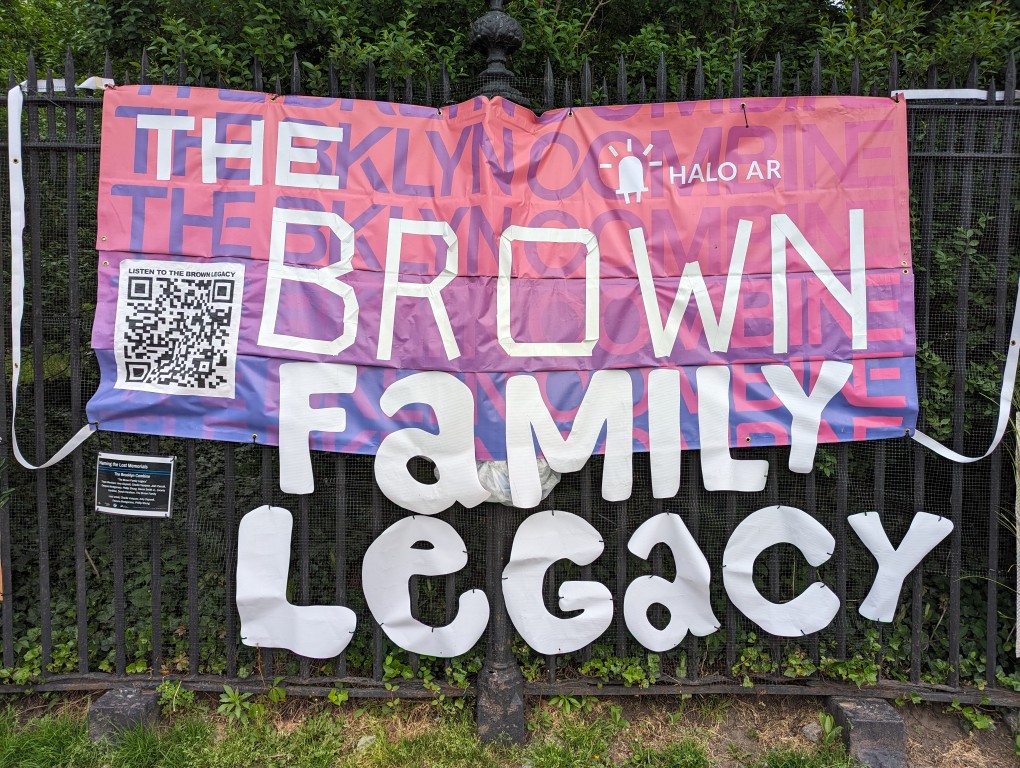
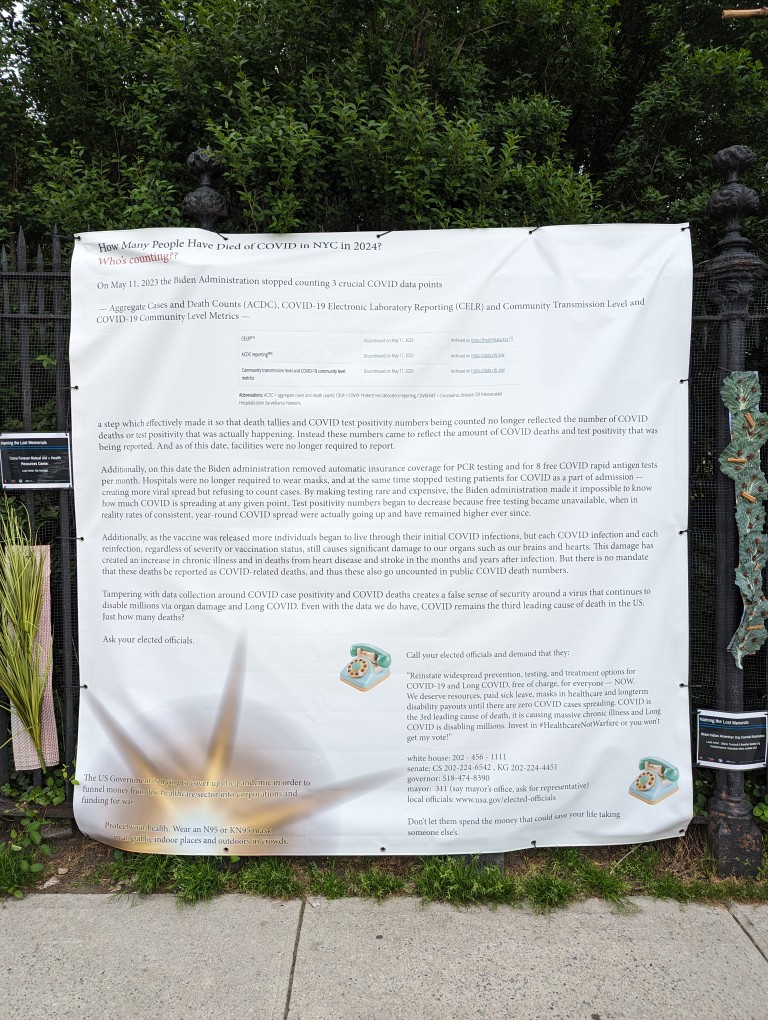
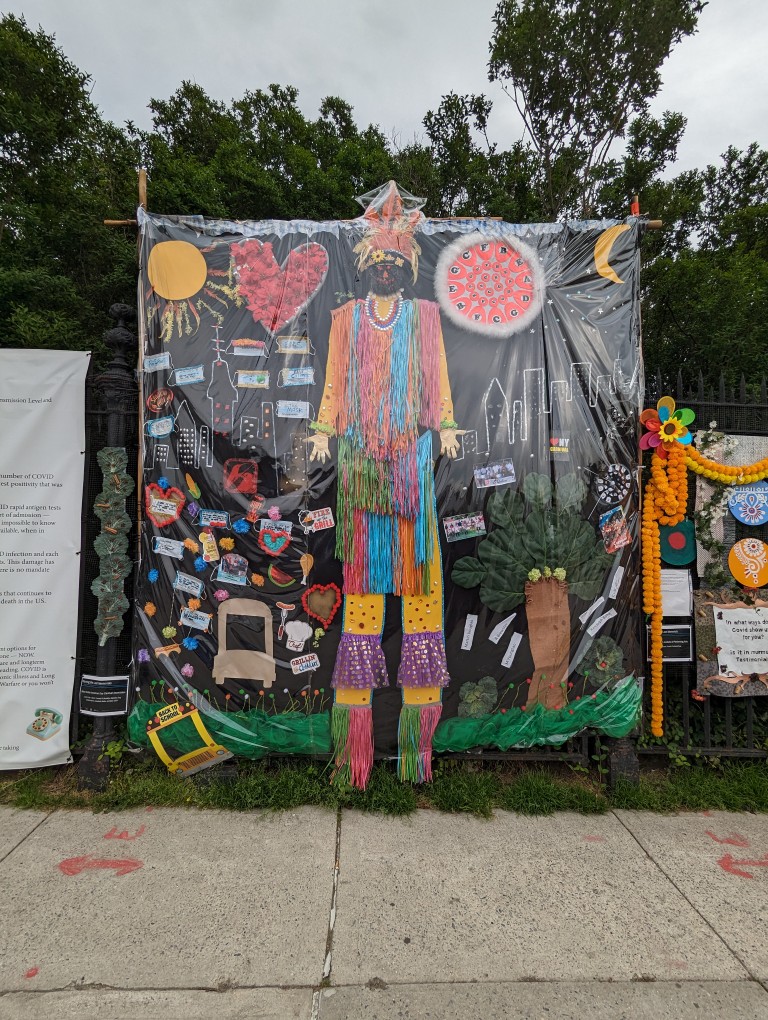
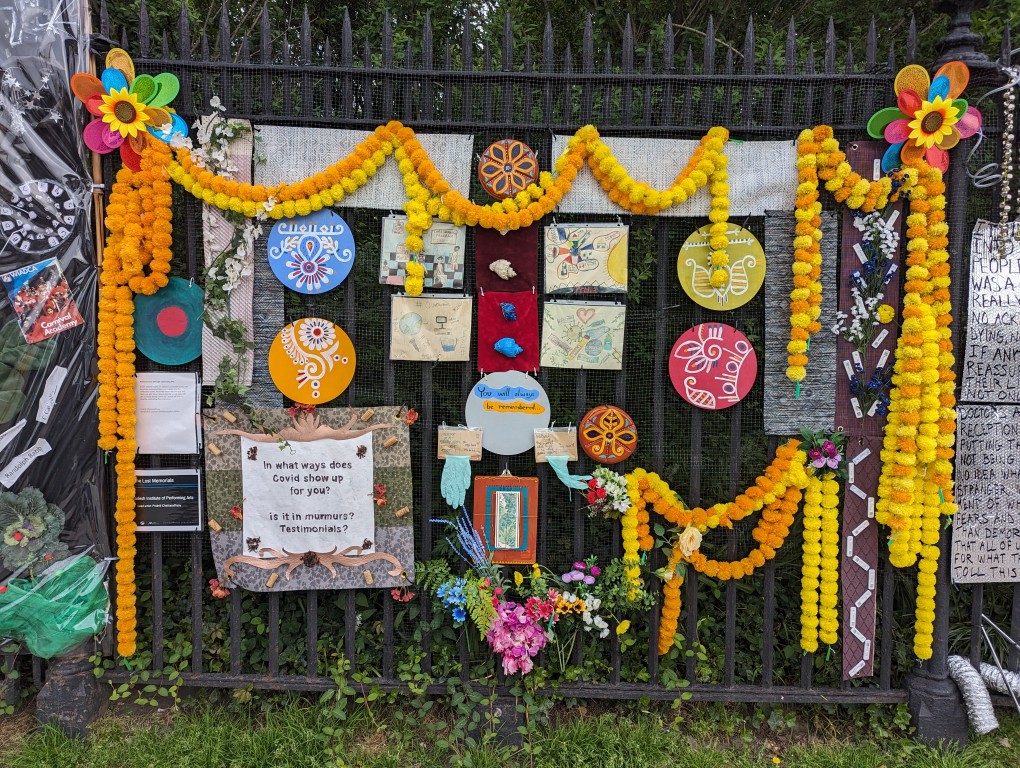
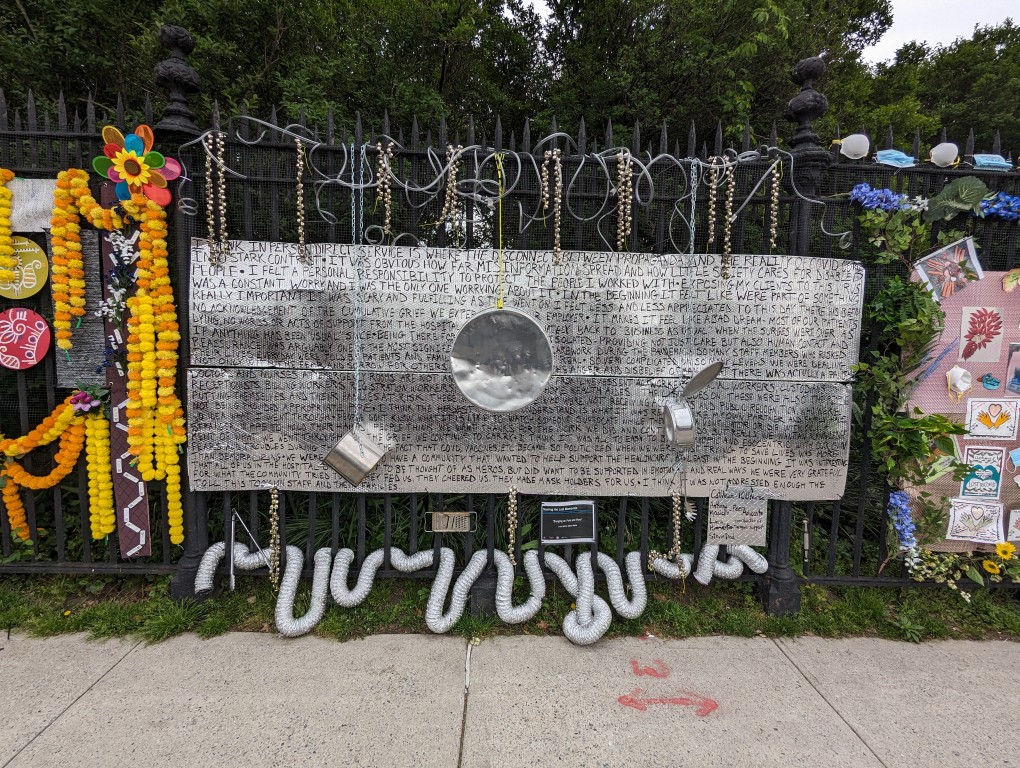
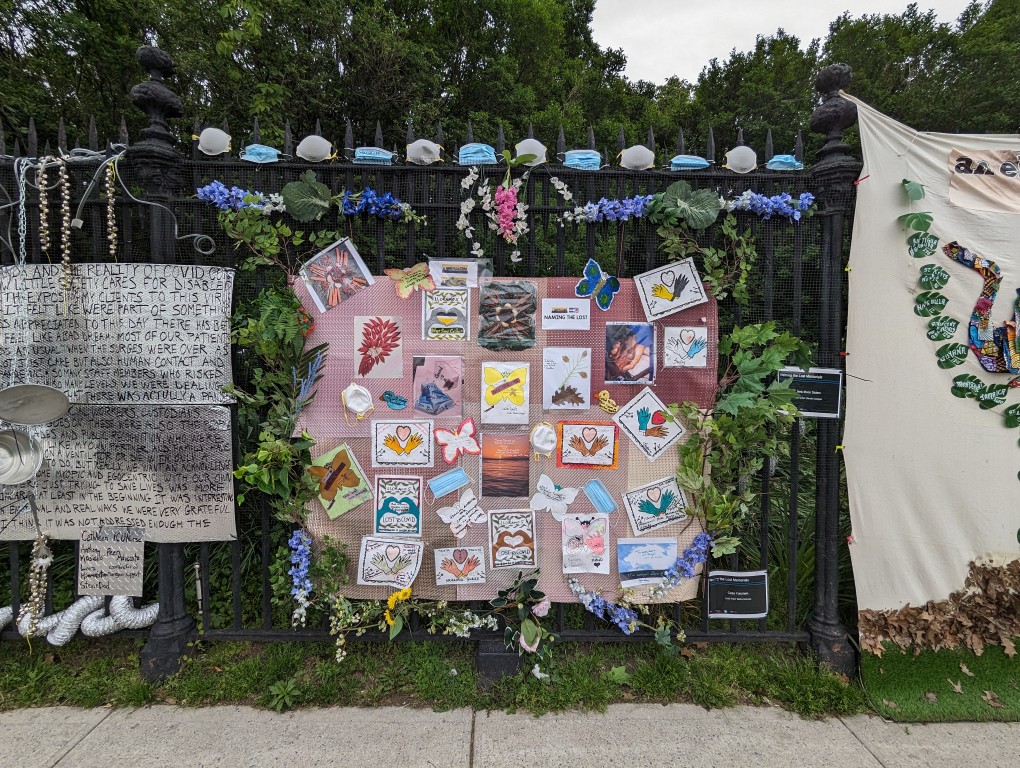
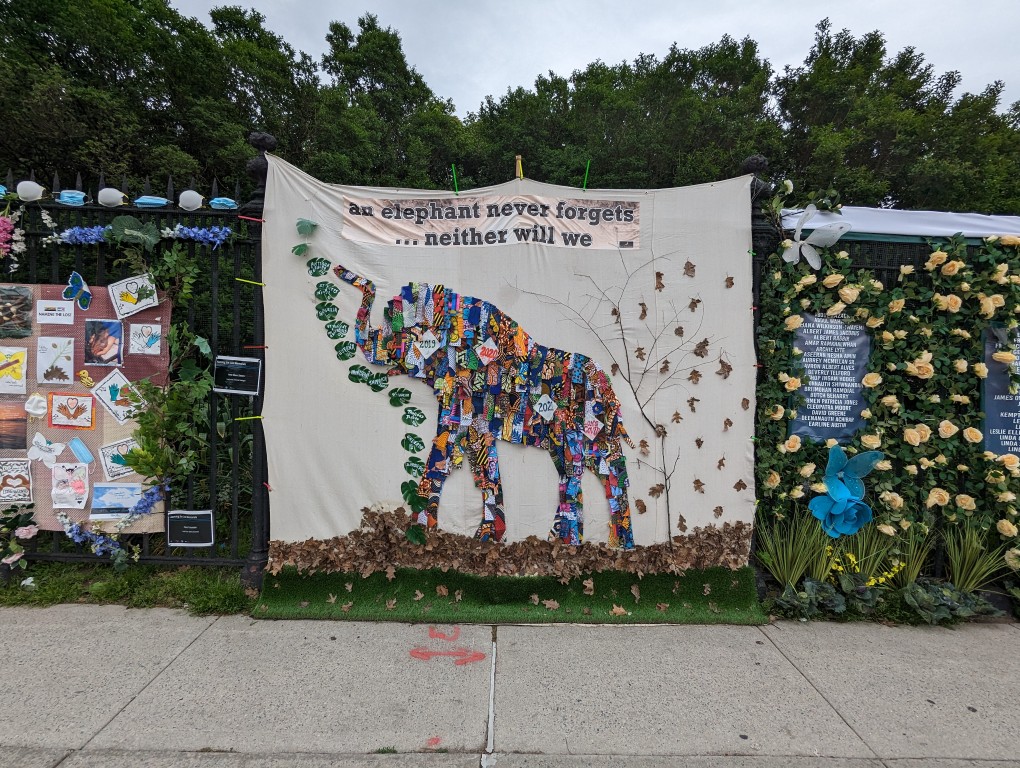
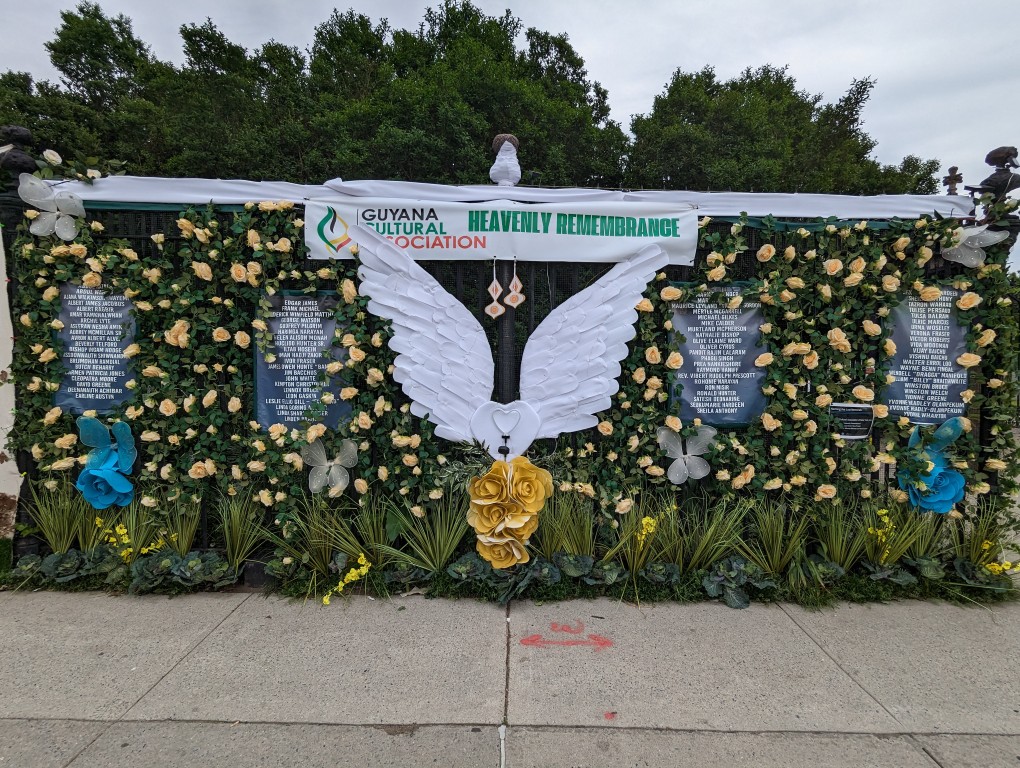
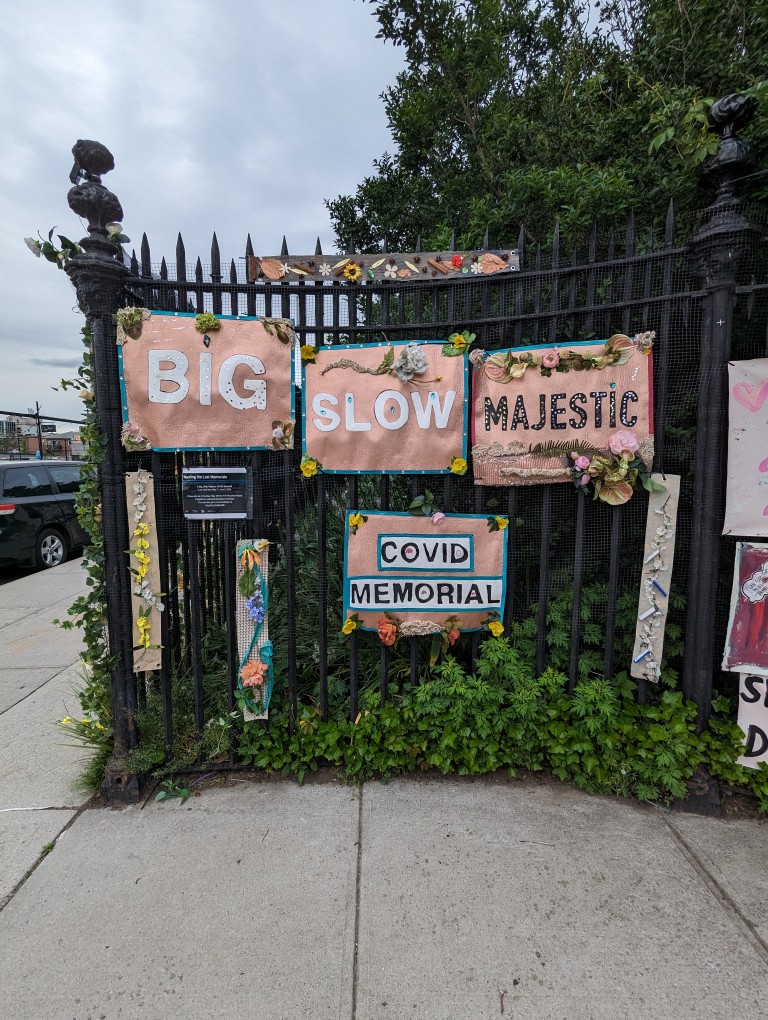
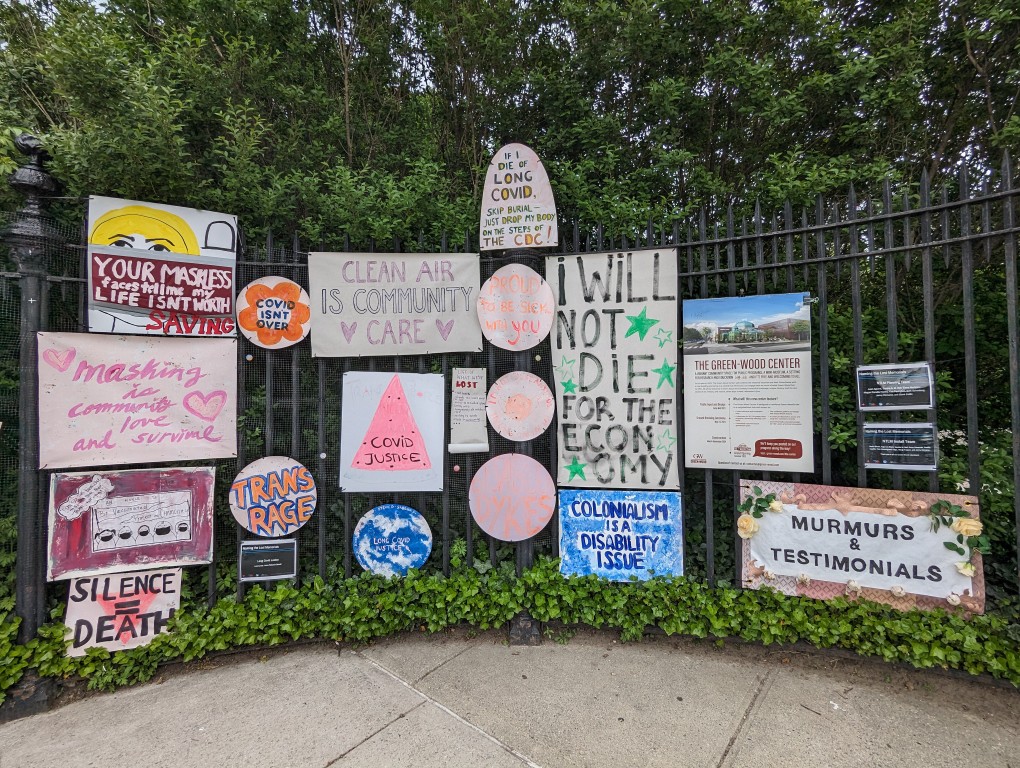
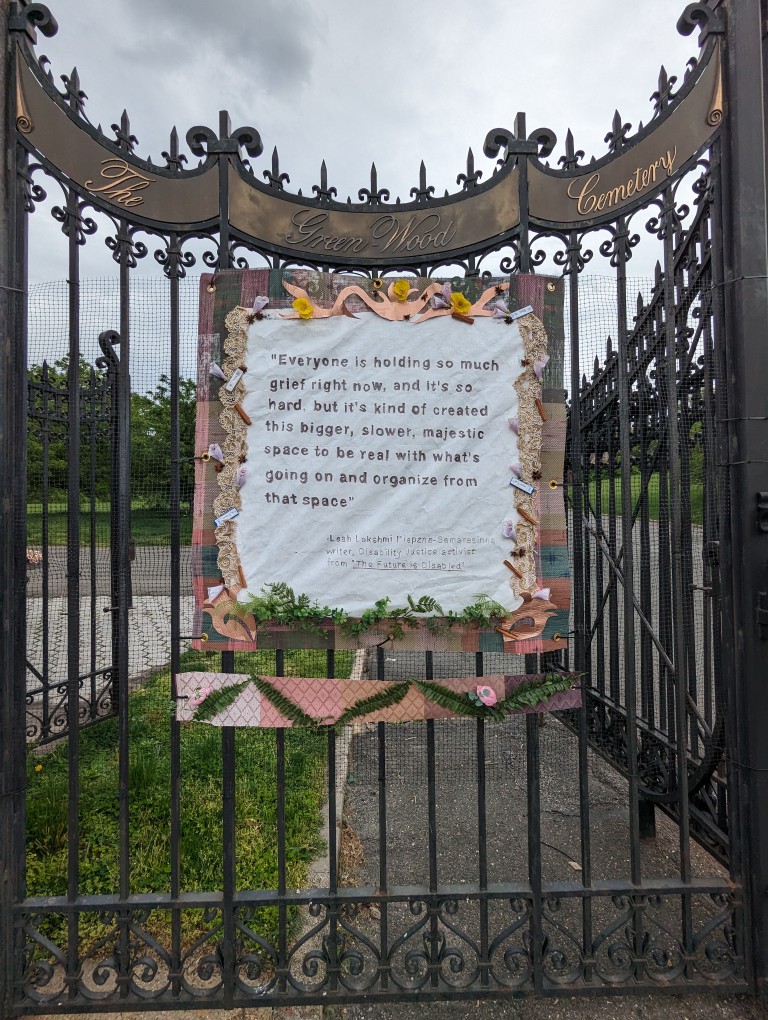
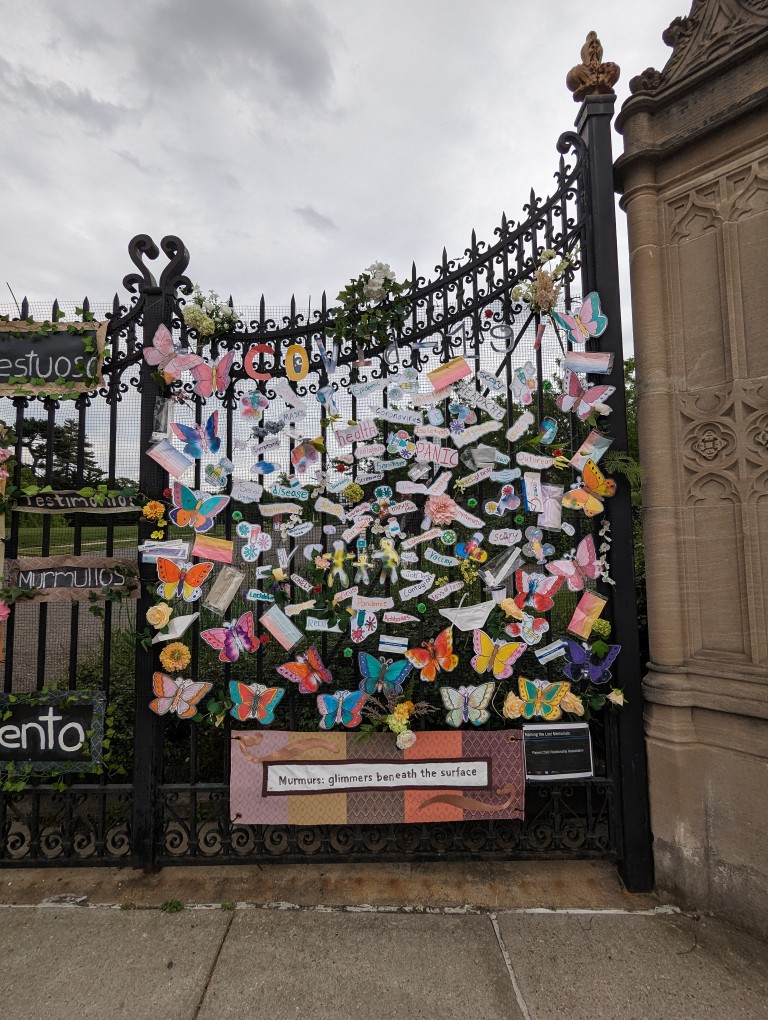
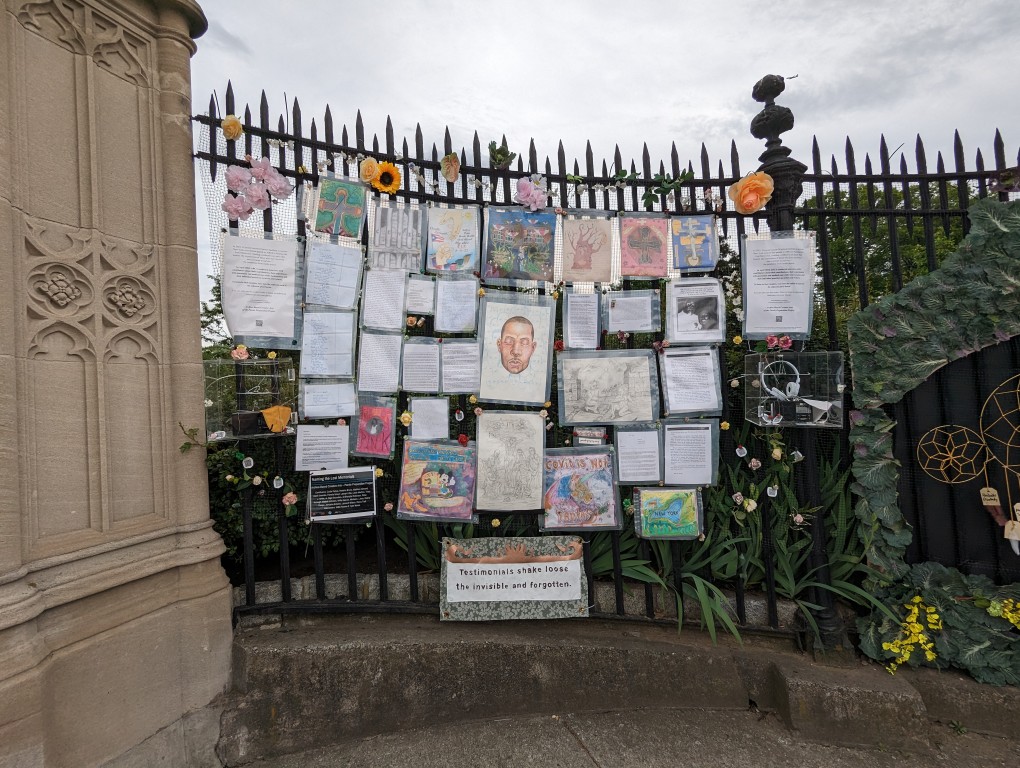
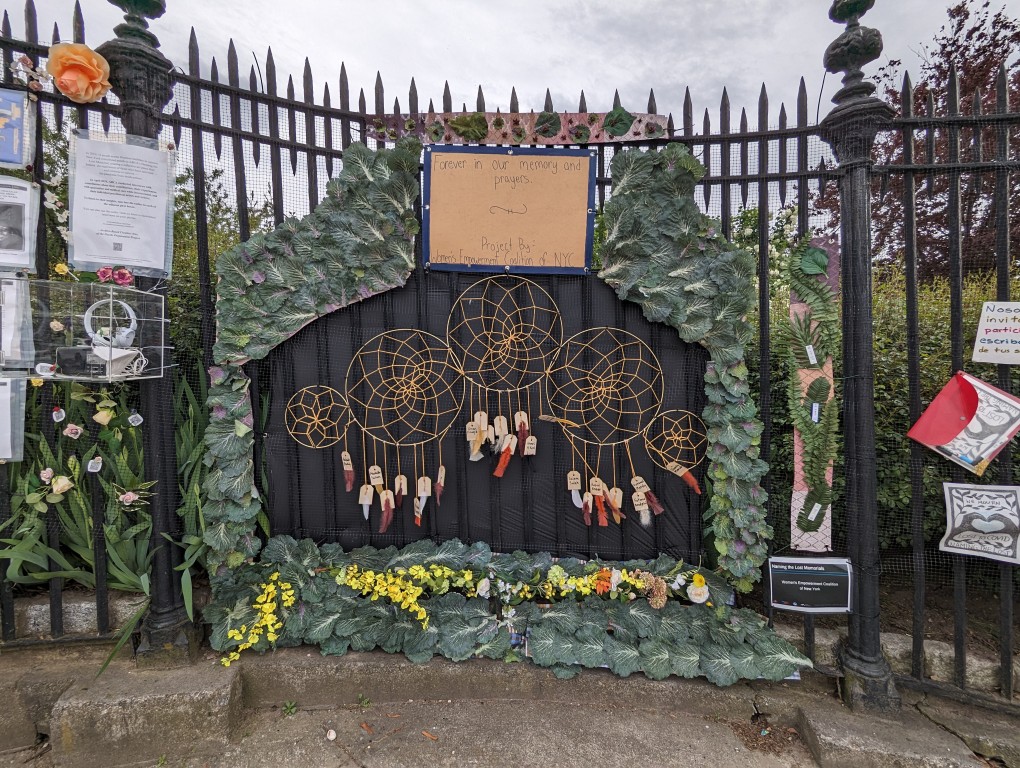
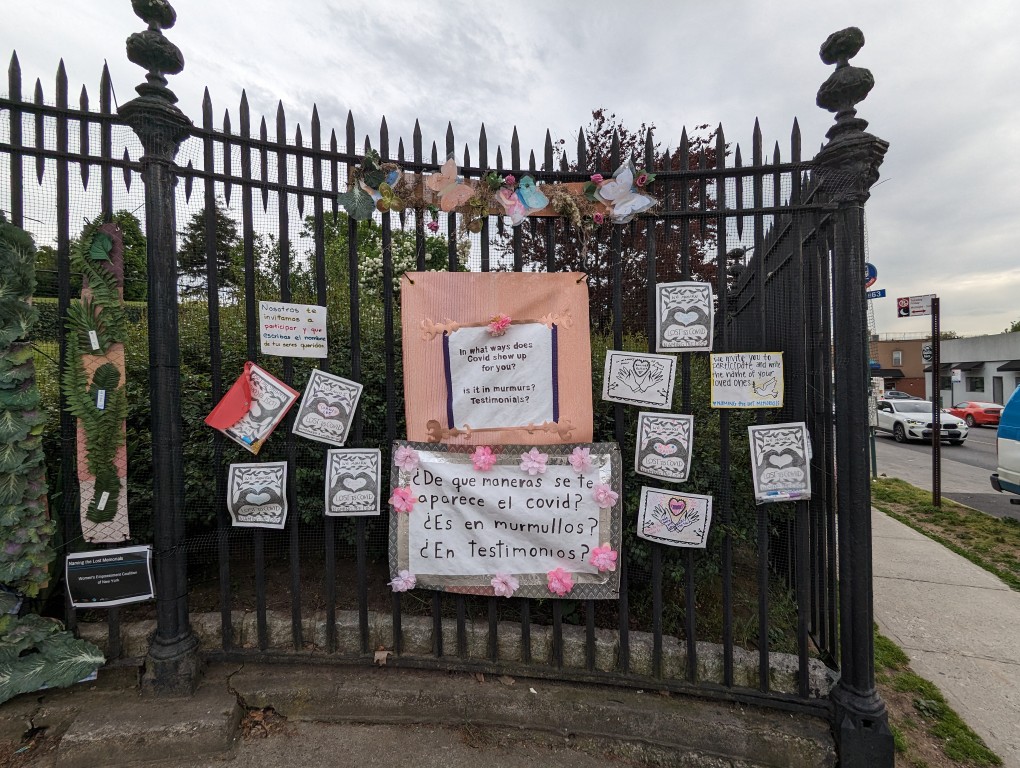
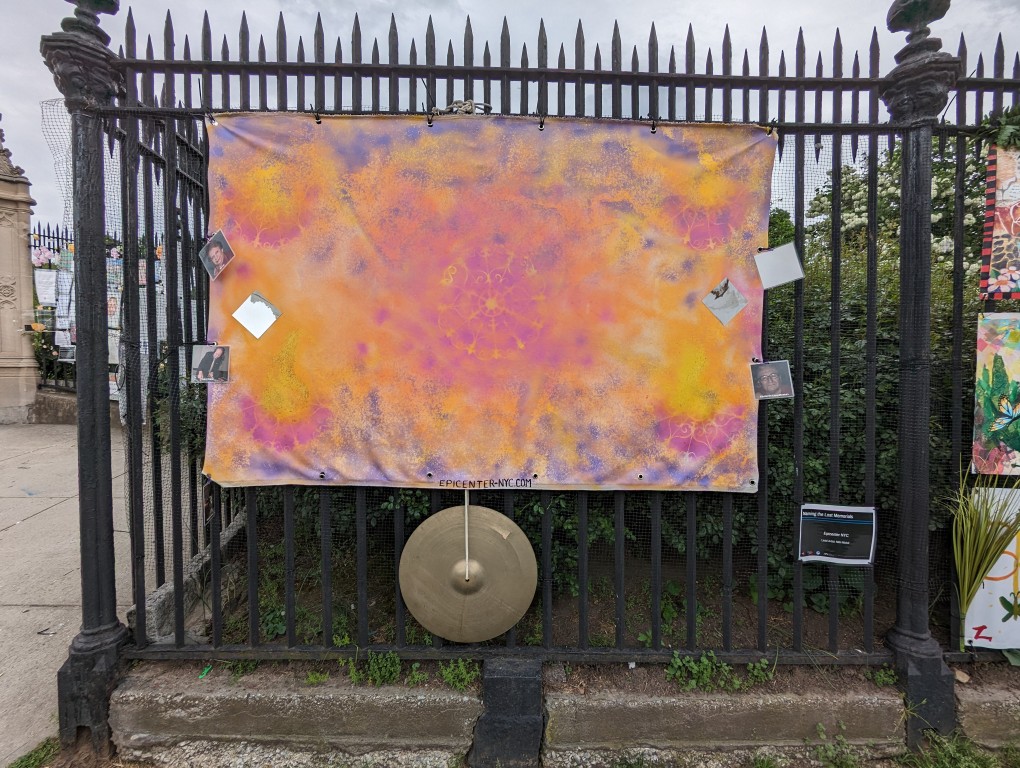
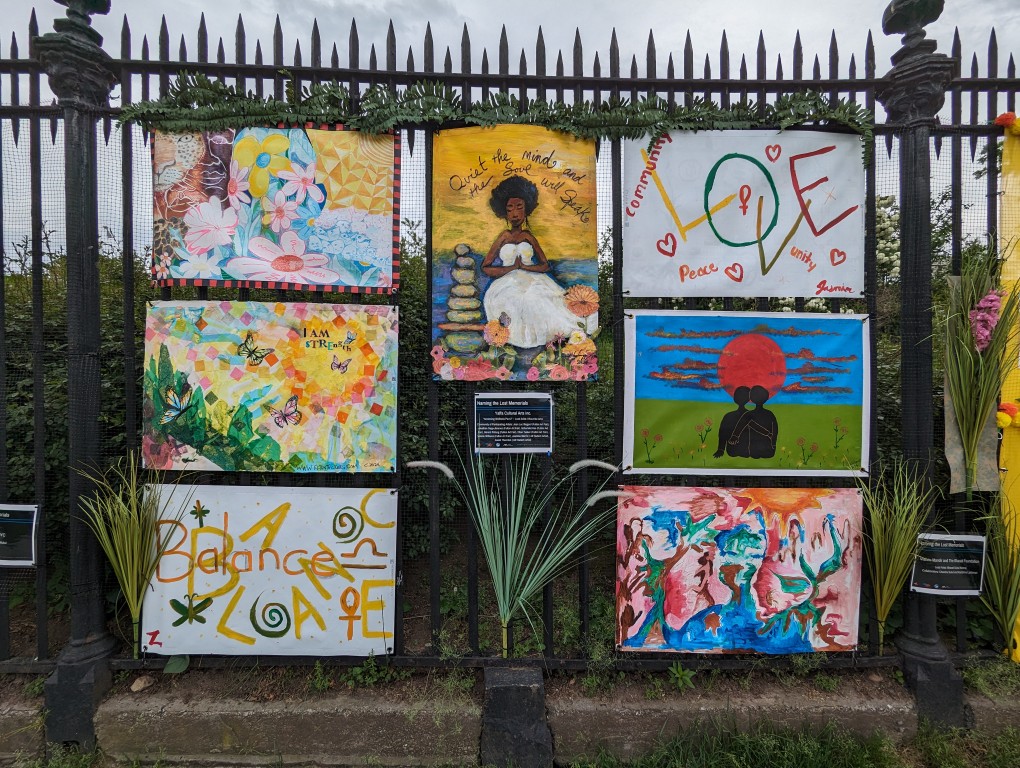
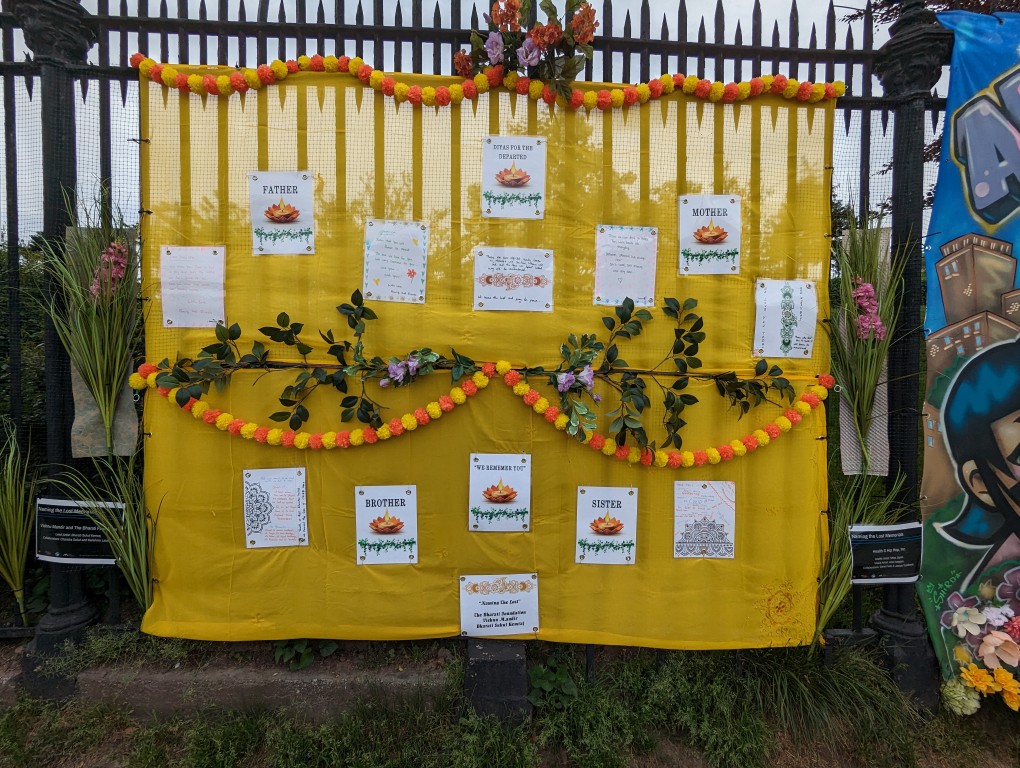
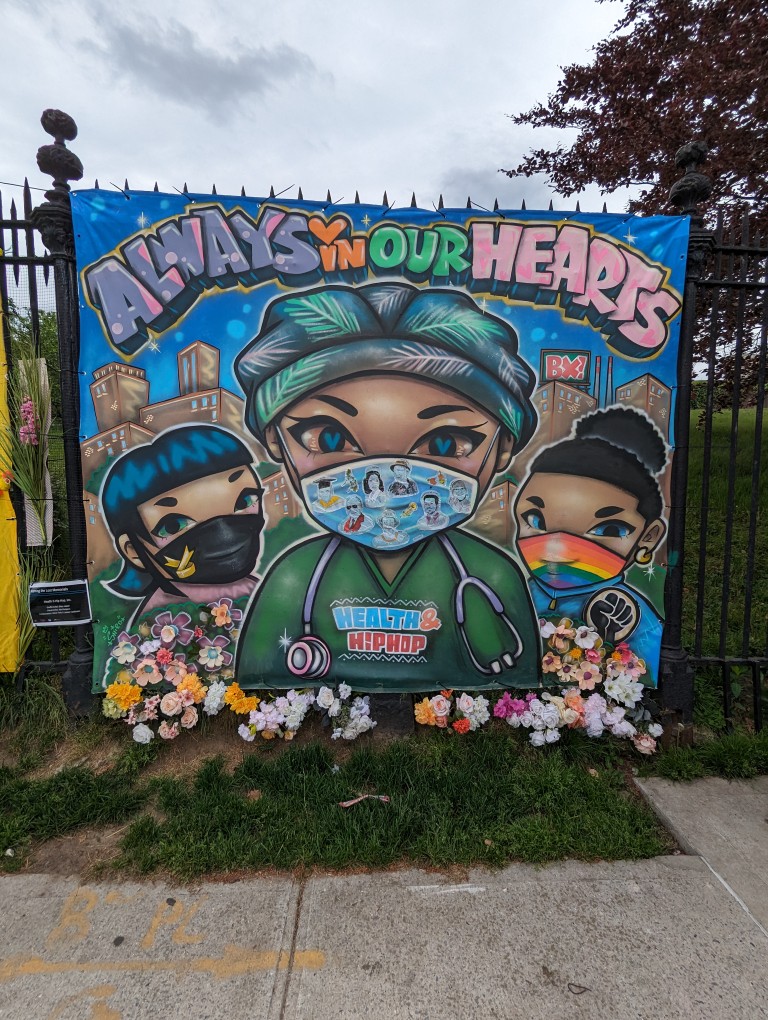
At the 5th Avenue Main Entrance to Green-Wood Cemetery in Brooklyn, New York, there are impressive memorials created by folks in the community to remember those who were lost due to COVID-19 and recognize those still suffering from Long COVID.
The installation is called Naming the Lost, and it will be up through May 29, 2024. I am including photos below, but it is far more impressive to see in person. The work that these people put into this is a testament to their love and grief. It also points to the disproportionate effect of the virus on our densely populated urban environment–in terms of infection rates, mortality, messaging, and disruption.