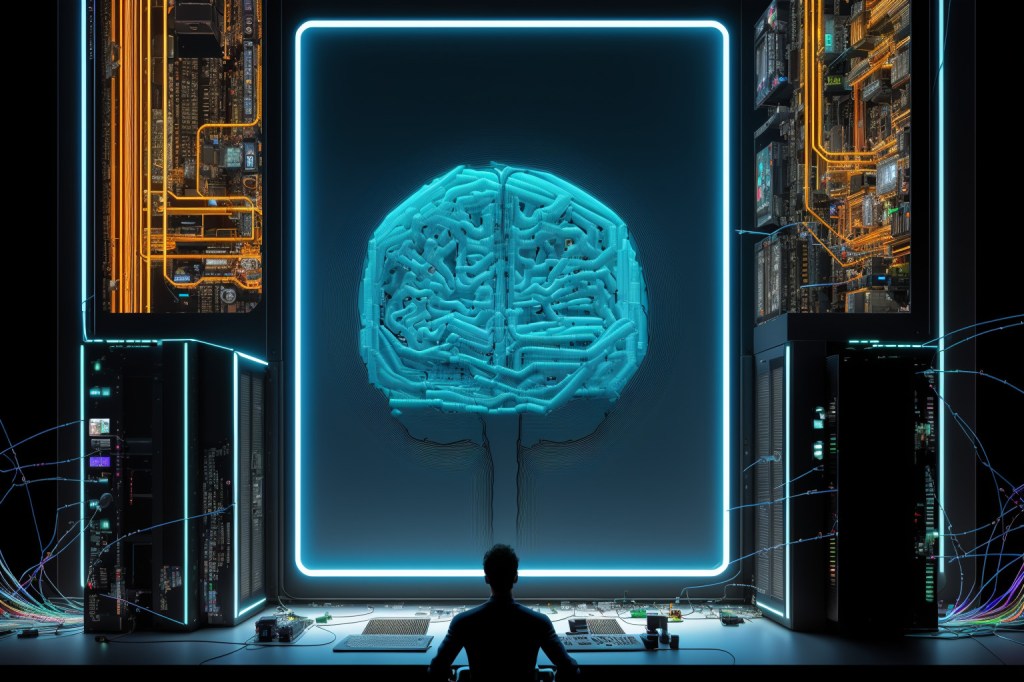
I used controlnet in A1111 to feature an fMRI scan of my brain in this image that I call, Mind Manifesting Mind. In all of the images that I create using Stable Diffusion that feature a brain, I use screenshots of my brain’s fMRI scan that I created using Osirix for MacOS some years ago.
    Alas, poor Yorick! I knew him, Horatio: a fellow
    of infinite jest, of most excellent fancy: he hath
    borne me on his back a thousand times; and now, how
    abhorred in my imagination it is! my gorge rims at
    it. Here hung those lips that I have kissed I know
    not how oft. Where be your gibes now? your
    gambols? your songs? your flashes of merriment,
    that were wont to set the table on a roar? Not one
    now, to mock your own grinning? quite chap-fallen?
    Now get you to my lady's chamber, and tell her, let
    her paint an inch thick, to this favour she must
    come; make her laugh at that. -Shakespeare, Hamlet
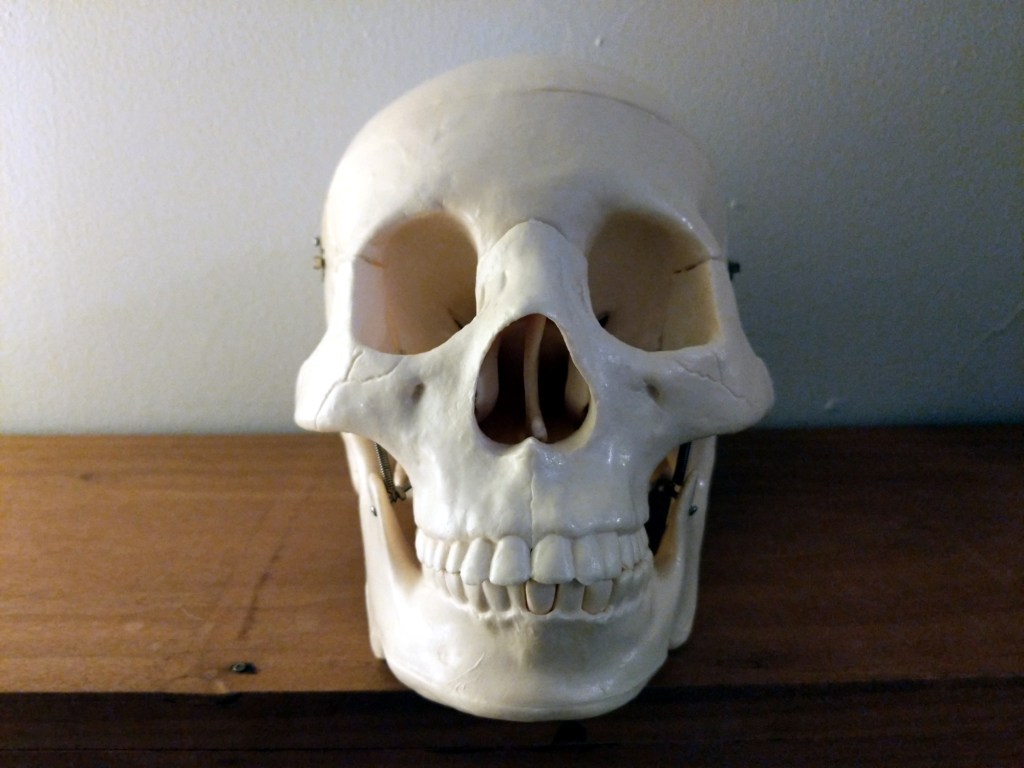
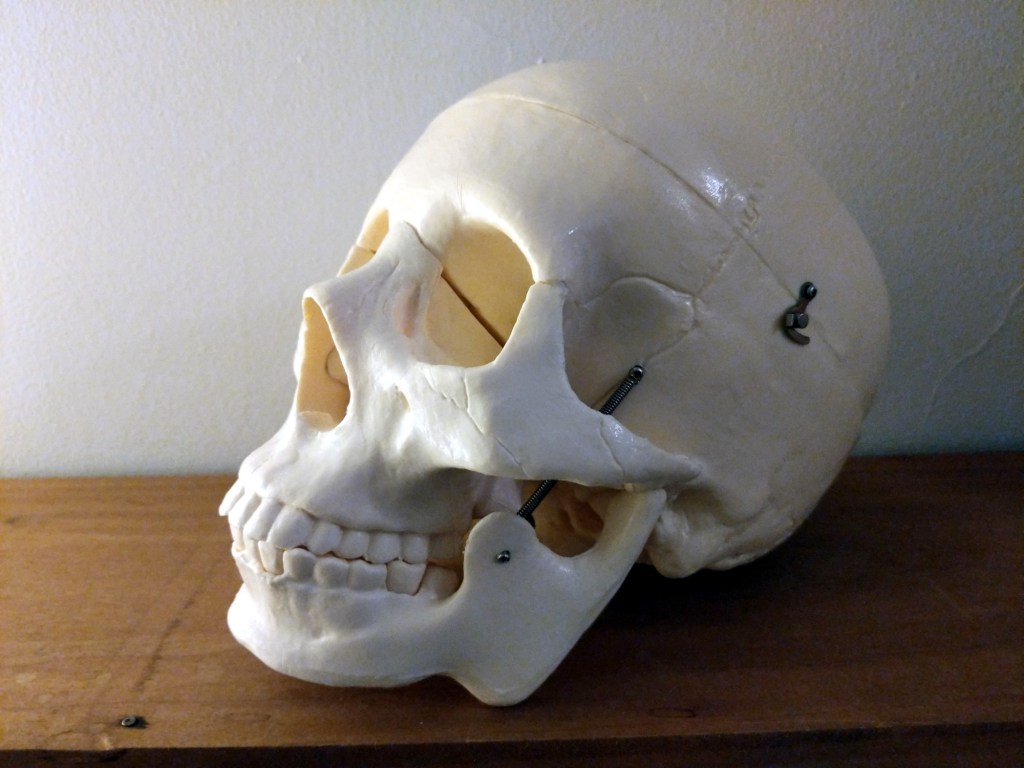
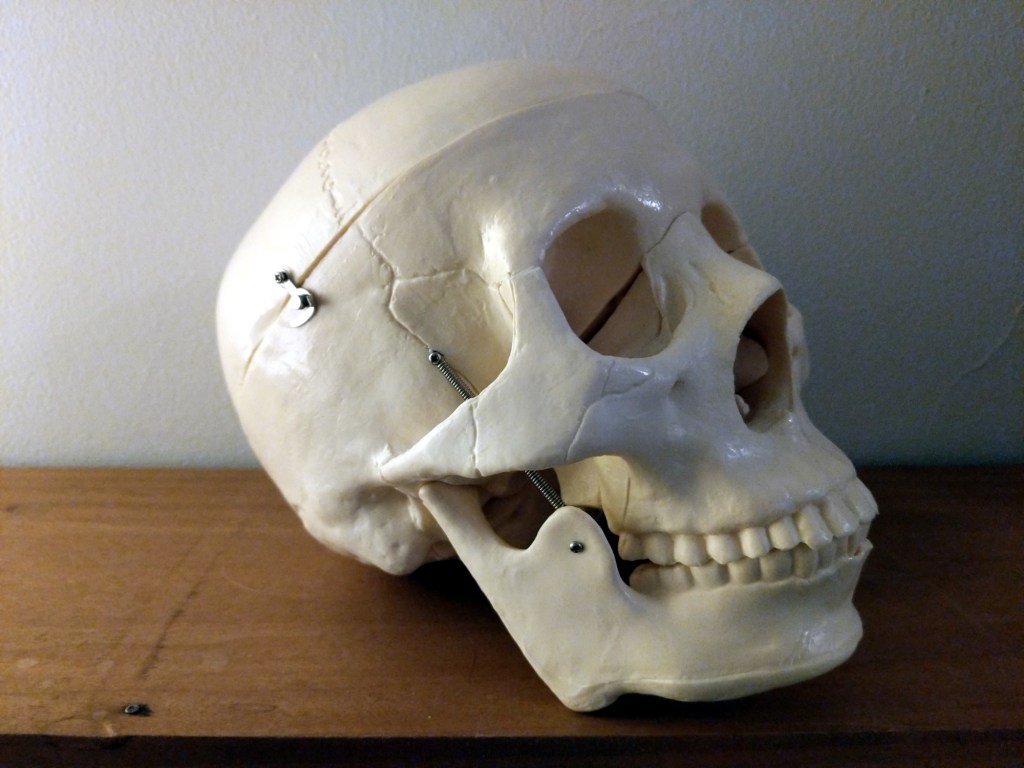
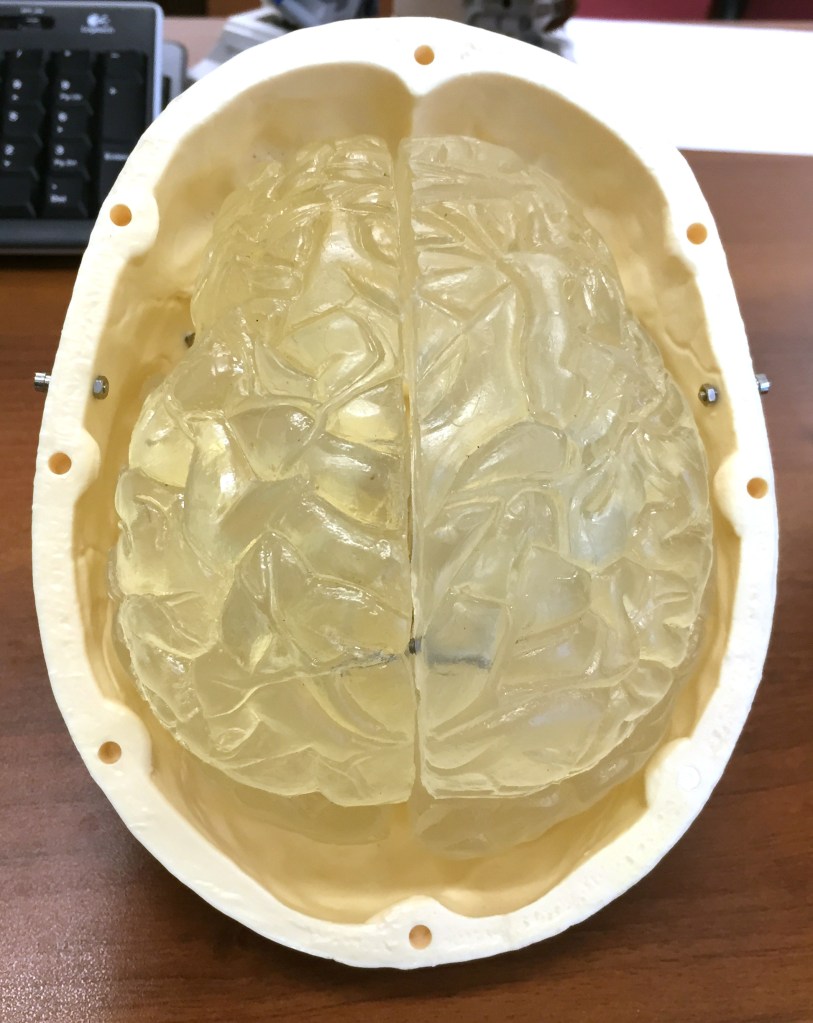
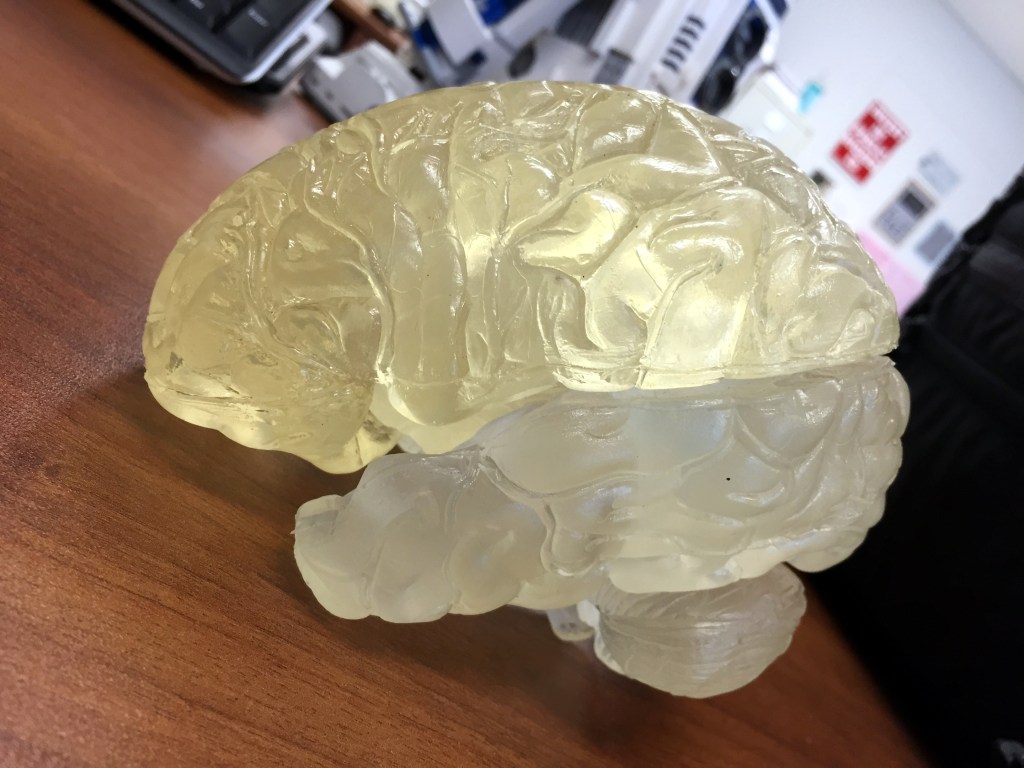
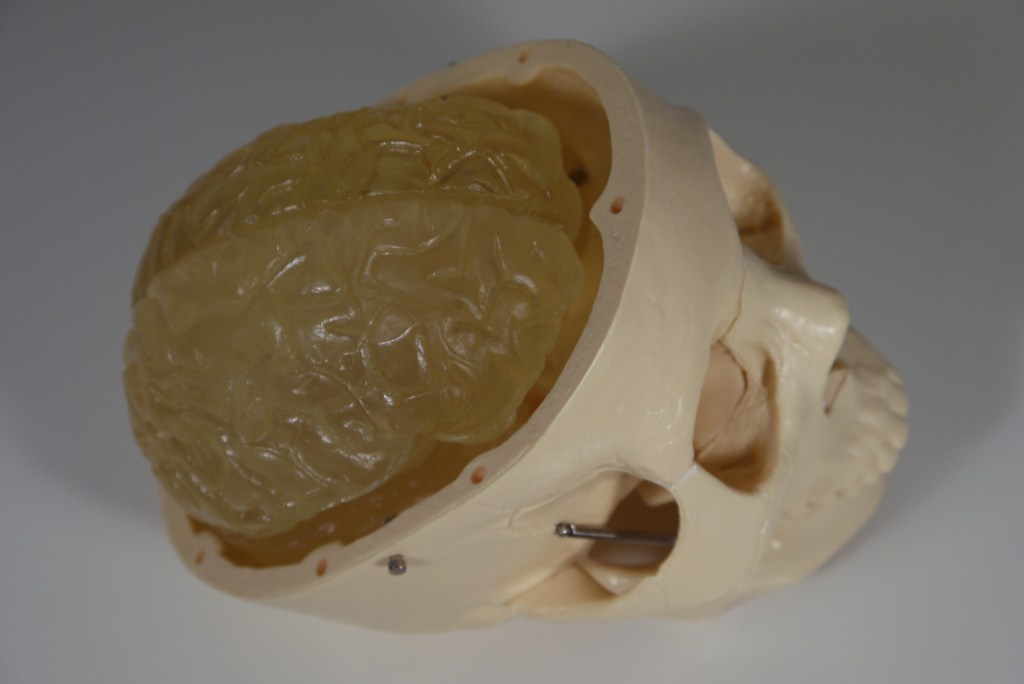
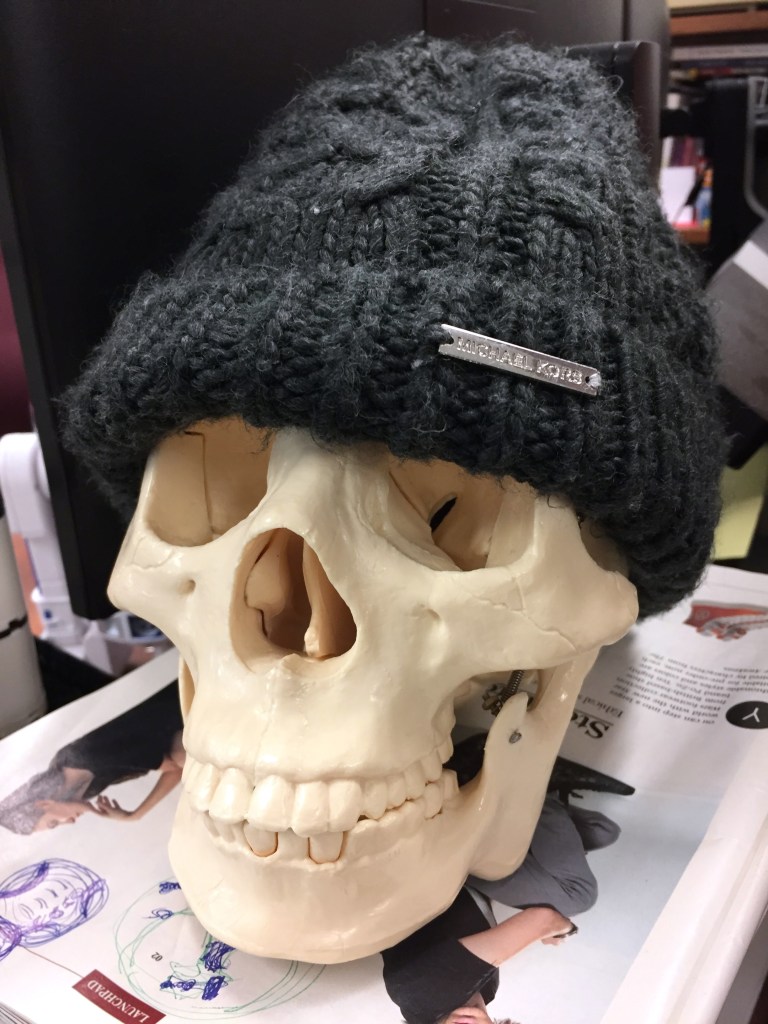
I bring my trusted skull and brain model nicknamed Yorick to my writing and science fiction classes when I want to talk about something related to cognition–e.g., how our attentional focus works, cognitive costs of switching cognitive tasks, time delay from sensory perception to processing to conscious awareness, where are the speech regions–Broca’s area and Wernicke’s area–located, etc. Yorick’s skull and multi-component brain gives students something that they can see and feel and manipulate when it gets passed around the classroom.
And when students leave a hat behind, Yorick gets a treat.
Overall, the page now has a table of contents that helps with understanding and navigating the page’s wealth of information. In the primary source list, I added headings and dividers for decades and years with the titles in each year being alphabetized by author’s last name. Also, the biggest improvement was reformatting each entry in the latest MLA style with information gleaned from my research and the Internet Speculative Fiction Database. Those stories and chapters that I did not have on hand are therefore listed without inclusive page numbers (I will add these as I source each item). In the secondary sources list, I reordered these alphabetically by author’s last name as these are a reference source and chronology isn’t as important as it is for the primary source list.
The number of sources listed in the primary source list increased 61% from 103 to 166. Each includes parenthetical notes about the specific brain-related narrative elements. Many thanks to James Davis Nicoll and the commenters on his “Get Out of My Head: SFF Stories About Sharing Brain-Space With Someone Else” (Tor.com, 8 Nov. 2018) article for contributing some of the new titles to the primary source list.
The number of second sources increased 141% from 17 to 41, which includes a French title that I can’t wait to get my hands on: Laurent Vercueil’s Neuro-Science-Fiction (Le Bélial, 2022).
I’ll continue adding to this bibliography as well as the others that I maintain as a part of my research interests. If you have a useful source that I should add, please send it my way. Also, I’m open to collaboration, so let me know if you’re likewise inclined and would like to discuss a project!
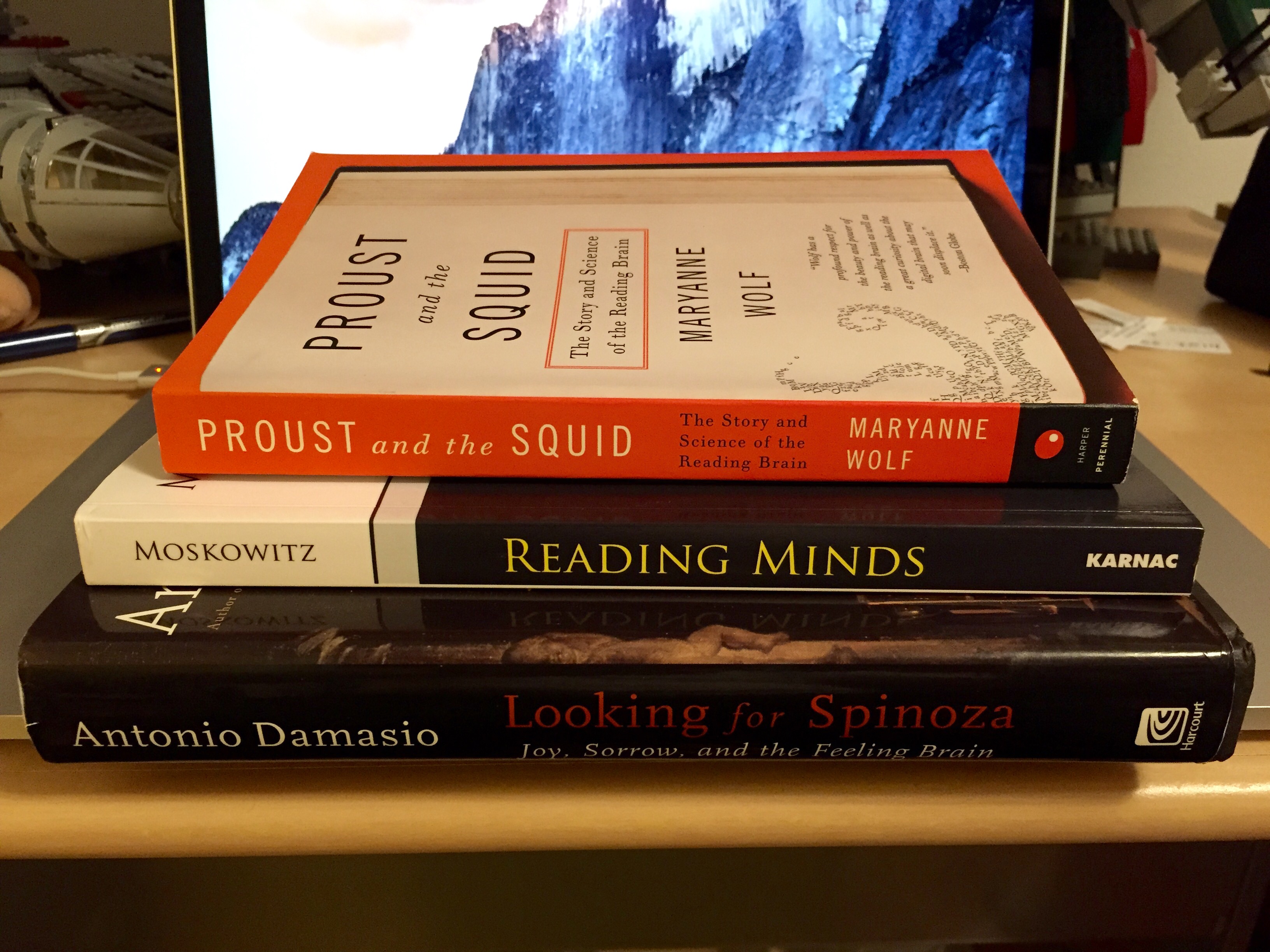
I had a fun and productive time during this year’s Spring Recess in our new home of Brooklyn. I read three brain-related books: Maryanne Wolf’s Proust and the Squid, Michael Moskowitz’s Reading Minds, and Antonio Damasio’s Looking for Spinoza. I took the subway to Manhattan twice with Y and Little My to visit Kinokuniya Bookstore, Sun Rise Market, Uncle Sam’s Army Surplus, the New York Public Library, and Washington Square. I picked up an M65 field jacket and put together an EDC kit. I walked to Microcenter twice–each time scoring a free 16GB flash drive thanks to a new coupon promotion. To cap the week off, I completed a draft of my PARSE documentation for advancement at City Tech and posted assignments for tomorrow’s classes on OpenLab. Now, I feel ready to see this semester through to the end.
A question for my students: how did was your week away from the college? Are you ready to see things through?
Back in 2007, I made a deal with a friend to participate in his fMRI brain scan study at the University of Liverpool in exchange for a copy of the DICOM data from my scan. He agreed to the trade.
Since then, I occasionally pull my scan data off the shelf and dust off the cobwebs and disk errors, and import it into the DICOM Viewer, OsiriX (e.g., as I did in 2009). With the latest versions, I have had a lot of trouble importing the files as they were given to me into OsiriX. Luckily, I saved the installers for earlier versions including the venerable version 3.5.1, which still runs fine on MacOS X Mavericks and Yosemite.
Using OsiriX’s many features, I created these four videos and an album of images of my 2007 brain. I wonder how it has changed since that time–completing my MA, then PhD, taking a postdoc at Georgia Tech, and now, working at City Tech. Also, I think about the technologies of representation that make it possible for me to see my brain without injury or invasion–OsiriX and unseen software libraries for working with, manipulating, and displaying DICOM data, MacOS X and its technology APIs, my MacBook Pro retina, disk and flash drives, email (how I originally received the scan data), the fMRI machine that I sat in for 30 minutes to an hour, the physical laws behind each technology and the biology of myself, etc. What do you think about when you see my brain represented below?