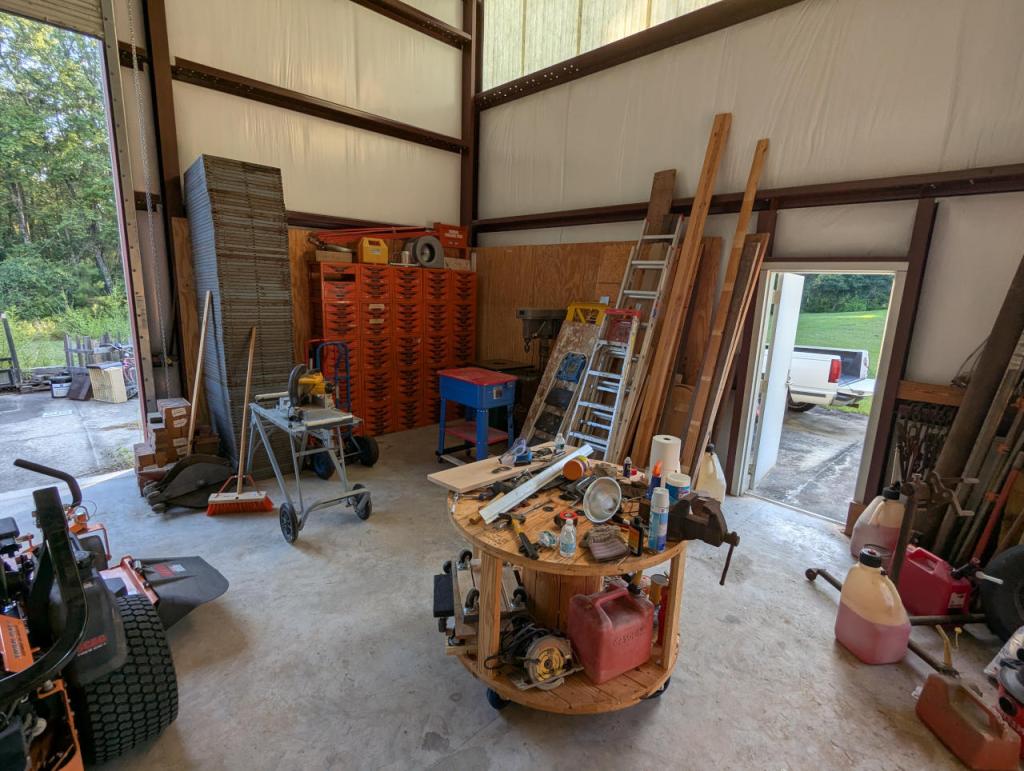
When I was visiting my folks a few weeks ago, one of our first stops was to Tait Feed and Seed in downtown Brunswick, Georgia. We needed to get three new blades for my dad’s 61″ cut Skag Tiger Cat II mower. We changed the blades and cut the grass twice while I was there. Even with such a wide cut, it takes about an hour and a half to cut the yard around their house, metal building, and the driveway from the gate, along the field, and to the house.
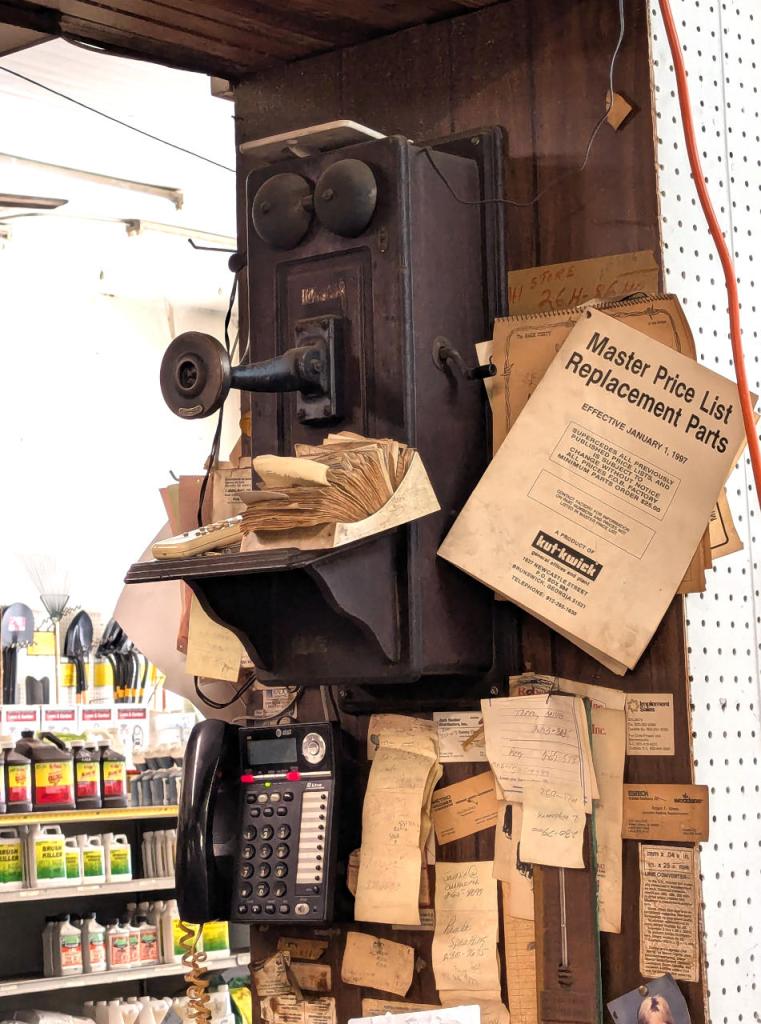
Besides the giant rat shown above, two other things caught my attention in the shop while we were there. First, they have an antique hand-crank phone stationed above their modern AT&T phone. Second, the Master Price List Replacement Parts catalog for Kut-Kwick mowers, which are designed and manufactured in Brunswick, reminded me of the first riding brush mower that I learned to use at Ellis Auto Parts on 341 Highway. I don’t know the year model, but the one I used many times was an updated version of this one from the 1960s.
Ellis Auto Parts, my family’s business that closed down in 1996 when my parents retired, used to carry Dorman Products, a line of automotive hardware such as bolts, nuts, washers, pins, caps, and a variety of other kinds of parts. While my dad sold a lot of our remaining stock when he closed the store, he kept a lot of unsold product and the metal drawers that we kept the stock in. When I was at home, I stacked up more of these drawers to create a grid against one wall. The full grid is 5 x 5, but I took a photo of 4 x 4 because one of the corner bins was missing a drawer that I couldn’t find–it is likely somewhere in the shop but waits to be rediscovered. I’m glad that we had access to all of these parts during my trip this time, because we made use of them in our many projects.
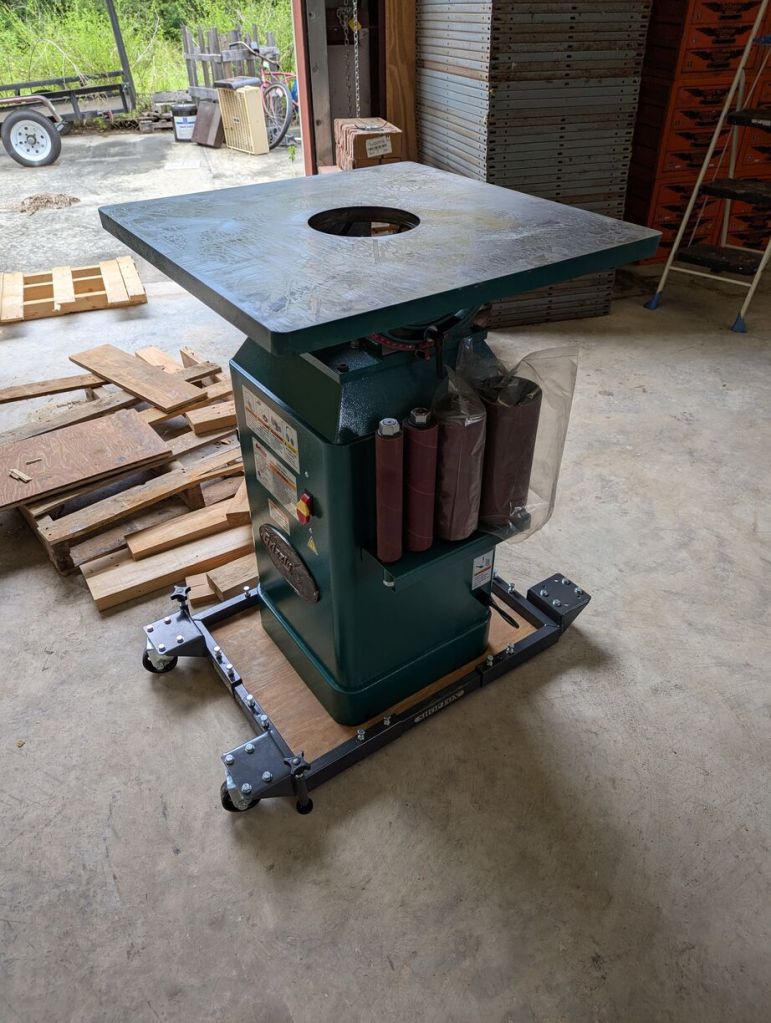
Another project for my dad and I was setting up his Grizzly oscillating spindle sander, which had been sitting on a broken pallet for some time.
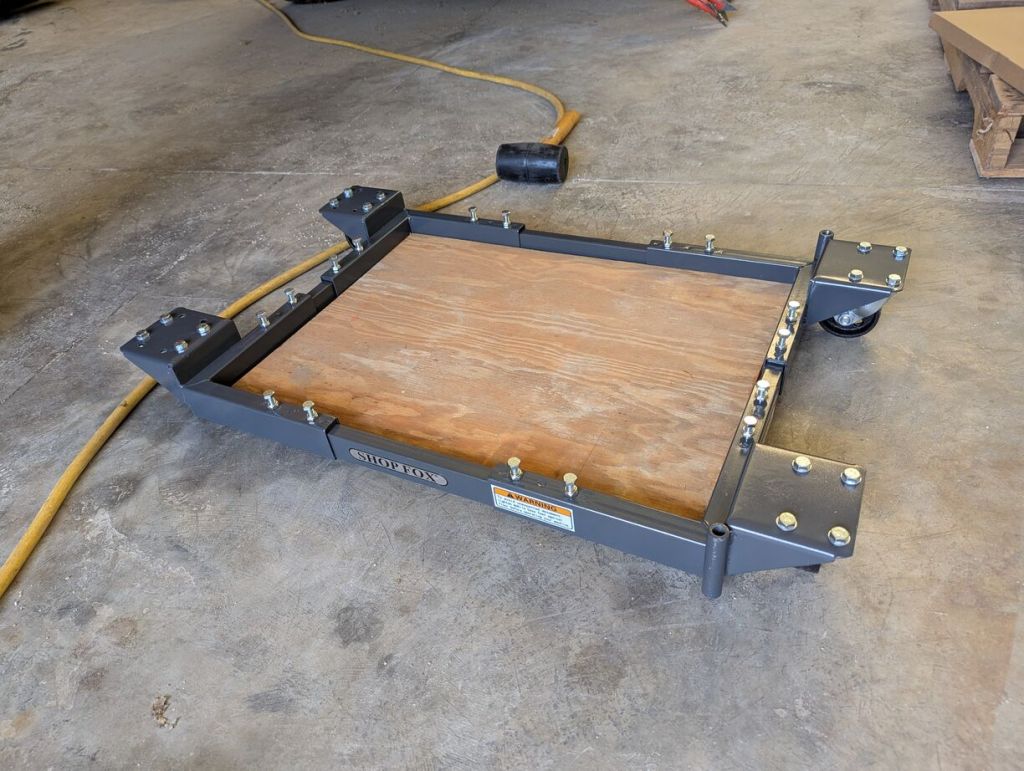
He had a rolling Shop Fox equipment stand, but it was slightly too large for the sander’s base. So, we cut a piece of 3/4″ plywood to fill its support area and distribute the weight of the sander.
Then, we layered some boards to create a ramp from the pallet the sander was on down to the Shop Fox equipment mover.
When he’s ready to use the sander, the Shop Fox mover has floating feet that can be lowered to take the weight off the front caster wheels.
My dad has a dozen or two of screw bottle car jacks that he used to press and hold every tongue-and-groove cypress board covering the walls and ceiling of the upper floors of their house. We made use of four of them to move two pieces of his heavy machinery into place in his shop.
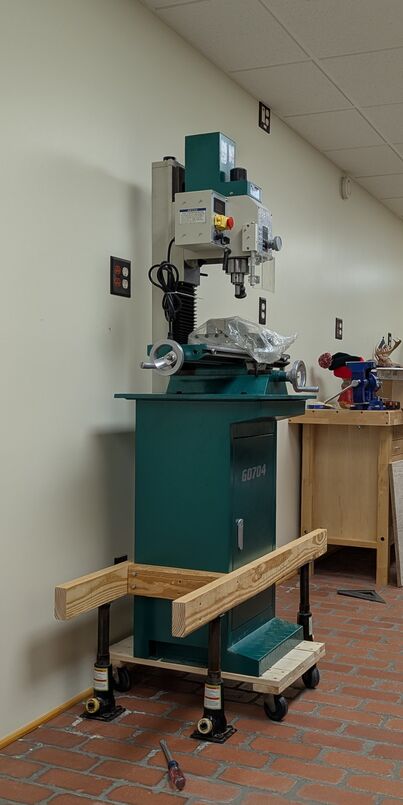
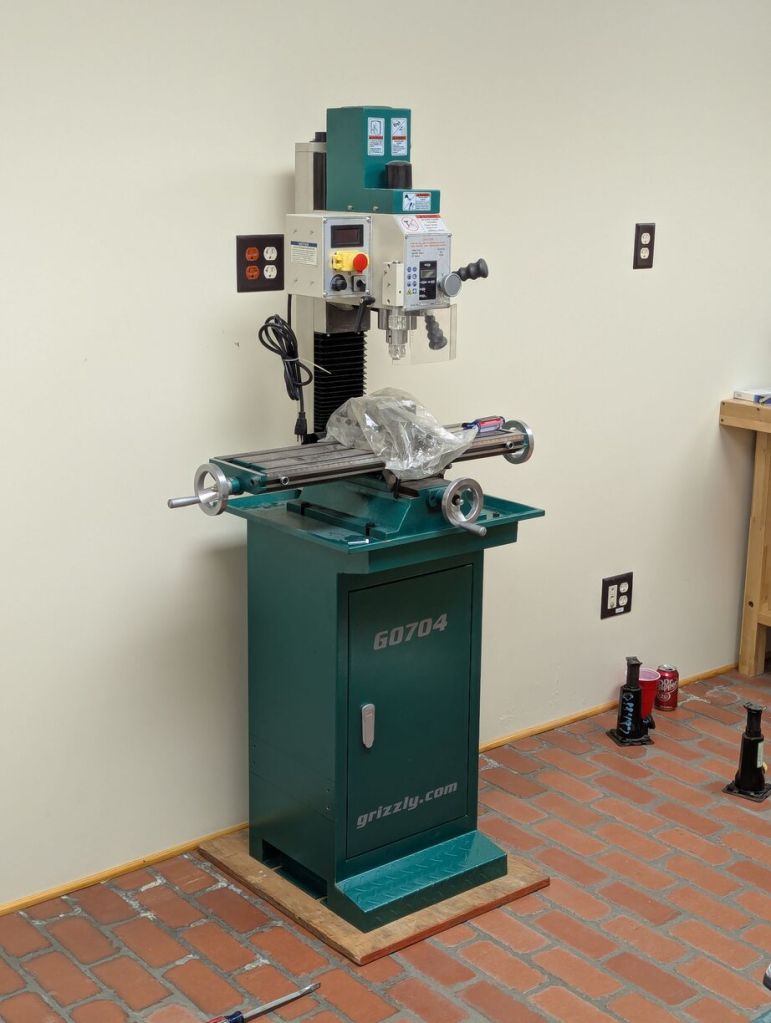
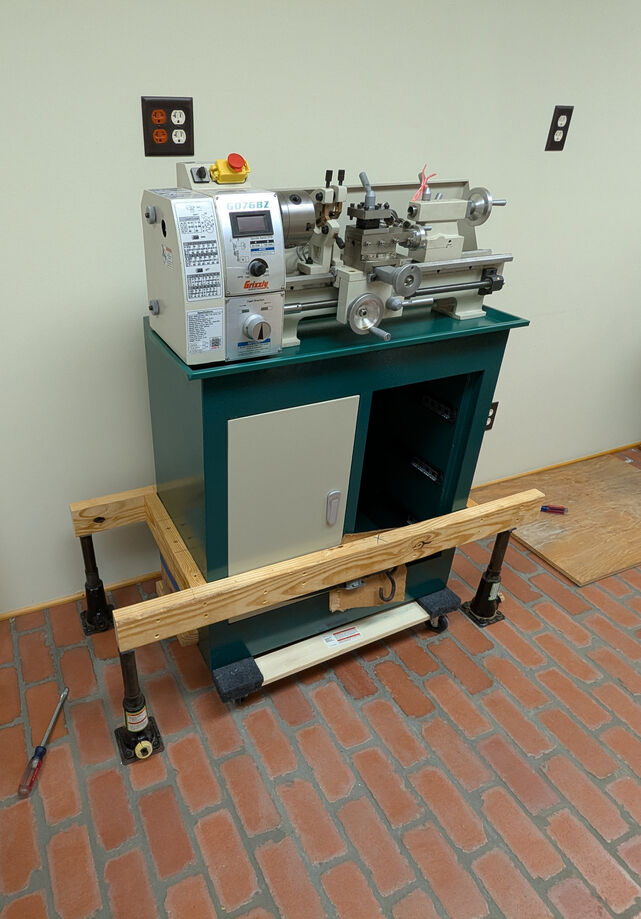
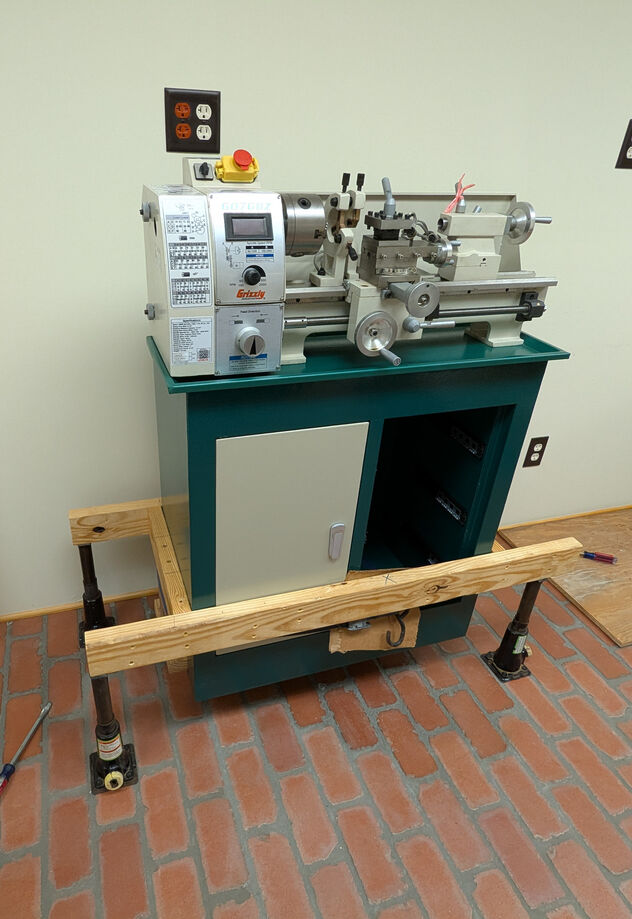
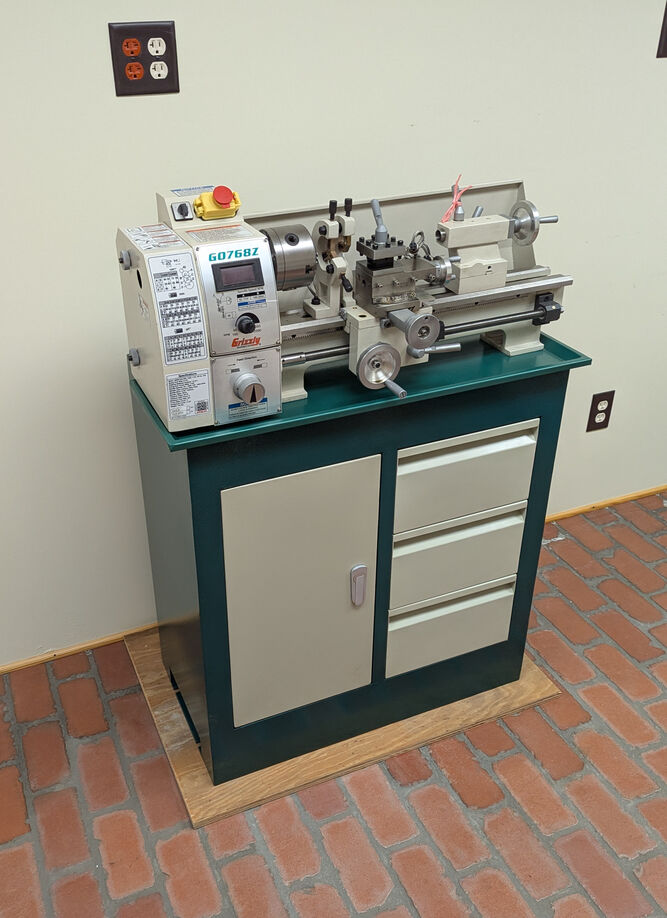
Some time back, he purchased a milling machine and lathe from Grizzly. He had managed to get them into his shop on furniture movers. Of course, they can’t be run on those platforms, so we needed to find a way to place them flat on the shop’s floor.
For the milling machine, which was heavier than the lathe, we drilled four holes through the metal cabinet and constructed a wood box with bolts going through the short sides of the wood box into the metal cabinet. We placed the four jacks under the long arms of the box, raised it a fraction of an inch to remove the furniture mover and then lowered the jacks until the cabinet rested on a 3/4″ plywood base that we cut to fit. Then, we removed the box from the cabinet after unbolting it and unscrewing the deck screws we had built the box with.
If you do something similar to this, be mindful of the total reach/height of the jack and its minimum. We built the box around the cabinet at a height that allowed for a slight lift and enough lowering to allow the jacks to be removed after the cabinet was lowered.
For the lathe, we did something similar, except we couldn’t drill through its cabinet to bolt the box to the cabinet as we had done with the milling machine because it is double walled and could potentially create problems with bolt alignment (and we would need much longer bolts).
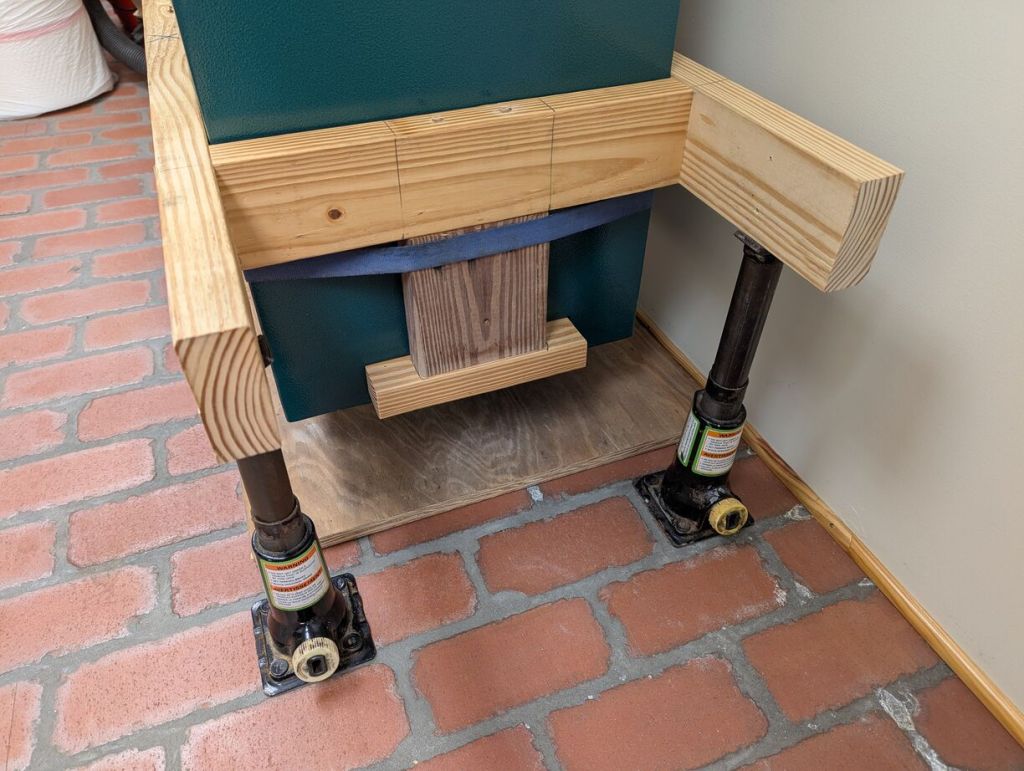
With the lathe being lighter than the milling machine, we felt safe building the box around the lathe’s cabinet and adding two “tongs” that fit into the recesses at the bottom of the cabinet. To make sure the tongs remained in place, we put a tie strap around these and the cabinet.
We lifted the lathe slightly to remove the furniture mover.
And then lowered it onto a custom piece of plywood for it to rest on the floor.
When you don’t have the muscle or manpower, use the tools at hand to get things done. As William Gibson writes, “the street finds its own use for things.”
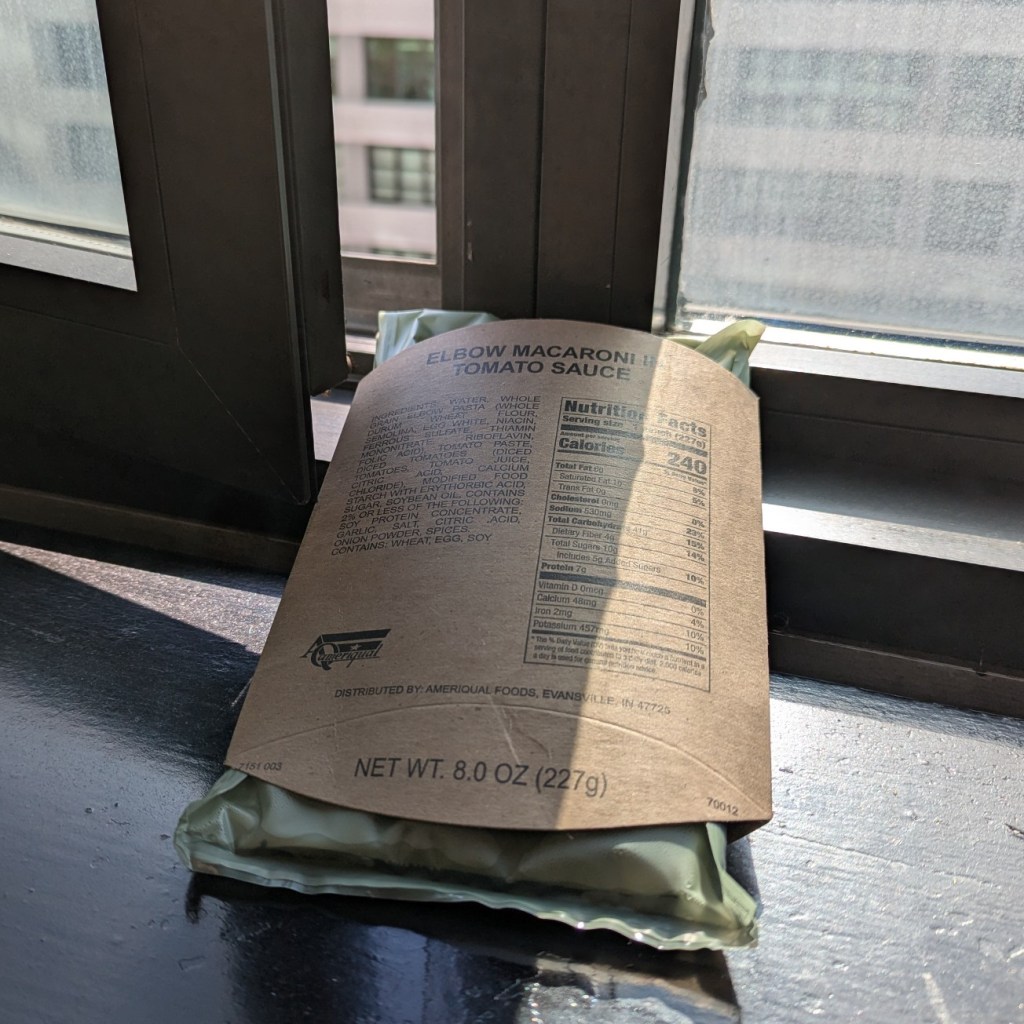
While its instructions state that “When ten or more heaters are used inside a vehicle or shelter, ensure the ventilation system is operating or a top hatch or door is open,” it gives me peace of mind to let my flameless ration heater (a water-activated magnesium, iron, and salt chemical heating device for MREs) do its thing on my supper next to a cracked window when I’m indoors as part of its reaction produces hydrogen. Also, it pays to remember that these things get HOT!