Tag: Georgia Tech

  • Notes from LMC Conversation Panel on “Books, Libraries, and the Digital Future” with Jay David Bolter, Lauren F. Klein, and Me

    These are my speaking notes and discussion notes from today’s School of Literature, Media, and Communication Conversation following Robert Darnton’s talk yesterday on “Books, Libraries, and the Digital Future.” The panelists included Jay David Bolter, Lauren F. Klein (remotely), and me.

    We met with an audience of about 25 members of the Georgia Tech community in the Stephen C. Hall Building, Room 102 from 11:00am-12:00pm.

    1. My research in the area
      1. My interest in eBooks comes from two tangents.
        1. First, it comes from my research interests in video game narratives in older software for the Commodore 64, Amiga, IBM-PC, Apple II, and Apple Macintosh platforms. Part of this research focuses on the way characters read within the game—particularly, computer based reading on terminals, tablets, virtual displays, etc. and how these ideas filter into reality/production and vice versa.
        2. Second, it comes from my dissertation research on something that William Gibson wrote about obsolescence and how our technologies—typewriters, Apple IIc, etc.—are fated to become junk littering the Finn’s office—in an “Afterword” to his Sprawl trilogy of novels: Neuromancer, Count Zero, and Mona Lisa Overdrive [To read it, scroll to the bottom of this page]. The trouble with sourcing this text was the fact that it was not published in a physical book. Instead, I discovered from a Tweet that a mutual friend made with the writer that it come from an early eBook designed for the Apple Macintosh Portable by Voyager Company (what’s left of this company today creates the Criterion Collection of films).
          1. Gibson, William. “Afterword.” Neuromancer, Count Zero, and Mona Lisa Overdrive: Expanded Books. Voyager Company. 1992. TXT File. Web. 25 March 2012.
          2. Gibson has done other things with ebook and experimental writing such as his exorbitantly priced Agrippa: A Book of the Dead, a floppy disk based e-poem that erases itself after “performing” one time.
        3. Since working with Gibson’s ebook, I’ve begun studying other ebooks—rediscovering ones that I read a long time ago and rethinking what constitutes an ebook—thinking about encyclopedia precursors to Wikipedia and other software such as the Star Trek: TNG Interactive Technical Manual, which does on the computer things that Rick Sternbach and Michael Okuda could not do in their print Technical Manual.
        4. We can talk more about this later, but I support Aaron Swartz’s “Guerilla Open Access Manifesto.” In my research, I have deployed my own tactics for reading and manipulating text that enable scholarship that I otherwise would be unable to do. Read more about fair use and transformation.
    2. My response to Darnton’s talk
      1. Aaron Swartz’s “Guerilla Open Access Manifesto
      2. Peter Purgathofer’s Lego Mindstorms-MacBook Pro-Kindle-Cloud-based OCR assemblage for ripping text from Kindle ebooks
      3. DPLA  scans of Dickinson’s manuscripts (open) and copyrighted scholarly editions (closed).
      4. Issues of the Archive, Access, and Control.
    3. My suggestions for future research directions
      1. The relationship between haptic experience of pulp books and ebooks (e-reader, tablet, computer, Google Glass, etc.). How do we read, think about, and remember books differently based on the modalities of experiencing the book? We know that the brain constructs memories as simulations, so what are we gaining and losing through alterations to the methods of interacting with writing?
      2. A history of eBook readers—fascinating evolutionary lineage of ebook reading devices including Sony’s DD8 Data Discman (http://en.wikipedia.org/wiki/Data_Discman).
      3. How are our students reading? More students this year than last asked me if they could purchase their books for ENGL1101 and Tech Comm as ebooks. How many students are turning to ebooks due to their cost or ease of access (pirating)? I don’t mind students purchasing ebooks over traditional books, but I have them think about the affordances of each.
      4. As researchers, how should we assert our fair use of texts despite the intentions of copyright holders? We no longer own books, but instead, we license content. [Purgathofer mentions this, but Cory Doctorow and others have commented on this at length: one source. Another more recent source.]
      5. How do we use ebooks and traditional books differently/similarly? For example, Topiary (aka Jake Davis), one of the former members of LulzSec, said earlier today on ask.fm that he prefers ebooks for learning and studying, but he prefers traditional books for enjoyment.
    4. Other responses, comments, and questions
      1. Jay Bolter: What about the future of books, the status of the book, and the status of libraries? What will happen to literature and the literary community? What is the cultural significances of print/digital to different communities (e.g., general community of readers vs. community represented by the New York Review of Books)?
      2. Lauren Klein: What are the roles of the archive and how do readers access information in the archive? We should think about how people use these digital archives (e.g., DPLA). In her work, she deploys computational linguistics: techniques to study sophisticated connections between documents. How is the information being used? Deploying visualization techniques to enable new ways of seeing, reading, and studying documents.
      3. Grantley Bailey: What about people who grow up only reading on screens/ebooks? What will their opinions be regarding this debate?
      4. Aaron Kashtan: Commented about graphic novels and comics in the digital age and about how these media remain entrenched in traditional, print publishing. Also, Aaron is interested in materiality and the reader’s experience.
      5. John Harkey: Commented on poetry’s dynamism and its not being wedded to books/chap books. Poetry is evolving and thriving through a variety of media including the Web, as electronic art, and experimental literature. We should think about literature as vehicles of genres and artifactual heterogeneity (essay, collage, posters, augmented reality, etc.).
      6. Lisa Yaszek: Pan-African science fiction is likely a model for the future. In the present, no single nation can support a thriving publishing industry for SF, but together, African SF is taking off with the diffusion of  new technologies of distribution and reading (ubiquity of cellular phones, wifi, cellular data, etc.).
  • LMC3403, Technical Communication: Lego, Haptics, and Instructions

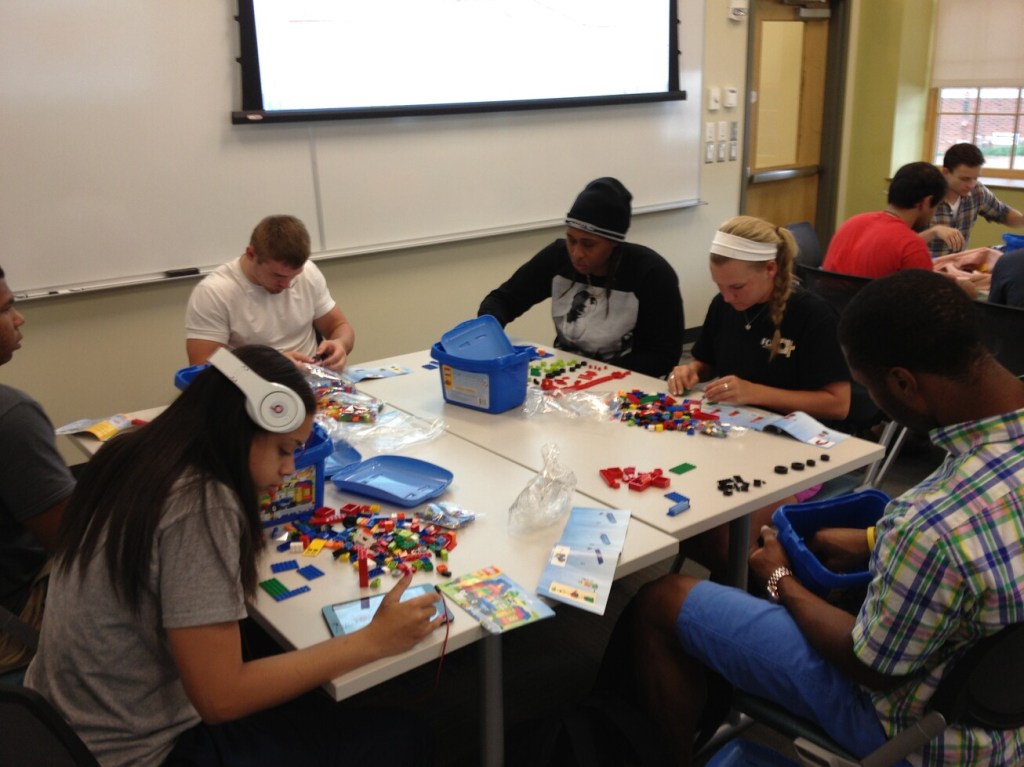
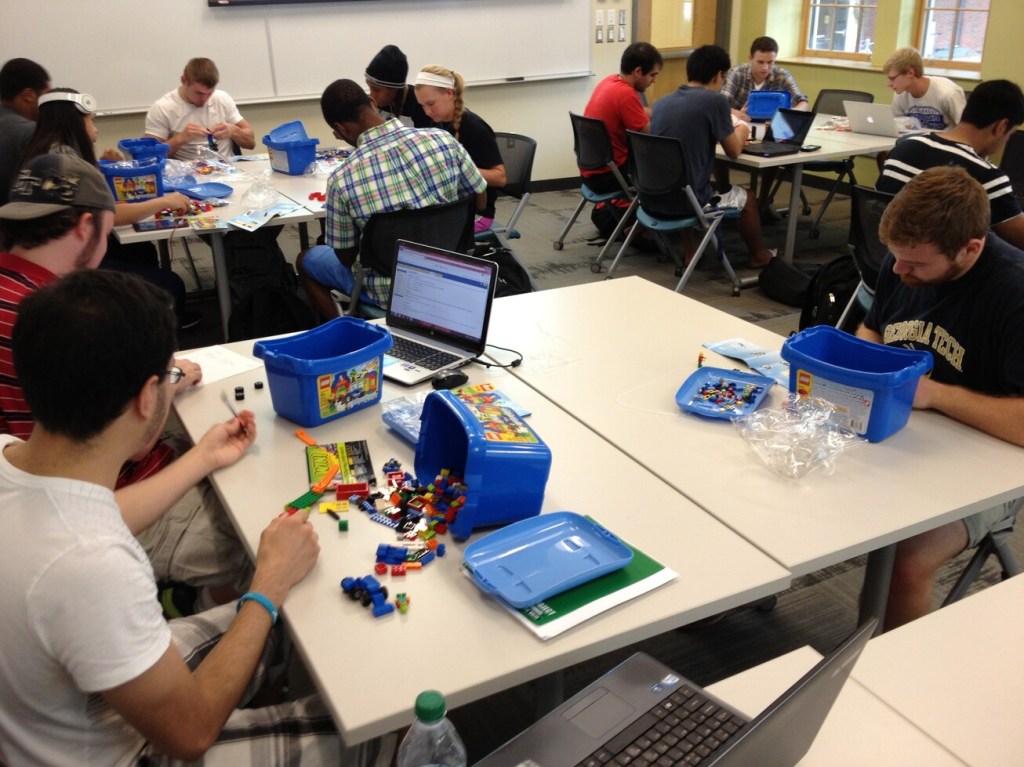
    LMC3403 Technical Communication students working with LEGO

    My LMC3403, Technical Communication students are well into their second unit project on reader-centered and process-driven fundamentals. In a fun assignment, I wanted the students to try out many different types of technical communication deliverables for different readers/audiences. Also, I wanted them to think differently about nonverbal communication with the heavy emphasis on haptics, physicality, and making.

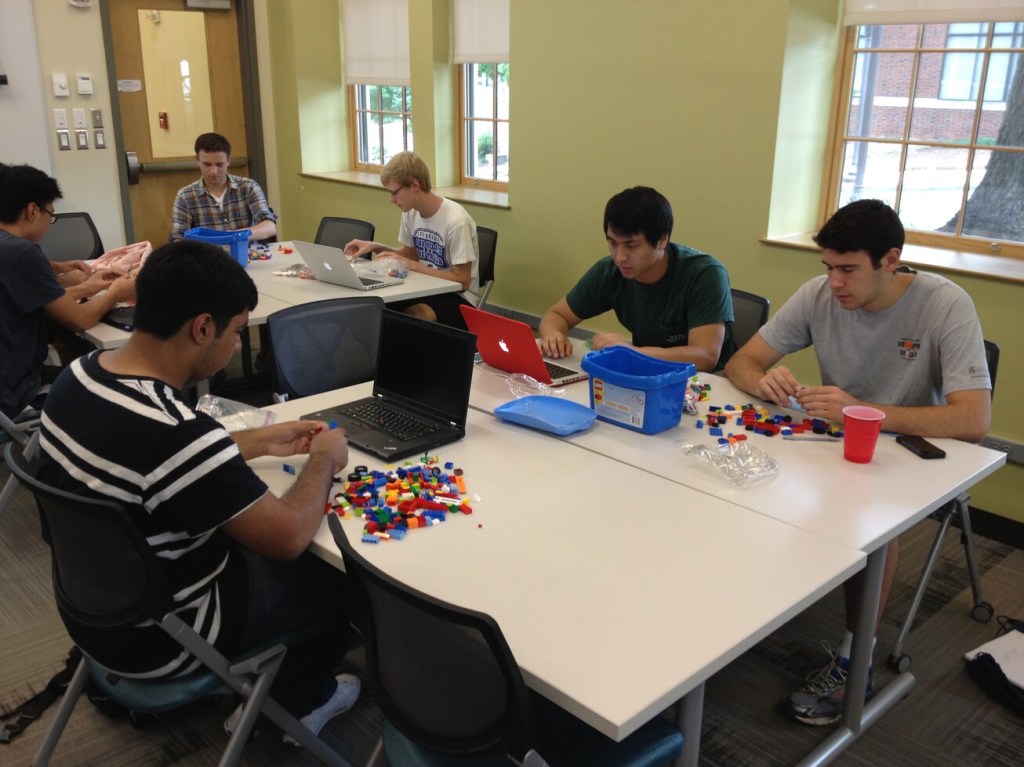
    LMC3403 Technical Communication students working with LEGO

    In this project, their primary task is to build a set of instructions for a Lego model of their own design.

    Their Lego model should represent something about their studies, their professional field, or their entrepreneurial spirit.

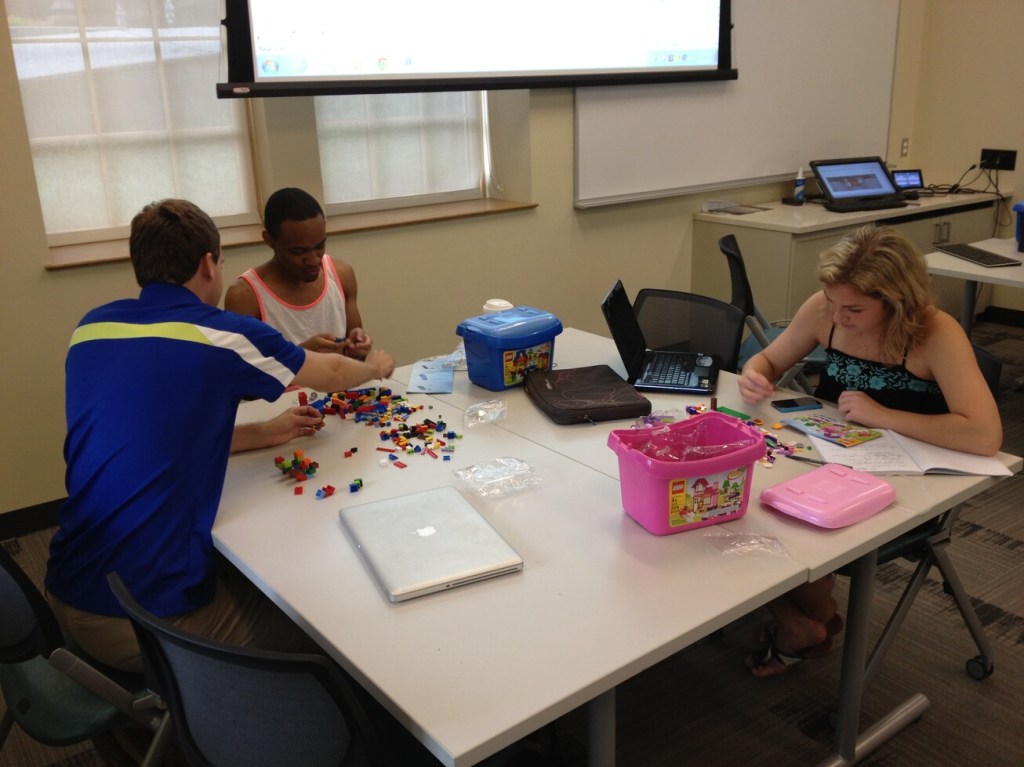
    LMC3403 Technical Communication students working with LEGO

    Their project began with the creation of a proposal memo that laid out their entire project: designing instructions, testing instructions, reporting on tests in a memo, revising instructions, and reflecting on the project in a memo.

    Throughout the process, they have to be mindful of different audiences (executives, managers, and customers).

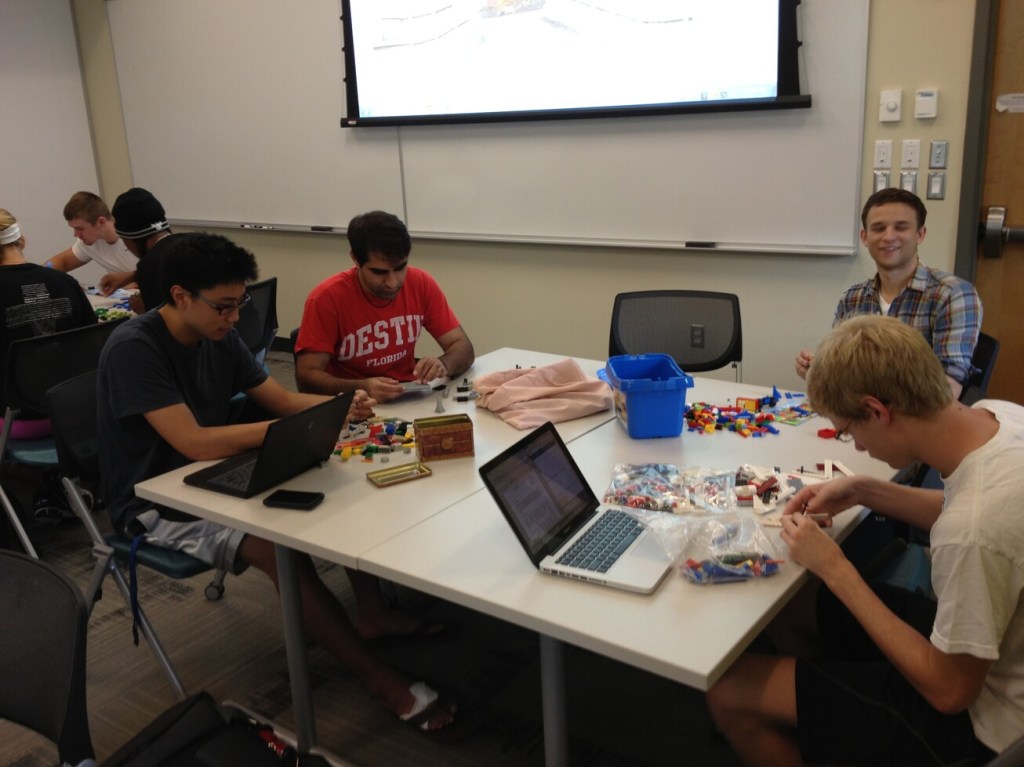
    LMC3403 Technical Communication students working with LEGO

    In these photos, the students are busy at work creating the first version of their Lego models.

    I was happy to overhear someone say, “It’s nice to actually do something fun in a class for once!”

    LMC3403 Technical Communication students working with LEGO
  • Science Fiction, LMC3214: Final Paper Topics Were On a Broad Spectrum of SF Media

    I just finished grading my students’ final paper projects. Their task was to use several definitions of SF from a list that I had prepared for them (or others that they found on their own and properly cited) to evaluate whether a work that we had not discussed in class was SF or not. Through this analysis, they would come up with their own definition/litmus test for SF.

    I was very happy to read papers on a variety of SFnal works, including:

    • Joseph Kosinski’s film, TRON: Legacy (which I had reviewed for the SFRA Review before)
    • AMC’s production of The Walking Dead
    • H.P. Lovecraft’s At the Mountains of Madness
    • Orson Scott Card’s Ender’s Game
    • Tommaso Landolfi’s Cancerqueen (Cancroregina)
    • Octavia Butler’s Parable of the Sower
    • Halo: Combat Evolved (and its supplementary material in print)
    • David Brin’s Startide Rising
    • Marc Forster’s film, World War Z
    • Ridley Scott’s film, Blade Runner
    • Aldous Huxley’s Brave New World
    • Richard Schenkman’s film, The Man from Earth
    • X-COM: UFO Defense

    This list reveals that my students were interested in SF across a spectrum of media. There were papers on six literary works, four films, one television series, and two video games (this is further blurred by the video game/print crossover material).

    For those students who talked with me about their papers, I am particularly happy with the way their papers turned out. Having had those conversations, I can see a snapshot along their paper’s developmental process, which gives me better insight into the work that they likely did to push their arguments further than what we had discussed in class. Reflecting on this, I will add conference time to my future SF classes that meet over a full semester, but I will do more to have these smaller conversations with students–perhaps before class or during our daily break time–to get a better sense of their research and developing argument.

  • Science Fiction, LMC3214: All Good Things: Last Day of Class, Haptic Perception, and Lego

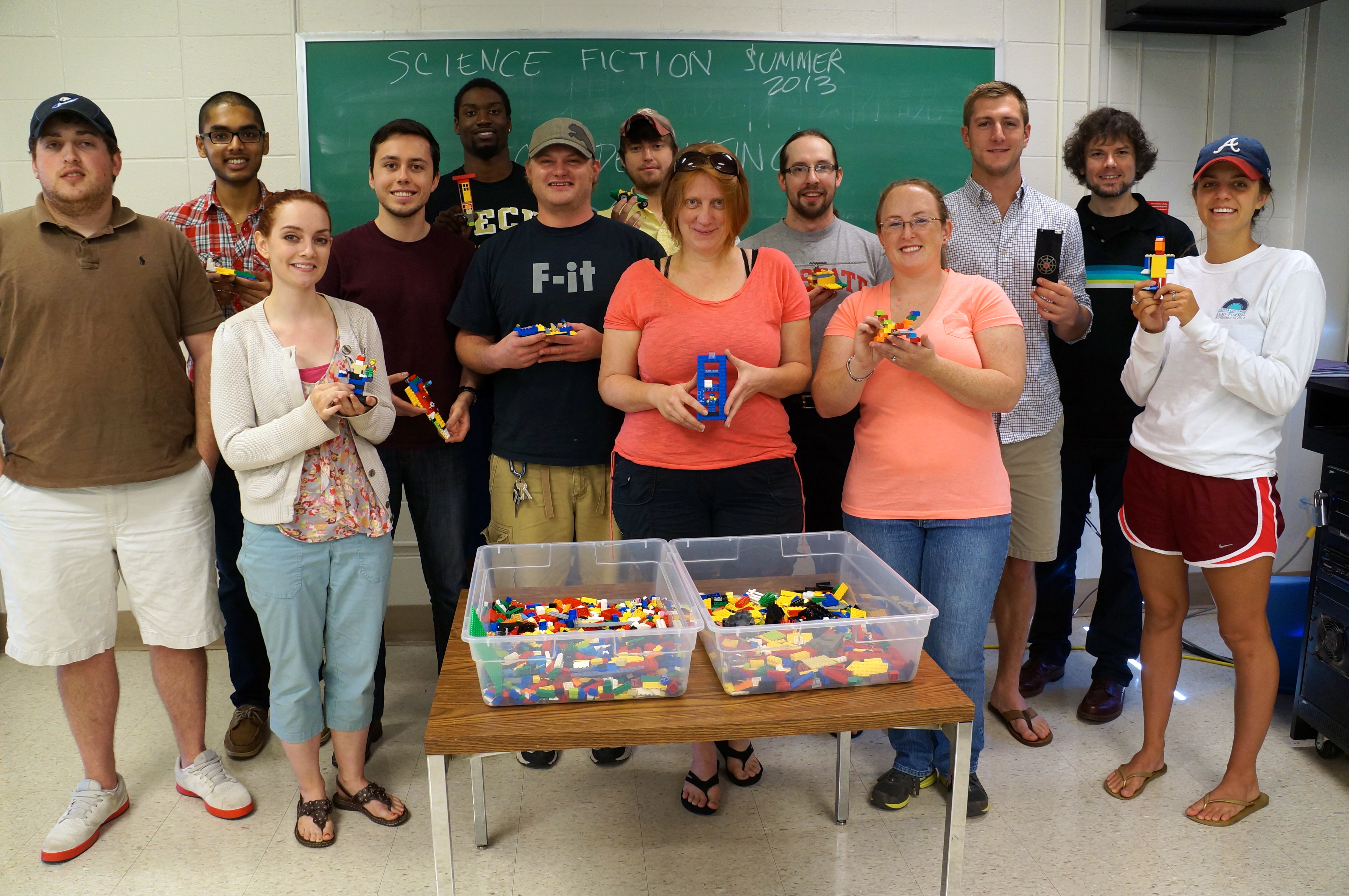
    The excellent group of students (and me in the back right) in my Science Fiction class. Photo by Carol Senf.
    The excellent group of students (and me in the back right) in my Science Fiction class holding up their SF-inspired Lego creations. Photo by Carol Senf.

    Today, unfortunately, was the last day of my Science Fiction class at Georgia Tech.

    At the beginning of class, my students completed their third exam. Unlike the previous exams, it only covered the material discussed in class this week: cyberpunk and Taiwanese SF. And unlike the previous 1 hour long exams, it was 30 minutes long.

    After the exam, we began what I called an SF debriefing with Lego. I framed this end of semester activity by having them think about WOVEN (written, oral, visual, electronic, and nonverbal) modes of communication. Then, I discussed the importance of one aspect of nonverbal communication: haptics. In the haptic mode, we touch, we build, and we visualize objects. It is an insanely important and often overlooked way in which our brains think, learn, and communicate with others. I told them that this activity was meant to allow them to think about and express some image or object from SF–either discussed in the class or not–that they liked or thought significant. To facilitate their work with haptics, I brought two bins full of Legos–some acquired from the local Lego Store and some from my secret stash. I told them to use up to 40 bricks/elements to build their model. After completing it, they would have a chance to hold it up and tell the class about it, and if they choose to do so, they could take it home as a gift and a memento of the class.

    I gave the students about 30 minutes to build, and I encouraged them to get out of their chairs, stand around the bins to dig for bricks, and talk with one another as they worked–talk about what they were building, trade bricks, help one another, etc. It didn’t take much encouragement on my part to get them going–they took off like a fleet of rockets!

    When each student had a chance to tell us about their creation, I would offer other connections and background information on their creation to further integrate it into the broader history of SF.

    After class, Professor Carol Senf, who was observing my class, was kind enough to take a group photo of the class (see above).

    I left my students with the encourage to continue their exploration of SF. I told them that I believe SF to be the most important contemporary literature. It examines the human condition, critiques our social relationships, imagines the effects of science and technology, and energizes our sense of awe and wonder. It can inspire us and it can teach us. Of course, it also can be smashing entertainment.

    When class was over, the conversation continued with those students who had other questions about SF (Was PKD really a drug fiend? Who are important/good contemporary SF writers? etc.) and kind words to say about the class.

    All that is left for my students is to complete their final papers testing a work of SF against definitions of the genre by others and themselves. I have to grade their third exams and their papers before I can submit grades next week. I am looking forward to reading their papers, but I am sad that this amazing class with these talented students is virtually at an end.


  • Science Fiction, LMC3214: Global Perspective Unit on Taiwanese SF and Review for Exam 3

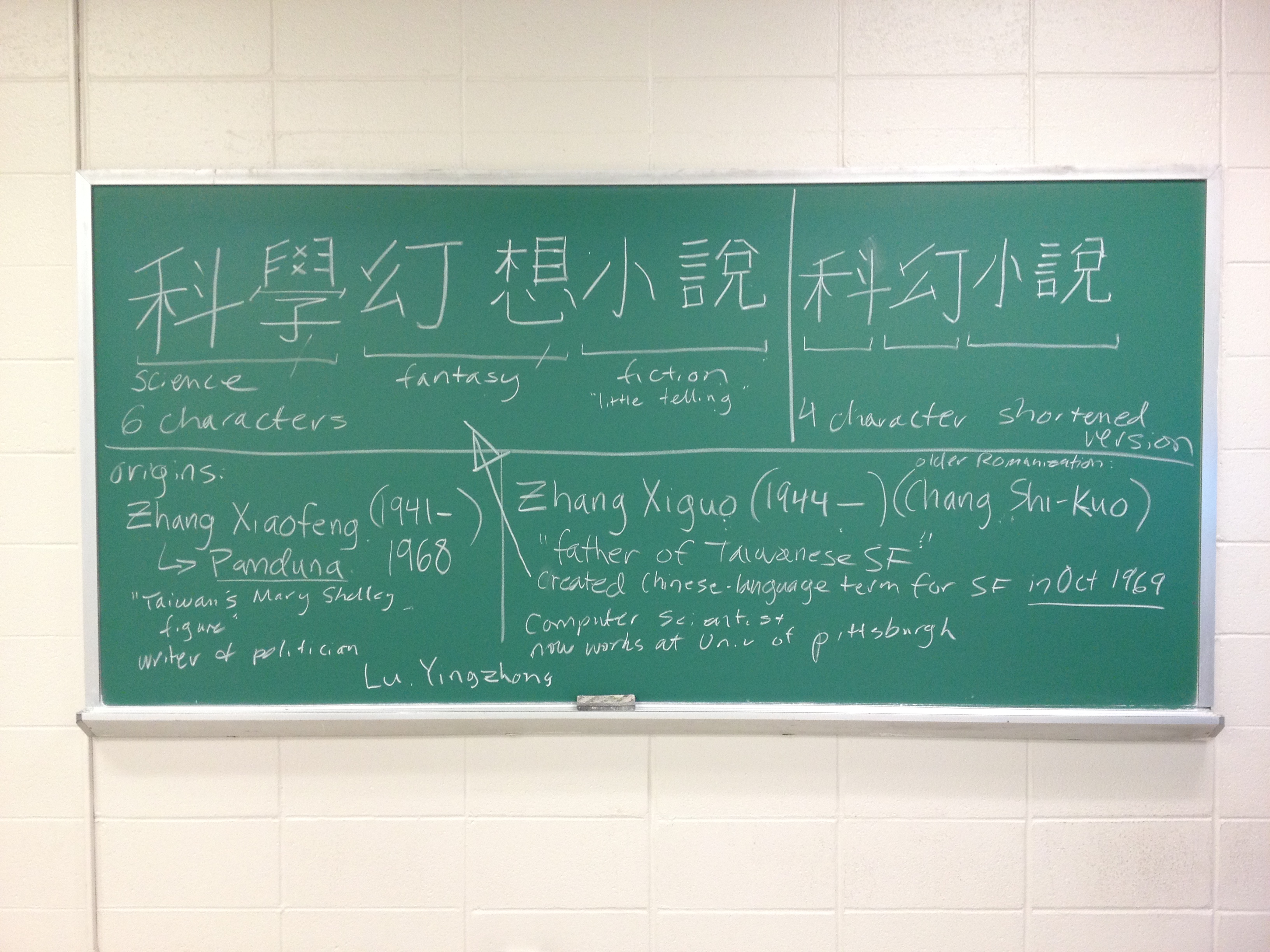
    Taiwanese SF lecture notes on the chalkboard.
    Taiwanese SF lecture notes on the chalkboard.

    In today’s class, I introduced my Science Fiction students to Taiwanese SF. For class, they read David Uher’s “Trends in the Development of Science Fiction Literature in Taiwan” (Anthropologia Integra 1.1 2010, 63-70) and a translation of Chang Shi-Kuo’s (Zhang Xiguo) “City of the Bronze Statue.”

    In today’s lecture, I charted a brief history of China and Taiwan (revolution, Kuomintang/Republic of China, Civil War, and diaspora to Taiwan), the history of Taiwan SF with an emphasis on Zhang Zioafeng’s “Panduna” as the first Taiwanese SF and her role–like Mary Shelley’s–as the “mother of Taiwanese SF” and Zhang Xiguo’s as the “father of Taiwanese SF” who also coined the term for “Science Fantasy Fiction” (科學幻想小說: Science/科學, Fantasy/幻想, Fiction/小說). I also identified five general characteristics of Taiwanese SF: 1) Synthesis of Western and Eastern culture, 2) Wuxia (武俠) or the Chinese martial arts chivalry story, 3) Adopt Chinese mythology and history to make the reader more familiar with the fantastic elements of the story (c.f., Star Trek), 4) Themes of nostalgia and loss, and 5) Conservative affirmation of society and the existing social order.

    During class, I led the students through two exercises. After explaining to them the general characteristics of reading and writing in traditional Chinese, I handed out worksheets for them to practice writing the four characters of the truncated term for “Science Fantasy Fiction” (科幻小說). I gave them about 5 minutes to try out their Chinese penmanship while I walked around watching their progress. This also led to a discussion about how written traditional Chinese is different than Japanese (kanji, hiragana, and katakana).

    In the second exercise, I divided the class into four teams of three students each. I handed each team two pages from the John Balcom translation of the Prologue to Chang Shi-Kuo’s City Trilogy (which corresponds to the “City of the Bronze Statue.”) The students were tasked with identifying differences between the two translations. They discovered small variations in measurements, descriptions, and phrasing. In particular, they noticed that the two translations differed in tone–the translation on his website is more vernacular and the book translation has a more formal tone. However, they reported that the Bronze Statue seemed more life-like and personified in the Balcom translation. I was surprised though that they did not pick up on the understated comedic tone in either translation. Nevertheless, I was glad that they got to experience first hand how much of a role the translator has in the creation of a translation–translation being a creative act itself.

    photo-2
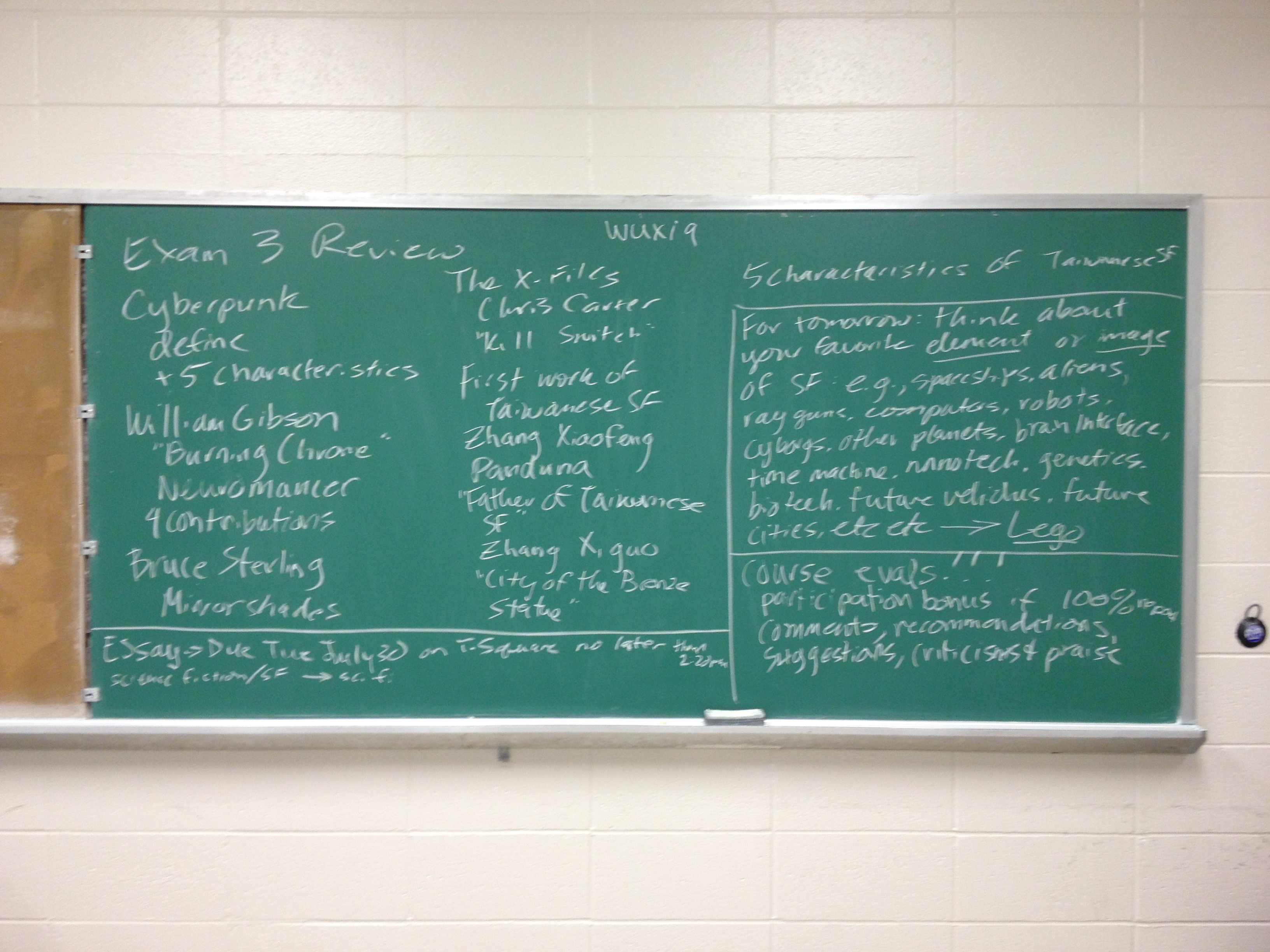
    Exam 3 review notes.

    At the end of class, we reviewed for their short third exam tomorrow and I talked with them about the fun Lego project that I have planned after the exam.

    Their final essays in the class will be due next Tuesday.

    Many thanks to Y for helping me with my research, writing, and pronunciation for this lecture!