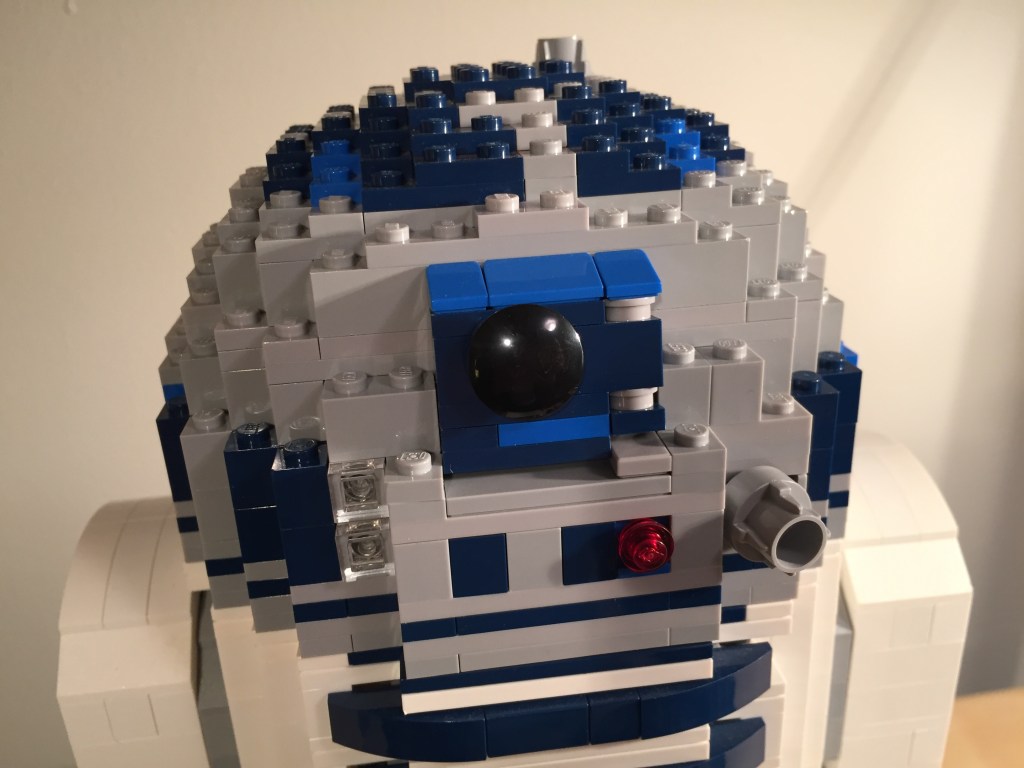
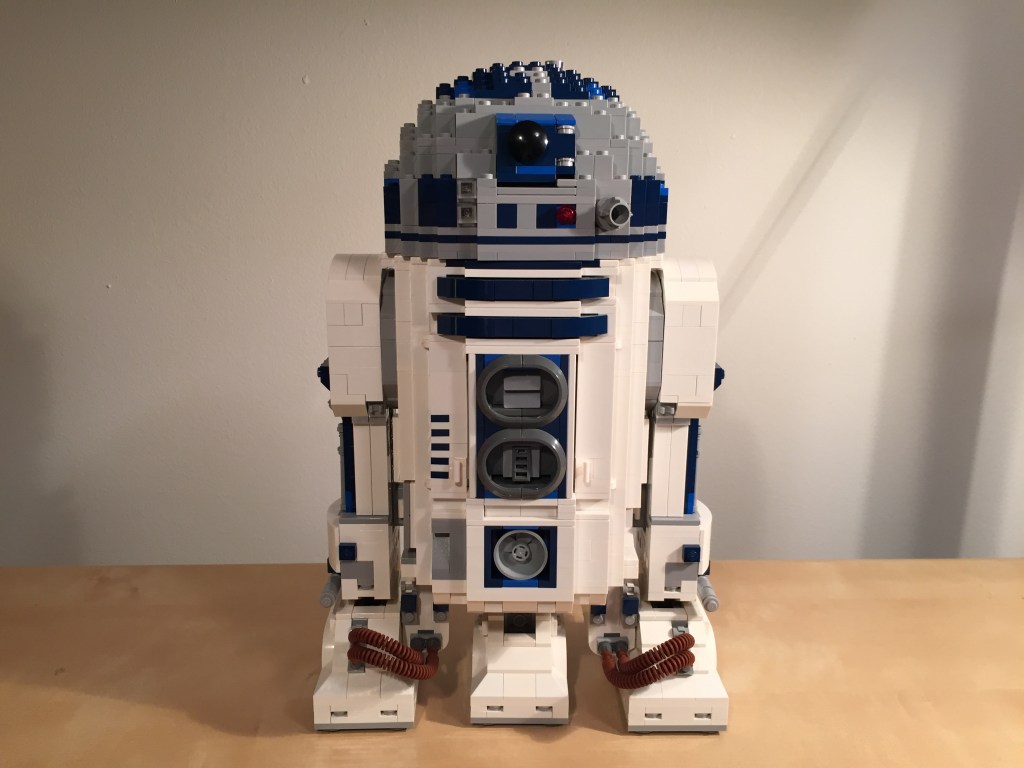
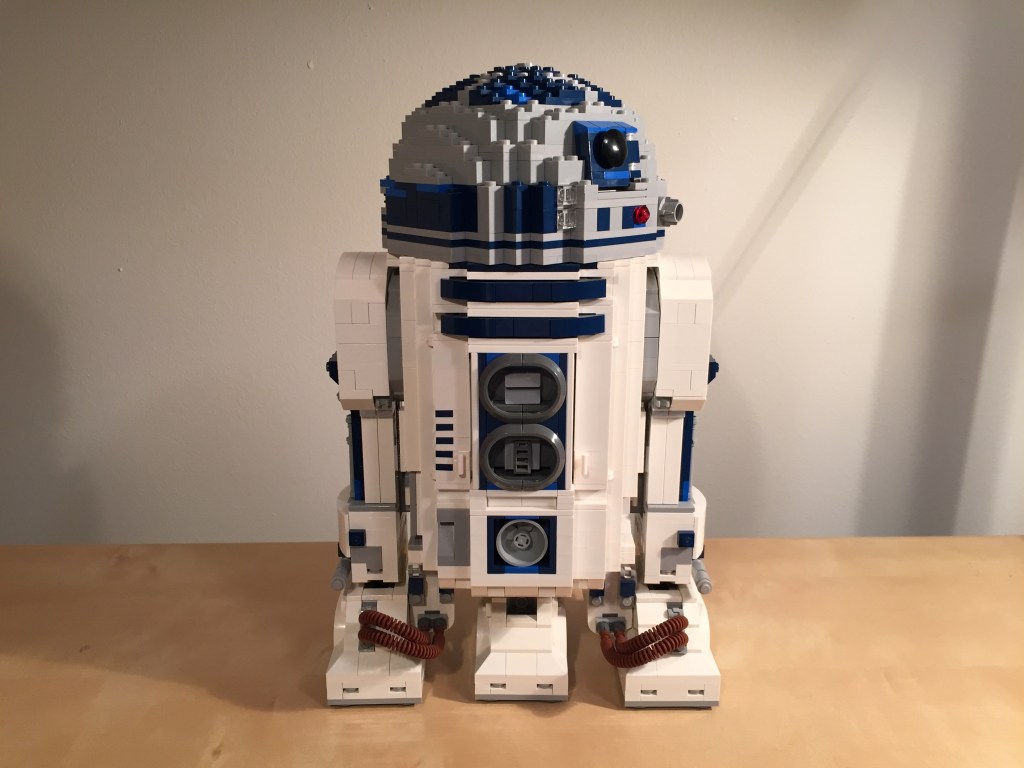
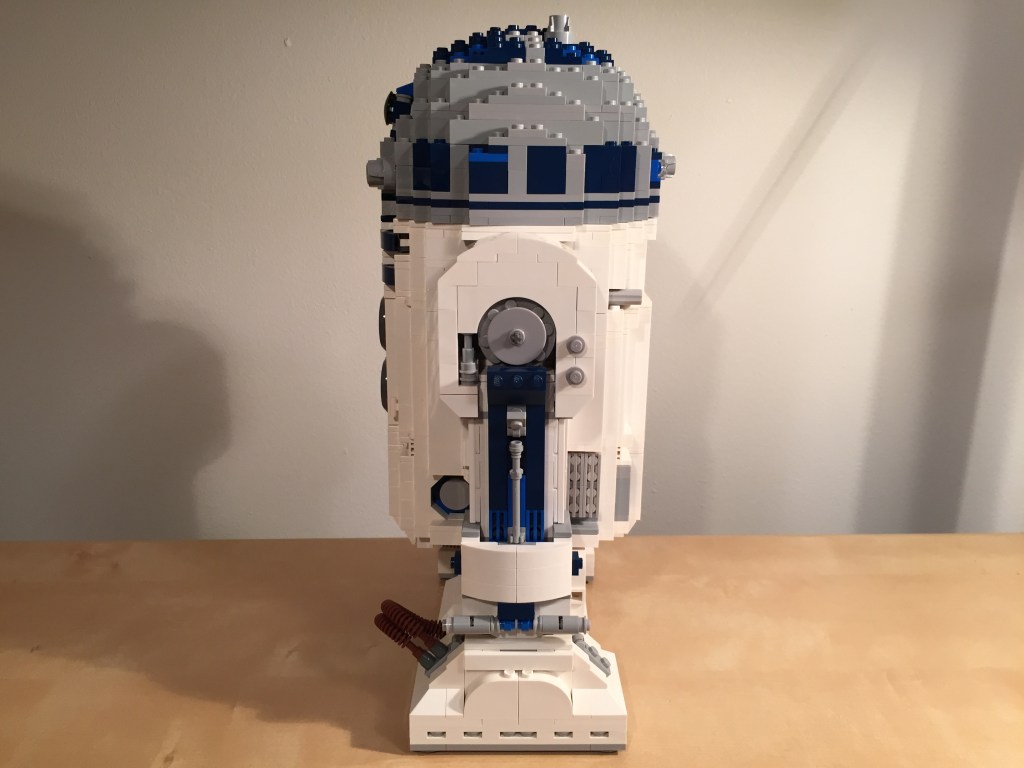
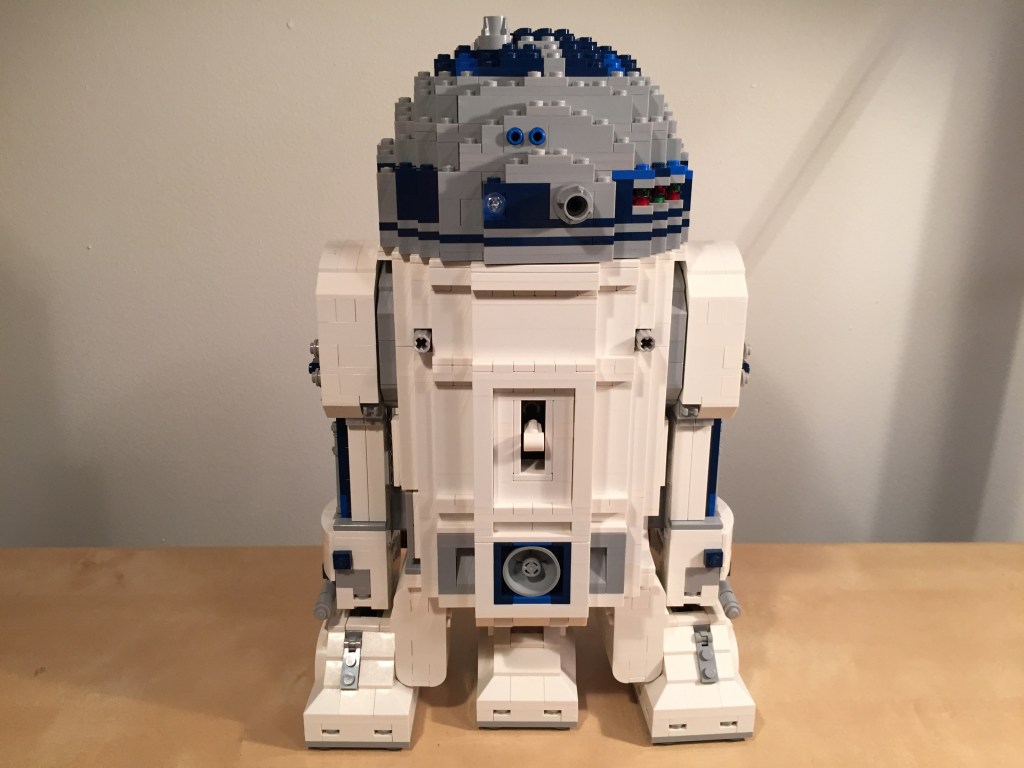
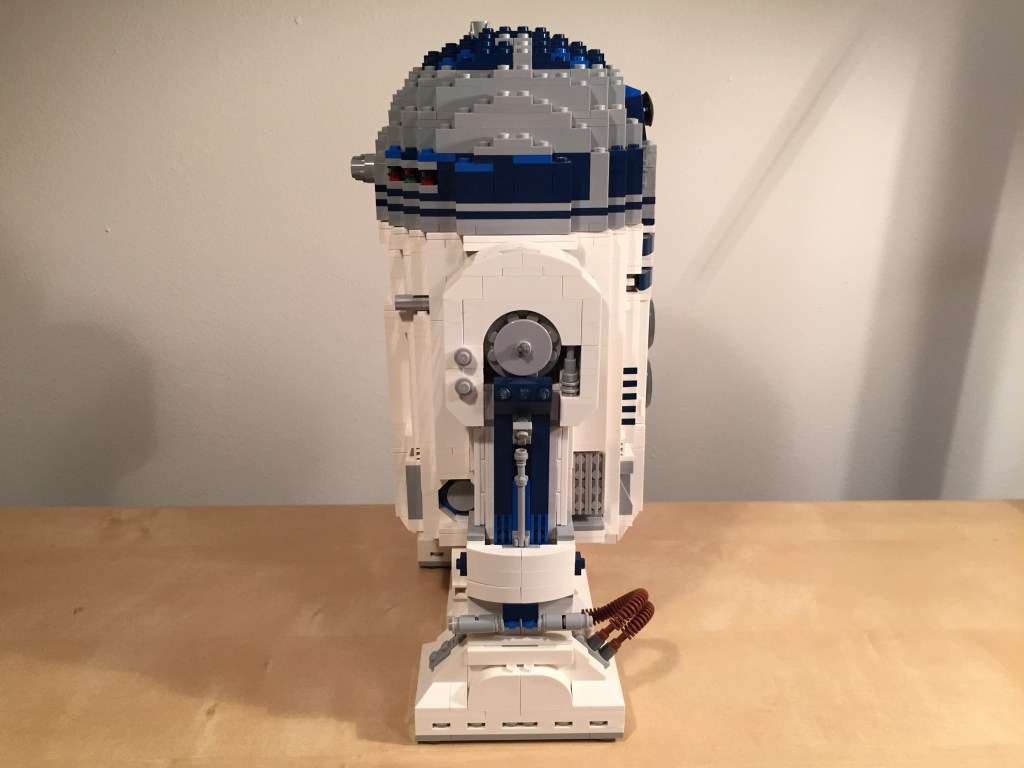
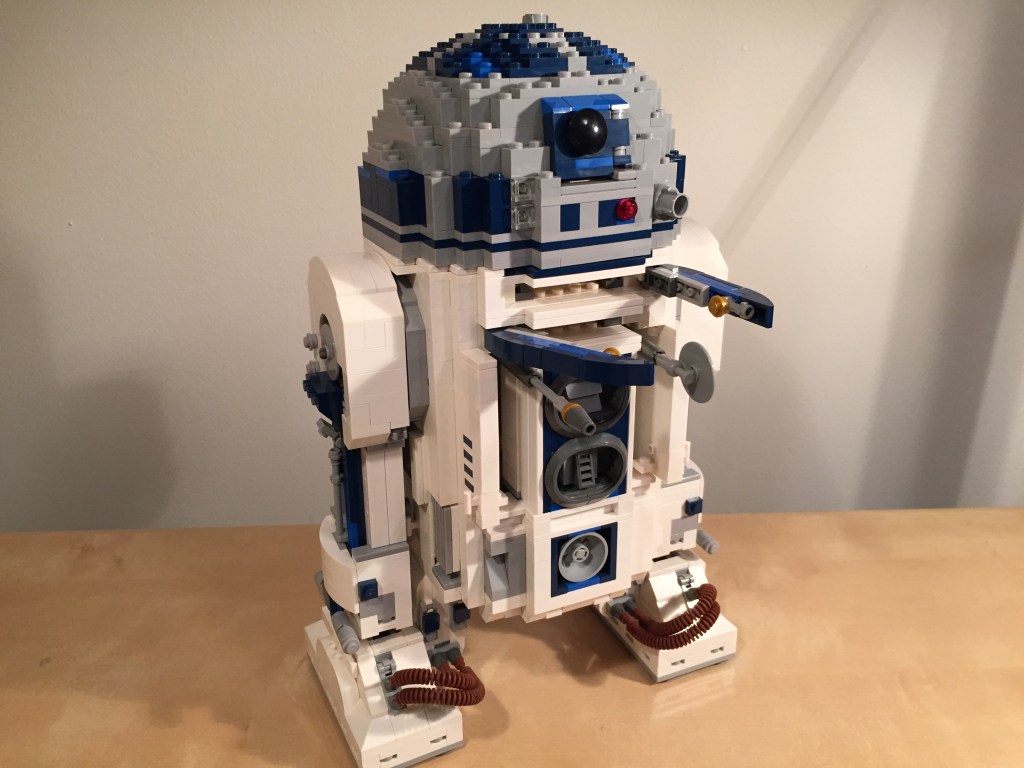
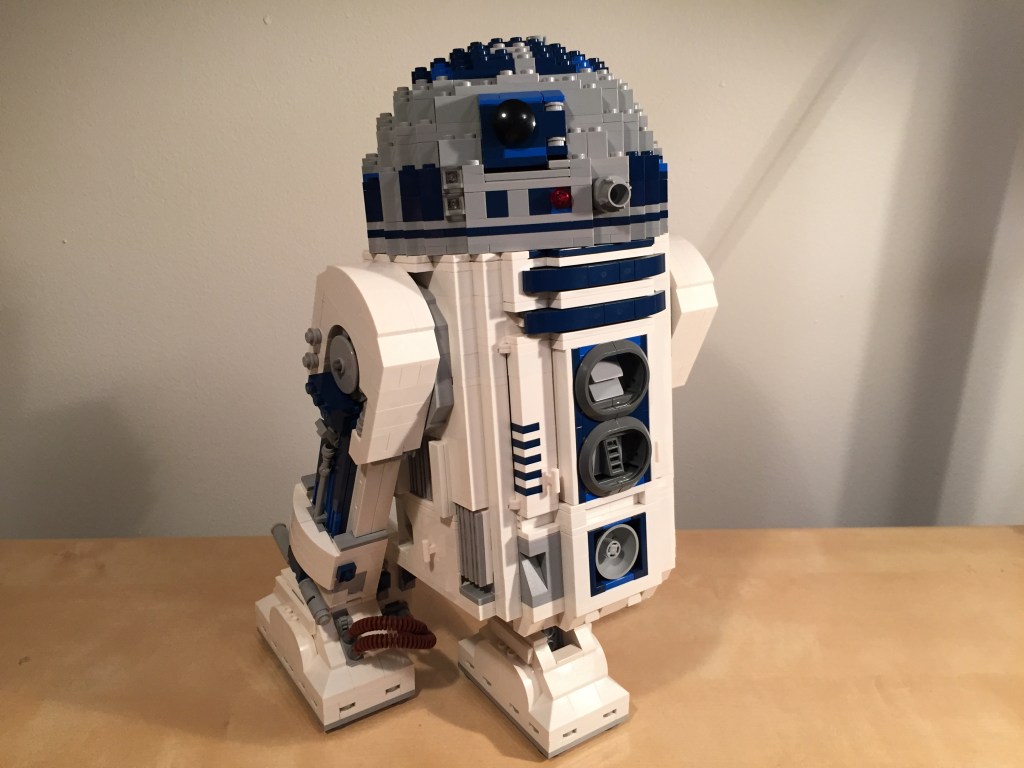
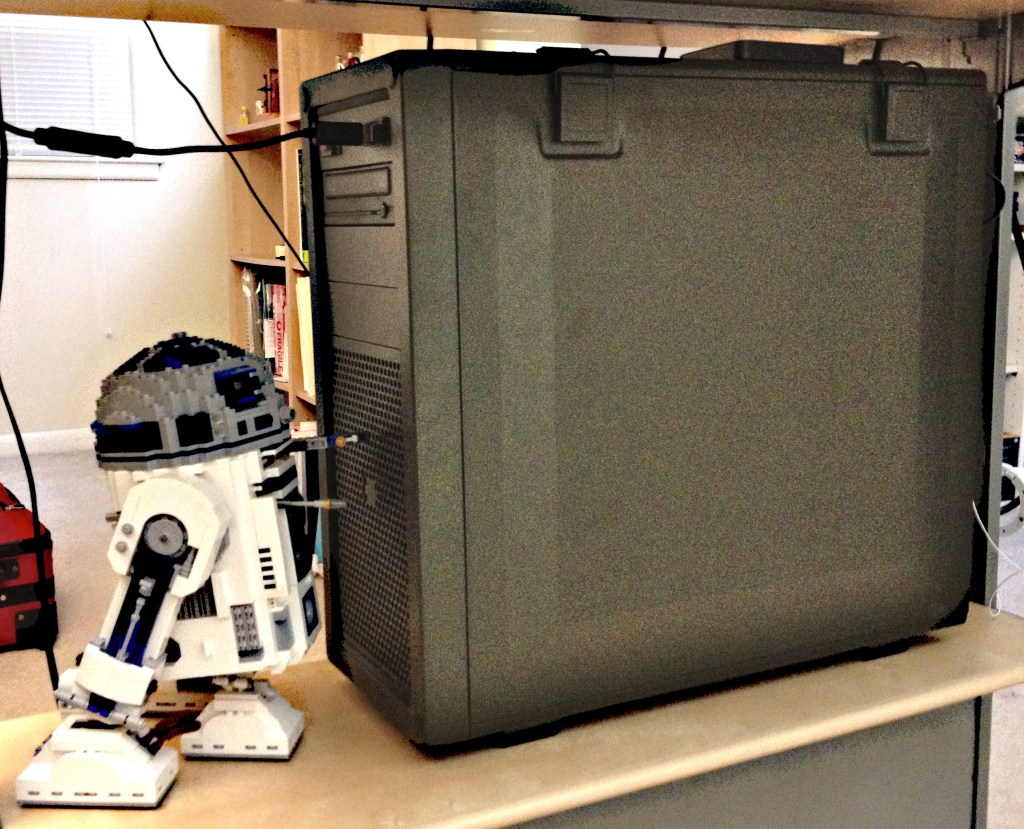
It’s the 10225 R2-D2 set that was released in 2012 (shortly before I moved back to Atlanta).
It features a turning head, a little bit of wobble, arms, saw, data port interface, and a retractable third leg. It’s blockier looking than the 2021 R2-D2 75308 set, but its the blockiness that makes it endearing.
Though, be warned that R2, when left to his own devices, might try to hack your computer . . .
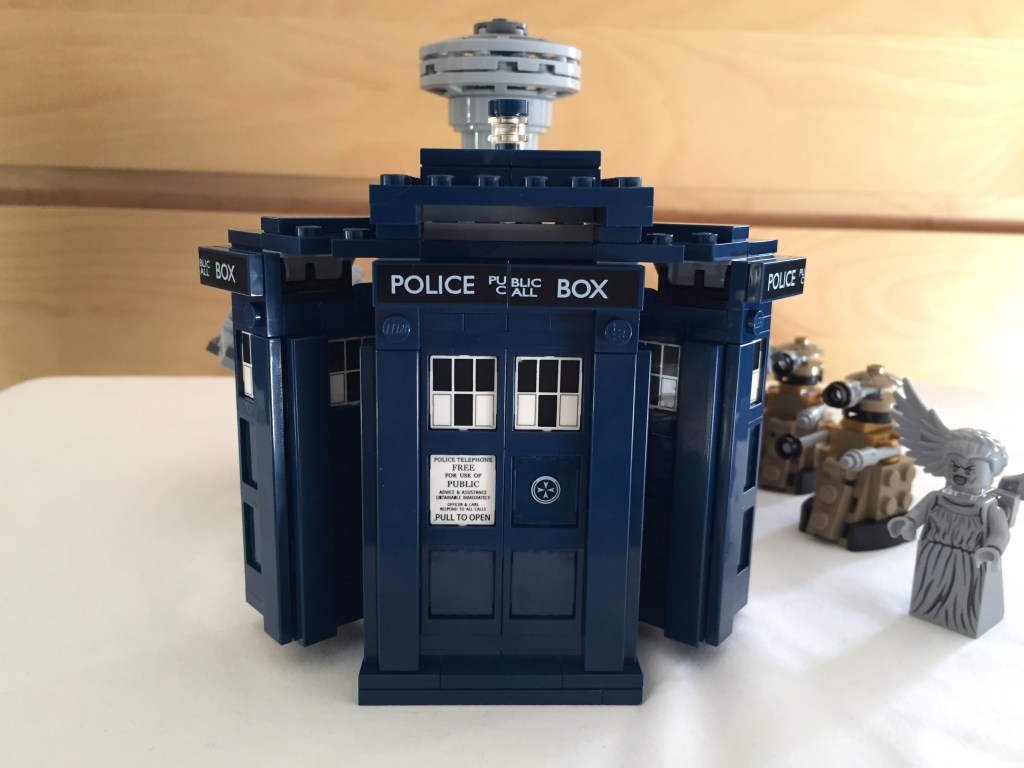
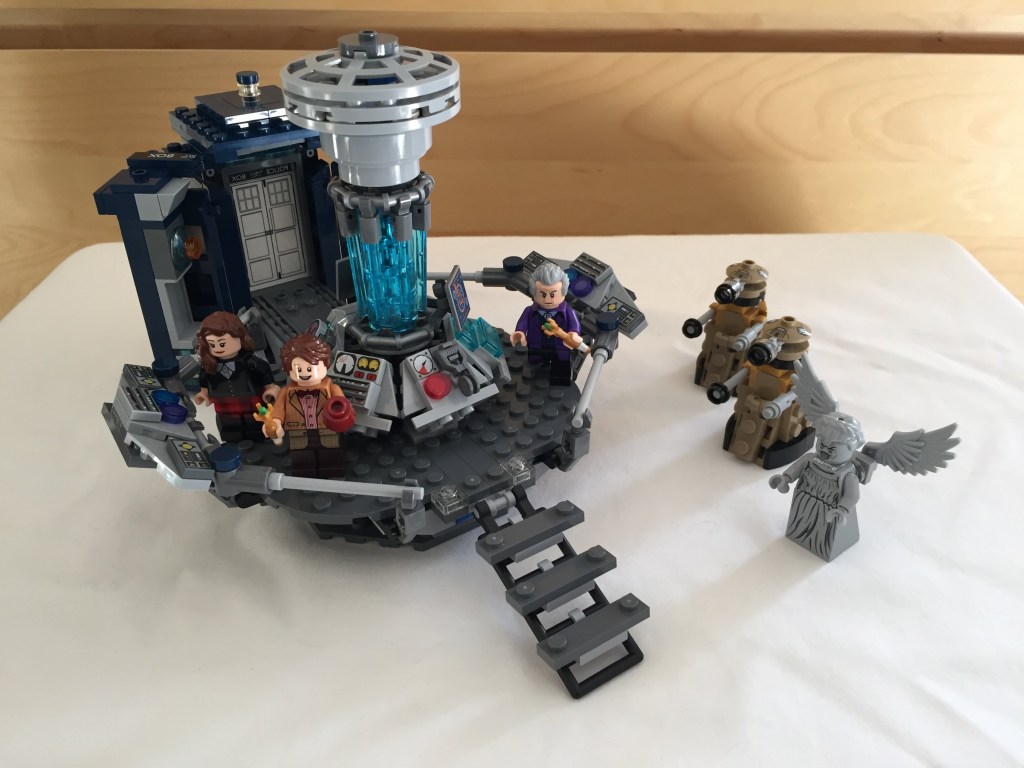
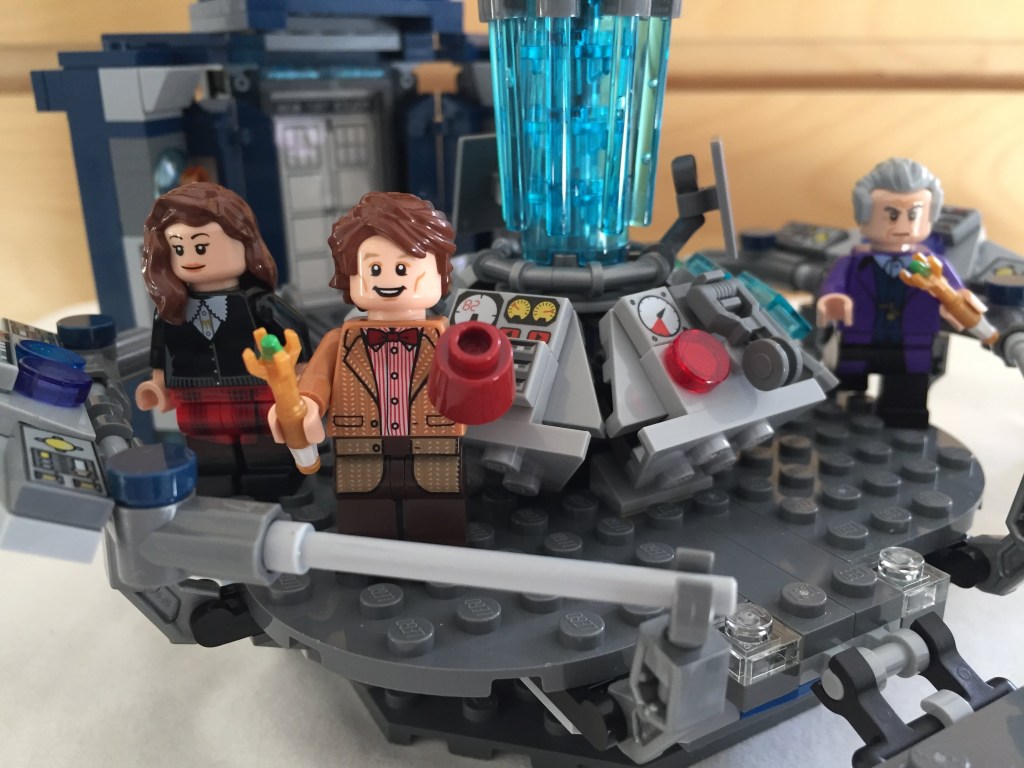
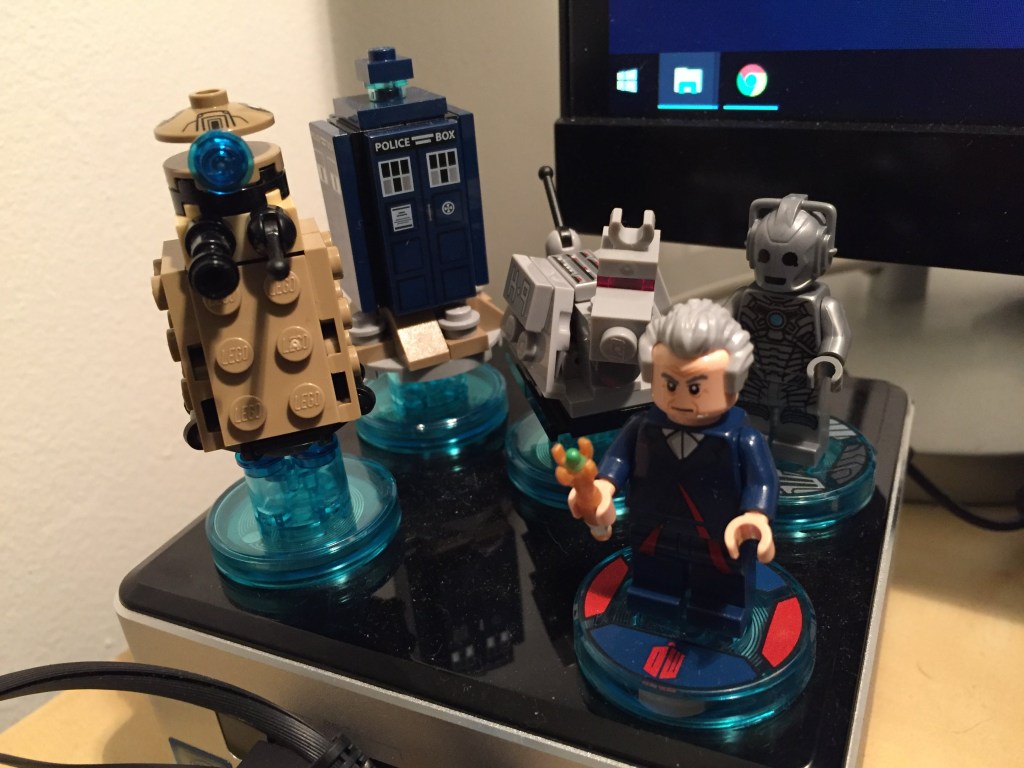
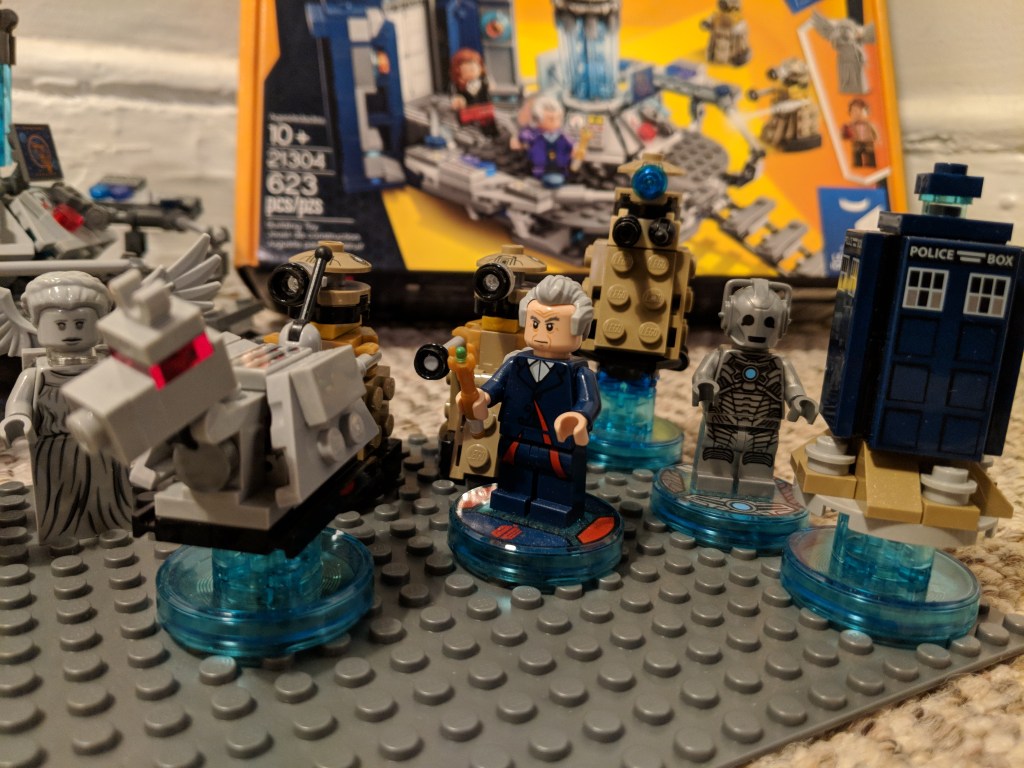
My favorite Doctor Who is the Fourth Doctor, portrayed by Tom Baker, but the Matt Smith and Peter Capaldi Doctors aren’t too bad. Regardless of the era, the TARDIS is always bigger on the inside. Here’s some renditions of the TARDIS and recent Doctors and villians–LEGO 21304 Doctor Who and 71204 and 71238 Dimensions sets.
When I was working at Mindspring in Atlanta in the late 1990s/early 2000s, I had to move on short notice. The only apartment that I could find quickly and at a low price that I could afford was a two-bedroom at the historic Bolton Apartments near downtown Atlanta.
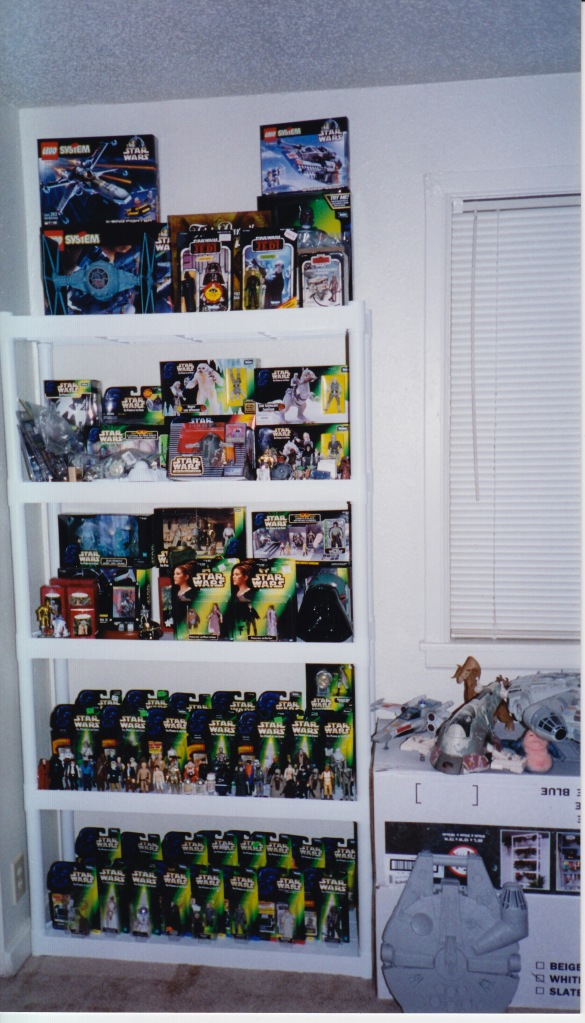
Living alone, I didn’t need a two-bedroom apartment, but it was advantageous in two regards. First, I was able to shelter my grandparents, uncle, and dad during Hurricane Floyd, and second, it gave me room to rebuild a Star Wars collection.
When I was a child, my Star Wars toys were the Cadillacs of my toy collection. They gave me many hours of enjoyment and they survived better than they might have elsewhere. Despite how much I loved them, I sold them off just before going to college at Georgia Tech–thinking that I needed to part with youthful things to attain a more serious mindset in my pursuit of a Physics degree.
I had kept a few dear Star Wars action figures–especially an R2-D2 with Sensorscope from The Empire Strikes Back (1980) that my grandmother had driven to Savannah to find for me. I also had a complete Yoda with orange snake action figure that I had purchased at Comics Plus in Macon. And a few vehicles include the Power of the Force 2 (POTF2) Millennium Falcon and Slave I.
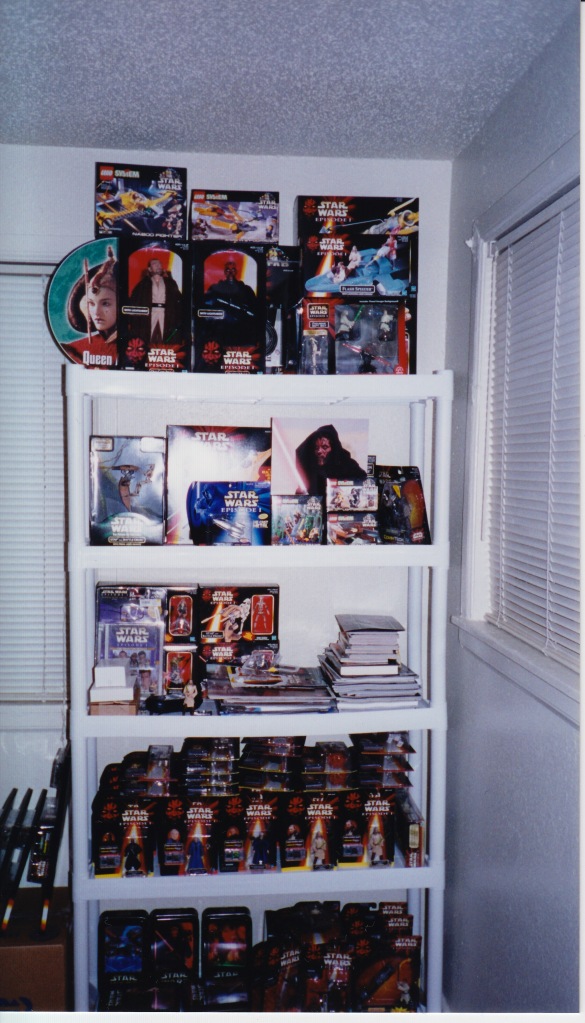
From those humble beginnings, I began to acquire more Star Wars paraphernalia, merchandise, and toys. A lot of this rejuvenated interest came from the release of The Phantom Menace (1999) and the onslaught of new action figures, dolls, and LEGO sets (the latter’s licensing began in 1999).
On my days off from Mindspring, my hobby involved driving around to department stores, comic book shops, and flea markets looking for Star Wars collectibles. While my rent was low, it was in retrospect unwise of me to invest so much money and time in the collection. It brought me enjoyment at the time, but it eventually caused me a lot of stress and headache. It was both ends of madness–euphoria and the crash.
The work at Mindspring, after the Earthlink merger, became less fun. Others in the call center decided to play the numbers game and win–leading to more call backs and angrier customers–and left the rest of us the job of fulfilling our original mission to support our customers and lose. I decided to pack it in and move back to Brunswick to regroup. I’m glad that I did, because I eventually got back into Georgia Tech and made my way to where I am now at City Tech.
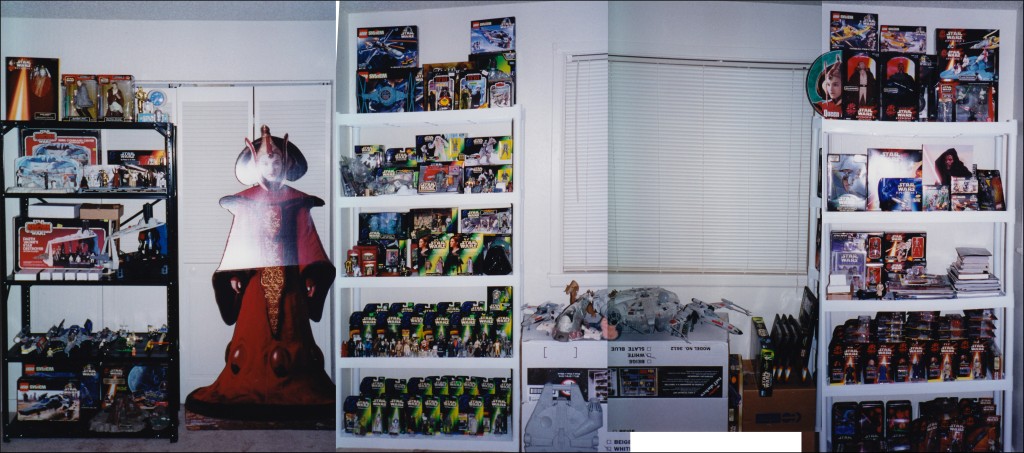
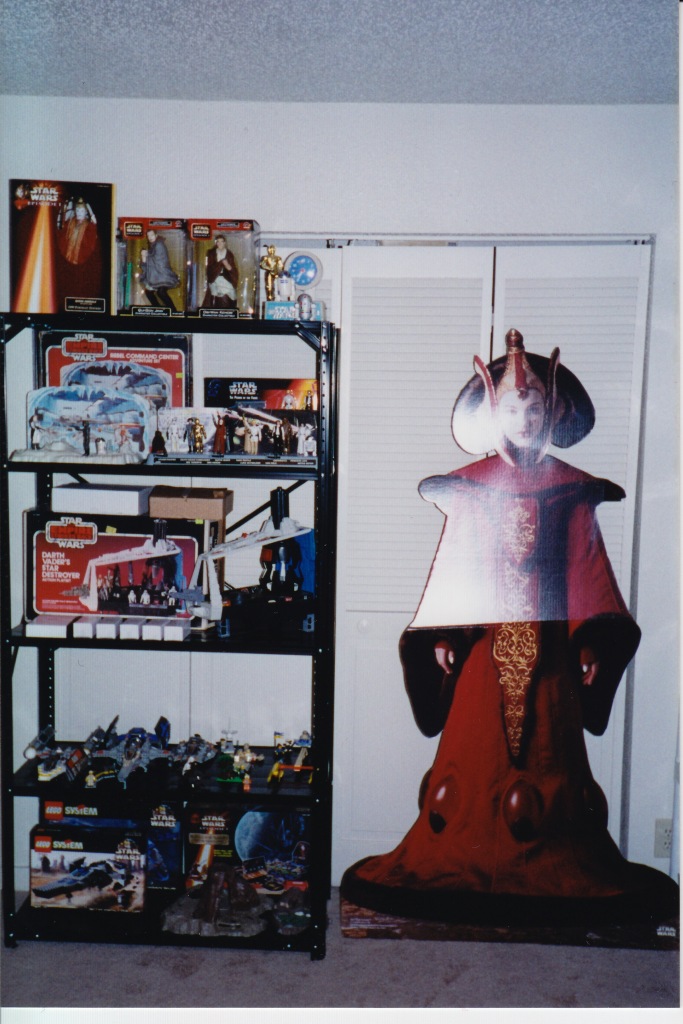
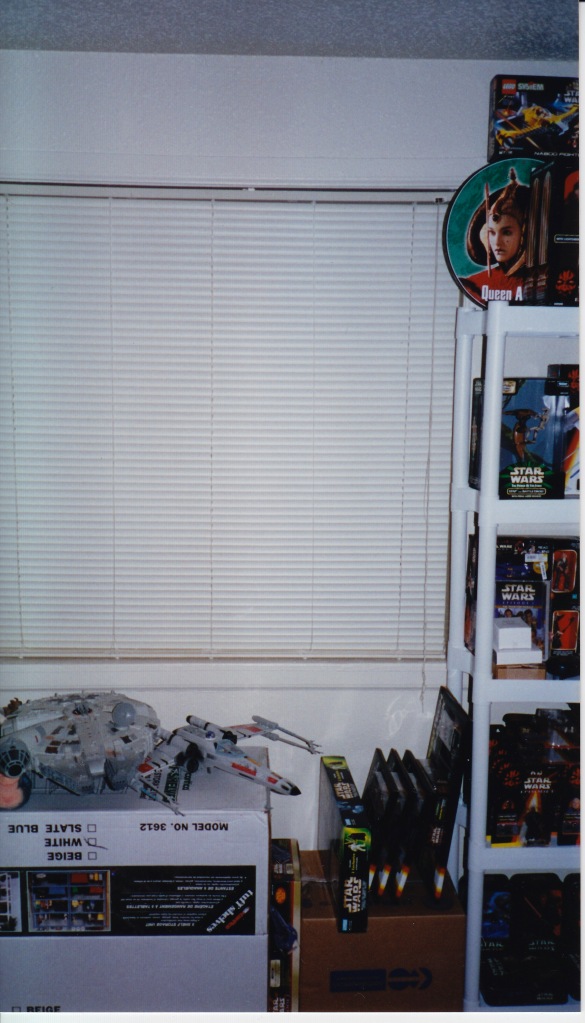
Here are some highlights shown in the photos of the collection above from left to right.
Photo 1
Photo 2
Photo 3
Photo 4
Rebel Command Center Adventure Set with original 3 figures. Mail-in Display Stand with complete set of original Kenner Star Wars action figures. Darth Vader’s Star Destroyer Action Playset. First LEGO sets including Y-Wing, Darth Vader’s Advanced TIE Fighter, Snowspeeder, and Anakin’s Pod Racer. Dagobah Playset.
POTF2 TIE Fighter. Carded Kenner ROTJ Darth Vader and Luke Skywalker (Jedi Knight) action figures. Vehicle Energizer in box. Lots of boxed and carded POTF2 action figures and playsets. Kenner Yodas with brown and orange snakes. Pewter Boba Fett figurine. Near complete set of Star Wars and Empire Kenner action figures. POTF2 X-Wing (small), Slave I, Jabba, Millennium Falcon.
POTF2 Millennium Falcon and X-Wing (large). Multipack action figure sets and carded Comtech Reader.
More Episode 1 action figures and toys than you can shake a stick at.
After I returned home, I built this LEGO MOC (my own creation) of the Weezer stage. At that point, I only had some Star Wars LEGO sets, so I had to pick up some additional bricks and minifigures to create this model. Notably, I purchased the cheapest Harry Potter set (for the bespectacled Rivers Cuomo) and a large brick assortment set for the stage base and back.
I based the stage arrangement on Weezer’s stage design at the Key Arena performance. They had a backdrop covered with equally distant squares. Lights behind the black squares illuminated and played lights on the backdrop. In front of the stage back was a large stylized “W” that descended from above when the band began playing.
For the backdrop lights, I used battery-powered Christmas lights.
For the stylized “W,” I cut it out from card stock.
Also, I used card sock to cut out guitar and bass shapes that I taped to rods that the minifigures held.
Apologies for the quality of the photos. I took the photos with my second digital camera. The first was a Sony Mavica with 3.5″ floppy disk. I sold it and purchased a Sony Cyber-Shot DSC-P3 (I think). I’m lucky to have these photos as I think I took them more to experiment with the camera than to memorialize the LEGO model!
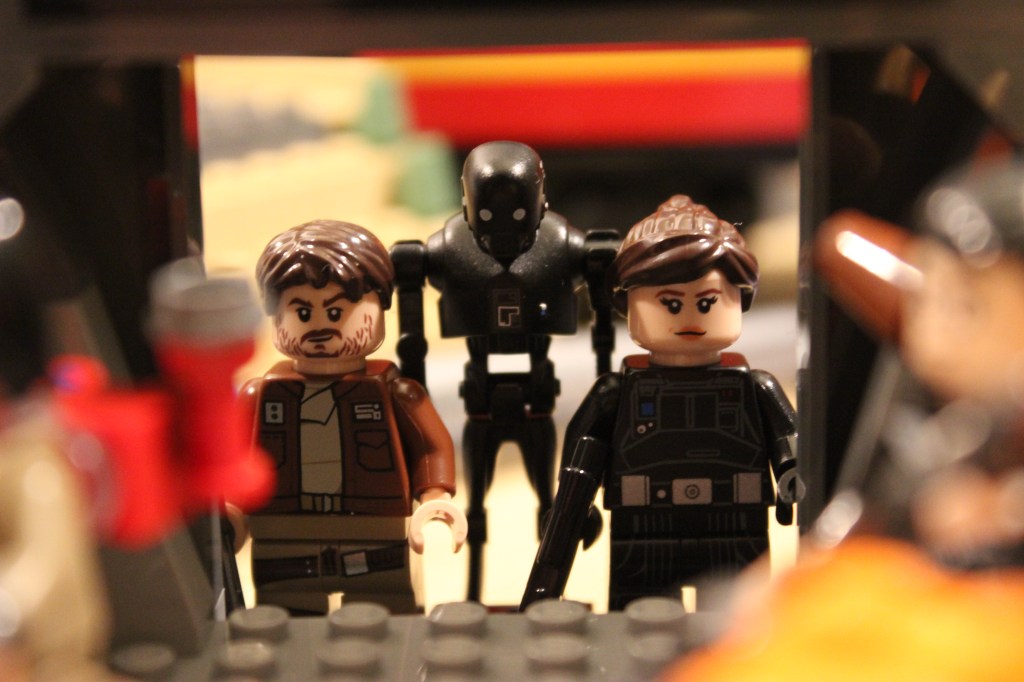
While Rogue One (2016) comes in second to my love of The Empire Strikes Back (1980), the former film is more real in terms of foregrounding real people who want to fight back against the oppression of the Empire at all costs. The characters realize the stakes are high, but they fight on anyways. There is minimal space wizardry and instead people working together to support each other in the face of overwhelming odds.
Rogue One also signaled an inclusive-focused shift in Star Wars storytelling–a long needed correction to the franchise. Hopefully this trend will continue both in front of and behind the camera. And, with the new Andor (2022-) series, this corner of the Star Wars universe has new stories unfolding.
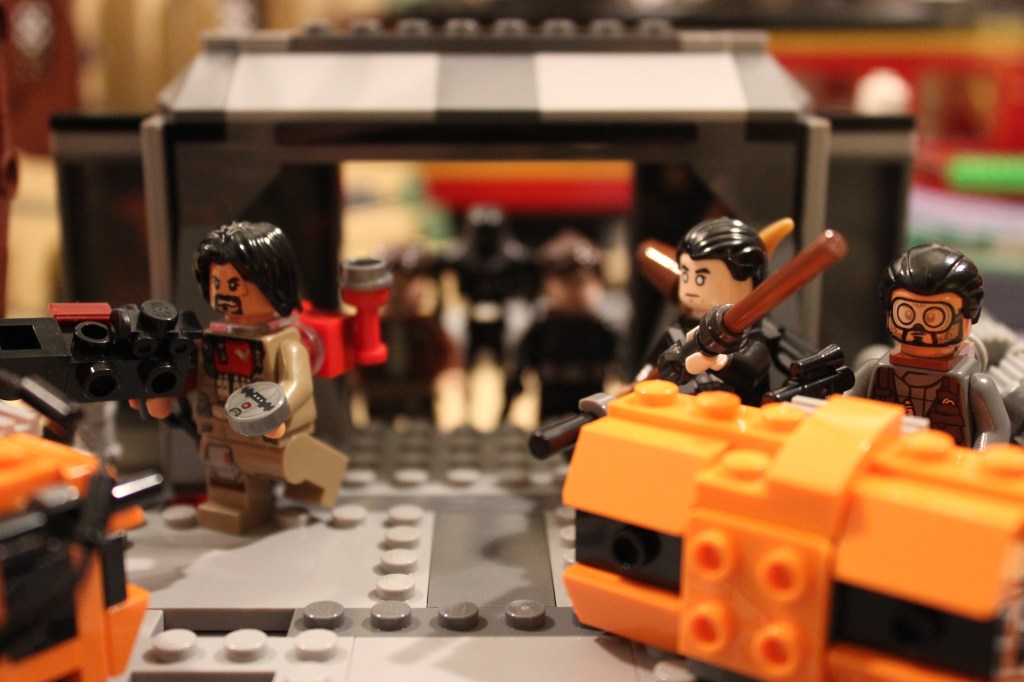
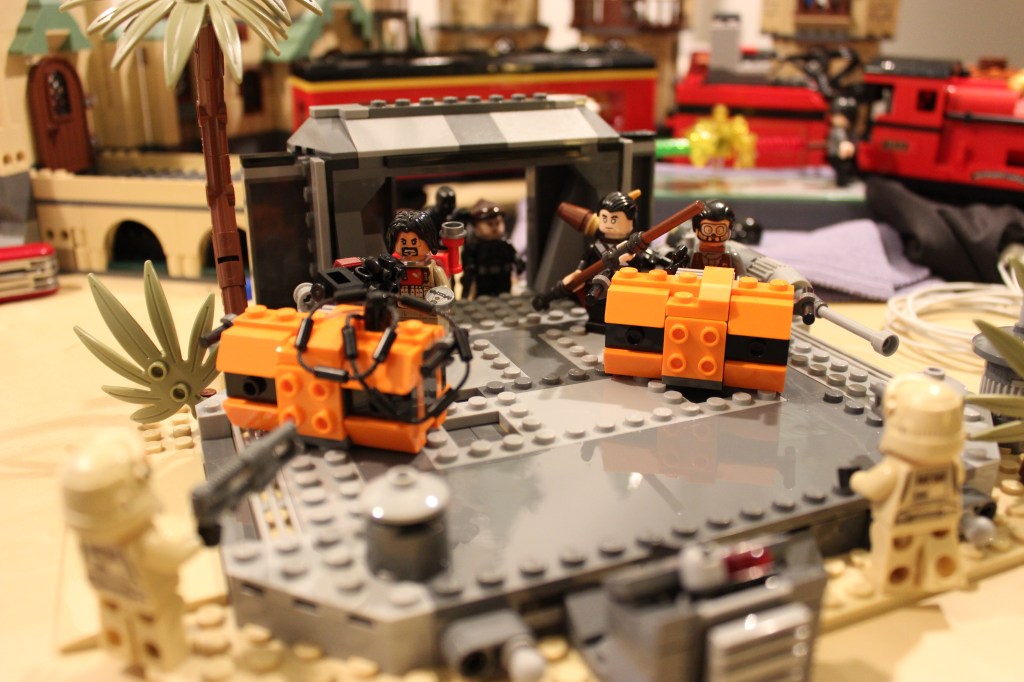
While Rogue One is far from perfect, it does a lot of things perfectly. One aspect of its perfection that’s important to me are its merchandising with LEGO. It had a large number of sets, which LEGO mercilessly divided main character minifigures between (as it did for The Hobbit, too). Nevertheless, the overall design of the U-Wing Fighter, Krennic’s Imperial Shuttle, Battle on Scarif (above), and AT-ST (which I currently have on my desk). These sets tied into the imaginative world of the film quite well and I certainly enjoyed building them.