Recently, I was told that I was a recipient of this year’s Class of 1940 Course Survey Teaching Effectiveness Award from the Georgia Institute of Technology!
The selection criteria for the Class of 1940 Course Survey Teaching Effectiveness Award are: “During the Fall 2012 and/or Spring 2013 semesters, a CIOS [Course-Instructor Opinion Survey] response rate of at least 85%, and either a class size of at least 40 students with a CIOS score for the question which reads, “Overall, this instructor is an effective teacher” of at least 4.8; or a class size of at least 15 students and a CIOS score for the same question of at least 4.9; or a 5 (or greater) credit course with a size of at least 10 and a CIOS score for the same question of at least 4.9.”
I qualified in the middle category, because my classes are typically 25 students/each and 3 credit hours/each.
I am deeply honored to be recognized by my students and institution with this award, and its monetary award is certainly helpful and appreciated.
Georgia Tech’s teaching awards will be given publicly at the upcoming Celebrating Teaching Day on March 6, 2014. I’m looking forward to it!
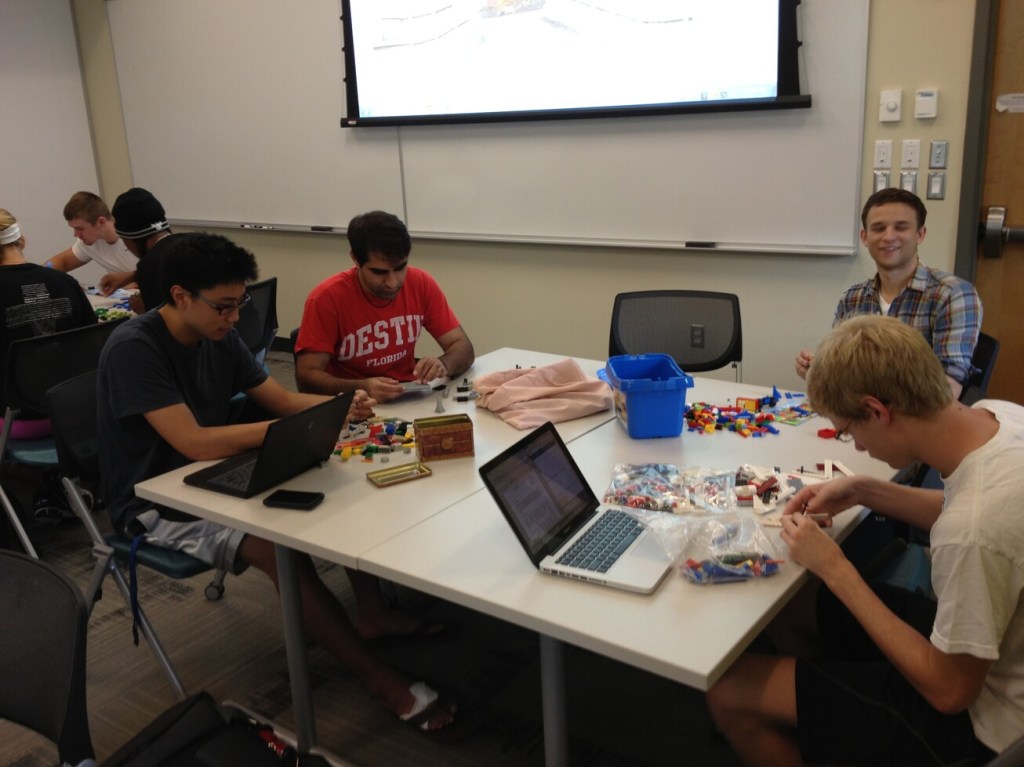
My LMC3403, Technical Communication students are well into their second unit project on reader-centered and process-driven fundamentals. In a fun assignment, I wanted the students to try out many different types of technical communication deliverables for different readers/audiences. Also, I wanted them to think differently about nonverbal communication with the heavy emphasis on haptics, physicality, and making.
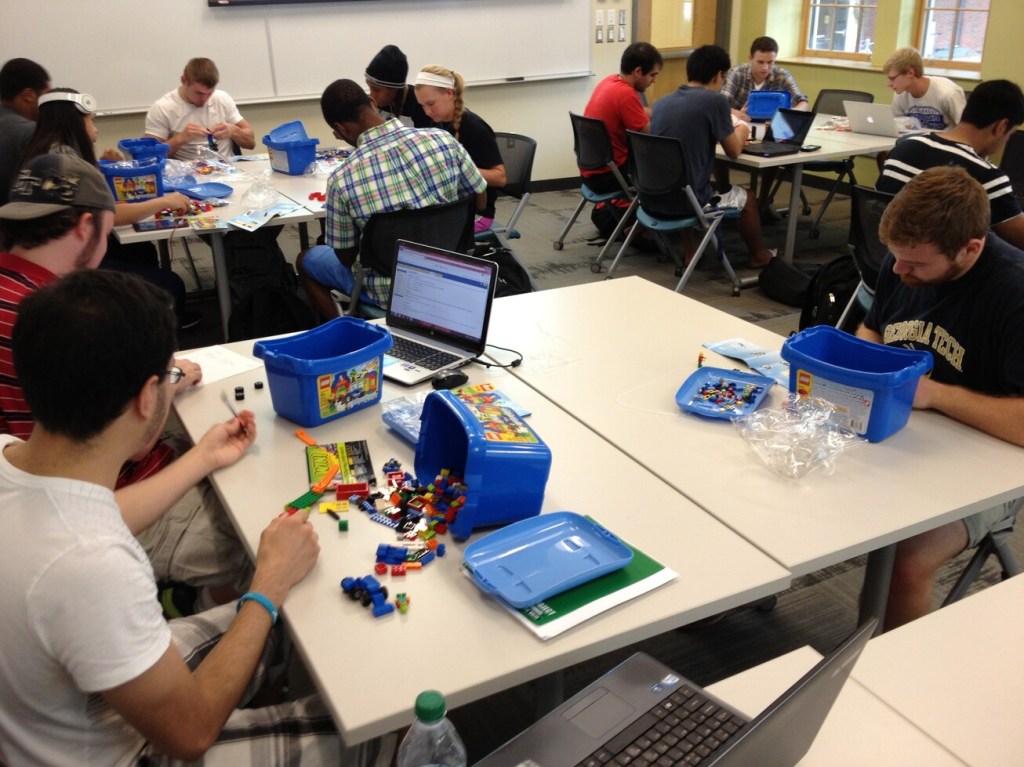
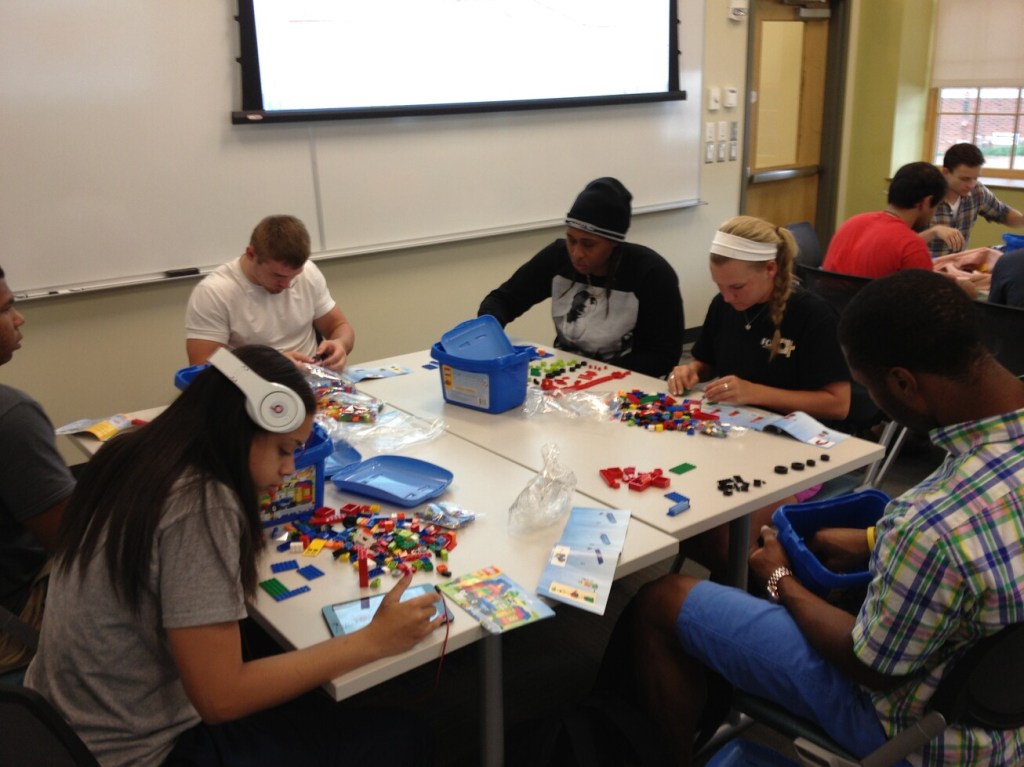
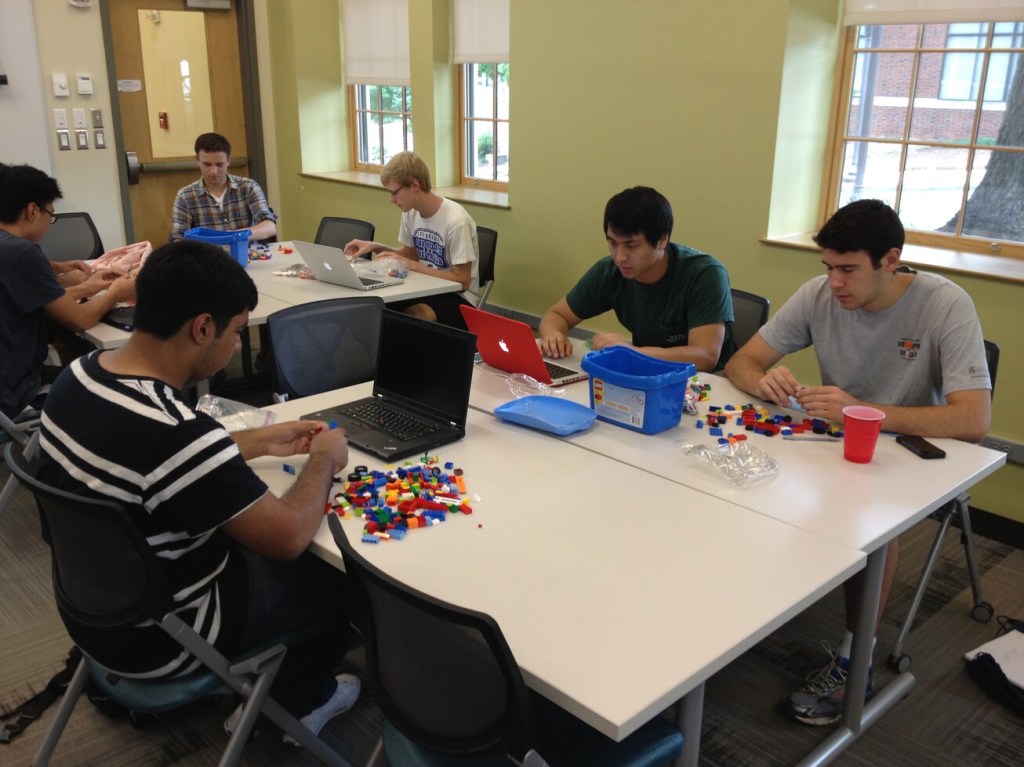
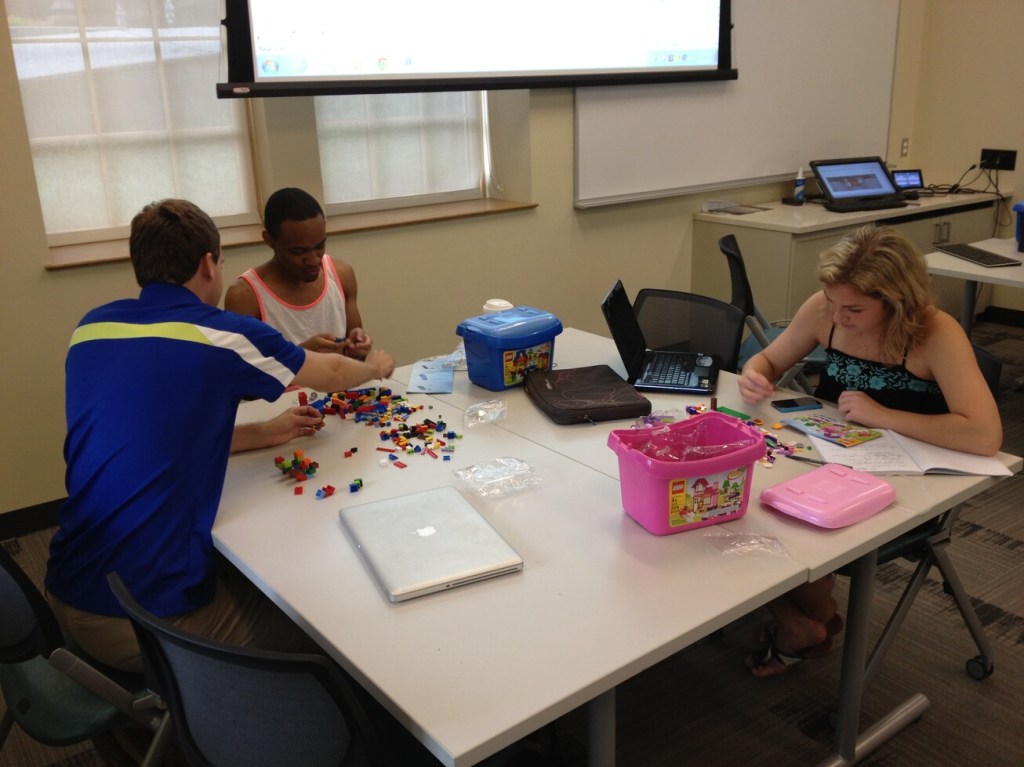
In this project, their primary task is to build a set of instructions for a Lego model of their own design.
Their Lego model should represent something about their studies, their professional field, or their entrepreneurial spirit.
Their project began with the creation of a proposal memo that laid out their entire project: designing instructions, testing instructions, reporting on tests in a memo, revising instructions, and reflecting on the project in a memo.
Throughout the process, they have to be mindful of different audiences (executives, managers, and customers).
In these photos, the students are busy at work creating the first version of their Lego models.
I was happy to overhear someone say, “It’s nice to actually do something fun in a class for once!”
Today, the Georgia Tech Alumni Student Ambassadors and the Georgia Tech Center for the Enhancement of Teaching and Learning hosted the Dean Griffin Day Luncheon to recognize recipients of “Thank a Teacher” notes. I was honored by a Thank a Teacher note from one of my students.
Associate Vice Provost for Learning Excellence Donna Llewellyn told us about the origins of the Thank a Teacher program and recited some of the notes that recipients had received.
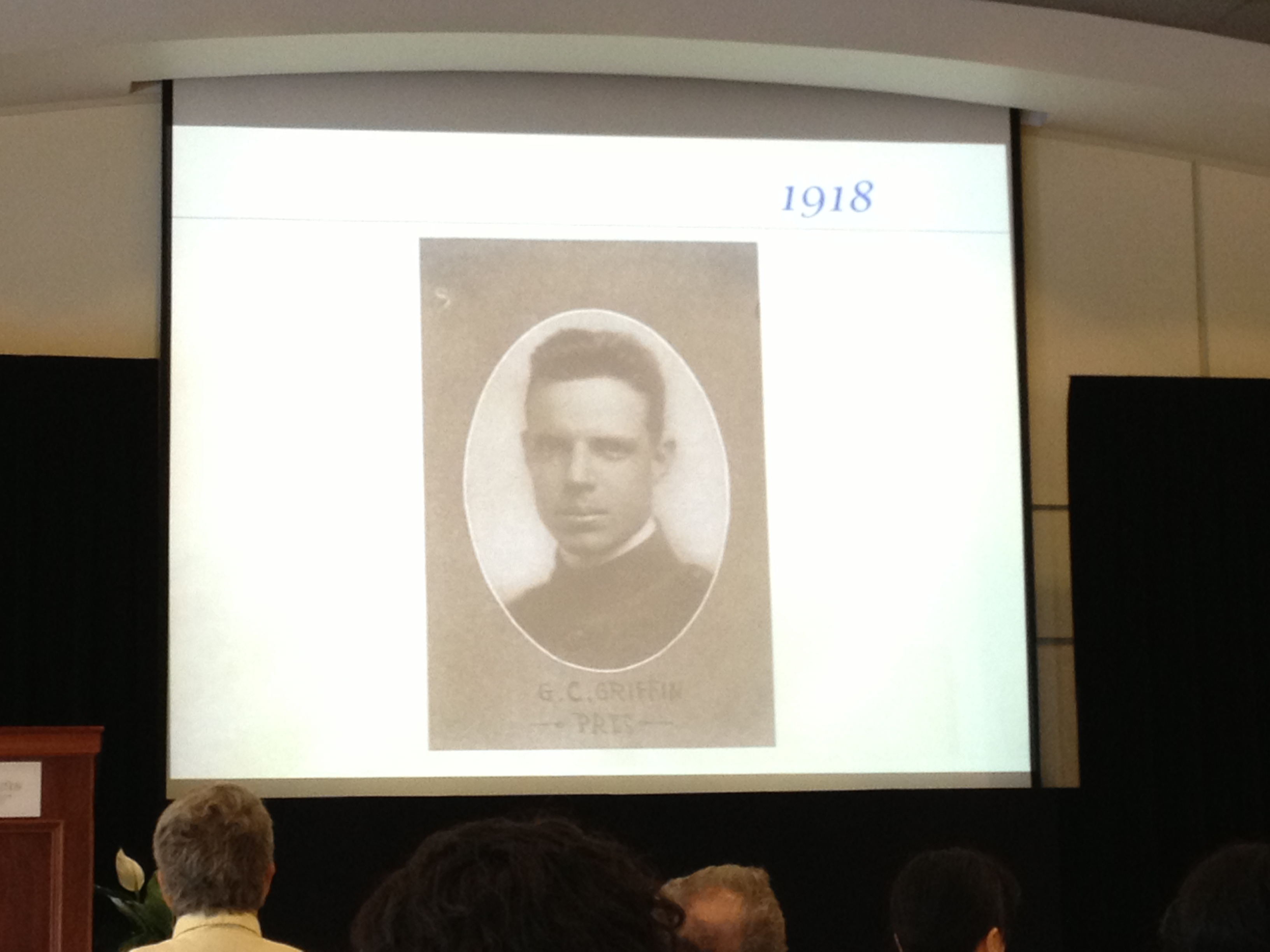
Marilyn Somers, Director of Georgia Tech’s Living History Program, guided us through enjoyable multimedia-driven stories about Dean George C. Griffin. Her enthusiasm for Georgia Tech is only matched by her passion as a storyteller.
Vice Provost for Undergraduate Education Colin Potts delivered a meditation on what exactly it is that makes a great teacher and how that relates to the modern development of online education in MOOCs (massive open online course). The two most provocative things that I took away from his talk include the question, “What makes a good teacher?,” and the observation, MOOCs are part of the evolution of education but not the end.
On my walk back to the Hall Building, I thought about Dr. Potts’ question: What makes a good teacher. Of course, I have given this idea a lot of thought before and after entering the profession, but it is a question that we as educators should continually return to in our work as reflective practitioners. The best quality that I have found in my teachers (and I mean those people who are educators in the broadest sense of the word) is passion. This includes a passion for the material being taught, a passion for student learning and success, a passion for engaging others, a passion for life-long learning, a passion for energetic discourse, a passion for understanding, a passion for a passion for giving back to a community, a passion for being a part of larger conversations beyond the classroom, and a passion for kindness. What’s intriguing about my experiences with some fantastic teachers during my life is that I do not believe that any of them perform, demonstrate, or conduct these same passions in the same way. There many different paths to these things, and its amazing to me how many different people tread very different paths yet have achieved for me the same positive and enriching outcomes.
This reminds me of something else that Dr. Potts warned about MOOCs–the impulse of some to promote a singular, superstar educator as the one way for a course to be delivered and taught. In a smaller way, I think back to my Calculus education at Georgia Tech. There were simply some professors who I could learn from–that is, their teaching style and methodology synced, jived, and meshed with my thinking and learning ability. The professors who I did learn Calculus best from might not have been the exemplars of the profession at Tech at that time, but they were, to me anyways, the best educators of Calculus (I should know, because I had some false starts early on in my educational career). We have to be very careful about the choices that we make as an institution and as a profession as we move further into offering MOOCs. These choices should extend beyond the calculus of student completion rates. We have to consider the effects MOOCs will have on pedagogy and educators. How will MOOCs, over time, influence education? How will MOOCs influence student success in areas not explicitly concerned with a course that teachers often provide and encourage (finding out how students are doing, having informal chats, making sure students are doing okay, etc.)? Will MOOCs push out some educators and educational styles in favor of others? Can the passions of educators be provided/conveyed and can the passions of students for learning, solving puzzles, and engaging discourses be fostered in a MOOC?
A final note: I am listening to Dr. Eric Rabkin’s lectures on tape for his Science Fiction: The Technological Imagination course from the University of Michigan. Certainly, he is passionate about science fiction, and it is, I believe, unavoidable for his passion to infect his audience. He knows the material, and he is obviously excited to convey this knowledge to his students (in the classroom and in the world–those of us listening to the lectures on tape). However, Dr. Rabkin cannot provide the same kinds of things as a teacher (educator, mentor, counselor, etc.) in a MOOC or lectures on tape that he can provide in a class of reasonable size (another issue). Don’t get me wrong–Dr. Rabkin is a fantastic person and I count him among my professional friends. However, there are limitations to what an educator can and cannot do in a MOOC or lectures on tape. For example, in his own highly popular MOOC, I imagine that he cannot read all of the comments or questions of every student (when I see Dr. Rabkin next, I will certainly ask him about how he compares his classroom and MOOC teaching). This is something possible when you have reasonable class enrollments and course loads (this leads into another area of concern about having too large of a class for a qualitative and composition oriented course–there is a point at which the teacher cannot provide the necessary and needed passion for all students. In which case, a too big of a class, too many classes, or a MOOC can become indistinguishable from the perspective of the educator). Of course, I can see that the objectives of the classroom learning environment compared to the MOOC/lectures on tape should be different. I am left wondering though if everyone who promotes MOOCs truly recognizes the different affordances of each without trying to make one into the other at the cost of each.
This morning, Mirja Lobnik and I will be co-hosting a workshop on “Multimodality and Perception: A Multi-Sensory Approach to Teaching Rhetorical Skills” at the Assessing Multimodality: Navigating the Digital Turn Symposium co-hosted by Georgia Tech’s Writing and Communication Program and Bedford St. Martin’s. Our workshop is about multisensory perception, multimodal composition, and cognition:
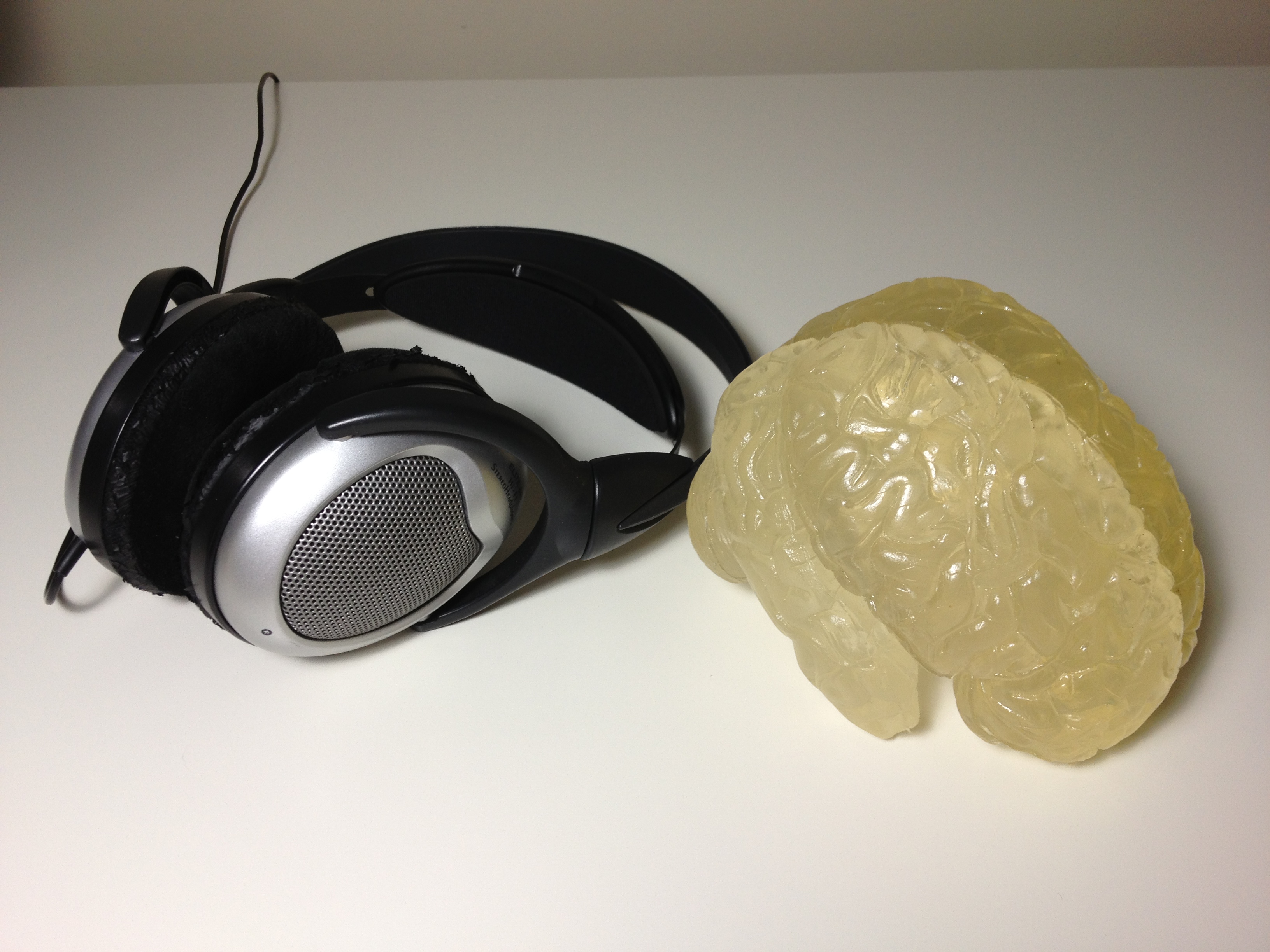
Associated with the use of various media to create cohesive rhetorical artifacts and the neurology of the ways humans process information through different sensory channels, multimodality has gained considerable ground in the composition classroom. Insofar as multimodal pedagogies emphasize the role of students as active, resourceful, and creative meaning-makers, it tends to enhance student engagement and, by extension, the teaching of composition and rhetorical skills. Focusing on sensory details of embodied, lived experience, this workshop centers on teaching that engages students both in mind and body. This approach not only promotes the students’ creation of multimodal artifacts but also encourages students to explore and critically reflect on personal experiences. Specifically, Lobnik focuses on aural composing modalities, including speech, music, and sound, and assignments that highlight sound as a rhetorical and creative resource: a transcription, audio essay, and a video. Ellis discusses cognition, metacognition, and curation and an assignment that integrates Twitter, Storify, ComicLife, and the written essay.
If you get to attend our workshop or the symposium’s other great sessions, please tweet using the hashtag: #AMsymposium.
As part of the final Digital Pedagogy seminar of fall 2012, Margaret Konkol, Patrick McHenry, Olga Menagarishvili, and I will lead the discussion on “trends in the digital humanities.” You can find out more about our readings and other DH resources by reading our TECHStyle post here.
As part of my contribution to the seminar, I will give a demo titled, “Down and Dirty Guide to Literary Research with Digital Humanities Tools: Text Mining Basics.” In my presentation, I will show how traditional literary scholars can employ computers, cameras, and software to enhance their research.
To supplement my presentation, I created the following outline with links to useful resources.
Down and Dirty Guide to Literary Research with Digital Humanities Tools: Text Mining Basics
Text Analysis and Text Mining
My working definition of text mining: “Studying texts with computers and software to uncover new patterns, overlooked connections, and deeper meaning.”
MacOS X and Linux: cat, find, grep, and print (use “man cat” and “man grep” to learn more from the Terminal. More info here, here, here, here, and here.)