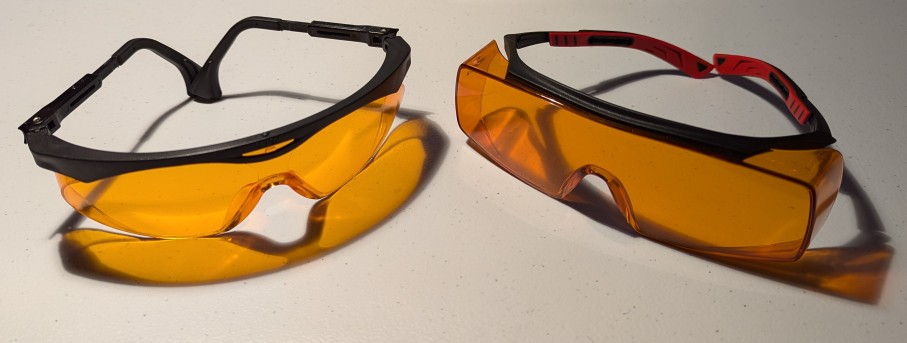
A long while back, Y suggested that I wear blue-blocking orange colored glasses in the hours leading to bedtime to help me avoid being woken by the blue light coming from my computer display, television, overhead lights, and smartphone. I can report that donning orange colored glasses a couple of hours before sleep (and taking with 1.5mg of melatonin and 700mg of magnesium glycinate about an hour before bed) helps me fall asleep much more quickly than I used to before wearing the glasses every evening.
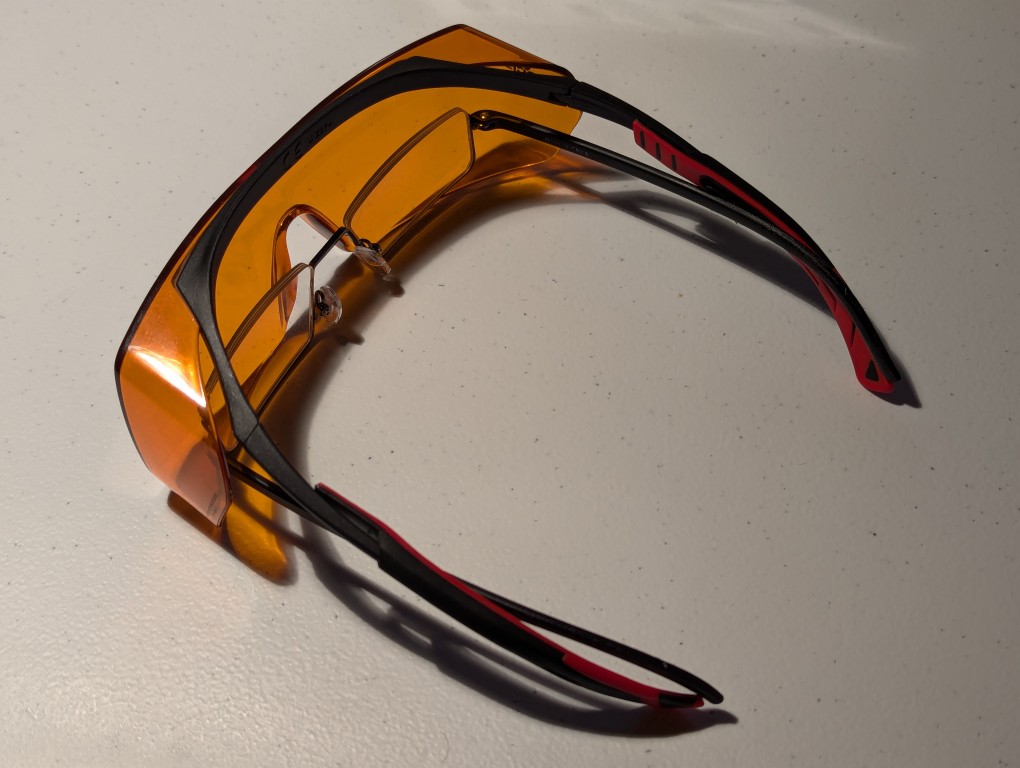
As I began developing presbyopia or age-related impairment of my eyes to focus on nearby objects, I upgraded from the pair of glasses on the left to the ones on the right to accommodate my reading glasses as shown below.
I repurposed my original pair of orange glasses to wear when I go out for walks at night with Y. I noticed that the bright lights of cars could sometimes trigger a migraine. Wearing these glasses reduces the intensity of on-coming car’s headlights on newer vehicles, which as others have noted, seem to be far brighter than halogen lights on older cars and trucks.
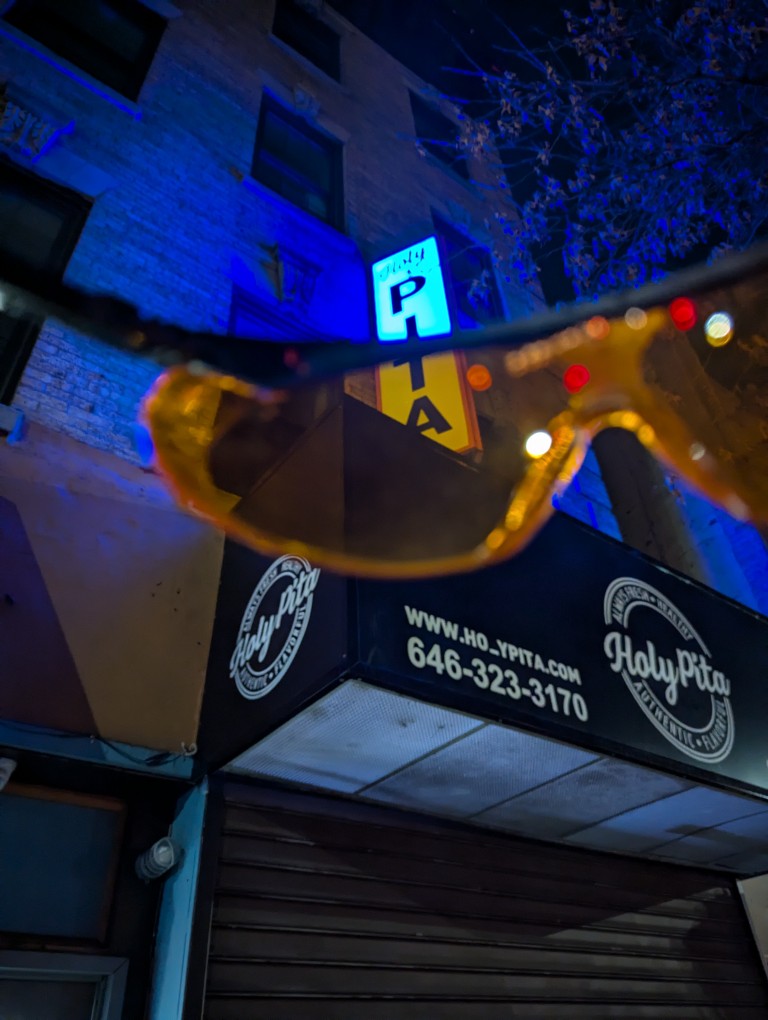
To illustrate how well these glasses cut out blue light, you can see the blue Prospect Park West Holy Pita restaurant sign turn to an orange-white color through the orange lens below.
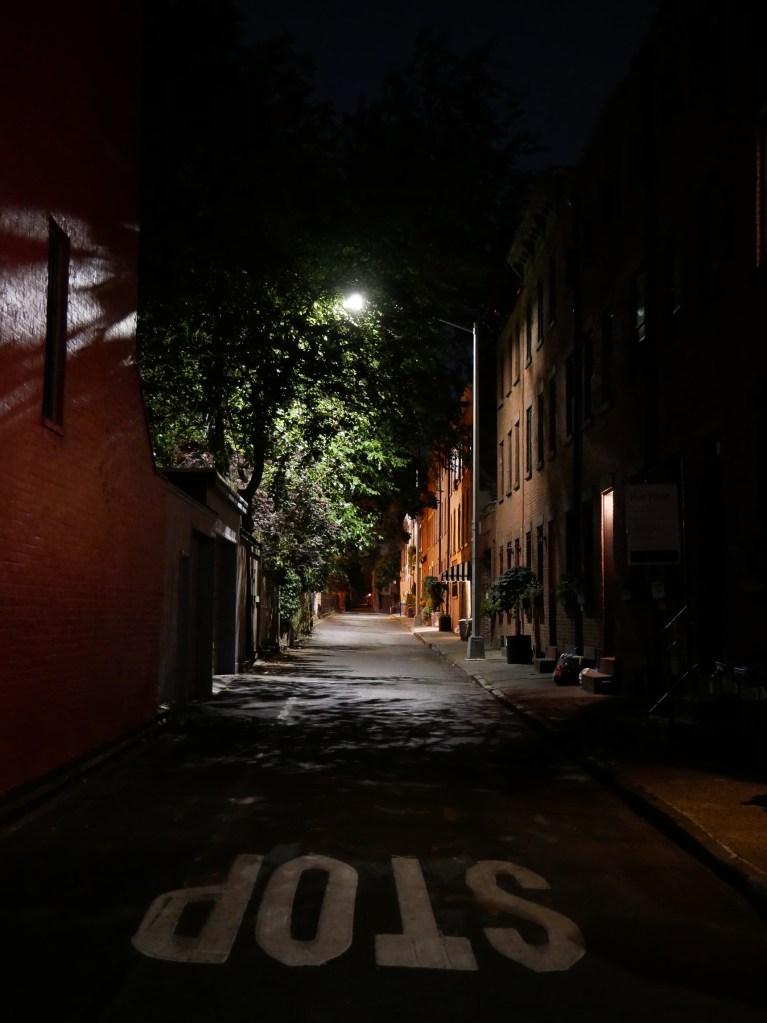
Y and I go for evening walks after dinner. I took the photo above on one such walk during June of 2020. The city was relatively quiet during the day, but it was even more so at night. This is a one-way side street between Carroll Gardens and Cobble Hill. Residences–some might have once been stables–are on the right side and the back of neighboring residences are on the left. In the background on the left side is a small park.
I’m holding my Distinguished Alumni Award while standing next to Georgia Tech’s mascot, Buzz.
On Mar. 29, 2023, Georgia Tech’s Ivan Allen College held its 2023 Distinguished Alumni Awards Ceremony. The Ivan Allen College’s six academic schools and its three ROTC branches give these awards to “celebrate excellence in the College community.” I was honored to receive a Distinguished Alumni Award from the School of Literature, Media, and Communication for my contributions as a teacher, scholar, and organizer. The award reads, “For outstanding achievements that inspire continued excellence and bring credit to the School of Literature, Media, and Communication, the Ivan Allen College of Liberal Arts, and the Georgia Institute of Technology.”
To honor all of the Ivan Allen College professors who made my success possible, I delivered these remarks after receiving the Distinguished Alumni Award:
I am honored and humbled to receive this Distinguished Alumni Award. I want to thank the Ivan Allen College, Dean Husbands Fealing, and all of the faculty, administrators, and staff who make the Ivan Allen College not only a indispensable and integral part of Georgia Tech but also a home for someone like me who is better at writing about science than doing science. It also feels like home, because I’ve spent so many years here—first, it took me 10 years to “get out” with my bachelor’s degree, and then, I returned as a postdoctoral Brittain Fellow for 2 years to give back to Tech as an instructor where I had received so much from my former professors. Throughout my career, all of the work that I have done as a scholar, an instructor, an organizer, and an administrator can be traced back to my education and professionalization in the Ivan Allen College. To name a few examples, when I was asked to help establish the City Tech Science Fiction Collection where I now work, I looked at the problem with the engineering mindset that Tech instills in its students. I drew on my experience working under Lisa Yaszek on research projects, public outreach, and donation runs for what was originally called the Bud Foote Science Fiction Collection and now the Georgia Tech Science Fiction Collection. After starting the collection, I inaugurated an annual Science Fiction Symposium to celebrate the collection and create a platform for scholars and students (including Lisa’s SciFi Lab undergraduate researchers) to interact and share their findings. That work over the past seven years was made possible by the experiences that I had with Lisa when she mentored me to create the schedules for the Monstrous Bodies Symposium in 2005 and the international Science Fiction Research Association Conference held in Atlanta in 2009. Lisa has had a profound influence on my career. She’s my hero and I strive to be like her.

Other faculty have also played outsized roles in my development. Carol Senf and Narin Hassan gave me kind and essential advice at key points in my undergraduate career, and they also gave me some of my first editing work by asking me to proofread their respective manuscripts, which helped tremendously in the editing and collaborative writing that I have done over the years since then. In my teaching, I observed and learned from some of the best practioners. I want to excite my students in the way that Hugh Crawford can when talking about William Carlos Williams and bombsights, as detailed as Steven Usselman is about steam engine locomotives, or as illustrative as Robert Wood is when he talks about 15th century Florence. And I show my students compassion when things go wrong as Rebecca Merrens did for me when my maternal grandmother died, foster my students passions as Lisa Holloway-Attaway did for me in the two required freshman college writing classes, give my students a chance like Patrick Sharp did for me by readmitting me in 2002, give my students opportunities to contribute to the life work of our campus communities as Ken Knoespel did for me, and give students an opportunity to be successful and demonstrate learning when the student stumbles on a project they are ill fitted to such as the late Thomas Lux did for me by asking me to produce a Poetry Out Loud DVD for Georgia public schools in place of my atrocious writing as a poet. And while I never had the opportunity to take a class with Jay Telotte or Jay Bolter, their work had a significant influence on my early research, and I teach their scholarship to my students now. Most recently, Rebecca Burnett, the former Writing and Communication Program Director, led the Technical Communication theory and pedagogy seminar that I volunteered to participate in so that I could earn the opportunity to teach Tech Comm as a Brittain Fellow. That experience directly led to my job at the New York City College of Technology and my current position as Director of City Tech’s Professional and Technical Writing Program. Rebecca has continued to selflessly mentor me throughout my directorship.

And lastly, I want to offer a special thank you to Professor Hanchao Lu, because his Asia in the Modern World class had a profound effect on my personal life. He encouraged me to research Taiwan for my final paper. Years later, when I met a Taiwanese girl in graduate school in 2007, I drew on what I had learned in Professor Lu’s class to talk about the KMT and DPP political parties hoping that she might notice me. And guess what? She did, and we got married two years later! Thank you, again!
I arrived in Atlanta a day early, because I wanted to walk around and see all of the changes around Georgia Tech’s campus during the 8 1/2 years since I was last there. Some things remained comfortably familiar, like the entrance to the School of Literature, Media, and Communication on the 3rd floor of the Skiles Building.
School of Literature, Media, and Communication, 3rd Floor of Skiles Building.
However, there were subtle changes like the addition of outdoor tables and seats on breezeway, which I utilized to finish writing my thank you remarks.
Outdoor seating on the 3rd floor breezeway in Skiles.
Besides the changes to buildings and the construction of new facilities, there are new pieces of art that convey important historical events as well as excite the senses.
“The Three Pioneers” by Martin Dawe.
Approaching Tech Tower, I was greeted by this striking bronze sculpture titled “The Three Pioneers” by Martin Dawe. It depicts the first three African American students to matriculate at Georgia Tech in 1961: Ford C. Greene, Ralph A. Long, Jr., and Lawrence M. Williams.
“Continuing the Conversation” by Martin Dawe.
Walking toward the foot of Tech Tower, I sat in this engaging bronze and granite piece titled “Continuing the Conversation.” The viewer sits between two versions of Rosa Parks–42 on the right and 92 on the left. While Parks had never visited Tech’s campus before, this art reflects her influence on change and how we should be a part of that change moving forward.
Me and Robert Berks’ Einstein.
Walking through the center of campus–the Library, Skiles Building, and the Student Center–I found Robert Berks’ Einstein installation. While some folks think the statue is out of place at Tech, it meant something personal to me. When I was in high school, I read Einstein’s Relativity: The Special and the General Theories, which among other works by Carl Sagan, Michio Kaku, Roger Penrose, and Stephen Hawking, directly led to my enrolling as a Physics major at Georgia Tech in 1995. That didn’t work out so well for me academically, but I love Physics and Mathematics despite my own deficiencies.
John C. Portman, Jr.’s KR+C Sculpture.
Walking from the Einstein statute toward the green space between the back of the Library and the School of Architecture I encountered John C. Portman, Jr’s imposing KR+C (for Knowledge and Research plus Creativity) sculpture. Walking around its circumference reveals how it reshapes and changes depending on your perspective. I found that you can walk up the back stairs of the Library and Clough Undergraduate Learning Commons to get a bird’s eye view of this magnificent sculpture.
“Jetson” in the Clough Undergraduate Learning Commons.
Walking into the Clough Undergraduate Learning Commons, I found art suspended between its the clean perspectival lines. The sculpture above titled “Jetson” is a collaborative team project initiated by former College of Architecture Professor Volkan Alkanoglu. Primarily constructed from water jet cut aluminum, this large, futuristic sculpture only weights about 110 pounds!
Walking through the Clough Commons into the Library, I met with my former colleague Wendy Hagenmaier, Digital Curation Archivist and RetroTech Manager, in the 3rd floor Data Vizualization Lab and RetroTech shared space. RetroTech is a working collection of born digital (and analog) art (and science) artifacts that students can use, support, and learn from. Before moving to Brooklyn, I donated four of my vintage computers (a Dell Dimension 4100, Apple Macintosh Perform 550, iMac DV, and Apple Power Macintosh 8500) to the Georgia Tech Library to help kickstart RetroTech, a lab for students to use and interact with older technologies–computers, video game consoles, cameras, slide rules, typewriters, etc. I was amazed at how much space RetroTech has in conjunction with the Data Vizualization Lab. Besides having equipment and space, Wendy is developing RetroTech into a sustainable initiative involving students and cross campus connections. I’m really happy to see how much RetroTech has developed under Wendy’s leadership.
Leaving the Library, I walked through Deanna Sirlin’s “Watermark” installation. The sunlight passing through the colored glass panes creates a changing projected artwork on the floor and surroundings inside this entrance to the Crosland Tower of the Library.
Kessler Campanile.
Walking back toward the Student Center, I stopped in front of the Kessler Campanile designed by Richard Hill for the 1996 Olympics. It was installed during my freshman year at Tech.
Spending almost a whole week in the ATL gave me a much needed boost. 99x is back on the air. I enjoyed not one but two meals at Del Taco. I talked computers with Grantley and Melanie. I met Carol Senf for brunch to talk teaching. I hung out with Lisa Yaszek and Doug Davis at the West End. Rebecca Burnett and Jeff Jeffries invited me over to their home for a wonderful dinner. I talked Doctor Who and Dirk Gently with Mark Warbington. I discussed books with Keith Magnes. And, I got to visit Mike Flanagan in his new house and see his wife Diana compete in a local tennis tournament. Unfortunately, I didn’t have enough time to see everyone I know there, but I hope to get back to Atlanta before another 8 1/2 years pass!
My Distinguished Alumni Award lit by candlelight. Photo by Rebecca Burnett.
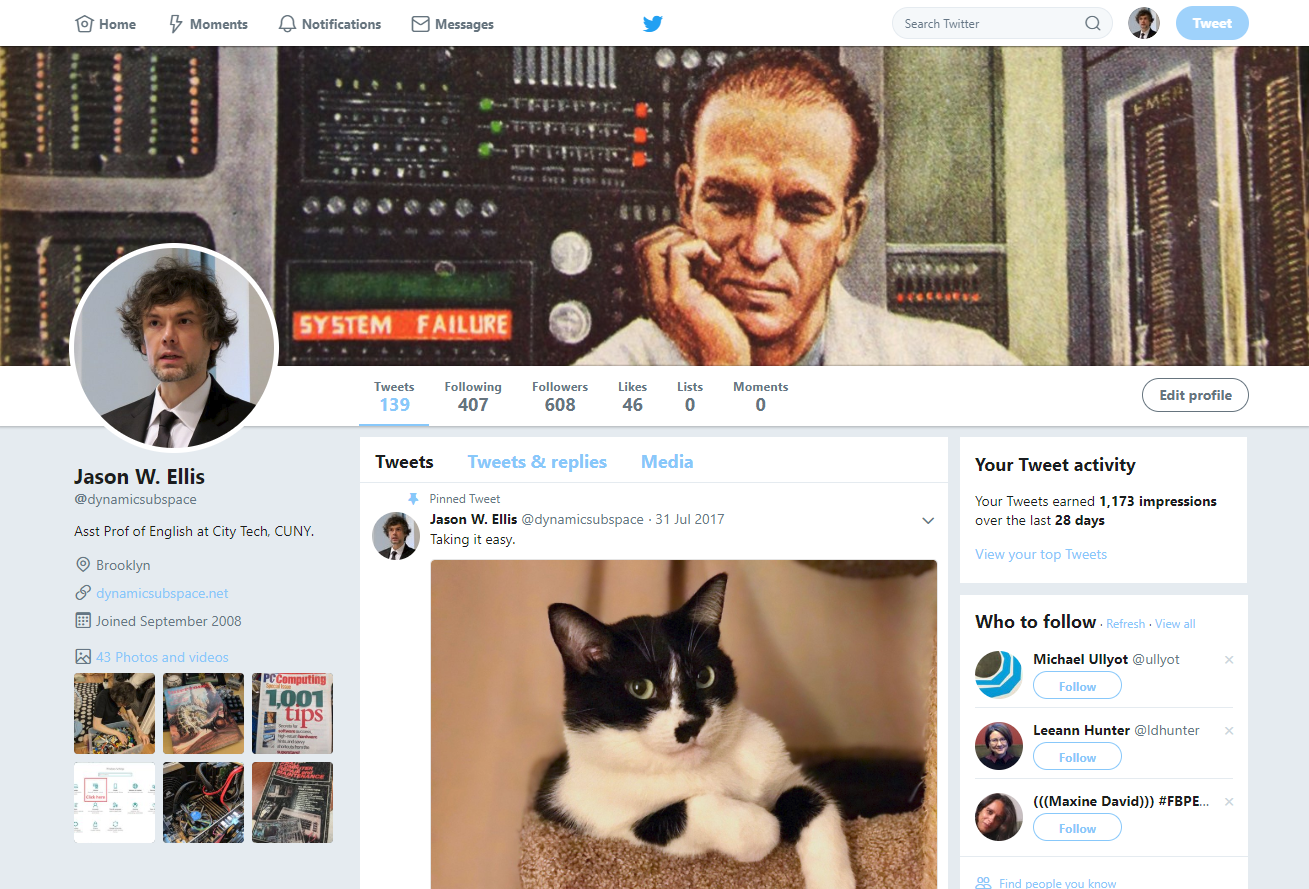
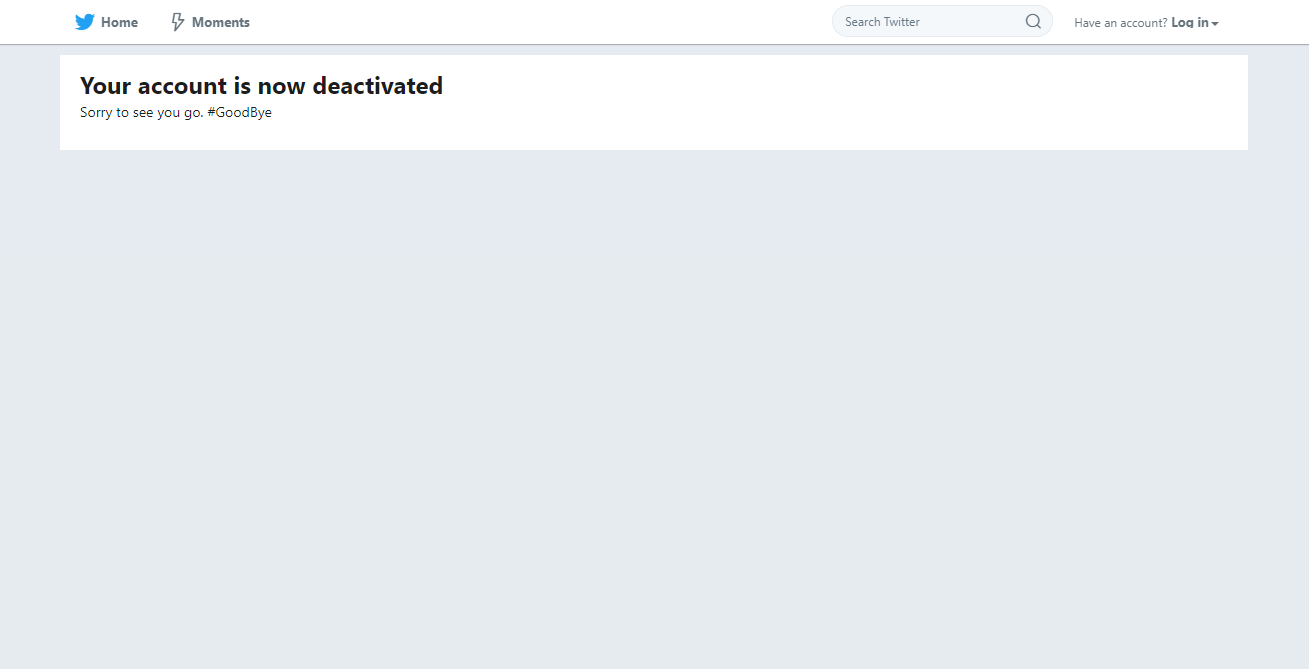
Back in 2013 and after long deliberation, I deleted my Facebook, Google+, and Academia.edu accounts. Then, I deleted my Flickr/Yahoo and LinkedIn accounts. Now, I’ve wiped out my Twitter and Reddit accounts.
I used Twitter for seven-and-a-half years and had posted nearly 10,000 tweets (this number ebbed after cleaning up a hoard of past tweets). And I had a Reddit account for four years, and I had a healthy number of upvotes for my LEGO-related posts and discussions there.
I leveraged my Twitter and Reddit accounts to keep up with what’s going on in my profession as well as learn and contribute to other areas of interest including computer culture and LEGO. However, my cost for keeping up to date was considerable in terms of time and cognitive effort. And while I saw, read, and learned a lot from the work of social media, actionable returns–what I think of as a meaningful returns in terms of conversation, connections, and opportunities–were very small.
Ultimately, my decision to further reduce my social media footprint was based on these issues:
Cost (time, attention, and cognitive load)
Content (anxiety over posting, persistent needle-in-the-haystack problem for finding useful information)
Discourse (challenge to follow threads, gain background information for out-of-context posts, rage cycles, hot takes, fear of missing out)
Connection (so many discussions but uncertain where to contribute, sustaining conversation, social media not leading to projects outside of that realm)
People (nonsense, bullshit, bigotry, and sexism; e.g., disheartening cases of disconnection between how some users comport in online LEGO communities and elsewhere)
Of course, there are arguments for remaining on social media, such as maintaining a professional presence on these platforms, publicizing the work that you and others do, discovering new and compelling work that isn’t amplified elsewhere, and leveraging social media to expand discourse through discussion, debate, and public engagement. For me, however, the daily reality of these platforms do not live up to the promise or potential with which they are often sold to end users.
My choices and these issues will inform how I approach social media in my classes. The reality for many of my students–especially those entering the field of technical communication–will need and rely on various social media platforms for their professional work and advancement. I think that informed, strategic, and purposeful social media choices are the best for them and others. I’m looking forward to these upcoming discussions in the classroom.
If you’d like to trim your social media presence, Wired has a guide for deleting the most popular social media accounts. These instructions show how to deactivate your Twitter account. After 30 days of inactivity, your account and its content are deleted. And, these instructions tell you how to delete your Reddit account. One caveat: Your posts and comments will remain unless you take steps to remove or edit them. In my case, I manually deleted them, but there are automated approaches, such as Shreddit and Nuke Reddit History for Firefox or Chrome.
2012 was a big year for me. I earned my PhD and I obtained my first job with that degree. I traveled for my research–first to California, then to Detroit, and later to Germany. And, my wife, our cat, and I relocated from Ohio to Atlanta for my new job at Georgia Tech and we moved into my old house in Norcross, which had not sold during the past six years of graduate school.
Unlike years past, I thought that it might be appropriate to jot down some of the milestones of 2012. Here are a few of those big things:
January 5-8: Y and I attended the MLA Convention for the first time and met up with a number of our friends and colleagues.
February: I spent two weeks in Riverside, California to read and research in the University of California, Riverside’s Eaton Collection in the Library’s Special Collections and Archives. This was an incredibly useful research trip that gave me the original research materials to complete my dissertation. Prior to leaving for my research trip–funded by the prestigious R. D. Mullen Fellowship–I had completed my dissertation’s theory chapter and compiled outlines for the other chapters.
April 2: I interviewed for the Marion L. Brittain Fellowship at my alma mater, Georgia Tech.
April 9: I delivered printed copies of my dissertation to my committee members. Since my trip to Riverside, I wrote approximately 68,000 words for a final word count of 81,948. Needless to say, I channeled the spirit of Philip K. Dick during this feverish time of hypergraphia. I could not have written this amount in such a short time had I not already created an efficient organization system for my research and deployed a number of digital humanities tools in my workflow. It was a terribly stressful time, because I drove myself relentlessly to complete it as quickly as possible. However, I would not have had it any other way.
April 19: I accepted an offer from Georgia Tech to join the rechristened School of Literature, Media, and Communication as a Brittain Fellow! My term of appointment is for three years.
May 15: I successfully defended my dissertation titled, “Brains, Minds, and Computers in Literary and Science Fiction Neuronarratives.” I came prepared with a suitcase of gear and donned with my only suit. During my opening statement, I showed off the ebook version of William Gibson’s Sprawl trilogy on a Powerbook 145.
June 4-15: I met my parents in Norcross to work on my house. We replaced the main water line, repaired the plumbing, installed a new dishwasher, worked on the house, and cleaned the yard. Prior to this trip, I had maintained a vegetarian lifestyle. During my second day of using a grubbing hoe, I decided that I needed to eat meat again.
June 28-July 1: I attended the SFRA Conference in Detroit. This was my second and final meeting as the organization’s vice president. I presented my paper, “Philip K. Dick as Pioneer of the Brain Revolution.”
July 10: Y and I said goodbye to our friends in Kent and drove straight through to our new home in Norcross.
August 11: While I was unable to attend the ceremony, I officially graduated from Kent State University with the degree of Doctor of Philosophy.
August 13-17: I attended new hire orientation at Georgia Tech, or as my cohort and I came to know it: Brittain Fellow Boot Camp.
August 21: I began teaching at Georgia Tech. I had three sections of ENGL1101. I designed my classes around the theme of becoming better communicators and professionals through neuroscience.
September 1: I began building the Lego Death Star set.
September 10: My Dad called me early in the morning to tell me that my Granny Ellis had passed away during the night. I wrote about it here.
November 15-18: I attended the first international Philip K. Dick conference at UT-Dortmund in Dortmund, Germany. I delivered a heavily revised version of my SFRA 2012 paper, “Philip K. Dick as Pioneer of the Brain Revolution.” The conference was a fantastic experience. I promise to write more about this in a separate post. In the meantime, you can see my pictures from Germany here.
November 22: My parents spent the Thanksgiving holiday with us in Norcross.
December 16: I filed my students’ grades and completed my first semester teaching at my alma mater. Looking backward, it was a tough semester, but it was extremely rewarding. I will reflect and write about this more soon.
December 17: I completed building the Lego Death Star set.
December 25: My parents spent Christmas with Y and me. They arrived bearing many gifts, and they took us out for more surprises. I believe that we all had a really wonderful time!
December 26+: I am preparing my teaching and publication materials. I also have a few job applications to complete. I have been using my chain saw and weed eater with saw blade a lot. When the weather and wind permit, I get to burn a small bit of excessive yard waste that I have to do something with.
December 29: Y and I met our friend (and fellow Georgia Tech alumna) Smitha for pastries and tea at Sweet Hut. We had a great time catching up.