Jim Rennert’s Listen is an imposing sculpted figure where Robert Indiana’s Love sculpture used to be in Manhattan. Of the two, I think there’s a lot more value in its message of being silent so that you can listen to what others have to say. One must be silent to listen. Listening is the foundation of understanding, trust, and cooperation. Unfortunately, there were no crowds around this statue like there used to be for the LOVE sculpture. This important symbol seems to be less photogenic for some.
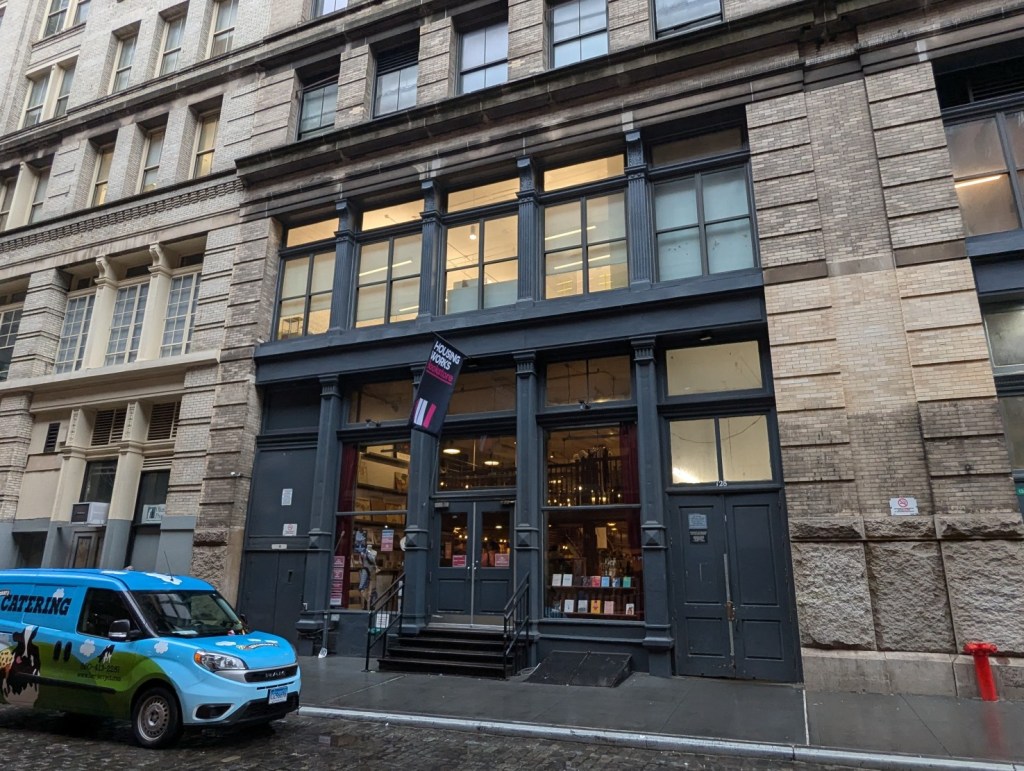
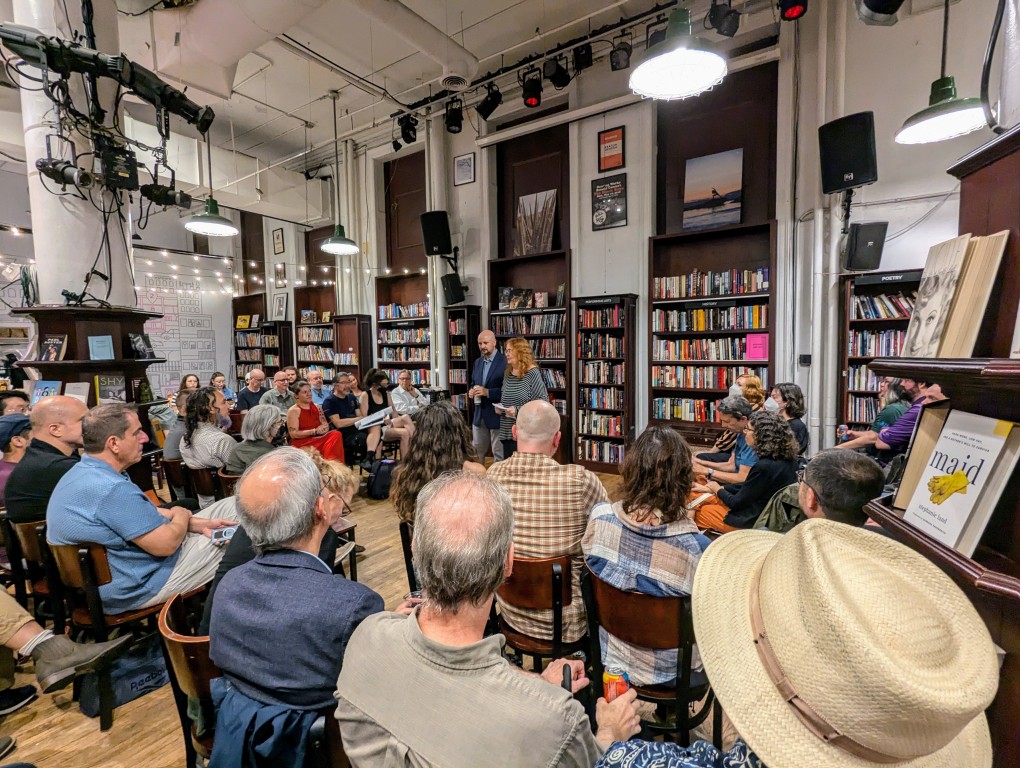
It was a full house at Housing Works Bookstore Cafe. Besides hearing great readings by the assembled authors, I also got to talk with some fans and friends of the winners.
Congratulations to the winners, and also congratulations to all the writers for having their words accepted for publication in two of the flagship venues in the field! And, thank you to Sheila Williams (editor of Asimov’s), Trevor Quachri (editor of Analog), and Emily Hockaday (managing editor of Asimov’s and Analog) for your work keeping the SF magazine dream alive (seconding Frank Wu’s remarks)!
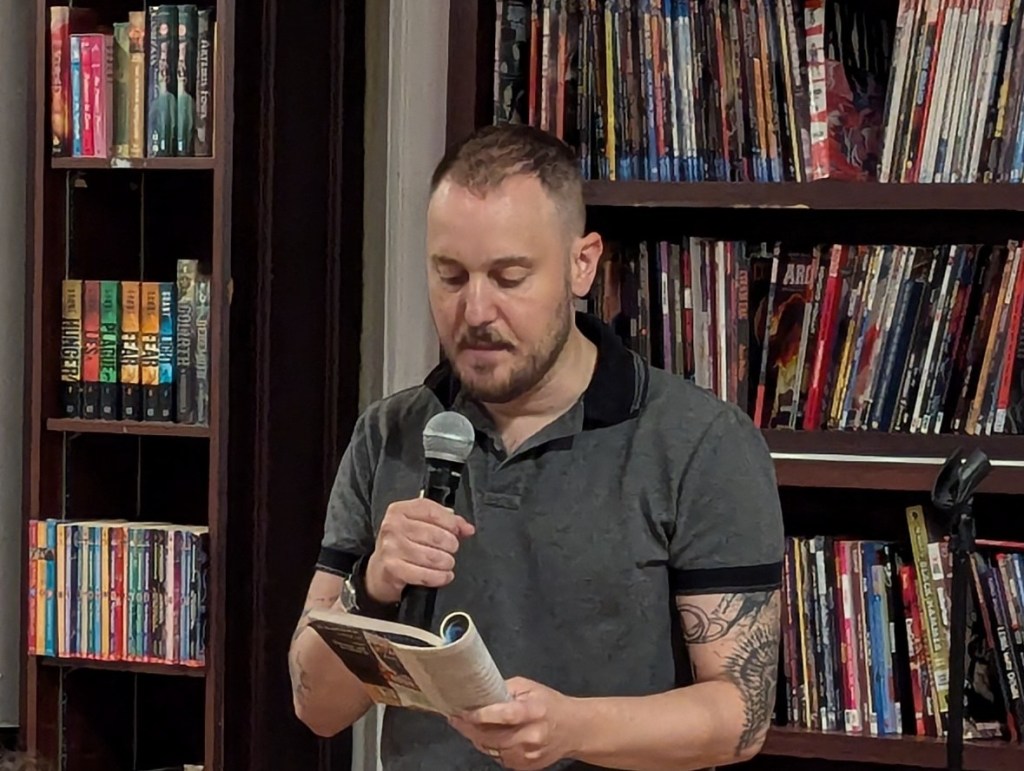
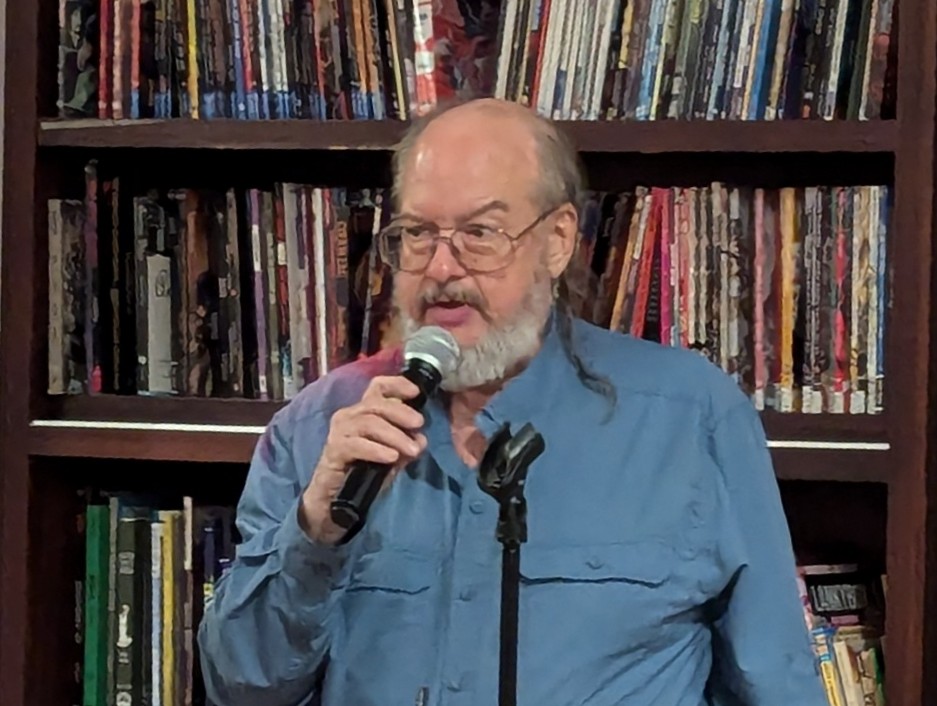
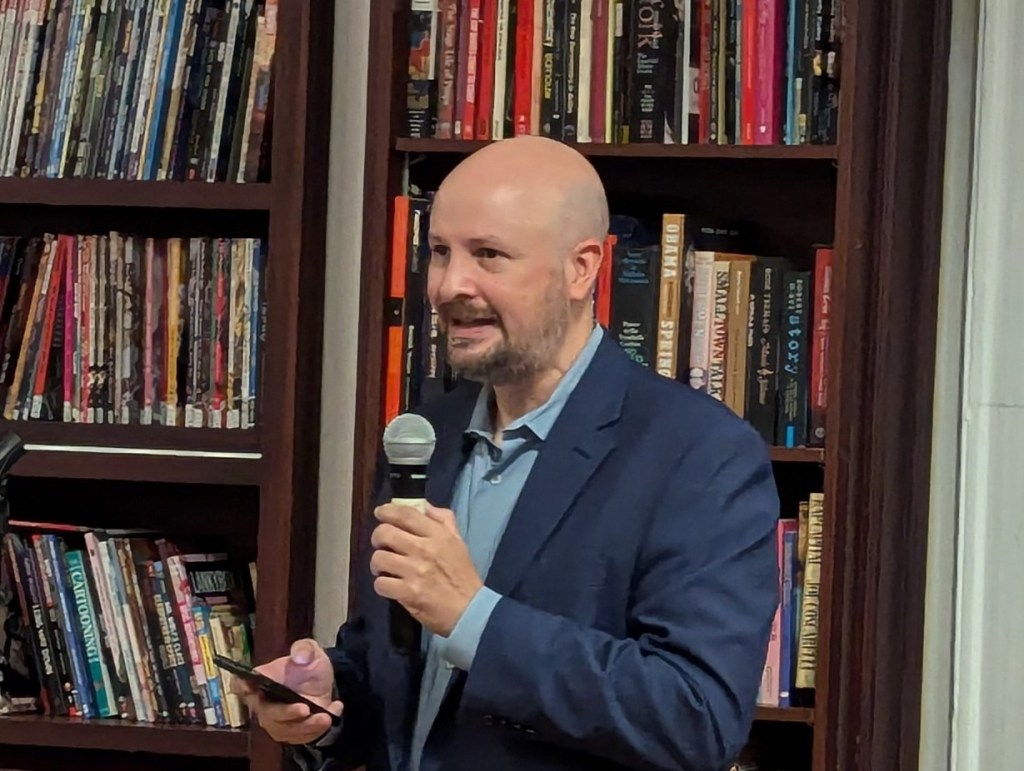
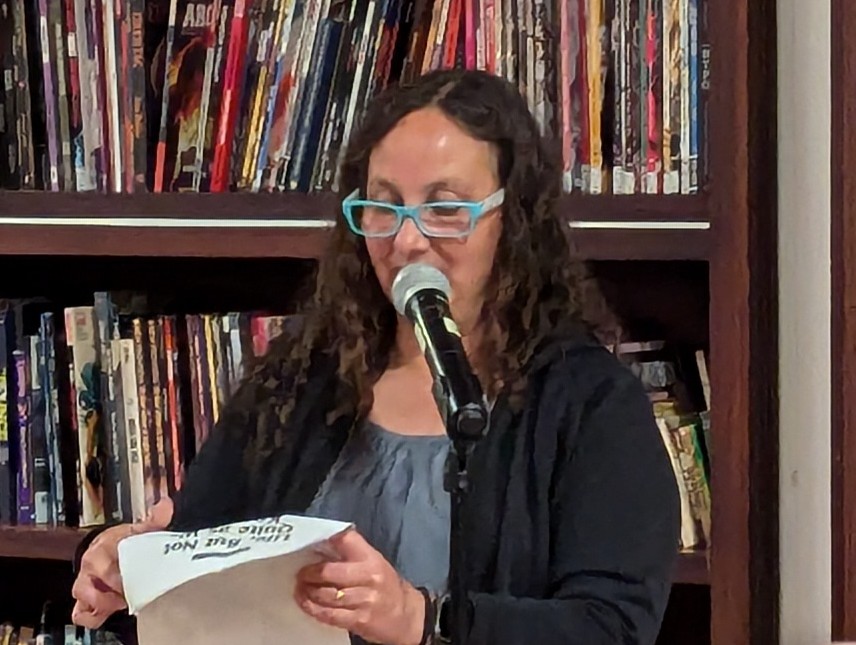
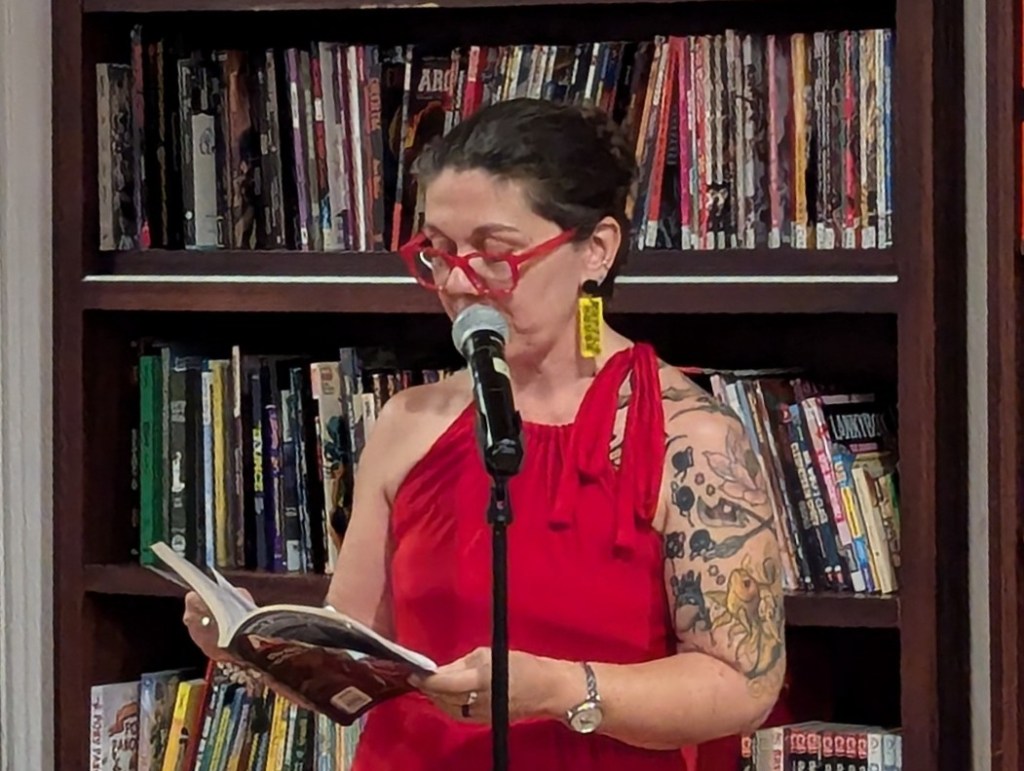
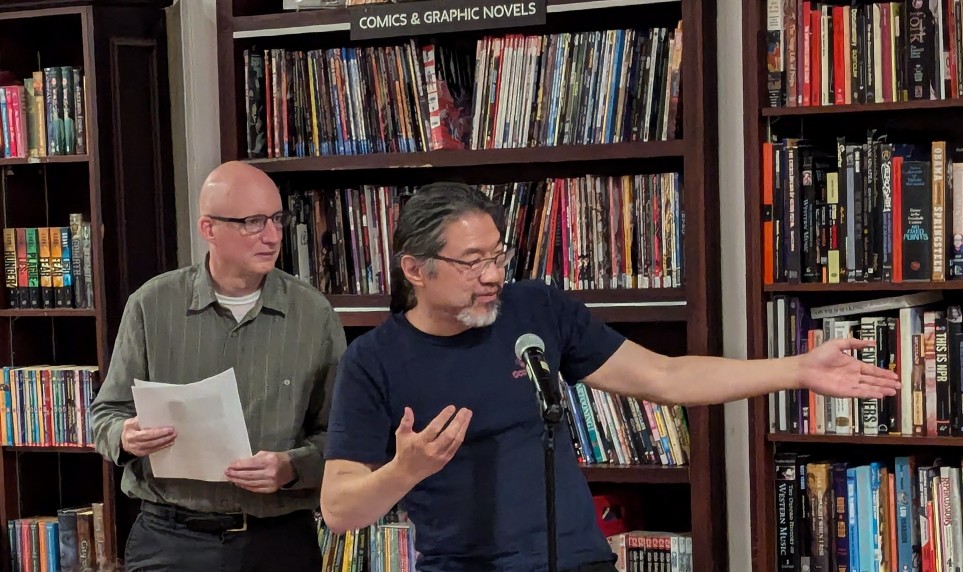
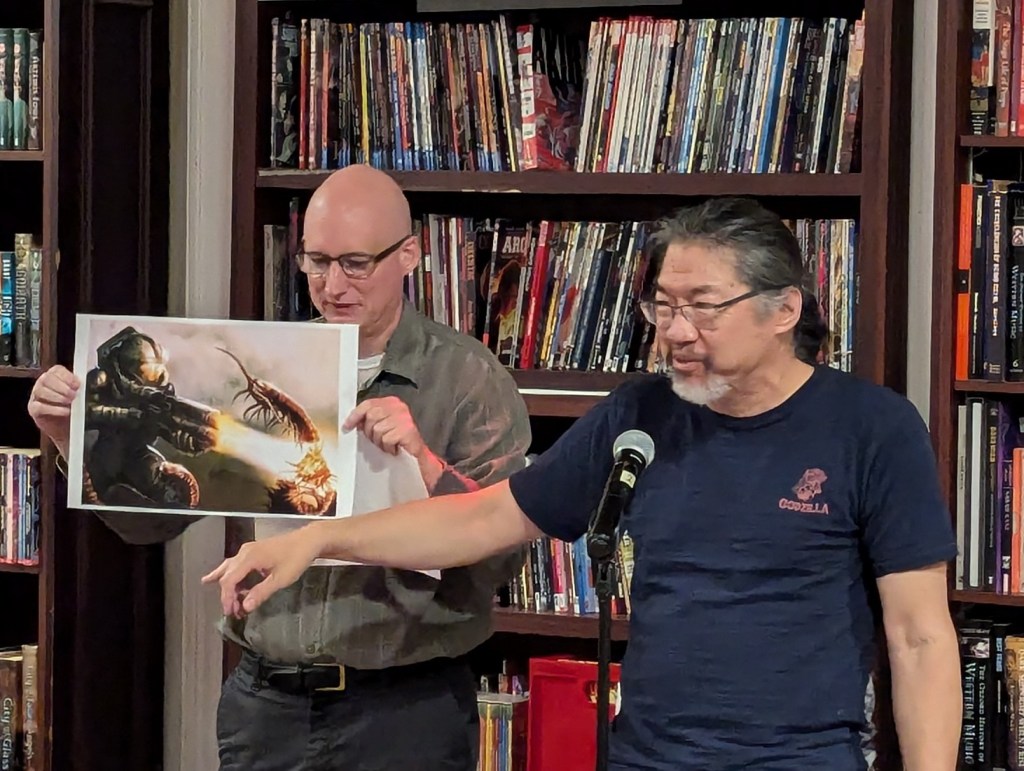
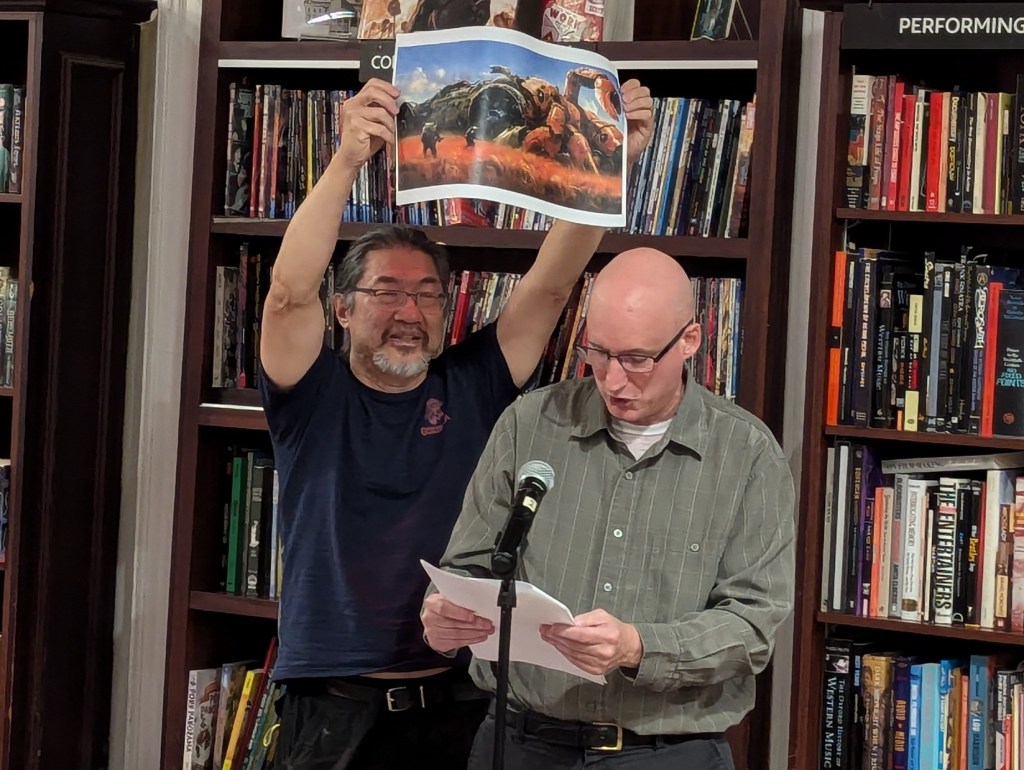
I’ll let the magazines announce all of the winners, but I’ll post my photos of the speakers and authors who read below.
Opening Remarks by Sheila Williams and Trevor Quachri
Sam J. Miller Reading from “Planetstuck” (Asimov’s Science Fiction, March-April 2023)
Timons Esaias Reading “The Next Step” (Asimov’s Science Fiction, January-February 2023) and Other Poems
Trevor Quachri Introducing the Analog Authors
Christina De La Rocha Reading “Life, But Not Quite as We Know It?” (Analog Science Fiction and Fact, January-February 2023)
Victoria Navarra Reading from “Cornflower” (Analog Science Fiction and Fact, January-February 2023)
Wukheiser (Frank Wu and Jay Werkheiser) Reading and Performing from “Poison” (Analog Science Fiction and Fact, May/June 2023)
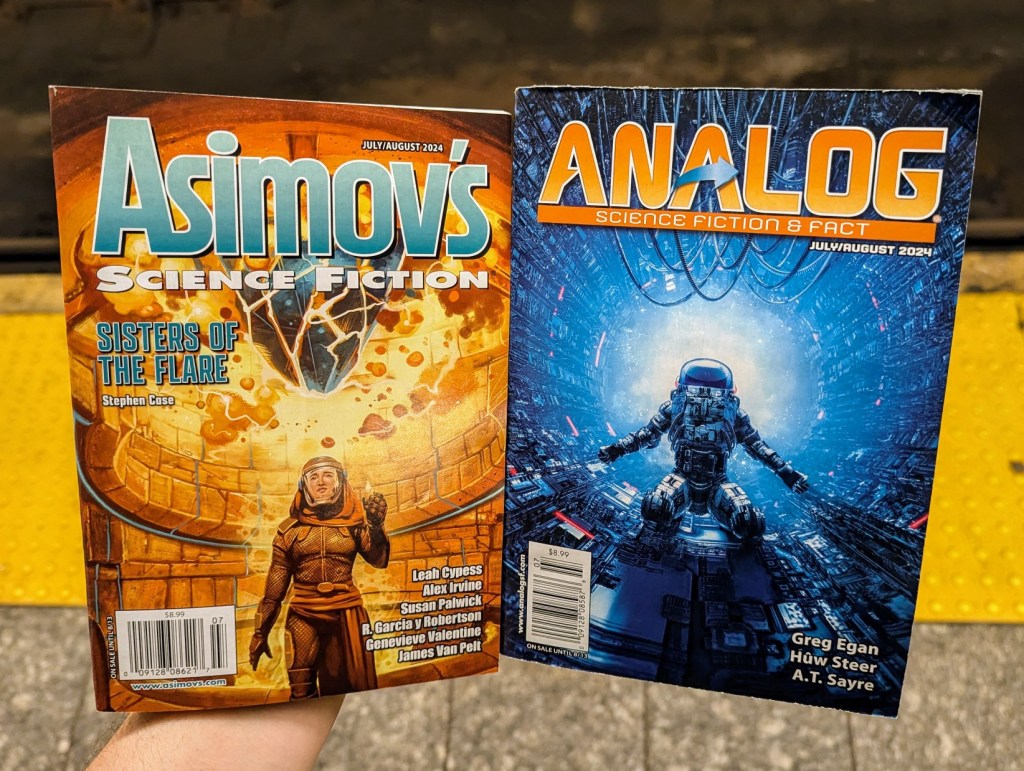
Latest Issues of Asimov’s and Analog Hot Off the Press
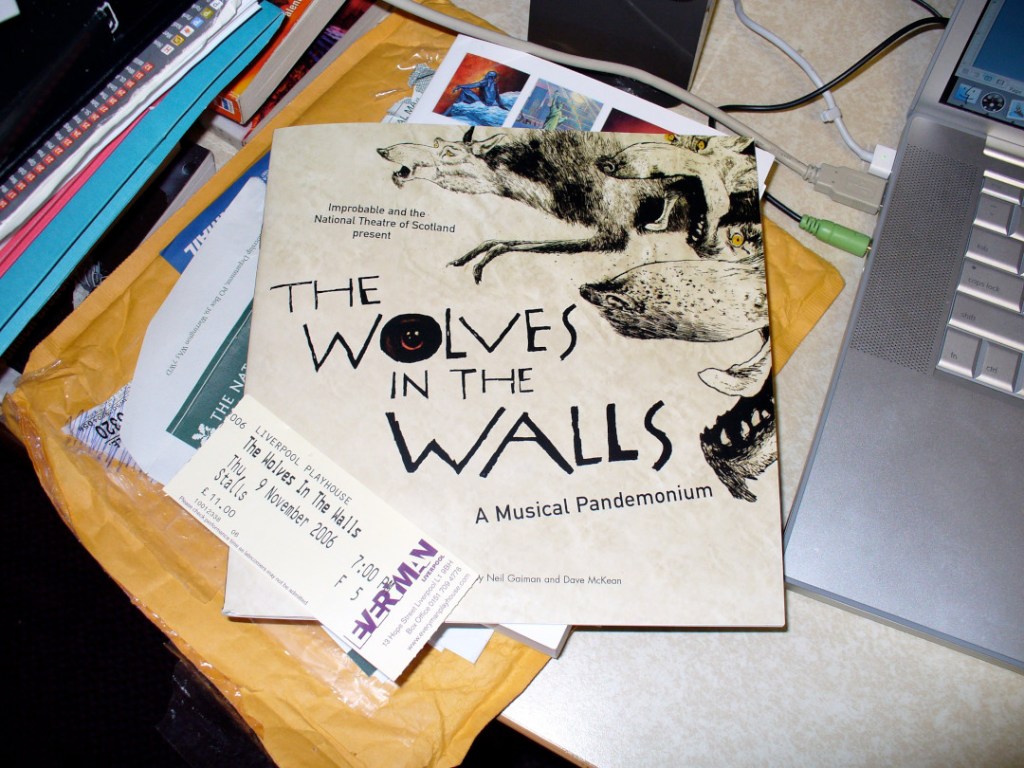
Recently, I ran across the image above of the program book and ticket of the stage adaptation of “The Wolves in the Walls,” based on the book of the same title by Neil Gaiman and Dave McKean on my desk in Liverpool. It gave me pause.
It’s about a girl named Lucy, who likes to draw. She lives with her mum who makes jam, her dad who plays the tuba, and her brother who plays video games. One day, Lucy begins to hear wolves in the walls. At first, her family doesn’t believe her, but then the wolves come out and it’s all over! Pandemonium breaks loose and Lucy must brave the wolves to regain her pig puppet from the clutches of the crazy wolves.
The recent allegations against Gaiman made me think of the theatrical adaptation and source material in a completely skewed and disorienting way. Its difficult now to square my before and after interpretations.
It’s challenging to ignore what shouldn’t, according to Roland Barthes in “The Death of the Author” (1967), matter as far as how we interpret the text. We, the readers, shouldn’t give an author tyranny over our interpretation of a text. Yet, Gaiman is an author who has cultivated a public persona that dovetails with the positive interpretations of his creative work and associated social causes. Joss Whedon also comes to mind in terms of the close connection between auteur, themes, and social causes, and what happens when the auteur’s behavior conflicts with the constructed persona. Of course, these public personae are created, cultivated, supported, and accepted, but the person beneath the persona is far more complicated and potentially far different than the persona circulating in culture. The author’s behavior might be reprehensible and seem radically different from what the audience has come to expect from the author’s persona. A problem for the reader and critic is to disentangle the linkages between the work, persona, and person in order to provide richer interpretations as opposed to those dominated by the author, persona, or both. Of course, what Gaiman has been alleged to have done must be addressed and remedied in other ways.
Several streets in Carroll Gardens are bisected where the F and G subway lines escape their underground confinement and rise into the air for a short stretch between there and Park Slope. This is the end of one of those streets where the dead end sign hangs on the chain link fence above a brick wall. The roof of a subway train is tearing by from left to right at the bottom of the frame.