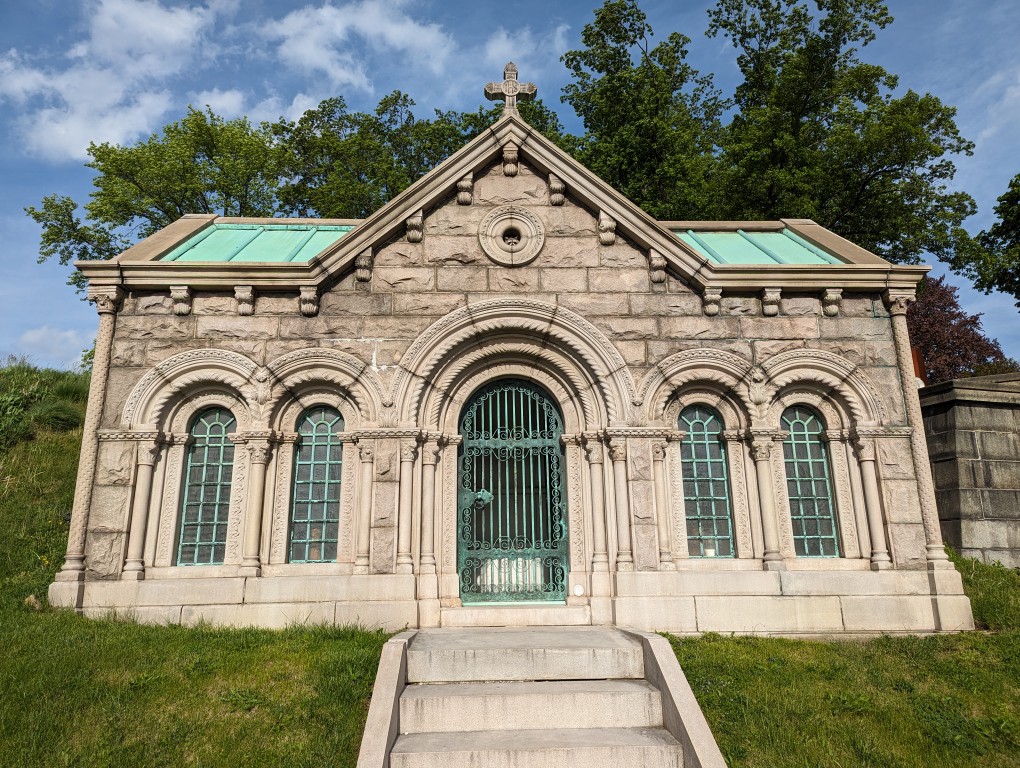
When I was walking past this mausoleum in Green-Wood Cemetery last month–a mausoleum that I had passed many times over the past two years–I did a double take, because I thought there was a sculpture in the gable vent that I hadn’t noticed before. What I thought was a stone carving was instead a cute creature–a rascally raccoon enjoying the sun on a mild day from the safety of his hidey-hole in a stone structure, lacking context, is akin to a wee mammal’s mansion. Or, repurposing William Gibson’s aphorism, the raccoon “finds its own use for things.”
The flag of the United States of America is the enduring emblem of our country and what our women and men in the armed forces protect through their service. Memorial Day is set aside to remember and honor those who died in service to our country. It’s origin is in honoring Union soldiers who gave their lives to preserve our country and uphold our constitutional foundation. For those like myself who have not served in the armed forces, we reflect on those who have fallen while in service and honor them through our own humble efforts to protect, preserve, and contribute to our country’s well-being.
The photo above is the Brunswick, Georgia Risley Middle School flag squad (1990-1991). The administration asked me to organize a group of students to raise and lower the US and Georgia flag each school day. On this day, Shannon, Robert, and Darrell joined me to lower and fold the flags. As a Boy Scout, I had participated on Color Guard and flag ceremonies many times. I was glad to support the school with this service and pass on what I had learned about flag protocols and folding to my school friends who were not in Scouts.
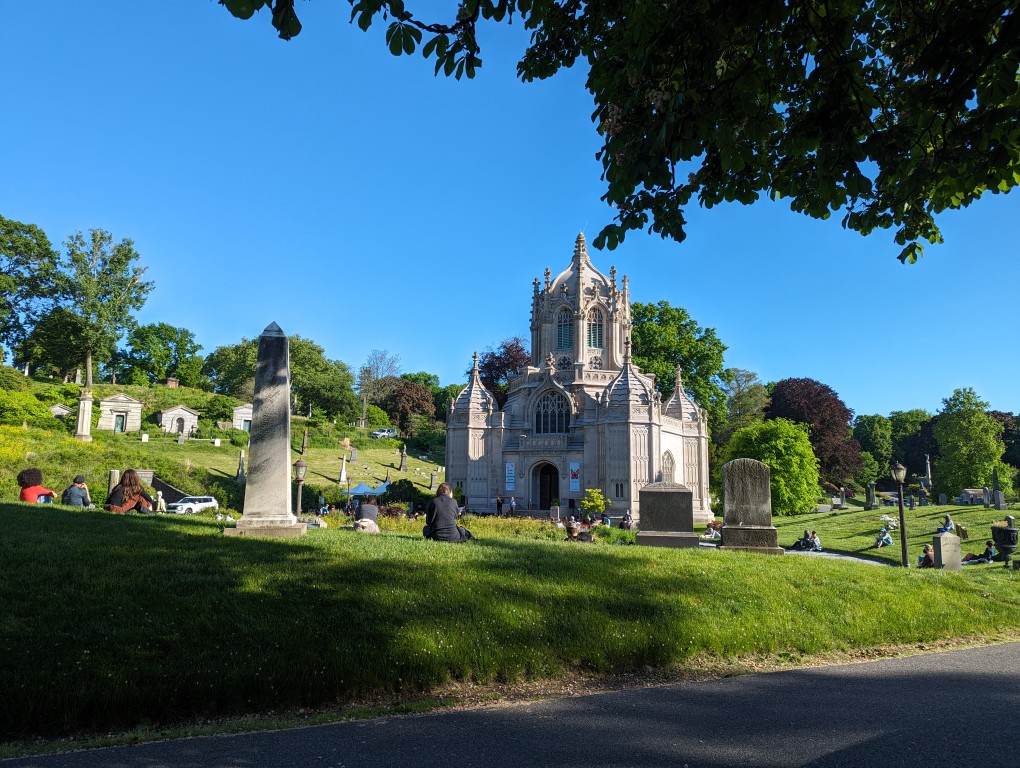
Last weekend, there was an activation and dedication ceremony for the Naming the Lost Memorial at Green-Wood Cemetery in Brooklyn, New York that I posted about here last week. There were speakers, music, and rituals performed. The banner to the left of the speakers in front of the chapel has written on it, “A Big, Slow, Majestic COVID Memorial.” It couldn’t have been a better day–pleasant and sunny. Afterwards, I walked a few miles through the cemetery with my N95 mask off and hanging from my backpack’s sternum strap.
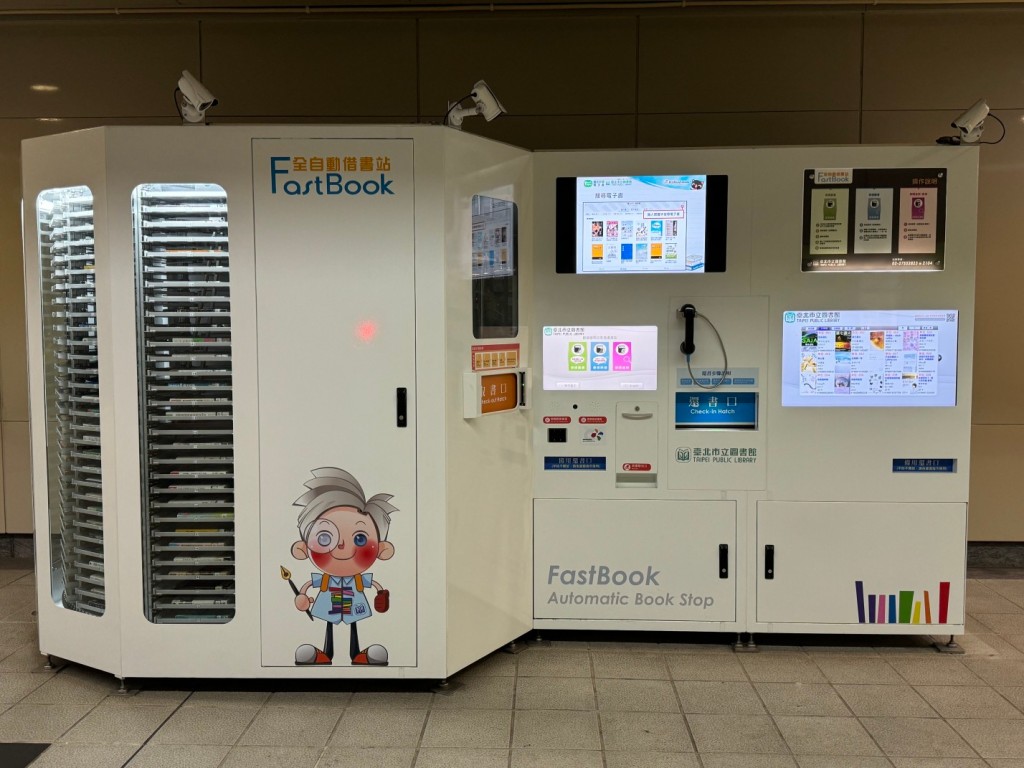
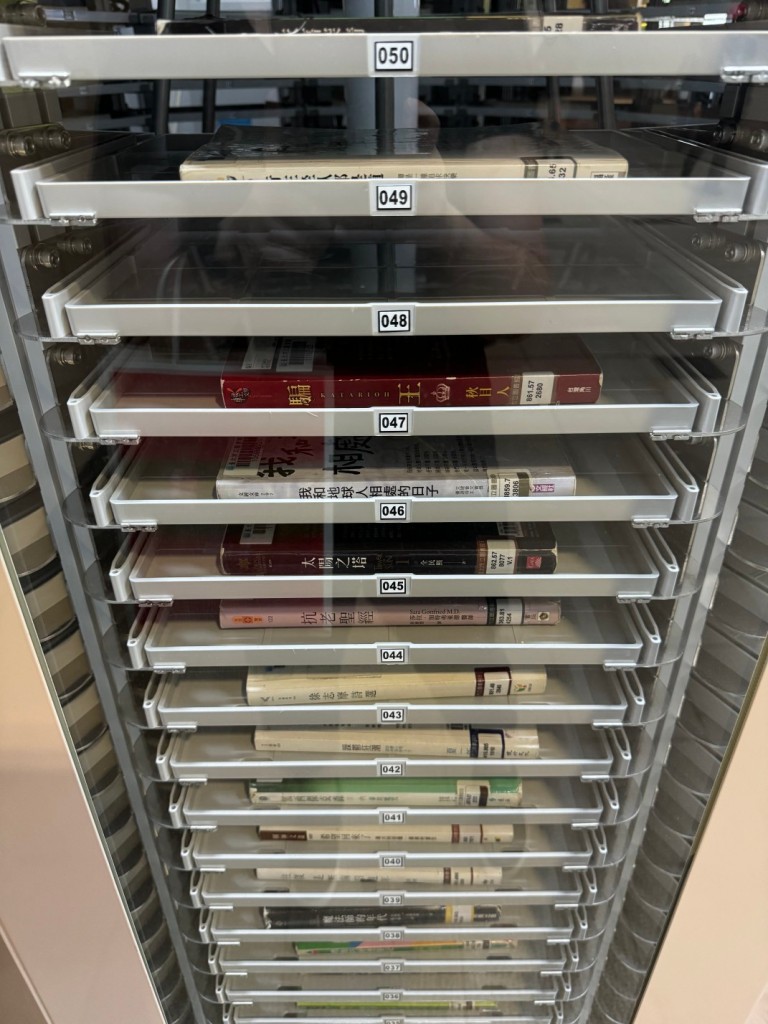
Y took these photos of this cool automatic book lending machine that has a computer catalog and a robotic book retrieval system. With a Taipei Public Library card, a patron can walk up to this machine, browse the available titles, and checkout a book that is served immediately. It’s kind of like a miniature library outpost or a bookmobile with its wheels removed. It’s a vending machine for borrowing and returning books.
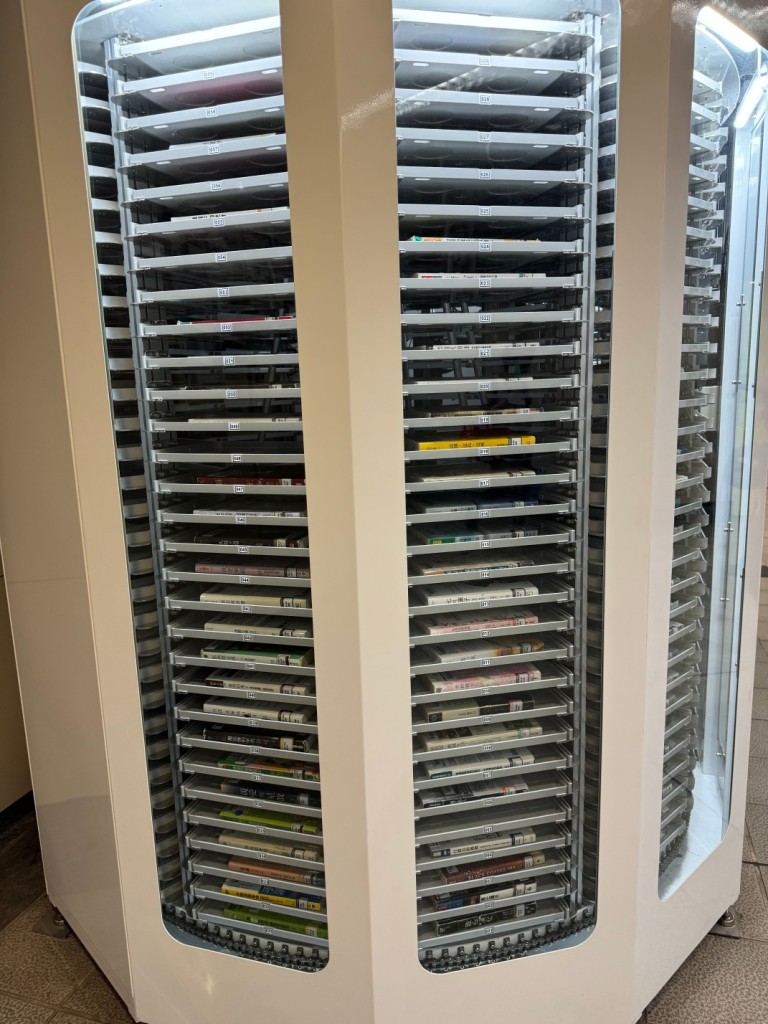
The books are stored individually on numbered racks within a carousel.
The FastBook machine pulls the book from its shelf and dispenses it through an orange chute to the right of the carousel. Books can be returned as well through a blue chute further to the right.
I can imagine how a less flashy version could be installed almost anywhere–something like a RedBox kiosk for books instead of DVDs and BluRays. Even in areas where many folks might not identify as readers, a device that makes books easy and freely available to borrow might encourage more reading. And, with it offering physical books instead of eBooks, it might help lower the bottom line of already financially strained libraries.
A Google search for “library book vending machines” turns up at least one scaled down option called the Lending Library Kiosk by International Library Services. D-Tech offers lendIT. Library Media Specialist Amanda Hunt offers some more details about library book vending machines here.
I don’t know about you, but I wish there had been something like this when I was a kid. The novelty of it would have encouraged me to read more books from the library than I did!
UPDATE: If you’re interested in why some of us find vending machines fascinating even over 100 years after their introduction, check out this Bored Panda listicle featuring Dr. Lisa Yaszek, Regents Professor of Science Fiction Studies at the Georgia Institute of Technology.