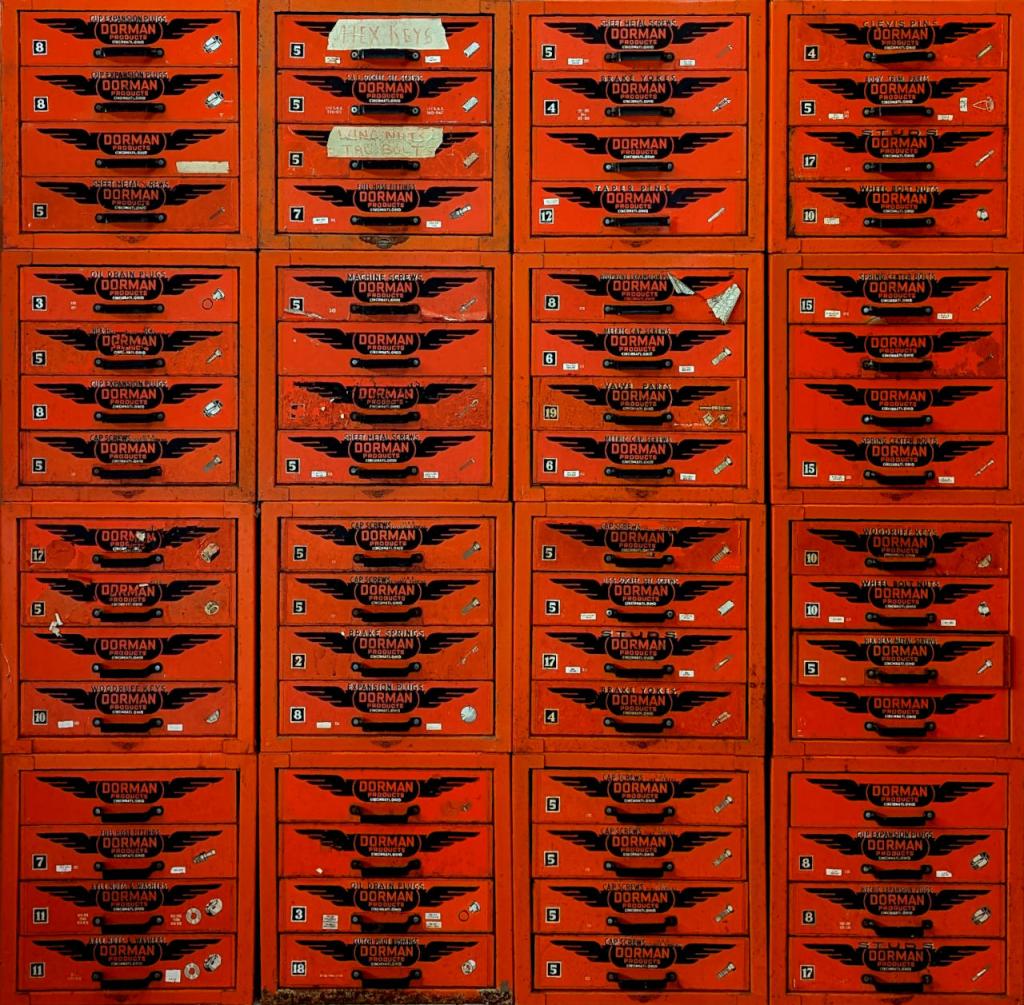
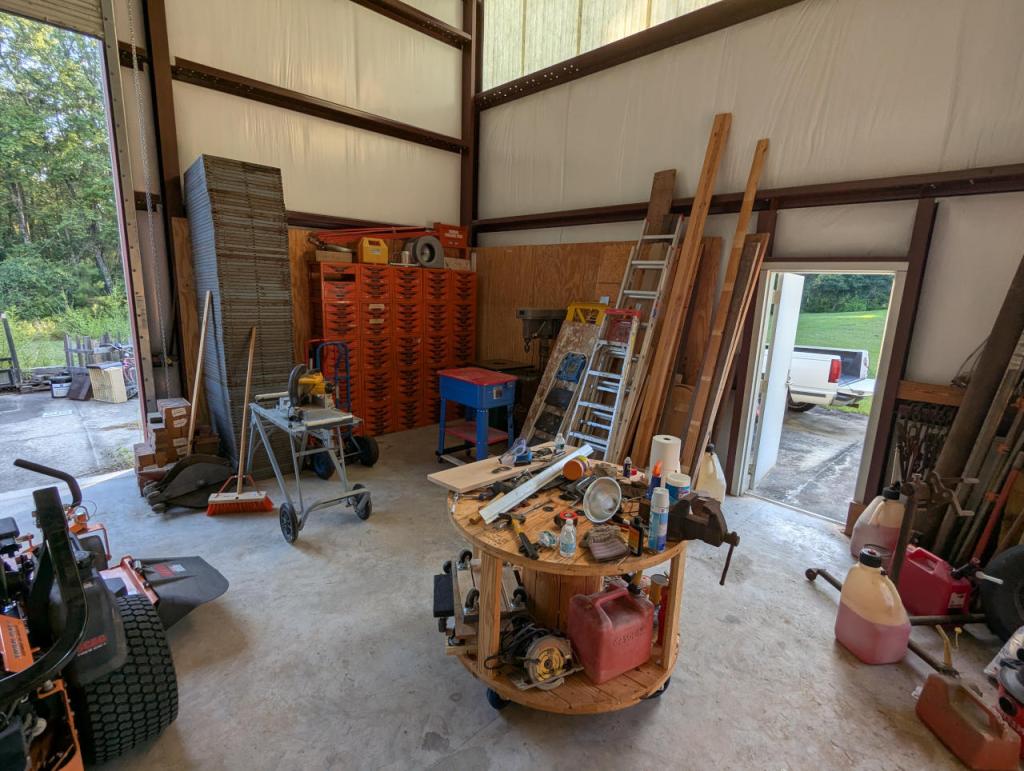
Ellis Auto Parts, my family’s business that closed down in 1996 when my parents retired, used to carry Dorman Products, a line of automotive hardware such as bolts, nuts, washers, pins, caps, and a variety of other kinds of parts. While my dad sold a lot of our remaining stock when he closed the store, he kept a lot of unsold product and the metal drawers that we kept the stock in. When I was at home, I stacked up more of these drawers to create a grid against one wall. The full grid is 5 x 5, but I took a photo of 4 x 4 because one of the corner bins was missing a drawer that I couldn’t find–it is likely somewhere in the shop but waits to be rediscovered. I’m glad that we had access to all of these parts during my trip this time, because we made use of them in our many projects.
After visiting my folks for a couple of weeks in Georgia, I rented a car from Enterprise to drive back home to Brooklyn, because I wanted to load up on bulk-buy and shelf-stable grocery items that are difficult and/or expensive to purchase locally without a car.
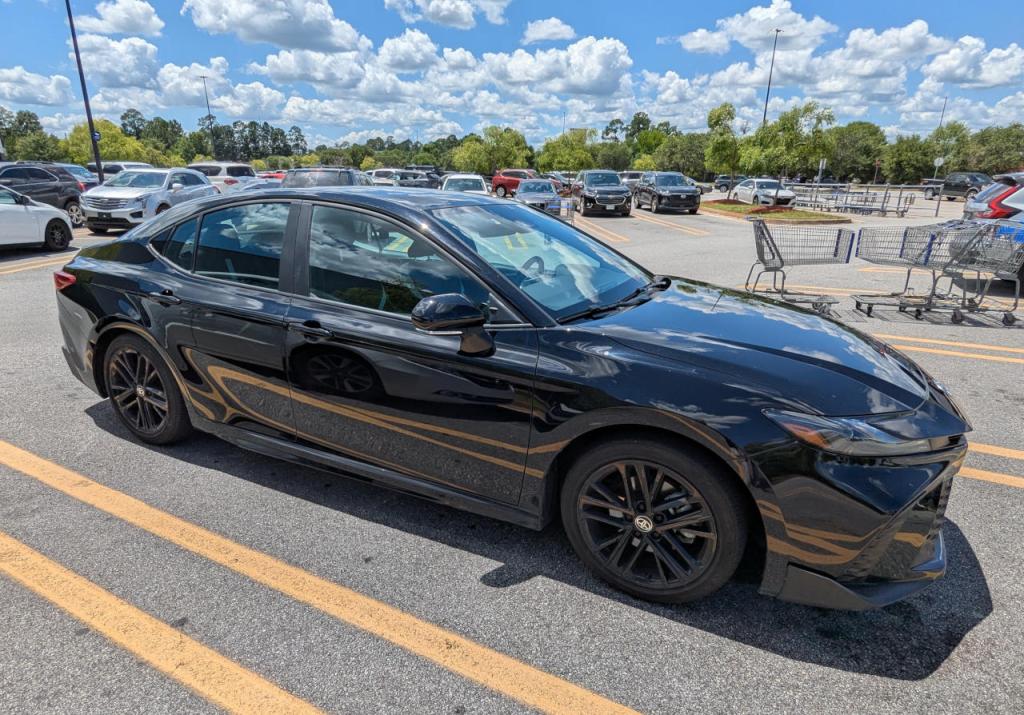
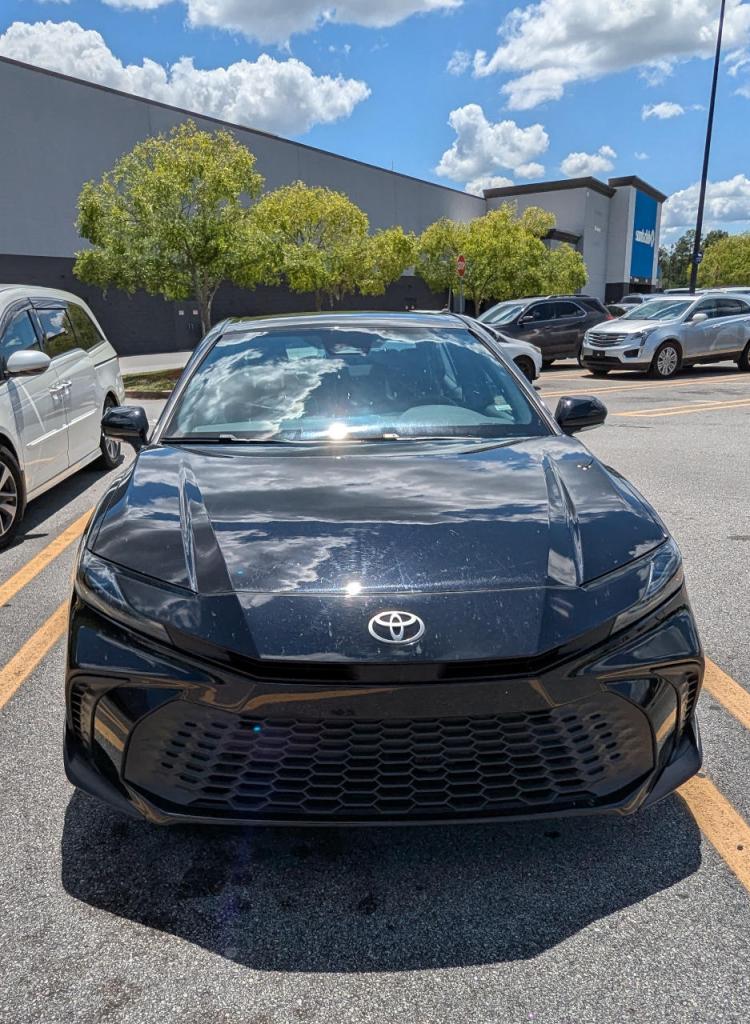
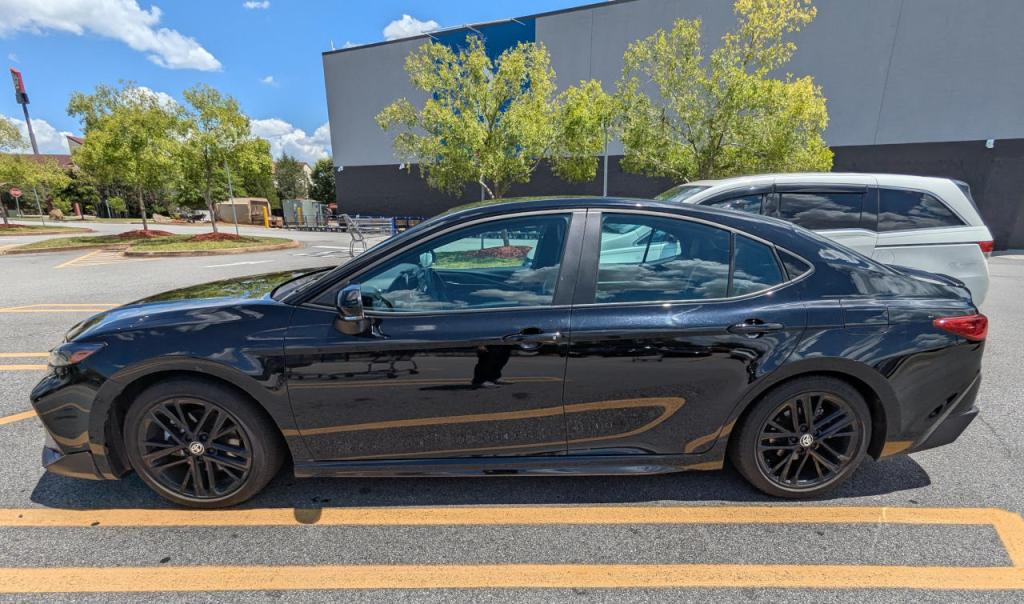
I had reserved a Toyota Corolla or similarly sized midsize car, but none were available when I arrived at the Savannah-Hilton Head Airport location. They upgraded me to the 2025 Toyota Camry shown above. It has a hybrid gas-electric drivetrain with an estimated 51 MPG fuel efficiency.
This post reports on my experience with the Camry’s fuel economy over a long drive.
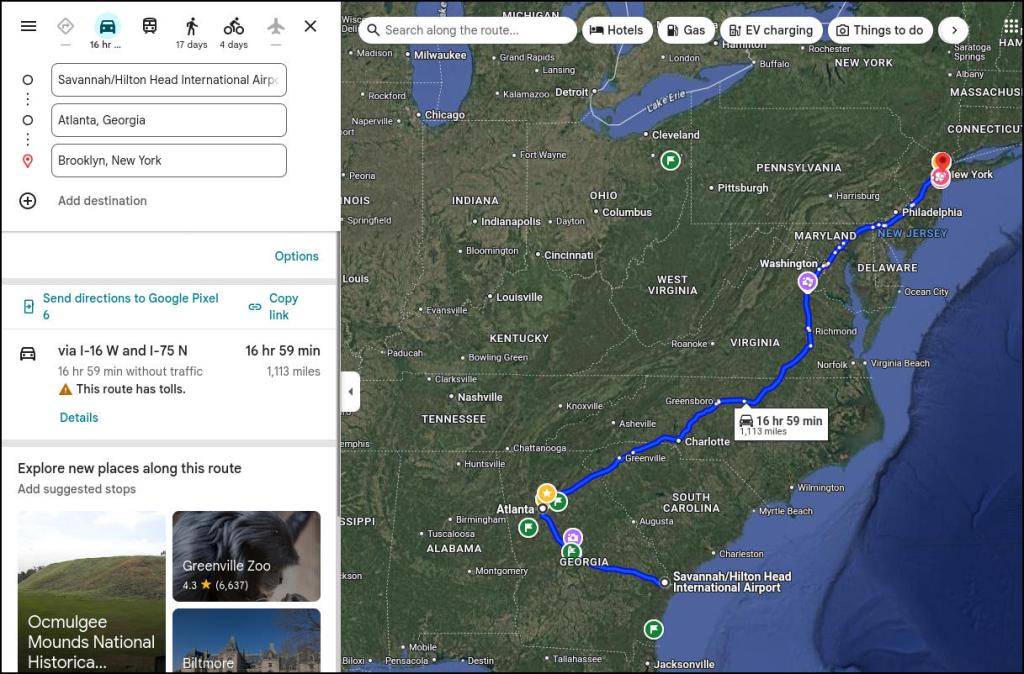
My four-day trip route was from Savannah to Atlanta where I would spend a day, then drive to Delaware, and finally arrive in Brooklyn where I would return the car to the Park Slope Enterprise location. Going from point-to-point, the drive took about 16 hours 59 minutes over 1,113 miles. But, I did a lot of city driving in Atlanta over one day. I estimate that I drove an extra 50 miles for a total of 1,163 miles.
When I picked up the car, I already had about 100 pounds of grocery items that I loaded into the trunk and backseat. While in Atlanta, I added another 20 pounds of items to the car’s overall load. This is combined with my weight and the weight of fuel.
The Camry has three different driving “modes.” I set the mode to “Eco” as opposed to “Normal” or “Sport.” I adhered to the speed limit and avoided using high-RPM, passing gear driving except in a couple of situations.
Over the entire trip, I purchased about 25 gallons of gas (returning the fuel level in the car to the same level that I received it), which yields a combined 46.52 MPG efficiency. Considering the awful traffic conditions in Atlanta (congestion, stop-and-go driving, low speed, etc.) and its fuel use, I suspect that my highway driving is much close to the estimated 51 MPG fuel economy.
I was happy about the fuel economy of the Camry on this trip–it reduced its pollution footprint and it saved me some money. It is impressive how a larger vehicle achieves better fuel economy than the best gas mileage of my old gas-powered Corolla.
Driving the Camry was comfortable for the most part. This was the first car that I drove with a fob/start button combination. It took me a few minutes to figure out how to disable the lane following feature of its cruise control, which I was fighting against (making me think there was something wrong with the steering before disabling this feature). The seat material–I think faux leather–wasn’t breathable, which made it uncomfortable for sitting against over long periods of time.
One big complaint that I have about the car that has nothing to do with fuel efficiency is Toyota’s radio accessed via its in-car screen. It is designed to present radio stations as a series of square icons that can be browsed by scrolling with your finger and tuned to by pressing. By accessing a station, there are tuning plus and minus buttons at the bottom of the station’s screen. All of these things–scrolling and pressing different areas of the screen to access a station or tune to a different frequency–are difficult to do safely while driving and maintaining attention to the road. The wrong areas are pressed leading one to cycle back through the process from the beginning by turning it off and re-accessing audio source > radio > station. To toggle through stations, I perched my right hand on the lower air vent below the screen and reached my index finger up to tap the station up and down buttons. It was awkward and frustrating. If automakers insist on using screens, there are situations like this where skeuomorphism and button placement and size should be consistent and easily used by the driver.
A few weeks ago, I rode Amtrak’s Silver Meteor 97 train from New York City to Jesup, Georgia. As I’ve reported before here and here, it was an enjoyable experience and recommended.
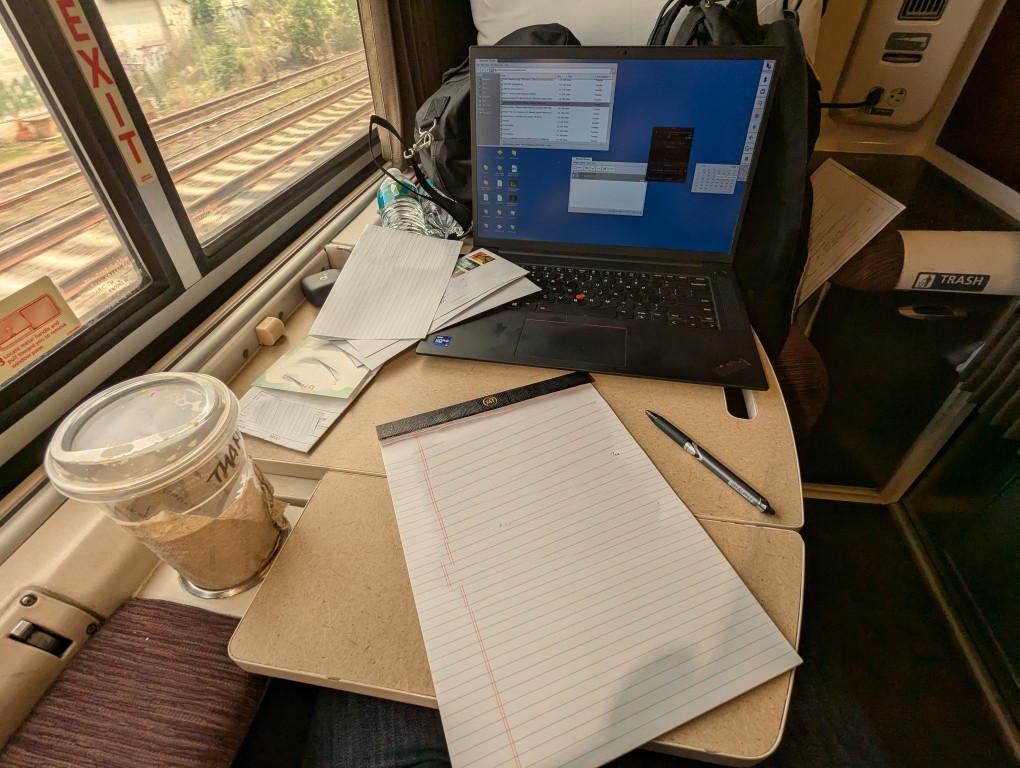
I used this overnight journey to catch up on writing several letters, which I mailed from the Jesup post office after I arrived. I also made use of the on-board power to run my laptop to watch some shows and do some light Internet work. One problem on this trip was unreliable WiFi, so I relied on my phone’s limited data plan.
The roomette was much quieter than on my last trip, which made my sleep much more restful. There was a delay at some point during the night, which made us almost three hours late (we were still on time when I had gone to bed around 1:00am). I’ve learned that delays should be expected.
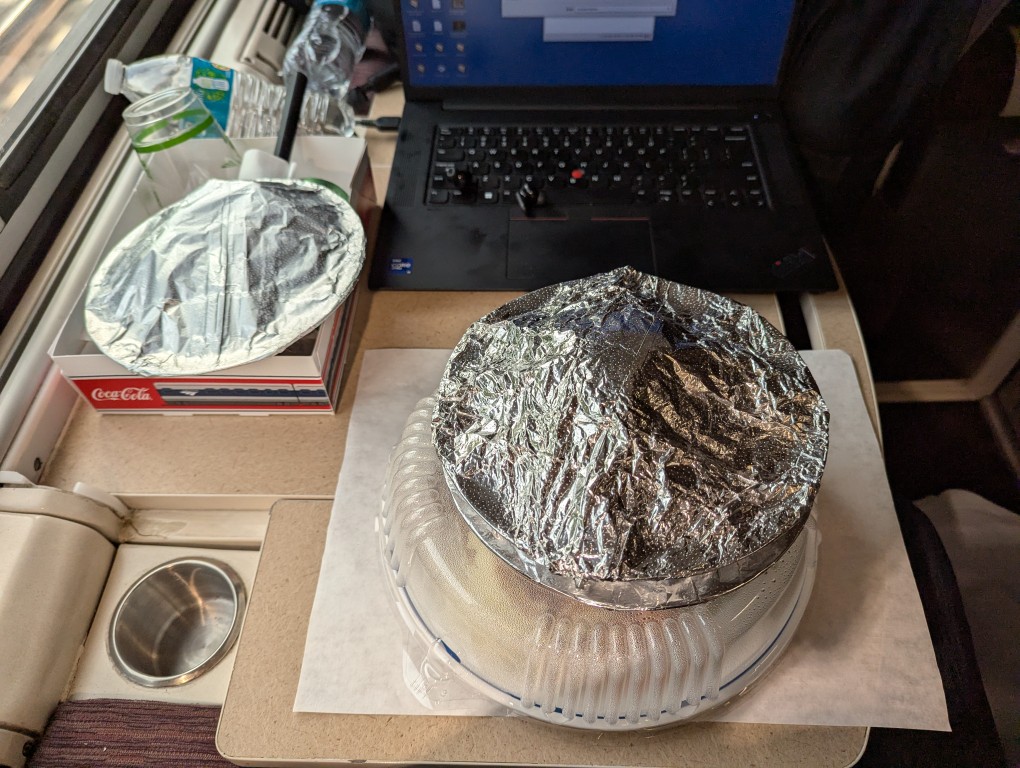
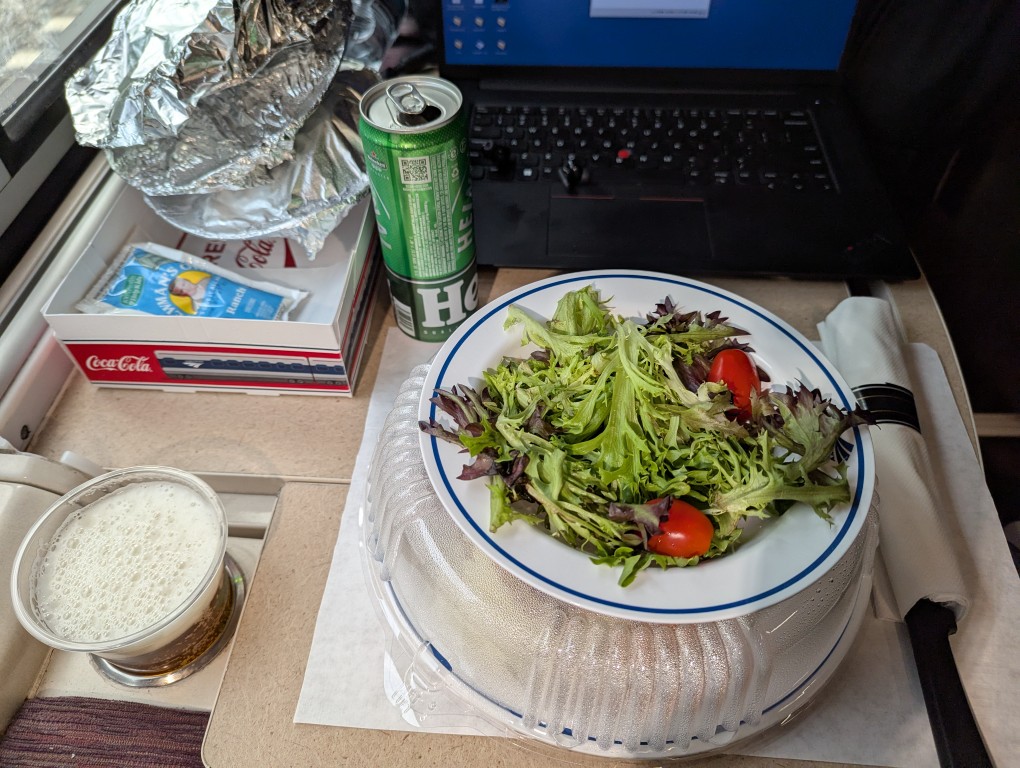
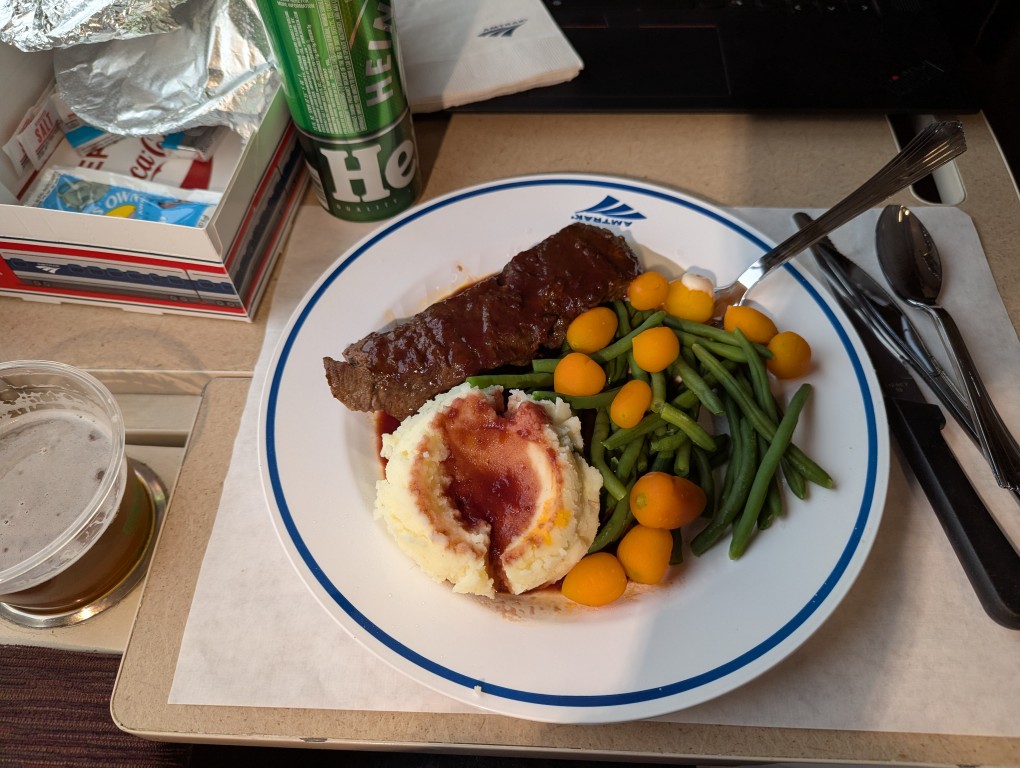
Since I was traveling alone, I asked my car’s steward if I could have dinner service in my room. I ordered the steak dinner with chocolate cake and a Heineken beer (one alcoholic beverage is included with the meal service).
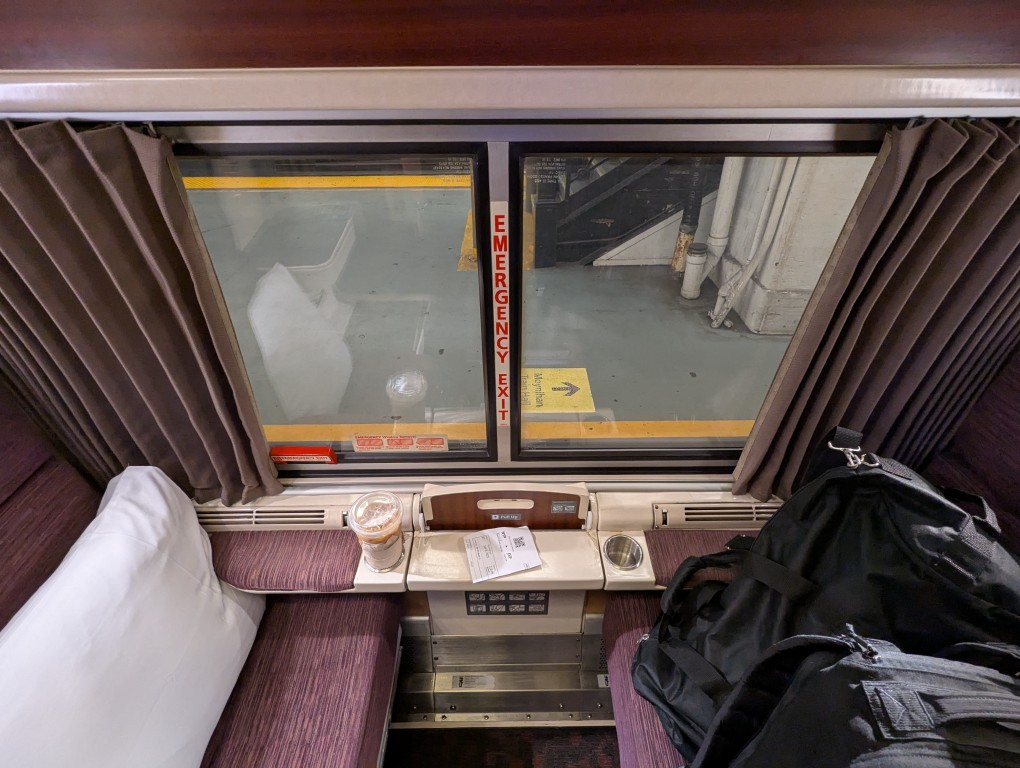
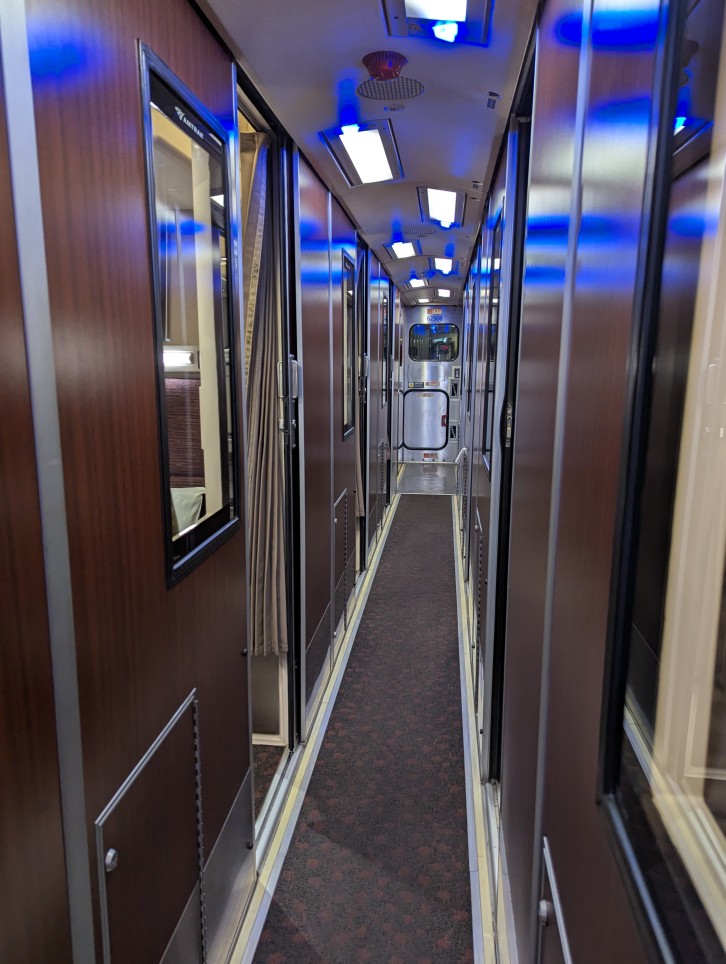
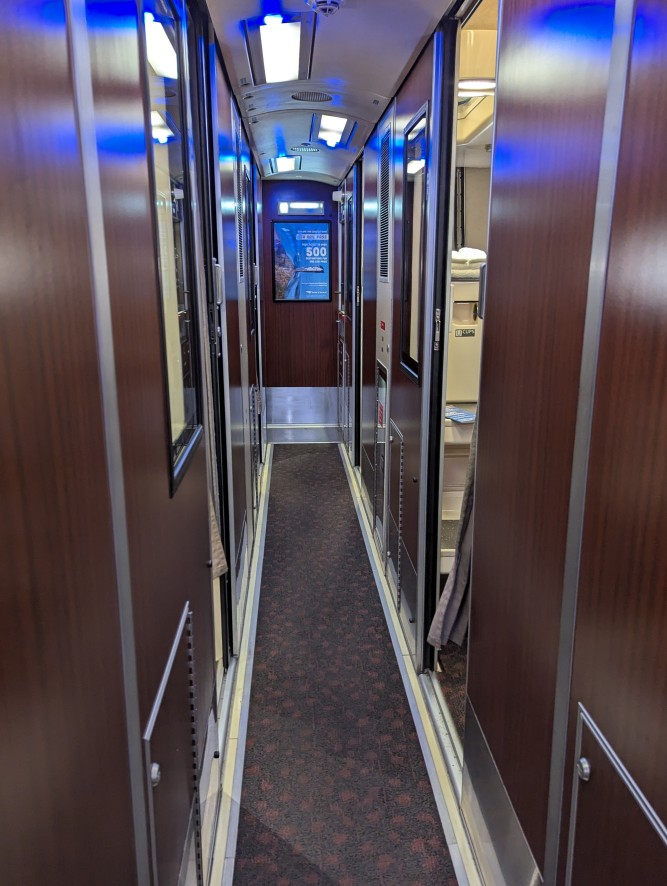
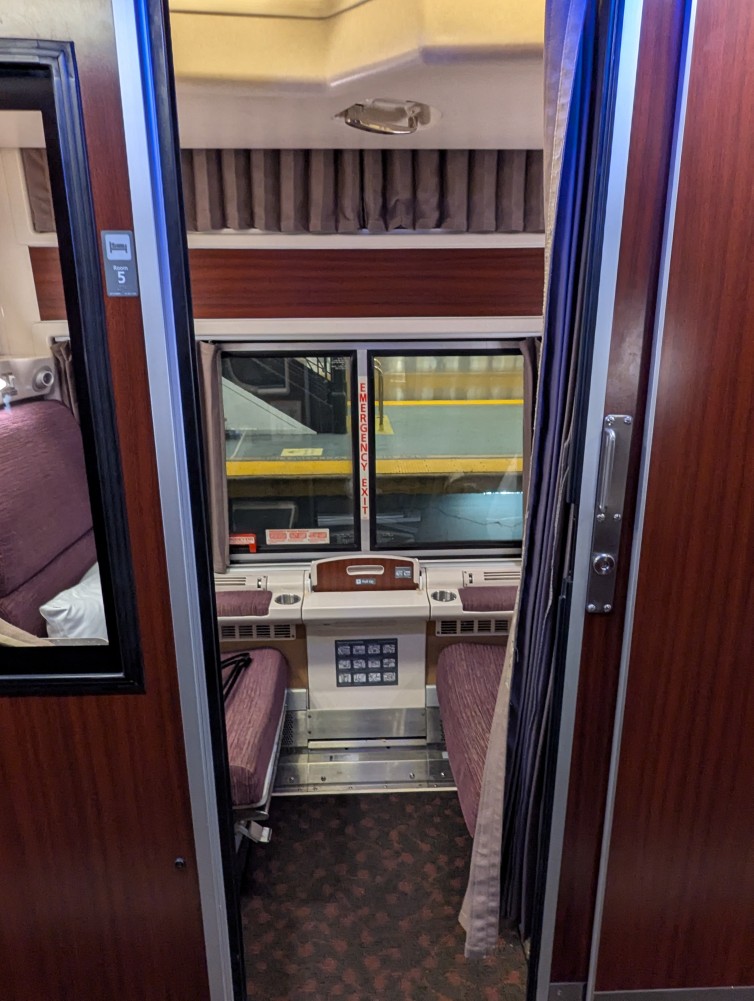
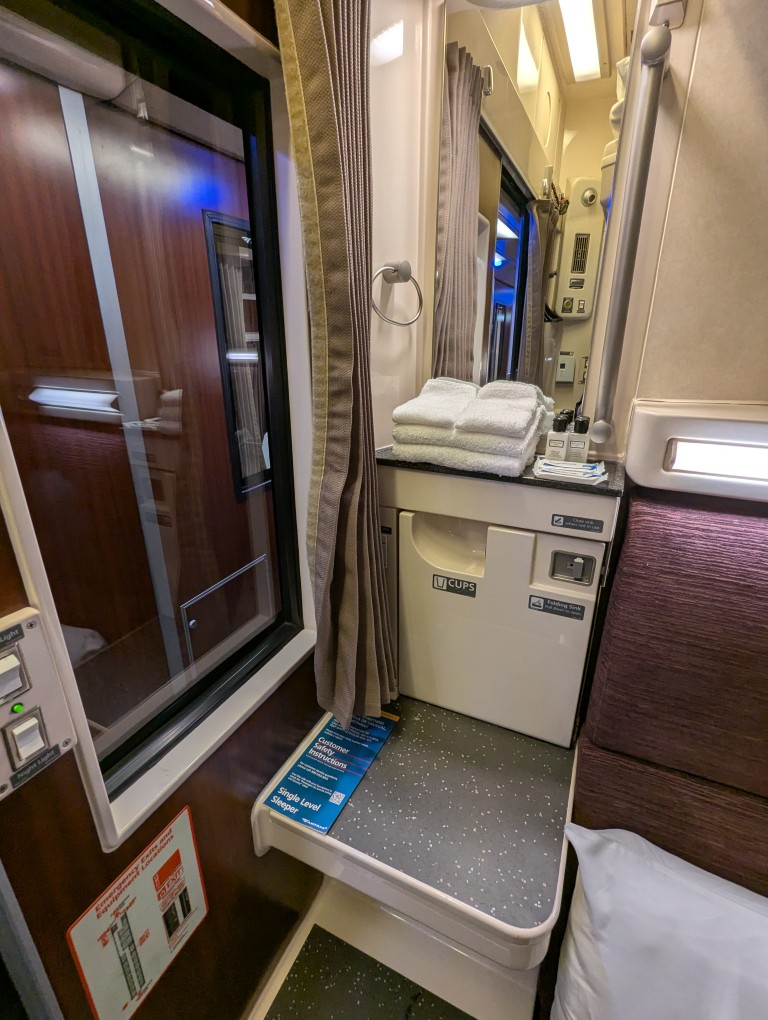
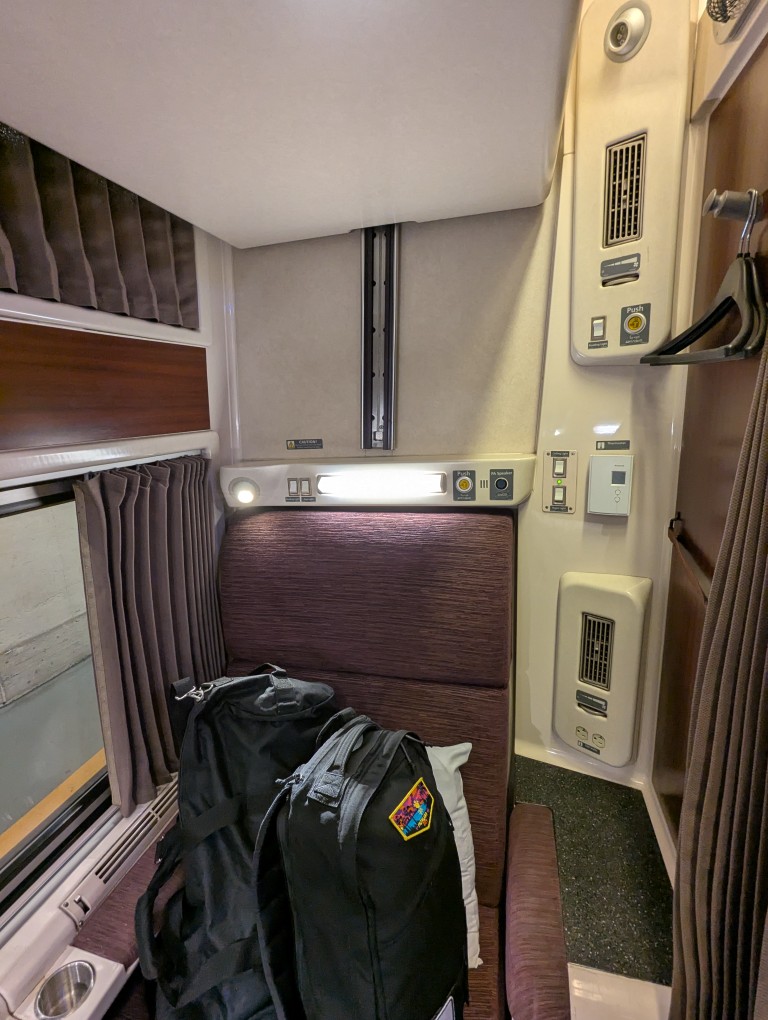
This particular car was like one that I had ridden on before with the roomette having a sink in the room, but the toilet was located at the end of the hallway by the exit. My roomette’s sink worked very well with the hot and cold water dispensing properly when I needed to wash my hands or face.
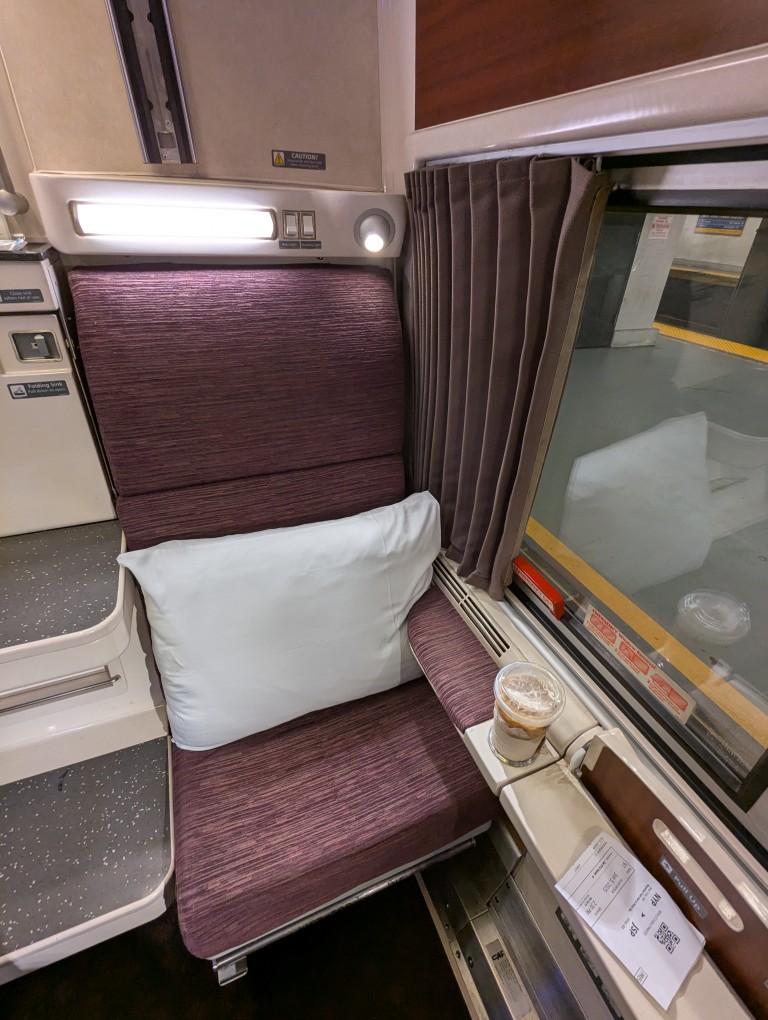
Here are some pictures from inside my train car and roomette on this trip.
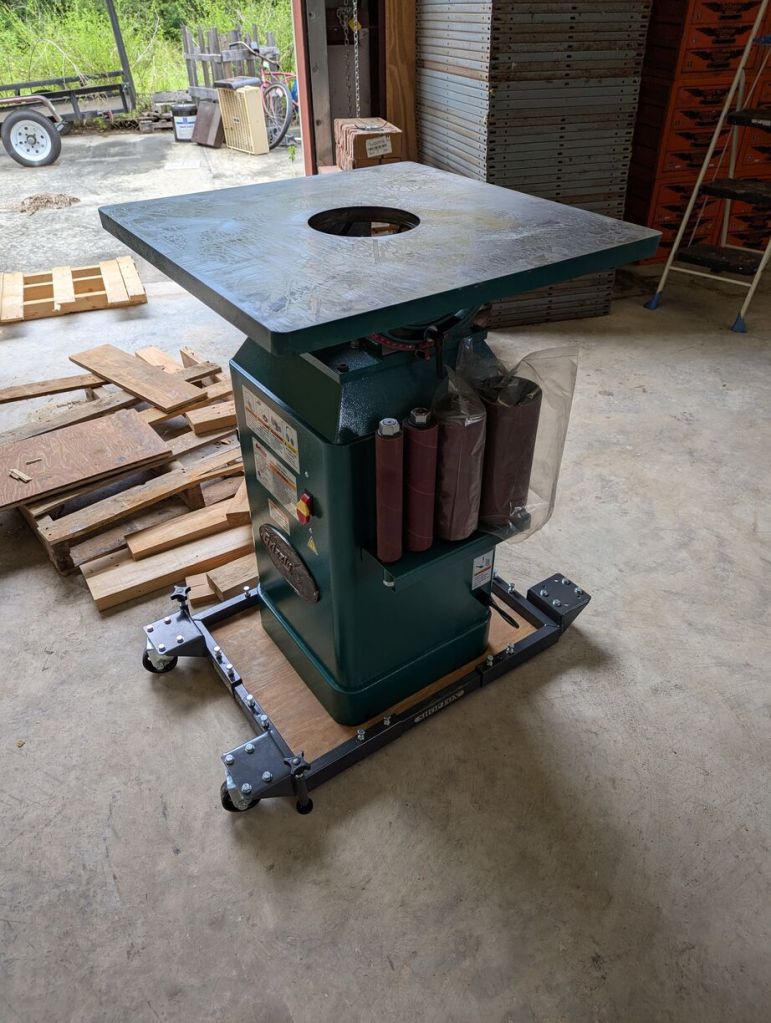
Another project for my dad and I was setting up his Grizzly oscillating spindle sander, which had been sitting on a broken pallet for some time.
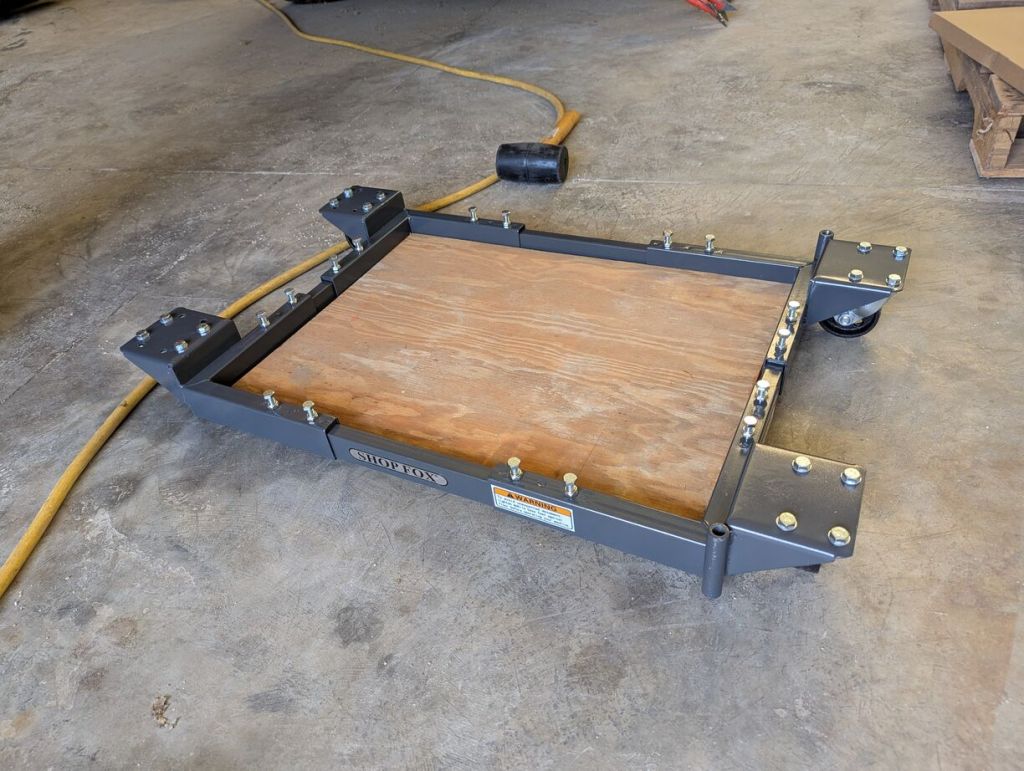
He had a rolling Shop Fox equipment stand, but it was slightly too large for the sander’s base. So, we cut a piece of 3/4″ plywood to fill its support area and distribute the weight of the sander.
Then, we layered some boards to create a ramp from the pallet the sander was on down to the Shop Fox equipment mover.
When he’s ready to use the sander, the Shop Fox mover has floating feet that can be lowered to take the weight off the front caster wheels.
My dad has a dozen or two of screw bottle car jacks that he used to press and hold every tongue-and-groove cypress board covering the walls and ceiling of the upper floors of their house. We made use of four of them to move two pieces of his heavy machinery into place in his shop.
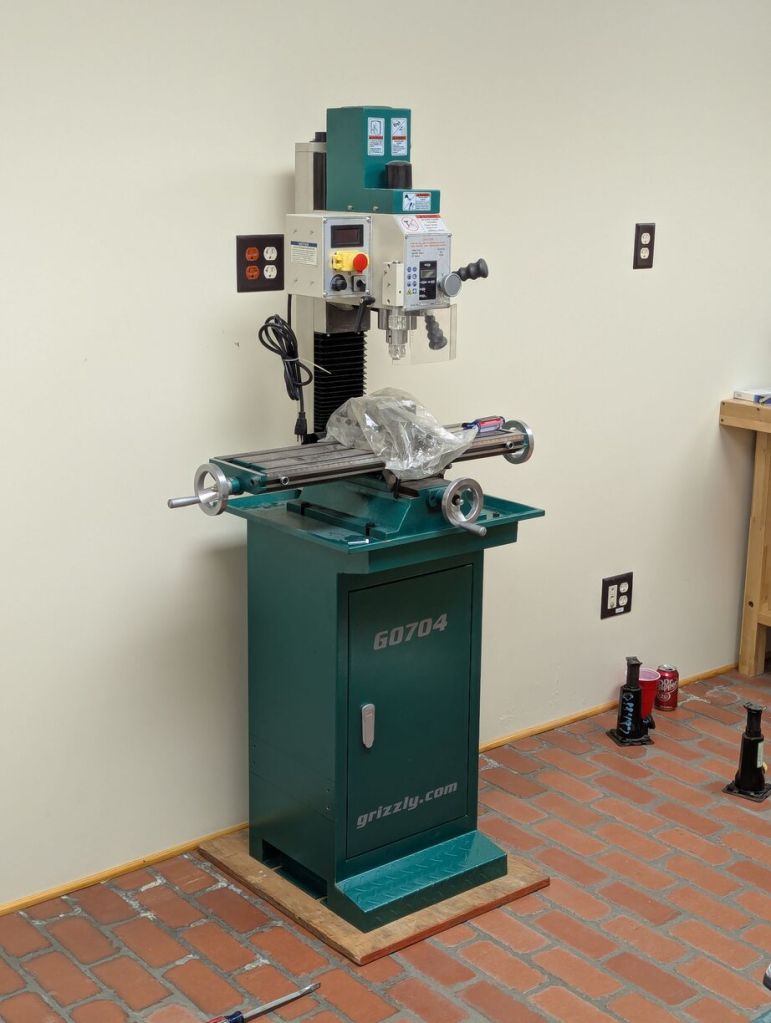
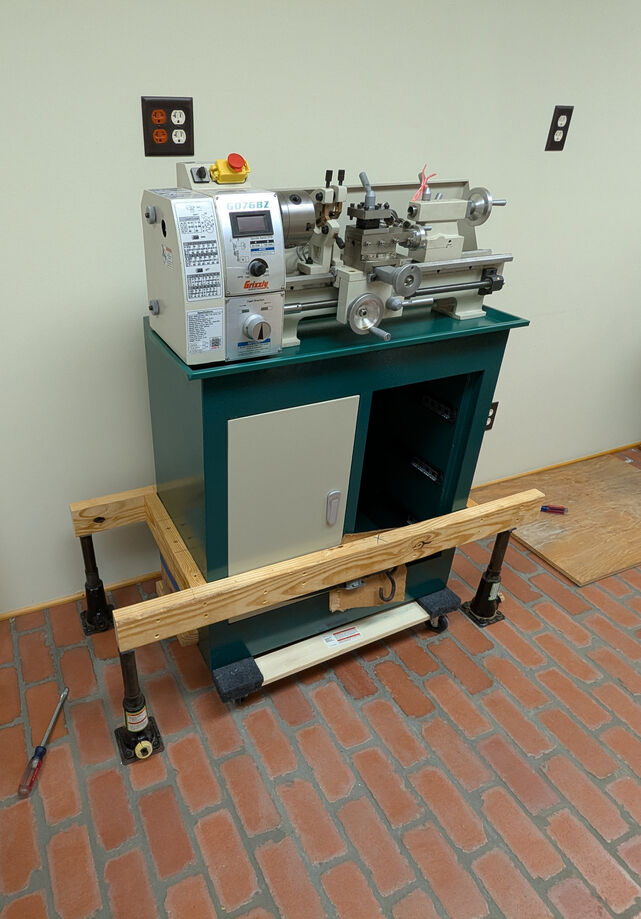
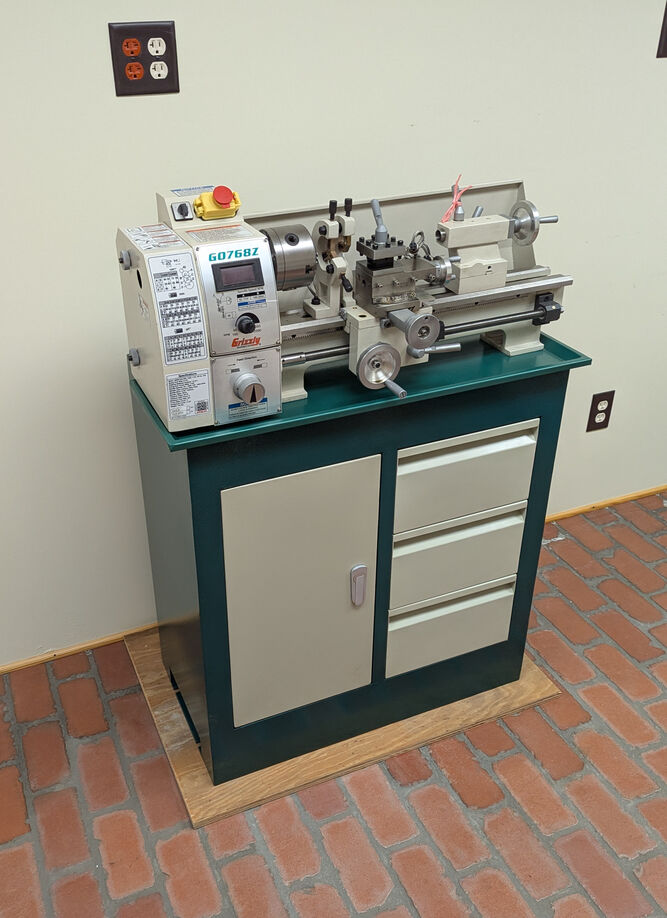
Some time back, he purchased a milling machine and lathe from Grizzly. He had managed to get them into his shop on furniture movers. Of course, they can’t be run on those platforms, so we needed to find a way to place them flat on the shop’s floor.
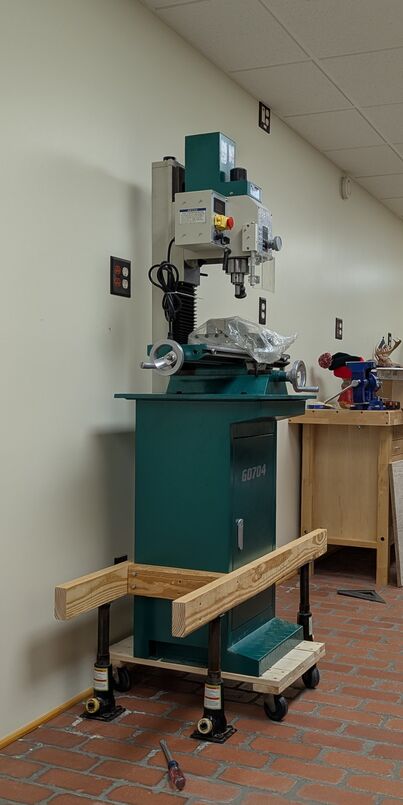
For the milling machine, which was heavier than the lathe, we drilled four holes through the metal cabinet and constructed a wood box with bolts going through the short sides of the wood box into the metal cabinet. We placed the four jacks under the long arms of the box, raised it a fraction of an inch to remove the furniture mover and then lowered the jacks until the cabinet rested on a 3/4″ plywood base that we cut to fit. Then, we removed the box from the cabinet after unbolting it and unscrewing the deck screws we had built the box with.
If you do something similar to this, be mindful of the total reach/height of the jack and its minimum. We built the box around the cabinet at a height that allowed for a slight lift and enough lowering to allow the jacks to be removed after the cabinet was lowered.
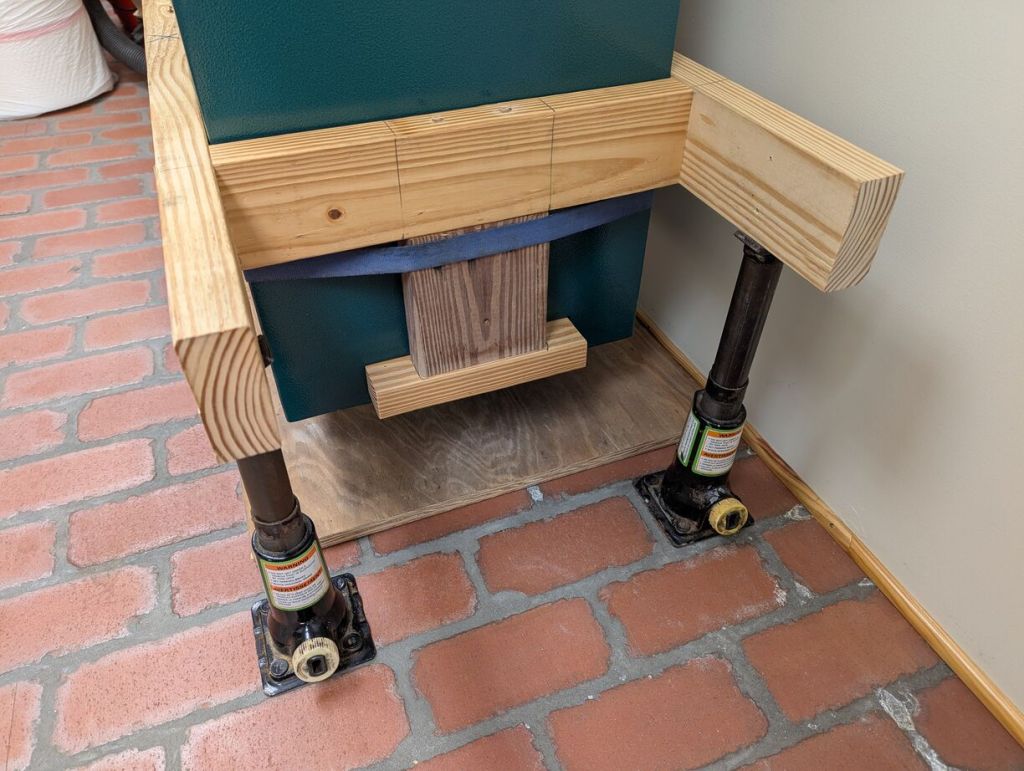
For the lathe, we did something similar, except we couldn’t drill through its cabinet to bolt the box to the cabinet as we had done with the milling machine because it is double walled and could potentially create problems with bolt alignment (and we would need much longer bolts).
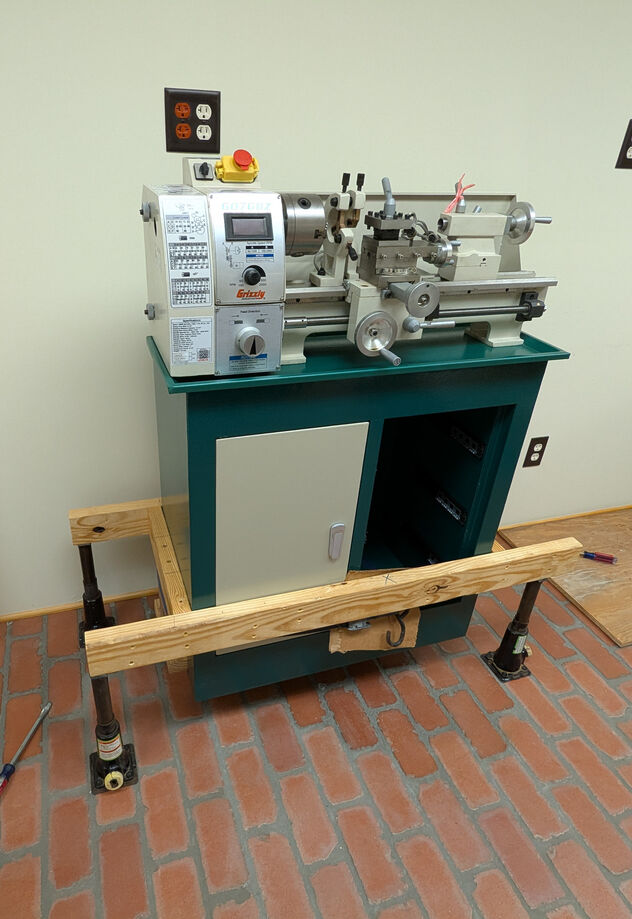
With the lathe being lighter than the milling machine, we felt safe building the box around the lathe’s cabinet and adding two “tongs” that fit into the recesses at the bottom of the cabinet. To make sure the tongs remained in place, we put a tie strap around these and the cabinet.
We lifted the lathe slightly to remove the furniture mover.
And then lowered it onto a custom piece of plywood for it to rest on the floor.
When you don’t have the muscle or manpower, use the tools at hand to get things done. As William Gibson writes, “the street finds its own use for things.”