Tag: presentation

  • Recovered Writing, PhD in English, World War I Literature, Presentation on Weapons and Tactics, 31 January 2008

    This is the forty-sixth post in a series that I call, “Recovered Writing.” I am going through my personal archive of undergraduate and graduate school writing, recovering those essays I consider interesting but that I am unlikely to revise for traditional publication, and posting those essays as-is on my blog in the hope of engaging others with these ideas that played a formative role in my development as a scholar and teacher. Because this and the other essays in the Recovered Writing series are posted as-is and edited only for web-readability, I hope that readers will accept them for what they are–undergraduate and graduate school essays conveying varying degrees of argumentation, rigor, idea development, and research. Furthermore, I dislike the idea of these essays languishing in a digital tomb, so I offer them here to excite your curiosity and encourage your conversation.

    During my second semester at Kent State University as a PhD student, I was a member of Professor Robert Trogdon’s World War I Literature seminar. Professor Trogdon created a terrific syllabus of readings and facilitated insightful discussions. While we focused on the prose and poetry surrounding or focused on WWI, I found it to be a uniquely suited class for thinking about the history of science and technology in early 20th-century literature. My greatest success in this class was my final paper on H.G. Wells’ “The Land Ironclads” and the invention of the British tank, which I continued writing after the class and eventually presented in shortened form at SLSA and published in the prestigious Wellsian journal. The essay included below is a paper that I wrote for a presentation on the weapons and tactics of World War I. This early research in the class and my previous reading of H.G. Wells led me to pitch “The Land Ironclads” essay idea to Professor Trogdon.

    Jason W. Ellis

    Professor Robert Trogdon

    World War I Literature

    31 January 2008

    WWI Literature Presentation – Weapons and Tactics

                The Great War illustrates the disconnection between the vast technological developments at the turn of the century and the implementation of those new technologies in the waging of war. Whereas the new weaponry of the Great War would go on to be used in innovative ways in World War II, the overall strategies employed, particularly on the Western Front, was that of attrition. However, there was certainly a number of innovations, and the networks of war making and technology fed into one another, which eventually produced new weapons and tactics that left an ineradicable mark on history.

    The most recognizable aspect of the First World War is trench warfare. The Western Front stabilized early in the war after the Allies and Central forces were unable to outflank one another. This stalemate initially prompted a breakdown in imaginative thinking regarding strategies to breakthrough, which resulted in enormous losses. Essentially, troops in forward trenches would charge forward toward the exposed “No Man’s Land” while their artillery fired on enemy positions. Aside from the uneven terrain due to artillery craters, these front line soldiers encountered a new impediment to crossing to the enemy lines: barbed wire. It was first patented by Joseph Glidden in 1874 in the United States. In use, it was stretched parallel to the front trenches of each side to prevent advances from the other side. Soldier caught in the barbed wire were gunned down and left to die hanging.

    Germany revealed its first advantage early in the war through the extensive use of machine guns, which they had stockpiled in the years leading up to the war. The first machine guns used in First World War were typically tripod mounted, and were water, oil, or air cooled (predominantly the first). Despite their weight, a crew of several soldiers could easily setup a machine gun quickly from a defensible position, or it may be hidden within a secure enclosure. These machine guns had a theoretical sustained rate of fire of up to 600 rounds per minute, but firing was often limited to controlled bursts rather than continuous use due to the possibility of overheating. The first self-powered, force recoil machine gun was patented by Hiram Maxim in Britain in 1883. The British had access to the Maxim oil-cooled gun and the Vickers water-cooled gun, both in .303 British caliber, but their numbers were limited, because, “the British army high command could see no real use for the [machine gun that Maxim] demonstrated to them in 1885; other officers even regarded the weapon as an improper form of warfare” (“Machine Guns” par. 9). However, the Germans had no such qualms about the use of machine guns, and they made an almost identical copy called the Maschinengewehr 08 (MG08) that fired 7.92x57mm Mauser rounds. At the outbreak of war, Germany had “approximately 12,000 MG08s…available to battlefield units” (“Maschinengewehr” par. 5). Due to the weight of the gun, it’s cooling requirements, and heavy consumption of ammunition, the machine gun was originally a defensive weapon. German soldiers more than aptly demonstrated its defensive capabilities to the Allies during the first phase of the war. Later, machine guns were adapted to mobile platforms such as carts, tanks, airplanes, and ships.

    Artillery served a central offensive role in trench warfare. It served a clearing function by cutting through barbed wire defenses in No Man’s Land, though with lackluster success. Additionally, it supported infantry soldiers by first attempting to weaken the enemy’s defenses and ability to return fire, and leading the way during advances past enemy lines. However, this didn’t always work out as planned, which was evidenced by the Allied losses at the battle of Verdun after their 1.5 million shells left only “superficial” damage to Germany’s well fortified deep trench system (Robbins 56).

    There are three types of artillery: guns, howitzers, and mortars. Guns are very large, long barreled machines that fire a large projectile. Howitzers are shorter range artillery weapons with a short barrel, and fire a smaller projectile. And finally, mortars are easily conveyed by troops in trenches and fire small projectiles nearly vertically that fall down onto the enemy. Initially, these used shrapnel rounds to attack troops, but later in the war there was a shift to high explosive rounds.

    Poison gas, which was first used in the Great War, is another offensive weapon employed throughout the conflict. Simply put, poison gases are chemical agents tailored to kill, maim, and/or serious disable enemy soldiers. The first use of poison gas (excluding early forms of tear gas) took place at Ypres salient on 22 April 1915 when the Germans utilized favorable winds to carry 150 tons of chlorine gas to the French lines. The gas of choice in the war initially was chlorine, which was easily produced, but difficult to release. That problem was solved through the use of canisters and later shells. Chlorine gas breaks down tissues, particularly in the lungs, when it dissolves in water producing hydrochloric acid. The common cause of death by chlorine gas is asphyxiation due to the destruction of lung tissue and the accumulation of fluid. A poison gas arms race developed after the use of chlorine. As one side developed protections in the form of masks and breathers, the other side would redouble its efforts in creating a more deadly chemical that circumvented those protections. Other well-known gases developed during the Great War include the toxic, mucous membrane irritant phosgene, the paralyzing hydrocynanide, and the blistering agent dichlordiethyl sulphide, or mustard gas (Hartcup 102 and 106). Both sides of the war developed poison gas, delivery systems, and protections, and these agents were used throughout the war.

    Poison gas, artillery, machine guns, and barbed wire promoted an unimaginative solution to the war through attrition. These weapons were employed without a retooling of the methods of warfare in an age of intense technological development. However, three technologies provided the promise for new ways of seeing and thinking about warfare at the turn of the century: tanks, airplanes, and submarines.

    Motorized tractors in warfare were considered as a possibility following the development of petrol-based engines. However, the first image of the modern battle tank was envisioned by H.G. Wells in his 1903 short story, “The Land Ironclads,” which reveals the battle potential of mechanized warfare in a thinly veiled bourgeoisie triumph over the simple proletariat. Appropriately enough, the British were the first to develop a tank for deployment in the Great War. Unfortunately, its strategic potential was limited by planning and numbers when first unleashed on the Western Front on 15 September 1916 at Flers Courcellette (Hartcup 86). This first model of British tank is described as, “cumbersome and unreliable,” and, “whose movements as yet inspired more awe than fear amongst those Germans who observed it” (Robbins 56).   Germany developed approximately twenty tanks in response, but there was only one reported tank battle between British and German tanks during the war (Hartcup 91).

    Another new technology used in the war were airplanes. They were initially used for aerial reconnaissance, but their role evolved as the conflict progressed. The number of aircraft produced increased during the war, and they were outfitted with two means of attack: machine guns and bombs. Both of these involved major engineering work. Machine guns, mounted on the fuselage of the aircraft had to be synchronized with the propellers so that bullets would pass between the rotor blades as the plane was in flight. Bomb delivery evolved from hand dropping shells and grenades to mechanically releasing heavier bombs, which necessitated the invention of bomb sighting mechanisms. Furthermore, the development of air to ground warfare precipitated the inauguration of air-to-air combat. The airplane didn’t have as central a role in operations as in World War II, but it was seen as the future well before the Great War in H.G. Wells’ 1908 novel, The War in the Air.

    A third and final major weapon in the Great War is the submarine. The German Unterseeboot or U-boat is an underwater submersible with a diesel power plant for continuous underwater operations, and it was equipped with a deck gun, torpedoes, and (optionall) mine laying capability. Without detection mechanisms early in the war, Germany was able to declare the waters around Britain a war zone and thereby effectively wage unrestricted warfare. However, this position was relaxed momentarily following the diplomatic fallout after the RMS Lusitania sinking by U-20 on 15 May 1915. Later, Germany shifted to unrestricted submarine warfare beginning on 1 February 1917, which precipitated the United States’ involvement in the Great War.

    These are only a sampling of the technology, weapons and tactics utilized in the First World War. Others include flamethrowers, grenades, improved infantry rifles and bullets, British Q-ships, new battleships, the battlecruiser, improved naval guns, naval mines, and zeppelins. There are two final points that I would like to make about these technologies and their uses. First, the technology at the turn of the century influenced the war, and the war influenced the development of new technologies. And second, these technologies left a lasting mark on the physicality of future technologies as well as the human bodies engaged in their use from 1914 to 1918.

    Works Cited

    Duffy, Michael. “Machine Guns.” FirstWorldWar.com. 3 May 2003. 30 January 2008 <http://www.firstworldwar.com/weaponry/machineguns.htm&gt;.

    —. “Maschinengewehr.” FirstWorldWar.com. 3 May 2003. 30 January 2008 <http://www.firstworldwar.com/atoz/mgun_mg.htm&gt;.

    Hartcup, Guy. The War of Invention: Scientific Developments 1914-1918. New York: Brassey’s Defense Publishers, 1988.

    Robbins, Keith. The First World War. Oxford: Oxford UP, 1984.

    Wells, H.G.. “The Land Ironclads.” Selected Stories of H.G. Wells. Ed. Ursula K. Le Guin. New York: Random House, 2004.

    —. The War in the Air: And Particularly How Mr. Bert Smallways Fared While It Lasted. New York: The Macmillan Company, 1908.

  • Recovered Writing, PhD in English, Queer Studies, Presentation on Judith Butler’s “Imitation and Gender Insubordination” and Introduction to Bodies That Matter Feb. 6, 2008

    This is the fortieth post in a series that I call, “Recovered Writing.” I am going through my personal archive of undergraduate and graduate school writing, recovering those essays I consider interesting but that I am unlikely to revise for traditional publication, and posting those essays as-is on my blog in the hope of engaging others with these ideas that played a formative role in my development as a scholar and teacher. Because this and the other essays in the Recovered Writing series are posted as-is and edited only for web-readability, I hope that readers will accept them for what they are–undergraduate and graduate school essays conveying varying degrees of argumentation, rigor, idea development, and research. Furthermore, I dislike the idea of these essays languishing in a digital tomb, so I offer them here to excite your curiosity and encourage your conversation.

    This is the second of seven posts of material from Professor Kevin Floyd’s Queer Studies seminar at Kent State University. Most of these Recovered Writing posts are from summaries that we wrote during the semester on readings. Most of these were densely theoretical works, but we could not expend more than one page on these summaries–no more and no less–exactly one page. This was an incredibly useful exercise to get to the heart of an argument, study its supporting evidence, and identify its strengths and weaknesses. These summaries encouraged us to take a rigorous approach to understand arguments, express those arguments cogently, and adopt the jargon, terminology, and language utilized by the argument’s writer.

    In this post, I am including my class presentation (each student led one seminar during the semester) and summary writing.

    Jason W. Ellis

    Professor Kevin Floyd

    Queer Studies

    6 Feb. 2008

    Presentation on Judith Butler’s “Imitation and Gender Insubordination” and “Introduction” to Bodies That Matter

                My presentation today covers Judith Butler’s essays: “Imitation and Gender Insubordination,” first presented in 1989 and published in 1991, and the “Introduction” to Bodies That Matter, published in 1993. These two works build on her arguments about the performative production of gender in her larger, 1990 work, Gender Trouble.

    In “Imitation and Gender Insubordination,” Butler employs the concepts of play/performance, drag, and imitation to describe the formation of gender and sexuality as continually created subjectivities always at risk of dissolution from non-performance. Furthermore, she points out that gender is not something chosen, but rather something deep-seated in the psyche whereby, “the psychic subject is nevertheless constituted internally by differentially gendered Others and is, therefore, never, as a gender, self-identical” (133).

    She begins by resisting labels/signifiers such as “lesbian theories, gay theories” as well as “lesbian,” because she is, “permanently troubled by identity categories,” which she understands as, “sites of necessary trouble” (120-121). It’s this “trouble” that interests Butler, and is the impetus of her political project. Butler goes on to explain that she resists a theorization of gay and lesbian identity, because there lacks a shared specificity to such an identity. Even on the common ground of experiencing homophobia, there would be different vocabularies and methods of analysis. She reveals that a lack of specificity, which seems to indicate that lesbianism is derived from heterosexuality or doesn’t exist at all, can be utilized in a deconstructionist argument that posits, “lesbian sexuality can be understood to redeploy its ‘derivativeness’ in the service of displacing hegemonic heterosexual norms” (124).

    Butler argues that lesbian identity is both a “being” and “trying to be” at the same time. It’s the repetition of a deep-seated play that constitutes the lesbian “I.” Taking this concept, she links compulsory heterosexuality (i.e., normalized as the hierarchically dominant position) with drag. Drag is an appropriation of gender stylizations and performance, which suggests that gender itself is a stylized imitative performance. Therefore, gender is a simulacra—a copy without an original. This means that heterosexual genders are produced through imitation rather than originating from some natural origin.

    She drives her deconstructionist argument home by pointing out that homosexuality is not a copy of heterosexuality. Instead, it’s an imitation, which is more simulation than “carbon copy.” This means that homosexuality is produced, as is heterosexuality, and it inverts the classically implied hierarchical primacy of heterosexuality. Therefore, heterosexuality is a performance that requires repetition at all times in order to maintain stability. Also, gender is a compulsory performance that generates subjectivity. There is no preceding subject that chooses gender and the according performance. Also, heterosexuality is continually at risk because it must be continually performed at all times to maintain itself.

    Butler draws on Freud, and Borch-Jacobsen and Leys to develop a way of thinking about the psychic identification involved in gender presentation. The former’s concept of loss, and the latter’s primary mimetism both support the idea that the “psychic subject” is formed by identification with Others of various genders, and not from self-identification. Gender produces the “illusion of an inner sex,” and gender is “always a surface sign,” i.e., marked on/by the body (134). Additionally, the psyche comes about through gender production, and it’s a continuous paradox—compelling gender performance, thereby perpetuating the possibility of gender interruption.

    She reconnects this to drag when she writes, “If gender is drag, and if it is an imitation that regularly produces the ideal it attempts to approximate, then gender is a performance that produces the illusion of an inner sex or essence or psychic gender core; it produces on the skin, through the gesture, the move, the gait (that array of corporeal theatrics understood as gender presentation), the illusion of an inner depth” (134). She calls gender a “surface sign” that comes about through the performance of gender, and from that performance there is the production of an “illusion of inner sex”. This “inner sex” or psyche, “is not ‘in’ the body, but in the very signifying process through which that body comes to appear; it is the lapse in repetition as well as its compulsion, precisely what the performance seeks to deny, and that which compels it from the start” (134). However, the psyche does not have a true gender in need of liberation. It is connected to the production of gender through performance by compelling the performance as well perpetuating the chance of interruption of gender.

    Having considered the performative production of gender, Butler goes on to add another element to the mix in her “Introduction” to Bodies That Matter. In this selection, she reformulates performativity in terms of the materiality of bodies and the category of “sex.”

    Butler initially engages Foucault in the elaboration of her argument. She writes that the category of “sex” is a “regulatory ideal.” This means that it is both a norm and, “a regulatory practice that produces the bodies it governs” (1). It has a productive function that defines bodies, in this case, a heterosexual matrix. Furthermore, body shaping, or the defining of bodies, is an effect of power. She explains that this effect of power is materiality, which, in terms of the category of “sex,” is part of the inextricable connection between the “materiality of the body,” and “the materialization of the [sex] regulatory norm” (2). Additionally, bodily norms, like her earlier formulation of the performativity of gender, are not produced by a subject, but instead the subject is produced by the assumption of a sex and identification. This identification is dependent on the formulation of heterosexual exclusion and abjection of particular identifications outside the heterosexual norm. However, the subject comes about through a rejection of certain identities, which forms “a domain of abjection,” that is actually within the subject as the basis of its identification.

    In the next section, Butler challenges the constructionist views of gender production and formation. In her critique of three radical constructivisms, she reveals that, “constructivism is reduced to determinism and implies the evacuation or displacement of human agency” (9). Constructivism relies on a misreading of Foucault, which Butler describes as the personification of power. A significant point she makes about this is that, “There is no power that acts, but only a reiterated acting that is power in its persistence and instability” (9). Reiteration means dynamism over time, which leads to her proposal to replace constructivism. She proposes, “a return to the notion of matter, not as a site or surface, but as a process of materialization that stabilizes over time to produce the effect of boundary, fixity, and surface we call matter” (9). Thus, the theorization of gender is expanded to provide a way of theorizing the “matter” of sex (10). Furthermore, she reconfigures construction. She writes, “Construction not only takes place in time, but is itself a temporal process which operates through the reiteration of norms; sex is both produced and destabilized in the course of this reiteration” (10). And, the destabilization leads to, “the possibility to put the consolidation of the norms of ‘sex’ into a potentially productive crisis” (10).

    In the final theoretical section of the “Introduction,” Butler develops, “a poststructuralist rewriting of discursive performativity as it operates in the materialization of sex,” as a critique of structuralist-oriented “constructivist accounts of gender” (12). Most of her previous theorization is poststructuralist in that it takes place over time through repetition and reiteration, whereas a structuralist approach considers slices of time and singular acts. Derrida constructed a reformulation of speech acts through the idea of citations. Additionally, she relies on Derrida’s citational reformulation of speech acts. The power of the speech act derives from the act’s citation. This means that speech acts are reiterable by citing the “conventions of authority” (13). Butler extends this to “sex,” by writing, “the norm of sex takes hold to the extent that it is ‘cited’ as such a norm, but it also derives its power through the citations it compels” (13). Next, she aligns “sex” with Lacanian symbolic law so that, “the force and necessity of these norms…is thus functionally dependent on the approximation and citation of the law” (14). Also, she questions, “what would it mean to ‘cite’ the law to produce it differently, to ‘cite’ the law in order to reiterate and coopt its power, to expose the heterosexual matrix and to displace the effect of its necessity” (15)? She calls this process materialization, which is a kind of citationality that produces being by citing power. Furthermore, this means that a subject who resists these norms is actually both enabled and produced by those norms—hence, a reinforcement of Foucault’s theory of power.

    Butler’s earlier formulation of the performativity of gender, and her later theory of the materiality of bodies produced by reiterative citation of “sex” norms, raises a number of questions.

    First, to what extent do you accept Butler’s overarching reformulation of performativity? Is her earlier theory about gender performativity easier to accept than the citational formation of bodies?

    Second, Butler briefly touches on the human subject and less-than-human non-subject divide in the heterosexual matrix in the “Introduction.” When it’s known that biological sex is varied and not always binary (e.g., the thirteen sexes of slime mold described in Dr. Tatiana’s Sex Advice to All Creation by Olivia Judson, or the medicalized “anomalies” of Klinefelter’s Syndrome, Ulrich-Turner Syndrome, and others that refute a chromosomal definition of human sex), what are your thoughts about removing the physical construction of sex from a formulation of bodies with a “sex?” Is this compelling or troubling?

    And finally, Butler, following Foucault, talks about bodies on a local level. Is there a way to reconcile Butler and Foucault with Sedgwick regarding community? Does community come about in what Butler calls the “outside” (i.e., on the excluded borders of the heterosexual matrix), and if so, how might that alliance work in terms of the production of “sexed” bodies?


    Works Cited

    Butler, Judith. “Imitation and Gender Insubordination.” The Judith Butler Reader. Eds. Sara Salih and Judith Butler. Malden, MA: Blackwell Publishing, 2004. 119-137.

    —. “Introduction.” Bodies That Matter: On the Discursive Limits of “Sex.” New York: Routledge, 1993. 1-23.

    ——————————–

    Jason W. Ellis

    Professor Kevin Floyd

    Queer Studies

    6 Feb. 2008

    Queer Studies, Summary of Butler, “Imitation and Gender Insubordination”

                “Imitation and Gender Insubordination” is an expansion of some of Butler’s ideas in her previous, larger work, Gender Trouble.  In this essay, she employs the concepts of play/performance, drag, and imitation to describe the formation of gender and sexuality as continually created subjectivities always at risk of dissolution from non-performance.  Furthermore, she points out that gender is not something chosen, but rather something deep-seated in the psyche whereby, “the psychic subject is nevertheless constituted internally by differentially gendered Others and is, therefore, never, as a gender, self-identical” (133).

    She begins by resisting labels/signifiers such as “lesbian theories, gay theories” as well as “lesbian,” because she is, “permanently troubled by identity categories,” which she understands as, “sites of necessary trouble” (120-121).  It’s this “trouble” that interests Butler, and is the origin of her political project.  Butler goes on to explain that she resists a theorization of gay and lesbian identity, because there lacks a shared specificity to such an identity.  Even on the common ground of experiencing homophobia, there would be different vocabularies and methods of analysis.  She reveals that a lack of specificity, which seems to indicate that lesbianism is derived from heterosexuality or doesn’t exist at all, can be utilized in a deconstructionist argument that posits, “lesbian sexuality can be understood to redeploy its ‘derivativeness’ in the service of displacing hegemonic heterosexual norms” (124).

    Butler argues that lesbian identity is both a “being” and “trying to be” at the same time.  It’s the repetition of a deep-seated play that constitutes the lesbian “I.”  Taking this concept, she links compulsory heterosexuality (i.e., normalized as the hierarchically dominant position) with drag.  Drag is an appropriation of gender stylizations and performance, which suggests that gender itself is a stylized imitative performance.  Therefore, gender is a simulacra—a copy without an original.  This means that heterosexual genders are produced through imitation rather than originating from some natural origin.

    She drives her deconstructionist argument home by pointing out that homosexuality is not a copy of heterosexuality.  Instead, it’s an imitation, which is more simulation than “carbon copy.”  This means that homosexuality is produced, as is heterosexuality, and it inverts the classically implied hierarchical primacy of heterosexuality.  Therefore, heterosexuality is a performance that requires repetition at all times in order to maintain stability.  Also, gender is a compulsory performance that generates subjectivity.  There is no preceding subject that chooses gender and the according performance.  Also, heterosexuality is continually at risk because it must be continually performed at all times to maintain itself.

    Butler draws on Freud, and Borch-Jacobsen and Leys to develop a way of thinking about the psychic identification involved in gender presentation.  The former’s concept of loss, and the latter’s primary mimetism both support the idea that the “psychic subject” is formed by identification with Others of various genders, and not from self-identification.  Gender produces the “illusion of an inner sex,” and gender is “always a surface sign,” i.e., marked on/by the body (134).  Additionally, the psyche is not within the body, but is a continuous paradox—compelling gender performance, thereby perpetuating the possibility of gender interruption.


  • Down and Dirty Guide to Literary Research with Digital Humanities Tools: Text Mining Basics

    2010-10-05 - IMG_2791
    Miao and Jason get things done with computers!

    As part of the final Digital Pedagogy seminar of fall 2012, Margaret Konkol, Patrick McHenry, Olga Menagarishvili, and I will lead the discussion on “trends in the digital humanities.” You can find out more about our readings and other DH resources by reading our TECHStyle post here.

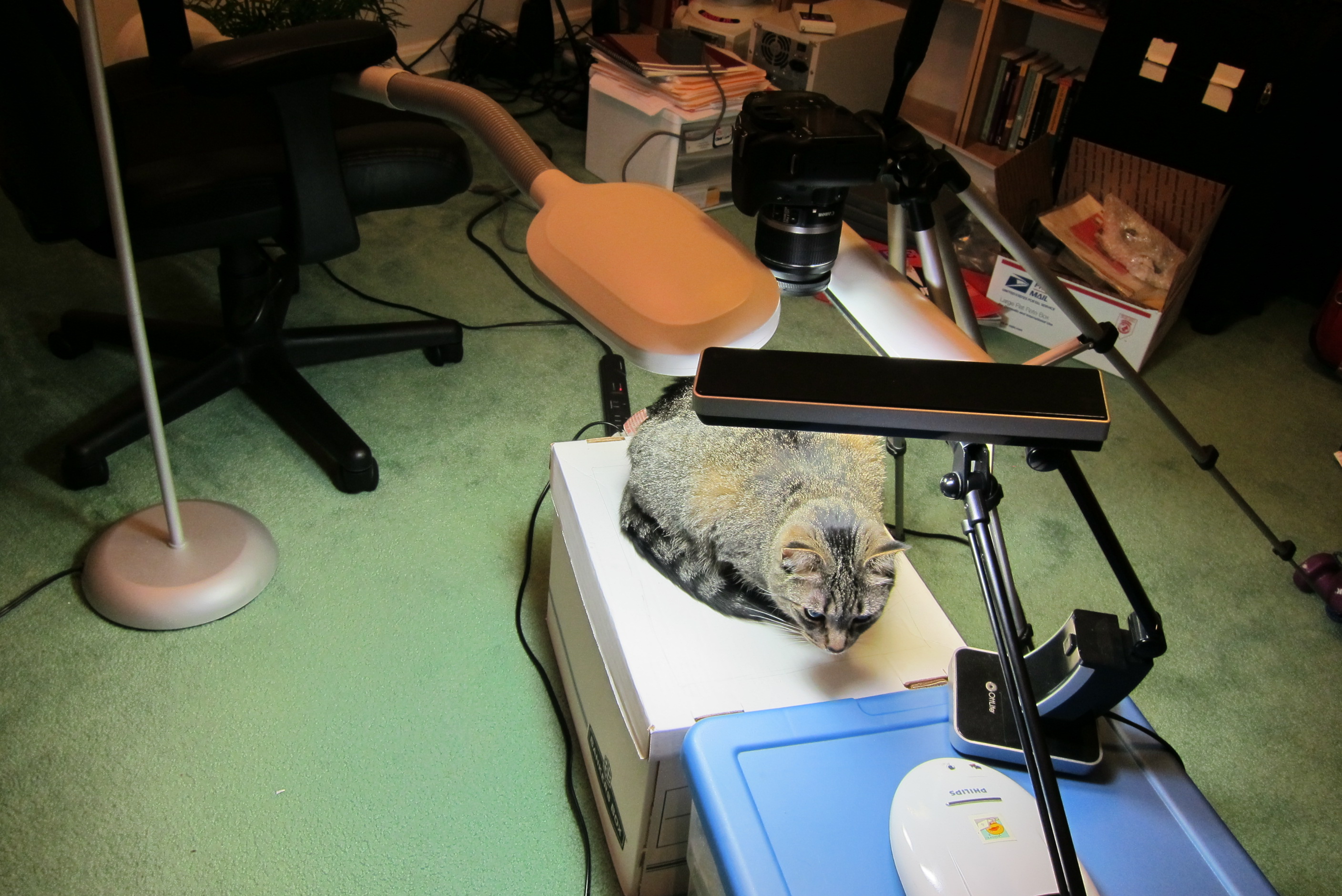
    As part of my contribution to the seminar, I will give a demo titled, “Down and Dirty Guide to Literary Research with Digital Humanities Tools: Text Mining Basics.” In my presentation, I will show how traditional literary scholars can employ computers, cameras, and software to enhance their research.

    To supplement my presentation, I created the following outline with links to useful resources.

    Down and Dirty Guide to Literary Research with Digital Humanities Tools: Text Mining Basics

    1. Text Analysis and Text Mining
      1. My working definition of text mining: “Studying texts with computers and software to uncover new patterns, overlooked connections, and deeper meaning.”
      2. What is Text Analysis: Electronic Texts and Text Analysis by Geoffrey Rockwell and Ian Lancashire
      3. Text mining on Wikipedia
      4. Text Mining as a Research Tool by Ryan Shaw (an excellent resource with a presentation and links to more useful material on and offline)
    2. Advantages to Digital Research Materials
      1. Ask Interesting Questions That Would Otherwise Be Too Difficult or Time Consuming to Ask
      2. Efficiency
      3. Thoroughness
      4. Find New Patterns
      5. Develop Greater Insight
    3. Types of Digital Research Materials
      1. Your Notes
      2. eBooks
      3. eJournals
    4. Digitizing Your Own Research Materials
      1. What to Digitize
        1. Primary Sources
        2. Secondary Sources
      2. How to Digitize
        1. Acquire
          1. Camera > high resolution JPG
          2. Scanner > high resolution TIFF or JPG
        2. Collate as PDF
          1. Adobe Acrobat X Pro (now XI!)
          2. PDFCreator
          3. Mac OS X Preview
        3. Perform Optical Character Recognition (OCR) to generate machine readable/searchable plain text
          1. Adobe Acrobat X Pro
            1. Print PDF to a letter size PDF
            2. Tool > Recognize Text
          2. DevonThink
          3. Use Google
          4. Others?
        4. Save As/Export plain text > .txt files
        5. Engage the “Text” in New Ways
          1. New Ways of Seeing “Texts”
            1. Keyword Search
            2. Line Search
            3. Word Counts
            4. Concordance
            5. Patterns
          2. Tools to Help with Seeing “Texts”
            1. AntConc
            2. BBEdit (“It doesn’t suck” ®)
            3. MacOS X and Linux: cat, find, grep, and print (use “man cat” and “man grep” to learn more from the Terminal. More info herehere, here, here, and here.)
            4. DevonThink
            5. Notepad++
            6. Mac OS X Spotlight/Windows 7 Search
            7. TextEdit
            8. Others?
    IMG_0987
    Miao awaits digitization.
  • NASA Speaker Professor Jay Reynolds Visited My Writing Classes Today

    Thanks to NASA’s Speakers Bureau, Professor Jay Reynolds of Cleveland State University and the Glenn Research Station agreed to visit my two intro writing classes today to talk about America’s return to the Moon, current research on Mars, and investigations of asteroids and protoplanets, which is what Prof. Reynolds is at the present involved in with the DAWN mission to observe Vesta and Ceres.

    I asked Prof. Reynolds to speak to my classes about some of the things taking place right now at NASA, particularly in relation to NE Ohio, where the majority of my students are from, and to give some context to the work that NASA does. He did an excellent job of this in his two presentations today for my students. Based on the subjects that he covered, I believe that he filled in many gaps that I either didn’t have the time to cover or those things that didn’t occur to me at the time as my classes worked their way through Arthur C. Clarke’s 2001: A Space Odyssey and Kim Stanley Robinson’s Red Mars as part of the “Space Exploration and Your Future” theme of my intro writing classes.

    Prof. Reynolds demonstrated his depth of knowledge about NASA and its missions while also engaging broader economic and political interests in response to questions put to him by my students. He displayed a contagious abundance of energy and excitement about his work and the work taking place at NASA that I believe carried over to some of my students in the two classes.

    At the beginning of his presentation, he began simply by asking my students what they thought of the unauthorized, yet mission making, Apollo 8 picture of the gibbous Earth next to the lunar surface [find it here] and the Apollo 17 image of the fully illuminated Earth [find it here]. What he stressed with these images was that our missions to the Moon turned into missions about the Earth. Our going out there gave us, meaning humanity, a new perspective on our planet and ourselves as co-inhabitants of what Carl Sagan termed a pale blue dot.

    He discussed the Space Shuttle, Saturn V, and Ares I and V launch vehicles [see my Lego versions here] in detail, which elicited many questions between the two classes. Other questions included: How safe are the launch vehicles? Why did we go to the Moon? Does anyone own the Moon? What do you do with Helium-3?

    Prof. Reynolds’ presentation ended with a discussion of asteroids and the importance of locating and tracking those objects which cross or may eventually cross the orbit of the Earth. This is related to the work that he does for NASA with the help of undergraduate and graduate students from Cleveland State University in conjunction with the DAWN mission [some related info here].

    I am thankful that NASA can make a special event like this possible, and I am especially grateful to Prof. Reynolds for taking the time and energy to drive down to Kent and spend the afternoon with my students. It was a terrific occasion to close out the Fall 2009 semester for my students.