Tag: readinglist

  • PhD Exam Reading List Progress Thus Far

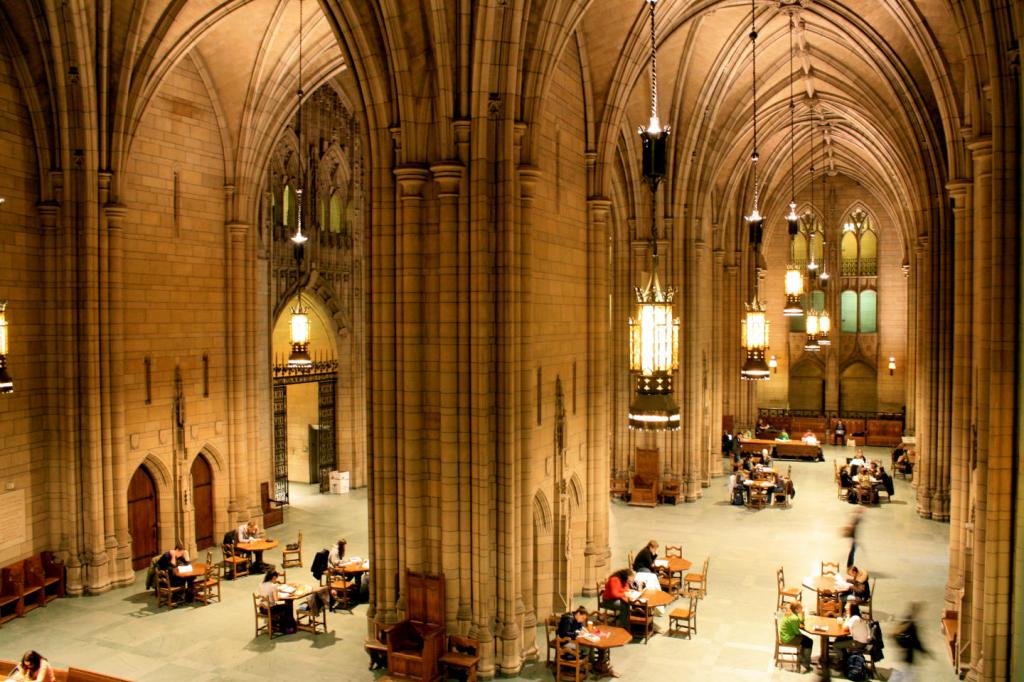
    inside the cathedral of learning at the university of pittsburgh, stone columns dwarf the students reading at tables below

    I’ve been working my ass off preparing for my PhD exams, but the numbers are saying that I haven’t done as much reading as I had thought. After finishing Alan Wilde’s Horizons of Assent a few moments ago, I decided to crunch the numbers on the number of books that I had read on my reading list. Here’s how it shakes out:

    Major Exam, 20th Century American Literature, 27/59, 32 remaining

    Minor Exam, Postmodern Theory, 15/29, 14 remaining

    Minor Exam, Philip K. Dick, 14/45, 31 remaining

    Total read, 56/133, 77 remaining

    I checked off 14 authors over the winter break between semesters (some of these ‘numbers’ include several short works by one author), and I am hopeful that having only one class to teach this coming semester will allow me the time and attention necessary to properly prepare myself for my exams (including my French language exam).

    I would probably get a lot of reading done if I locked myself in the University of Pittsburgh’s Cathedral of Learning (interior pictured above) and asked Y to bring me a picnic basket everyday, which I suspect will contain a sleepy Miao Miao cat who ate all of my food! Admittedly, that’s too far away, so I’ll sequester myself in my office. I do, however, need to venture out now to take the trash out and get some sleep. Adieu.

  • Bruno Latour and James Burke

    I just finished reading Bruno Latour’s We Have Never Been Modern (1991/translation 1993), and I was struck by how similar his ideas about the interplay of Nature and Society–that they are not the poles, but orbit about the quasi-object and quasi-subject–that collectives and networks are definitive. However, I was more struck by how much his ideas seemed to reflect those of James Burke in his Connections (1978) and The Day the Universe Changed (1985) television series, albeit in much more philosophical terms. Burke’s demonstration that science, technology, culture, and society are all interconnected and construct one another. Or, to beat a dead cliche, nothing (but subatomic particles) are created in a vacuum. I do not know to what extent Burke’s work may have informed Latour’s theories, but I do know that Latour was a constant presence in my Georgia Tech literature and cultural studies classes. I am done for the evening, but I will think more about Latour tomorrow when I write up my notes.

  • Jack London, The Iron Heel (1907)

    This quote from Jack London’s The Iron Heel deserves sharing:

    “For never was there such a lover as Ernest Everhard” (62).

    Socialists and porn stars have the best names.

  • Kurt Vonnegut’s Slaughterhouse-Five, Uncle Woodrow, and World War II

    I read Kurt Vonnegut’s Slaughterhouse-Five (1969) tonight for the first time, and one particular passage struck me in its depiction of memory of World War II.  At Billy and Valencia’s eighteenth wedding anniversary, the barbershop quartet, the Febs, begin singing “That Old Gang of Mine,” and Billy is assaulted by the pain of memory:

    Unexpectedly, Billy Pilgrim found himself upset by the song and the occasion.  He had never had an old gang, old sweethearts and pals, but he missed one anyway, as the quartet made slow, agonized experiments with chords–chords intentionally sour, sourer still, unbearably sour, and then a chord that was suffocatingly sweet, and then some sour ones again.  Billy had powerful psychosomatic responses to the changing chords.  His mouth filled with the taste of lemonade, and his face became grotesque, as if he were really being stretched on the torture engine called the rack. (172-173)

    I’ve seen this before when I was once asking my Uncle Woodrow Head about his experiences in the war before he succumbed to Alzheimer’s Disease.

    He told me about the time, prior to the Battle of the Bulge, General Patton inspected his auto group while he was working on the breaks of his jeep.  Despite others telling him to snap to attention, he said he had to get it fixed for when they rolled out.  Patton’s car pulled up to where my Uncle’s legs were sticking out from under his vehicle.  The general got out and told my Uncle that it was men like him that were going to win the war.

    He told me about guarding one of the major conferences of the war while manning an anti-aircraft gun with orders to shoot any airplane on sight.

    Then, he told me about his friends and the death he witnessed.  However, he stopped short and his face took on the “grotesque” that Vonnegut describes in the selection above–the only scene from the book that explicitly invokes memory instead of time warps.  The memory of the event overwhelmed my Uncle, a good natured and quiet man who I never before or ever saw again with a face transfigured by a memory so great and terrible that I cannot imagine it.