Tag: Review

  • Slidedeck for Final Exam Review in ENG1710 Intro to Language and Technology, Spring 2025

    looking straight up at a blue sky with a few wispy white clouds circled by the outstretched limbs of tall trees

    During tonight’s class in Introduction to Language and Technology (ENG1710), I’ll give the final exam review. This covers some old and new material compared to reviews that I’ve given before. I’ll record it and post it to YouTube as I have done past reviews for my students and the curious. Here’s a link to the slidedeck that I’ll be working from. I’ll follow up with a link to the YouTube video of the review in the coming days.

  • Recovered Writing, Unpublished Fiction Review of Marleen S. Barr’s Oy Pioneer!

    This latest recovered writing is a 749-word book review of Marleen S. Barr’s first novel Oy Pioneer! that I wrote back in 2006 when I was a masters student at the University of Liverpool. I tried unsuccessfully to get the review published at the time.

    Before writing the review, I had met Marleen at the 2006 Science Fiction Research Association conference in White Plains, New York–the first big conference that I presented at. I was on the same panel with her and the SFRA President Dave Mead. They were both kind to me and offered encouragement, but Marleen really took me under her wing. After I got back to Atlanta, I purchased Marleen’s novel from Amazon on 17 July 2006. I shipped her novel with some other books to Liverpool, which is where I read it and wrote the review below–going through several drafts.

    We haven’t published the program yet for the Ninth Annual City Tech Science Fiction Symposium, but it’s safe for me to say that Marleen will be giving the keynote address at this year’s event and we are certainly lucky for it!


    Jason W. Ellis

    Book Review of Marleen S. Barr’s Oy Pioneer!

    29 October 2006

    Estranging Slipstream Narrative in Barr’s Oy Pioneer!

    Marleen S. Barr’s first novel, Oy Pioneer!1is a fantastical romp (both literally and figuratively) that follows the trials and escapades of professor Sondra Lear, a feminist science fiction (SF) scholar. Sondra employs wit and panache to take on a second German Fulbright, maternal niggling, a husband hunt (related to the niggling), and a backwater state university deserving of air attacks straight out of Star Wars. The text is constructed with verisimilar elements taken from Barr’s own life mixed with a heavy dose of comedy, postmodern remixing, SF, and the fantastic.

    Barr creates a work of slipstream fiction in writing Oy Pioneer!, because it is an estranging fictional work that is situated at a crossroads of genres including anonymous memoir, comedy, SF, and fantasy. Additionally, it is the estrangement that Barr generates that makes this novel so compelling and difficult to put down.

    The author maintains two types of estrangement throughout the text. The first is the estrangement that Sondra encounters in everyday life. This takes the form of cultural alienation while visiting foreign countries for work and conferences, as well as the preternatural ability of her mother, who Sondra comically calls Herbert,2 to almost literally reach out and touch her when it is least convenient or appropriate. The second form of estrangement arrives from a vector of the fantastic. Sondra’s life is bombarded by science fictional and fantasy elements throughout the narrative, but these images culminate into a climax of cultural icons in the last third of the novel. This includes cavorting with flying vampires, strafing backwater state universities in X-Wing starfighters, and living with a talking horse.

    In parallel with Barr’s estrangement are story elements that academics and non-academics, inclusive of both men and women, can identify with. This parallel thread is Sondra’s search for a husband. However, it is this universally acknowledged search for a mate, which Barr once again estranges from the normal through comedic situations and fantastic departures. Despite the disconnect between Sondra’s rendezvous and an average reader’s assumptions about dating in the here-and-now, there is still material with which Barr’s audience can connect to. There are professional entanglements with former partners, juggling a professional career and a personal life, as well as keeping her mother’s interminable harassment at bay.

    For the male reader, there is another level of estrangement that obviously comes from the fact that the novel is written by a woman about a woman, who shares many professional and personal characteristics with the author. On the one hand, the novel reveals how one woman, the character Sondra, acts and thinks in the wild and mixed-up world in which she exists. On the other, the book reveals much about a woman, the author, who I have only met once at an academic conference. In a sense, the novel is analogous to an anonymously written blog that seems eerily closer to fact than fiction. However, it is this destabilizing realization that attracts the reader to continue reading the blog, or in this case, the novel.

    I realize that my academic trajectory is far different from that of Barr and her novel’s protagonist, Sondra, but as a beginning scholar, I find this novel interesting to read also for the estranging reality of academia. This novel is like a Hitchhiker’s Guide to the Galaxy for academic scholars and in particular, feminist SF scholars. In between the lines, I clearly made out the phrase, “Don’t Panic!”

    I recommend Oy Pioneer! to anyone with a sense of humor, as well as humanities academics. Barr’s work of slipstream fiction is laudable for doubly being so. First, it combines the memoir, comedy, SF, and fantasy into a cohesive work that supplies laughs and dizziness brought about by cognitive estrangement. Additionally, it slips through potentially rocky streams of readers’ assumptions that might come about, because a feminist SF scholar wrote the novel about a feminist SF scholar. Therefore, Barr accomplishes a great feat by using slipstream narrative to tell the whimsical story of Sondra Lear that engages an educated readership comprised of both women and men alike, which assuredly will enjoy such an entertaining novel!

    1 Barr, Marleen S., Oy Pioneer! (Madison: University of Wisconsin Press, 2003).

    2 Admittedly, I am on a first name basis with my father, Bud, and I called my maternal grandmother by her first name, Wilma. However, my mother insisted that I always call her, “Mom.”

  • GoRuck GR1 26L, an Outstanding Backpack for Travel and Work That Easily Carries a 16″ Laptop

    GoRuck GR1 26L

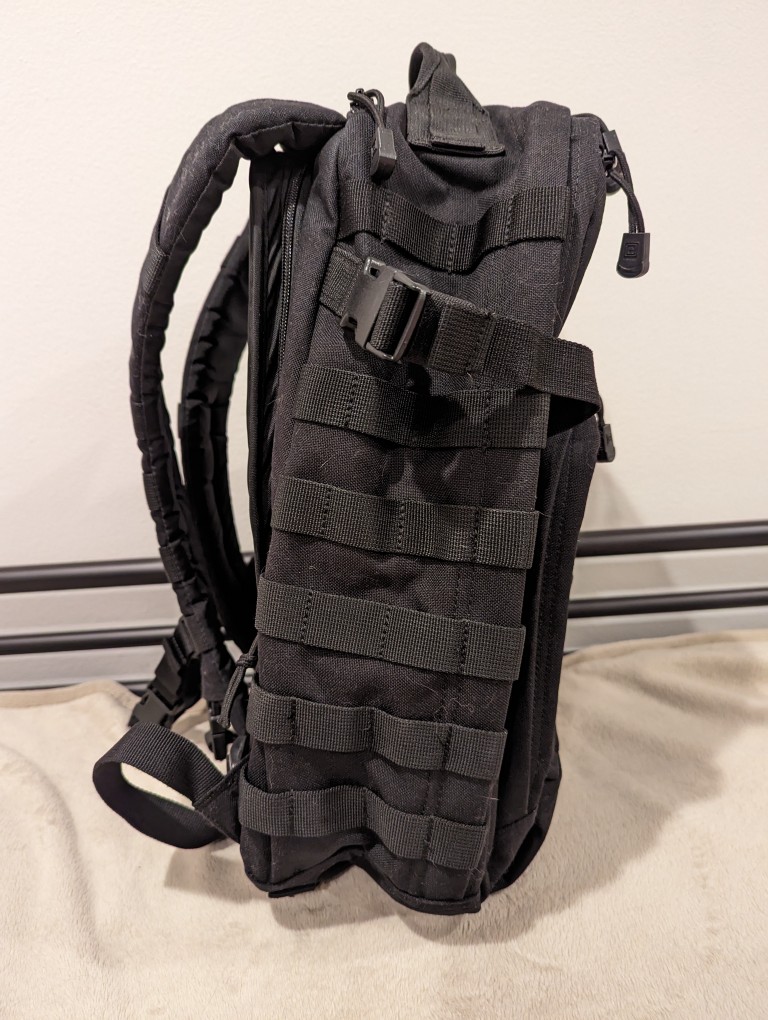
    As I’ve documented here, here, and here, I continue searching for the perfect backpack. While there may not be one backpack that checks all of my boxes, I think that the GoRuck GR1 (26L) checks the most.

    I purchased the larger 26L version of the GR1 before the fall semester began. It is the most expensive backpack that I’ve ever purchased, but its design, materials, construction, and “Built in the USA” provenance supported the price.

    My original intended use for it was to carry my 16″ Lenovo ThinkPad P1 Gen 4 laptop, charger, water bottle, coffee thermos, and papers to and from the City Tech campus.

    Then, after my dad was released from the hospital after a back problem, it became a travel companion for overnight train rides to-and-from NYC (along with a simple barrel duffel bag). It carried my laptop, charger, 8″ Samsung Tab Active3 tablet, its charger, an MRE and snacks, 1 liter of water, overnight clothes, and 1 quart Ziploc bag for toiletries.

    So far, it has excelled in both work commuting and long distance train travel. It holds my gear, it’s easy to organize, and it’s constructed tough.

    Below are photos of its pockets and their use.

    GoRuck GR1 26L

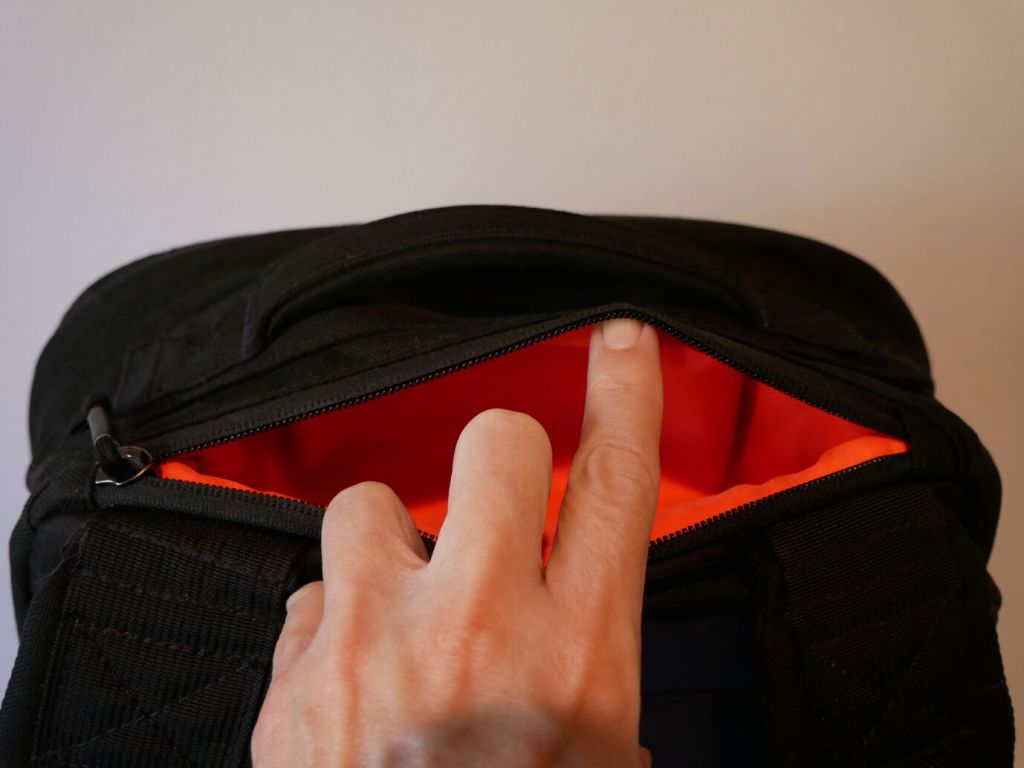
    Between the shoulder straps and top hand grab is a pocket that holds my RayBan sunglasses in their case and my reading glasses in a smaller plastic case.

    GoRuck GR1 26L

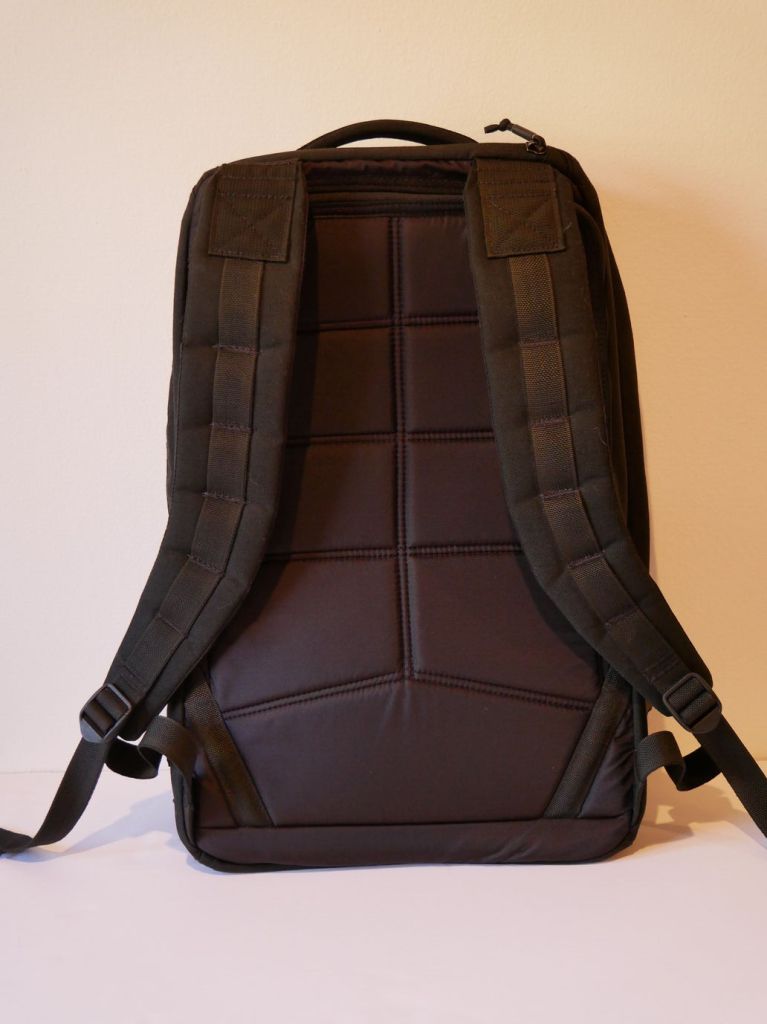
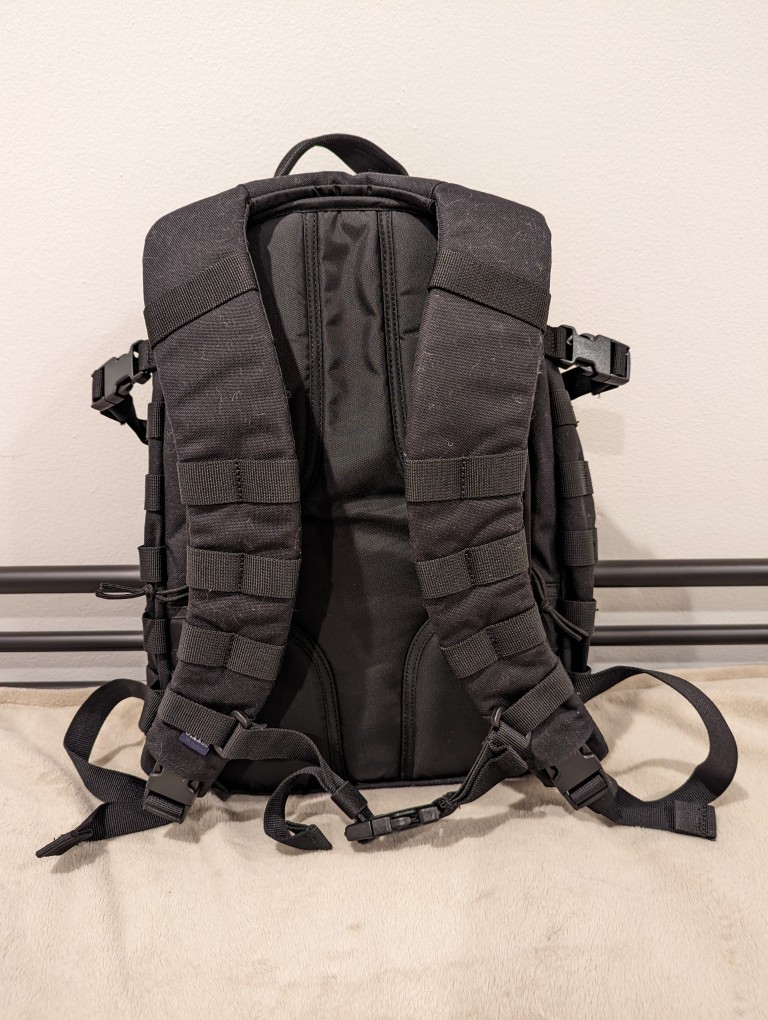
    The back of the backpack supports breathing and features a smoother synthetic material than the body of the backpack. It’s advertised as being less aggressive on clothes, which I can confirm.

    GoRuck GR1 26L

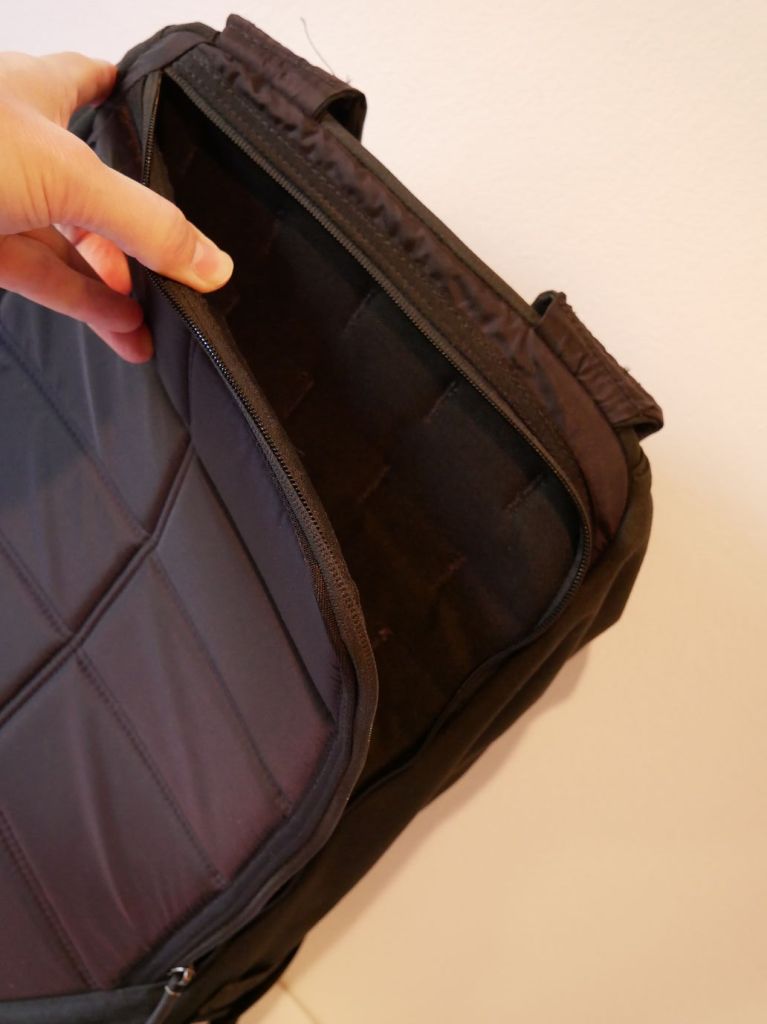
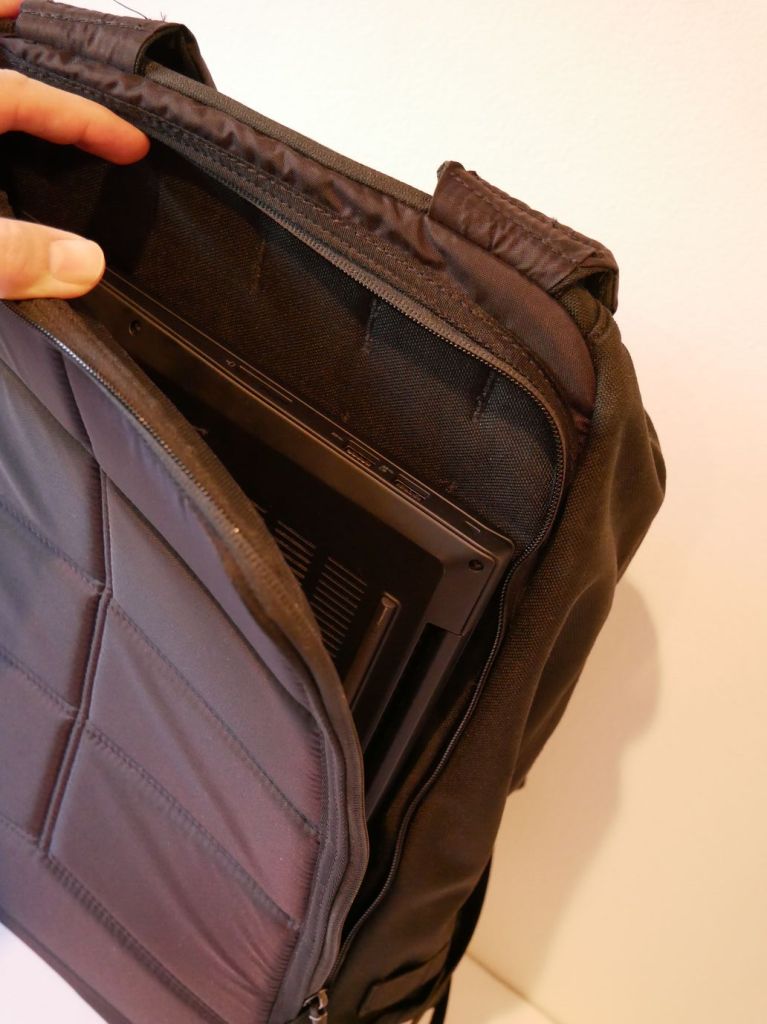
    Flipping the shoulder straps around makes the “bomb proof” laptop sleeve more easily accessible. It is advertised as holding up to a 16″ laptop.

    GoRuck GR1 26L

    You can see above that the laptop sleeve does indeed hold my 16″ Lenovo ThinkPad P1 Gen 4 with room to spare on its width (i.e., the height of the pocket in relation to the backpack) and just a hair of extra space for its depth (i.e., the width of the pocket in relation to the backpack).

    GoRuck GR1 26L

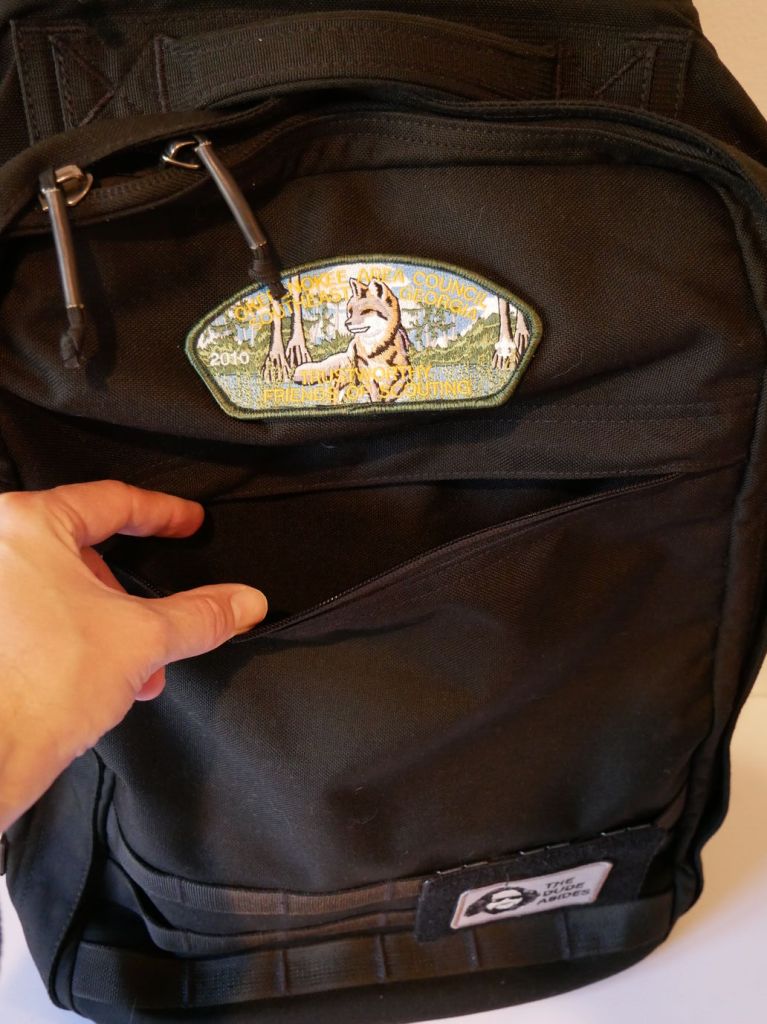
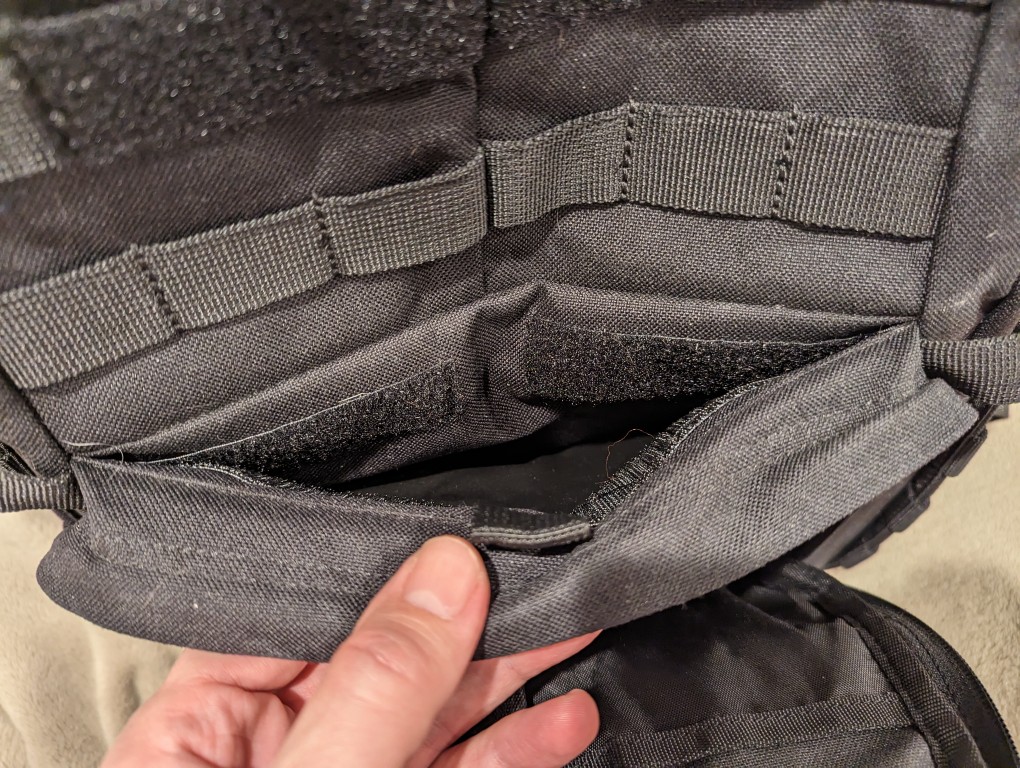
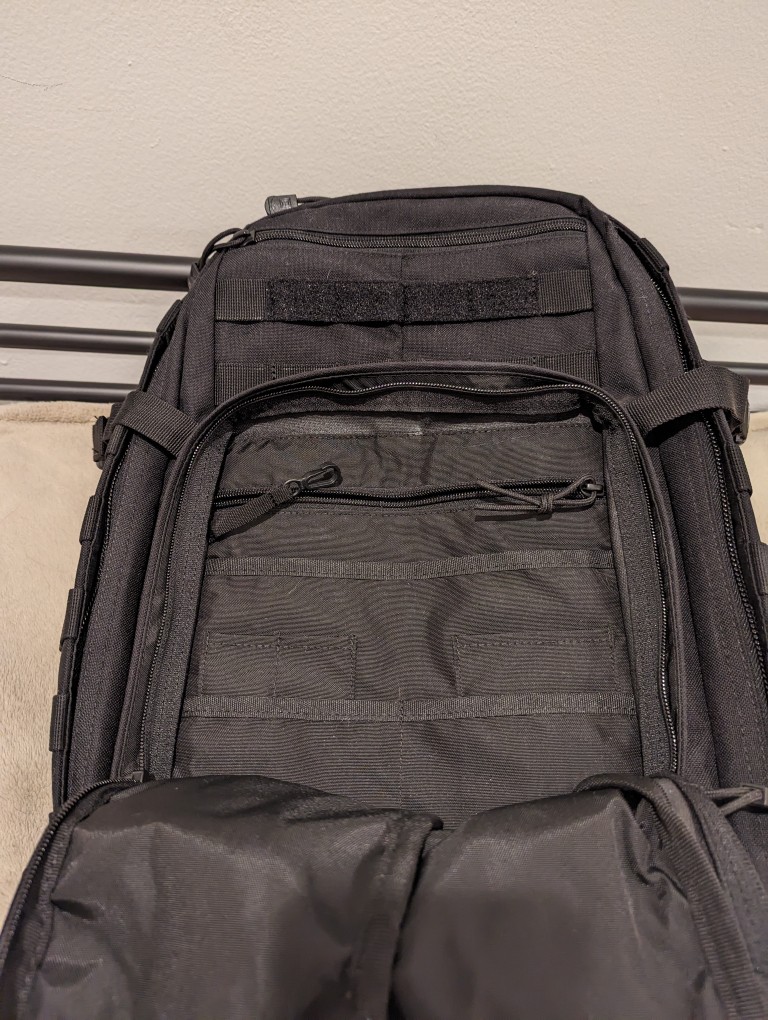
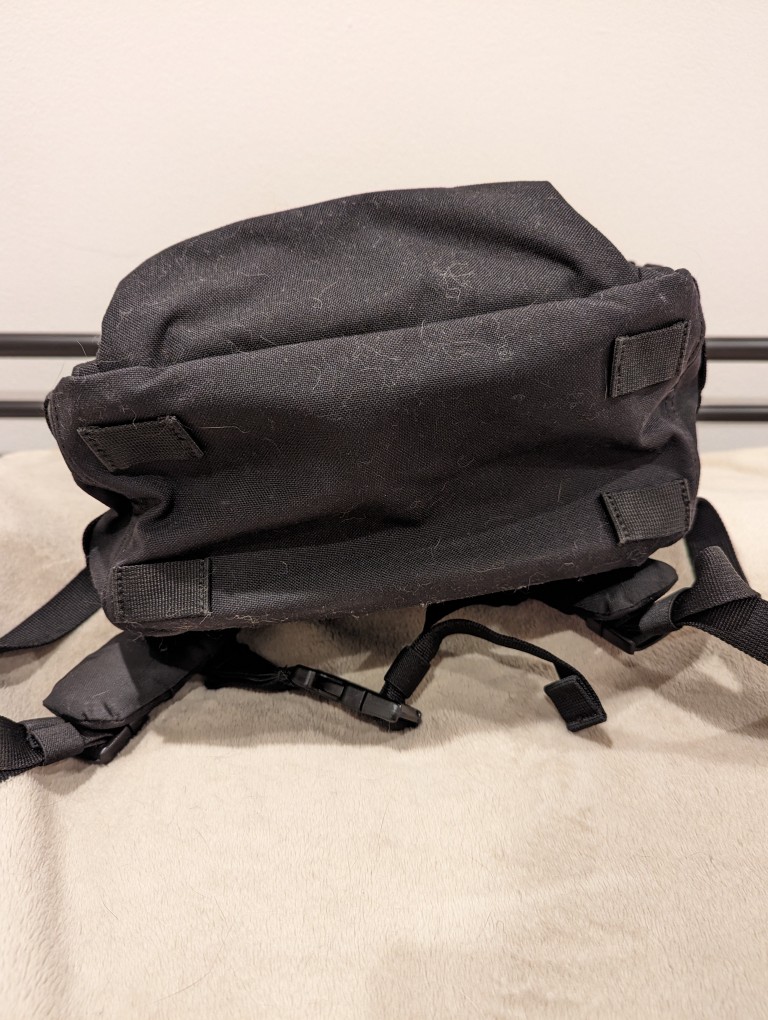
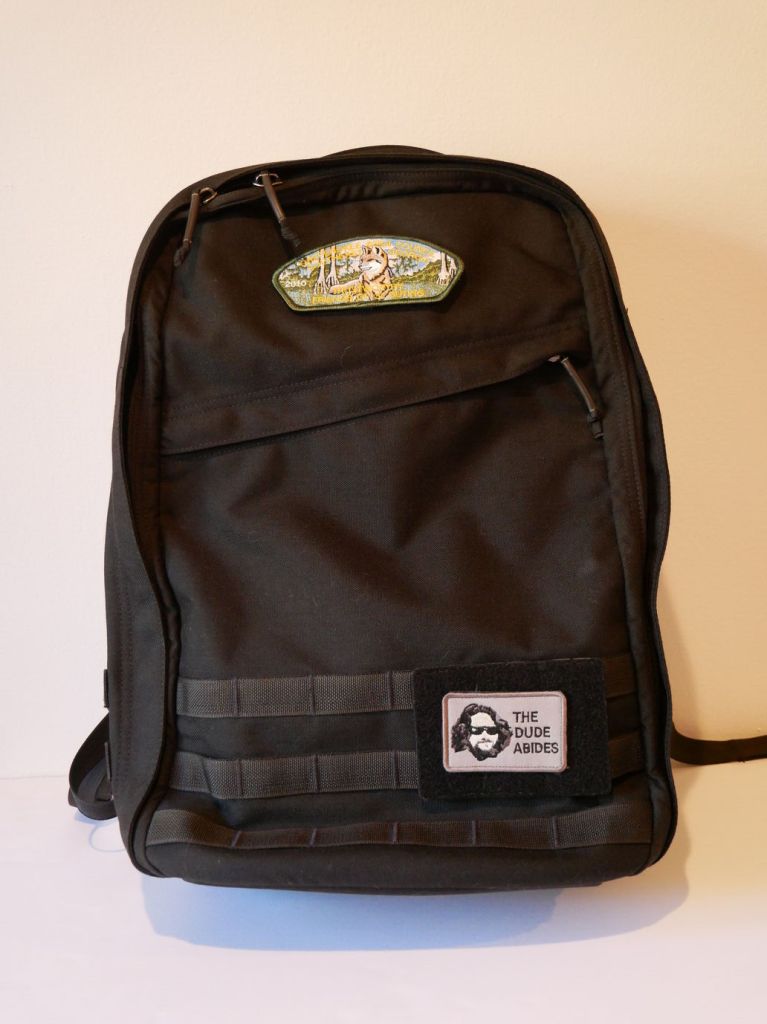
    The front zippered diagonal pocket extends from the zipper to the bottom of the pack. It can hold a lot! I keep an Apple Airtag and pocket knife in there. The top of the pack has a 2″ x 3″ hook-and-loop patch area, which I attached one of my Scouting patches to. I added a 3.5″ x 4.5″ hook-and-loop MOLLE panel to the bottom area of my GR1 where I affixed my “The Dude Abides” patch.

    GoRuck GR1 26L

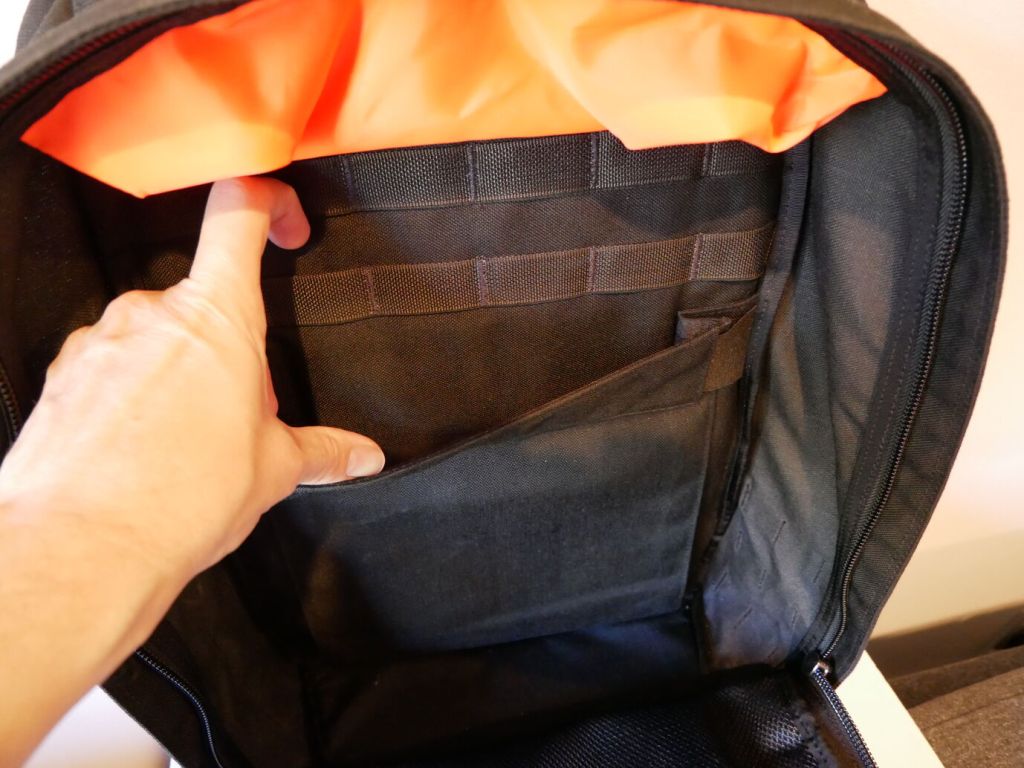
    In addition to the MOLLE attachments on the outside of the pack, there is more MOLLE inside for pouches or hook-and-loop panels.

    GoRuck GR1 26L

    On the back interior of the GR1, there’s an elastic panel that can hold a smaller laptop or tablet. I used it to hold my 8″ Samsung Galaxy Tab Active3 in a hard case with plenty of room to spare.

    GoRuck GR1 26L

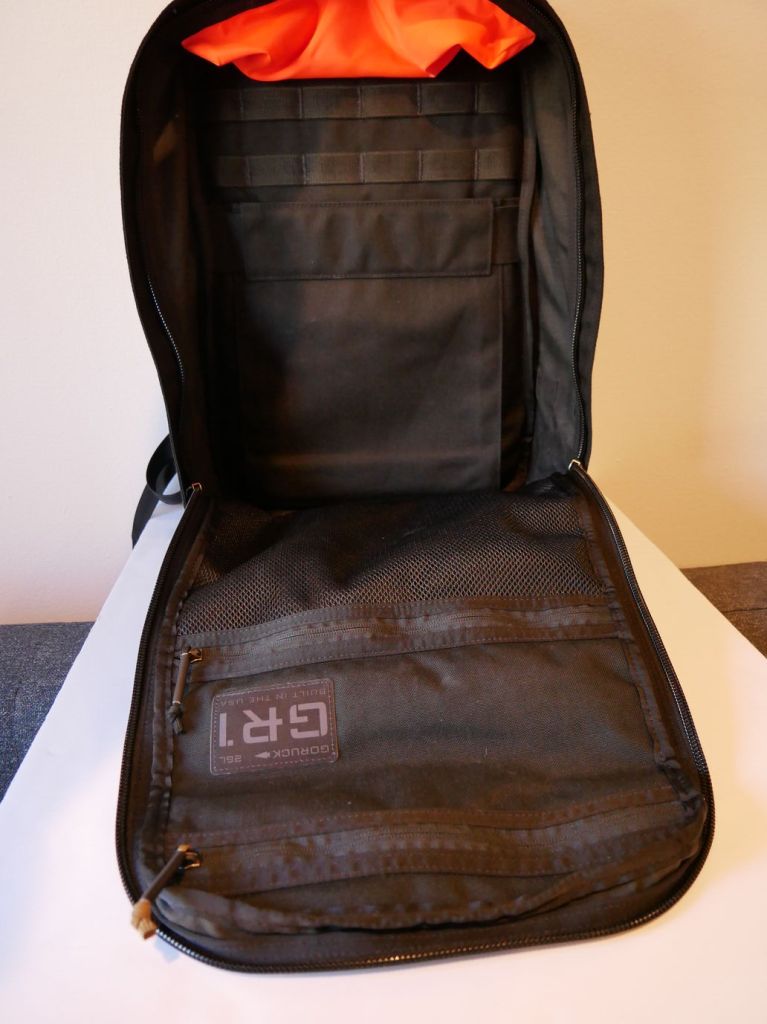
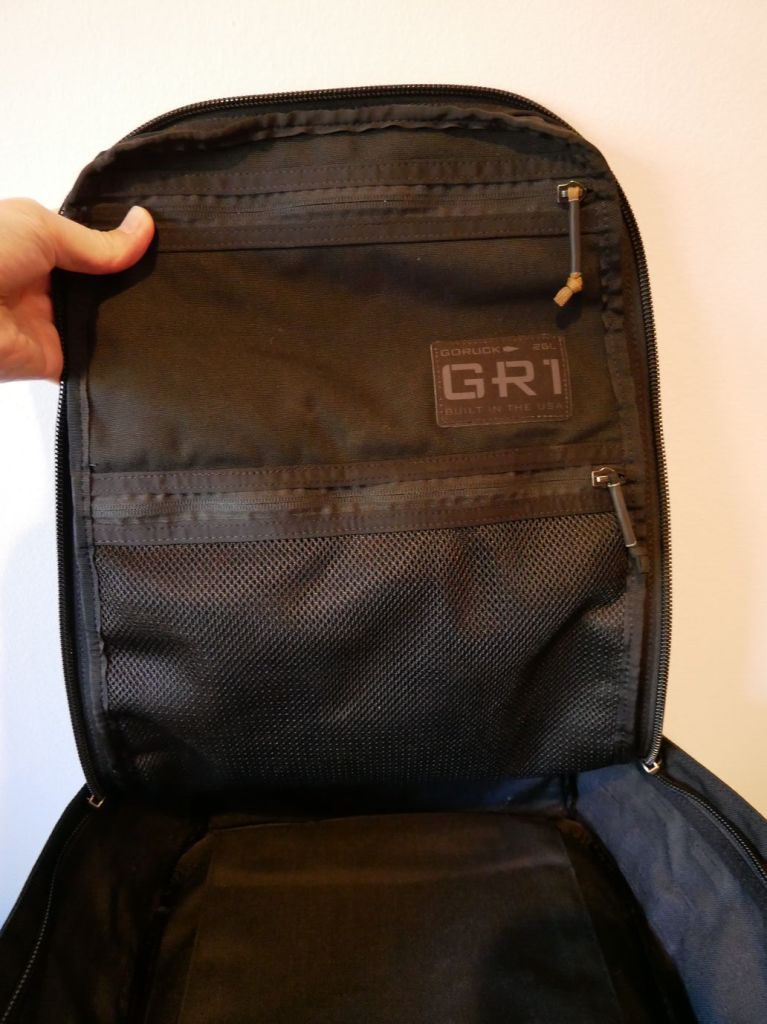
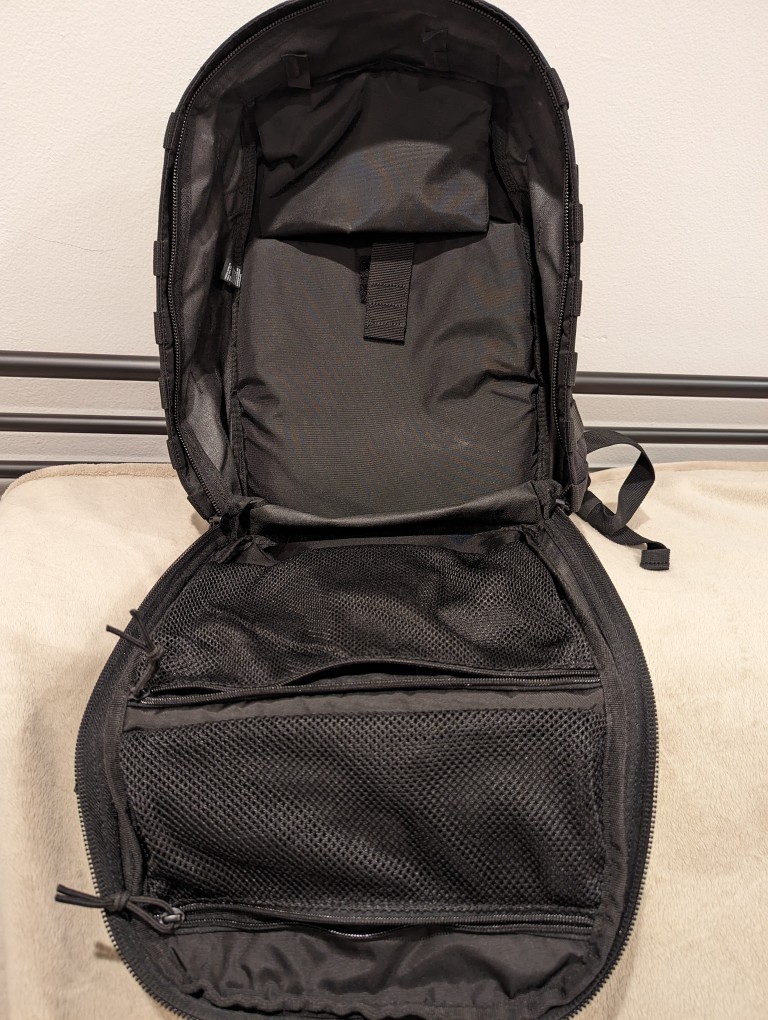
    The front flat interior has two zippered pouches. The top one is smaller but opaque. The bottom one is larger but its contents viewable thanks to the netting.

    GoRuck GR1 26L and Ape Case

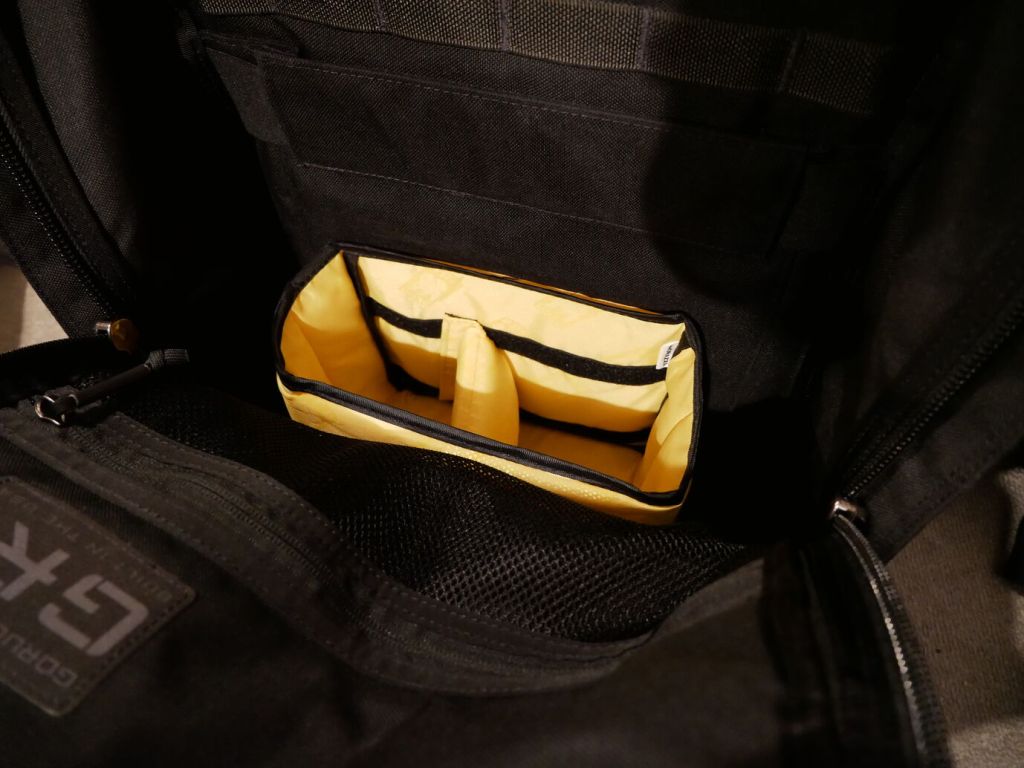
    To help with organizing my gear, I dropped the larger half of the yellow, padded Ape Case Cubeze Duo (ACQB 41) with one divider in the bottom of the pack. This creates four areas in the bottom of the pack to keep things from banging around–a thermos, two water bottles, and charging brick for the Lenovo laptop.

    The GR1 doesn’t come with a sternum strap, but I haven’t found that it needs one while walking or climbing stairs. Having one less strap to undo or get caught while dangling is okay with me. It’s also easy to put on and take off. However, depending on my load–specifically with the 16″ Lenovo, I bend over to put on my shoes before donning the pack so that I don’t put too much pressure on the laptop within the pack against my arched back.

    I’m very happy with the GR1 and look forward to carrying it in the days ahead.

  • Upgrading from the 5.11 Rush 12 2.0 to the Mystery Ranch 2-Day L/XL Backpack

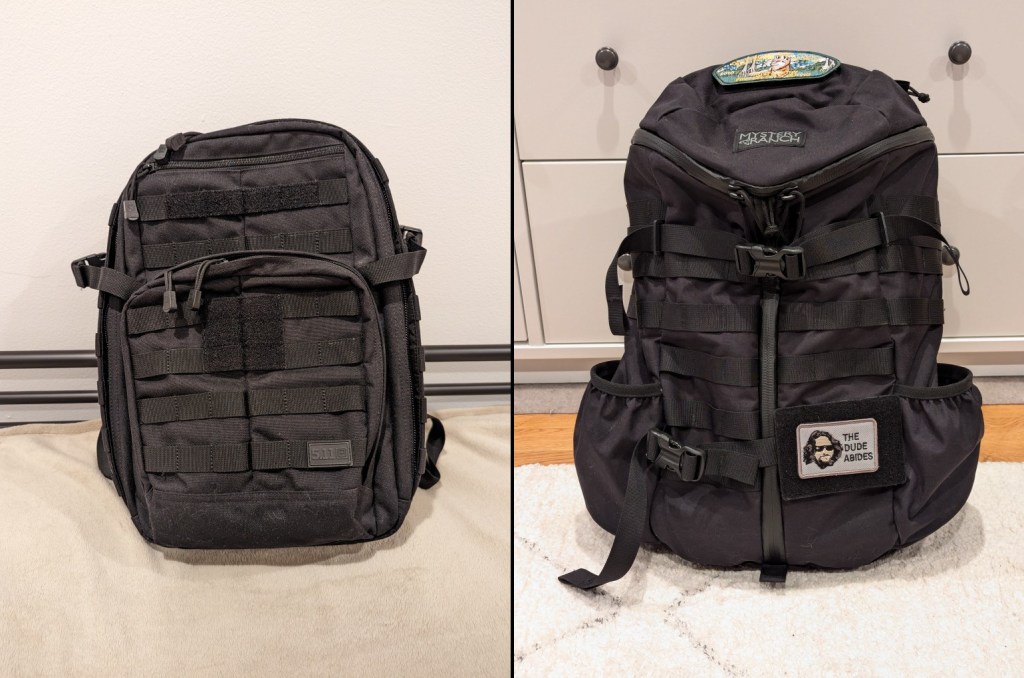
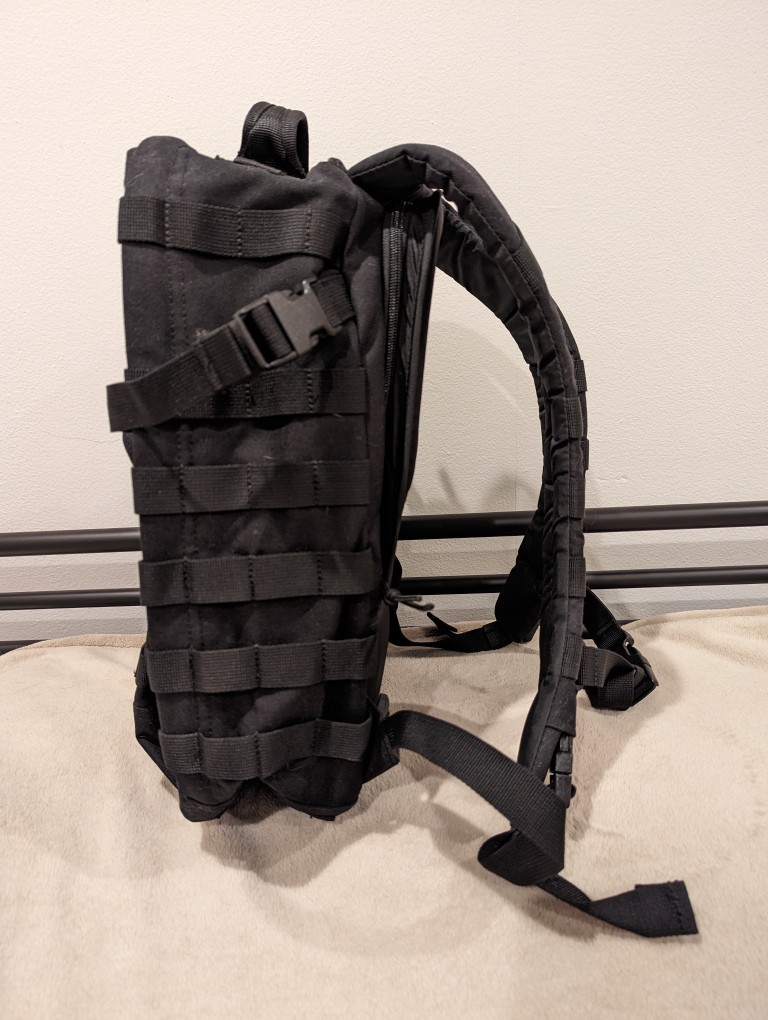
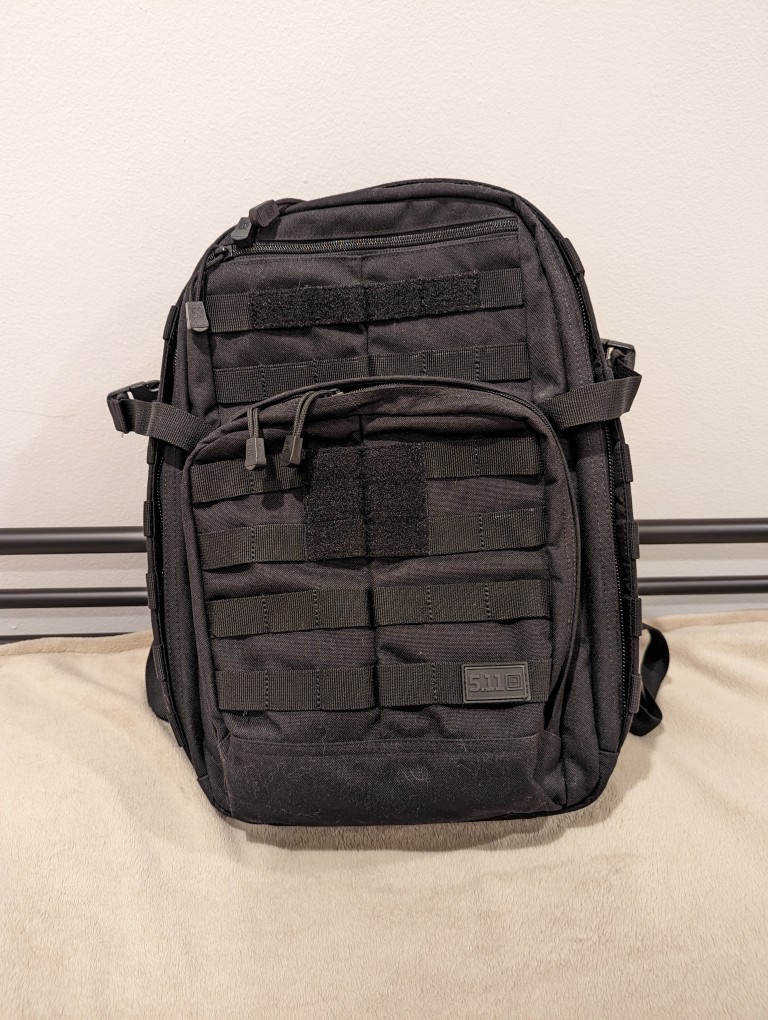
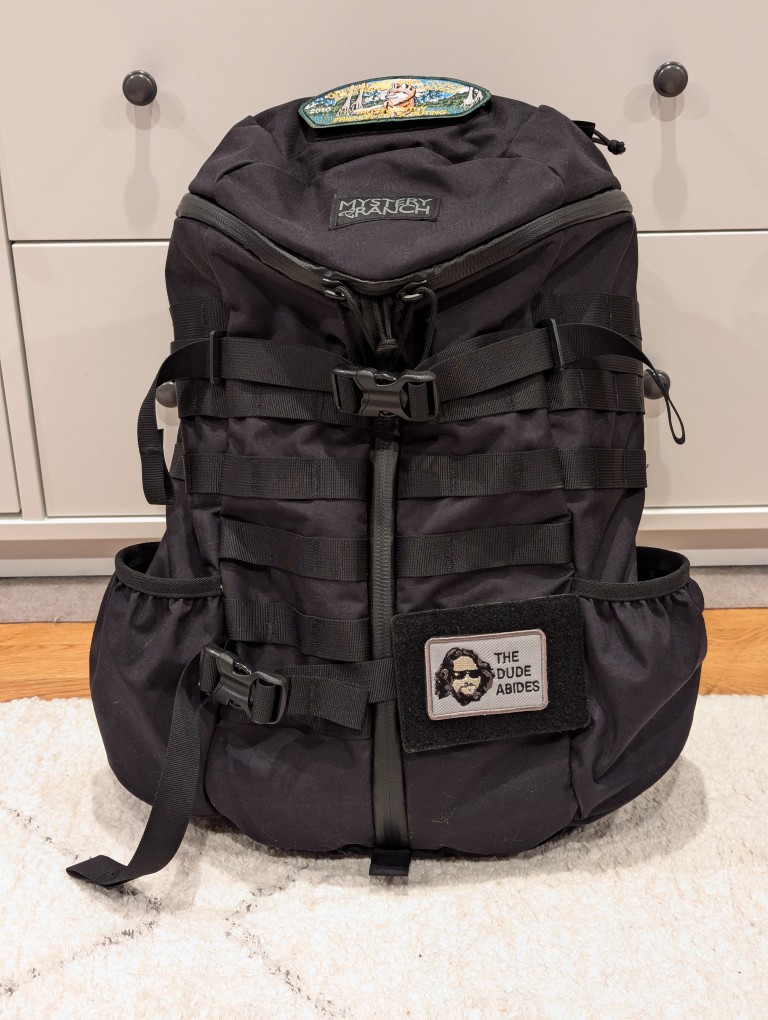
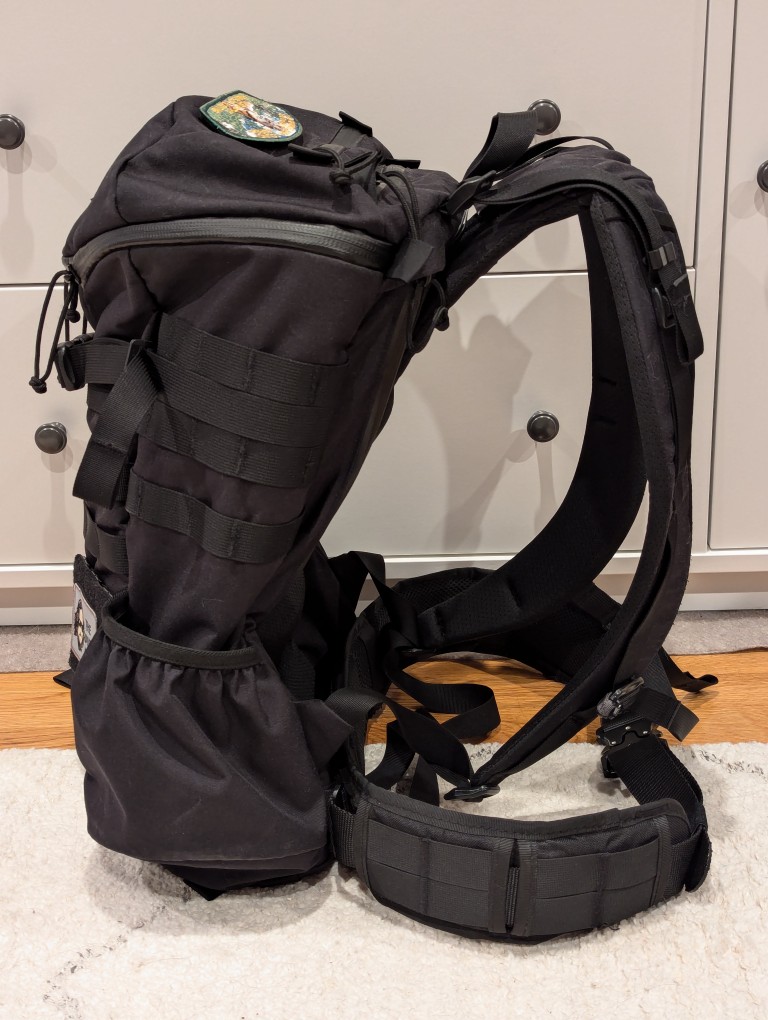
    5.11 Rush 12 2.0 backpack and Mystery Ranch 2-Day L/XL Backpack

    When I upgraded to a 16″ Lenovo ThinkPad P1 Gen 4 workstation-class laptop earlier this year, I soon learned that it was too large to fit safely in my 24-liter 5.11 Rush 12 2.0 backpack. While my old 12″ ThinkPad X230 easily fit into the up-to-15″ laptop capable compartment of the 5.11 Rush 12 2.0, the newer ThinkPad P1 Gen 4 dangerously pressed against its corners. Also, I trouble wearing the 5.11 Rush 12 2.0 with a a padded waist belt while carrying a heavy load–I couldn’t get the bag to ride securely against my back when doing that. Nevertheless, the 5.11 Rush 12 2.0 is virtually bulletproof and a very well made backpack. Unfortunately, it just didn’t meet my changing needs.

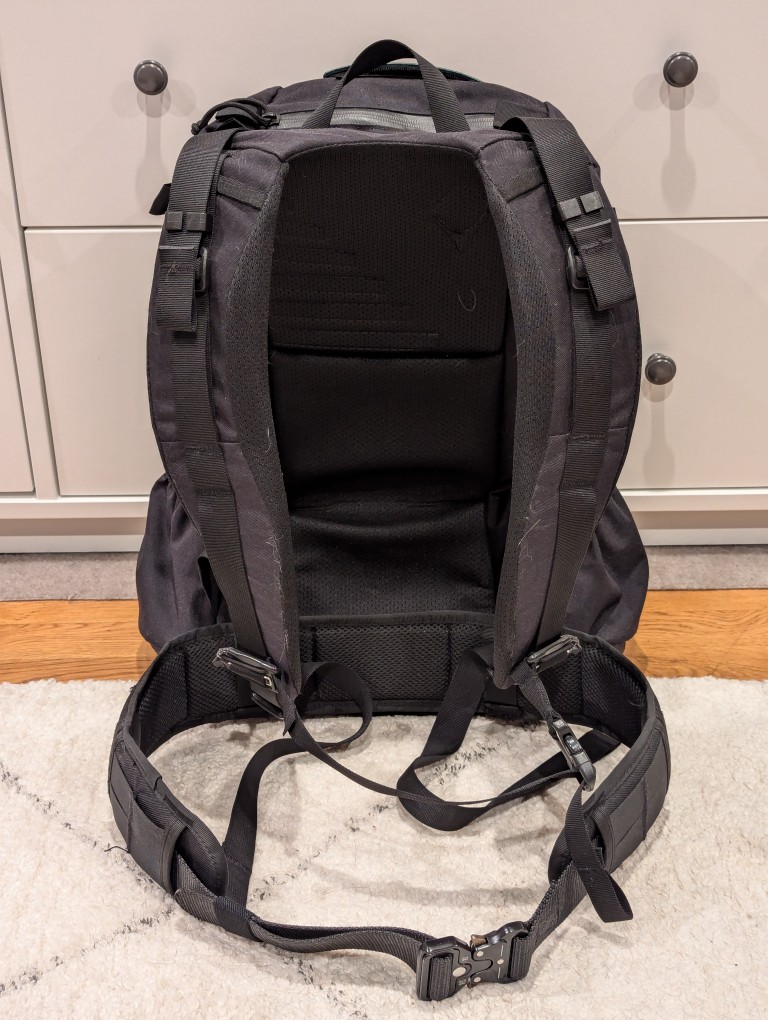
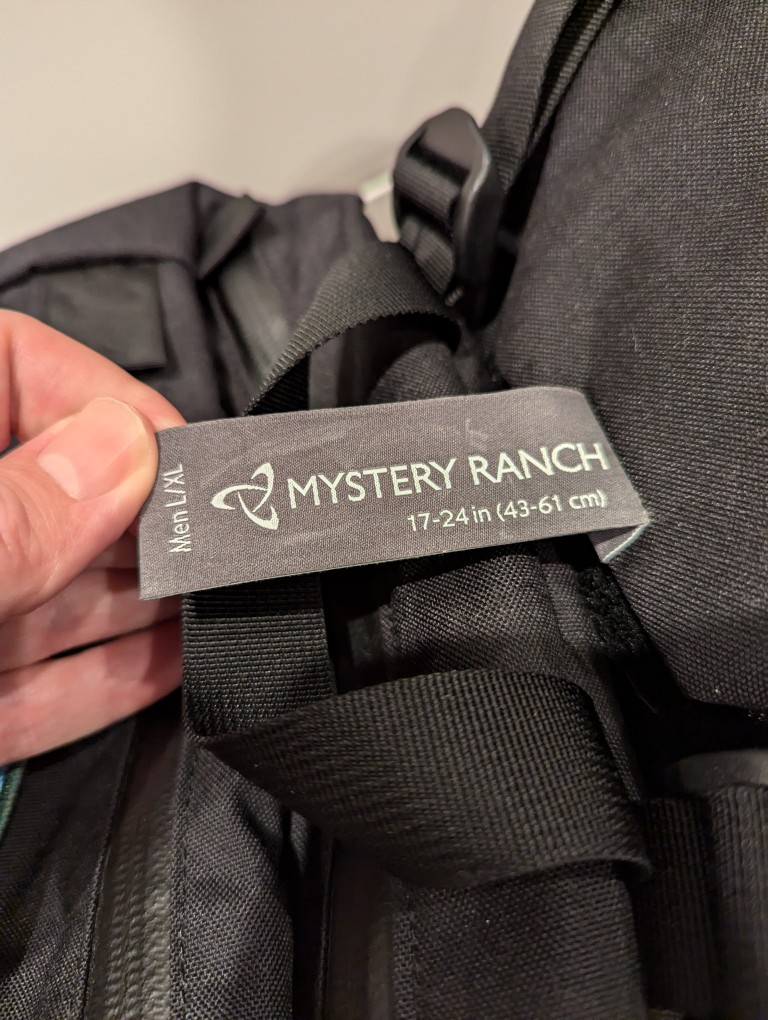
    Looking for a larger backpack with MOLLE, waist belt attachment points, and a tough build like the 5.11 Rush 12 2.0 was easy–there’s a number of great alternate bags that fit those needs. However, finding one that also has a laptop sleeve capable of safely holding a 16″ laptop more challenging, because most manufacturers only support up to 15″ laptops. Thankfully, the Mystery Ranch 2 Day Assault L/XL backpack fit my needs quite well.

    Like the 5.11 Rush 12 2.0, the Mystery Ranch 2 Day Assault L/XL backpack is built tough.

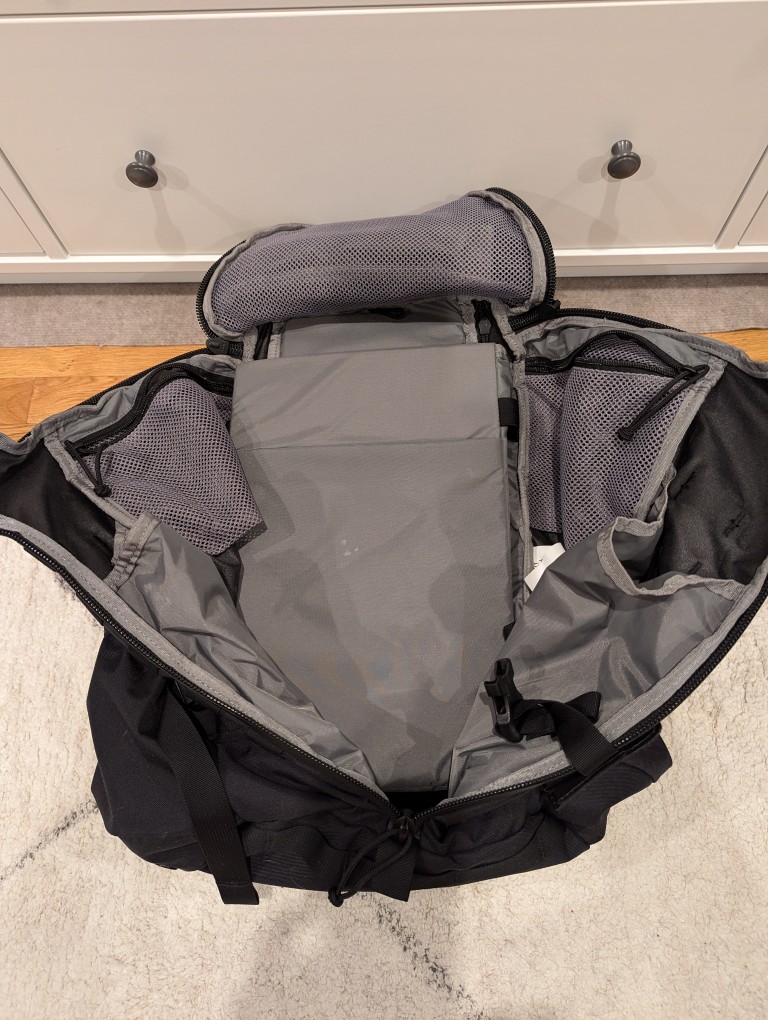
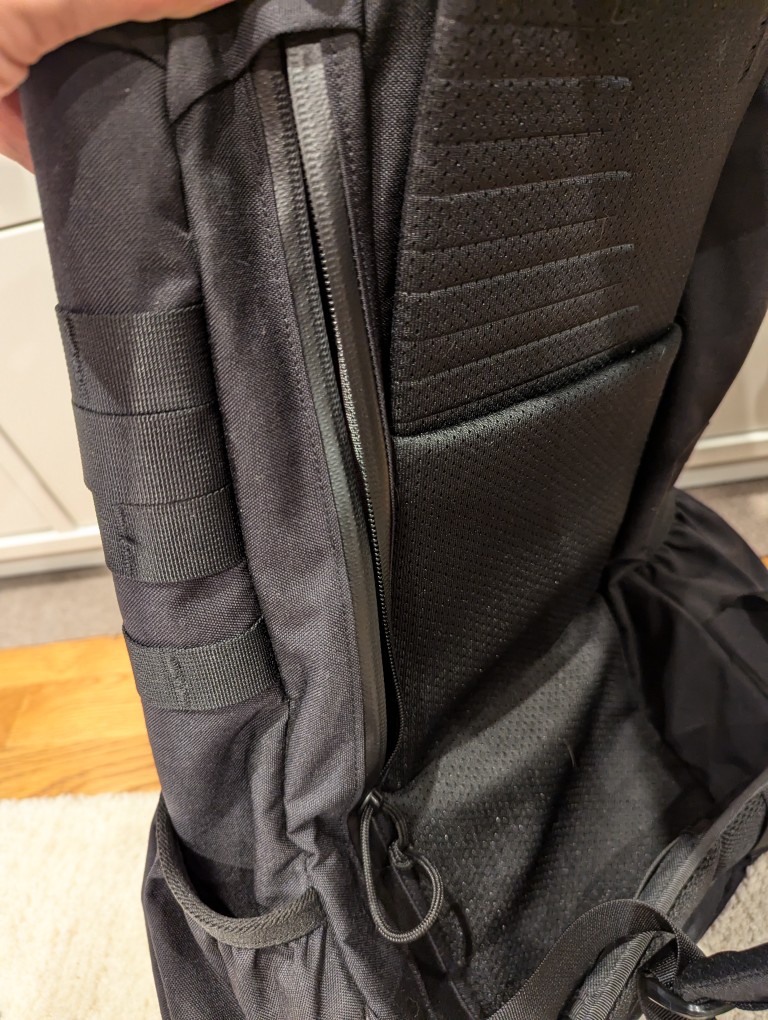
    Meeting my new requirements in a backpack, it has a larger volume (24 liters vs. 29.7 liters), and its built-in laptop sleeve can accommodate a 16″ laptop (my ThinkPad P1 Gen 4 measures 10″ deep x 14 1/8″ wide x 15/16″ tall). However, I have to load and unload the ThinkPad through the main pocket as it is too wide and deep to easily maneuver through the zippered laptop side-loading pocket).

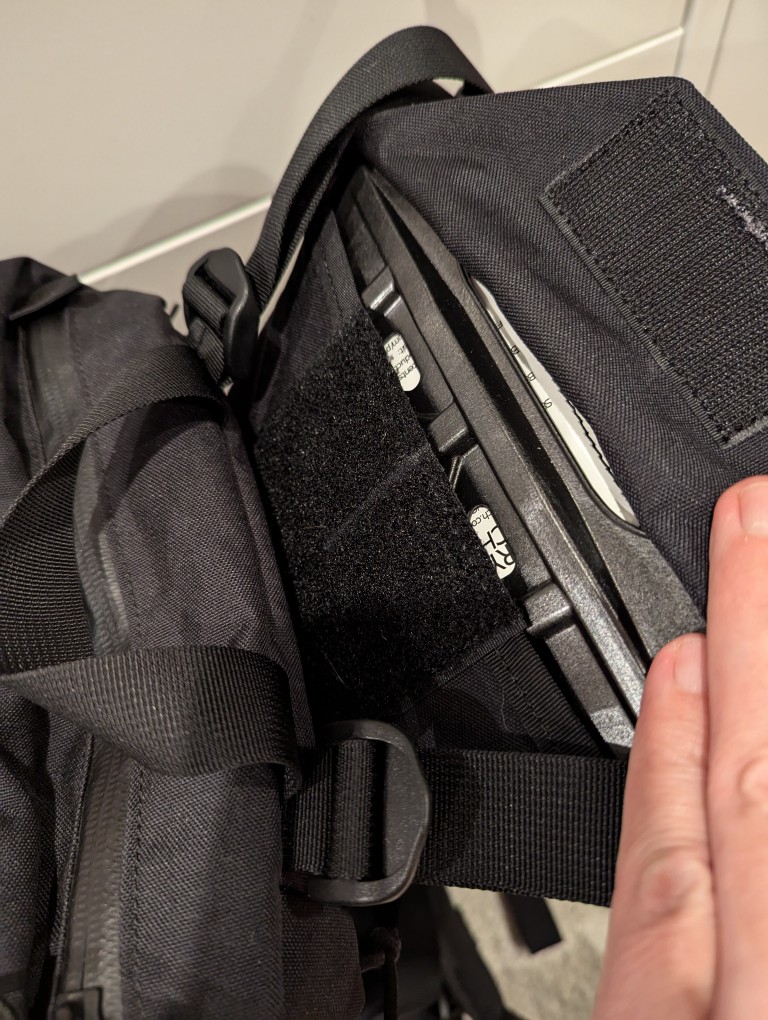
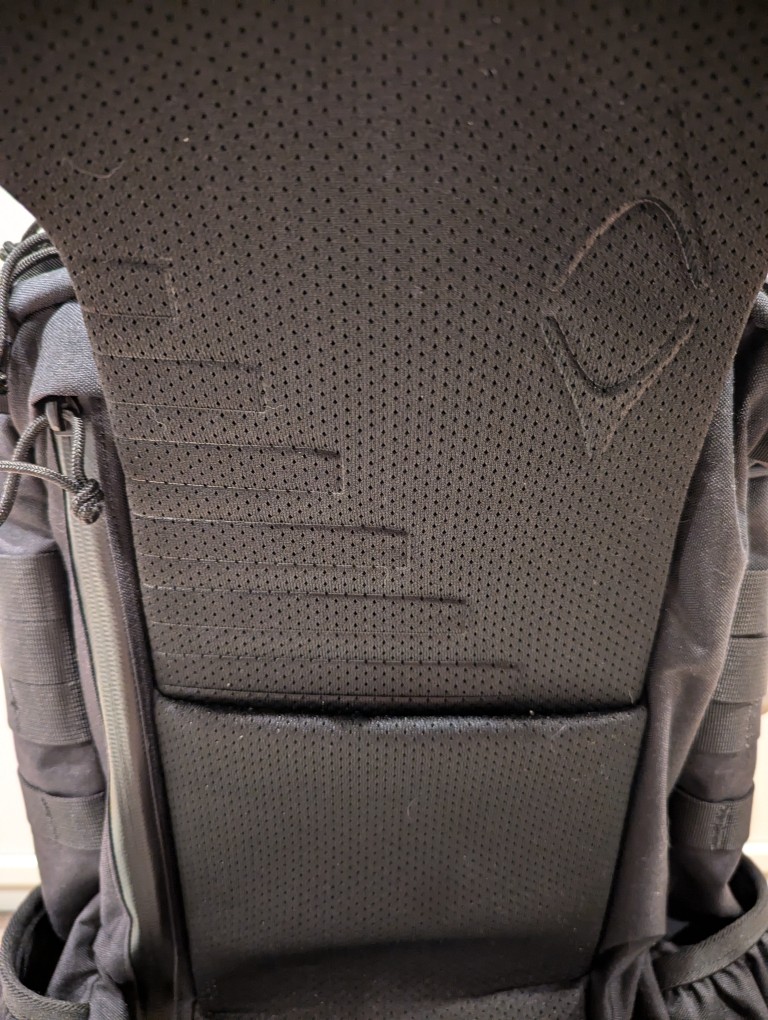
    To help with load carrying, it has an innovative lengthening system that helps the pack ride close against your body. To adjust this system, remove the plastic frame shown in the gallery above, shove it into the velcro area behind the straps to release the hook and loop material holding the straps and pack together, pull up to lengthen, put the frame back in its place, press the pack flat to ensure the hook and loop are reattached, and adjust the straps as needed to have the straps rest tightly against your torso and shoulders and the bottom of the pack against your waist.

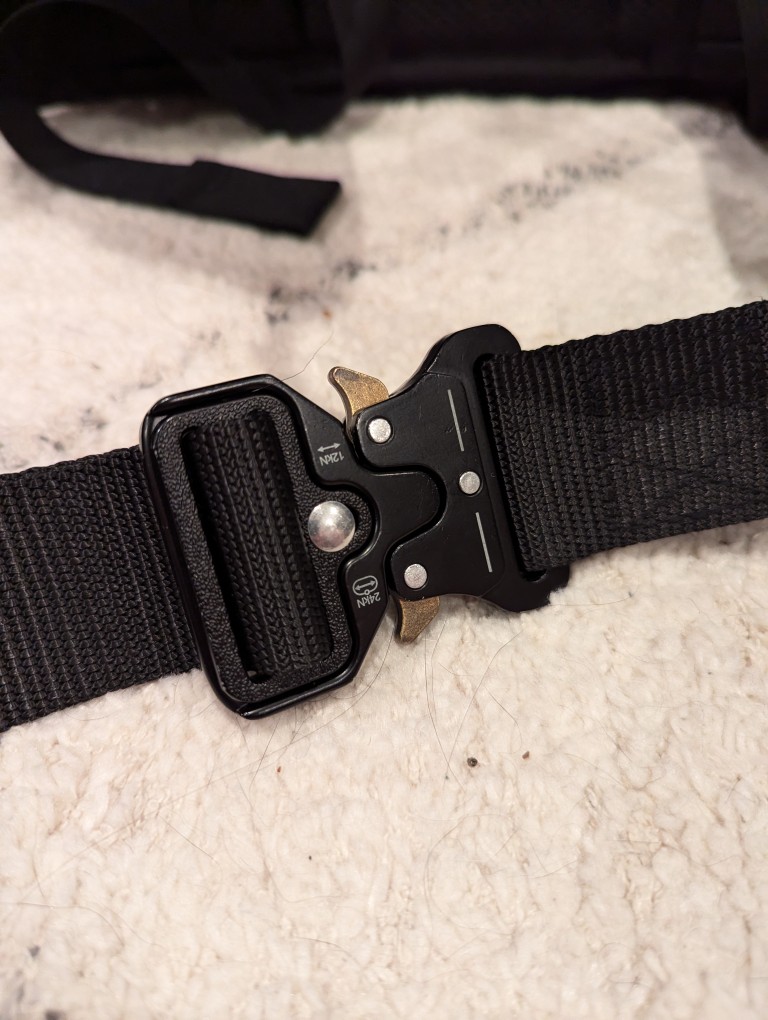
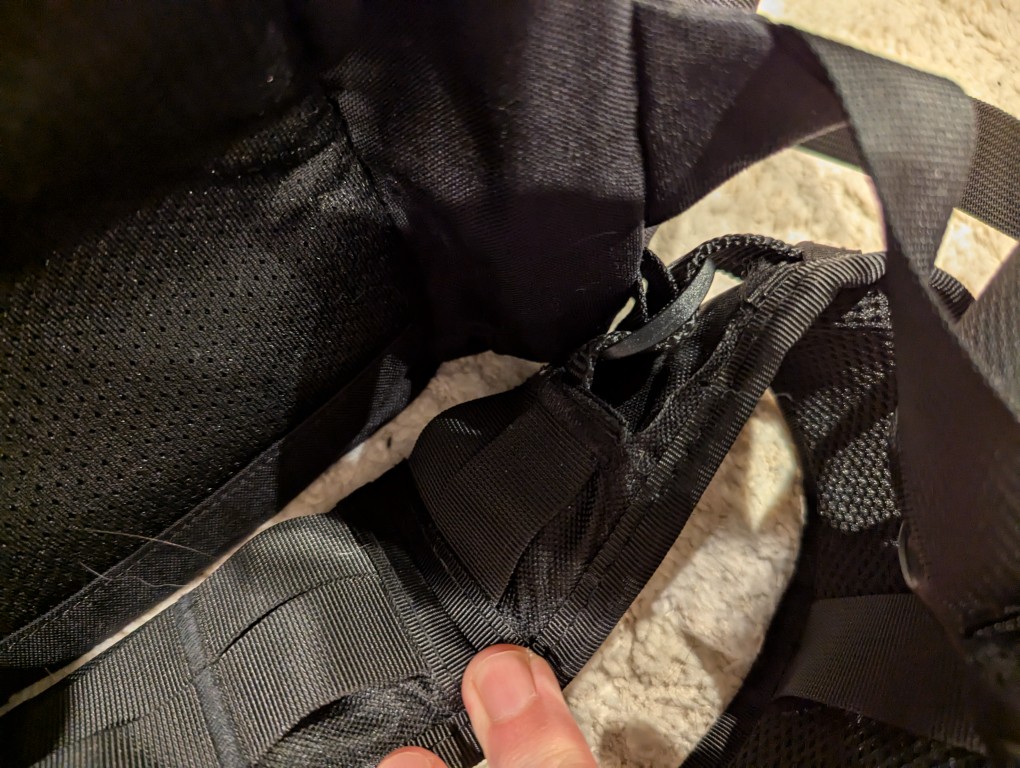
    This adjustment system works well with the aftermarket padded waist belt that I originally used with the 5.11 Rush, but moved over to the Mystery Ranch 2 Day Assault pack. The Mystery Ranch bag included a two-piece simple nylon belt with plastic buckle. Its intention is to help hold the back against your body but not help with load carrying. I removed it and modified a Condor Battle Belt (it has a padded outer belt with MOLLE and an inner 1 1/2″ nylon belt with aluminum quick-release buckle). I cut off the D-ring equipment carriers and cut expanded holes in the outer padded belt to allow the inner 1 1/2″ belt to thread through the belt attachments on the Mystery Ranch pack. I added extra stitching to the outer padded belt and melted the nylon to prevent unraveling from these modifications.

    The strangest thing about Mystery Ranch bags is the three-zipper main pocket opening. It is difficult to open and close these one-handed. However, the zippers are top-quality and waterproof. And, with the main pocket fully open, it can ingest a tremendous amount of gear, but it will likely require the bag to be fully opened to extract that gear if it is larger (e.g., a boxed 12 pack of aluminum cans).

    Another modification that I made to the bag was to plug its main pocket drain holes with closed hole rubber grommets (I don’t want anything crawling in and setting up shop) and added some strap clips to keep the shoulder adjustment straps from flying all over the place while putting on the pack or walking with it.

    Its two side mounted stuff pouches easily hold water bottles, thermoses, and short collapsible umbrellas. During the summer, I keep a pack of menthol cooling sheets and an electric fan in one so that I can reach back to grab them without having to take off the pack.

    When I traveled to see my parents a few months ago, I added some MOLLE pouches to the exterior mounts (first aid, toiletries, cables, chargers, multitool, and snacks), but I took them off to reduce the pack’s weight when I am in the city where I walk further distances with it and would prefer the weight go towards what I am carrying instead of how I’m carrying those things.

    The Mystery Ranch 2 Day Assault pack is holding up and meeting my expectations. With the new academic year about to begin, I’ll see how it holds up trekking to and from campus.

  • Hugh Howey’s Silo Stories are Page-Turners

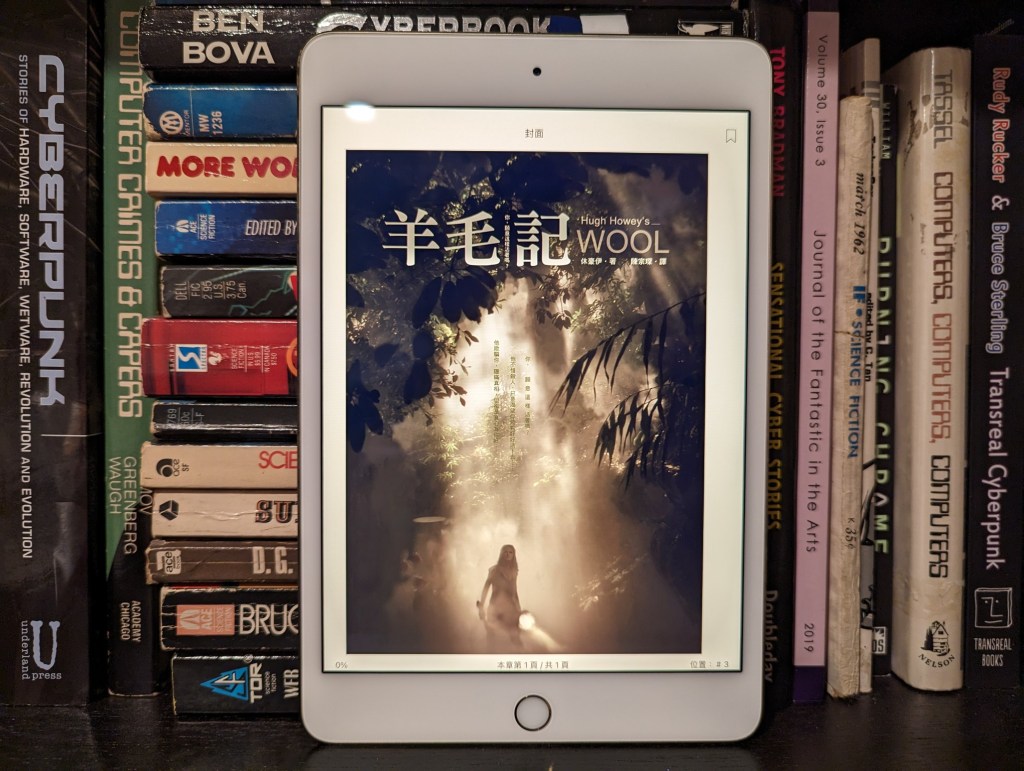
    Mandarin Chinese Cover for Wool Omnibus eBook on iPad.

    Y recently read the first five books of Hugh Howey’s Silo science fiction series translated into Mandarin Chinese. She recommended them to me. So, I began reading Wool and didn’t stop. This was the first full series that I’ve read straight through since falling into J.K. Rowling’s Harry Potter fantasy series during the winter break of 2016-2017.

    I worked through the first five books, then the prequels First Shift: Legacy, Second Shift: Order, Third Shift: Pact, and the latest novel Dust. Then, I read the tangential short stories, “In the Air,” “In the Mountains,” and “In the Woods” (these latter three stories are tragedies piled upon tragedies).

    They are all page-turners. There’s plenty of loss and a little bit of hope. There are some interesting ideas at play in the series, including social and organizational psychology, medical applications of nanotechnology, warfare applications of nanotechnology, dosing of populations with trauma/PTSD drugs to facilitate mass amnesia, human hibernation with cyronics technology, and information technology’s omniscient, omnipotent, and omnipresent role.

    I’ve heard good things from others that the Apple TV+ Silo television series based on Howey’s stories, but I haven’t watched it yet. I can say that the books are engaging and worth reading if not for the ideas that they grapple with, then for the characters whose lives are shaped and controlled by those technologies.