Last night, I made a delightful meal by mixing two things that don’t normally go together–Taiwanese green onion pancakes and ground beef taco mix.
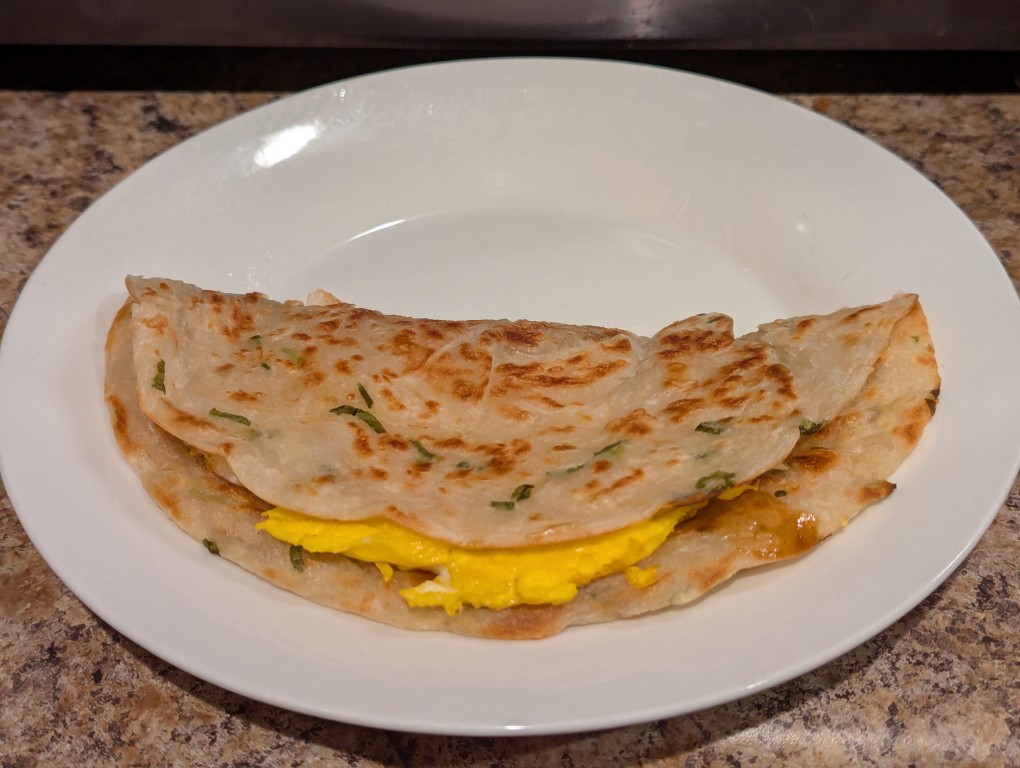
I asked Y to cook me two green onion pancakes, a breakfast staple back in Taiwan. Normally, you eat them with a fried egg rolled inside with a little bit of soy sauce paste like the one below.
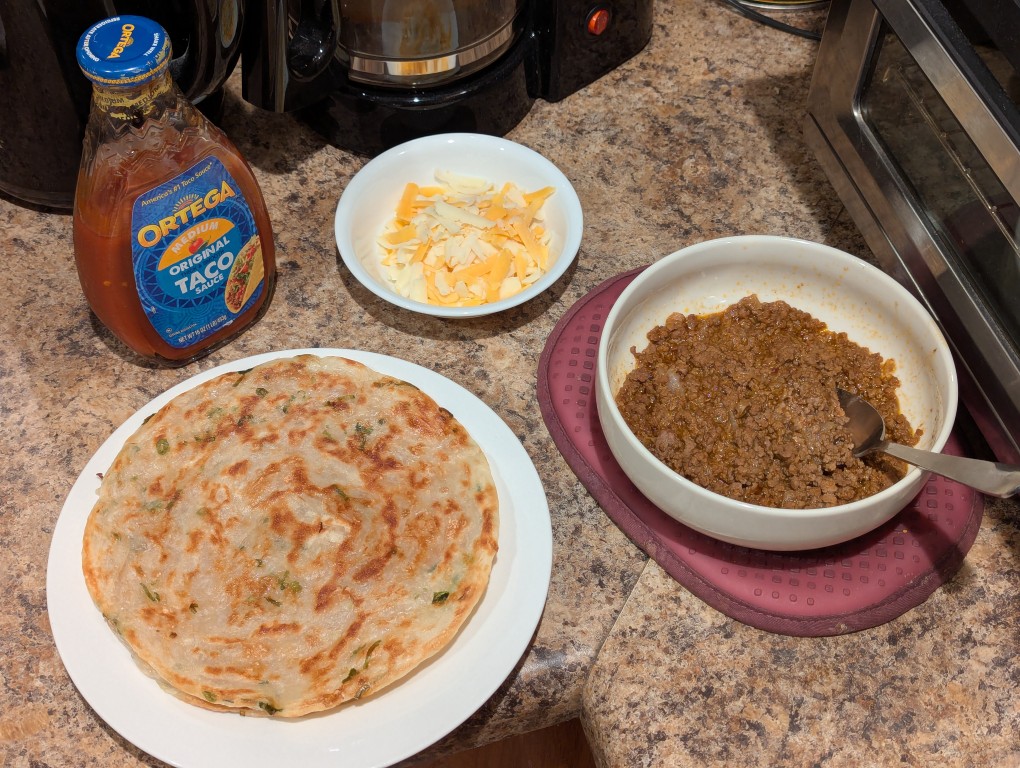
Dubious about my plan, Y cooked me two green onion pancakes while I reheated some leftover ground beef and onion taco mix that I had made on Saturday afternoon. I also set out my favorite sauce, Ortega Medium Original Taco Sauce, and a small bowl of shredded cheese.
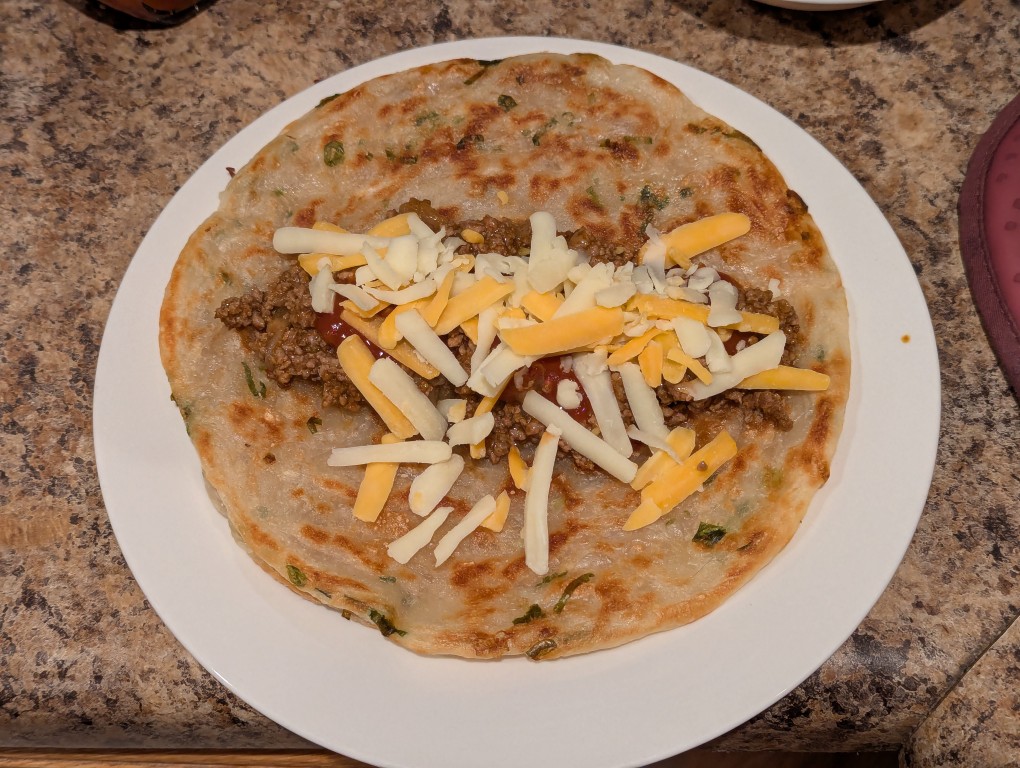
Then, I spooned the beef onto a green onion pancake, poured ample sauce, and covered with plenty of cheese.
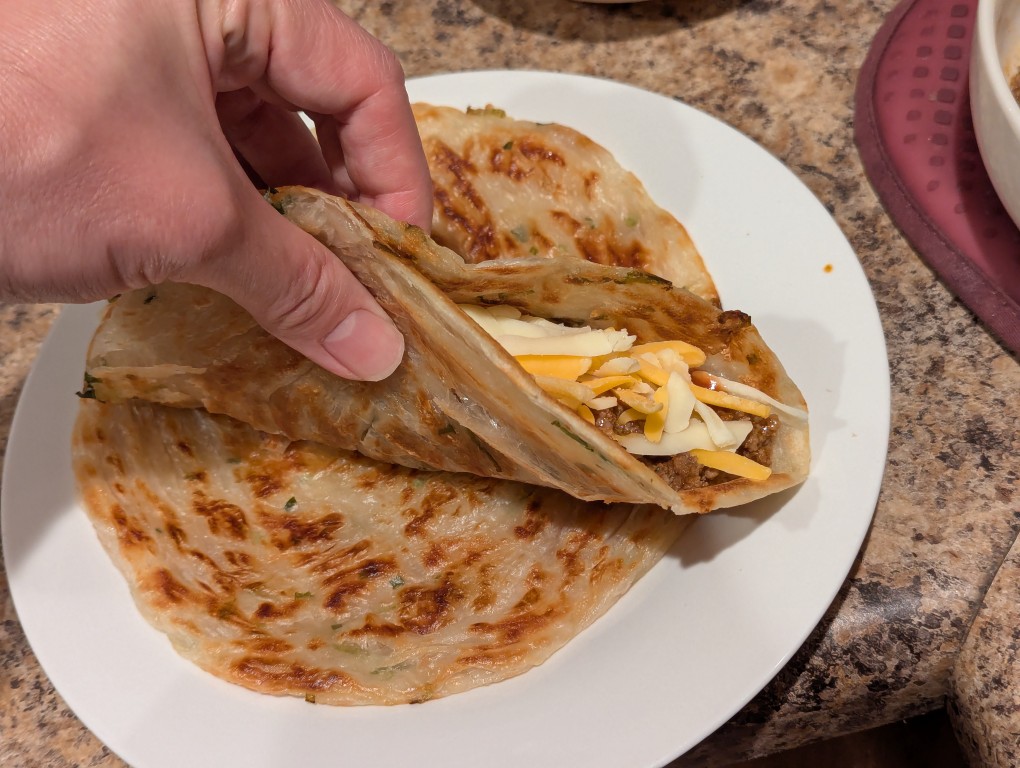
The crispiness of the pancake resisted folding, but it eventually went over and formed a taco-like shape. Biting into the crisp outer layer and soft inner layer of the pancake before hitting the taco mix, sauce, and cheese really was something else. I wanted to savor it, but I made a short order of it because it was so good!
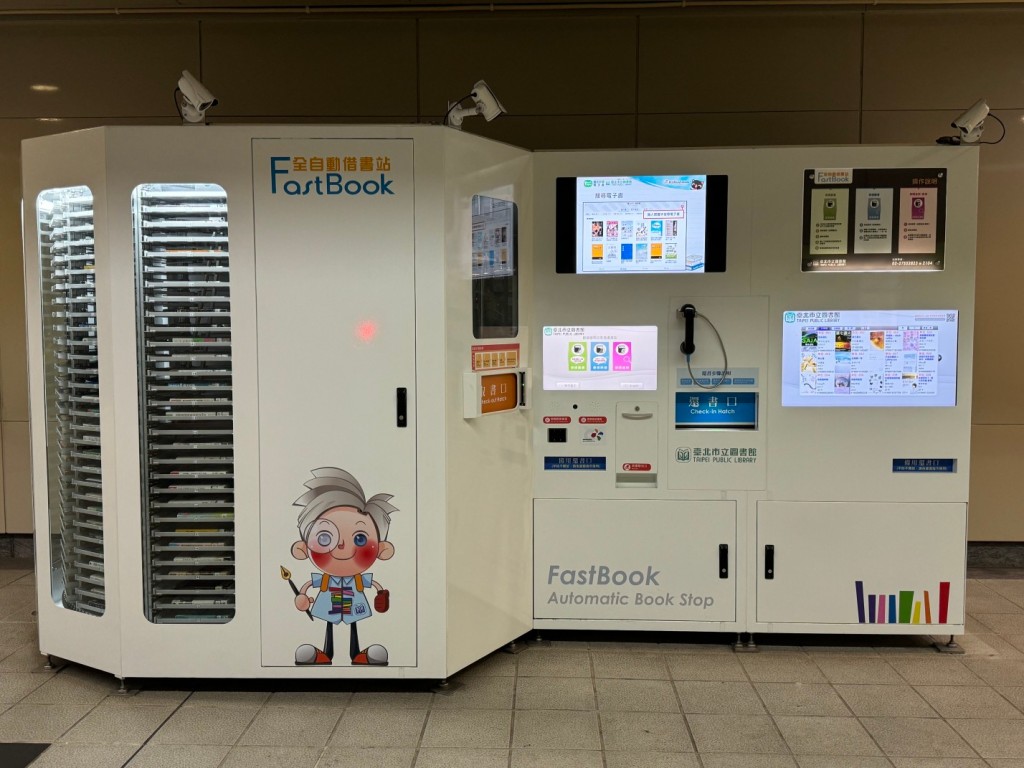
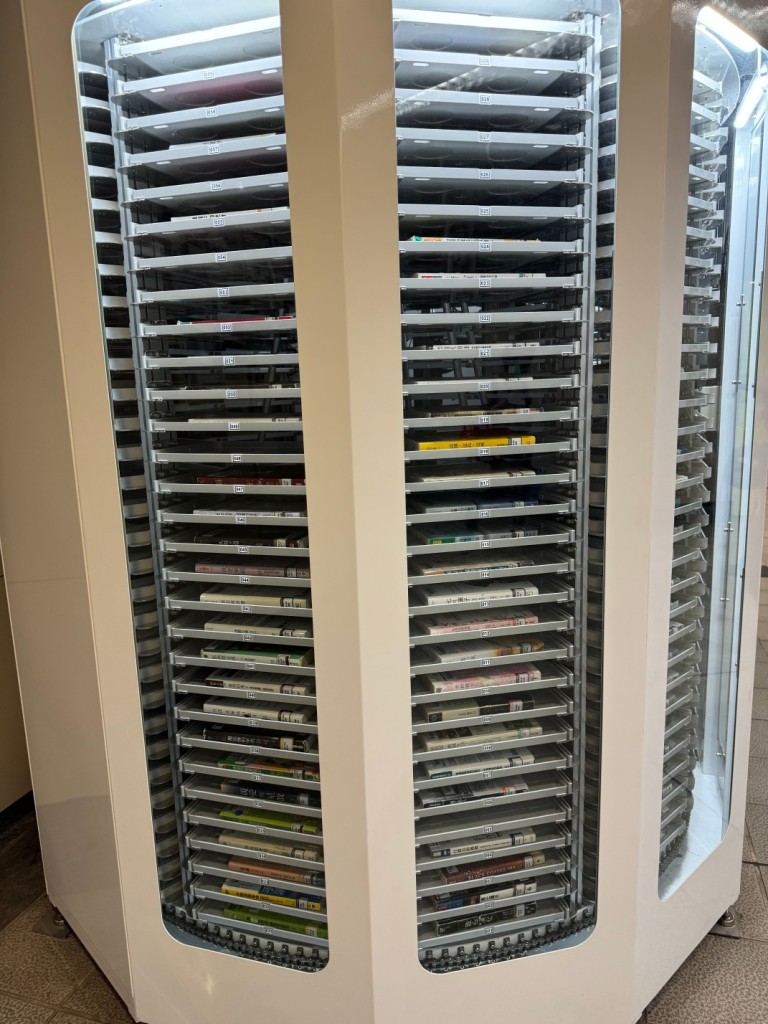
Y took these photos of this cool automatic book lending machine that has a computer catalog and a robotic book retrieval system. With a Taipei Public Library card, a patron can walk up to this machine, browse the available titles, and checkout a book that is served immediately. It’s kind of like a miniature library outpost or a bookmobile with its wheels removed. It’s a vending machine for borrowing and returning books.
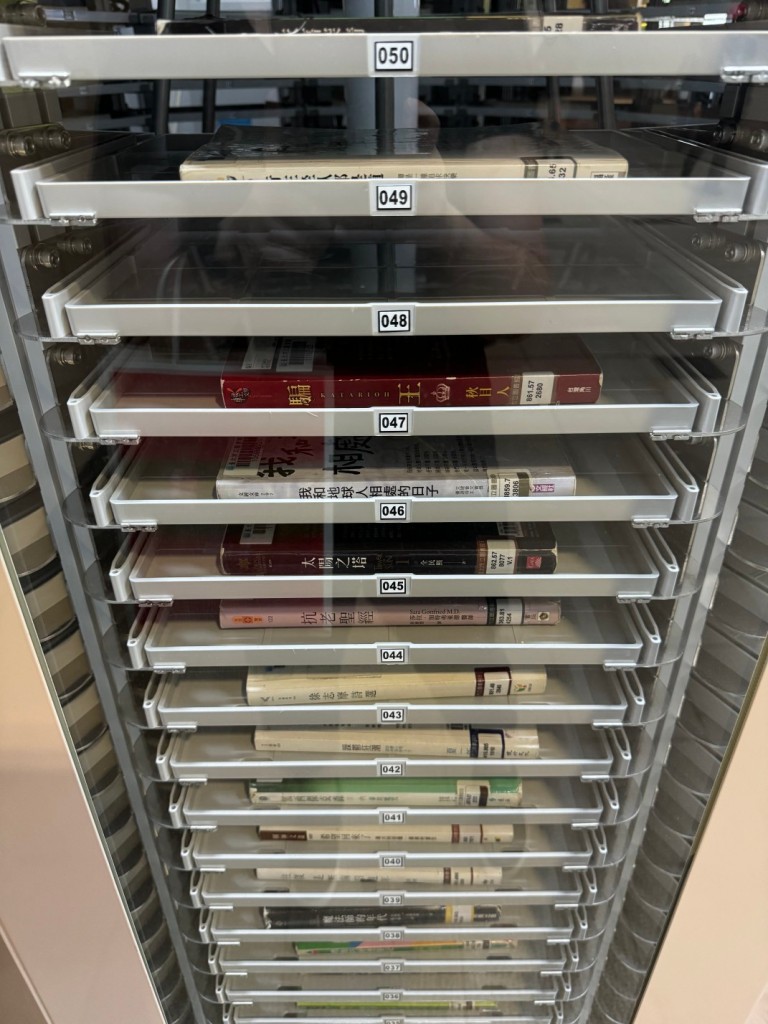
The books are stored individually on numbered racks within a carousel.
The FastBook machine pulls the book from its shelf and dispenses it through an orange chute to the right of the carousel. Books can be returned as well through a blue chute further to the right.
I can imagine how a less flashy version could be installed almost anywhere–something like a RedBox kiosk for books instead of DVDs and BluRays. Even in areas where many folks might not identify as readers, a device that makes books easy and freely available to borrow might encourage more reading. And, with it offering physical books instead of eBooks, it might help lower the bottom line of already financially strained libraries.
A Google search for “library book vending machines” turns up at least one scaled down option called the Lending Library Kiosk by International Library Services. D-Tech offers lendIT. Library Media Specialist Amanda Hunt offers some more details about library book vending machines here.
I don’t know about you, but I wish there had been something like this when I was a kid. The novelty of it would have encouraged me to read more books from the library than I did!
UPDATE: If you’re interested in why some of us find vending machines fascinating even over 100 years after their introduction, check out this Bored Panda listicle featuring Dr. Lisa Yaszek, Regents Professor of Science Fiction Studies at the Georgia Institute of Technology.
Y sent me this photo of Syntrend Creative Park in Taipei, Taiwan. The whole complex is the funky, weird-ass building in the foreground and the highrise in the background.
Syntrend has across its many floors shopping (computers, gaming, pop culture, toys, music, etc.) and dining experiences. It has maker spaces, co-working spaces, and event spaces. It’s definitely on my list of places to visit when I get a chance to go to Taiwan again!
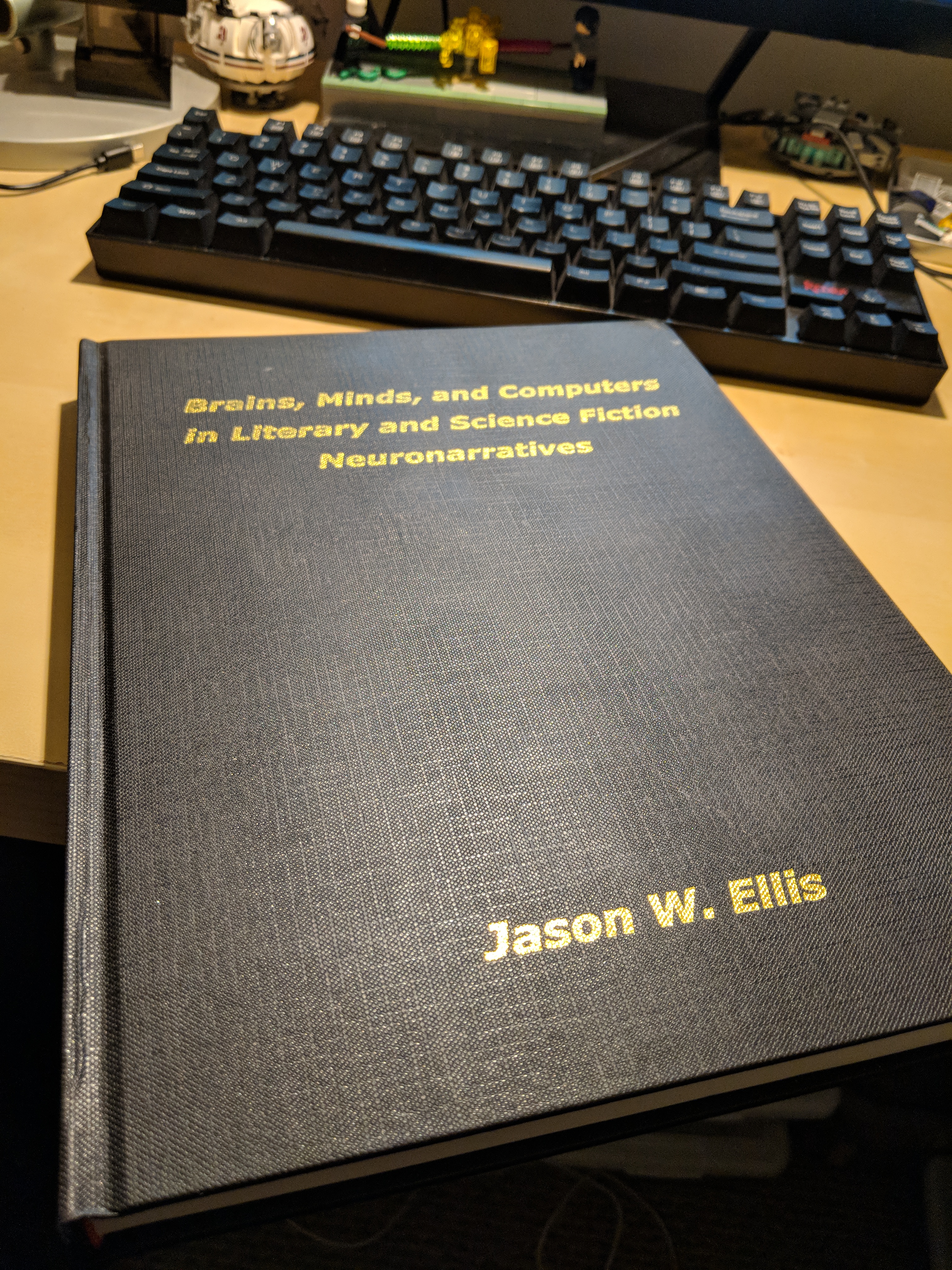
I was sad to learn that Zonghe Zhuangding, Ltd., the publisher who worked with Y’s father to print an exquisite hardcover edition of my PhD dissertation, “Brains, Minds, and Computers in Literary and Science Fiction Neuronarratives,” shuttered their business after their shop burned down. Zonghe Zhuangding provided printing and book binding services for publishers in Taiwan until the fire consumed their entire facility.
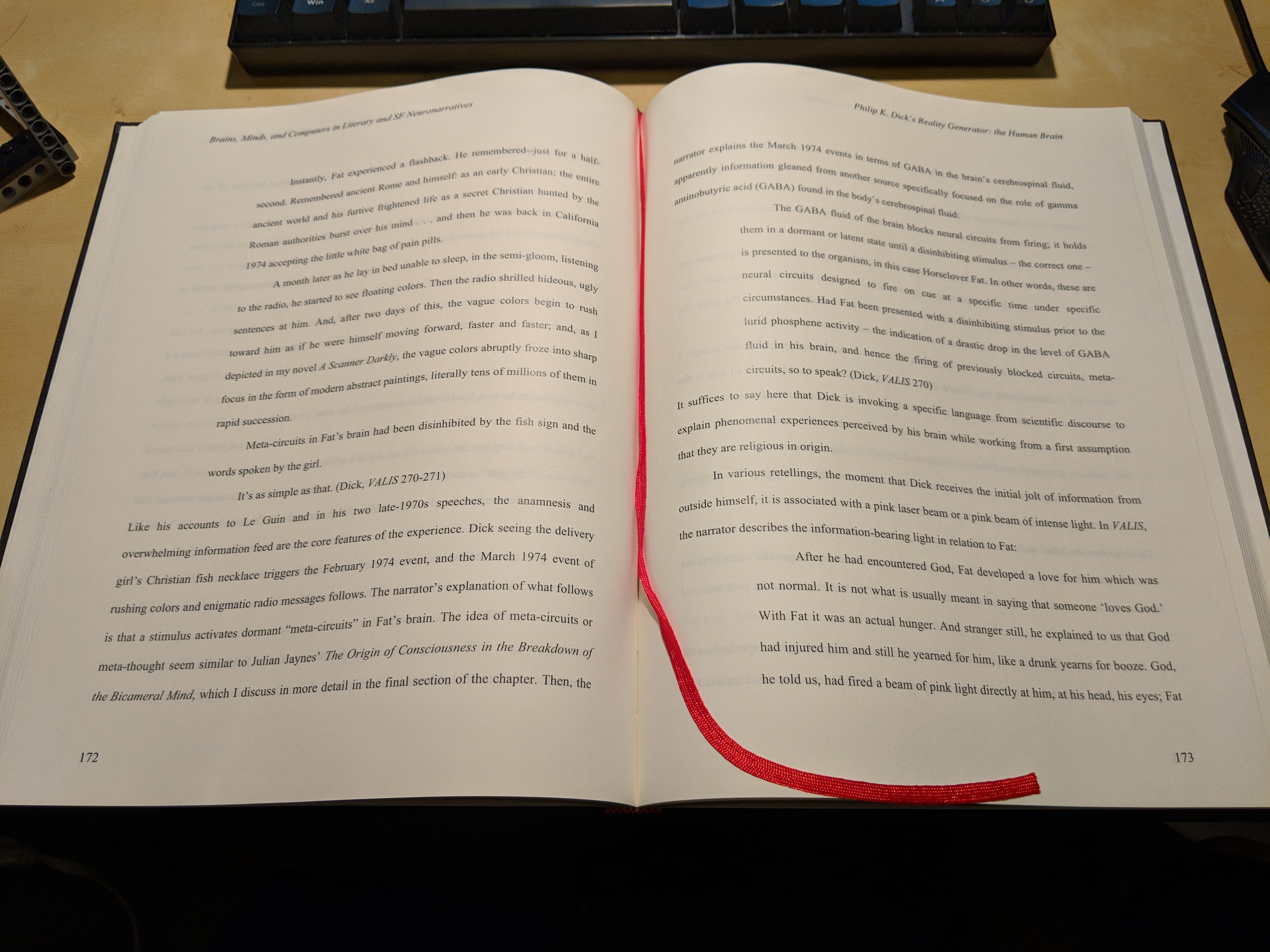
Y’s father insisted that we publish my dissertation after I defended it in 2012. Zonghe Zhuangding did an amazing job printing the book-version of my dissertation, which I had to layout with opposing running headers and other book-design features. The gold-typeface on the cover and spine look very impressive. And, the stitched-in red ribbon bookmark was a surprise bonus (see below).
After Y defended her dissertation last year, her father had her dissertation printed there, too.
N.B.: In Chinese, zhuangding means binding or book binding.
In a BuzzOrange.com interview with Demos Yu-bou Chiang (蔣友柏), who is Chiang Kai-shek’s great grandson and founder of the Taiwan design firm DEM Inc. (橙果設計), the interviewer asks if he uses social media:
Q: Do you have Facebook or Line accounts, or any kind of social media apps?
A: I don’t use it. It is too much work. Facebook has too much commercial activity. I have a 4G cellphone to get online, but I don’t use the communicating apps like Line except for text messaging. I don’t like it that people can find [or reach] me for free.
There are three parts of Chiang’s response that I would like to discuss.
First, he observes that social media takes “too much work.” This is one of the reasons why I deleted my Facebook account a few years ago. It seemed like I was putting in a lot of time and labor on the Facebook website and mobile app. On the one hand, I wanted to connect with others, create conversation, and share my goings-on while enjoying the goings-on of others. However, it increasingly seemed to me to take a considerable amount of effort to keep up with the information and conversations taking place there. Jennifer Pan goes into the issue of labor that sustains social media networks in her Jacobin article, “The Labor of Social Media.”
Chiang laments that there is “too much commercial activity” on social media. This can be interpreted in different ways. On the one hand, there is a lot of advertising on social media, which is a kind of commercial activity. On the other hand, people use social media as a platform to publicize their work or seek support for their work on social media (another form of advertising). While social media opens new ways of supporting otherwise unfunded projects (such as with Patreon or Kickstarter), the number of such projects that one sees on a daily basis can be overwhelming and seemingly unsustainable.
Another aspect of Chiang’s lament is the unseen commercial activity of tracking and personal information. Social media platforms make money in part through targeting advertising to its users by selling targeted and detailed access to its advertising partners. The more information that a social network can get about its users and the more meaningful that information can be made for the purposes of advertising mean that the social network can potentially make more money by selling a higher value to advertisers.
Finally, the third issue that Chiang takes with social media is that he says, “people can find me for free.” This is important point that I hadn’t really considered when I left Facebook and other social media platforms a few years ago. For Chiang, he is a business person whose time is valuable. Even deflecting questions or offers takes away from his focus and time, which is time and focus he could apply to other endeavors. Social media at its core is about connecting people together. Social media makes it easier for one person to contact another person. Some networks, such as LinkedIn, place monetized barriers in the way of too easy contact, but others, such as Twitter, make contact for public accounts extremely easy. By not being on social media, Chiang places the ultimate old-school barrier to others bothering him, stealing his focus, or taking away his time. Making it so that others cannot simply find you “for free” protects your time and attention so that you can apply yourself to the work and living that matters the most to you.
Chiang’s three points are useful for thinking about what the costs of social media are for you. It involves our labor, out information is bought and sold, and others want to monopolize our time. Consider these things when you sign-up or configure your social media accounts to protect yourself and maximize its value to yourself.