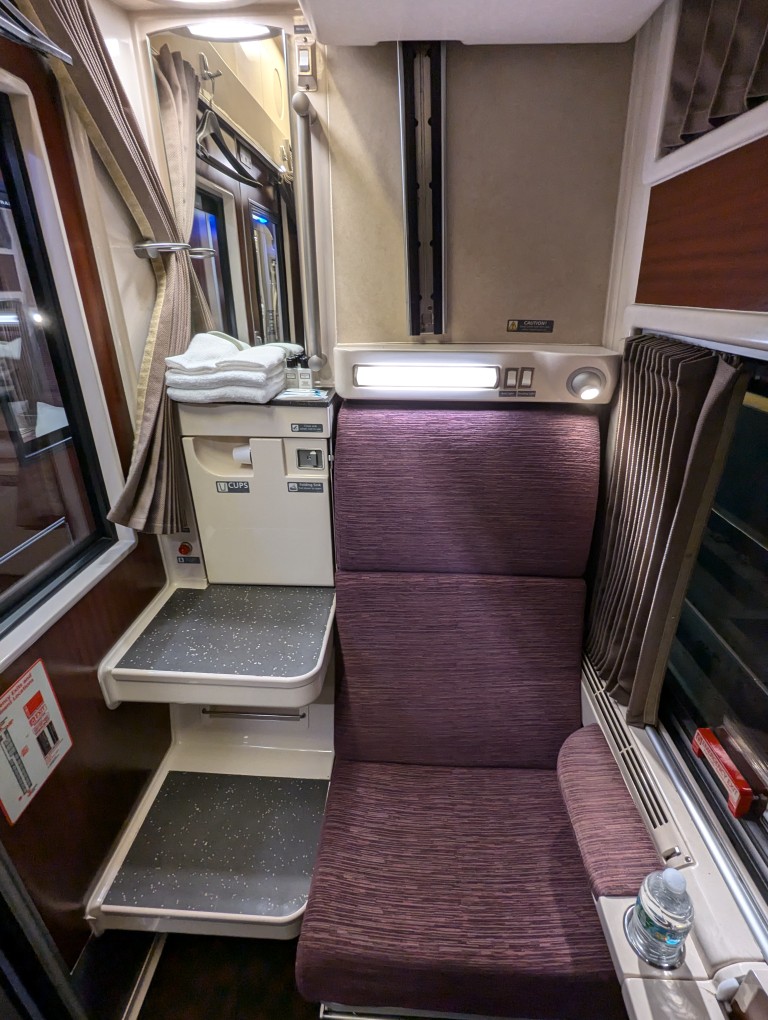
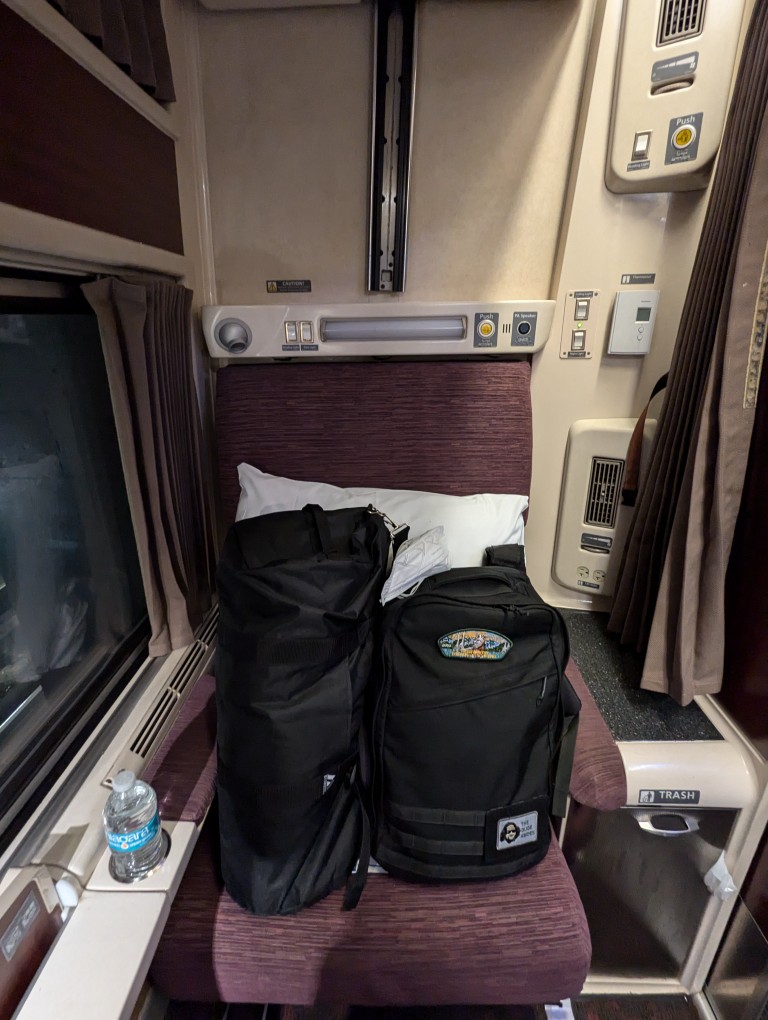
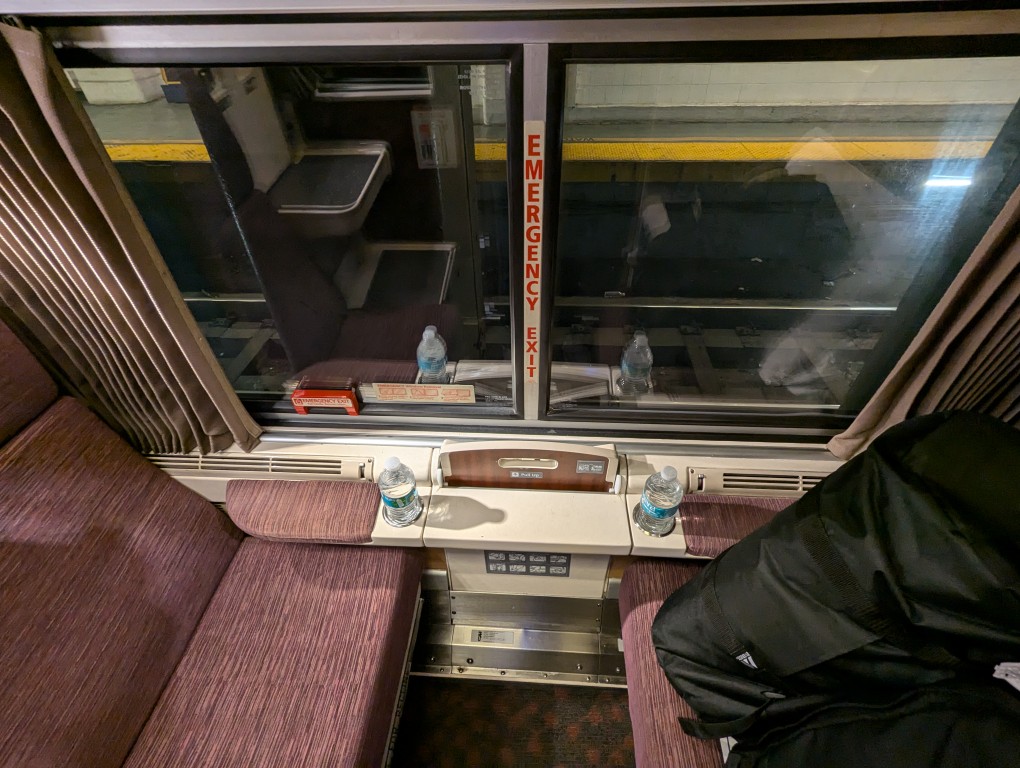
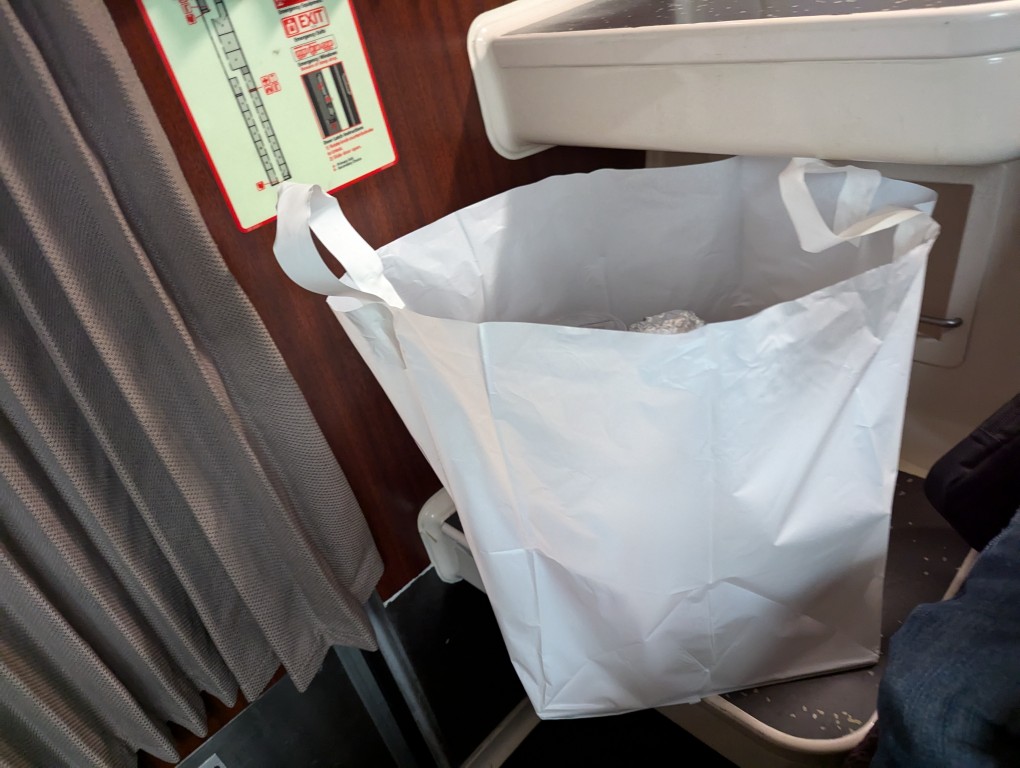
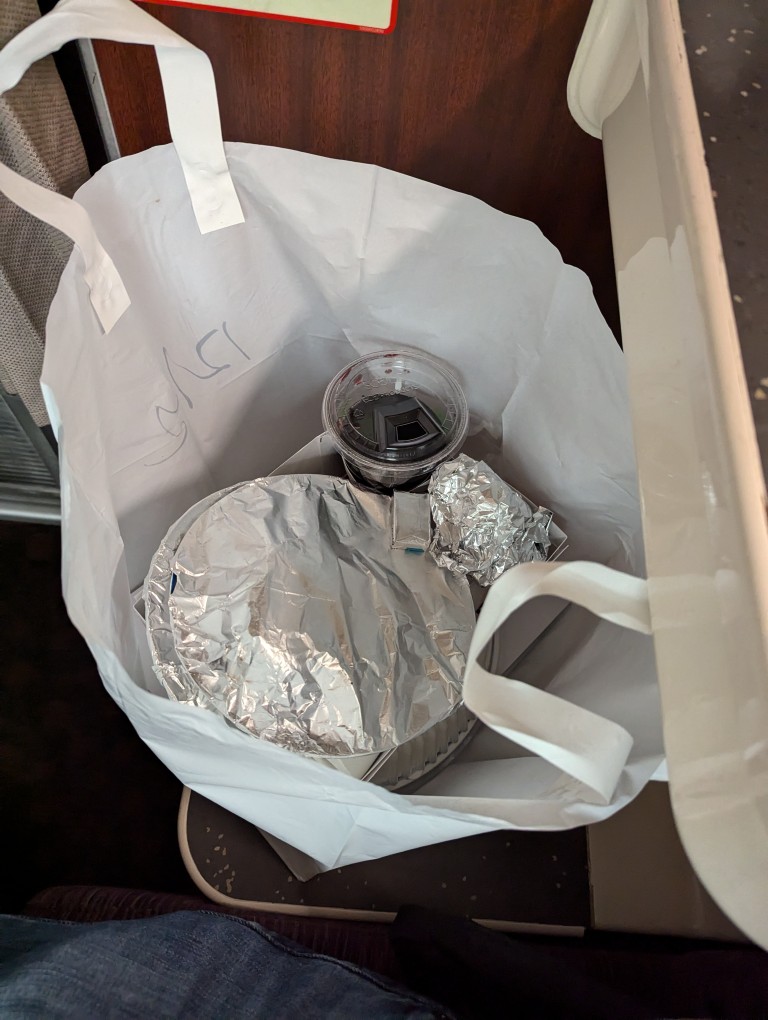
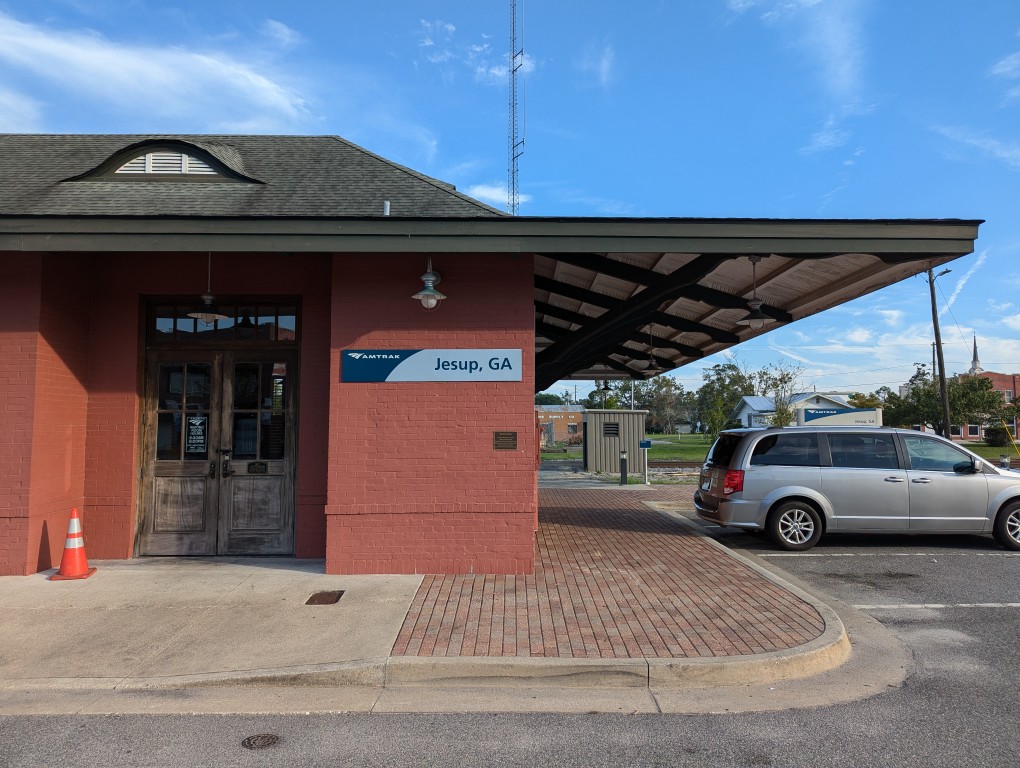
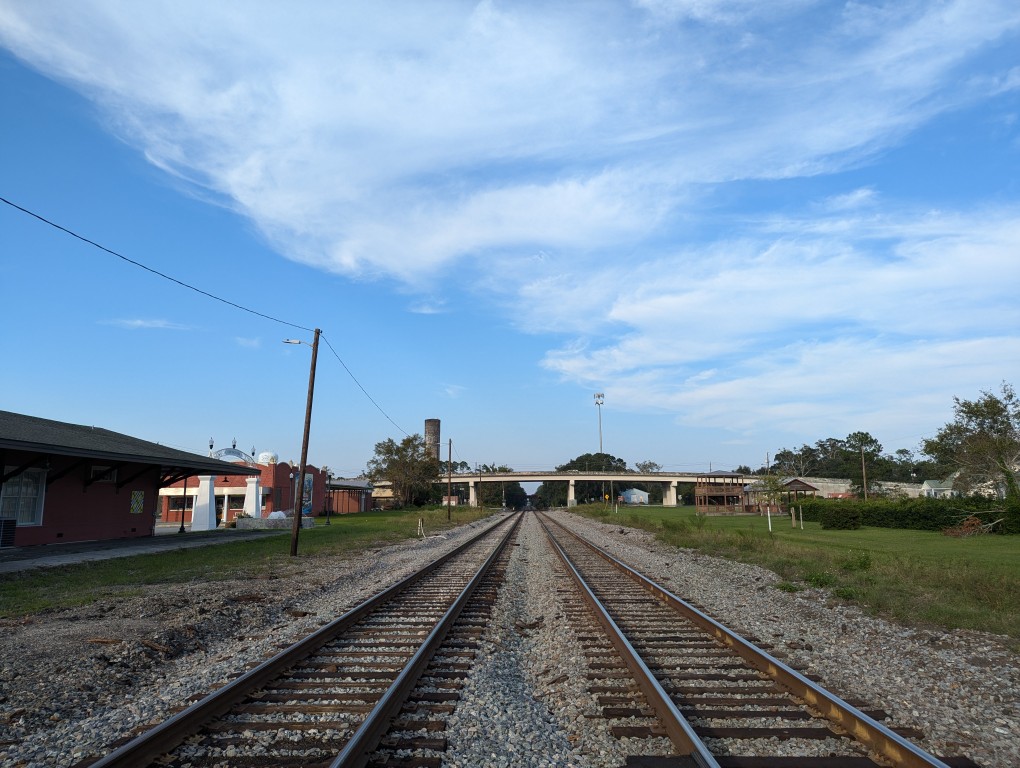
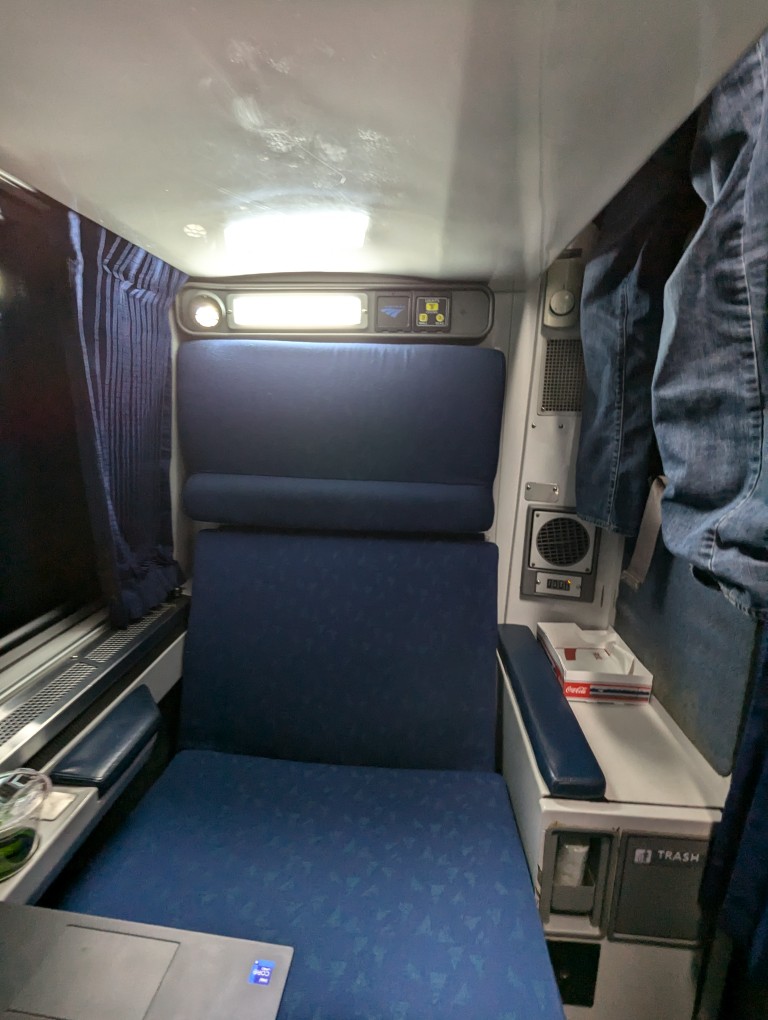
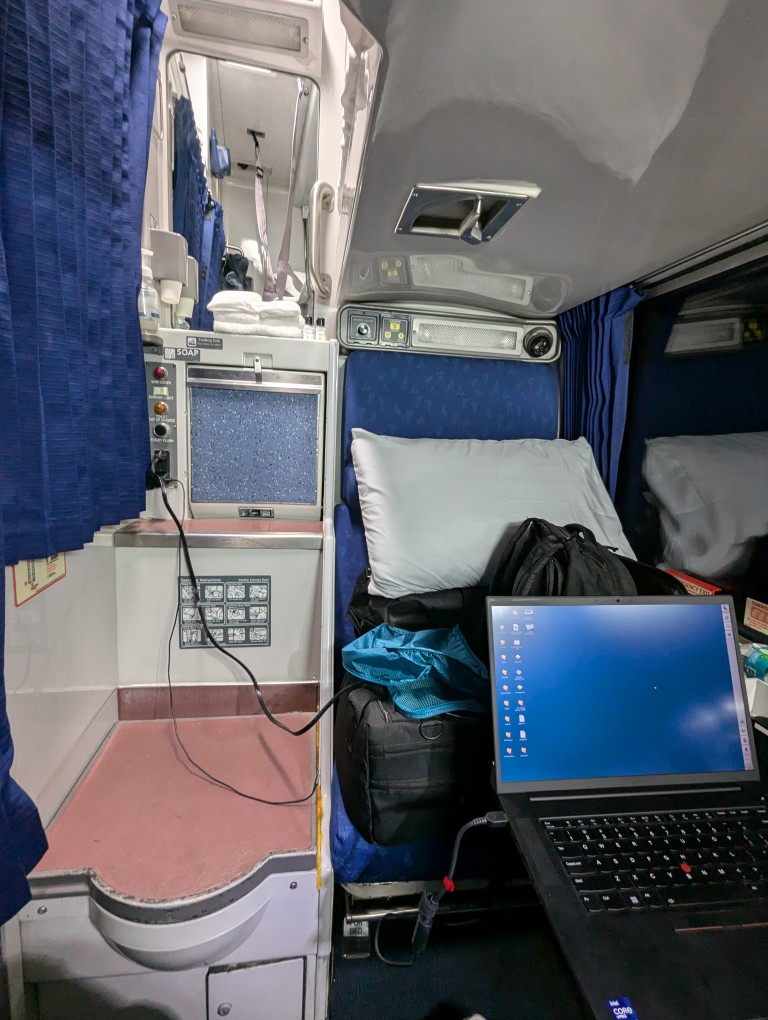
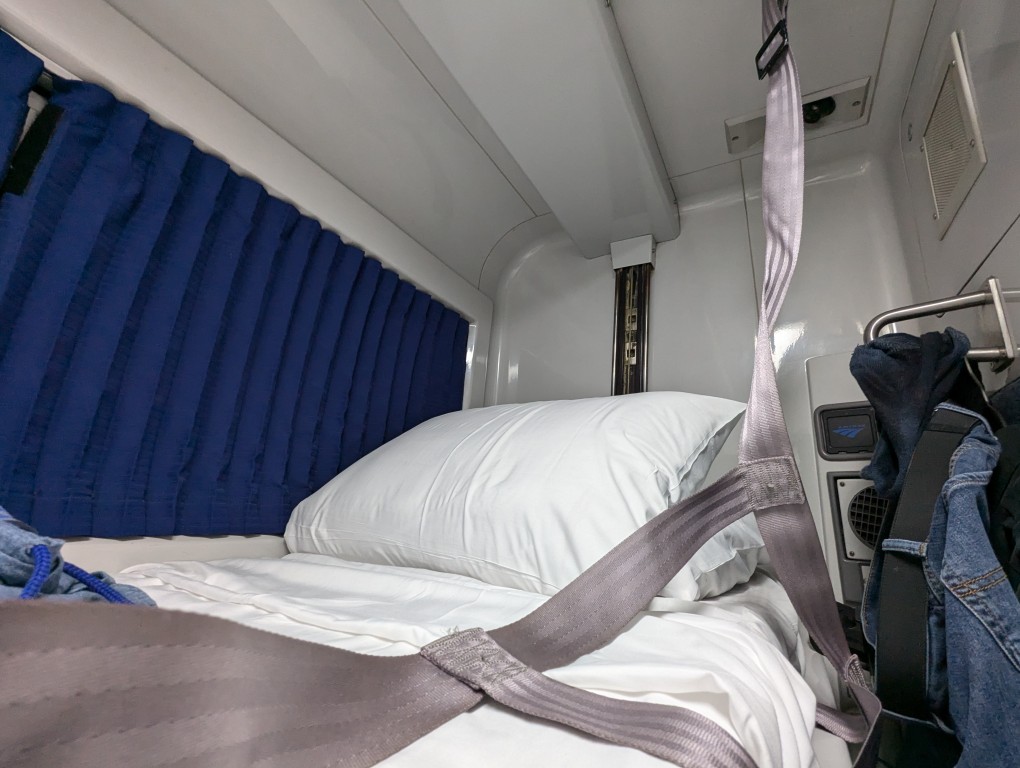
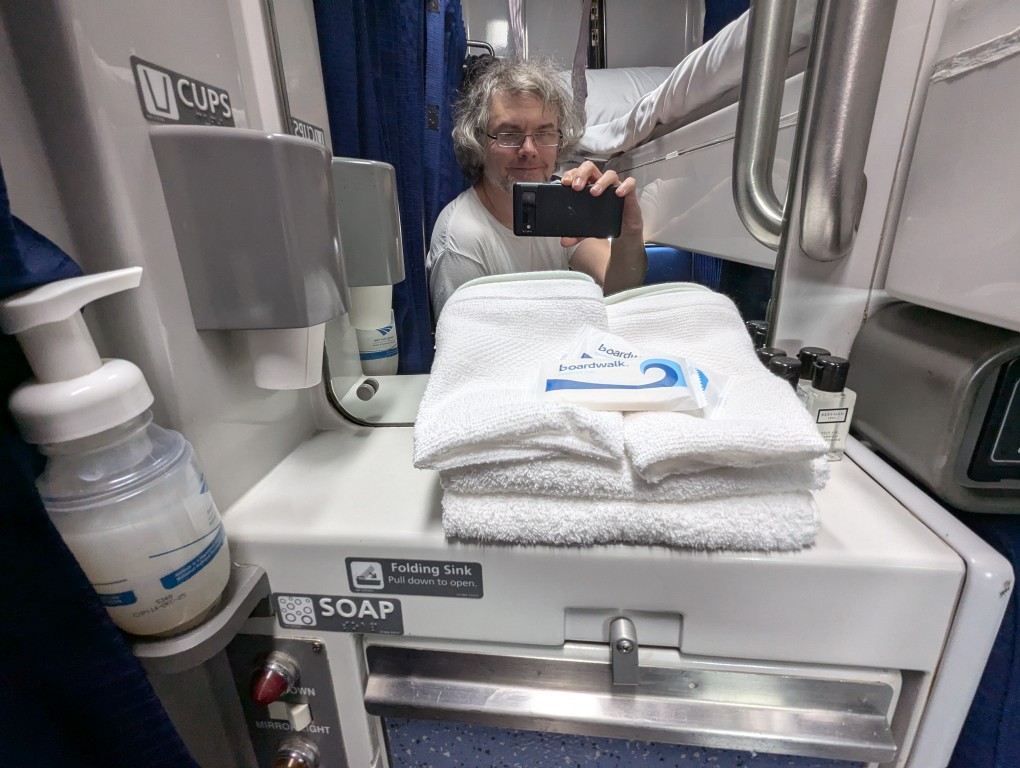
Before we knew about Hurricane Helene, I had planned to visit my folks for two weeks to help out after my dad got out of the hospital for a back ailment. I took Amtrak’s 97 Silver Meteor from NYC to Jesup, Georgia (Sept. 24-25, 2024), and returned via the 98 Silver Meteor from Jesup to NYC (Oct. 8-9, 2024). Here are some pictures of the trains, sleeper car rooms, and meals.
97 Silver Meteor (NYP to JSP)
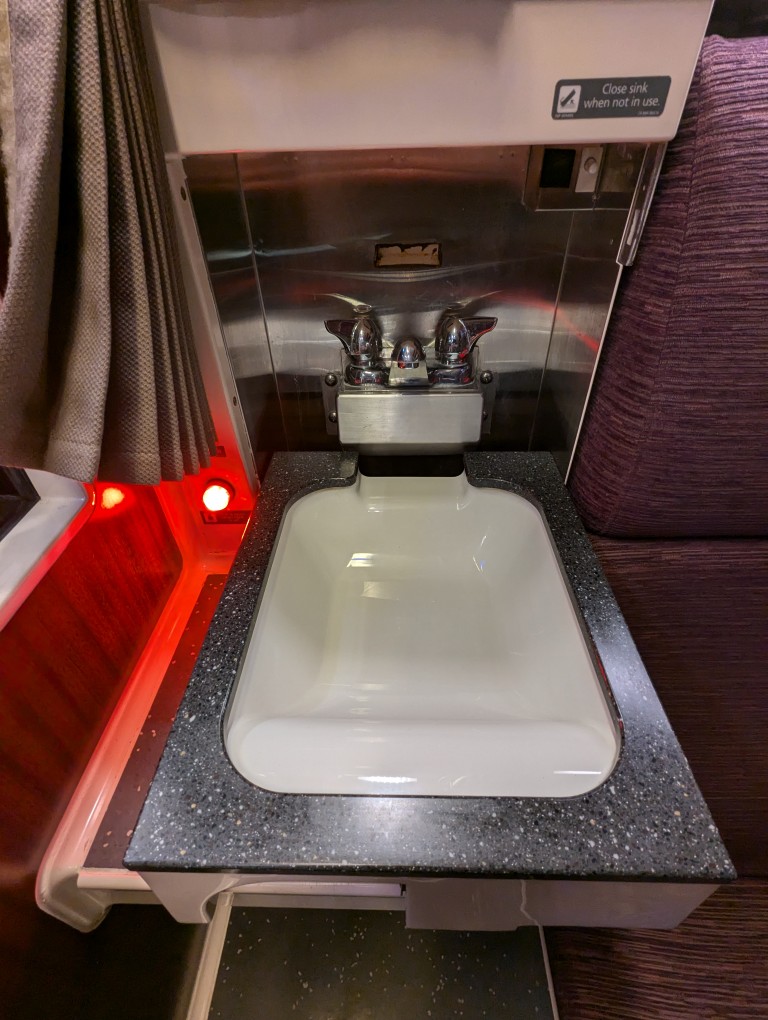
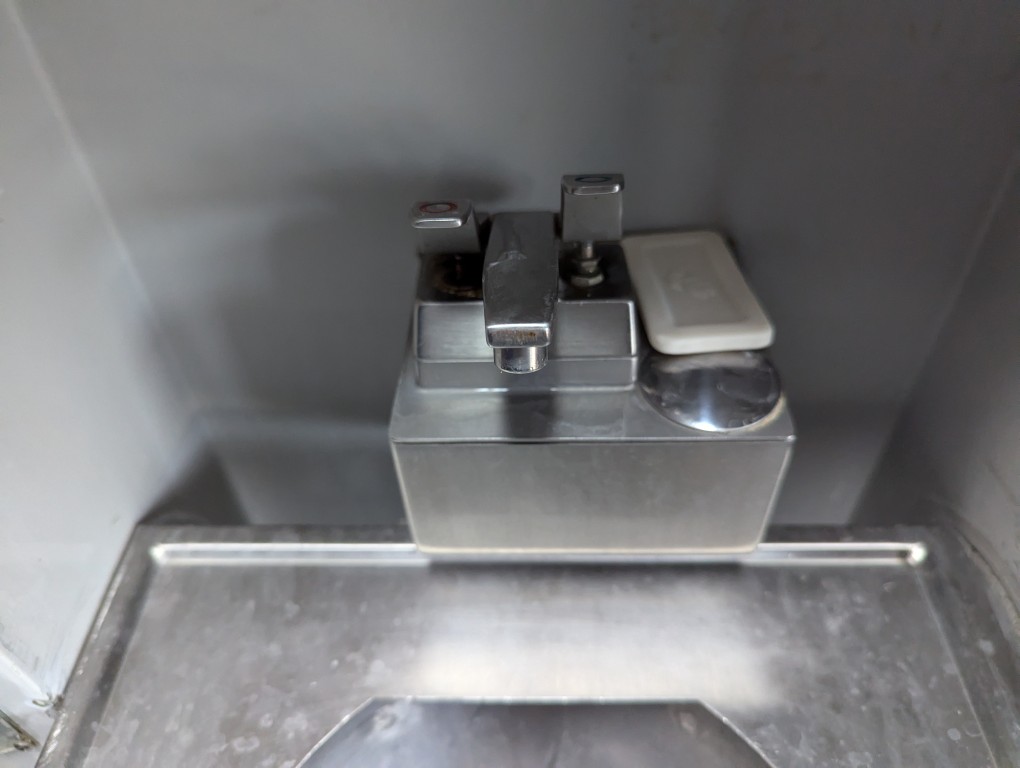
The 97 Silver Meteor sleeper cars didn’t have a toilet in the room as my previous Amtrak ride from JSP to NYC. Otherwise, the car seemed of newer construction. However, the room door rattled constantly. I should have asked for something to wedge into the door to eliminate that noise (and sleep better as a result). I liked how the in-car sink had turn knobs, which work much better than the push button faucets (either too little water or an explosion of water). Because the dining car was full, I asked for dinner in my room. It came with all the trimmings and was delicious! The worst part of the trip was someone in my car was going to bridge between cars to smoke. They left the door open, smoke entered the car, and set off the smoke alarms in unoccupied rooms and mine when I went to investigate. The culprit did not reveal him or herself.
98 Silver Meteor (JSP to NYP)
The Silver Meteor from JSP to NYP was much like my previous ride from SAV to NYP. The roomette was very similar–toilet in the room, push-button sink controls, older construction, and less vibration noise. I had breakfast in the dining car close to 7:00am. The omelet and fixings hit the spot! The downsides to this ride was that the water pressure was far too high on the sink faucet and the air conditioning was warm despite changing the thermostat.
As I wrote about last week, my parents’ Generac 60kWh whole-house generator died when we needed it most–at the beginning of a five day stretch without power after Hurricane Helene had passed through Georgia.
For shorter power outages, the Generac generator has worked, but in this case, when it really mattered, it couldn’t fulfill its promise to supply power to the house for an extended period of time. This meant that we could not pump water from our well, all of our food in the refrigerator spoiled, the radon remediation system wasn’t running, the mobility assists for my folks couldn’t operate, and the air conditioner was out (and the temperatures were in the high 80s/low 90s).
What specifically caused the Generac generator to quit running after about 48 hours was a busted plastic tensioner pulley that split in half as shown below.
A belt tensioner applies tension to a larger sized belt so that the belt maintains the appropriate tension to transfer work from one pulley to another. If the belt is too loose, it won’t grab and rotate. If the belt is too tight, it might break. The tensioner pulley–along in this case with the right size spring–keeps the right amount of tension in the belt so that it rotates without breaking.
The trouble that I have with this failure is how Generac made a couple of engineering choices that led to this failure. First, there is the overly complicated transfer of power from the engine (in the middle of the generator) to the opposite side of the radiator. They could have had the fan connected directly to the engine block or an assemblage connected to the engine block on the engine-side of the radiator so that the fan pushed air through the radiator instead of pulling it through as in the manufactured configuration. This would have reduced the number of parts–the extra pulleys, rods, bearings, and tensioner–and eliminated the tensioner pulley. Second, if their designers were adamant that a fan pulling instead of fan pushing configuration was better, they could have manufactured the tensioner pulley out of metal, and even better yet, used a standard tensioner pulley that was already mass produced for other applications. While this might have added some cost or reduced their profit by a very infinitesimal percentage of the cost of this generator (~$30k), it would have significantly reduced the likelihood of this part as being a possible point of failure.
My folks have had this Generac generator long enough that its warranty lapsed in 2023. They have paid for regular maintenance–checks, oil changes, etc. It has run a test every two weeks since they purchased it. But, there was apparently no way to verify the tensioner pulley or a schedule to replace it.
We were told by the repair crew that one other customer had the exact same problem–like ours, their generator had run after the area lost power and then their tensioner pulley had exploded in half just like ours.
If you’re considering one of these for your house, be aware of the possible points of failure–there are many besides this pulley. A less complicated design seems better to me to reduce the chance of failure. With a complicated setup like this, having replacement parts on-hand is a must, which our local retailer did not have. With lesson learned, my folks now have a spare tensioner pulley and belt just in case.
After cleaning up the mess left by Hurricane Helene, the homestead didn’t look that bad. A few days later, I made another pass at the grass with my dad’s Scag zero-turn riding lawnmower to get it down to 2″. Hopefully he won’t have to cut it again this year, but with global warming, it might have another growth spurt.