Author: Jason W. Ellis

  • Academic Office Evolution 2012-Present

    In my post-PhD academic career, I’ve had two offices–one at the Georgia Institute of Technology and one at the New York City College of Technology, CUNY. Both were/are in shared office spaces. Thankfully, the desks were not shared (a loathsome experience that I had at Mindspring years ago), so I can keep my things on my desk without concern someone will move them or mess with them. Since I spend so much of my life at work, I like to make these spaces my own to make myself and perhaps others happy to be in their proximity. I’ve combed through my photo collection to find the following snapshots of my office spaces over the years.

    2012-2014, Georgia Institute of Technology

    Fall 2013
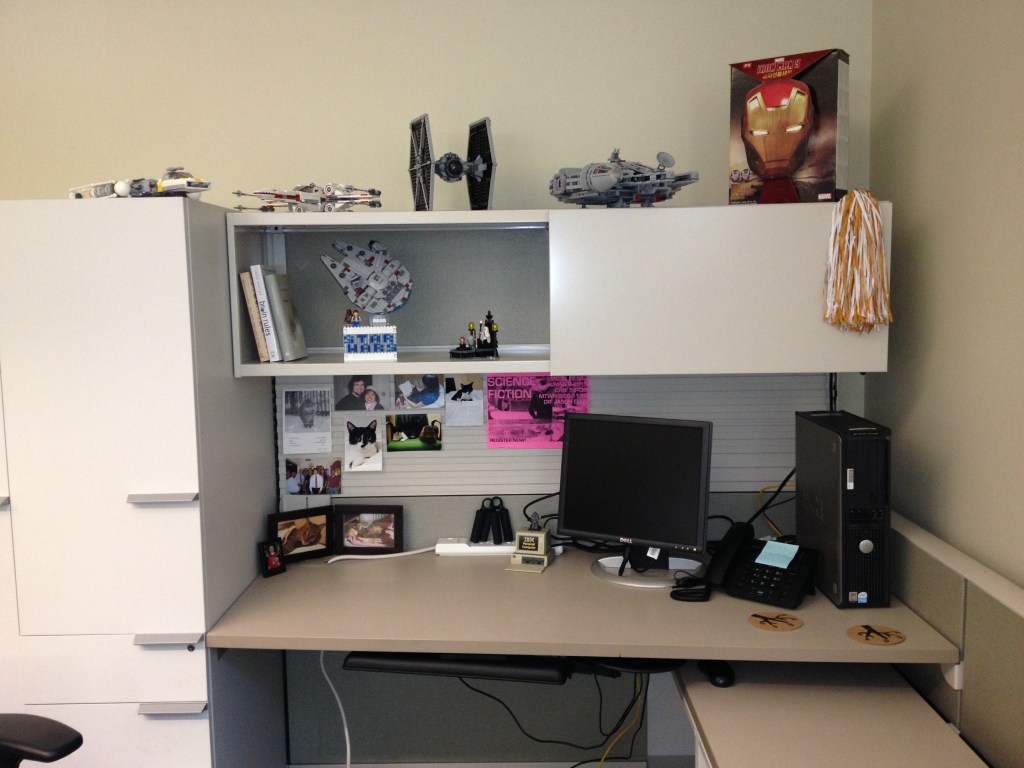
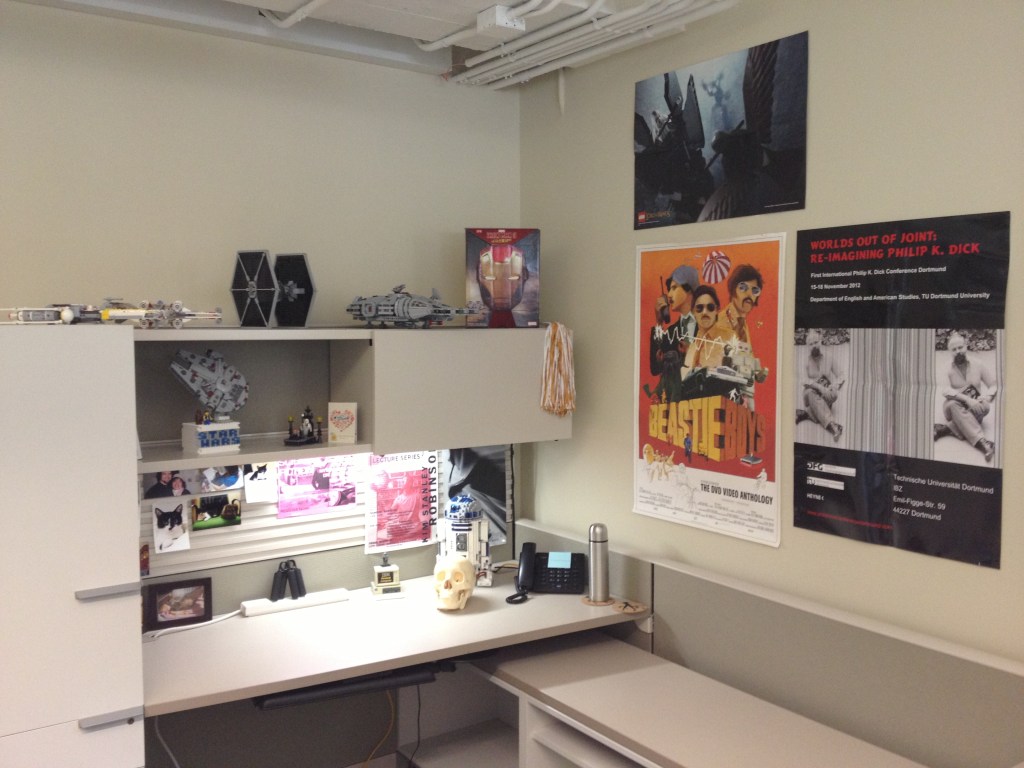
    The Brittain Fellows’ office space in the Col. Stephen C. Hall Building has an open floor plan in large rooms with each Brittain Fellow getting a large cubical space with cabinets and shelving. This was a great place to work, collaborate with colleagues, and interact with students during office hours.

    By Fall 2013, I had put up some favorite posters of LEGO LOTR, The Beastie Boys (not realizing that this could foreshadow where I was going next!), and the Philip K. Dick conference that I presented at in Dortmund, Germany. I had some favorite Star Wars LEGO sets and a cool Japanese-imported Iron Man snack box.

    2014-Present, New York City College of Technology, CUNY

    Fall 2014
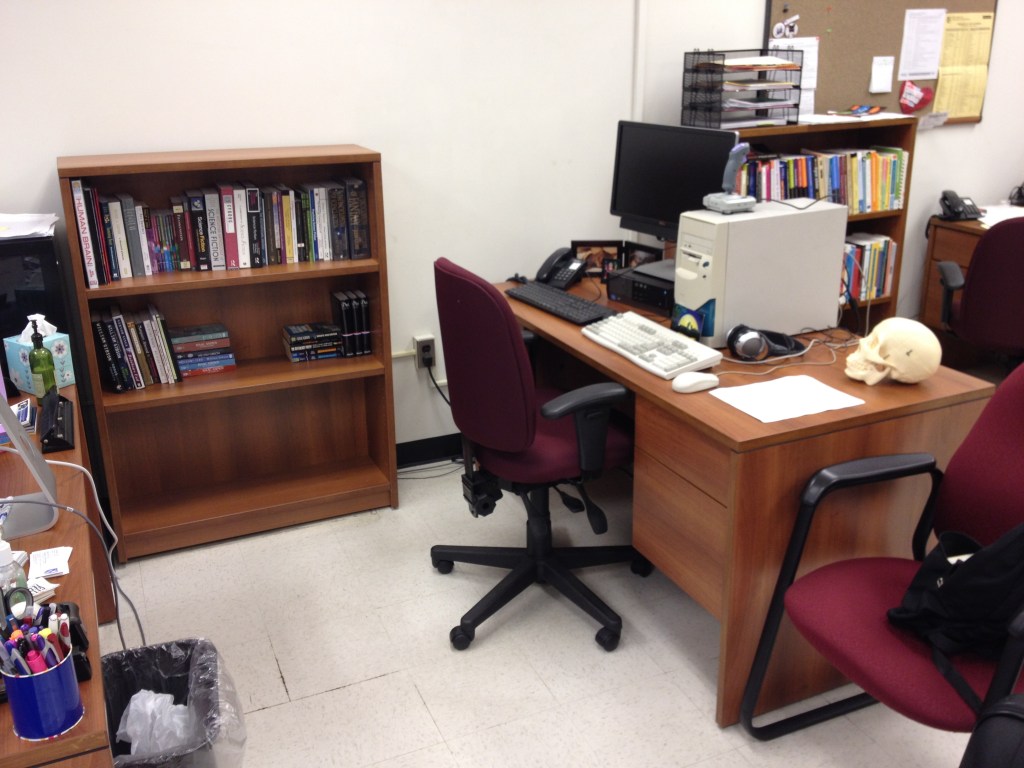
    This picture shows my office space within the six-person office that I share at City Tech after I first moved some things in at the beginning of the Fall 2014 semester. Each faculty member gets an allotted square footage of office space within a larger room shared with other faculty members. I have a great cohort of office mates who I have found to be collegial, collaborative, and supportive. It was agreed before I was hired that this office would not employ cubical walls, which might lend itself to a more open atmosphere of conversation and co-working than in other office areas with cubical dividers or fewer number of faculty members.

    Within the next month of Fall 2014, I had added posters to the wall of an Apple I computer board and Star Wars LEGO sets on my desk and bookshelf.

    By the end of the Fall 2014 semester, I had presented a paper at the annual research poster session, which I proudly displayed above my bookshelf.

    Spring 2015

    At the end of Spring 2015, I connected with Stanley Kaplan, a graduate of City Tech in 1969 who has worked as a lab assistant here since then. He had squirreled away these old computers in the Vorhees building.
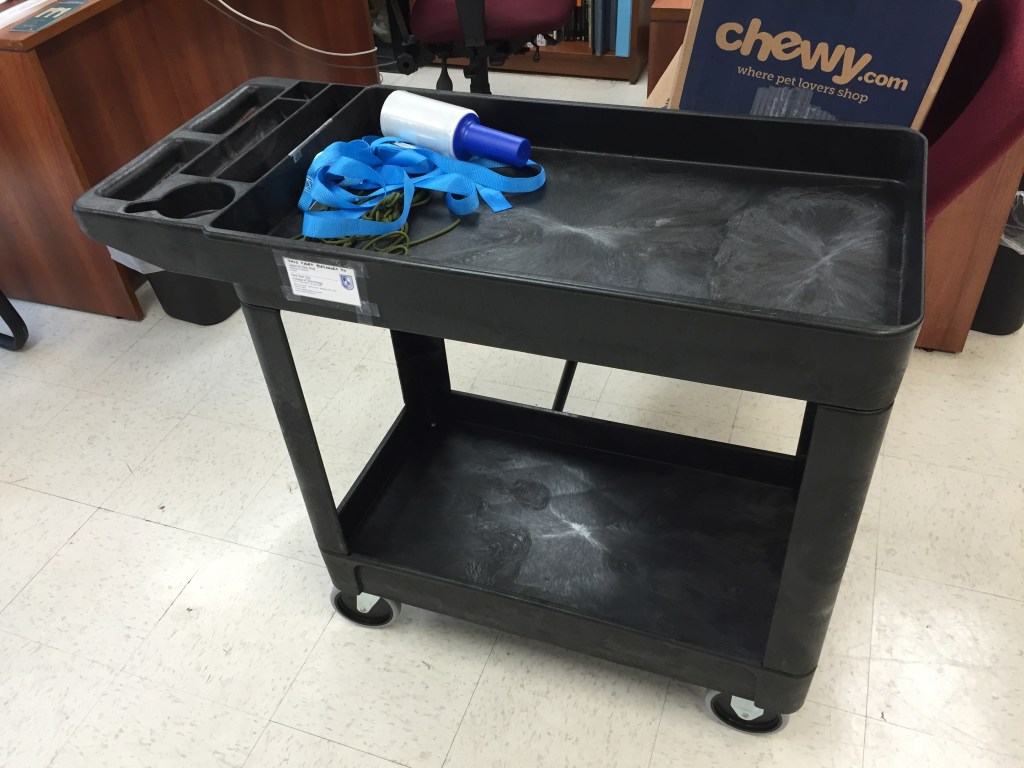
    I purchased the polycarbonate utility cart below to ferry these computers from that building to the Namm Building–a distance of several blocks.

    Summer 2015
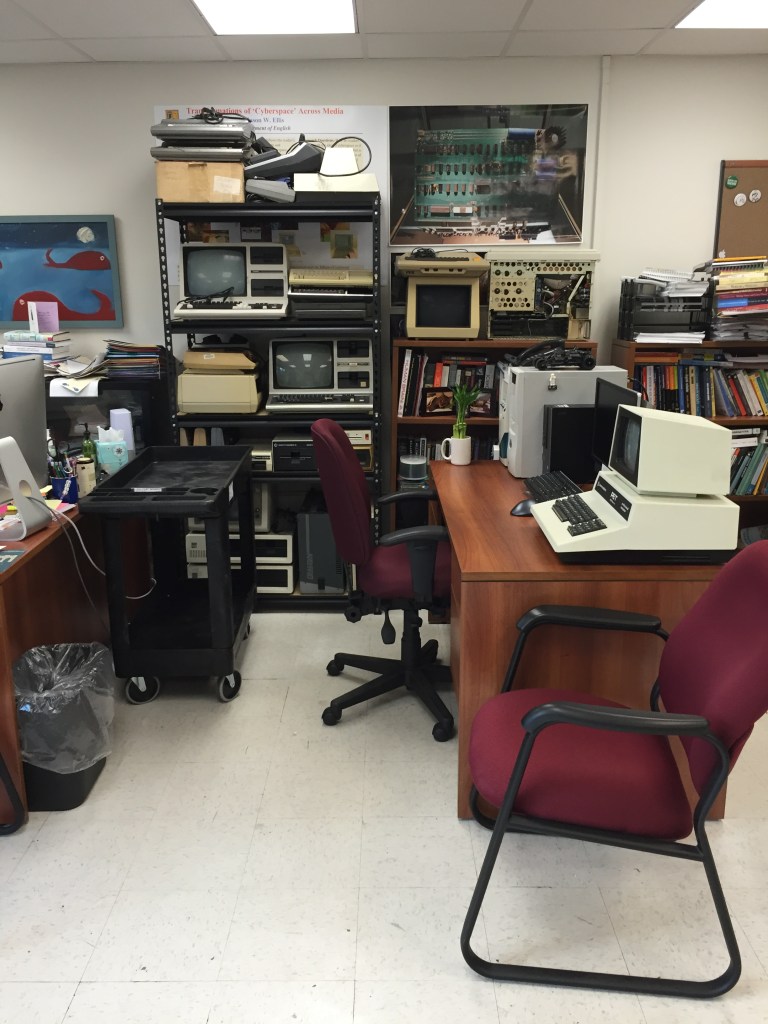
    By the end of Summer 2015, I had purchased a large utility shelf from Lowes, which I setup to hold most of the vintage computers. I positioned it in my bookshelf’s old space and slid the bookshelf over with a little gap to allow me to reach between my desk and the bookshelf for books on it.

    Spring 2016

    In early Spring 2016, Alan Lovegreen and I received 160 boxes of donated books from an anonymous donor in California. Alan had supervised boxing and loading everything in California, and when he returned to Brooklyn, we brought all of the boxes up to our respective offices. Thanks to our understanding colleagues in both of our offices, we were able to store the boxes until the library had cleared enough shelf space for this initial 600-linear foot donation of near-complete runs of the major SF magazines, novels, monographs, and journals.

    In this wide shot revealing all six desks in our shared office from late Spring 2016, you can see that the books have been moved to the library. My desk is the middle one on the left. Patrick is sitting at his desk in front of mine.

    Spring 2017

    By Spring 2017, I was carrying my MacBook Pro to work, so I cleared the center of my desk and daisy-chained the two Dell monitors (I hadn’t used my City Tech-issued Dell desktop since 2014–it’s not pictured here because by this point I had locked it away in my filing cabinet at the front wall of the room).

    The LEGO sets on my desk in 2017 were a MOC of Tony Stark’s workshop and Doctor Who’s TARDIS 21304.

    Also, I use the computers beside my desk to show off some of the postcards that Y and I receive via Postcrossing, which I’ve written about here and here. Admittedly, I have convinced some students that I was a distant friend of the British Royal Family with these!

    Spring 2018
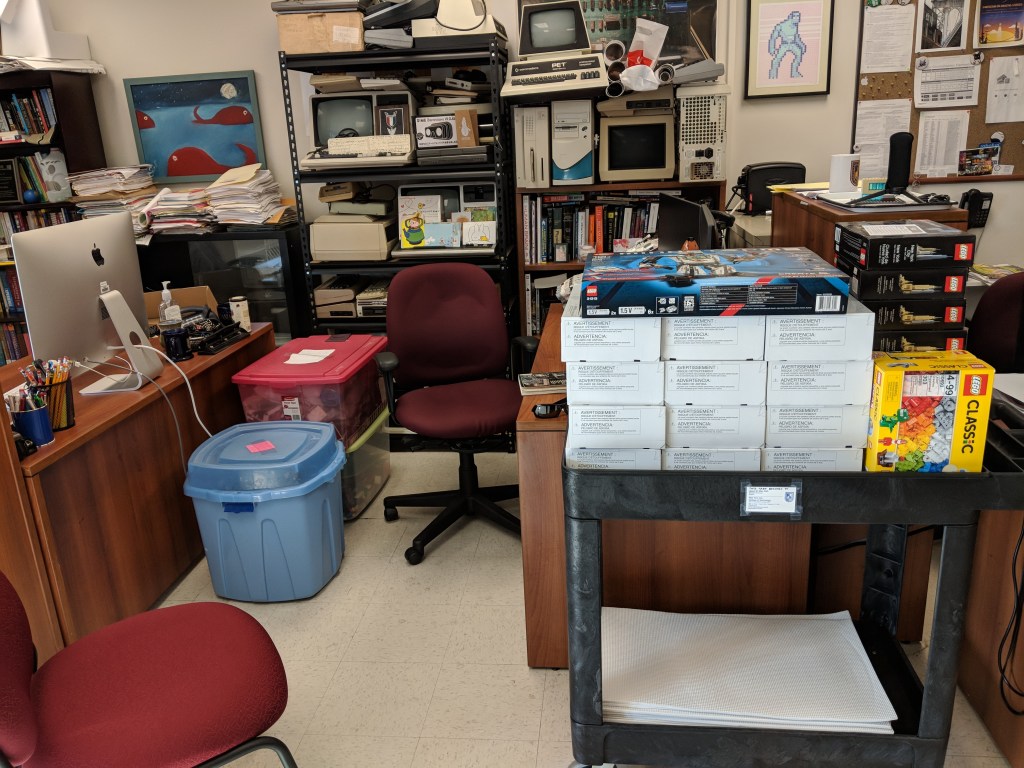
    By the beginning of Spring 2018, my desk area had been overrun not only by the vintage computers but also by LEGO sets that my colleague and officemate to the right of this photo had acquired through grants. You can see that we now use the utility cart to move the LEGO sets around to our classes.

    Fall 2018

    Before the beginning of Fall 2018, I had donated my twin Dell monitors to Patrick so that he could have a super-wide 4-monitor setup on his desk. This opened up my desktop workspace considerably!

    Summer 2019

    At the beginning of Summer 2019, my cousin Ryan Cox gifted me his old clamshell iBook for the Retrocomputing Lab.

    Fall 2019

    By Fall 2019, my desk was once again overrun with LEGO sets–mostly Avengers (including my MOC/MOD Avengers Tower on the left) and some Star Wars. I was using my ThinkPad X220 as my work computer in the office and classroom.

    Then, the pandemic happened, and I rarely visited the office.

    Fall 2022

    During the pandemic, we received a sizable donation of books and magazines from Charlie Seelig and others. By Fall 2022, most of the boxes had accumulated in my office. They are in such pristine shape thanks to the United States Postal Service (sarcasm).

    Spring 2023
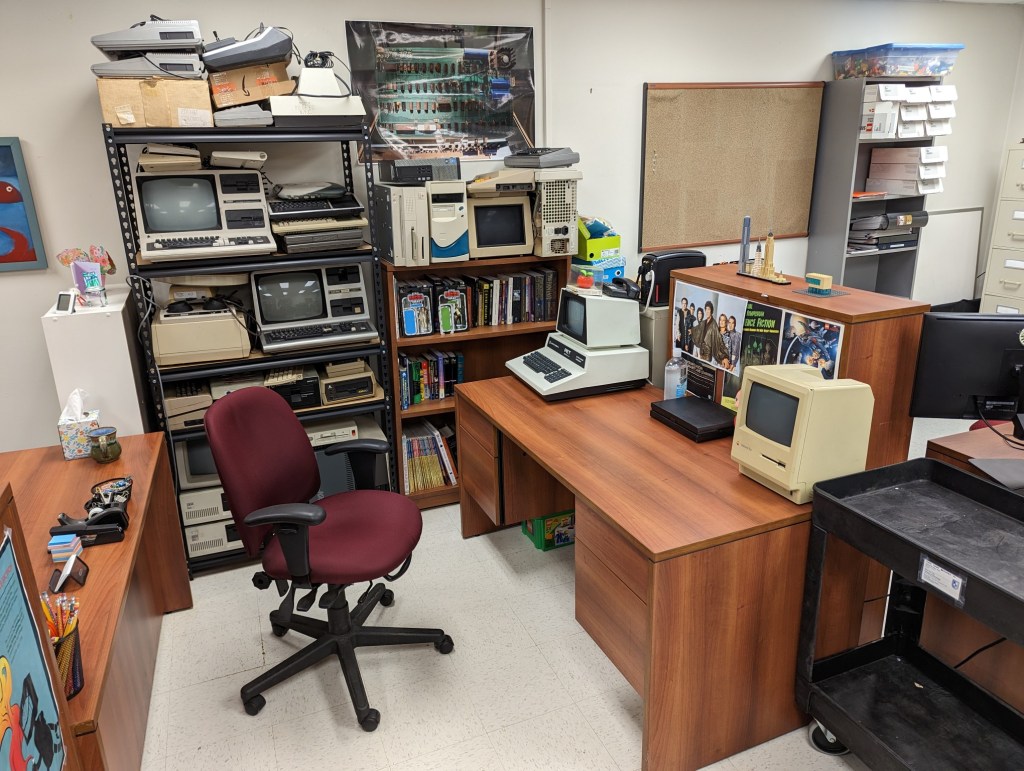
    At the end Spring 2023, I moved all of the donated boxes of books into the library and shelved most of them as I wrote about here, here, and here on the Science Fiction at City Tech website. While there is still a lot of stuff in my office space, it is tidy and clean while I am away on sabbatical.

    Reflection

    My office space reflects the ebb and flow of my work and projects. It reflects aspects of my life that I choose to share in the workplace with my colleagues and students. Those reflections are also things that I want to see as a reminder of what brings me joy and happiness. Having more than books and office supplies at my desk makes me glad to inhabit this space while I am at work. On occasion, it has brought some happiness to students and colleagues, too.

  • LEGO 75212 Kessel Run Millennium Falcon on Custom Display Stand

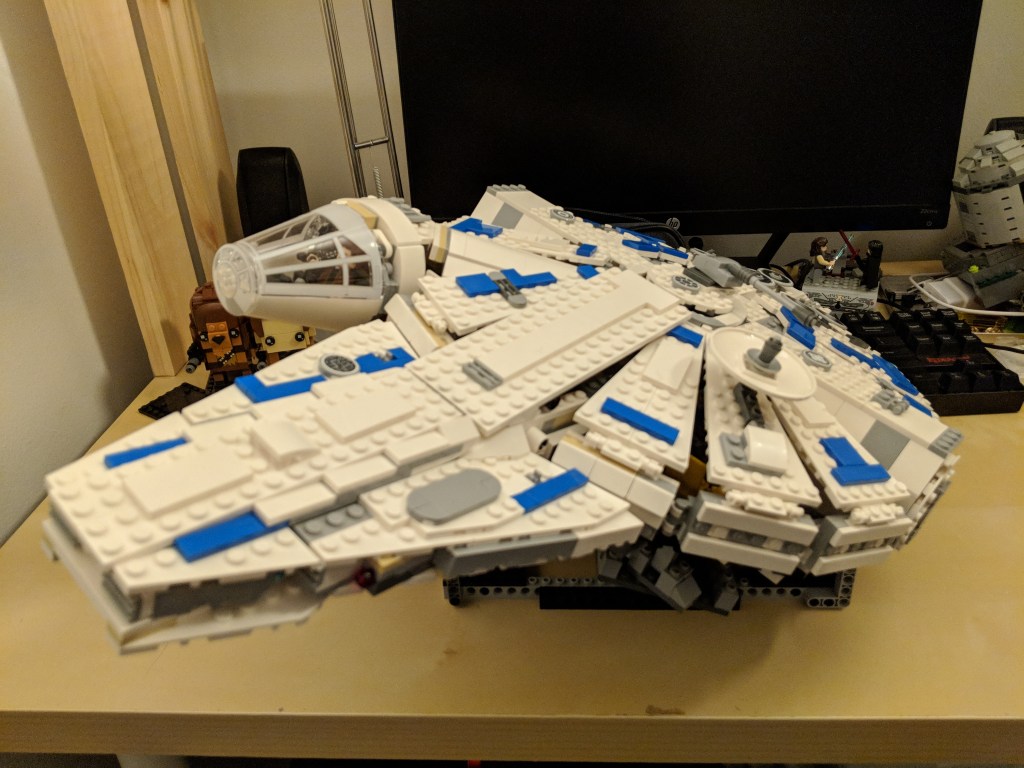
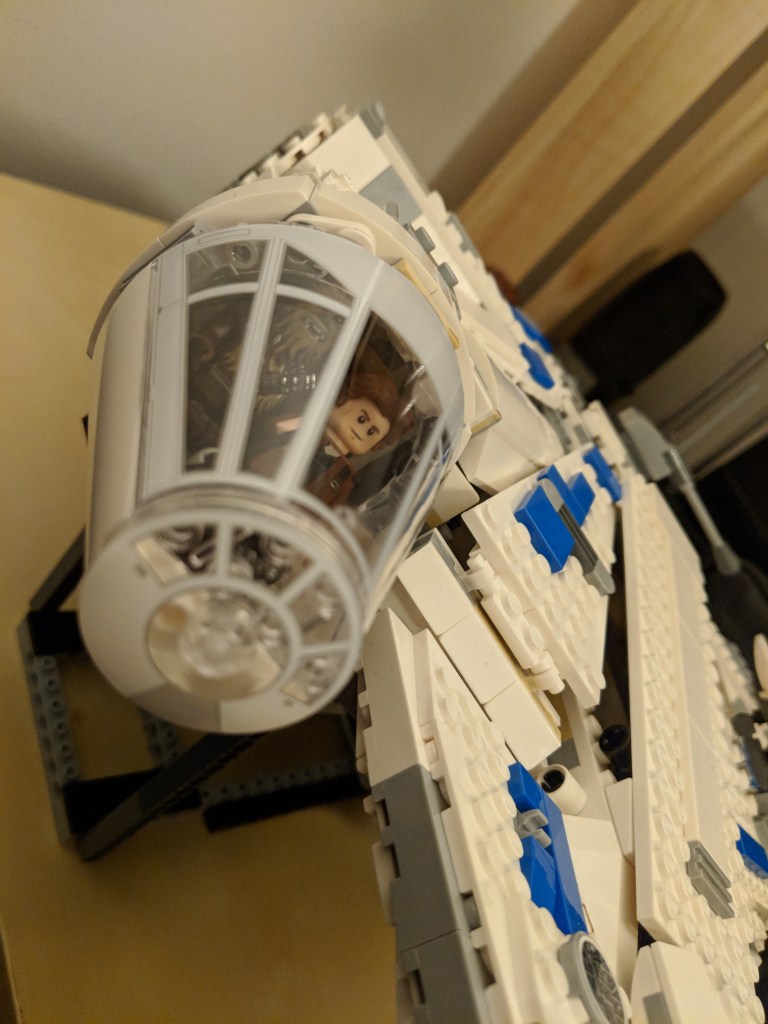
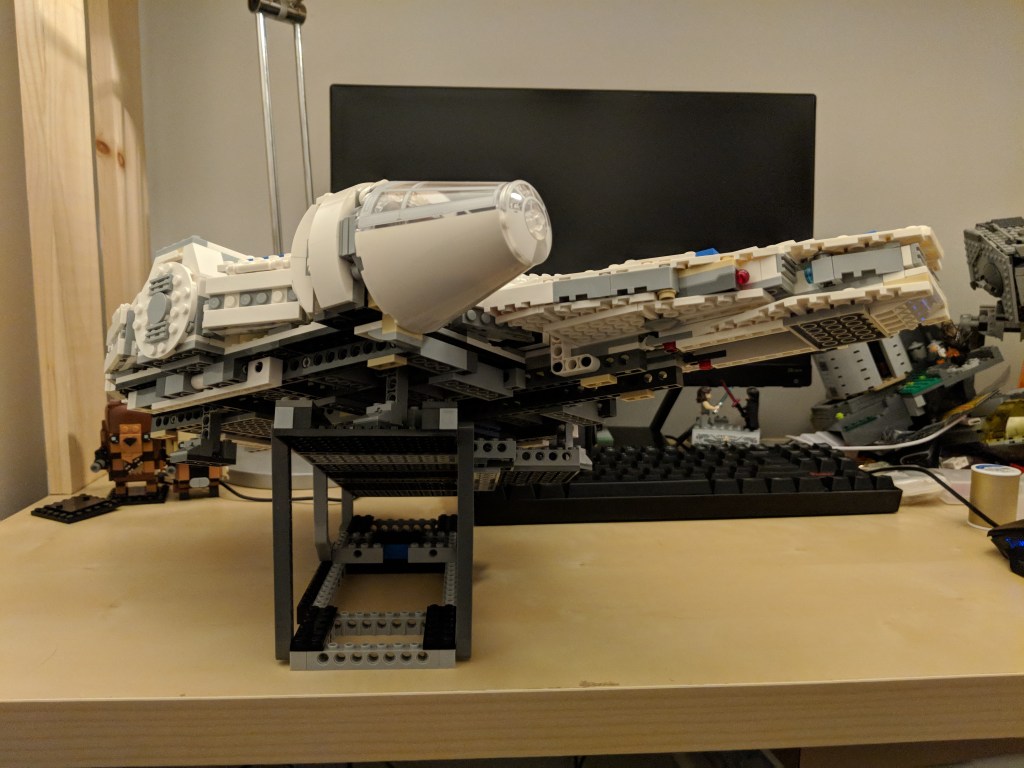
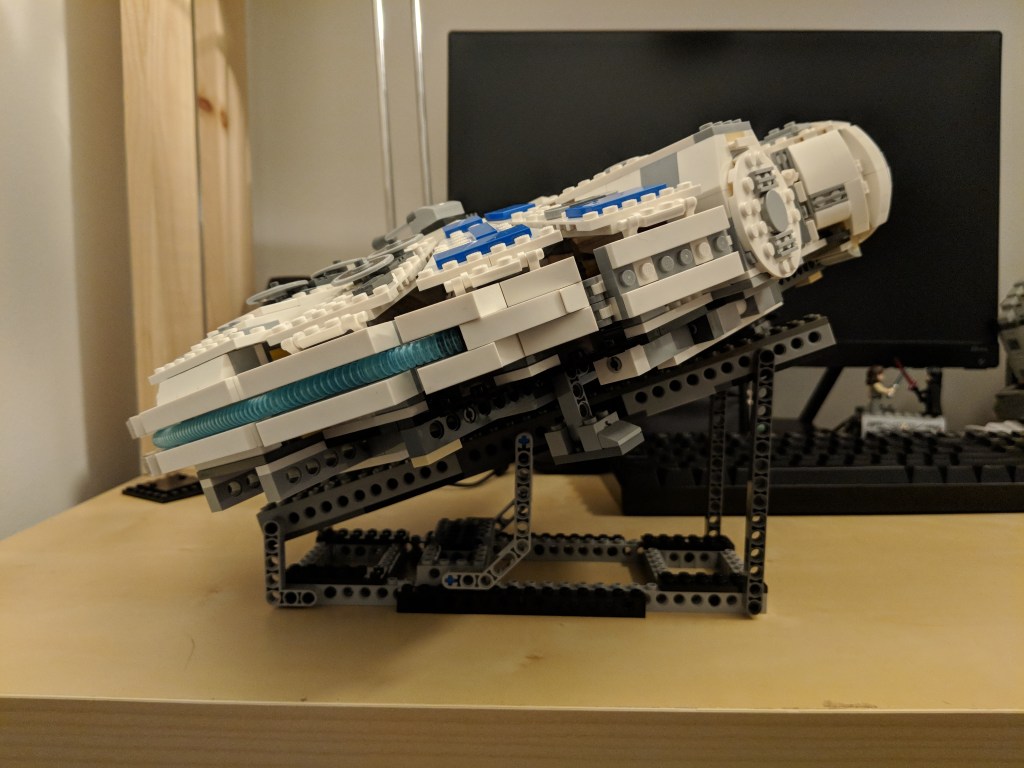
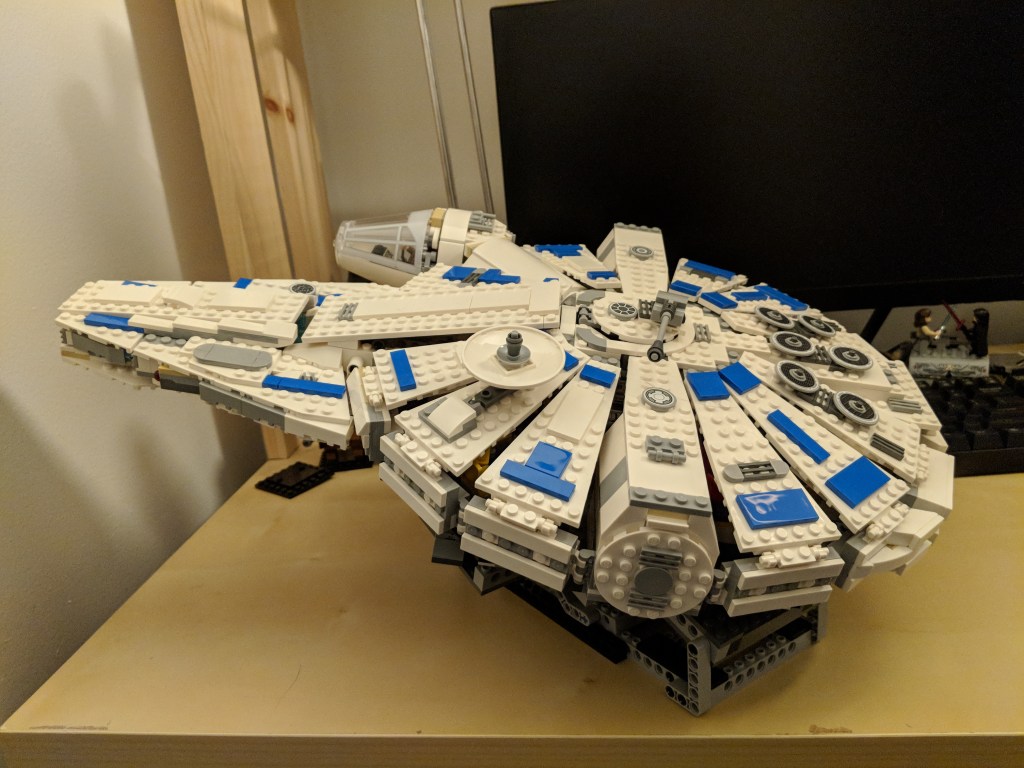
    LEGO Kessel Run Millennium Falcon on display stand.
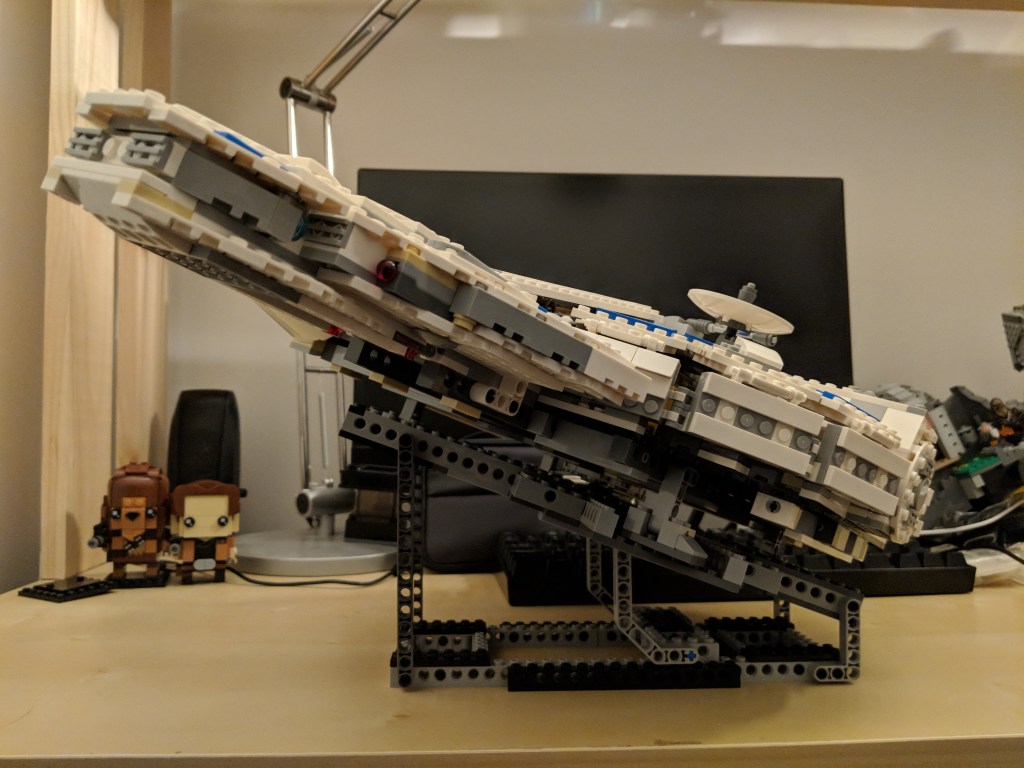
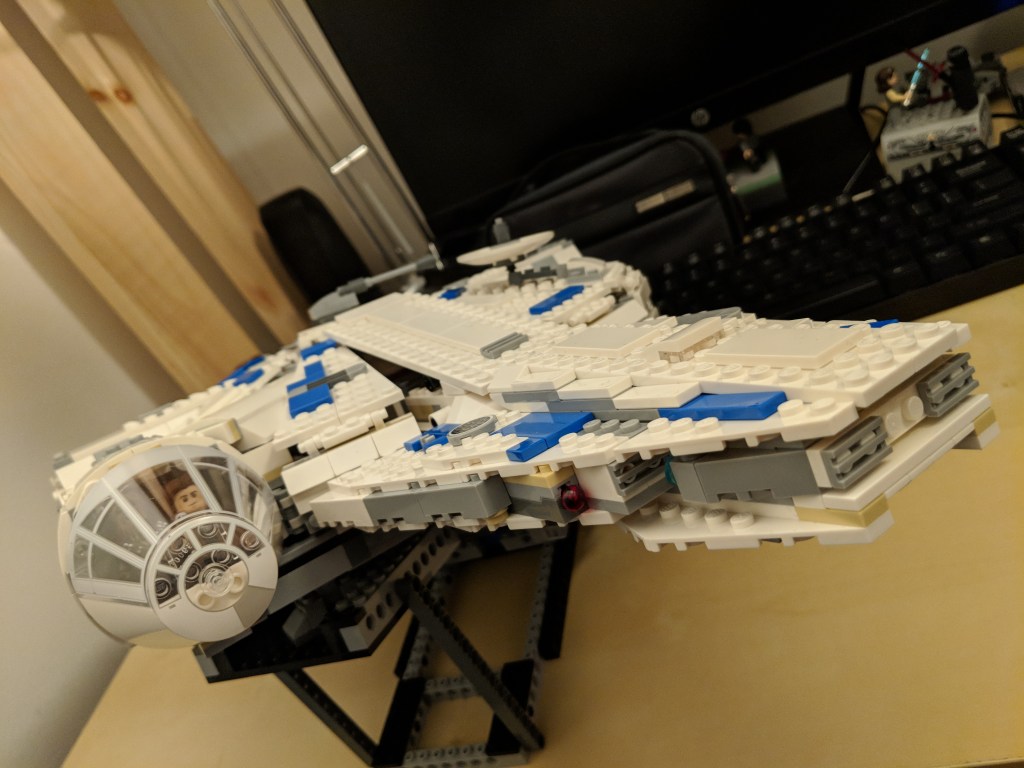
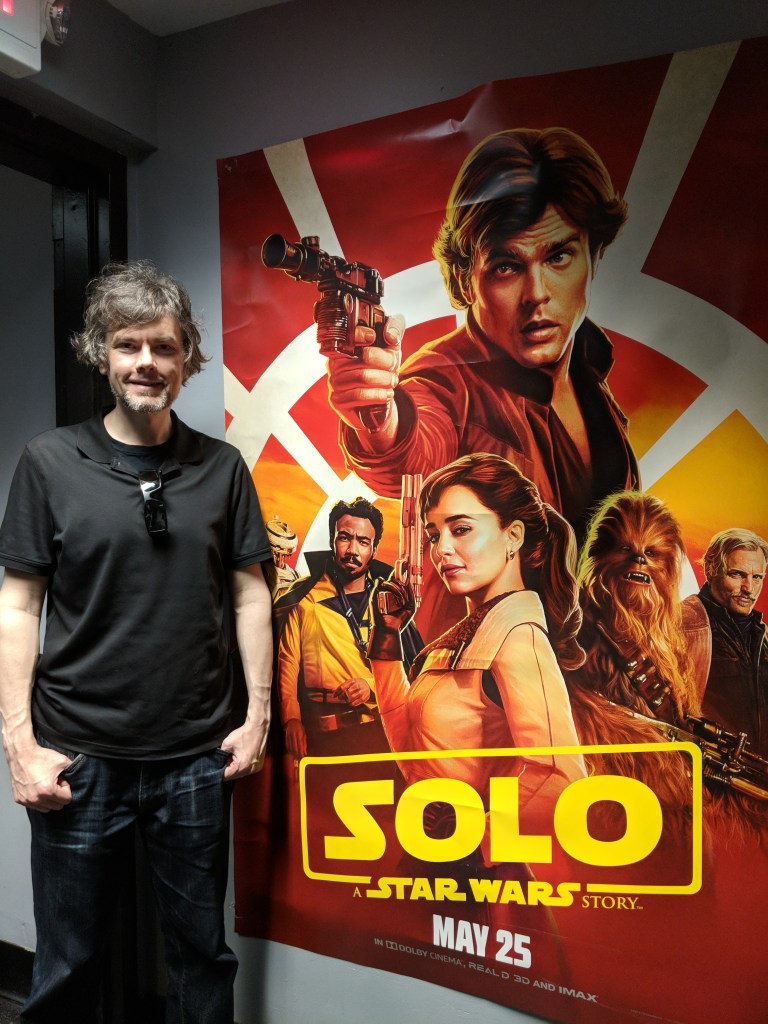
    This is a lightweight custom display stand for a stock LEGO 75212 Kessel Run Millennium Falcon from the underrated Solo: A Star Wars Story (2018). Like the stand that I built for my heavier modified Falcon discussed here, it provides an angle upward and a swoop to the left. The landing gear lock into place on the stand and are held in place by gravity.

    I hope there will be more Han Solo and Lando Calrissian adventures with Alden Ehrenreich and Donald Glover. I don’t think he and the rest of the cast of Solo got a fair shake due to the behind-the-scenes production turmoil. Let’s keep the dream alive!

  • LEGO MOC Return of the Jedi Scene of the Desert Skiff (9496) at the Sarlacc Pit

    Desert Skiff rescue scene from Return of the Jedi created with LEGO.

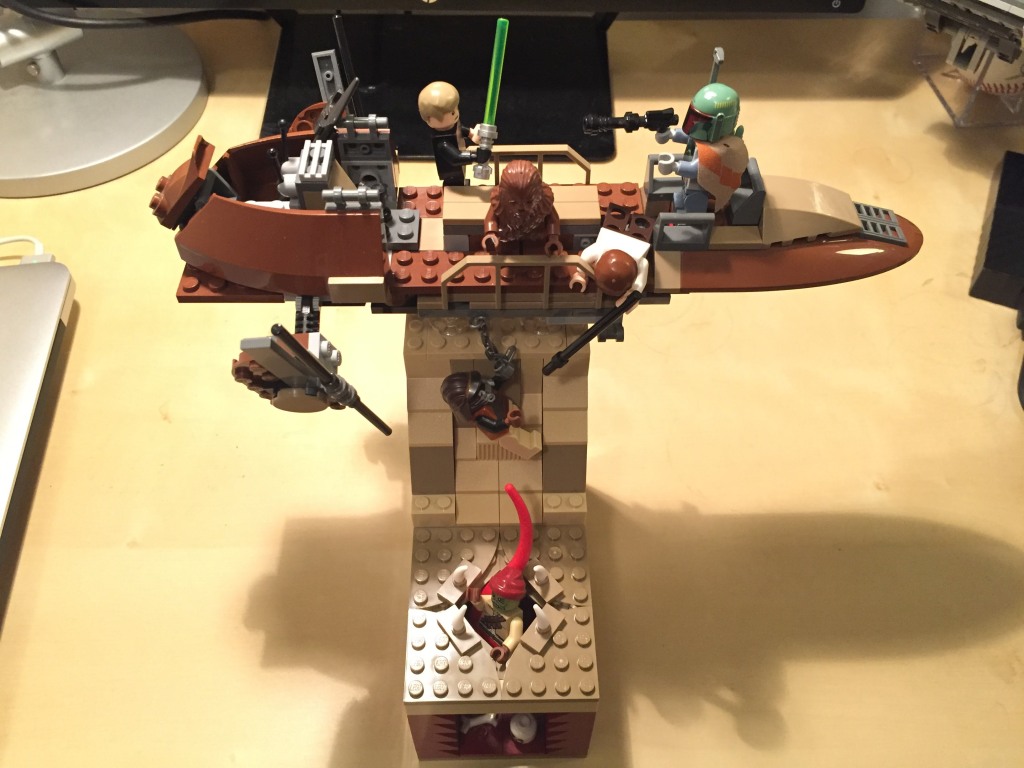
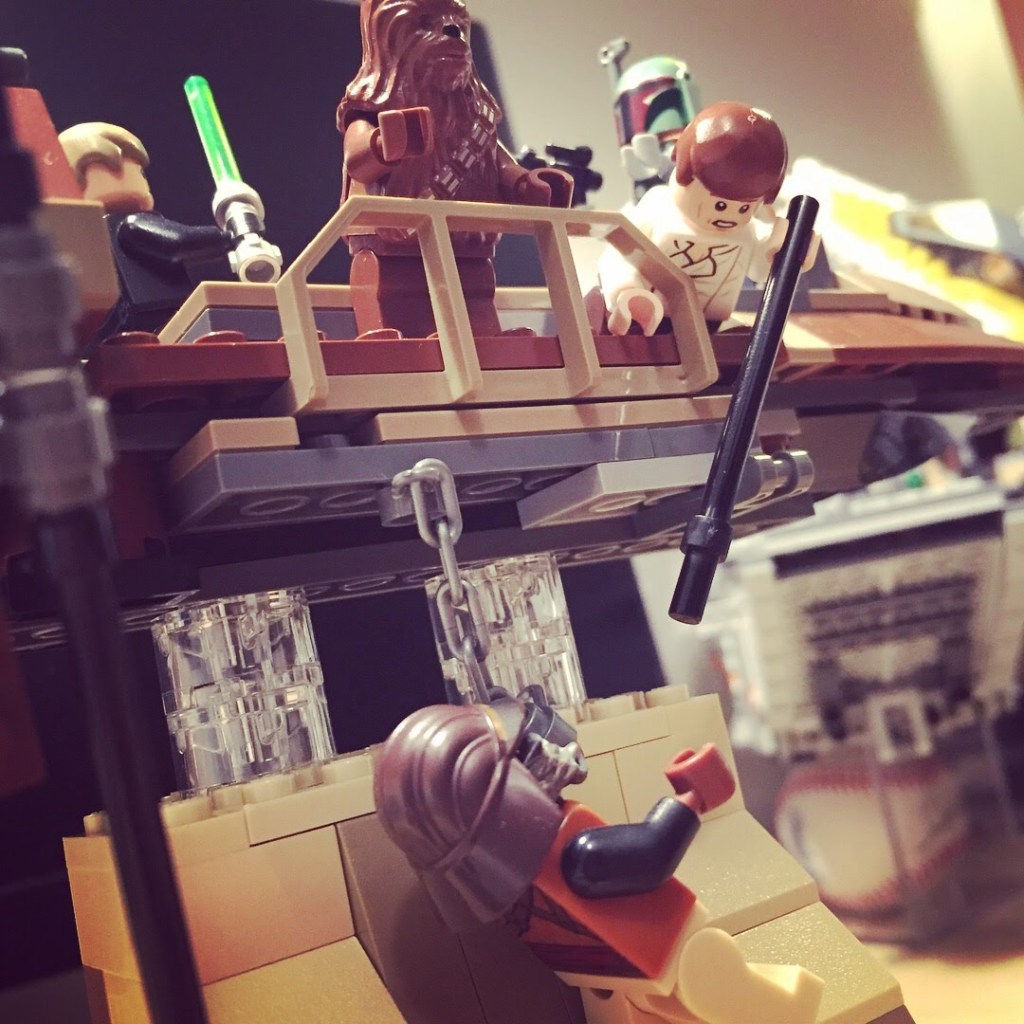
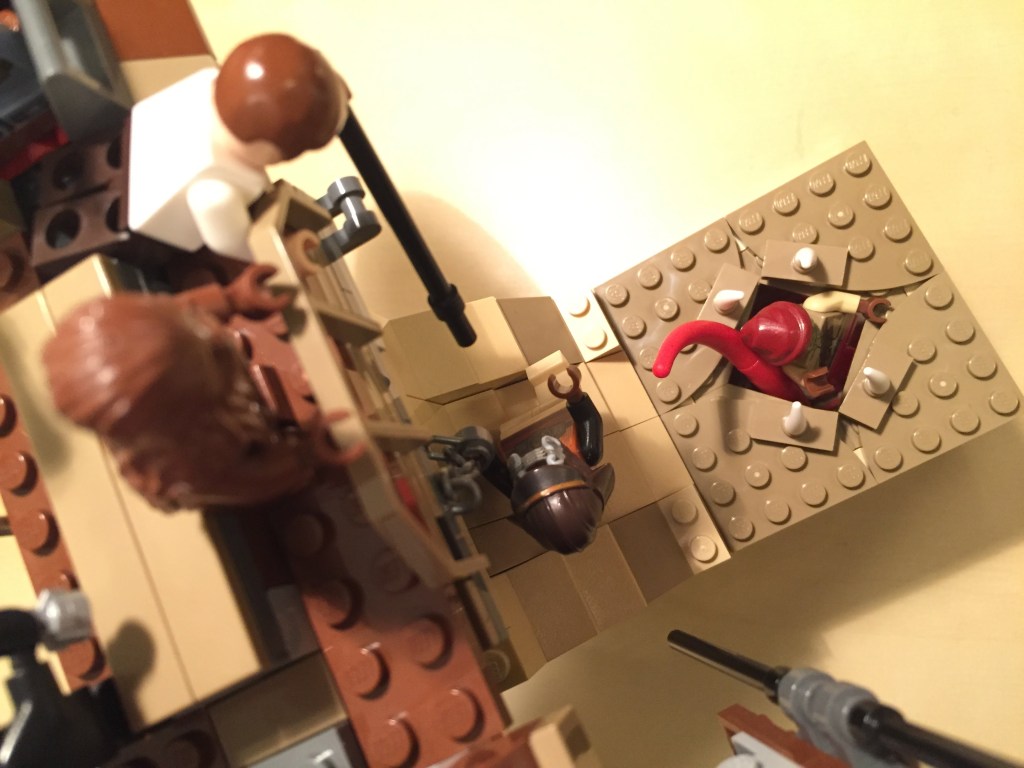
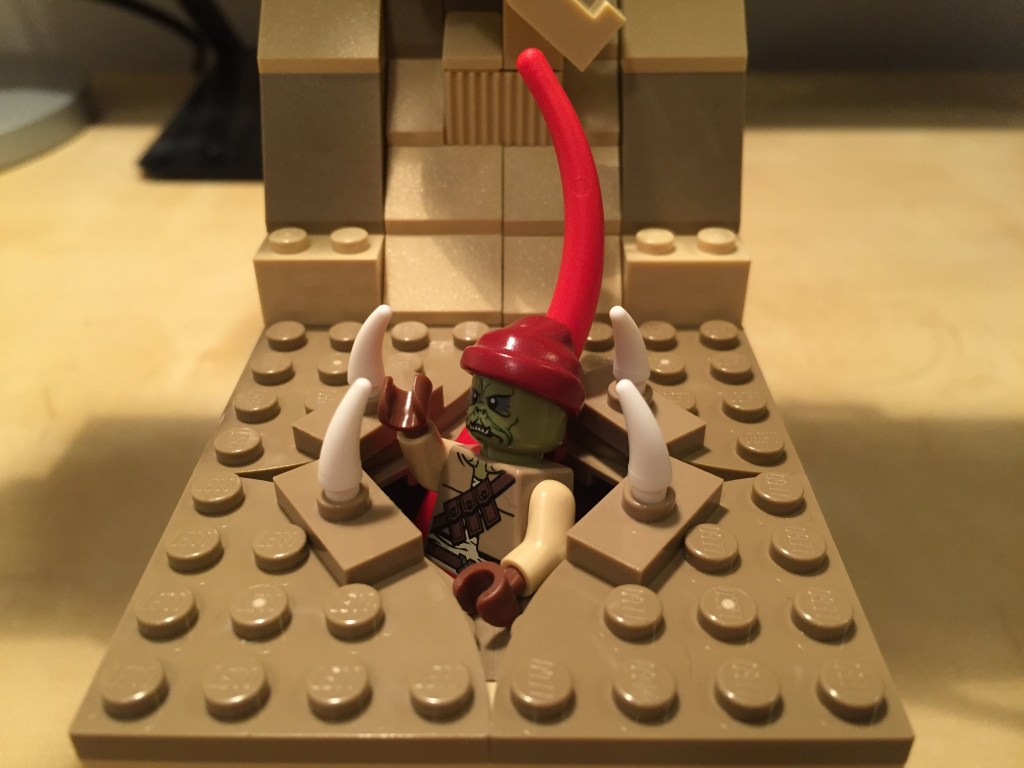
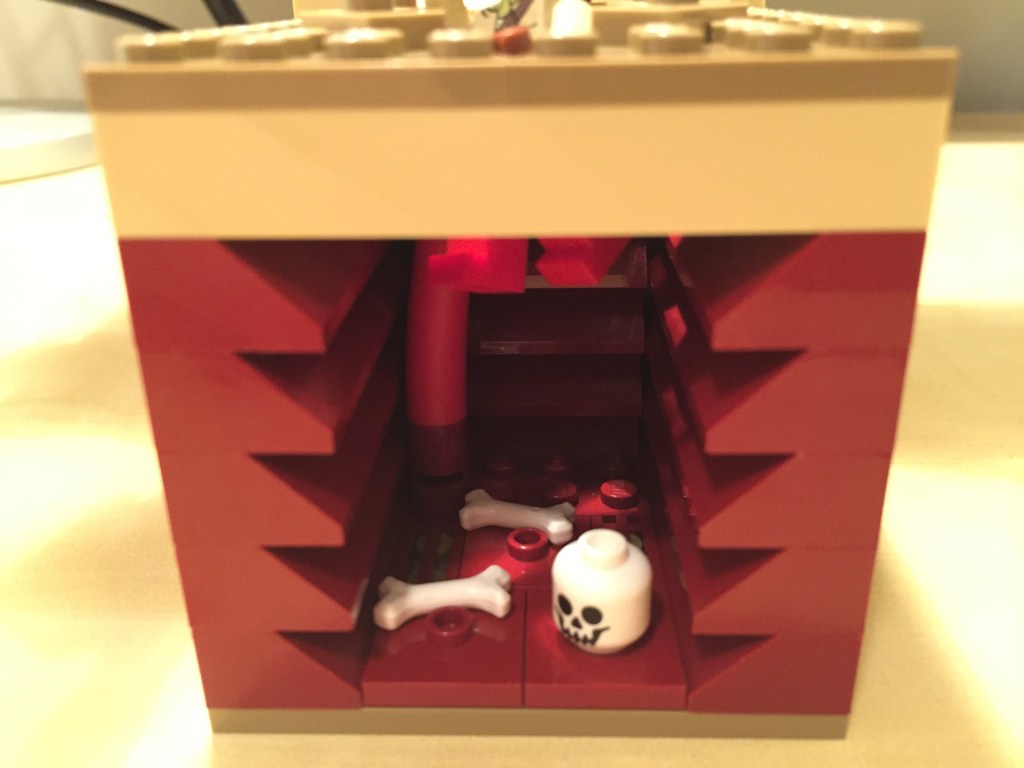
    Following some of my recent LEGO MOC and MOD posts here, here, and here, this LEGO scene of the Desert Skiff rescue above the Sarlacc Pit from Return of the Jedi (1983) is another pre-pandemic build of mine. The desert skiff is an unmodified 9496 set from LEGO. However, I added more minifigures (Han and Chewbacca), and I recreated the scene as it roughly appears in the film when Lando Calrissian falls overboard with one of Jabba’s henchmen who is devoured by the Sarlacc. The base of the build is the high walls of sand surrounding the Sarlacc’s maw with a toothed opening and digestive tract beneath the sand full of bones and skulls of its past meals.

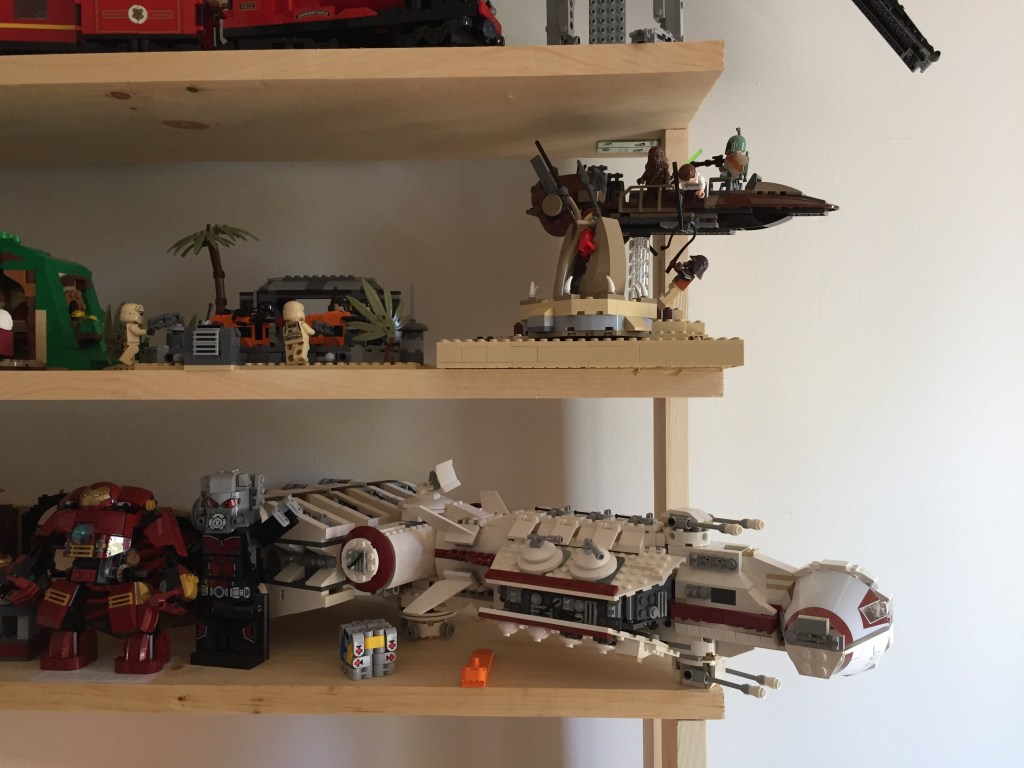
    Two wooden shelves of LEGO sets from LOTR, Avengers, and Star Wars.

    Before building this version of the scene, I had constructed a wider base and used the Sarlacc Pit monster build that came with 9496 as shown on the top shelf in the photo above. Also, Lando was holding onto the Desert Skiff by a whip instead of a chain, which I used on the newer diorama shown in more detail below. Pity the poor bastards who get slowly digested over a thousand years–that is, until Boba Fett took care of the buried beast!

    I’ll note that when I was a kid, the Power of the Force Tatooine Skiff by Kenner was one of my favorite vehicles next to the Millennium Falcon, not only because it had a lot of playability and features packed into but also because I recognized the engineering and craftsmanship that went into its design, including retractable skids, extending/dropping plank, and a sideboard action figure launcher.

  • Star Wars LEGO MOC of Kyle Katarn’s Moldy Crow HWK-290 Light Freighter from Dark Forces

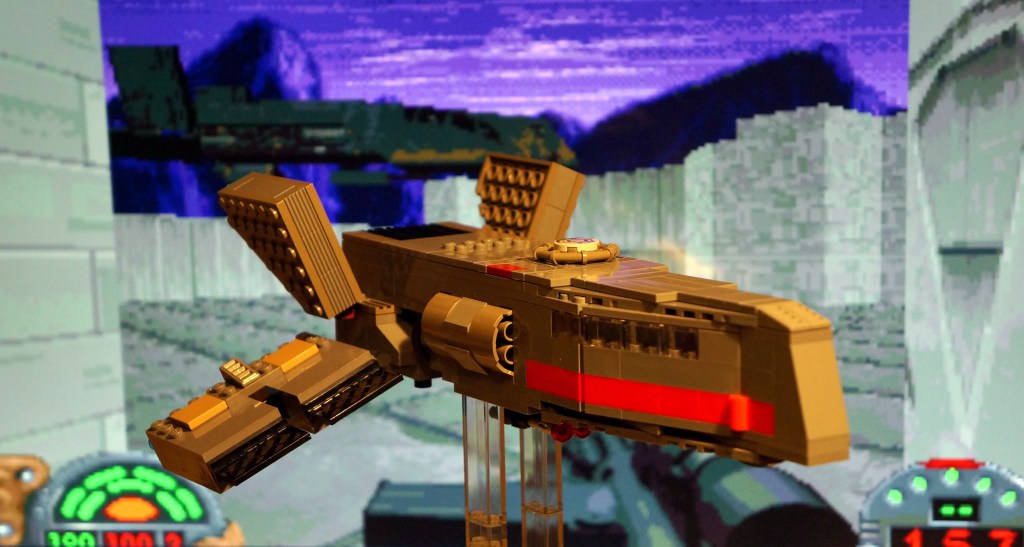
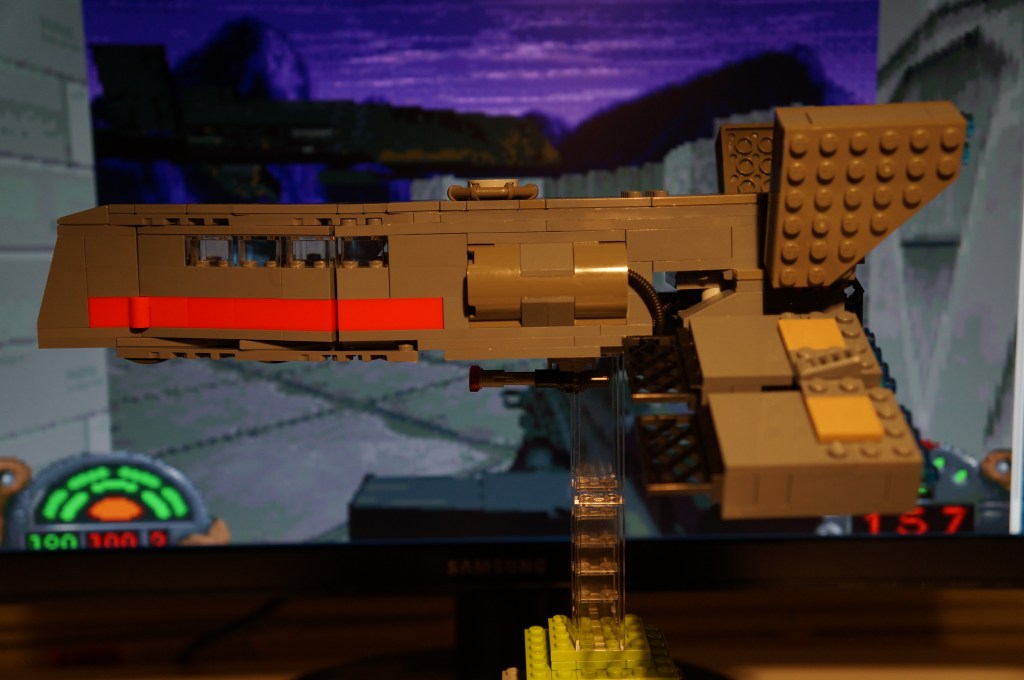
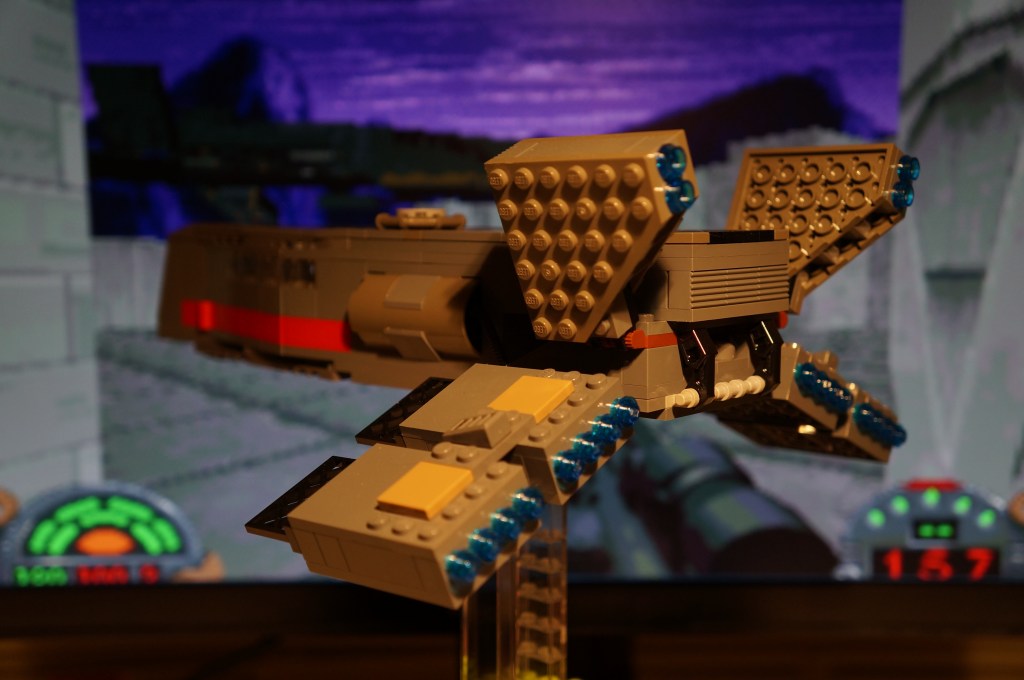
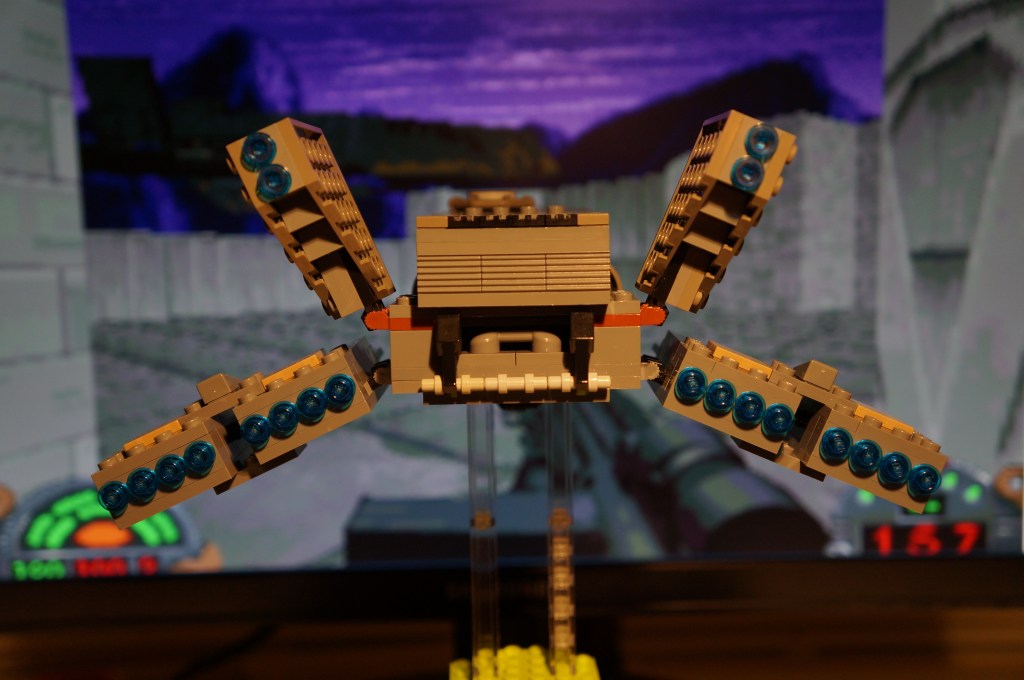
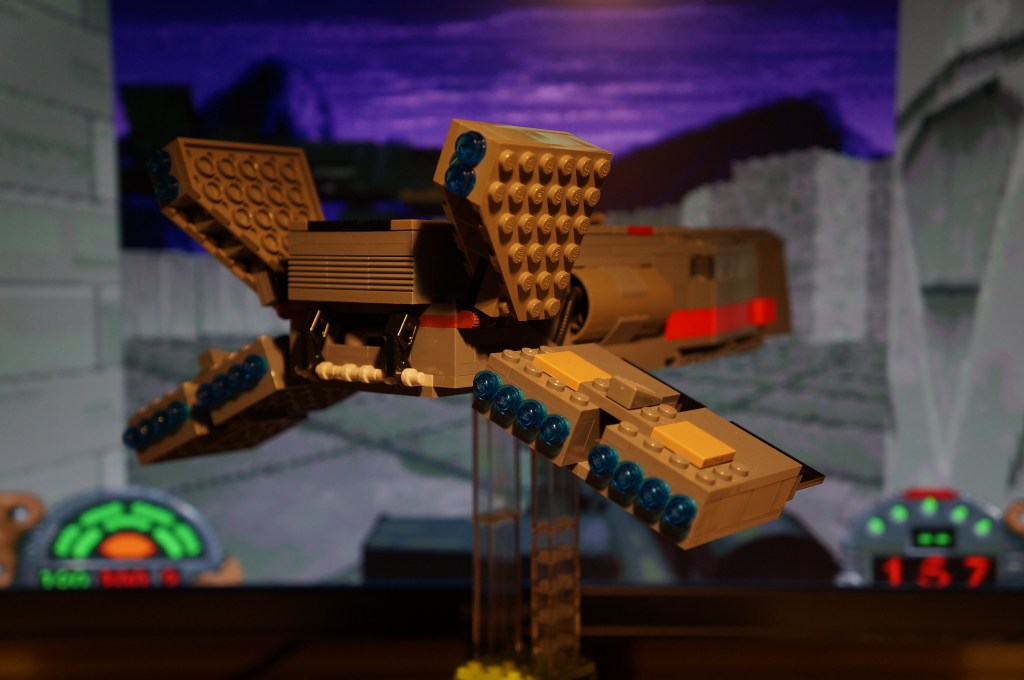
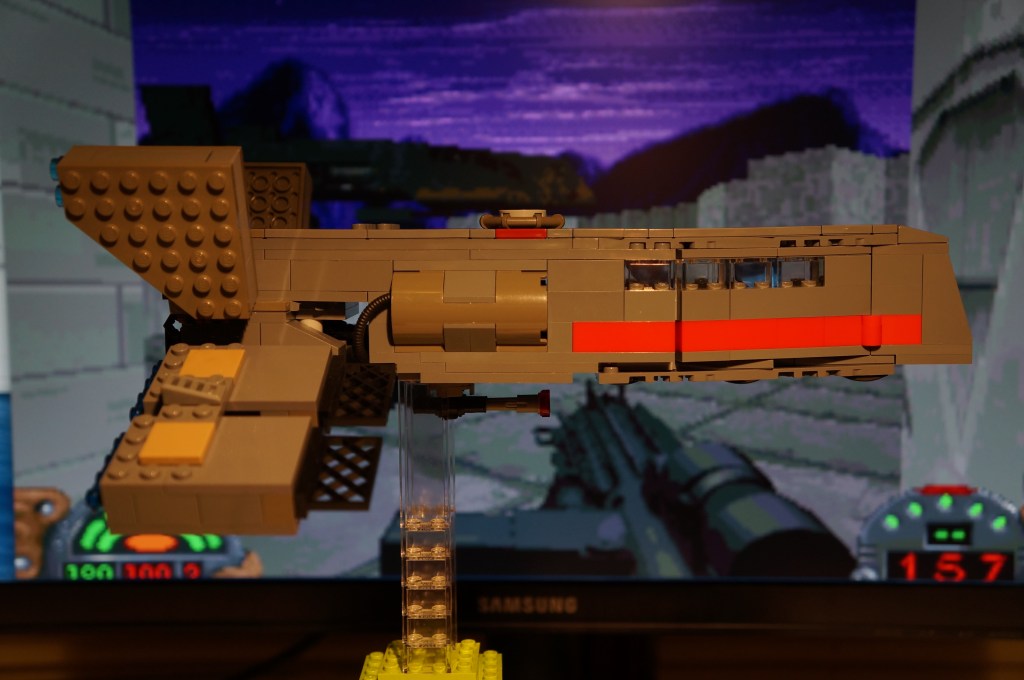
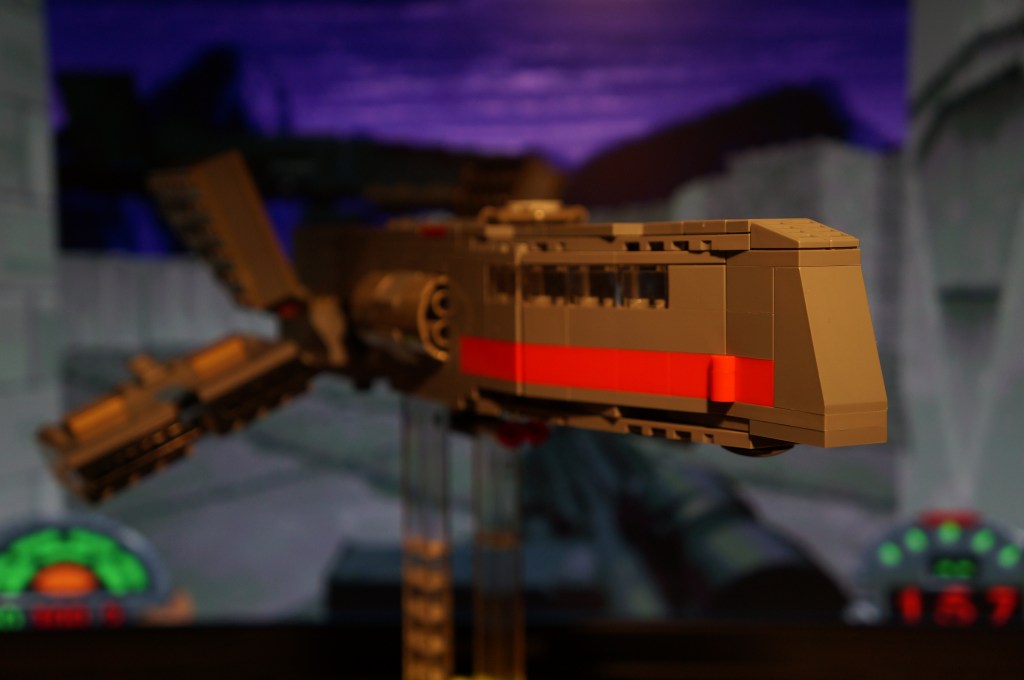
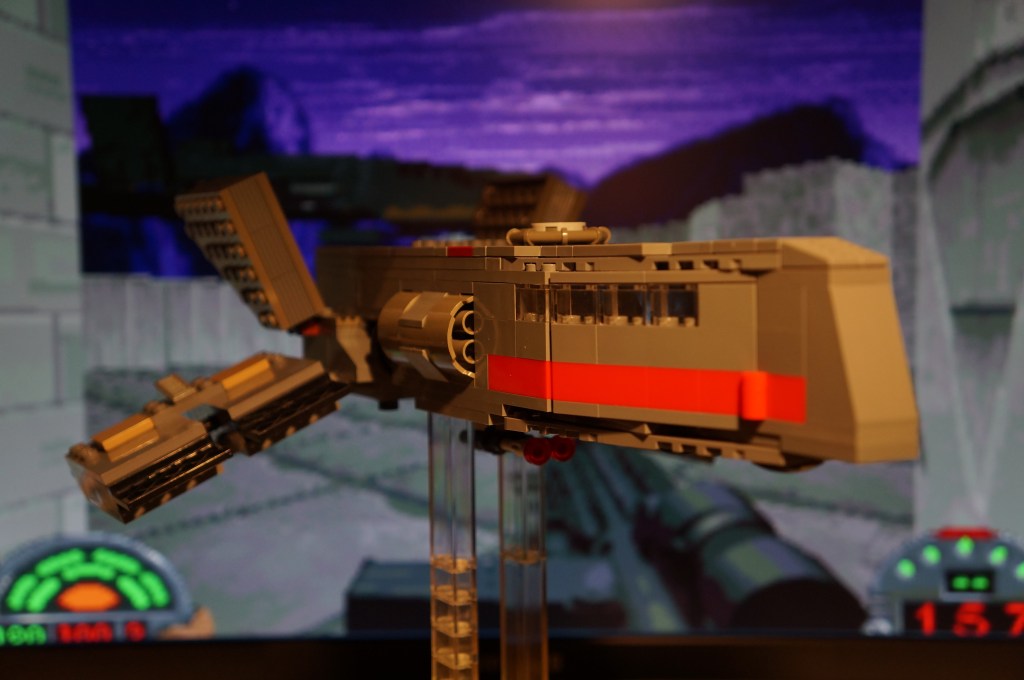
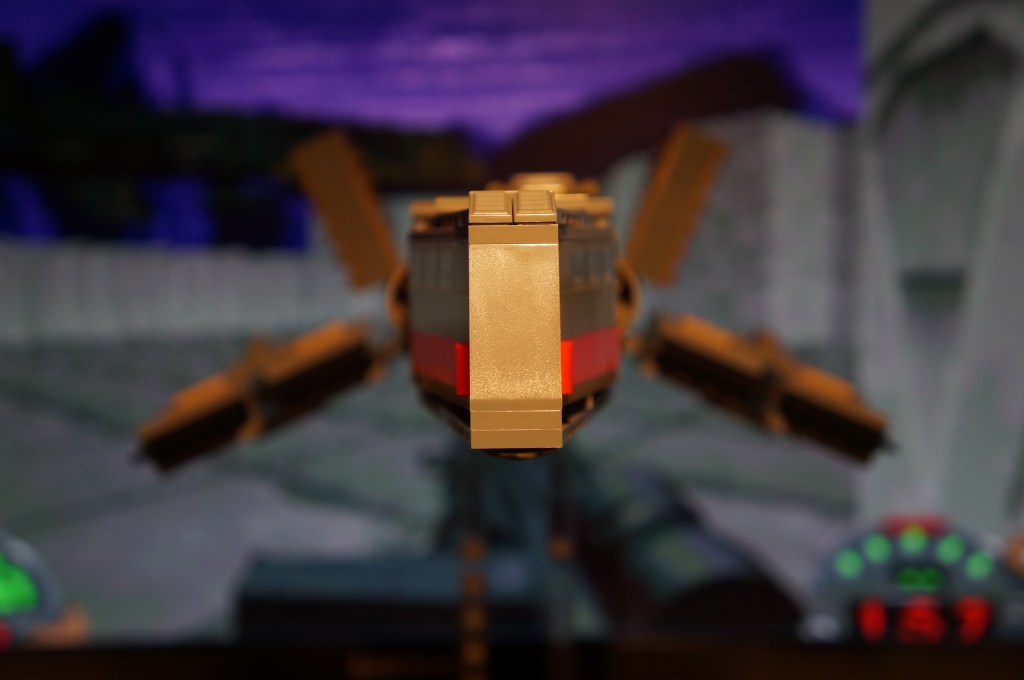
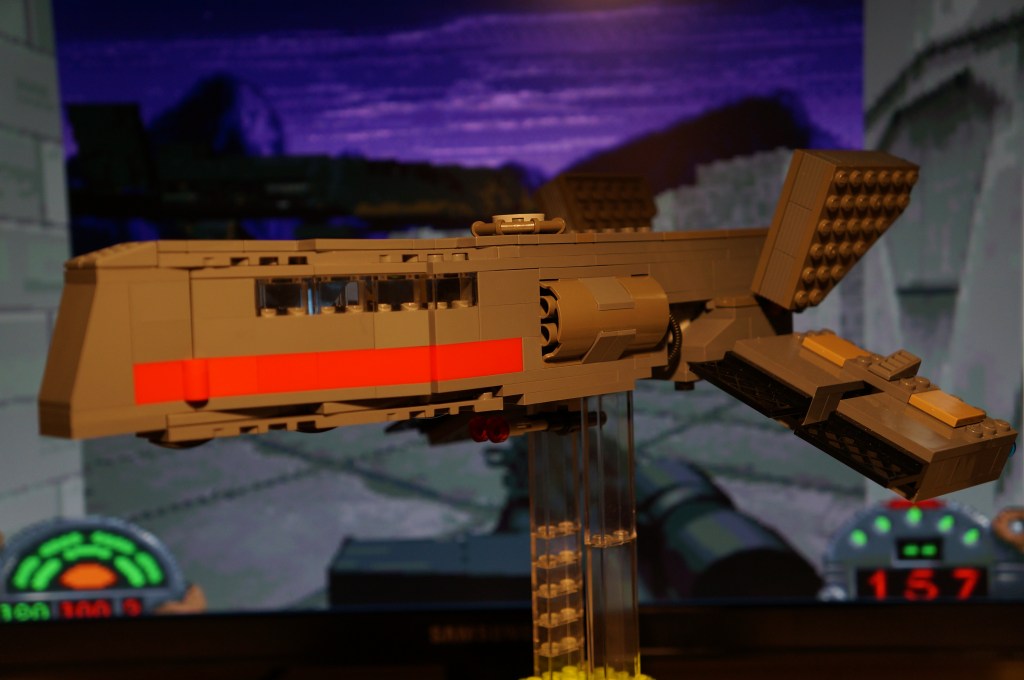
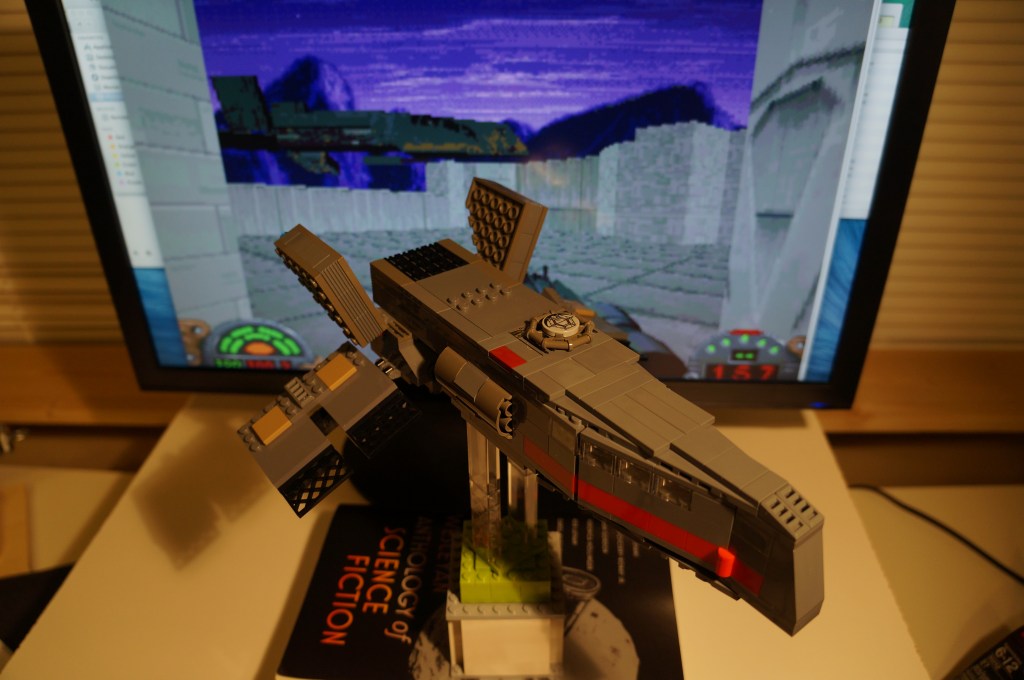
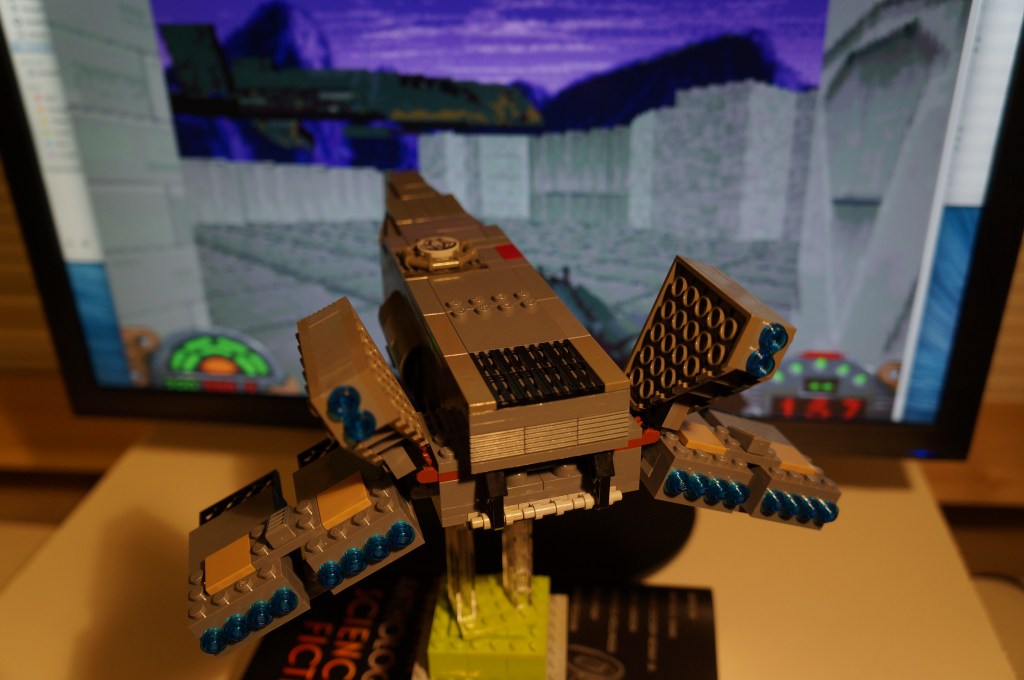
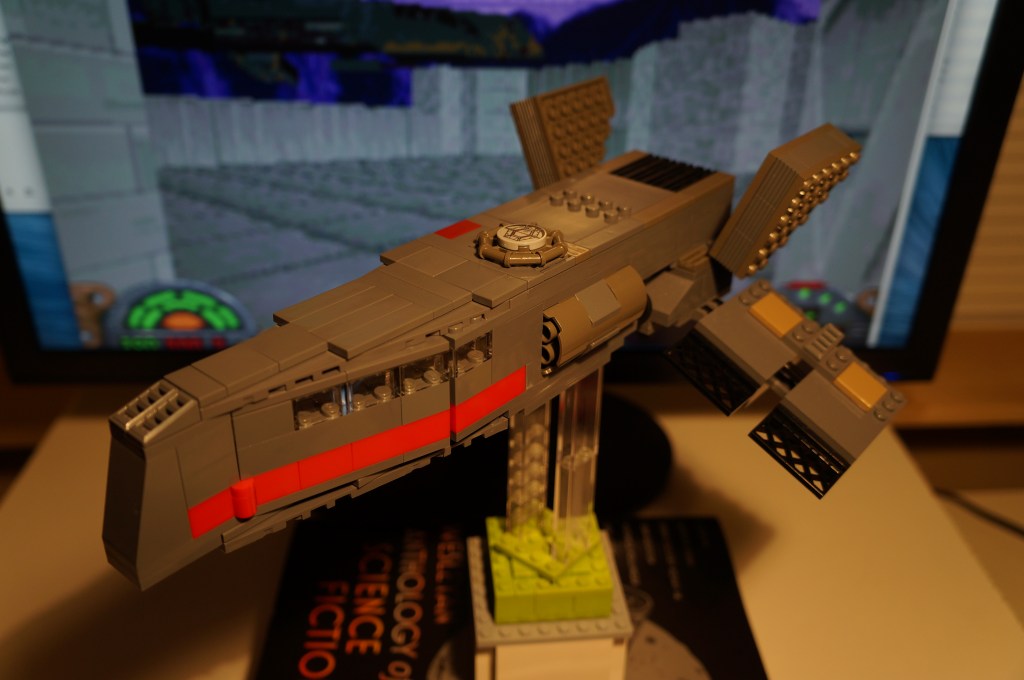
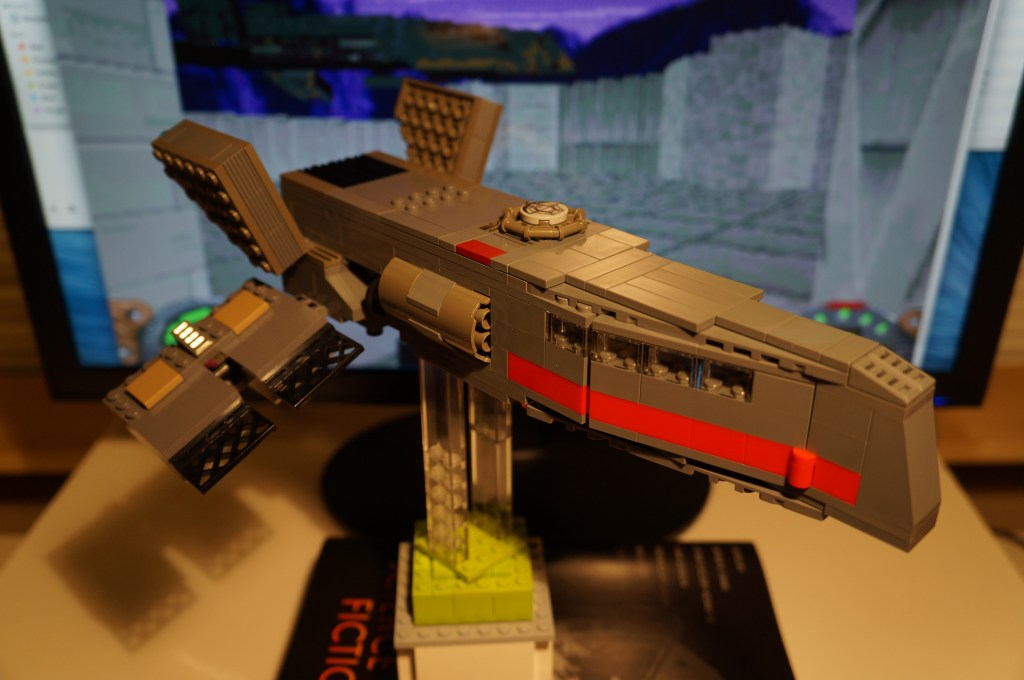
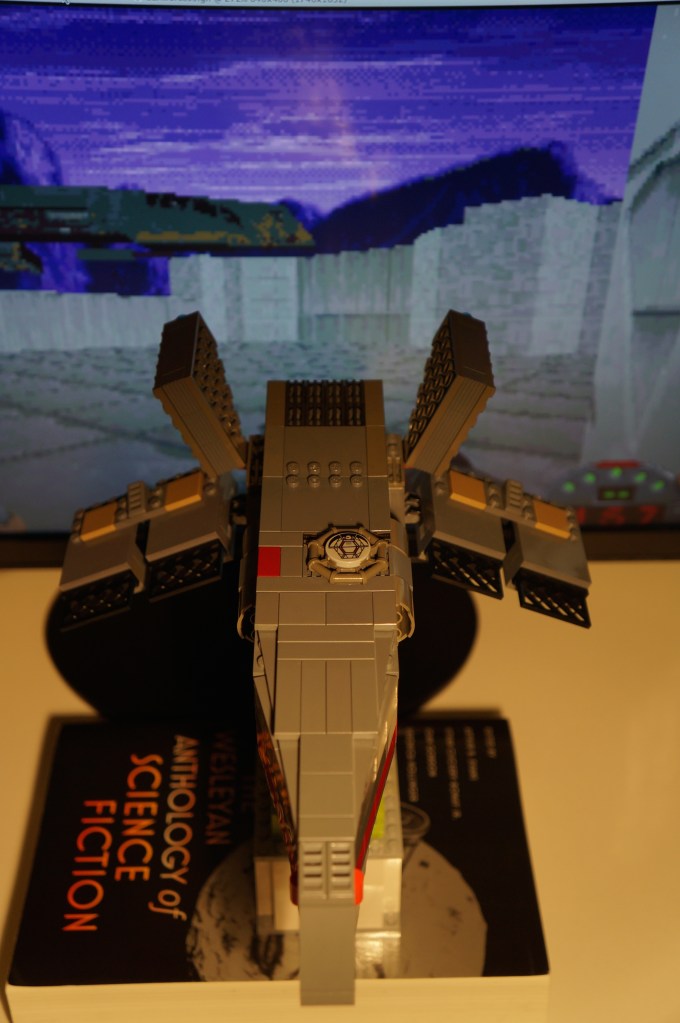
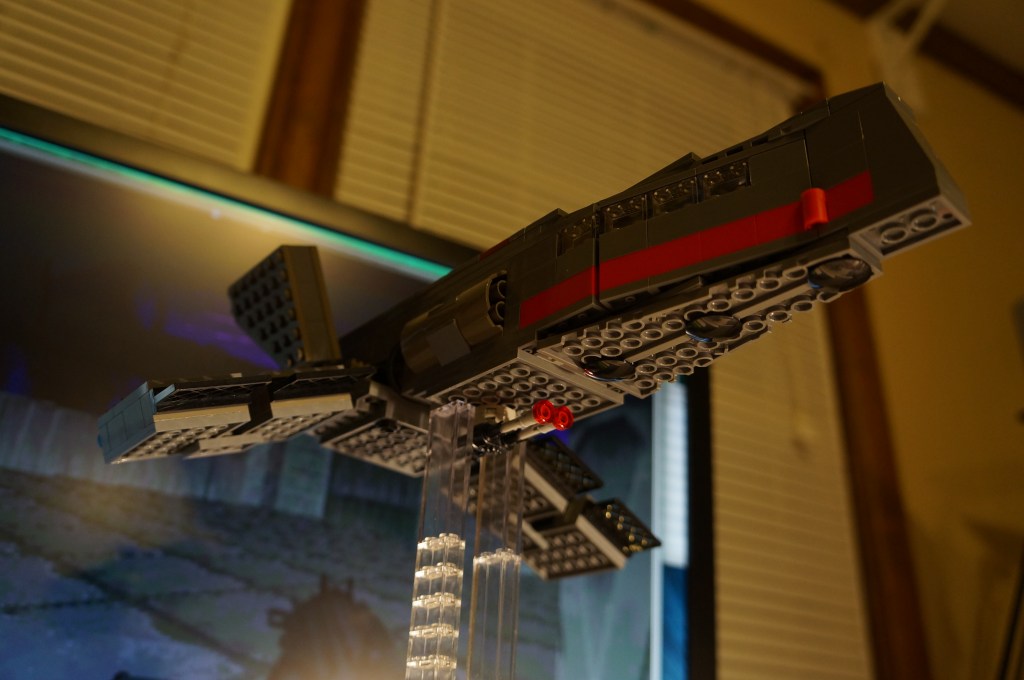
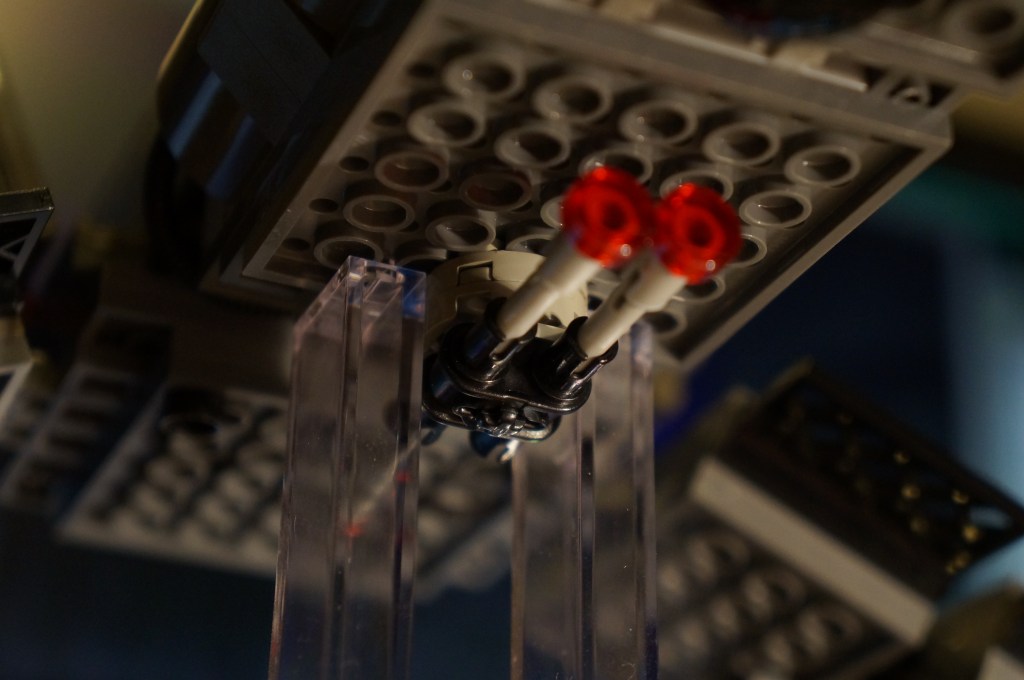
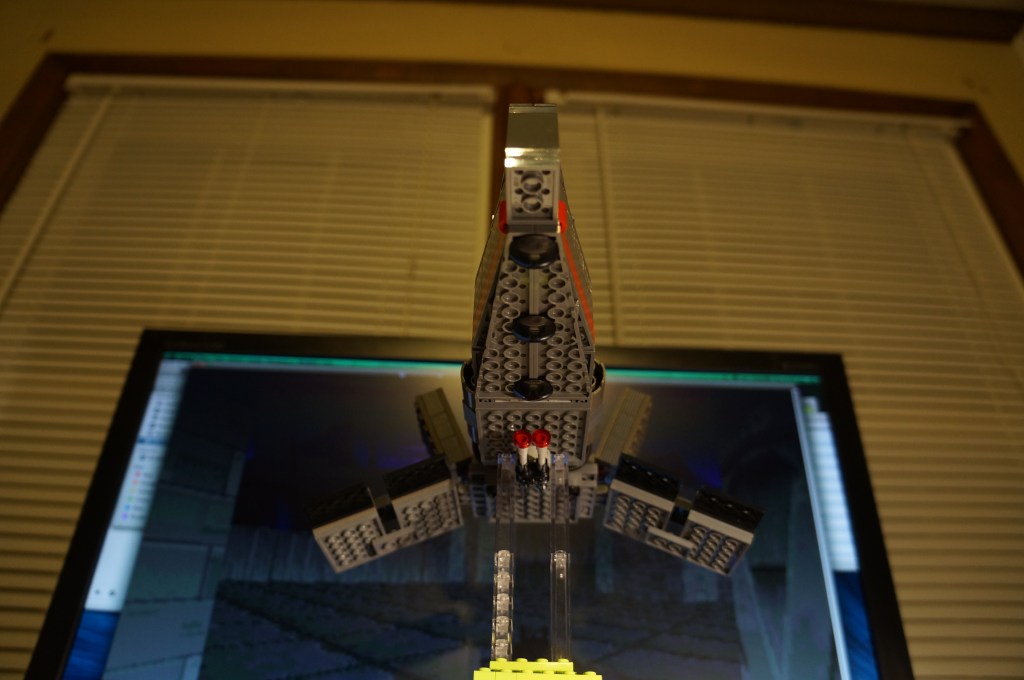
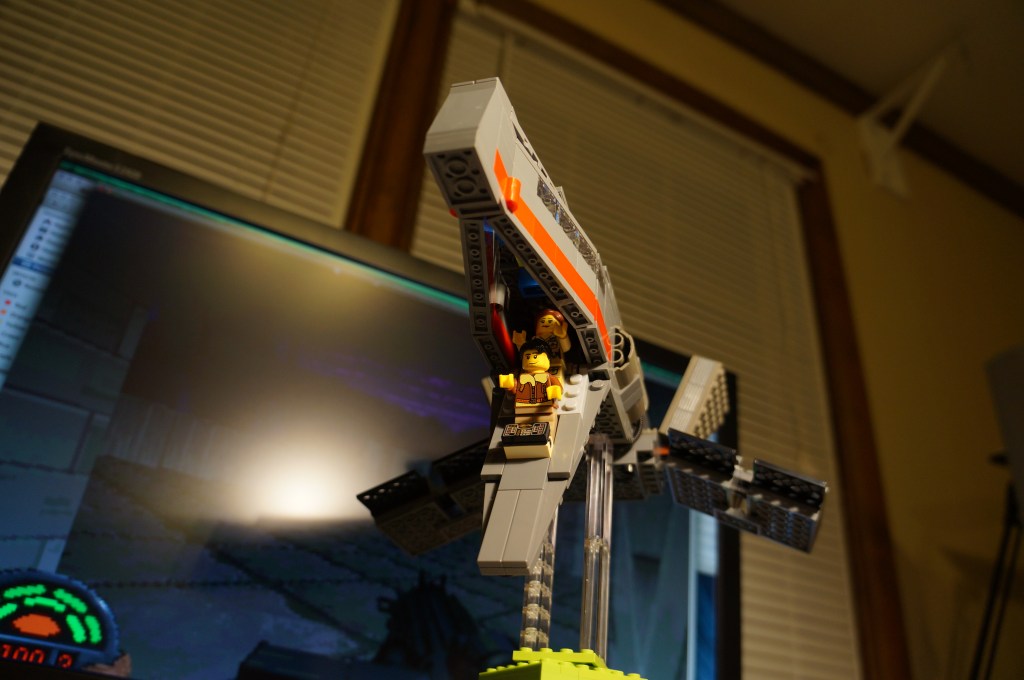
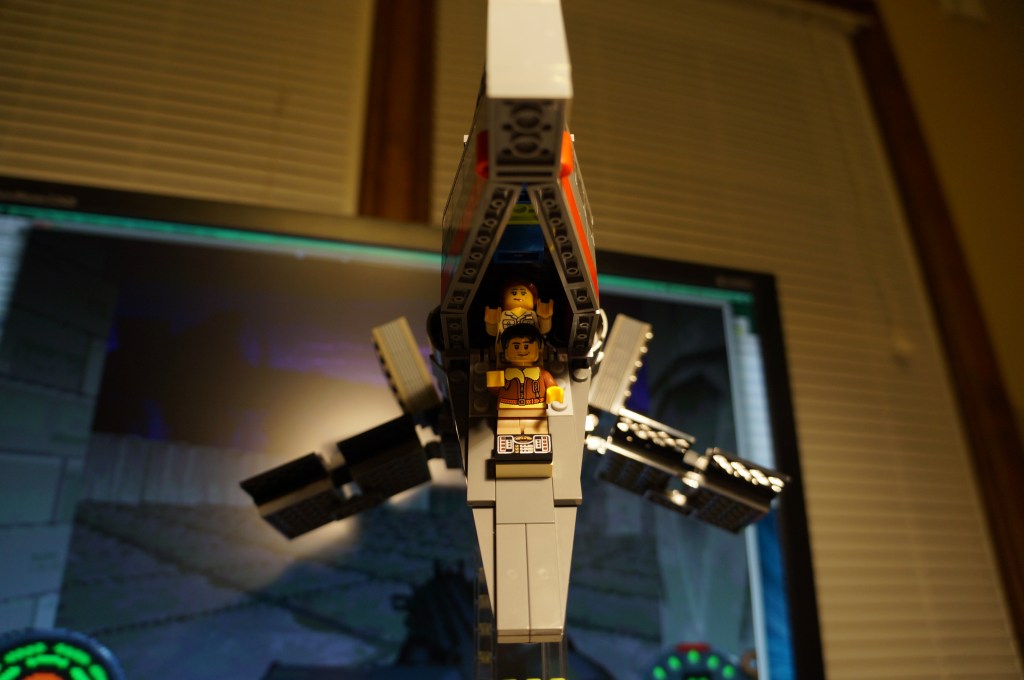
    Moldy Crow LEGO MOC in front of Dark Forces video game screen.

    One of my favorite mid-1990s video games is Star Wars: Dark Forces for PC. In the game, you play as Kyle Katarn, a mercenary employed by the Rebel Alliance, who stumbles on the Dark Trooper project through one of his missions (none of Dark Forces is considered canon, but the Dark Troopers were brought into canon via the second season of The Mandalorian). I played Dark Forces often on my 486DX2/66MHz machine, but I was unable to beat it back then (the video game Force is weak in this one). Thanks to DOSBox, I finally beat it about 25 years after I first played it!

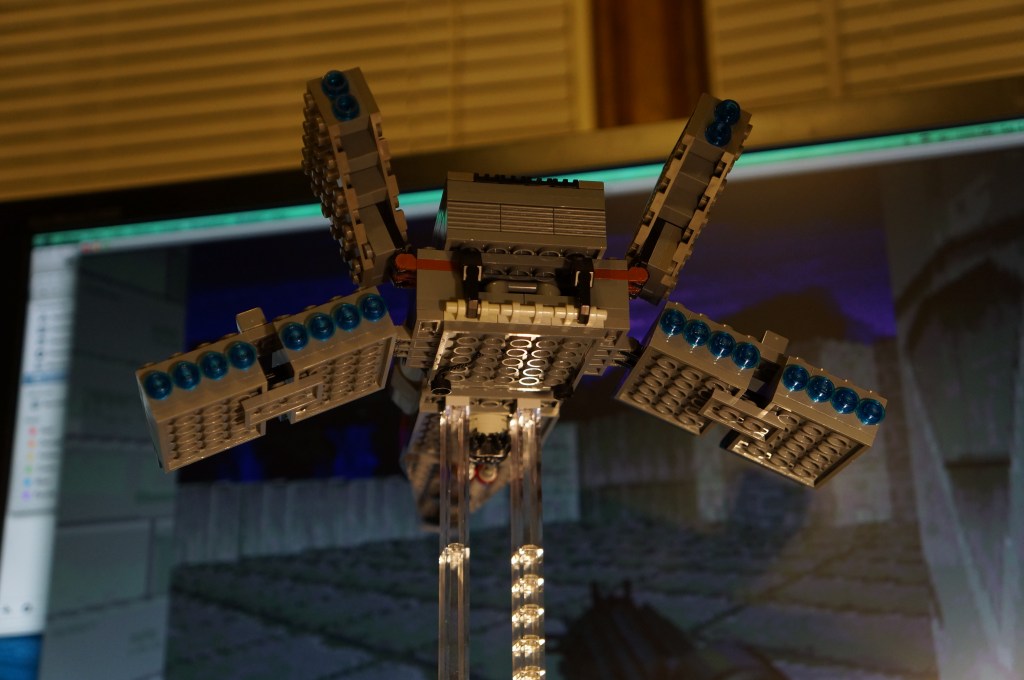
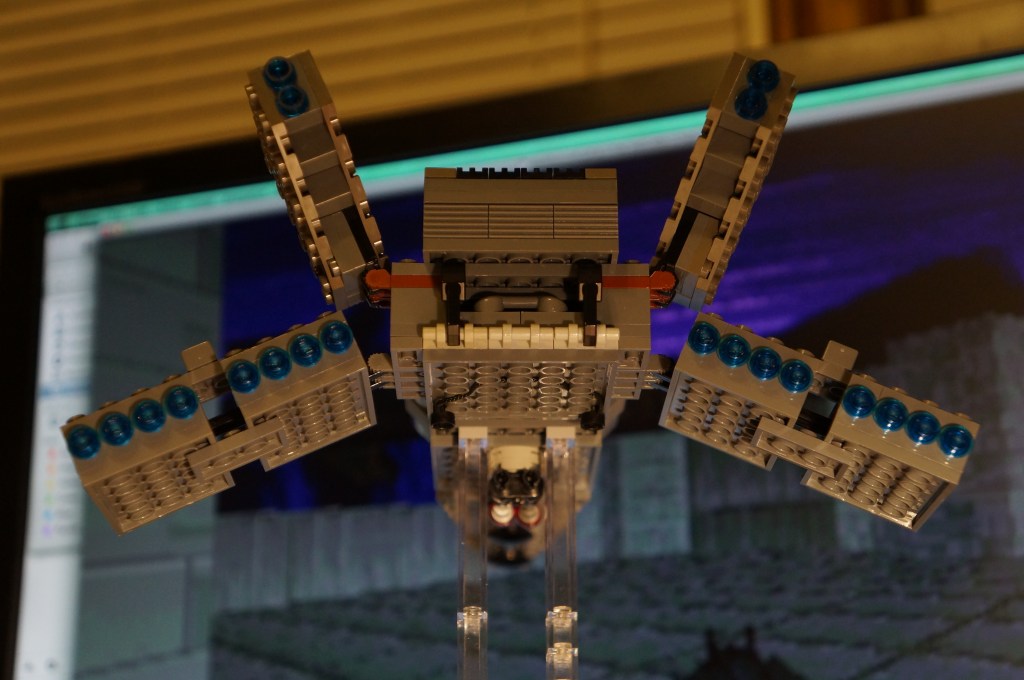
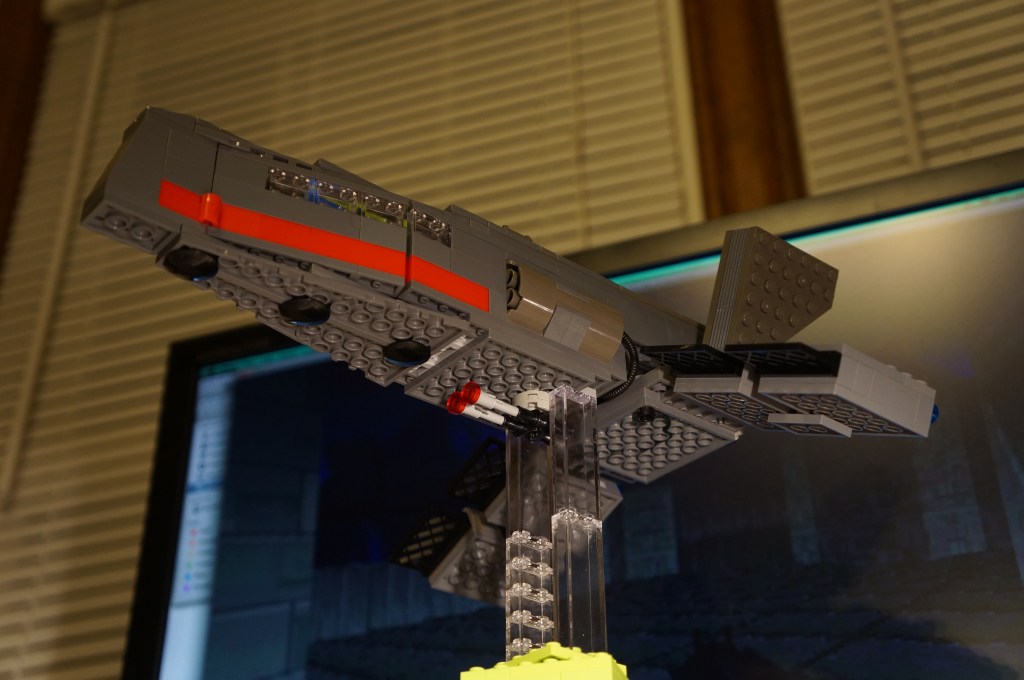
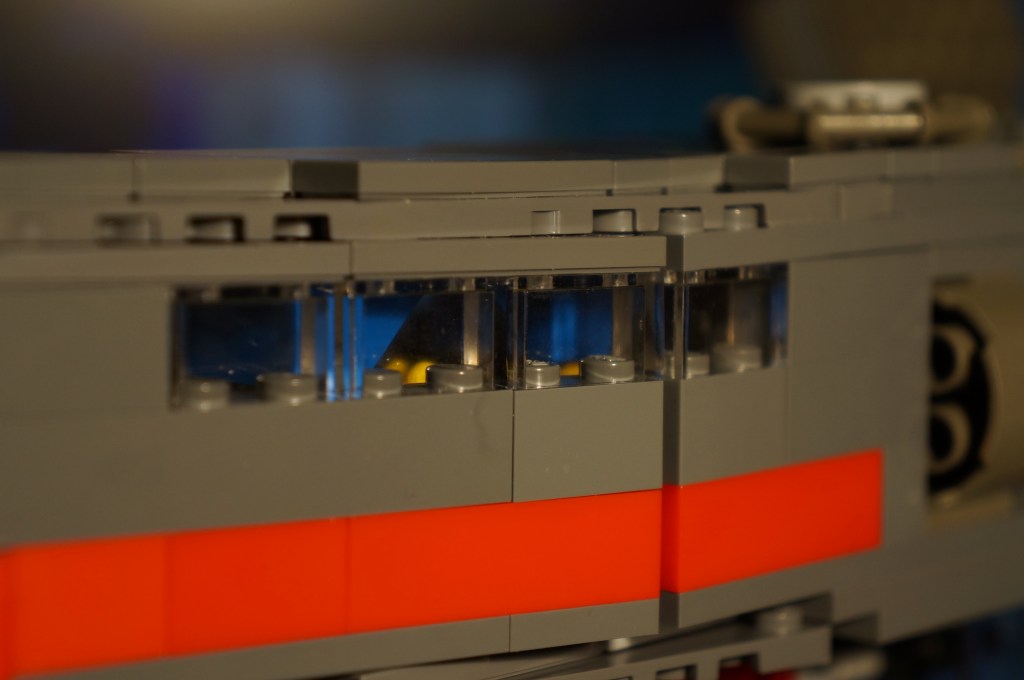
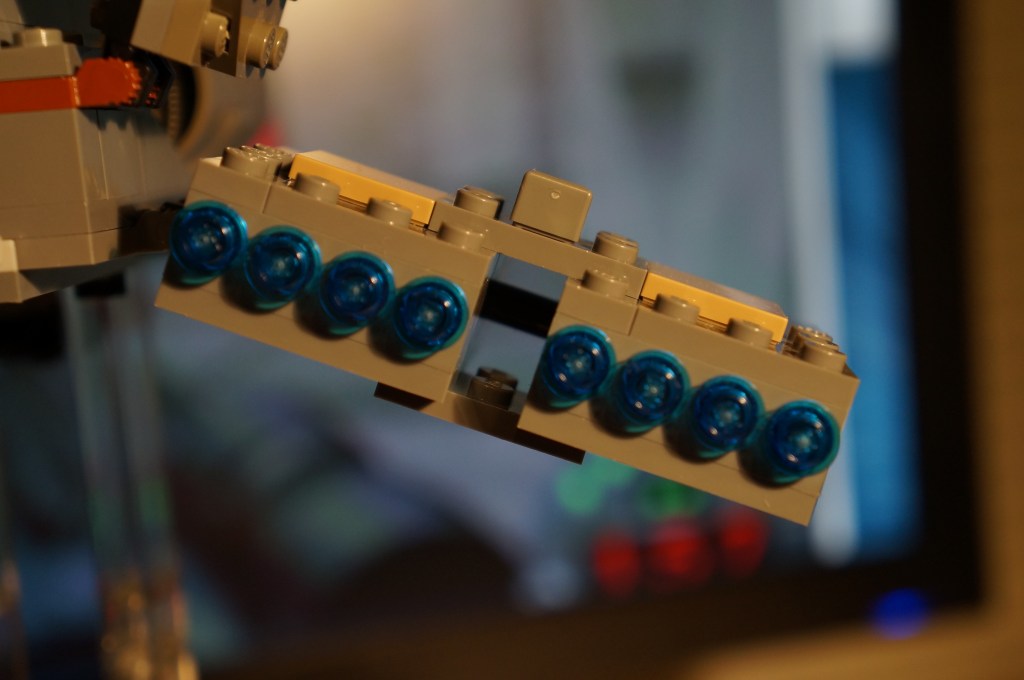
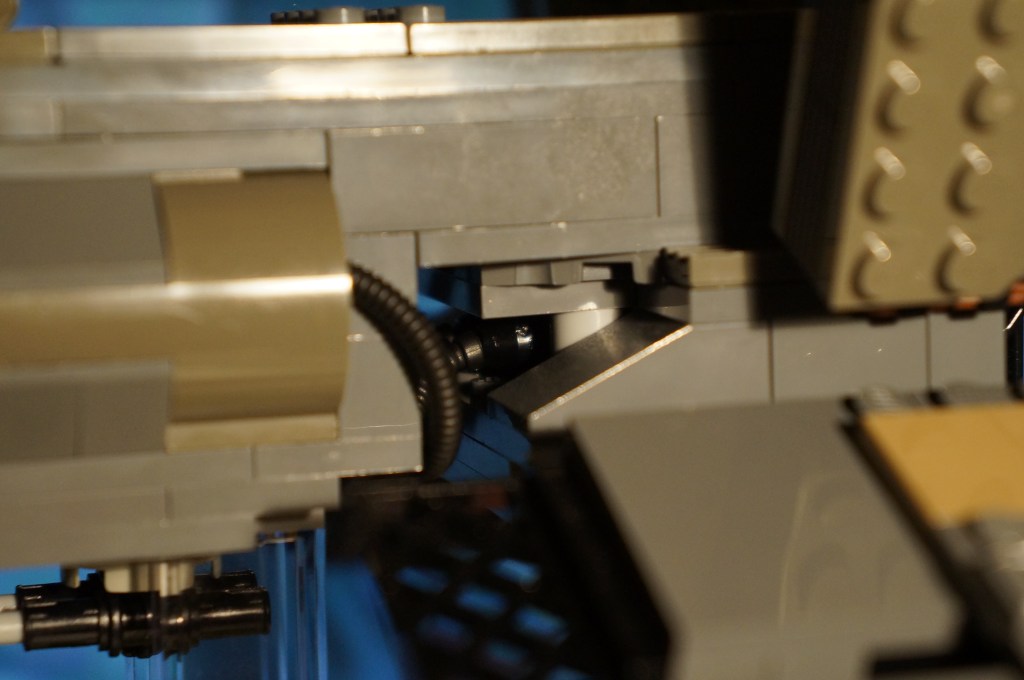
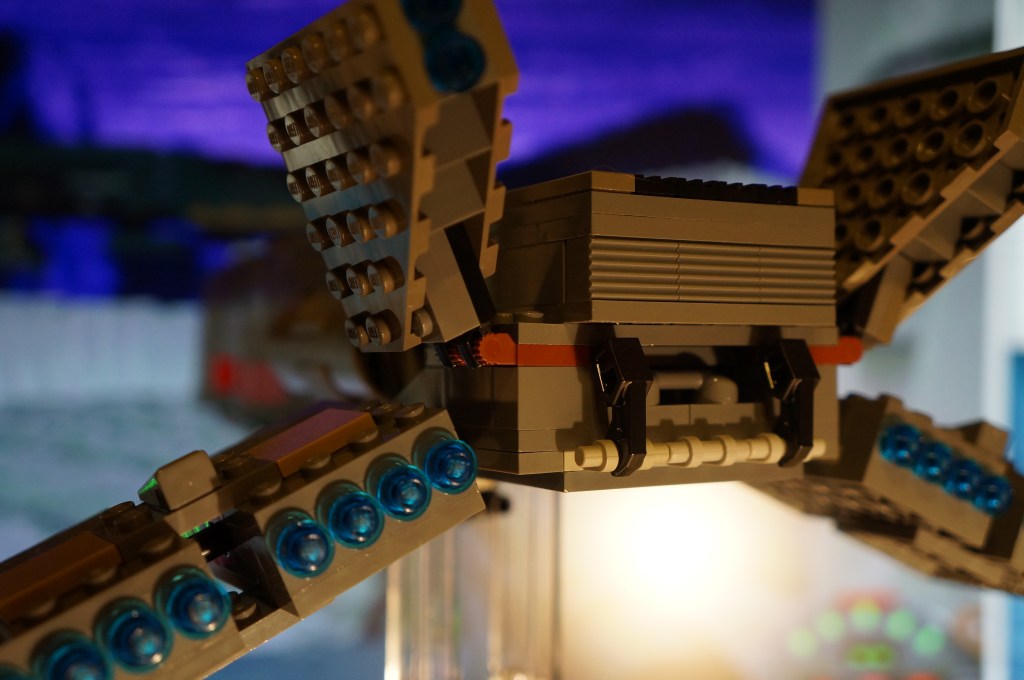
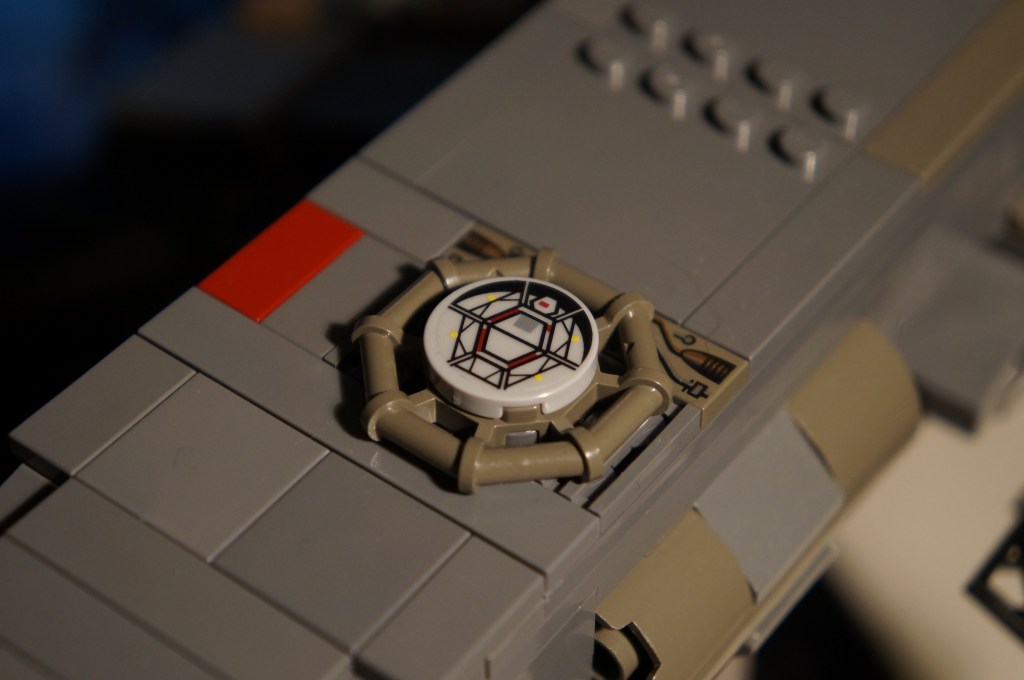
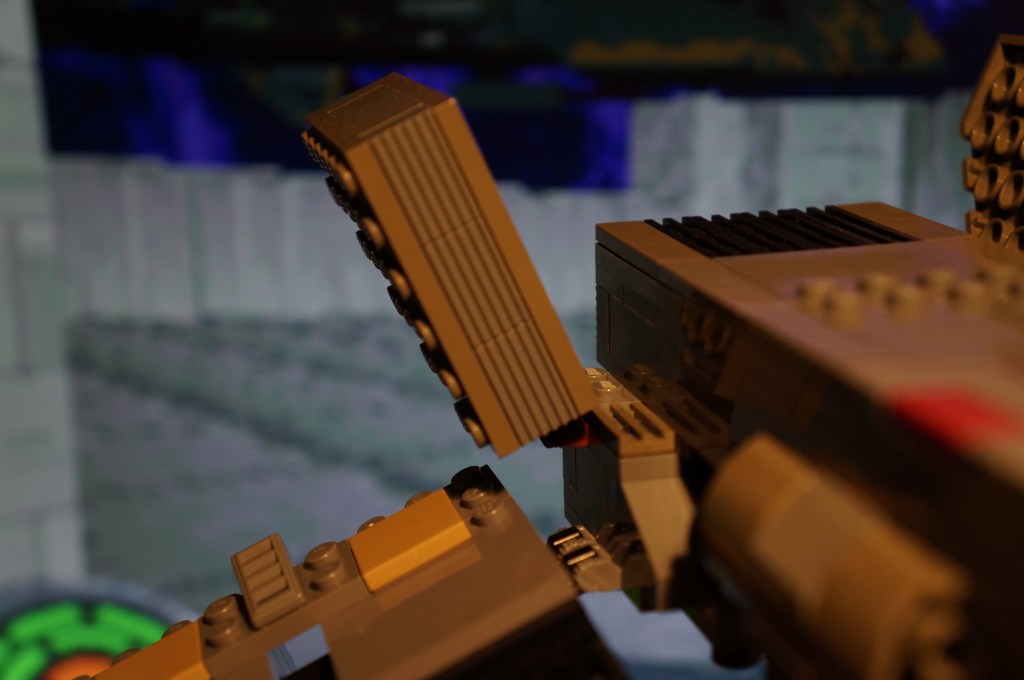
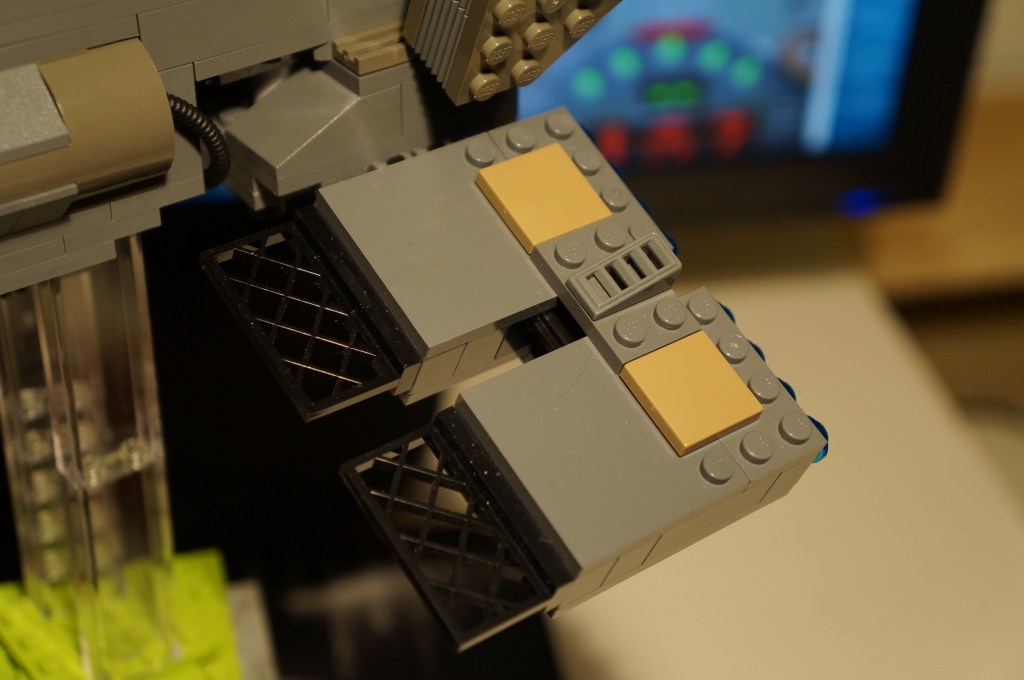
    The Star Wars universe created by George Lucas is, like his earlier film American Graffiti (1973), about motion, movement, travel, and vehicles. The importance of movement in Star Wars is what elevates vehicles like Han Solo’s Millennium Falcon to be a character in their own right. The same is true for Katarn’s HWK-290 light freighter named The Moldy Crow. I liked its angular, bird-like appearance. It reminded me also of He-Man’s Talon Fighter from 1983’s Point Dread and Talon Fighter playset. The image of the Moldy Crow stuck with me, and when I was building with LEGO in Atlanta in 2014, I thought of a way to capture the Crow’s design in a LEGO MOC (my own creation).

    Rotational Side Views

    Top Views

    Bottom Views

    Crew Compartment

    Details

    Reflection

    Unfortunately, I sold my LEGO Moldy Crow on eBay before Y and I moved to Brooklyn (along with a boatload of other LEGOs). I wonder if the buyer still has it or modified it in some way.

    A lot of the bricks that I used in the build were older style dark grey, which I don’t have many of any more. I would like to take another stab at The Moldy Crow with my newer bricks and use techniques that I’ve learned over the years since then. Another project added to an already long list!

  • Ten Suggestions on Teaching With/About Generative Artificial Intelligence (AI) in the Writing Classroom

    Anthropomorphic cat wearing suit and tie, and standing in front of a chalkboard. Image created with Stable Diffusion.
    Anthropomorphic cat wearing suit and tie, and standing in front of a chalkboard. Image created with Stable Diffusion.

    I’ve been spending a lot of time studying and using generative AI technologies and thinking about their pedagogical implications, and over the summer, I invested more energy into taking intensive online classes relating to generative AI on LinkedIn Learning, which I wrote about here and here. The suggestions below are a distillation of some of the important ideas that I have learned and plan to implement after my sabbatical this year concludes. Readings associated with these points can be found on my extensive generative AI pedagogy bibliography. Maybe you will find some of these helpful to your thinking for your own classes as we make our way into the science fictional future together!

    1. Build ethical and legal issues of generative AI into every discussion and assignment. Of course, a separate module or a whole course can be focused on these topics, but students need to see how ethical and legal issues are tightly woven into how these technologies are developed, the challenges that they present, and how to be prepared to avoid, mitigate, or resolve those challenges. By weaving ethical and legal issues into the quotidian, it helps students think critically about these issues throughout the learning process and it avoids the conclusion that ethics and legal concerns are just an afterthought.
    2. Show students how bias in generative AI is real. Since generative AI is trained on datasets of work created by people, the AI systems will reflect the biases inherent in the content of the dataset and the ways different people might be represented in the dataset (e.g., more books by white male authors and fewer by writers of color or women writers). Bias is unfortunately baked in. Help students explore how these biases reveal themselves insidiously, might be discovered through prompting, and how to mitigate them (if possible) in the way they use generative AI as a part of their workflow.
    3. Help students become responsible generative AI users. Students need to be taught how to document, cite, and acknowledge the use of AI in their work at school and later in the workplace. This can refute earlier use of ChatGPT and similar sites that fueled what some might consider plagiarism or cheating. Helping students see how it’s okay to use these tools when allowed and properly documented helps them see how they are a tool to support their work rather than a way to avoid working.
    4. Reveal how generative AI technologies are designed, developed, and operated. By learning how generative AI is built and deployed, students get to see how the sausage is made. They will learn that generative AI isn’t magical or all knowing or perfect. Instead, they will realize that years of research and development in mathematics and computer science led to the current state of the art with these technologies, which is still lacking. They will discover the limitations of what these technologies offer (e.g., text generating AI primarily performs sentence completion and has no understanding of what it is doing, or its training data has gaps, deficiencies, biases, etc. that directly affect the text generated). This can be paired with lessons on how large language models are trained, how they are a black box in terms of how they work, and initiatives to build explainable artificial intelligence (XAI).
    5. Approach generative AI as another layer for students’ digital literacy development. Considering AI’s biases, falsehoods, so-called hallucinations, and off-topic responses, pairing generative AI with instruction on vetting information, using research tools (online and off), and applying one’s own skepticism will combat the notion of AI’s trustworthiness, expertise, and authoritativeness. Also, it gives students another source for comparing, contrasting, and verifying when checking facts and establishing reliability of various sources of information.
    6. Introduce generative AI as a new tool for students to add to writing and creative workflows. Some students might like to think that generative AI is a one-stop shop, but we can reveal to them how it can support different elements within a larger creative framework that depends on their cognition, imagination, and effort to produce deliverables. It can aid with ideation, brainstorming, planning, and outlining, as well as handling less important writing tasks, such as replying to an email or DM. An important corollary to this is the fact that prompt engineering is a skill unto itself that students have to learn and develop. In some cases, figuring out the best prompt might require more time, energy, and collaboration with others to accomplish than had the students done the writing output themselves.
    7. Refocus on editing, revision, and the writing process to incorporate generative AI text into student work. One way to accomplish this is teaching students higher level editing and revision tasks using AI generated text as the material for editing. Another way is to teach students how to use editing tools, such as those built into Microsoft Word, Google Docs, and LibreOffice, to work with the text generated by AI.
    8. Harness generative AI as a learning tool to support student experimentation and discovery by example. Students can ask the generative AI to summarize their writing, rewrite their writing for different audiences, turn outlines into paragraphs, etc. However, for students to gain some benefit from this, there needs to be a reflective writing exercise that gives the student an opportunity to dissect what the AI did to the student’s original composition and then based on what the student learns in reflection, they attempt their own new composition with the same goal as that given to the generative AI. The AI’s output can be combined with the student’s reflection and composition for evaluation by peers or the instructor, depending on how you are providing feedback to students on their work.
    9. Recognize writing students as technical communicators, because they use generative AI technology in their writing processes. I am thinking of part of the Society for Technical Communication’s definition of tech comm: “Communicating by using technology, such as web pages, help files, or social media sites.” Using AI to create outputs or as a part of the writing process means that students are using technology to communicate in a deeper way than how we might have thought of this before. Acknowledging this with students might make more of them aware of this as a career path or how they might leverage their communication skills as they transition into the workplace.
    10. Warn students about the possible jeopardy they face by providing their writing, prompts, questions, and personal identifying information to online-based generative AI tools like ChatGPT. Anything you type into the system is saved and associated with you. This means that your inputs might be used to train and fine tune future versions of the generative AI system, and the data collected about you based on what you type and how you use the system might be utilized by the system provider or sold to third parties (e.g., for advertising, adjusting insurance rates, making loan decisions, etc.). This can be connected to a larger discussion of how to protect one’s self online, practice privacy best practices, employ obfuscation techniques, etc. Teaching students how to use their own locally hosted LLMs, such as Meta’s LLaMA and its derivatives. This gives them more control over how their data, and it gives them the option to fine tune their local model to better fit their needs.