Author: Jason W. Ellis

  • Virtual Reality is Trying VR Again and Again

    Over the years, I’ve tried as best as I could to get interested in virtual reality (VR). The idea of VR excites me to no end. However, the reality of VR so far continues to underwhelm and frustrate me. The two biggest concerns that I have had are with eye fatigue, user interface design, and poor tracking and interaction with virtual environments. Below are some of the hits and misses that I’ve had experience with in commercial VR.
    2009: VFX1 Headgear

    The VFX1 Headgear was a bittersweet discovery. When I was much younger, I lusted over it when I saw it advertised in computer magazines in the mid-1990s. Unfortunately, it was priced out of my league and I didn’t know anyone who could afford one either.

    Fast-forward to my being a grad student at Kent State. One late afternoon as I was leaving the Satterfield Building–home of the English Department–I glanced at the recycling bins under the stairway by the exit and I saw a really big box emblazoned with the VFX1 Headgear on the side. Curious and expecting to find an empty box, I was shocked when I picked up the box and felt its weight. I opened it and discovered the headset inside. I brought it home and found the headset, cables, and manual, but there was no software or controller card. I was never able to find out who had thrown out the VFX1. I had hoped that I could find the person and see if they might still have that controller card in their computer, but I had no luck. I also tried to find the controller card through other venues–Craigslist, eBay, talking with vintage computer collectors–but I always struck out. I ended up selling it before we moved to Atlanta. Had I got it working, it would have not been an HD VR experience, but I had hoped to experience what it had been like when it launched.

    2015: Cardboard VR

    These Google-designed cardboard VR headsets are my favorites of all VR considering the simplicity of their setup and operation as well as cost. Also, they enabled me to easily introduce VR to my students–whether we used my phone or theirs. It just worked and gave immersive visual-focused with some sound experiences. I was let down when their development stopped.

    2017: Oculus Rift CV1

    Best Buy ran a sale on the Oculus Rift CV1, so I decided to give more substantive and immersive VR a try. In this particular configuration, I had an NVIDIA GTX 1060 6GB video card running the Oculus Rift. I was never able to get the focus 100% for my eyes and my small apartment’s limited space didn’t give me a lot of room to work in. Also, I had some real problems with interacting with environments and objects in games. Despite what changes I made to the Constellation tracking units, there were gaps between what I tried to do and what the software/hardware thought that I was doing. I ended up selling the set on eBay where I was able to recoup the cost.

    2019-2020: HP Windows Mixed Reality Headset

    When the local Microcenter had a stack of HP Windows Mixed Reality Headset and Controller Sets on sale for the bargain basement price of $129.99, I immediately bought one thinking that it couldn’t hurt to try this higher resolution than the Oculus Rift CV1 set at such a low price and I could resell it on eBay for more than I paid for it if it doesn’t work out. I am happy to report that I was able to get better visual acuity with the HP headset than the Oculus. However, it’s inside-out tracking presented the same kind of problems that the Oculus’ opposite style tracking had when it came to my interacting with virtual environments and objects. The frustrations of reaching not far enough or too far repeatedly was eventually too much. I boxed it back up and put it for sale on eBay.

    Future VR?

    I would like to try VR again in the future, but it might have to wait until I can move out of NYC. There just isn’t enough space in the apartments that I can afford for two people and a cat to comfortably coexist in a space large enough to accommodate movement-in-space VR. Of course, playing shooters or simulators in which I sit down while peering around with the headset on would be fine (analogous to the VFX1), but I would like to experience VR beyond that and interact within space. In the meantime, I’ll keep following VR developments until I can try again.

  • Academic Office Evolution 2012-Present

    In my post-PhD academic career, I’ve had two offices–one at the Georgia Institute of Technology and one at the New York City College of Technology, CUNY. Both were/are in shared office spaces. Thankfully, the desks were not shared (a loathsome experience that I had at Mindspring years ago), so I can keep my things on my desk without concern someone will move them or mess with them. Since I spend so much of my life at work, I like to make these spaces my own to make myself and perhaps others happy to be in their proximity. I’ve combed through my photo collection to find the following snapshots of my office spaces over the years.

    2012-2014, Georgia Institute of Technology

    Fall 2013

    The Brittain Fellows’ office space in the Col. Stephen C. Hall Building has an open floor plan in large rooms with each Brittain Fellow getting a large cubical space with cabinets and shelving. This was a great place to work, collaborate with colleagues, and interact with students during office hours.

    By Fall 2013, I had put up some favorite posters of LEGO LOTR, The Beastie Boys (not realizing that this could foreshadow where I was going next!), and the Philip K. Dick conference that I presented at in Dortmund, Germany. I had some favorite Star Wars LEGO sets and a cool Japanese-imported Iron Man snack box.

    2014-Present, New York City College of Technology, CUNY

    Fall 2014

    This picture shows my office space within the six-person office that I share at City Tech after I first moved some things in at the beginning of the Fall 2014 semester. Each faculty member gets an allotted square footage of office space within a larger room shared with other faculty members. I have a great cohort of office mates who I have found to be collegial, collaborative, and supportive. It was agreed before I was hired that this office would not employ cubical walls, which might lend itself to a more open atmosphere of conversation and co-working than in other office areas with cubical dividers or fewer number of faculty members.

    Within the next month of Fall 2014, I had added posters to the wall of an Apple I computer board and Star Wars LEGO sets on my desk and bookshelf.

    By the end of the Fall 2014 semester, I had presented a paper at the annual research poster session, which I proudly displayed above my bookshelf.

    Spring 2015

    At the end of Spring 2015, I connected with Stanley Kaplan, a graduate of City Tech in 1969 who has worked as a lab assistant here since then. He had squirreled away these old computers in the Vorhees building.

    I purchased the polycarbonate utility cart below to ferry these computers from that building to the Namm Building–a distance of several blocks.

    Summer 2015

    By the end of Summer 2015, I had purchased a large utility shelf from Lowes, which I setup to hold most of the vintage computers. I positioned it in my bookshelf’s old space and slid the bookshelf over with a little gap to allow me to reach between my desk and the bookshelf for books on it.

    Spring 2016

    In early Spring 2016, Alan Lovegreen and I received 160 boxes of donated books from an anonymous donor in California. Alan had supervised boxing and loading everything in California, and when he returned to Brooklyn, we brought all of the boxes up to our respective offices. Thanks to our understanding colleagues in both of our offices, we were able to store the boxes until the library had cleared enough shelf space for this initial 600-linear foot donation of near-complete runs of the major SF magazines, novels, monographs, and journals.

    In this wide shot revealing all six desks in our shared office from late Spring 2016, you can see that the books have been moved to the library. My desk is the middle one on the left. Patrick is sitting at his desk in front of mine.

    Spring 2017

    By Spring 2017, I was carrying my MacBook Pro to work, so I cleared the center of my desk and daisy-chained the two Dell monitors (I hadn’t used my City Tech-issued Dell desktop since 2014–it’s not pictured here because by this point I had locked it away in my filing cabinet at the front wall of the room).

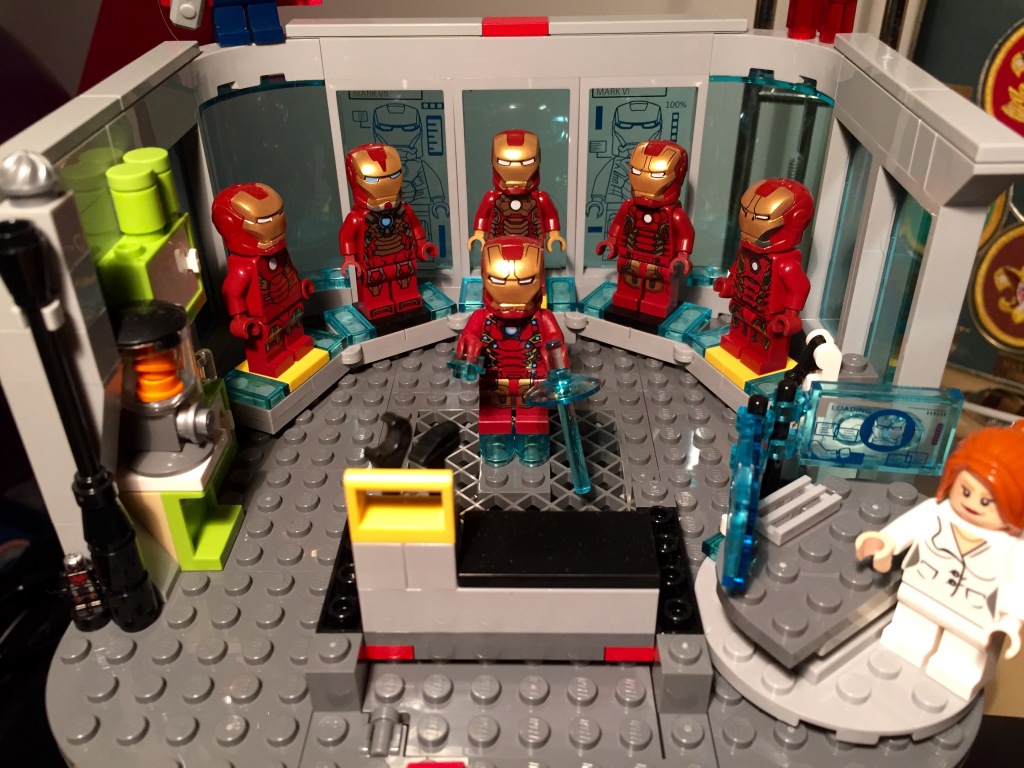
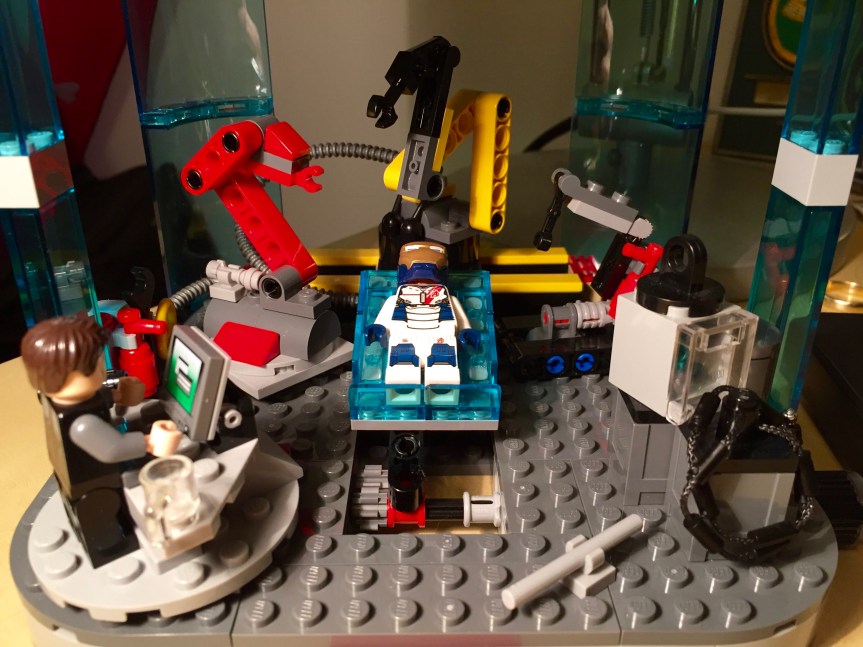
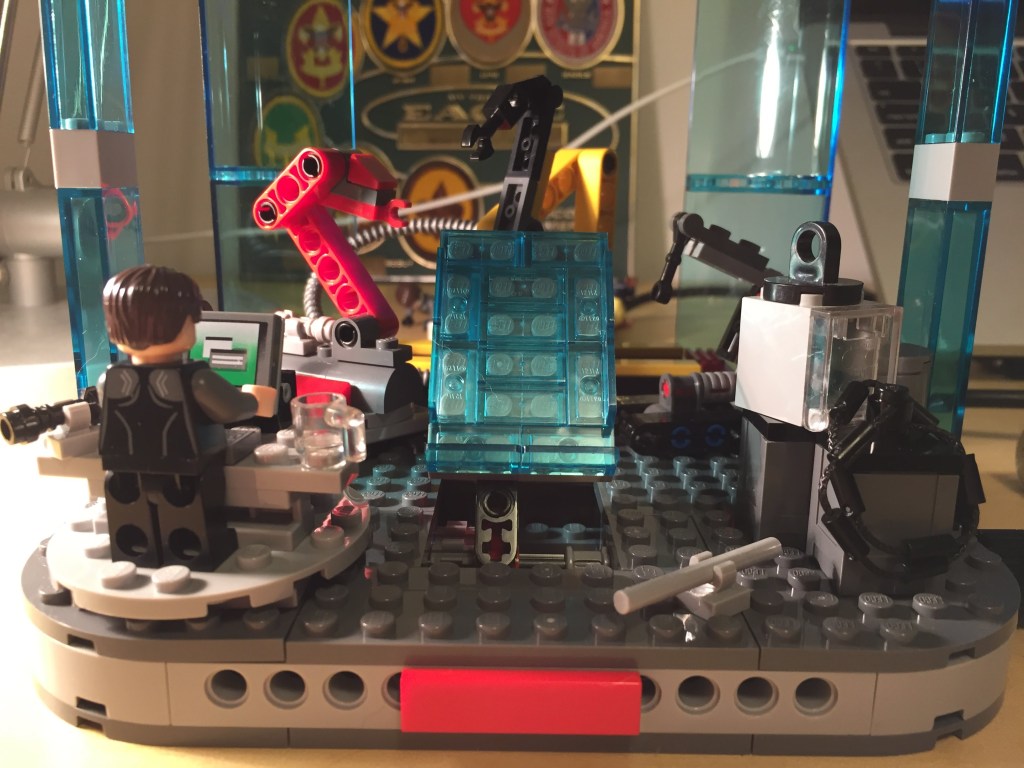
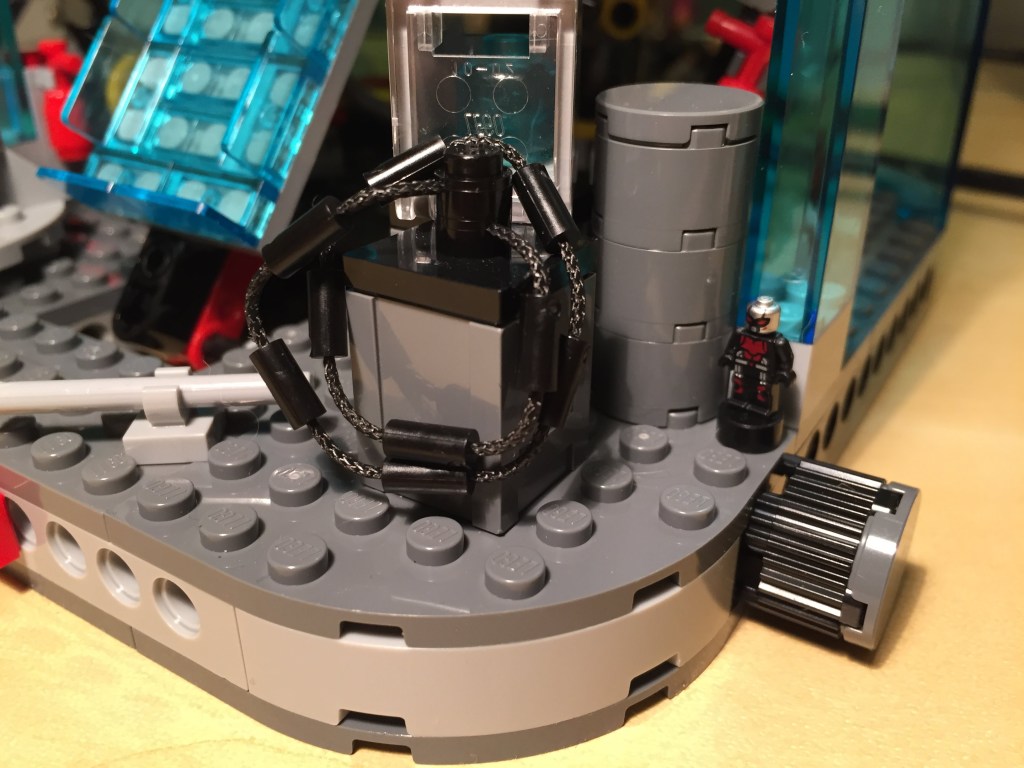
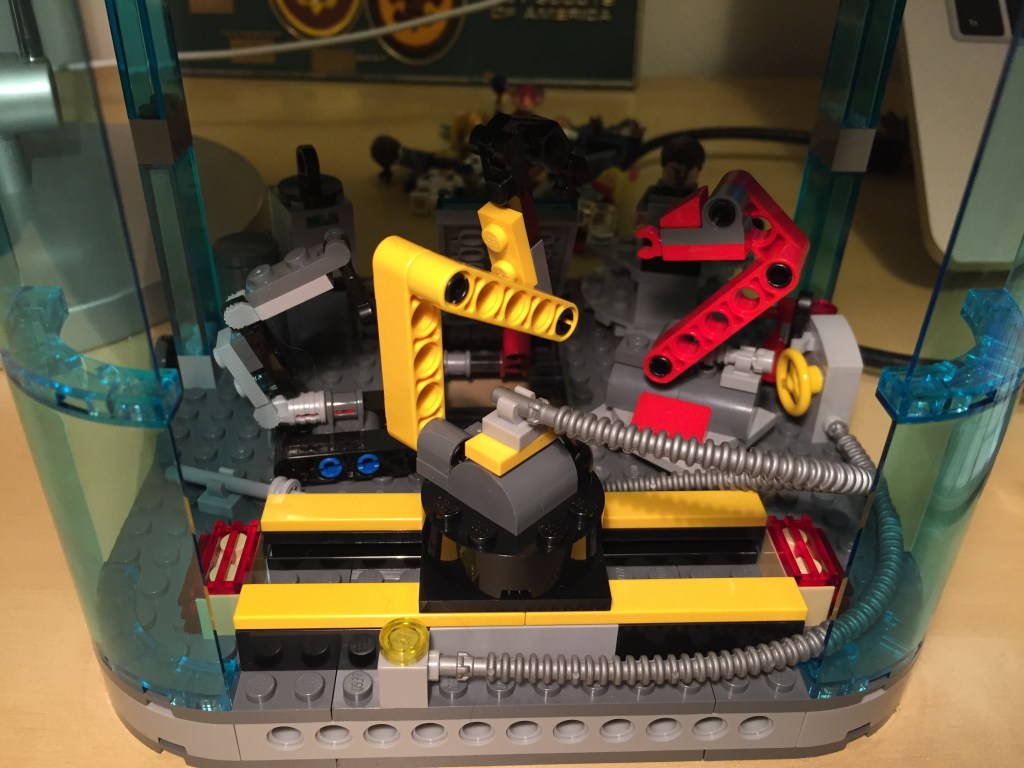
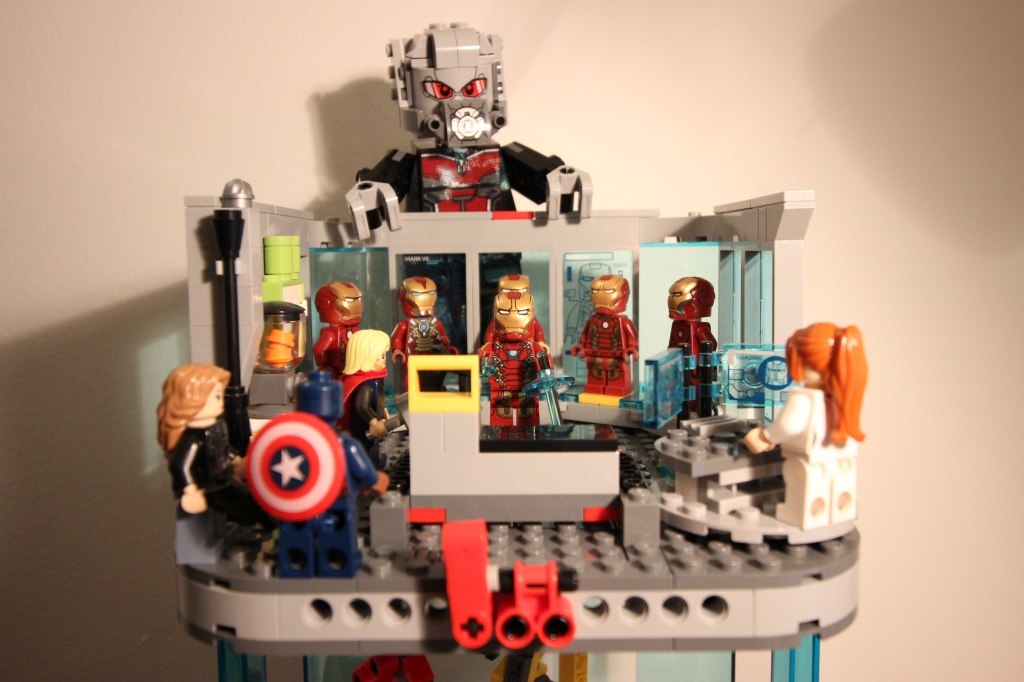
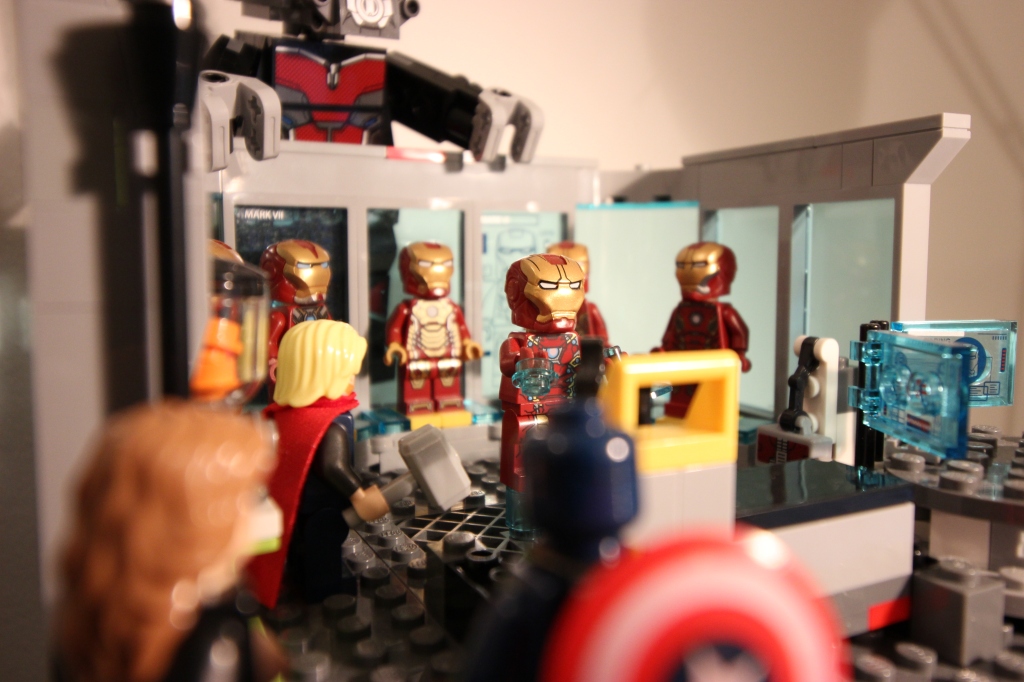
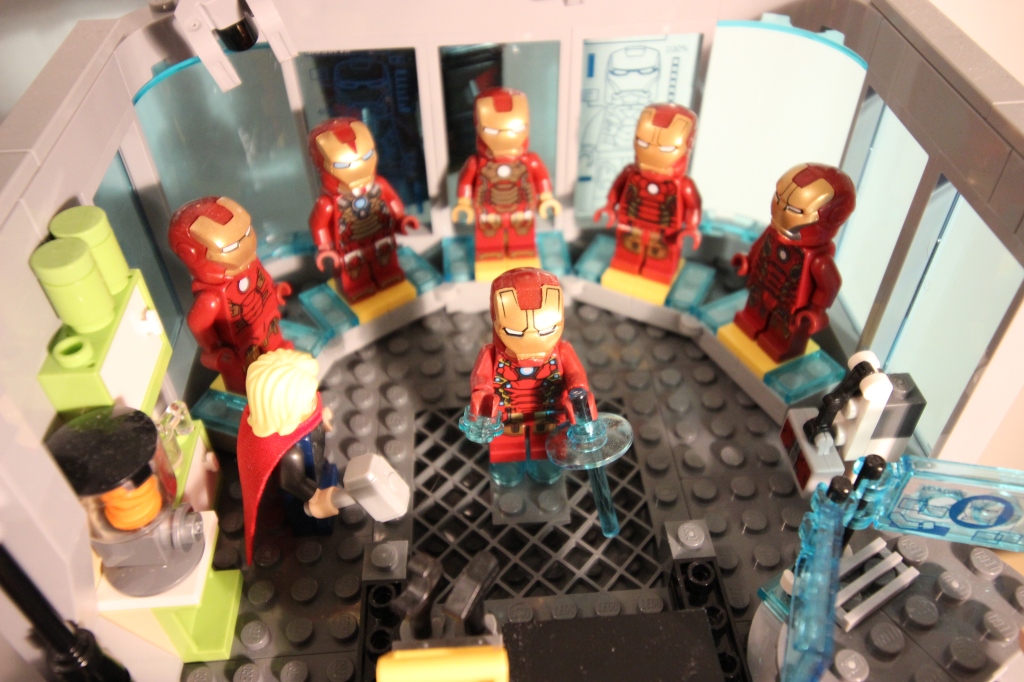
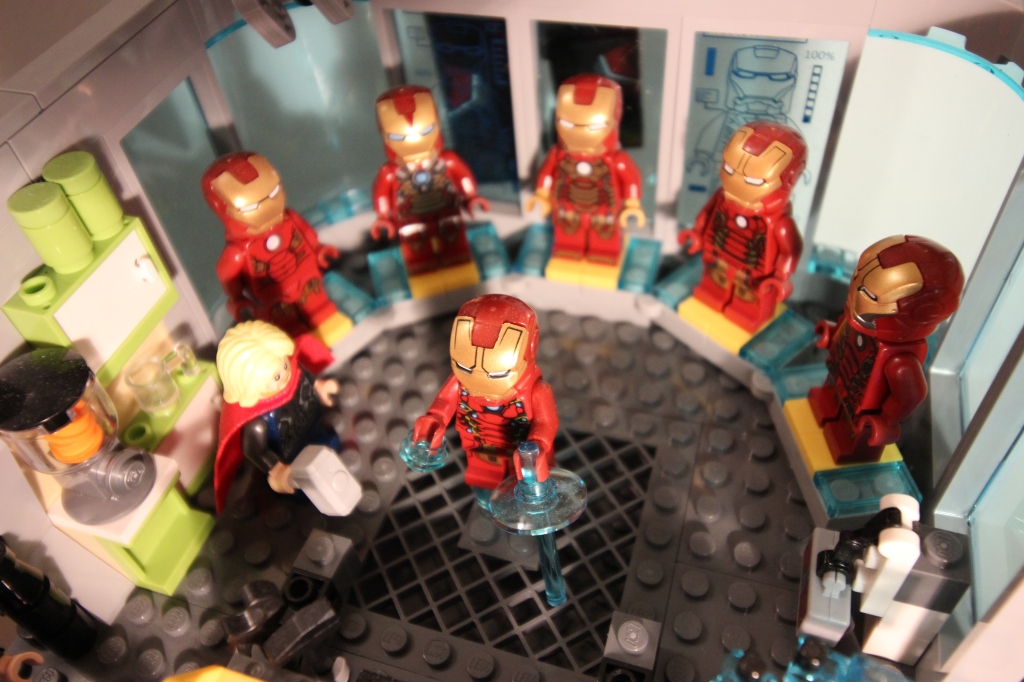
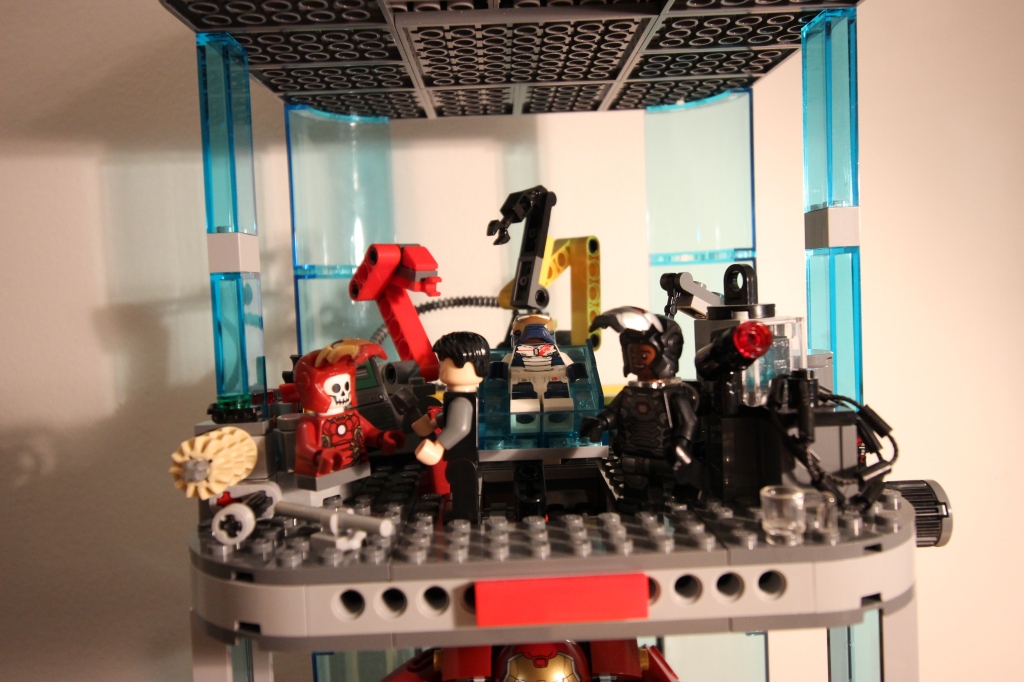
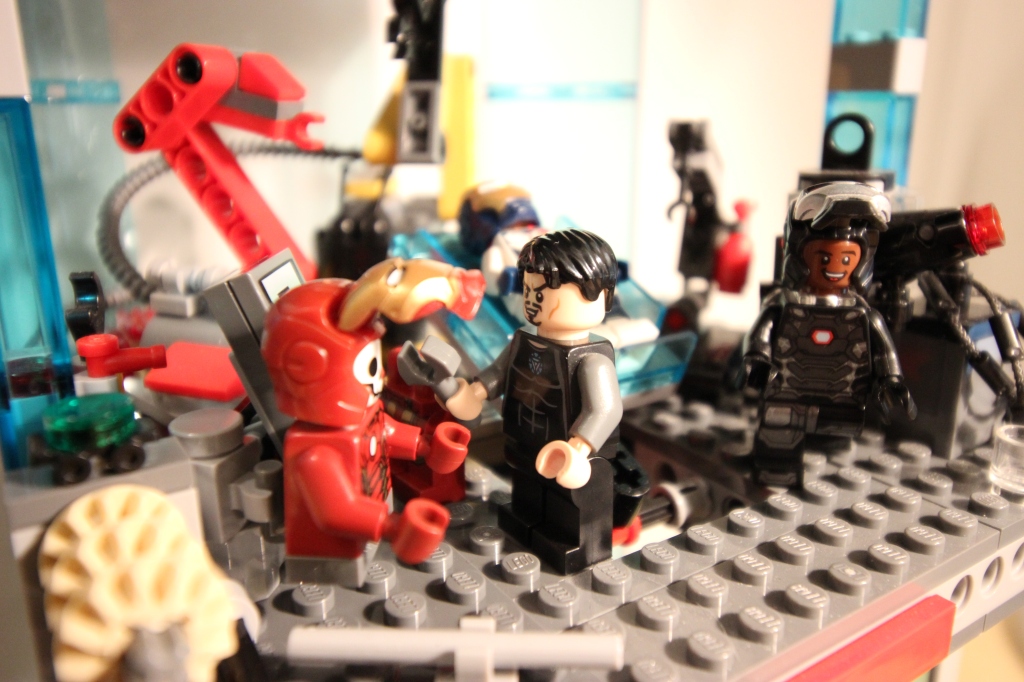
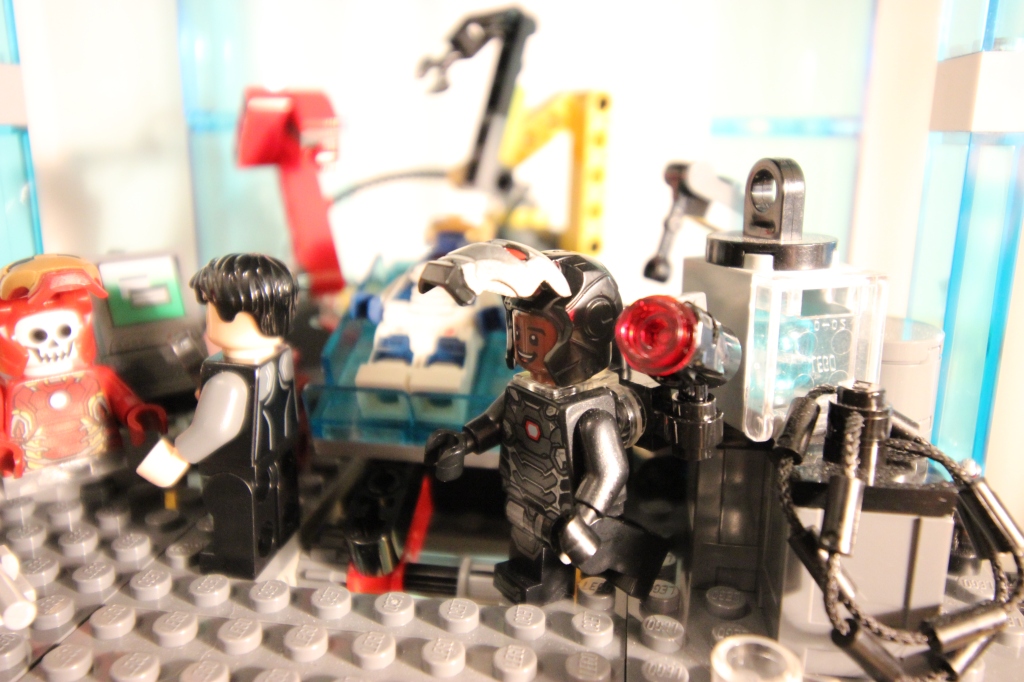
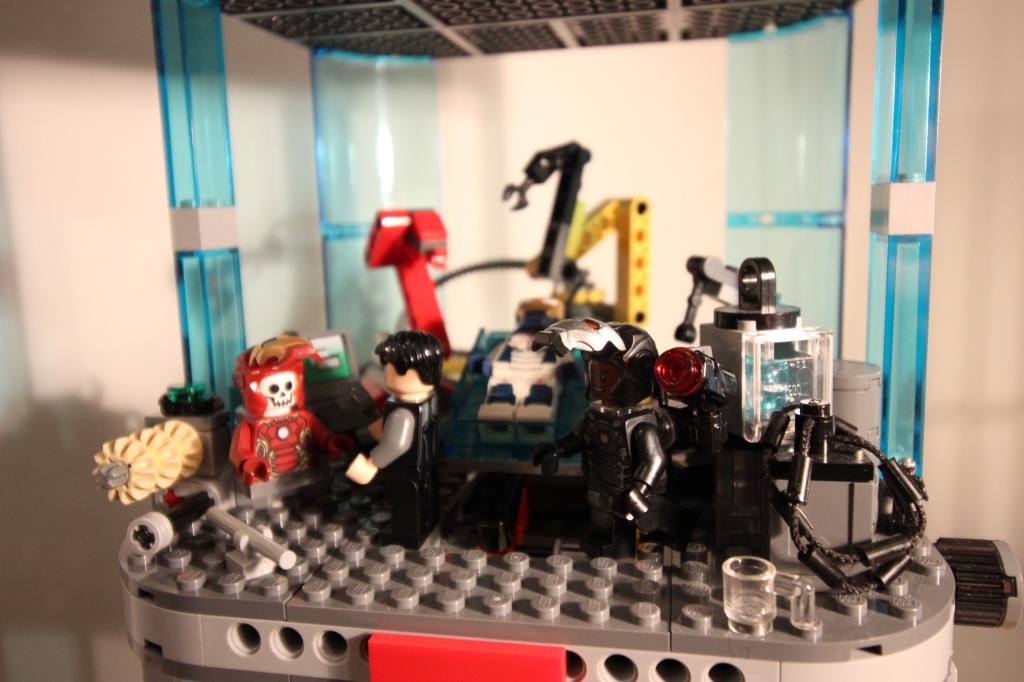
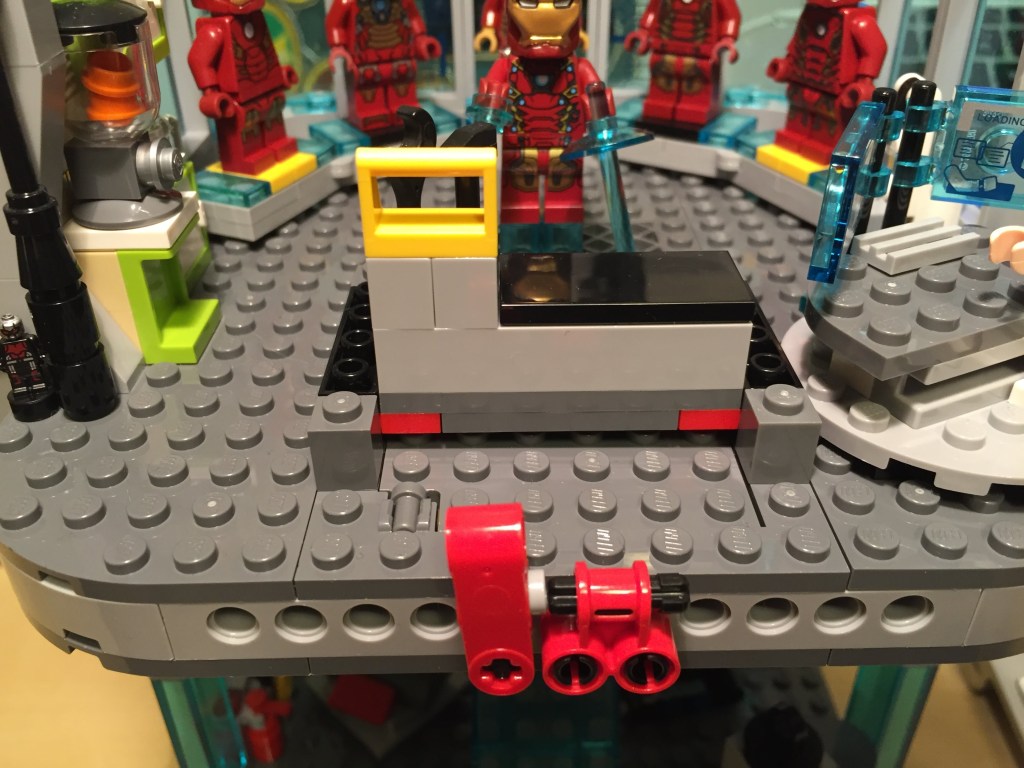
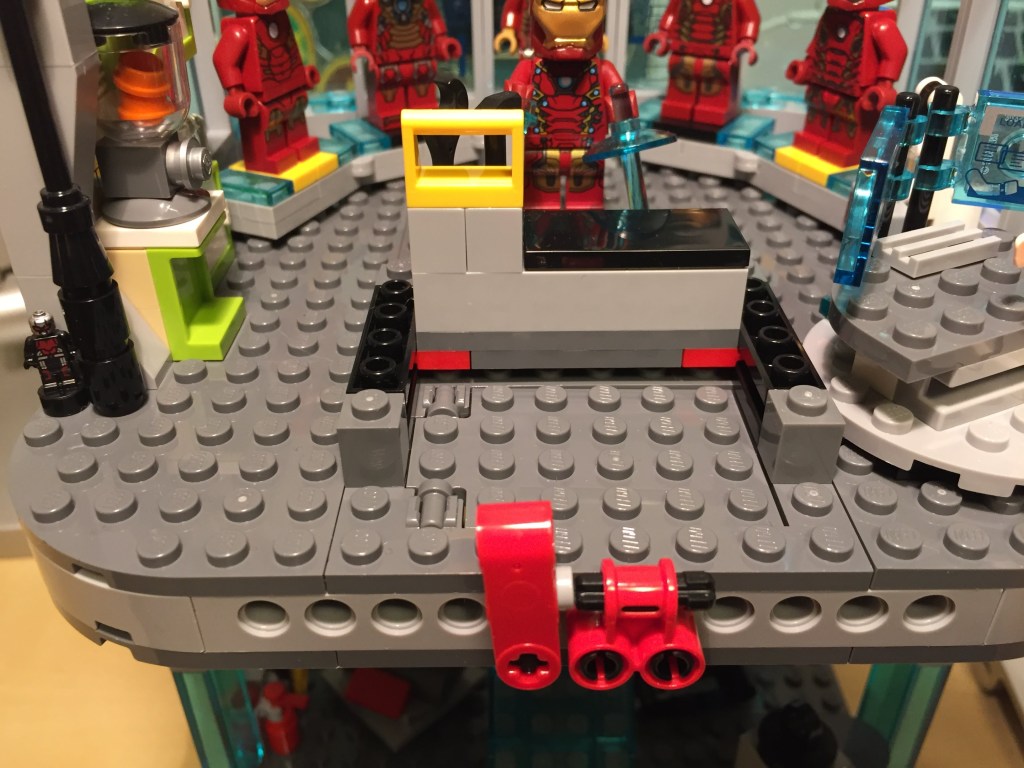
    The LEGO sets on my desk in 2017 were a MOC of Tony Stark’s workshop and Doctor Who’s TARDIS 21304.

    Also, I use the computers beside my desk to show off some of the postcards that Y and I receive via Postcrossing, which I’ve written about here and here. Admittedly, I have convinced some students that I was a distant friend of the British Royal Family with these!

    Spring 2018

    By the beginning of Spring 2018, my desk area had been overrun not only by the vintage computers but also by LEGO sets that my colleague and officemate to the right of this photo had acquired through grants. You can see that we now use the utility cart to move the LEGO sets around to our classes.

    Fall 2018

    Before the beginning of Fall 2018, I had donated my twin Dell monitors to Patrick so that he could have a super-wide 4-monitor setup on his desk. This opened up my desktop workspace considerably!

    Summer 2019

    At the beginning of Summer 2019, my cousin Ryan Cox gifted me his old clamshell iBook for the Retrocomputing Lab.

    Fall 2019

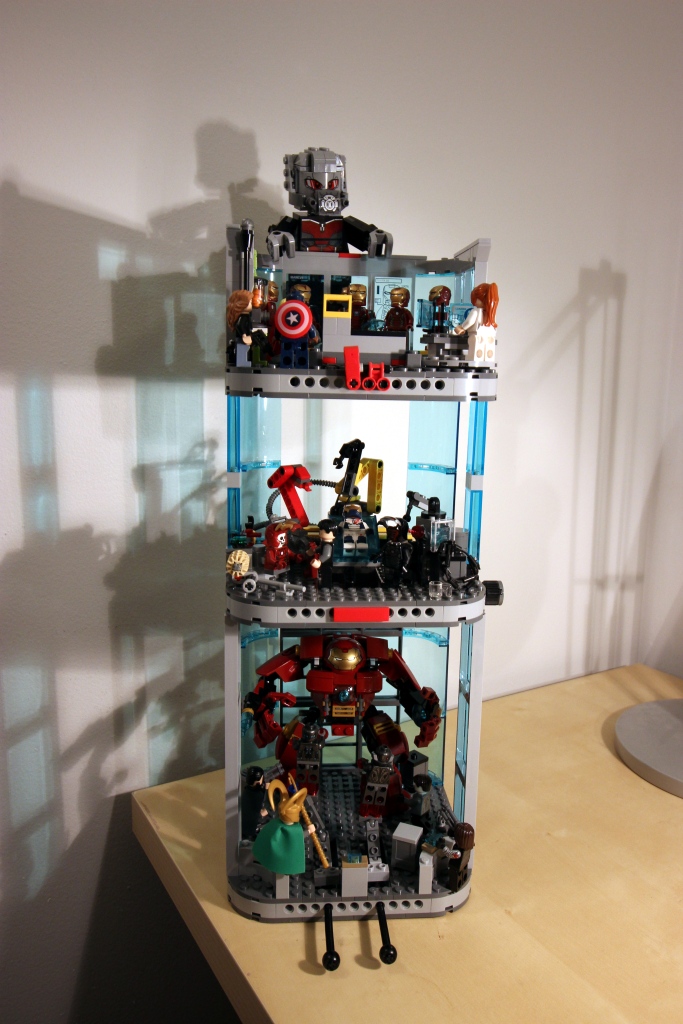
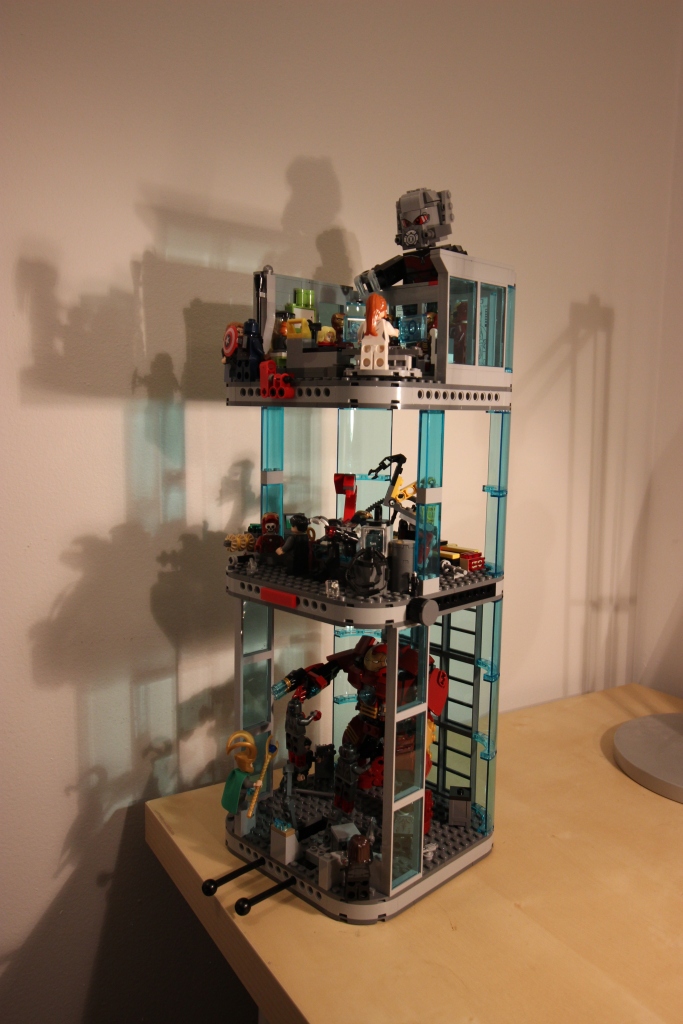
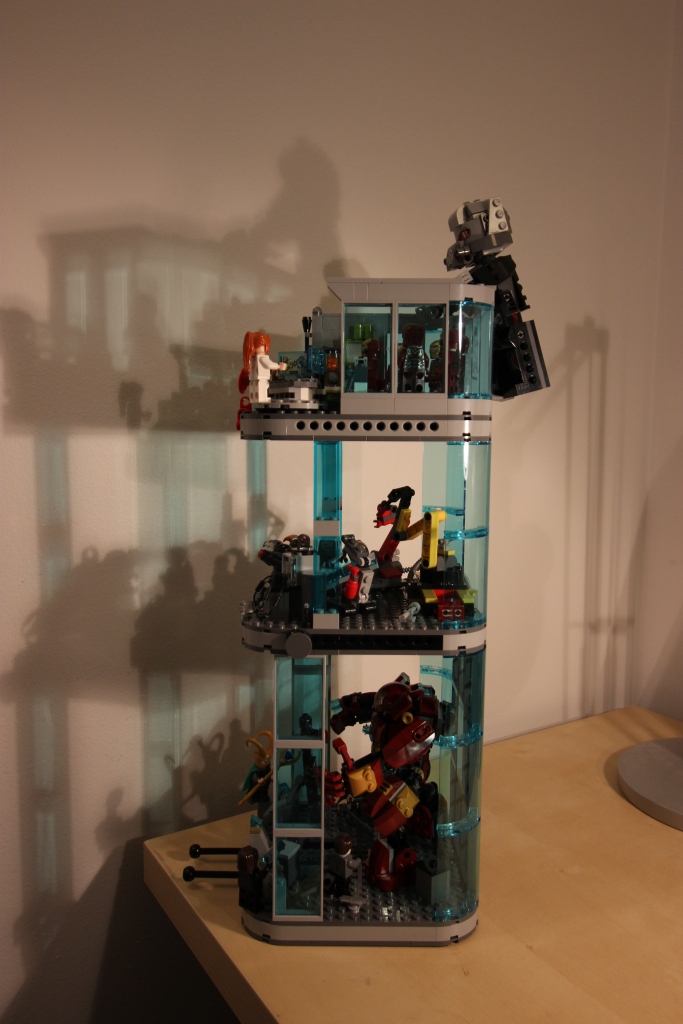
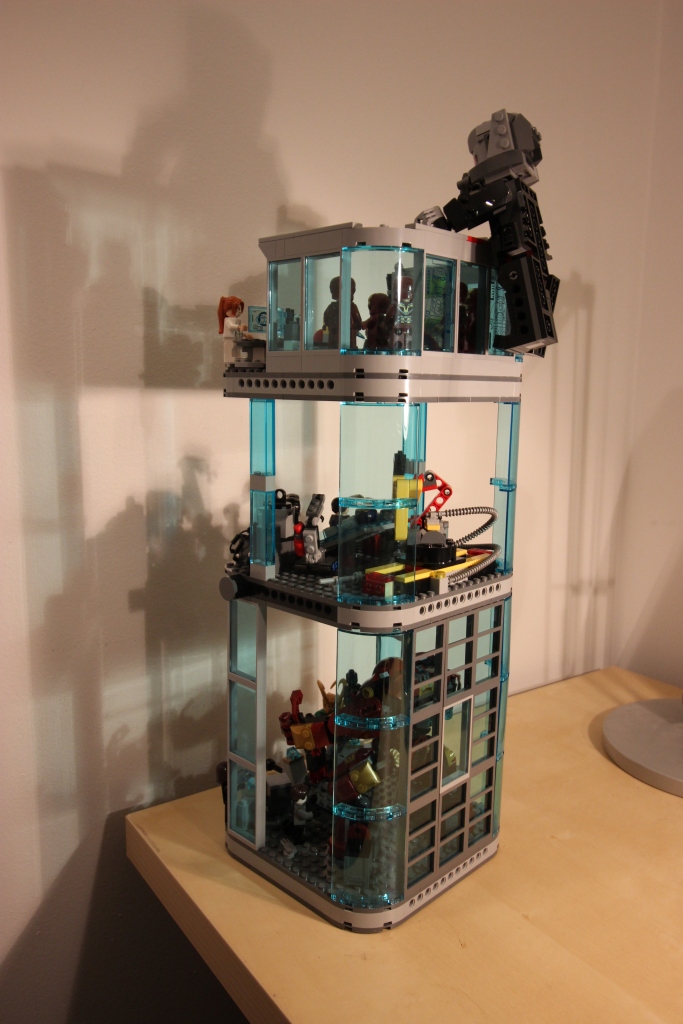
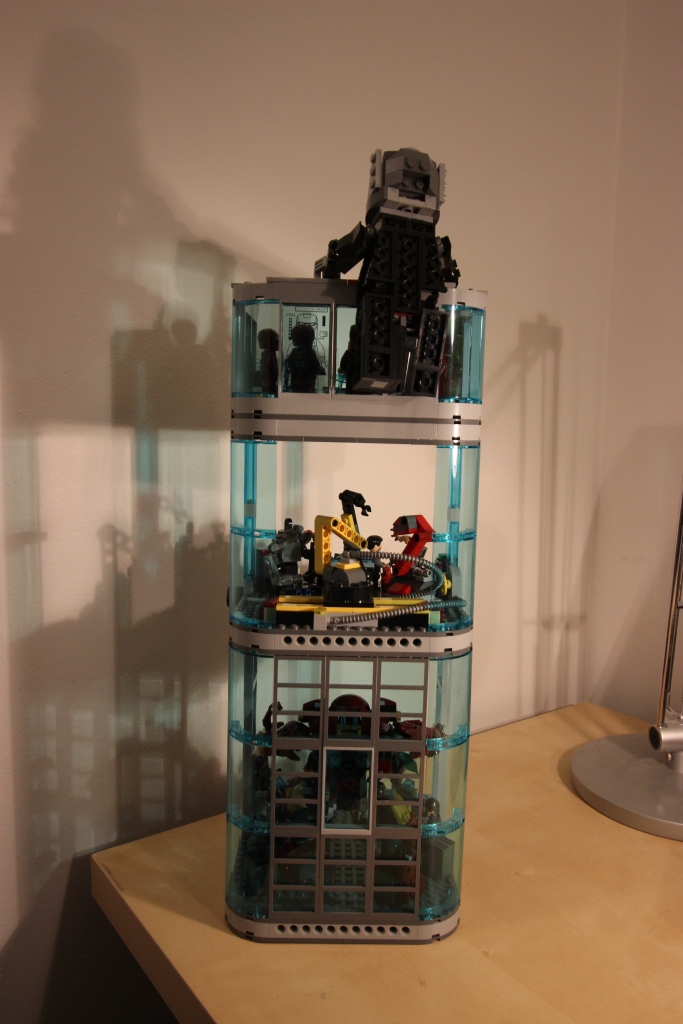
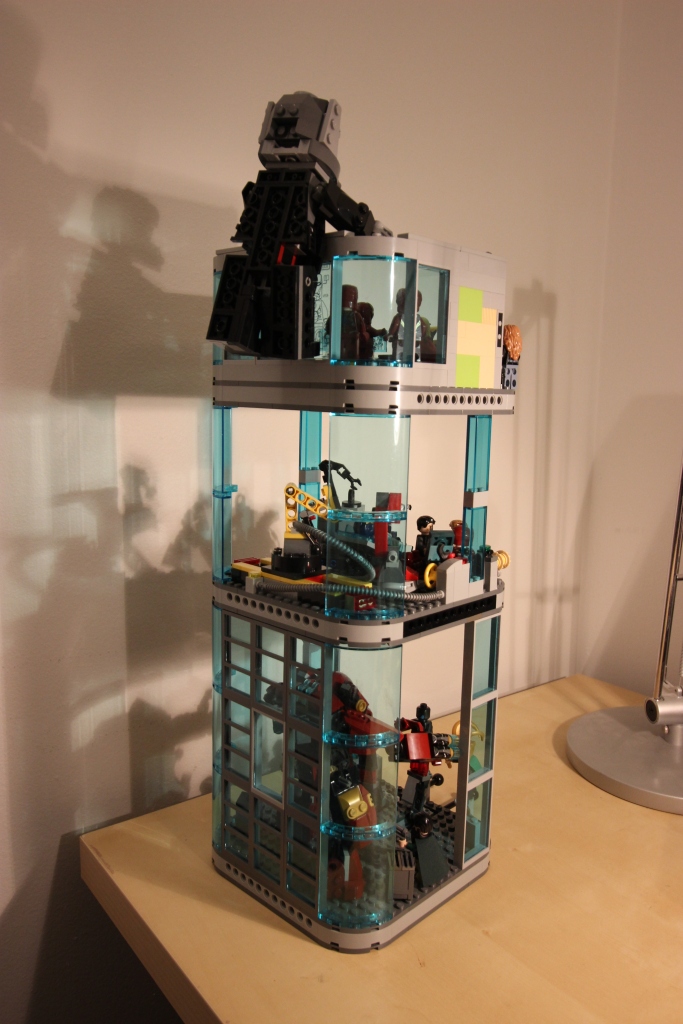
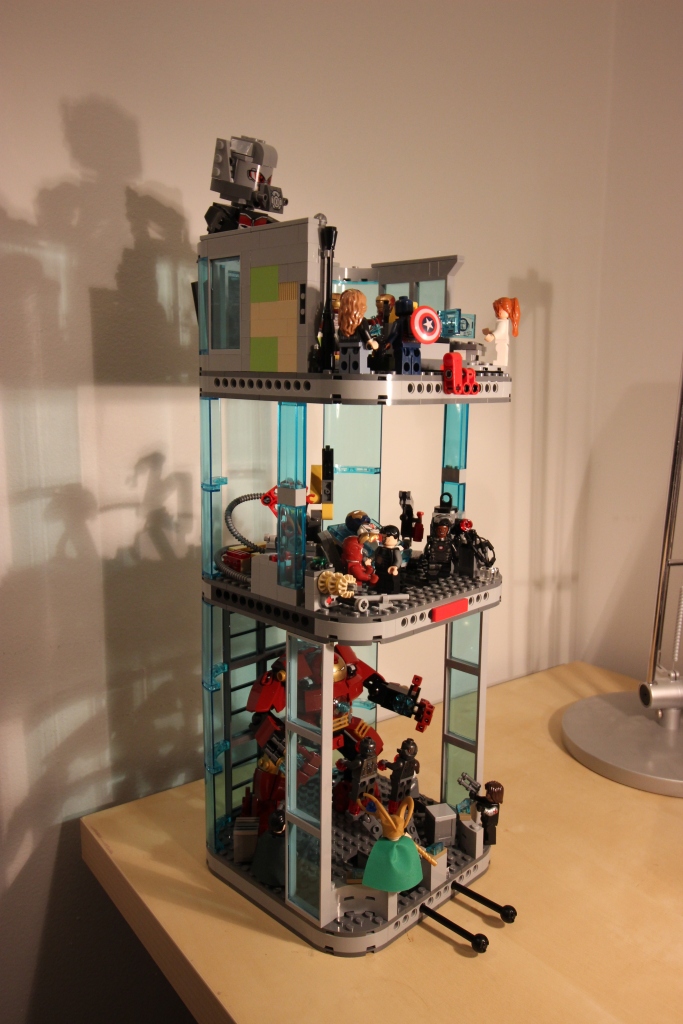
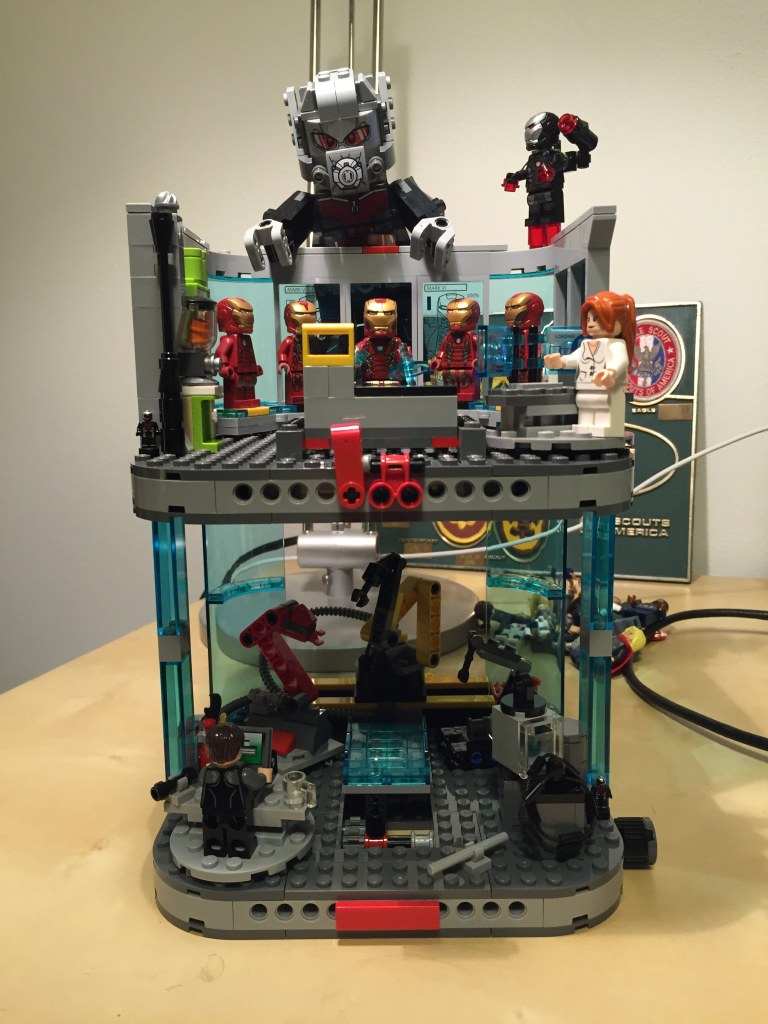
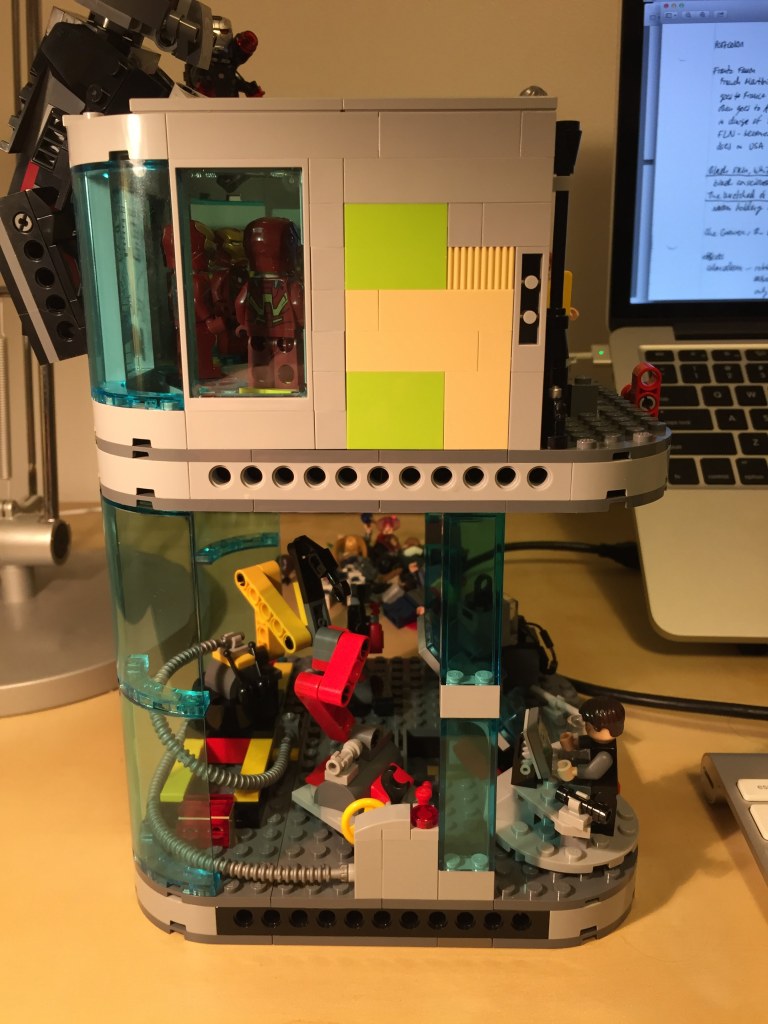
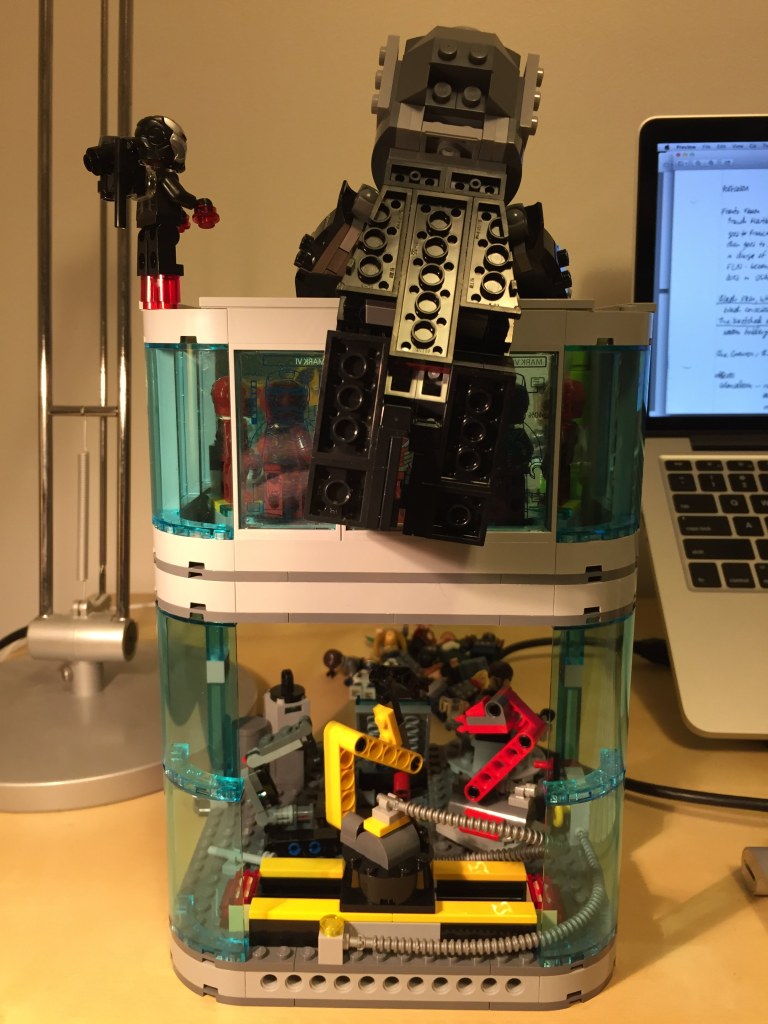
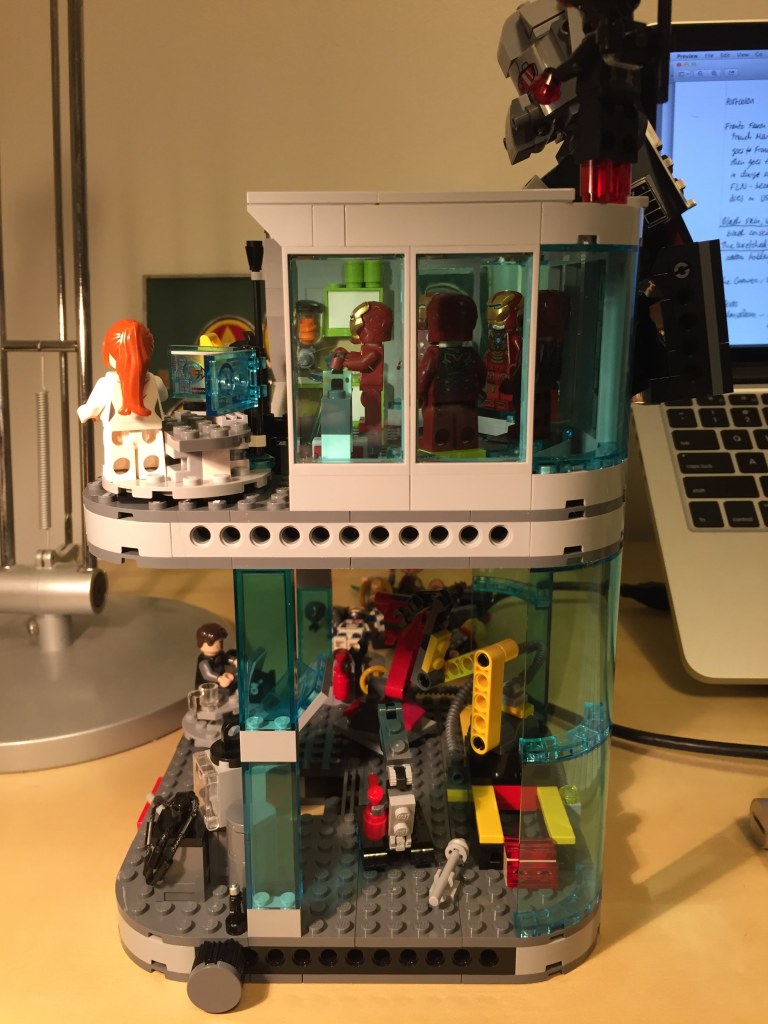
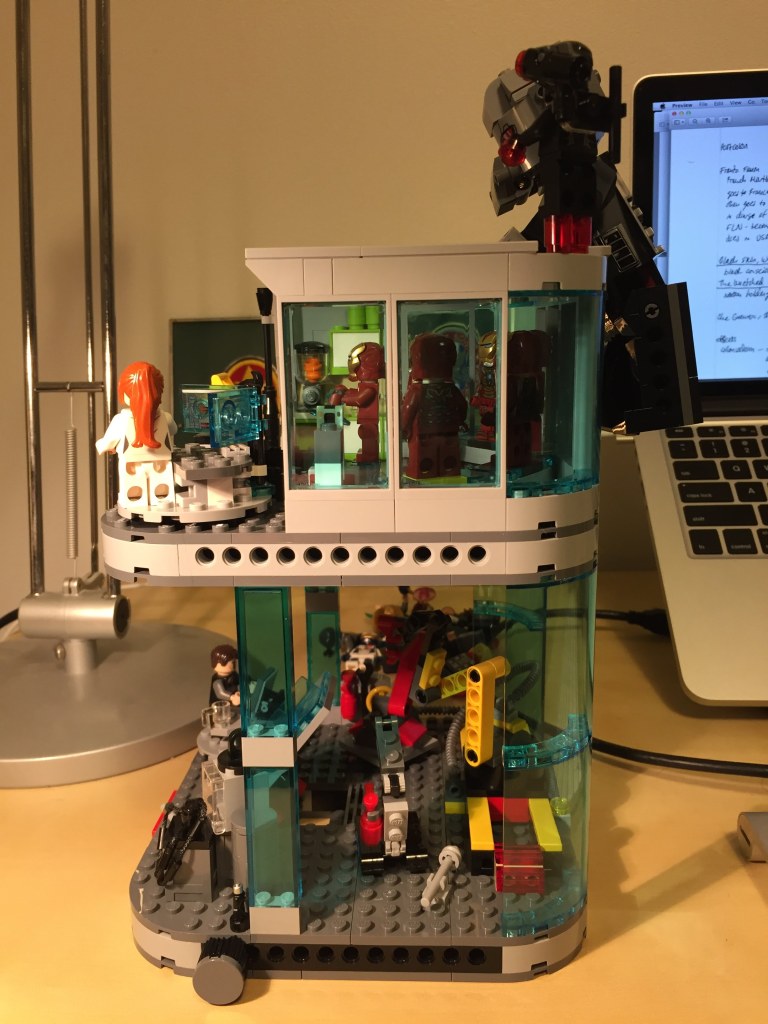
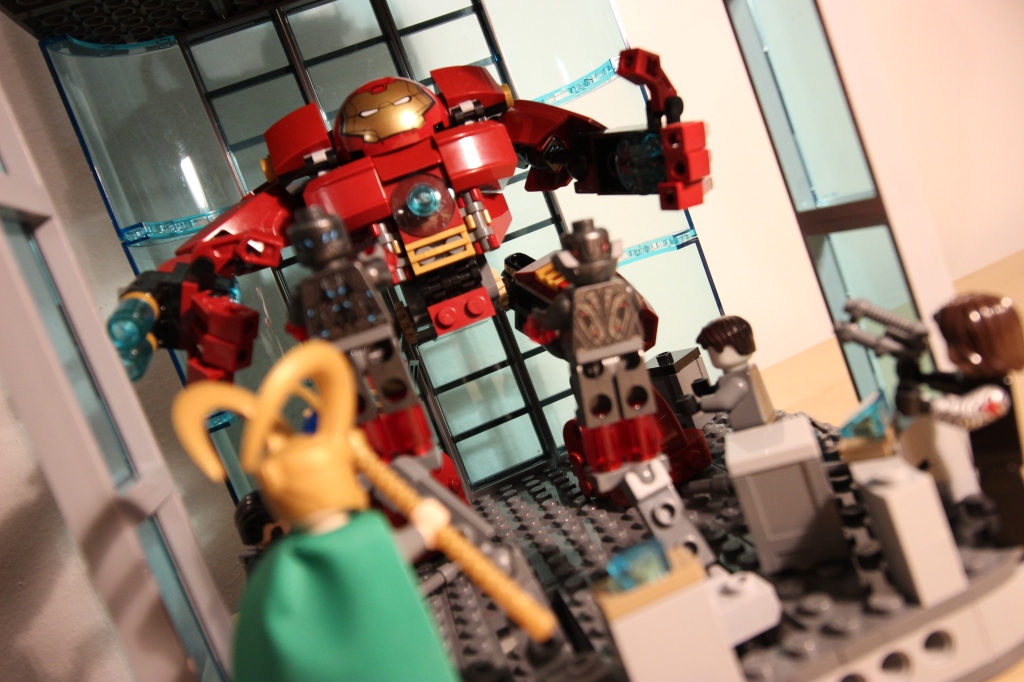
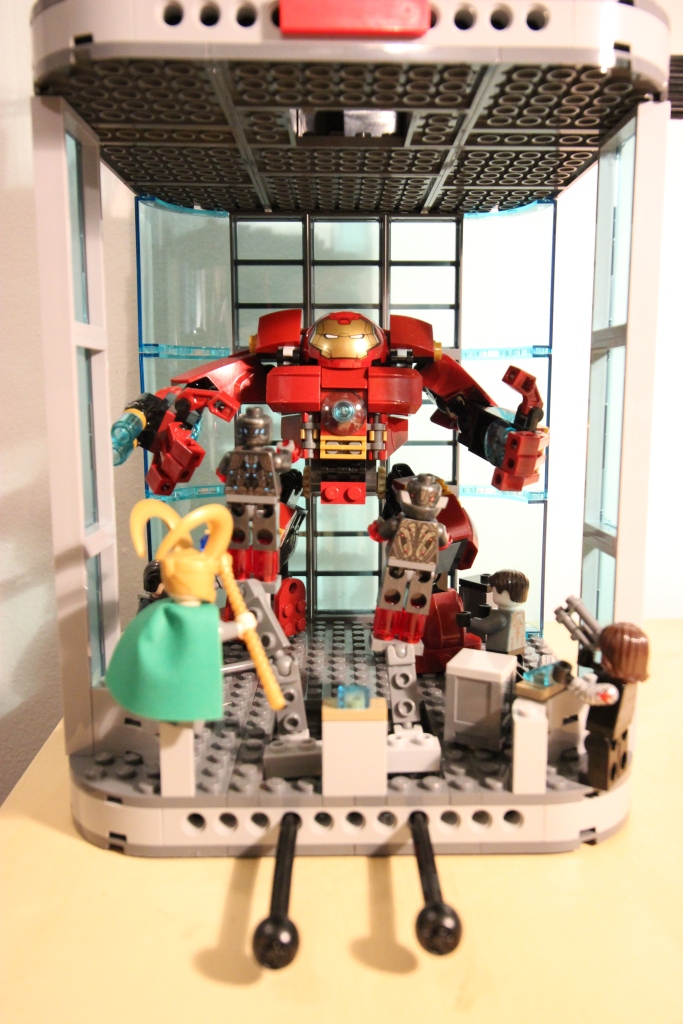
    By Fall 2019, my desk was once again overrun with LEGO sets–mostly Avengers (including my MOC/MOD Avengers Tower on the left) and some Star Wars. I was using my ThinkPad X220 as my work computer in the office and classroom.

    Then, the pandemic happened, and I rarely visited the office.

    Fall 2022

    During the pandemic, we received a sizable donation of books and magazines from Charlie Seelig and others. By Fall 2022, most of the boxes had accumulated in my office. They are in such pristine shape thanks to the United States Postal Service (sarcasm).

    Spring 2023

    At the end Spring 2023, I moved all of the donated boxes of books into the library and shelved most of them as I wrote about here, here, and here on the Science Fiction at City Tech website. While there is still a lot of stuff in my office space, it is tidy and clean while I am away on sabbatical.

    Reflection

    My office space reflects the ebb and flow of my work and projects. It reflects aspects of my life that I choose to share in the workplace with my colleagues and students. Those reflections are also things that I want to see as a reminder of what brings me joy and happiness. Having more than books and office supplies at my desk makes me glad to inhabit this space while I am at work. On occasion, it has brought some happiness to students and colleagues, too.

  • LEGO 75212 Kessel Run Millennium Falcon on Custom Display Stand

    LEGO Kessel Run Millennium Falcon on display stand.

    This is a lightweight custom display stand for a stock LEGO 75212 Kessel Run Millennium Falcon from the underrated Solo: A Star Wars Story (2018). Like the stand that I built for my heavier modified Falcon discussed here, it provides an angle upward and a swoop to the left. The landing gear lock into place on the stand and are held in place by gravity.

    I hope there will be more Han Solo and Lando Calrissian adventures with Alden Ehrenreich and Donald Glover. I don’t think he and the rest of the cast of Solo got a fair shake due to the behind-the-scenes production turmoil. Let’s keep the dream alive!

  • LEGO MOC Return of the Jedi Scene of the Desert Skiff (9496) at the Sarlacc Pit

    Desert Skiff rescue scene from Return of the Jedi created with LEGO.

    Following some of my recent LEGO MOC and MOD posts here, here, and here, this LEGO scene of the Desert Skiff rescue above the Sarlacc Pit from Return of the Jedi (1983) is another pre-pandemic build of mine. The desert skiff is an unmodified 9496 set from LEGO. However, I added more minifigures (Han and Chewbacca), and I recreated the scene as it roughly appears in the film when Lando Calrissian falls overboard with one of Jabba’s henchmen who is devoured by the Sarlacc. The base of the build is the high walls of sand surrounding the Sarlacc’s maw with a toothed opening and digestive tract beneath the sand full of bones and skulls of its past meals.

    Two wooden shelves of LEGO sets from LOTR, Avengers, and Star Wars.

    Before building this version of the scene, I had constructed a wider base and used the Sarlacc Pit monster build that came with 9496 as shown on the top shelf in the photo above. Also, Lando was holding onto the Desert Skiff by a whip instead of a chain, which I used on the newer diorama shown in more detail below. Pity the poor bastards who get slowly digested over a thousand years–that is, until Boba Fett took care of the buried beast!

    I’ll note that when I was a kid, the Power of the Force Tatooine Skiff by Kenner was one of my favorite vehicles next to the Millennium Falcon, not only because it had a lot of playability and features packed into but also because I recognized the engineering and craftsmanship that went into its design, including retractable skids, extending/dropping plank, and a sideboard action figure launcher.

  • Star Wars LEGO MOC of Kyle Katarn’s Moldy Crow HWK-290 Light Freighter from Dark Forces

    Moldy Crow LEGO MOC in front of Dark Forces video game screen.

    One of my favorite mid-1990s video games is Star Wars: Dark Forces for PC. In the game, you play as Kyle Katarn, a mercenary employed by the Rebel Alliance, who stumbles on the Dark Trooper project through one of his missions (none of Dark Forces is considered canon, but the Dark Troopers were brought into canon via the second season of The Mandalorian). I played Dark Forces often on my 486DX2/66MHz machine, but I was unable to beat it back then (the video game Force is weak in this one). Thanks to DOSBox, I finally beat it about 25 years after I first played it!

    The Star Wars universe created by George Lucas is, like his earlier film American Graffiti (1973), about motion, movement, travel, and vehicles. The importance of movement in Star Wars is what elevates vehicles like Han Solo’s Millennium Falcon to be a character in their own right. The same is true for Katarn’s HWK-290 light freighter named The Moldy Crow. I liked its angular, bird-like appearance. It reminded me also of He-Man’s Talon Fighter from 1983’s Point Dread and Talon Fighter playset. The image of the Moldy Crow stuck with me, and when I was building with LEGO in Atlanta in 2014, I thought of a way to capture the Crow’s design in a LEGO MOC (my own creation).

    Rotational Side Views

    Top Views

    Bottom Views

    Crew Compartment

    Details

    Reflection

    Unfortunately, I sold my LEGO Moldy Crow on eBay before Y and I moved to Brooklyn (along with a boatload of other LEGOs). I wonder if the buyer still has it or modified it in some way.

    A lot of the bricks that I used in the build were older style dark grey, which I don’t have many of any more. I would like to take another stab at The Moldy Crow with my newer bricks and use techniques that I’ve learned over the years since then. Another project added to an already long list!