Category: Art

  • Generative AI for College Students Series: Outlines and Structures

    an anthropomorphic tuxedo cat wearing an orange sweatshirt, sitting at a desk in a library writing in a notebook
    Image created with Stable Diffusion.

    Please keep in mind that new technology like Generative AI (Gen AI) shouldn’t simply make your thinking or work easier, much less take the place of the uniquely singular abilities of human beings to grow cognitively, think creatively, or evaluate critically. If you use Gen AI to simply avoid work, you are doing it wrong. Instead, using Gen AI in the spirit of Douglas Engelbart’s “augmenting human intelligence” and Donna Haraway’s configuration of the cyborg point the way to beneficial heightening of human possibility instead of harmful erasure of the cognitive distinctions of humanity. If you use Gen AI, use it wisely and use it well. This is the second post in this series.

    Gen AI can be a powerful ally when it comes to organizing ideas into a coherent structure. By creating outlines for essays, presentations, or projects, Gen AI provides a framework that students can refine and personalize. This process reflects the cyborg’s ability to integrate technology into their workflow, enhancing productivity without sacrificing creativity.

    For example, a student tasked with writing a research paper on artificial intelligence ethics could ask an AI tool to generate several outline versions, each prioritizing different aspects of the topic. They might compare these structures and then decide which one aligns best with their arguments and evidence. If the student hasn’t yet done the requisite beginning research, these outlines can point them toward the kinds of resources that they should find and read via their library.

    The key is to treat AI-generated outlines as a starting point rather than a rigid template. Students should feel free to modify, discard, or combine elements to suit their unique voice and vision. And importantly, one can return to the planning stage after learning more and adding that to their query to the Gen AI to further refine the organization of their project.

  • Generative AI for College Students Series: Brainstorming

    an anthropomorphic tuxedo cat wearing a sweatshirt and writing in a notebook in a library
    Image created with Stable Diffusion.

    Please keep in mind that new technology like Generative AI (Gen AI) shouldn’t simply make your thinking or work easier, much less take the place of the uniquely singular abilities of human beings to grow cognitively, think creatively, or evaluate critically. If you use Gen AI to simply avoid work, you are doing it wrong. Instead, using Gen AI in the spirit of Douglas Engelbart’s “augmenting human intelligence” and Donna Haraway’s configuration of the cyborg point the way to beneficial heightening of human possibility instead of harmful erasure of the cognitive distinctions of humanity. If you use Gen AI, use it wisely and use it well. This post is the first in this series.

    Generative AI (Gen AI) offers a fascinating tool for brainstorming. It can be used as a kind of digital muse to spark ideas and explore concepts. By inputting keywords or questions, students can generate a list of possibilities and then narrow down those options to a topic that resonates with them.

    However, the real value of AI in brainstorming lies not in replacing human creativity but in expanding it. Entering into a dialog with Gen AI, students can use the conversation to uncover angles or connections they might not have considered on their own. Then, taking the leads uncovered through brainstorming, the student gains keywords and concepts that they can follow up on through their campus library’s catalog and databases.

    This collaboration between human curiosity and AI’s analytical power creates a cyborg-like synergy, where the whole is greater than the sum of its parts. Today, students are becoming cyborg writers by using generative AI to enhance their creative processes. This collaboration doesn’t replace human creativity but amplifies it, offering a digital lens to view ideas from fresh perspectives.

    Though, AI should be seen as a catalyst, not a replacement, for human imagination. By embracing this hybrid approach, students can harness the best of both worlds to do more with this new tool.

  • How I Shot the LEGO Pride Flag Photo

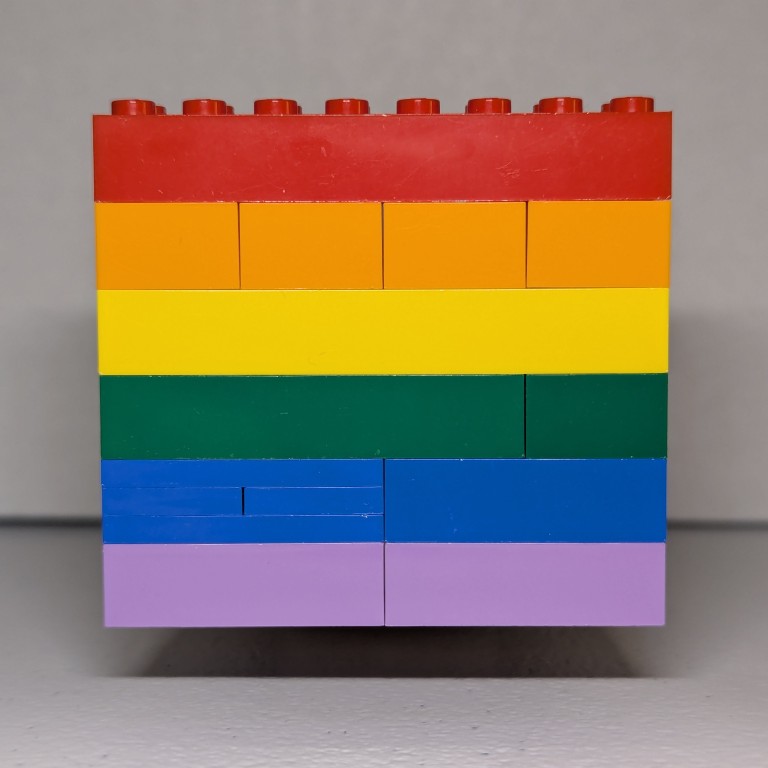
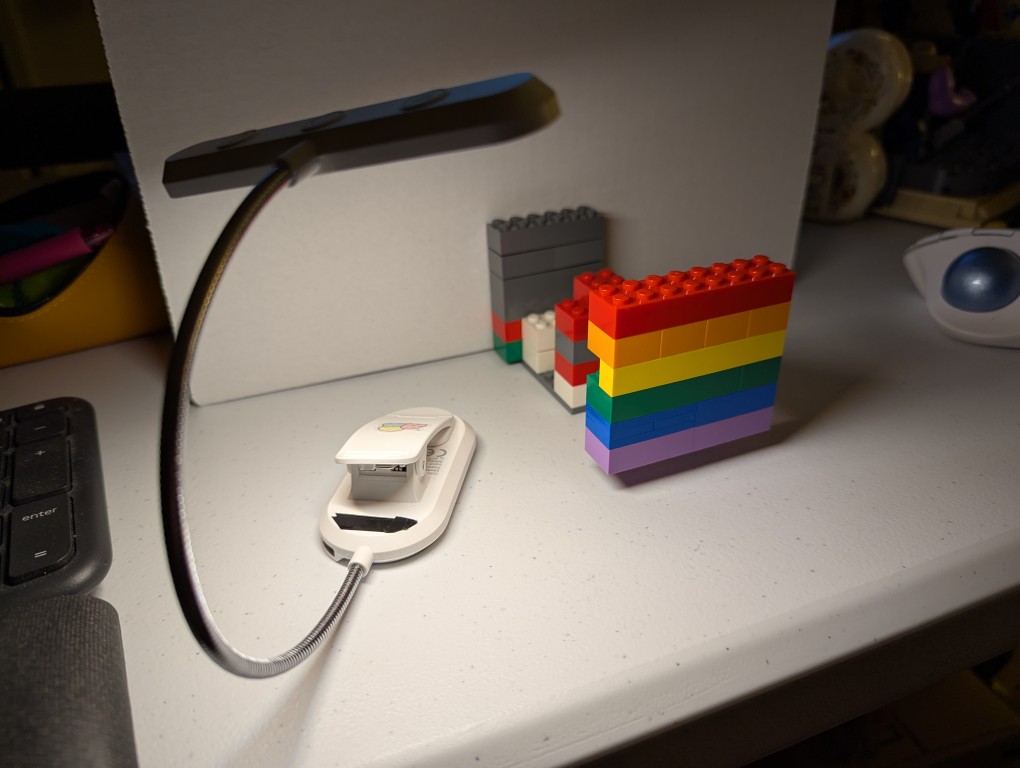
    lego bricks resembling the pride flag are connected to a mix of other hidden lego bricks in front of a white cardboard box and illuminated by a book reading light

    On Monday, I posted happy wishes for Pride Month with a photo that I made of a LEGO Pride Flag.

    To create the photo, I first dug through my boxes of LEGO to find 8 stud wide bricks that matched as close as possible to the Rainbow Flag’s approximation of ROYGBIV: red, orange, yellow, green, blue, and purple.

    My first shots had the flag resting on the table some distance in front of a white cardboard box, which served as a neutral background. For lighting, I held a USB rechargable book reading light belonging to Y just above my smartphone to avoid casting a shadow from the camera.

    I didn’t like how these turned out, because the flag was kind of boring just sitting there. So, I thought about levitating it like in Monday’s post.

    To levitate the flag, I built a counter-weighted assembling of 6-stud wide bricks with an armature that connected behind the yellow bricks in the Pride Flag. I built this armature one brick higher than the flat to give it the illusion of floating in midair.

  • Happy Pride Month!

    red, orange, yellow, green, blue, and purple pride flag made out of lego bricks in front of a white background

    I want to wish my LGBTQIA+ friends, coworkers, students, and people of the world a Happy Pride Month! It’s a celebration of those folks’ accomplishments and contributions, and remembrance of the hard work, struggle, and loss for liberation that unfortunately still isn’t over. I stand with LGBTQIA+ folks in the fight for liberty and equality for all.

  • An Underground Passage in Park Slope, Brooklyn

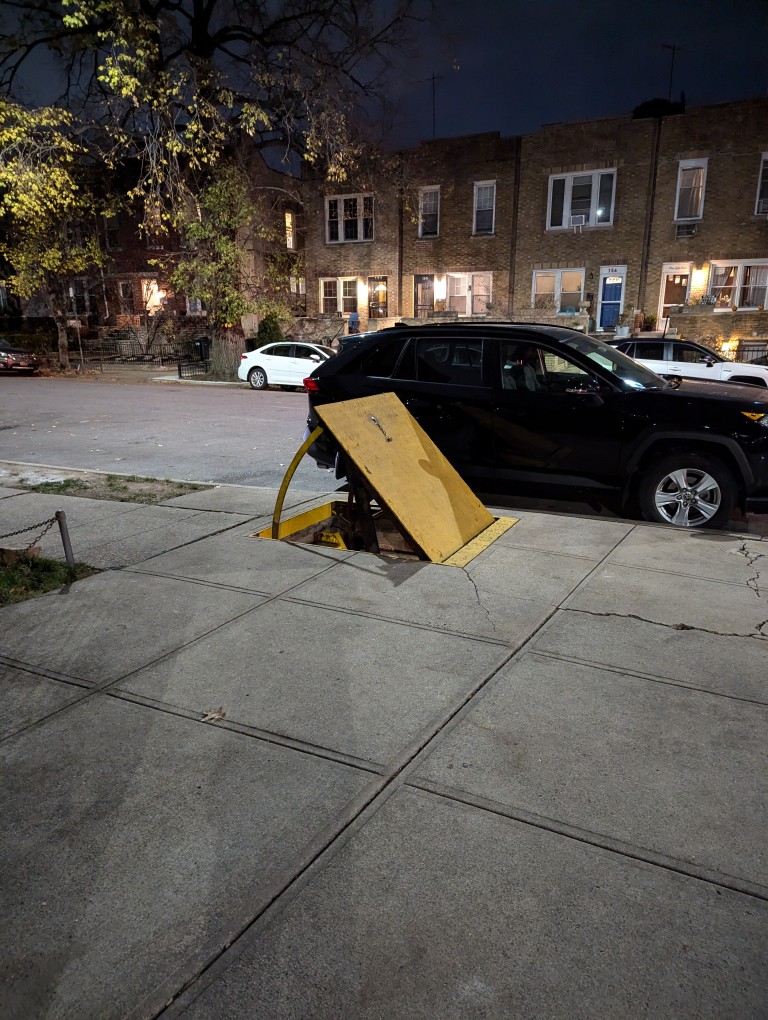
    a metal cover is held open at about 45 degrees allowing access to a passageway built into the sidewalk going underground

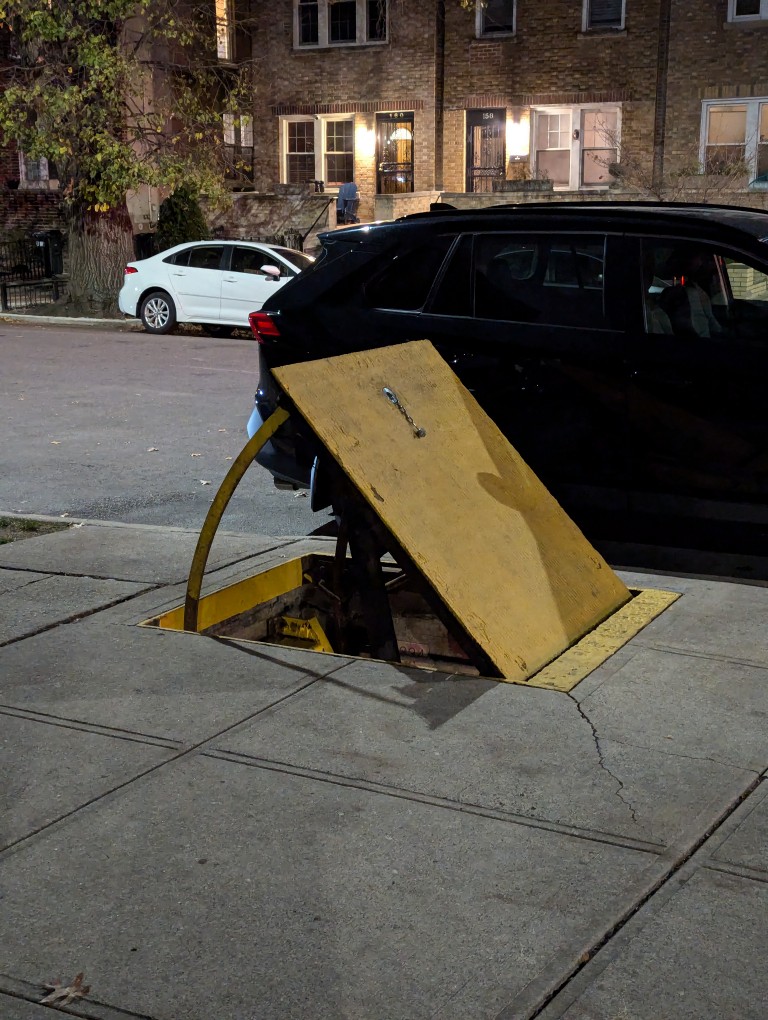
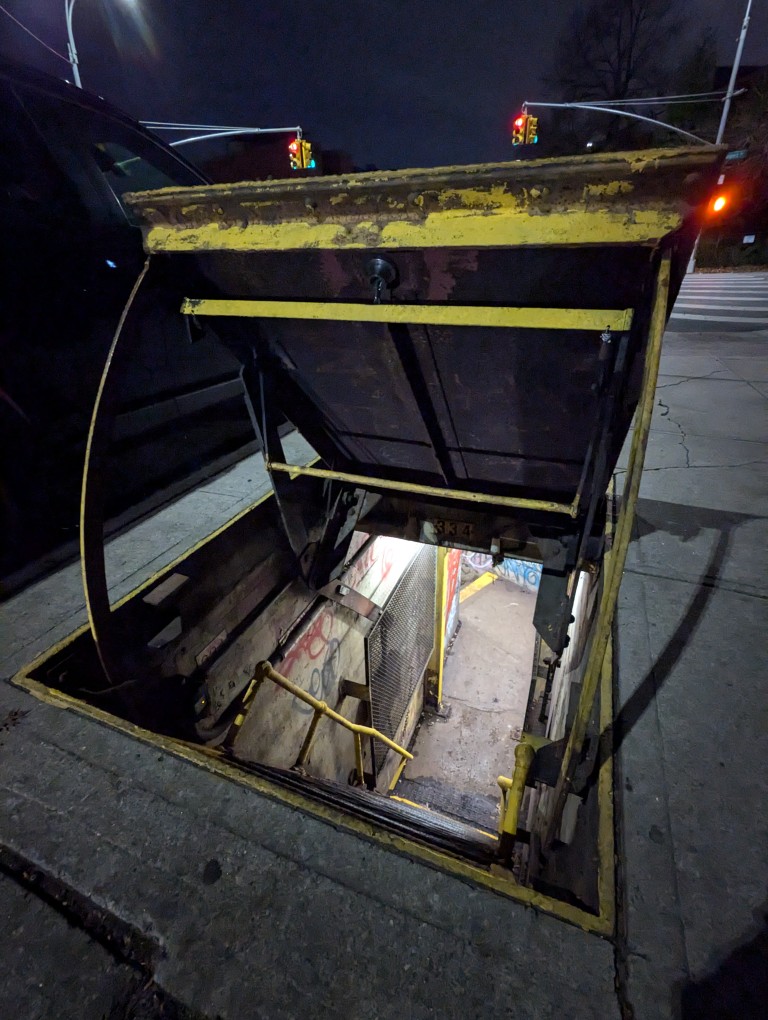
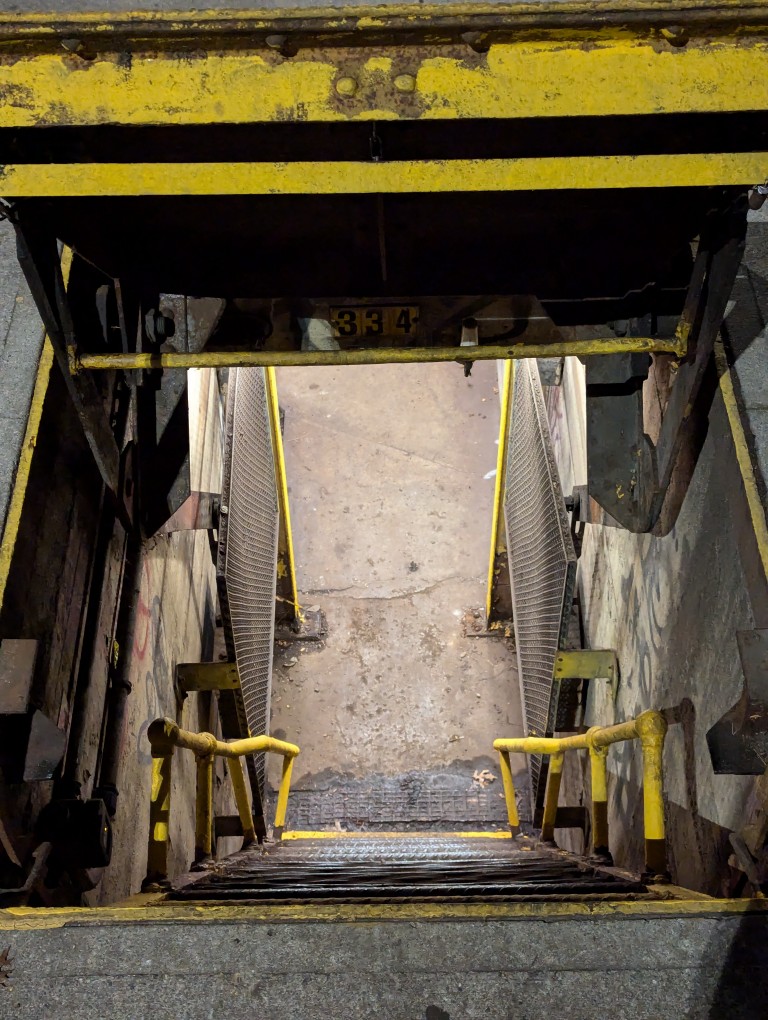
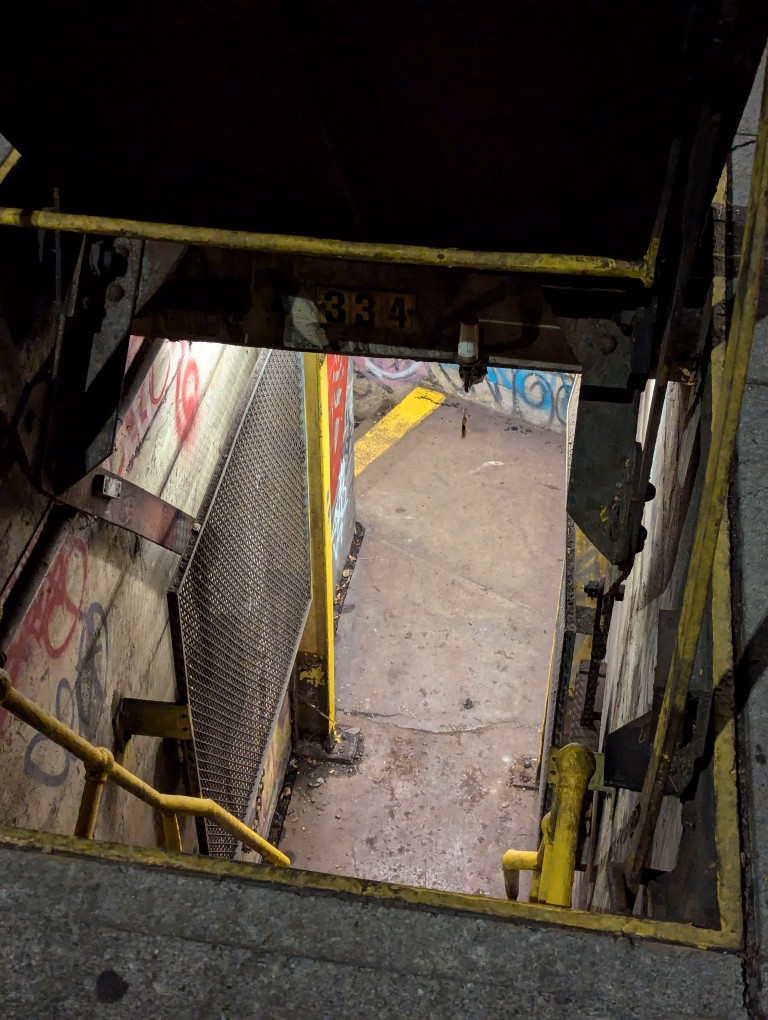
    At the corner of Prospect Avenue and Terrace Place in Park Slope, Brooklyn last December, Y and I saw this passageway opened to an underground passage way. I didn’t look closely at the raised metal cover, so I’m not sure if it was ConEdison, MTA, or another utility. No workers were around, so they didn’t offer a clue either. Looking below inside, the walls of the passageway were covered with spray painted graffiti.

    closeup of a metal cover is held open at about 45 degrees allowing access to a passageway built into the sidewalk going underground
    peering into the passageway under the sidewalk and the steep metal steps going down about 10 feet
    peering into the passageway under the sidewalk and the steep metal steps going down about 10 feet
    peering into the passageway under the sidwalk and the steep metal steps going down about 10 feet