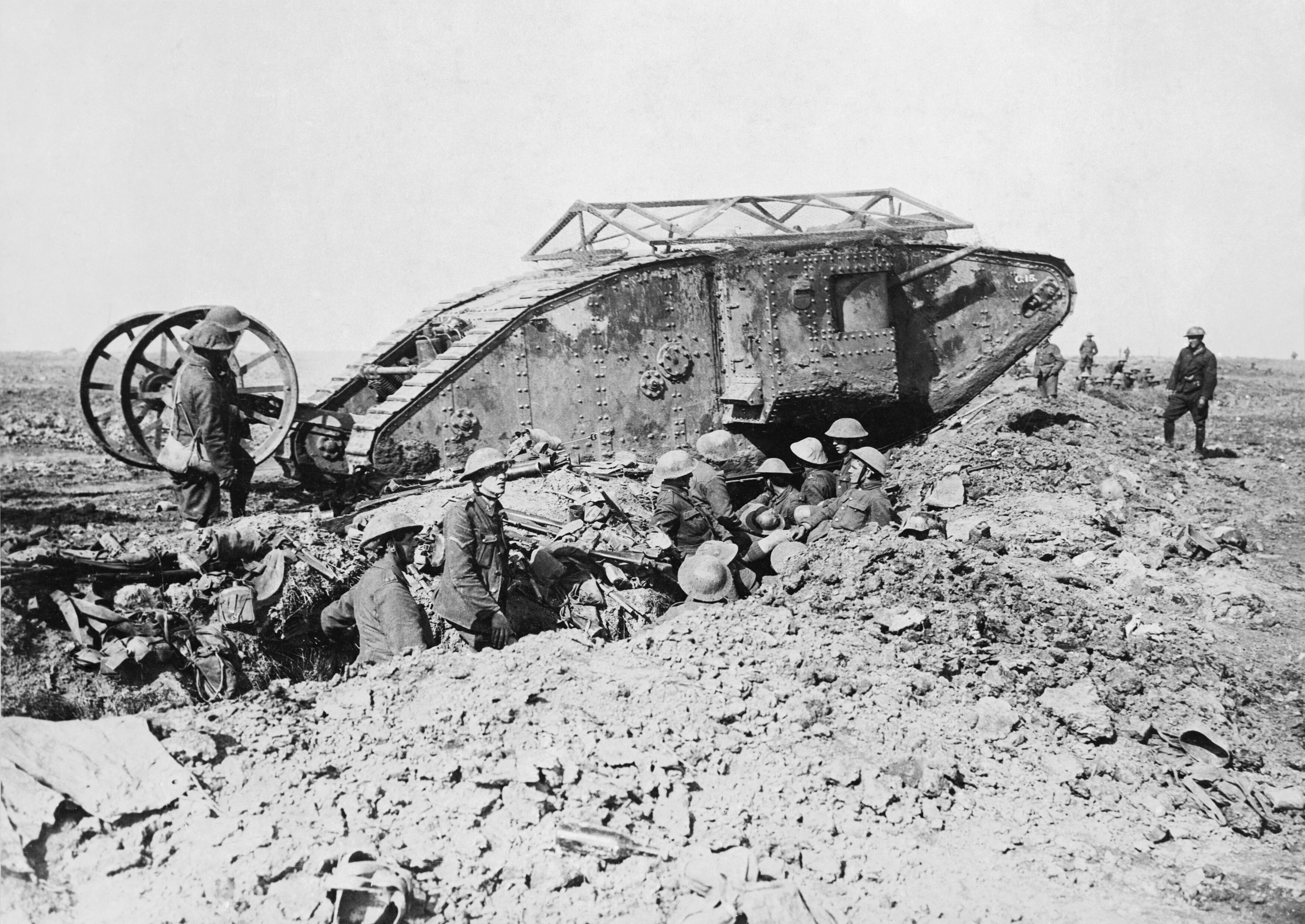
British Mark I Tank. This is photograph Q 2486 from the collections of the Imperial War Museums (collection no. 1900-09).
My article on the public debate between H. G. Wells and Sir Ernest Dunlop Swinton about who originated the idea of a motorized, armored weapons platform or tank, which first appeared in The Wellsian: The Journal of the H. G. Wells Society (no. 33, 2010, pp. 42-57) is now available as a reprint in Short Story Criticism, Volume 264 (edited by Catherine C. DiMercurio, Prod. Layman Poupard. Gale, Cengage, 2018, pp. 256-265).
N.B.: Gale’s Short Story Criticism series is an excellent resource for scholars and students to easily and quickly learn the discourse on a particular author’s short story oeuvre. These volumes collate scholarship from a wide variety of academic journals on the works of a particular author. For example, Short Story Criticism, Volume 264 includes three sections of collected articles for these writers: Mary Caponegro, Mahasweta Devi, and H. G. Wells. I believe that the series is a good addition to libraries serving the needs of English departments and literature programs, because it provides a wide array of research on its selected authors for convenient access to scholarship.
Recently, I had an opportunity to speak with colleagues about what Publishing Studies means to me. I edited my thoughts into the following note.
Publishing Studies: Theory and Praxis
Publishing Studies is an interdisciplinary field of study that encompasses rhetoric and composition, media studies, history of the book/newspaper/magazine/websites/etc., and practical skills including writing, editing, design, layout, production, marketing, business administration, etc. Publishing Studies programs prepare students for publishing industry careers.
Publishing Studies should be grounded in theory and praxis. Theory provides a foundation for understanding the field and its development. It gives ways of seeing and thinking about the process and purpose behind publishing. Theory helps one be a confident problem solver, an open-minded thinker, and a dynamic life-long learner who can adapt to changing work conditions and challenges. Balancing theory is practical skills. These skills are what help students build a portfolio, gain experience through internships and entry level positions, and obtain a job on their desired career path. Through their understanding of theory, students will understand that the skills they have when leaving a program will only go so far as the publishing industry changes. They can leverage their current skills to grow their skill set over time and be engaged members in their profession so that they know what new trends they should pay attention to and what new skills will keep them competitive in the job market.
Rhetoric
Publishing Studies is founded on rhetoric and composition. Publishing is all about communicating particular ideas to a particular audience using a particular (production scale/mass communication) medium. Knowing audience, rhetorical techniques, modes of communication (WOVEN=written, oral, visual, electronic, and nonverbal), and the writing process are essential skills for anyone interested in the publishing industry. Furthermore, being a reflective practitioner–using journal writing and reflection–supports the acquisition, integration, and improvement of the use of rhetoric and composition principles in the work place. There is a lot of overlap in this regard (as well as in the tools employed in the publishing field mentioned below) with Technical Communication.
Media Studies
Media and materiality are really big components of Publishing Studies, because publishing is all about using mass communication media technologies to reach an audience. Important issues for Publishing Studies from a Media Studies perspective might include: the effect/affect of media on audiences, how does media change over time, how does media influence other media, what biases are built into particular media or how those media are used, and are there issues with particular media at scale (e.g., Facebook and Twitter’s role in Brexit and the 2016 US election). Aesthetics, design, layout, and UX are important, too, and they overlap (as do many aspects of theory) with practical skills.
History of the Book/Newspaper/Magazine/Website/Etc
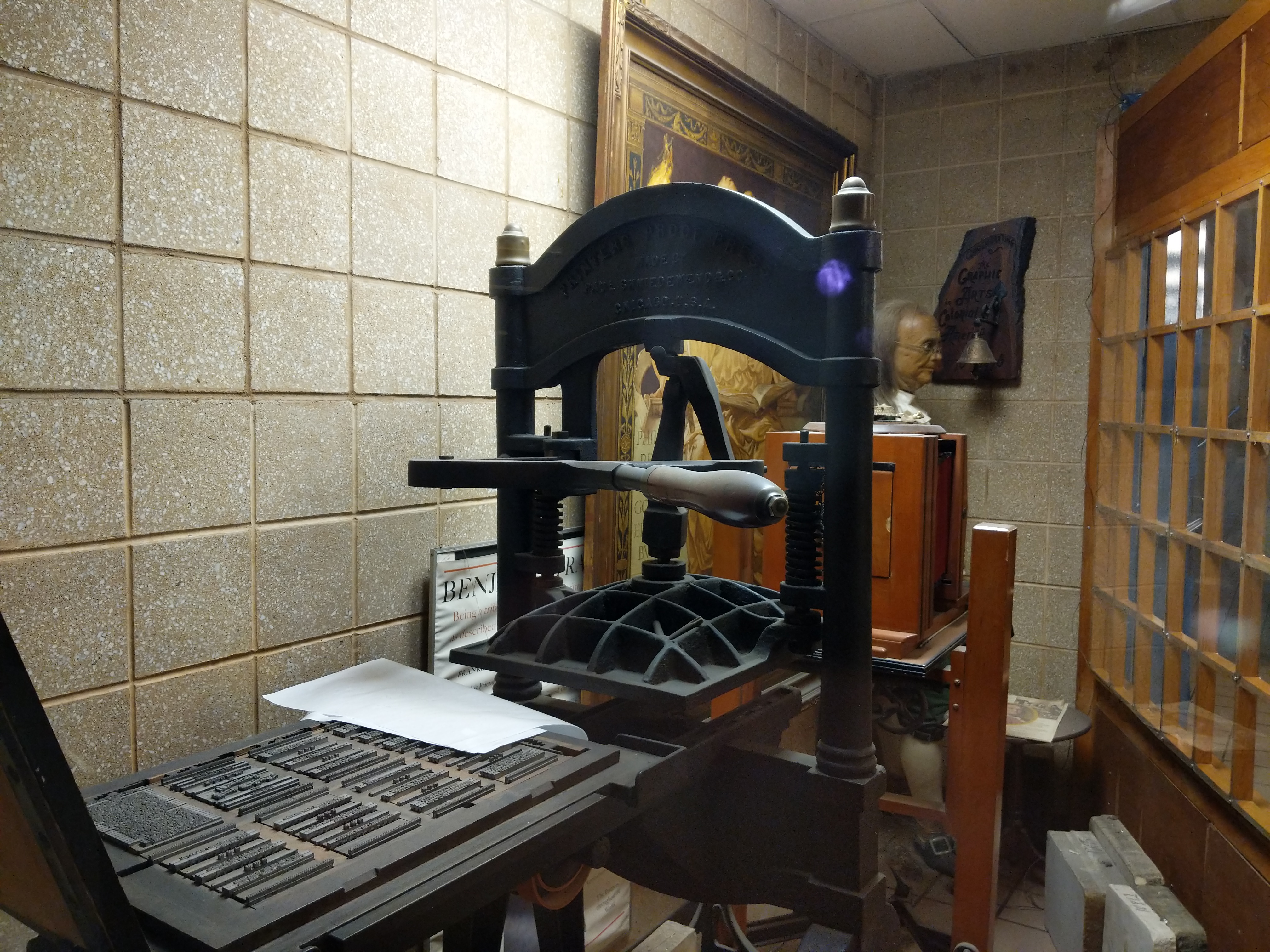
Perhaps under the umbrella of Media Studies, the History of the Book and other produced media such as newspapers, magazines, websites, social media, and others, are key to a fundamental understanding of Publishing Studies. The field encompasses many different forms of mass communication technologies, and the intertwined histories of these media provide a useful context for how we are at this particular moment in publishing history while also revealing how the history of publishing is not a Whig historical progression, but in fact, contains many interesting dead ends and forgotten technologies whose time might not have been right but contained some aspects that were useful and might deserve revisiting in the present. Layered in these histories are issues of labor, capital, production technologies, world historical events, and societal movements, all of which have influenced the development of the publishing history.
Practical Skills
Praxis is tempered by theory. Theory is made meaningful by praxis. The two support one another and enrich one’s experience of the publishing field in a way that helps propel students toward dynamic careers instead of cookie-cutter jobs. Publishing careers include writing, editing, design, layout, printing, IT, programming, procurement, representation, marketing, fact checking, research, and business administration. All of these rely on a basic set of writing, communication, and interpersonal skills, and each branches off into a discrete set of current (but always changing) skills involving knowledge-based work (e.g., planning, research, summarizing, extrapolating, etc.) and tool-based work (e.g., Adobe Creative Suite, Microsoft Office, CMS, etc.). Each career path’s set of widely accepted skills (i.e., those skills that employers are looking for in employees) are those that should be researched and taught by faculty. Besides their course work, students can learn more about these through trade publications and books, mentors, and internships.
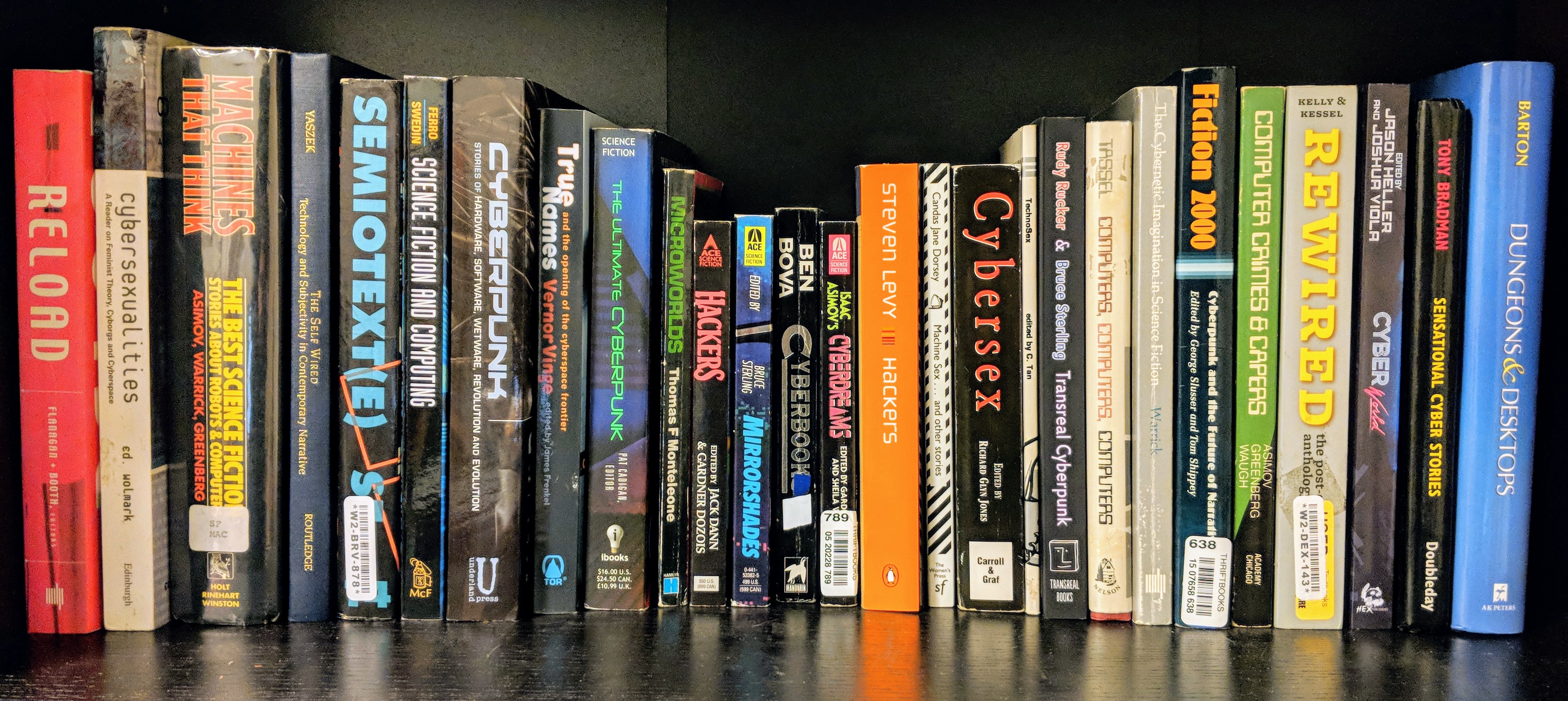
This semester, I am using course release time to focus on a research project that I am tentatively titling, “The Language of Computers in Science Fiction, 1975-1995.” Most of my readings come from SF magazines, but I’m finding some material in anthologies, too. More to follow…stay tuned.
When I asked Dr. Courtney L. Werner, a friend and colleague at Kent State University where we earned our PhDs (find her blog here and connect with her on Twitter here), what I should read that captures the theoretical breadth and historical depth of her discipline of study–Rhetoric and Composition–I dutifully wrote down what she told me: Steven Lynn‘s impressive Rhetoric and Composition: An Introduction. I think that it has been about three or four years since I jotted down her suggestion, but I’m happy to report that I finally got around to reading it over the past few days and I’m certainly the better for it.
For those of you who might be like me–not really knowing anything about Rhetoric and Composition when going into graduate school, but wanting to learn more about this important discipline after learning of its existence–I recommend Lynn’s book as a thorough starting point.
Lynn begins his book with a chapter on the relationship and interconnectedness of Rhetoric and Composition. He guides his reader through seeing them separately and together while peppering his discussion with an exhaustive and concise (what a balancing act throughout the book) theoretical-historical context.
In the chapters that follow, he designs them around the five canons of rhetoric as an art: invention, arrangement, style, memory, and delivery. Each chapter combines discussion of the historically relevant development of the canon, its major contributors, its past and present scholarship, and applications for the classroom. The final chapter on delivery has a lot of helpful material for first time composition instructors, too.
During my time at Kent State, I am glad that I taught in the writing program and I am glad to have had the opportunity to learn from and share ideas with graduate students and faculty in the Rhetoric and Composition Program, including Brian Huot, Pamela Takayoshi, and Derek Van Ittersum. In retrospect, however, I wish that I had made it a point to join a Rhetoric and Composition seminar (for credit or to audit), because I see now how it would have enriched my scholarship and pedagogy in pivotal ways. If you are like me in this regard or still on your path to a terminal degree, I recommend Lynn’s book for learning Rhetoric and Composition’s ideas, debates, and scale as a student, incorporating its ideas into your daily practices as a teacher, and opening up new possibilities in your thinking as a scholar.
Lynn, Steven. Rhetoric and Composition: An Introduction. Cambridge: Cambridge UP, 2010. Print.
Back in 2007, I made a deal with a friend to participate in his fMRI brain scan study at the University of Liverpool in exchange for a copy of the DICOM data from my scan. He agreed to the trade.
Since then, I occasionally pull my scan data off the shelf and dust off the cobwebs and disk errors, and import it into the DICOM Viewer, OsiriX (e.g., as I did in 2009). With the latest versions, I have had a lot of trouble importing the files as they were given to me into OsiriX. Luckily, I saved the installers for earlier versions including the venerable version 3.5.1, which still runs fine on MacOS X Mavericks and Yosemite.
Using OsiriX’s many features, I created these four videos and an album of images of my 2007 brain. I wonder how it has changed since that time–completing my MA, then PhD, taking a postdoc at Georgia Tech, and now, working at City Tech. Also, I think about the technologies of representation that make it possible for me to see my brain without injury or invasion–OsiriX and unseen software libraries for working with, manipulating, and displaying DICOM data, MacOS X and its technology APIs, my MacBook Pro retina, disk and flash drives, email (how I originally received the scan data), the fMRI machine that I sat in for 30 minutes to an hour, the physical laws behind each technology and the biology of myself, etc. What do you think about when you see my brain represented below?