Category: Science Fiction

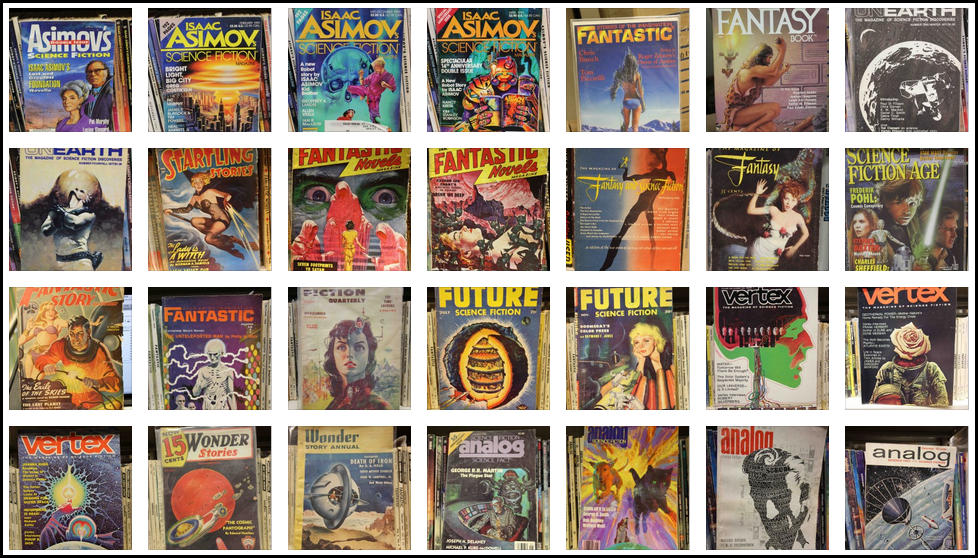
  • My Interview with Emily Hockaday, Senior Managing Editor of Asimov’s, Published in New American Notes Online

    screen shot of a printer color offset of the definition of an "interview" as the title image for Issue 17: The Interview in New American Notes Online website

    Issue 17 of New American Notes Online (NANO) on “The Interview” was recently published.

    My interview with Emily Hockaday, senior managing editor of Asimov’s Science Fiction Magazine, on Artificial Intelligence (AI), Generative AI, and science fiction publishing is a part of the issue.

    Click through here to see the other interviewees and topics covered in this special issue.

    Editor Sean Scanlan sent out this press release for the issue:

    A new issue of NANO: New American Notes Online has been published

    Special Issue 17: The Interview

    Publication date: June 2025

    ISSN: 2160-0104 (Online)

    NANO is an indexed, Open Access, and Open Source humanities journal. NANO never charges to submit or to read content. NANO is published by City Tech, part of the City University of New York.

    NANO announces its new issue, an exploration of the ways that interviews connect people.

    The interview is woven into our hyper-connected world through podcasts, Zooms, magazines, newspapers, social media, and they still occur in private settings. Interviews are ubiquitous. They can be formal and informal, closed or open-ended; they can yield quantitative and qualitative results; they can invoke power and symbolic capital. But, the interview can also be less about gate-keeping and more about the tension inherent in knowledge production and sharing. The eight interviews in this special issue of NANO create spaces of exchange, where the goal is not interrogation but collaboration, curiosity, and mutual understanding.

    Two interviews focus on teaching. A multimedia project by Shauna Chung, Naila Butt, Sandy Fougeres, and Khemraj Persaud describe ways that interviews fuse writing and workplace readiness while the scholar Laura Westengard reveals the communal spaces where gothic and queer reinforce each other.

    Two interviews focus on visual art. Jennifer Lockard Connerley discusses ways that academia and spirituality enhance portraiture while Bill Saylor reveals how his environmental and natural abstractions arise.

    Two interviews focus on translation. Dana Crăciun acknowledges the difficulty of translation while Johannes Göransson eyes translation’s inherent creativity.

    Two interviews focus on creativity and theory. The writer and editor Emily Hockaday discusses the challenges of running a science fiction magazine in the age of AI while Marcus Boon reflects on his interdisciplinary practices.

    Editor’s Introduction for NANO Special Issue 17: The Interview

    by Sean Scanlan

    https://nanocrit.com/index.php/issues/issue17/Editors-Introduction-for-NANO-Special-Issue-17-The-Interview-Issue-by-Sean-Scanlan

    How the Interview Can Become a College Writing Tool for Workplace Readiness

    by Shauna Chung, Naila Butt, Sandy Fougeres, Khemraj Persaud

    https://nanocrit.com/index.php/issues/issue17/How-the-Interview-Can-become-a-College-Writing-Tool-for-Workplace-Readiness-by-Shauna-Chung-Naila-Butt-Sandy-Fougeres-Khemraj-Pe

    An Interview with Marcus Boon, Author of In Praise of Copying 

    by David Banash

    https://nanocrit.com/index.php/issues/issue17/An-Interview-with-Marcus-Boon-Author-of-In-Praise-of-Copying-by-David-Banash

    An Interview with Jennifer Lockard Connerley: Portrait of the Artist as a Young Academic

    by Tara Robbins Fee

    https://nanocrit.com/index.php/issues/issue17/An-Interview-with-Jennifer-Lockard-Connerley-by-Tara-Robbins-Fee

    An Interview with Emily Hockaday, Senior Managing Editor of Asimov’s Science Fiction Magazine

    by Jason Ellis

    https://nanocrit.com/index.php/issues/issue17/An-Interview-with-Emily-Hockaday-Senior-Managing-Editor-of-Asimov-s-Science-Fiction-Magazine-by-Jason-Ellis

    An Interview with Dana Crăciun, the translator of Salman Rushdie’s works into Romanian 

    by Carmen Neamțu

    https://nanocrit.com/index.php/issues/issue17/An-Interview-with-Dana-Cr%C4%83ciun-the-translator-of-Salman-Rushdie-s-works-into-Romanian-by-Carmen-Neam%C8%9Bu

    An Interview with Laura Westengard, Author of Gothic Queer Culture

    by Leigh Dara Gold

    https://nanocrit.com/index.php/issues/issue17/An-Interview-with-Laura-Westengard-Author-of-Gothic-Queer-Culture-by-Leigh-Dara-Gold

    An Interview with Johannes Göransson

    by Matt Miller

    https://nanocrit.com/index.php/issues/issue17/An-Interview-with-Johannes-Goransson-by-Matt-Miller

    An Interview with Bill Saylor

    by Sean Scanlan

    https://nanocrit.com/index.php/issues/issue17/An-Interview-with-Bill-Saylor-by-Sean-Scanlan

  • How to Lift and Lower Heavy Equipment with Car Screw Jacks

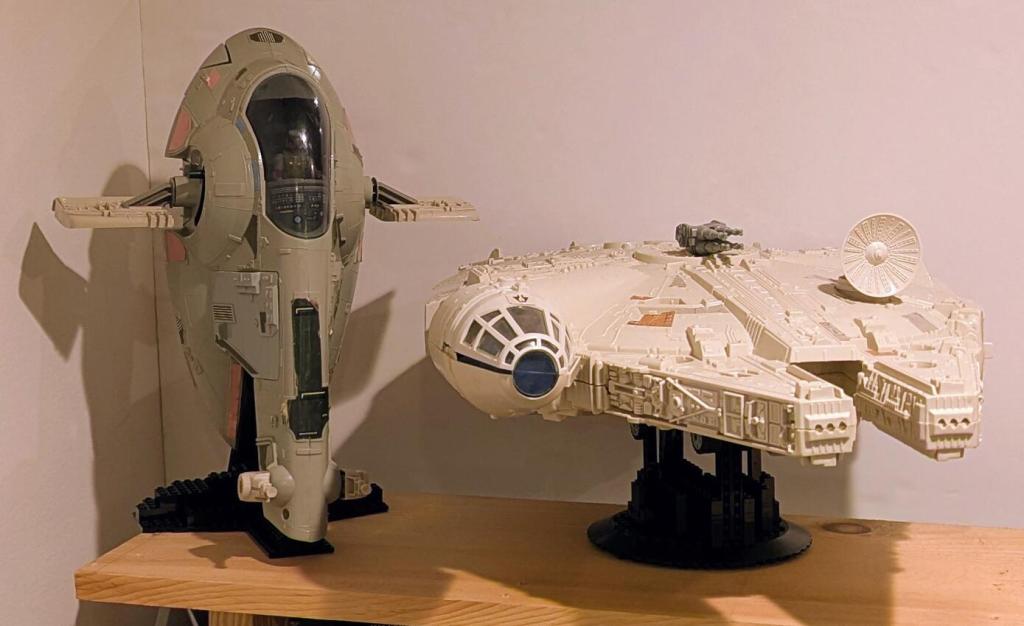
    My dad has a dozen or two of screw bottle car jacks that he used to press and hold every tongue-and-groove cypress board covering the walls and ceiling of the upper floors of their house. We made use of four of them to move two pieces of his heavy machinery into place in his shop.

    Some time back, he purchased a milling machine and lathe from Grizzly. He had managed to get them into his shop on furniture movers. Of course, they can’t be run on those platforms, so we needed to find a way to place them flat on the shop’s floor.

    For the milling machine, which was heavier than the lathe, we drilled four holes through the metal cabinet and constructed a wood box with bolts going through the short sides of the wood box into the metal cabinet. We placed the four jacks under the long arms of the box, raised it a fraction of an inch to remove the furniture mover and then lowered the jacks until the cabinet rested on a 3/4″ plywood base that we cut to fit. Then, we removed the box from the cabinet after unbolting it and unscrewing the deck screws we had built the box with.

    If you do something similar to this, be mindful of the total reach/height of the jack and its minimum. We built the box around the cabinet at a height that allowed for a slight lift and enough lowering to allow the jacks to be removed after the cabinet was lowered.

    For the lathe, we did something similar, except we couldn’t drill through its cabinet to bolt the box to the cabinet as we had done with the milling machine because it is double walled and could potentially create problems with bolt alignment (and we would need much longer bolts).
    With the lathe being lighter than the milling machine, we felt safe building the box around the lathe’s cabinet and adding two “tongs” that fit into the recesses at the bottom of the cabinet. To make sure the tongs remained in place, we put a tie strap around these and the cabinet.
    We lifted the lathe slightly to remove the furniture mover.

    And then lowered it onto a custom piece of plywood for it to rest on the floor.

    When you don’t have the muscle or manpower, use the tools at hand to get things done. As William Gibson writes, “the street finds its own use for things.”

  • Generative AI for College Students Series: Risk of Losing One’s Voice

    an anthropomorphic cat as a professor wearing a suit and standing in front of a chalkboard
    Image created with Stable Diffusion.

    Please keep in mind that new technology like Generative AI (Gen AI) shouldn’t simply make your thinking or work easier, much less take the place of the uniquely singular abilities of human beings to grow cognitively, think creatively, or evaluate critically. If you use Gen AI to simply avoid work, you are doing it wrong. Instead, using Gen AI in the spirit of Douglas Engelbart’s “augmenting human intelligence” and Donna Haraway’s configuration of the cyborg point the way to beneficial heightening of human possibility instead of harmful erasure of the cognitive distinctions of humanity. If you use Gen AI, use it wisely and use it well. This post is the twelfth in this series.

    In the science fiction novel Neuromancer, William Gibson explores the concept of cyborgs as beings who seamlessly integrate technology into their bodies and minds. Similarly, when students use generative AI tools to edit or paraphrase their writing, they risk integrating AI-generated changes that alter the meaning or tone of their work. This raises important questions about the role of AI in the writing process and the potential for losing one’s unique voice.

    AI tools are designed to analyze and modify text based on patterns in their training data. While this can be helpful for improving grammar or clarity, it can also lead to unintended changes in meaning or tone. For example, a student might ask an AI tool to paraphrase a complex sentence, only to find that the tool has altered the nuance or emphasis of the original text. This can result in a piece of writing that no longer accurately reflects the student’s intentions or ideas.

    This issue is reminiscent of the theme of identity in science fiction, where characters often grapple with the implications of merging human and machine. In works like Isaac Asimov’s I, Robot, the line between human consciousness and technological enhancement is increasingly blurred. Similarly, when students rely on AI tools to edit their writing, they risk blurring the line between their own voice and that of the machine.

    To address this problem, students should approach AI-generated edits with caution. They should carefully review any changes made by the AI, ensuring that the meaning and tone of their writing remain intact. Reading the writing of others and doing more writing of one’s own helps each student recognize and develop their own voice as a writer.

    In conclusion, while generative AI tools can be valuable editing assistants, they also pose a risk of altering the meaning or tone of a student’s writing. The cyborg student must approach these tools with discernment, ensuring that their unique voice is preserved in the process. By doing so, they can harness the benefits of AI while maintaining the integrity and authenticity of their own voice and ideas in their writing.

  • Generative AI for College Students Series: Privacy and Protecting Your Ideas

    an anthropomorphic cat as a professor dressed in a suit and standing in front of a chalkboard
    Image created with Stable Diffusion.

    Please keep in mind that new technology like Generative AI (Gen AI) shouldn’t simply make your thinking or work easier, much less take the place of the uniquely singular abilities of human beings to grow cognitively, think creatively, or evaluate critically. If you use Gen AI to simply avoid work, you are doing it wrong. Instead, using Gen AI in the spirit of Douglas Engelbart’s “augmenting human intelligence” and Donna Haraway’s configuration of the cyborg point the way to beneficial heightening of human possibility instead of harmful erasure of the cognitive distinctions of humanity. If you use Gen AI, use it wisely and use it well. This post is the eleventh in this series.

    In the science fiction film The Matrix, humans unknowingly live within a simulated reality created by machines. Similarly, when students input personal or private information into AI tools, they may be contributing to a vast, invisible dataset that could be used in unintended ways. This raises important questions about privacy and the responsible use of AI in academic writing.

    Generative AI tools require input to generate responses, and this input is often incorporated into their systems for future use. While this allows the tools to improve over time, it also means that any sensitive or personal information provided by users could be shared or misused. For example, a student working on a sensitive topic might input detailed personal reflections or original ideas into an AI tool, only to have that information become part of the tool’s training data. This creates a privacy paradox: the more students rely on AI tools, the more they may be compromising their own privacy.

    This issue is reminiscent of the theme of surveillance in science fiction, where individuals are constantly monitored and controlled by technological systems. In works like George Orwell’s 1984, the pervasive surveillance of the state undermines individual freedom and creativity. Similarly, the use of AI tools in academic writing could undermine students’ control over their own ideas and personal information.

    To address this problem, students must be mindful of what they input into AI tools. They should avoid sharing sensitive or personal information and instead use the tools for general brainstorming or drafting. Using local Gen AI tools on one’s own computer or mobile device keeps your data safe on your own system instead of sending to a remote system.

    While generative AI tools offer powerful possibilities for academic writing, they also pose significant privacy risks. The cyborg student must approach these tools with caution, carefully considering what they share and how they protect their personal information. By doing so, they can use AI responsibly while safeguarding their privacy.

  • Generative AI for College Students Series: Academic Integrity and Intellectual Authenticity

    Image created by Stable Diffusion.

    Please keep in mind that new technology like Generative AI (Gen AI) shouldn’t simply make your thinking or work easier, much less take the place of the uniquely singular abilities of human beings to grow cognitively, think creatively, or evaluate critically. If you use Gen AI to simply avoid work, you are doing it wrong. Instead, using Gen AI in the spirit of Douglas Engelbart’s “augmenting human intelligence” and Donna Haraway’s configuration of the cyborg point the way to beneficial heightening of human possibility instead of harmful erasure of the cognitive distinctions of humanity. If you use Gen AI, use it wisely and use it well. This post is the tenth in this series.

    In the science fiction novel Do Androids Dream of Electric Sheep?, Philip K. Dick explores a world where advanced androids, nearly indistinguishable from humans, challenge the notion of humanity. Similarly, the rise of generative AI tools challenges our understanding of authorship and academic integrity. As students increasingly use these tools to assist with writing, they must navigate a gray area between acceptable use and academic dishonesty.

    The issue of academic integrity arises because AI tools can generate original, coherent text based on a prompt. While this can be a powerful tool for brainstorming or overcoming writer’s block, it also raises questions about authorship. If a student submits work that includes AI-generated text without proper citation or permission, they may be violating academic integrity policies. This is particularly concerning because many institutions are still developing guidelines for the use of AI in academic writing.

    Consider a student struggling to articulate their thoughts on a complex topic. They prompt an AI tool to help rephrase their ideas, and the AI generates a well-written paragraph that clearly expresses their points. The student then includes this paragraph in their paper without citation, assuming it is their own work. This scenario raises important questions about the boundaries between collaboration and cheating in the age of AI.

    This dilemma is reminiscent of the theme of identity in science fiction, where characters often question what it means to be human. Similarly, students using AI tools must question what it means to be the author of their work. Are they still the sole authors if they rely on AI to generate text? How should they cite AI-generated content, and under what circumstances is it acceptable to use it?

    To navigate this gray area, students must consult with their instructors and familiarize themselves with their institution’s policies on AI use. Always read your class syllabus and assignment prompts to ensure AI-related policies are followed. They should also take steps to ensure transparency, such as disclosing the use of AI tools in their work and properly citing any generated content. If in doubt, ask!

    The rise of generative AI tools challenges traditional notions of authorship and academic integrity. The cyborg student must navigate this complex landscape with care, ensuring that they use AI tools ethically and responsibly. By doing so, they can harness the power of AI while maintaining the integrity of their academic work.