Category: Technology

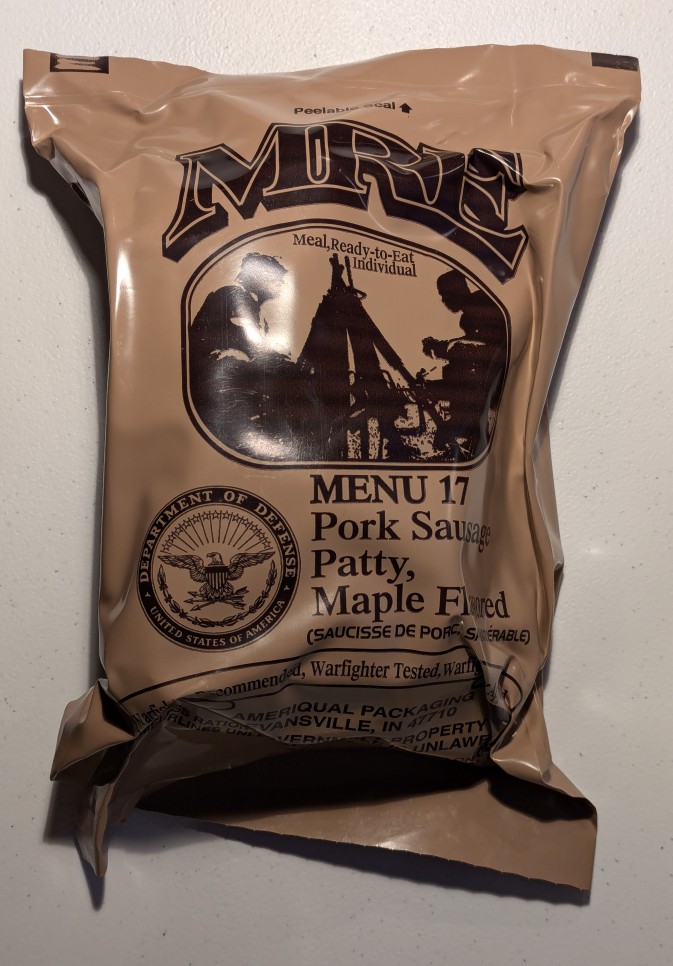
  • Christmas Breakfast with MRE Menu 17: Pork Sausage Patty, Maple Flavored

    mre plastic bag with contents inside.

    Yesterday, I wanted to enjoy an MRE meal for breakfast, so I dug into Menu 17: Pork Sausage Patty, Maple Flavored. It comes from a B case (menus 13-24) with an inspection date of 3/25 and a good Time and Temperature Indicator (TTI) sticker.
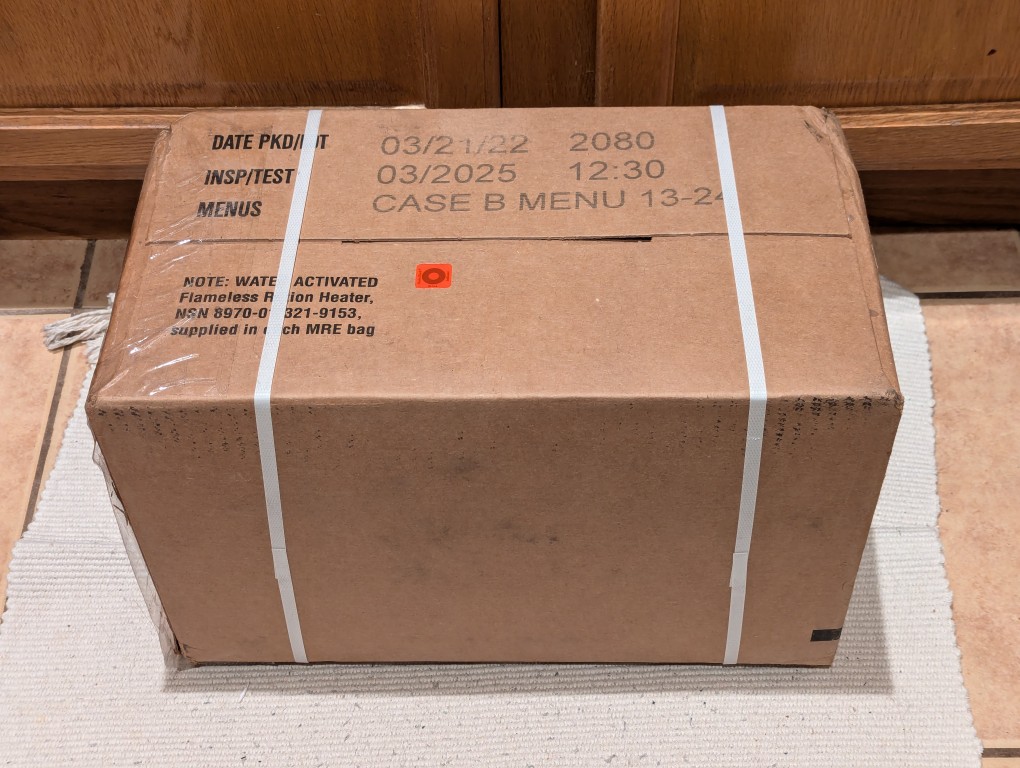
    cardboard case of mres, bound with plastic straps, on floor

    Each case has twelve meals tightly packed in its dense cardboard box. A case weighs about 20 pounds.
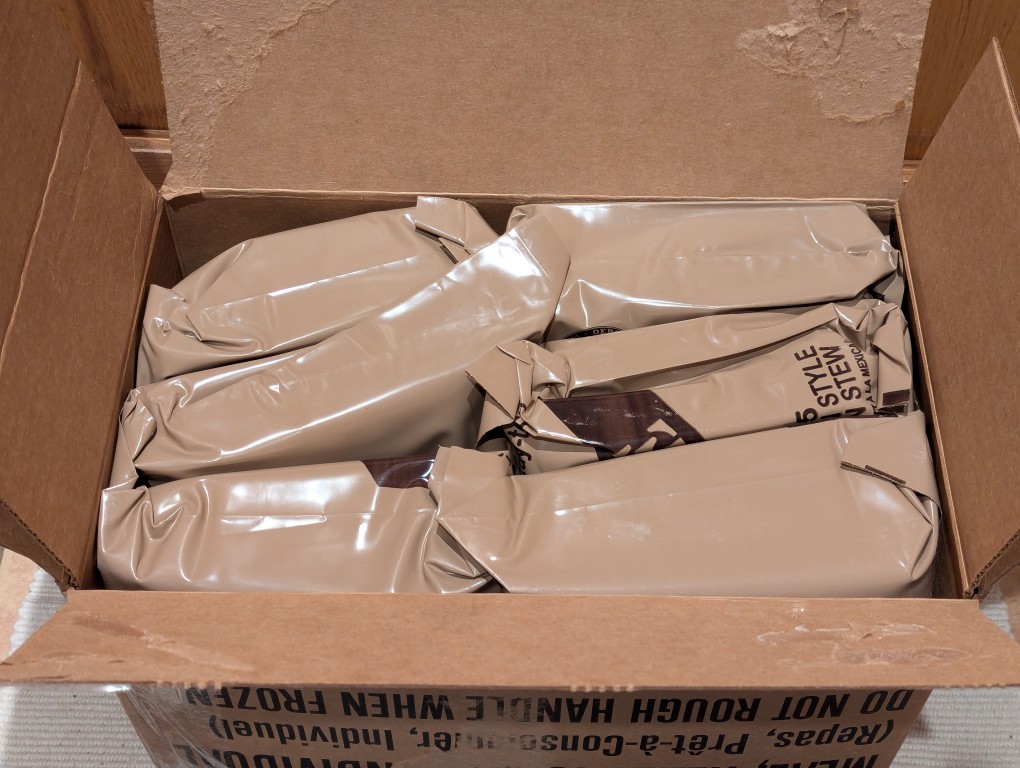
    open cardboard case of mres, 6 mres shown.
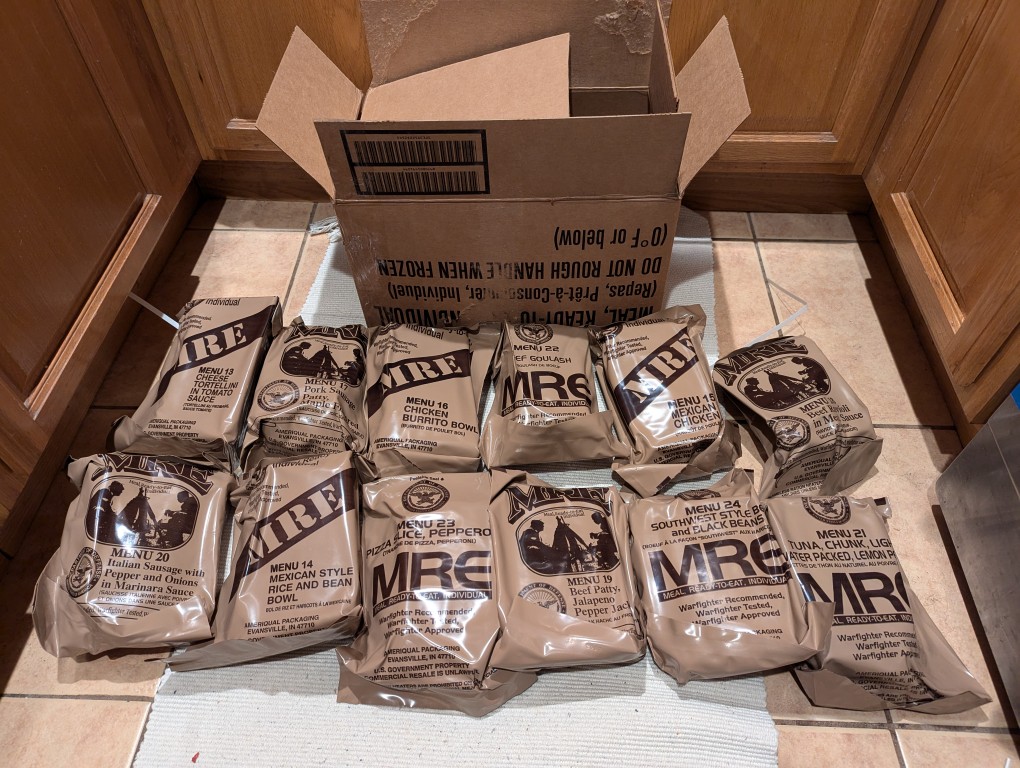
    12 mres on the floor with their cardboard case in the background

    This case included these menu options:

    • Menu 13: Cheese Tortellini in Tomato Sauce
    • Menu 14: Mexican Style Rice and Bean Bowl
    • Menu 15: Mexican Chicken
    • Menu 16: Chicken Burrito Bowl
    • Menu 17: Pork Sausage Patty, Maple Flavor
    • Menu 18: Beef Ravioli in Mat Sauce
    • Menu 19: Beef Patty, Jalapeno Pepper Jack
    • Menu 20: Italian Sausage with Pepper and Onions in Marinara Sauce
    • Menu 21: Tuna, Chunk, Light Water Packed, Lemon Pepper
    • Menu 22: Beef Goulash
    • Menu 23: Pizza Slice, Pepperoni
    • Menu 24: Southwest Style Beef and Black Beans
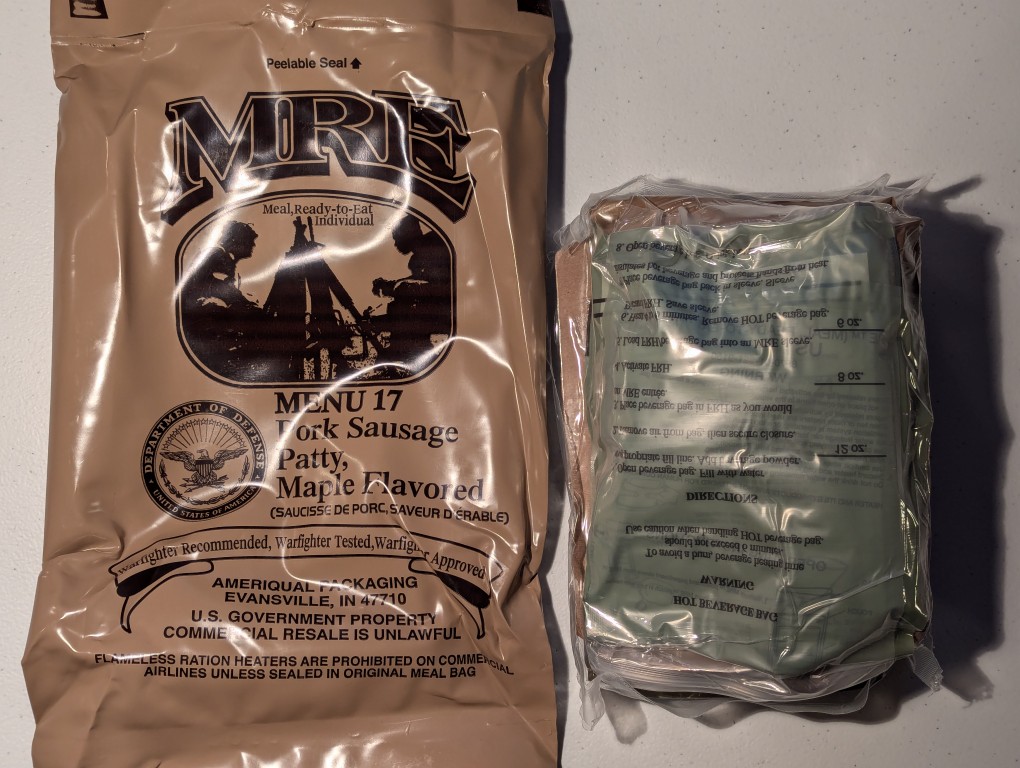
    mre plastic bag open with inner bag of contents next to it

    Opening the outer heavy-duty bag, reveals a more tightly packed thin plastic bag containing the MRE’s contents.
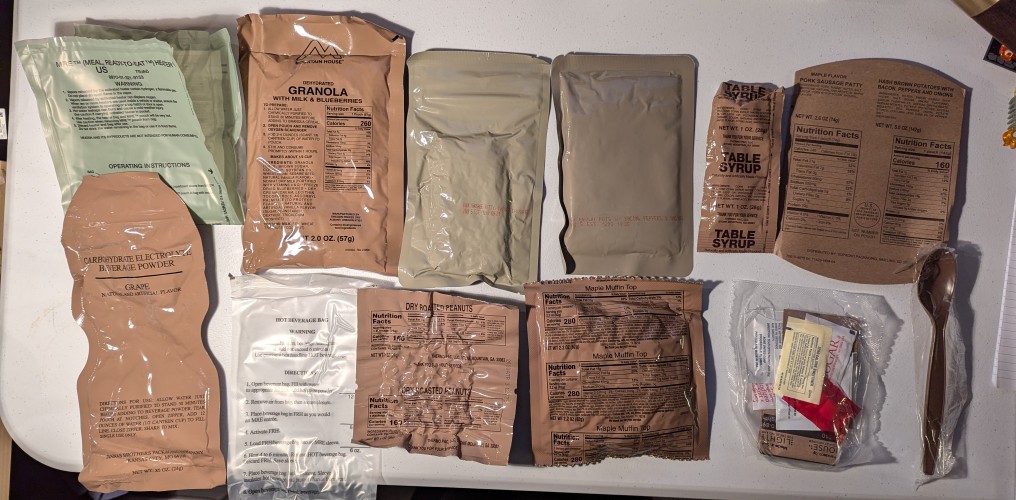
    mre contents spread out, an assortment of pouches and bags with different food items inside

    From the upper left to right, this MRE includes:

    • Water-activated heater bag
    • Mountain House Dehydrated Granola with Milk and Blueberries
    • Pork sausage patty
    • Hash brown potatoes with bacon, peppers, and onions
    • Table syrup
    • Entree and side nutrition info card (can be used as insulating sleeve, paper for writing, sending as a postcard–I have done this before, or kindling for fire)
    • Grape flavored carbohydrate electrolyte beverage powder in drinking pouch
    • Hot beverage bag (for coffee)
    • Dry roasted Peanuts
    • Maple muffin top
    • Accessory pack
    • Spoon
    mre accessory kit spread out

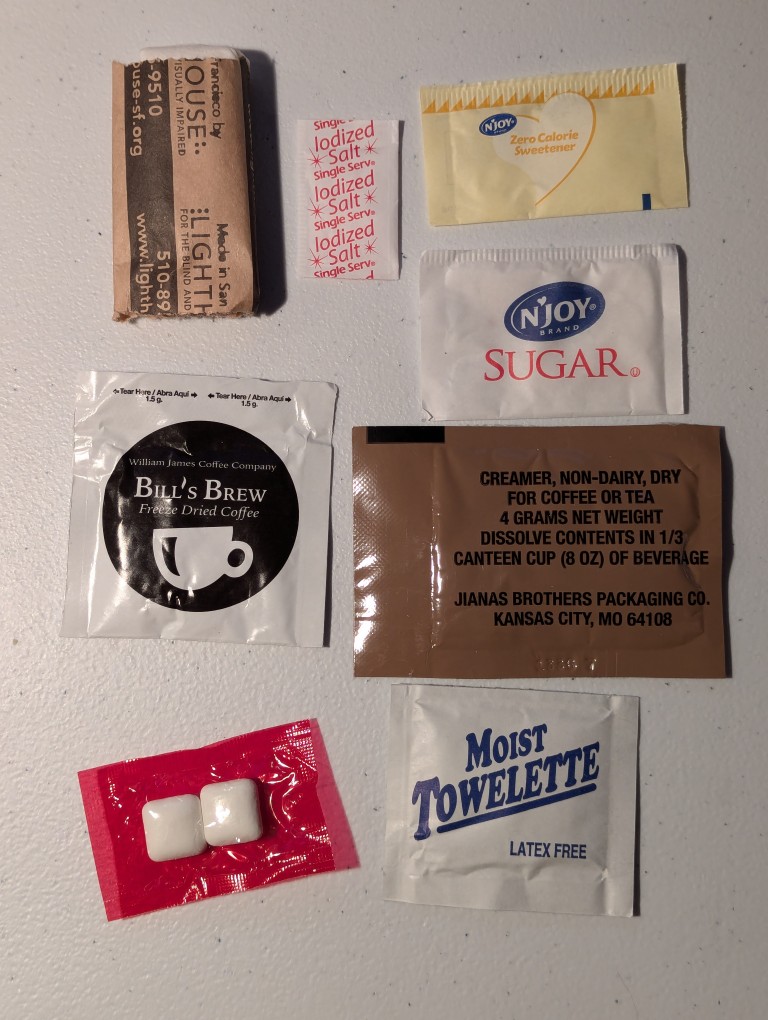
    The accessory pack included clockwise from the bottom left: chewing gum, instant coffee, TP, salt, zero calorie sweetener (dextrose and sucralose), sugar, non-dairy creamer, and moist towelette.
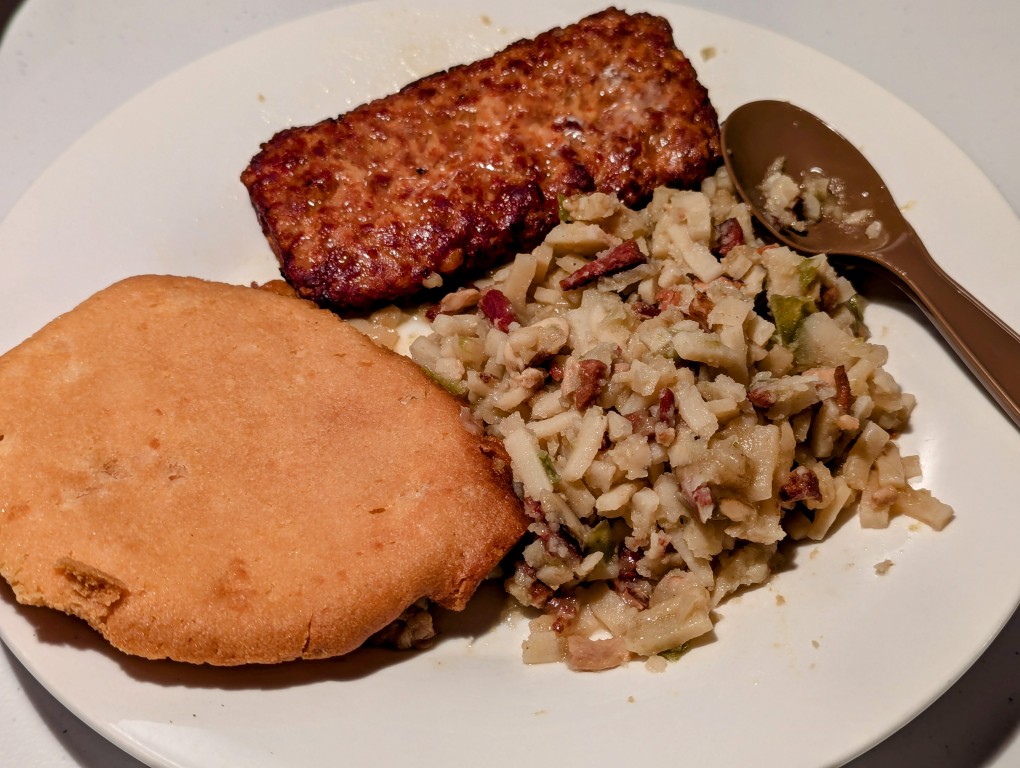
    muffin top, pork patty, and hashbrowns on a white ceramic plate with plastic spoon

    For breakfast, I prepared the patty, hash browns, and muffin top using the microwave. I warmed the patty and hash browns for 45 seconds, then added the muffin top, and microwaved for 15 more seconds. In general, I find MREs taste better by combining the individual elements in it. In this case, I would have a spoonful of patty, hash browns, and muffin together, which I thought was quite flavorful and enjoyable. For some folks, adding the syrup would improve the meal, but I don’t need the extra calories. Regardless, I recommend it.

    I saved the granola for breakfast on another day, and I had the peanuts for dessert with cookies at dinner later that night. I’ll save the other parts for consuming or using another day.
  • Continuing to Receive New Workstation Components

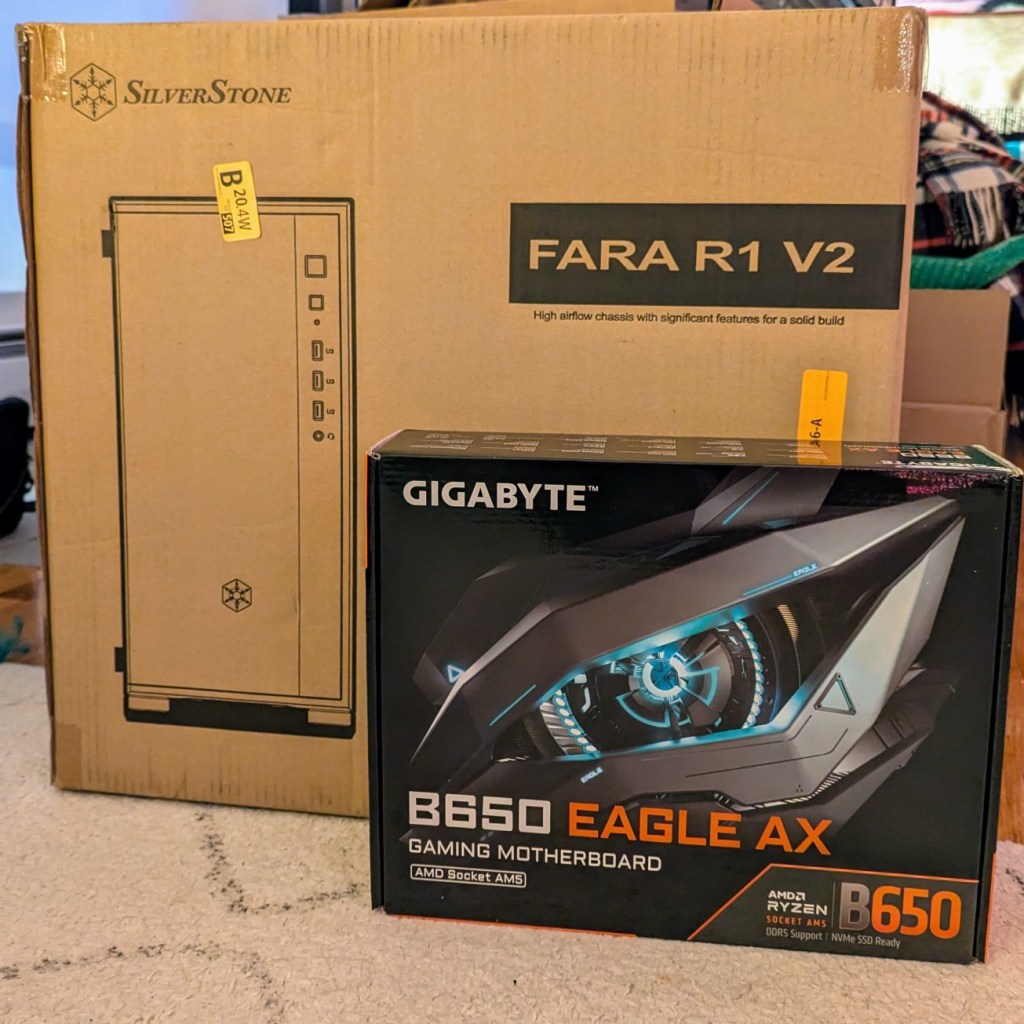
    computer case in a cardboard box and a computer atx motherboard in a cardboard box

    Over the weekend, I received two more pieces of my upcoming AI-focused workstation build to go along with the CPU and A4000 video cards. They are a Gigabyte B650 Eagle AX model ATX motherboard, which has four PCIe slots–one spaced for a 3-slot card like my 3090 and three spaced for single slot cards like the A4000s, and a Silverstone Fara R1 V2 ATX mid-tower case, which was the least expensive steel case without a glass window and good ventilation. My new Corsair DDR5 RAM won’t arrive until after Christmas, so the actual build will have to wait until then.

  • New AI Workstation Build Continues: Three NVIDIA A4000 Video Cards

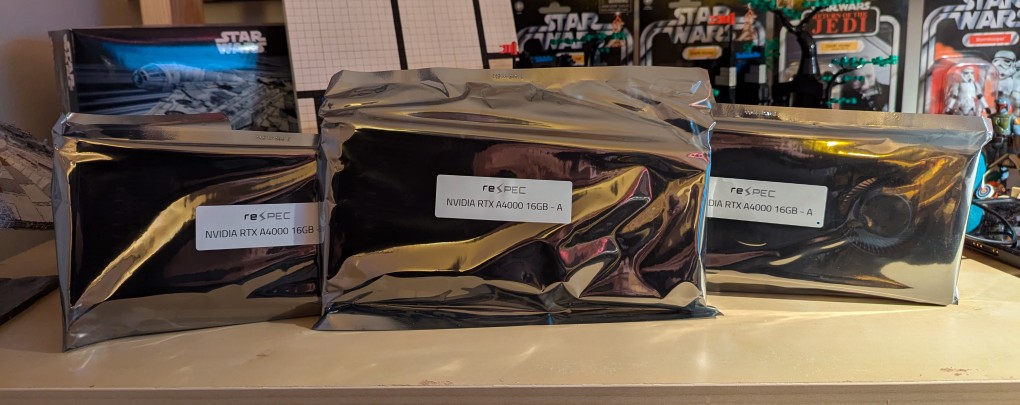
    After receiving a new AMD Ryzen 7 7700 CPU earlier this week, I received the three NVIDIA RTX A4000 16GB VRAM video cards pictured above in antistatic bags today for my new AI workstation. Brand new, these cards run just over $1000, but I got these refurbished ones from an eBay seller for just under $600 each. These three video cards will work alongside my NVIDIA RTX 3090 Founders Edition 24GB VRAM video card for a total of 72GB VRAM, which will allow me to run low-or-no quantized large language models at a much faster output rate than I currently can using the 3090 with system RAM. The limited PCIe lanes on the Gigabyte motherboard that I ordered shouldn’t be too limiting as far as inference work is concerned.

  • New CPU, New Computer Build Begins

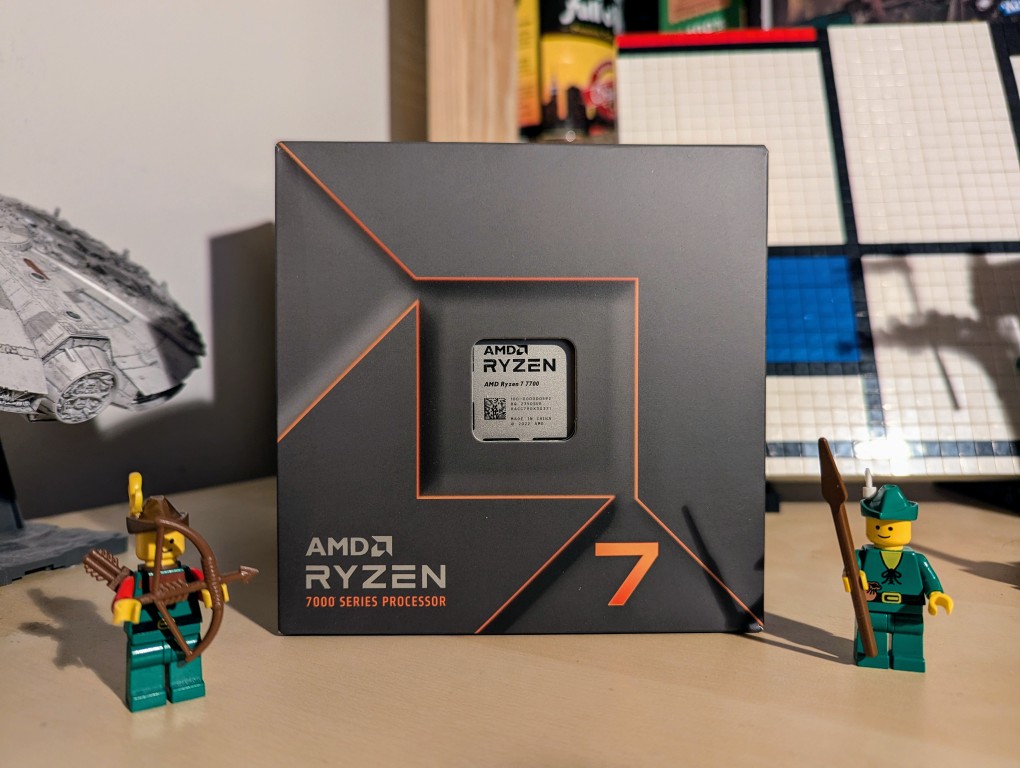
    boxed amd ryzen 7 7700 cpu on a desk, lego forestmen on either side, millennium falcon and mondrian painting in lego in background

    Knowing that tariffs, or a tax ultimately paid by those who buy those imported goods, are coming, I planned out a new workstation for doing LLM and Generative AI work. The first part arrived today: an AMD Ryzen 7 7700 CPU. While I would have certainly loved to build a system around an AMD Threadripper Pro with its 8-channel memory and numerous PCIe slots and plenty of lanes to support maximum throughput, I am just an English professor of simple means, so I opted to build around the least expensive options available to me and using a combination of new and used parts. Therefore, I am upgrading from my current AM4 socket system to an AM5 socket motherboard that supports DDR5 memory and this lower-wattage, non-overclocking CPU. I’m currently waiting on the arrival of a motherboard with 4 PCI slots (spaced to allow the four video cards that I plan to run), three NVIDIA RTX A4000 video cards with 16GB VRAM (used via eBay), 64GB (2 x 32GB) Corsair DDR5 RAM, and an ATX mid-tower case. I’ll use my current drives, 1000 watt power supply, and NVIDIA RTX 3090 Founders Edition video card in the new system. Most of my work focuses on inference, so the slower PCI slots in this build won’t hurt too bad–it should far exceed CPU inference even with faster RAM.

  • Be Prepared With a Compact First Aid Kit

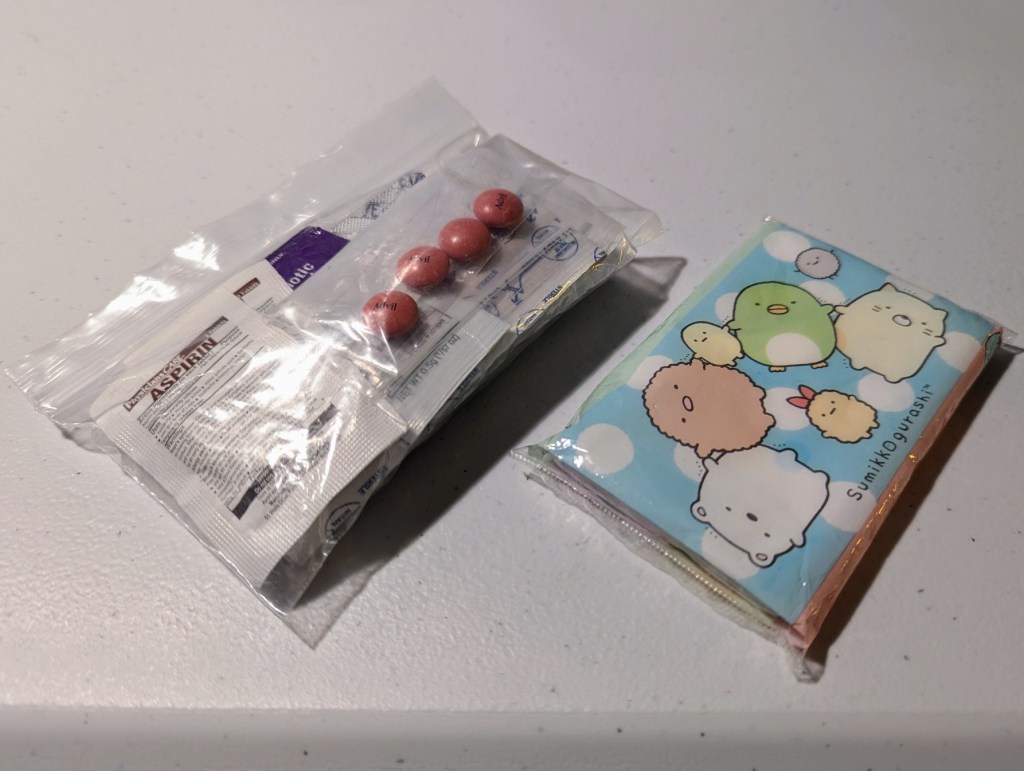
    a ziploc full of first aid supplies and a small packet of tissues

    The most important lesson that I learned in the Boy Scouts is “Be Prepared.” I can’t count how many times being prepared has helped me or someone around me–usually in small ways, but occasionally in big ways.

    One of the ways that I maintain preparedness is keeping an individual first aid kit (IFAK) on my person. My full kit fits inside a small MOLLE pouch that I keep in my backpack, but within that kit is a smaller pouch of core components that is small enough that I can slip it into a pocket if I’m not wearing my backpack.

    I would recommend making a small kit like this to keep on your person. It’s easy to do using things you likely already have on-hand. When you or someone around you needs something in it, you’ll be thankful for investing a little bit of time, energy, and materials to be ready for that moment.

    a grid layout of first aid kit contents: pills, pouches, bandaids, eye drops, and tissues

    You can put whatever you think is most useful into your compact first aid kit. In mine, I carry things that I regularly use or think might be useful. I keep my kit in a waterproof snack-size Ziploc bag. It includes:

    • 6 alcohol antiseptic pads
    • 2 lens wipes
    • 2 bandaids
    • 2 aspirin
    • 1 antibiotic ointment
    • 3 single-use eye drops
    • 4 Advil (ibuprofen)
    • 4 Eve DX (a Japanese-made pain reliever that helps with migraines)

    In addition to the first aid kit, I also keep a pouch of tissues (my current Japanese-made Sumikkogurashi ones were donated by Y).

    Whatever you put in your first aid kit, stick to what fits your needs. Keep it up to date as you use things in it. And, adjust its contents as your needs change.

    a ziploc full of first aid supplies and a small packet of tissues