Tag: Composition

  • Recovered Writing: Undergraduate Astronomy Class, PHYS 2021, Sunset Observation Project, Fall 2004

    This is the ninth post in a series that I call, “Recovered Writing.” I am going through my personal archive of undergraduate and graduate school writing, recovering those essays I consider interesting but that I am unlikely to revise for traditional publication, and posting those essays as-is on my blog in the hope of engaging others with these ideas that played a formative role in my development as a scholar and teacher. Because this and the other essays in the Recovered Writing series are posted as-is and edited only for web-readability, I hope that readers will accept them for what they are–undergraduate and graduate school essays conveying varying degrees of argumentation, rigor, idea development, and research. Furthermore, I dislike the idea of these essays languishing in a digital tomb, so I offer them here to excite your curiosity and encourage your conversation.

    My “Sunset Observation Project” was a semester-long project in Professor James Sowell’s PHYS 2021 class in Fall 2004. Originally, I tried taking this class from Professor Sowell when I was having a lot of trouble  in school in the late 1990s. So, when I returned to Georgia Tech after a stint in the business world, I made a point to complete Professor Sowell’s class. I wanted to prove to myself that I could succeed in this class, and I wanted to prove to Professor Sowell, who I considered an engaging and interested instructor, that I could succeed in his class. Ultimately, I did well in this class and the second Astronomy class on large-scale astronomy that Professor Sowell also taught.

    This project helped me begin getting back into shape, because I choose to do it the hard way: instead of observing the sunset from campus, I went to the best observation place outside the city on top of Stone Mountain. This meant that I had to hike up to the top with my tripod and camera on a regular basis.

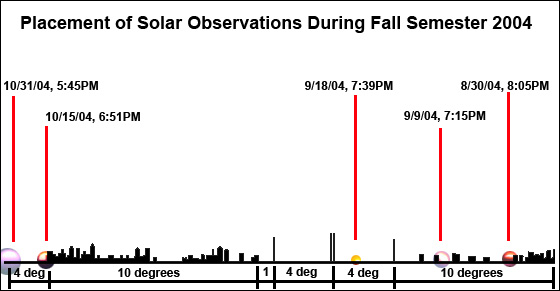
    I used Adobe Photoshop to create a line-drawn skyline and to measure my observations consistently by using layers.

    While I am posting my Sunset Observation Project as-is (meaning all of the mistakes contained below are mine), I continue to tell my students today that Professor Sowell was one of the professors who helped me with my writing, because I read his comments and listened to his advice. The takeaway for my students is that we can improve on our writing, communication, and composition anywhere and anytime–even in a class about our great solar system.

    Jason W. Ellis

    Professor James Sowell

    PHYS 2021

    Fall 2004

    Sunset Observation Project
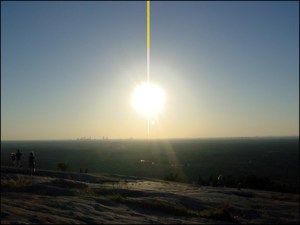
    image001

    Purpose

    The Sunset Observation Project is designed to use long established techniques to chart the progression of the Sun across the horizon over the course of one school semester. It allows the student to become more aware of the motion of the Earth, both on its axis as well as its orbit around the Sun.

    Procedure

    Over the course of the semester each student will make a number of observations of the Sun setting.  Each observation must be made from the same location and a point of reference should be chosen along the horizon so that the Sun’s change in location can be measured using the hand and fingers as angular measuring devices.  Each observation should be about a week or more apart so that a discernible change can be observed.

    I made my observations from the same spot west of downtown Atlanta on top of Stone Mountain.  I expect smog and weather to cause some problems with observing sunsets, but Stone Mountain provides an excellent view of the horizon due to its height and distance away from tall buildings.

    Observational Data

    Date of Observation

    Time of Sunset

    Degrees from Reference Point

    Place of Observation

    Weather Conditions

    Aug 30, 2004

    8:05 pm EST

    0 deg

    Stone Mountain

    Cloudy and Hazy

    Sep 9, 2004

    7:51 pm EST

    5 deg S

    Stone Mountain

    Hazy

    Sep 18, 2004

    7:39 pm EST

    10 deg S

    Stone Mountain

    Hazy

    Oct 15, 2004

    6:51 pm EST

    26 deg S

    Stone Mountain

    Cloudy

    Oct 31, 2004

    5:45 pm EST

    30 deg S

    Stone Mountain

    Cloudy and Hazy

    image003

    August 30, 2004

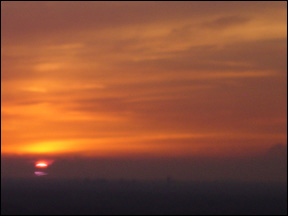
    image005This was my first solar observation of the semester.  It was also the first time that I had climbed Stone Mountain.  I learned a lot on this first trip about giving myself enough time to hike the 1.4 miles to the top as well as bringing some Gatorade along because the outside water fountain wasn’t working.

    image007The cloud cover and haze was a problem that I encountered all semester.  It was difficult to arrange times to hike to the top of Stone Mountain that took into account my school schedule, work schedule, and the weather.  If I had considered these logistical problems beforehand, I would have chosen to make my observations from a window in one of Tech’s buildings.

    September 9, 2004
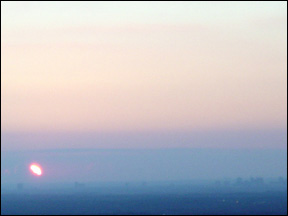
    image009This was a good day to hike to the top of Stone Mountain.  Unfortunately, there were distant clouds which obscured the setting of the sun so I had to take my picture while the sun was still above the building tops.

    image011The sun moved approximately 5 degrees South of the building that I used for a reference point during the semester of observations.

    September 18, 2004
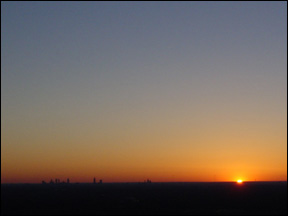
    image013There was only a slight haze in the distance when I made this observation.  By this time, I had begun to enjoy hiking to the top of Stone Mountain.  I brought a friend along on the first observation, but no one would join me for any of other observations.

    image015The Sun is approximately 10 degrees South of my first observation.

    October 15, 2004

    image017The Sun had moved a great deal since my last observation.  Weather (i.e., hurricanes) and a busy schedule makes these observations difficult to make because of the time involved going to Stone Mountain and hiking to the top.

    image019The Sun is about 26 degrees South of my first observation.

    October 31, 2004
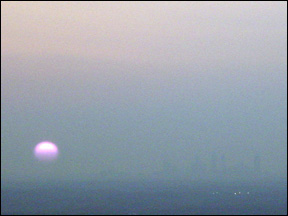
    image021This is the last observation that I made for this project.  It was a hazy evening which made it difficult to get a good picture of the setting Sun.

    image023The Sun is now 30 degrees South of where I began observing it in August.  It has moved across the horizon of a good deal of metro Atlanta.

    Conclusions

    The Sun was observed to move in a southwardly direction.  From a top-down view, it would appear to be moving in a counterclockwise motion along the horizon.  The rate of change seemed to be larger at the beginning of the semester.  The first three observations covered equal times, but the amount of change increased from the 8/30-9/9 period to the 9/9-9/18 period.  This pattern changed for the last two observations, which covered a greater time between the two observations (16 days), but there was only a 4 degree change in the position of the Sun.  This is probably due to the Sun’s arc across the sky decreasing as the year progresses.  The Sun is lower in the sky so it does not have as far to travel across the sky later in the year.

    The Sun should rise about 180 degrees from where it sets if it strictly rose in the East and set in the West.  The Sun does not do this because the inclination of the Earth causes the Sun to appear to be low or high in the sky during the course of the year.  This generates our seasons because the angle of light hitting the Earth’s surface changes as the Earth makes its way around the Sun during the year.  The length of the day gets shorter as the year progresses because the Sun cuts a smaller arc in the sky.  Less distance without any drastic changes in speed means that the Sun doesn’t spend as much time in the sky each day as the year progresses.

    Noon is still the time at which the Sun is at its highest point in the sky, but this highest point changes during the course of the semester.  This point will get lower and lower until the Winter Solstice when the Sun will begin to move North again and its path across the sky will likewise get higher too.

    Before this project, I had never been to the top of Stone Mountain.  Now I have been up to the top many times!  Observing the Moon and the Sun during the semester has made me more aware of the motions and orientations of the Moon, Earth, and Sun.  Before I had a vague awareness of how these things moved and were orientated, but now I have a much better grasp of the subject.

    Some problems that I encountered had to do with the weather.  The barrage of hurricanes in late September and October caused a lot of bad weather here in Atlanta.  In addition, it is difficult to arrange times to hike to the top of Stone Mountain when you have school and work schedules to deal with.  I am pleased with the outcome of my Sunset Observation Project, but I wish that I had been able to make more observations.  Because of this project, I will continue hiking to the top of Stone Mountain to watch the sunset.
  • Assessing Multimodality: Navigating the Digital Turn Tweet Round Up on Storify and a Picture of Me and My Pedagogy Poster

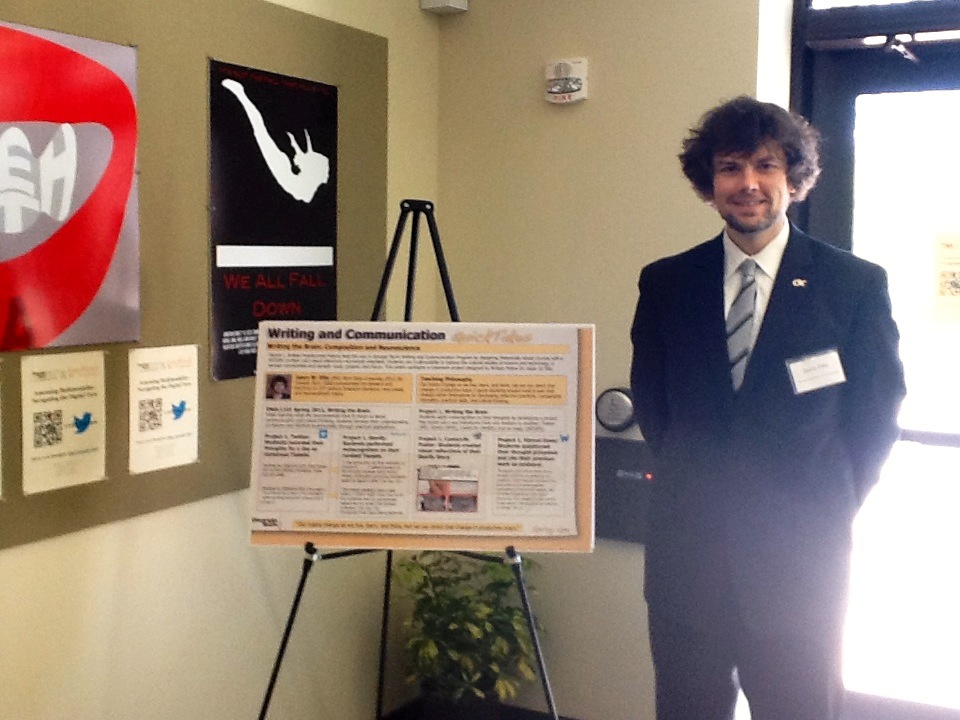
    My Pedagogy Poster on "Writing the Brain" at Assessing Multimodality Symposium.
    My Pedagogy Poster on “Writing the Brain” at Assessing Multimodality Symposium.

    Today, the Georgia Tech Writing and Communication Program and Bedford St. Martins hosted a symposium on Assessing Multimodality: Navigating the Digital Turn. I co-presented a workshop with Mirja Lobnik on Multimodality and Perception and I presented a poster during one of the day’s sessions. Many of us were tweeting our experiences at the symposium today, too. Click through the Storify embed below to virtually experience the symposium 140 characters at a time.

    [View the story “Assessing Multimodality: Navigating the Digital Turn Symposium” on Storify]

  • Patrick E. McLean’s “A Defense of Writing Longhand”

    Folks who teach writing should read Patrick E. McLean’s essay, “A Defense of Writing Longhand” (on his official site here, and originally spotted on LifeHacker here). In his essay, he argues that he writes better longhand than computer typing, because longhand enforces a singular focus that we tend to lose when using a computer (I would say even with screen isolating typing software, because you may still think what is going on in cyberspace just beyond your imposed veil).

    I tend to agree with McLean. I believe that I write better in longhand than I do by typing. After I have written something in longhand, I type it into my computer and in that process I begin editing. Putting ideas down in writing on the page is a different operation than styling and improving your words through editing. Computers are very well suited to editing, but I have to admit that my computer can be a multitasking nightmare for me. Even with all other applications closed, I still have reminders of backups, wireless networks, the time, and even with the screen blanked only for writing, I can still occasionally hear the click and whirr of my hard drive (even when I used to have a SSD, I could still hear the fans of the computer and a barely audible buzz from the hard drive compartment).

    Of course, everyone’s approach to composition is different, but this is exactly the reason I ask my students to use computers and longhand for different assignments in my freshman and sophomore writing classes. This challenges students to use different styles of composition, and it allows students who may have one preference over another to show me what they are capable of in that particular medium.

  • Rebecca Wilson Lundin’s “Teaching with Wikis: Toward a Networked Pedagogy”

    At tomorrow’s Blogging Brown Bag discussion organized by Kent State University’s Office of Digital Composition, we’re going to discuss Rebecca Wilson Lundin’s “Teaching with Wikis: Toward a Networked Pedagogy” from Computers and Composition 25 (2008) 432-448.  I thought I would post some of my thoughts here before our meeting in the Satterfield Reading Room tomorrow.

    Lundin’s article is a great introduction to educators about the potential and promise of using wikis in the composition classroom.  In fact, I was jazzed about one day using a wiki in my own classes in the future after reading her essay.  I may be somewhat biased in my eagerness to use wikis in the classroom, because I am a contributor to Wikipedia, and I know how to install MediaWiki on a Mac OS X box.  However, I think that Lundin makes some persuasive points about the power of wikis in the composition classroom, so let me go into some of those in more detail.

    She begins by talking about a networked pedagogy (I’m thinking Foucault’s biopolitics) comprised of “writing as a networked activity,” and “teaching as a networked activity” (432).  These ideas of shared, distributed, and interconnected means of learning and teaching should be facilitated by technologies that reinforce those network oriented goals, such as wikis.

    Wikis are excellent examples of a collaborative writing and composing technology that obviously engages network culture, come close to embodying the original vision of hypertext, and the unique features of wikis including editability and page histories reinforce compositional goals of revision and collaboration.

    Lundin’s essay emphasizes how wikis challenge assumptions about the traditional composition classroom (i.e., individual authorship, workshopping papers, teacher facilitated discussion, etc.).  She demonstrates that wikis challenge these assumptions in four key ways:  

    1) New media composition in a wiki requires little if any expertise beyond the use of a word processor and the open design of wikis promise to unbound student creativity and expression by embracing multimodality.  

    2) Collaborative writing made possible by wikis breaks down the single author paradigm by allowing all wiki participants to write, edit, and comment on any wiki pages including those of other students and those created by the teacher.  Furthermore, the transparency, as Carr et. al. describe it, of wikis through page histories facilitates reflection on the individual’s writing as well as the group collaborative process.

    3) Critical interaction by a real audience of a student’s peers along withfeedback from the teacher should enable a more authentic engagement of students’ work.  Instead of writing for the teacher, students will write for one another, and give criticism to one another.  I think that this aspect holds a lot of promise, but as Lundin admits this is one of the more difficult aspects to engage students with when she discusses her creation of a “class of lurkers” (441). Additionally, she notes problems with flame wars between students.  This part of her essay particularly intreged me, due to my own work on trolls and flame wars in academic discussion lists.

    4) Online authority, particularly on wikis, is decentralized and virtually anonymous.  Instead of merely subverting authority, Lundin makes a valid argument that instead authority in the traditional teacher-student sense is complicated by wiki work.  This could serve to undermine what power the teacher may hold over the classroom dialog and guiding of student work, but the very nature of wikis does empower all users, teacher and student alike, through page histories and what Will Richardson calls soft security, or participant policing of the wiki.  Additionally, student anonymity could help some students contribute in writing through the wiki when they are hesitant to contribute verbally in the classroom.

    Concluding, she indicates that wikis, through their social and networked interaction, promote student social context awareness, because despite the appearance of anonymity, they are engaging one another as social writers.

    I find Lundin’s essay compelling, and I plan on considering ways in which I can implement wikis in future classes.  I like how wikis will make writing regularly so much easier, and most wikis will pragmatically make teacher evaluation of writing easier by selecting to view all contributions by a particular writer/student. As Lundin noted, some teachers would be reticent to have a fully open wiki, and I would fall into this category as well for the simple fact that it might be better for all parties concerned not to allow for too much tomfoolery.  However, a little tomfoolery might be a good thing, and turn into a teachable moment.  I will have to think more on this point as I figure out how to design my class around a wiki/network paradigm.  Also, I am concerned about the flame war aspect of online communication for the composition classroom.  This will inevitably happen, and my primary concern is potential alienation of some students as a result of one or some students non-reflective acts.  Again, this is something that I will have to think further about.  

    If you are a teacher, I definitely recommend you find this article (details listed above), and read it–my notes do not do it justice!

  • Multimodal Composition and Vernor Vinge’s Rainbows End

    Over the summer, I’m taking an intensive, four week class on teaching college writing.  The course is led by Dr. Brian Huot, Kent State University’s Writing Program Coordinator, and for three days this week, Dr. Pamela Takayoshi is introducing us to multimodal composition.

    Multimodal composition is the use of media other than paper and pencil for rhetorical communication and composition.  For example, blogs, Powerpoint presentations, Youtube videos, Podcasts, brochures etc. are other ways to make persuasive arguments and enter critical discourse.  In multimodal composition, the printed essay does not reign supreme.

    There seems to be a push in writing programs, which are increasingly influenced by the growth of rhetoric programs to the detriment of literature programs, to teach students to compose by any means available.  This means that students should be encouraged to create arguments, whether it be with audio essays or videos for example, with the tools at hand in order to increase their own involvement in the increasingly technologized mediums of communication.

    I like this idea, on the surface, because students should be aware of the ways they do and may be called upon to communicate in the twenty-first century.  Also, I engage in these practices in my own personal and professional lives with this blog, YouTube, and Flickr.  However, I first understood the basics of writing practices and composition before or in analog with my additionally technologized communication practices.

    My belief is that a grounding in traditional writing practices and composition empowers the individual to translate and apply those to other means and mediums of communication.  In the introductory writing classes, I feel that I not be meeting my students needs if I didn’t guide them towards an increased proficiency in writing before allowing them to use multimodal composition practices in the classroom.  Analogously, a pilot must earn a single engine pilots license prior to earning a license in larger and multiple engine aircraft.  Our students should safely pull out of a stall on a small Cesna before experiencing an F-15 flame out.  Therefore, I assert that students are better prepared communicators if they build on tried-and-true translatable communicative practices before using expressive, yet not as directly translatable, modes of communication.

    So what does this have to do with Vernor Vinge’s postsingularlity SF novel, Rainbows End (now available for free online here)?  In the novel, Robert Gu, a former great poet in the last throws of a slow Alzheimer’s death, is resurrected through regenerative medical technologies.  However, his disease has left a mark on his mind, and he has to relearn how to be a poet as well as learn about the changes in technologically mediated communicative practices.  Toward this end, he enrolls in a high school where he works with a teenage student, Juan Orozco, to create a multimodal final project in “shop class” that involves dance, music, holographic projection, and poetry.  There’s an exchange of ideas between the two characters–Gu introduces Juan to poetry and the power of the written word, and Orozco shows Gu the potential of story telling and art with the advances in technology during Gu’s illness.

    For all of the good things in Vinge’s novel, his writing about the multimodal compositions fell flat for me.  In fact, I cringed at the possibility that we’d move away from reading and writing within such a short time.  With the rapid advances in technology, and technology’s relationship and impact on the classroom, it seems like there is not enough reflection taking place on its long term and post-graduation effects on our students.  It’s one thing to write about how great this brave new world will be, but I question if that will be so.

    Granted, I haven’t been in the classroom yet, and I know that a large part of my own developing ideas on teaching practices are borrowed from the ways that I was taught, but m greatest rebellious response during the past couple of weeks in Brian’s class has been in regard to multimodal composition.  I don’t think it has a place in my introductory writing class, and I question to what extent I might employ it in higher level courses where students can demonstrate their ability to communicate effectively with the written word.

    A final issue that I have with multimodal composition is the technical instruction aspect of it.  I don’t do tech support.  In my previous life, prior to fully engaging my research interests in graduate school, I built more computers than I can count, I’ve repaired more Macs than I can imagine, and I gave phone, teletype, and email assistance to innumerable customers at the late, great Mindspring in Atlanta, Georgia.  I didn’t sign on to pursue research and college teaching to help students learn how to use iMovie, much less the poorly designed Microsoft Movie Maker.  I love technology, and it’s an integral part of my life, including  two World of Warcraft accounts, a 30″ Apple Cinema Display and Mac Book Pro, iPhone, building a Media Center PC, blogging, and keeping my girlfriend’s ailing Sony Vaio alive while she studies for her comps, but I strongly insist on keeping that separate from my goal of enriching the lives of my students by challenging them to think deeply, imagine new possibilities, and effectively communicate through writing before moving up to multimodal composition practices.