Tag: Review

  • Retro-Review of Used Lenovo ThinkPad X230 Sourced from eBay

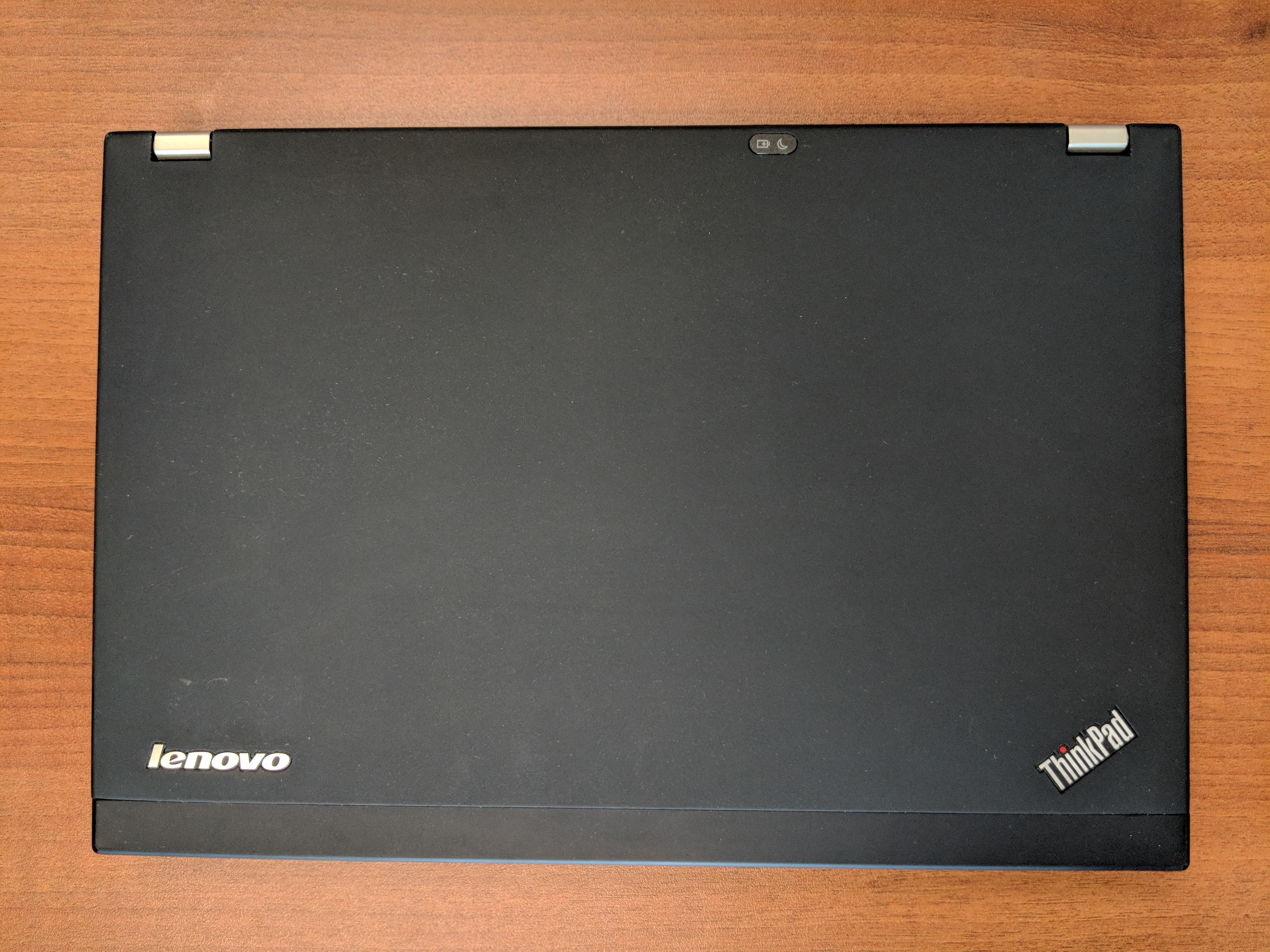
    IMG_20180716_141139

    I’ve wanted an IBM ThinkPad since I first saw my boss’ at Netlink in the fall of 1998. But, while I’ve been invested in PCs over the years tangentially, I reserved Macs as my primary desktop or laptop computing platform, which combined with the premium price on IBM and then Lenovo ThinkPads kept me in the Apple premium category. Put another way, I could afford one but not both.

    Apple, as I’ve confided with friends, is diverging from my computing interests and needs. While design has been an important part of Apple’s DNA since the Apple II (arguably even earlier if we consider Woz’s design aesthetics for the Apple I motherboard layout), its increasing emphasis on fashion and accessorization and seeming less technological investment and innovation in its desktop and laptop computers have soured my allegiance to the company and its computers.

    So, I thought about how to try out a different kind of PC laptop–one that I had wanted but could not afford when it was originally released–and make an investment in extending the life of what some folks might consider an obsolete or recyclable computer.

    Within this framework, I wanted a laptop to take the place of the MacBook Pro that I had sold on eBay awhile back while the resell value was still high before rumored price reductions as product refreshes roll in. It needed to be relatively lightweight and have a small footprint. Also, it needed to have good battery life. And of course, it needed to run the software that I use on my home-built desktop PC.

    Eventually, I decided to purchase a very well taken care of Lenovo ThinkPad X230 on eBay. Originally released in 2012 for a lot more than what I paid for it, this ThinkPad model features an Intel Core i5 3320M Ivy Bridge CPU running at 2.6GHz with 2 cores and supporting 4 threads. It has 8GB DDR3 RAM and a 180 GB SSD. In addition to built-in WiFi, it has an ethernet port, 3 USB 3.0 connectors, an SD Card reader, VGA and Display port connectors, and a removable battery.

    From a user interface perspective, it has a chiclet keyboard which responds well to typing quickly. Its touchpad leaves a little to be desired in terms of responding to some gestures like scrolling, but its red pointing nub and paddle-style mouse buttons at the top of the touchpad are exquisite. It includes some feature buttons like a speaker mute button next to volume keys above the function key row, and on the left side there is a radio on/off switch for the WiFi and Bluetooth.

    Initially, I tried out the ThinkPad X230 with Ubuntu, and everything seemed to work out of the box (though, I added TLP for advanced power management). However, I switched back to Windows 10 Professional with a full nuke-and-pave installation, because I have some software that is far easier to run natively in Windows instead of through Wine or virtualization in Linux.

    In Windows 10 Professional, the ThinkPad X230 meets all of my productivity needs. I use LibreOffice for most things, but I also rely on Google Docs in Chrome for some tasks (like inventorying the City Tech Science Fiction Collection). The WiFi works well even at City Tech, which has one of the most cantankerous wireless networks I’ve encountered. At home, I use it on my lap to browse while watching TV.

    The X230 is snappy and quick despite its age. Of course, the SSD and ample RAM support increased input/output for the older CPU. Chrome, LibreOffice, and Windows Explorer respond without hesitation. It easily plays downloaded Solo: A Star Wars Story 1080p trailers in VLC, too.

    With the included 6 cell 45N1022 battery, it runs for several hours (this is a used battery, so its capacity might be lower than one that is brand new). I purchased a 9 cell 45N1175 battery, which I’m testing out now. With the 6 cell battery, it is just shy of 3 pounds, and with the 9 cell battery is a little over 3 pounds. I’m hoping that between the two of them that I can get plenty of work done on the go without being tethered to a power outlet.

    Future tests include running World of Warcraft and watching full length movies. The display’s viewing angles could be better, but I’m willing to accept them as they are as I can adjust the brightness and display gamma easily using keyboard shortcuts and the Intel Display Adapter software to minimize its poorer display quality as compared to the latest HiDPI displays available now.

    I’m tickled to use the Lenovo ThinkPad X230 as my main laptop. Now, I can say that I’m a proud ThinkPad owner instead of a zealous Apple user.

    At the bottom of this post, I’ve included more photos of the X230.

    If you’re considering a new computer, I would, based on this and my other vintage computing experiences, suggest that you consider trading up for a used or refurbished machine. Getting a used computer keeps that computer out of a landfill or being destroyed for its rare metals, and it might be an opportunity to try out a computer that you might have missed on its first time around.

  • In Search of a Better Backpack, Review of The North Face Electra

    IMG_2073

    Despite being labeled for “Women,” I recommend The North Face Electra backpack for anyone needing a compact, EDC bag that can accommodate a 10.5″ tablet. This is my new work bag that carries the things that I need daily without incurring too much added weight.

    IMG_2082

    In a previous blog post, I wrote praise for the Magnoli Clothiers’ British Mark VII Gas Mask Bag reproduction, because it is a good everyday bag for carrying an iPad mini, notebook, lunch, and thermos. It is still a good bag, but I sold my iPad Mini after I got Apple’s new 10.5″ iPad Pro, which would not fit in the Mark VII without the removal of the supporting material stitched through the center of the bag. As you can see in the photo above, TNF Electra is slightly larger than the Mark VII. The Mark VII has just shy of 6L capacity whereas the TNF Electra has 12L capacity.

    I use the TNF Electra to carry the same, essential things as I used the Mark VII to carry, but the difference between the kits is the iPad upgrade from mini to Pro. Above, you can see the various pockets that differentiate the TNF Electra. It has a padded tablet sleeve in the main zippered compartment, the front flap has a Napoleon-style pocket that I use to hold my cellphone, a small zippered compartment in the lower left for change, keys, or another small item, and a slightly larger zippered compartment at the top of the back beneath the grab handle that holds all of my small, regular use items like hand sanitizer, eye drops, pen, pocket knife, etc.

    IMG_2083

    The TNF Electra weighs the same as a Jansport Superbreak–12 oz. However, the Superbreak has more than double the capacity–25L. The difference between the two packs is that the Electra has a smaller surface area against the back, and it has more substantial padding in the back and around the tablet sleeve. The Superbreak has thin back padding and no laptop/tablet sleeve. The TNF Electra’s zippers are more subtantial YKK brand than what Jansport uses on the current Superbreak packs.

    IMG_2074

    The TNF Electra features “Women-specific back panel and shoulder straps.” These have worked fine for me, too. The pack rides high on my back, which I prefer to a pack that is lower, because it allows my back to breathe more and remain cool on my long walks to-and-from work.

    IMG_2080

    The TNF Electra that I have is black heather and burnt coral metallic (it reminds me of Apple’s Rose Gold). Y liked my bag so much that we got her one in dark eggplant purple dark/amaranth purple.

    I like the TNF Electra, because it holds just what I need, is lightweight and compact, and helps me stay cool on my daily long walks.

    While its labeling and colors might signify its use by a specific gender, I think its better to focus on one’s needs than on the social signifiers made into a tool–in this case–a useful bag.

  • A Brief Note on Steven Lynn’s Rhetoric and Composition: An Introduction

    When I asked Dr. Courtney L. Werner, a friend and colleague at Kent State University where we earned our PhDs (find her blog here and connect with her on Twitter here), what I should read that captures the theoretical breadth and historical depth of her discipline of study–Rhetoric and Composition–I dutifully wrote down what she told me: Steven Lynn‘s impressive Rhetoric and Composition: An Introduction. I think that it has been about three or four years since I jotted down her suggestion, but I’m happy to report that I finally got around to reading it over the past few days and I’m certainly the better for it.

    For those of you who might be like me–not really knowing anything about Rhetoric and Composition when going into graduate school, but wanting to learn more about this important discipline after learning of its existence–I recommend Lynn’s book as a thorough starting point.

    Lynn begins his book with a chapter on the relationship and interconnectedness of Rhetoric and Composition. He guides his reader through seeing them separately and together while peppering his discussion with an exhaustive and concise (what a balancing act throughout the book) theoretical-historical context.

    In the chapters that follow, he designs them around the five canons of rhetoric as an art: invention, arrangement, style, memory, and delivery. Each chapter combines discussion of the historically relevant development of the canon, its major contributors, its past and present scholarship, and applications for the classroom. The final chapter on delivery has a lot of helpful material for first time composition instructors, too.

    During my time at Kent State, I am glad that I taught in the writing program and I am glad to have had the opportunity to learn from and share ideas with graduate students and faculty in the Rhetoric and Composition Program, including Brian Huot, Pamela Takayoshi, and Derek Van Ittersum. In retrospect, however, I wish that I had made it a point to join a Rhetoric and Composition seminar (for credit or to audit), because I see now how it would have enriched my scholarship and pedagogy in pivotal ways. If you are like me in this regard or still on your path to a terminal degree, I recommend Lynn’s book for learning Rhetoric and Composition’s ideas, debates, and scale as a student, incorporating its ideas into your daily practices as a teacher, and opening up new possibilities in your thinking as a scholar.

    Lynn, Steven. Rhetoric and Composition: An Introduction. Cambridge: Cambridge UP, 2010. Print.

  • Review of Donald E. Hall’s The Academic Self: An Owner’s Manual, Recommended for Graduate Students, Postdocs, and Junior Faculty

    Hall, Donald E. The Academic Self: An Owner’s Manual. Columbus: Ohio State UP, 2002. Print.

    I picked up Donald E. Hall’s The Academic Self from the Georgia Tech Library after completing my teaching assignment for Spring 2013–eleven years after the book had been published. Specifically, I was looking for books and articles to help me grapple with the challenges of this stage of my professional life as a postdoctoral fellow: teaching a 3-3 load, performing service duties, researching, writing,  receiving rejections (and the far less often acceptance), and applying for permanent positions. In the following, I summarize Hall’s arguments, provide some commentary, and close with a contextualized recommendation.

    Hall states in the introduction that the goal of The Academic Self is, “encourage its readership to engage critically their professional self-identities, processes, values, and definitions of success” (Hall xv). I found this book to be particularly useful for thinking through my professional self-identity. As I was taught by Brian Huot at Kent State University to be a reflective practitioner in my teaching and pedagogy, Hall argues for something akin to this in terms of Anthony Giddens’ “the reflexive construction of self-identity” (qtd. in Hall 3). Hall truncates this to be “self-reflexivity,” or the recognition that who we are is an unfolding and emergent project. I use this blog as part of my processes of self-reflection–thinking through my research and teaching while striving to improve both through conscious planning and effort.

    However, unlike the past where the self was static and enforced by external forces, modernity (and postmodernity–a term Hall, like Giddens, disagrees with) has ushered in an era where the self is constructed by the individual reflectively. From his viewpoint, the self is a text that changes and can be changed by the individual with a greater deal of agency than perhaps possible in the past (he acknowledges his privileged position earlier in the book, but it bears repeating that this level of agency certainly is not equally distributed).

    In the first chapter, titled “Self,” Hall writes, “Living in the late-modern age, in a social milieu already thoroughly pervaded by forms of self-reflexivity, and trained as critical readers, we academics in particular have the capacity and the professional skills to live with a critical (self-) consciousness, to reflect critically upon self-reflexivity, and to use always our professional talents to integrate our theories and our practices” (Hall 5). If we consider ourselves, the profession, and our institutions as texts to be read, we can apply our training to better understanding these texts and devise ways of making positive change to these texts.

    He identifies what he sees as two extremes that “continue to plague academic existence: that of Casaubonic paralysis and Carlylean workaholism” (Hall 8). In the former, academics can be caught in a ignorant paranoia like Casaubon of George Eliot’s Middlemarch (1871-1872), or in the latter, academics can follow Thomas Carlyle’s call to work and avoid the “symptom” of “self-contemplation” (qtd. in Hall 6).

    In the chapter titled “Profession,” Hall calls for us to apply our training to reflective analysis and problem solving of our professional selves and our relationship to the ever changing state of the profession itself. He questions to what extent the work of professionalism (seminars, workshops, etc.) are descriptive or prescriptive. “The ideal of intellectual work” varies from person to person, but it is an important choice that we each must make in defining who we are within the profession.

    He reminds us that, “much of the pleasure of planning, processing, and time management lies not in their end products–publication or project completion–it is derived from the nourishment –intellectual, communal, and professional–provided by the processes themselves” (Hall 46). He builds his approach to process on his personal experiences: “Unlike some, I know well when my work day is over. Part of the textuality of process is its beginning, middle, and most importantly, its end” (Hall 46).

    His talking points on process are perhaps the most practical advice that he provides in the book. In planning, he advises:

    1. begin from the unmovable to the tentative in your scheduling, know yourself–plan according to your habits and work on those aspects of your planning that need adjustment, and stick to your well planned schedule to yield the personal time that you might be lacking now without such a plan
    2. break goals and deliverables into their constituent parts [or building blocks (my Lego analogy) or code (my programming analogy)]
    3. monitor your progress and see daily/smaller goals as ends in themselves rather than simply means to a greater end
    4. take ownership of your goals, schedule, and commitments to others [this is something that I carry forward from my Mindspring days: Core Values and Beliefs: Do not drop the ball.]
    5. deal with and learn from setbacks–life, bad reviews, rejections, etc. [this is easier said than done, and the external effects of bad reviews goes beyond its effect on the writer]
    6. let change happen to our goals and research as our workplace, interests, and circumstances change
    7. taking ownership of our work in these ways can help protect us from and strengthen us against burnout

    Hall goes on to suggest ten steps for professional invigoration to help folks suffering from a stalled career or burnout. However, these ten pieces of advice are equally applicable to graduate students, postdocs, and beginning faculty: join your field’s national organization, read widely in your field, set precise goals, maintain a daily writing schedule [my most difficult challenge], present conference papers, write shorter artifacts to support your research [reviews or my case, this blog], know the process and timeline of manuscript publishing, foster relationships with publishers and editors, politely disengage from poor or dysfunctional professional relationship/praise and value positive relationships, and find support in your local networks.

    The final chapter, “Collegiality, Community, and Change,” reminds us, “always t put and keep our own house in order” (Hall 70). He suggests strategies counter to what he calls “the destructive ethos of ‘free agency’ that seems to pervade the academy today–the mindset that institutional affiliations are always only temporary and that individuals owe little to their departments or institutions beyond the very short term” (Hall 70). On professional attitudes, he encourages a focus on the local (institution) before national (beyond the institution), the current job as potentially your last job–treat it with that respect, meet institutional expectations, collegial respect of others, and learning the history of our institution/school/department from everyone with whom we work.

    Perhaps most notably, he writes, “If we measure our success through the articulation and meeting of our own goals, as I suggest throughout this book, we can achieve them without begrudging others their own successes. However, if we need to succeed primarily in comparison to others, then we are deciding to enter a dynamic of competition that has numerous pernicious consequences, personal and inter-personal” (Hall 74-75). As I have written about on Dynamic Subspace before, it was the overwhelming in-your-faceness of others’ successes on social media like Facebook that distracted me from my own work. Seeing so many diverse projects, publications, and other accomplishments made me question my own works-in-progress before they had time to properly incubate and grow. For all of social media’s useful and positive aspects for maintaining and growing networks of interpersonal relationships, I had the most trouble resisting the self-doubt that the Facebook News Feed generated for me.

    Finally, he encourages dynamic and invested change in departments and institutions. However, as junior faculty, it is important to research and weigh the possible repercussions for working to make change. Hall is not arguing against change by those without tenure, but he is warning us to proceed cautiously and knowledgeably due to a number factors: potential sources of resistance, jeopardizing our jobs, etc.

    Hall’s “Postscript” reinforces the overarching idea of ownership by calling on the reader to live with “intensity,” an idea that inspired Hall from Walter Pater’s 1868 The Renaissance: “burn always with [a] hard, gem-like flame” (qtd. in Hall 89). Hall’s intensity is one self-motivated, well-planned, dynamically agile, and passionately executed.

    Hall’s The Academic Self is a very short read that is well worth the brief time that it will take to read. It offers some solid advice woven with the same theoretically infused self-reflexivity that he encourages. It practices what it preaches. The main thing to remember is that the book is eleven years old. When it was published, the field of English studies was experiencing an employment downturn (albeit one not as pronounced as in recent years). Michael Berube’s “Presidential Address 2013–How We Got Here” (PMLA 128.3 May 2013: 530-541), among many other places–this issue just arrived in the mail today, so I was reading it between chapters of Hall’s book, picks up some of the other challenges that graduate students, postdoctoral fellows, and junior faculty have to contend with in the larger spheres of the profession and society. The other advice that Hall provides on personal ownership and collegiality, I believe, remains useful and inspirational. In addition to reading Hall’s book, you should check out his bibliography for further important reading in this vein.

  • If You Like Lego, Read Paul Di Filippo’s Review of The Cult of LEGO

    Paul Di Filippo, the science fiction author, shares how he built really awesome multi-storied marble mazes with his Legos as a child in his review of The Cult of LEGO on the Barnes and Noble’s website. It is worth the read.

    Updated 7/23/2024: Revised language and changed link to one cached on the Internet Wayback Machine.