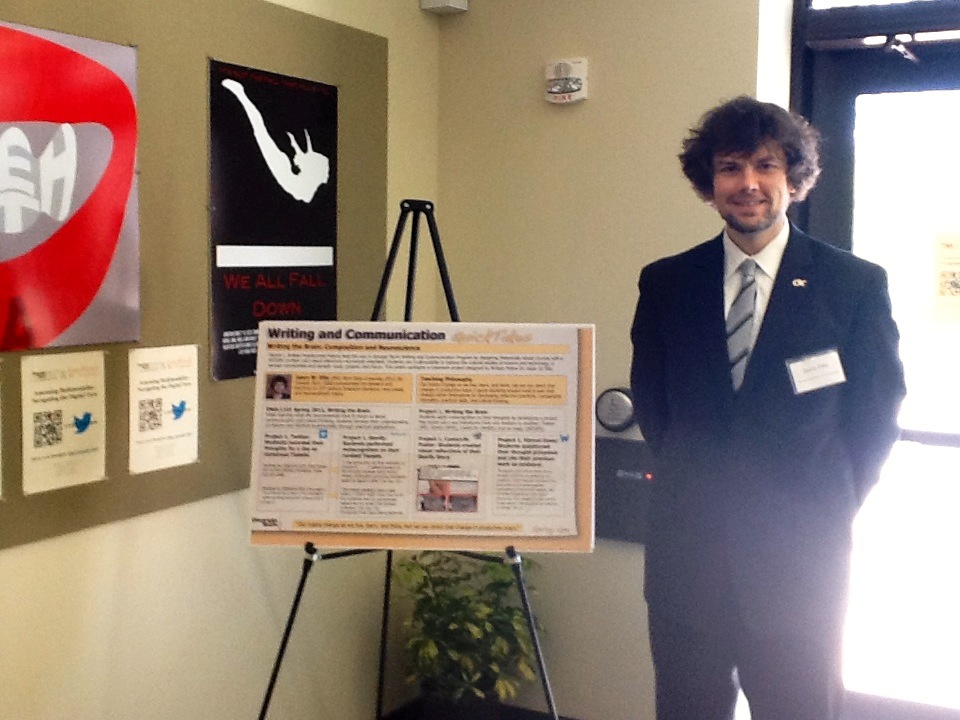
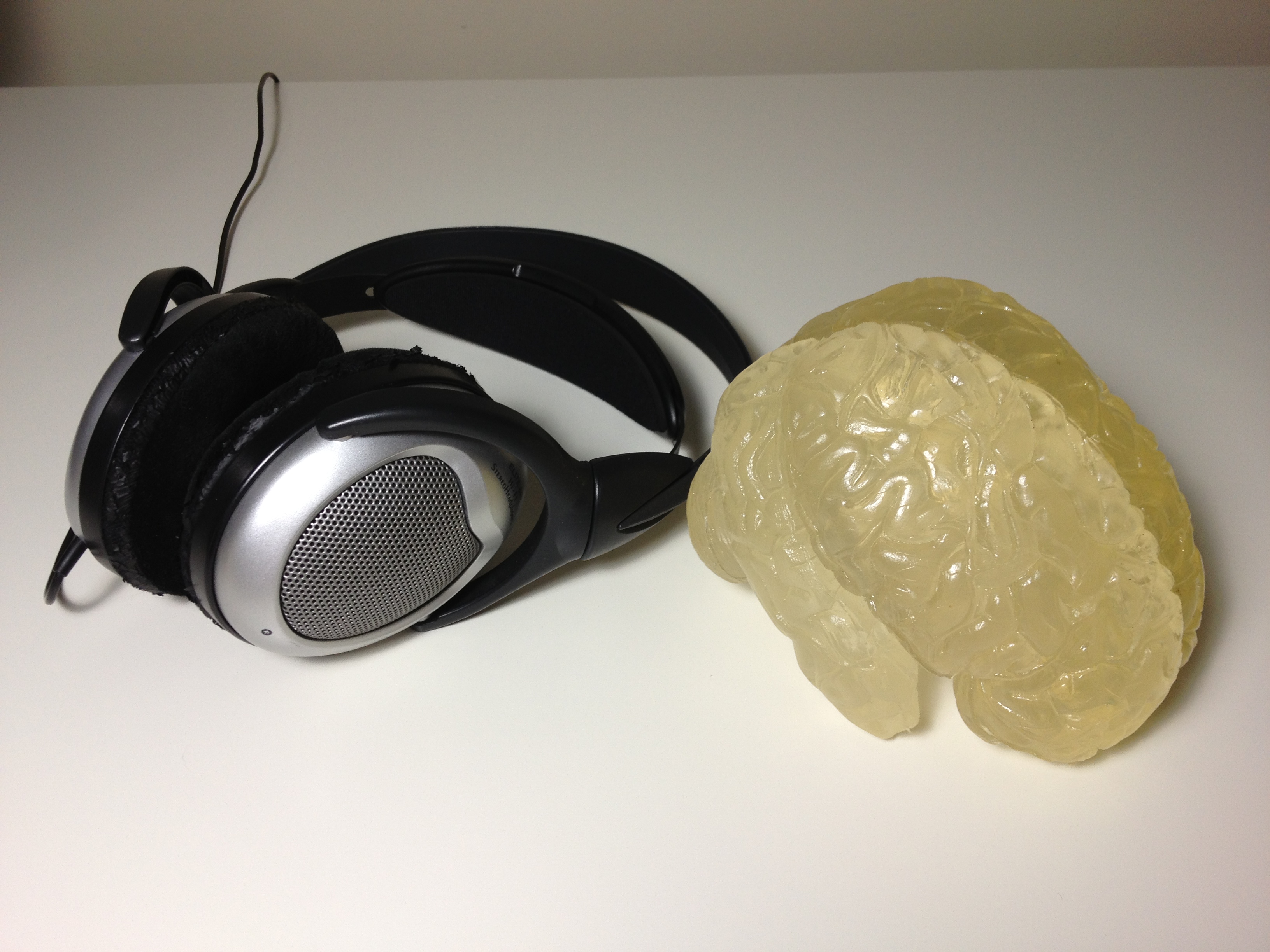
My Pedagogy Poster on “Writing the Brain” at Assessing Multimodality Symposium.
Today, the Georgia Tech Writing and Communication Program and Bedford St. Martins hosted a symposium on Assessing Multimodality: Navigating the Digital Turn. I co-presented a workshop with Mirja Lobnik on Multimodality and Perception and I presented a poster during one of the day’s sessions. Many of us were tweeting our experiences at the symposium today, too. Click through the Storify embed below to virtually experience the symposium 140 characters at a time.
This morning, Mirja Lobnik and I will be co-hosting a workshop on “Multimodality and Perception: A Multi-Sensory Approach to Teaching Rhetorical Skills” at the Assessing Multimodality: Navigating the Digital Turn Symposium co-hosted by Georgia Tech’s Writing and Communication Program and Bedford St. Martin’s. Our workshop is about multisensory perception, multimodal composition, and cognition:
Associated with the use of various media to create cohesive rhetorical artifacts and the neurology of the ways humans process information through different sensory channels, multimodality has gained considerable ground in the composition classroom. Insofar as multimodal pedagogies emphasize the role of students as active, resourceful, and creative meaning-makers, it tends to enhance student engagement and, by extension, the teaching of composition and rhetorical skills. Focusing on sensory details of embodied, lived experience, this workshop centers on teaching that engages students both in mind and body. This approach not only promotes the students’ creation of multimodal artifacts but also encourages students to explore and critically reflect on personal experiences. Specifically, Lobnik focuses on aural composing modalities, including speech, music, and sound, and assignments that highlight sound as a rhetorical and creative resource: a transcription, audio essay, and a video. Ellis discusses cognition, metacognition, and curation and an assignment that integrates Twitter, Storify, ComicLife, and the written essay.
If you get to attend our workshop or the symposium’s other great sessions, please tweet using the hashtag: #AMsymposium.