Tag: Writing

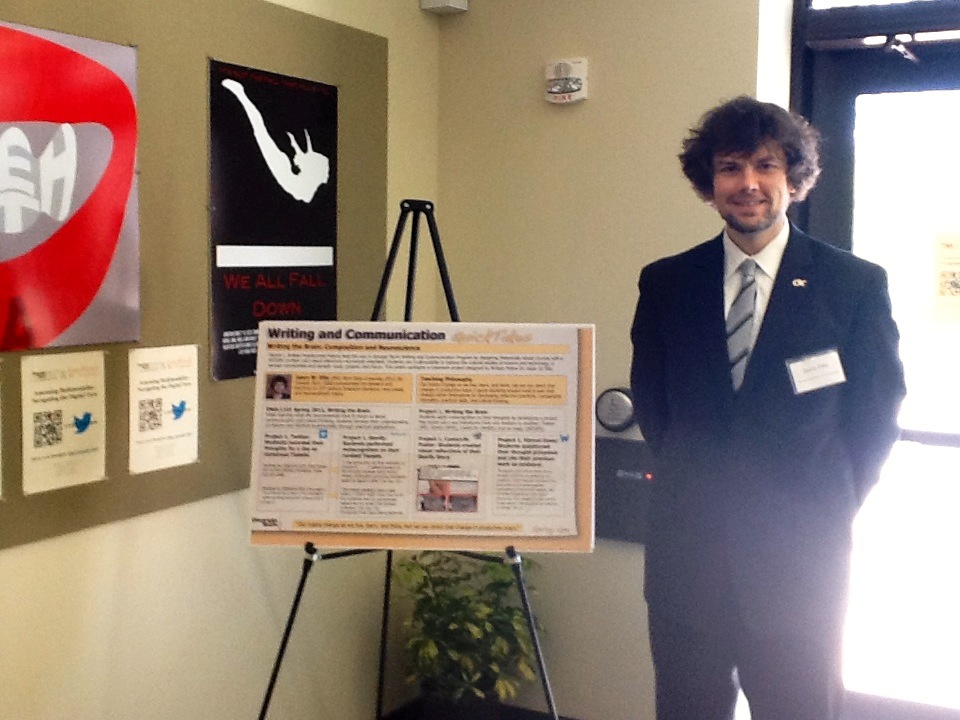
  • Assessing Multimodality: Navigating the Digital Turn Tweet Round Up on Storify and a Picture of Me and My Pedagogy Poster

    My Pedagogy Poster on "Writing the Brain" at Assessing Multimodality Symposium.
    My Pedagogy Poster on “Writing the Brain” at Assessing Multimodality Symposium.

    Today, the Georgia Tech Writing and Communication Program and Bedford St. Martins hosted a symposium on Assessing Multimodality: Navigating the Digital Turn. I co-presented a workshop with Mirja Lobnik on Multimodality and Perception and I presented a poster during one of the day’s sessions. Many of us were tweeting our experiences at the symposium today, too. Click through the Storify embed below to virtually experience the symposium 140 characters at a time.

    [View the story “Assessing Multimodality: Navigating the Digital Turn Symposium” on Storify]

  • Patrick E. McLean’s “A Defense of Writing Longhand”

    Folks who teach writing should read Patrick E. McLean’s essay, “A Defense of Writing Longhand” (on his official site here, and originally spotted on LifeHacker here). In his essay, he argues that he writes better longhand than computer typing, because longhand enforces a singular focus that we tend to lose when using a computer (I would say even with screen isolating typing software, because you may still think what is going on in cyberspace just beyond your imposed veil).

    I tend to agree with McLean. I believe that I write better in longhand than I do by typing. After I have written something in longhand, I type it into my computer and in that process I begin editing. Putting ideas down in writing on the page is a different operation than styling and improving your words through editing. Computers are very well suited to editing, but I have to admit that my computer can be a multitasking nightmare for me. Even with all other applications closed, I still have reminders of backups, wireless networks, the time, and even with the screen blanked only for writing, I can still occasionally hear the click and whirr of my hard drive (even when I used to have a SSD, I could still hear the fans of the computer and a barely audible buzz from the hard drive compartment).

    Of course, everyone’s approach to composition is different, but this is exactly the reason I ask my students to use computers and longhand for different assignments in my freshman and sophomore writing classes. This challenges students to use different styles of composition, and it allows students who may have one preference over another to show me what they are capable of in that particular medium.

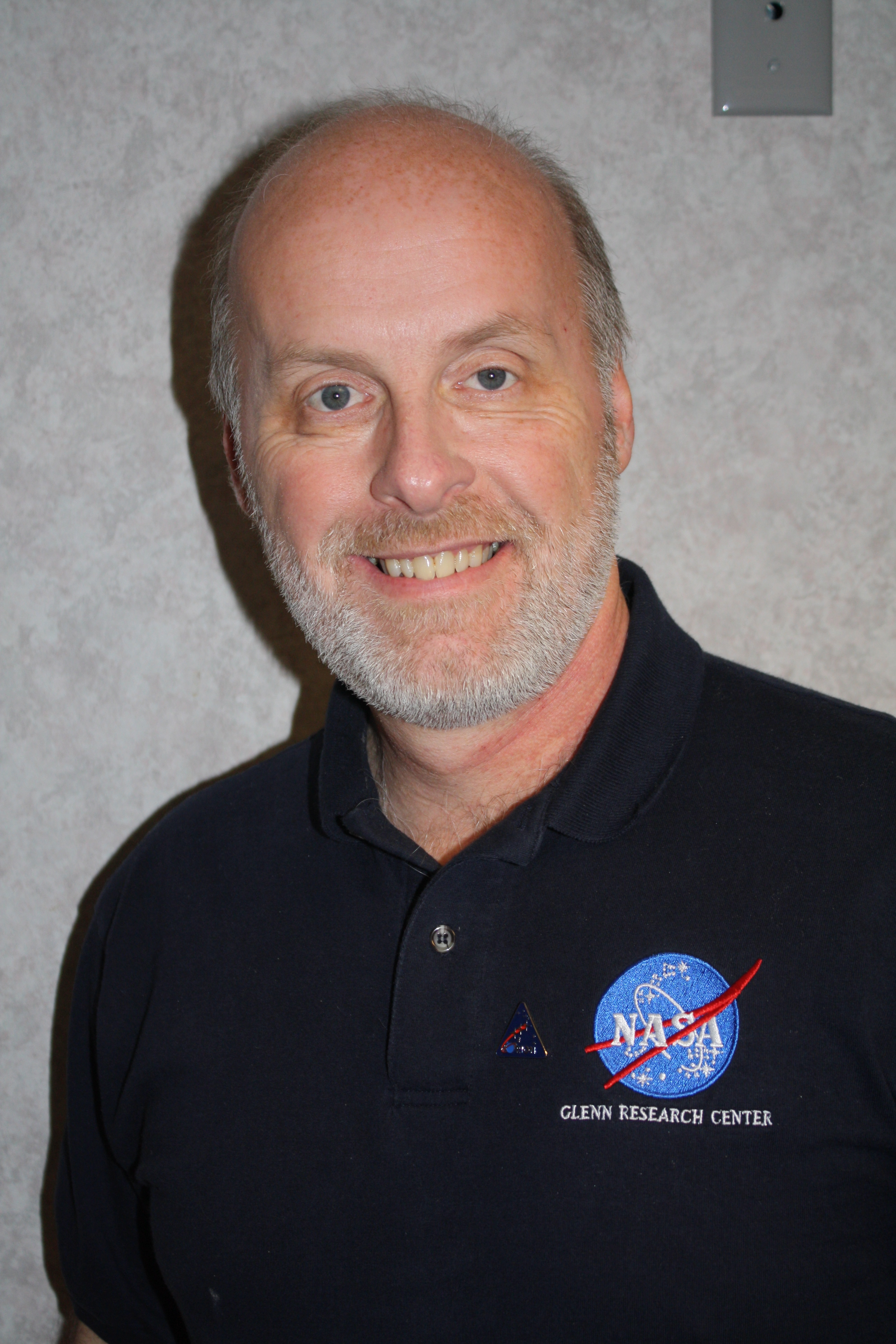
  • NASA Speaker Professor Jay Reynolds Visited My Writing Classes Today

    Thanks to NASA’s Speakers Bureau, Professor Jay Reynolds of Cleveland State University and the Glenn Research Station agreed to visit my two intro writing classes today to talk about America’s return to the Moon, current research on Mars, and investigations of asteroids and protoplanets, which is what Prof. Reynolds is at the present involved in with the DAWN mission to observe Vesta and Ceres.

    I asked Prof. Reynolds to speak to my classes about some of the things taking place right now at NASA, particularly in relation to NE Ohio, where the majority of my students are from, and to give some context to the work that NASA does. He did an excellent job of this in his two presentations today for my students. Based on the subjects that he covered, I believe that he filled in many gaps that I either didn’t have the time to cover or those things that didn’t occur to me at the time as my classes worked their way through Arthur C. Clarke’s 2001: A Space Odyssey and Kim Stanley Robinson’s Red Mars as part of the “Space Exploration and Your Future” theme of my intro writing classes.

    Prof. Reynolds demonstrated his depth of knowledge about NASA and its missions while also engaging broader economic and political interests in response to questions put to him by my students. He displayed a contagious abundance of energy and excitement about his work and the work taking place at NASA that I believe carried over to some of my students in the two classes.

    At the beginning of his presentation, he began simply by asking my students what they thought of the unauthorized, yet mission making, Apollo 8 picture of the gibbous Earth next to the lunar surface [find it here] and the Apollo 17 image of the fully illuminated Earth [find it here]. What he stressed with these images was that our missions to the Moon turned into missions about the Earth. Our going out there gave us, meaning humanity, a new perspective on our planet and ourselves as co-inhabitants of what Carl Sagan termed a pale blue dot.

    He discussed the Space Shuttle, Saturn V, and Ares I and V launch vehicles [see my Lego versions here] in detail, which elicited many questions between the two classes. Other questions included: How safe are the launch vehicles? Why did we go to the Moon? Does anyone own the Moon? What do you do with Helium-3?

    Prof. Reynolds’ presentation ended with a discussion of asteroids and the importance of locating and tracking those objects which cross or may eventually cross the orbit of the Earth. This is related to the work that he does for NASA with the help of undergraduate and graduate students from Cleveland State University in conjunction with the DAWN mission [some related info here].

    I am thankful that NASA can make a special event like this possible, and I am especially grateful to Prof. Reynolds for taking the time and energy to drive down to Kent and spend the afternoon with my students. It was a terrific occasion to close out the Fall 2009 semester for my students.

  • Rebecca Wilson Lundin’s “Teaching with Wikis: Toward a Networked Pedagogy”

    At tomorrow’s Blogging Brown Bag discussion organized by Kent State University’s Office of Digital Composition, we’re going to discuss Rebecca Wilson Lundin’s “Teaching with Wikis: Toward a Networked Pedagogy” from Computers and Composition 25 (2008) 432-448.  I thought I would post some of my thoughts here before our meeting in the Satterfield Reading Room tomorrow.

    Lundin’s article is a great introduction to educators about the potential and promise of using wikis in the composition classroom.  In fact, I was jazzed about one day using a wiki in my own classes in the future after reading her essay.  I may be somewhat biased in my eagerness to use wikis in the classroom, because I am a contributor to Wikipedia, and I know how to install MediaWiki on a Mac OS X box.  However, I think that Lundin makes some persuasive points about the power of wikis in the composition classroom, so let me go into some of those in more detail.

    She begins by talking about a networked pedagogy (I’m thinking Foucault’s biopolitics) comprised of “writing as a networked activity,” and “teaching as a networked activity” (432).  These ideas of shared, distributed, and interconnected means of learning and teaching should be facilitated by technologies that reinforce those network oriented goals, such as wikis.

    Wikis are excellent examples of a collaborative writing and composing technology that obviously engages network culture, come close to embodying the original vision of hypertext, and the unique features of wikis including editability and page histories reinforce compositional goals of revision and collaboration.

    Lundin’s essay emphasizes how wikis challenge assumptions about the traditional composition classroom (i.e., individual authorship, workshopping papers, teacher facilitated discussion, etc.).  She demonstrates that wikis challenge these assumptions in four key ways:  

    1) New media composition in a wiki requires little if any expertise beyond the use of a word processor and the open design of wikis promise to unbound student creativity and expression by embracing multimodality.  

    2) Collaborative writing made possible by wikis breaks down the single author paradigm by allowing all wiki participants to write, edit, and comment on any wiki pages including those of other students and those created by the teacher.  Furthermore, the transparency, as Carr et. al. describe it, of wikis through page histories facilitates reflection on the individual’s writing as well as the group collaborative process.

    3) Critical interaction by a real audience of a student’s peers along withfeedback from the teacher should enable a more authentic engagement of students’ work.  Instead of writing for the teacher, students will write for one another, and give criticism to one another.  I think that this aspect holds a lot of promise, but as Lundin admits this is one of the more difficult aspects to engage students with when she discusses her creation of a “class of lurkers” (441). Additionally, she notes problems with flame wars between students.  This part of her essay particularly intreged me, due to my own work on trolls and flame wars in academic discussion lists.

    4) Online authority, particularly on wikis, is decentralized and virtually anonymous.  Instead of merely subverting authority, Lundin makes a valid argument that instead authority in the traditional teacher-student sense is complicated by wiki work.  This could serve to undermine what power the teacher may hold over the classroom dialog and guiding of student work, but the very nature of wikis does empower all users, teacher and student alike, through page histories and what Will Richardson calls soft security, or participant policing of the wiki.  Additionally, student anonymity could help some students contribute in writing through the wiki when they are hesitant to contribute verbally in the classroom.

    Concluding, she indicates that wikis, through their social and networked interaction, promote student social context awareness, because despite the appearance of anonymity, they are engaging one another as social writers.

    I find Lundin’s essay compelling, and I plan on considering ways in which I can implement wikis in future classes.  I like how wikis will make writing regularly so much easier, and most wikis will pragmatically make teacher evaluation of writing easier by selecting to view all contributions by a particular writer/student. As Lundin noted, some teachers would be reticent to have a fully open wiki, and I would fall into this category as well for the simple fact that it might be better for all parties concerned not to allow for too much tomfoolery.  However, a little tomfoolery might be a good thing, and turn into a teachable moment.  I will have to think more on this point as I figure out how to design my class around a wiki/network paradigm.  Also, I am concerned about the flame war aspect of online communication for the composition classroom.  This will inevitably happen, and my primary concern is potential alienation of some students as a result of one or some students non-reflective acts.  Again, this is something that I will have to think further about.  

    If you are a teacher, I definitely recommend you find this article (details listed above), and read it–my notes do not do it justice!

  • Multimodal Composition and Vernor Vinge’s Rainbows End

    Over the summer, I’m taking an intensive, four week class on teaching college writing.  The course is led by Dr. Brian Huot, Kent State University’s Writing Program Coordinator, and for three days this week, Dr. Pamela Takayoshi is introducing us to multimodal composition.

    Multimodal composition is the use of media other than paper and pencil for rhetorical communication and composition.  For example, blogs, Powerpoint presentations, Youtube videos, Podcasts, brochures etc. are other ways to make persuasive arguments and enter critical discourse.  In multimodal composition, the printed essay does not reign supreme.

    There seems to be a push in writing programs, which are increasingly influenced by the growth of rhetoric programs to the detriment of literature programs, to teach students to compose by any means available.  This means that students should be encouraged to create arguments, whether it be with audio essays or videos for example, with the tools at hand in order to increase their own involvement in the increasingly technologized mediums of communication.

    I like this idea, on the surface, because students should be aware of the ways they do and may be called upon to communicate in the twenty-first century.  Also, I engage in these practices in my own personal and professional lives with this blog, YouTube, and Flickr.  However, I first understood the basics of writing practices and composition before or in analog with my additionally technologized communication practices.

    My belief is that a grounding in traditional writing practices and composition empowers the individual to translate and apply those to other means and mediums of communication.  In the introductory writing classes, I feel that I not be meeting my students needs if I didn’t guide them towards an increased proficiency in writing before allowing them to use multimodal composition practices in the classroom.  Analogously, a pilot must earn a single engine pilots license prior to earning a license in larger and multiple engine aircraft.  Our students should safely pull out of a stall on a small Cesna before experiencing an F-15 flame out.  Therefore, I assert that students are better prepared communicators if they build on tried-and-true translatable communicative practices before using expressive, yet not as directly translatable, modes of communication.

    So what does this have to do with Vernor Vinge’s postsingularlity SF novel, Rainbows End (now available for free online here)?  In the novel, Robert Gu, a former great poet in the last throws of a slow Alzheimer’s death, is resurrected through regenerative medical technologies.  However, his disease has left a mark on his mind, and he has to relearn how to be a poet as well as learn about the changes in technologically mediated communicative practices.  Toward this end, he enrolls in a high school where he works with a teenage student, Juan Orozco, to create a multimodal final project in “shop class” that involves dance, music, holographic projection, and poetry.  There’s an exchange of ideas between the two characters–Gu introduces Juan to poetry and the power of the written word, and Orozco shows Gu the potential of story telling and art with the advances in technology during Gu’s illness.

    For all of the good things in Vinge’s novel, his writing about the multimodal compositions fell flat for me.  In fact, I cringed at the possibility that we’d move away from reading and writing within such a short time.  With the rapid advances in technology, and technology’s relationship and impact on the classroom, it seems like there is not enough reflection taking place on its long term and post-graduation effects on our students.  It’s one thing to write about how great this brave new world will be, but I question if that will be so.

    Granted, I haven’t been in the classroom yet, and I know that a large part of my own developing ideas on teaching practices are borrowed from the ways that I was taught, but m greatest rebellious response during the past couple of weeks in Brian’s class has been in regard to multimodal composition.  I don’t think it has a place in my introductory writing class, and I question to what extent I might employ it in higher level courses where students can demonstrate their ability to communicate effectively with the written word.

    A final issue that I have with multimodal composition is the technical instruction aspect of it.  I don’t do tech support.  In my previous life, prior to fully engaging my research interests in graduate school, I built more computers than I can count, I’ve repaired more Macs than I can imagine, and I gave phone, teletype, and email assistance to innumerable customers at the late, great Mindspring in Atlanta, Georgia.  I didn’t sign on to pursue research and college teaching to help students learn how to use iMovie, much less the poorly designed Microsoft Movie Maker.  I love technology, and it’s an integral part of my life, including  two World of Warcraft accounts, a 30″ Apple Cinema Display and Mac Book Pro, iPhone, building a Media Center PC, blogging, and keeping my girlfriend’s ailing Sony Vaio alive while she studies for her comps, but I strongly insist on keeping that separate from my goal of enriching the lives of my students by challenging them to think deeply, imagine new possibilities, and effectively communicate through writing before moving up to multimodal composition practices.