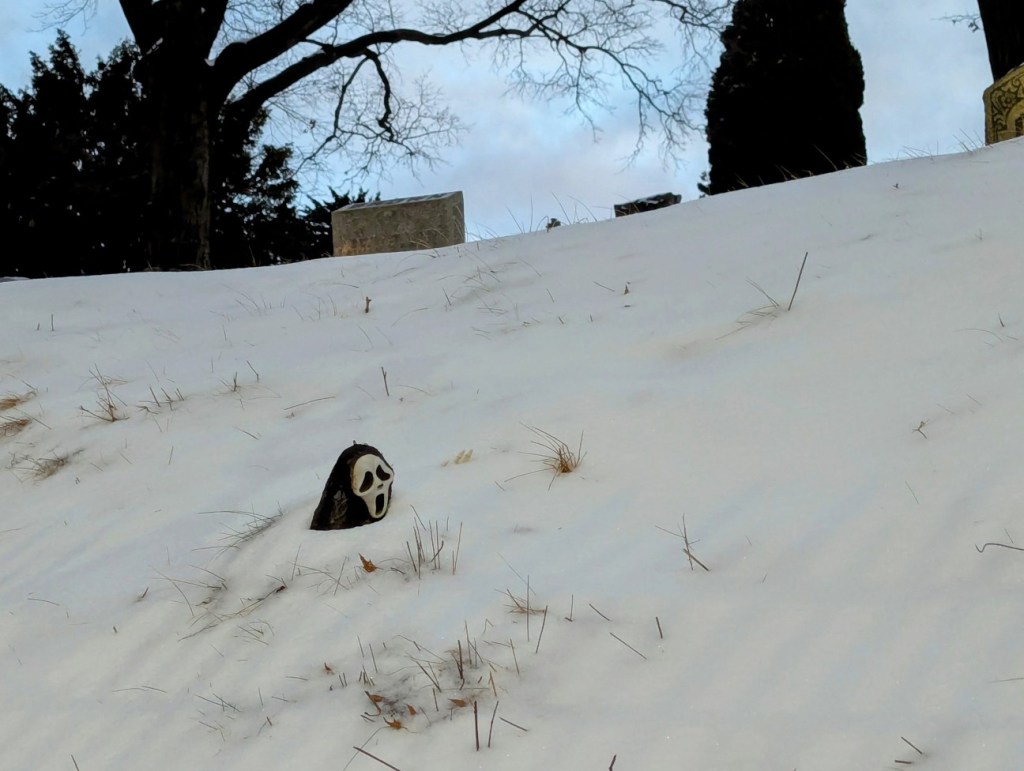
Ghostface is buried in a snowdrift in Green-Wood Cemetery. He’s seen better days.
Ghostface is buried in a snowdrift in Green-Wood Cemetery. He’s seen better days.
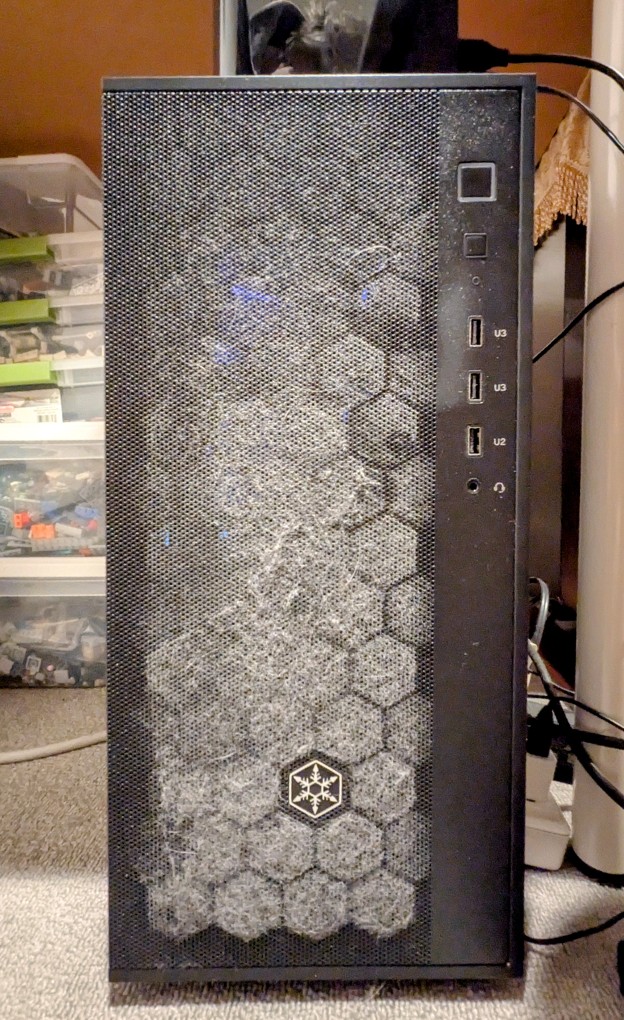
Due to the noise my workstation makes during AI inference, I keep it on the floor under an adjacent desk. Down there, it’s in the shadows. So, I was a little surprised how dusty the front air intake was after being in operation just a little over a month. It probably says a lot about how bad the air quality is in my apartment despite running three HEPA air cleaners in a roughly 600 square foot space. I know that it would be better for the PC to be up off the floor–on the desk, for example. Unfortunately, its noise and disco lights on the CPU fan and white light on the NVIDIA RTX 3090 make this an undesirable choice. I’ll have to remember to vacuum it every two weeks or so, and I might add a foam sheet behind the front grill to help catch more dust before it goes into the case and lands on the components’ heatsinks and fans.
I’m reminded of The Crafsman‘s “Don’t Forget Your Dust Mask.”

I’m giving a presentation today on the Teaching Philosophy and Teaching Methodology at City Tech’s Teaching Portfolio Workshop. It’s part of a series of events to support faculty who are preparing their portfolios before applying for promotion.
You can find a copy of my Teaching Portfolio here.
Below are my presentation notes and bibliographic citations for readings that might be helpful.
As with everything in your PARSE and Teaching Portfolio, the key is considering your audience. The audience for these documents are our colleagues across the campus representing very different intellectual disciplines, ways of approaching teaching, and styles for communicating information. Each reader brings different knowledge, expertise, ways of reading, and ways of thinking about teaching. While it’s impossible to accommodate every conceivable possible reader, it pays to address the needs of a general academic audience outside of your field. To do this, unpack concepts, explain the importance of people, theories, or approaches, and use an approachable writing style. If you are unsure or want additional feedback on whether colleagues outside your discipline can get what you are trying to say, ask someone in another department to read an excerpt or section of your portfolio. Avoid dumping your whole portfolio on someone to provide you feedback on unless they have offered to do that for you in advance!
Also, I think it should be said that while it might seem that the work you put into the Teaching Portfolio is a bureaucratic hurdle for promotion, it actually serves a few different important functions. Of course, it is something to check off for your promotion package. However, it’s also a way to reckon with the teaching that you’ve done, the kinds of teaching that you want to do, and how to achieve your ideal teaching in the future. Without it being a requirement, many of us might not take the time to do this necessary professional work that helps us become better educators. Also, it’s valuable for yourself to create a Teaching Portfolio and its individual documents to keep your professional portfolio fresh and up to date. None of us knows what the future holds, but having these documents at the ready help you face change and seek opportunities.
To write an effective Teaching Portfolio, I would suggest reading as many examples as you can given your time and energy. A good starting place is the portfolios of your departmental colleagues who have most recently gone up for promotion successfully. But, you can get lots of good ideas about what to write, how to write it, and how to organize what you write by looking at portfolios from faculty across the college. Reading others’ Teaching Portfolios is what helped me write mine.
For today, I was asked to talk about two sections of the Teaching Portfolio today: the Teaching Philosophy and Teaching Methodology, which provide your readers with the framework to understand everything that you do in the classroom as an instructor. You can think of the Teaching Philosophy as the “why,” and your Teaching Methodology as the “how.” Another way to think about them is that the Teaching Philosophy is your strategy or the military general’s overarching battle plan, and the Teaching Methodology is your tactics or the smaller actions that added together help you achieve your larger battle plan. While these two documents are separate, they should be in dialog with one another and might even repeat or rephrase some of the same information but in service to the purpose of the respective document. They are simply a reflection of the work that you do in the classroom—your theory of teaching and your praxis of teaching.
Alexander, Phill, Karissa Chabot, Matt Cox, Dànielle Nicole DeVoss, Barb Gerber, Staci Perryman-Clark, Julie Platt, Donnie Johnson Sackey, and Mary Wendt. “Teaching with Technology: Remediating the Teaching Philosophy Statement.” Computers and Composition, vol. 29, no. 1, Mar. 2012, pp. 23-38, https://doi.org/10.1016/j.compcom.2011.12.002.
Carnegie Mellon University, Student Academic Success Center. Writing Your Teaching Philosophy Statement. CMU, SASC, 2022, https://www.cmu.edu/student-success/other-resources/handouts/comm-supp-pdfs/teaching-philosophy-statement.pdf.
Eierman, Robert J. “The Teaching Philosophy Statement: Purposes and Organizational Structure.” Journal of Chemical Education, vol. 85, no. 3, Mar. 2008, pp. 336-339, https://pubs.acs.org/doi/abs/10.1021/ed085p336.
University of Michigan, Center for Research on Learning and Teaching. “Teaching Philosophy & Statements.” U-M, CRLT, 2021, https://crlt.umich.edu/resources-publications/teaching-philosophies-statements.
Brookfield, Stephen D. The Skillful Teacher: On Technique, Trust, and Responsiveness in the Classroom. John Wiley & Sons, 2015, https://ebookcentral.proquest.com/lib/citytech-ebooks/detail.action?docID=1895929.
Misseyanni, Anastasia, Miltiadis D. Lytras, Paraskevi Papadopoulou, and Christina Marouli, editors. Active Learning Strategies in Higher Education: Teaching for Leadership, Innovation, and Creativity. Emerald Publishing Ltd., 2018, https://ebookcentral.proquest.com/lib/citytech-ebooks/detail.action?docID=5116698.
University of San Diego. The Complete List of Teaching Methods. USD, 2021, https://onlinedegrees.sandiego.edu/wp-content/uploads/2022/01/USD_Complete-List-of-Teaching-Methods.pdf.
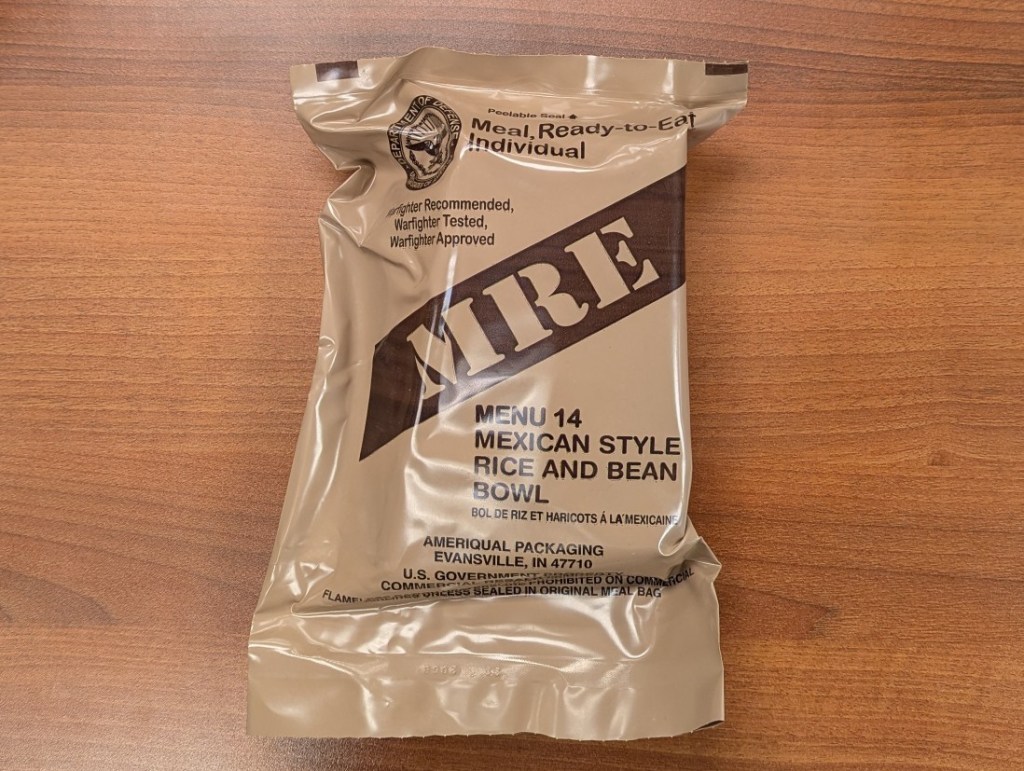
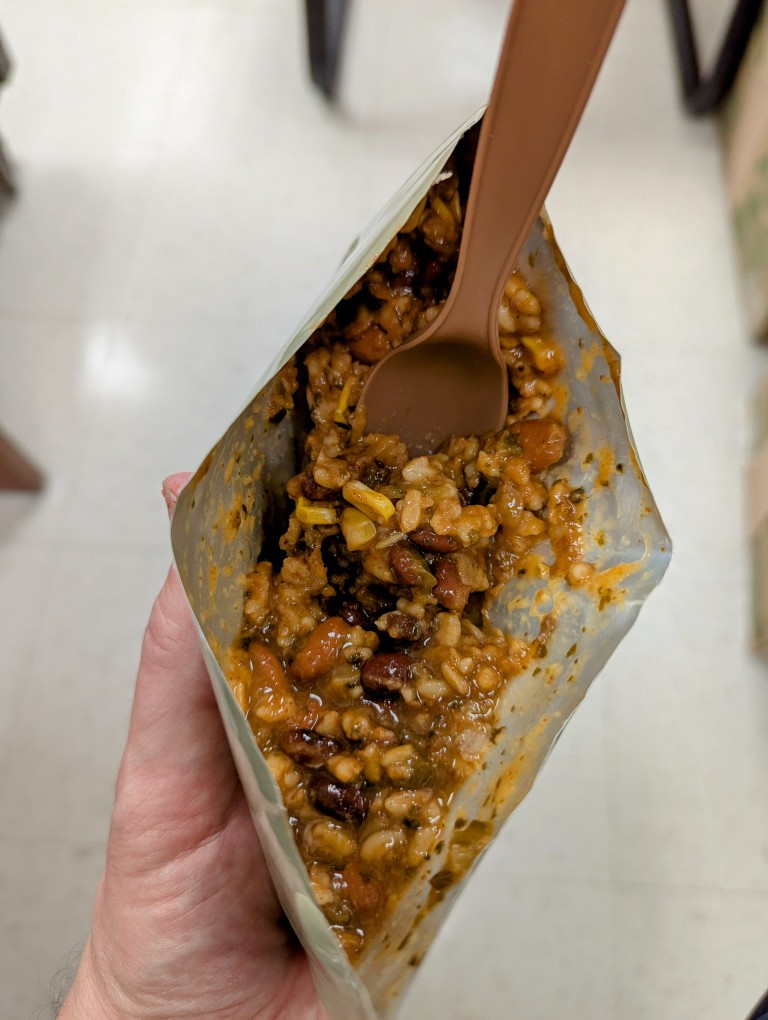
Yesterday, I enjoyed MRE Menu 14: Mexican Style Rice and Bean Bowl from Case B. After teaching one class and spending an hour in the library archives pulling materials for a graduate student from the City Tech Science Fiction Collection, I was ready for some sustenance before teaching my evening class. This MRE hit the spot!
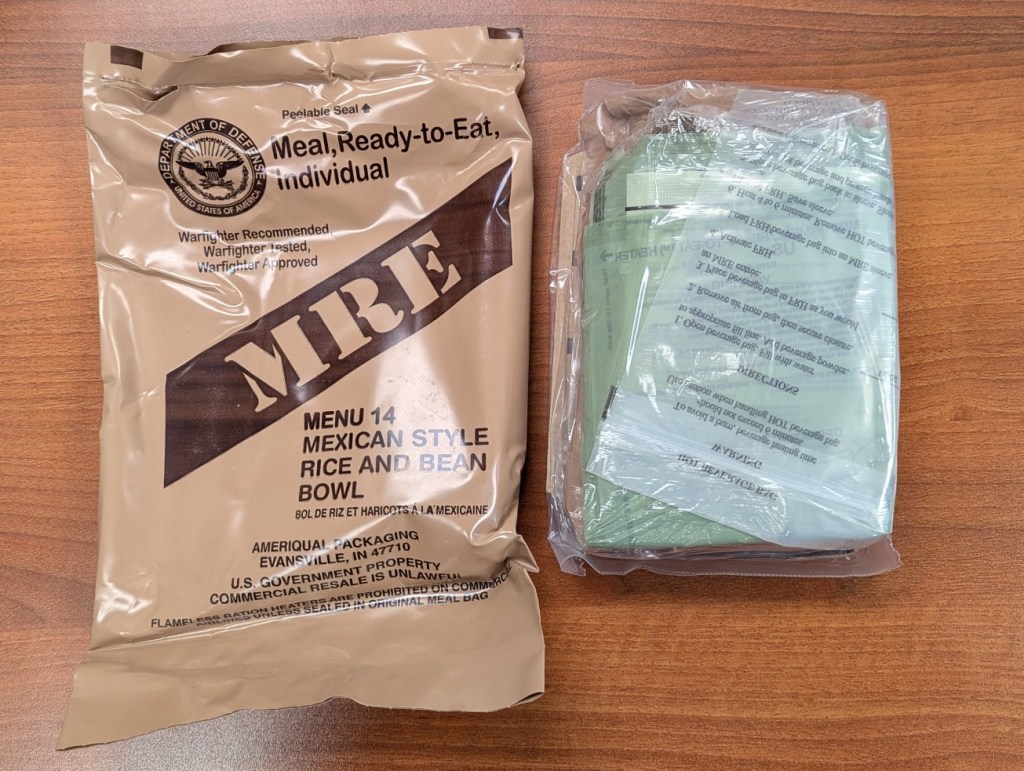
Menu 14 includes the following items clockwise from the top left:
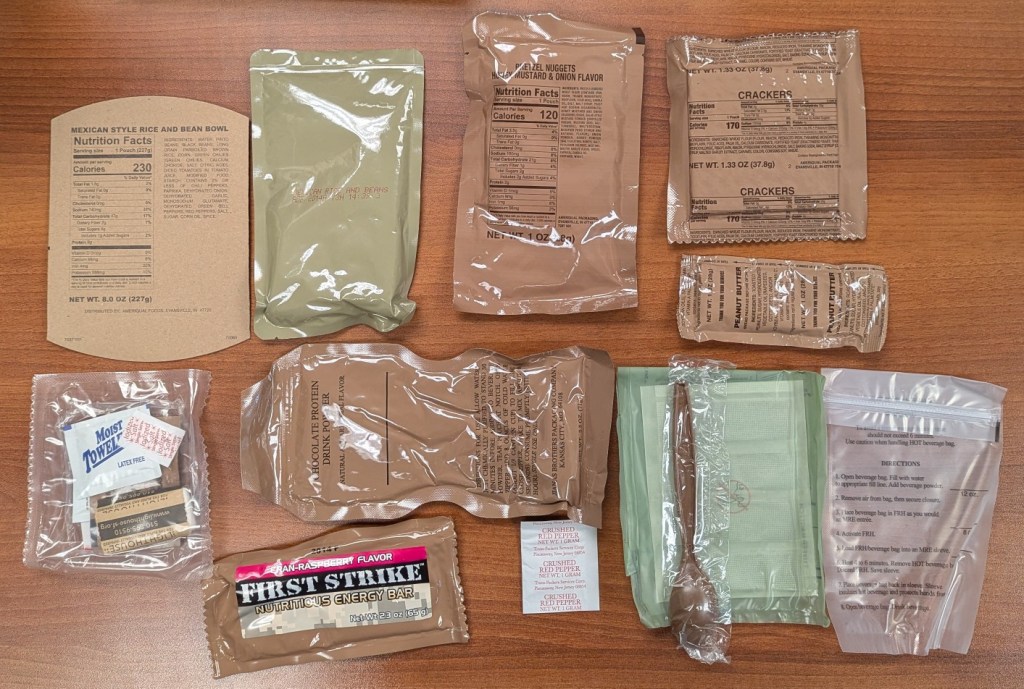
I tried the rice and beans before adding the crushed red pepper, and I liked the flavor as is and saved the pepper for later. I didn’t try any of the sides of this MRE, because I also brought some dessert from home. I’ll mix-and-match the sides with other MREs in the future.
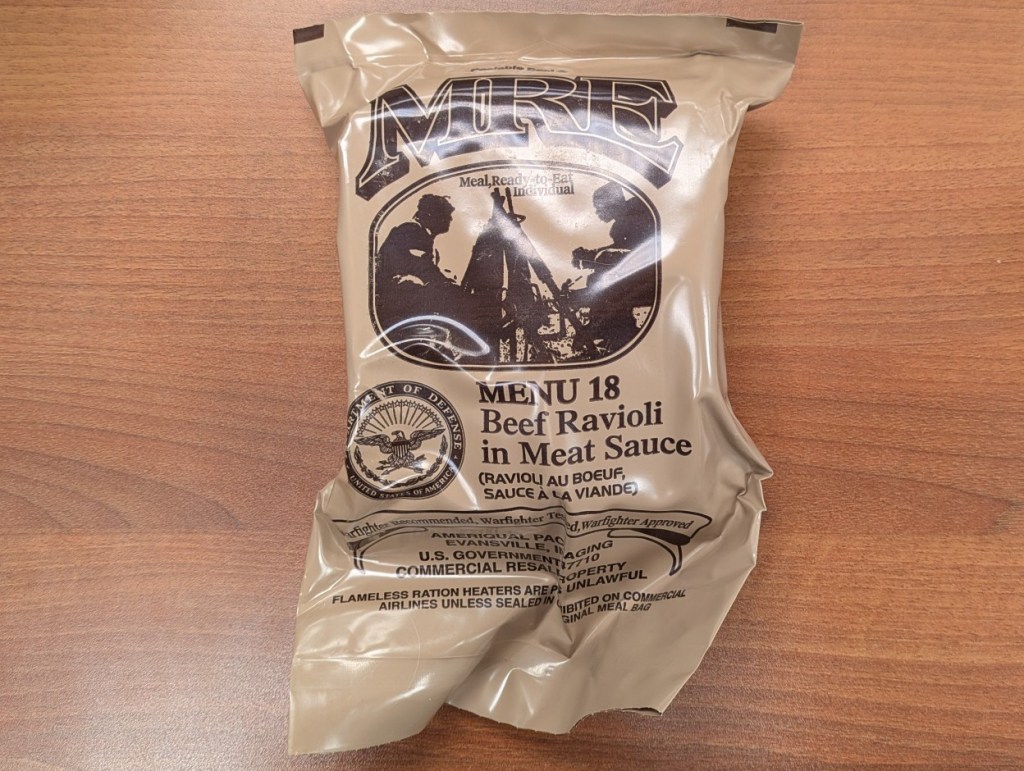
Last week, I brought MRE Menu 18: Beef Ravioli in Meat Sauce (from a 3/25 inspection date Case B) to work so that I could have dinner quickly between my first class followed by office hours and then my evening class. I was so hungry that I didn’t take pictures of the contents. Suffice to say that it was tasty and filling, and I saved some of the sweets for later.
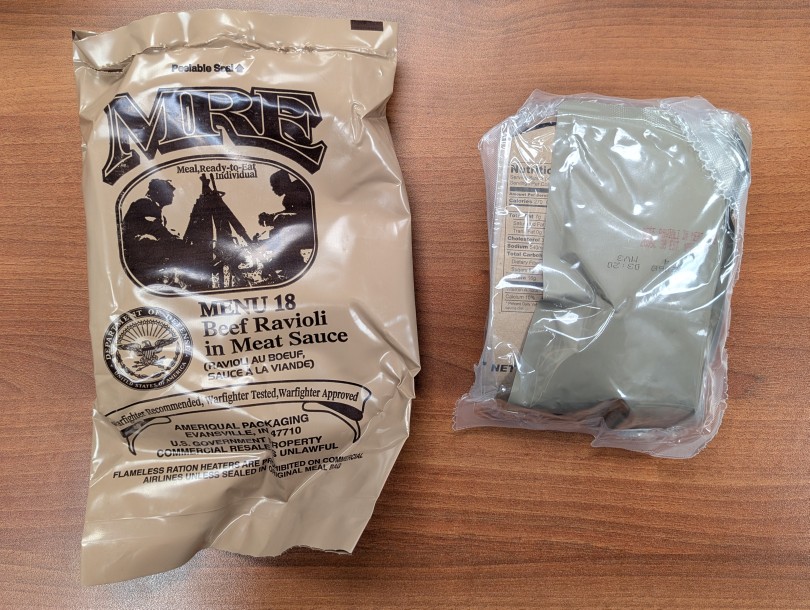
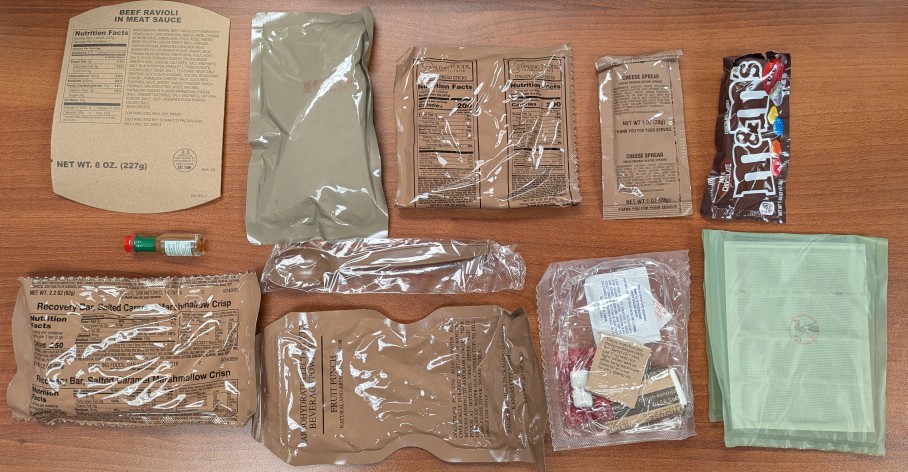
Menu 18 included these items:
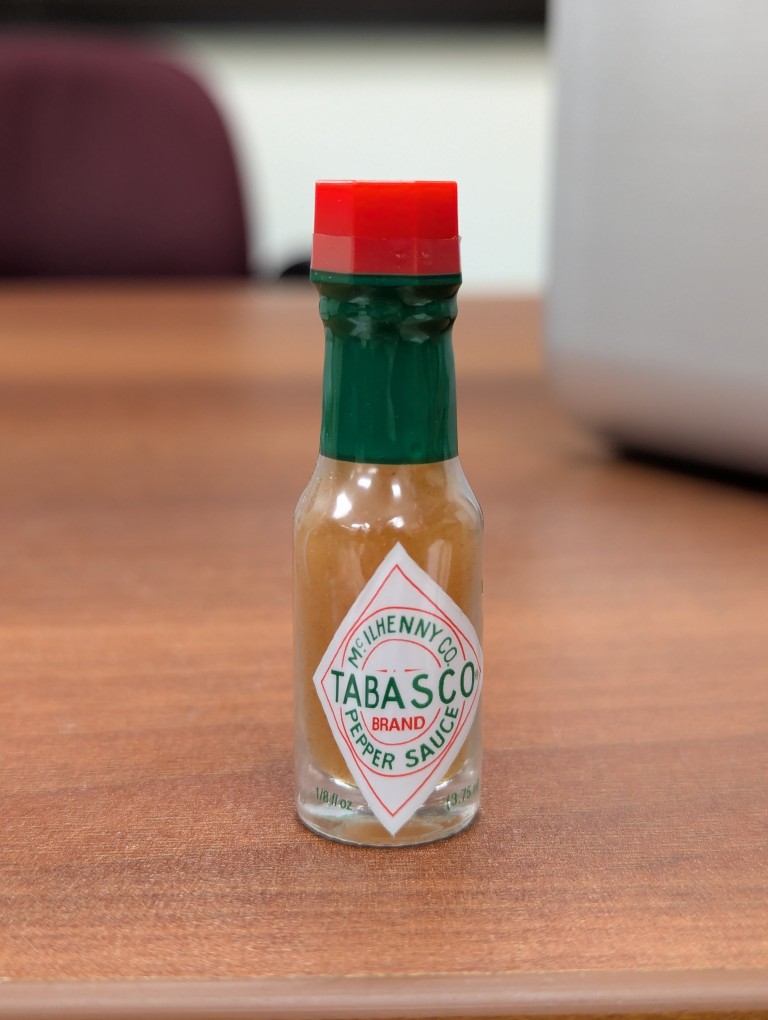
The Tabasco Pepper Sauce was the real prize in this MRE. I haven’t received a Tabasco Sauce bottle in years from the many cases that I’ve purchased. Apparently, they had been removed for about a decade before being re-implemented shortly before the MRE case this menu pouch came from was produced. So, I should have some more Tabasco to look forward to as I work my way through this case!
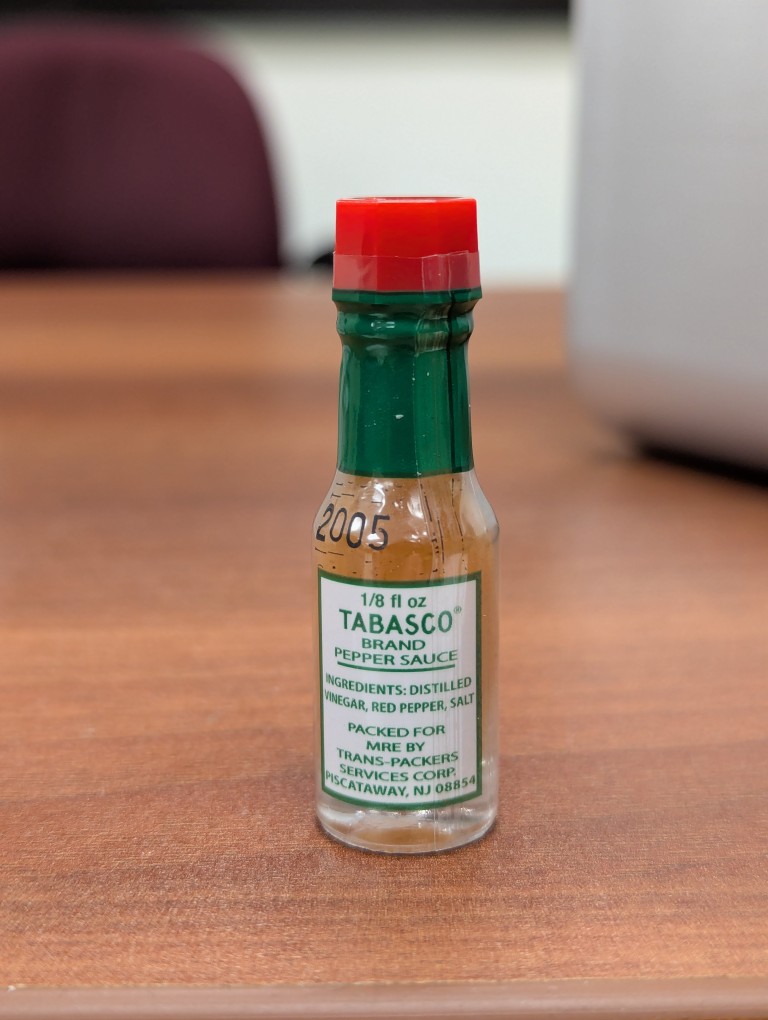
For my dinner that night, I ate the Italian Break with Cheese Spread and the Ravioli in Meat Sauce. The ravioli remind me of miniaturized Chef Boyardee in a pouch instead of a can. I saved the Recovery Bar for another day–maybe a long hike. I’ve already enjoyed the M&M’s mixed with some peanuts and raisins for trail mix.
While MREs’ main function is ready nutrition, its morale function via its nostalgic, tasty, and sweet contents can’t be understated.
