Blog

  • LEGO Ghostbusters 21108 in Front of Hook and Ladder Company 8 in NYC, Composite Image Made with GIMP

    Thinking about the composite image of the Bandai 1/144 scale Millennium Falcon in space that I created using GIMP (GNU Image Manipulation Program) led me to imagine creating a different composite of the LEGO 21108 Ghostbusters set from 2014 in front of the filming location of the Ghostbuster’s headquarters, Hook and Ladder Company 8 in Manhattan.

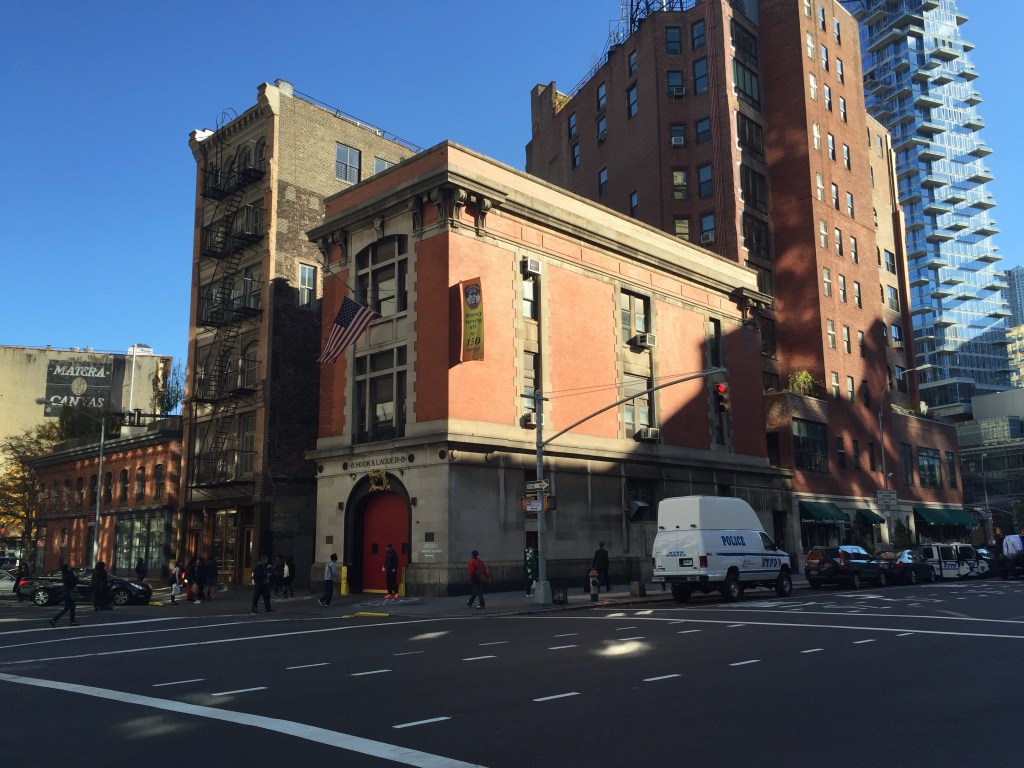
    I started with these photos that I had taken in 2015:
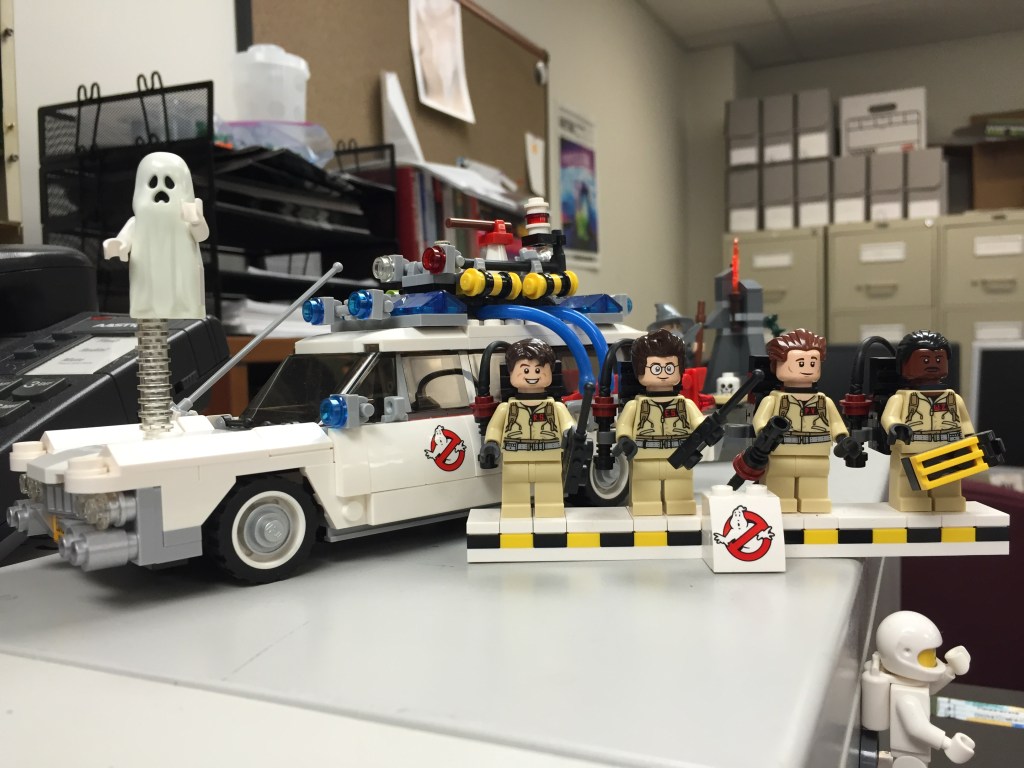
    On the left is a photo that I took of the Ghostbusters LEGO 21108 set on my desk at City Tech. All of the elements that I needed are here, but I realized that I would have to break it down into parts to create the composite image–ghost, Ecto-1, Ray, Ego, Peter, and Winston. On the right above is a photo that I took of the Hook and Ladder Company 8 building in Manhattan. Due to the time of day that the photo was taken, the front of the building is in shadow and there are sightseers in front of the firetruck door that need to be removed.

    I setup my work document in GIMP in the following way.
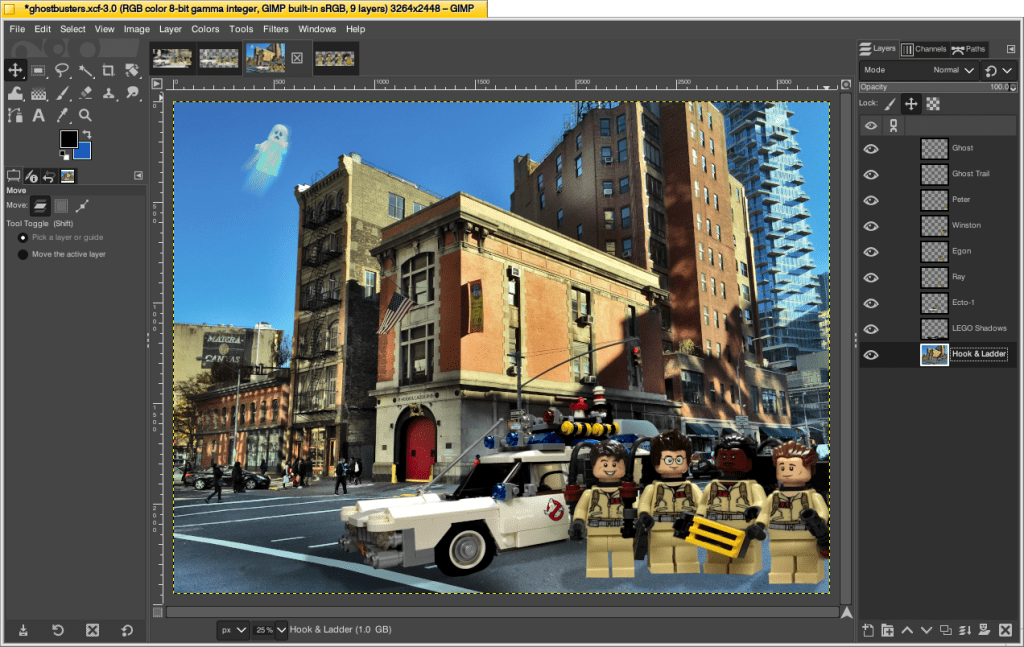
    First, I pasted the hook and ladder photo as the bottom-most layer. I adjusted the colors and reduced the shadows to help the firehouse pop in the center of the photo. I used the lasso tool (creating irregular shapes instead of squares or circles helps with blending later) and clone tool to copy material over the sightseers in the front of the firehouse and to remove a light reflection on the road surface in front of the pedestrian walking line in the lower left. I smoothed out these fixes with the smudge tool.

    Then, I cut out the ghost, Ecto-1, and four Ghostbusters and pasted each into its own independent layer and adjusted colors appropriately. Because the Ghostbusters are obscuring part of Ecto-1 in the original photo, I needed to arrange the composition so that they hid the back of the vehicle. But, I had to use the clone tool to repair some aspects of the car (e.g., the clear 1×1 round studs that had supported the ghost needed to be removed and the white surface of the hood restored), and some of the exterior windows and side panels peeked through gaps between the Ghostbusters (I used the clone tool and lasso tool to create the rear windows and side panels). Also, I wanted to arrange them so that it appeared more like a group shot instead of a line as in the display for the original set. To achieve this, I flipped horizontally Winston and Peter’s images to that they are turned toward Ray and Egon to their right. Unfortunately, this flips their name tags, but maybe no one will notice! Also, I increased their size by 120% to make them appear further away from Ecto-1 and closer to the viewer. I’ll return to the ghost below.

    Next, I added a layer between the firehouse image and Ecto-1 (being the lowest layer of the LEGO images). I used the paintbrush with a large brush to paint black “shadow” under Ecto-1 and falling from right to left on each Ghostbuster member. I reduced the opacity of the layer to lighten its appearance so that the shadow wasn’t too harsh.

    Finally, I transformed the ghost layer and rotated it to about 60 degrees. I adjusted its colors to give it a neon green hue. I then duplicated the layer. On the lower ghost layer, I applied a linear blur to give it a flowing, streak effect, which I positioned under the ghost to give it implied ethereal movement.

    The final product isn’t perfect, but it was fun to make and it helped me learn/reinforce workflow practices in GIMP.

    Don’t let perfection hold you back from using tools to make things that bring you joy. Each time you make something, you learn new things and get better at doing the things you’ve learned before. If you have the time, energy, and material, you can always take another stab at the thing you did before to make a better iteration. Though, I recommend starting fresh each time instead of making adjustments to something you’ve already made. The process of building and making from start to finish can yield wildly divergent and better outcomes that can be surprising and unexpected. Tweaking what you’ve already done might yield something interesting, but the constraints of the original project might limit what is ultimately possible.

  • LEGO Versions of Christopher Nolan’s Batman, Tumbler, Batpod, and The Bat

    There are, in my mind, only two actors who are worthy of donning the cowl and cape: Michael Keaton and Christian Bale. Keaton’s Batman performances in Tim Burton’s Batman (1989) and Batman Returns (1992), and most recently in The Flash (2023), holds a special place in heart as how I imagined a hard boiled Batman. Bale’s Batman in Christopher Nolan’s Batman Begins (2005), The Dark Knight (2008), and The Dark Knight Rises (2012) reclaimed for the character what had been lost in Joel Schumacher’s Batman Forever (1995) and Batman and Robin (1998), and Nolan’s trilogy elevated Batman’s narrative providing character development and science fictional plausibility. Keaton and Bale are my favorites for sharing certain elements while also approaching the character in subtly different ways.

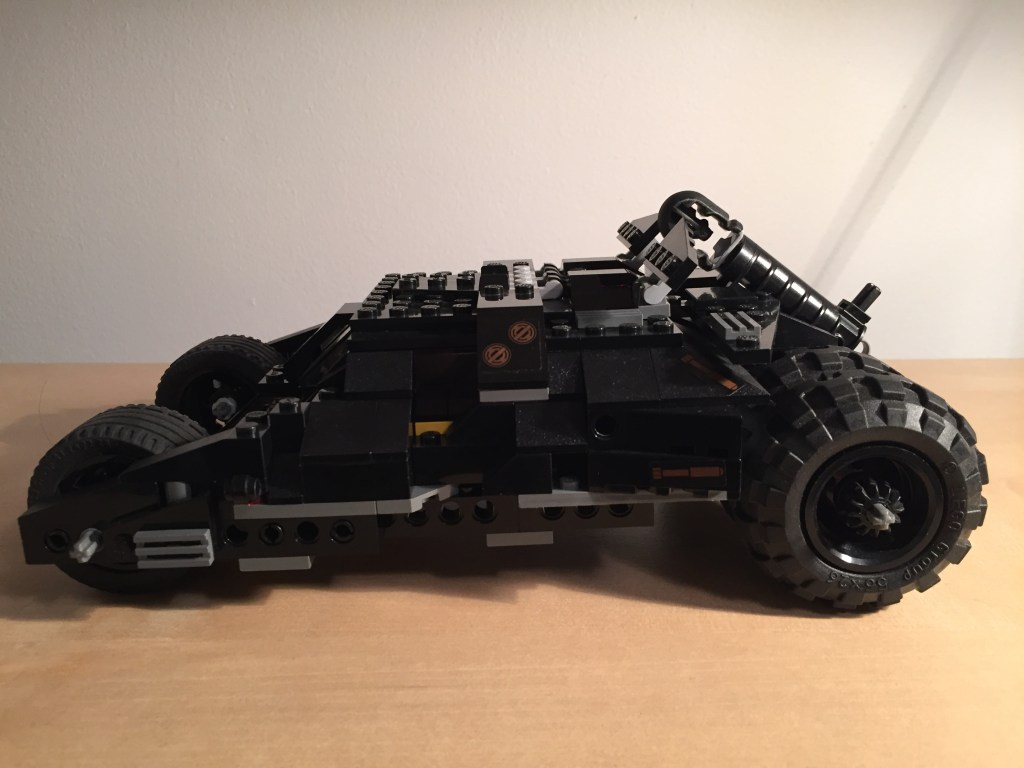
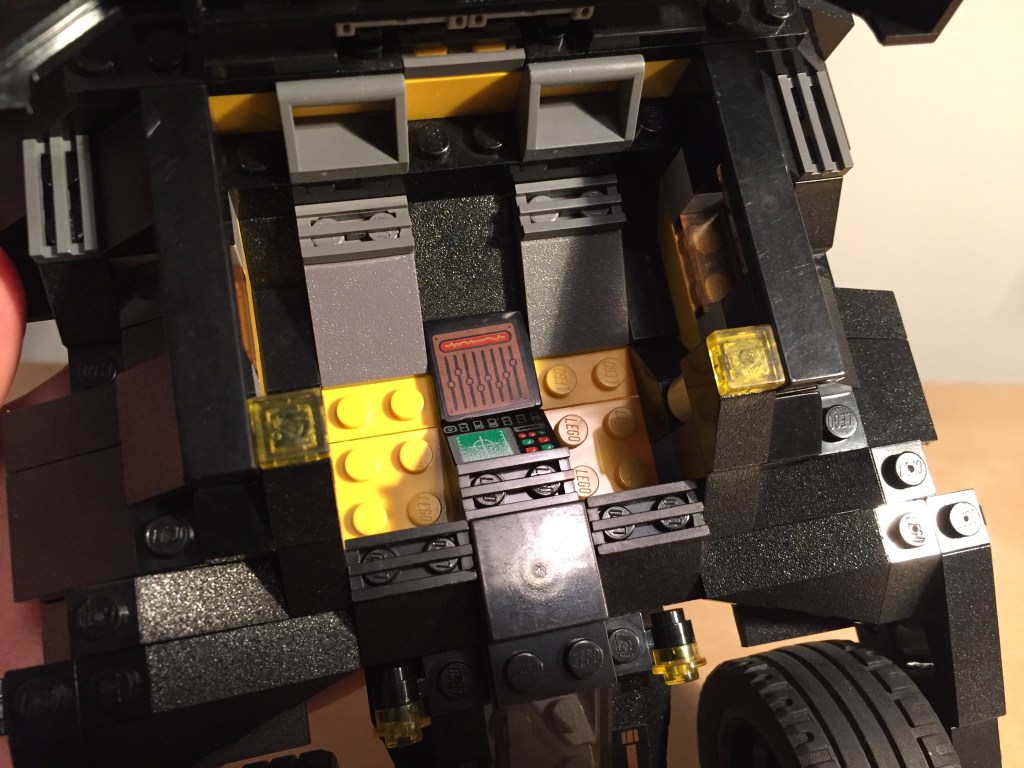
    LEGO first captured Batman’s primary vehicle The Tumbler in set 7888, The Tumbler: Joker’s Ice Cream Surprise shown above and below. The micro Tumbler below is from The Batman Tumbler polybag 30300.

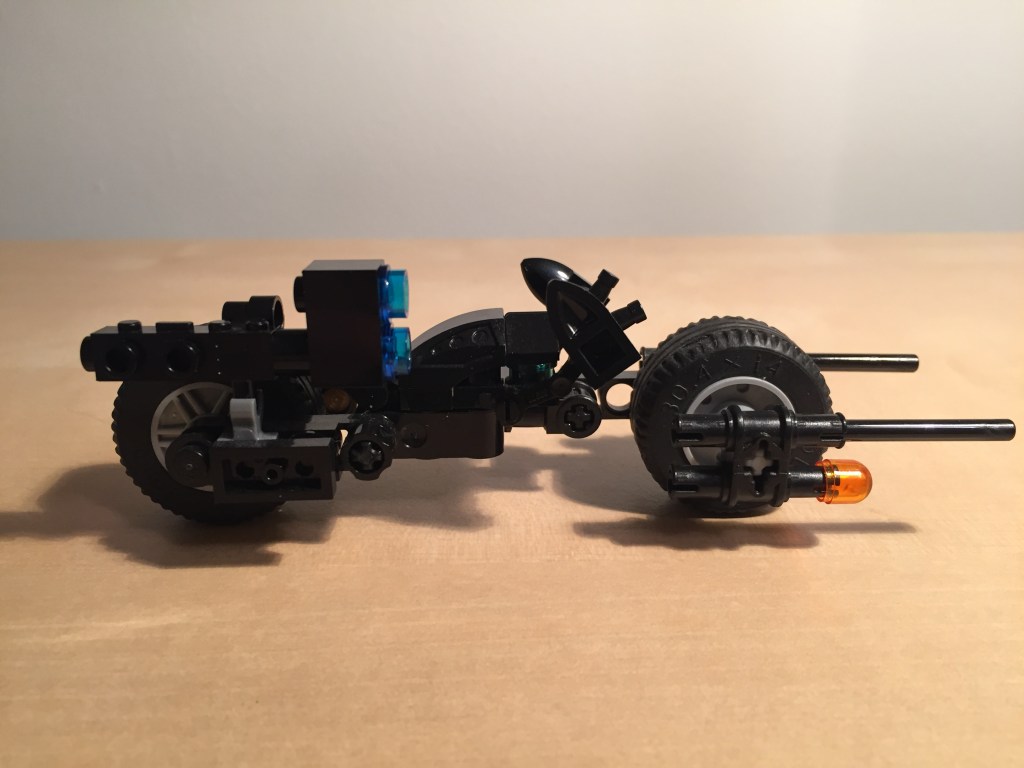
    Unfortunately, LEGO didn’t make a widely available minifigure-scale Batpod, Batman’s motorcycle escape system from The Tumbler. Instead, they had a competition for VIP members for an extremely limited set, which resulted in what I see as further erosion of what LEGO could be (play) and instantiation of what it is (making money for LEGO and aftermarket resellers).

    Thankfully, a LEGO enthusiast designed the MOC below and offered reasonably priced kits with the parts on eBay. I picked one up to go along with my Tumbler. It includes an electromagnetic pulse gun mounted on the rear quarter.

    While LEGO had done alright I thought with The Tumbler, they really dropped the ball with their The Dark Knight Rises set, 76001: The Bat vs. Bane: Tumbler Chase. The Bat, Batman’s VTOL aircraft, was cartoonish with the blue accents and lack of detail, and the military Tumbler was anemic. I would like to build a MOC of The Bat that does it justice–perhaps one day . . .

  • LEGO 40334 Avengers Tower with Tony Stark Minifigure

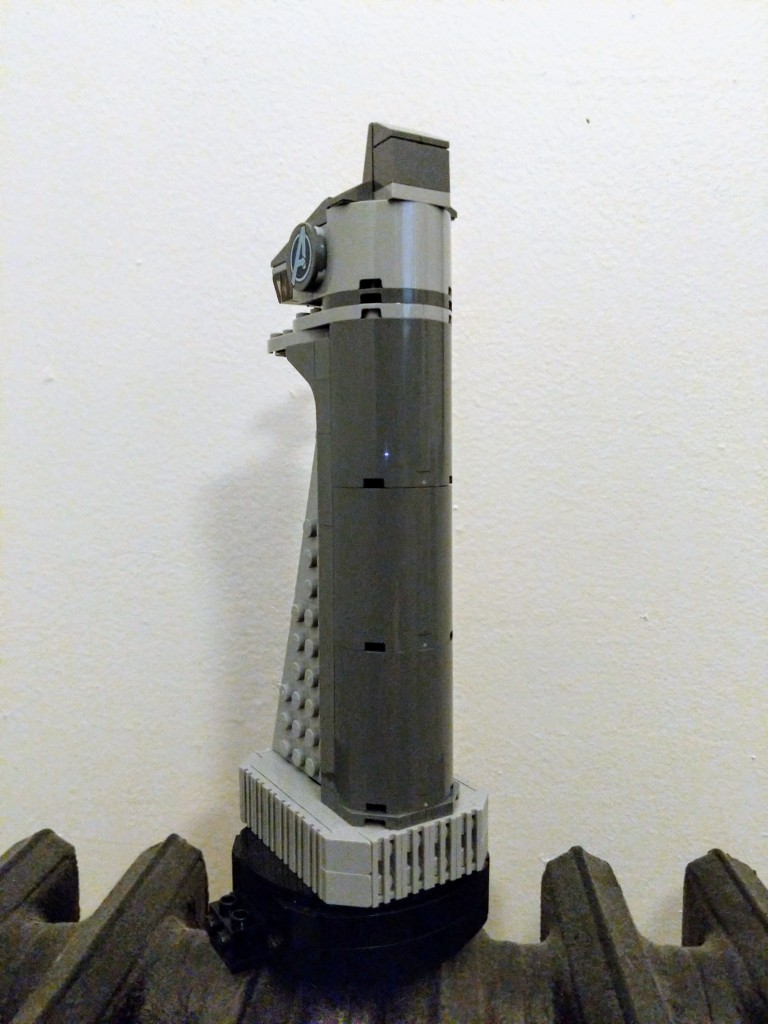
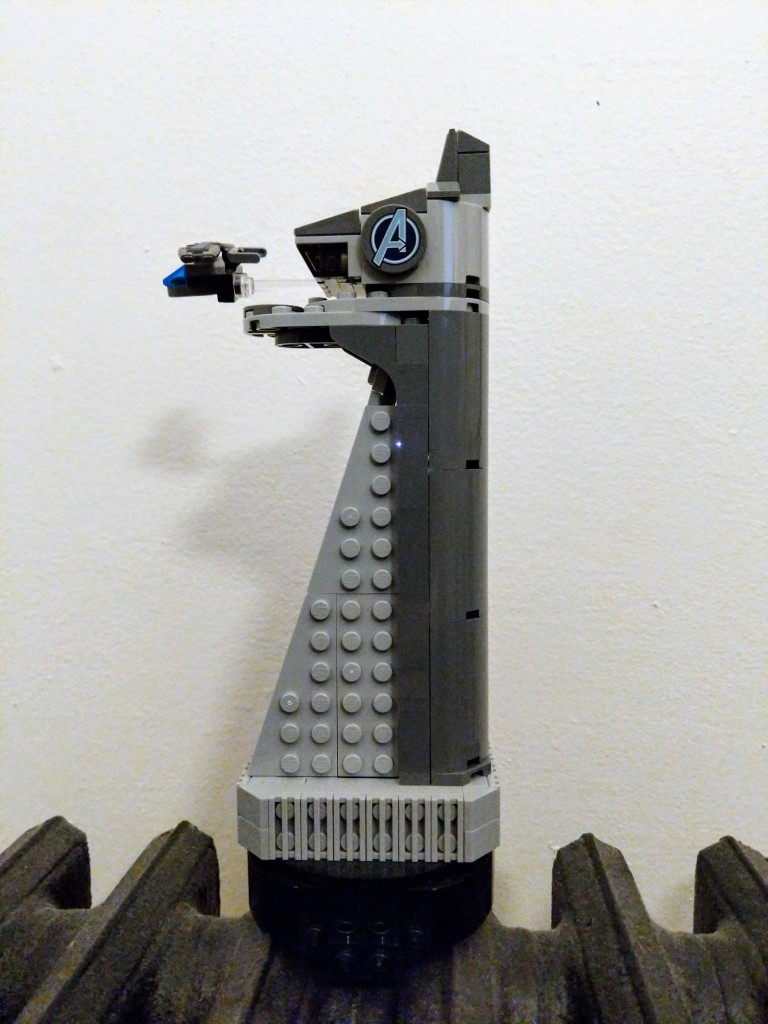
    LEGO Avengers Tower gift with purchase set sitting on desktop.

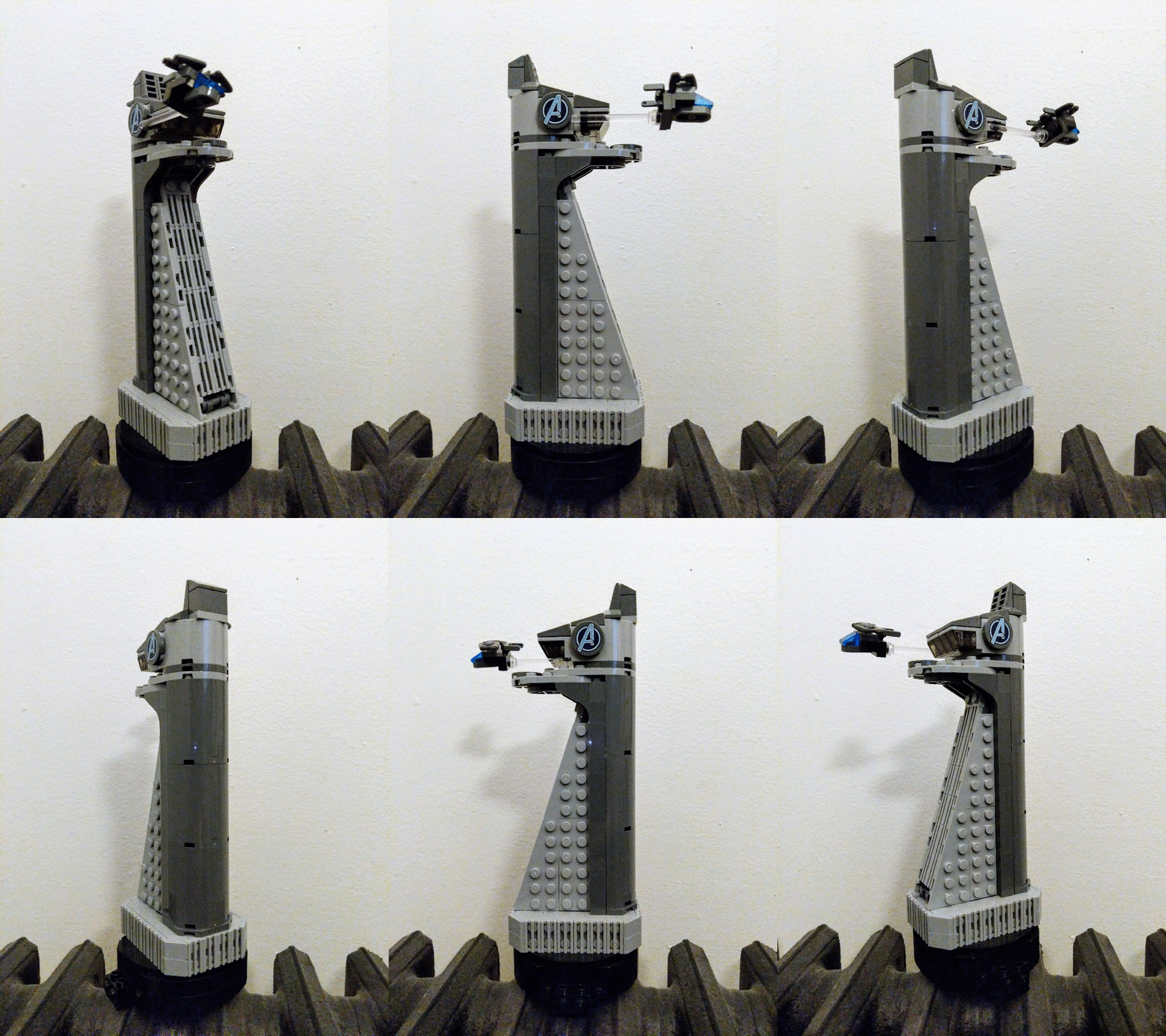
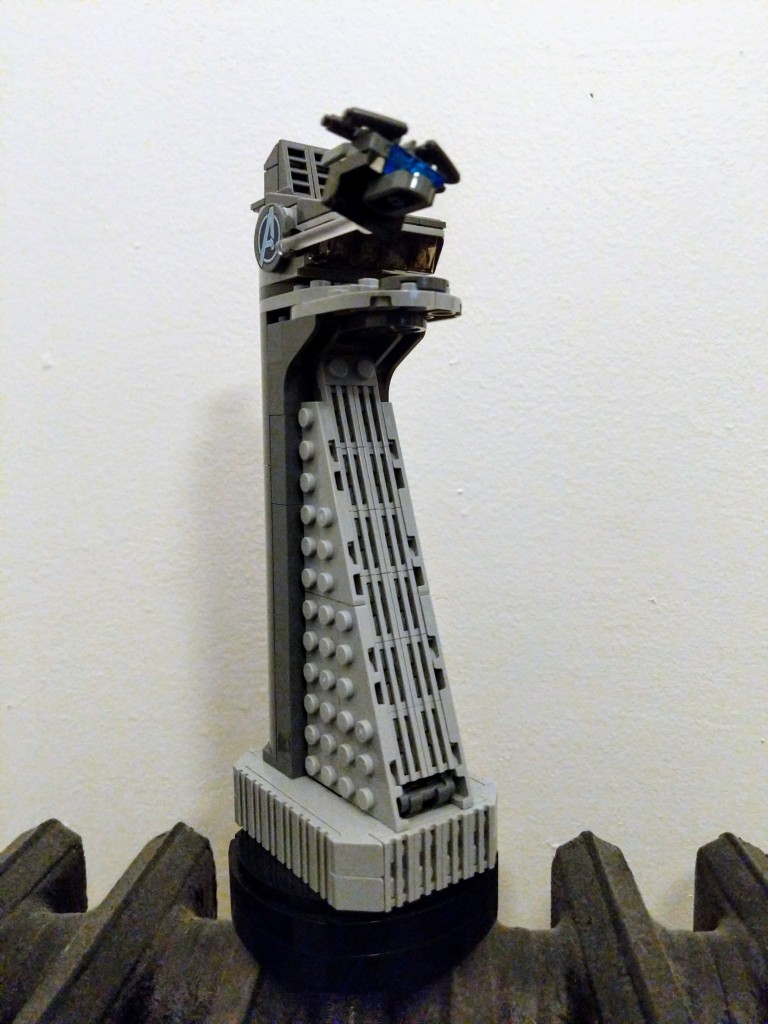
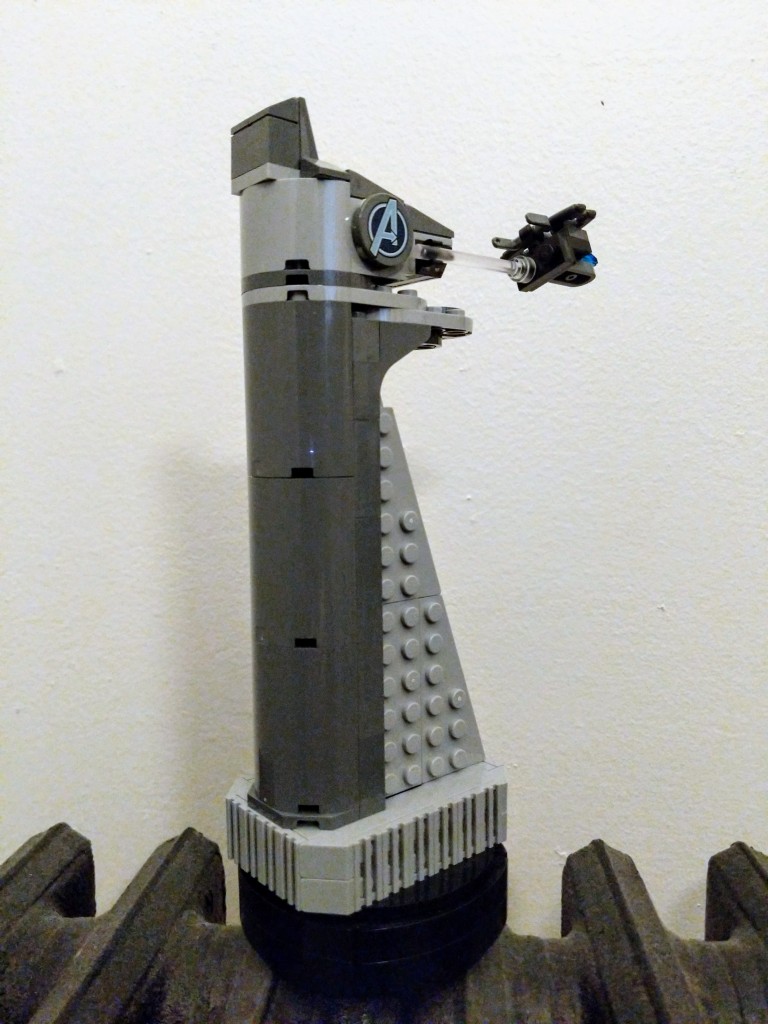
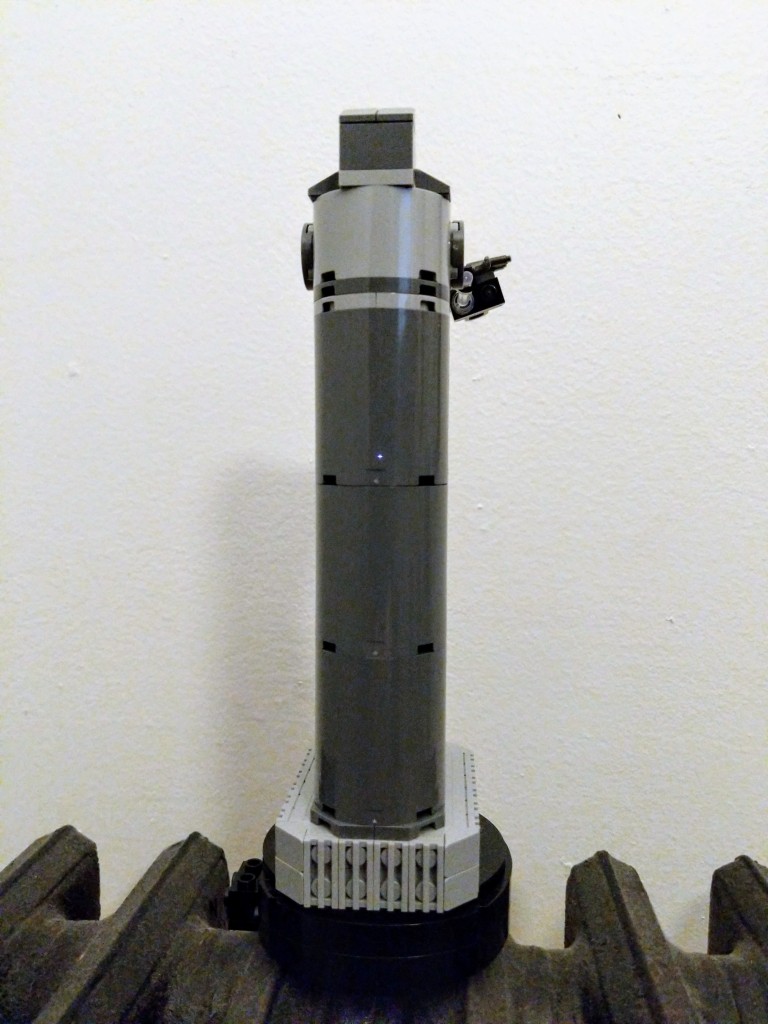
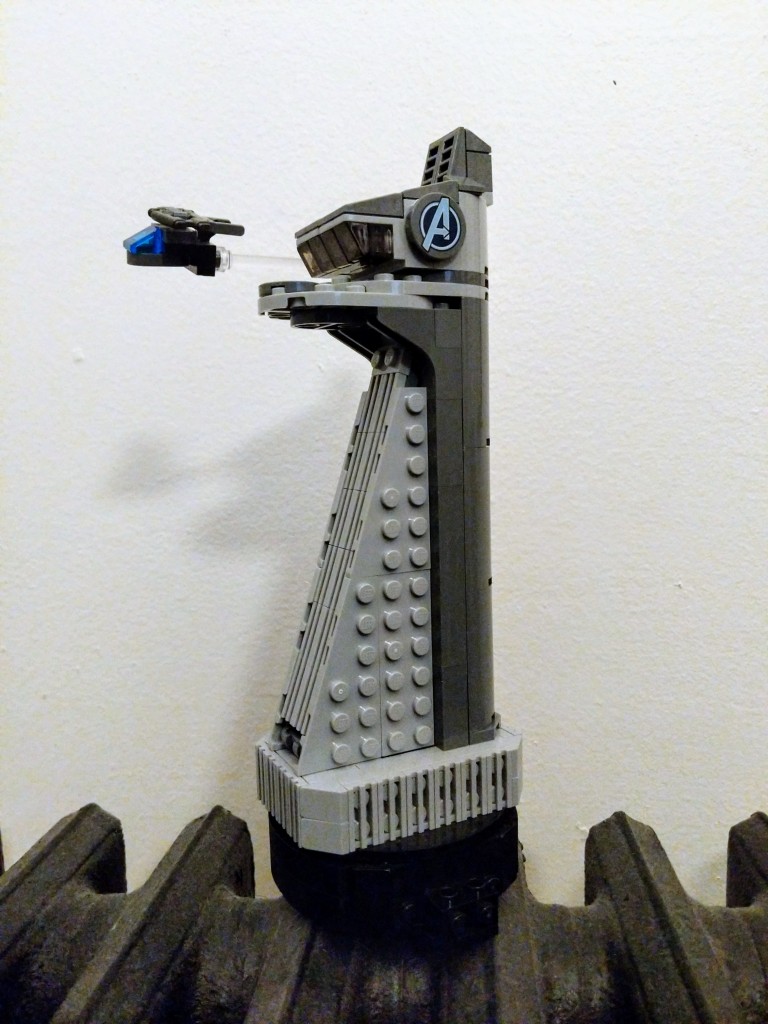
    LEGO’s 40334 Avengers Tower was offered as a gift with purchase (GWP) in 2019. For such a small model, it captures the iconic building from the Marvel Cinematic Universe (MCU) perfectly. And, it included a mid-transformation Tony Stark/Iron Man minifigure and tiny Quinjet. It is like a little brother to my minifigure-scale Avengers Tower MOC.

    Rotating LEGO Avengers Tower.
  • Have You Seen Space Station L-4, the 1977 Educational Earth Sciences Program by Children’s Television International?

    From L to R: V-2 Rocket, WAC Corporal Sounding Rocket, Skylab Orbital Workshop, and V-1 Cruise Missile (hanging), National Air and Space Museum, Washington, DC, 2008.
    From L to R: V-2 Rocket, WAC Corporal Sounding Rocket, Skylab Orbital Workshop, and V-1 Cruise Missile (hanging), National Air and Space Museum, Washington, DC, 2008.

    My friend Mark and I have been on a decade’s long quest to find copies of Space Station L-4 (1977), an educational Earth Sciences television program produced, written, and directed by Paul Lally, who I interviewed in 2013 about the show, and distributed by Children’s Television International (CTI).

    Unfortunately, we have not yet been able to obtain copies of Space Station L-4.

    Obvious starting places like Google, YouTube, Bing, Yandex, etc. yield no video, screenshots, or substantive information.

    I’ve tried interlibrary loan requests without any success.

    There was a mention 6 years ago on Reddit’s r/ForgottenTV that linked to my interview with Paul Lally with a couple of commenters mentioning their fond memories of the show.

    Most recently, I discovered video order directories including Bowker’s Complete Video Directory and The Video Source Book in the Internet Archive that list the series and individual episodes, which were available for order from CTI in Virginia (apparently no longer exists and a more recent San Diego address seems defunct but there is a branch of this organization that seems to remain incorporated in Maryland) and GPN in Lincoln, NE (also no longer exists–the owner retired). I am sending letters to the agent listed for the Maryland branch of CTI and Steve Lenzen of GPN in the hope of them having stock available or a reference to who might have tapes for sale.

    Below, I’m pasting the series and episode information from Bowker’s Complete Video Directory 1998, pp. 2158-2159 in the hope that it might lead someone with info about how to obtain the series to my website and who would be kind enough to reach out by email to my address in the info box to the right or via my social media links on the About page.

    Space Station L-4. 16 cass. (1977). Science—Environmental Studies. 240 min. Rights: Group; Broadcast. Viewers imagine themselves on space station L-4, 440 miles above the earth. Their mission: to study & monitor life support systems for planet Earth & share this information with all countries needing assistance. By dramatically demonstrating modern equipment, techniques & methods of scientific investigation this video teaches how we are seeking to safeguard the future of our natural environment & prepare for human survival. GPN. tchr's. guide: $3.50; VHS, Set (Order #: E374):
    $351.20.
    
    Space Station L-4, Vol. 1: The Changing Earth; Earth Measurement; Atmosphere; Water. Science—General. B&W and Color. 60 min. Juvenile.Ages: 9-13. G. Made-for-Video Movie. Children’s Television International. VHS (Order #: ST-1): $79.95.
    
    Space Station L-4, No. 1: The Changing Earth. (1977). Science—Environmental Studies. 15 min, Rights: Group; Broadcast. Develops an awareness within students that the earth is constantly changing. GPN. tchr's. guide: $3.50; VHS (Order #: E374): $29.95.
    
    Space Station L-4, Vol. 2: Soil; Earth Limits; Energy; Gravity. Science—General. B&W and Color. 60 min. Juvenile.Ages: 9-13. G. Made-for-Video Movie. Children’s Television International. VHS (Order #: ST-2): $79.95.
    
    Space Station L-4, No. 2: Earth Measurement. (1977). Technology. 15 min. Rights: Group; Broadcast. Demonstrates how technological advances enable us to increase the accuracy of measurements. GPN. tchr’s. guide: $3.50; VHS (Order #: E374): $29.95.
    
    Space Station L-4, Vol. 3: Human Life Support; ‘Human Communication; The Order of Nature; Cycles. Science—General. B&W and Color. 60 min. Juvenile Ages: 9-13. G. Made-for-Video Movie. Children's Television International. VHS (Order #: ST-3): $79.95.
    
    Space Station L-4, No. 3: Atmosphere. (1977). ‘Science—Environmental Studies. 15 min. Rights: Group; Broadcast. Helps students understand the effects of the interaction between the earth's surface & living things. GPN. tchr's. guide: $3.50; VHS (Order #: E374): $29.95.
    
    Space Station L-4, Vol. 4: Things in Motion; Reach ‘Up; Reach Out; Reach Far Out. Science—General. B&W and Color. 60 min. Juvenile. Ages: 9-13. G. Made-for-Video Movie. Children’s Television International. VHS (Order #: ST-4): $79.95.
    
    Space Station L-4, No. 4: Water. (1977). Science—Environmental Studies. 15 min. Rights: Group; Broadcast. Presents the interrelationship between water, the earth's surface & living things. GPN. tchr’s. guide: $3.50; VHS (Order #: E374): $29.95.
    
    Space Station L-4, No. 5: Soil. (1977). Science—Environmental Studies. 15 min. Rights: Group; Broadcast. Continues to demonstrate the interrelationship to ecology by looking at how soil, water & living things affect each other. GPN. tchr’s. guide: $3.50; VHS (Order #: E374): $29.95.
    
    Space Station L-4, No. 6: Earth Limits. (1977). Science—Environmental Studies. 15 min. Rights: Group; Broadcast. Shows students that the earth & its components are finite resources. GPN. tchr's. guide: $3.50; VHS (Order #: E374): $29.95.
    
    Space Station L-4, No. 7: Energy. (1977). Science—Environmental Studies. 15 min. Rights: Group; Broadcast. Reveals that the sun is our energy source. GPN. tchr’s. guide: $3.50; VHS (Order #: £374): $29.95
    
    Space Station L-4, No. 8: Gravity. (1977). Science—General. 15 min. Rights: Group; Broadcast. Shows students how man & his environment are both affected by gravity. GPN. tchr's. guide: $3.50; VHS (Order #: E374): $29.95.
    
    Space Station L-4, No. 9: Human Life Support. (1977). Science—Environmental Studies. 15 min. Rights: Group; Broadcast. Makes us aware that we all interact with our environment. GPN. tchr’s. guide: $3.50; VHS (Order #: E374): $29.95.
    
    Space Station L-4, No. 10: Human Communications. (1977). Anthropology. 15 min. Rights: Group; Broadcast. Develops an awareness of humans as communicators. GPN. tchr's. guide: $3.50: VHS (Order #: E374): $29.95.
    
    Space Station L-4, No. 11: The Order of Nature. (1977). Science—Environmental Studies. 15 min. Rights: Group; Broadcast. Promotes the observable patterns in nature. GPN. tchr’s. guide: $3.50; VHS (Order #: E374): $29.95.
    
    Space Station L-4, No. 12: Cycles. (1977). Science—Environmental Studies. 15 min. Rights: Group; Broadcast. Develops student understanding of physical & biological cycles that naturally occur. GPN. tchr’s. guide: $3.50; VHS (Order #: E374): $29.95.
    
    Space Station L-4, No. 13: Things in Motion. (1977). Science—-Environmental Studies. 15 min. Rights: Group; Broadcast. Helps students understand that we increase our use of fuels as we explore space. GPN. tchr's. guide: $3.50; VHS (Order #: E374): $29.95.
    
    Space Station L-4, No. 14: Reach Up. (1977). Science—Environmental Studies. Exploration. 15 min. Rights: Group, Broadcast. Demonstrates how we have increased our knowledge of the environment through space exploration. GPN. tchr's. guide: $3.50; VHS (Order #: E374): $29.95.
    
    Space Station L-4, No. 15: Reach Out. (1977). Science—Environmental Studies. Space Exploration. 15 min. Rights: Group; Broadcast. Enables viewers to better understand how our explorations of space have actually changed the dimensions of environmental research. GPN. tchr's guide: $3.50; VHS (Order #: E374): $29.95
    
    Space Station L-4, No. 16: Reach Far Out. (1977). Science—Astronomy. Space Exploration. 15 min. Rights: Group; Broadcast. Takes viewers one step further in the search & inquiry process by showing how we are looking for life in outerspace. GPN. tchr’s. guide: $3.50; VHS (Order #:E374): $29.95.

    If you know where I might find a copy of Space Station L-4, please send me an email at my address to the right or via my social media links on the About page. Thank you!

  • Nintendo Game Boy: A Portable Window Into Miniaturized Interactive Worlds

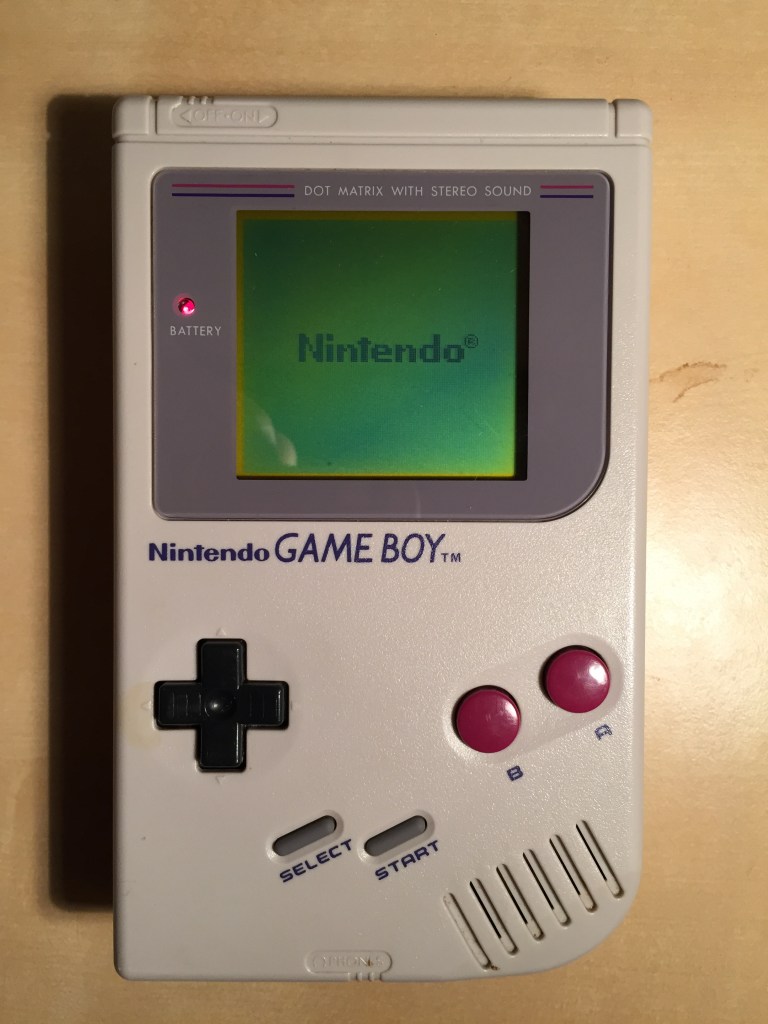
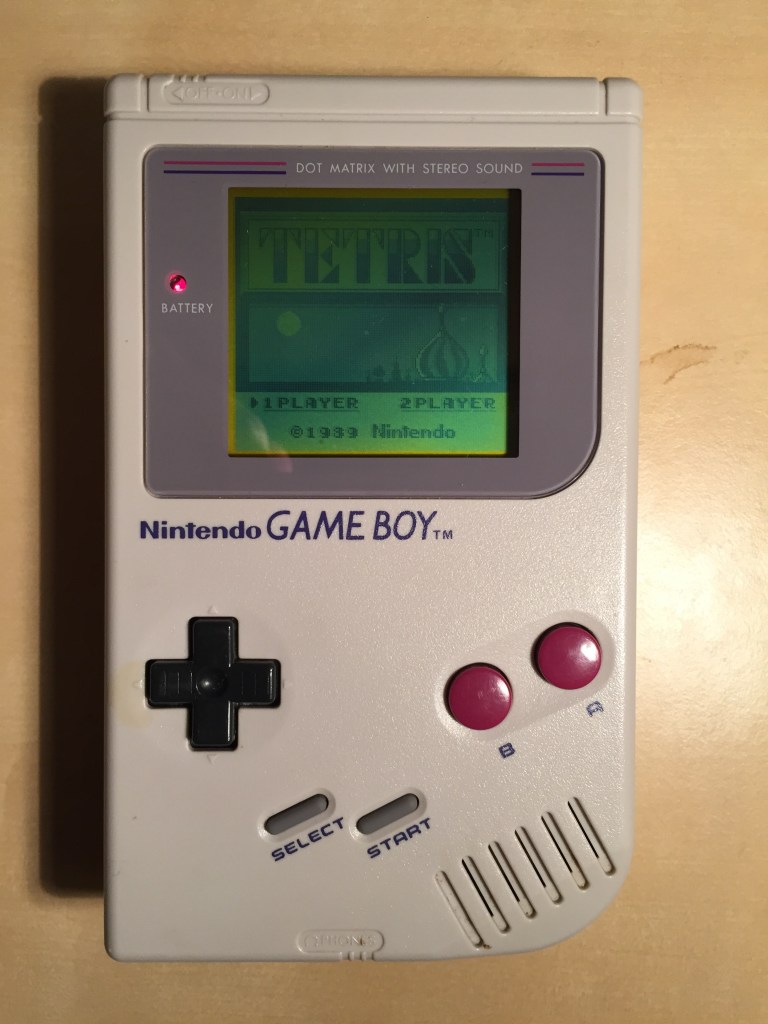
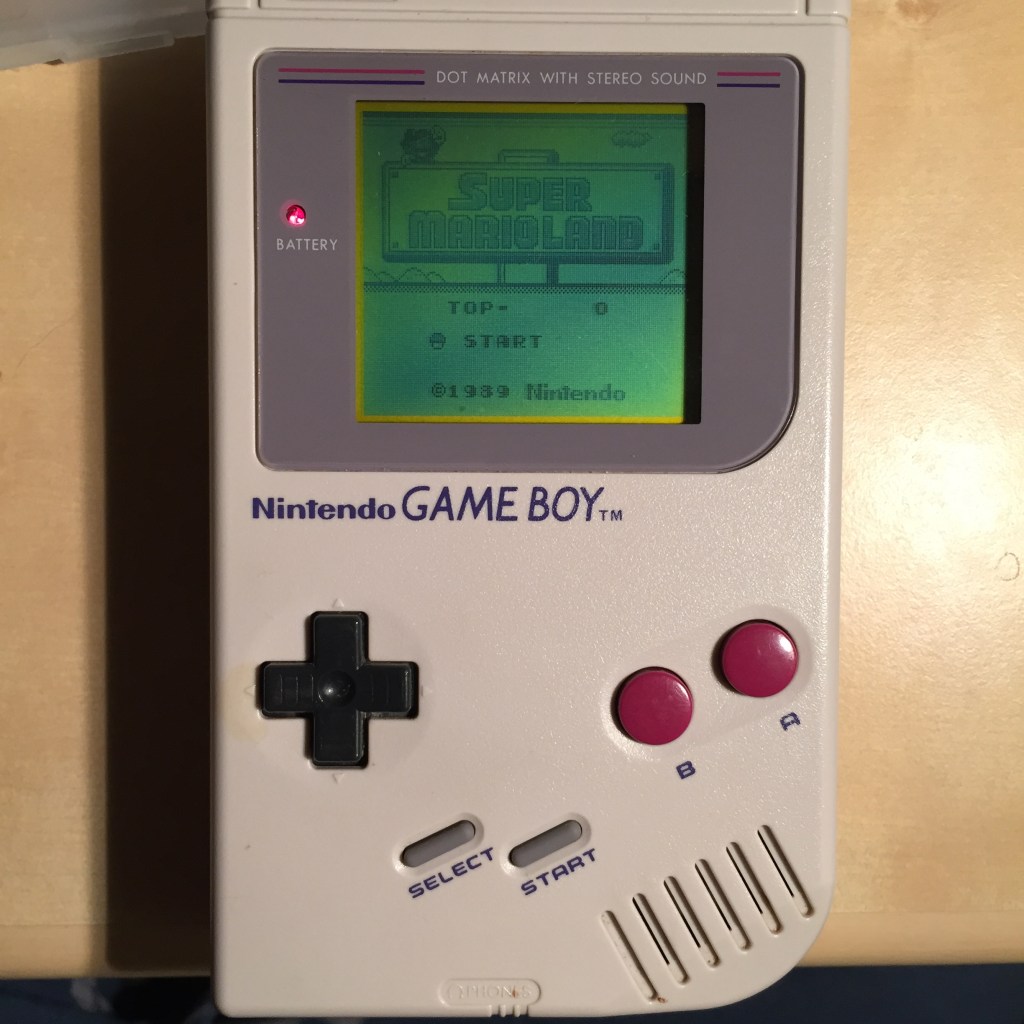
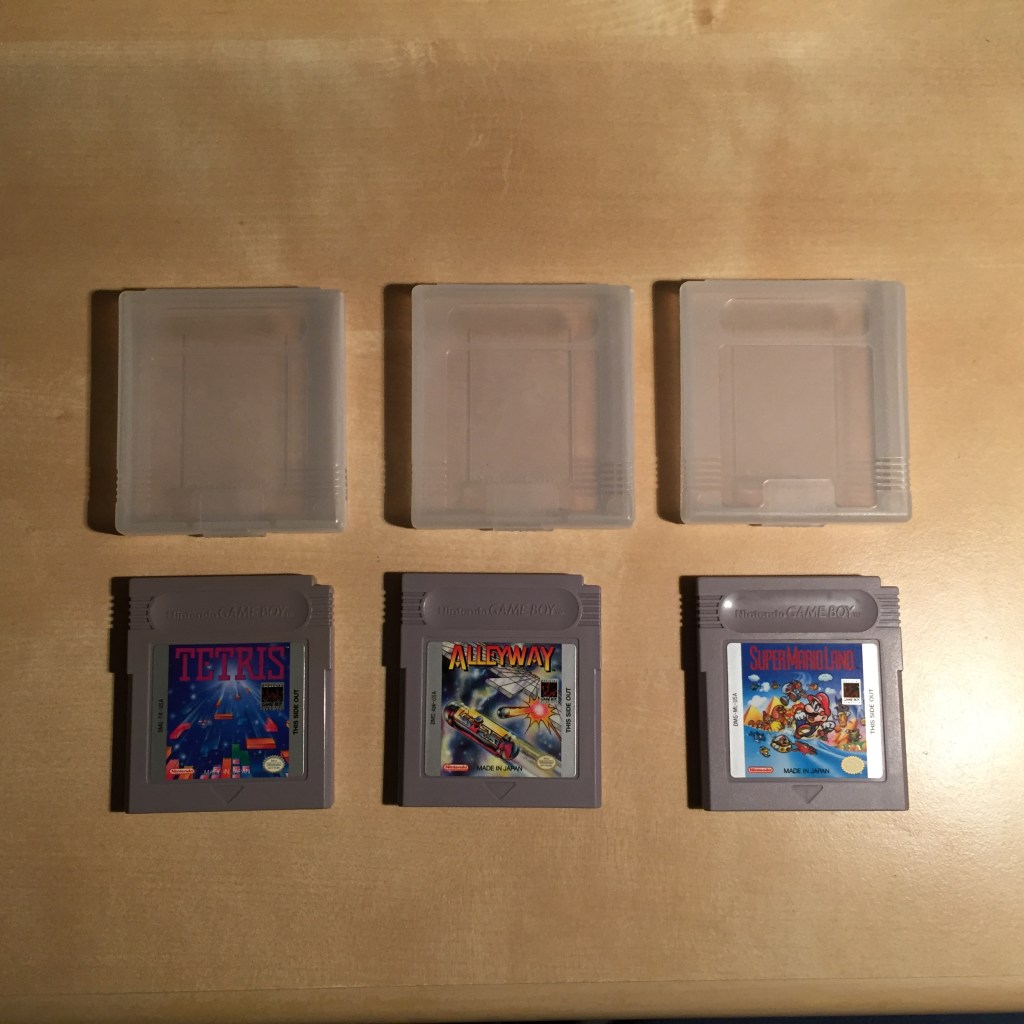
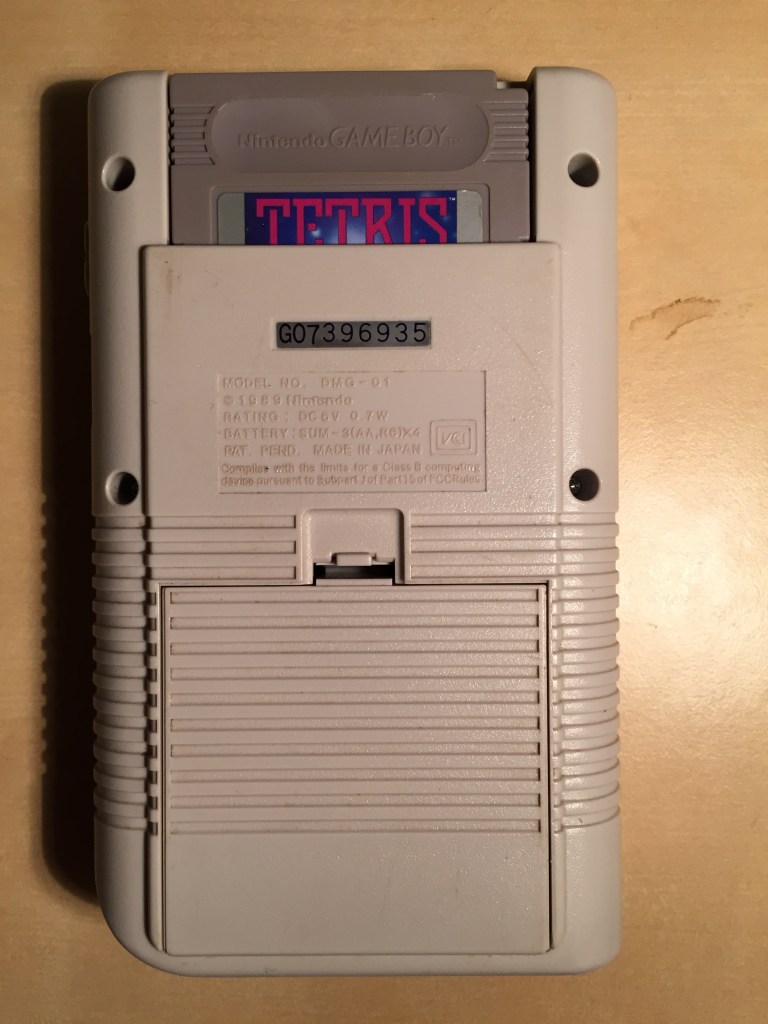
    Soon after the Nintendo Game Boy launched in 1989, I was gifted one. Being able to carry video games with me wherever I went was a ground-shaking experience. Even though I enjoyed Castlevania: The Adventure, Batman: The Video Game, Alleyway, Super Mario Land, and F-1 Race, I always returned to Tetris for hours of play eliminating lines while driven by the best chiptune music. Yet, all of these games were immersive experiences that were available nearly anywhere. Unlike a console, you didn’t have to monopolize the family TV. You had your own albeit small and black-on-green screen, a window to miniaturized interactive worlds.

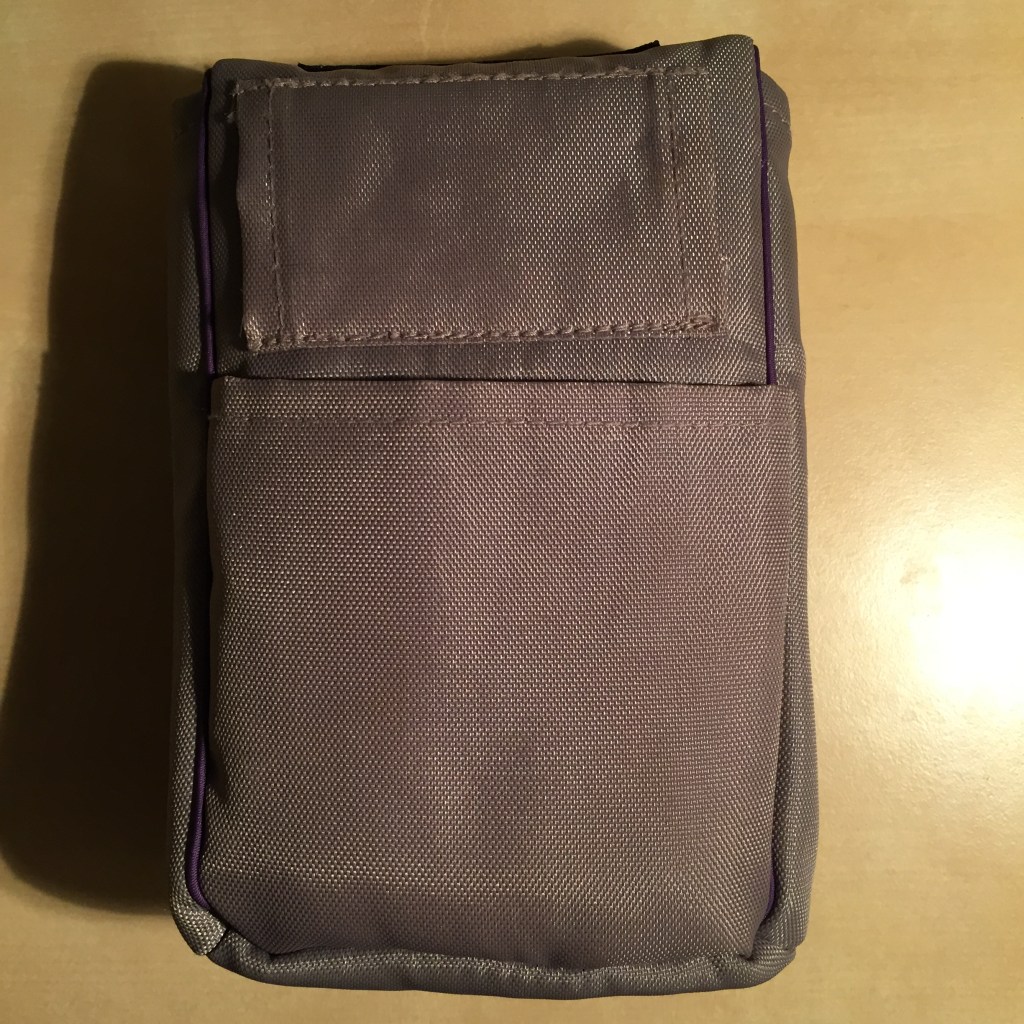
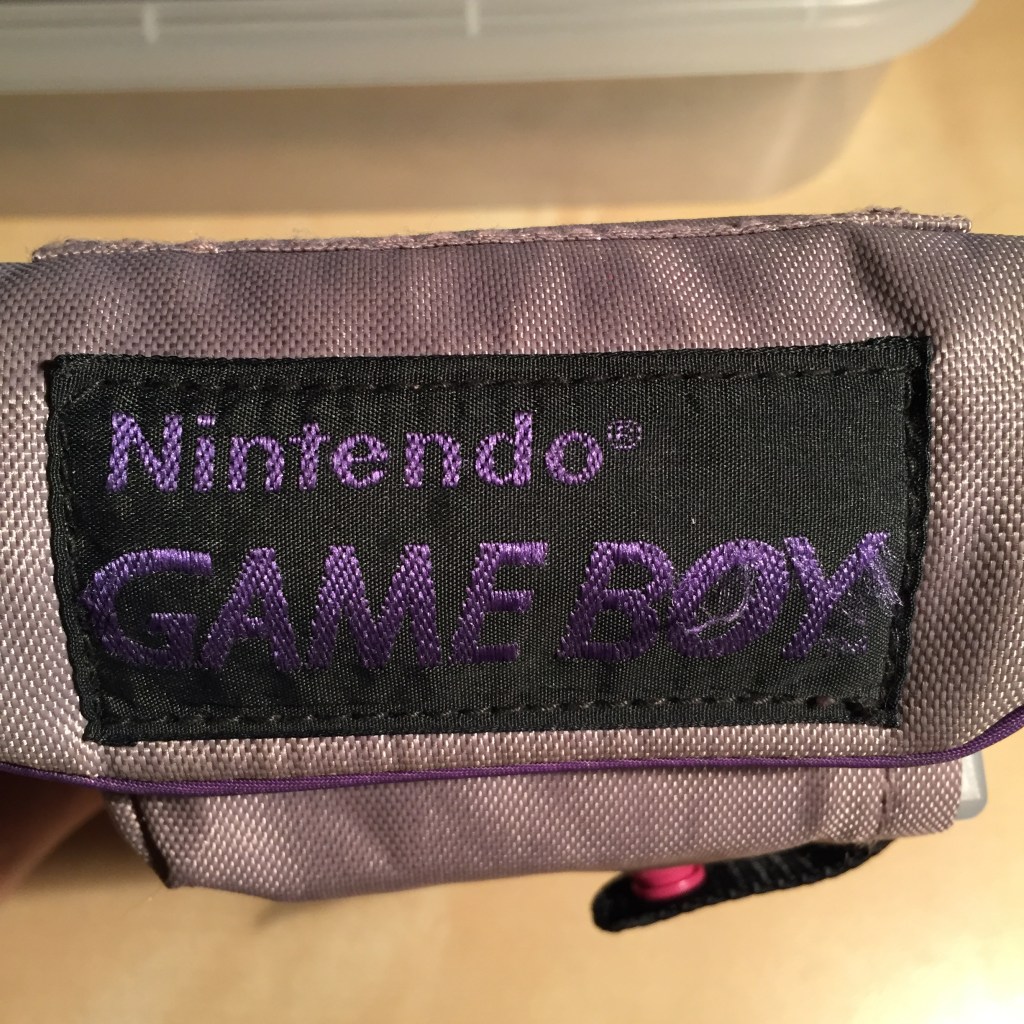
    Eventually, it became a habitual companion everywhere I went, including Italy with my high school Latin Club (though, I didn’t play it on the trip–I let my friend Brian hold it on the trip to play Star Trek, which he had bought to play even though he didn’t own a Game Boy). This nylon belt pouch was my favorite on-the-go accessory for carrying my Game Boy. The main compartment held the Game Boy with a cartridge loaded. The back pouch accommodated extra batteries (stretched) or a manual or sheet of paper with codes. And, the two front click button

    The industrial design of the Game Boy was well thought out. It was as pleasant to hold when I first got it when I was 12 as when I was a teenager or now in middle age. It has a good weight that is balanced. Playing for hours doesn’t fatigue my fingers, hands, or arms.

    As long as the ambient lighting it good, the non-backlit screen is pleasing to watch during extended game play.

    The cartridges and cases are equally designed well. The long oval space above the game’s logo sticker allows for easy grasping of the game cartridge when removing the game. The power switch locks the cartridge into place when turned on.

    Despite how much I love the Game Boy, I think that Nintendo has become a garbage company by the actions of its executives to unfairly bully and litigate against its fans instead of acknowledging fair use rights and finding ways to work with its fans (see TechDirt for details and the long history of Nintendo’s actions toward fans). I suppose it all comes down to control on Nintendo’s part. When the Game Boy first launched, control was built into the product. And, there wasn’t yet a widespread medium for participatory culture that the Internet made possible that could riff and build on new cultural art forms like video games. Now we can but Nintendo tends to take a copyright maximalist approach to their IP and most fans who get caught in the company’s crosshairs don’t have the deep pockets to establish their fair use rights through litigation. It’s for those reasons that I haven’t bought any Nintendo products in many years and I encourage others to do the same. There are good games made by better people on other platforms that are as enriching, engaging, and entertaining.