Category: Pedagogy

  • Working Bibliography for Digital Fabrication Module of “A Cultural History of Digital Technology” at City Tech

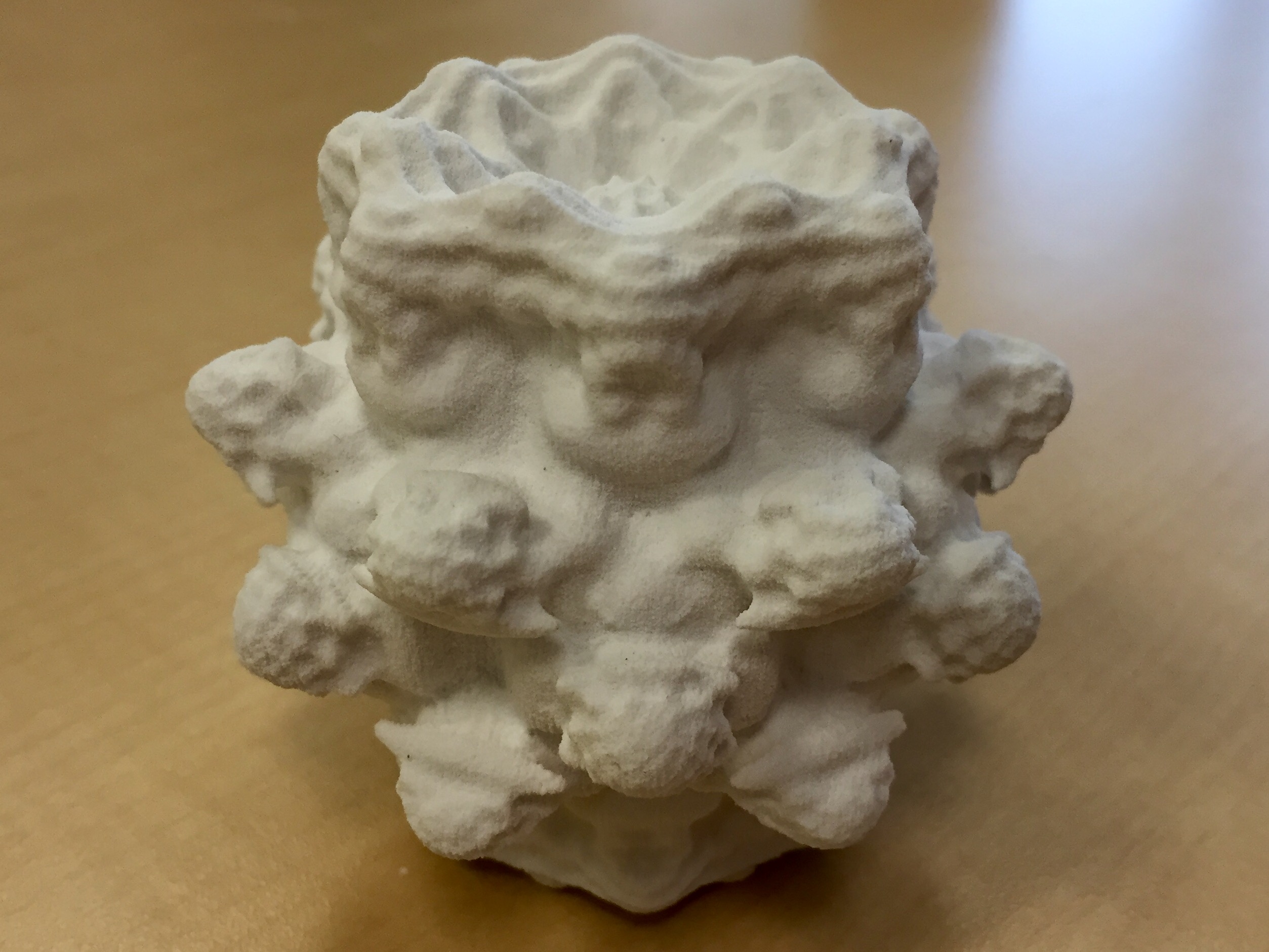
    This is a 3D print of a Mandelbulb that I created with Mandelbulb3D, Fiji, and meshlab.
    This is a 3D print of a Mandelbulb that I created with Mandelbulb3D, Fiji, and meshlab.

    I’m an NEH Fellow for City Tech’s “A Cultural History of Digital Technology” project. It brings together faculty from across the college to design humanities-course modules and a new course proposal that brings the six modules together. I am contributing to the Digital Fabrication Module of the course curriculum that the team will develop.

    I put together the following bibliography of Science Fiction, critical work, video games, and software as part of my contribution to the project and the upcoming curricular work. Following my bibliography, I have included the preliminary viewings and readings for this module (which were selected before I joined the project as a fellow) for those interested in learning more about these topics.

    Working Bibliography

    Fiction: 3D Printing (chronological)

    Heinlein, Robert A. “Waldo.” Astounding Science Fiction Aug. 1942: 9-53.

    Smith, George O. “Identity.” Astounding Science Fiction Nov. 1945. 145-180.

    Russell, Eric F. “Hobbyist.” Astounding Science Fiction Sept. 1947: 33-61.

    Sheckley, Robert. “The Necessary Thing.” Galaxy Science Fiction June 1955. 55-66.

    Clarke, Arthur C. The City and the Stars. Harcourt Brace/SFBC, 1956.

    Stephenson, Neal. The Diamond Age, or, A Young Lady’s Illustrated Primer. Bantam Spectra, 1995.

    Gibson, William. All Tomorrow’s Parties. Viking Press, 1999.

    Brin, David. Kiln People. Tor, 2002.

    Marusek, David. Counting Heads. Tor, 2005. [expansion of his novella We Were Out of Our Minds with Joy, 1995].

    Doctorow, Cory. “Printcrime.” Nature vol. 439 (12 Jan. 2006): 242.

    Sterling, Bruce. “Kiosk.” The Magazine of Fantasy and Science Fiction Jan. 2007: 68-113.

    Doctorow, Cory. Makers. HarperVoyager, 2009.

    Stross, Charles. Rule 34. Ace Books, 2011.

    Hamilton, Peter F. Great North Road, Macmillan UK, 2012.

    Gibson, William. The Peripheral. G.P. Putnam’s Sons, 2014.

    Newman, Emma. Planetfall. Roc, 2015.

    Robinson, Kim Stanley. Aurora. Orbit, 2015.


    Fiction: Fractals (chronological)

    Langford, David. “Blit.” Interzone Sept./Oct. 1988: 40-42.

    Rucker, Rudy. “As Above, So Below.” in The Microverse. Ed. Byron Preiss. Bantam Spectra, 1989. 334-340.

    Shiner, Lewis. “Fractal Geometry.” in The Edges of Things. WSFA Press, 1991. 59.

    Anthony, Piers. Fractal Mode. Ace/Putnam, 1992. [second novel in his Mode series].

    Di Filippo, Paul. “Fractal Paisleys.” The Magazine of Fantasy and Science Fiction May 1992: 72-106.

    Charnock, Graham. “On the Shores of a Fractal Sea.” in New Worlds 3. Ed. David Garnett. Gollancz, 1993. 125-136.

    Luckett, Dave. “The Patternmaker.” in The Patternmaker: Nine Science Fiction Stories. Ed. Lucy Sussex. Omnibus Books, 1994. 3-18.

    Pickover, Clifford A. Chaos in Wonderland: Visual Adventures in a Fractal World. St. Martin’s Press, 1994.

    Turzillo, Mary A. “The Mandelbrot Dragon.” in The Ultimate Dragon. Eds. Keith DeCandido, John Betancourt, and Byron Preiss. Dell, 1995. 167-172.

    Williamson, Jack. “The Fractal Man.” 1996. in At the Human Limit. Haffner Press, 2011. 187-204.

    Leisner, William. “Gods, Fate, and Fractals.” in Strange New Worlds II. Eds. Dean Wesley Smith, John J. Ordover, and Paula M. Block. Pocket Books, 1999. 166-183.

    Thompson, Douglas. Ultrameta: A Fractal Novel. Eibonvale Press, 2009.

    Patrice, Helen. “Mandelbrot Universe.” Dreams & Nightmares no. 92 (May 2012): n.p.

    Strasser, Dirk. “The Mandelbrot Bet.” in Carbide Tipped Pens: Seventeen Tales of Hard Science Fiction. Eds. Ben Bova and Eric Choi. Tor, 2014. 365-378.


    Non-Fiction (chronological)

    Snow, C.P. The Two Cultures and the Scientific Revolution. Cambridge UP, 1961.

    Rucker, Rudy. “In Search of a Beautiful 3D Mandelbrot Set.” RudyRucker.com. 5-14 Sept. 1988 (revised 24 Sept. 2009).

    Hayles, N. Katherine. How We Became Posthuman: Virtual Bodies in Cybernetics, Literature, and Informatics. University of Chicago Press, 1999.

    Thurs, Daniel Patrick. “Tiny Tech, Transcendent Tech: Nanotechnology, Science Fiction, and the Limits of Modern Science Talk.” Science Communication vol. 29, no. 1 (Sept. 2007): 65-95.


    Video Games (chronological)

    Rescue on Fractalus!, https://en.wikipedia.org/wiki/Rescue_on_Fractalus! and https://archive.org/details/a2_Rescue_on_Fractalus_1985_Lucasfilm_Games_cr_Blade.

    .kkrieger, http://web.archive.org/web/20120204065621/http://www.theprodukkt.com/kkrieger.

    No Man’s Sky, http://www.no-mans-sky.com.


    Software

    KPT Bryce 1.0 (1994), https://www.youtube.com/watch?v=MY8GPU5osx4 and https://www.youtube.com/watch?v=ZGLjPYgs8bg and http://kai.sub.blue/en/frax.html and http://fract.al.

    The Mandelbrot Set in HTML5 Canvas and Javascript, http://tilde.club/~david/m/.

    Julia Map, http://juliamap.googlelabs.com/.

    FracalLab, http://hirnsohle.de/test/fractalLab/.

    Paul Lutus, The Mandelbrot Set, http://arachnoid.com/mandelbrot_set/index.html.


    Preliminary Viewings

    NOVA, “Fractals: Hunting the Hidden Dimension,” http://www.pbs.org/wgbh/nova/physics/hunting-hidden-dimension.html.

    Benoit Mandelbrot TED Talk, Fractals and the Art of Roughness, https://www.ted.com/talks/benoit_mandelbrot_fractals_the_art_of_roughness?language=en.


    Preliminary Readings

    Devlin, Keith. The Language of Mathematics: Making the Invisible Visible. W. H. Freeman, 1998. 188-220.

    Flake, Gary. The Computational Beauty of Nature: Computer Explorations of Fractals, Chaos, Complex Systems, and Adaptation. MIT Press, 1998. 59- 110.

    Mandelbrot, Benoit. The Fractal Geometry of Nature. W.H. Freeman, 1983. 4- 38.

    Mandelbrot, Benoit. Fractals: Form, Chance, and Dimension. W.H. Freeman, 1977.

    Samuel, Nina. ed. The Islands of Benoit Mandelbrot: Fractals, Chaos, and the Materiality of Thinking. Bard Graduate Center, 2012.18-56.
     

  • How to Build a Cardboard-Box Raspberry Pi 2, Model B Computer with a 7″ Touchscreen LCD Display with Some Thoughts on Pedagogy

    IMG_1049
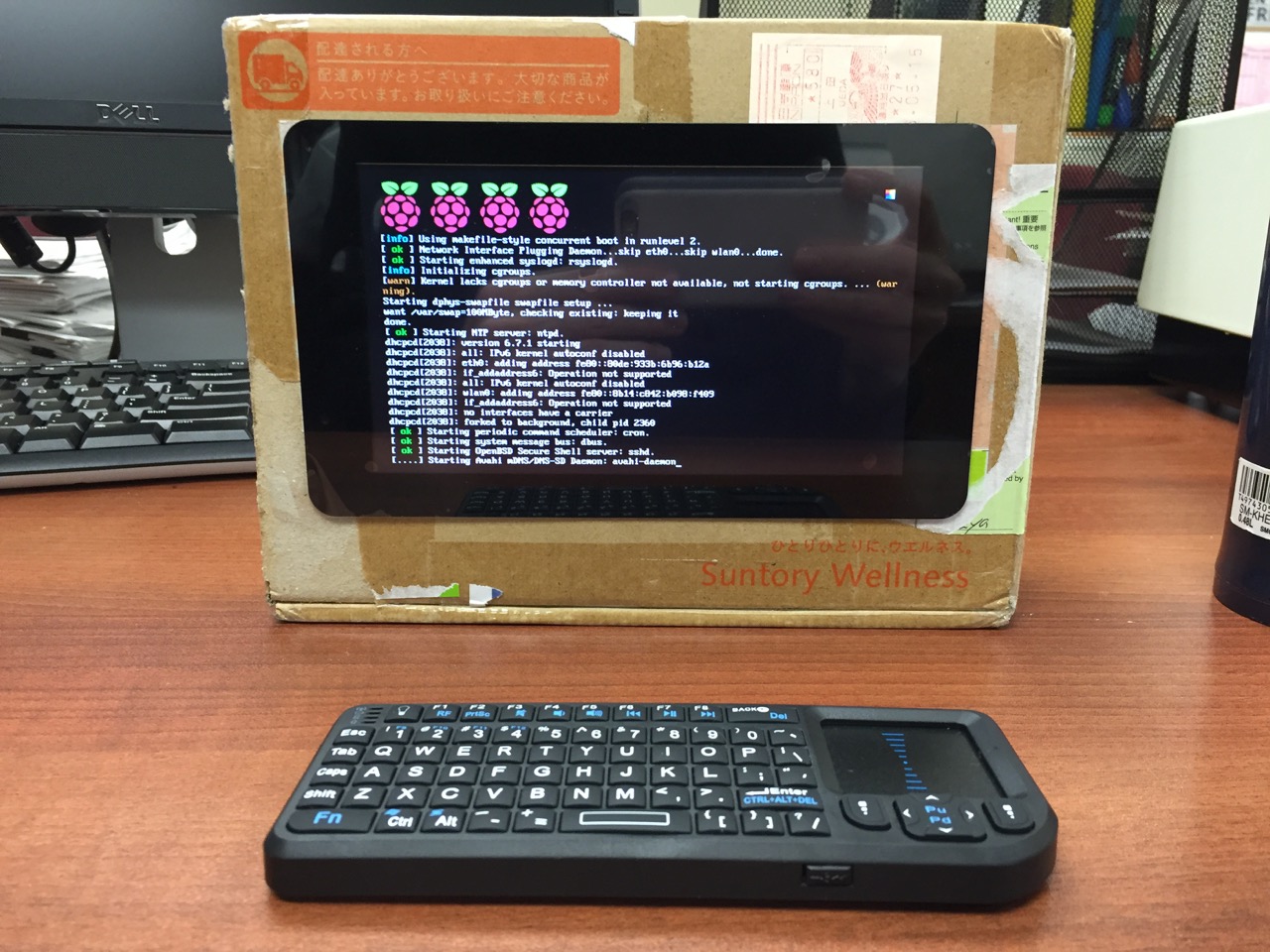
    My Cardboard Box Raspberry Pi 2, Model B with 7″ Touchscreen Display and wireless keyboard.
    This guide demonstrates how to install Raspbian on a Raspberry Pi 2, Model B, connect the Raspberry Pi to a 7″ Touchscreen LCD, and integrate the computer and touchscreen in a cardboard box (which doubles as a case and storage for battery, keyboard, and cables).

    I got interested in the Raspberry Pi, because it has many capabilities for learning: kitting out a computer, installing a Linux-based operating system, programming interactive software, and building with electronics. In particular, I am interested in how the Raspberry Pi can be used to create interactive software and be a platform for digital storytelling (which figures into one of the upcoming classes that I will be teaching at City Tech–ENG 3760 Digital Storytelling).

    IMG_1013
    My haul from Tinkersphere.

    Instead of buying my kit online, I wanted to shop local to get started. Originally, I considered going to Microcenter, which is near where I live in Brooklyn. Unfortunately, they were sold out of the touchscreen display that I wanted. Instead, Y and I took a train into Manhattan and visited Tinkersphere where one of their helpful staff guided me to the things on my digital grocery list. I purchased Tinkersphere’s pre-made Raspberry Pi 2 kit, a 7″ Touchscreen LCD display, a battery pack (in retrospect, I should have purchased two of these, which I will discuss below), and a mono speaker with 1/8″ plug.

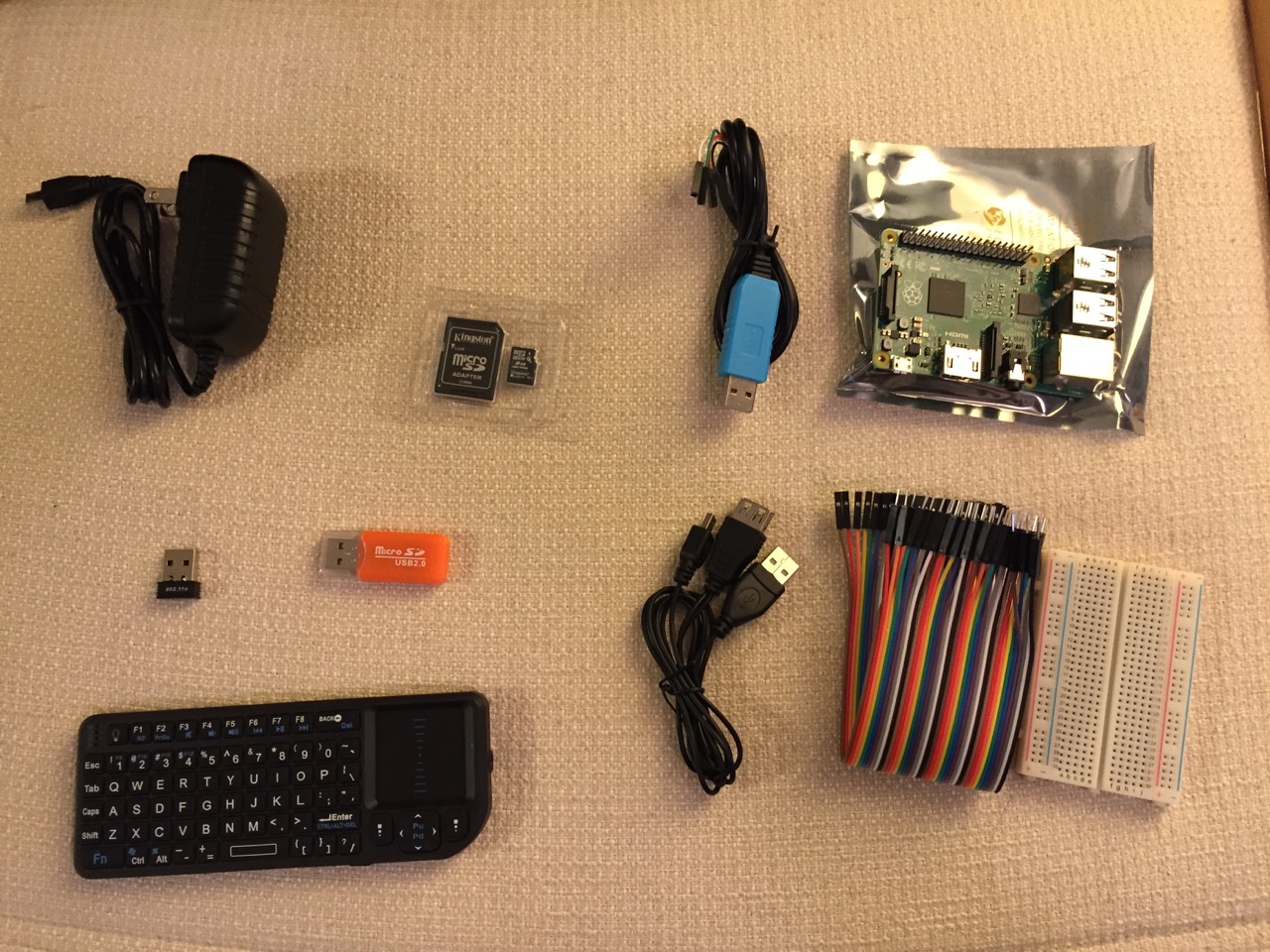
    Tinkersphere's Raspberry Pi 2, Model B kit contents.
    Contents of Tinkersphere’s Raspberry Pi 2, Model B kit.

    Tinkersphere’s Raspberry Pi 2, Model B kit includes all of the basic equipment needed to begin working with this tiny computing platform. The kit is built around the Raspberry Pi 2, Model B computer with a 900MHz quad-core ARM Cortex-A7 CPU, 1GB RAM, 4 USB ports, 40 GPIO pins, HDMI port, ethernet port, combined 3.5mm audio jack and composite video, camera interface (CSI), display interface (DSI), micro SD card slot, and a VideoCore IV 3D graphics core. Additionally, the kit includes a wireless keyboard/trackpad, USB wifi adapter, 8GB micro SD card with NOOBS (the easy to use Raspbian installer), USB micro SD card reader, breadboard, wires, and 5v power supply.

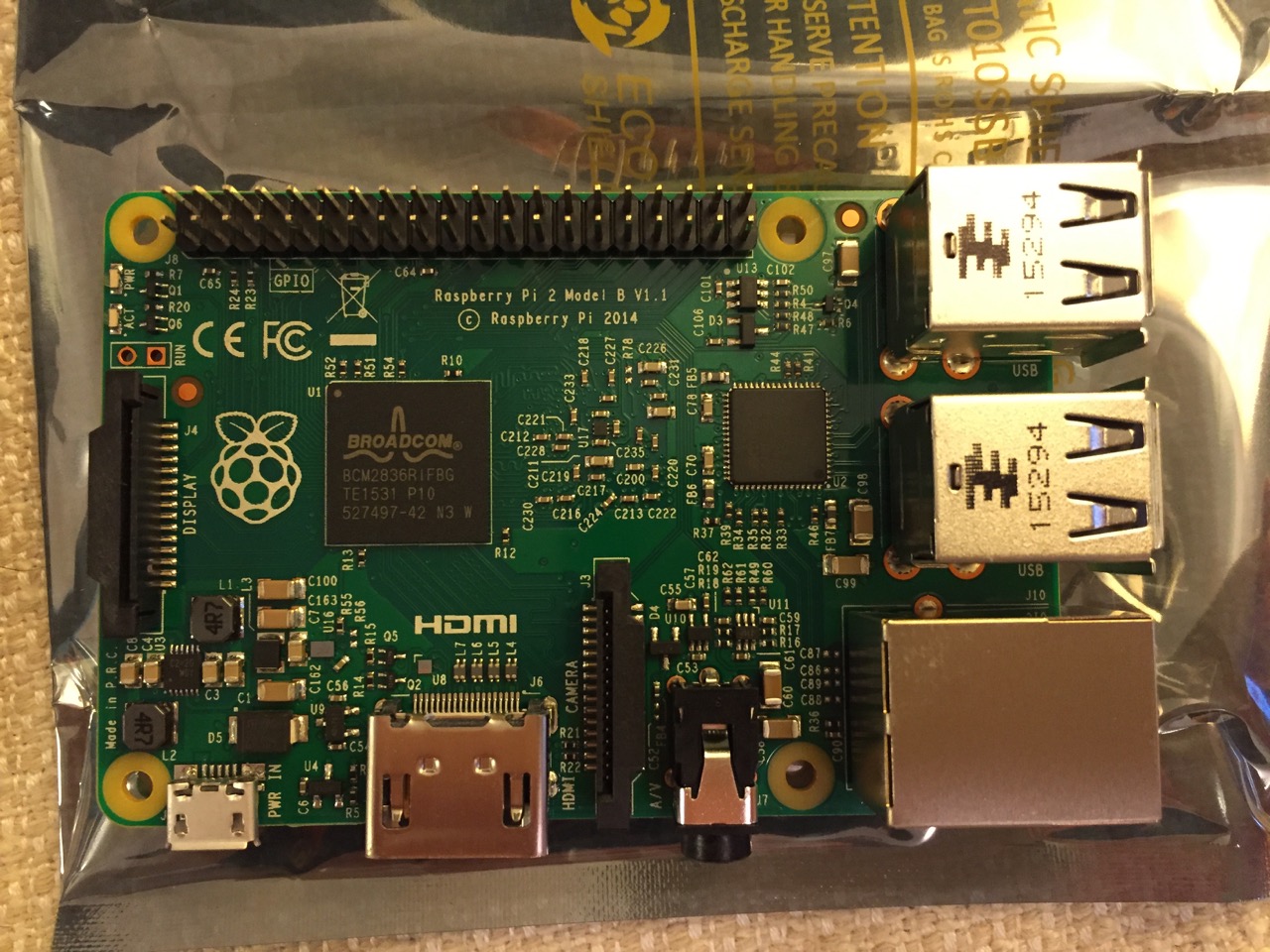
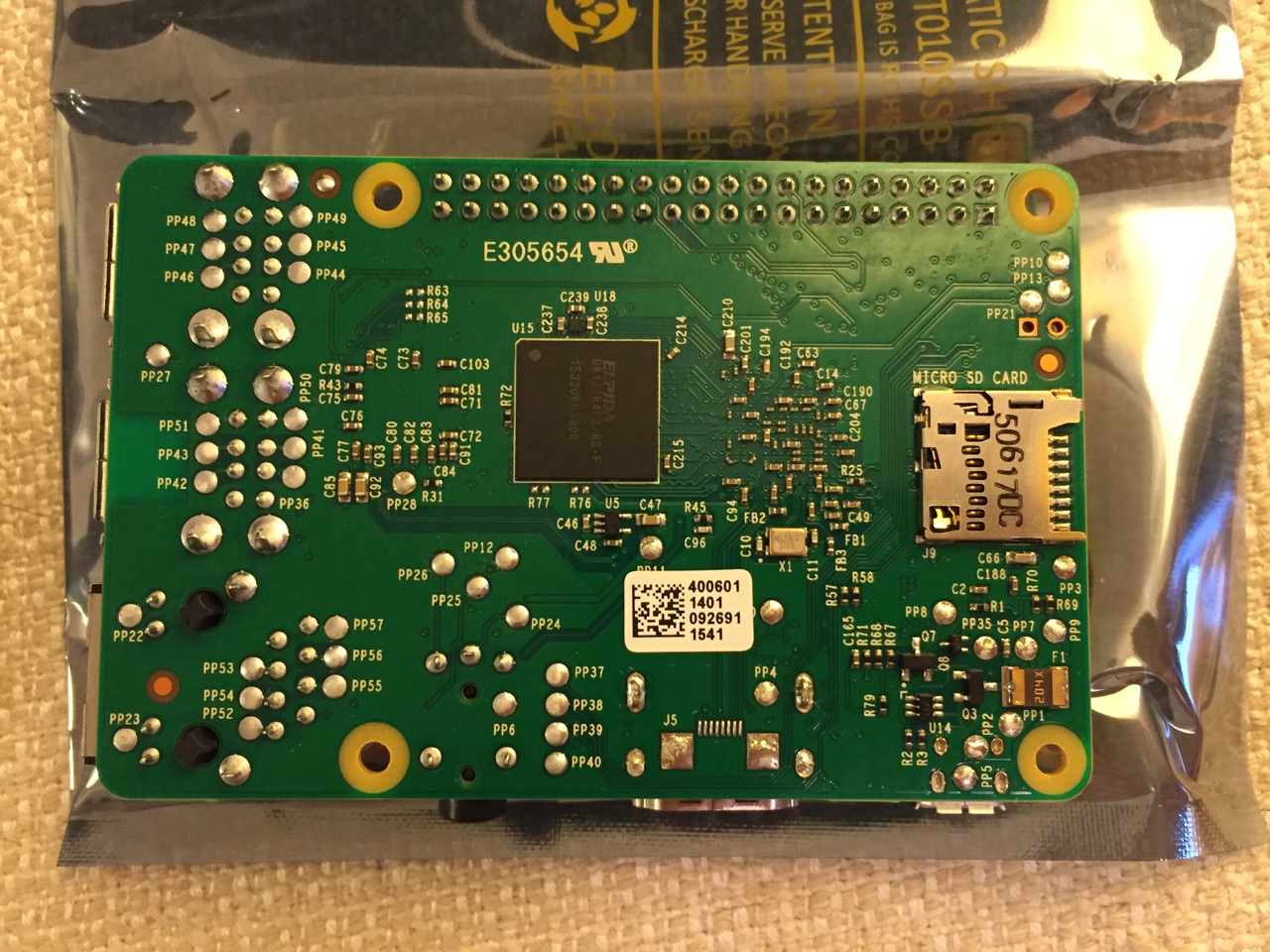
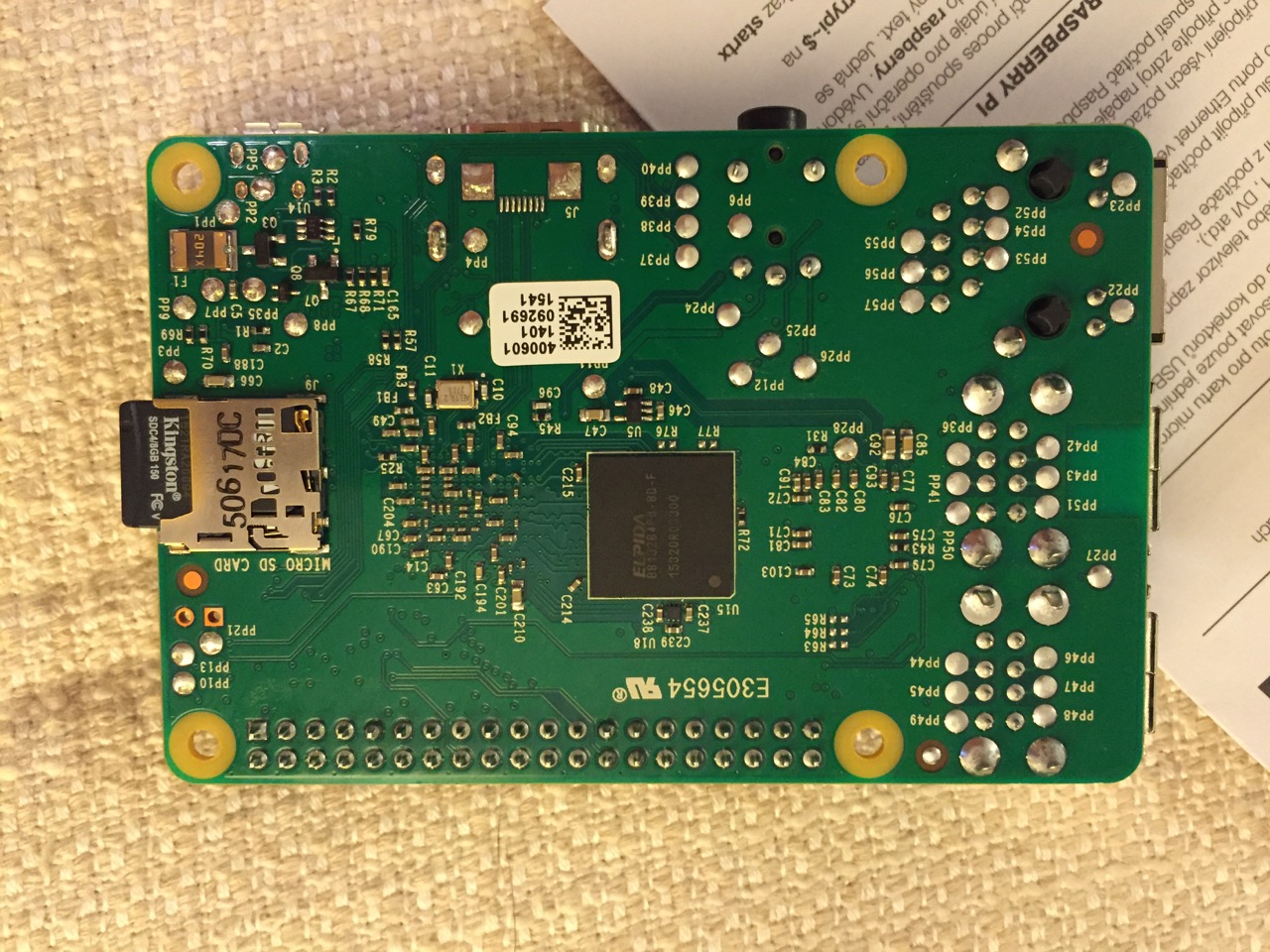
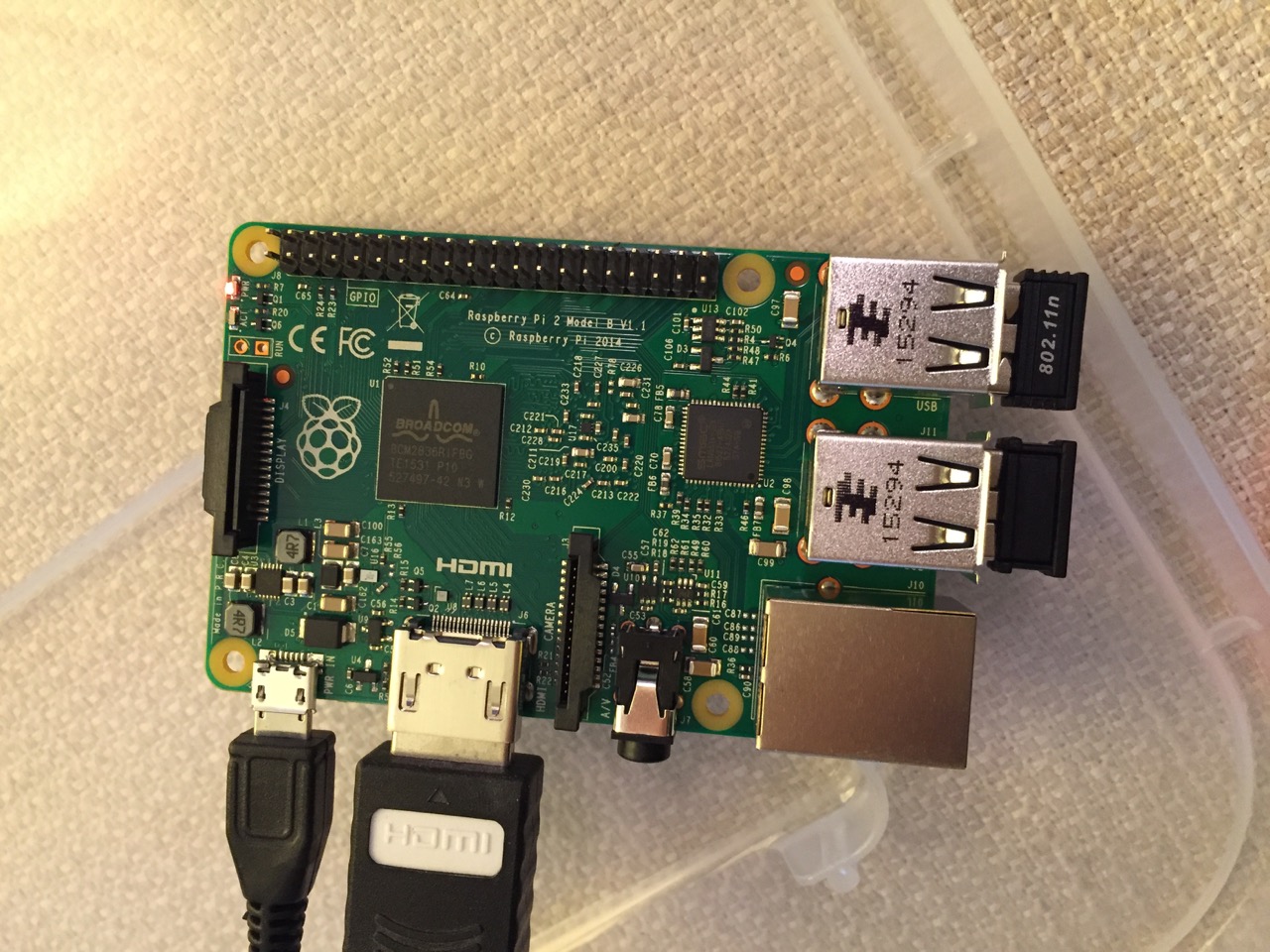
    To begin the setup, we should orient ourselves with the Raspberry Pi. This is the Raspberry Pi 2, Model B computer viewed from the top and the bottom:

    Raspberry Pi 2, Model B, Top View.
    Raspberry Pi 2, Model B, Top View.


    Raspberry Pi 2, Model B, Bottom View.
    Raspberry Pi 2, Model B, Bottom View.

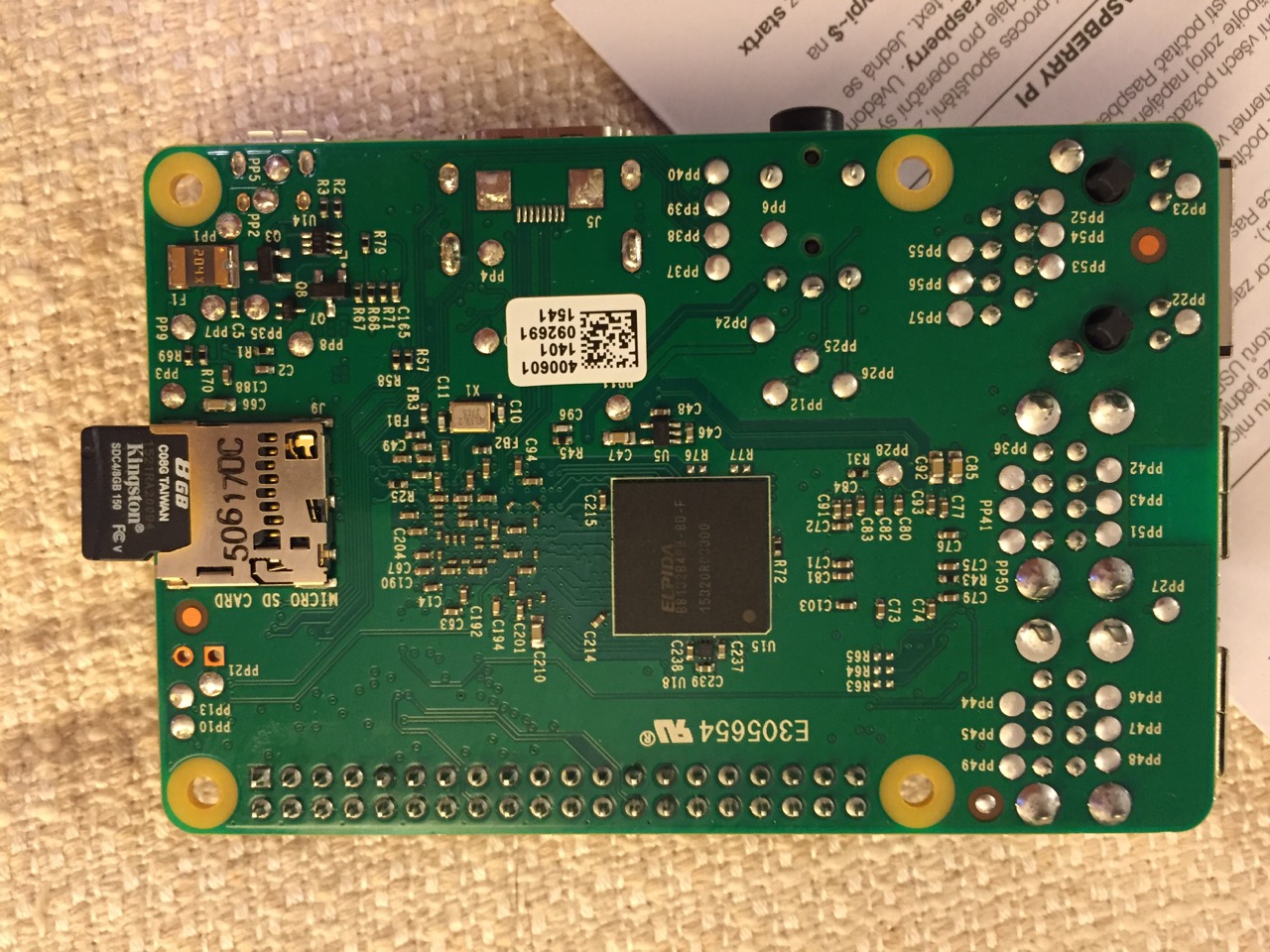
    The first thing that we need to do is insert the micro SD card with a copy of NOOBS pre-copied. If you need a copy of NOOBS for your own micro SD card, you can download it from here and follow the instructions here for formatting and copying the files from a Mac or PC to the micro SD card. The Raspberry Pi’s micro SD card slot is located on the bottom side of its circuit board. A micro SD card goes in only one way which allows you to press it in. If correct, the card should “click” and stay as seen in the photos below.


    Insert the micro SD card like this.
    Insert the micro SD card like this.


    Press the micro SD card in and it will stay in place with a "click."
    Press the micro SD card in and it will stay in place with a “click.”


    The Raspberry Pi connected from left to right: micro USB power input from 5v power supply, HDMI, wireless keyboard/trackpad receiver, and wifi adapter.
    The Raspberry Pi connected from left to right: micro USB power input from 5v power supply, HDMI, wireless keyboard/trackpad receiver, and wifi adapter.

    Next, connect the Raspberry Pi to a display (such as a TV) with HDMI, and plug in the wifi adapter and wireless keyboard into two available USB ports. Alternatively, you can connect the Raspberry Pi to the Internet via ethernet and to a wired keyboard and mouse. Then, connect it to the 5v power supply. As soon as it is plugged in, the Raspberry Pi is turned on and operational. It will begin to boot from the micro SD card’s NOOBS installer, which will guide you through the process of installing Raspbian. See the images below to see what this looks like and what choices you should make for a basic installation.

    NB: While we could have connected the 7″ Touchscreen Display to the Raspberry Pi before beginning the installation, the current version of NOOBS would not detect and use the touchscreen display. It is necessary for Raspbian to be installed and updated before the 7″ Touchscreen Display will be recognized and used as the Raspberry Pi 2’s primary display.


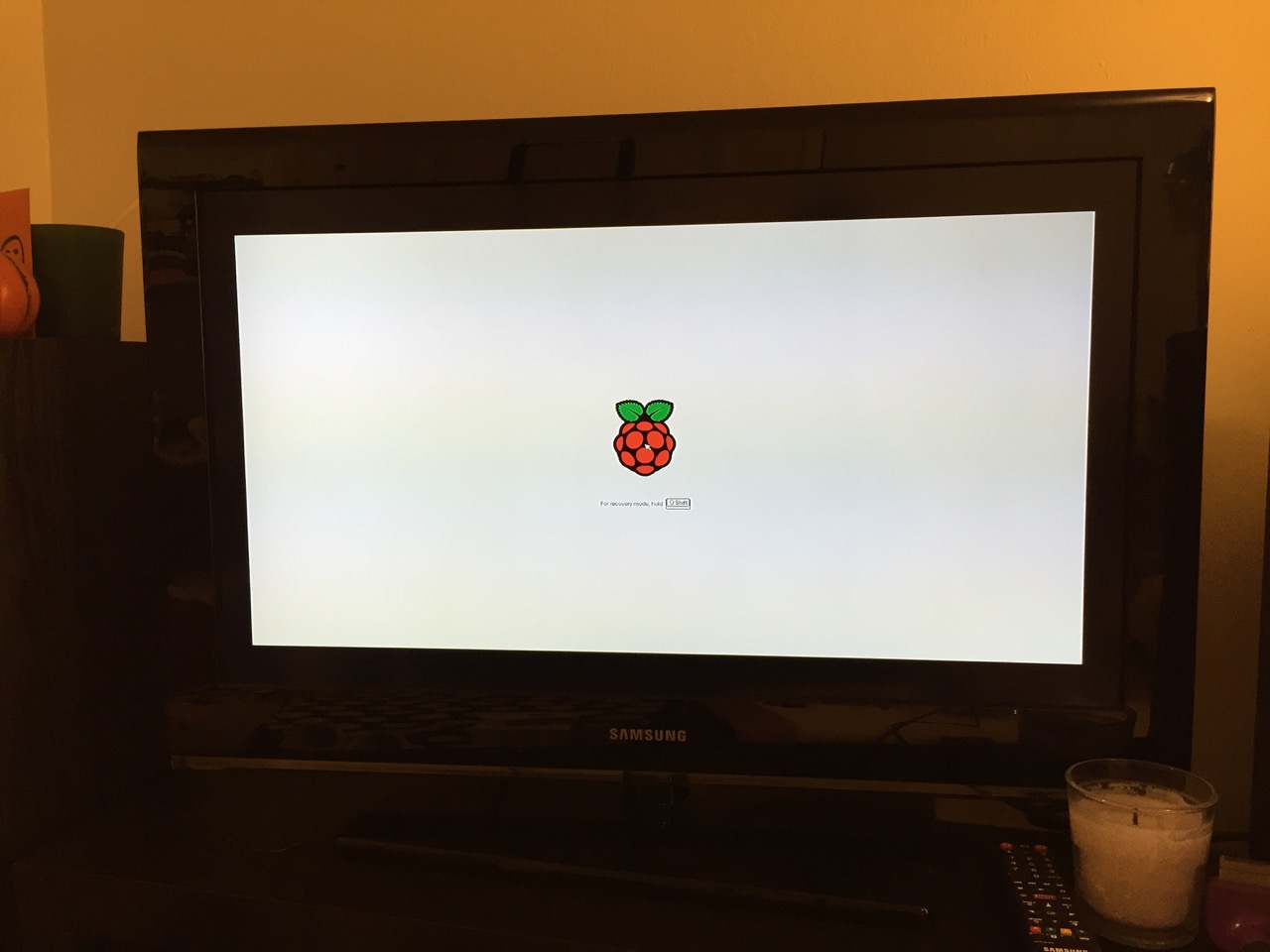
    NOOBS boot screen with the Raspberry Pi logo.
    NOOBS boot screen with the Raspberry Pi logo.


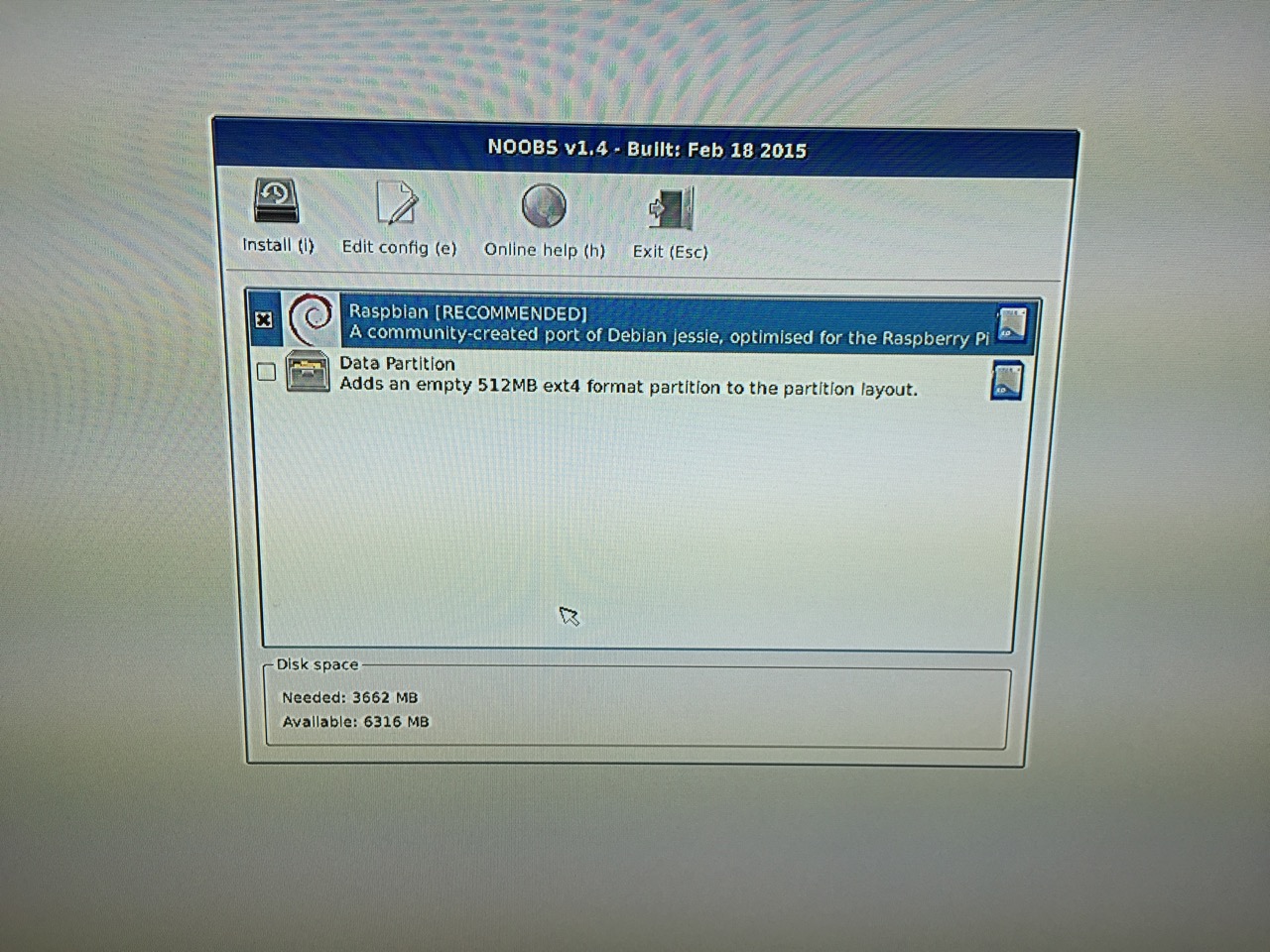
    The NOOBS installer asks what you would like installed. Place a check next to Raspbian.
    The NOOBS installer asks what you would like installed. Place a check next to Raspbian.


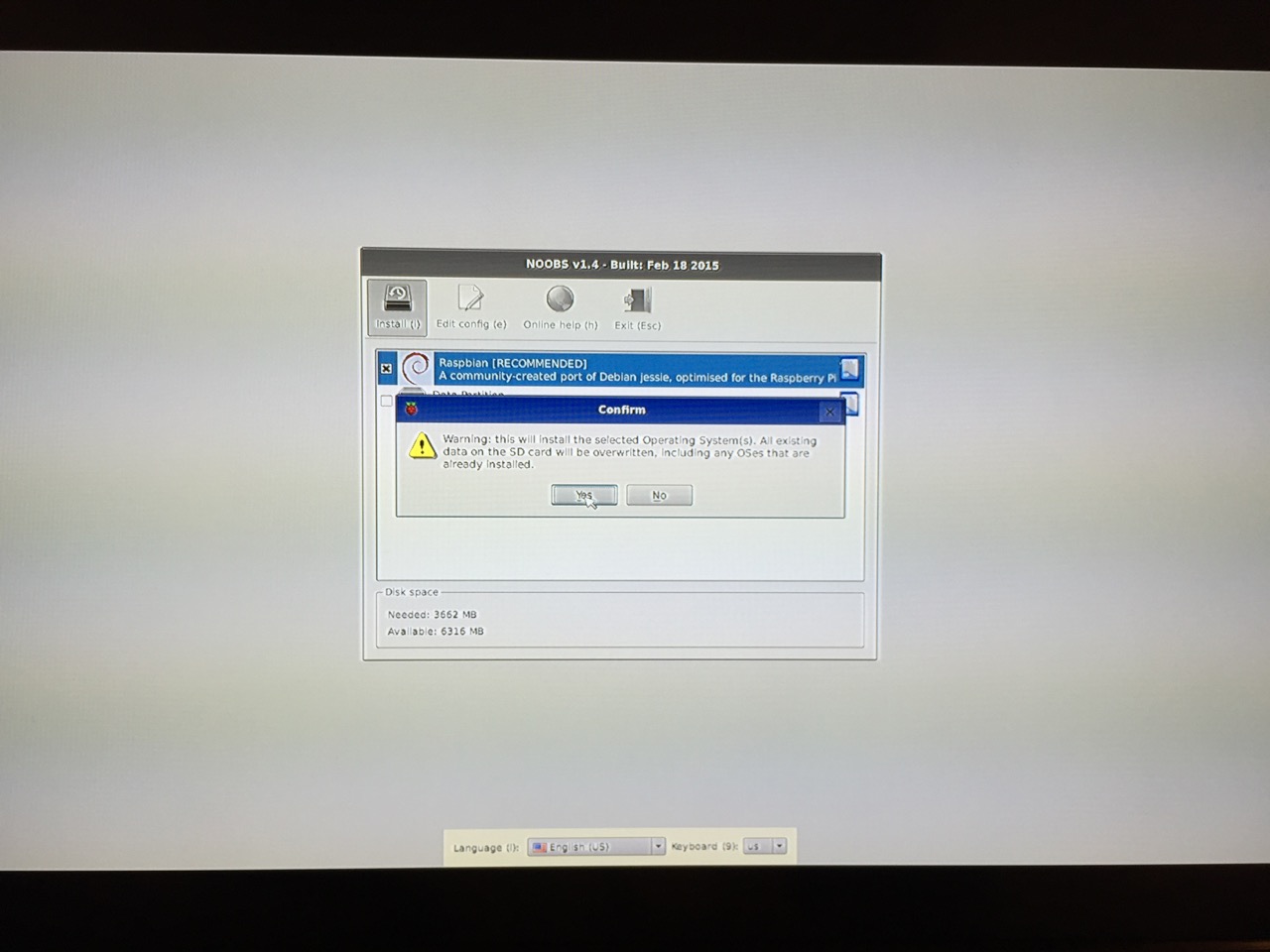
    The NOOBS installer will ask that you confirm your choice. If you haven't already done so, choose US keyboard and locationalization at the bottom of the screen before proceeding. Then, confirm.
    The NOOBS installer will ask that you confirm your choice. If you haven’t already done so, choose US keyboard and locationalization at the bottom of the screen before proceeding. Then, confirm.


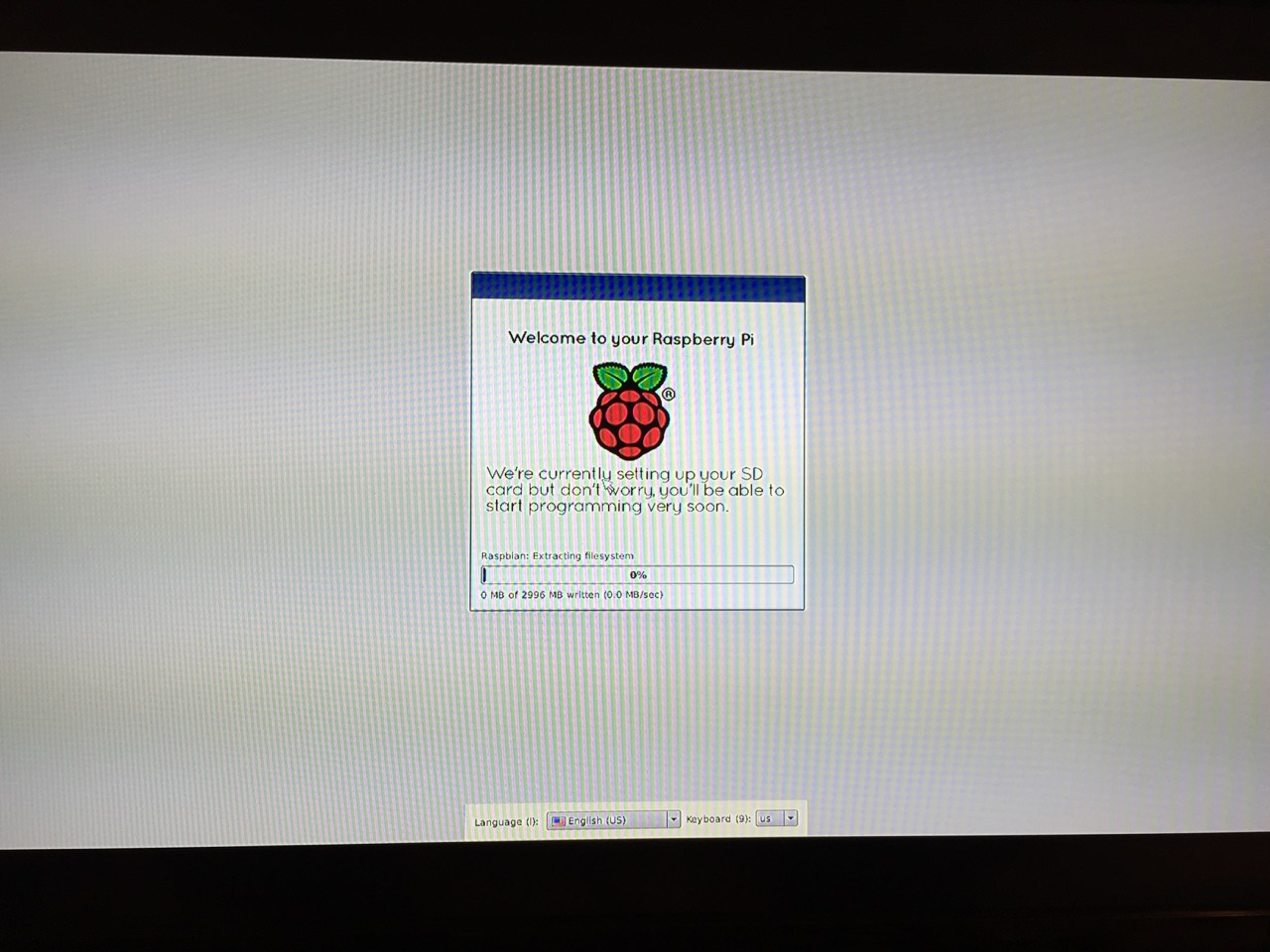
    The installation will proceed and complete. With the micro SD card that I have and without overclocking the Raspberry Pi, it took about 20-30 minutes for the installation to complete.
    The installation will proceed and complete. With the micro SD card that I have and without overclocking the Raspberry Pi, it took about 20-30 minutes for the installation to complete.

    After rebooting following the installation, the raspi-config tool launches. This program gives the user easy access to many configuration options for the Raspberry Pi including how it should boot (automatically login and load xwindows, or boot to a command prompt login), and if you would like to overclock the Raspberry Pi for additional performance (use this option with caution–you will likely want to add heat sinks and increased ventilation if you overclock the system). I configured my Raspberry Pi to operate at normal speed and to boot to the command line with login.

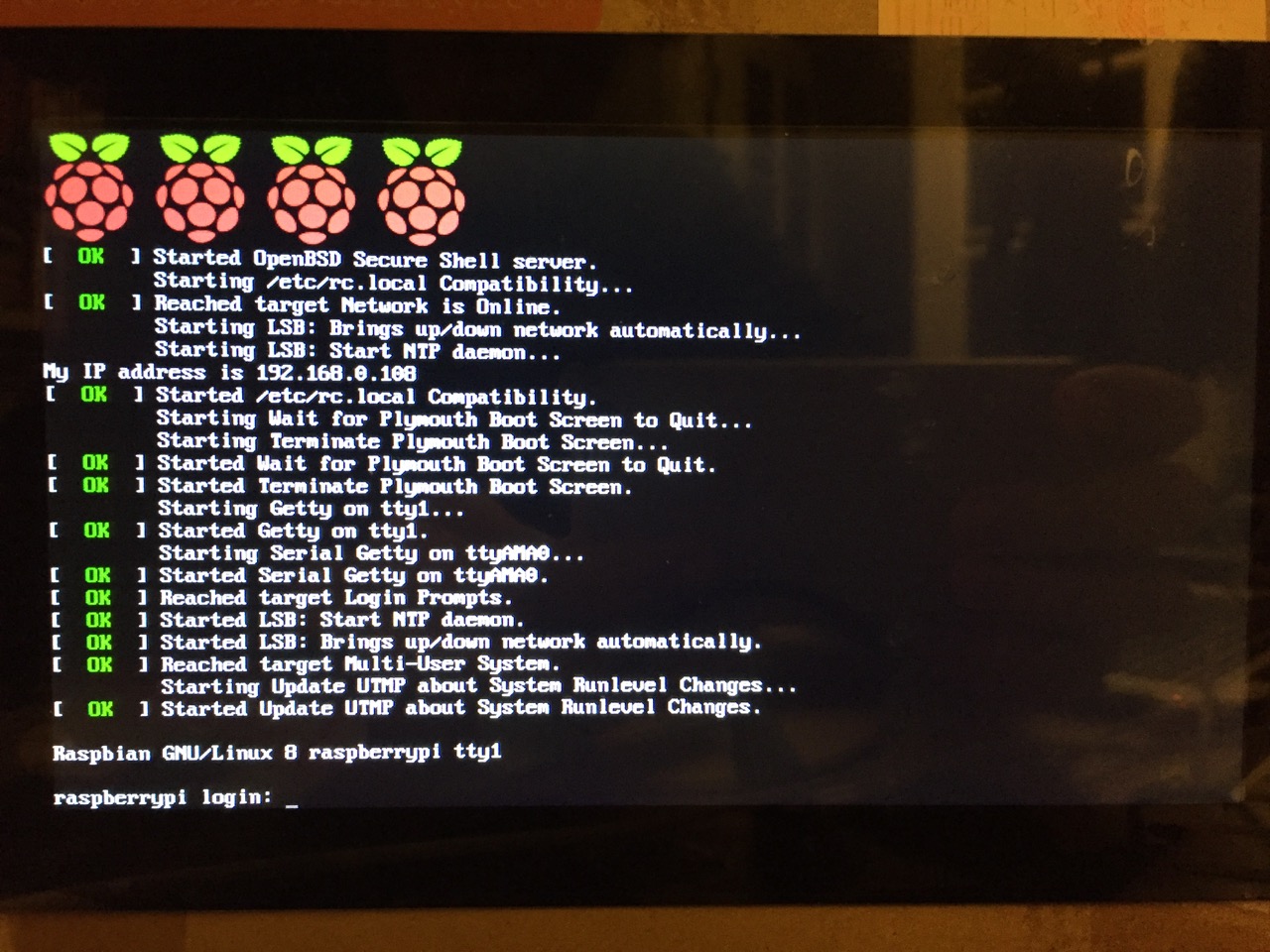
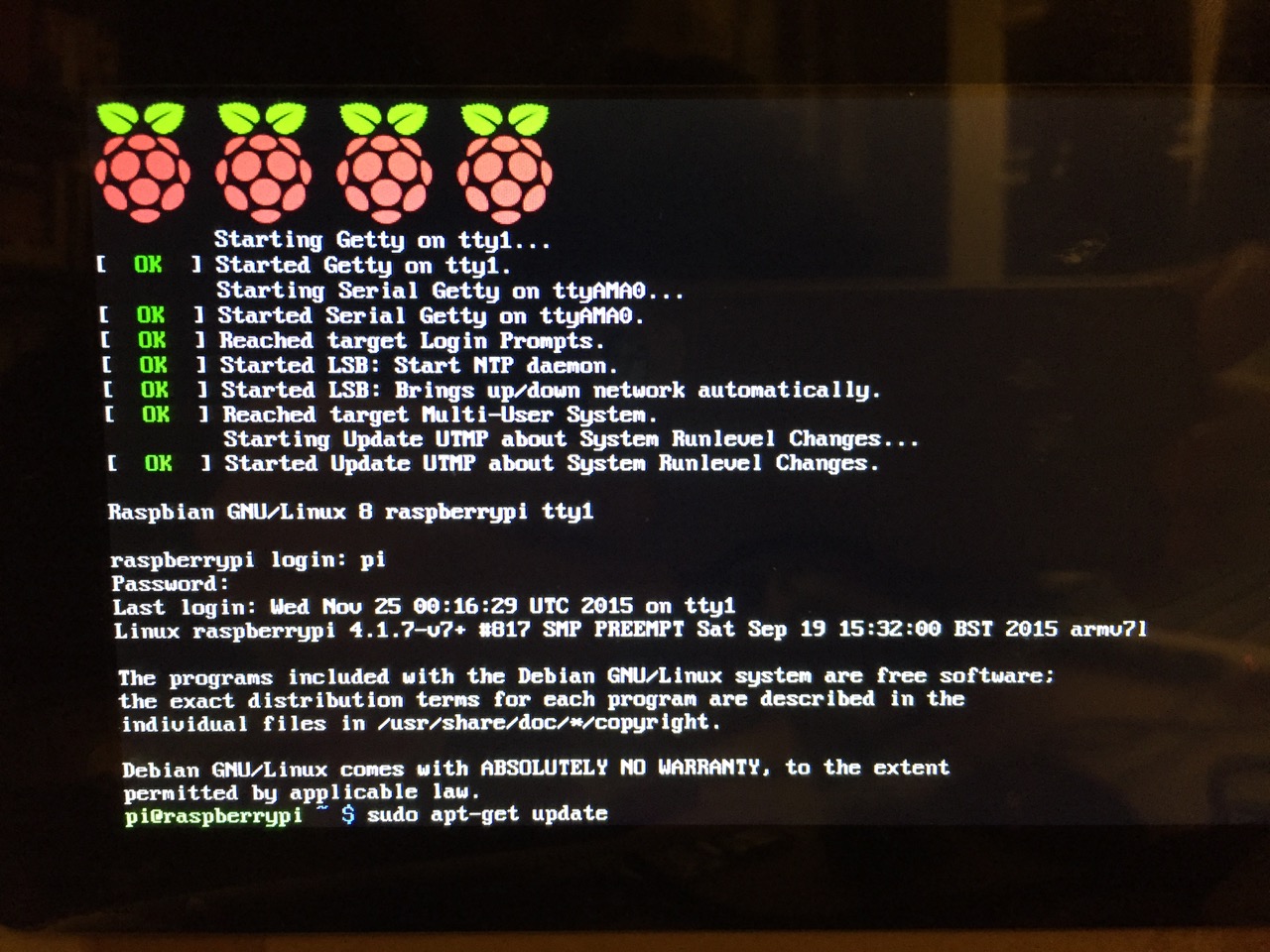
    After booting into Raspbian, the first thing that you see is the login prompt.
    After booting into Raspbian, the first thing that you see is the login prompt.


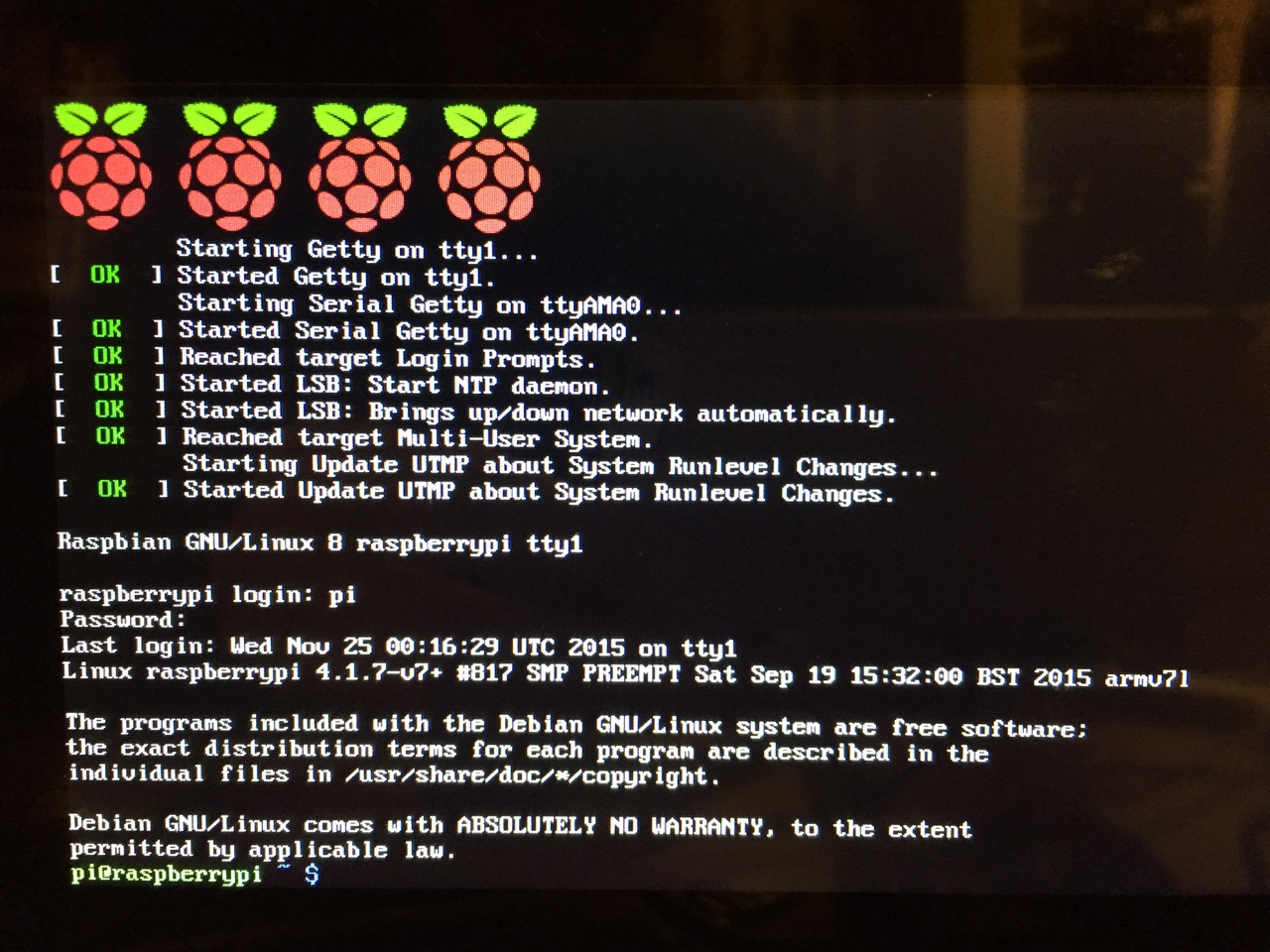
    The default login for the Raspberry Pi is username “pi” and password “raspberry”. Type each of these credentials in when asked followed by pressing the Enter key. Then, you will find yourself at the command line interface (CLI).

    Raspbian's CLI.
    Raspbian’s CLI.

    After logging in, you have a Linux command prompt (here is a list of helpful file system commands).

    Before setting up the 7″ Touchscreen Display, we need to update Raspbian. To do this, first type: “sudo apt-get update”. If prompted to install anything because it will take a certain amount of space, simply type “y” and press “Enter”.

    Entering a command at the prompt in Raspbian's CLI.
    Entering a command at the prompt in Raspbian’s CLI.

    To explain what this command means, “sudo” runs a command as superuser, or the user that is all powerful on a linux system. The command that you want to run as superuser is “apt-get,” which is a package manager, or a manager of software packages that run on your Raspberry Pi. “update” is a modifier for “apt-get,” and its purpose is to tell “apt-get” to update its index of available software packages with what is stored on the remote software repository (where your Raspberry Pi is downloading its software from).

    After the update operation completes and you return to the command prompt, type: “sudo apt-get upgrade”. Similarly, agree to the prompts with “y” and “Enter”. The “upgrade” modifier to “apt-get” tells it to upgrade the software based on what it learned when updating its index with the previous command. Thus, when you run these two commands, you should run the update command first (learn) and the upgrade command second (act on what was learned).

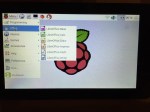
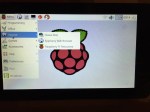
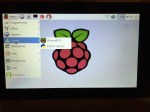
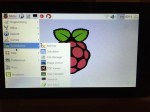
    To launch into Raspbian’s X11, type “startx”. Inside X11 or xwindows, you will find many of the GUI-based software that really makes the Raspberry Pi sing: Scratch, Python, Mathematica, and more. If you have never used X11, it works a lot like Windows 95/98 except that the Start Menu bar is at the top of the screen instead of at the bottom and “Start” is replaced by “Menu.” Some quick launch apps are directly available to be launched with a single click from the start bar (such as Terminal, the Epiphany web browser, and Wolfram Mathematica) while all of the installed X11 programs are available from the “Menu.” Below are images of the Raspbian desktop and navigating through some of the default programs available.

    To easily install additional software, you can install the Synaptic Package Manager, which simplifies finding and installing software packages by wrapping package management in an easy-to-use GUI. From inside X11, open Terminal and type “sudo apt-get install synaptic”. This will install Synaptic, which you can open by clicking on Menu > Preferences > Synaptic Package Manager (more info on this and other Raspberry Pi stuff on Neil Black’s website).

    When you done browsing around, you can click on the and choose to shut down. After a few moments, your display should show a blank screen and the activity lights on the back of the Raspberry Pi (red and green) should only be showing a solid red. At that point, unplug the micro USB 5v power adapter. If you are ready to install the 7″ Touchscreen Display, unplug the HDMI cable, too.

    In the images below, I demonstrate how to assemble the 7″ Touchscreen Display and connect it to the Raspberry Pi. I followed the excellent instructions available on the official Raspberry Pi website, which also details how to install the Matchbox virtual keyboard for using the touchscreen without a keyboard.

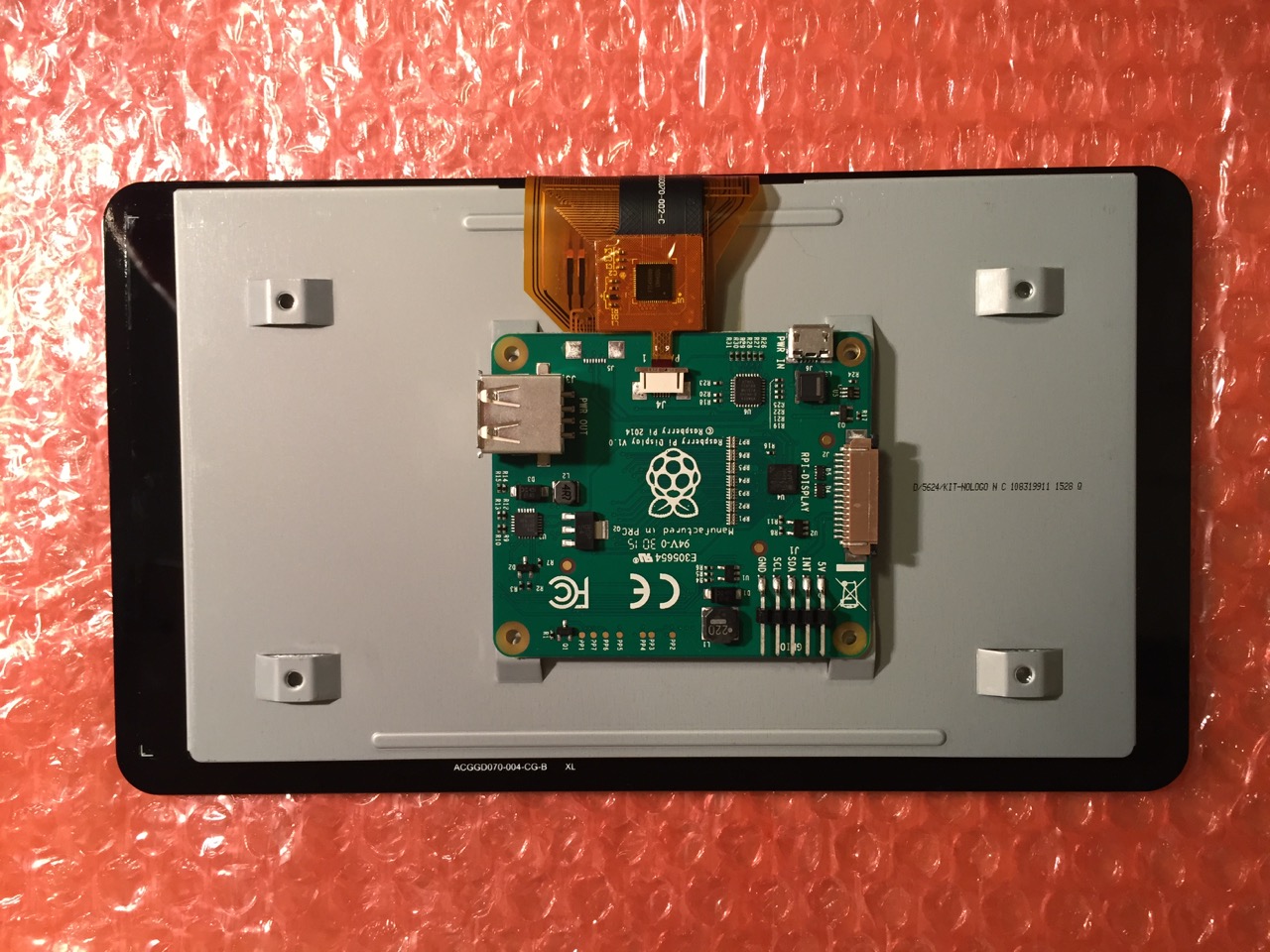
    To begin connecting the 7" Touchscreen Display to the Raspberry Pi, place the screen facing down.
    To begin connecting the 7″ Touchscreen Display to the Raspberry Pi, place the screen facing down.


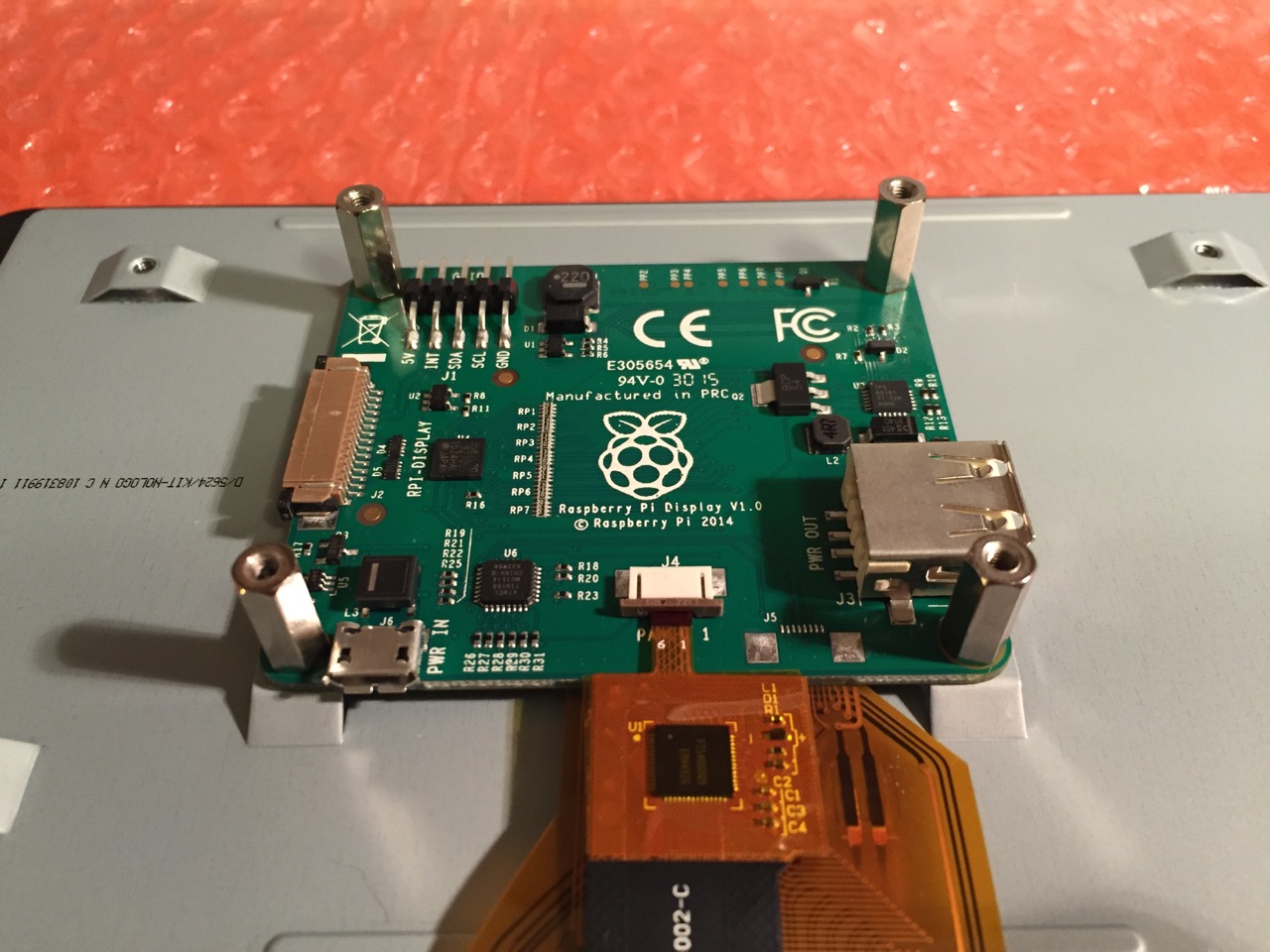
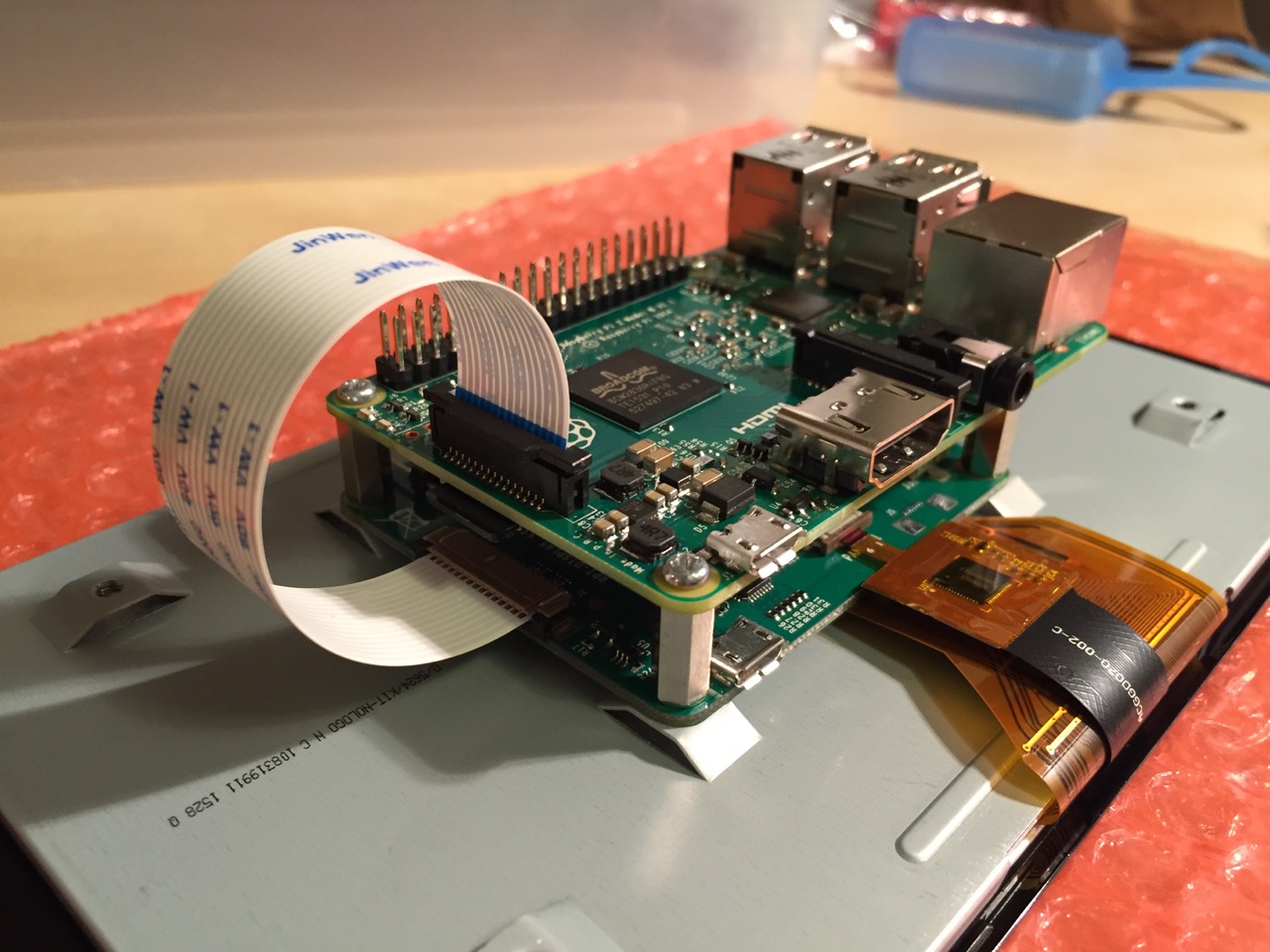
    Screw in the standoff posts to hold the display controller card to the display. Connect the display and touchscreen wires as described on the official installation guide.
    Screw in the standoff posts to hold the display controller card to the display. Connect the display and touchscreen wires as described on the official installation guide.


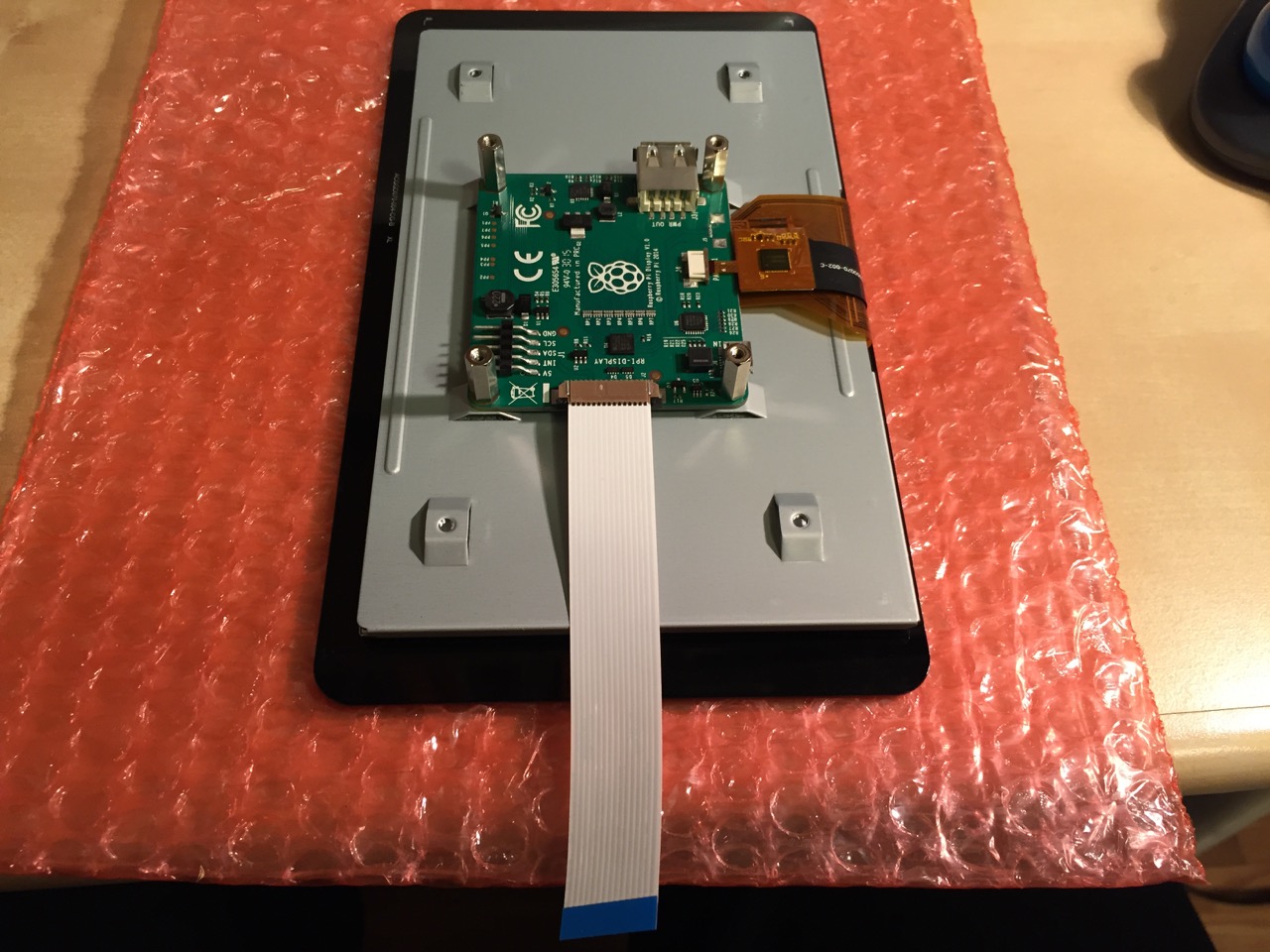
    Insert the display cable to the video input on the controller card.
    Insert the display cable to the video input on the controller card.


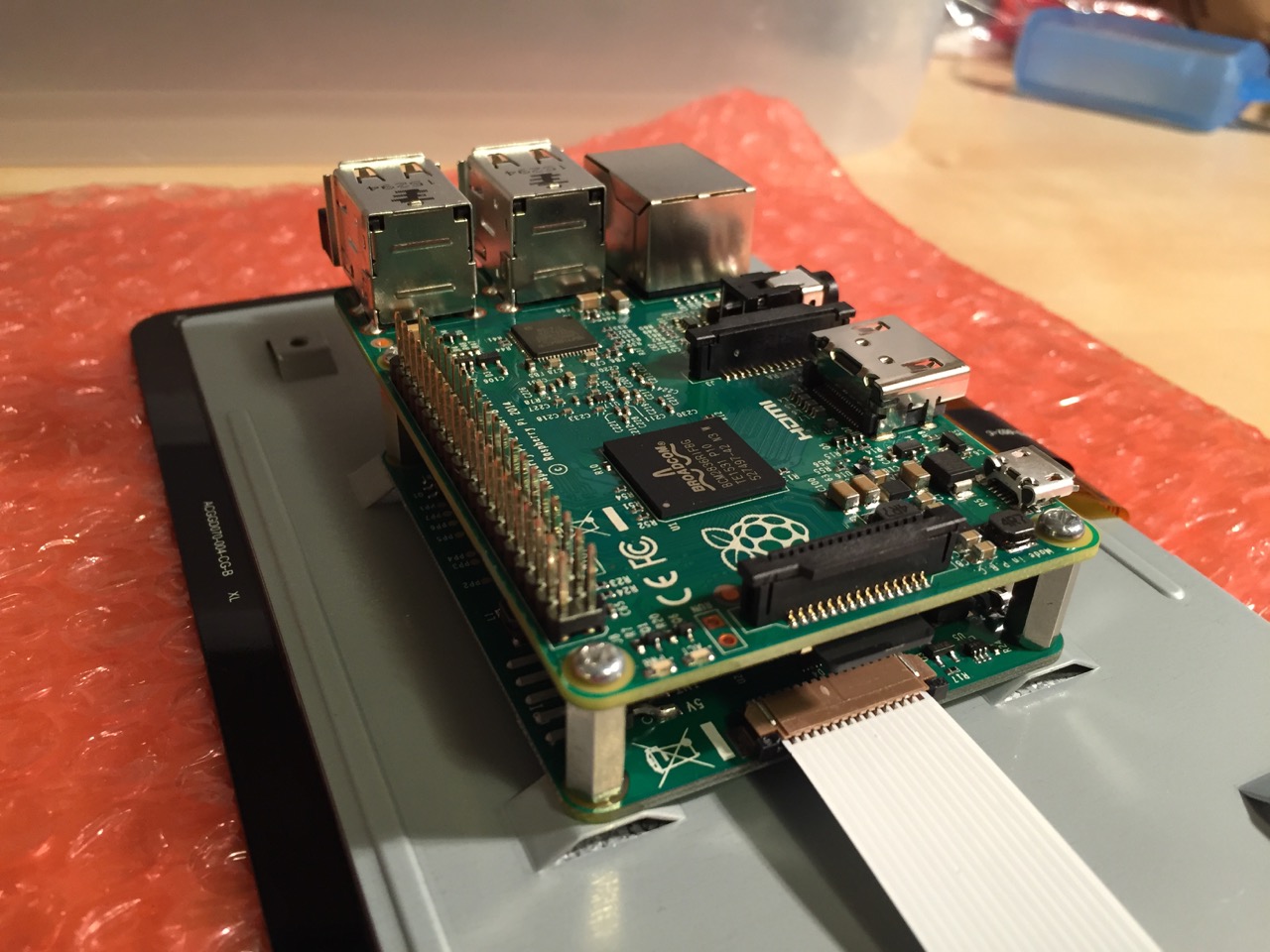
    Place the Raspberry Pi above the display controller card and attach with the supplied screws that screw into the top of the standoff posts.
    Place the Raspberry Pi above the display controller card and attach with the supplied screws that screw into the top of the standoff posts.


    Connect the other end of the display cable into the output connector on the Raspberry Pi.
    Connect the other end of the display cable into the output connector on the Raspberry Pi.


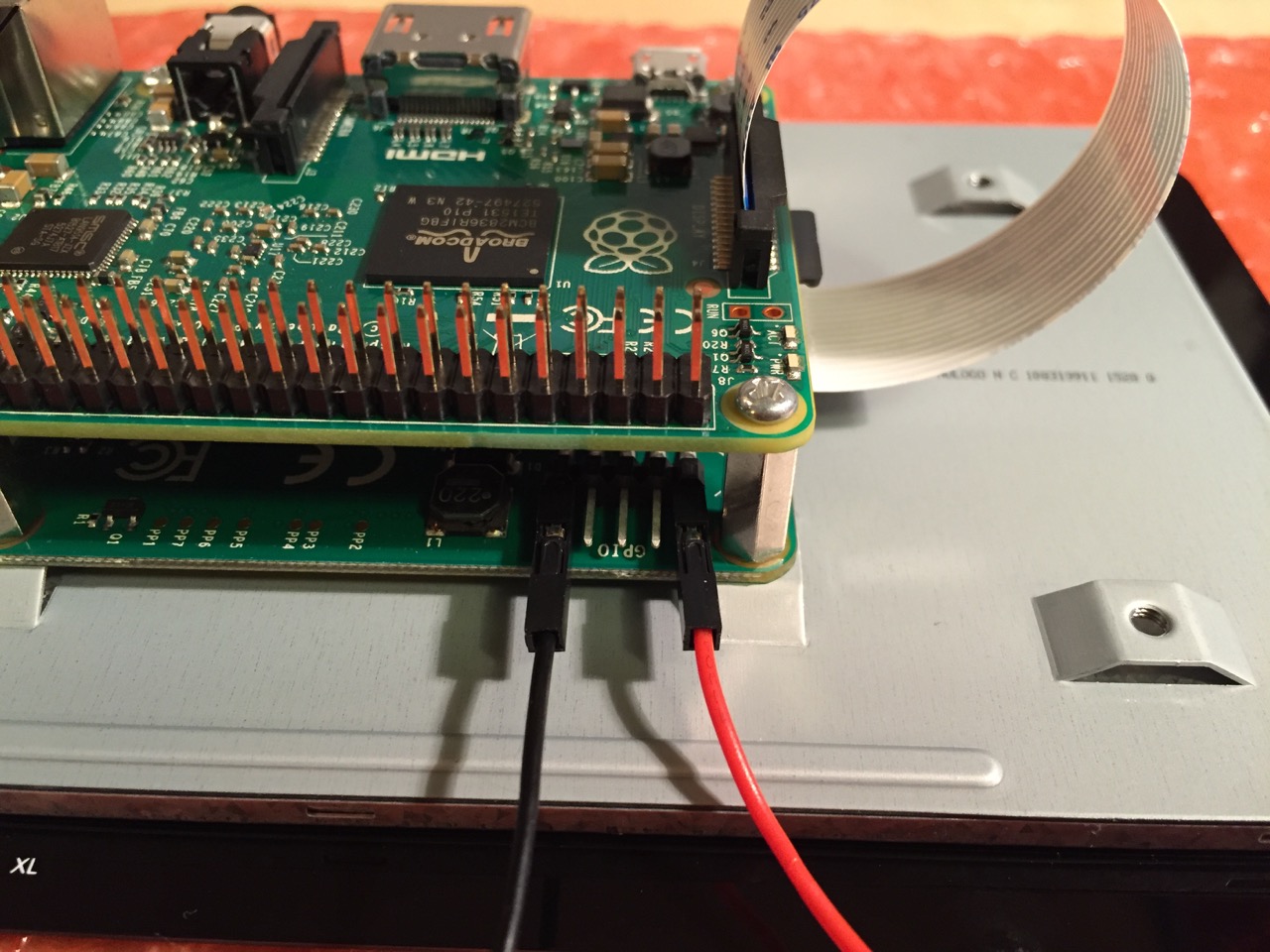
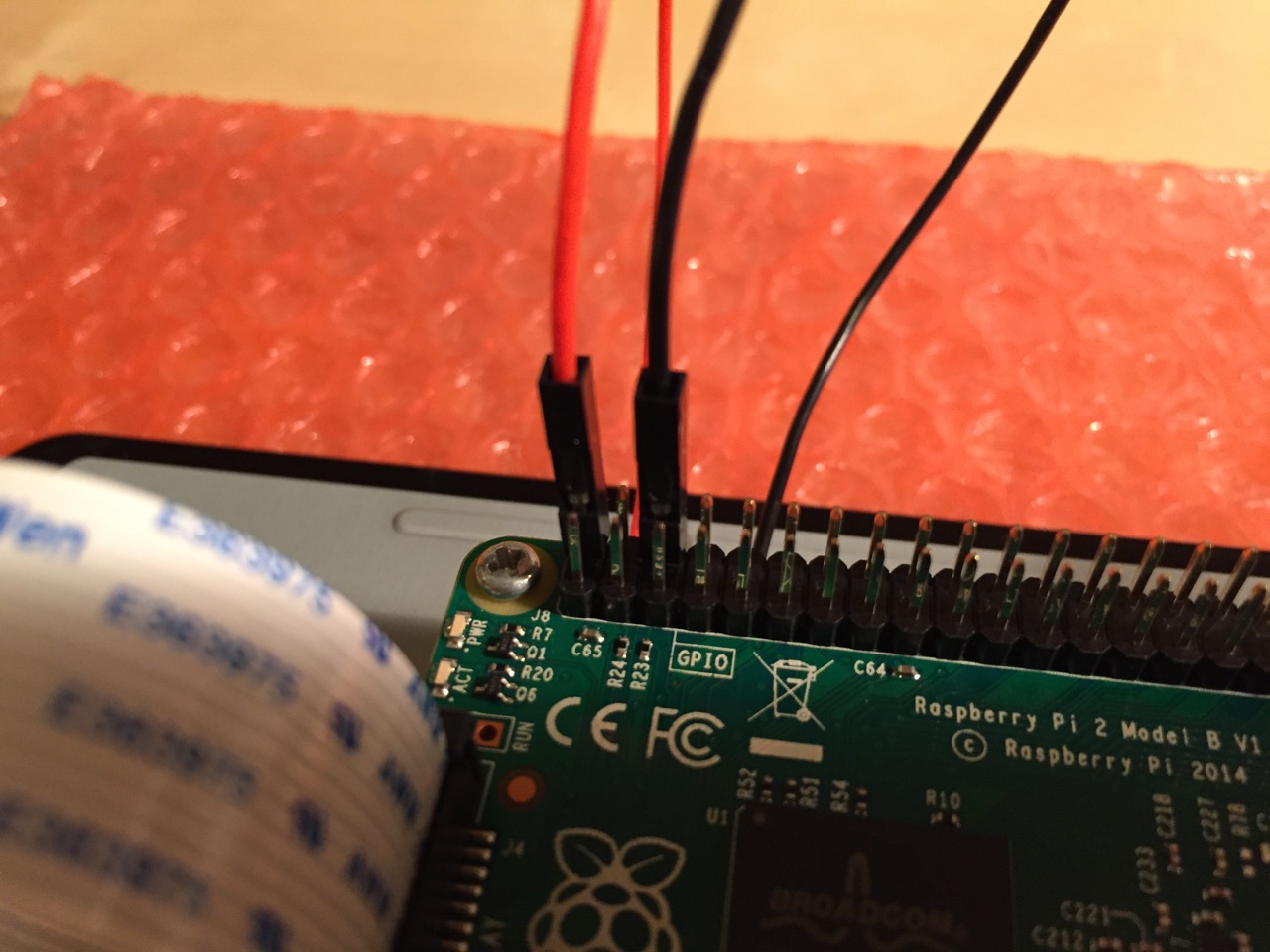
    Use the supplied jumper wires to connect connect the power input of the display controller card...
    Use the supplied jumper wires to connect connect the power input of the display controller card…


    ...to the power output leads on the GPIO pins on the Raspberry Pi. This is one of three possible powering configurations--the other two involve USB.
    …to the power output leads on the GPIO pins on the Raspberry Pi. This is one of three possible powering configurations–the other two involve USB.


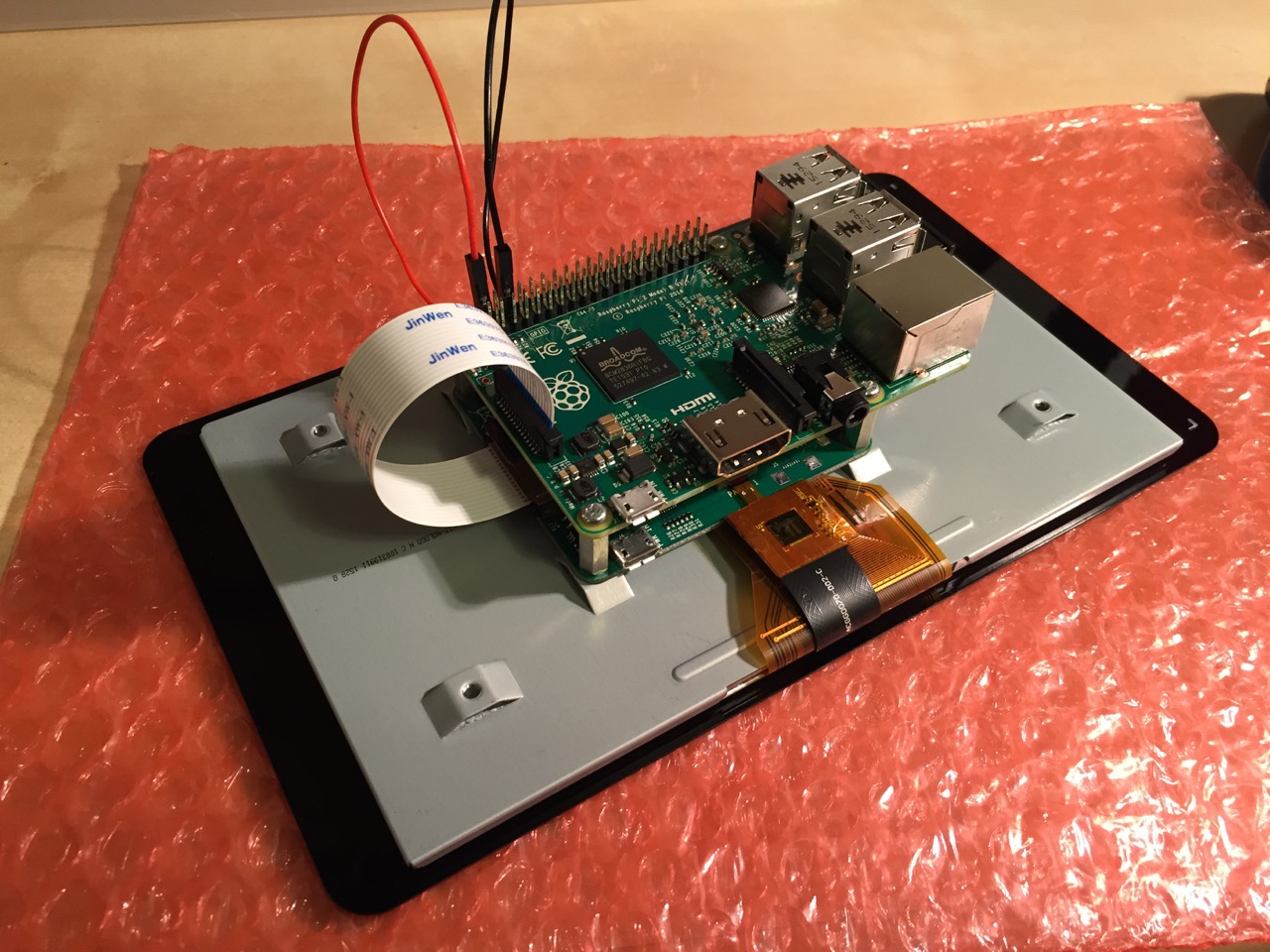
    This is the rear of the 7" Touchscreen Display assembled with the controller card and Raspberry Pi.
    This is the rear of the 7″ Touchscreen Display assembled with the controller card and Raspberry Pi.


    This is the front of the 7" Touchscreen Display with the power leads sticking out from behind.
    This is the front of the 7″ Touchscreen Display with the power leads sticking out from behind.


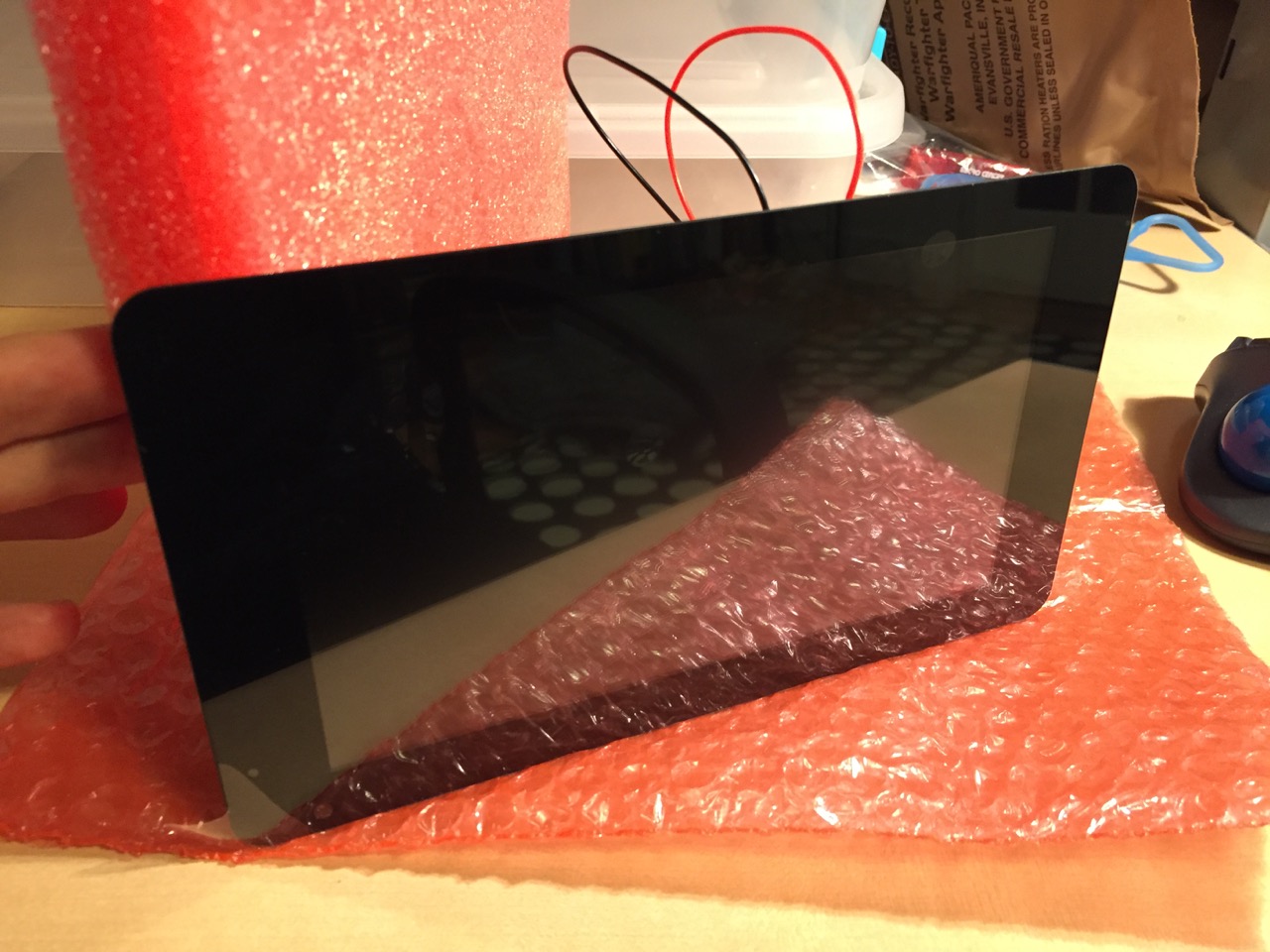
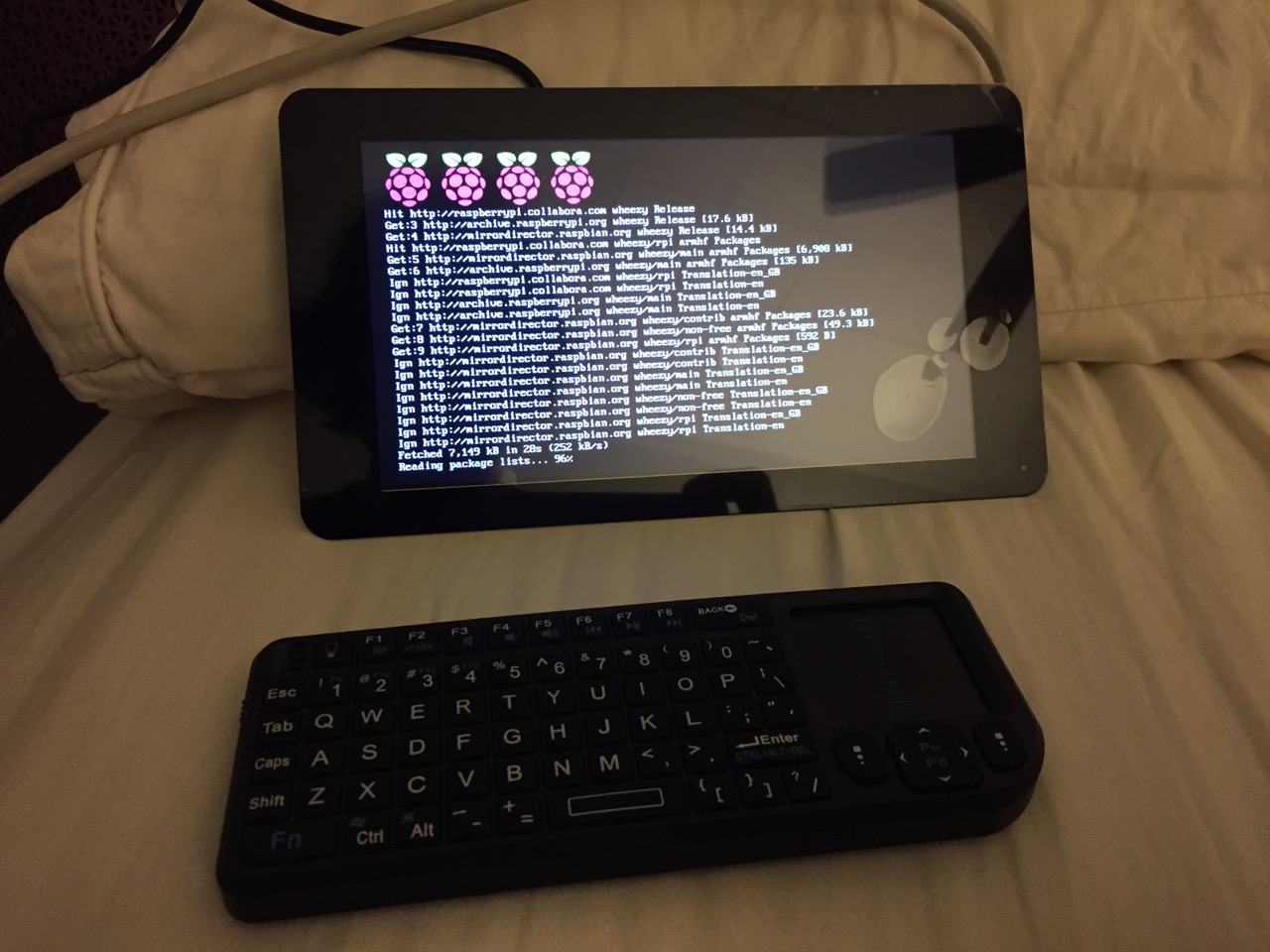
    This is the Raspberry Pi powered up again with the 7" Touchscreen Display.
    This is the Raspberry Pi powered up again with the 7″ Touchscreen Display.


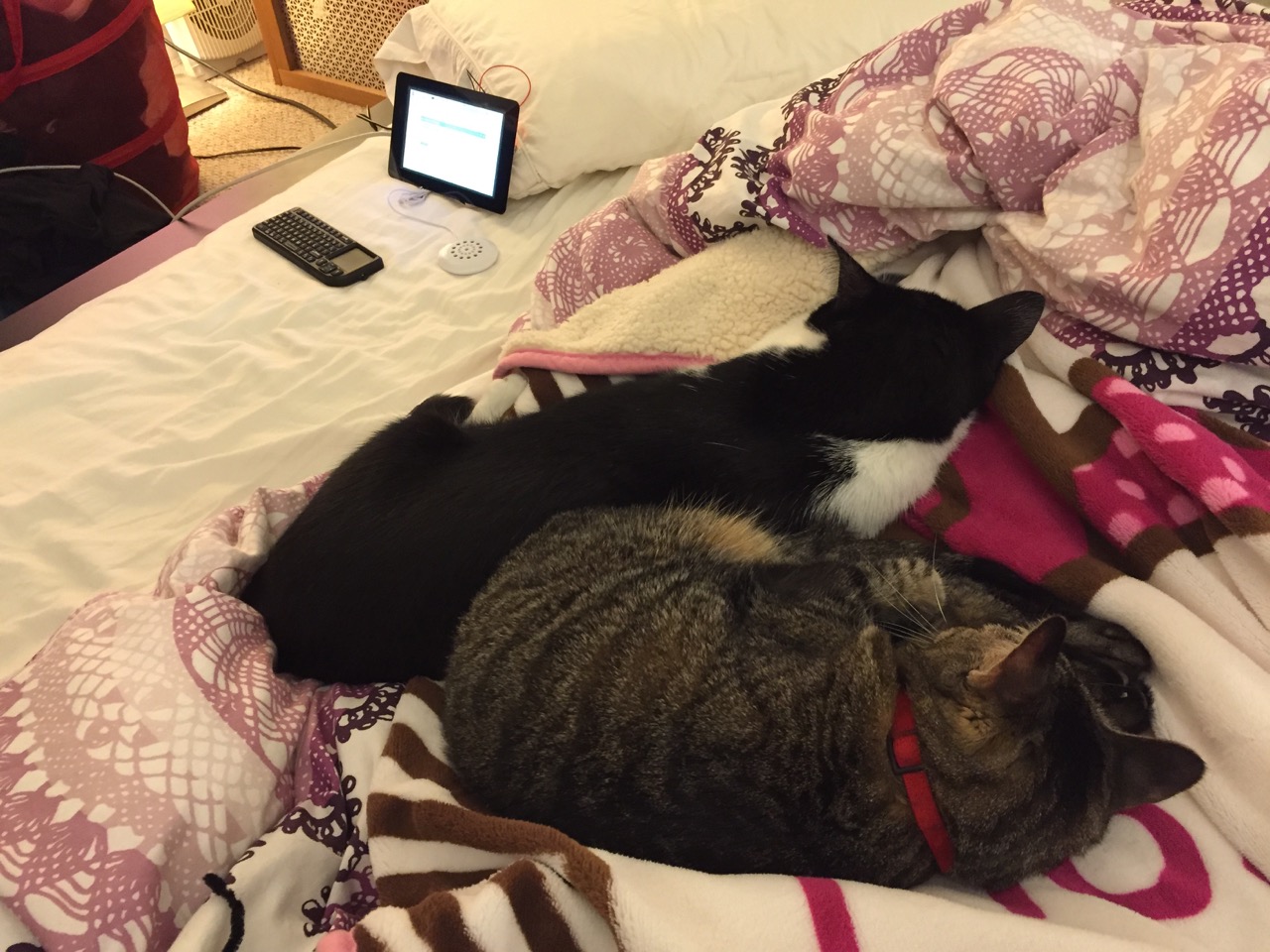
    Mose and Miao had lost interest in the project by this point.
    Mose and Miao had lost interest in the project by this point.


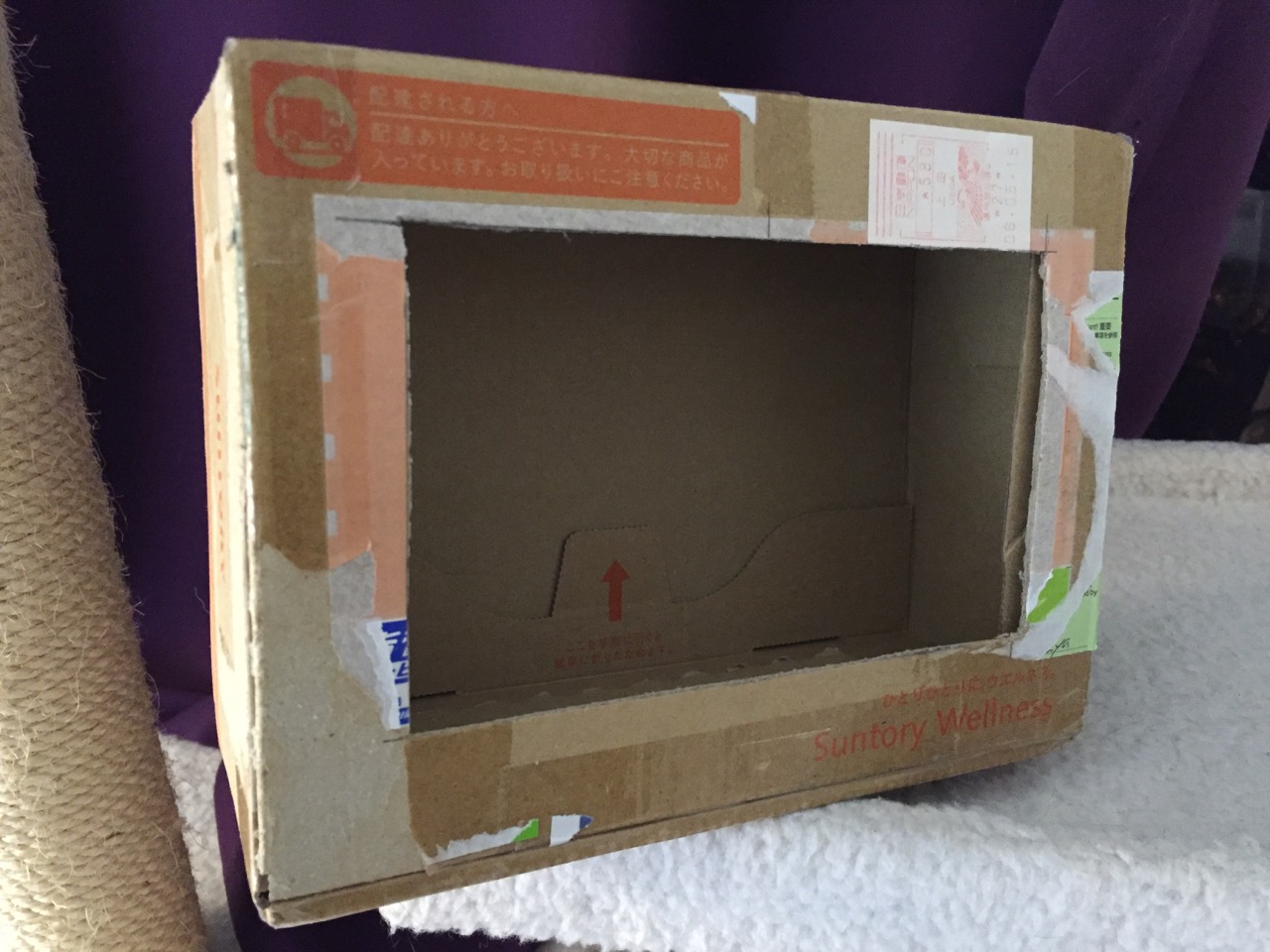
    To complete the project, I cut a hole into a Suntory shipping box from Japan that is the exact same size as the 7" Touchscreen Display box, which would work well, too. It is works well for holding up the Raspberry Pi and storing its accessories when I go between home and work.
    To complete the project, I cut a hole into a Suntory shipping box from Japan that is the exact same size as the 7″ Touchscreen Display box, which would work well, too. It is works well for holding up the Raspberry Pi and storing its accessories when I go between home and work.

    Of course, you can use the Raspberry Pi with or without a case depending on your needs. I used the Suntory cardboard box from Japan for practical reasons (thinking: William Gibson: “the street finds its own use for things”–it’s a good size, on-hand, and looks cool) and research reasons (thinking about my work on proto-cyberpunk and the hidden nature of computing, which is an idea explored in my previous blog post about the poster that I created for the 13th annual City Tech Poster Session).

    I have run the computer and touchscreen from the 5v battery that I purchased from Tinkersphere, but I get a graphics warning that the Raspberry Pi is under voltage (a rainbow pattern square persists in the upper right corner of the display whether in the CLI or xwindows). I might get a second battery to run the display alone, which would help me troubleshoot if the battery that I have now is actually outputting enough voltage and amperage needed by the Raspberry Pi alone. In the meantime, I am running everything at my desk with the 5v power adapter, which provides ample power for the Raspberry Pi and 7″ Touchscreen Display.

    In the future, I would like to use the Raspberry Pi in a writing or technical communication course. There are many ways to leverage the technology: problem solving, writing about process, creating technical documents such as reports and instructions, using the Raspberry Pi as a writing/multimodal composing platform, digital storytelling with tools that come with the Raspberry Pi, and more. These ideas are built only around the Raspberry Pi and its software. A whole other universe of possibilities opens up when you begin building circuits and integrating the Raspberry Pi into a larger project.

    The basic cost of entry with the platform is $30 for the Raspberry Pi 2, Model B and a few dollars for an 8GB micro SD card. If you have access to a display with HDMI, a USB keyboard and mouse, and ethernet-based Internet access, you can get started with Raspberry Pi almost immediately. For a future grant application, I am imagining a proposal to purchase the basic needed equipment to use Raspberry Pi in an existing computer lab. I can bring the kits to each class where students can use them on different assignments that meet the outcomes for that course but in an engaging and challenging way that I think they would enjoy and would be beneficial to them in ways beyond the immediate needs of the class.

    On this last point, I am thinking of working with digital technology in an a way many of my students will not have had a chance to before, feeling a sense of accomplishment, learning from one another on team-based projects, experiencing a sense of discovery with a computing platform that they might not have used before, and of course, communicating through the process of discovery in different ways and to different audiences. This might be something that you’re interested in, too. Drop me a line if you are!

  • Collaborative, Vintage Computing Writing Project for ENG 1133 Specialized Communication for Technology Students at City Tech

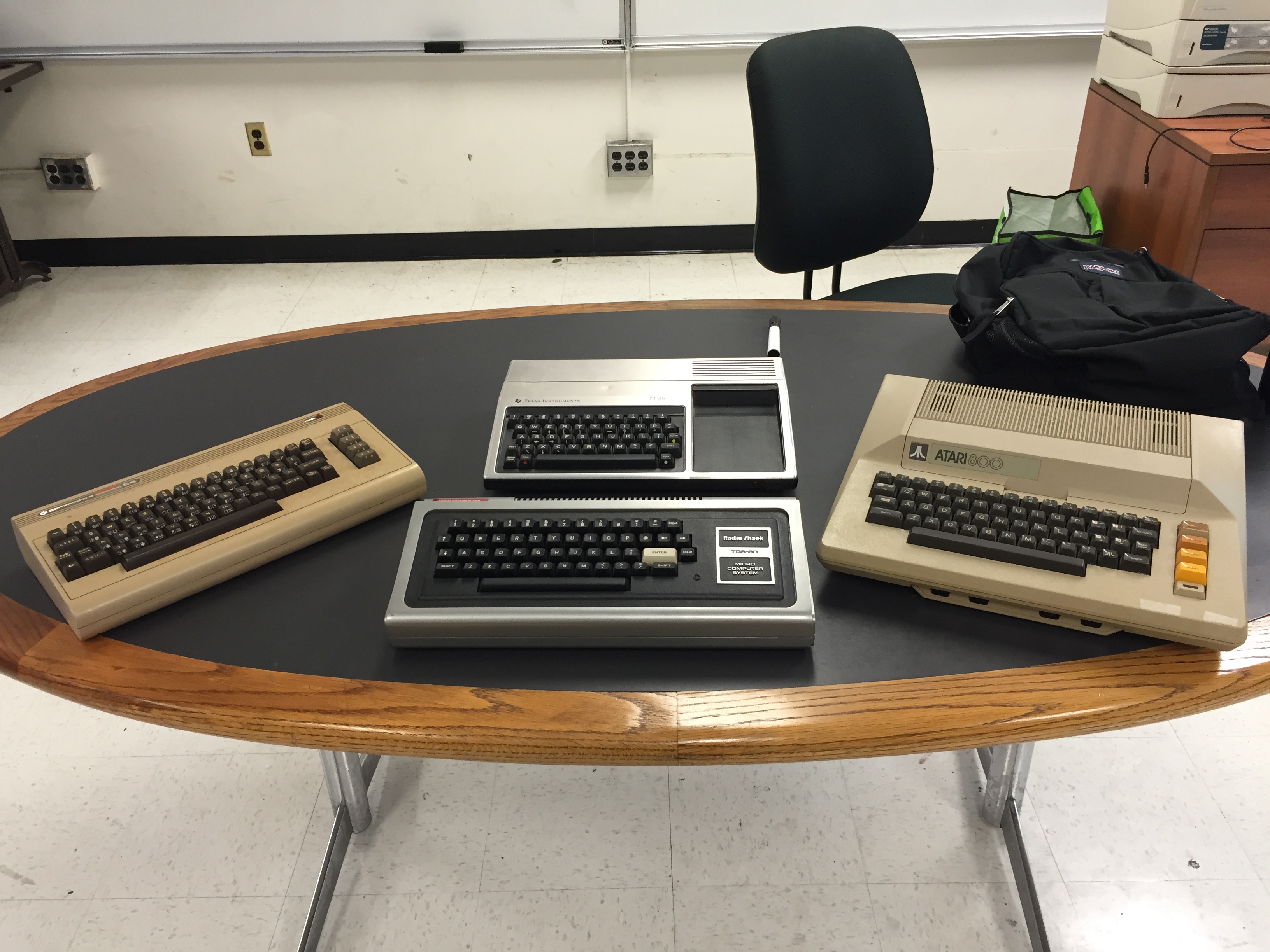
    R to L: Commodore 64, TRS-80, TI-99/4A, and Atari 800.
    R to L: Commodore 64, TRS-80, TI-99/4A, and Atari 800.

    In ENG 1133 Specialized Communication for Technology Students at City Tech this semester, I am rolling out a new major project focusing on creating documents based on a specific vintage computer. This project is an offshoot of my archival retrocomputing research (latest update here).

    As in my other technical communication-based classes, I prefer students have an opportunity to learn how to write certain kinds of technical and business documents in a collaborative setting. They obtain the double benefit of learning the document genre and conventions while also negotiating collaborative writing practices that they will encounter in the workplace.

    For this project, in teams of 4-5 students, they will create agendas, minutes, a research report, a bid/proposal, single-sourced documents (tri-fold brochure and owner’s manual), a document testing report, and a presentation. The documents that each team creates will be based on what they learn about a specific vintage computer. I assigned teams to one of four vintage computers that I obtained from Stan Kaplan at City Tech: Commodore 64, Radio Shack TRS-80, Atari 800, and Texas Instruments TI-99/4A (using a double integer sequence from random.org in front of the class). A copy of the assignment can be downloaded here: ellis-jason-eng1133-project2-2015-fall, and the class syllabus can be downloaded here: ellis-jason-eng1133-syllabus-2015-fall.

    In addition to using library resources, students are encouraged to use Archive.org’s vast retrocomputing resources, holdings, and interactive features.

    I am looking forward to learning from my students’ research and seeing their documents emerge from their collaborations.

  • A Brief Note on Steven Lynn’s Rhetoric and Composition: An Introduction

    When I asked Dr. Courtney L. Werner, a friend and colleague at Kent State University where we earned our PhDs (find her blog here and connect with her on Twitter here), what I should read that captures the theoretical breadth and historical depth of her discipline of study–Rhetoric and Composition–I dutifully wrote down what she told me: Steven Lynn‘s impressive Rhetoric and Composition: An Introduction. I think that it has been about three or four years since I jotted down her suggestion, but I’m happy to report that I finally got around to reading it over the past few days and I’m certainly the better for it.

    For those of you who might be like me–not really knowing anything about Rhetoric and Composition when going into graduate school, but wanting to learn more about this important discipline after learning of its existence–I recommend Lynn’s book as a thorough starting point.

    Lynn begins his book with a chapter on the relationship and interconnectedness of Rhetoric and Composition. He guides his reader through seeing them separately and together while peppering his discussion with an exhaustive and concise (what a balancing act throughout the book) theoretical-historical context.

    In the chapters that follow, he designs them around the five canons of rhetoric as an art: invention, arrangement, style, memory, and delivery. Each chapter combines discussion of the historically relevant development of the canon, its major contributors, its past and present scholarship, and applications for the classroom. The final chapter on delivery has a lot of helpful material for first time composition instructors, too.

    During my time at Kent State, I am glad that I taught in the writing program and I am glad to have had the opportunity to learn from and share ideas with graduate students and faculty in the Rhetoric and Composition Program, including Brian Huot, Pamela Takayoshi, and Derek Van Ittersum. In retrospect, however, I wish that I had made it a point to join a Rhetoric and Composition seminar (for credit or to audit), because I see now how it would have enriched my scholarship and pedagogy in pivotal ways. If you are like me in this regard or still on your path to a terminal degree, I recommend Lynn’s book for learning Rhetoric and Composition’s ideas, debates, and scale as a student, incorporating its ideas into your daily practices as a teacher, and opening up new possibilities in your thinking as a scholar.

    Lynn, Steven. Rhetoric and Composition: An Introduction. Cambridge: Cambridge UP, 2010. Print.

  • Retrocomputing at City Tech: Vintage Computers Organized on New Shelves

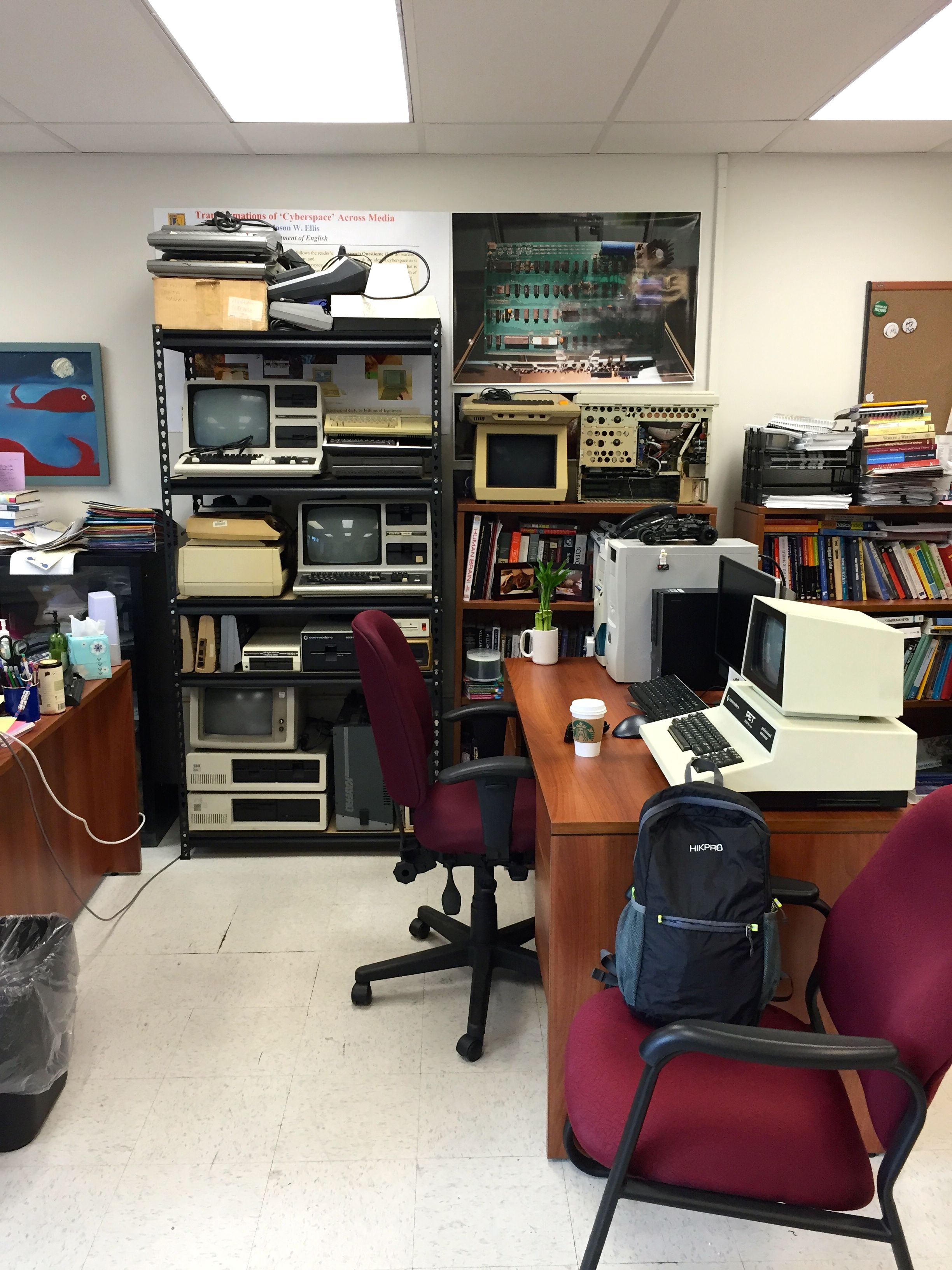
    My Retrocomputing Office Space
    My Retrocomputing Office Space

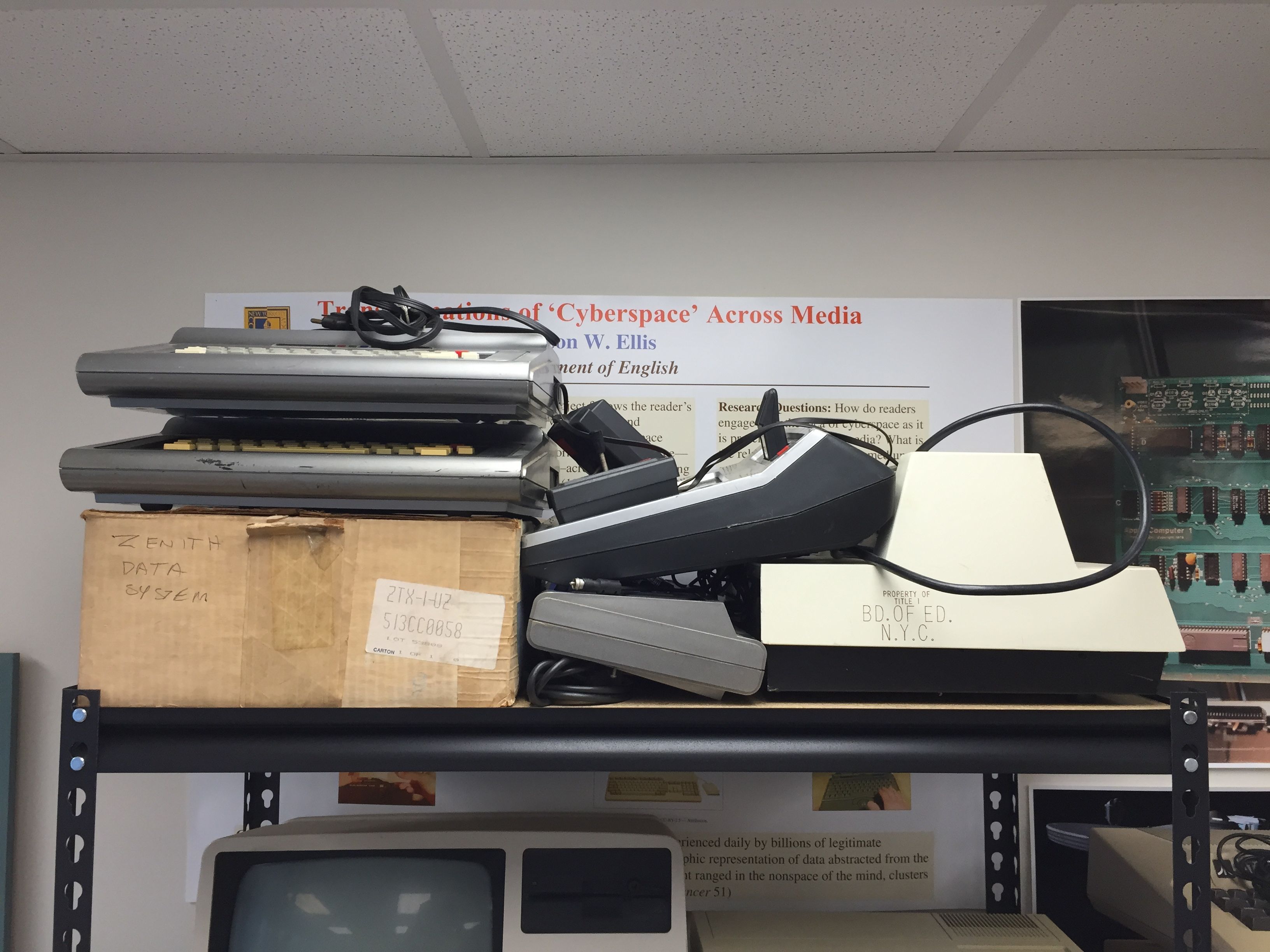
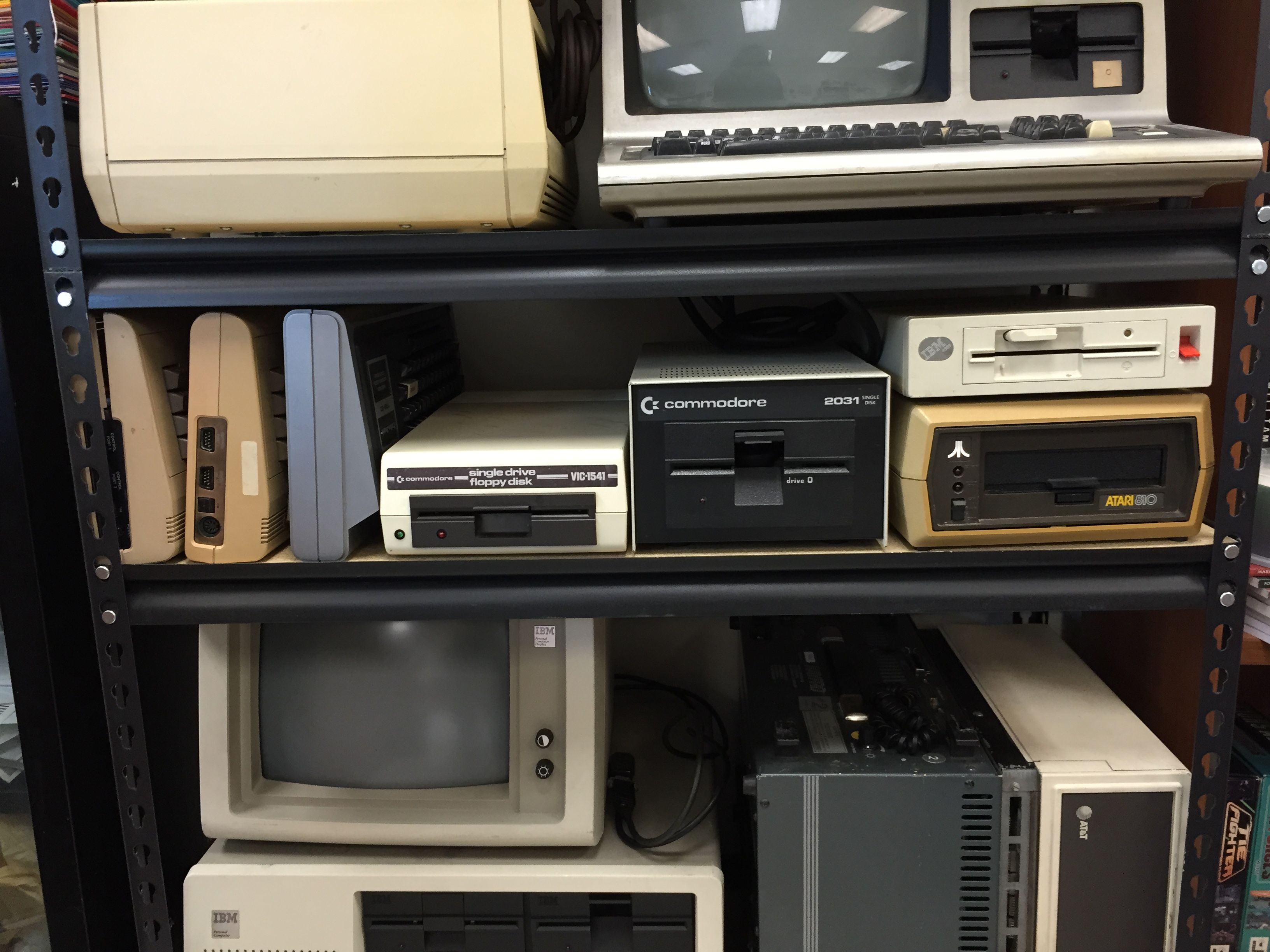
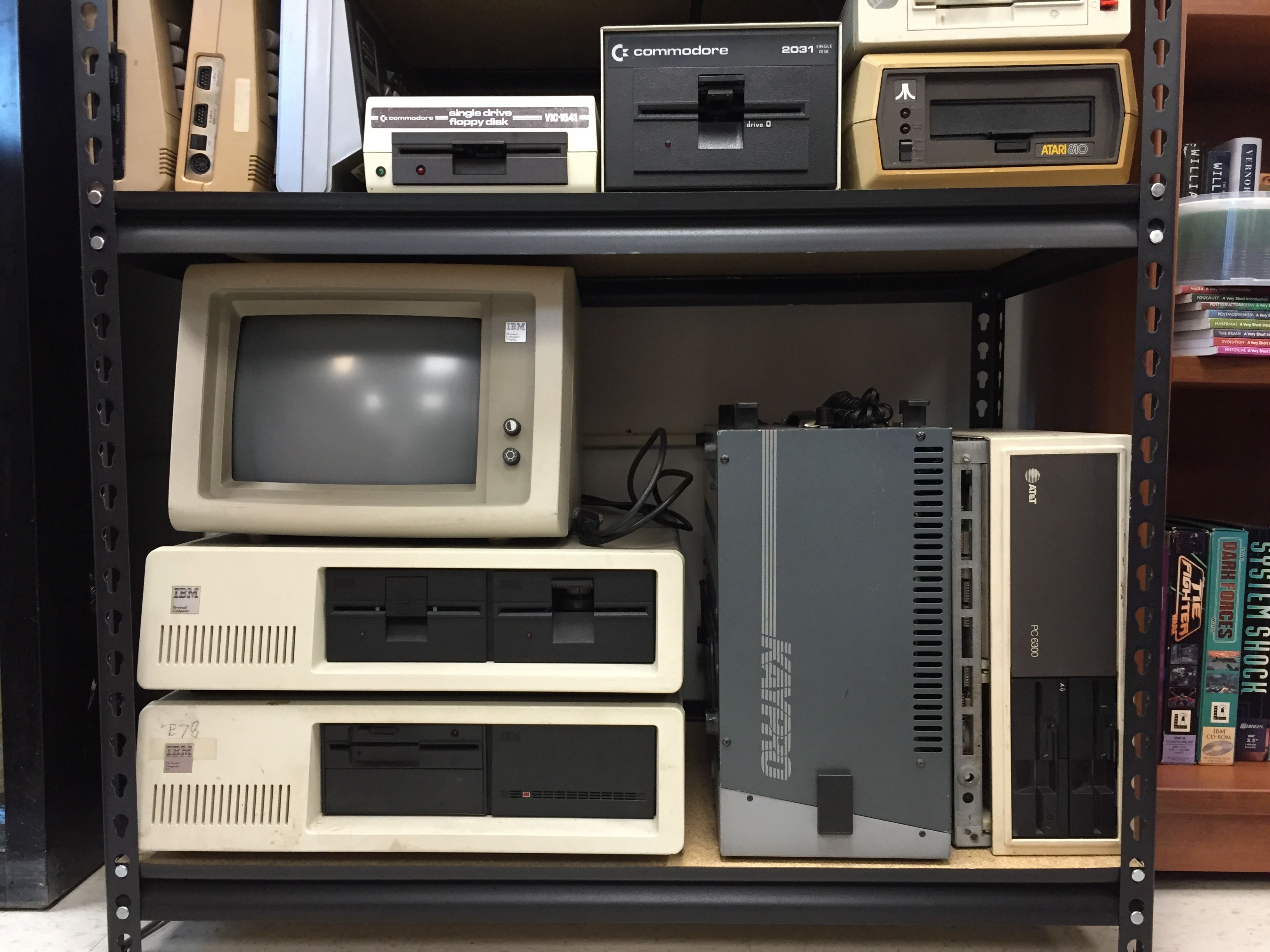
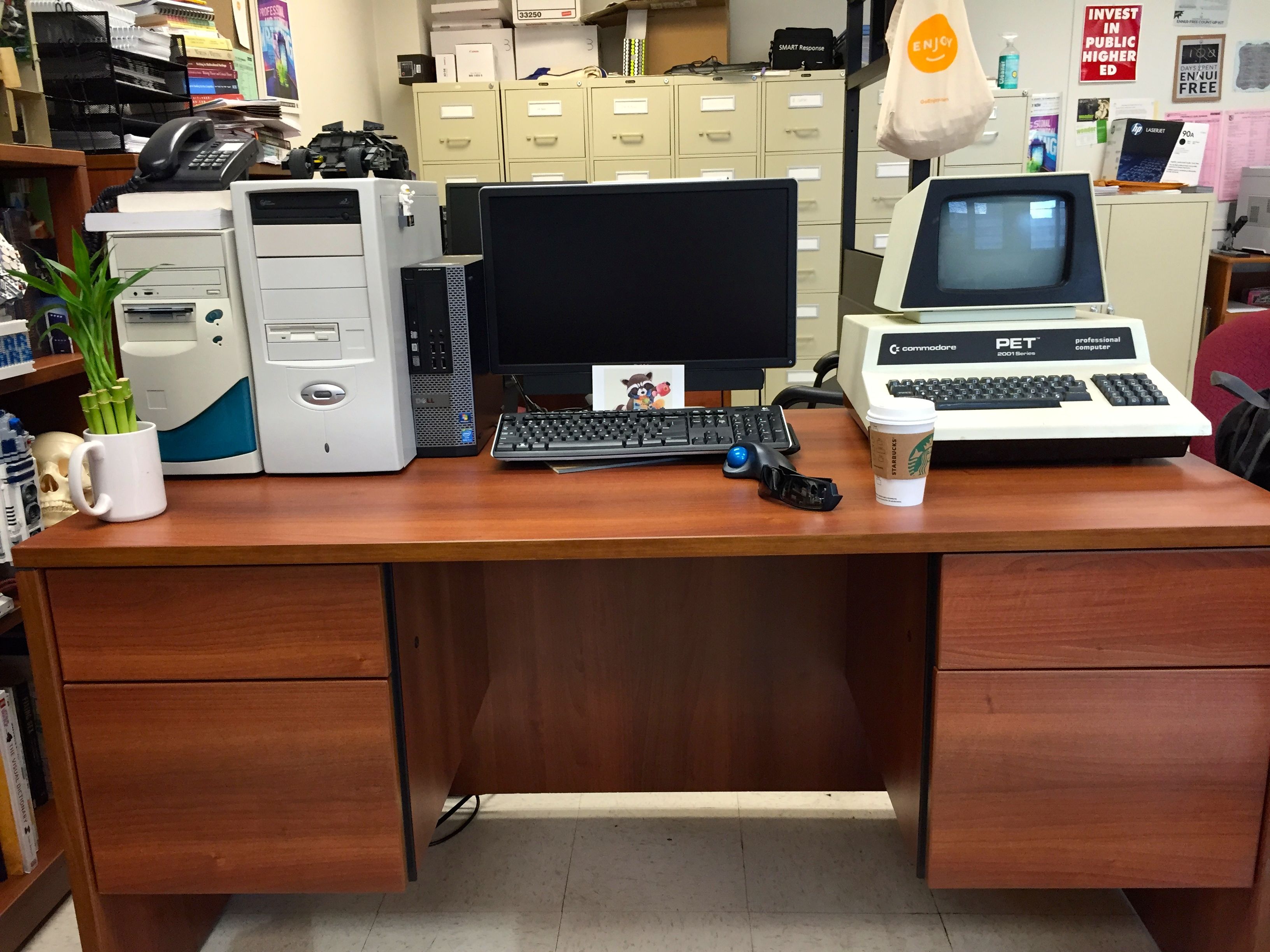
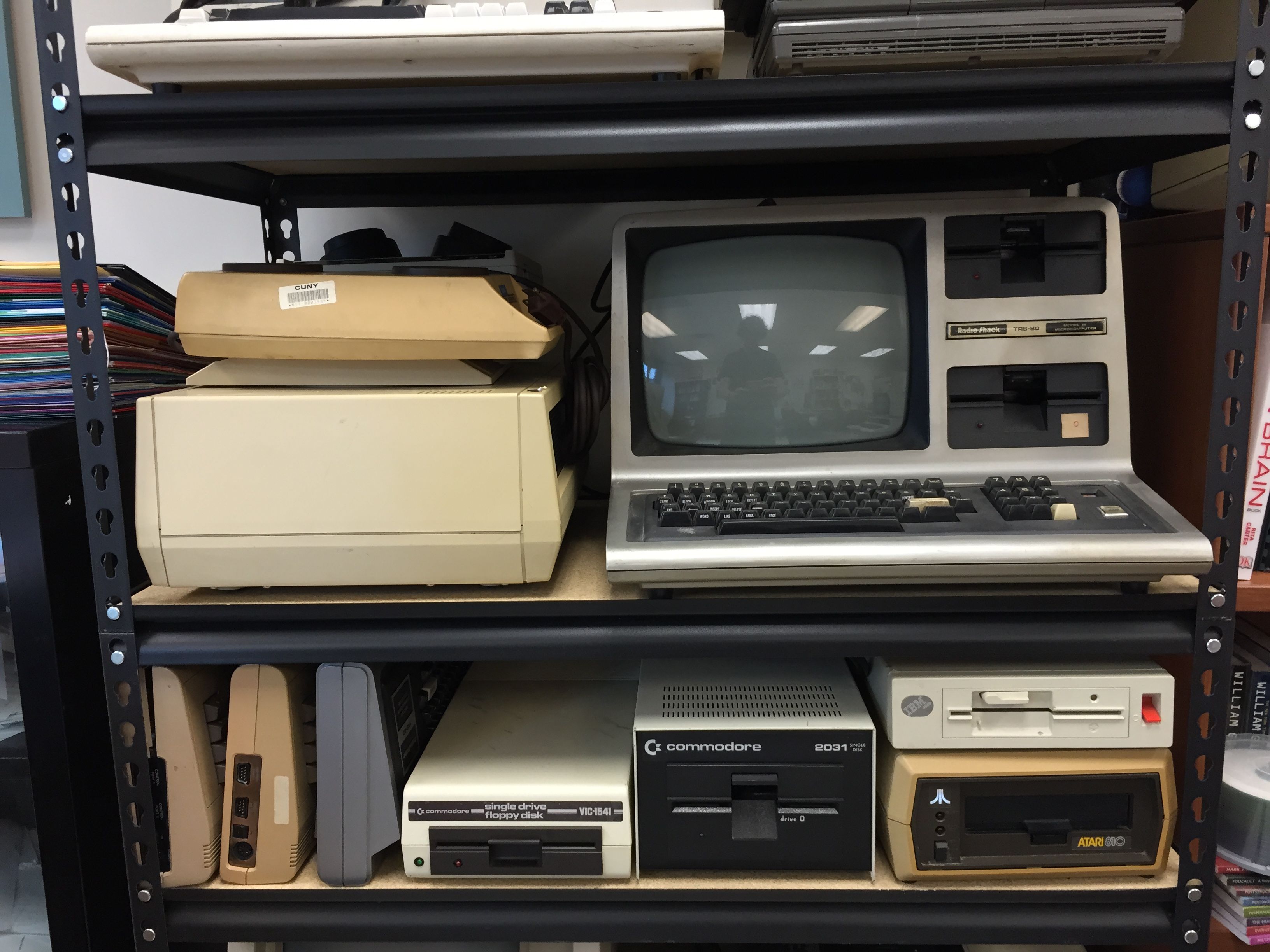
    Thanks to City Tech’s Stanley Kaplan, I now have a substantial new collection of early personal computers including IBM PCs, Radio Shack TRS-80s, a Commodore PET, Texas Instruments TI-99s, ATARI 800, and a number of other computers and peripherals in my office in Namm 520. Some of the smaller items are locked in my filing cabinet, but as you can see from the photos included in this post, I have the larger items arranged around my desk and on a new set of Edsal steel shelves that I purchased on Amazon.com. Now, I have to make some additional room for a large, removable magnetic disk from a TRIAD Computer System (c. late-1970s~early-1980s, the drive that reads this disk was about the size of a washing machine) and an Apple Macintosh Centris 650, which I shipped to myself from Brunswick when I recently visited my parents. In the coming months, I will catalog these machines, see what works, and plan how to use them (research, pedagogy, and exhibits). If you have older computers, disks, or user manuals and would like to donate them for use in my research and teaching, please drop me a line at dynamicsubspace at gmail dot com.

    IMG_0337
    Radio Shack Color Computer 3s, Zenith Data System, Odyssey, TRS-80, and PET Printer.
    IMG_0338
    TRS-80, Texas Instruments TI-99s, and Toshiba Laptop.
    IMG_0339
    Victor Computer and TRS-80.
    IMG_0340
    Commodore 64s, TRS-80, and Various Floppy Disk Drives.
    IMG_0341
    IBM PC, IBM PCxt, Kaypro, and AT&T Desktop.
    IMG_0342
    ATARI 800 and Compaq Portable PC sans case.
    IMG_0343
    Pentium 233 MHz PC, i7 PC, i7 Dell (office standard issue), and Commodore PET.