Category: Pedagogy

  • I’m a Recipient of this Year’s Class of 1940 Course Survey Teaching Effectiveness Award!

    Recently, I was told that I was a recipient of this year’s Class of 1940 Course Survey Teaching Effectiveness Award from the Georgia Institute of Technology!

    The selection criteria for the Class of 1940 Course Survey Teaching Effectiveness Award are: “During the Fall 2012 and/or Spring 2013 semesters, a CIOS [Course-Instructor Opinion Survey] response rate of at least 85%, and either a class size of at least 40 students with a CIOS score for the question which reads, “Overall, this instructor is an effective teacher” of at least 4.8; or a class size of at least 15 students and a CIOS score for the same question of at least 4.9; or a 5 (or greater) credit course with a size of at least 10 and a CIOS score for the same question of at least 4.9.”

    I qualified in the middle category, because my classes are typically 25 students/each and 3 credit hours/each.

    I am deeply honored to be recognized by my students and institution with this award, and its monetary award is certainly helpful and appreciated.

    Georgia Tech’s teaching awards will be given publicly at the upcoming Celebrating Teaching Day on March 6, 2014. I’m looking forward to it!

  • Fall 2013 ENGL1101, The Concluding Lecture: Advice from a Georgia Tech Alum to Future Alumni

    The end is just the beginning.
    The end is just the beginning.

    During today’s class, I will present a final lecture titled, “The Concluding Lecture: Advice from a Georgia Tech Alum to Future Alumni.” There’s a lot of things that I wish I had known when I was an undergraduate at Tech. On reflection and through experience, I gained insights that I wanted to make available to my current Georgia Tech students. I am making the PowerPoint file and my notes available below.

    Download the lecture’s PowerPoint presentation here: ellis-jason-final-lecture2.

    Notes to accompany “The Concluding Lecture: Advice from a Georgia Tech Alum to Future Alumni” follow below:

    During today’s lecture, I wanted to talk about one big idea that’s been implicit in the readings and discussions that we’ve shared regarding the brain. That idea is: “Who you are today is not who you will be tomorrow.” What I mean by that is our biology, experiences, thoughts, and choices shape who we are and who we become each moment of our lives. Sometimes these changes can be small and sometimes these changes can be large.

    Another way to think about this is that we are like patterns. Our lives, thoughts, and memories are patterns that form, reform, and change based on a number of variables. Some of those variables, like cats, are outside of our control. These things include our genes, disabilities, economic situation, and past. While there’s a lot about our lives and pattern that we cannot control, there’s also a lot of things about our pattern that we can control. These are the conscious choices and decisions that we make in life.

    In this lecture, I would like to talk about those choices that I think are particularly important to Georgia Tech undergraduates but that are often pushed aside, ignored, or forgotten in the forward rush to a degree. Choosing to focus on these important things will lead, I believe, to a more robust, meaningful, and enriched undergraduate experience that will prepare you for success in the next stage of your life.

    Learn: Feed your curiosity. Gain as much knowledge in your field and others as possible. Form connections between the many things that you learn. Be interdisciplinary in your thinking and learning. Pass on what you have learned to others–in doing so, you will gain a deeper mastery of what you have learned.

    Connect: Form connections with faculty at Tech. Seek out mentors to guide you in your progress. Your advisors and mentors will become your colleagues one day when you enter the field as a graduate of Tech and professional. Learn from your mentors and advisors.

    Explore: Explore the spaces you inhabit and work. Explore your major and connected disciplines. Explore how you can connect your major to other disciplines. Open doors and find out what’s going on (as long as you won’t be breaking laws or entering a dangerous space). Exploration is another kind of learning.

    Travel: Visiting other places is a special kind of exploration and learning. However, it is also a kind of education that you cannot receive in the normal classroom setting. You will learn new perspectives from those you live around. You will gain new insights from the history, economy, and politics of the places you live. My strongest regret was not taking advantage of the study abroad programs at Georgia Tech. There are many, many study abroad programs here–find out about them and take advantage of them.

    Meet: Go out and meet people! Meet famous people. Meet smart people. Meet people in your community. Meet other students at Tech. Meet people in the Atlanta area. Superficial connections are not what you want. The important thing is to expand your network of friends and colleagues and form meaningful relationships with those people. Talk with people. Learn from others.

    Help: Make the effort to help others. Help your classmates. Help people in your communities. Help your family and friends. If you contribute to building stronger communities through outreach and doing good deeds, you will build a stronger community that will in turn help you in the long term.

    Make: Create things. They can be digital, physical, or abstract. The important thing is to never rest. You should always be engaged making things–professionally or for personal enjoyment. The things that you make will in turn make you through the experience of creating.

    Do Good Work: Make things that you are proud of. Put the time and effort into making things that you can stand behind. This is hard to do sometimes in classes, but you should think about how to turn assignments to meet your needs as well as the needs of the class’ outcomes. This means think about how you can create things that will earn the grade you want while also serving your uses outside of the class–such as adding a new document to your professional portfolio or using an assignment as an excuse to learn a new skill or software.

    Reflect: Above all else, reflect on your life, on the things you do, and on your successes and failures. Learn from the choices that you’ve made before so that you can make better and stronger and more effective decisions in the future. Reflect on all aspects of your life–not just on your writing or major-specific work. Reflect in writing–public or private–for the maximum effect on your thinking and brain wiring. Make your reflections a part of your daily practices. It takes time and energy, but the results over time to improving your likelihood for success is tremendous!

    Graduate: Certainly, keep your eye on the prize. It might take you four years, five years, or even longer. No matter how long it might take you or how winding your path might be to graduation, be tenacious in your progress to completion. In the words of Commander Taggart from Galaxy Quest (1999), “never give up–never surrender.” If you find that you need to take time away from school, there’s no reason not to return later. I did that and I believe that I am the better for it. The experience that I gained during those years away from Tech were tremendously useful to me. Anyways, if I can do it, I know that you can, too.

  • My Poster for SAMLA 2013: The Brittain Fellowship’s DevLab: Space, Resources, Expertise, and Collaboration

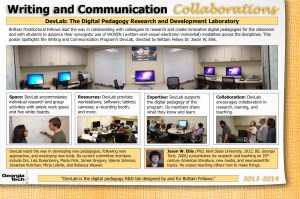
    My DevLab Poster.
    My DevLab Poster.

    This year, Georgia Tech’s Writing and Communication Program and its Brittain Fellows had a strong presence at the annual South Atlantic Modern Language Association meeting in Atlanta, Georgia.

    I presented a poster on the program’s R&D unit, DevLab. To compose the poster, I took a panoramic photo of DevLab’s main space (we also have an external recording booth). My students and fellow Brittain Fellows are pictured doing work and collaborating at various events over the past few months.

    Standing next to my poster in the Buckhead Marriott.
    Standing next to my poster in the Buckhead Marriott.

    We also had posters on the Communication Center, our pedagogical research, and our scholarly research. Here’s a list of all posters from the official program:

    10. Georgia Institute of Technology Brittain Fellowship,

    Poster Series I

    The Marion L. Brittain Postdoctoral Fellowship at the Georgia Institute of Technology

    a. Jason Ellis, DevLab: Research and Development Lab Facility

    b. CommLab: Tutoring Center for Multimodal Communication

    11. Georgia Institute of Technology Brittain Fellowship, Poster Series II

    WOVEN: Multimodal Communication in the Classroom

    a. Joy Bracewell

    b. Jennifer Lux

    c. Julia Munro

    12. Georgia Institute of Technology Brittain Fellowship, Poster Series III

    Intersections between Scholarship and Pedagogy

    a. Aaron Kashtan

    b. Jennifer Orth-Veillon

    c. Aron Pease

    13. Georgia Institute of Technology Brittain Fellowship, Poster Series IV

    Changing Higher Education

    a. Mirja Lobnik, World Englishes Committee

    b. Multiple Presenters, Curriculum Innovation Committee

    c. Arts Initiatives Committee

    Besides participating in the poster session, I also took notes from N. Katherine Hayles’ plenary lecture on Friday afternoon. I will post my notes from that talk here soon.

    Next year, I will propose a paper for SAMLA and hopefully present an updated version of the DevLab poster. See you there!

  • LMC3403, Technical Communication: Lego, Haptics, and Instructions

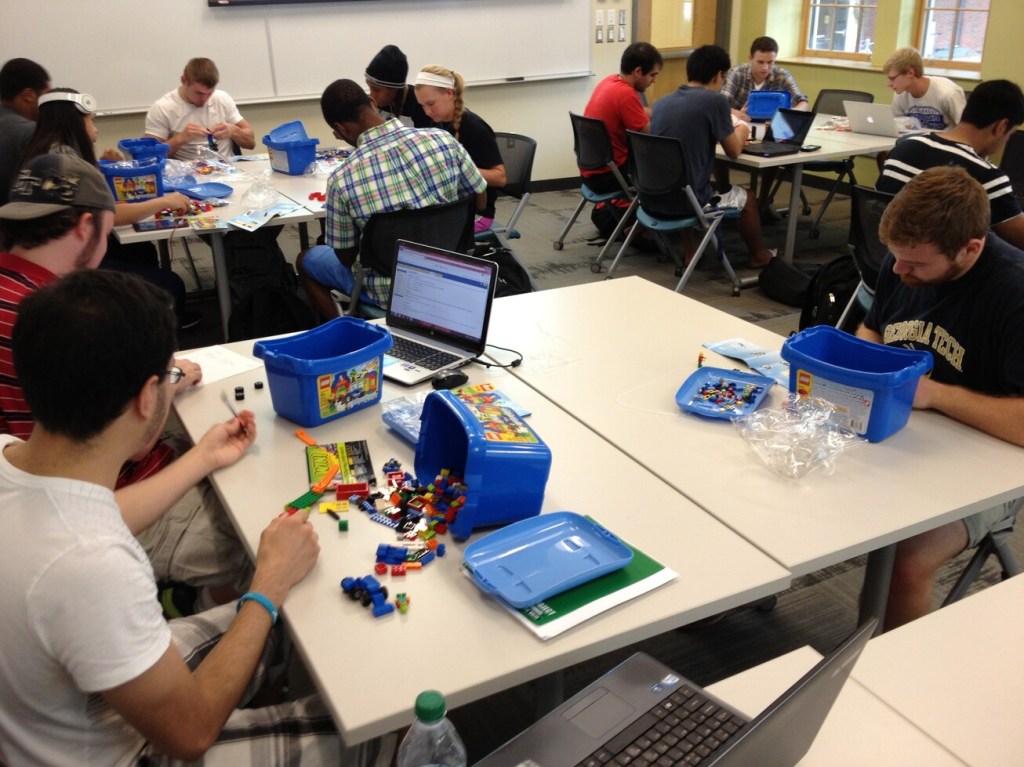
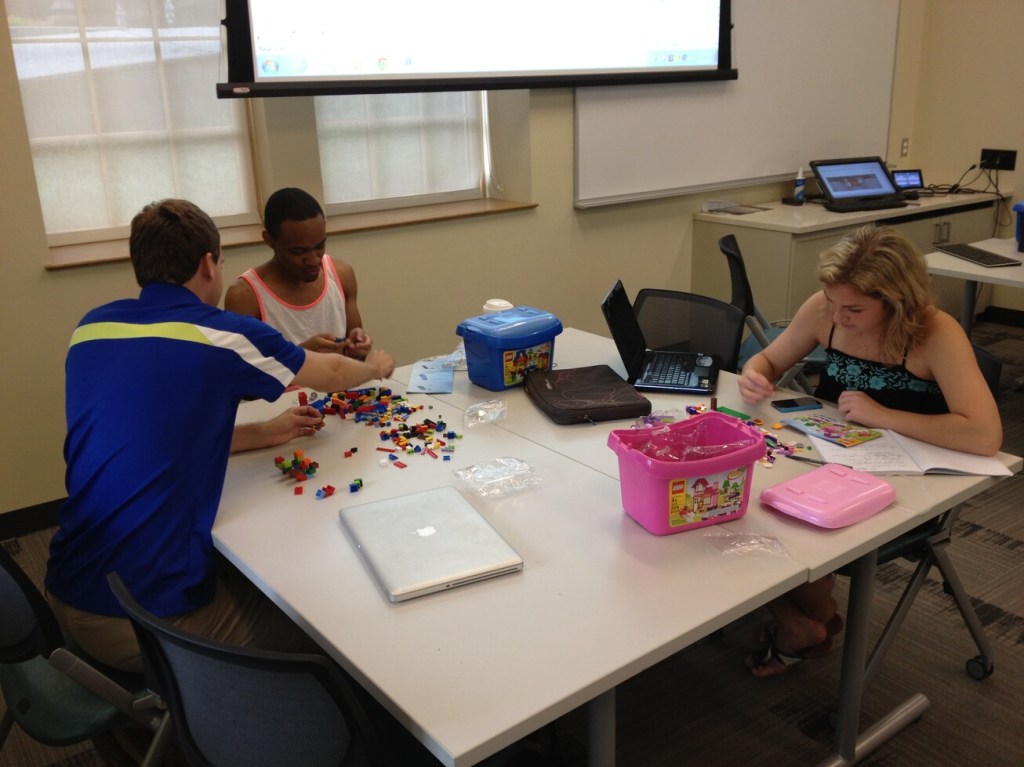
    LMC3403 Technical Communication students working with LEGO

    My LMC3403, Technical Communication students are well into their second unit project on reader-centered and process-driven fundamentals. In a fun assignment, I wanted the students to try out many different types of technical communication deliverables for different readers/audiences. Also, I wanted them to think differently about nonverbal communication with the heavy emphasis on haptics, physicality, and making.

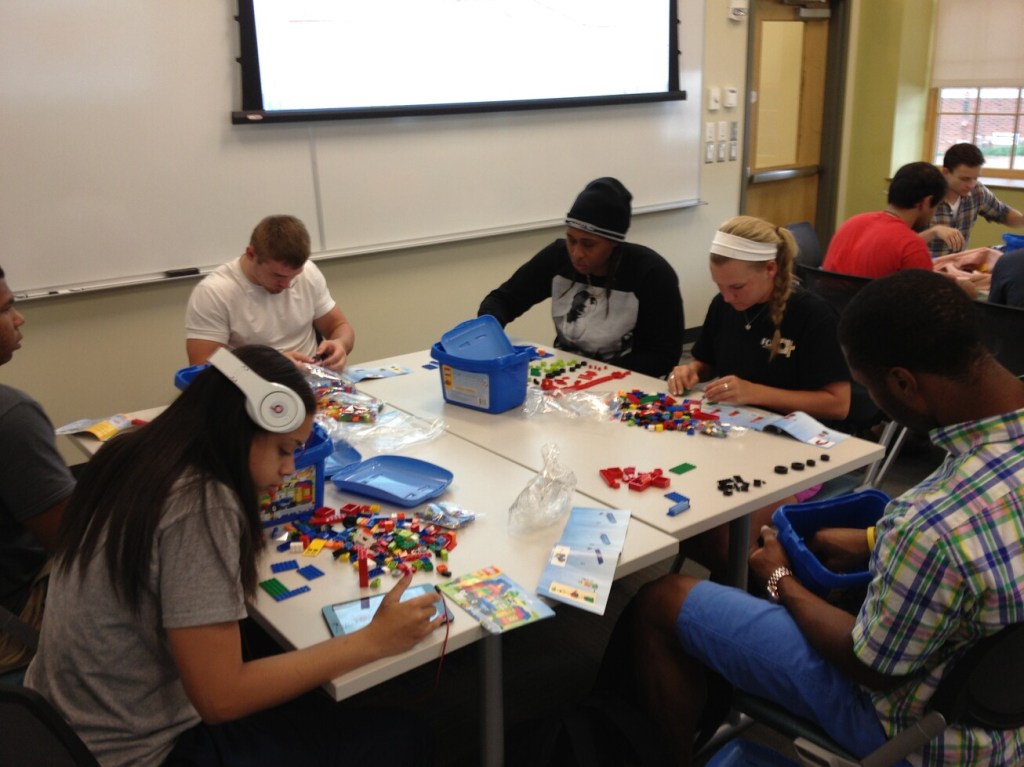
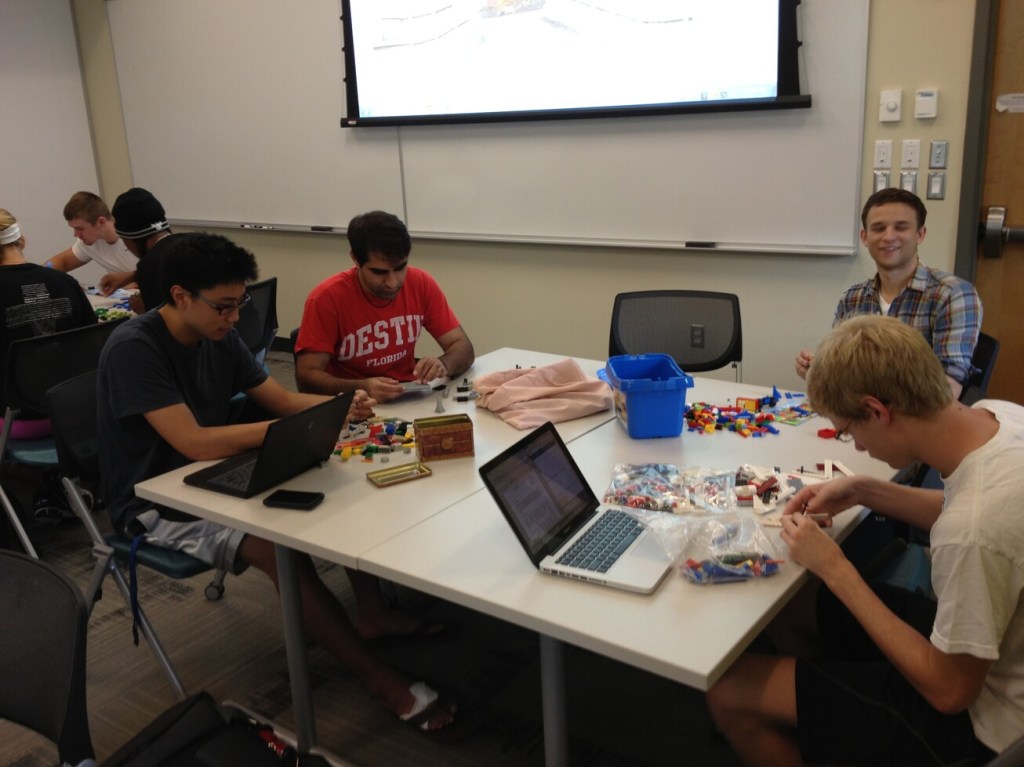
    LMC3403 Technical Communication students working with LEGO

    In this project, their primary task is to build a set of instructions for a Lego model of their own design.

    Their Lego model should represent something about their studies, their professional field, or their entrepreneurial spirit.

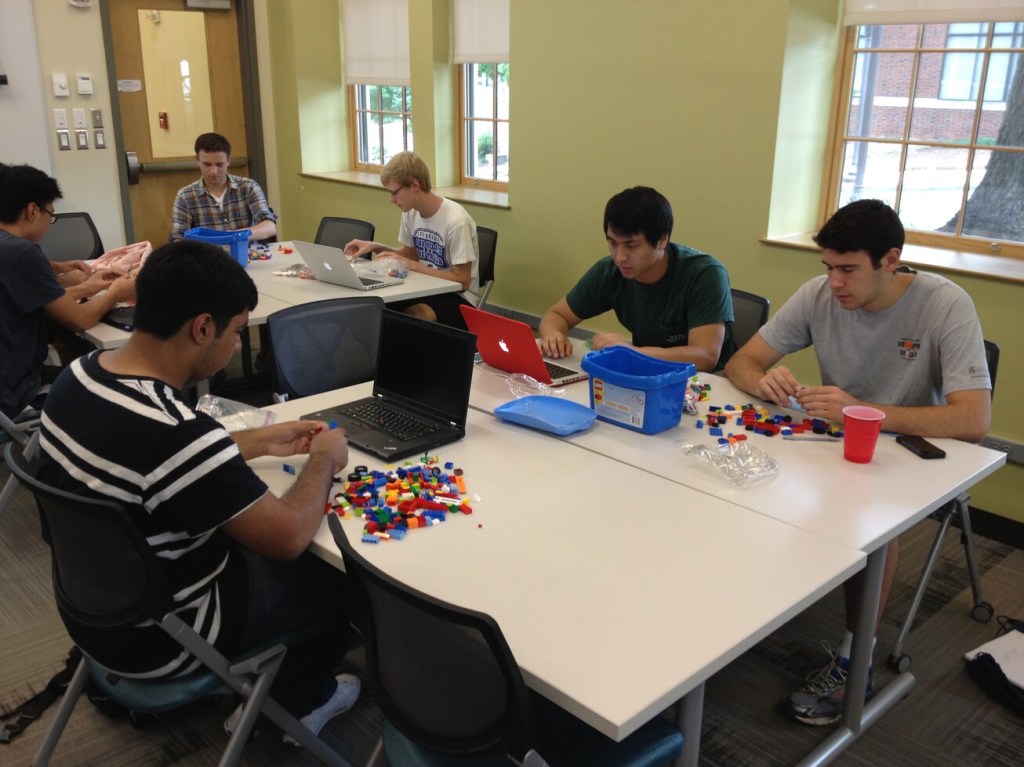
    LMC3403 Technical Communication students working with LEGO

    Their project began with the creation of a proposal memo that laid out their entire project: designing instructions, testing instructions, reporting on tests in a memo, revising instructions, and reflecting on the project in a memo.

    Throughout the process, they have to be mindful of different audiences (executives, managers, and customers).

    LMC3403 Technical Communication students working with LEGO

    In these photos, the students are busy at work creating the first version of their Lego models.

    I was happy to overhear someone say, “It’s nice to actually do something fun in a class for once!”

    LMC3403 Technical Communication students working with LEGO
  • Review of Donald E. Hall’s The Academic Self: An Owner’s Manual, Recommended for Graduate Students, Postdocs, and Junior Faculty

    Hall, Donald E. The Academic Self: An Owner’s Manual. Columbus: Ohio State UP, 2002. Print.

    I picked up Donald E. Hall’s The Academic Self from the Georgia Tech Library after completing my teaching assignment for Spring 2013–eleven years after the book had been published. Specifically, I was looking for books and articles to help me grapple with the challenges of this stage of my professional life as a postdoctoral fellow: teaching a 3-3 load, performing service duties, researching, writing,  receiving rejections (and the far less often acceptance), and applying for permanent positions. In the following, I summarize Hall’s arguments, provide some commentary, and close with a contextualized recommendation.

    Hall states in the introduction that the goal of The Academic Self is, “encourage its readership to engage critically their professional self-identities, processes, values, and definitions of success” (Hall xv). I found this book to be particularly useful for thinking through my professional self-identity. As I was taught by Brian Huot at Kent State University to be a reflective practitioner in my teaching and pedagogy, Hall argues for something akin to this in terms of Anthony Giddens’ “the reflexive construction of self-identity” (qtd. in Hall 3). Hall truncates this to be “self-reflexivity,” or the recognition that who we are is an unfolding and emergent project. I use this blog as part of my processes of self-reflection–thinking through my research and teaching while striving to improve both through conscious planning and effort.

    However, unlike the past where the self was static and enforced by external forces, modernity (and postmodernity–a term Hall, like Giddens, disagrees with) has ushered in an era where the self is constructed by the individual reflectively. From his viewpoint, the self is a text that changes and can be changed by the individual with a greater deal of agency than perhaps possible in the past (he acknowledges his privileged position earlier in the book, but it bears repeating that this level of agency certainly is not equally distributed).

    In the first chapter, titled “Self,” Hall writes, “Living in the late-modern age, in a social milieu already thoroughly pervaded by forms of self-reflexivity, and trained as critical readers, we academics in particular have the capacity and the professional skills to live with a critical (self-) consciousness, to reflect critically upon self-reflexivity, and to use always our professional talents to integrate our theories and our practices” (Hall 5). If we consider ourselves, the profession, and our institutions as texts to be read, we can apply our training to better understanding these texts and devise ways of making positive change to these texts.

    He identifies what he sees as two extremes that “continue to plague academic existence: that of Casaubonic paralysis and Carlylean workaholism” (Hall 8). In the former, academics can be caught in a ignorant paranoia like Casaubon of George Eliot’s Middlemarch (1871-1872), or in the latter, academics can follow Thomas Carlyle’s call to work and avoid the “symptom” of “self-contemplation” (qtd. in Hall 6).

    In the chapter titled “Profession,” Hall calls for us to apply our training to reflective analysis and problem solving of our professional selves and our relationship to the ever changing state of the profession itself. He questions to what extent the work of professionalism (seminars, workshops, etc.) are descriptive or prescriptive. “The ideal of intellectual work” varies from person to person, but it is an important choice that we each must make in defining who we are within the profession.

    He reminds us that, “much of the pleasure of planning, processing, and time management lies not in their end products–publication or project completion–it is derived from the nourishment –intellectual, communal, and professional–provided by the processes themselves” (Hall 46). He builds his approach to process on his personal experiences: “Unlike some, I know well when my work day is over. Part of the textuality of process is its beginning, middle, and most importantly, its end” (Hall 46).

    His talking points on process are perhaps the most practical advice that he provides in the book. In planning, he advises:

    1. begin from the unmovable to the tentative in your scheduling, know yourself–plan according to your habits and work on those aspects of your planning that need adjustment, and stick to your well planned schedule to yield the personal time that you might be lacking now without such a plan
    2. break goals and deliverables into their constituent parts [or building blocks (my Lego analogy) or code (my programming analogy)]
    3. monitor your progress and see daily/smaller goals as ends in themselves rather than simply means to a greater end
    4. take ownership of your goals, schedule, and commitments to others [this is something that I carry forward from my Mindspring days: Core Values and Beliefs: Do not drop the ball.]
    5. deal with and learn from setbacks–life, bad reviews, rejections, etc. [this is easier said than done, and the external effects of bad reviews goes beyond its effect on the writer]
    6. let change happen to our goals and research as our workplace, interests, and circumstances change
    7. taking ownership of our work in these ways can help protect us from and strengthen us against burnout

    Hall goes on to suggest ten steps for professional invigoration to help folks suffering from a stalled career or burnout. However, these ten pieces of advice are equally applicable to graduate students, postdocs, and beginning faculty: join your field’s national organization, read widely in your field, set precise goals, maintain a daily writing schedule [my most difficult challenge], present conference papers, write shorter artifacts to support your research [reviews or my case, this blog], know the process and timeline of manuscript publishing, foster relationships with publishers and editors, politely disengage from poor or dysfunctional professional relationship/praise and value positive relationships, and find support in your local networks.

    The final chapter, “Collegiality, Community, and Change,” reminds us, “always t put and keep our own house in order” (Hall 70). He suggests strategies counter to what he calls “the destructive ethos of ‘free agency’ that seems to pervade the academy today–the mindset that institutional affiliations are always only temporary and that individuals owe little to their departments or institutions beyond the very short term” (Hall 70). On professional attitudes, he encourages a focus on the local (institution) before national (beyond the institution), the current job as potentially your last job–treat it with that respect, meet institutional expectations, collegial respect of others, and learning the history of our institution/school/department from everyone with whom we work.

    Perhaps most notably, he writes, “If we measure our success through the articulation and meeting of our own goals, as I suggest throughout this book, we can achieve them without begrudging others their own successes. However, if we need to succeed primarily in comparison to others, then we are deciding to enter a dynamic of competition that has numerous pernicious consequences, personal and inter-personal” (Hall 74-75). As I have written about on Dynamic Subspace before, it was the overwhelming in-your-faceness of others’ successes on social media like Facebook that distracted me from my own work. Seeing so many diverse projects, publications, and other accomplishments made me question my own works-in-progress before they had time to properly incubate and grow. For all of social media’s useful and positive aspects for maintaining and growing networks of interpersonal relationships, I had the most trouble resisting the self-doubt that the Facebook News Feed generated for me.

    Finally, he encourages dynamic and invested change in departments and institutions. However, as junior faculty, it is important to research and weigh the possible repercussions for working to make change. Hall is not arguing against change by those without tenure, but he is warning us to proceed cautiously and knowledgeably due to a number factors: potential sources of resistance, jeopardizing our jobs, etc.

    Hall’s “Postscript” reinforces the overarching idea of ownership by calling on the reader to live with “intensity,” an idea that inspired Hall from Walter Pater’s 1868 The Renaissance: “burn always with [a] hard, gem-like flame” (qtd. in Hall 89). Hall’s intensity is one self-motivated, well-planned, dynamically agile, and passionately executed.

    Hall’s The Academic Self is a very short read that is well worth the brief time that it will take to read. It offers some solid advice woven with the same theoretically infused self-reflexivity that he encourages. It practices what it preaches. The main thing to remember is that the book is eleven years old. When it was published, the field of English studies was experiencing an employment downturn (albeit one not as pronounced as in recent years). Michael Berube’s “Presidential Address 2013–How We Got Here” (PMLA 128.3 May 2013: 530-541), among many other places–this issue just arrived in the mail today, so I was reading it between chapters of Hall’s book, picks up some of the other challenges that graduate students, postdoctoral fellows, and junior faculty have to contend with in the larger spheres of the profession and society. The other advice that Hall provides on personal ownership and collegiality, I believe, remains useful and inspirational. In addition to reading Hall’s book, you should check out his bibliography for further important reading in this vein.