Category: Research

  • Review of Donald E. Hall’s The Academic Self: An Owner’s Manual, Recommended for Graduate Students, Postdocs, and Junior Faculty

    Hall, Donald E. The Academic Self: An Owner’s Manual. Columbus: Ohio State UP, 2002. Print.

    I picked up Donald E. Hall’s The Academic Self from the Georgia Tech Library after completing my teaching assignment for Spring 2013–eleven years after the book had been published. Specifically, I was looking for books and articles to help me grapple with the challenges of this stage of my professional life as a postdoctoral fellow: teaching a 3-3 load, performing service duties, researching, writing,  receiving rejections (and the far less often acceptance), and applying for permanent positions. In the following, I summarize Hall’s arguments, provide some commentary, and close with a contextualized recommendation.

    Hall states in the introduction that the goal of The Academic Self is, “encourage its readership to engage critically their professional self-identities, processes, values, and definitions of success” (Hall xv). I found this book to be particularly useful for thinking through my professional self-identity. As I was taught by Brian Huot at Kent State University to be a reflective practitioner in my teaching and pedagogy, Hall argues for something akin to this in terms of Anthony Giddens’ “the reflexive construction of self-identity” (qtd. in Hall 3). Hall truncates this to be “self-reflexivity,” or the recognition that who we are is an unfolding and emergent project. I use this blog as part of my processes of self-reflection–thinking through my research and teaching while striving to improve both through conscious planning and effort.

    However, unlike the past where the self was static and enforced by external forces, modernity (and postmodernity–a term Hall, like Giddens, disagrees with) has ushered in an era where the self is constructed by the individual reflectively. From his viewpoint, the self is a text that changes and can be changed by the individual with a greater deal of agency than perhaps possible in the past (he acknowledges his privileged position earlier in the book, but it bears repeating that this level of agency certainly is not equally distributed).

    In the first chapter, titled “Self,” Hall writes, “Living in the late-modern age, in a social milieu already thoroughly pervaded by forms of self-reflexivity, and trained as critical readers, we academics in particular have the capacity and the professional skills to live with a critical (self-) consciousness, to reflect critically upon self-reflexivity, and to use always our professional talents to integrate our theories and our practices” (Hall 5). If we consider ourselves, the profession, and our institutions as texts to be read, we can apply our training to better understanding these texts and devise ways of making positive change to these texts.

    He identifies what he sees as two extremes that “continue to plague academic existence: that of Casaubonic paralysis and Carlylean workaholism” (Hall 8). In the former, academics can be caught in a ignorant paranoia like Casaubon of George Eliot’s Middlemarch (1871-1872), or in the latter, academics can follow Thomas Carlyle’s call to work and avoid the “symptom” of “self-contemplation” (qtd. in Hall 6).

    In the chapter titled “Profession,” Hall calls for us to apply our training to reflective analysis and problem solving of our professional selves and our relationship to the ever changing state of the profession itself. He questions to what extent the work of professionalism (seminars, workshops, etc.) are descriptive or prescriptive. “The ideal of intellectual work” varies from person to person, but it is an important choice that we each must make in defining who we are within the profession.

    He reminds us that, “much of the pleasure of planning, processing, and time management lies not in their end products–publication or project completion–it is derived from the nourishment –intellectual, communal, and professional–provided by the processes themselves” (Hall 46). He builds his approach to process on his personal experiences: “Unlike some, I know well when my work day is over. Part of the textuality of process is its beginning, middle, and most importantly, its end” (Hall 46).

    His talking points on process are perhaps the most practical advice that he provides in the book. In planning, he advises:

    1. begin from the unmovable to the tentative in your scheduling, know yourself–plan according to your habits and work on those aspects of your planning that need adjustment, and stick to your well planned schedule to yield the personal time that you might be lacking now without such a plan
    2. break goals and deliverables into their constituent parts [or building blocks (my Lego analogy) or code (my programming analogy)]
    3. monitor your progress and see daily/smaller goals as ends in themselves rather than simply means to a greater end
    4. take ownership of your goals, schedule, and commitments to others [this is something that I carry forward from my Mindspring days: Core Values and Beliefs: Do not drop the ball.]
    5. deal with and learn from setbacks–life, bad reviews, rejections, etc. [this is easier said than done, and the external effects of bad reviews goes beyond its effect on the writer]
    6. let change happen to our goals and research as our workplace, interests, and circumstances change
    7. taking ownership of our work in these ways can help protect us from and strengthen us against burnout

    Hall goes on to suggest ten steps for professional invigoration to help folks suffering from a stalled career or burnout. However, these ten pieces of advice are equally applicable to graduate students, postdocs, and beginning faculty: join your field’s national organization, read widely in your field, set precise goals, maintain a daily writing schedule [my most difficult challenge], present conference papers, write shorter artifacts to support your research [reviews or my case, this blog], know the process and timeline of manuscript publishing, foster relationships with publishers and editors, politely disengage from poor or dysfunctional professional relationship/praise and value positive relationships, and find support in your local networks.

    The final chapter, “Collegiality, Community, and Change,” reminds us, “always t put and keep our own house in order” (Hall 70). He suggests strategies counter to what he calls “the destructive ethos of ‘free agency’ that seems to pervade the academy today–the mindset that institutional affiliations are always only temporary and that individuals owe little to their departments or institutions beyond the very short term” (Hall 70). On professional attitudes, he encourages a focus on the local (institution) before national (beyond the institution), the current job as potentially your last job–treat it with that respect, meet institutional expectations, collegial respect of others, and learning the history of our institution/school/department from everyone with whom we work.

    Perhaps most notably, he writes, “If we measure our success through the articulation and meeting of our own goals, as I suggest throughout this book, we can achieve them without begrudging others their own successes. However, if we need to succeed primarily in comparison to others, then we are deciding to enter a dynamic of competition that has numerous pernicious consequences, personal and inter-personal” (Hall 74-75). As I have written about on Dynamic Subspace before, it was the overwhelming in-your-faceness of others’ successes on social media like Facebook that distracted me from my own work. Seeing so many diverse projects, publications, and other accomplishments made me question my own works-in-progress before they had time to properly incubate and grow. For all of social media’s useful and positive aspects for maintaining and growing networks of interpersonal relationships, I had the most trouble resisting the self-doubt that the Facebook News Feed generated for me.

    Finally, he encourages dynamic and invested change in departments and institutions. However, as junior faculty, it is important to research and weigh the possible repercussions for working to make change. Hall is not arguing against change by those without tenure, but he is warning us to proceed cautiously and knowledgeably due to a number factors: potential sources of resistance, jeopardizing our jobs, etc.

    Hall’s “Postscript” reinforces the overarching idea of ownership by calling on the reader to live with “intensity,” an idea that inspired Hall from Walter Pater’s 1868 The Renaissance: “burn always with [a] hard, gem-like flame” (qtd. in Hall 89). Hall’s intensity is one self-motivated, well-planned, dynamically agile, and passionately executed.

    Hall’s The Academic Self is a very short read that is well worth the brief time that it will take to read. It offers some solid advice woven with the same theoretically infused self-reflexivity that he encourages. It practices what it preaches. The main thing to remember is that the book is eleven years old. When it was published, the field of English studies was experiencing an employment downturn (albeit one not as pronounced as in recent years). Michael Berube’s “Presidential Address 2013–How We Got Here” (PMLA 128.3 May 2013: 530-541), among many other places–this issue just arrived in the mail today, so I was reading it between chapters of Hall’s book, picks up some of the other challenges that graduate students, postdoctoral fellows, and junior faculty have to contend with in the larger spheres of the profession and society. The other advice that Hall provides on personal ownership and collegiality, I believe, remains useful and inspirational. In addition to reading Hall’s book, you should check out his bibliography for further important reading in this vein.

  • Down and Dirty Guide to Literary Research with Digital Humanities Tools: Text Mining Basics

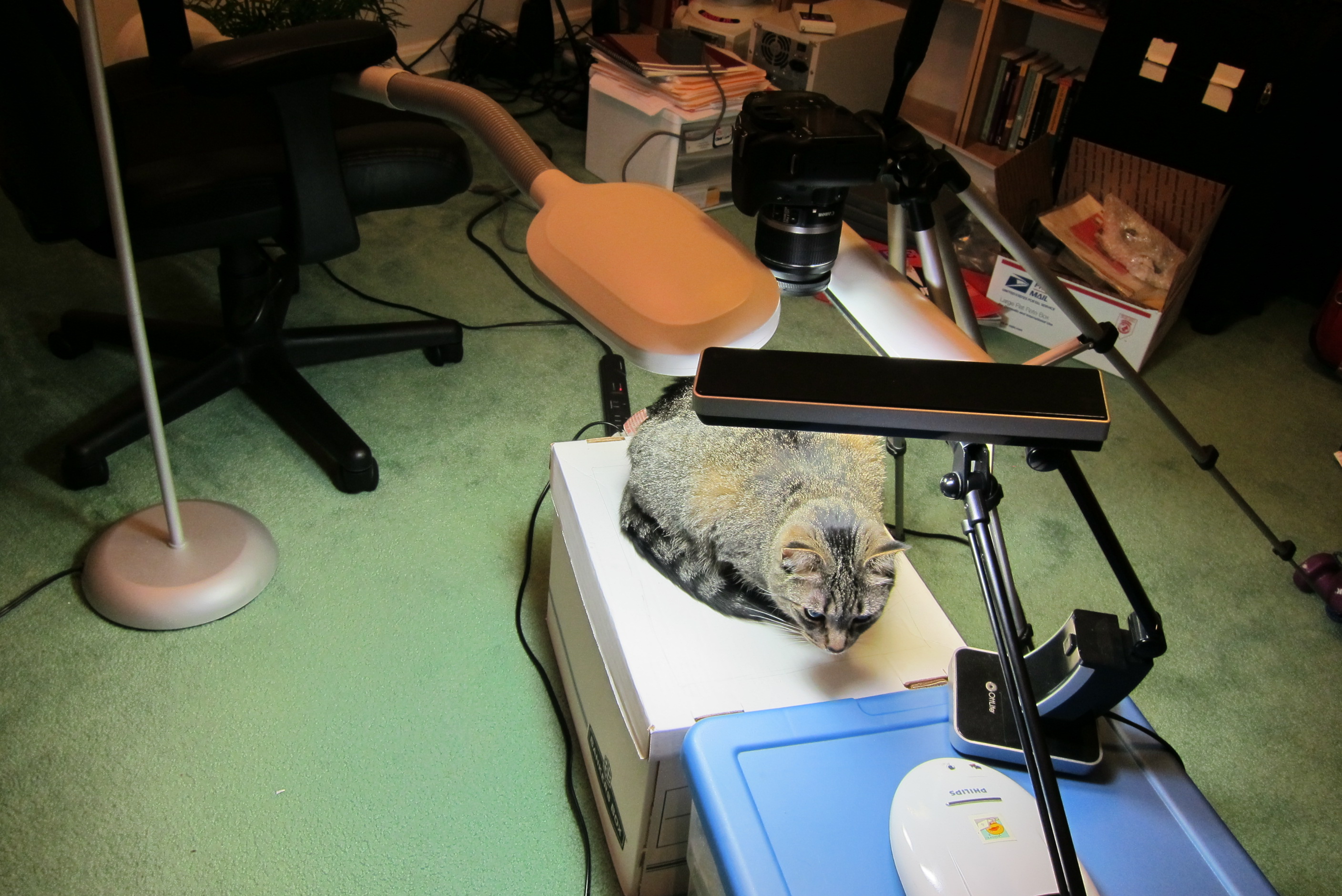
    2010-10-05 - IMG_2791
    Miao and Jason get things done with computers!

    As part of the final Digital Pedagogy seminar of fall 2012, Margaret Konkol, Patrick McHenry, Olga Menagarishvili, and I will lead the discussion on “trends in the digital humanities.” You can find out more about our readings and other DH resources by reading our TECHStyle post here.

    As part of my contribution to the seminar, I will give a demo titled, “Down and Dirty Guide to Literary Research with Digital Humanities Tools: Text Mining Basics.” In my presentation, I will show how traditional literary scholars can employ computers, cameras, and software to enhance their research.

    To supplement my presentation, I created the following outline with links to useful resources.

    Down and Dirty Guide to Literary Research with Digital Humanities Tools: Text Mining Basics

    1. Text Analysis and Text Mining
      1. My working definition of text mining: “Studying texts with computers and software to uncover new patterns, overlooked connections, and deeper meaning.”
      2. What is Text Analysis: Electronic Texts and Text Analysis by Geoffrey Rockwell and Ian Lancashire
      3. Text mining on Wikipedia
      4. Text Mining as a Research Tool by Ryan Shaw (an excellent resource with a presentation and links to more useful material on and offline)
    2. Advantages to Digital Research Materials
      1. Ask Interesting Questions That Would Otherwise Be Too Difficult or Time Consuming to Ask
      2. Efficiency
      3. Thoroughness
      4. Find New Patterns
      5. Develop Greater Insight
    3. Types of Digital Research Materials
      1. Your Notes
      2. eBooks
      3. eJournals
    4. Digitizing Your Own Research Materials
      1. What to Digitize
        1. Primary Sources
        2. Secondary Sources
      2. How to Digitize
        1. Acquire
          1. Camera > high resolution JPG
          2. Scanner > high resolution TIFF or JPG
        2. Collate as PDF
          1. Adobe Acrobat X Pro (now XI!)
          2. PDFCreator
          3. Mac OS X Preview
        3. Perform Optical Character Recognition (OCR) to generate machine readable/searchable plain text
          1. Adobe Acrobat X Pro
            1. Print PDF to a letter size PDF
            2. Tool > Recognize Text
          2. DevonThink
          3. Use Google
          4. Others?
        4. Save As/Export plain text > .txt files
        5. Engage the “Text” in New Ways
          1. New Ways of Seeing “Texts”
            1. Keyword Search
            2. Line Search
            3. Word Counts
            4. Concordance
            5. Patterns
          2. Tools to Help with Seeing “Texts”
            1. AntConc
            2. BBEdit (“It doesn’t suck” ®)
            3. MacOS X and Linux: cat, find, grep, and print (use “man cat” and “man grep” to learn more from the Terminal. More info herehere, here, here, and here.)
            4. DevonThink
            5. Notepad++
            6. Mac OS X Spotlight/Windows 7 Search
            7. TextEdit
            8. Others?
    IMG_0987
    Miao awaits digitization.
  • 2011-2012 R. D. Mullen Fellowship Winners

    Last week, Rob Latham of the University of California, Riverside announced the winners of the 2011-2012 R. D. Mullen Fellowship winners. I am one among the three recipients! This fellowship will provide each of us with funding to travel to California during the next school year to conduct research in the Eaton Science Fiction Collection at Riverside. I am very honored to have been selected as one of this year’s winners, and I congratulate the other recipients, Alexander and Jennifer, listed below from the original release:

    I would like to announce the winners of the third annual R.D. Mullen Research Fellowship, which is funded by Science Fiction Studies in the name of our late founding editor to support archival research in the J. Lloyd Eaton Collection of Science Fiction, Fantasy, Horror, and Utopian Literature at UC-Riverside. The committee—chaired by me and consisting of Andrea Bell, Neil Easterbrook, Joan Gordon, and Brooks Landon—reviewed a number of excellent applications and settled on a slate of three winners for 2011-12:

    JASON ELLIS is a PhD student in the English Department at Kent State University. His dissertation studies what he calls “neuronarratives,” sf texts that deal with the cognitive implications of artificial intelligence and human-machine interfaces. He is the coeditor of The Postnational Fantasy:  Postcolonialism, Cosmopolitics, and Science Fiction (McFarland, 2011) and has published articles on H.G. Wells, on digital nomadism, and on World of Warcraft. He plans to visit UC-Riverside to do research towards the writing of a dissertation chapter on “the effects of brain trauma” in the work of Philip K. Dick.

    ALEXANDER ISER is a PhD student in the School of Culture and Communication at the University of Melbourne. His dissertation focuses on how time-travel narratives draw out the links “between apocalyptic crises and societal conceptions of time.” He will be spending several weeks at UC-Riverside examining the Eaton’s extensive fanzine collection for evidence of how readers interpreted major time-travel stories as allegories of cultural crisis.

    JENNIFER L. LIEBERMAN is a PhD student in the Department of English at the University of Illinois. Her dissertation, entitled Power Lines: Electric Networks and the American Literary Imagination, studies how “literature helped to shape American perceptions of electrical technologies between 1870 and 1952.” She has published essays on Mark Twain’s A Connecticut Yankee in King Arthur’s Court and on Gertrude Atherton’s Patience Sparhawk and Her Times. At the Eaton, she plans to explore dime novels, boys’ adventure stories, and other proto/early-sf materials in terms of their evocation of the engineer as “the new frontiersman of the twentieth century.”

    I am very grateful to my committee for their work in vetting the applications, and my congratulations to the three winners, whom I hope to see soon here at UCR.

  • Neuroscience, the Neuronovel, and Science Fiction

    Several conversations with Tammy Clewell on the neuronovel rekindled my interest in the biology of the human brain. As a result, I have decided to do some research on the neuronovel and its relationship to science fiction. The neuronovel, with its emphasis on the hardware of the brain over the software of psychology, is arguably a hard science fiction topic (albeit most lacking an extrapolative element). Additionally, novels traditionally seen in terms of psychological explanation can be re-read with neuroscience in mind (pun intended).

    I am building a list of science fiction novels and short stories that specifically addresses the neuronovel’s emphasis of brains over mind. What titles of novels or short stories from approximately 1950 to the present can you recommend that emphasize brains over mind, and the brain’s influence on one’s sense of self and understanding of the world. This would include brain trauma over psychological trauma, neuroscience over psychology, depictions of creating or developing brains and how that shapes one’s engagement with the world, introspection or internal dialog that might have a biological explanation rather than a psychological one, etc. Two sets of works that immediate come to mind are Asimov’s robots (they exhibit psychological problems, but there is an emphasis on those behaviors resulting from the way they are hardwired), and Dick’s VALIS novels (the author’s 2-3-74 events can be more simply diagnosed as the first in a series of unfortunate strokes).

    This is a very rough sketch at this point, so please bear with me as a work through it. All suggestions are welcome and much appreciated.

  • Isaac Asimov’s Robots and Freed Slaves’ Names in Up From Slavery

    A passage in Booker T. Washington’s Up From Slavery caught my attention the other night while I was reading it for my African-American Literature seminar:

    After the coming of freedom there were two points upon which practically all the people on our place were agreed, and I found that this was generally true throughout the South: that they must change their names, and that they must leave the old plantation for at least a few days or weeks in order that they might really feel sure that they were free.

    In some way a feeling got among the coloured people that it was far from proper for them to bear the surname of their former owners, and a great many of them took other surnames. This was one of the first signs of freedom. When they were slaves, a coloured person was simply called “John” or “Susan.” There was seldom occasion for more than the use of the one name. If “John” or “Susan” belonged to a white man by the name of “Hatcher,” sometimes he was called “John Hatcher,” or as often “Hatcher’s John.” But there was a feeling that “John Hatcher” or “Hatcher’s John” was not the proper title by which to denote a freeman; and so in many cases “John Hatcher” was changed to “John S. Lincoln” or “John S. Sherman,” the initial “S” standing for no name, it being simply a part of what the coloured man proudly called his “entitles.”

    Washington doesn’t go into any more depth on his example of the former slave who chose “S.” as his middle initial, but that particular letter immediately reminded me of the “R.” at the beginning of Isaac Asimov’s humaniform robot:  R. Daneel Olivaw.  Was the selection of “S.” in Washington’s example a conscious or unconscious choice to signify the individual as being a former slave?  Also, did Asimov choose to the “R.” initial with a knowledge of Washington’s writing to serve as inspiration?  

    I have heard that Asimov’s robots represent African-Americans, and Asimov was involved in the Civil Rights movement.  However, I do not have sources to backup these claims.  If that is true, the above passage may be a strong link between the political work of Washington and the SF/political work of Asimov.  I do want to return to this idea in the future, and if anyone has anything to add to this, I would be very much interested in hearing from you.