Category: Science Fiction

  • Call for Papers: The Tenth Annual City Tech Science Fiction Symposium on Image in SF

    Call for Papers: Image in Science Fiction: The Tenth Annual City Tech Science Fiction Symposium

    Deadline for CFP: Friday, Oct. 31, 2025

    Date and Time of Event: Tuesday, December 2, 2025, 9:00AM-5:00PM EST

    Location: Academic Building A-105, New York City College of Technology (City Tech), CUNY

    Organizers: Jill Belli, Wanett Clyde, Jason W. Ellis, Leigh Gold, Kel Karpinski, Lucas Kwong, and Vivian Zuluaga Papp


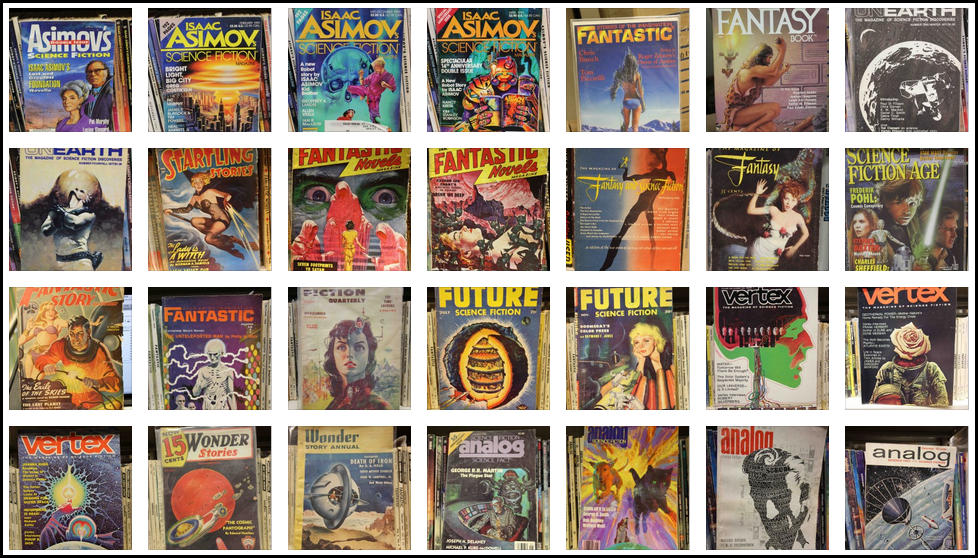
    Science Fiction (SF) is an image driven genre. Whether described in text, see the “dull yellow eye” in Mary Shelley’s Frankenstein (1818)); rendered in the two-dimensional art of magazines like Analog; or brought to life in film, TV, and video games, SF imagery continually confirms Gérard Klein’s observation that “science fiction does not proceed directly from science, nor from philosophy, but from the “images (eikons) and representations (eidons)” that these disciplines “unknowingly” produce (“From the Images of Science to Science Fiction,” 2000). SF images abound; how those images are understood and interpreted iterates to infinity.

    The Tenth Annual City Tech Science Fiction Symposium explores the many aspects, configurations, and meanings of the image in SF. We invite proposals for 10-20 minute scholarly paper presentations or 40-60 minute panel discussions related to the topic of image in SF broadly construed. Please send a 250-word abstract with title, brief 100-150-word professional bio, and contact information to Jason Ellis (jellis@citytech.cuny.edu) by Friday, October 31, 2025

    Topics with a connection to image in SF might include but certainly are not limited to:

    • image across modalities: textual, visual, interactive, etc.
    • images of race, ethnicity, sex, gender, sexuality, and other aspects of identity
    • images meant to shape understanding of stories and/or sell them (e.g., magazine covers, in-text illustrations, movie posters, trailers)
    • advertising images in and around SF (e.g., advertising to sell SF as well as non-SF advertising around SF ranging from Big Tobacco to the Johnson Smith Co.
    • fandom’s use, adaptation, and transformation of images 
    • image and politics
    • image and meaning
    • image and representation
    • SF and photography
    • SF, simulacra, and simulation
    • Generative AI and SF

    The event will be held in person at the New York City College of Technology (City Tech), CUNY in downtown Brooklyn, New York. 

    This event is free and open to the public as space permits: an RSVP will be included with the program when announced on the Science Fiction at City Tech website (https://openlab.citytech.cuny.edu/sciencefictionatcitytech/). Free registration will be required for participation.

    The event is sponsored by the School of Arts and Sciences at the New York City College of Technology, CUNY.

    The Annual City Tech Symposium on Science Fiction is held in celebration of the City Tech Science Fiction Collection, an archival holding of over 600-linear feet of magazines, anthologies, novels, and scholarship. It is in the Archives and Special Collections of the Ursula C. Schwerin Library (Library Building, L543C, New York City College of Technology, 300 Jay Street, Brooklyn, NY 11201). More information about the collection and how to access it is available here: https://openlab.citytech.cuny.edu/sciencefictionatcitytech/librarycollection/.
  • Crestwood House Monster Series for Children

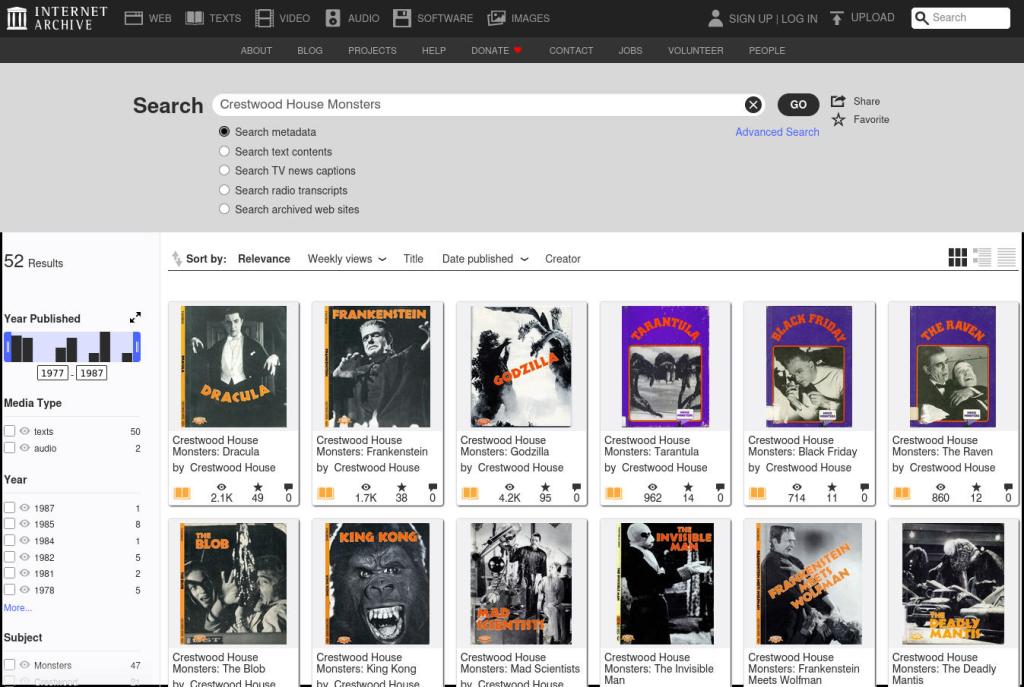
    a page of search results on archive.org for crestwood house monsters with covers showing Dracula, Frankenstein, Godzilla, and others.

    When I was a kid attending Glyndale Elementary School in Brunswick, Georgia, I must have checked out all of the titles our school library had of the Crestwood House Monster series at least a dozen times. My favorite titles were Dracula, Frankenstein, King Kong, Godzilla, The Invisible Man, The Wolfman, and The Creature from the Black Lagoon. Thanks to the Internet Archive, scanned versions of these books are available for reading online or download here.

  • Star Wars Kenner Speeder Bike Vehicle and Biker Scout Action Figure

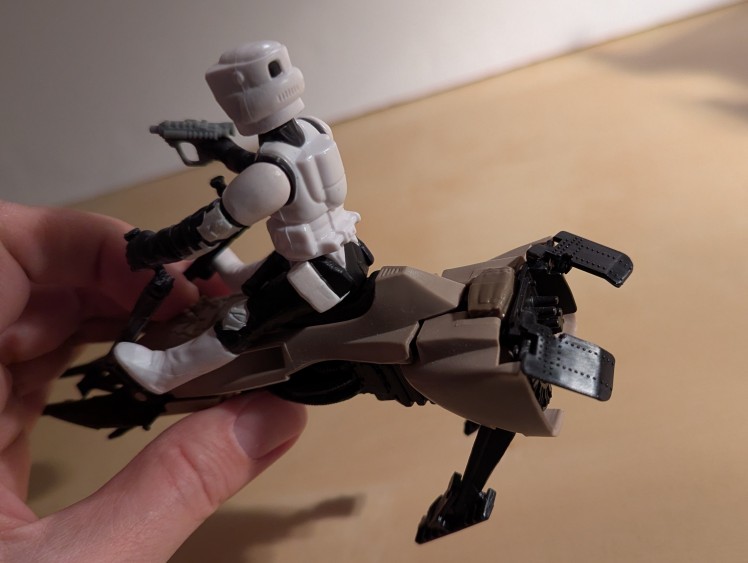
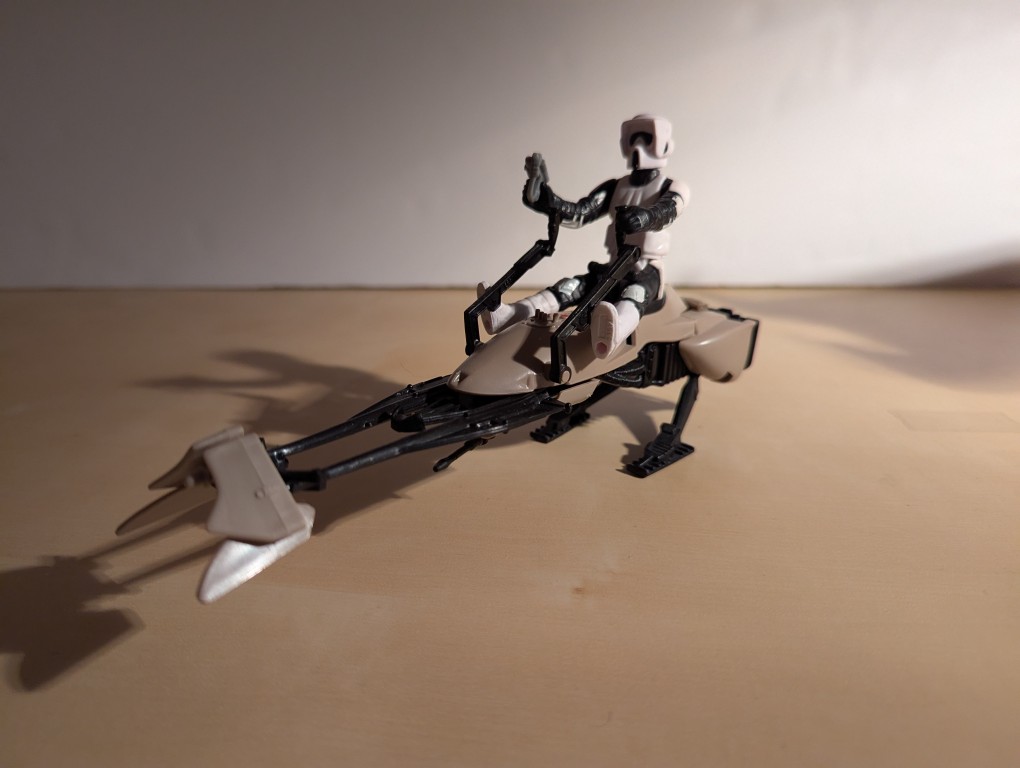
    kenner speeder bike toy with a biker scout sitting on top holding the handles and a blaster pistol, 3/4 view

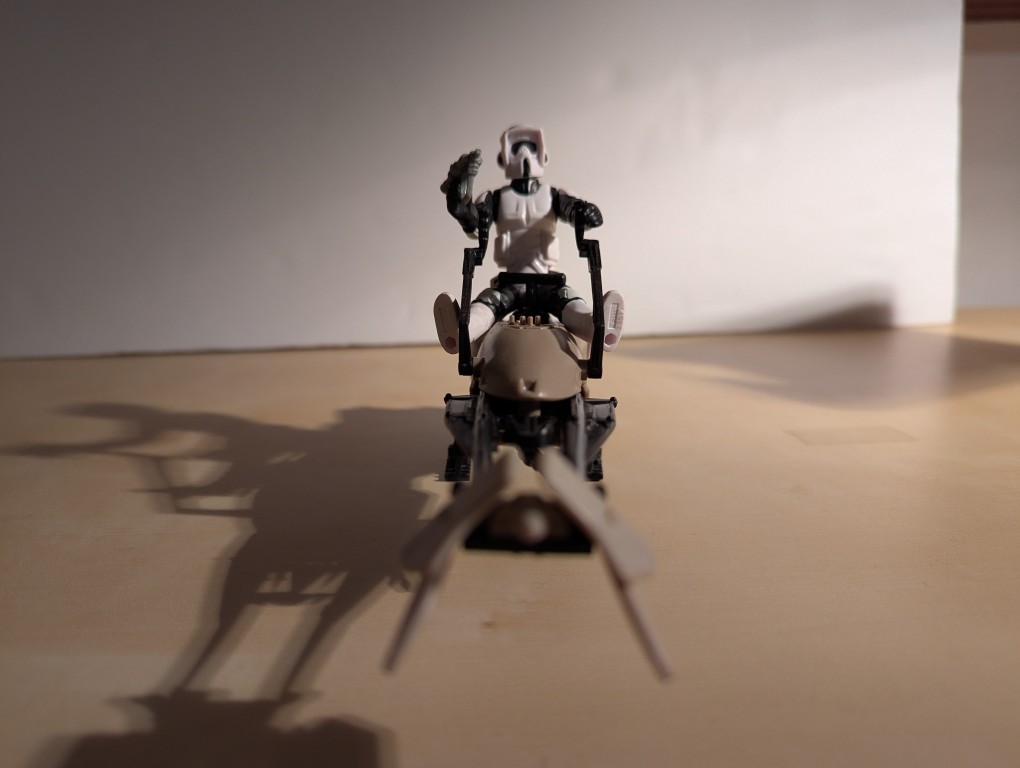
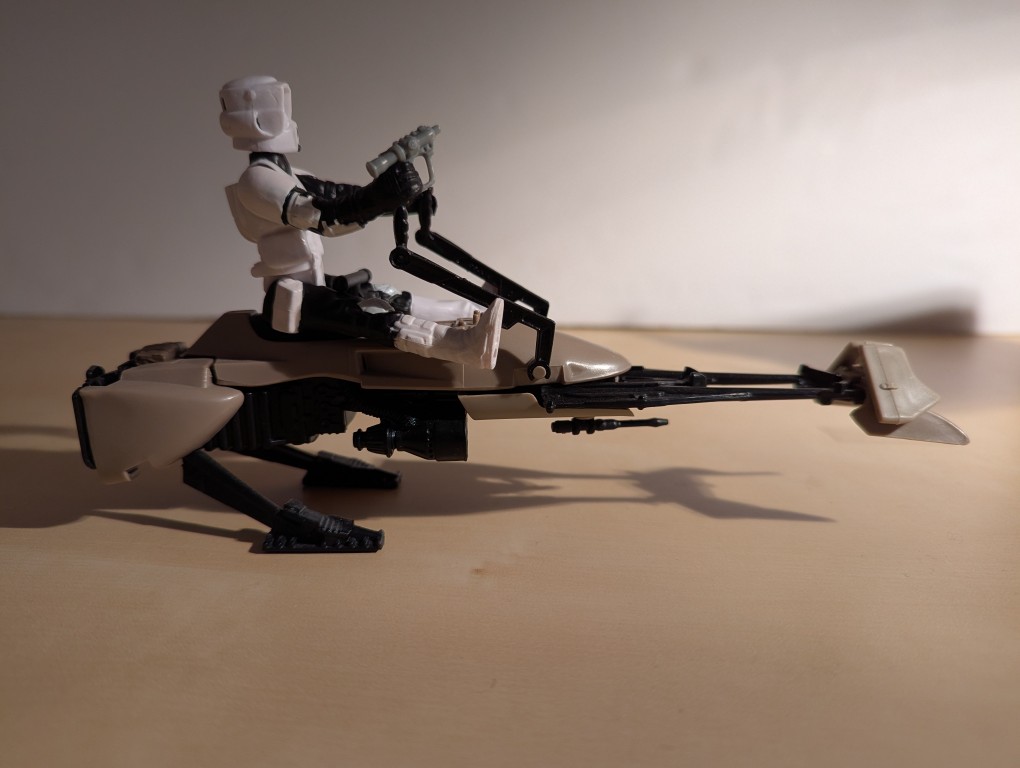
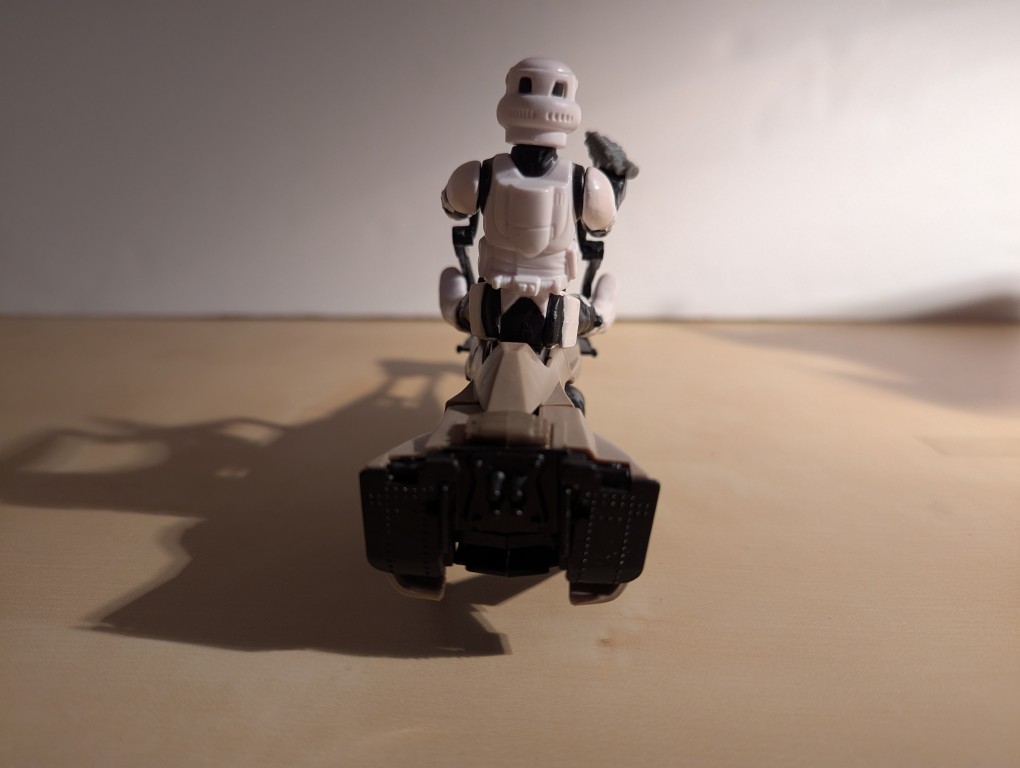
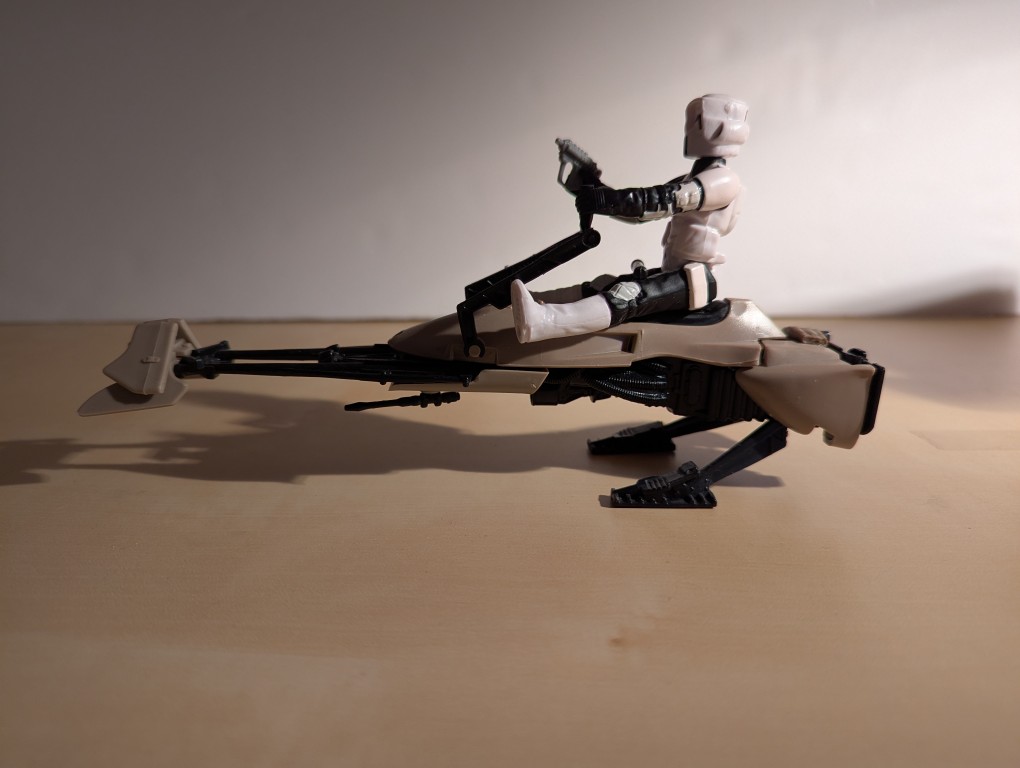
    The speeder bike chase on the Moon of Endor is one of the most exciting sequences in Return of the Jedi (1983). Kenner captured that excitement in the speeder bike vehicle and Imperial Biker Scout action figure. There are some ingenious elements to this vehicle. First, when one picks up the speeder bike, the stirrups descend and the engine flaps on the back lift up and open. Second, when a speeder bike is hit by a laser blast, struck by a lightsaber, or runs into something, one can press on the blanket on the back to trigger the speeder bike exploding into three separate parts. This was one of my favorites in my Star Wars action figure collection, but it is now entrusted to someone else.

    kenner speeder bike toy with a biker scout sitting on top holding the handles and a blaster pistol, front view
    kenner speeder bike toy with a biker scout sitting on top holding the handles and a blaster pistol, right side view
    kenner speeder bike toy with a biker scout sitting on top holding the handles and a blaster pistol, rear view
    kenner speeder bike toy with a biker scout sitting on top holding the handles and a blaster pistol, right side view
    kenner speeder bike toy with a biker scout sitting on top holding the handles and a blaster pistol, lifted with engine flaps open
  • My Interview with Emily Hockaday, Senior Managing Editor of Asimov’s, Published in New American Notes Online

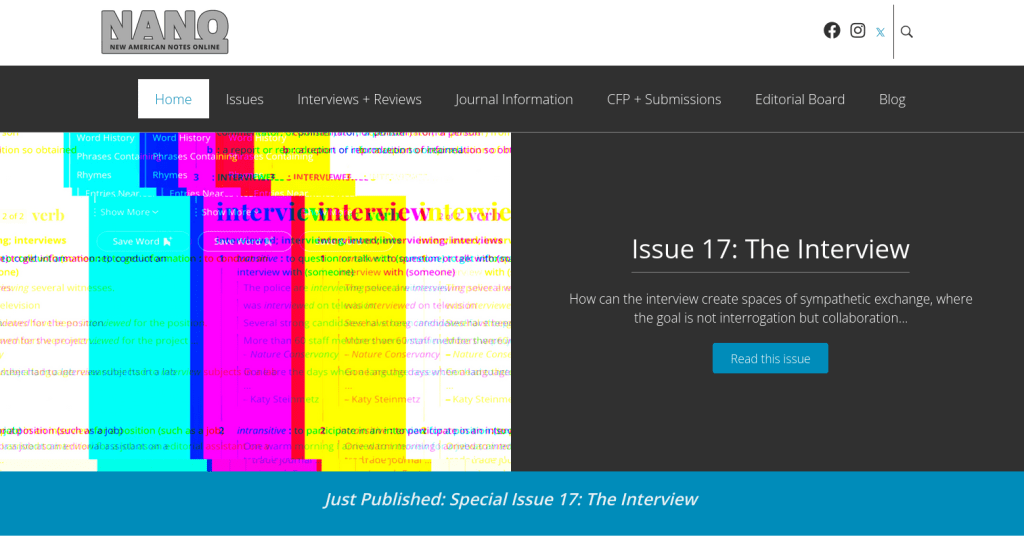
    screen shot of a printer color offset of the definition of an "interview" as the title image for Issue 17: The Interview in New American Notes Online website

    Issue 17 of New American Notes Online (NANO) on “The Interview” was recently published.

    My interview with Emily Hockaday, senior managing editor of Asimov’s Science Fiction Magazine, on Artificial Intelligence (AI), Generative AI, and science fiction publishing is a part of the issue.

    Click through here to see the other interviewees and topics covered in this special issue.

    Editor Sean Scanlan sent out this press release for the issue:

    A new issue of NANO: New American Notes Online has been published

    Special Issue 17: The Interview

    Publication date: June 2025

    ISSN: 2160-0104 (Online)

    NANO is an indexed, Open Access, and Open Source humanities journal. NANO never charges to submit or to read content. NANO is published by City Tech, part of the City University of New York.

    NANO announces its new issue, an exploration of the ways that interviews connect people.

    The interview is woven into our hyper-connected world through podcasts, Zooms, magazines, newspapers, social media, and they still occur in private settings. Interviews are ubiquitous. They can be formal and informal, closed or open-ended; they can yield quantitative and qualitative results; they can invoke power and symbolic capital. But, the interview can also be less about gate-keeping and more about the tension inherent in knowledge production and sharing. The eight interviews in this special issue of NANO create spaces of exchange, where the goal is not interrogation but collaboration, curiosity, and mutual understanding.

    Two interviews focus on teaching. A multimedia project by Shauna Chung, Naila Butt, Sandy Fougeres, and Khemraj Persaud describe ways that interviews fuse writing and workplace readiness while the scholar Laura Westengard reveals the communal spaces where gothic and queer reinforce each other.

    Two interviews focus on visual art. Jennifer Lockard Connerley discusses ways that academia and spirituality enhance portraiture while Bill Saylor reveals how his environmental and natural abstractions arise.

    Two interviews focus on translation. Dana Crăciun acknowledges the difficulty of translation while Johannes Göransson eyes translation’s inherent creativity.

    Two interviews focus on creativity and theory. The writer and editor Emily Hockaday discusses the challenges of running a science fiction magazine in the age of AI while Marcus Boon reflects on his interdisciplinary practices.

    Editor’s Introduction for NANO Special Issue 17: The Interview

    by Sean Scanlan

    https://nanocrit.com/index.php/issues/issue17/Editors-Introduction-for-NANO-Special-Issue-17-The-Interview-Issue-by-Sean-Scanlan

    How the Interview Can Become a College Writing Tool for Workplace Readiness

    by Shauna Chung, Naila Butt, Sandy Fougeres, Khemraj Persaud

    https://nanocrit.com/index.php/issues/issue17/How-the-Interview-Can-become-a-College-Writing-Tool-for-Workplace-Readiness-by-Shauna-Chung-Naila-Butt-Sandy-Fougeres-Khemraj-Pe

    An Interview with Marcus Boon, Author of In Praise of Copying 

    by David Banash

    https://nanocrit.com/index.php/issues/issue17/An-Interview-with-Marcus-Boon-Author-of-In-Praise-of-Copying-by-David-Banash

    An Interview with Jennifer Lockard Connerley: Portrait of the Artist as a Young Academic

    by Tara Robbins Fee

    https://nanocrit.com/index.php/issues/issue17/An-Interview-with-Jennifer-Lockard-Connerley-by-Tara-Robbins-Fee

    An Interview with Emily Hockaday, Senior Managing Editor of Asimov’s Science Fiction Magazine

    by Jason Ellis

    https://nanocrit.com/index.php/issues/issue17/An-Interview-with-Emily-Hockaday-Senior-Managing-Editor-of-Asimov-s-Science-Fiction-Magazine-by-Jason-Ellis

    An Interview with Dana Crăciun, the translator of Salman Rushdie’s works into Romanian 

    by Carmen Neamțu

    https://nanocrit.com/index.php/issues/issue17/An-Interview-with-Dana-Cr%C4%83ciun-the-translator-of-Salman-Rushdie-s-works-into-Romanian-by-Carmen-Neam%C8%9Bu

    An Interview with Laura Westengard, Author of Gothic Queer Culture

    by Leigh Dara Gold

    https://nanocrit.com/index.php/issues/issue17/An-Interview-with-Laura-Westengard-Author-of-Gothic-Queer-Culture-by-Leigh-Dara-Gold

    An Interview with Johannes Göransson

    by Matt Miller

    https://nanocrit.com/index.php/issues/issue17/An-Interview-with-Johannes-Goransson-by-Matt-Miller

    An Interview with Bill Saylor

    by Sean Scanlan

    https://nanocrit.com/index.php/issues/issue17/An-Interview-with-Bill-Saylor-by-Sean-Scanlan

  • How to Lift and Lower Heavy Equipment with Car Screw Jacks

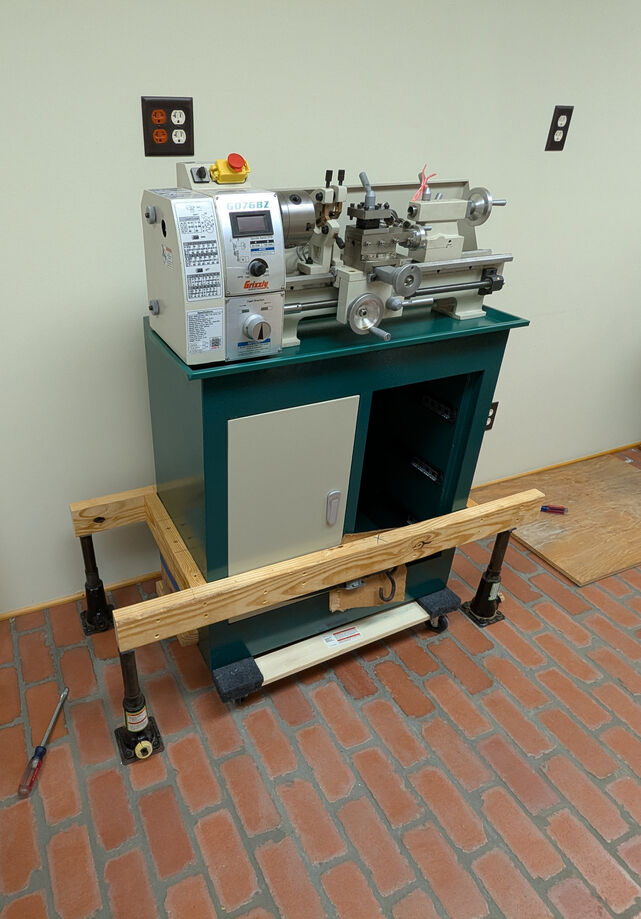
    My dad has a dozen or two of screw bottle car jacks that he used to press and hold every tongue-and-groove cypress board covering the walls and ceiling of the upper floors of their house. We made use of four of them to move two pieces of his heavy machinery into place in his shop.

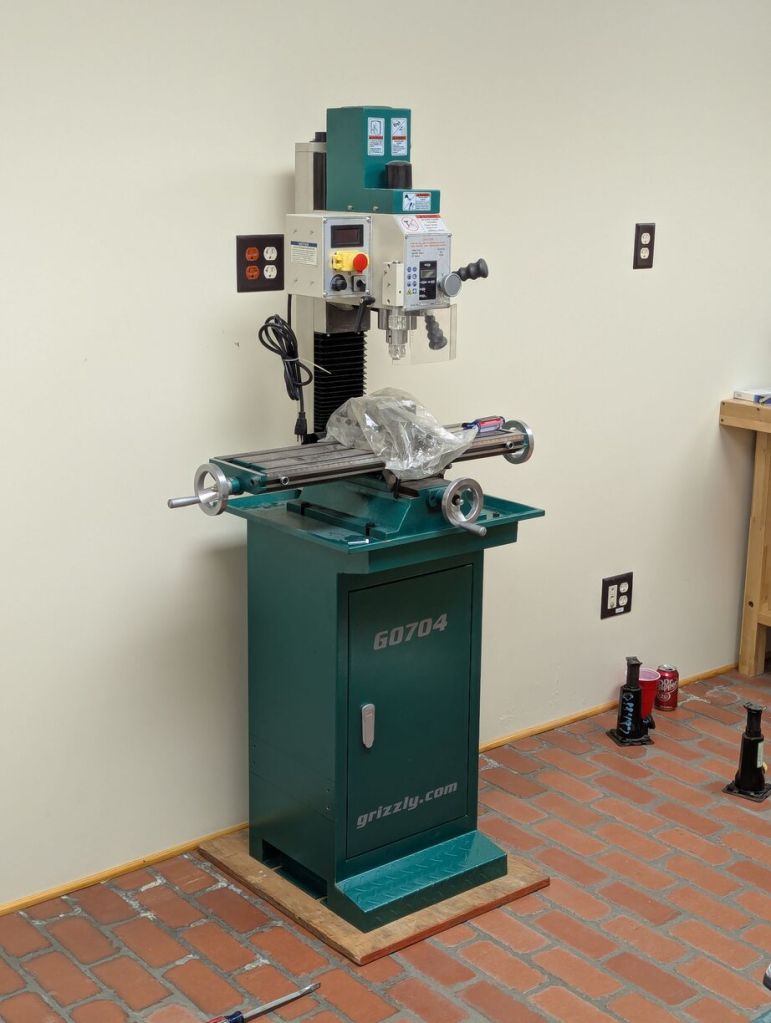
    Some time back, he purchased a milling machine and lathe from Grizzly. He had managed to get them into his shop on furniture movers. Of course, they can’t be run on those platforms, so we needed to find a way to place them flat on the shop’s floor.

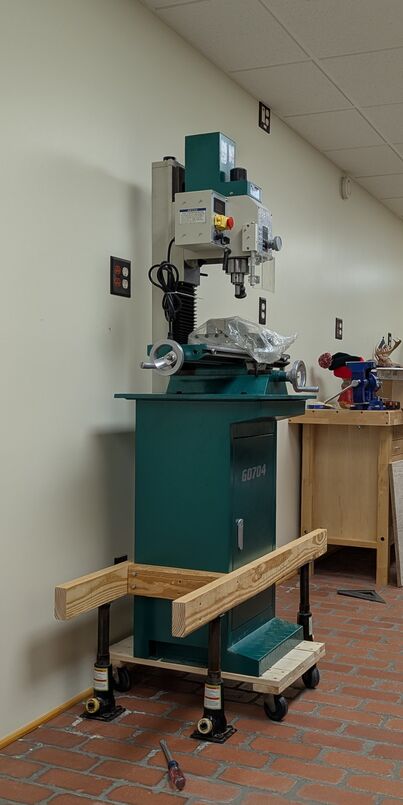
    For the milling machine, which was heavier than the lathe, we drilled four holes through the metal cabinet and constructed a wood box with bolts going through the short sides of the wood box into the metal cabinet. We placed the four jacks under the long arms of the box, raised it a fraction of an inch to remove the furniture mover and then lowered the jacks until the cabinet rested on a 3/4″ plywood base that we cut to fit. Then, we removed the box from the cabinet after unbolting it and unscrewing the deck screws we had built the box with.

    If you do something similar to this, be mindful of the total reach/height of the jack and its minimum. We built the box around the cabinet at a height that allowed for a slight lift and enough lowering to allow the jacks to be removed after the cabinet was lowered.

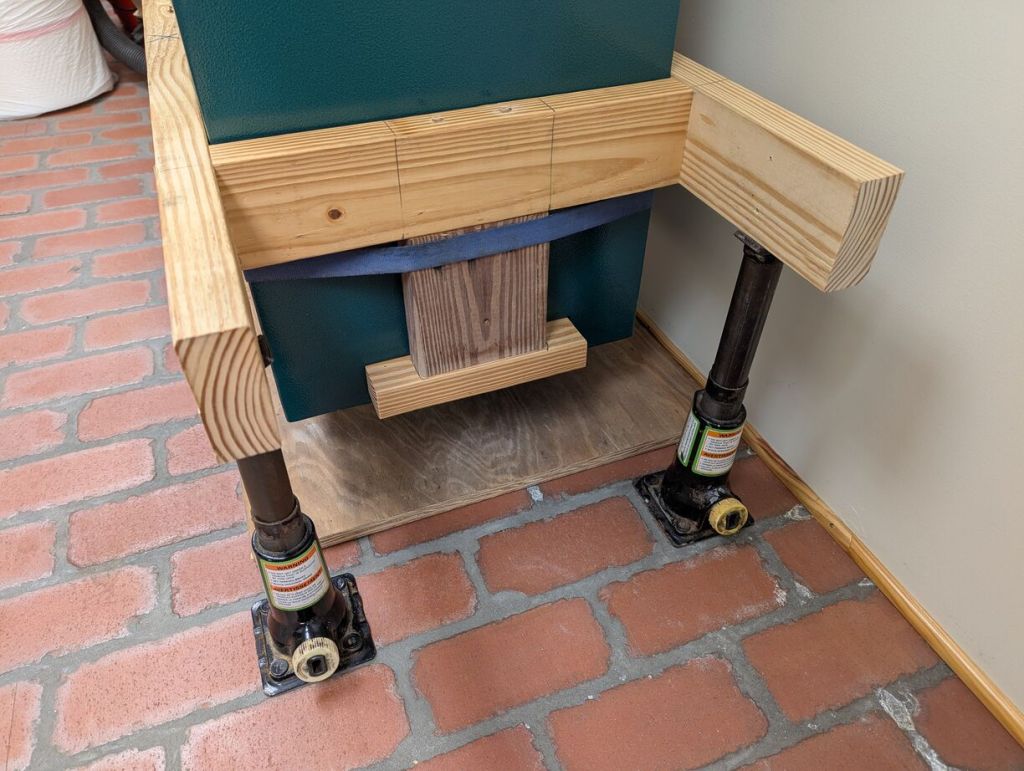
    For the lathe, we did something similar, except we couldn’t drill through its cabinet to bolt the box to the cabinet as we had done with the milling machine because it is double walled and could potentially create problems with bolt alignment (and we would need much longer bolts).

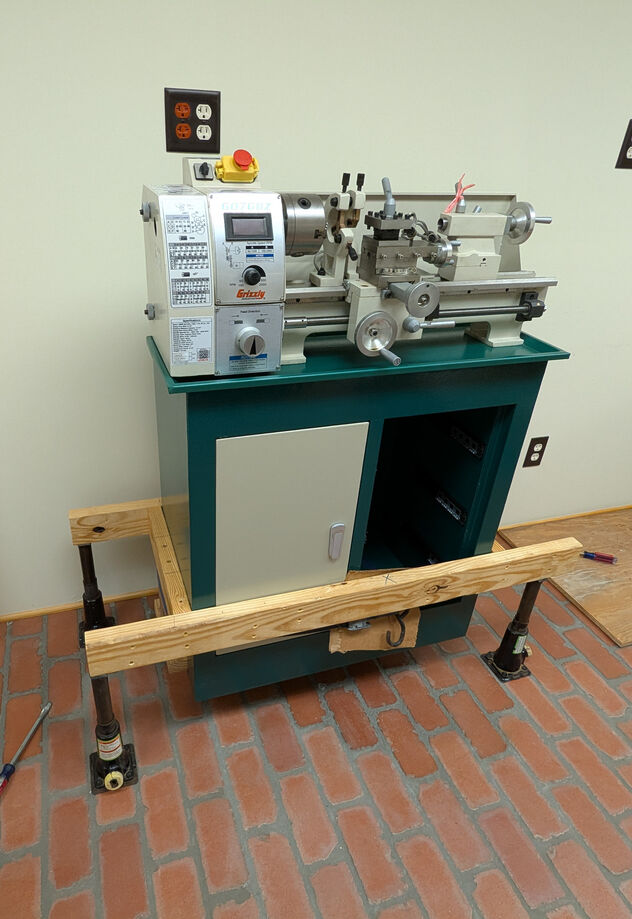
    With the lathe being lighter than the milling machine, we felt safe building the box around the lathe’s cabinet and adding two “tongs” that fit into the recesses at the bottom of the cabinet. To make sure the tongs remained in place, we put a tie strap around these and the cabinet.

    We lifted the lathe slightly to remove the furniture mover.

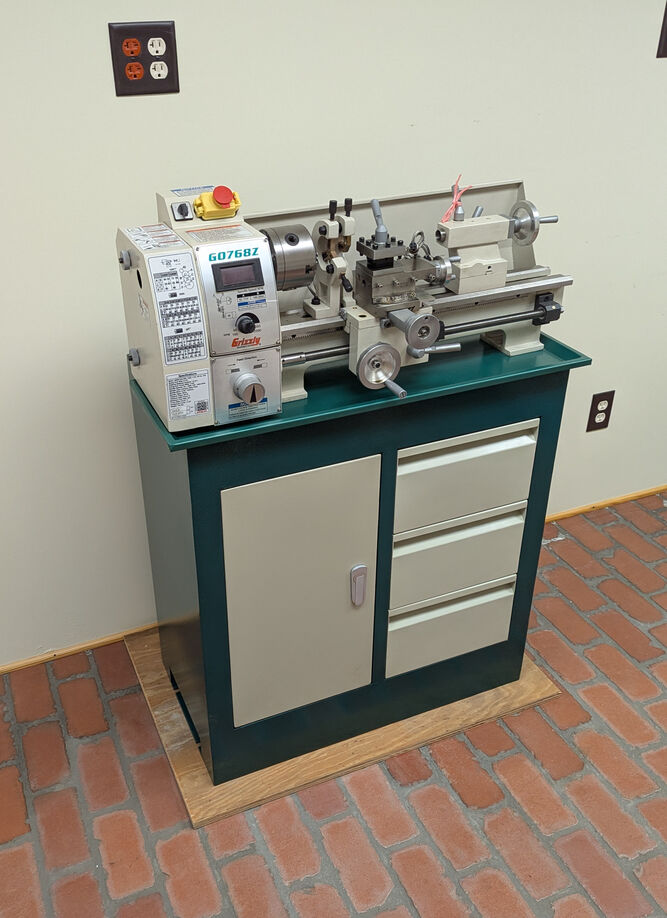
    And then lowered it onto a custom piece of plywood for it to rest on the floor.

    When you don’t have the muscle or manpower, use the tools at hand to get things done. As William Gibson writes, “the street finds its own use for things.”