Category: Science Fiction

  • My Review of Henry Wessells’ A Conversation Larger Than the Universe Book Exhibit, Published at the Science Fiction Foundation

    Maker:L,Date:2017-10-2,Ver:5,Lens:Kan03,Act:Kan02,E-Y

    The Science Fiction Foundation recently published my review of A Conversation Larger Than the Universe: Science Fiction and the Literature of the Fantastic from the Collection of Henry Wessells. The exhibit, held at The Grolier Club in New York City from Jan. 2018 through 10 Mar. 2018 offered a very interesting afternoon’s exploration of one reader’s impressive collection of books, autographs, and ephemera. While I hope that you will click through to read the full review, I include my conclusion below, which might be of interest to those folks who were unable to attend the short-lived display.

    Personal collections tend to say more about their collectors than anything else. While the totality of the items in the collection (with the exhibit being a curated selection from the larger collection) provides one kind of map and history of the fantastic, it ultimately expresses the logic and lived experience of its collector. Wessells explains: ‘I collect by synecdoche, meiosis, and metonymy, as well as by inclination, and by ties of friendship’, and ‘My interests as a reader have often led me away from the canonical to the uncertain edges of the fantastic. Along the boundaries is often where distinctions are sharpest, where science fiction is not so much a place you get to as it is the way you went’. Wessells’s exhibited collection is as admirable as it is interesting to experience, a path off the busy Manhattan streets and into other, imagined worlds.

    Read my full review here and browse photos of the exhibit here.

  • Interzone 14, Winter 1985/1986

    Maker:L,Date:2017-10-2,Ver:5,Lens:Kan03,Act:Kan02,E-Y

    I received another eBay find today: Interzone issue 14 (Winter 1985/1986). This is a special magazine issue for me, because it contains “The New Science Fiction” manifesto by Vincent Omniaveritas (pseudonym for the science fiction writer and activist Bruce Sterling; his alter ego also appears as publisher of the zine Cheap Truth–read scanned issues here or text of each issue here).

    Originally published in the Puerto Rican fanzine Warhoon, this hard-hitting call-to-arms advocates that, “We must create the native literature of a post-industrial society” (40).

    This isn’t necessarily a manifesto for the movement known as cyberpunk, but many cyberpunk works fit. Instead, it is a larger artistic movement, which he describes thus at the end of the essay:

    What, in short, is the New Science Fiction? How do you write it, how do you recognize it?

    First, it is not the property of any editor, clique, publisher, or regional or national association. It is not a question of personal influence, creative writing classes, or apprenticeship to genre gurus. It is a question of approach, of technique. And these are its trademarks:

    (1) Technological literacy, and a concern with genuine modern science as opposed to the hand-me-down pseudoscience guff of past decades.

    (2) Imaginative concentration, in which extrapolations are thoroughly and originally worked out rather than patched together from previous notions.

    (3) Visionary intensity, with a bold, no-holds-barred approach to sf’s mind-expanding potential.

    (4) A global, 21st-century point of view, which is not bound by the assumptions of middle-aged, middle-class white American males.

    (5) A fictional technique which takes the advances of the new Wave as already given, using the full range of literary craftsmanship, yet asserting the primacy of content over style and meaning over mannerism.

    The New Science Fiction is a process, directed toward a goal. It is an artistic movement in the fullest sense of the word. It is the hard work of dedicated artists, who know their work is worthwhile, who treat it as such, and who push themselves to the limit in pursuit of excellent.

    And it is for real. (Omniaveritas 40)

    The entire manifesto is worth reading–for its historical significance, its ideas for the New Science Fiction, and its prize-fighter-like style of sending its message home blow-after-blow. You can find a copy on Archive.org’s Internet Wayback Machine here.

    Works Cited

    Omniaveritas, Vincent (Bruce Sterling). “The New Science Fiction.” Interzone. No. 14 (1985), pp. 39-40.

  • LEGO Playset MOC of Temple Island on Ahch-To in Star Wars: The Last Jedi

    IMG_20180218_133943.jpg

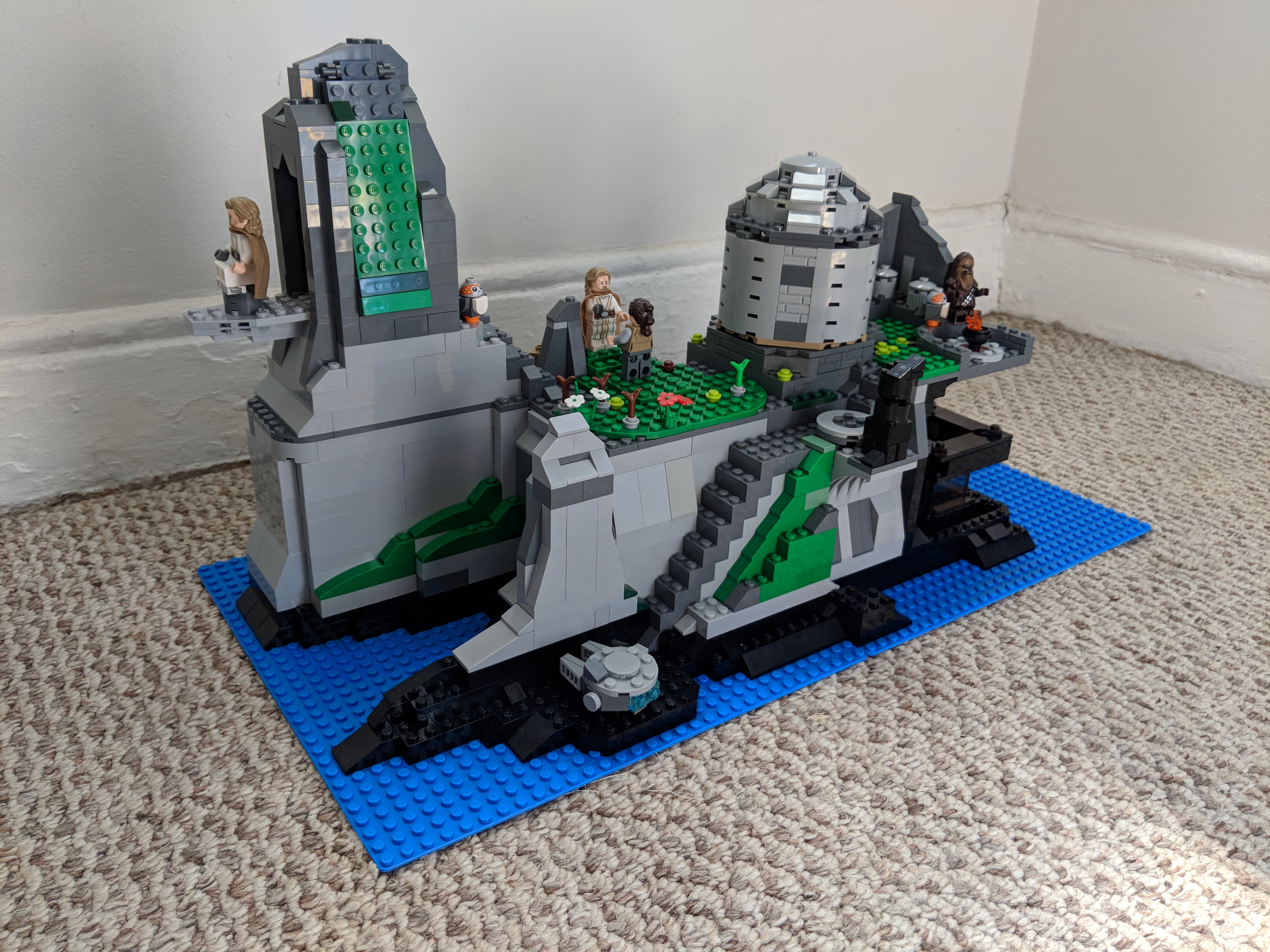
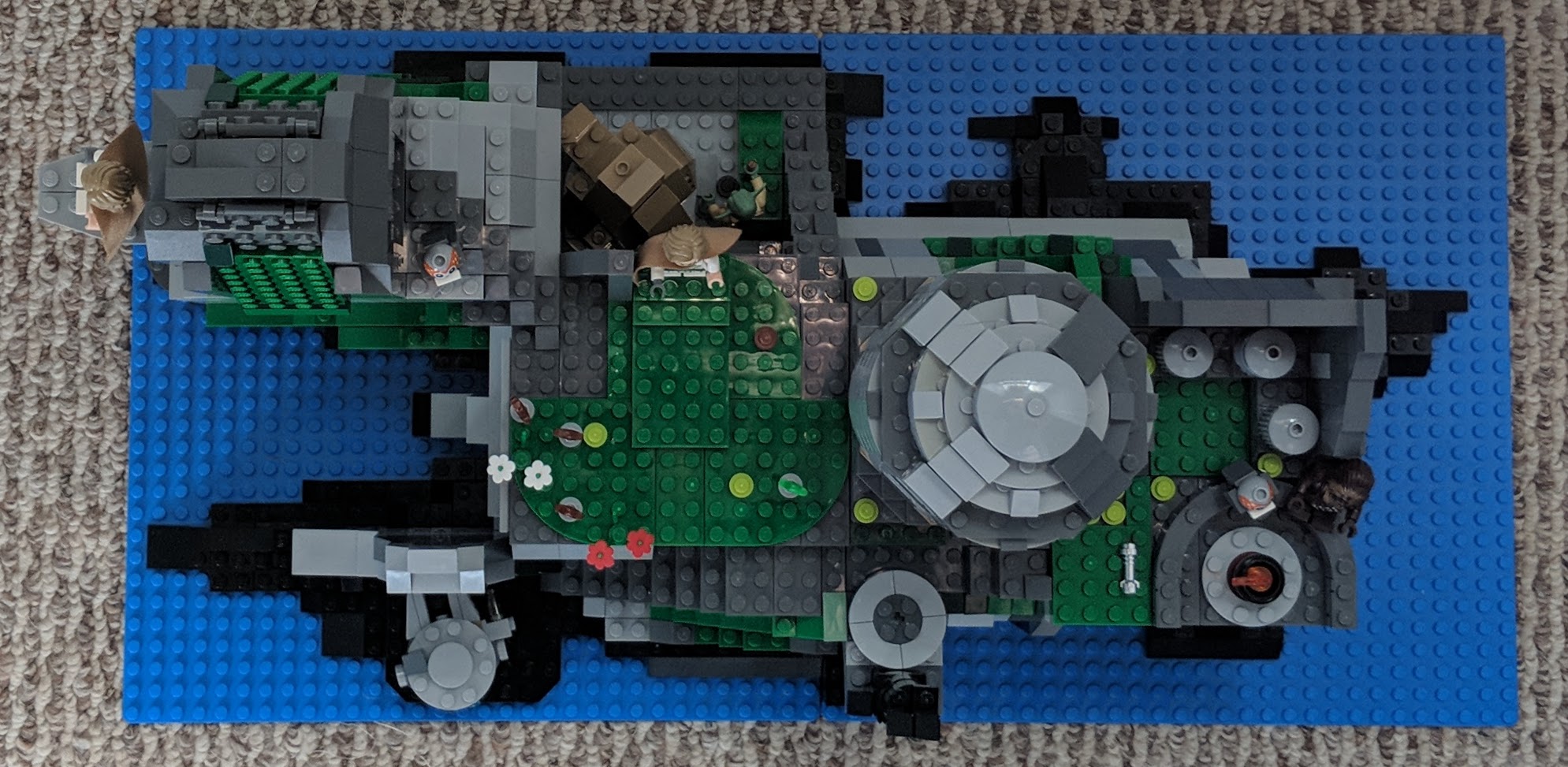
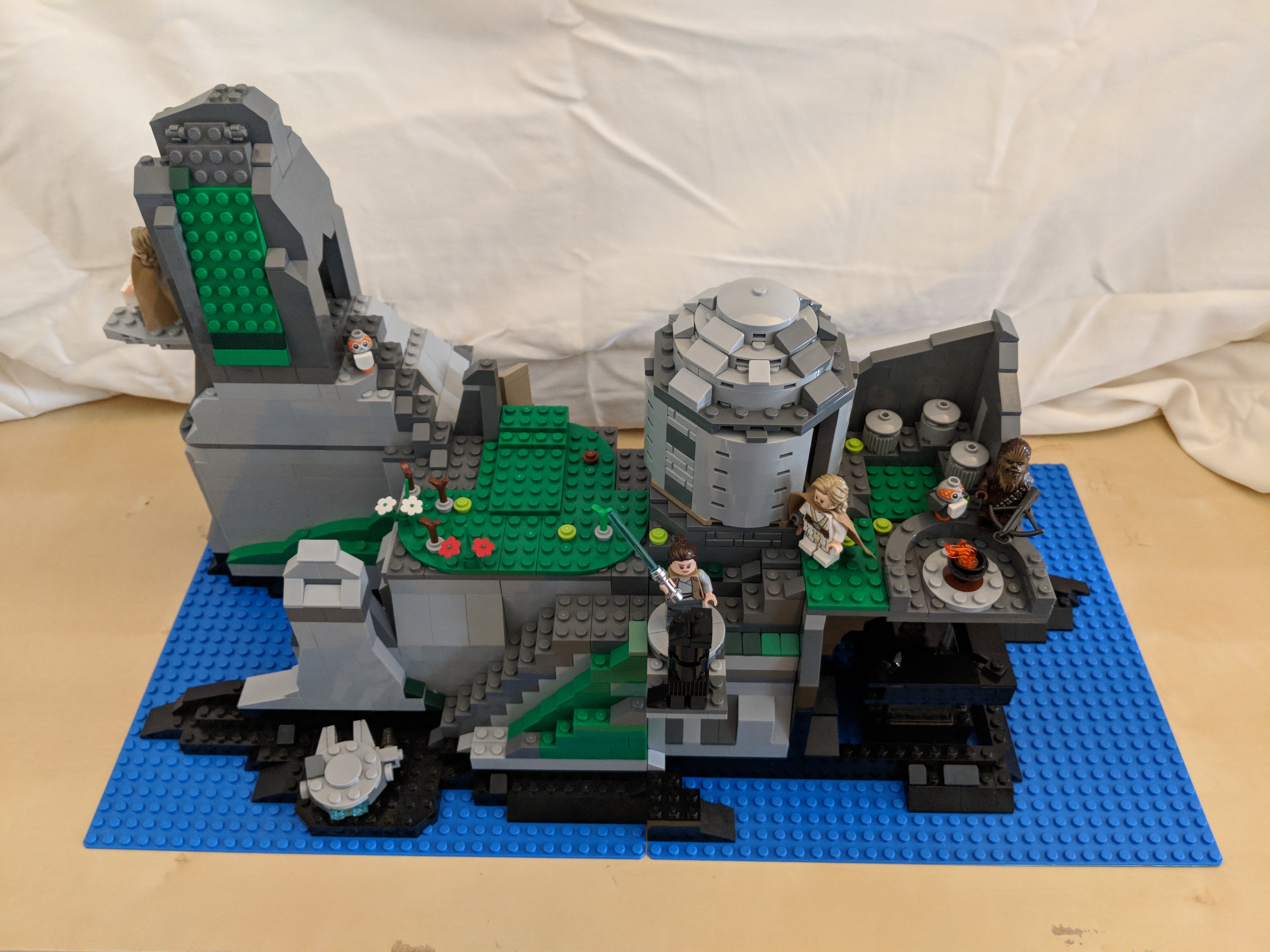
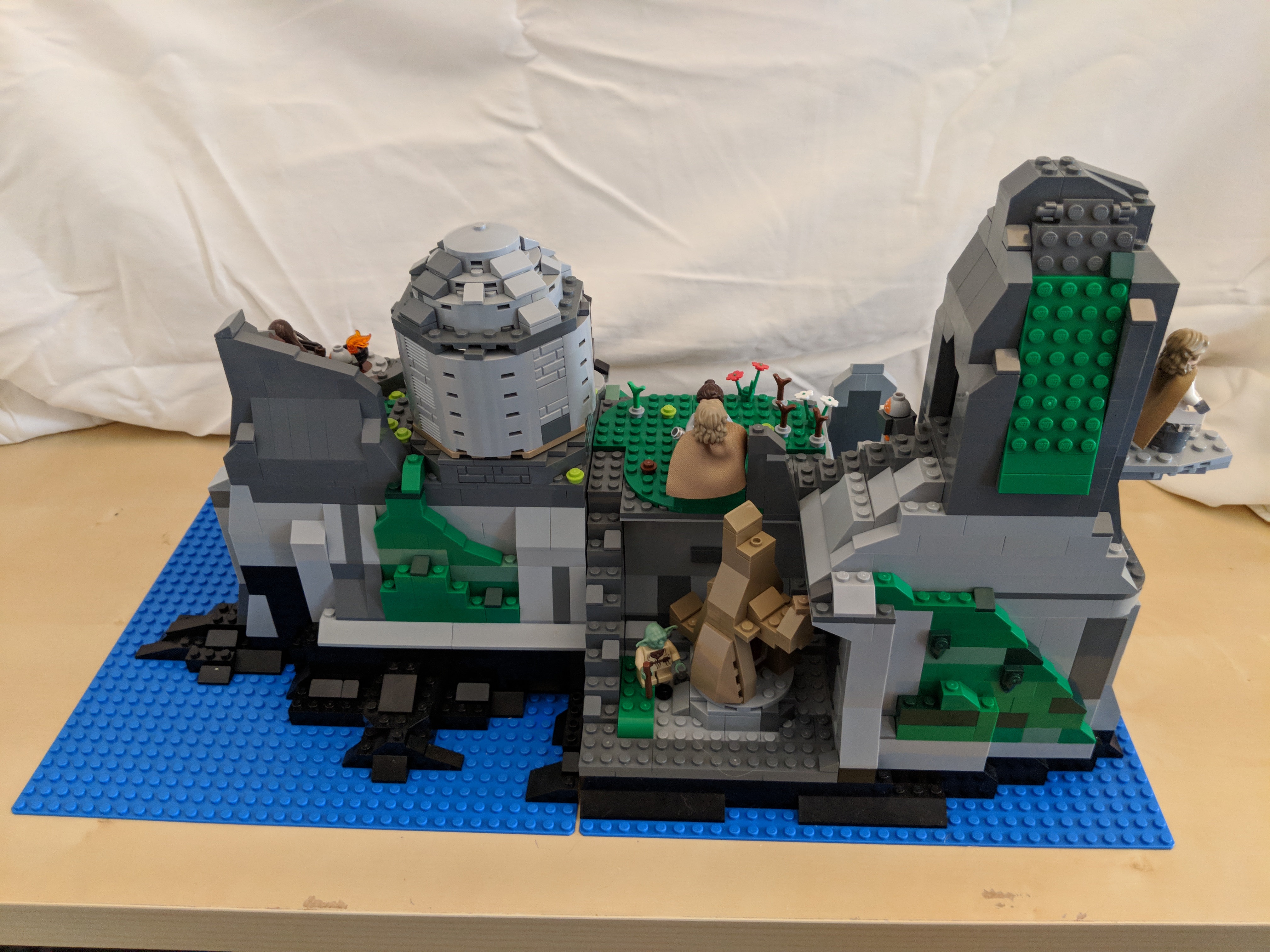
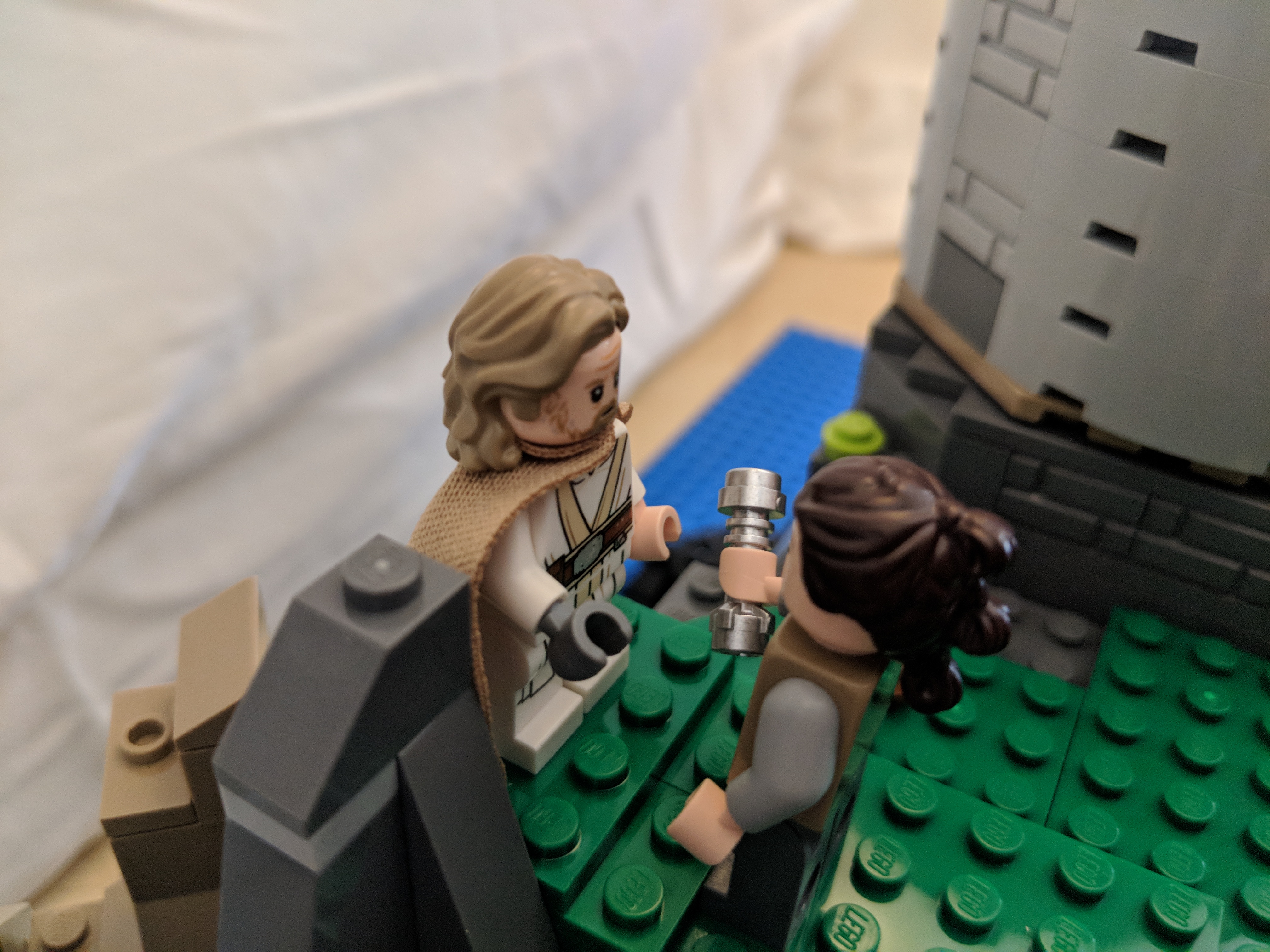
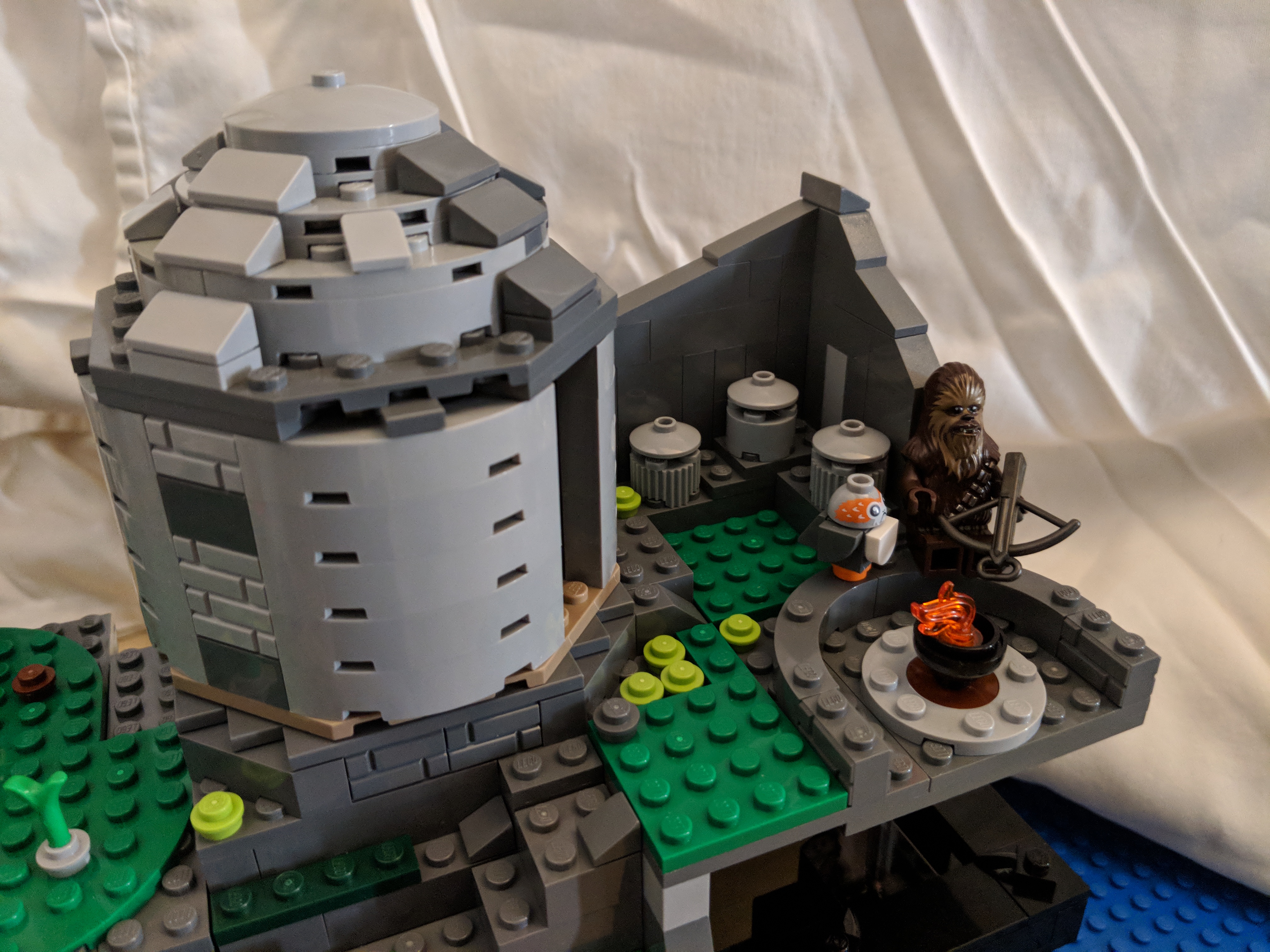
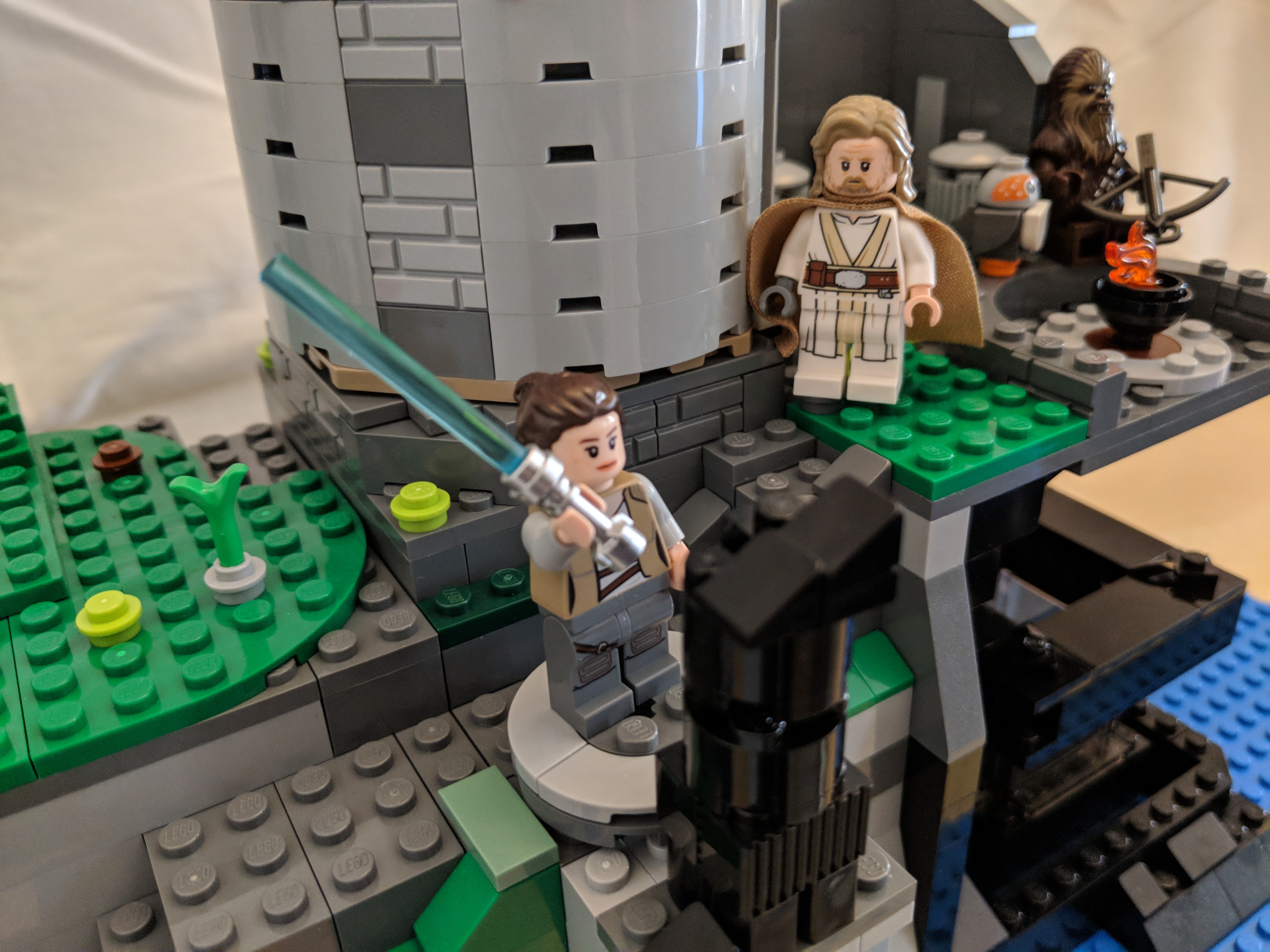
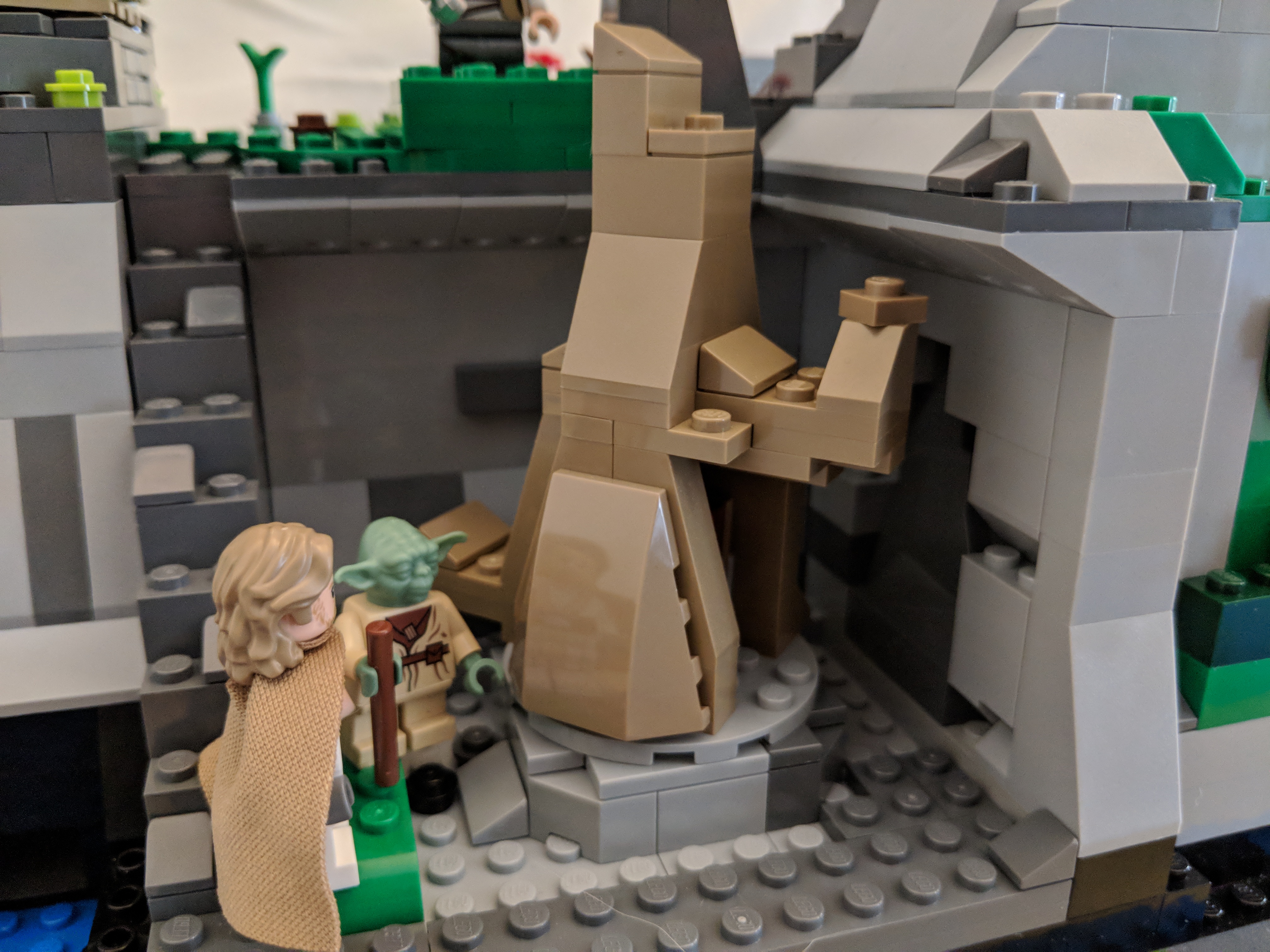
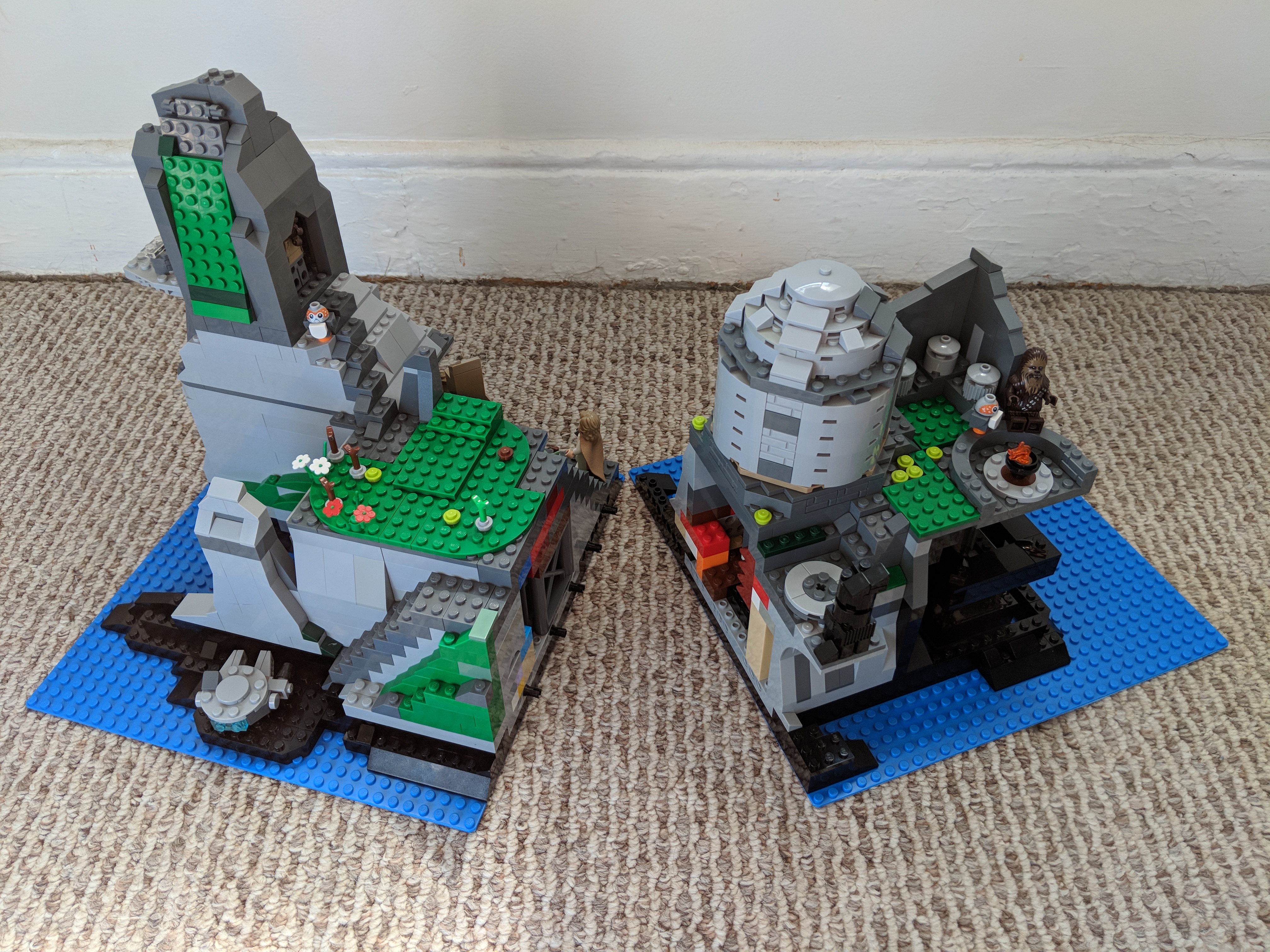
    Inspired by LEGO’s Death Star playset, which is both enormous and scene-focused, I built a 64 x 32 stud MOC of Temple Island on Ahch-To from Star Wars: The Last Jedi. First glimpsed at the end of The Force Awakens and explored in the latest installment, Temple Island is the home of the first Jedi Temple, and it is where Luke Skywalker has been hiding away during the rise of the First Order under the leadership of Snoke and supported by Luke’s former pupil, Ben Solo or Kylo Ren.

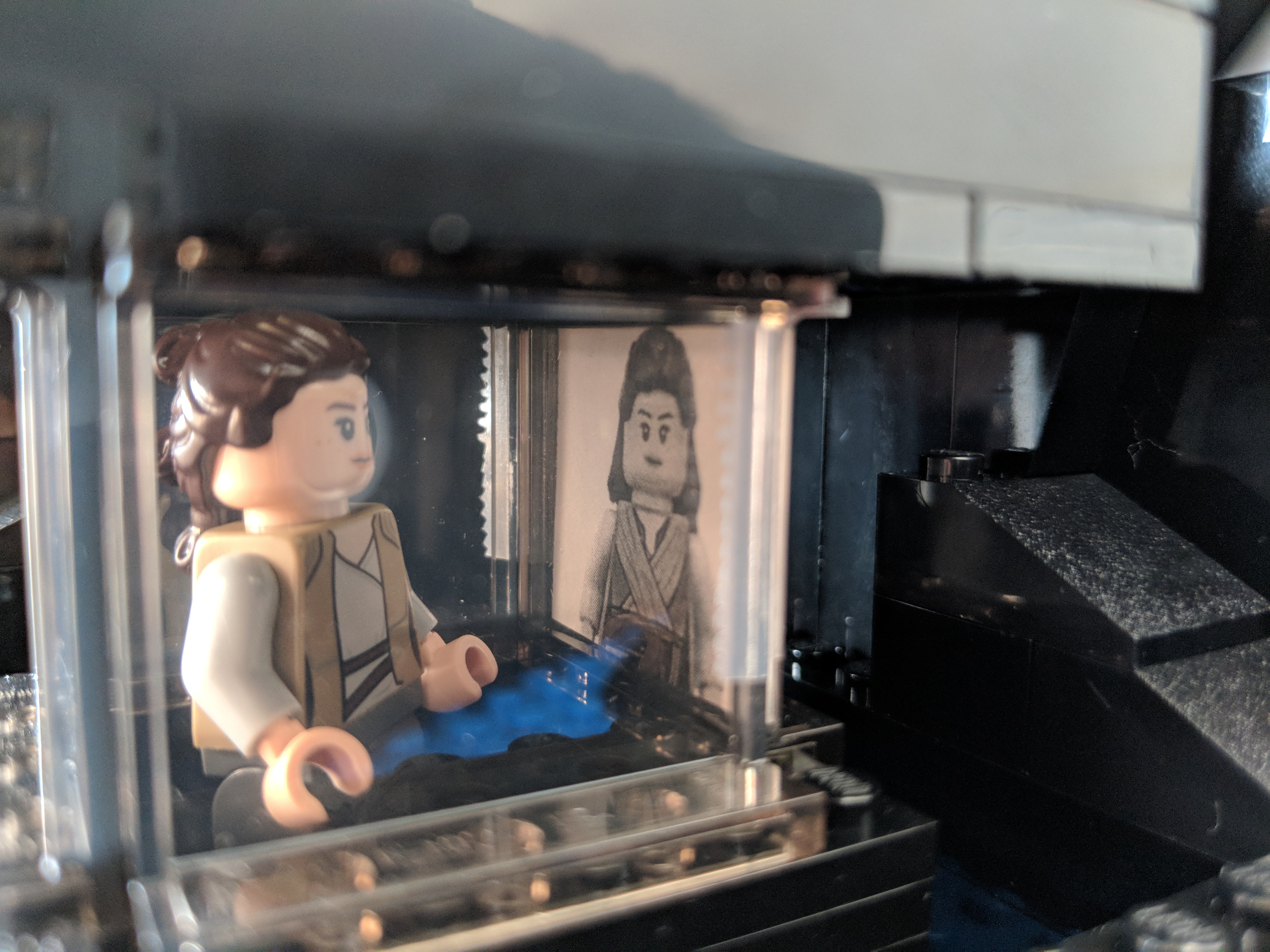
    As a LEGO playset, it has to balance accuracy, playability, and scale. For accuracy, I based the island’s shoreline on Ireland’s Skellig Michael, which is the location where these scenes were shot for the film. Also, the island’s topography were adhered to as closely as possible by having the north peak slightly lower than the higher south peak, and designing a middle valley between the two peaks, known as Christ’s Saddle on Skellig Michael. Each major scene involving Temple Island has been placed approximately where it would be on the island according to The Art of The Last Jedi and my observations of the film. And, each scene is scaled for play with LEGO minifigures, except where the Millennium Falcon lands along the shoreline, which would otherwise dwarf the island or require building a much larger model! For this element of the MOC, I used the Falcon included in last year’s LEGO Star Wars Advent Calendar (75184).

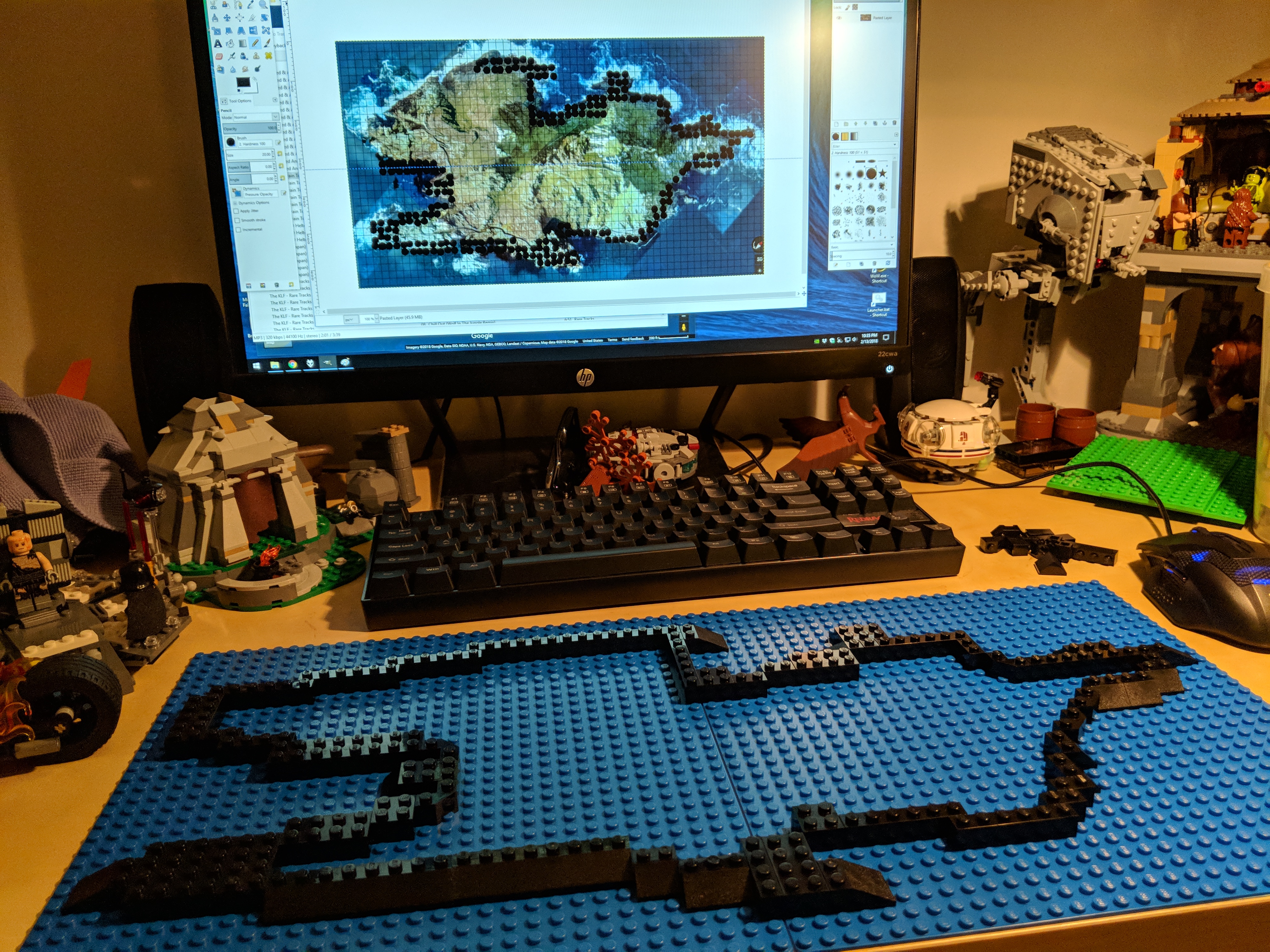
    Including all prep time, this build took me about 40 hours. In addition to studying books and magazines that showed glimpses of Temple Island and its topography, I watched YouTube videos such as these: one, two, and three. I leveraged Gimp’s grid rendering to plan the overall design based on a Google Maps’ satellite image of Michael Skellig. Also, I purchased additional LEGO to supplement what I already had on-hand: two 32 x 32 stud blue base plates to construct the MOC on, one green Creative set (10708), and two LEGO Ahch-To Island Training sets (75200).

    Below, I am including highlights from the construction process and the completed model. At the end, there are links to these albums with more photos of the MOC: Google Photos and Imgur.

    Designing the Shoreline Using Google Maps, Gimp, and Generated Grid

    IMG_20180213_223514.jpg

    Top and Side Views of Temple Island

    IMG_20180218_134351.jpg

    IMG_20180218_142459.jpg

    IMG_20180218_143054.jpg

    Rey’s First Encounter with Master Skywalker

    IMG_20180218_142905.jpg

    Luke Skywalker’s Hut and Village

    IMG_20180218_160654.jpg

    Rey’s Lightsaber Practice (at the Wailing Woman Rock)

    IMG_20180218_142523.jpg

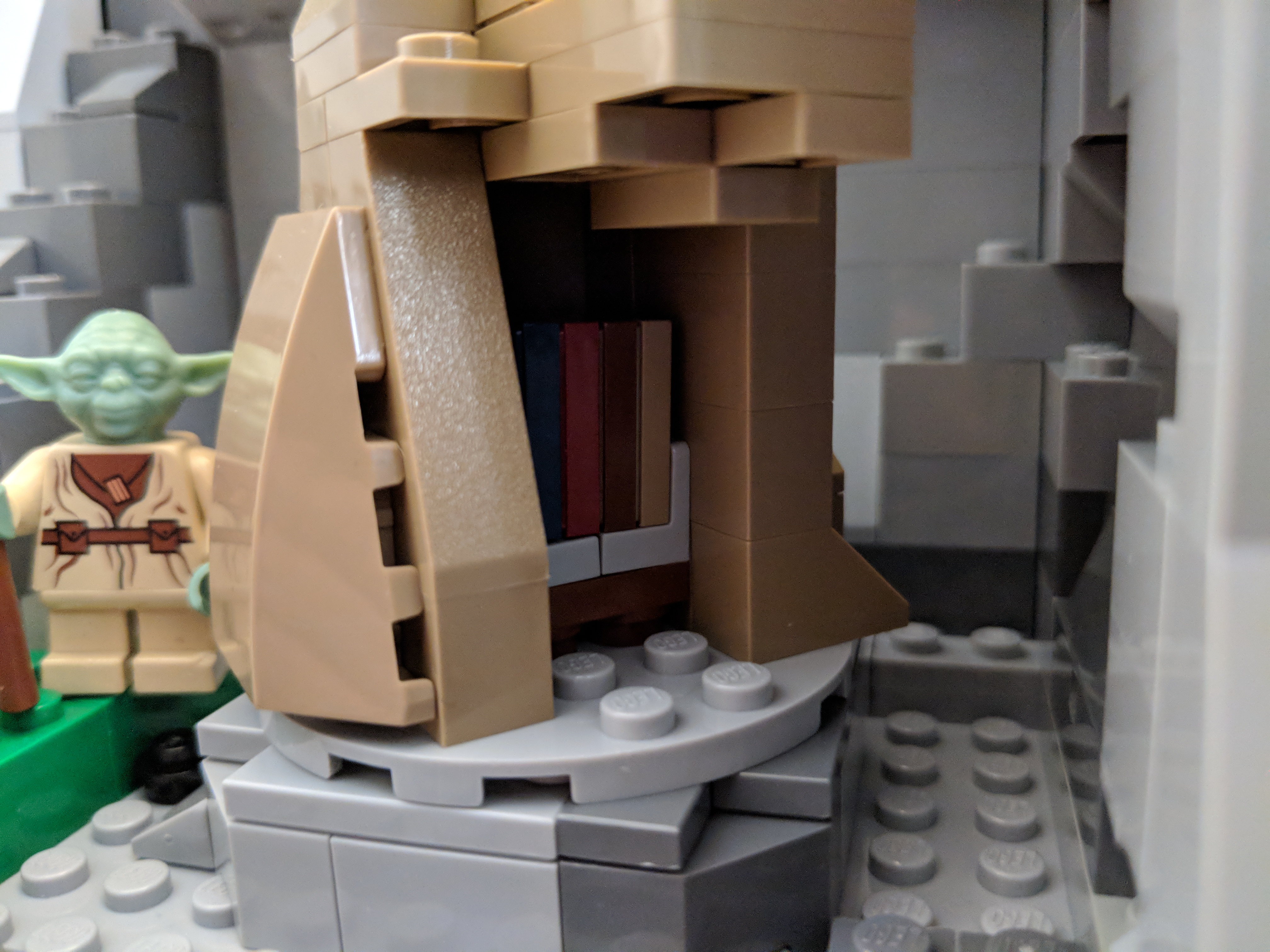
    The Sacred Jedi Texts Within the Uneti Tree

    IMG_20180218_143109.jpg

    IMG_20180218_143125.jpg

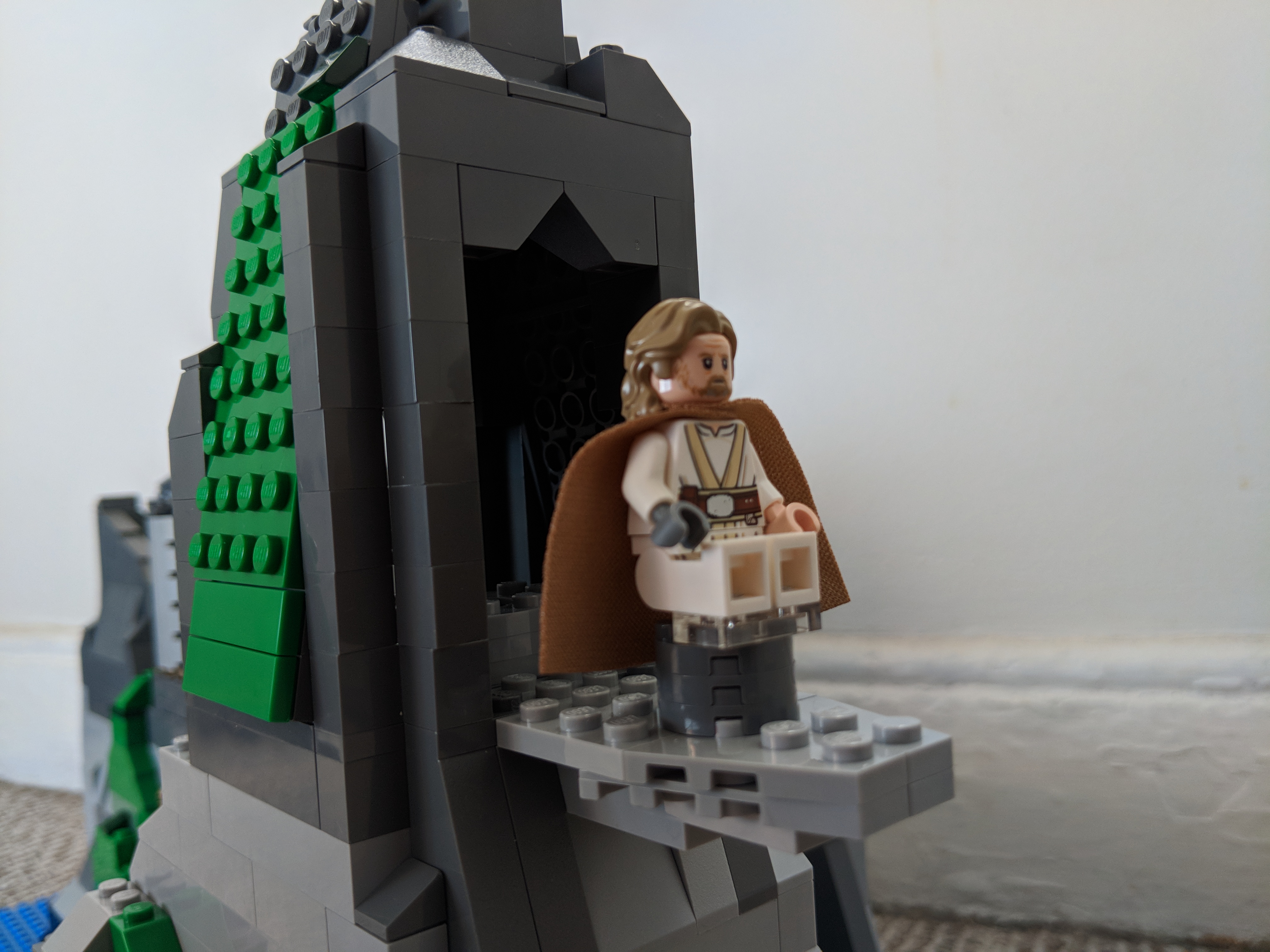
    The Jedi Temple and Meditation Rock

    IMG_20180218_134836.jpg

    IMG_20180218_134953.jpg

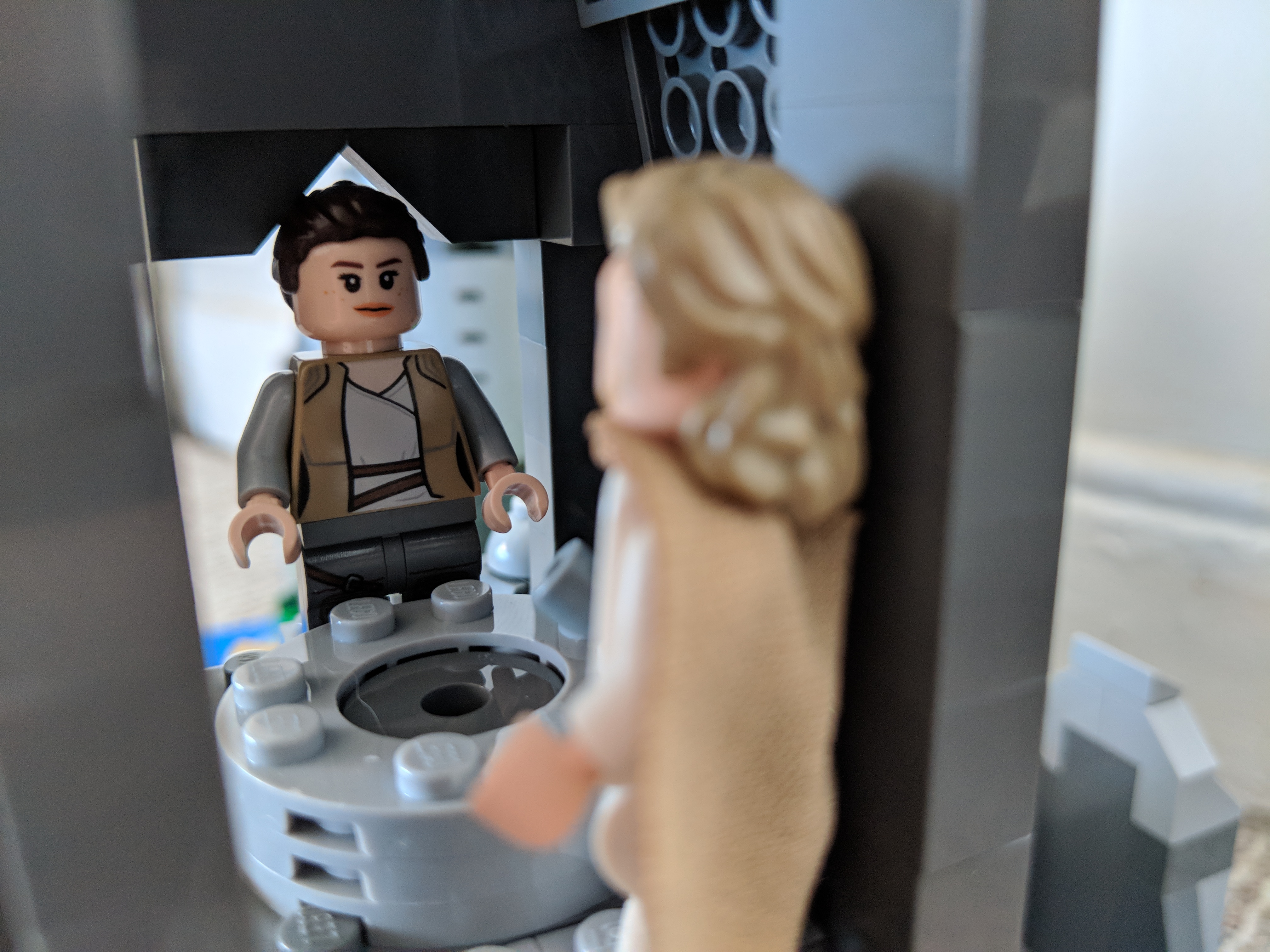
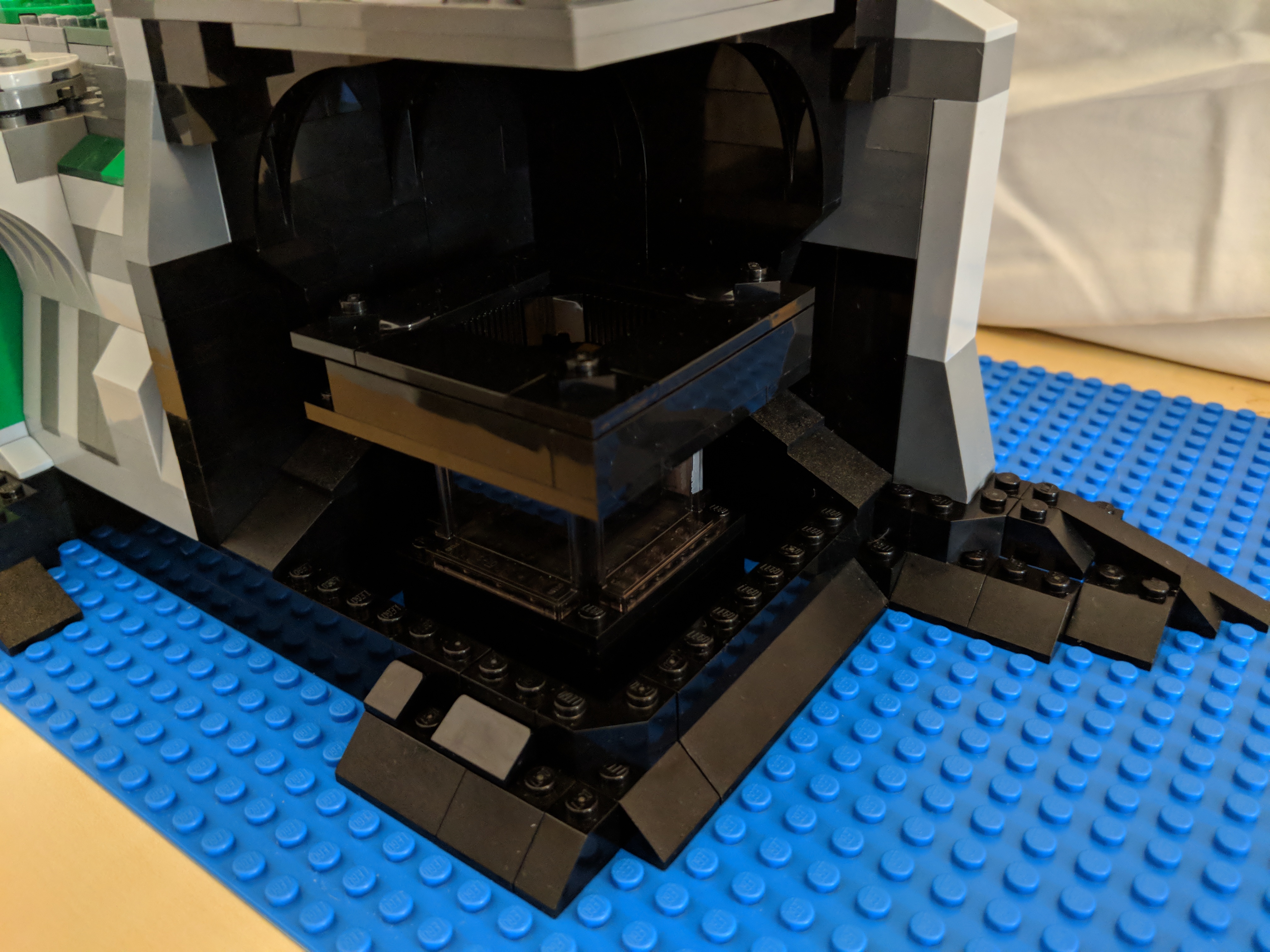
    Rey’s Visit to the Mirror Cave

    IMG_20180218_143030.jpg

    IMG_20180218_134258_1.jpg

    Portability of the Model 

    IMG_20180218_135109.jpg

  • New LEGO Millennium Falcon 75105 Customization with The Last Jedi Update

    millennium-falcon-custom

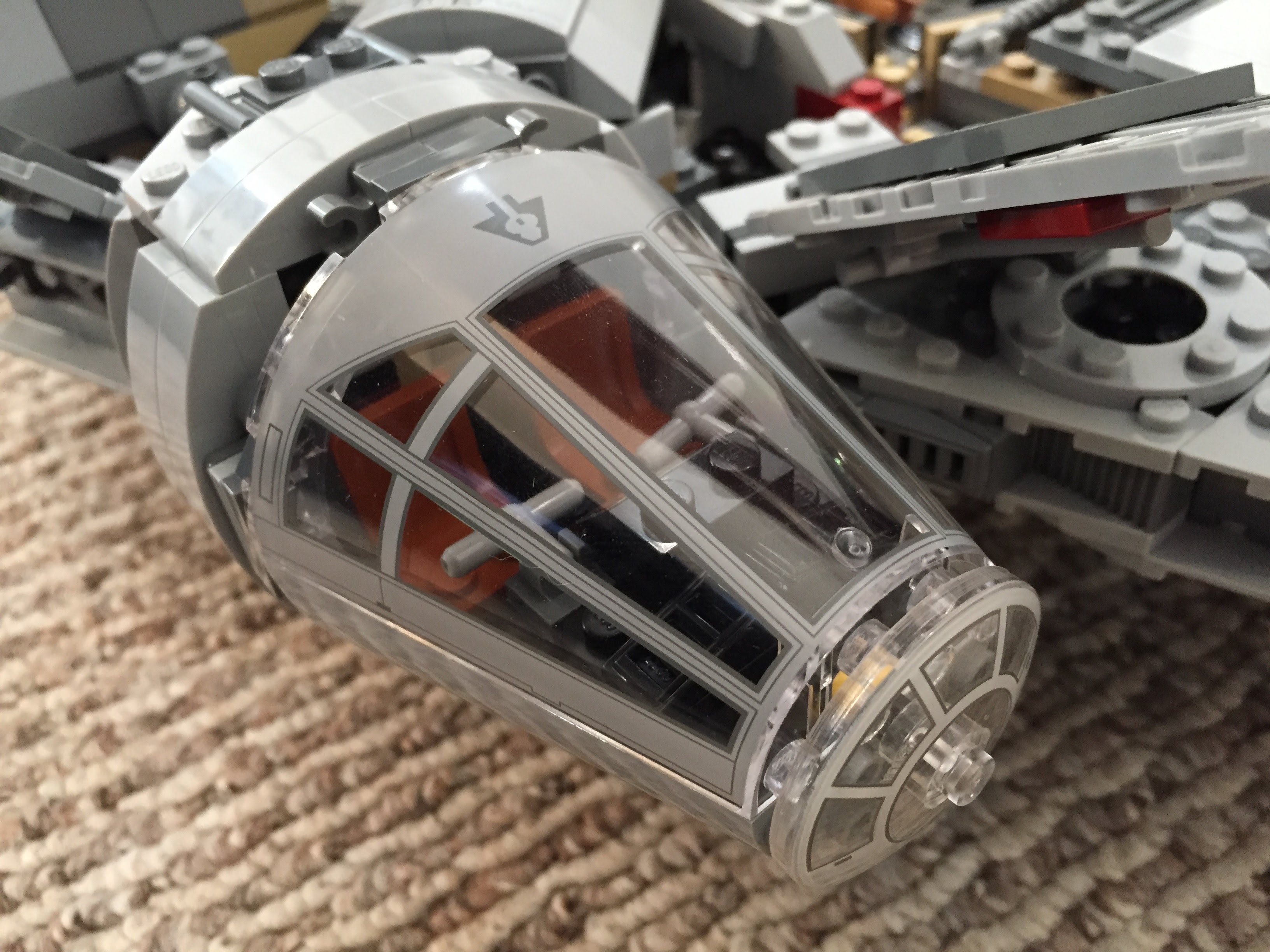
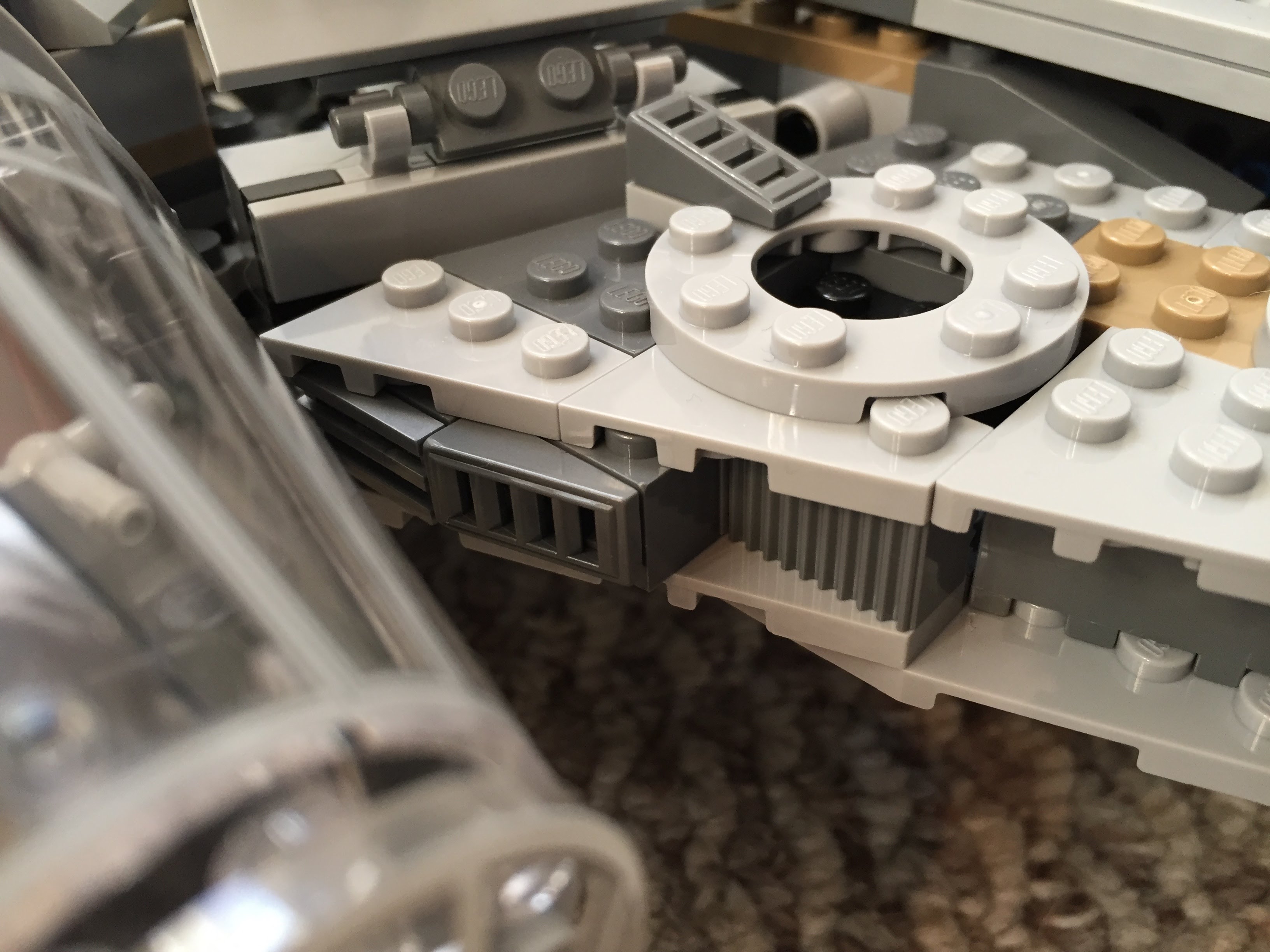
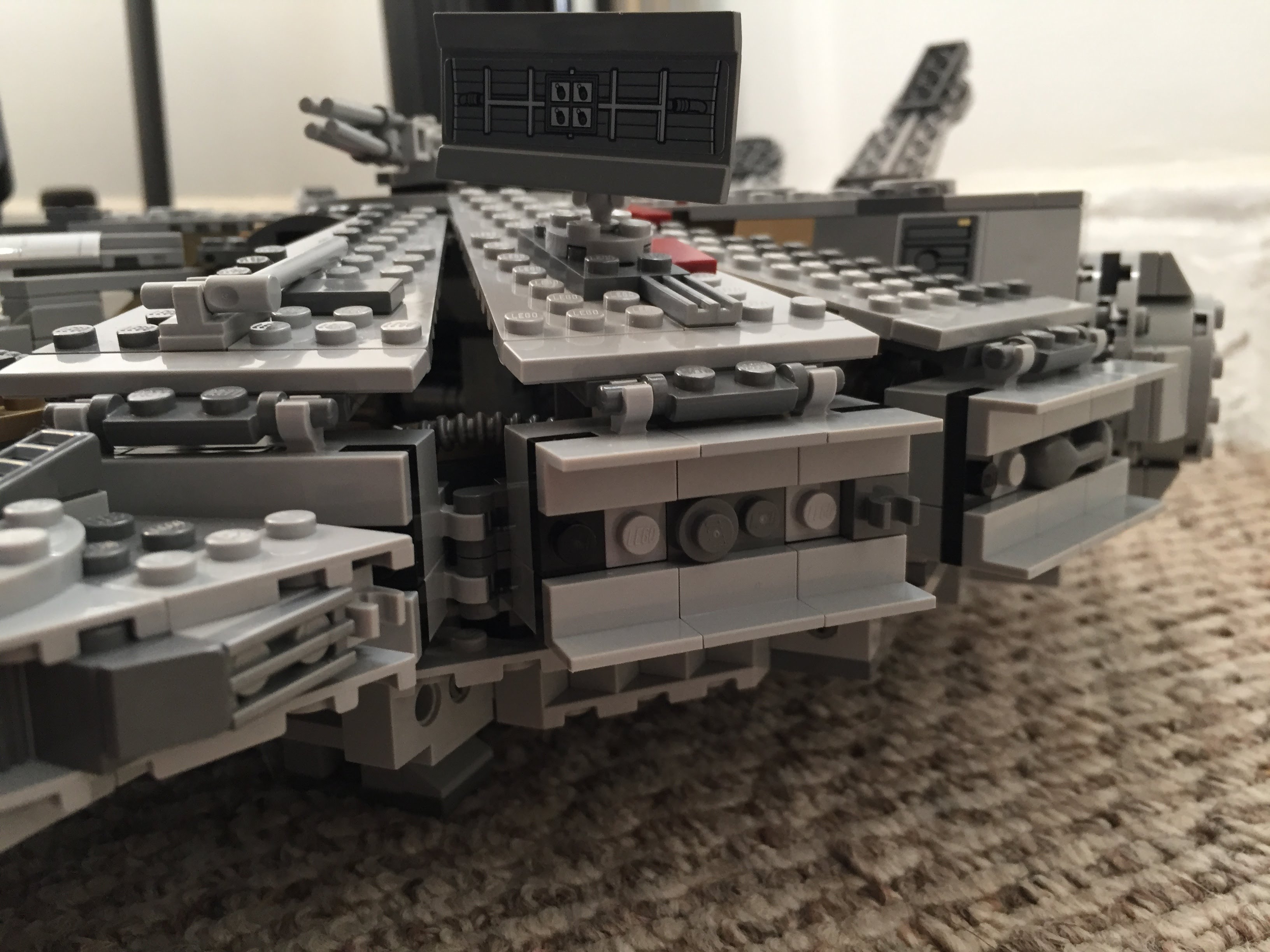
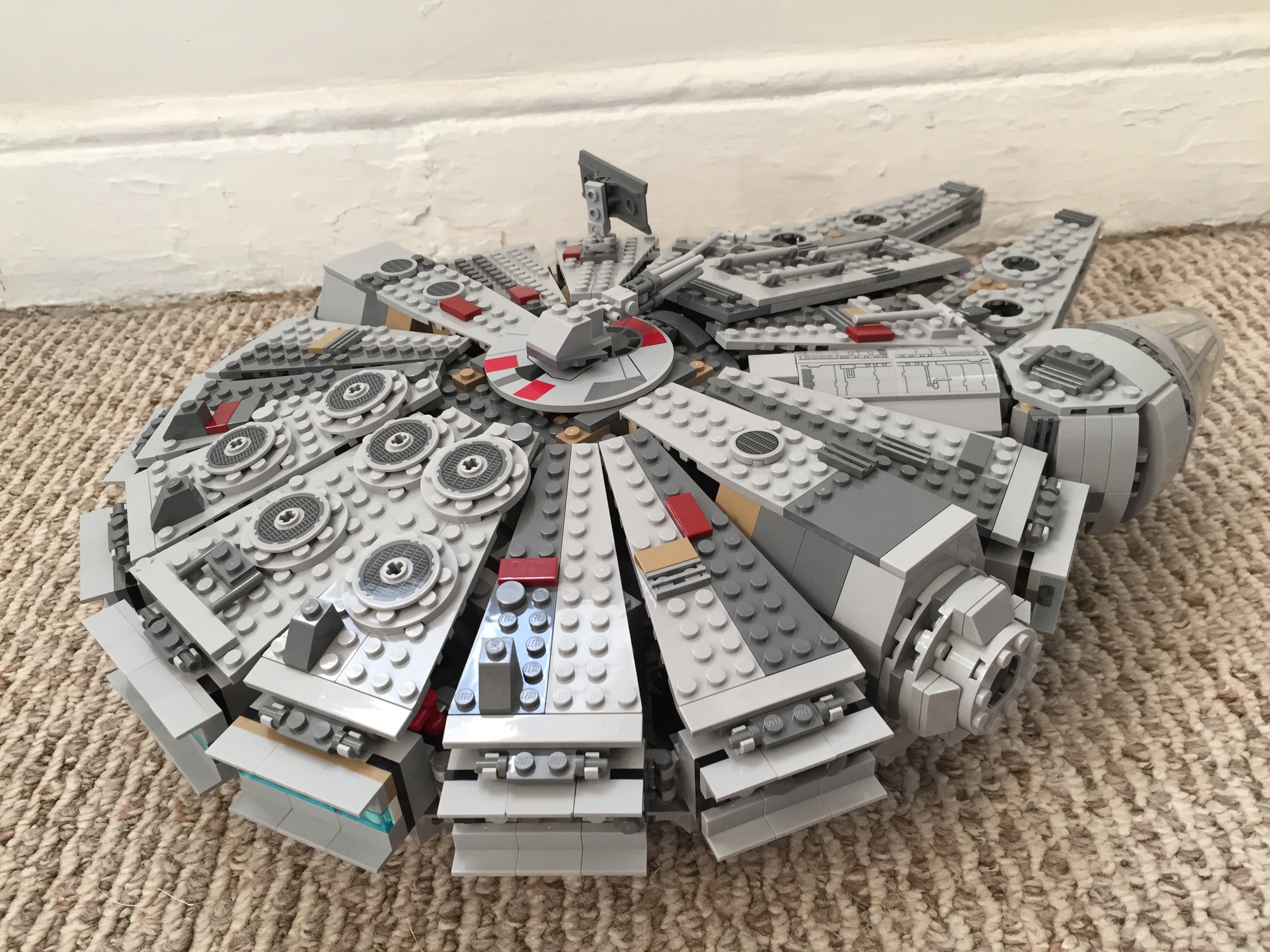
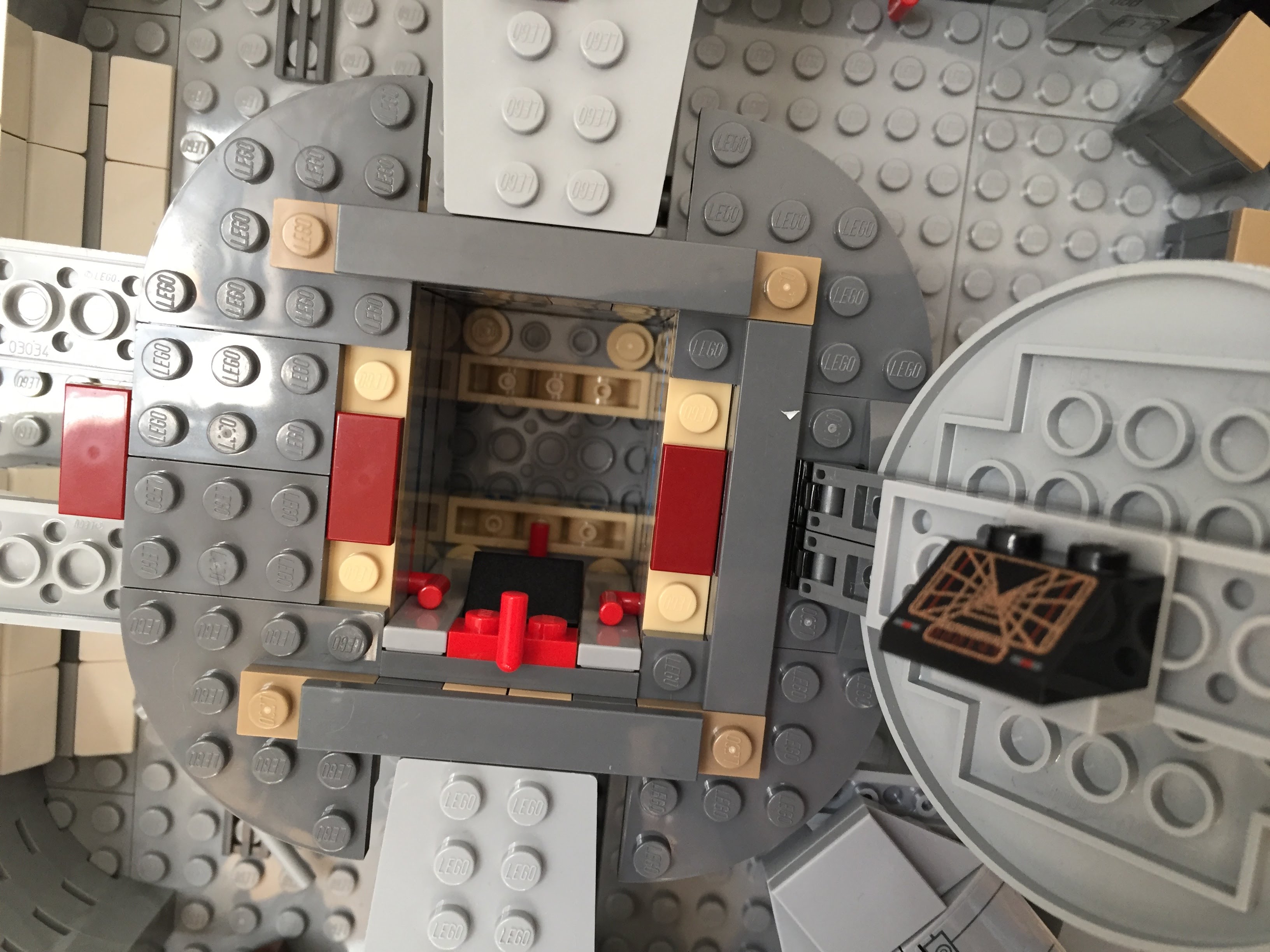
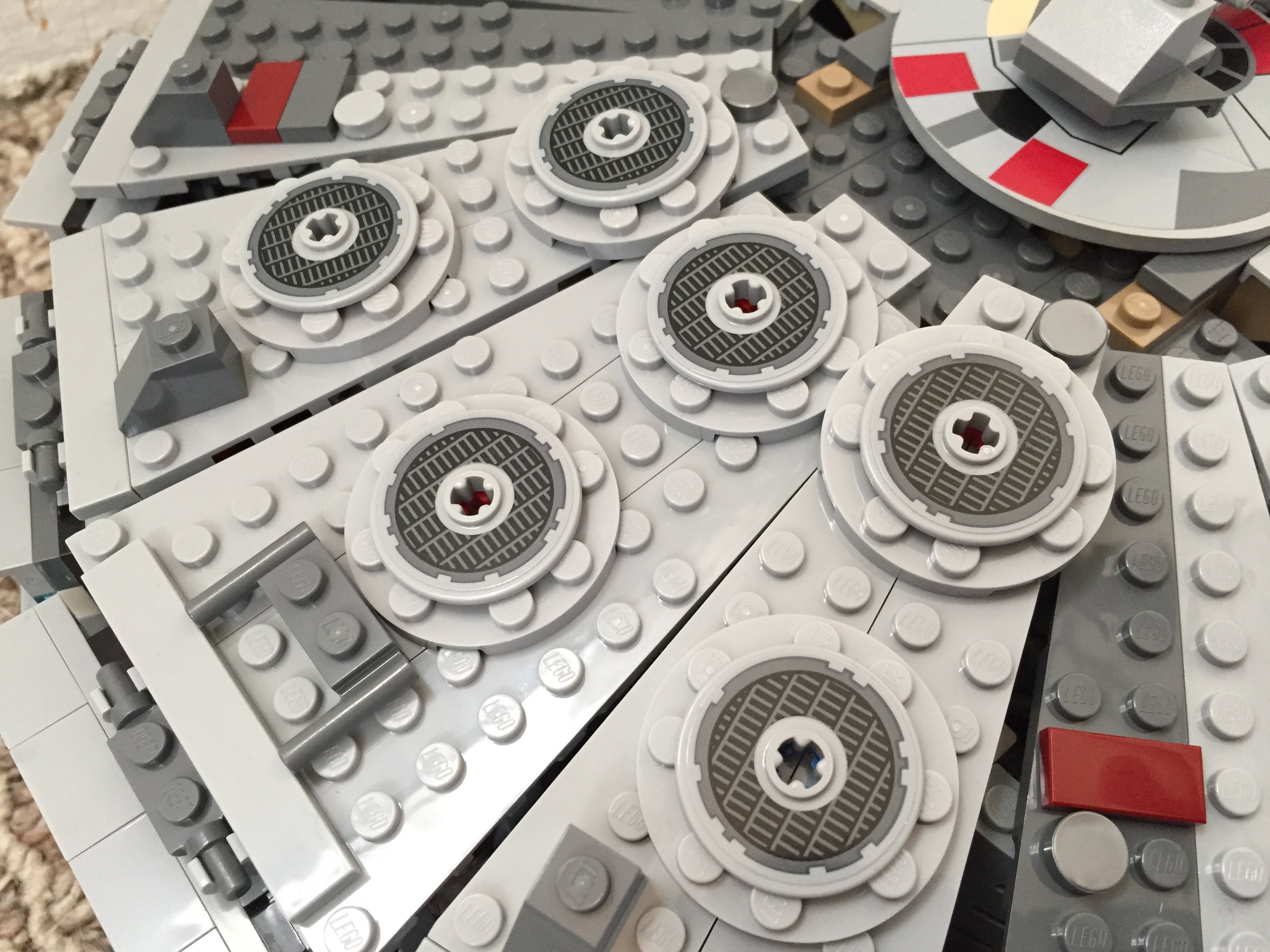
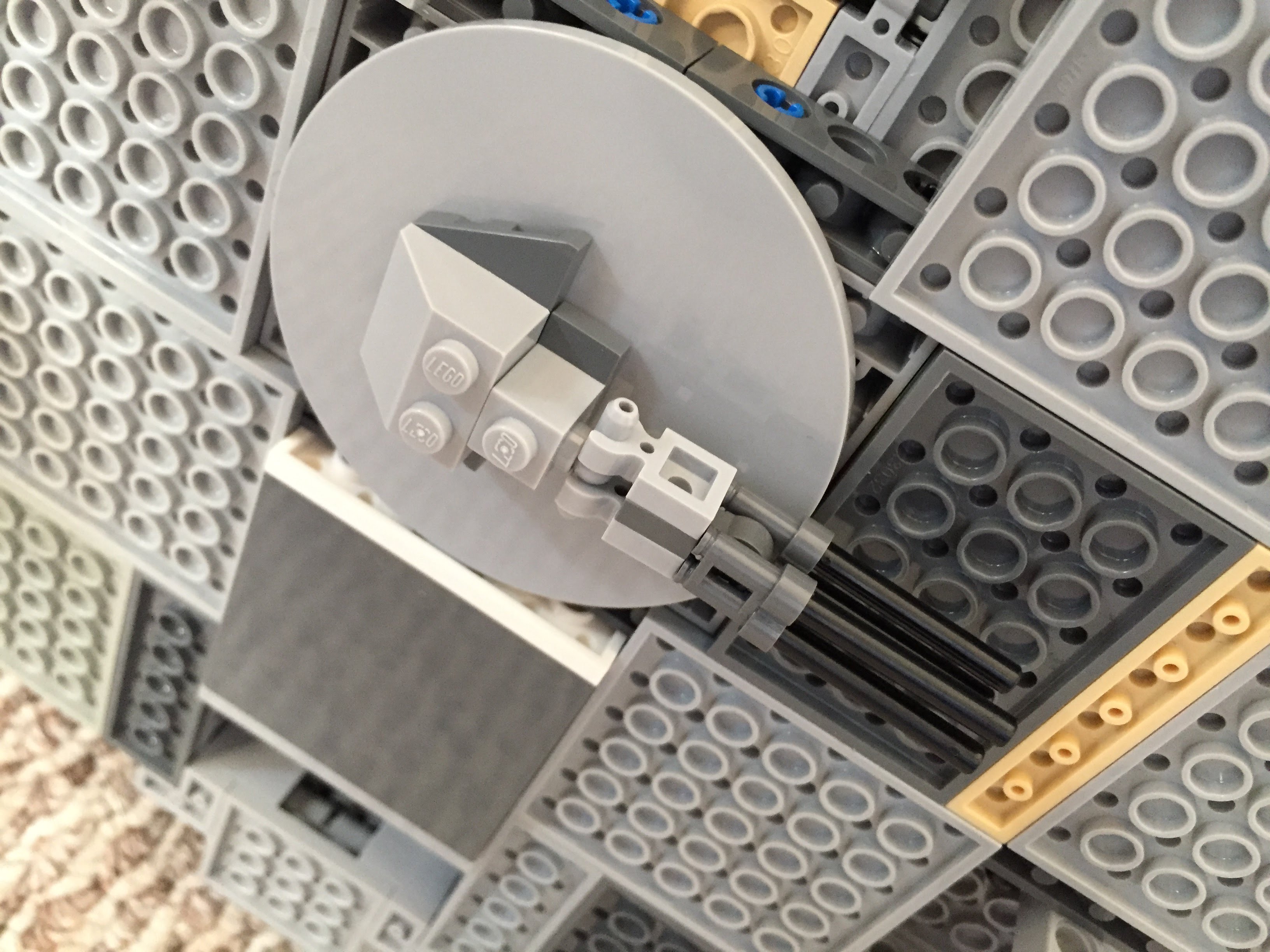
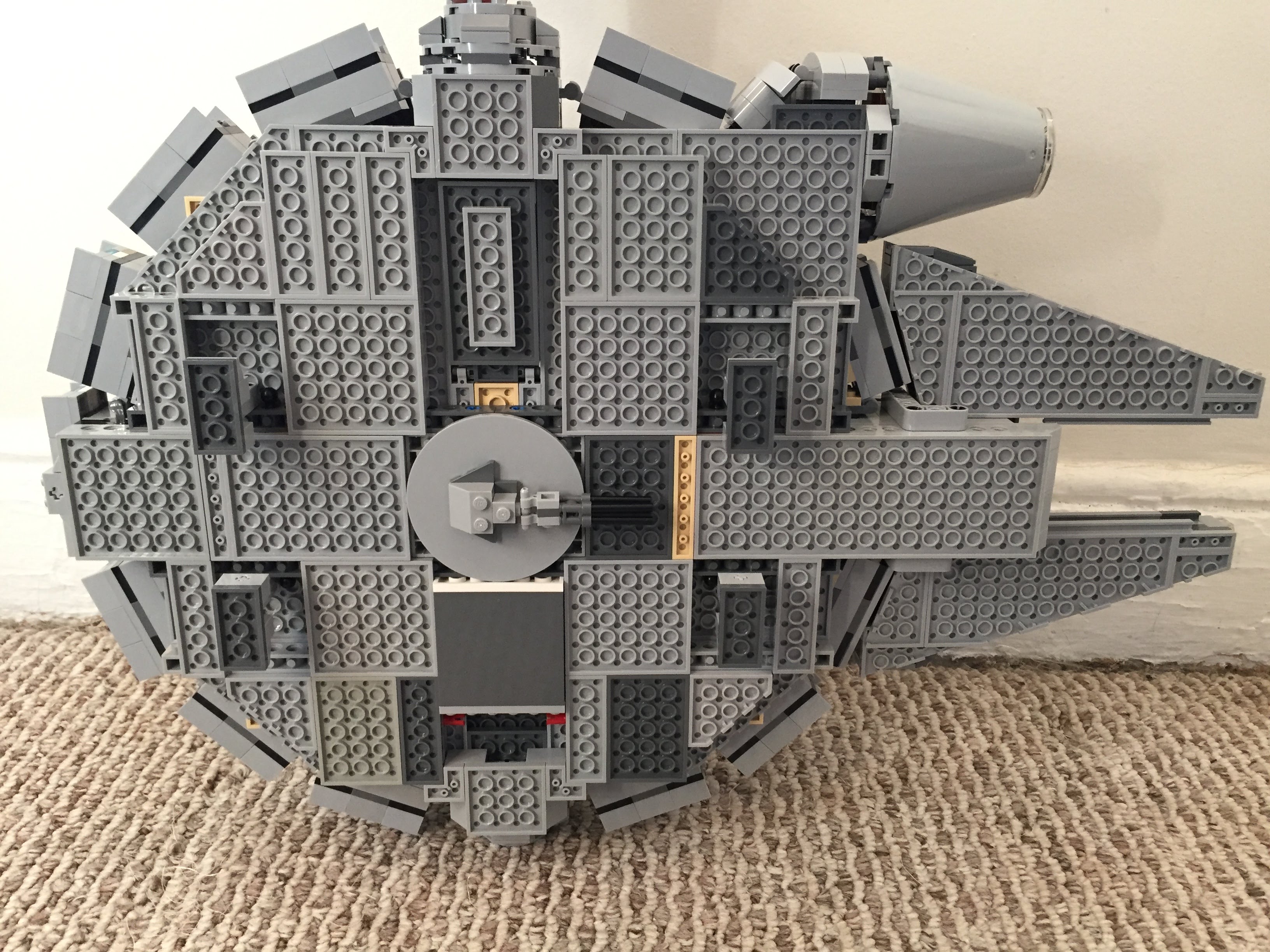
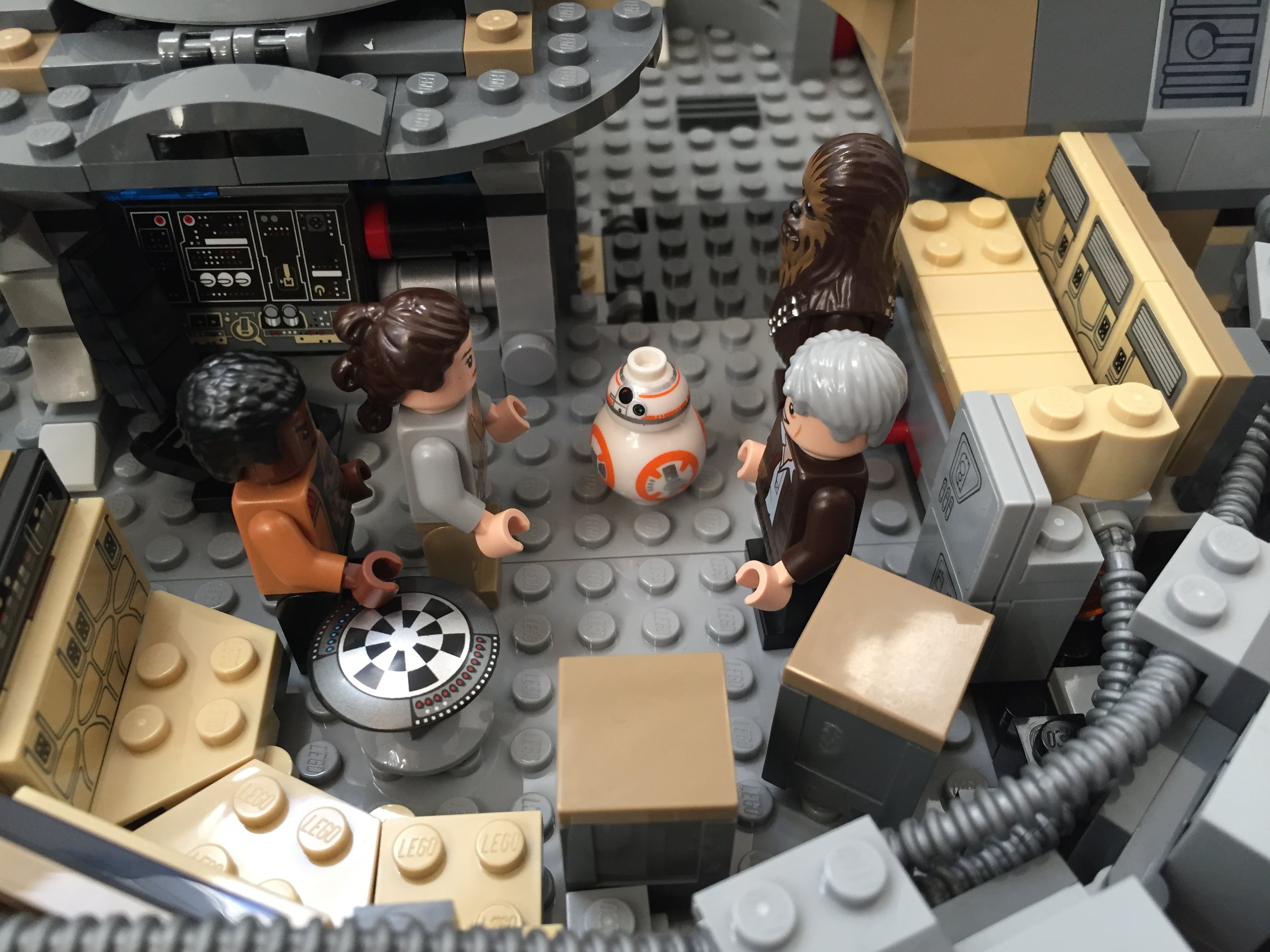
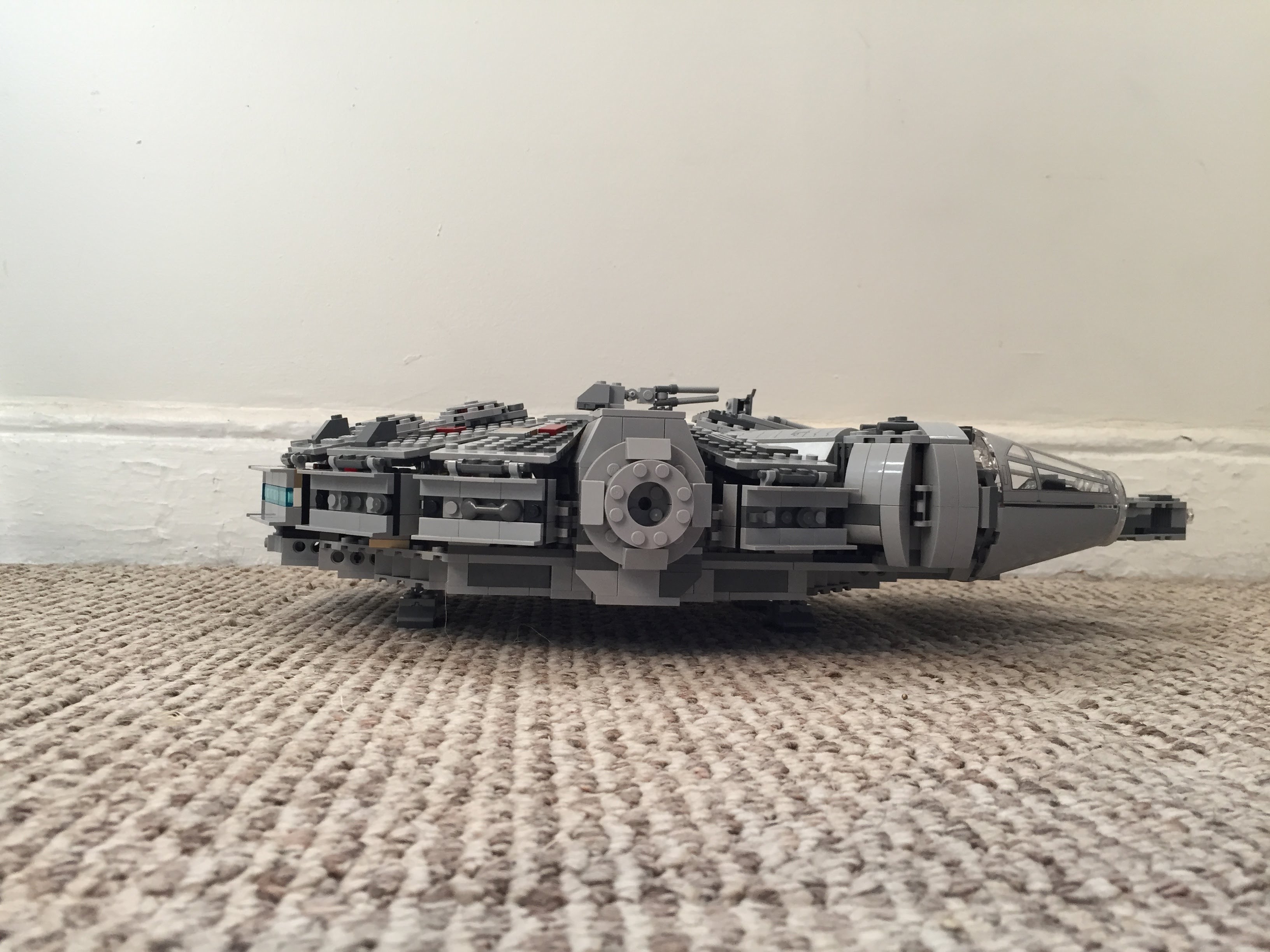
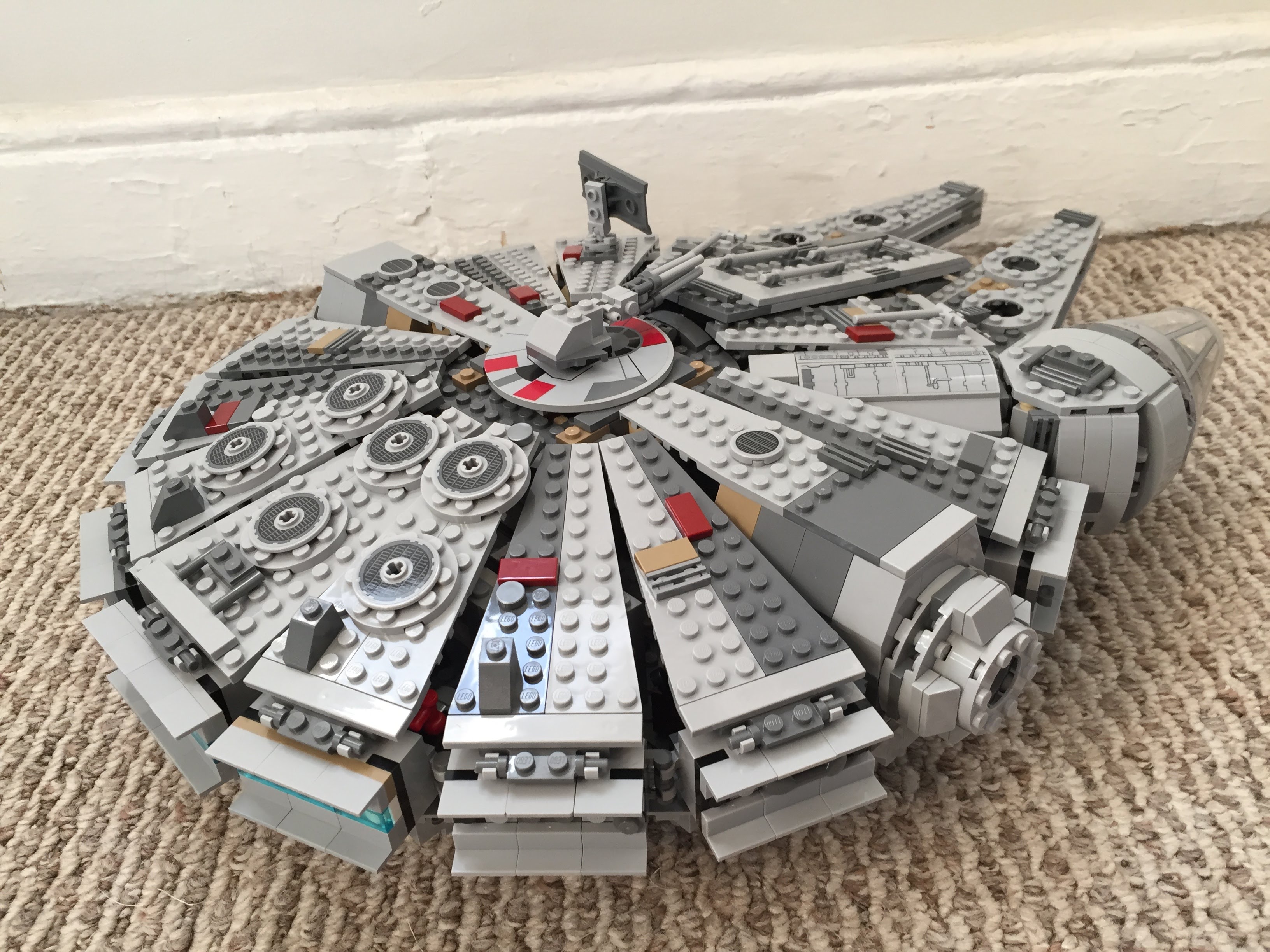
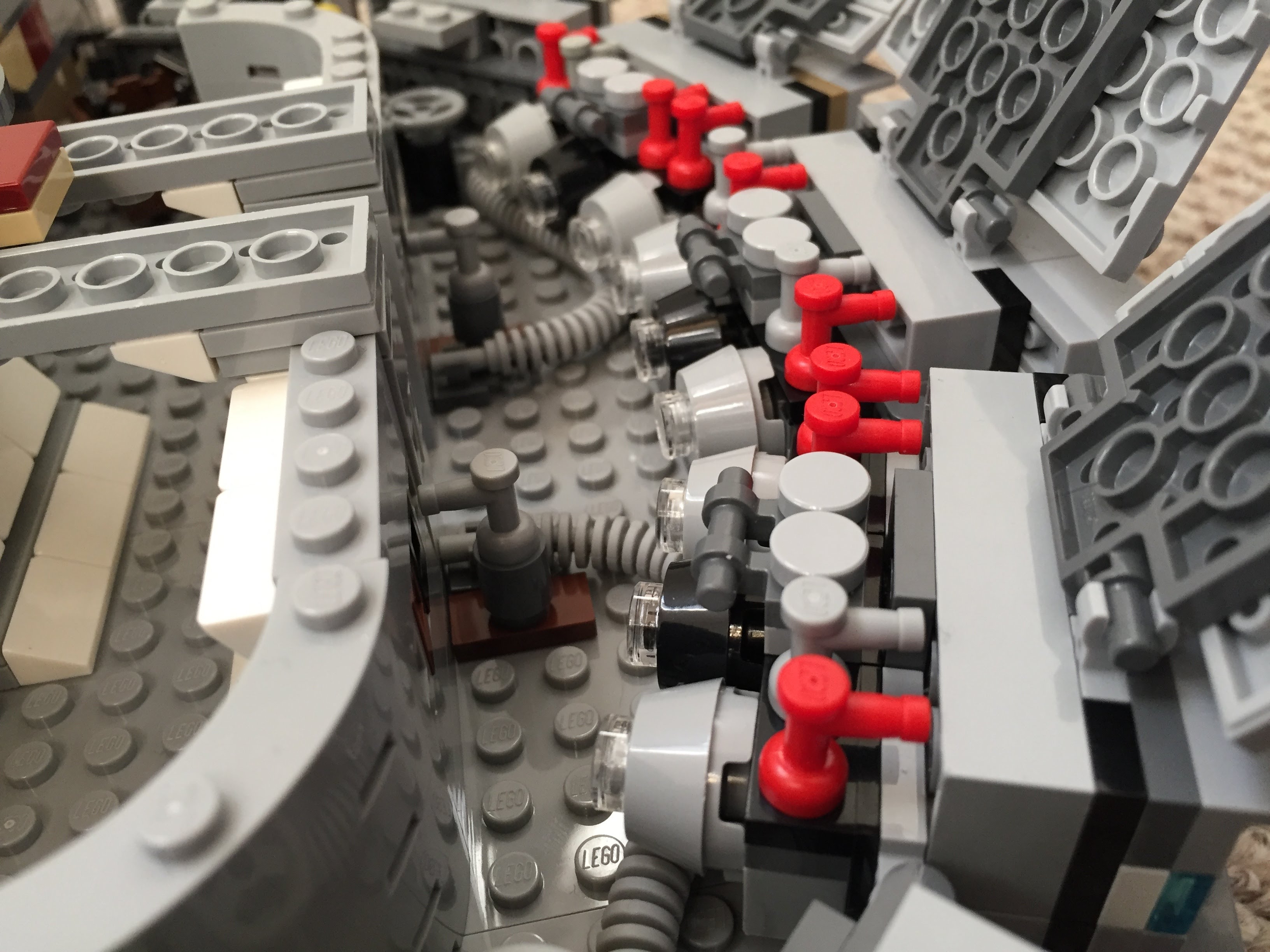
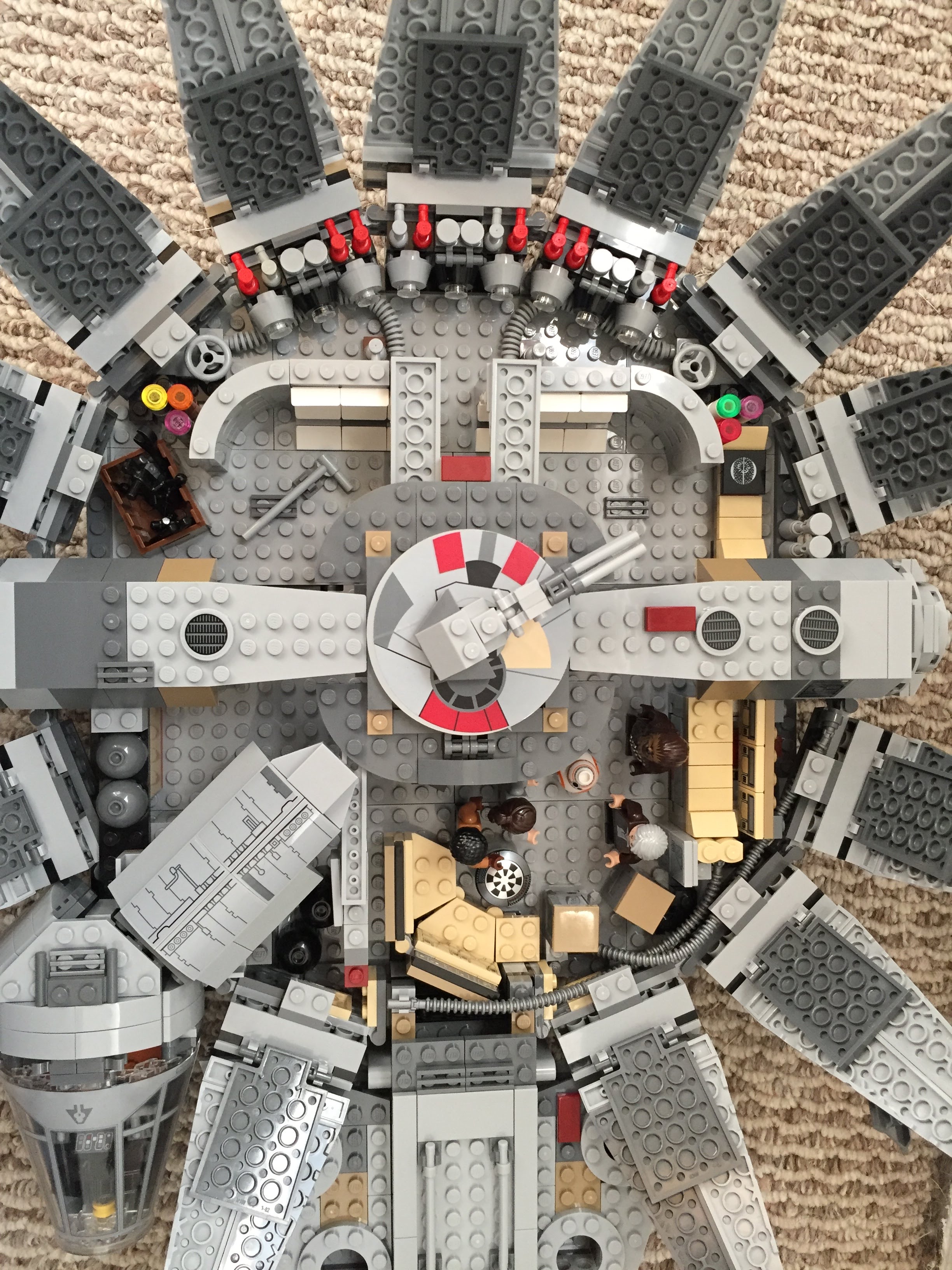
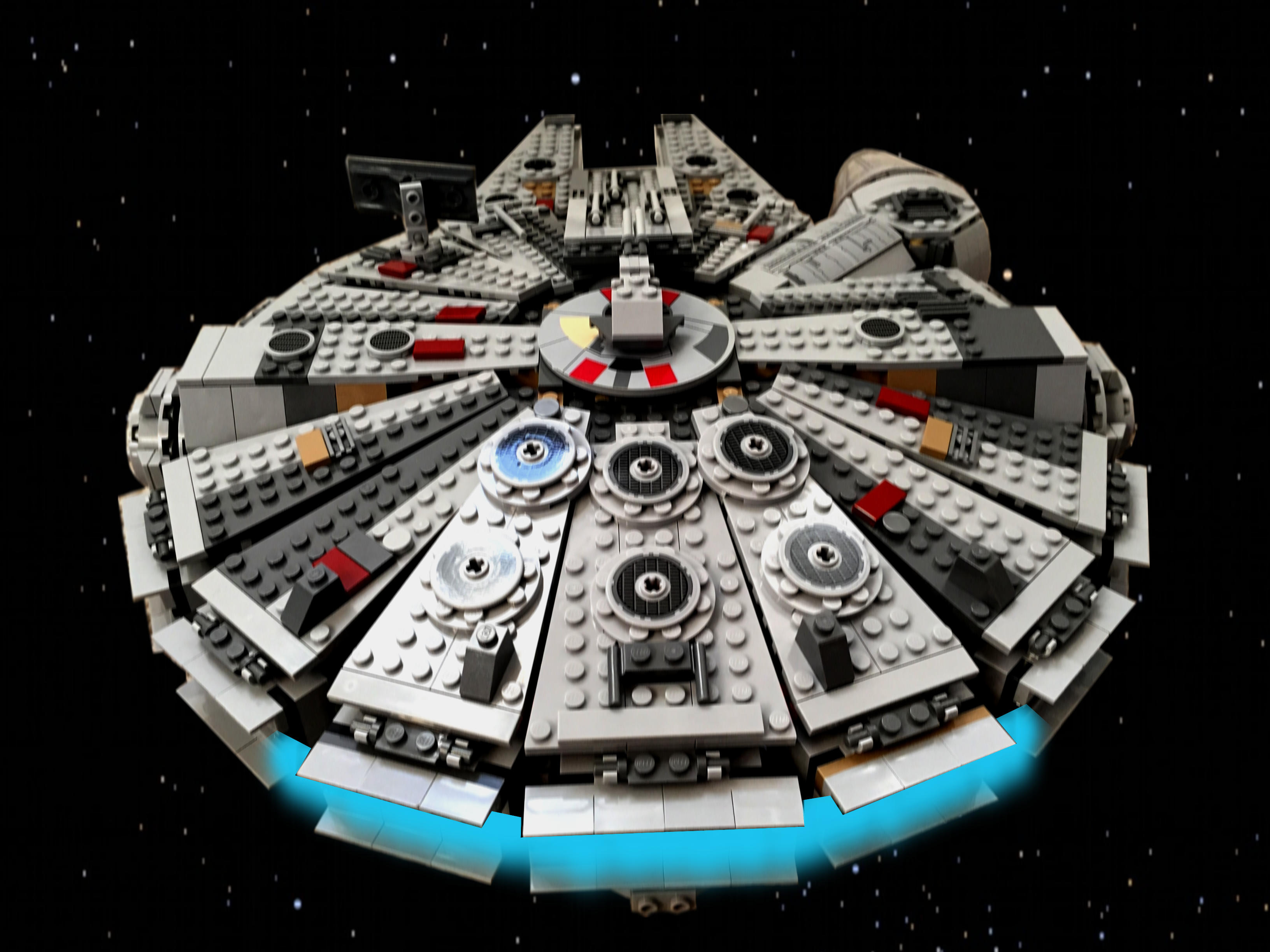
    Over the years, I’ve built several customized LEGO Millennium Falcons (including here and here). I like taking the stock models and making them more screen accurate combined with imaginative embellishment. With this customization of a stock 75105 Millennium Falcon, I initially tried working this model that I had built about a year ago. However, I got really frustrated trying to work out how to implement some of the customizations that I had in mind. So, I disassembled the model and rebuilt it. Doing this helped me remember the logic of its design and construction, and it enabled me to rebuild some of its foundational features more easily than the piecemeal way I first attempted to do. The way that I did this rebuild also jumped around the instruction booklet, because the LEGO process of building is generally height-by-height across the whole model. I needed to focus on the modular aspects of the model, which is helped by building each module (circumferential ring, cockpit, docking ports, etc.). Due to rebuilding it from the ground up, this project took several days. Scroll through this blog post to view detailed photos and descriptions of this customization.

    Cockpit and Mandible Details

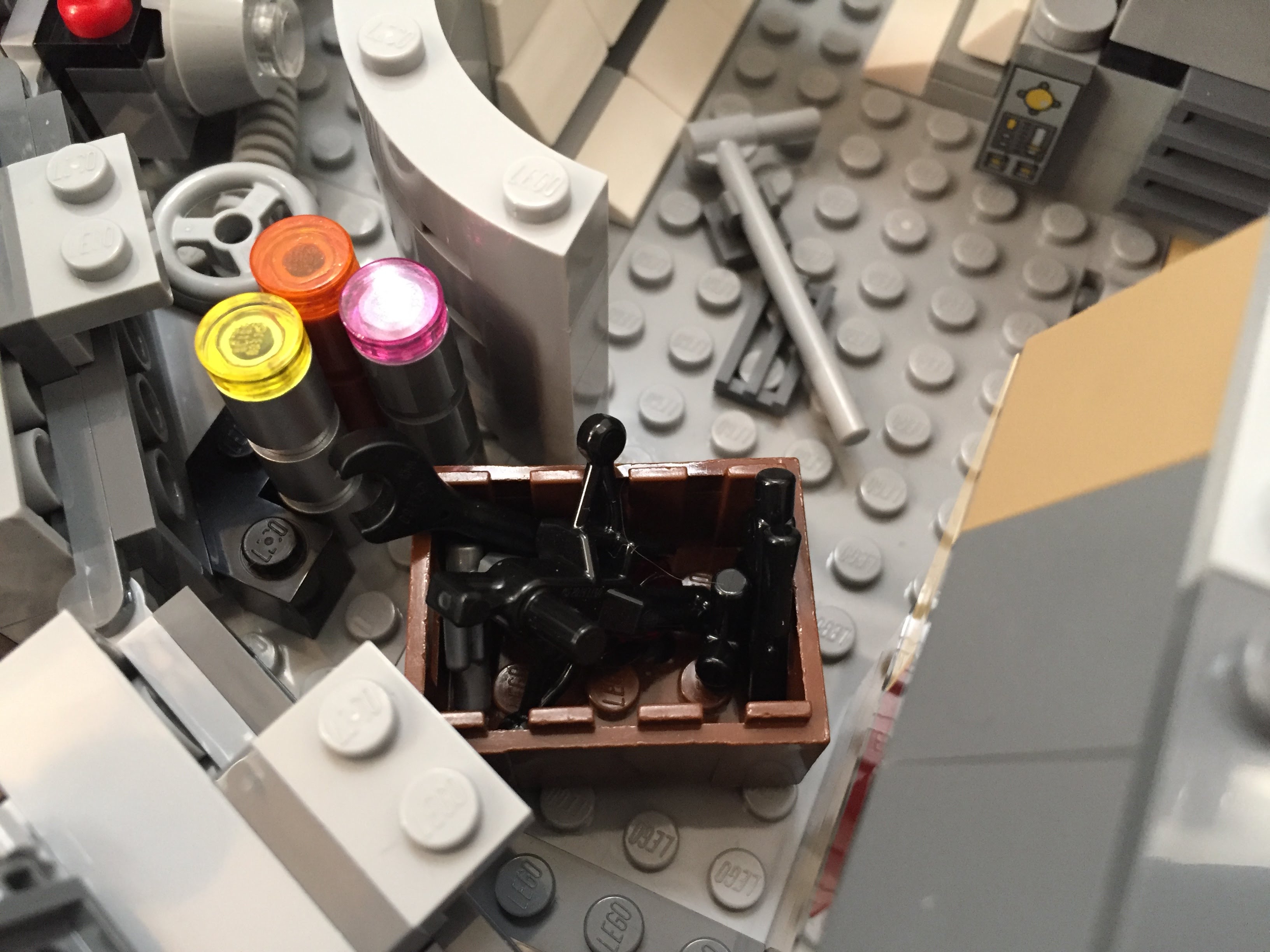
    Taking inspiration from Flail’s Millennium Falcon mods on Brickshelf, I rebuilt the cockpit with chairs and control sticks. This looks really nice, especially with the windows affixed. However, the chairs don’t work with Chewbacca’s minifigure. 75105 includes a Brick 1X4 W. 4 Knobs on either side of the fore mandibles. The side studs invite customization, so I added extra detail to these.
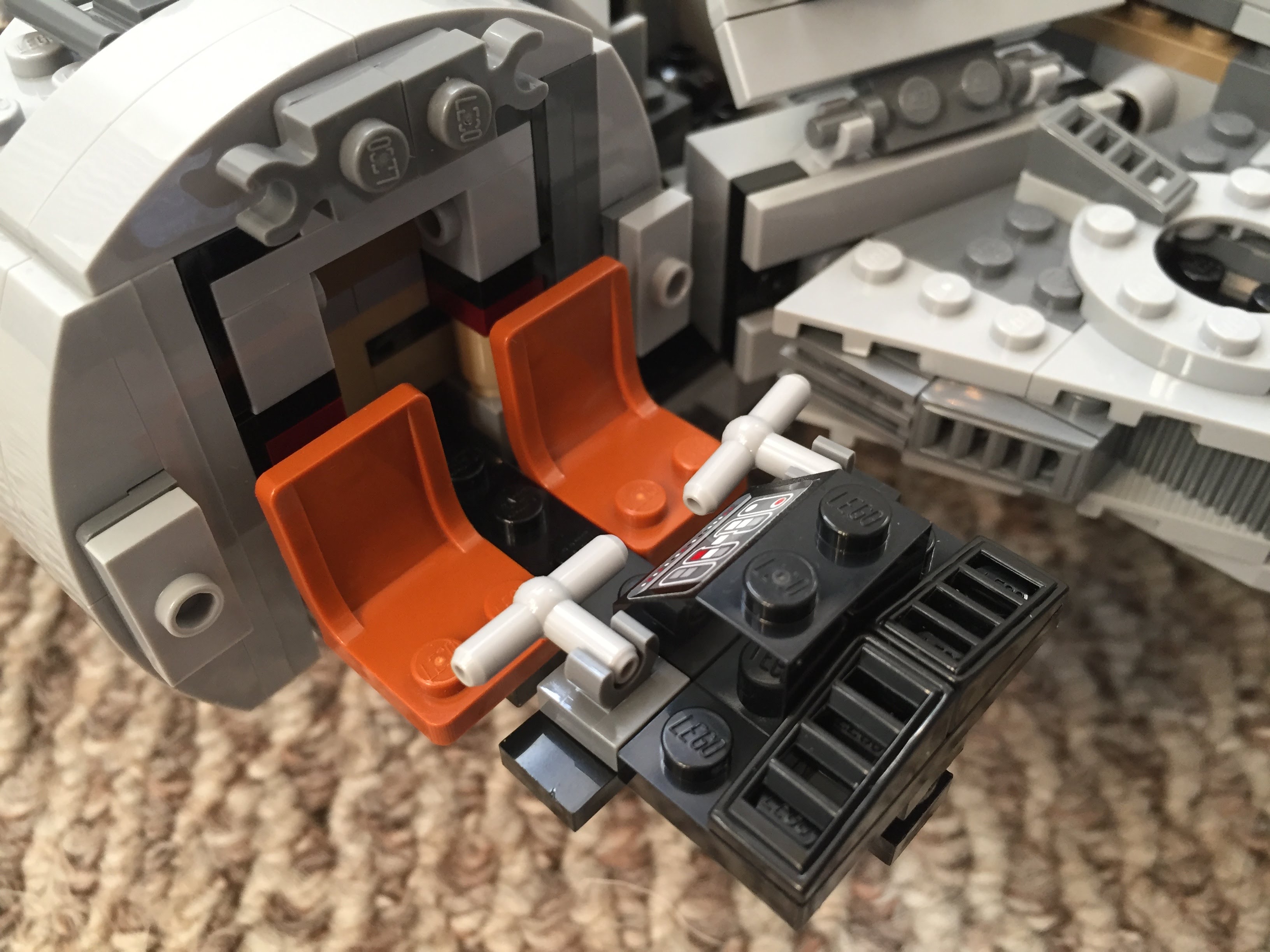
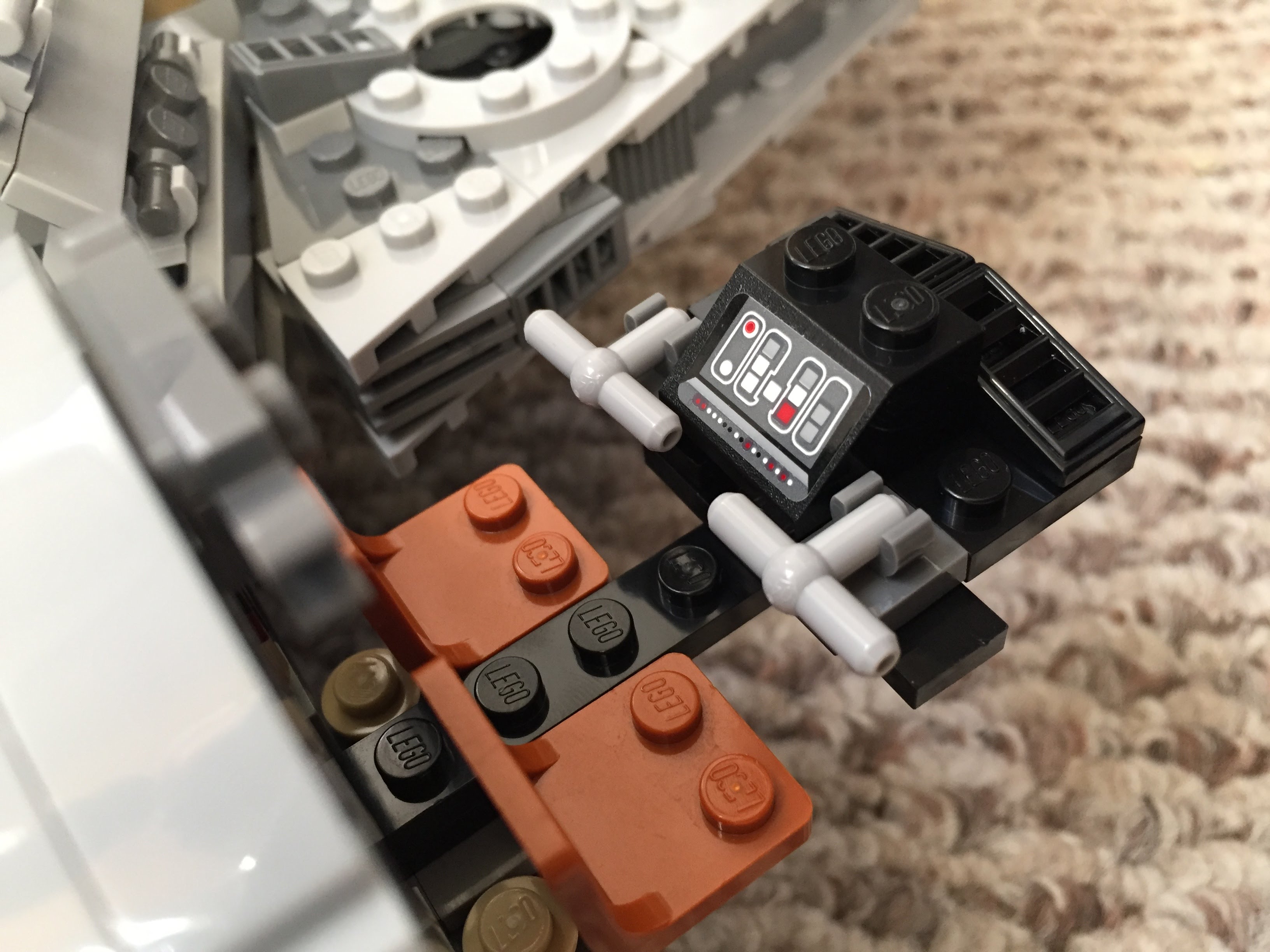
    IMG_3027 1.jpgIMG_3028 1.jpgIMG_2997 1.jpgIMG_3029 1.jpgIMG_3030 1.jpg

    Gun Turrets, Dorsal Vents, and Ventral Covering

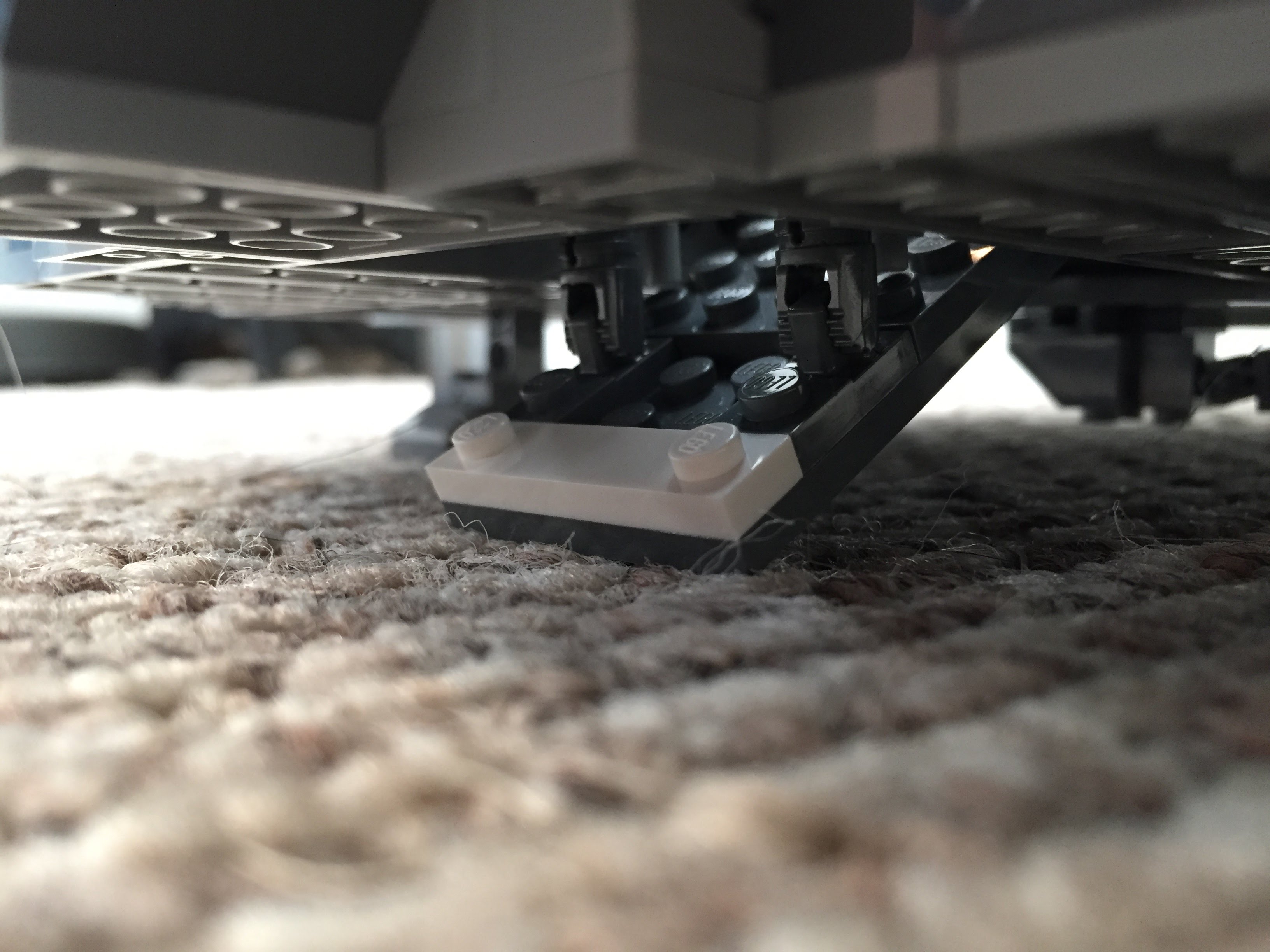
    Inspired by Flail’s mods on Brickshelf again, I built these lower profile top and bottom guns. I beefed up the dorsal venting system by putting Plate Round 4X4 With Ø16Mm Hole with a Plate 2X2 Round in its center. The Disk Ø24 with vent sticker connects to the round plate in the center. The bottom of the falcon is buttoned up with plates covering the Technic support system–some of which I modified to remove the arm underneath the cockpit support system and added a staggered rounding to the four corners.
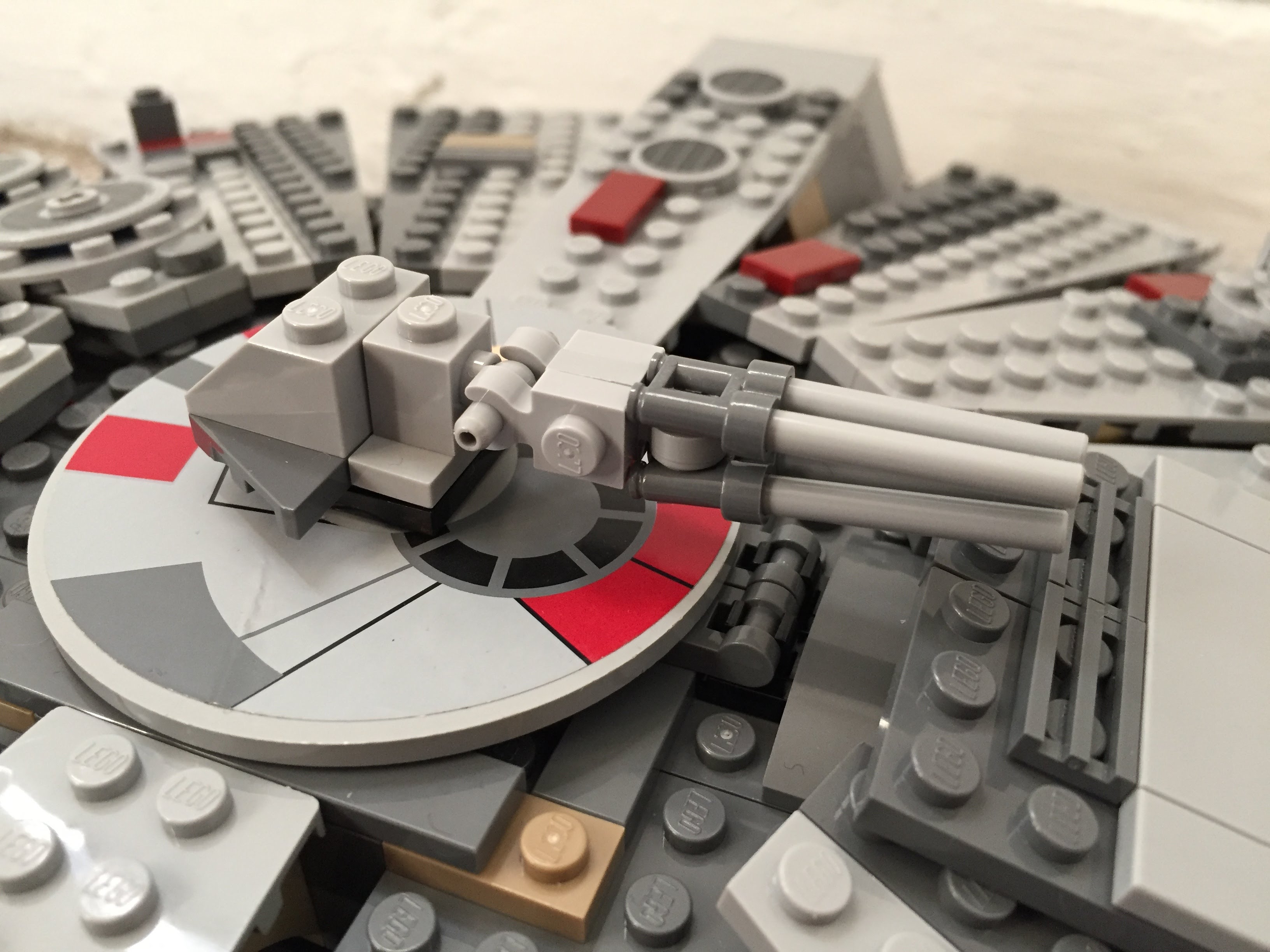
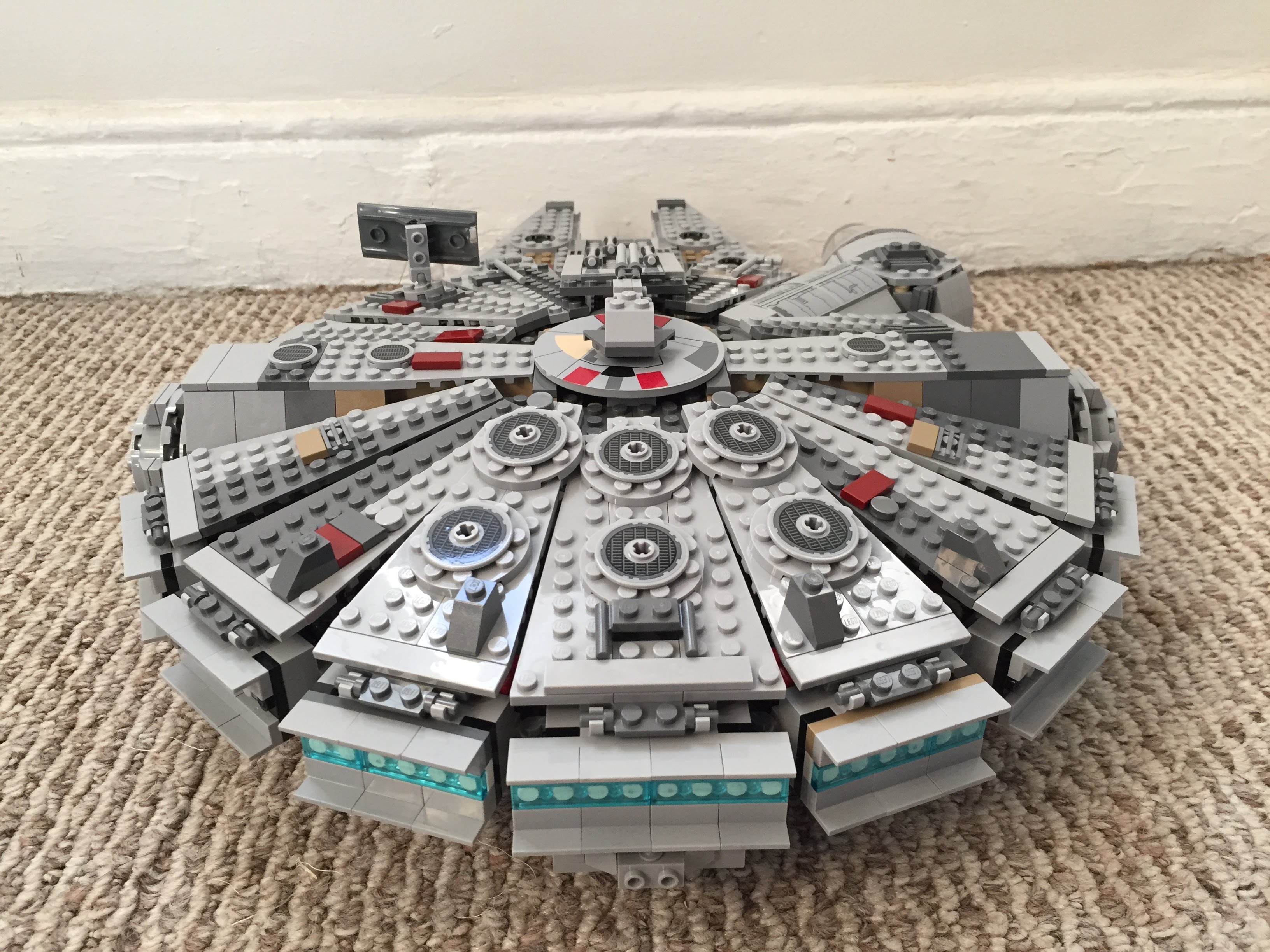
    IMG_2994 1.jpg

    IMG_3035 1.jpgIMG_3040 1.jpgIMG_3021 1.jpg

    IMG_2993 1.jpgIMG_2996 1.jpgIMG_2995 1.jpg

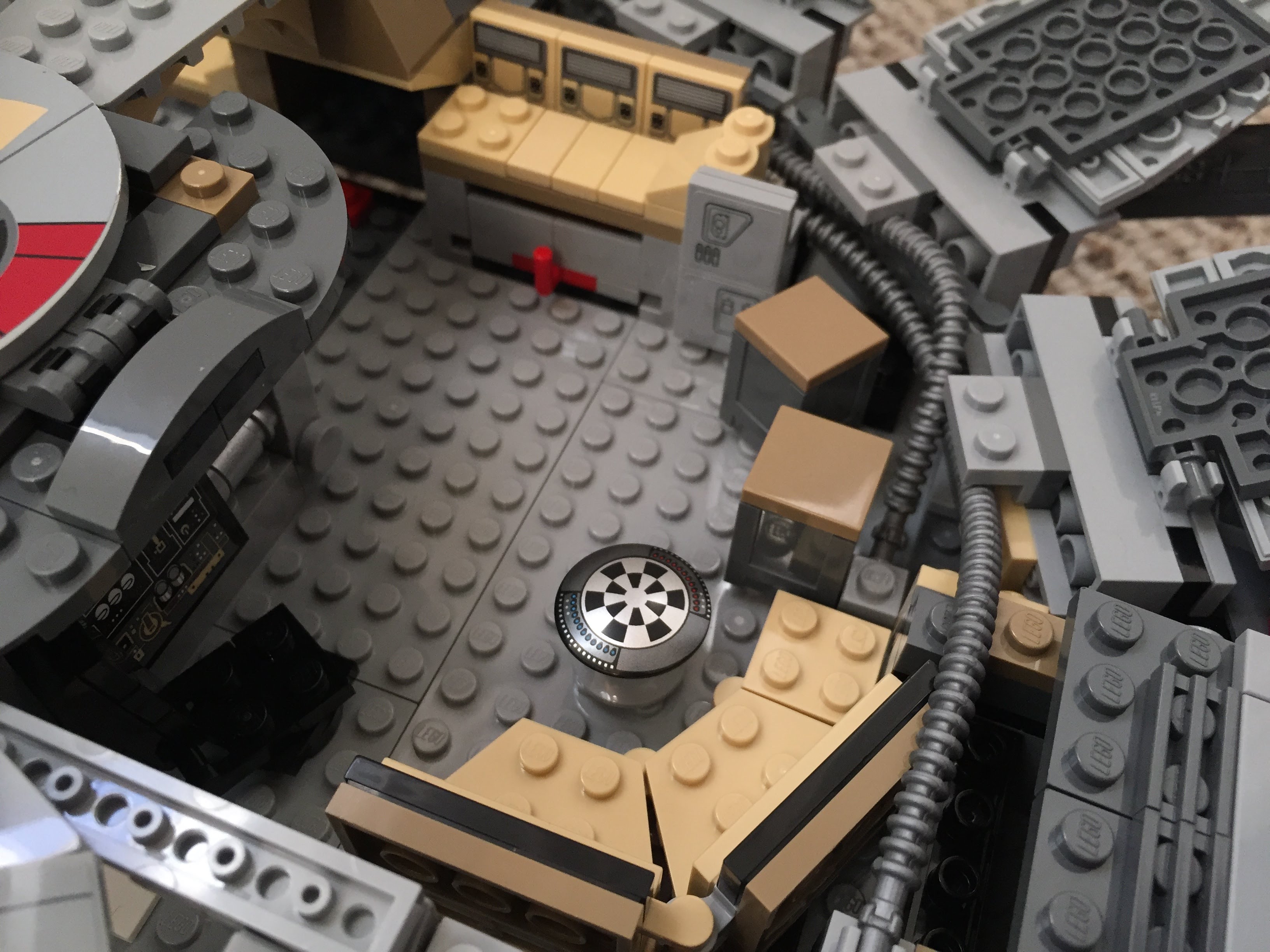
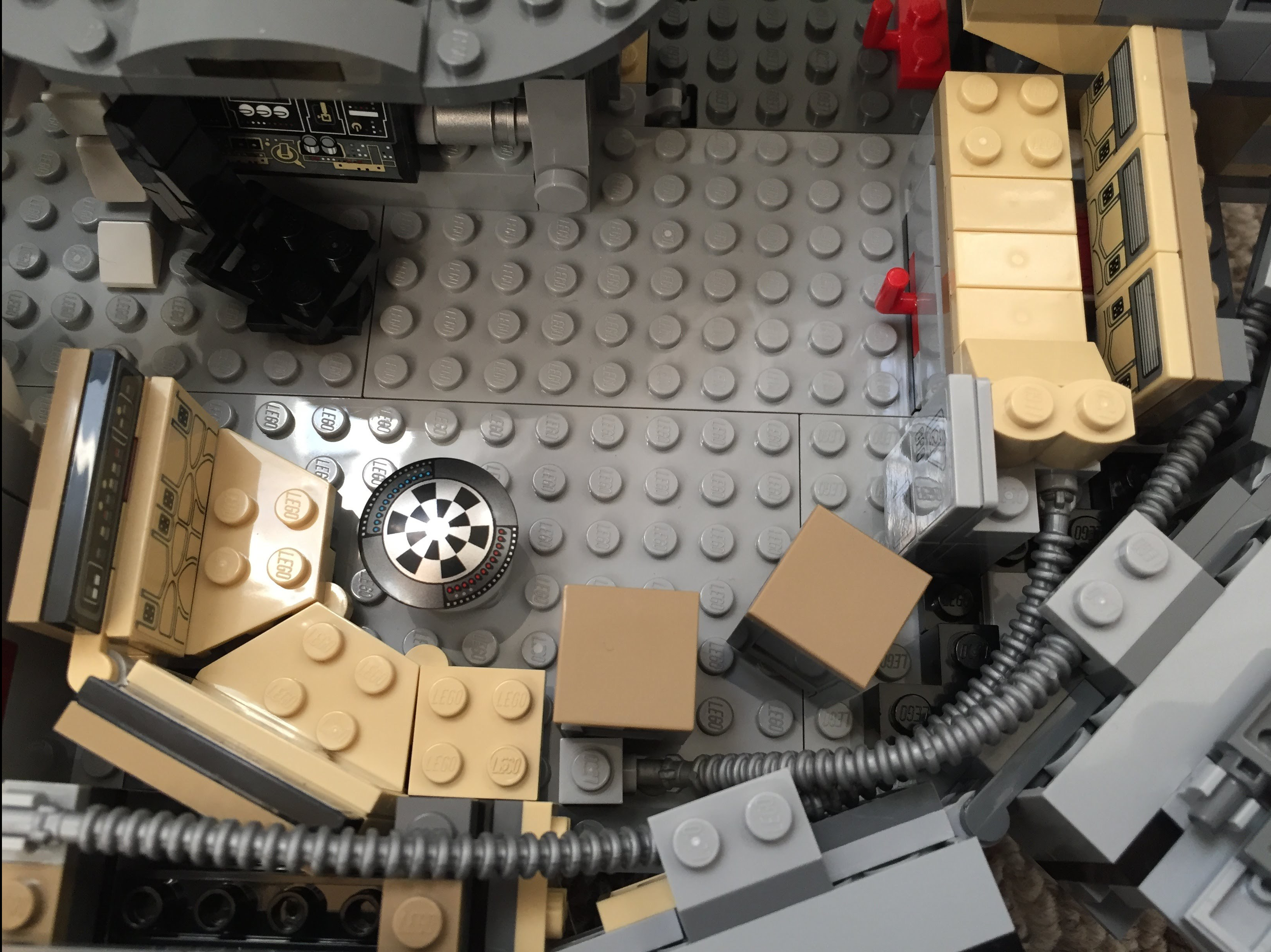
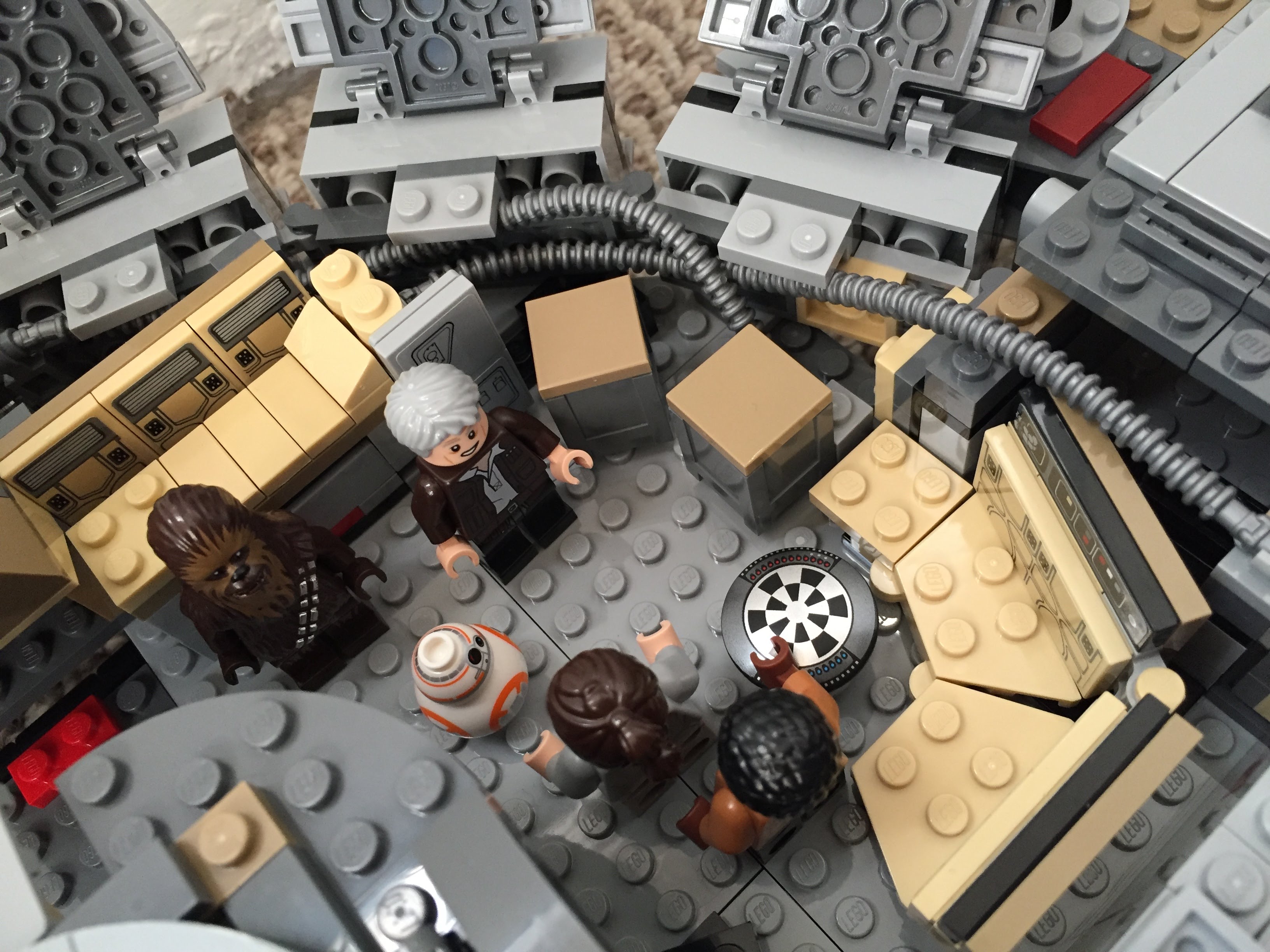
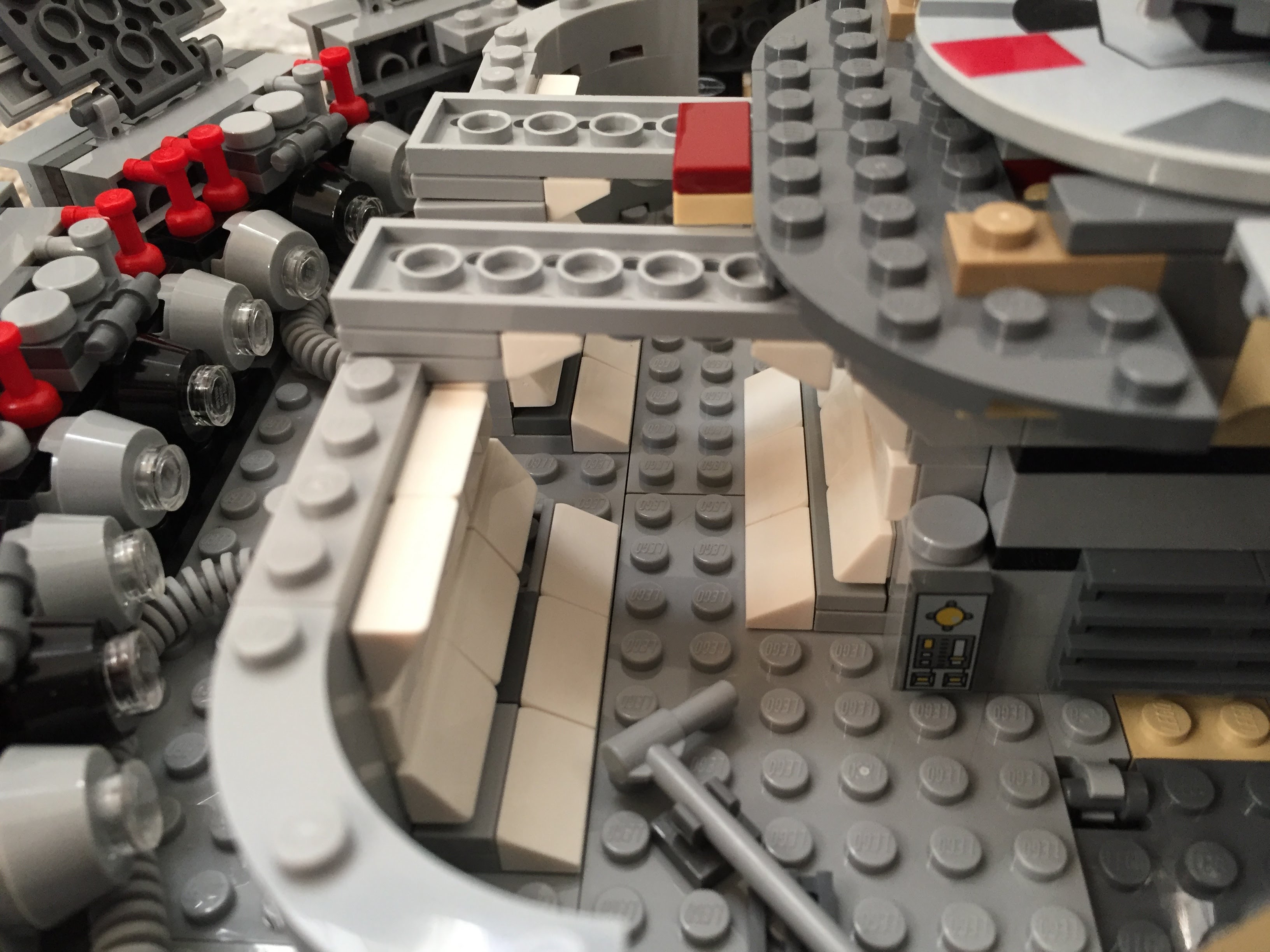
    Main Hold Entrance, Nav Computer, and Dejarik Table

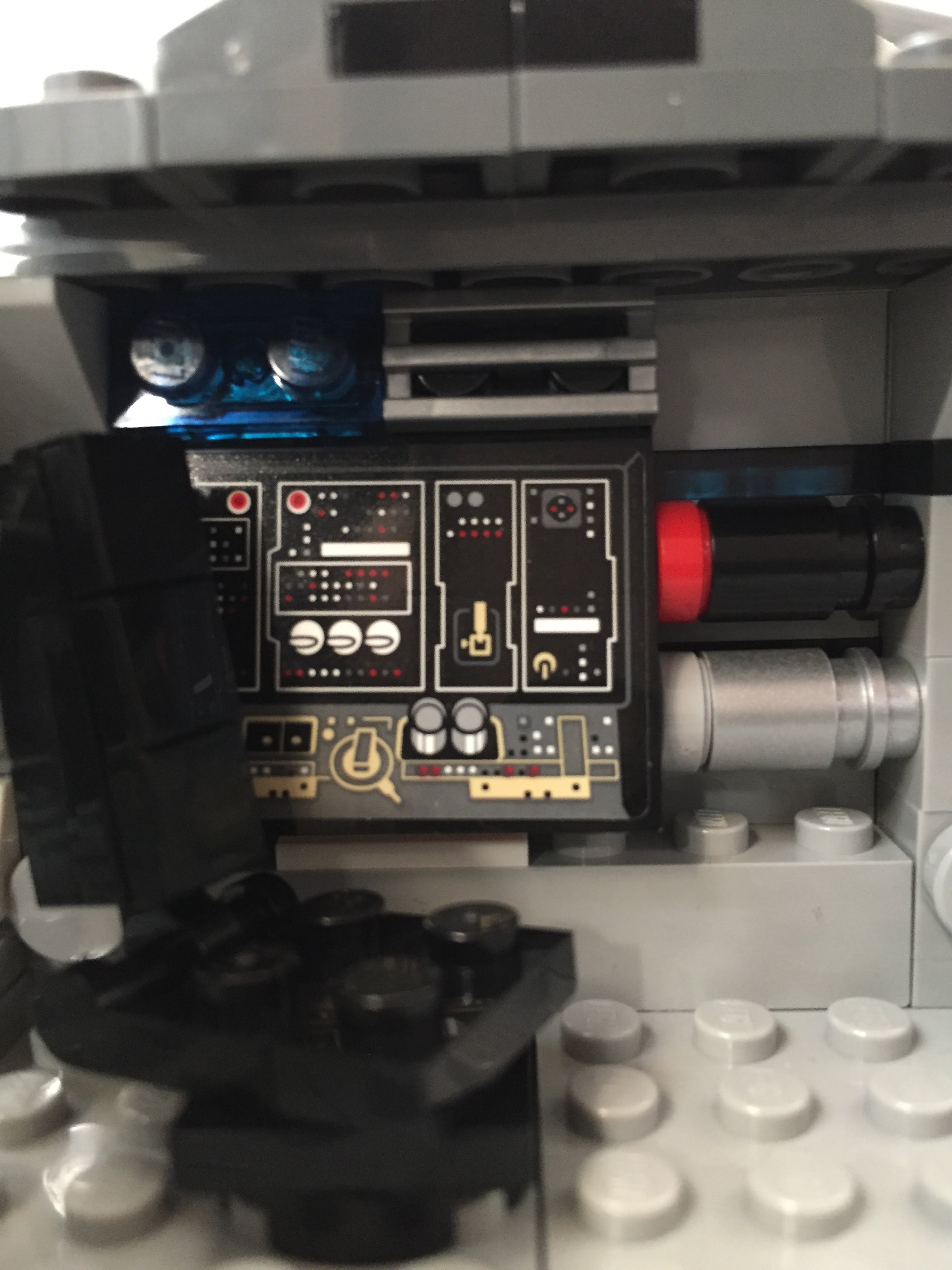
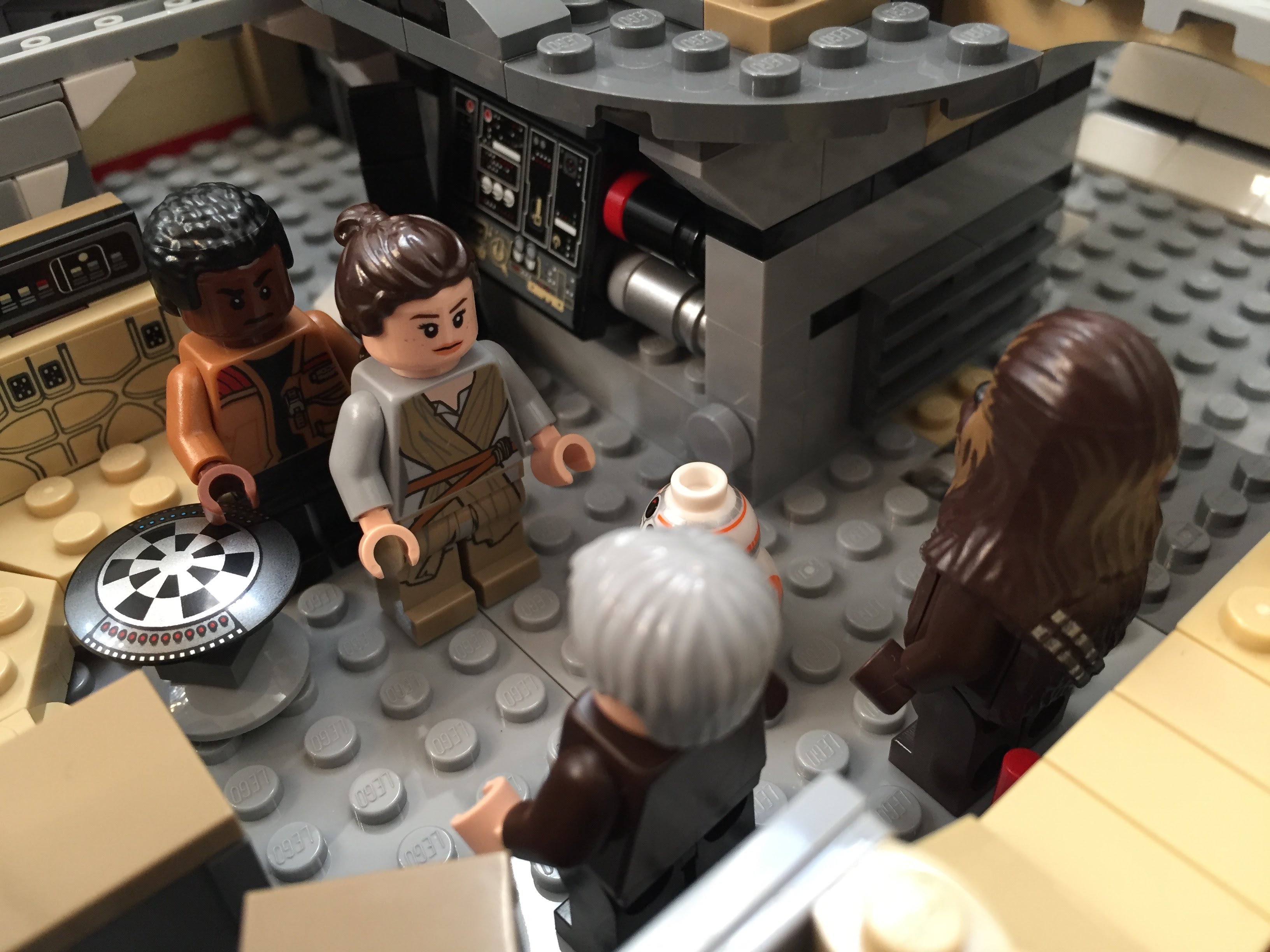
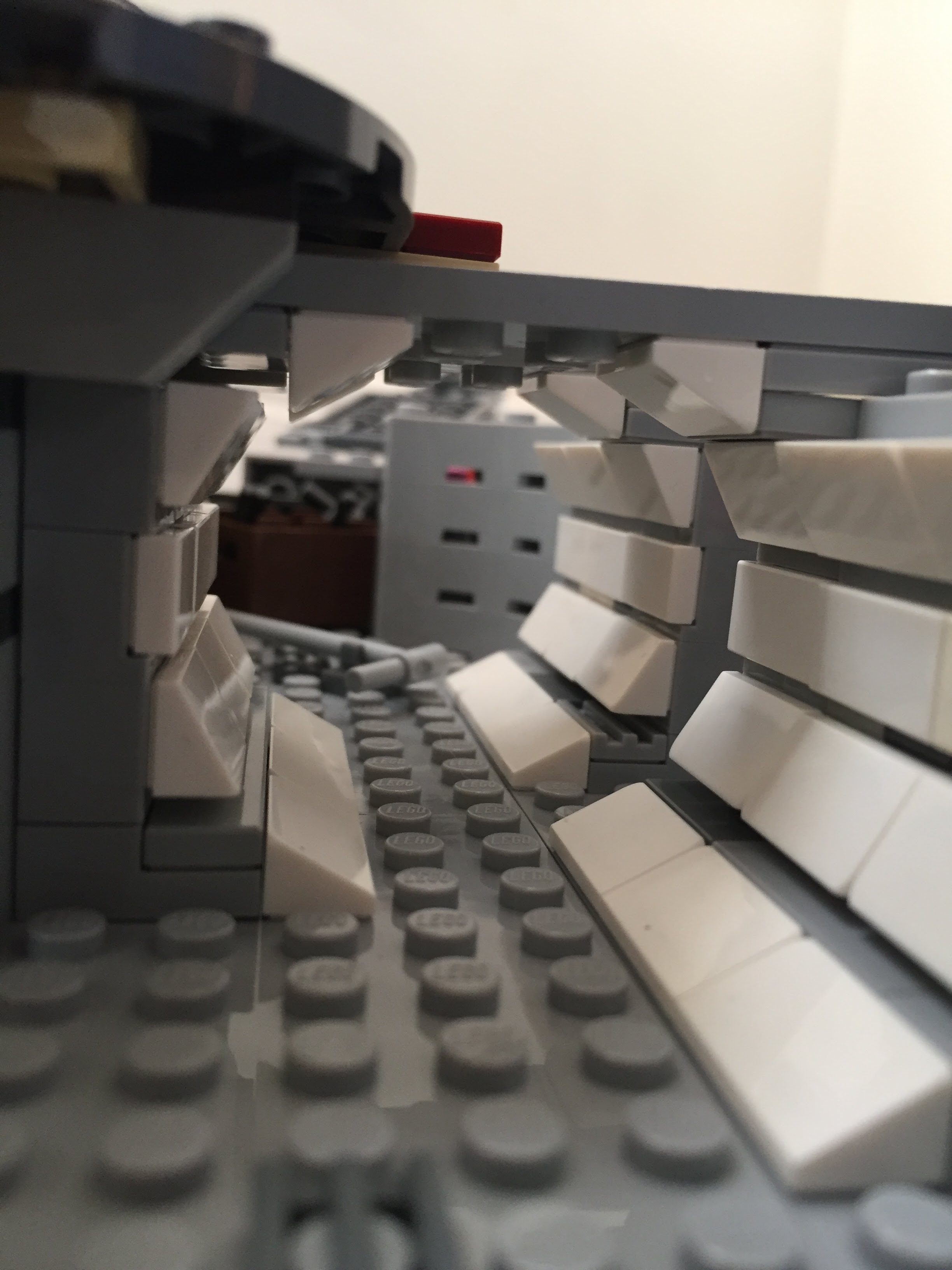
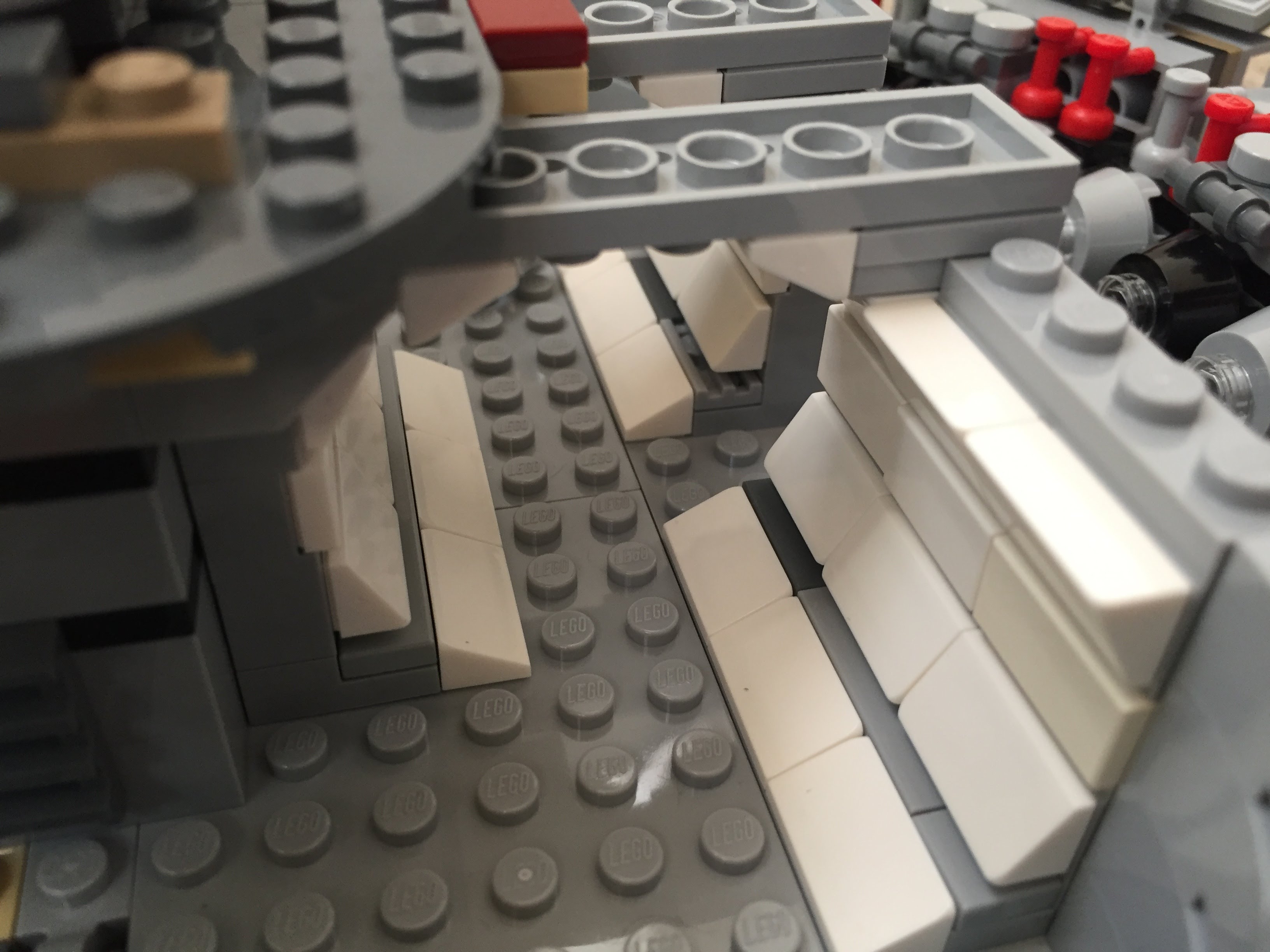
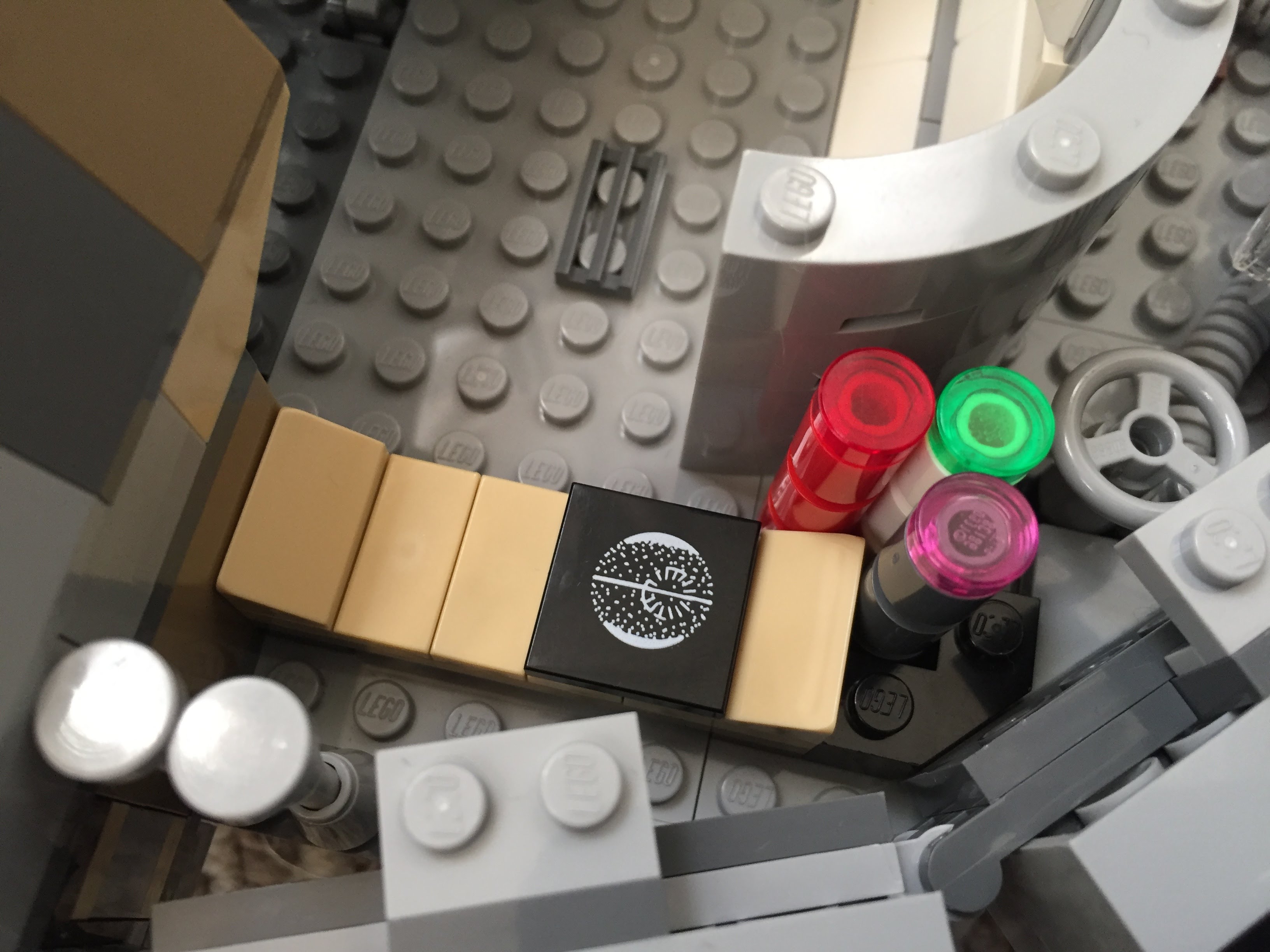
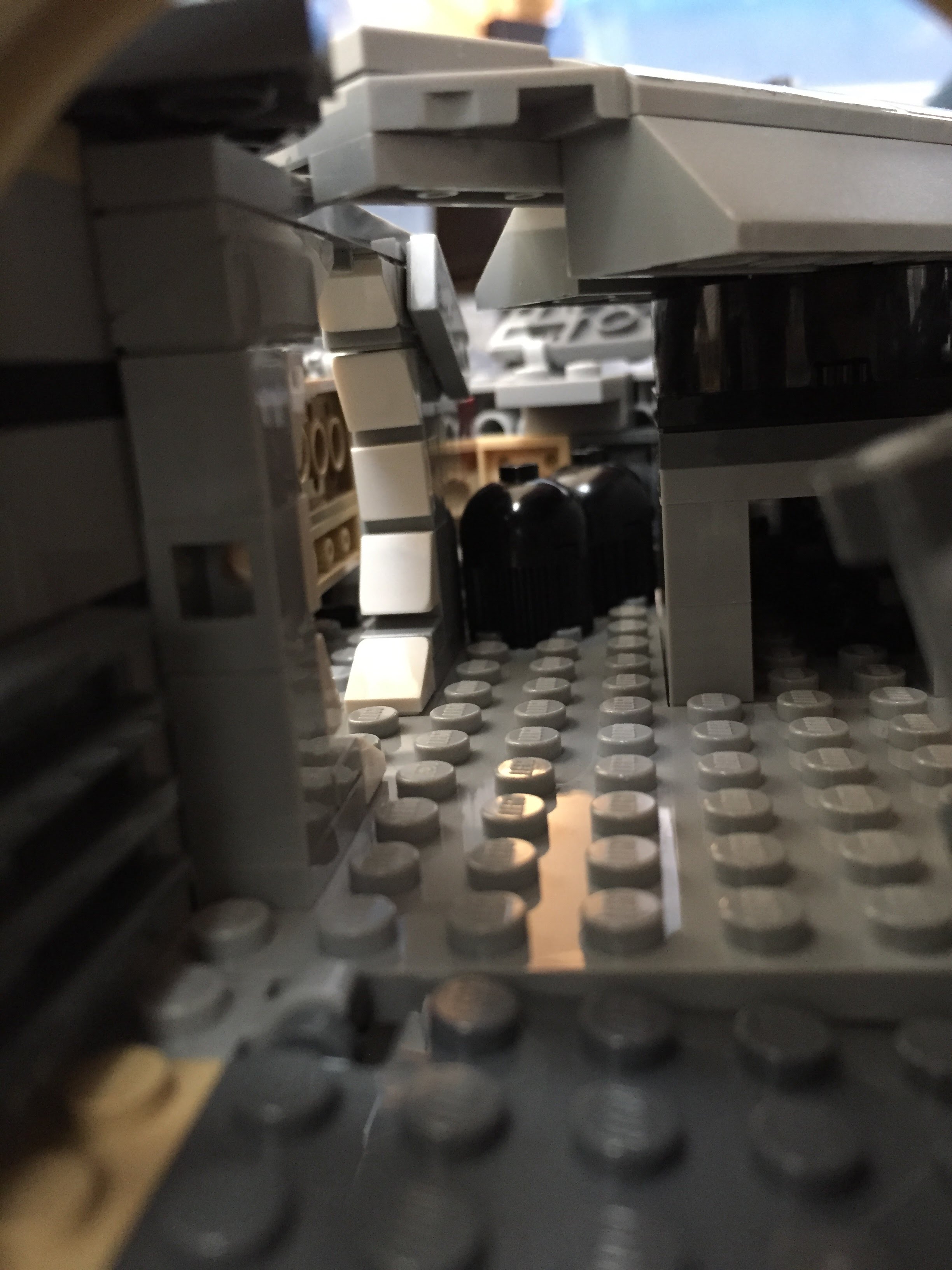
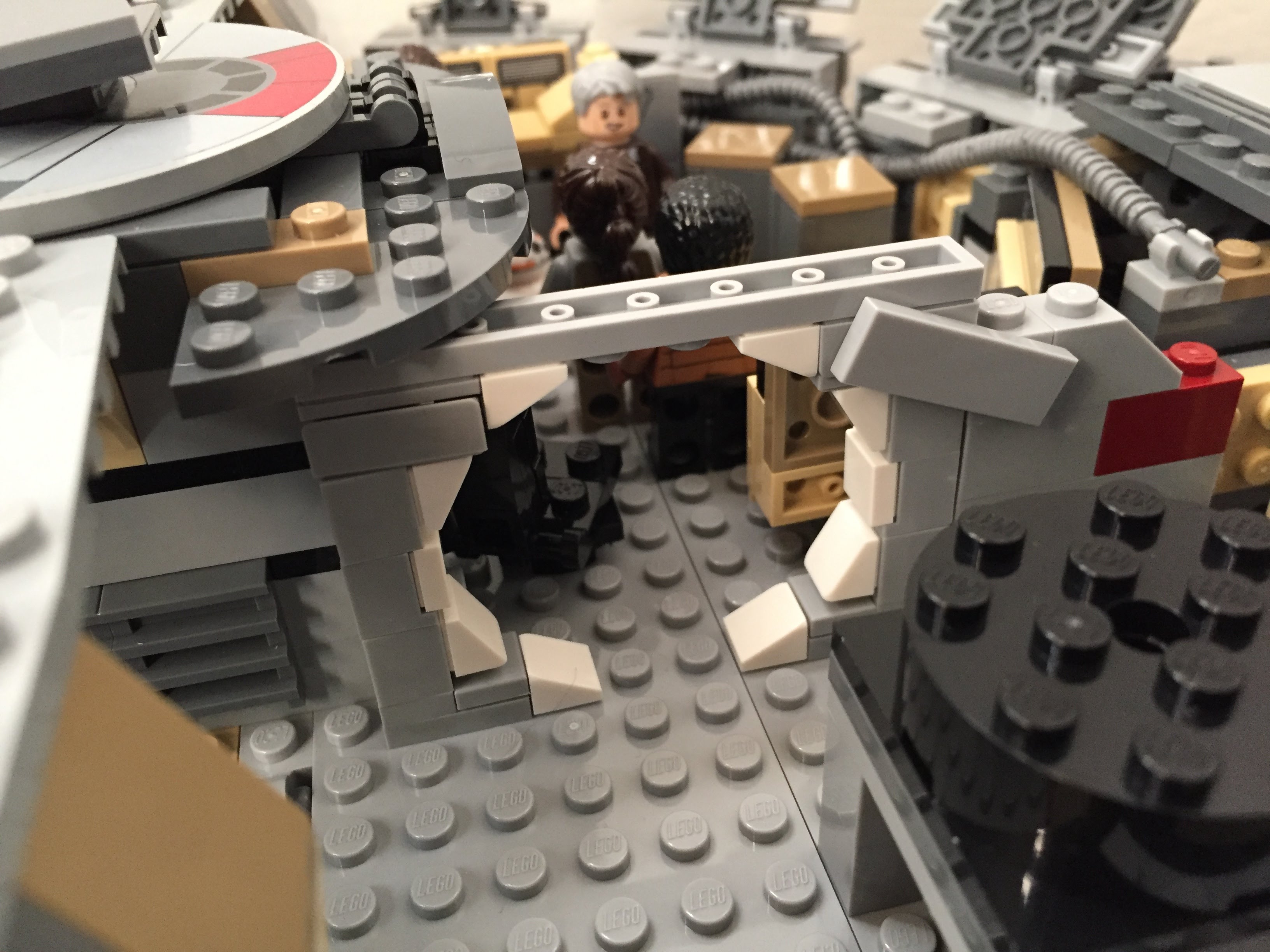
    Using 1×1 roof tiles and an upside-down technique that I developed for a diorama of the Falcon’s main hold, I built this entrance into the main hold leading from the passage way from the entry ramp. The Dejarik Table and seating is borrowed from 75192. The Nav Computer area is very tight in the size of this model, so I couldn’t fit as large tubes adjacent to it as in the diorama linked above. Instead, I used two short tubes and moved the Nav Computer one stud to the left to accommodate the Falcon’s machinery. The main hold’s med bay is raised to accommodate a drawer, which I detail further at the end of this post to avoid The Last Jedi spoilers for anyone who hasn’t seen it yet.
    IMG_3022 1.jpg

    Millennium-Falcon-mainhold-entrance.jpgIMG_3018 1.jpgimg_3017-1.jpgIMG_3016 1.jpgIMG_3015 1.jpgIMG_3014 1.jpgMillennium-Falcon-mainhold-tfa.jpg

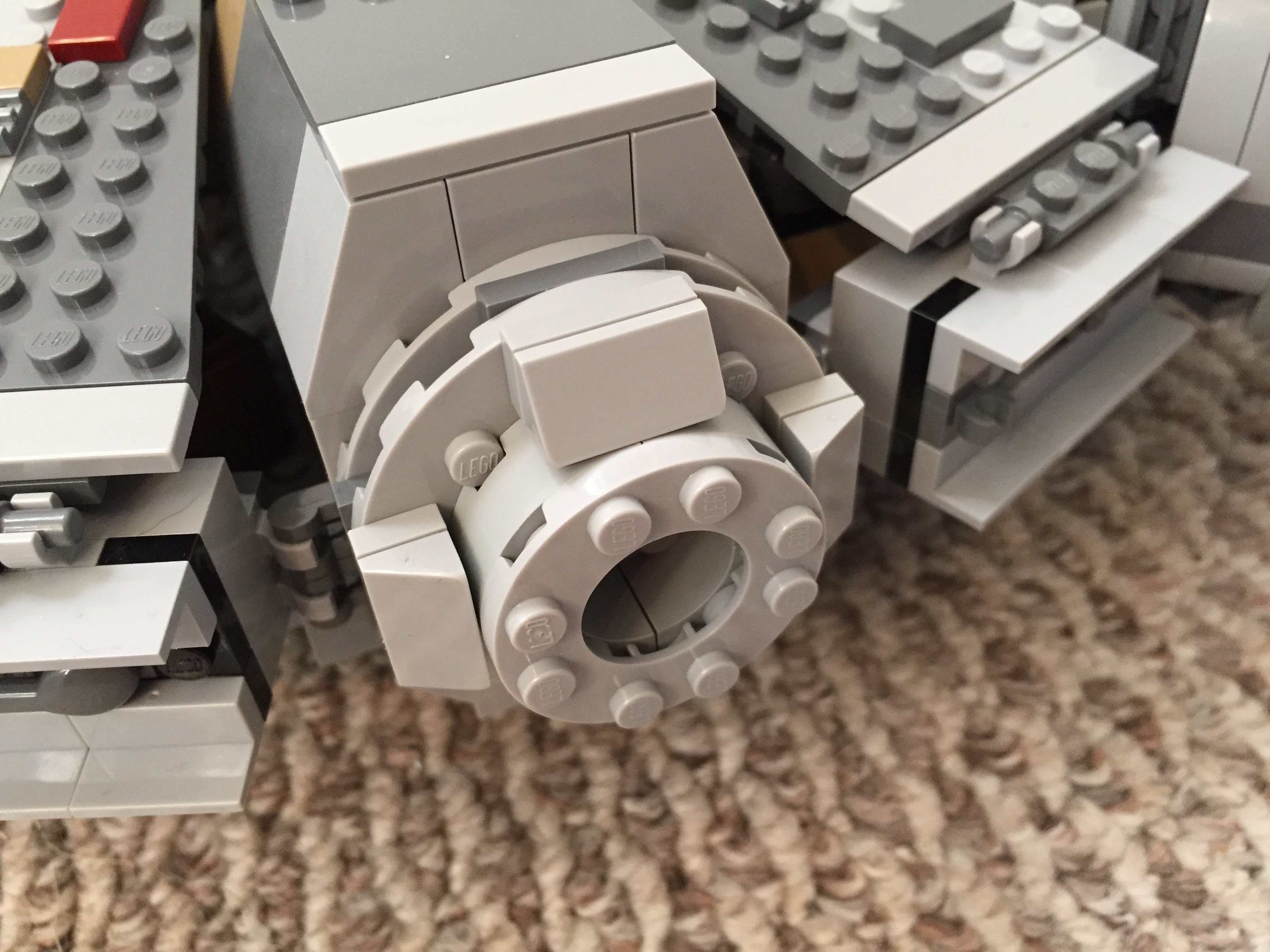
    Port and Starboard Docking Ports

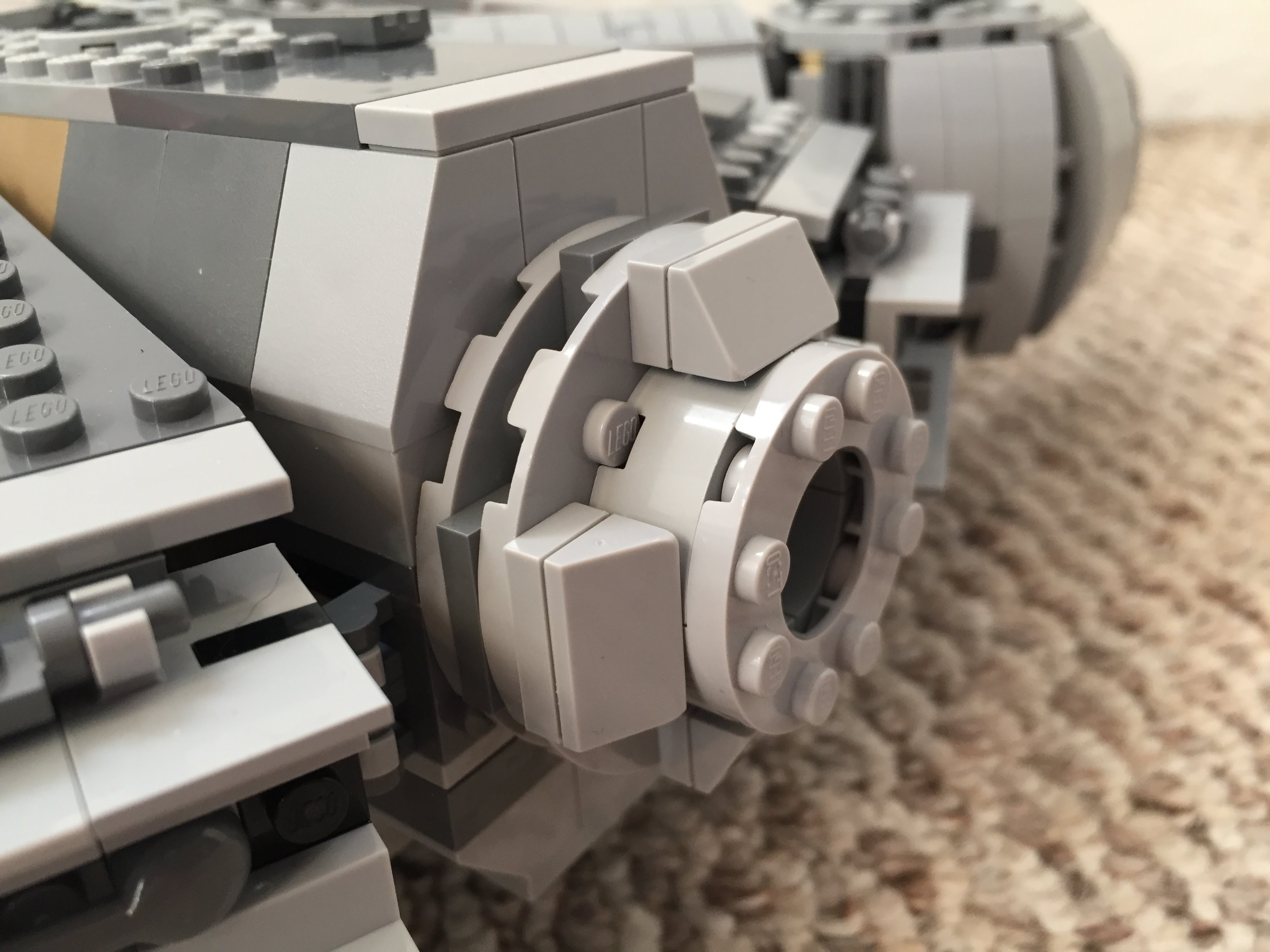
    One disappointing aspect of the 75105 model is the docking ports. It sandwiches 1×2 plates between two Plate 6X6 Round With Tube Snap and covers that with two Plate 2X4X18°. The trouble with this design is that it doesn’t really show the cone-like taper of the docking ports. Earlier Millennium Falcon sets 4504 and 7965 did a better job with the docking ports. I decided to keep 75105’s sandwich to give the ports height, and then built up a capped tube circled by 1×2 plates each topped with a Roof Tile 1 X 2 X 2/3, Abs.
    IMG_3042 1.jpgIMG_2991 1.jpgIMG_2989 1.jpg

    Wall Tile Extensions Around Circumference

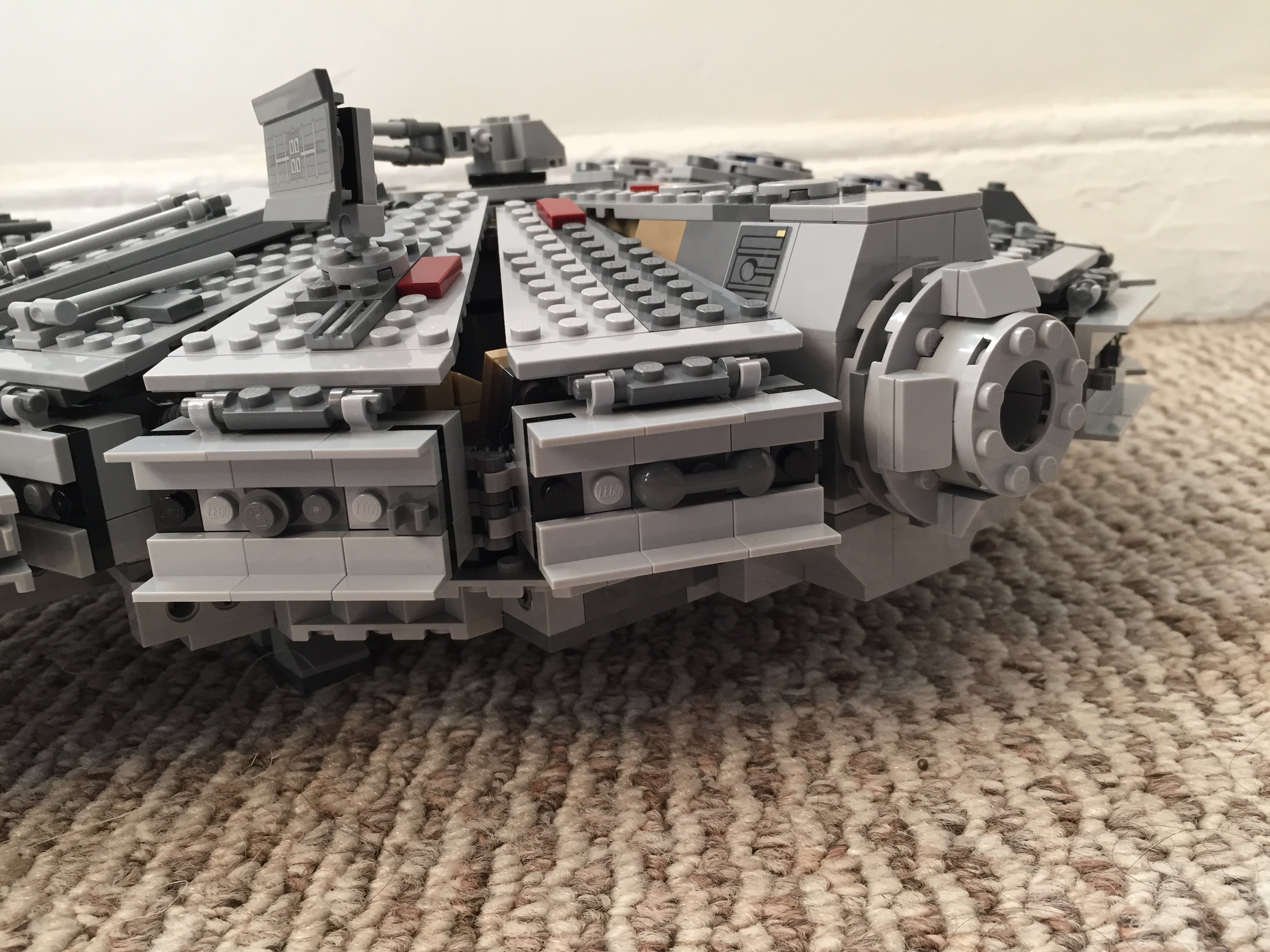
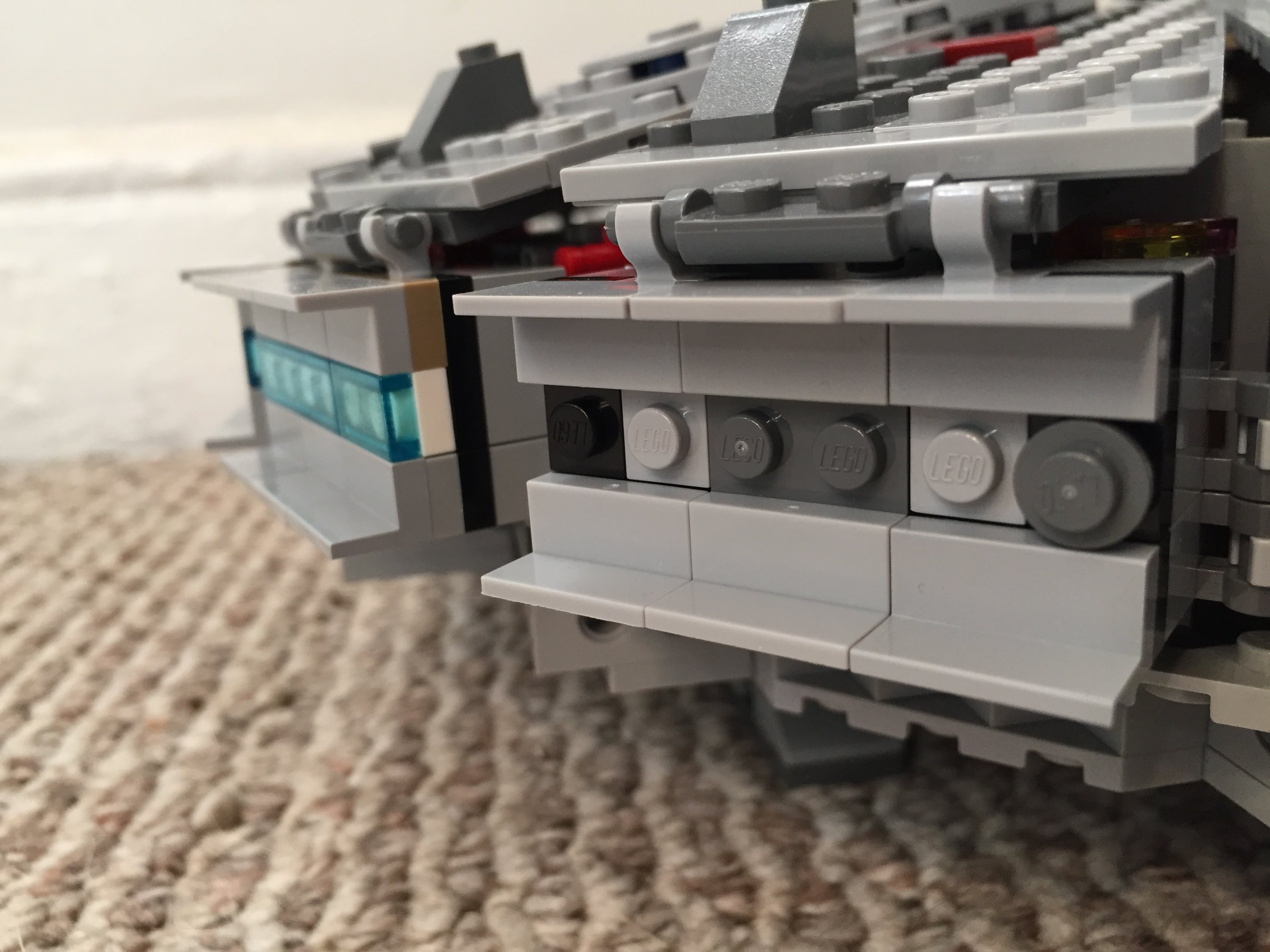
    The Millennium Falcon dorsal and ventral domed covering extends over the circumferential edge. The 75105 model comes with 1×6 flat plates to demarcate this edge overhang, but it doesn’t really look right. I picked up a lot of Wall Element 1X2X1 on Bricklink to replace these 1×6 flat plates. In addition to showing this circumferential trench around the edge of the Falcon, it gives the model an overall flatter look, which emphasizes the Falcon’s on-screen appearance.
    IMG_3033 1.jpgIMG_2992 1.jpgIMG_3040 1.jpg

    Engine Compartment

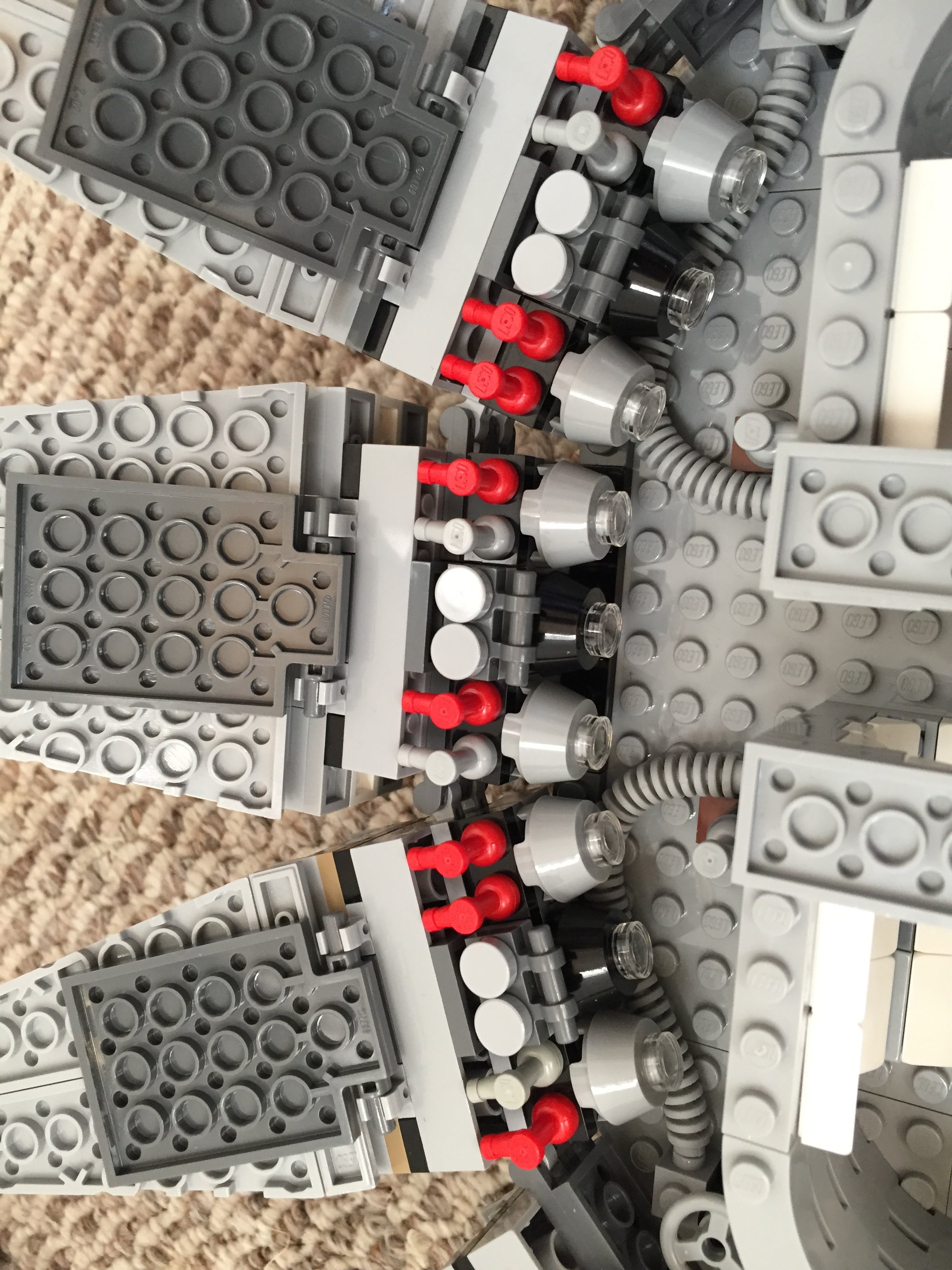
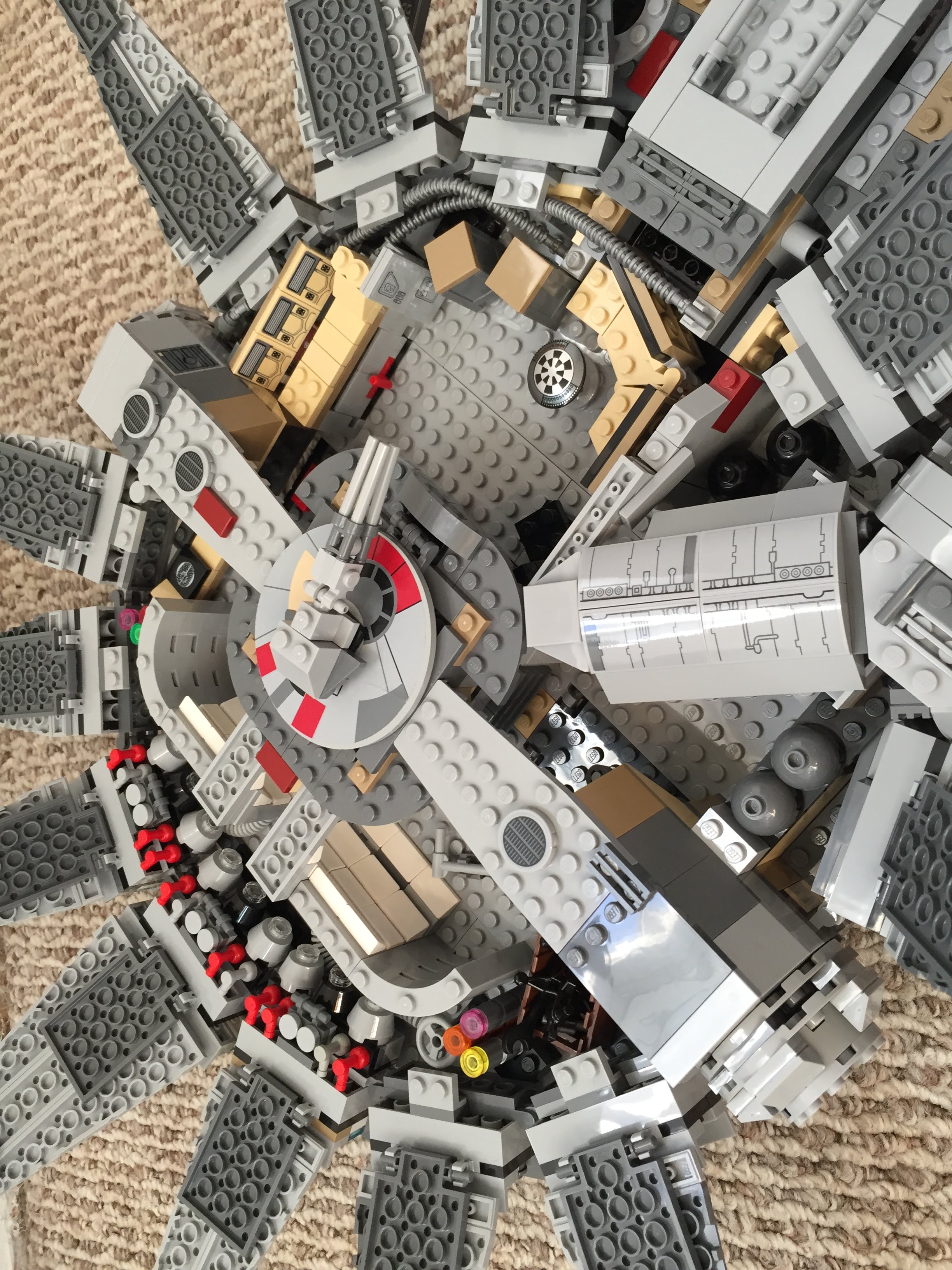
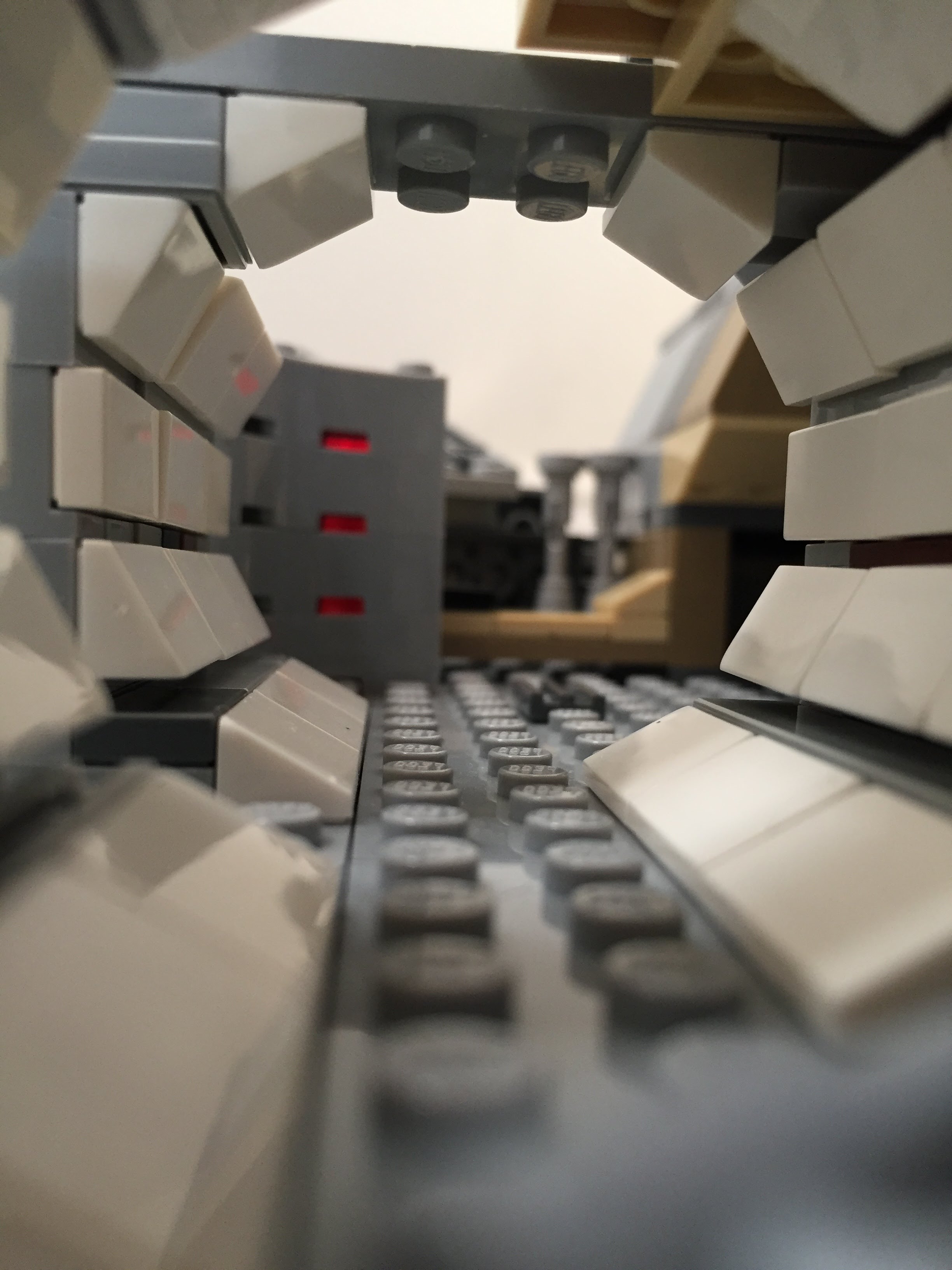
    Instead of the Falcon having a monolithic motor, it seems more likely that it would have a segmented, modular aerospike engine. With this in mind, I designed the engine compartment to have a ring of engine modules with supporting hardware, cabling, and pipes. I created a larger, ringed passage way with an entrance way leading into the engine compartment.
    IMG_3025 1.jpgIMG_3023 1.jpgIMG_3013 1.jpgIMG_3012 1.jpgIMG_3011 1.jpgMillennium-Falcon-aft-engineroom-entrance.jpgMillennium-Falcon-aft-engineroom-sideview.jpgMillennium-Falcon-aft-passageway.jpgIMG_2999 1.jpg

    Entrance Ramp and Other Compartments

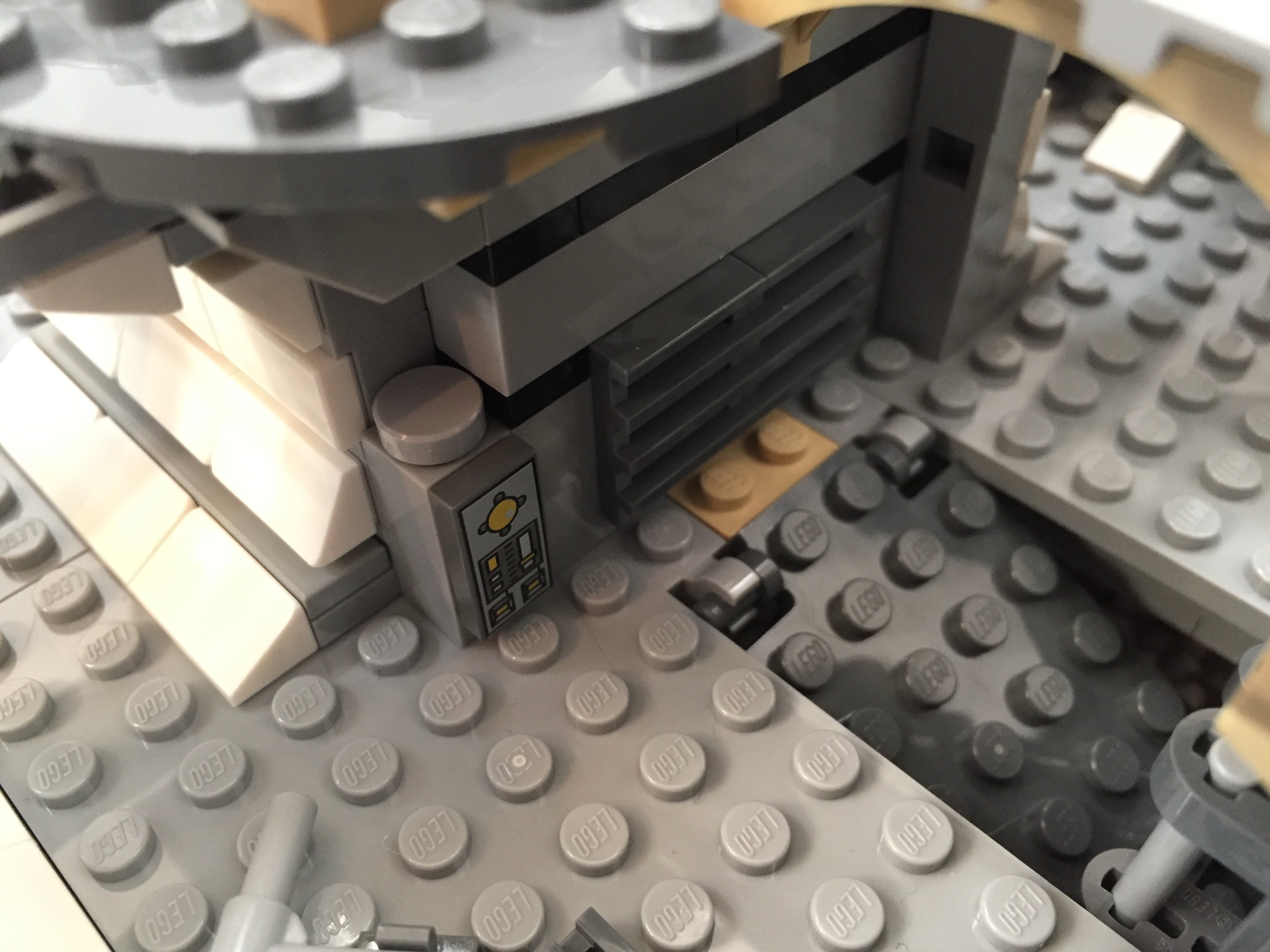
    I stole the hydraulics from 75103: First Order Transporter and added to the Falcon’s entrance ramp (which makes the ramp look like the Kenner Millennium Falcon vehicle from the original Star Wars action figure line). Also, I shifted the entrance ramp one stud out from the central gunner turret assembly. There are two side compartments–one for storage with weapons in a crate, and one for another bunk (with a copy of the Death Star plans).

    Millennium-Falcon-entryramp-interior-down2.jpgMillennium-Falcon-entryway-interior-down.jpgMillennium-Falcon-entryramp-exterior-down.jpgMillennium-Falcon-aft-storeroom.jpgMillennium-Falcon-aft-sleep-compartment.jpg

    New Engine Exhaust and a Little Joke

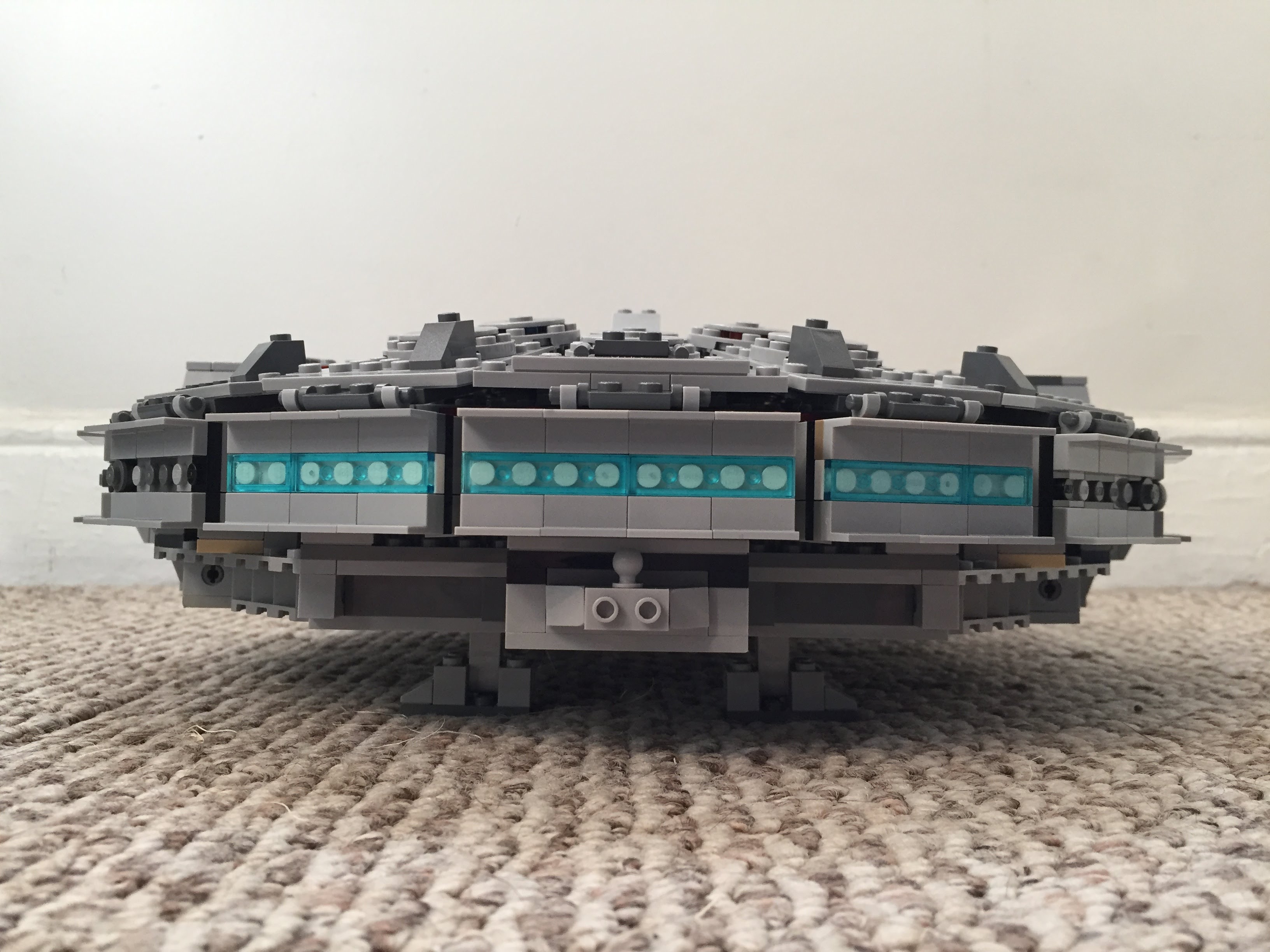
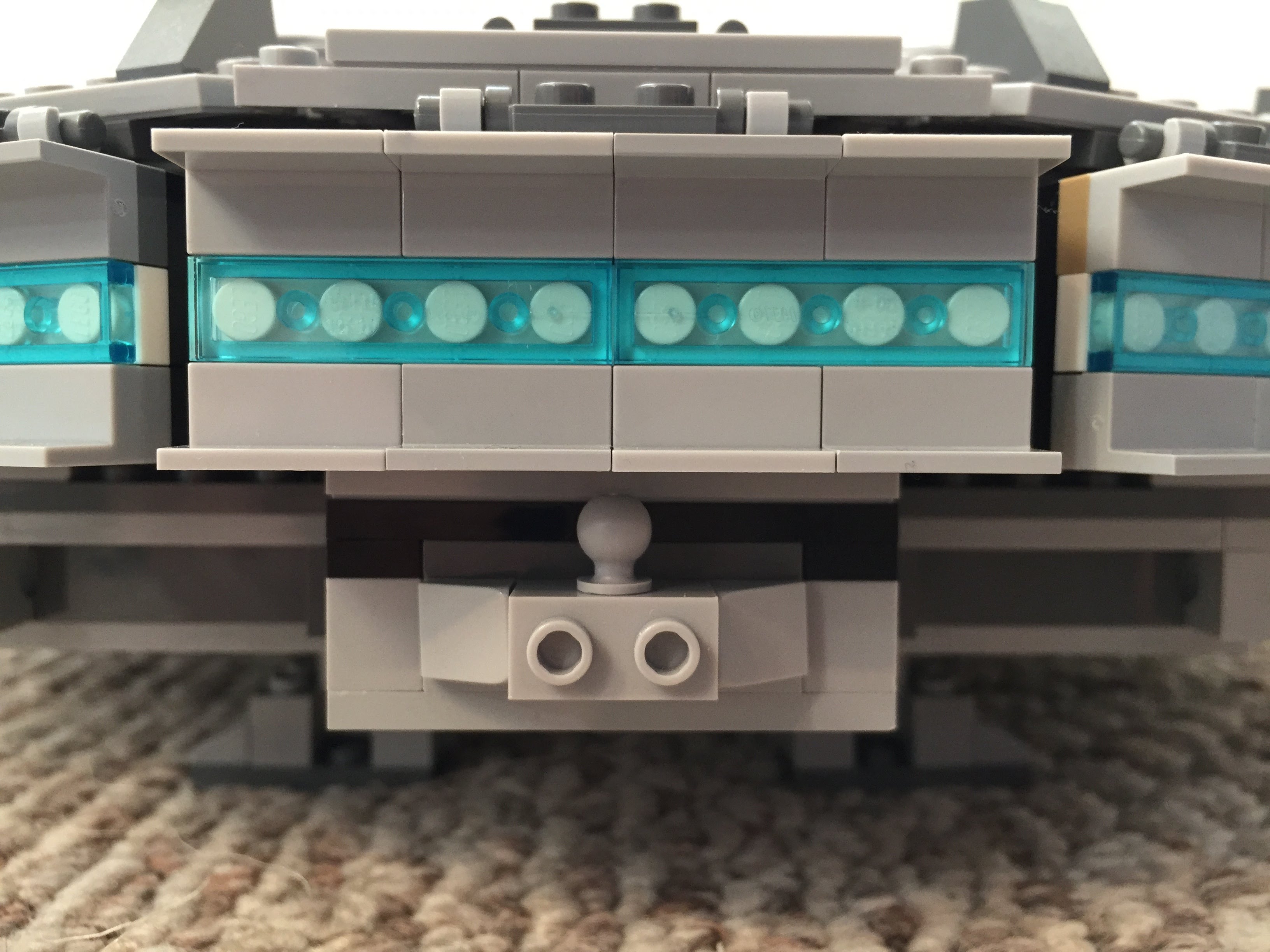
    Instead of using the ribbed, transparent blue tube that comes with 75105, I opted for white tile backgrounds covered by transparent blue flat tiles (1×2 and 1×4). As a hidden joke, I included a trailer hitch under the engines (isn’t the Millennium Falcon is a big rig in the stars?).
    IMG_3038 1.jpgIMG_3039 1.jpg

    The Last Jedi Update

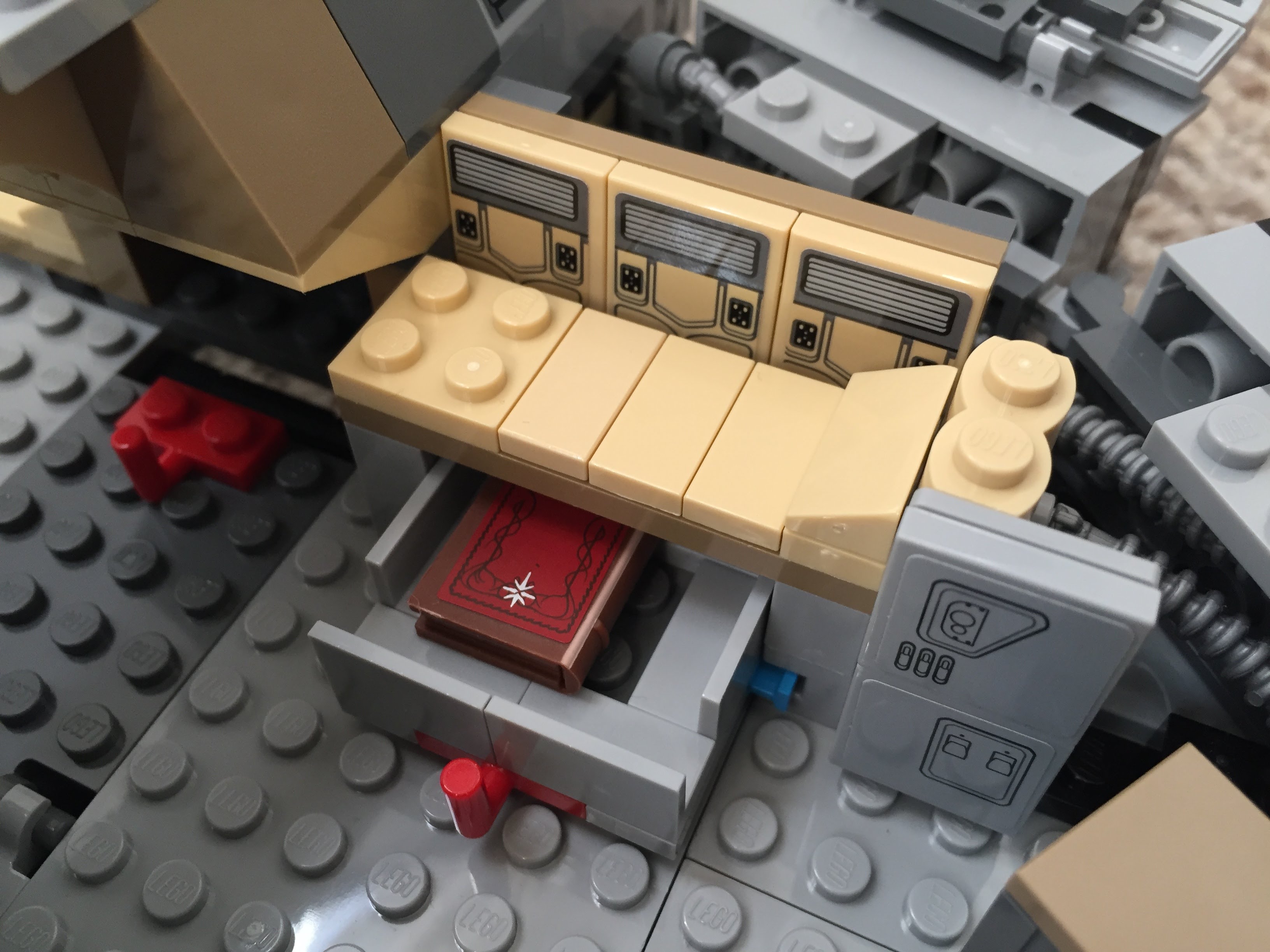
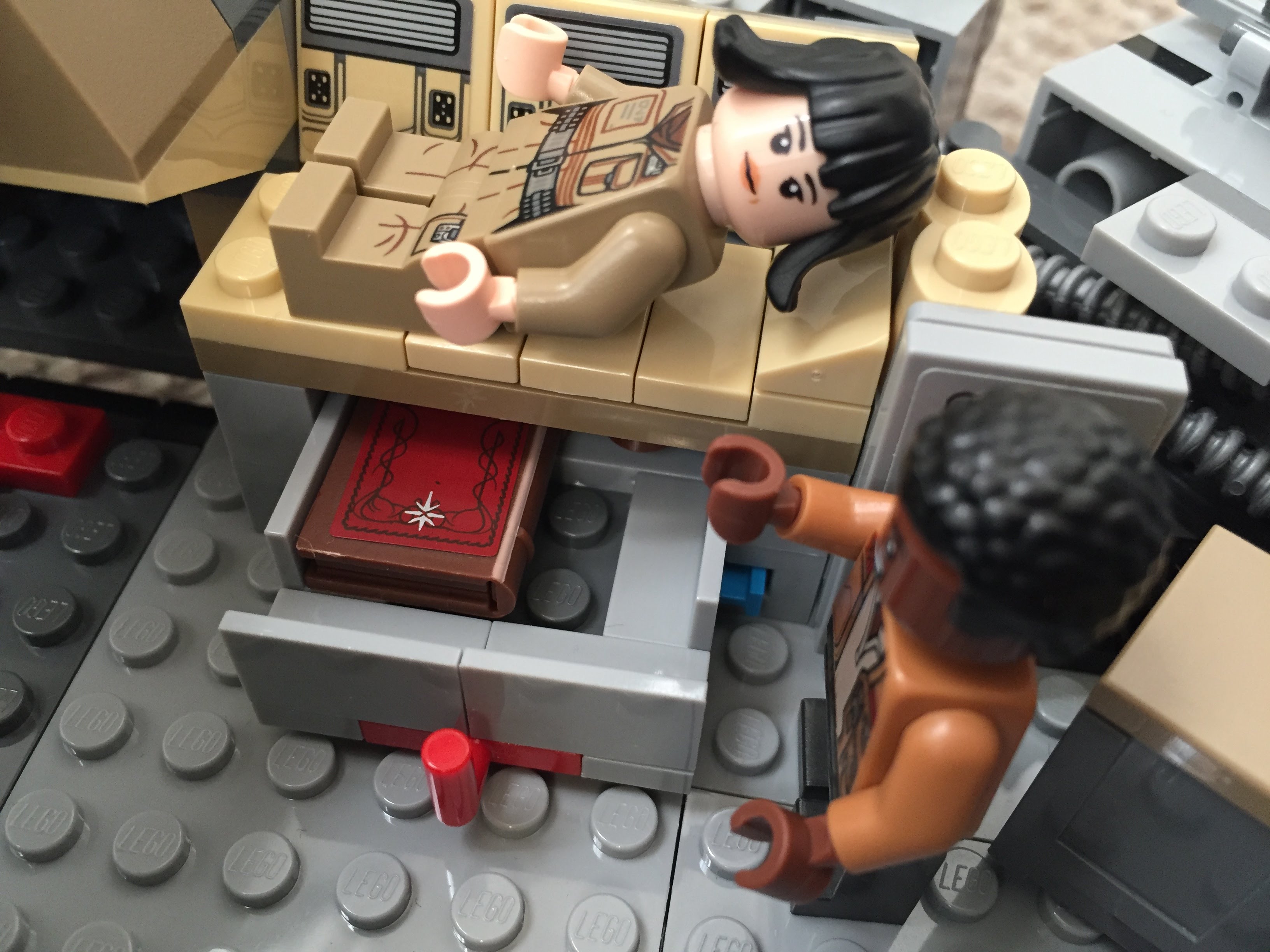
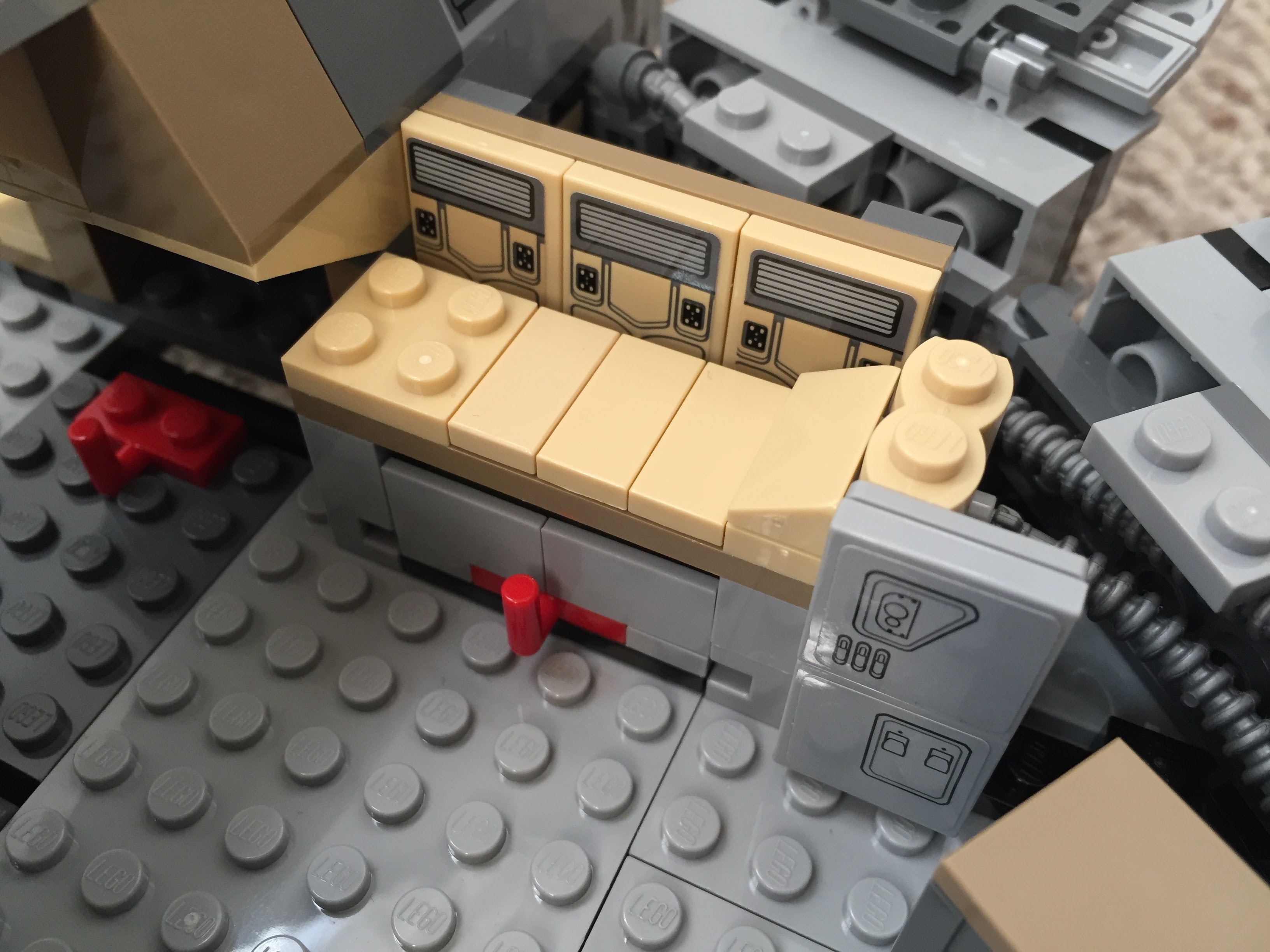
    At the end of The Last Jedi, Finn puts Rose in the Millennium Falcon’s med bay in the main hold. The camera focuses on the drawer under the bed when Finn looks for a blanket. The audience realizes that the drawer also contains the Jedi books on Ahch-To. To represent this, I raised the med bay, added a drawer beneath, and included a book (from The Hobbit set #79003: An Unexpected Gathering).
    IMG_3024 1.jpgIMG_3020 1.jpgIMG_3019 1.jpg

  • Special Issue on Star Wars: The Force Awakens Published in NANO: New American Notes Online

    starwars-collage

    Special Issue Co-Editors Jason W. Ellis and Sean Scanlan are pleased to announce the publication of NANO: New American Notes Online issue 12 on Star Wars: The Force Awakens: Narrative, Characters, Media, and Event. Focusing on the transmedia aspects of the continuation of the Star Wars film saga following Lucasfilm’s acquisition by Disney, this issue’s contributors explore how transmedia storytelling is leveraged in different aspects of fanfiction, promoting ideologies of global capitalism, and reconfigures Joseph Campbell’s hero myth. Also, we are honored to present an interview with Cass R. Sunstein, author of The World According to Star Wars. Now that The Last Jedi is in theaters, there is much more to be said on the issues these contributors debate. Follow the link below to read the current issue.

    https://nanocrit.com/issues/issue12


    NANO Issue 12: Star Wars: The Force Awakens: Narrative, Characters, Media, and Event


    image4-IMG_2693 copyEditor’s Introduction for NANO Special Issue 12: Star Wars: The Force Awakens: Narrative, Characters, Media, and Event by Jason W. Ellis and Sean Scanlan


    kylo-hux-03Welcoming the Dark Side?: Exploring Whitelash and Actual Space Nazis in TFA Fanfiction by Cait Coker and Karen Viars


    KeeImageOnePoe Dameron Hurts So Prettily: How Fandom Negotiates with Transmedia Characterization by Chera Kee


    LR-orpana-8-StarkillerbaseInterpellation by the Force: Biopolitical Cultural Apparatuses in The Force Awakens by Simon Orpana


    LR-Payal-2The Force Awakens: The Individualistic and Contemporary Heroine by Payal Doctor


    cass-book-cover-letterboxAn Interview with Cass R. Sunstein: Author of The World According to Star Wars by Jason W. Ellis and Sean Scanlan


    NANO: New American Notes Online is an interdisciplinary academic journal. Our goal is to invigorate humanities discourse by publishing brief peer-reviewed reports with a fast turnaround enabled by digital technologies.


    Currently open NANO calls for papers include:

    – Issue 13: Special Issue on The Anthropocene, Guest Editors: Kyle Wiggins and Brandon Krieg

    Deadline: January 12, 2018

    – Issue 14: Special Issue: Captivity Narratives Then and Now: Gender, Race, and the Captive in 20th and 21st American Literature and Culture, Guest Editors: Megan Behrent and Rebecca Devers

    Deadline: May 15, 2018

    Visit https://nanocrit.com/Submissions for details and instructions for submitting your writing.