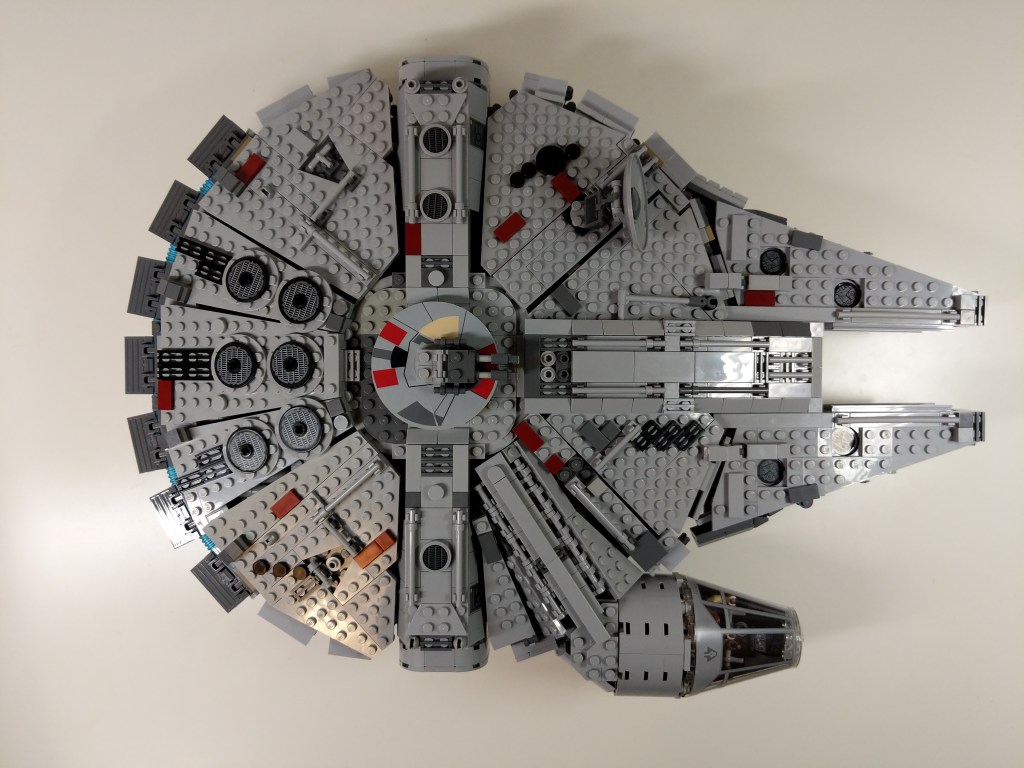
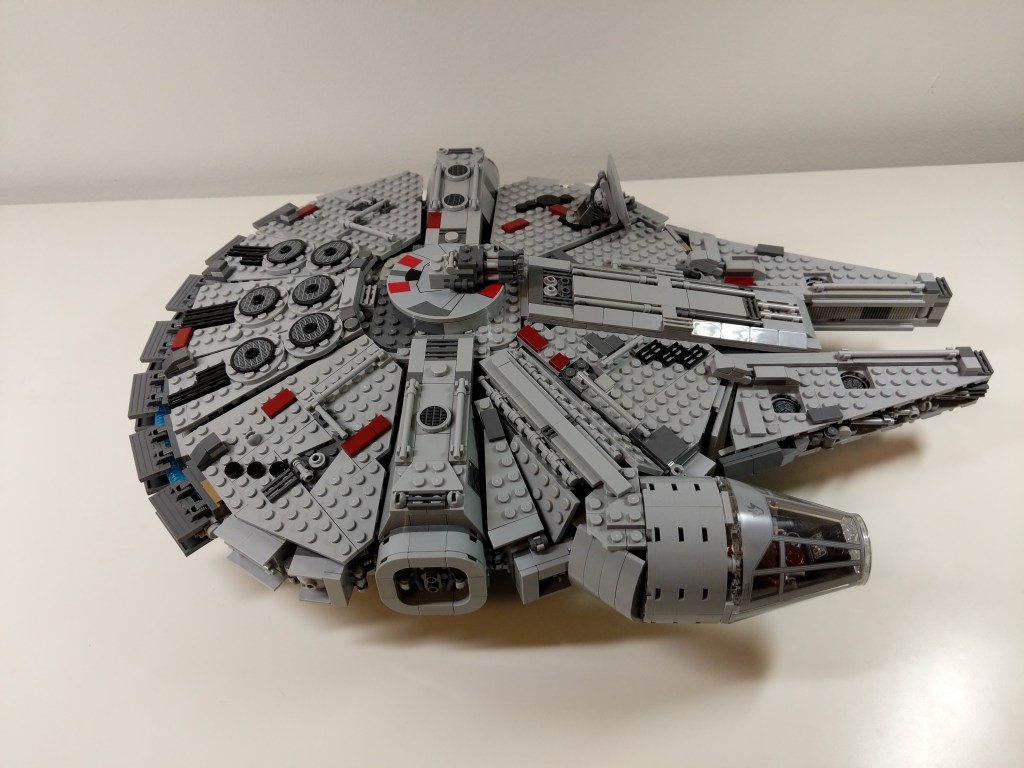
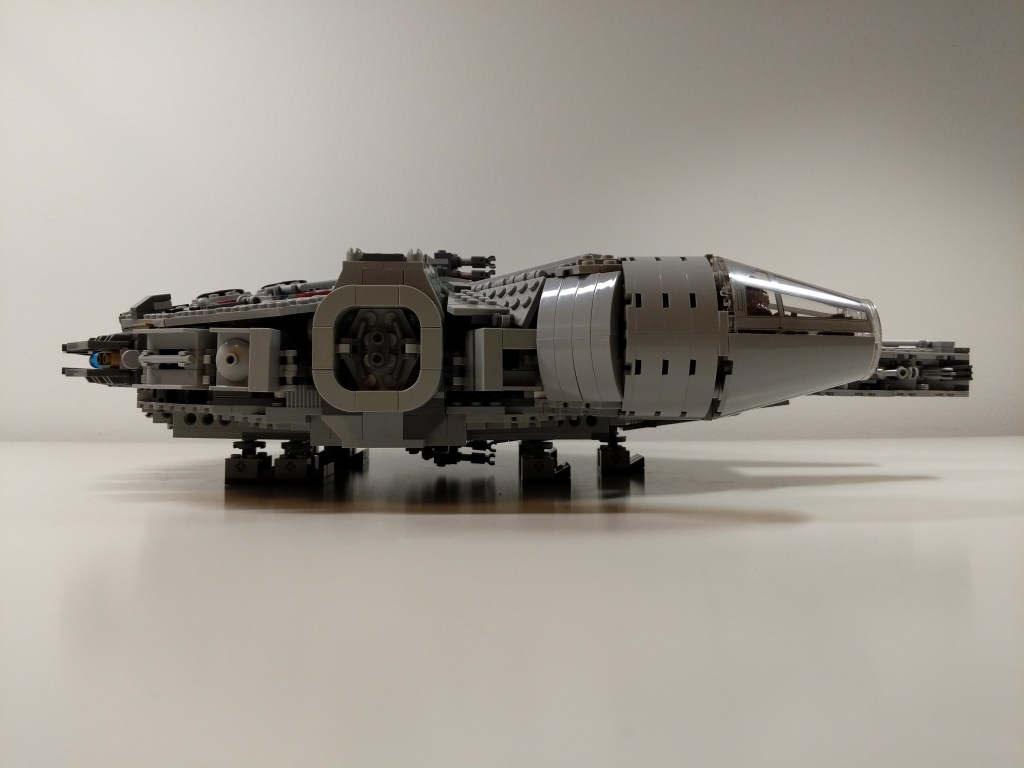
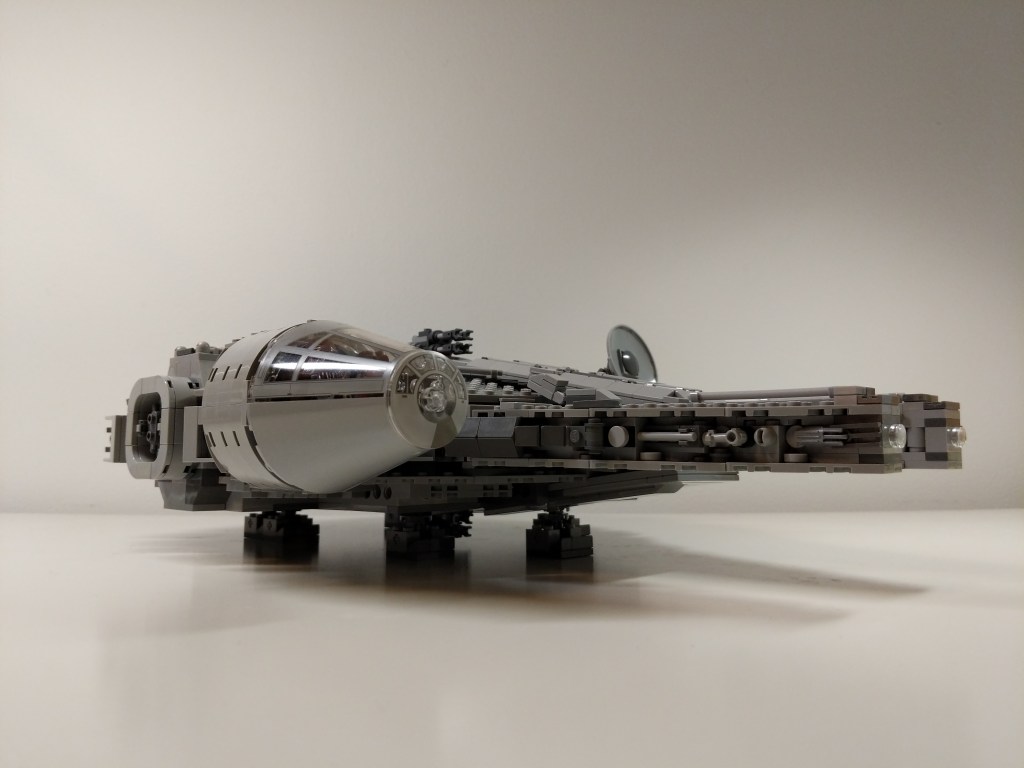
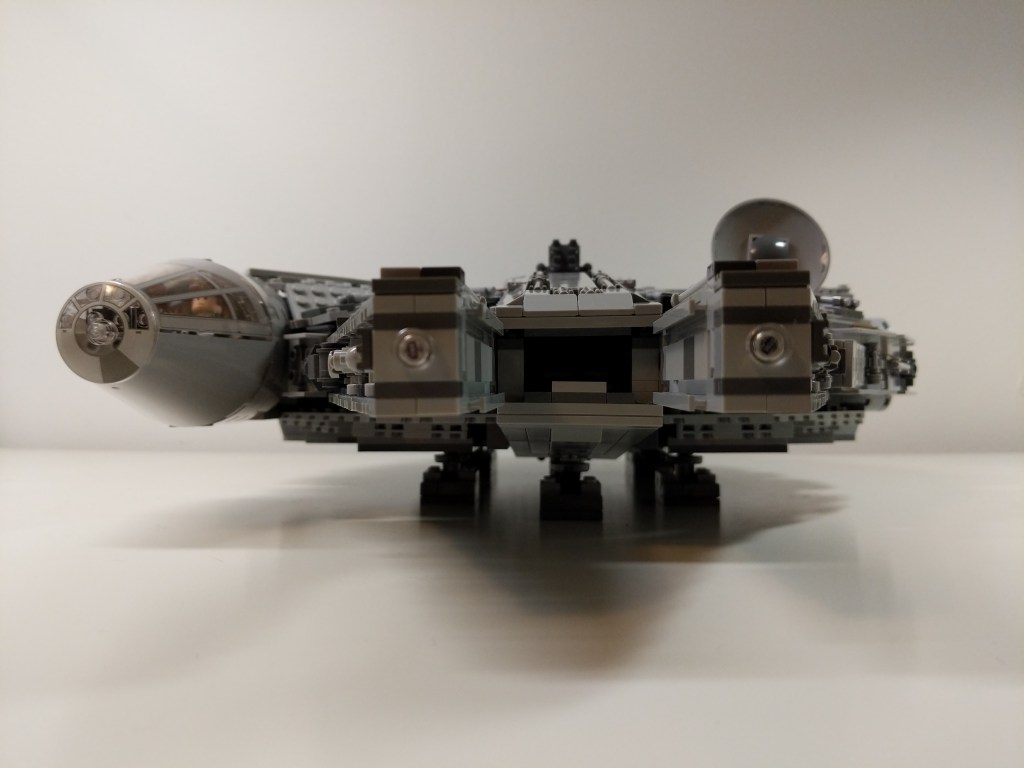
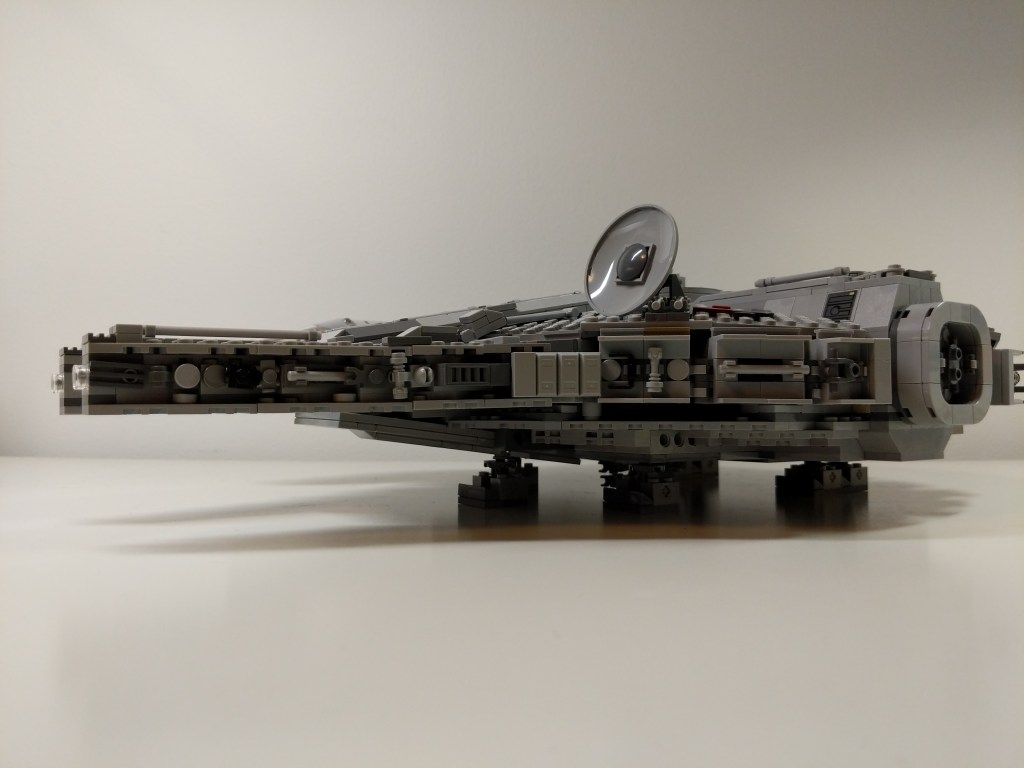
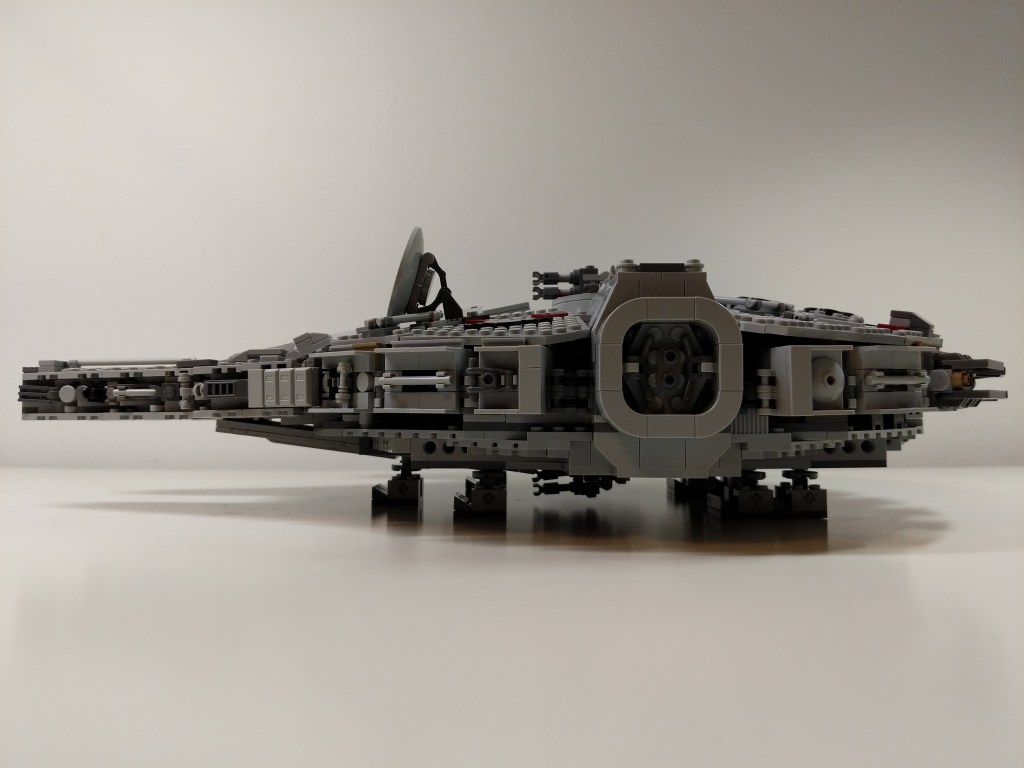
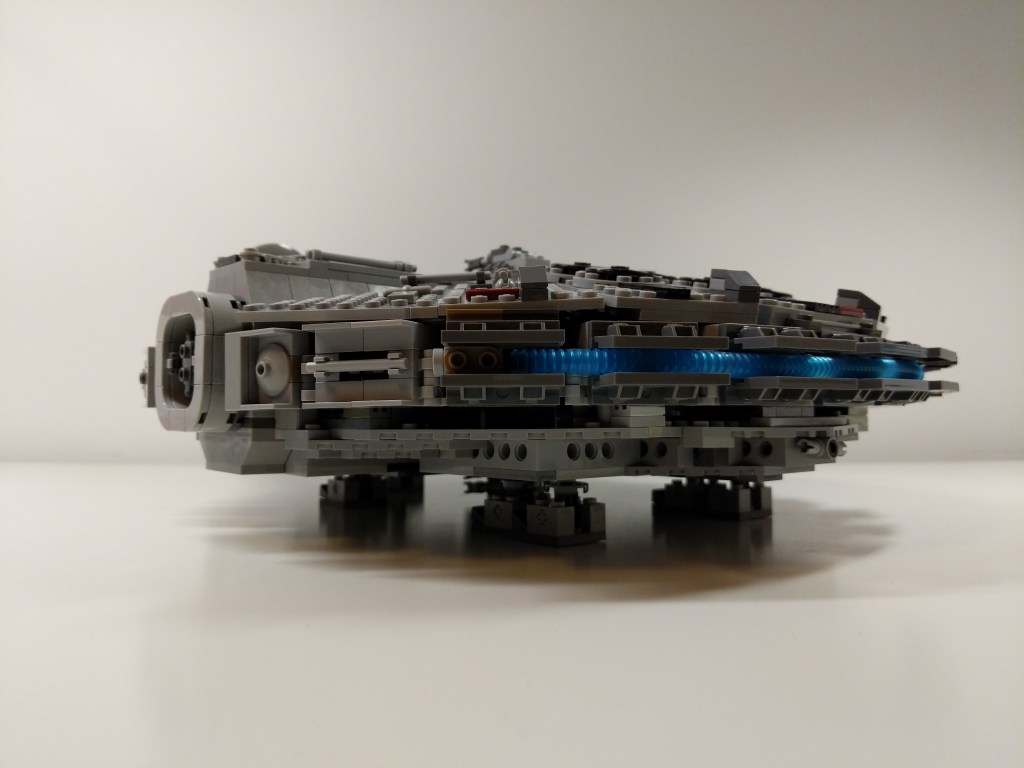
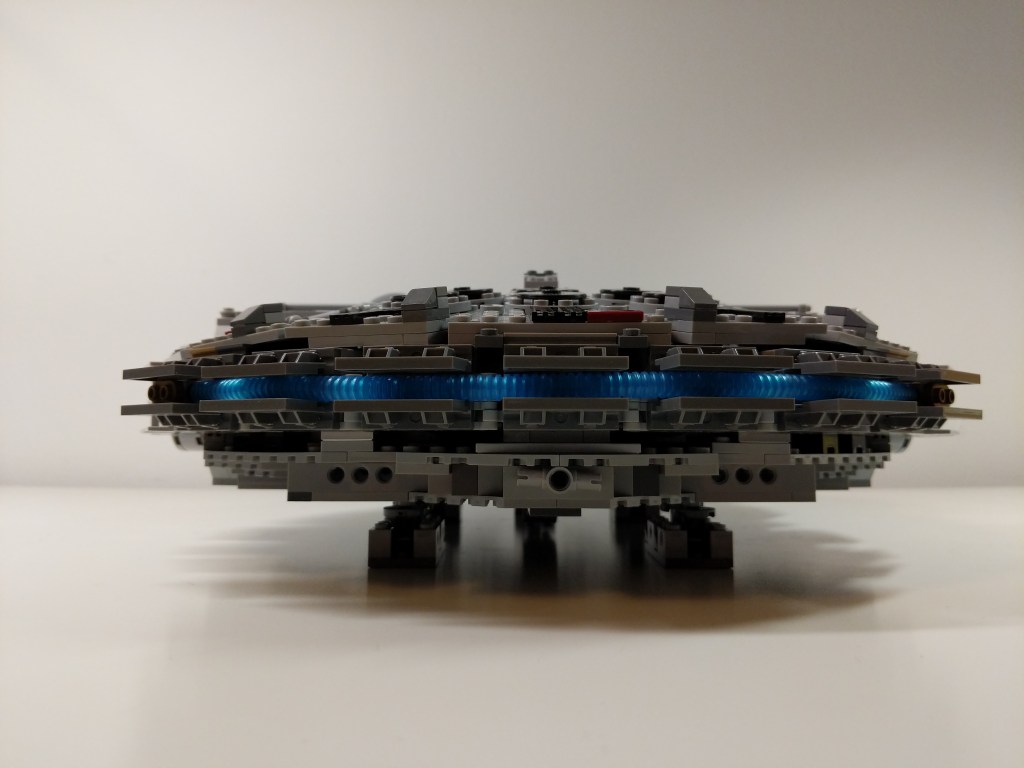
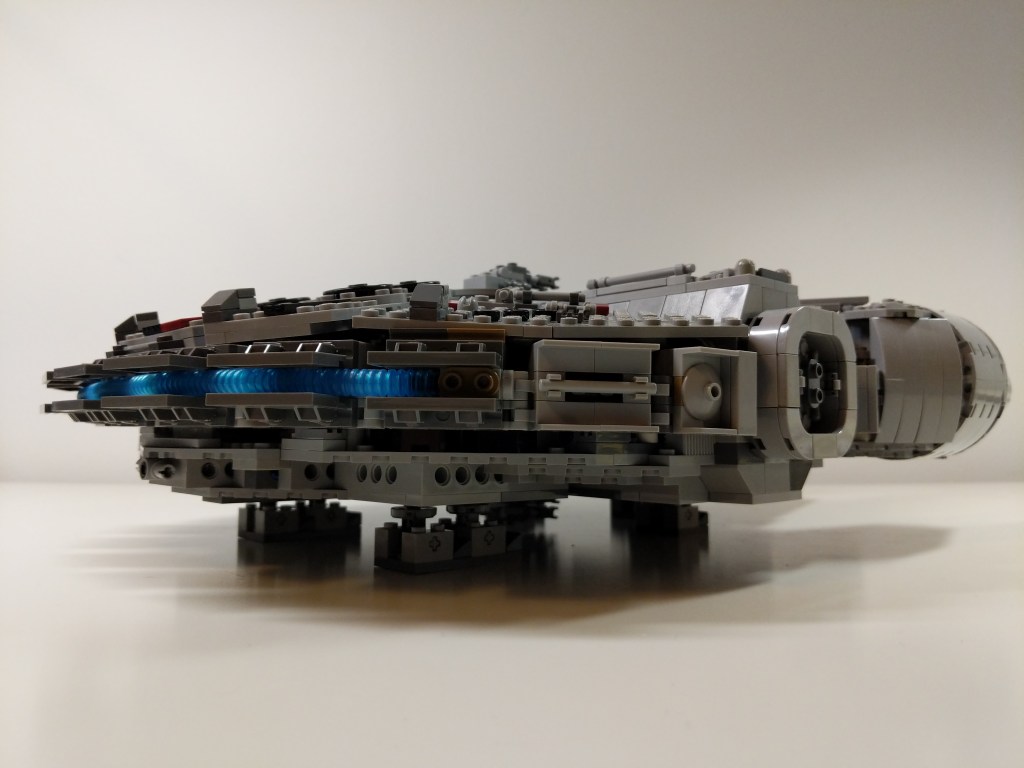
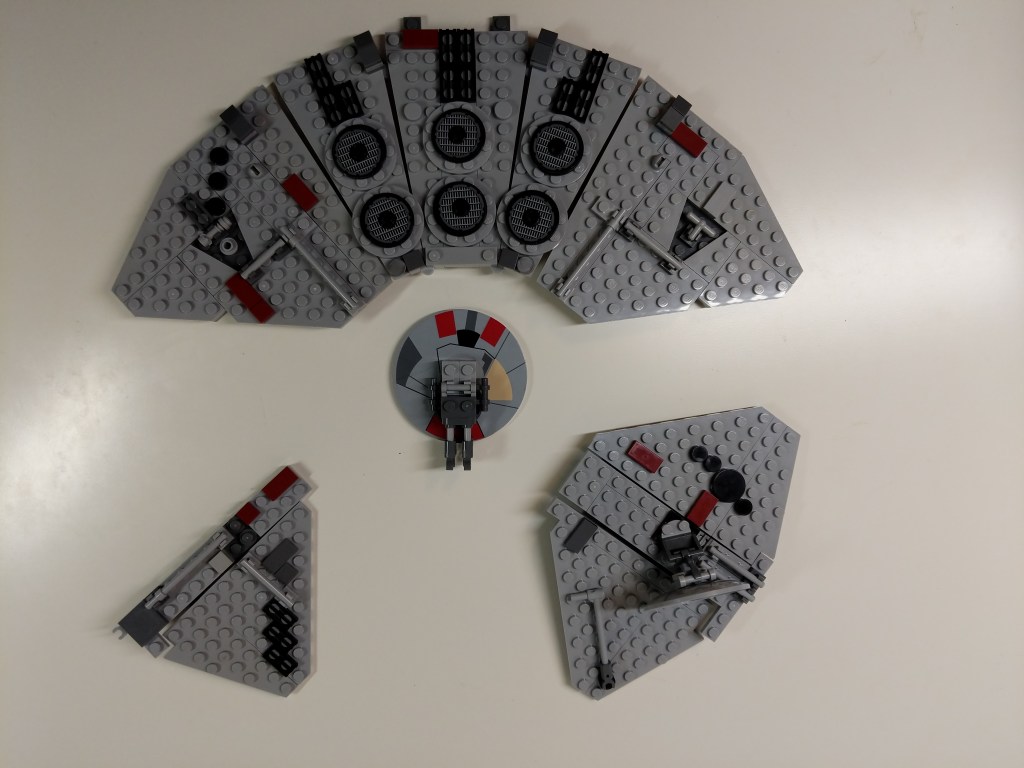
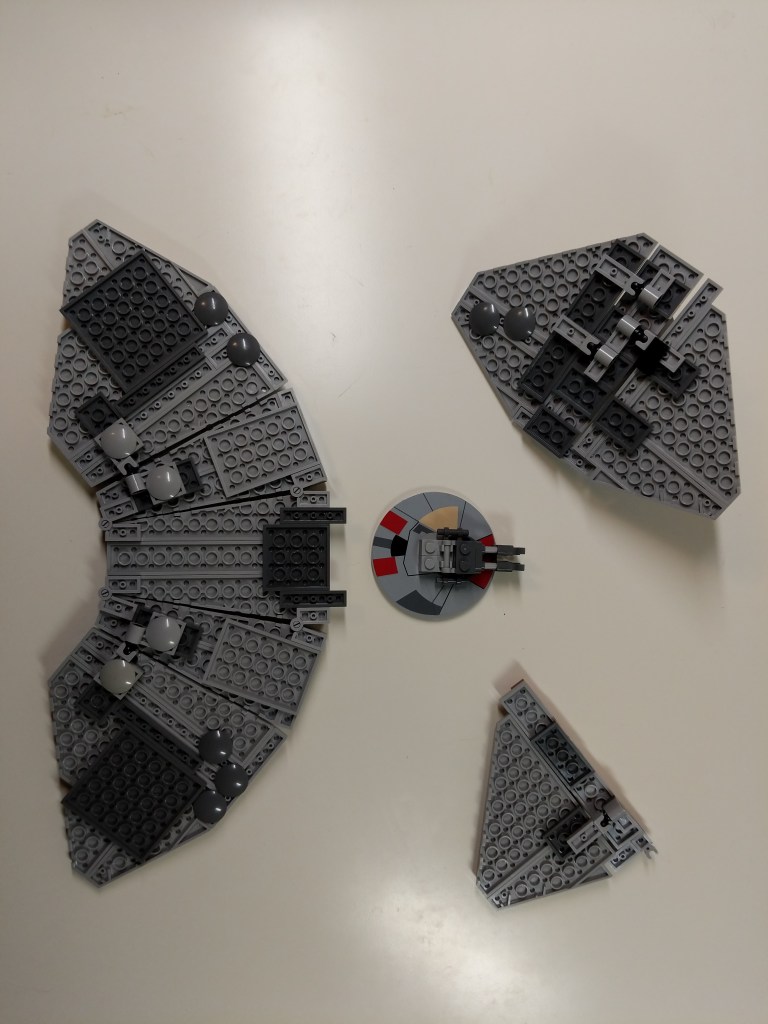
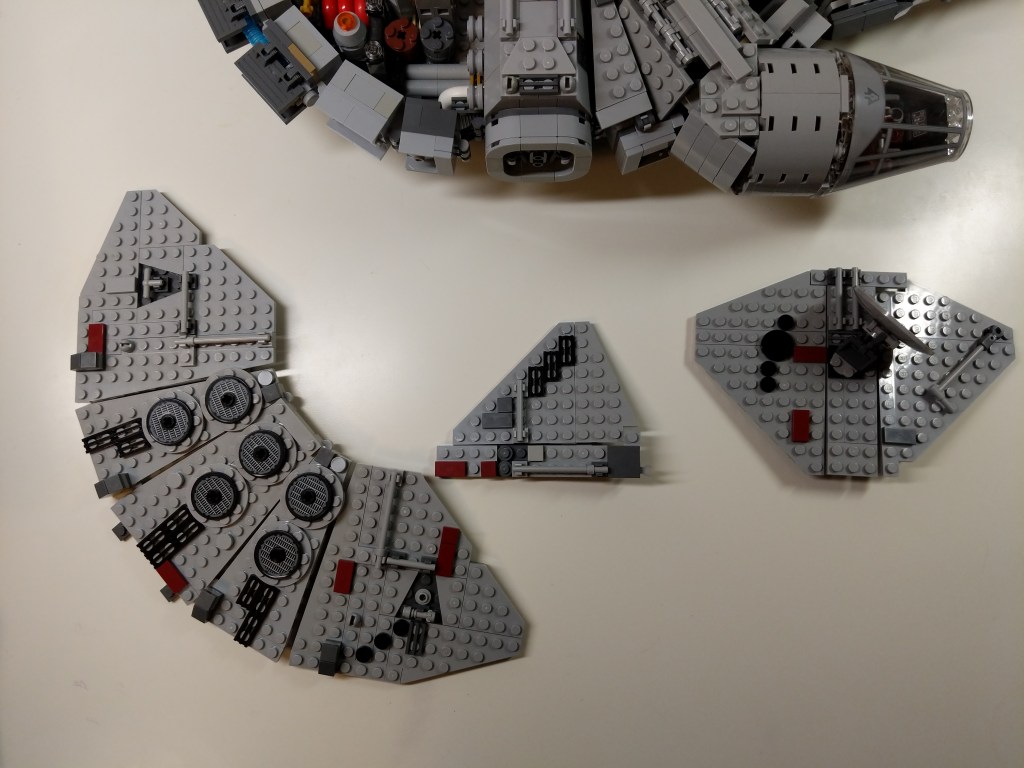
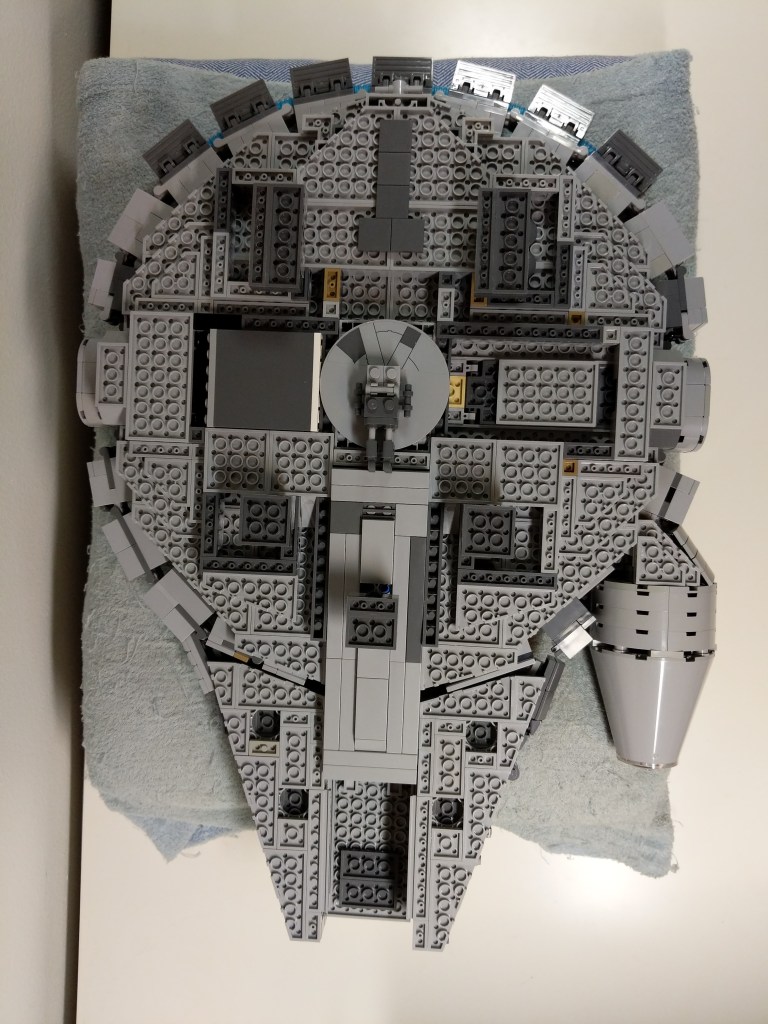
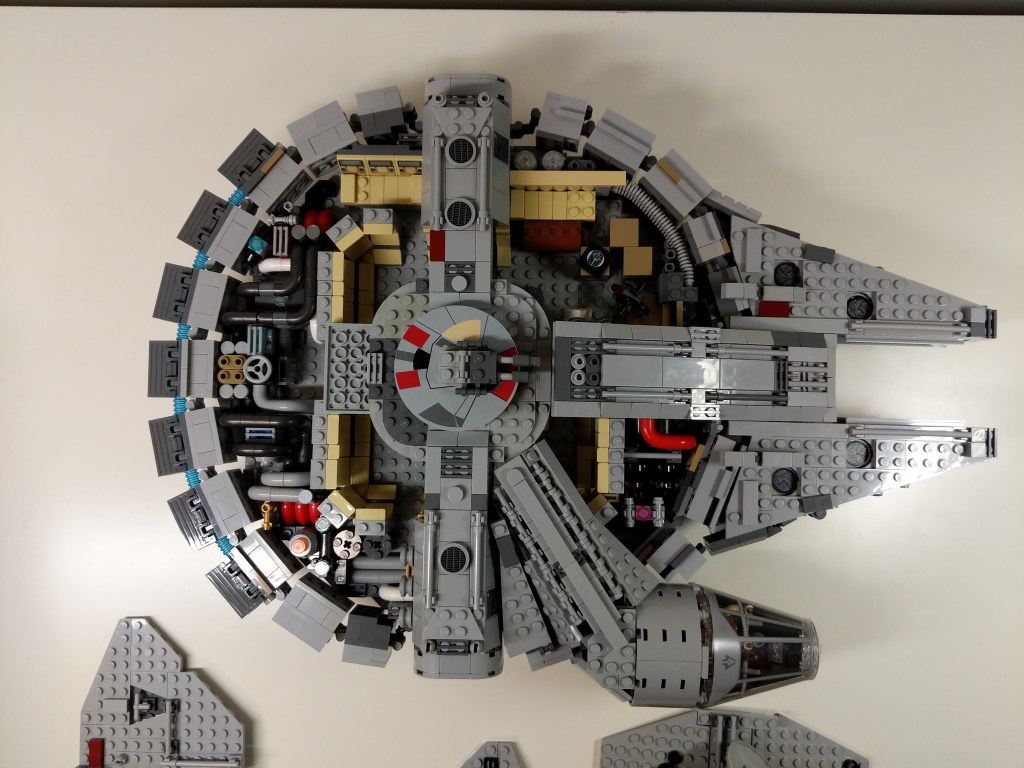
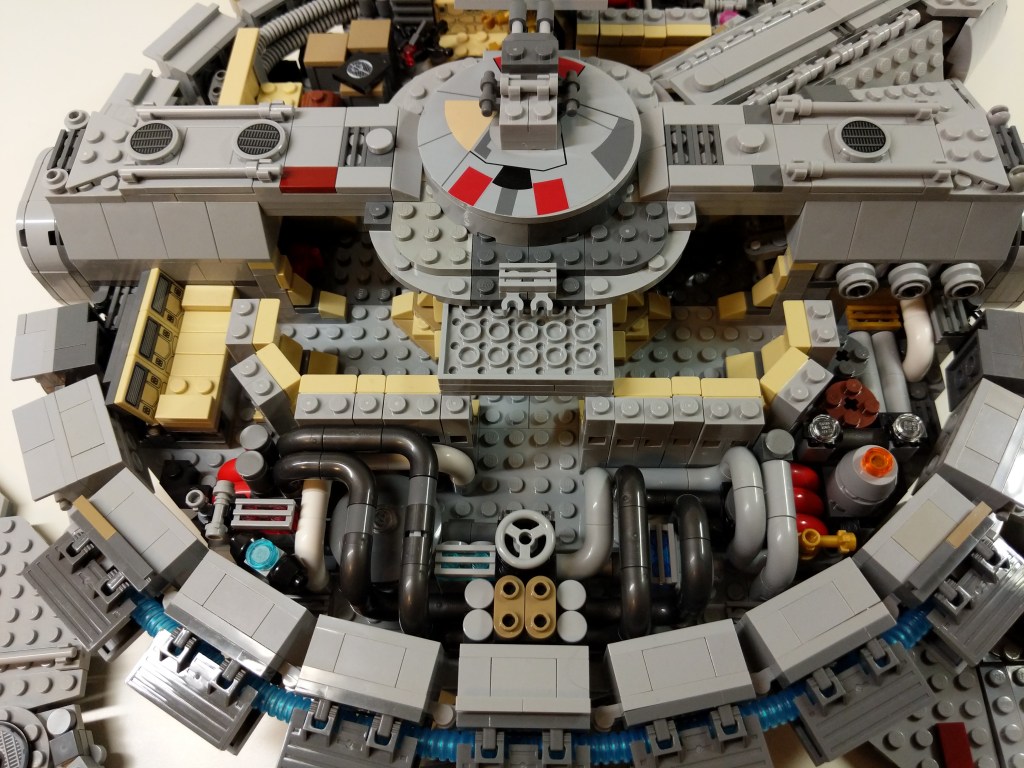
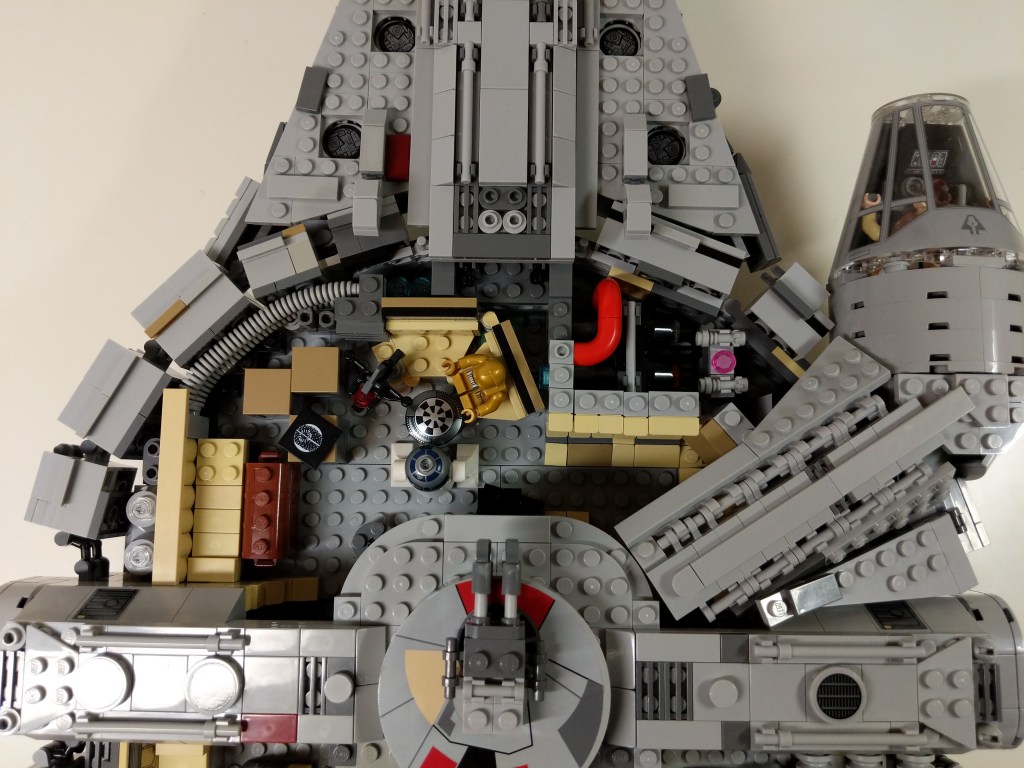
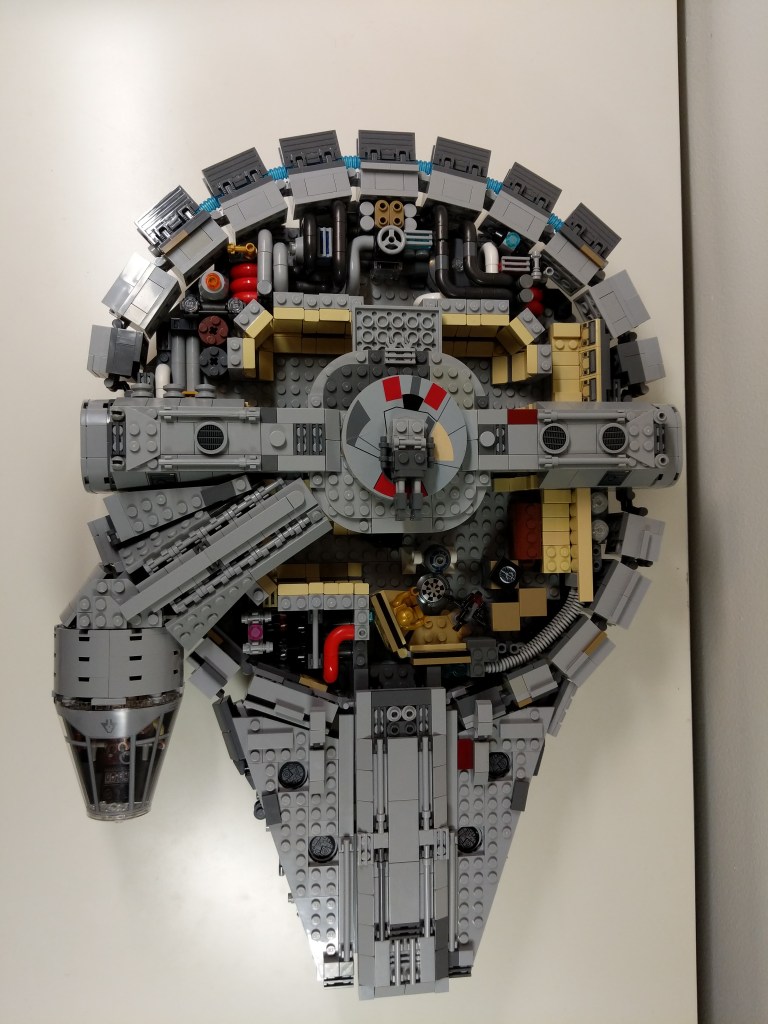
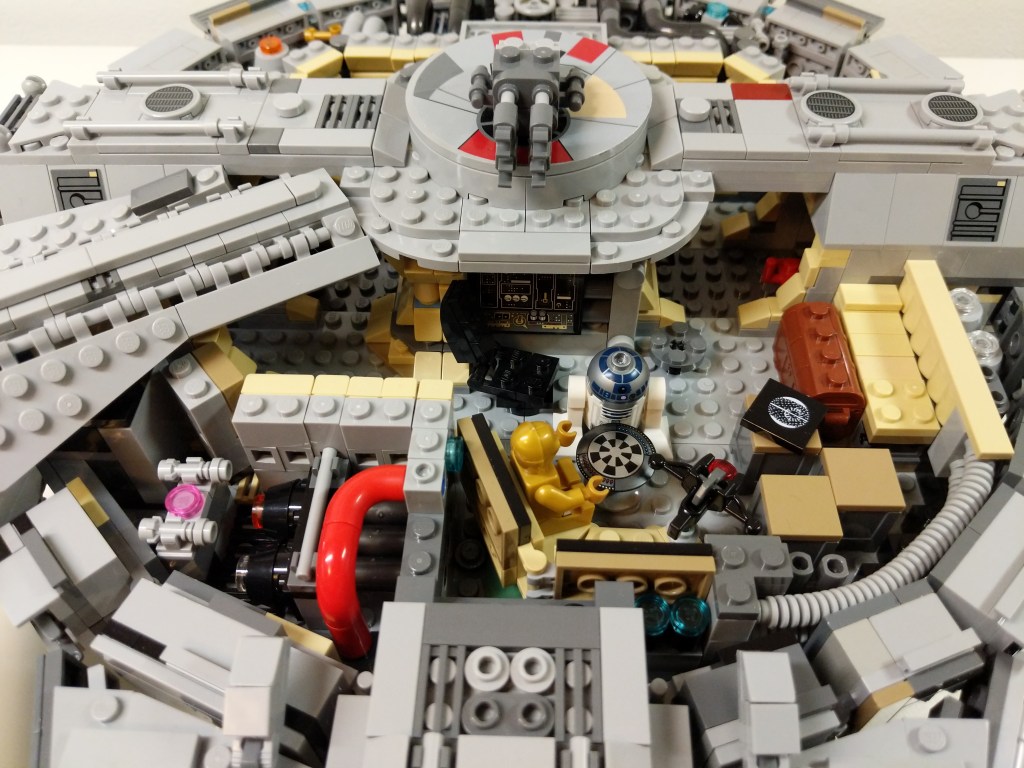
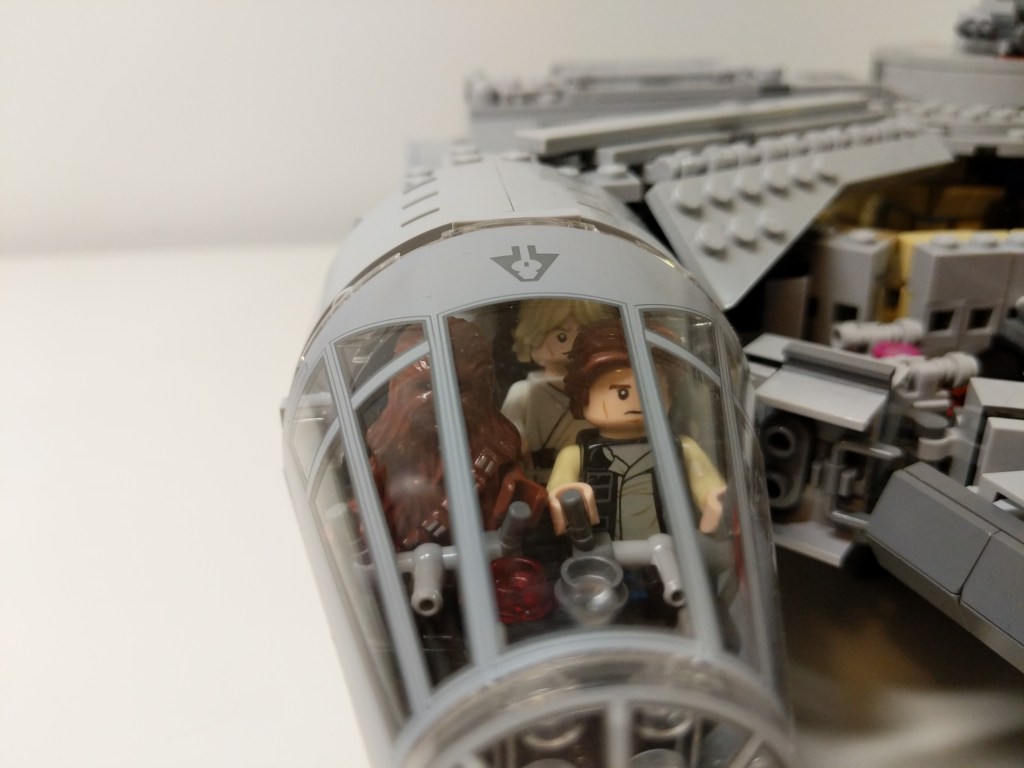
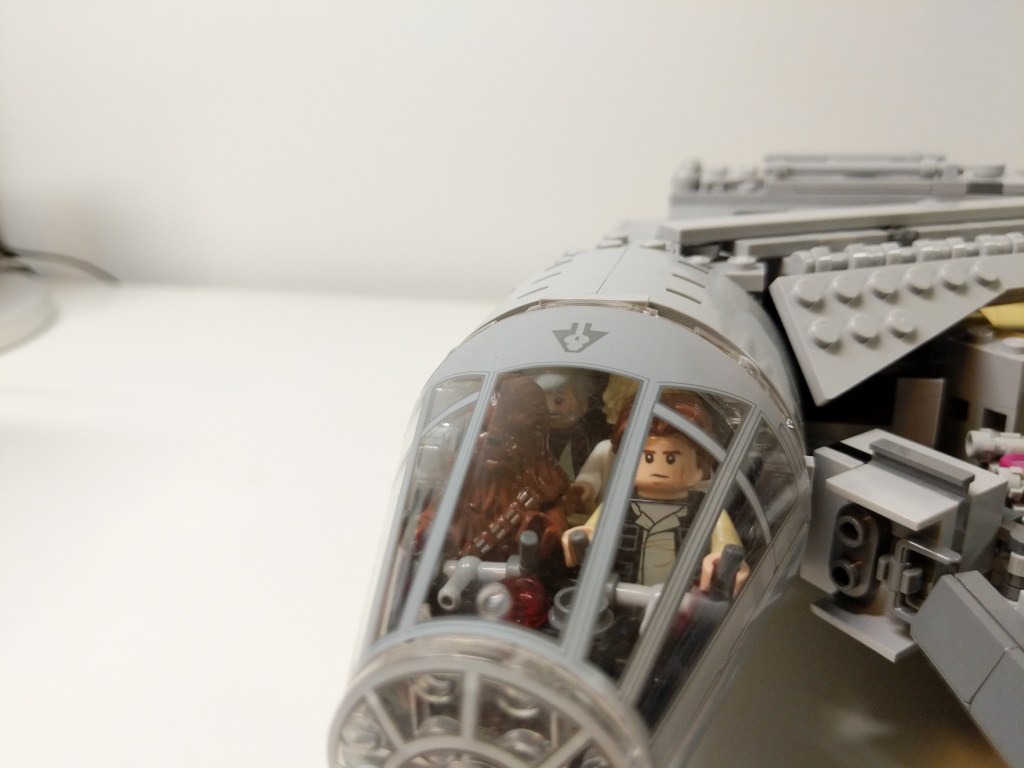
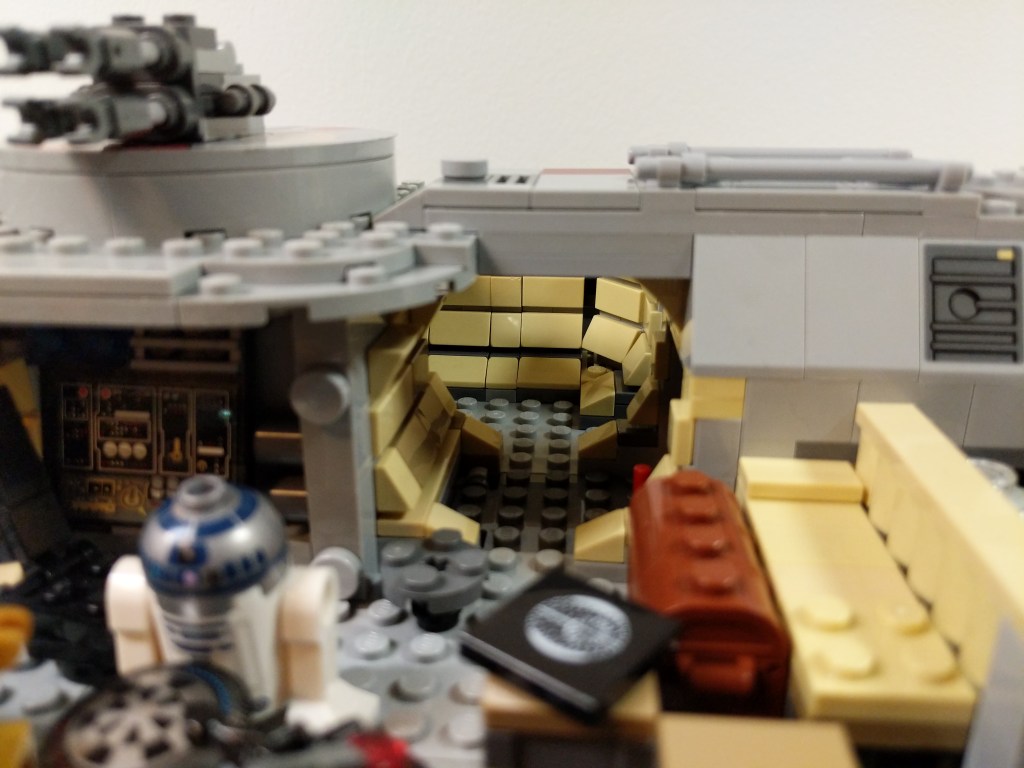
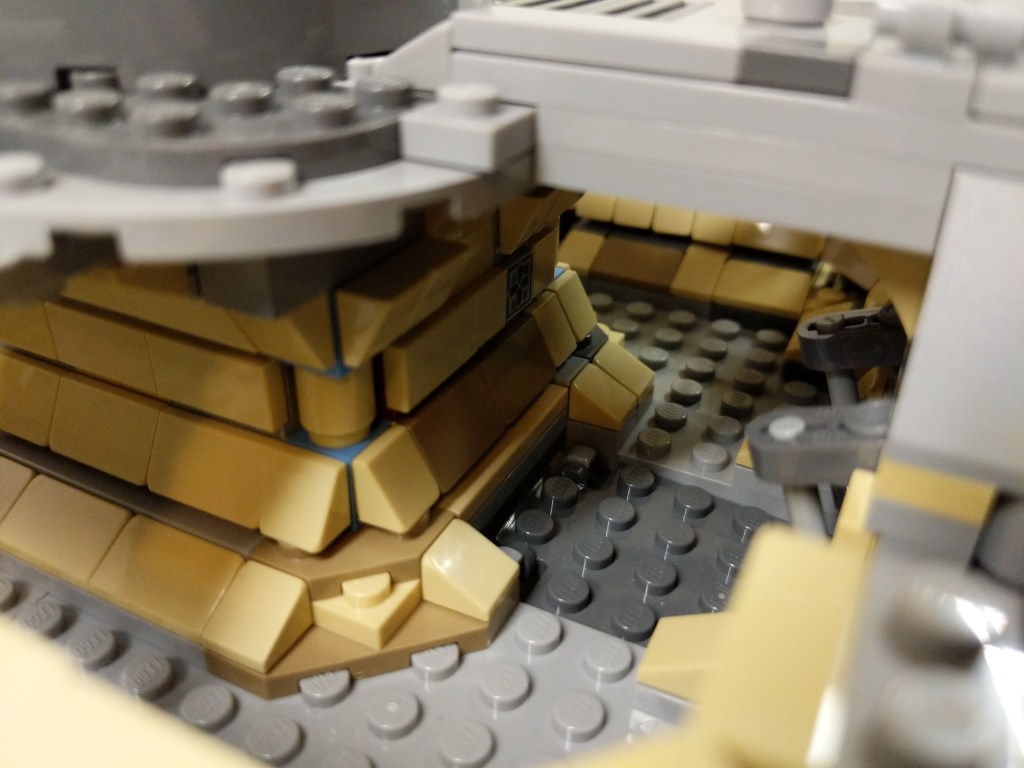
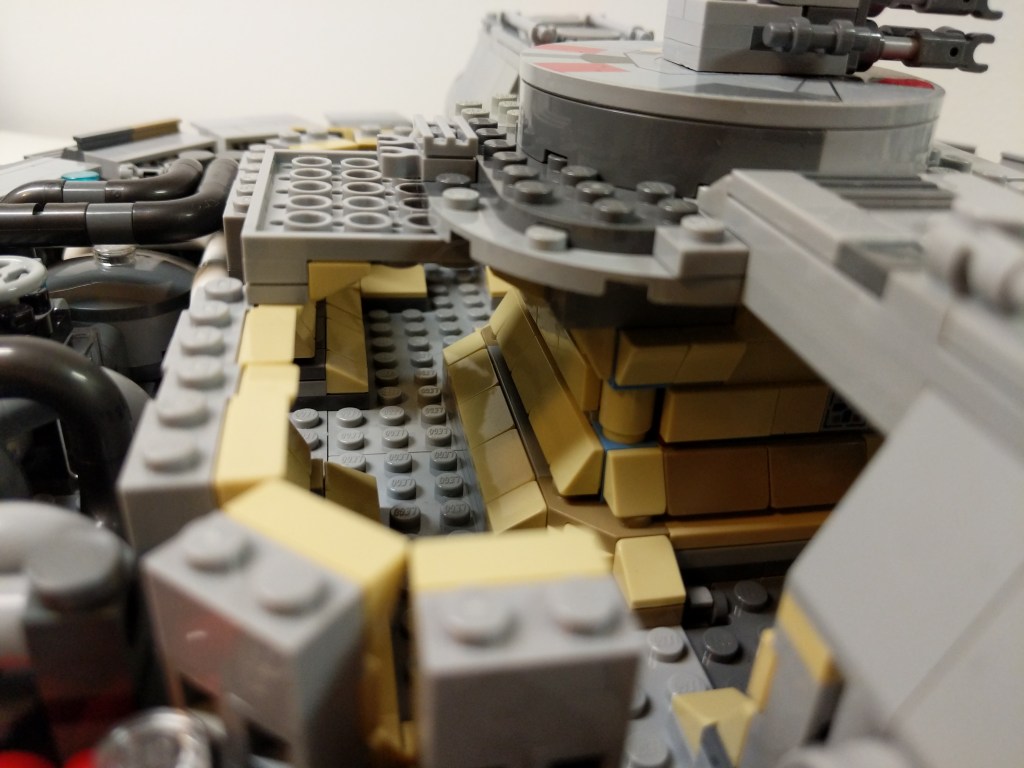
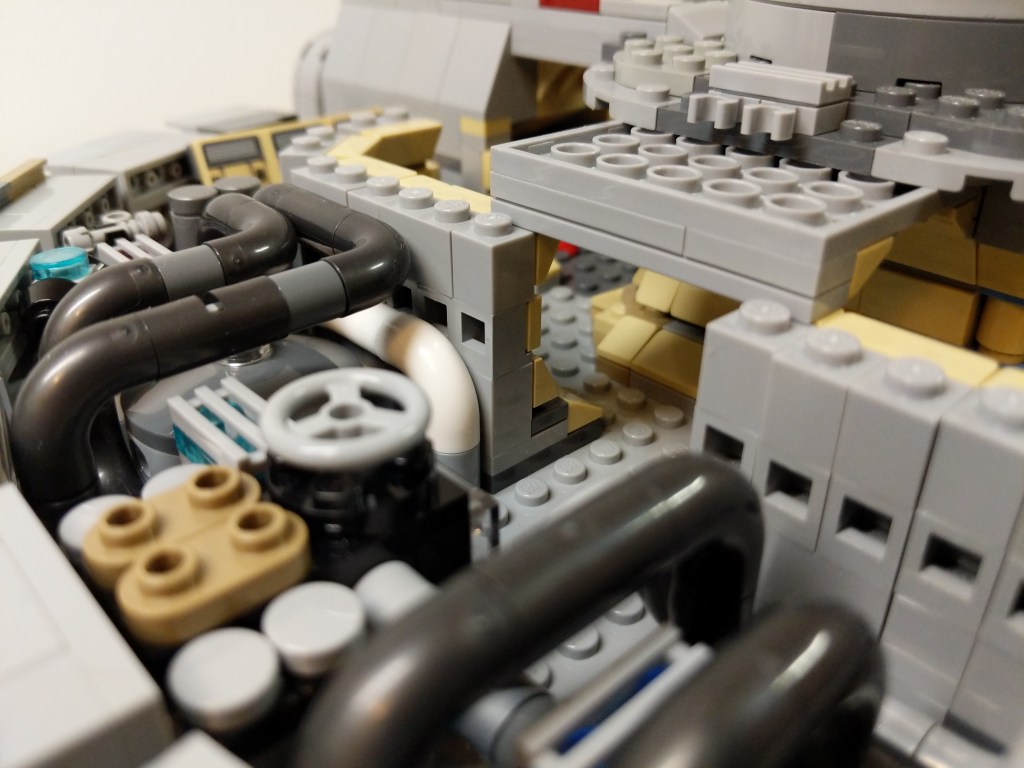
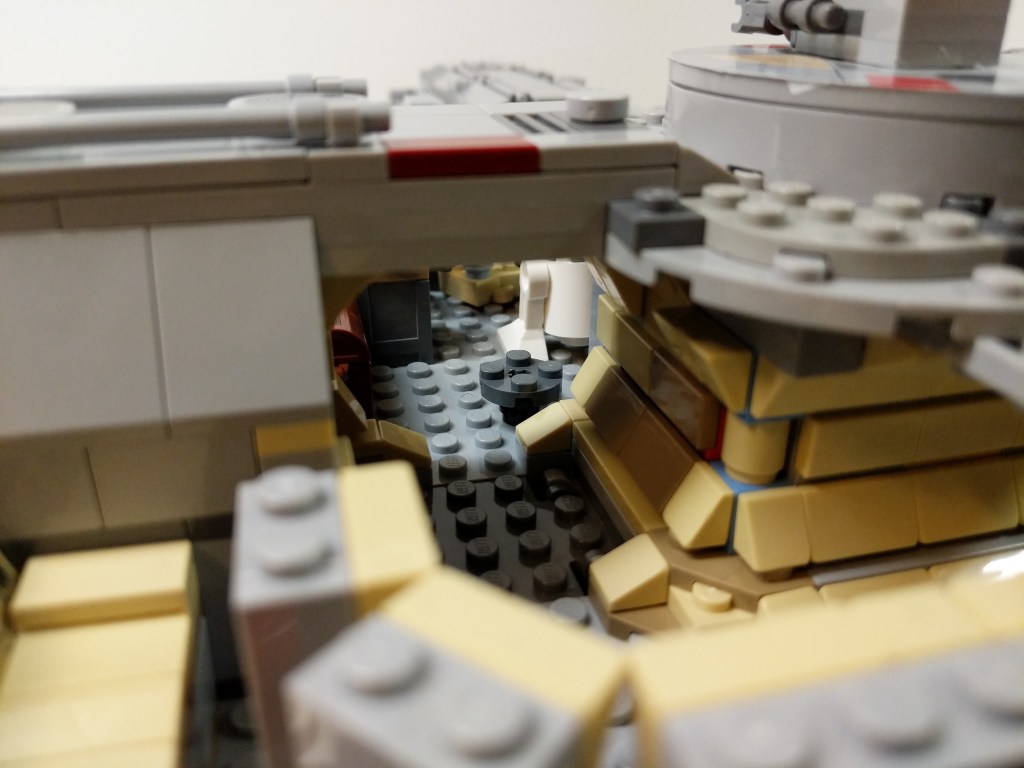
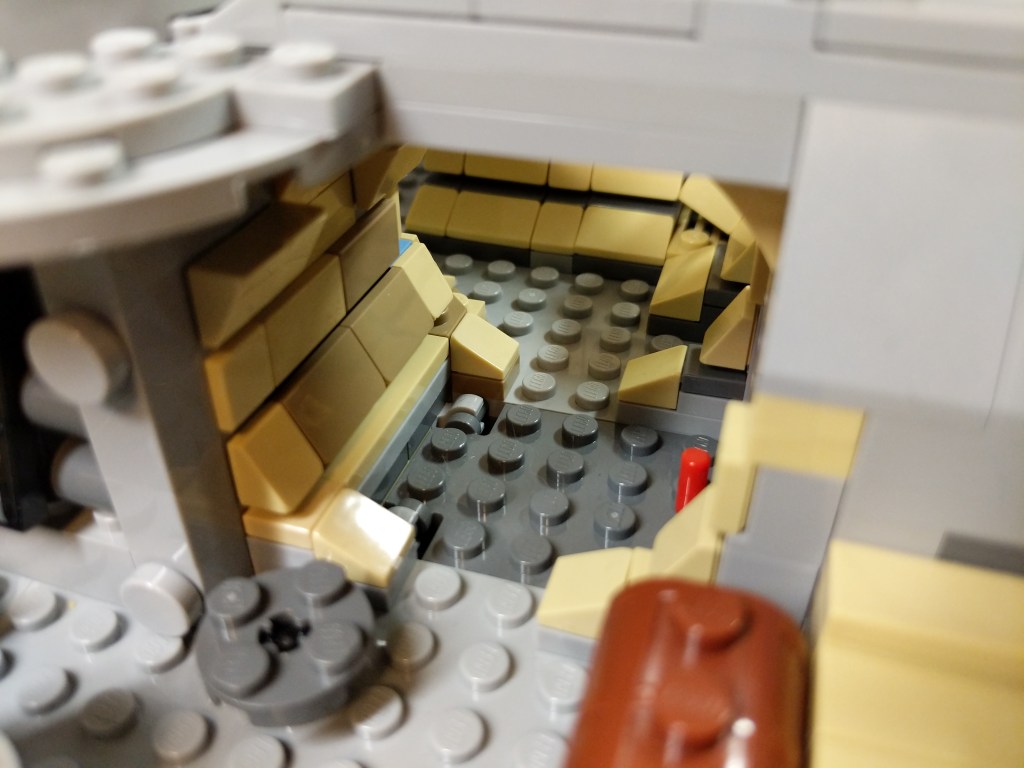
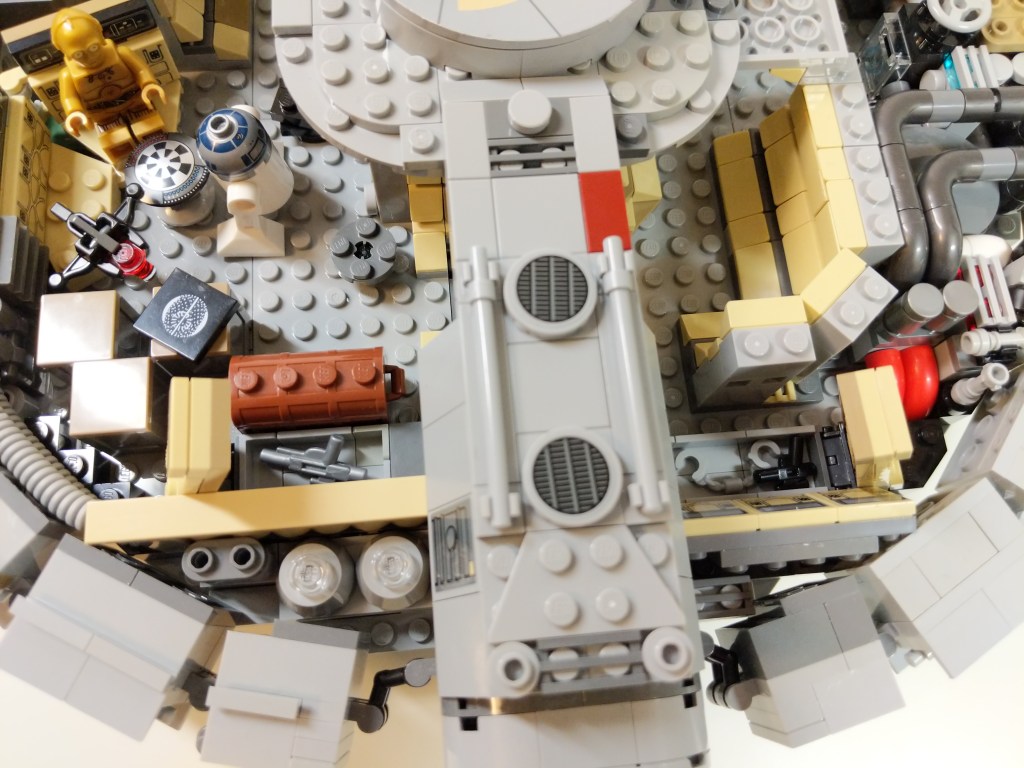
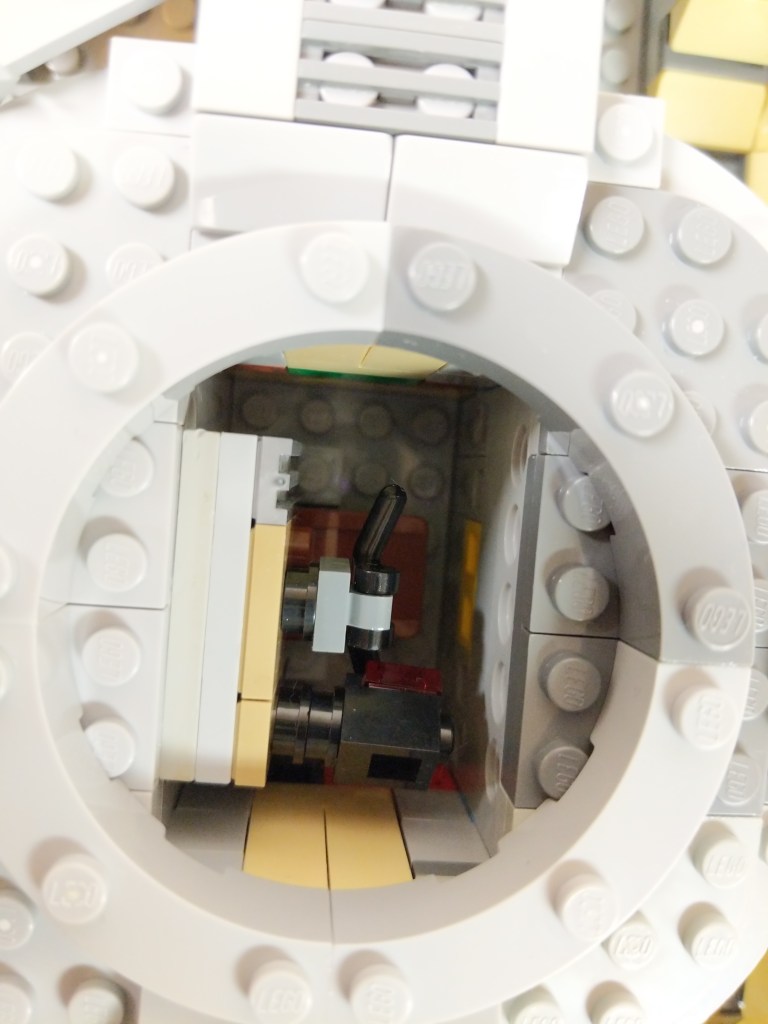
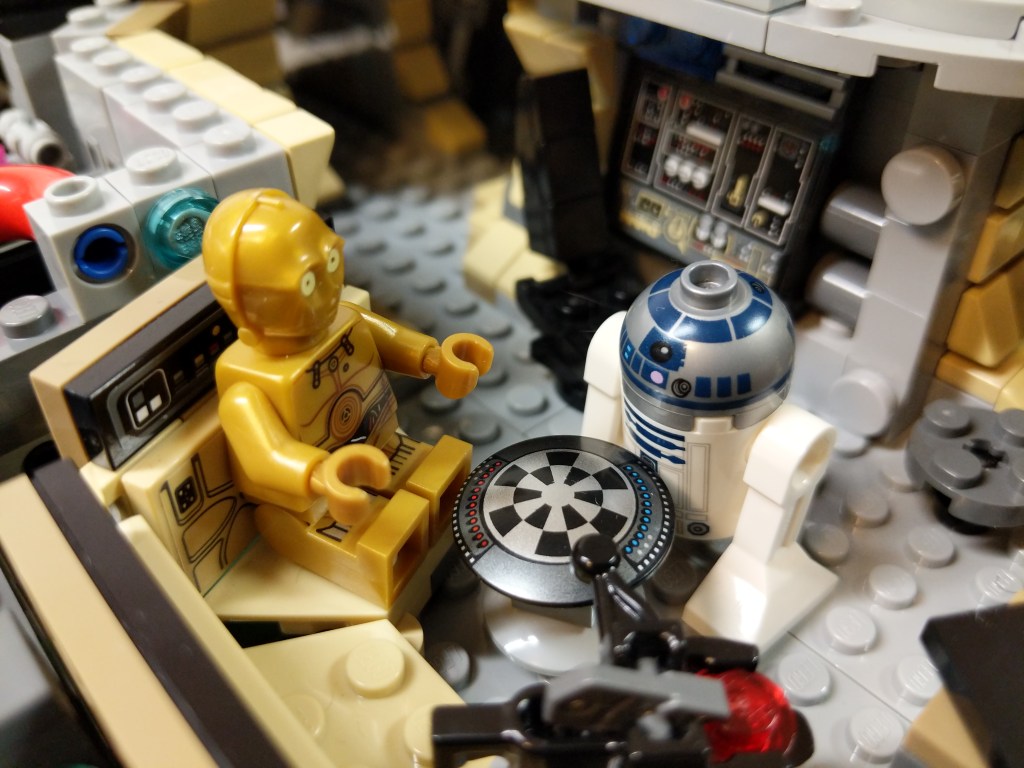
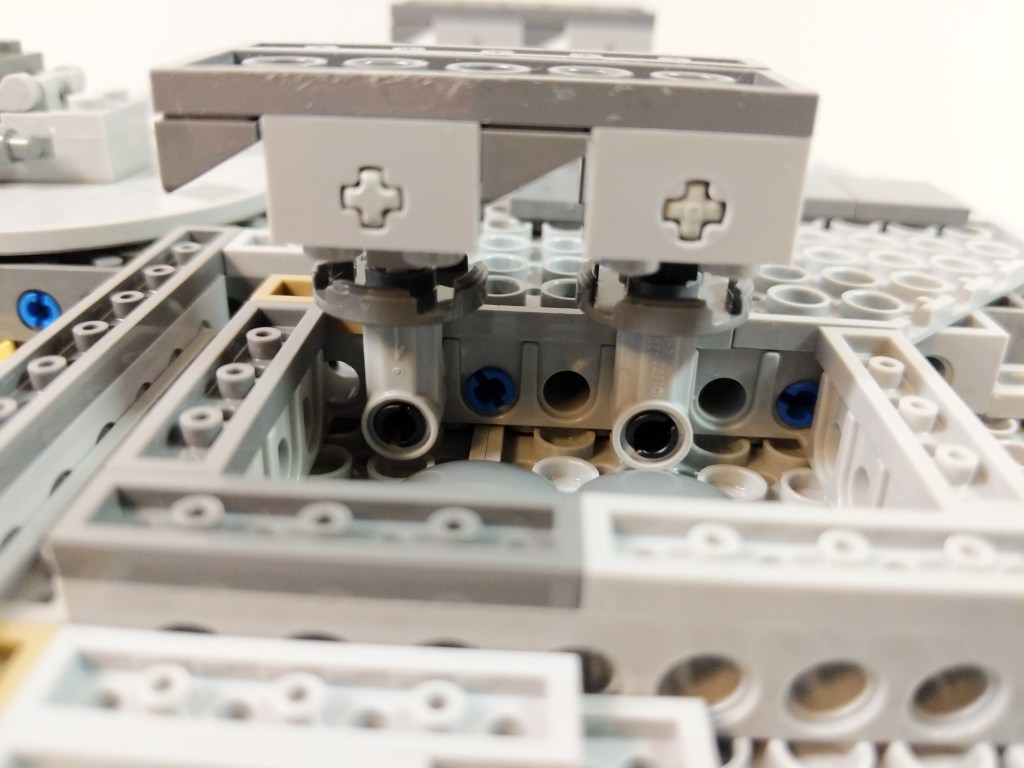
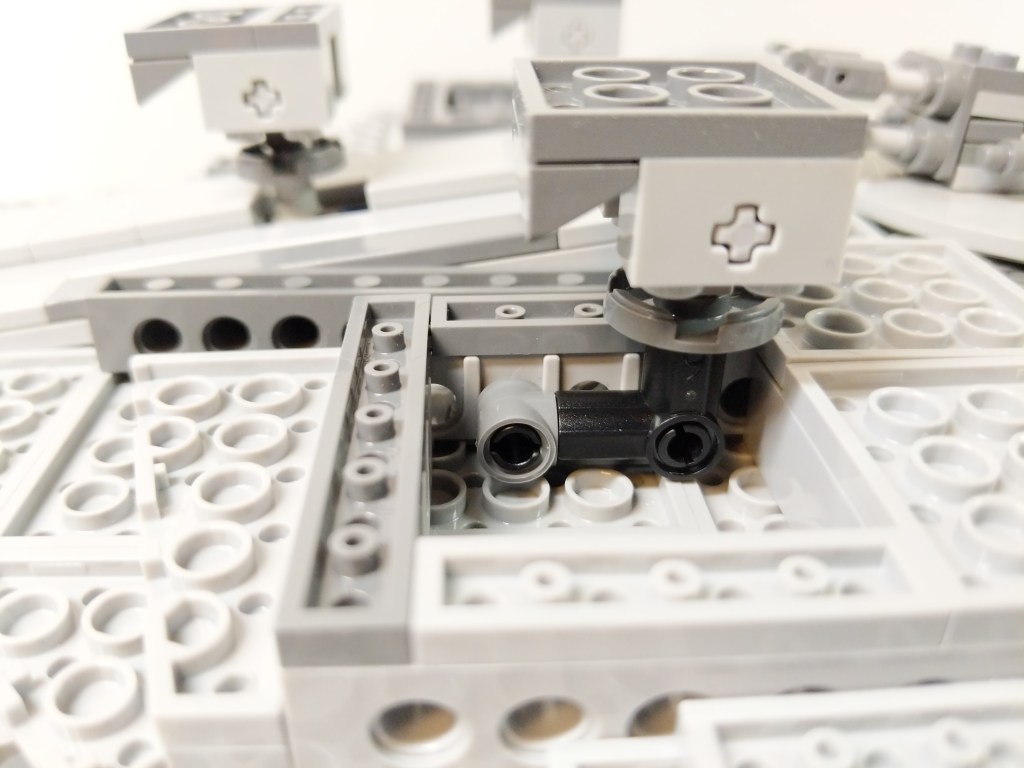
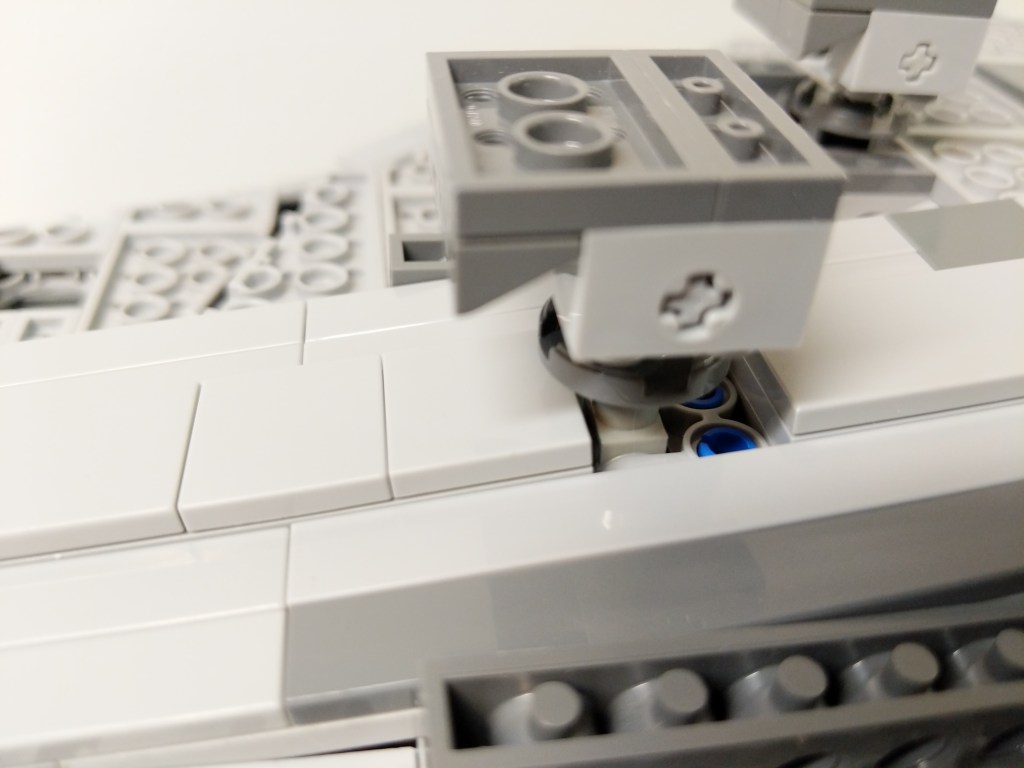
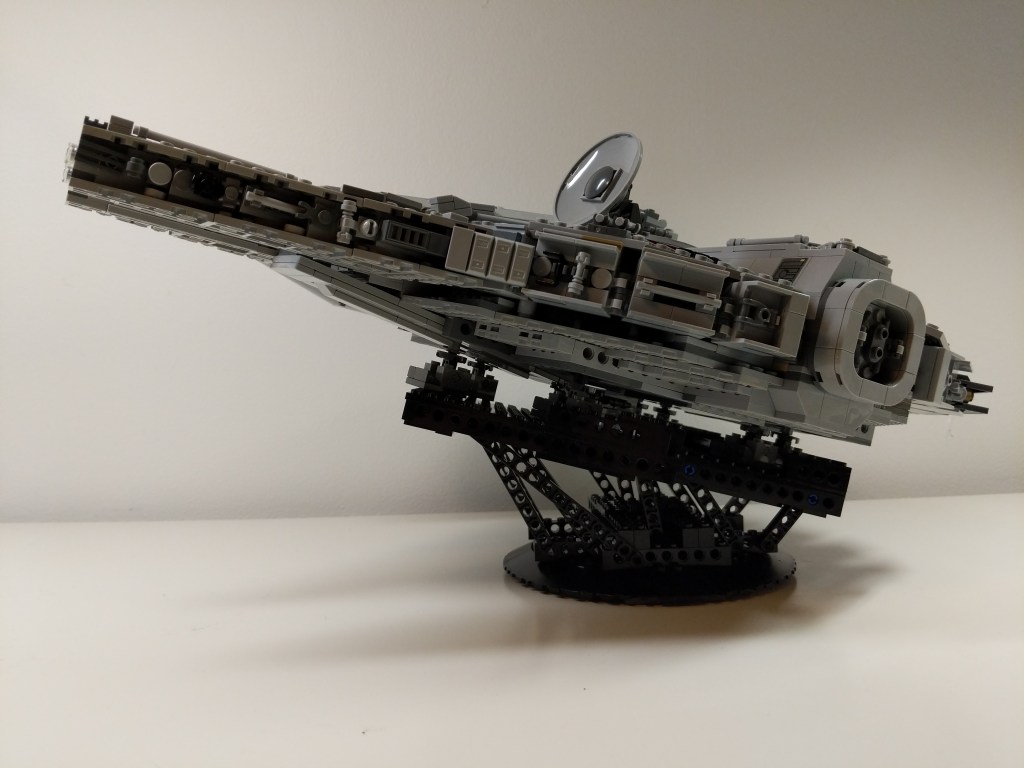
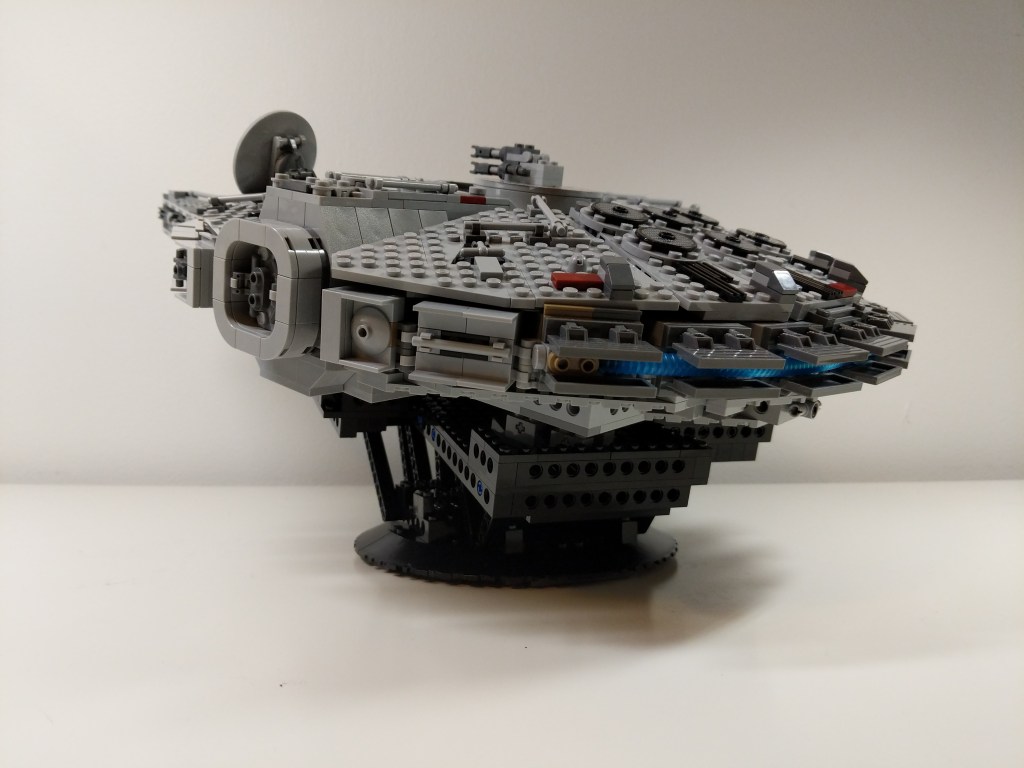
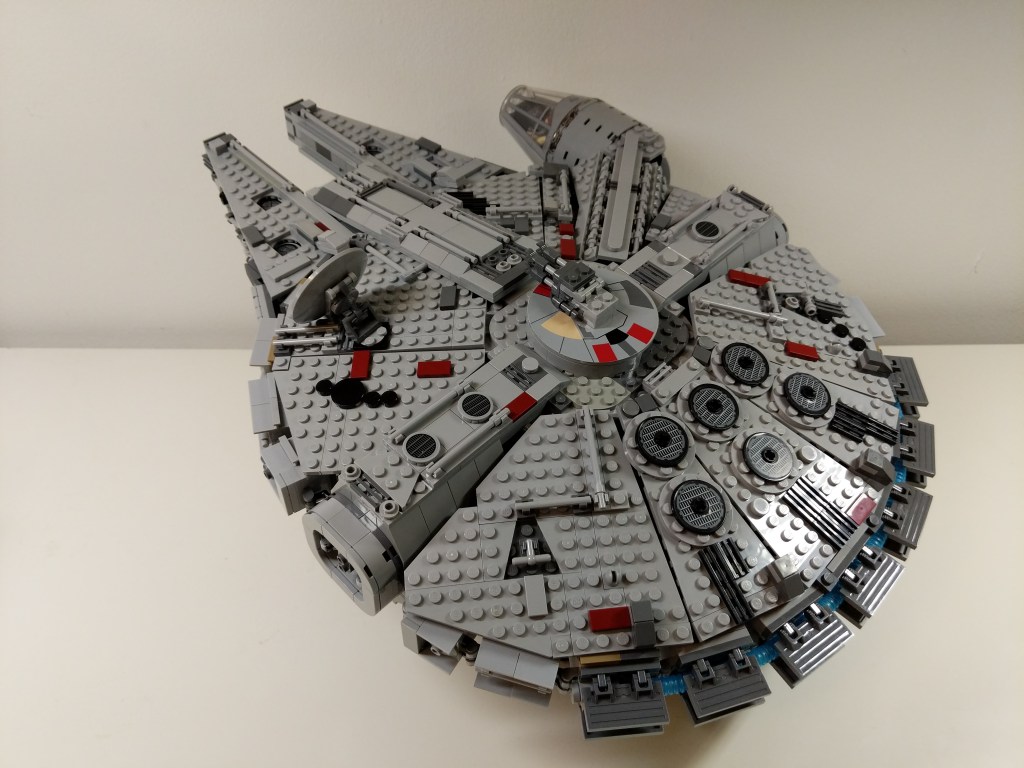
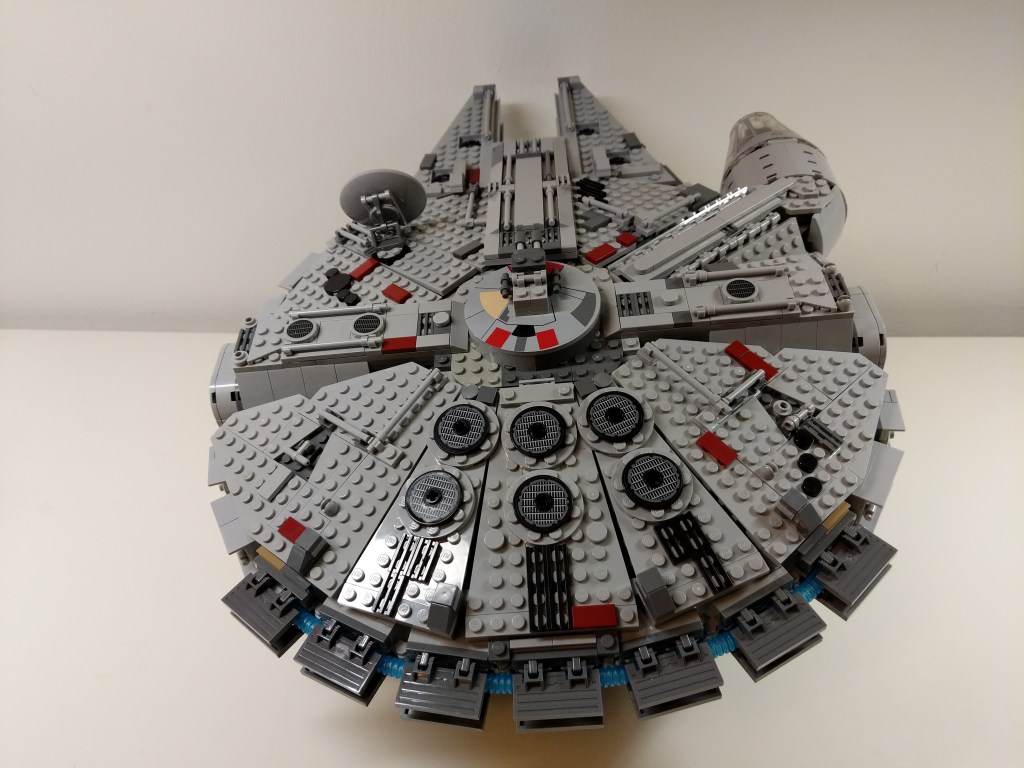
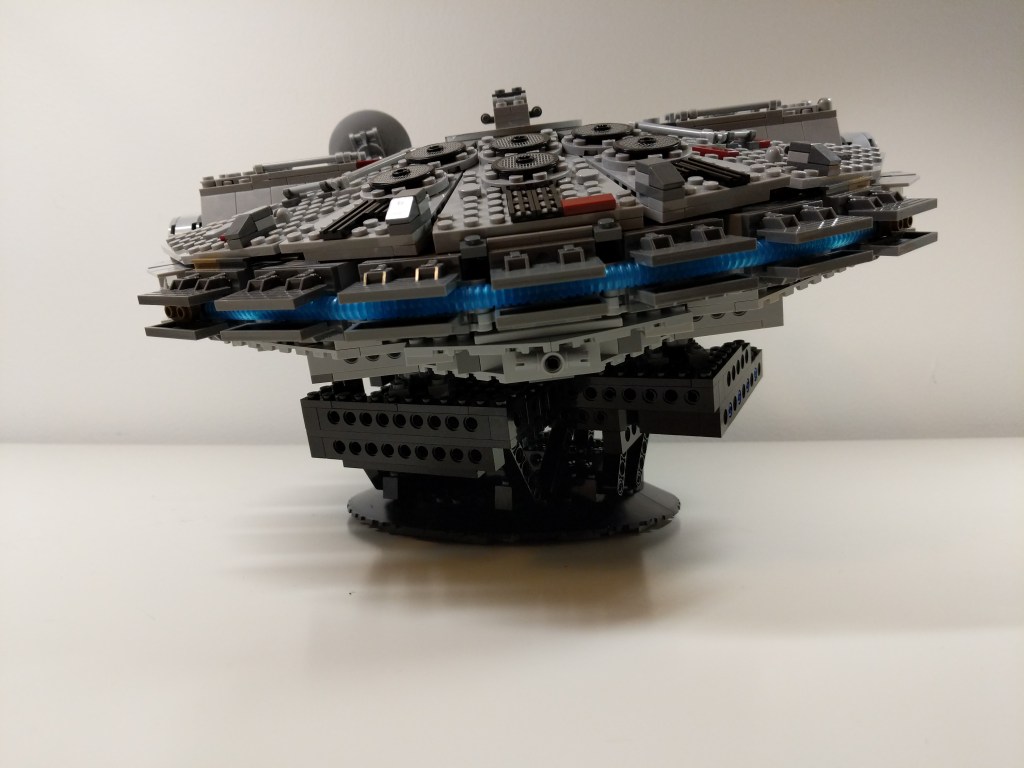
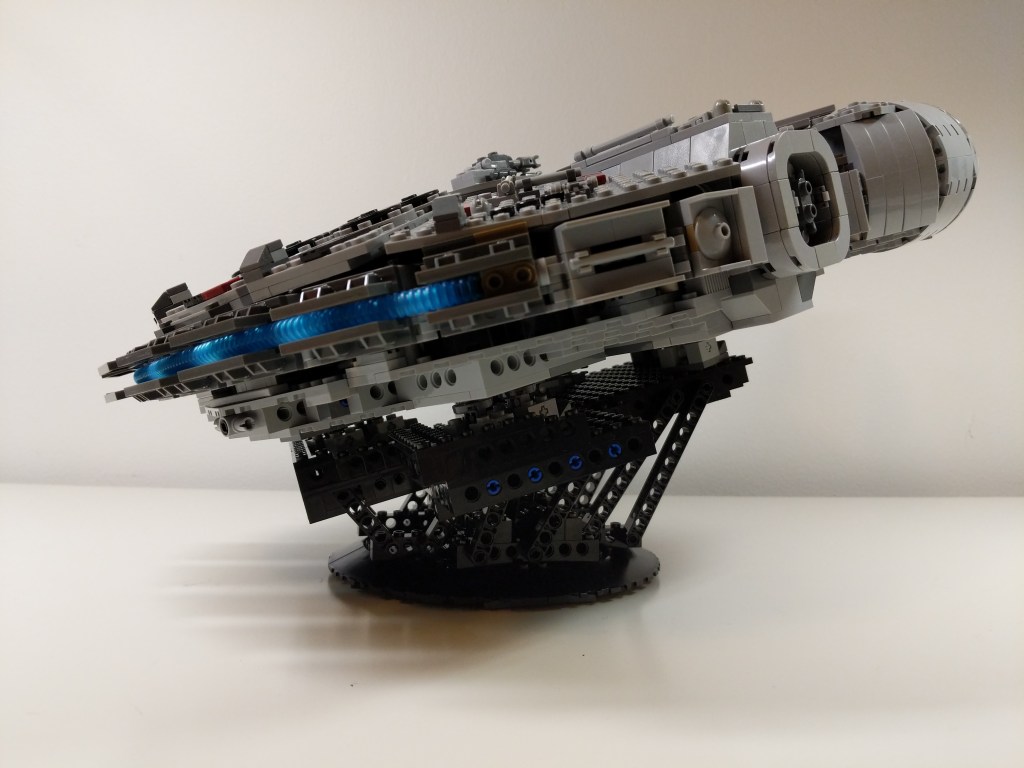
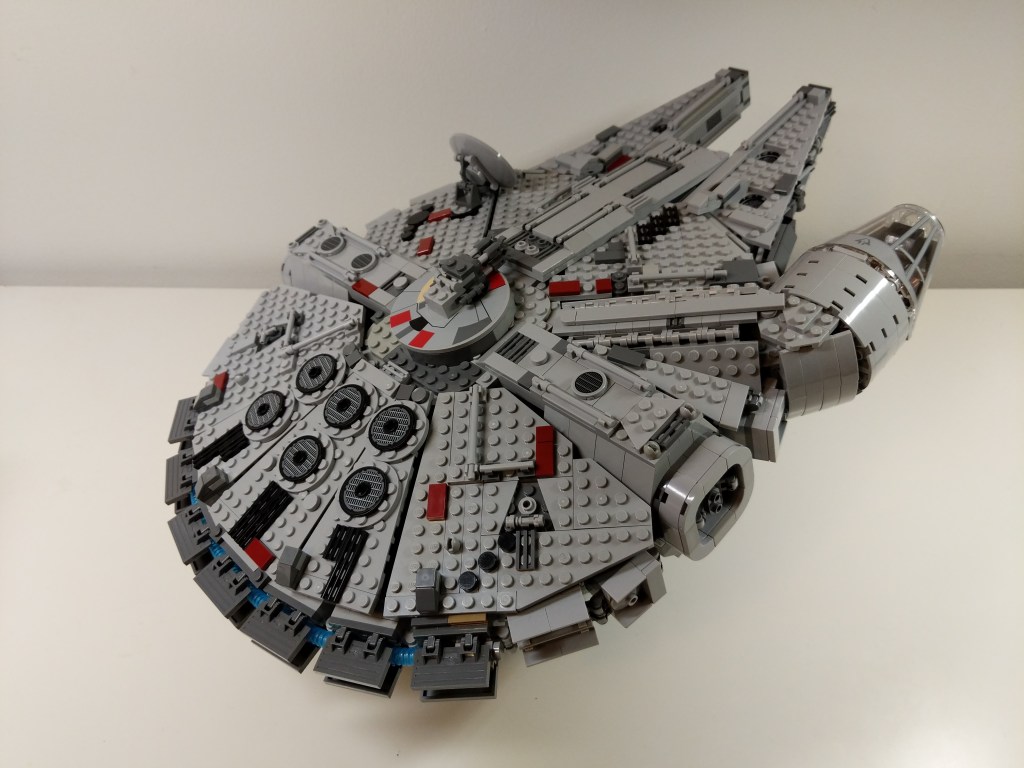
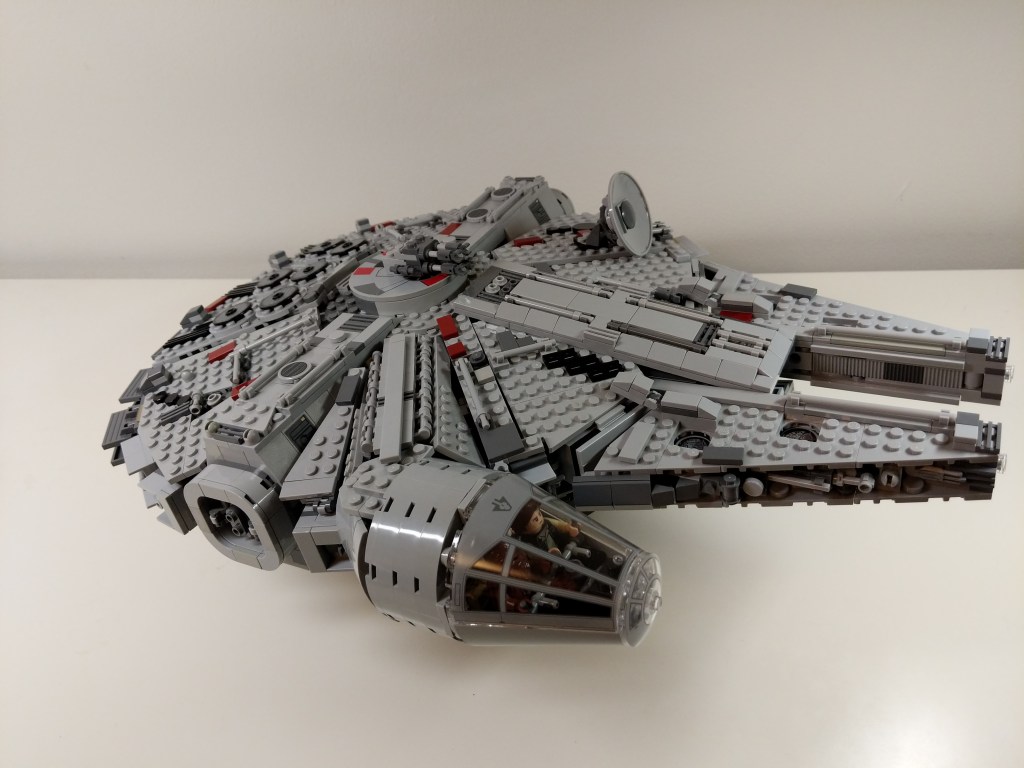
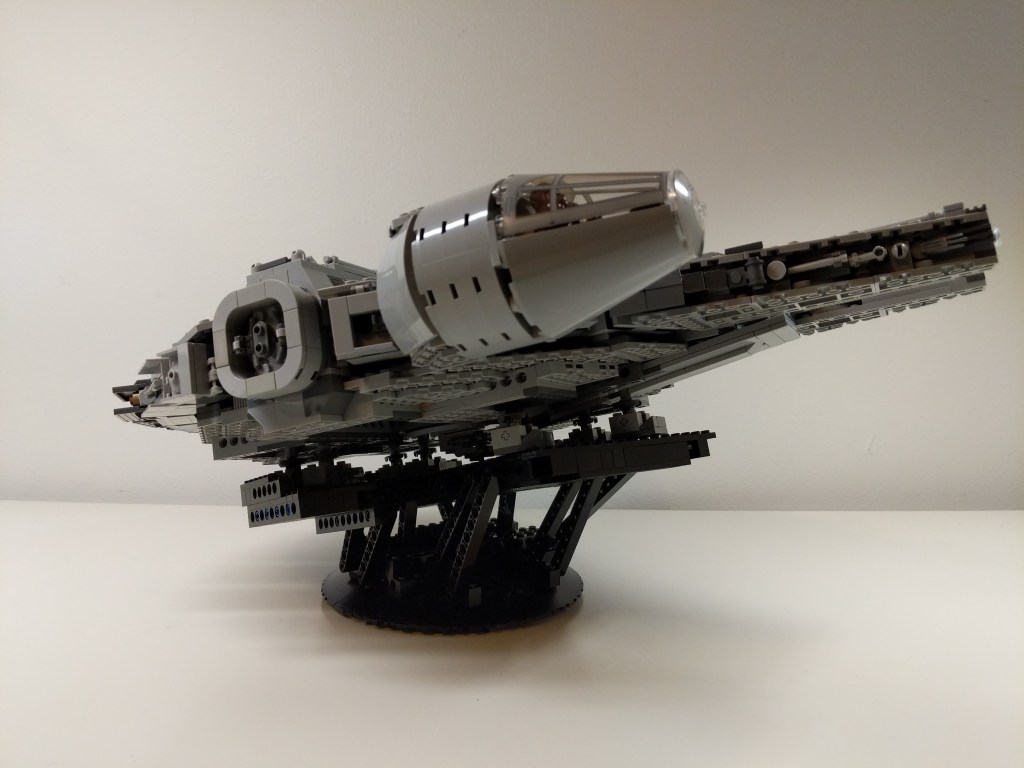
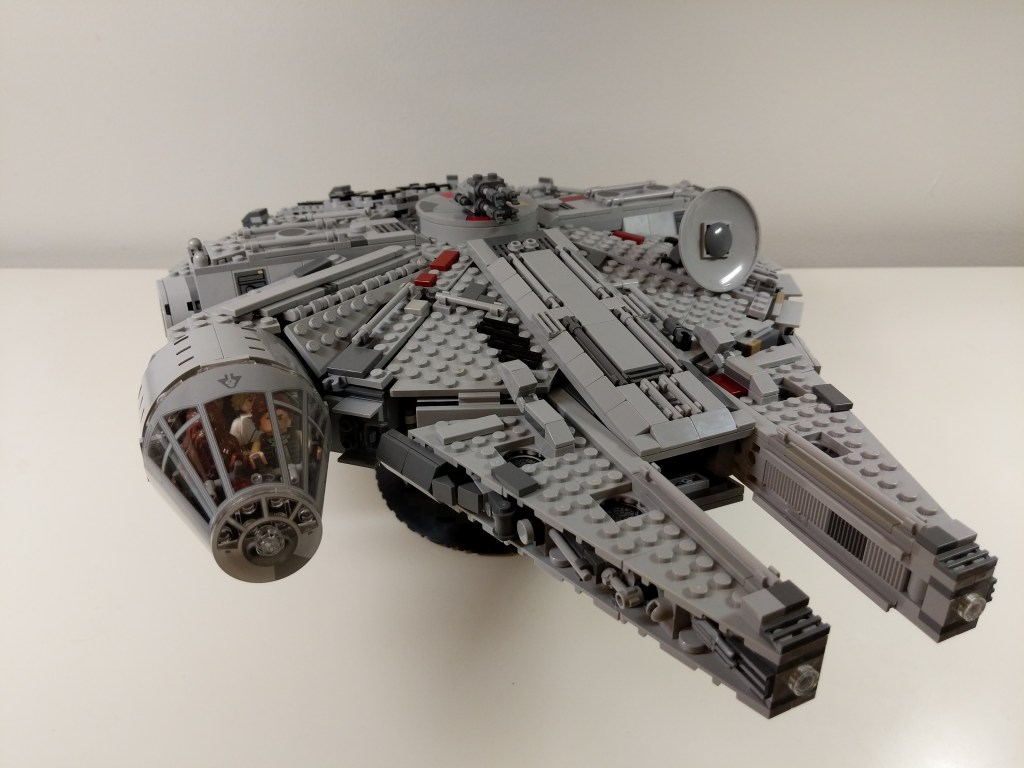
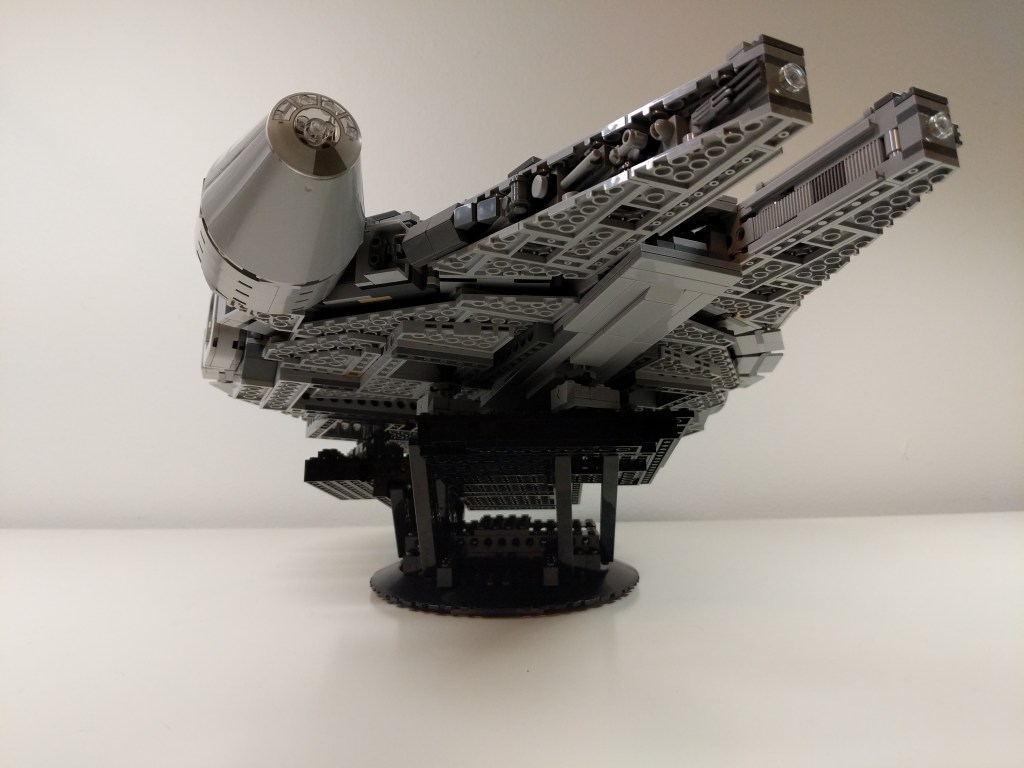
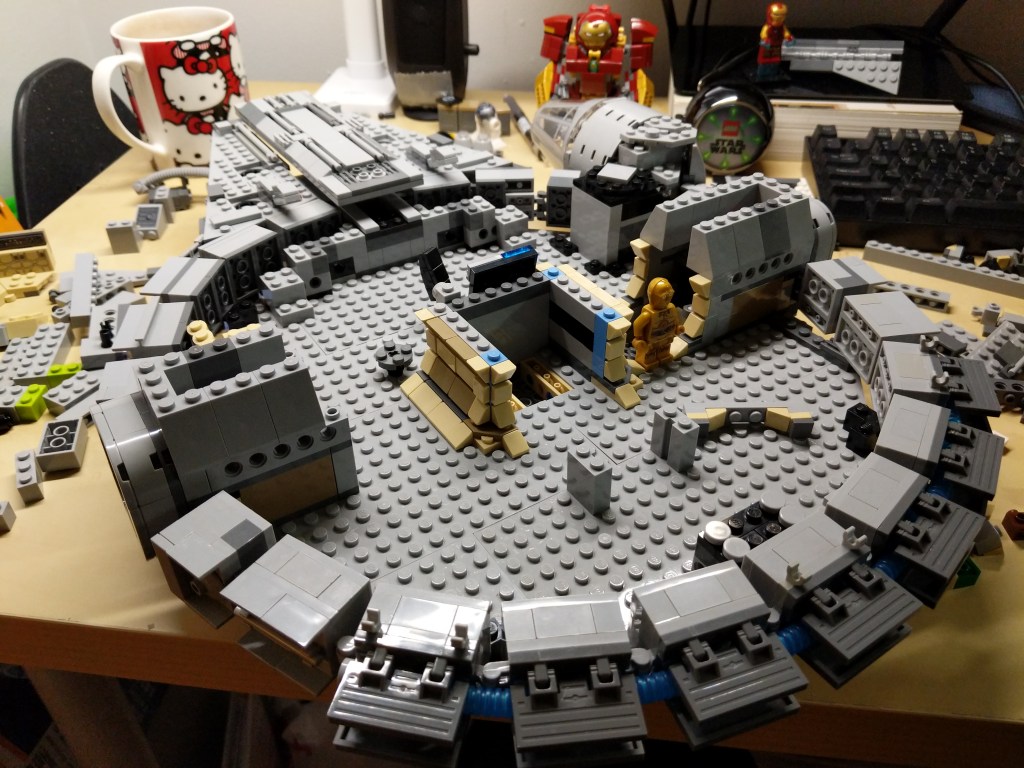
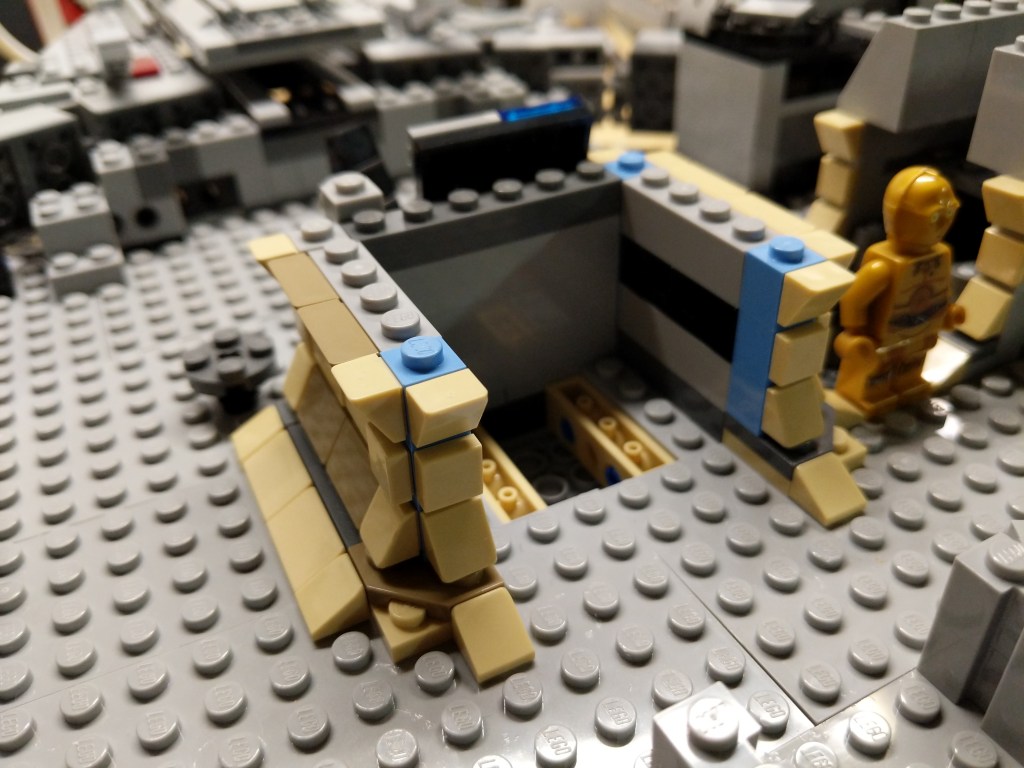
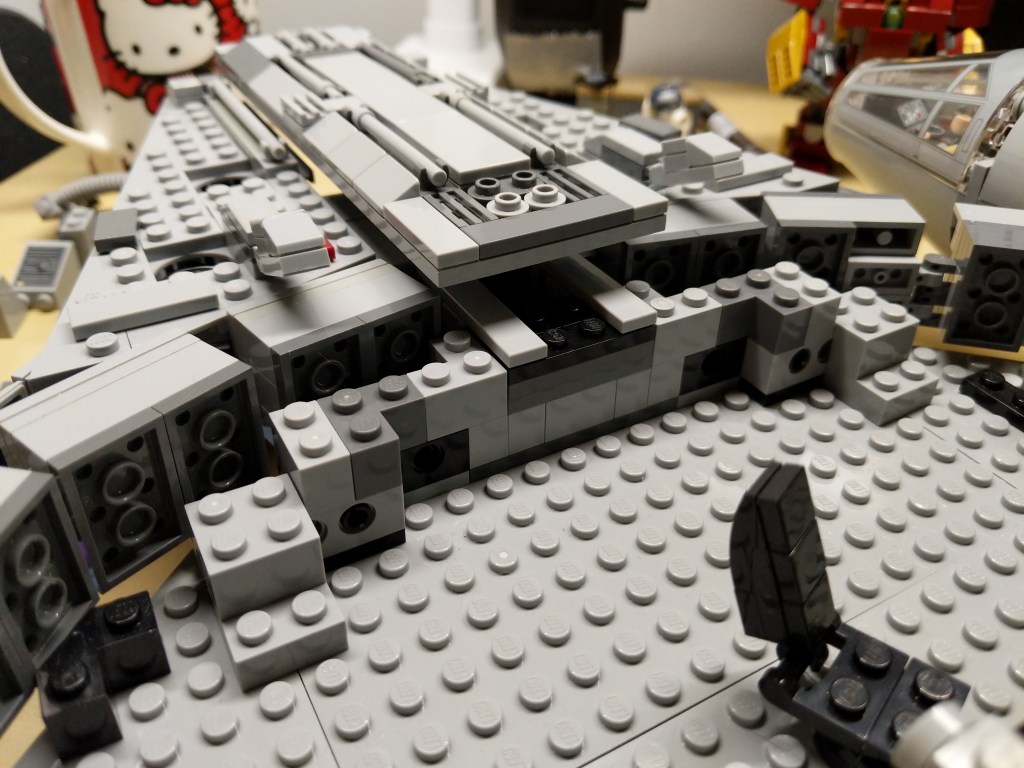
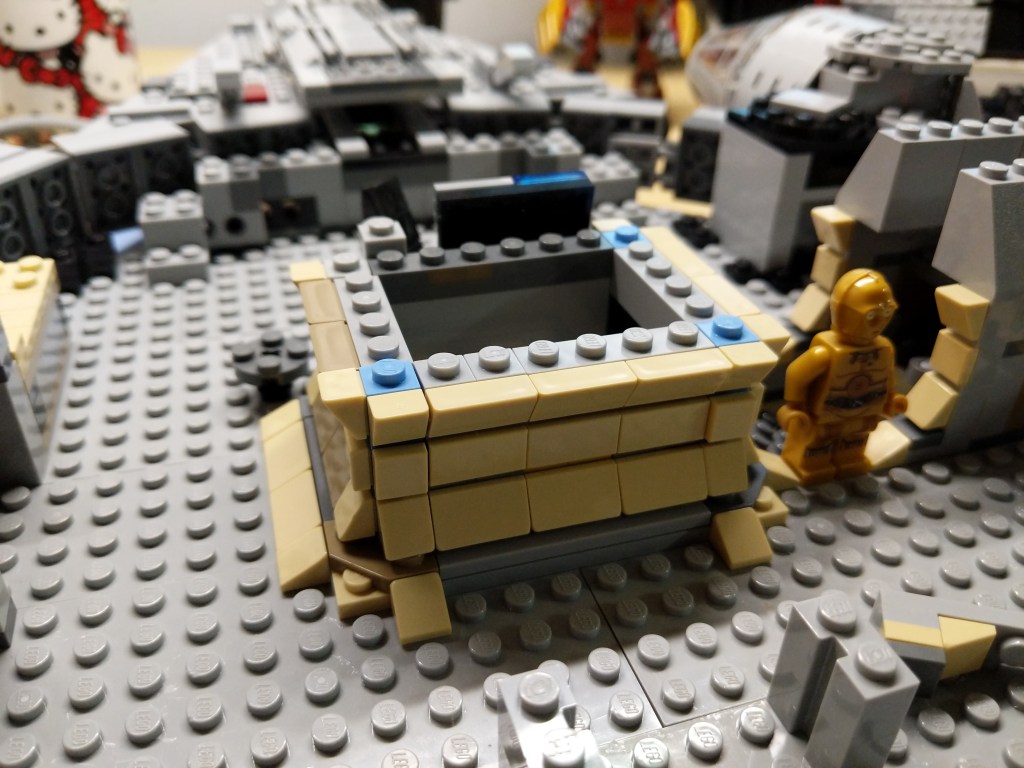
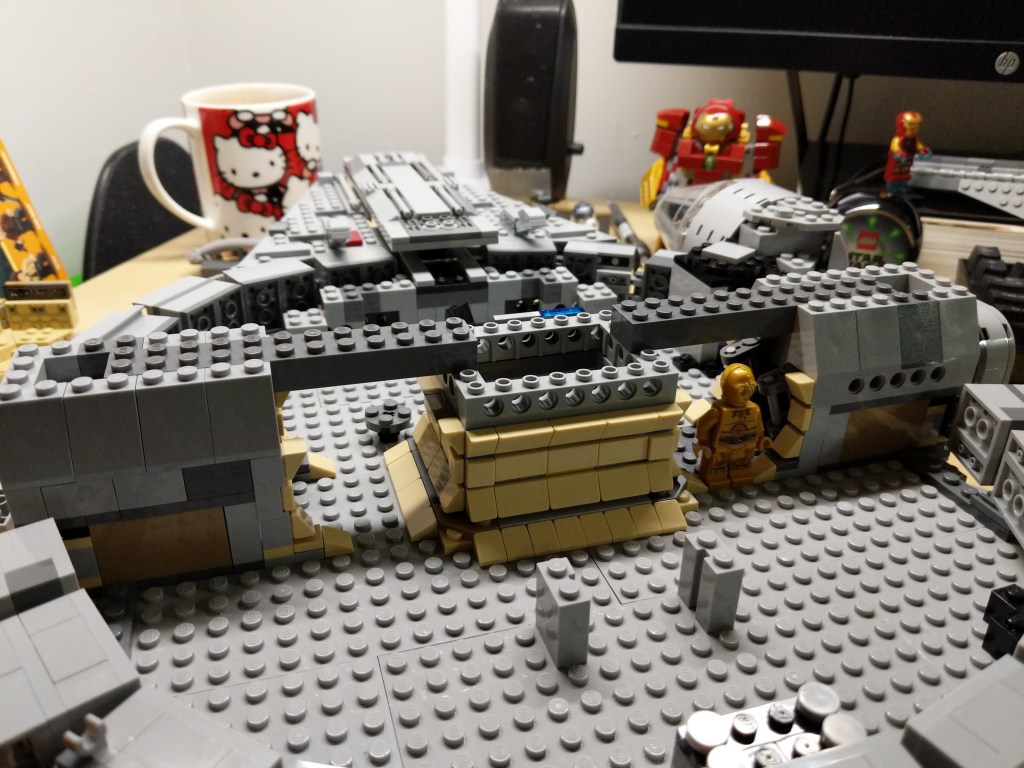
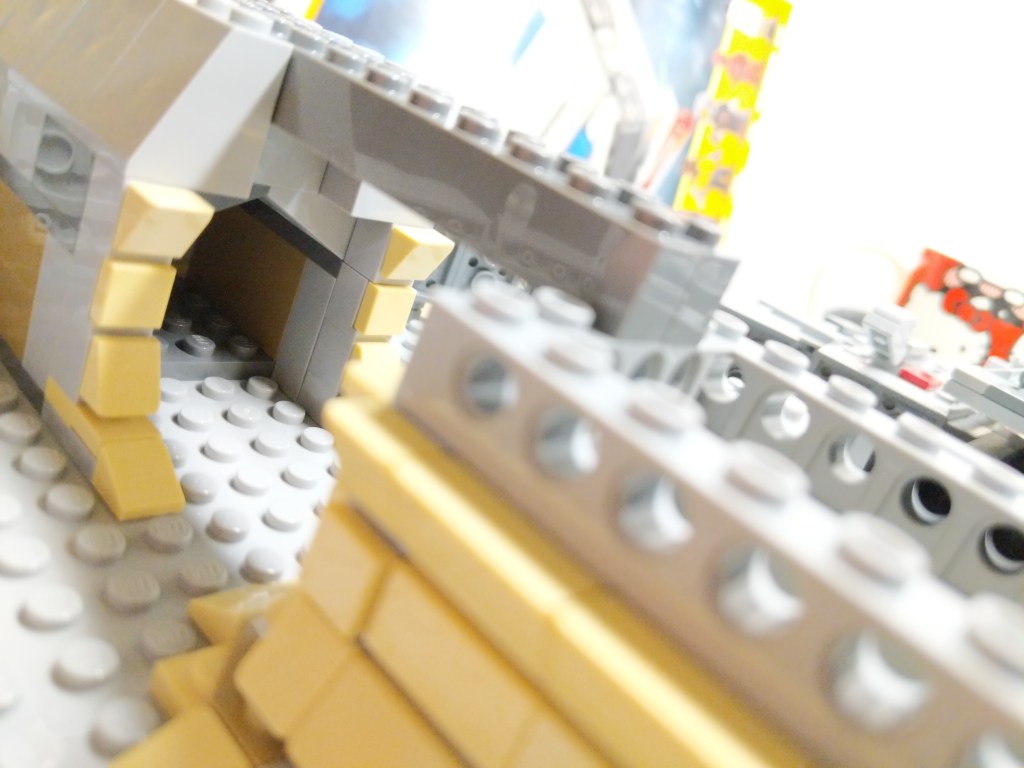
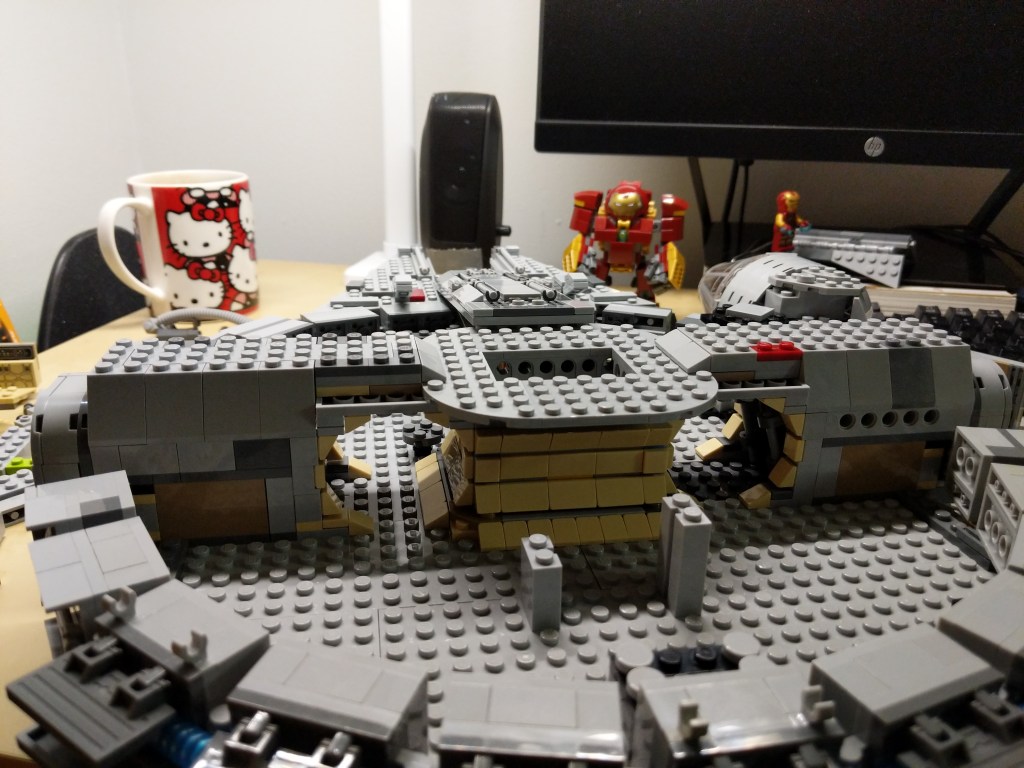
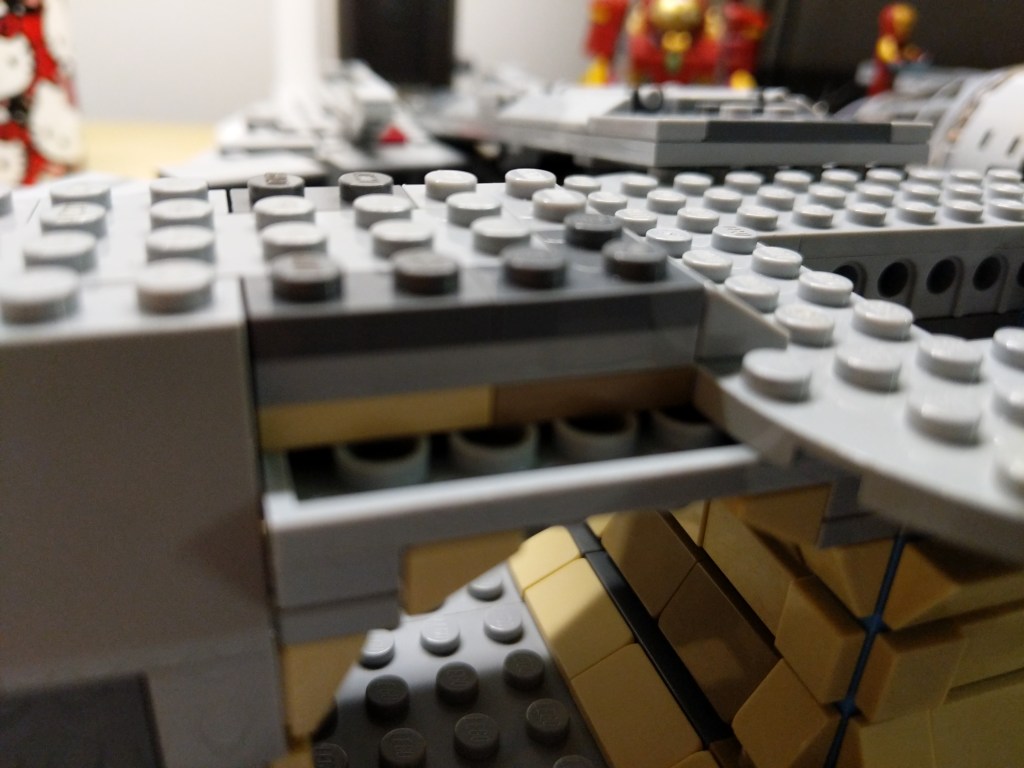
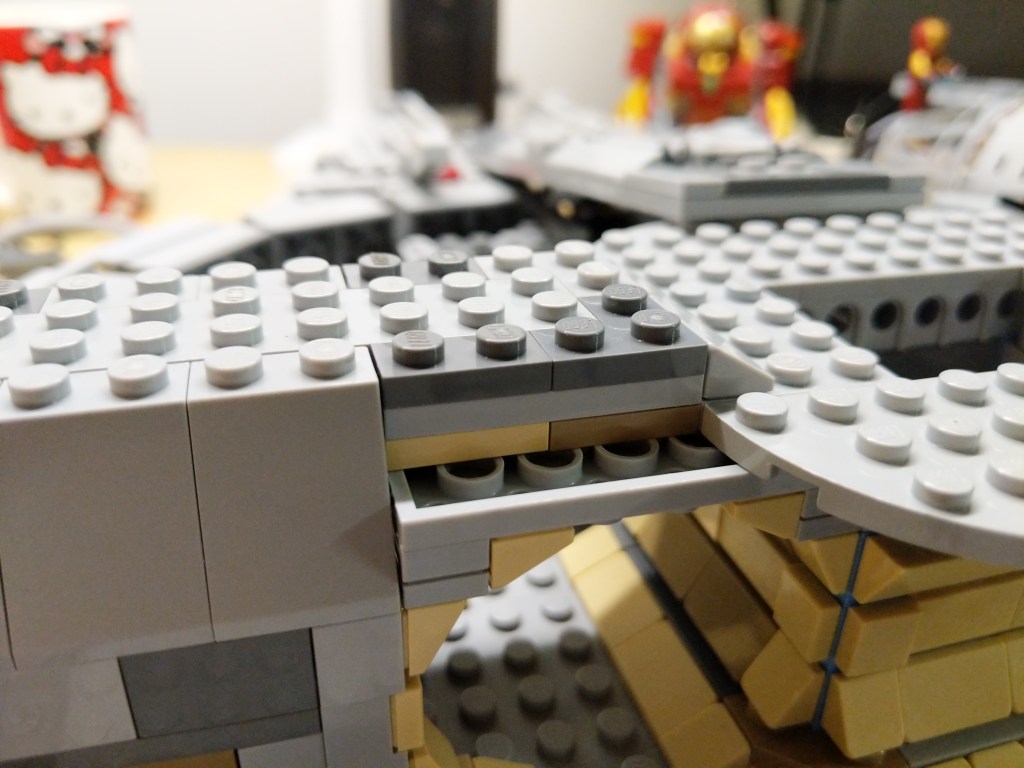
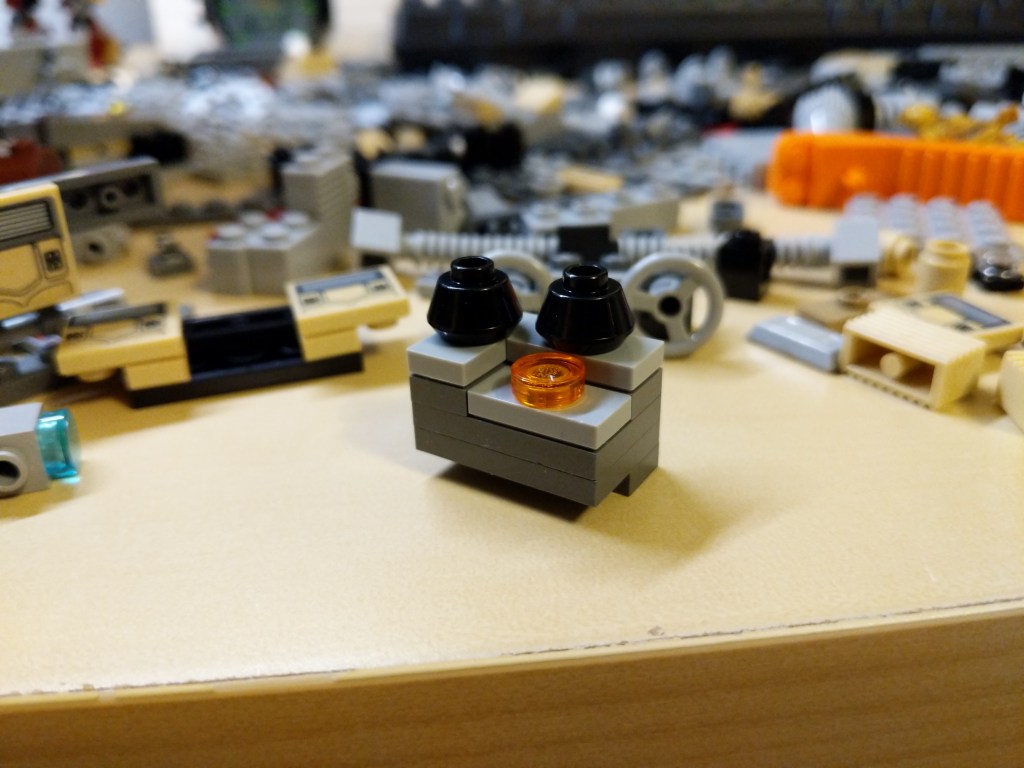
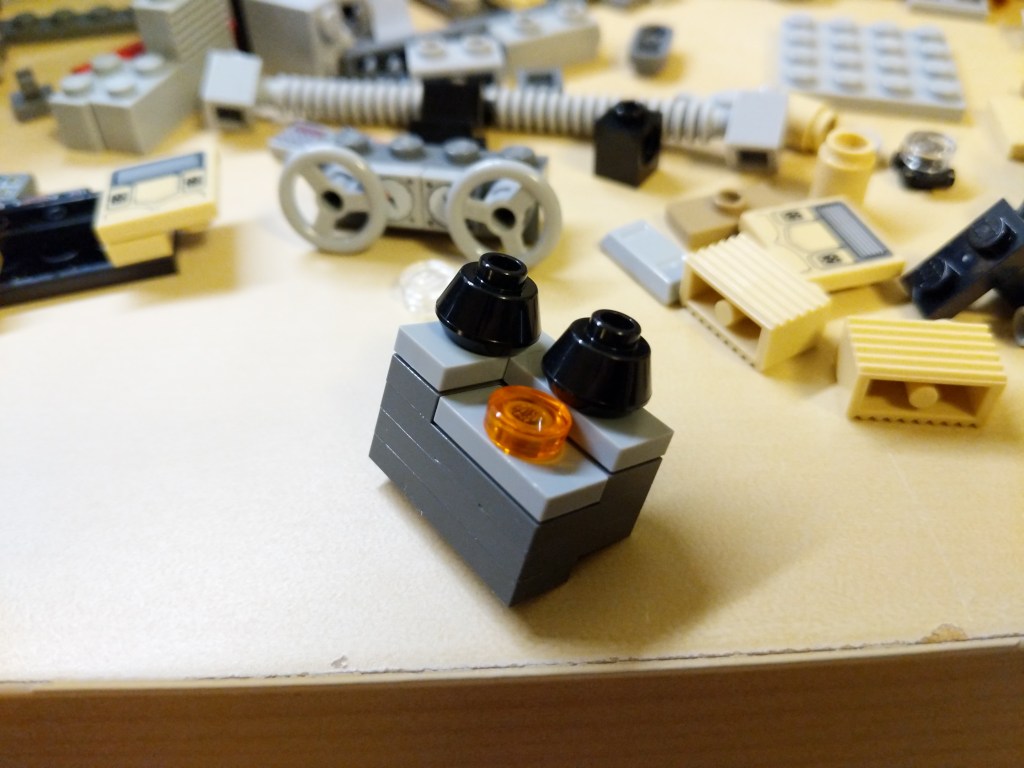
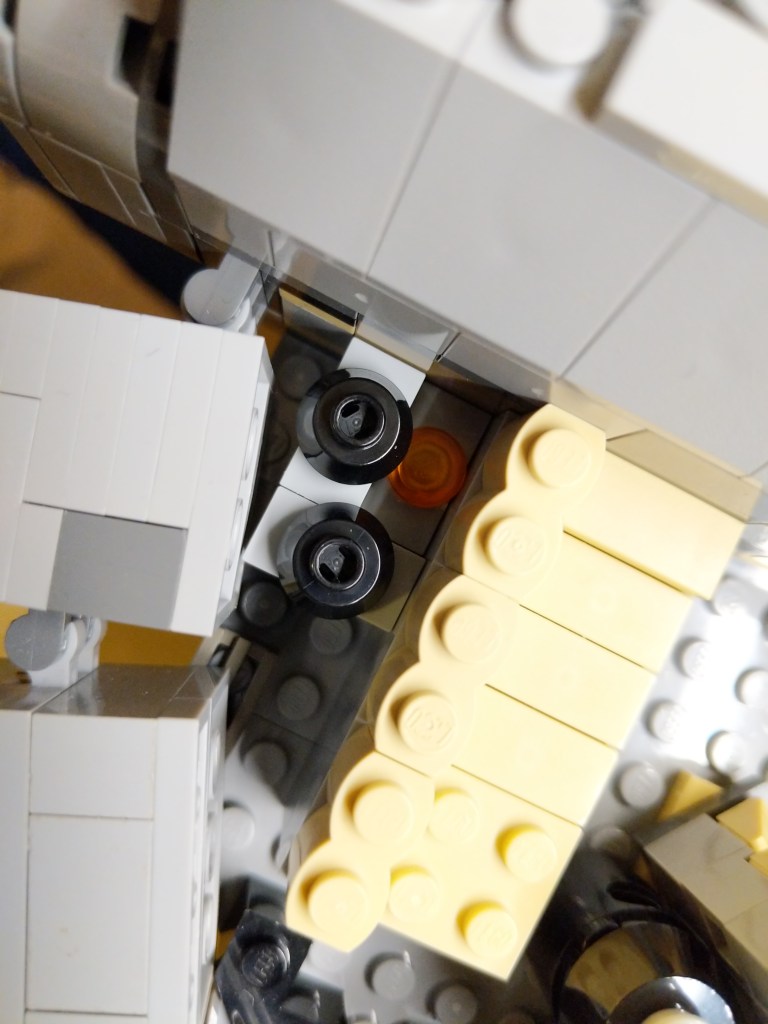
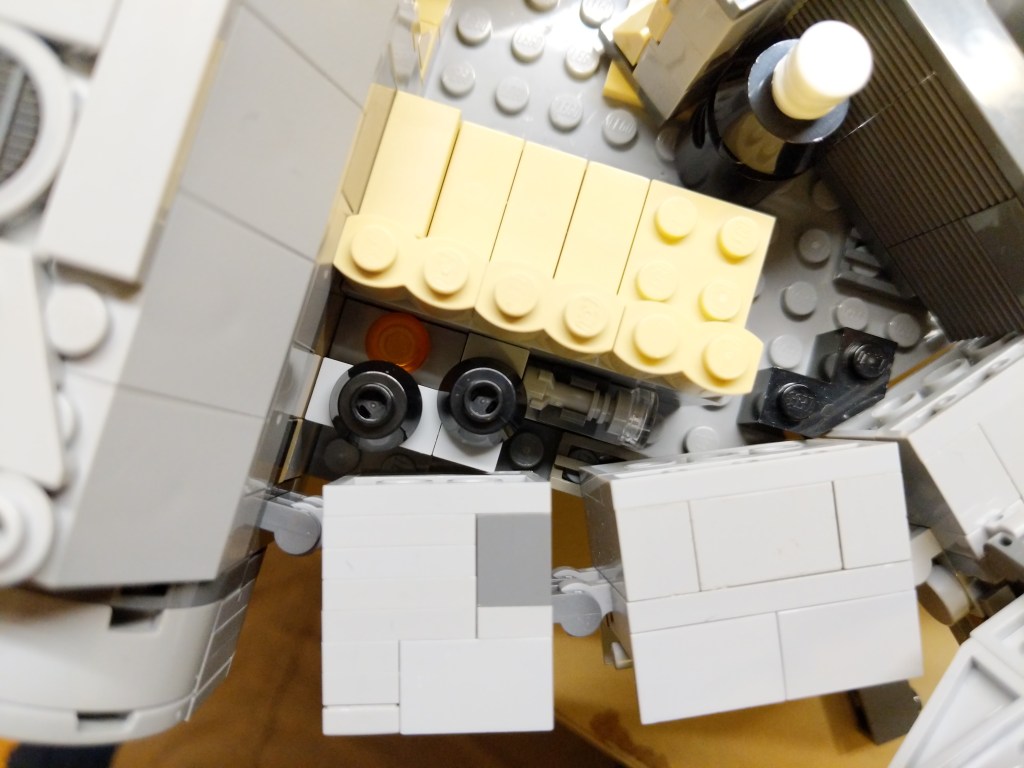
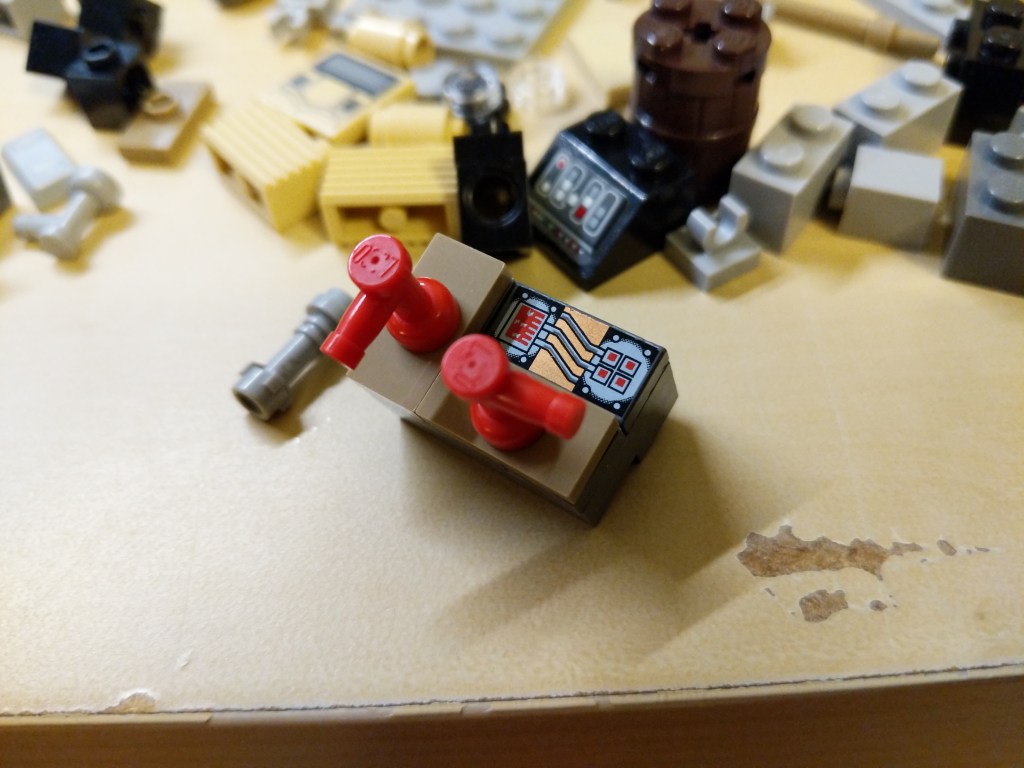
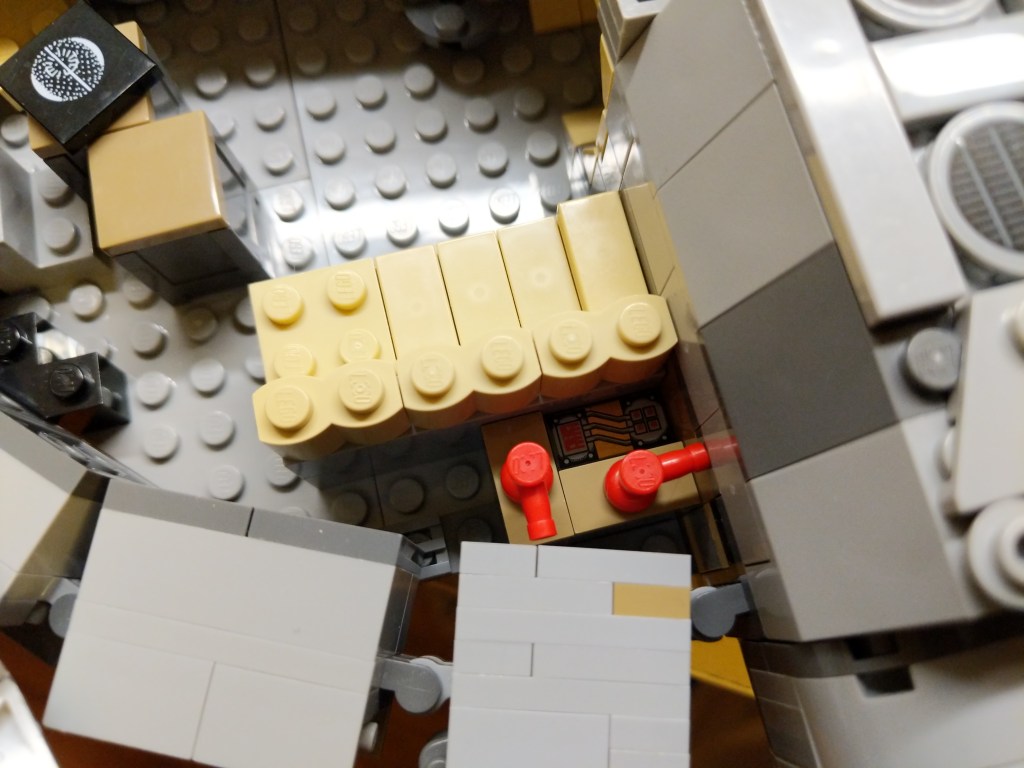
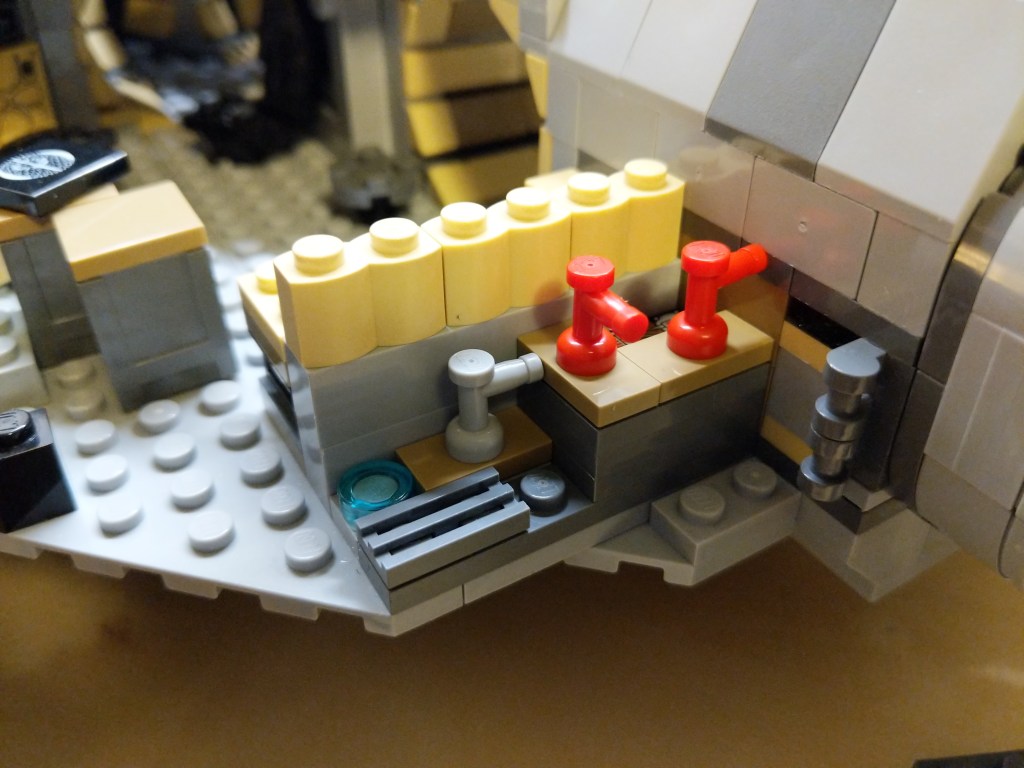
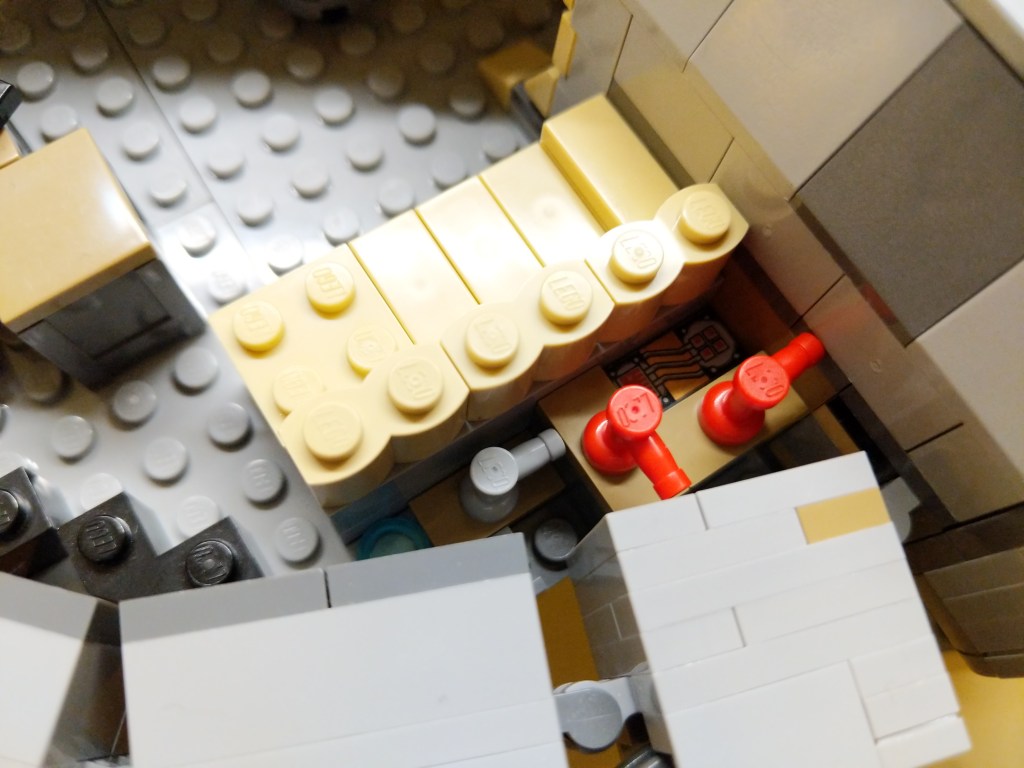
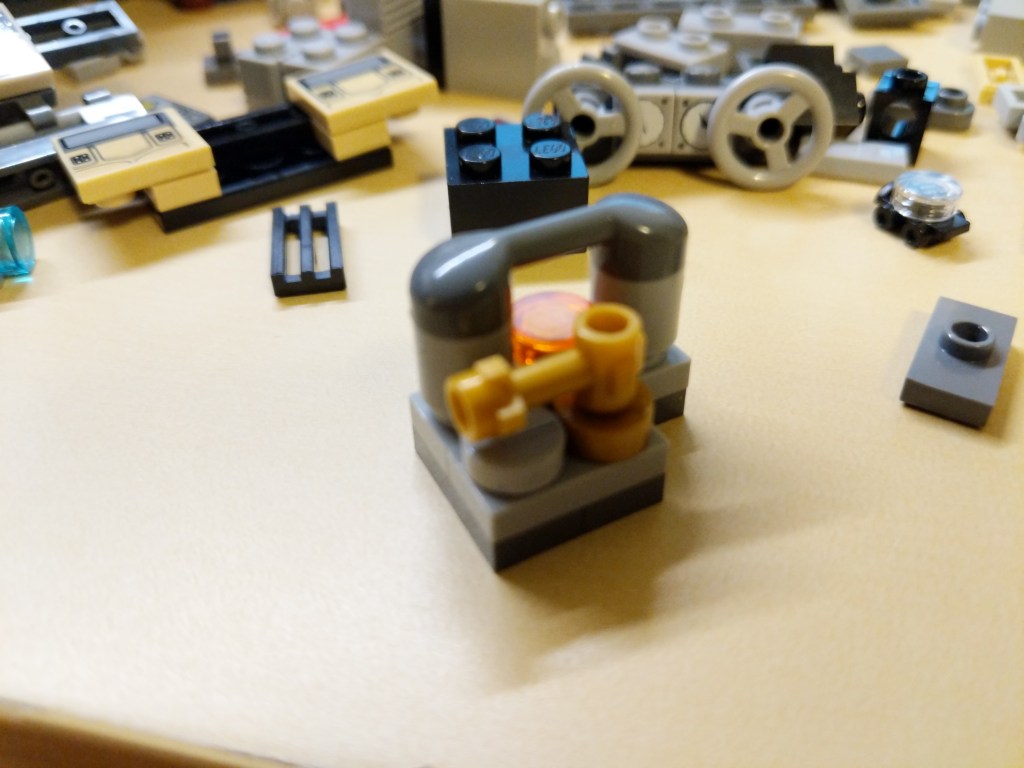
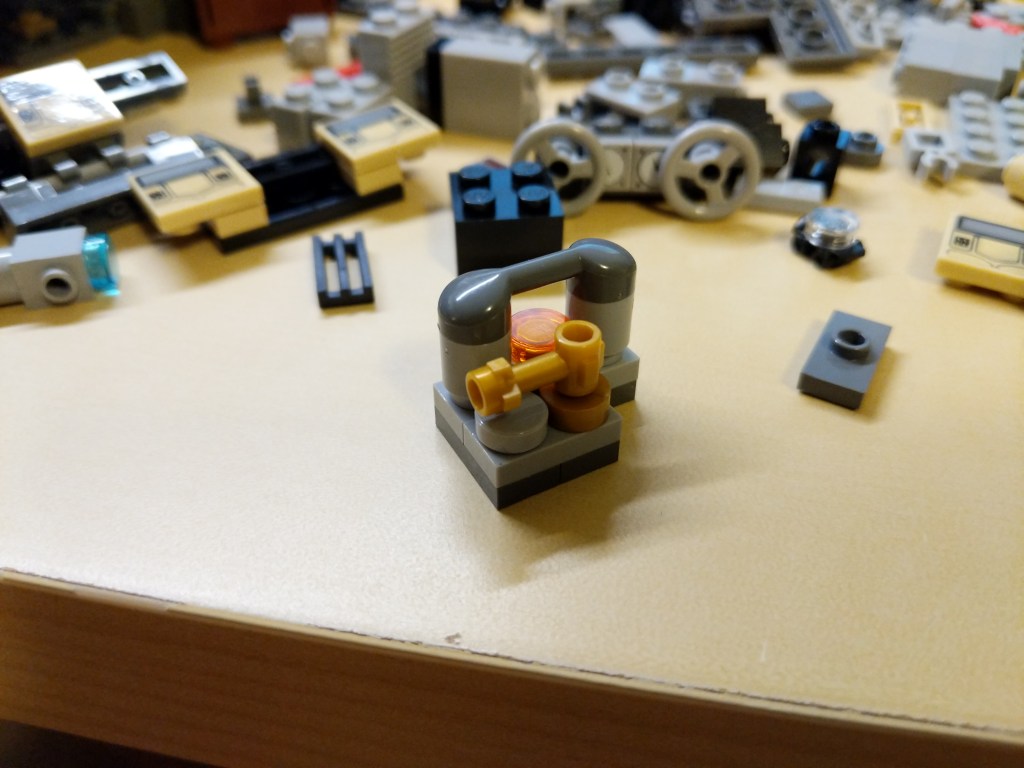
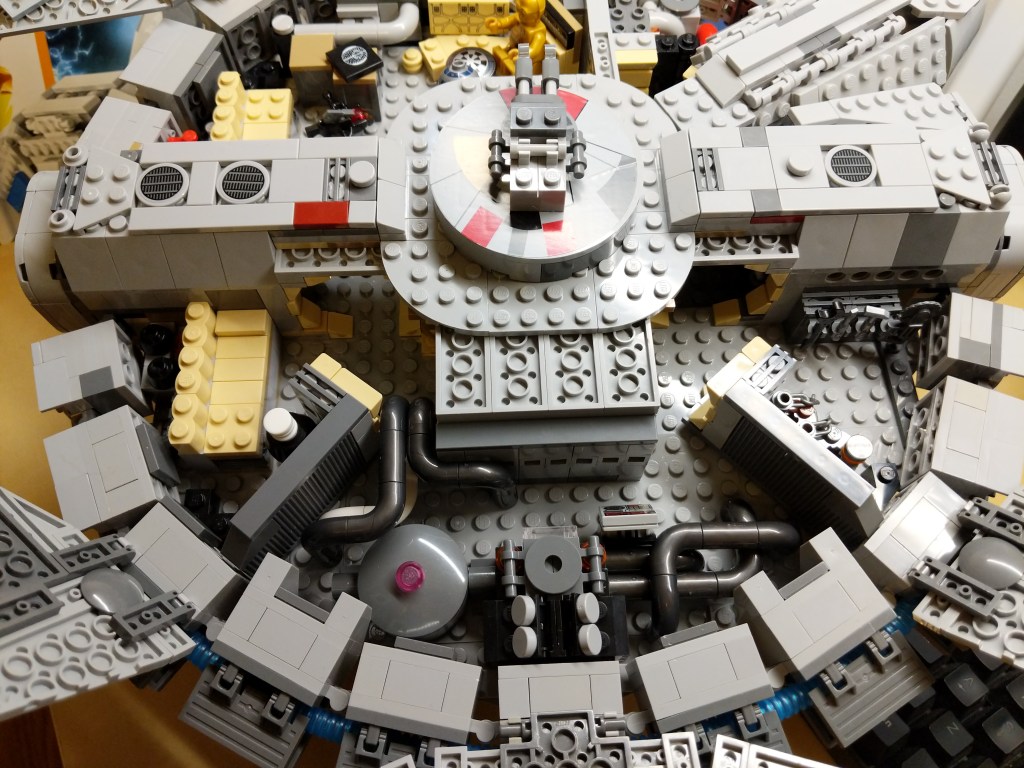
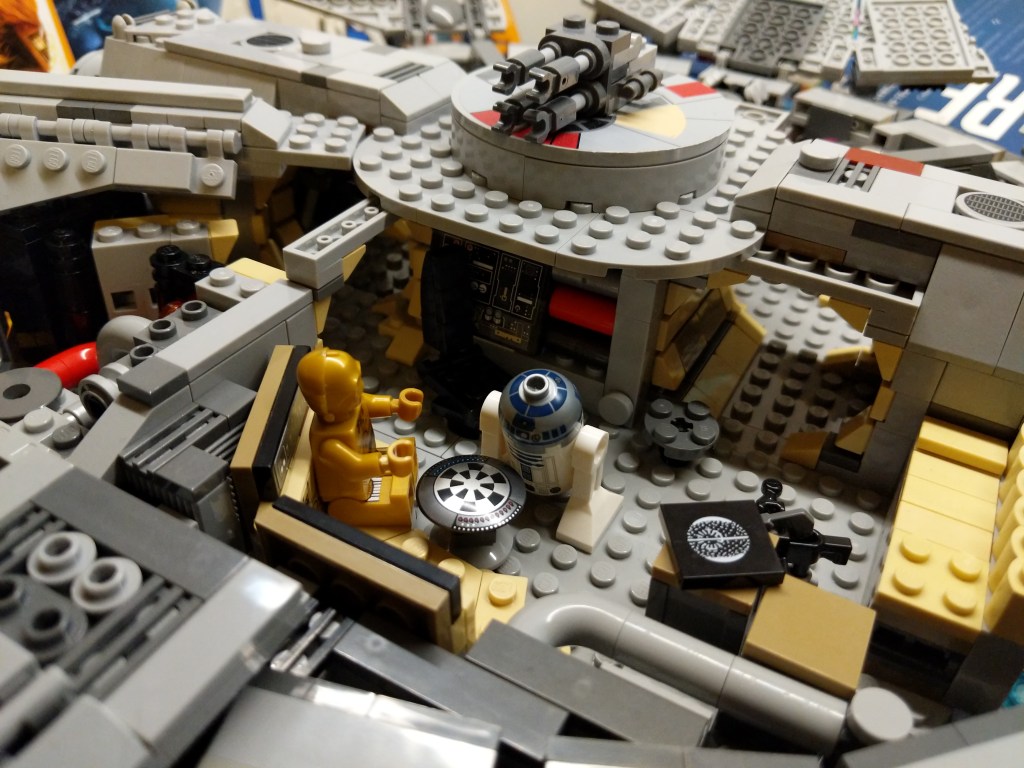
I’ve documented several of my LEGO Millennium Falcon MOCs and mods here (Last Jedi update), here (Force Awakens), here (Midi-Scale display), and here (7190 remodel). This time, I completely overhauled 75257 with a 4-person cockpit, detailed engine compartment, more round hallways, landing gear details, and a SNOT lower mandible slope with opening for center landing gear. There are more details to be found in the photos below.
Exterior
I added greebling, blast marks, and other details to make the Falcon appear as close to the cinematic model as I could giving the low fidelity and resolution of LEGO at this scale.
Interior
I wanted to include as much detail as possible–including detail hidden from view, like in the AMT/ERTL Cutaway Model of the Falcon. I made use of pipes–especially in the engine comparment–thinking of Han Solo’s repairs to the Falcon during the escape from Hoth in The Empire Strikes Back (1980). The pull-out gunner’s turret has an targeting computer display.
Landing Gear
I wanted the landing gear to look as accurate as possible in this small scale while also providing ample support for this heavier model.
Display Stand
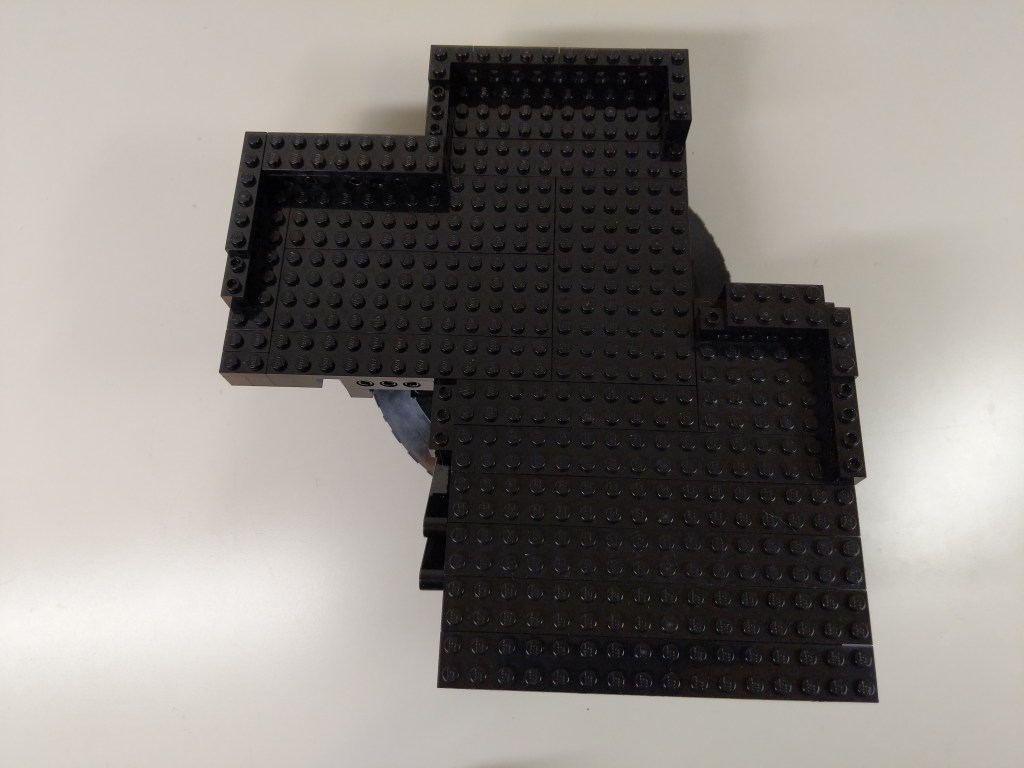
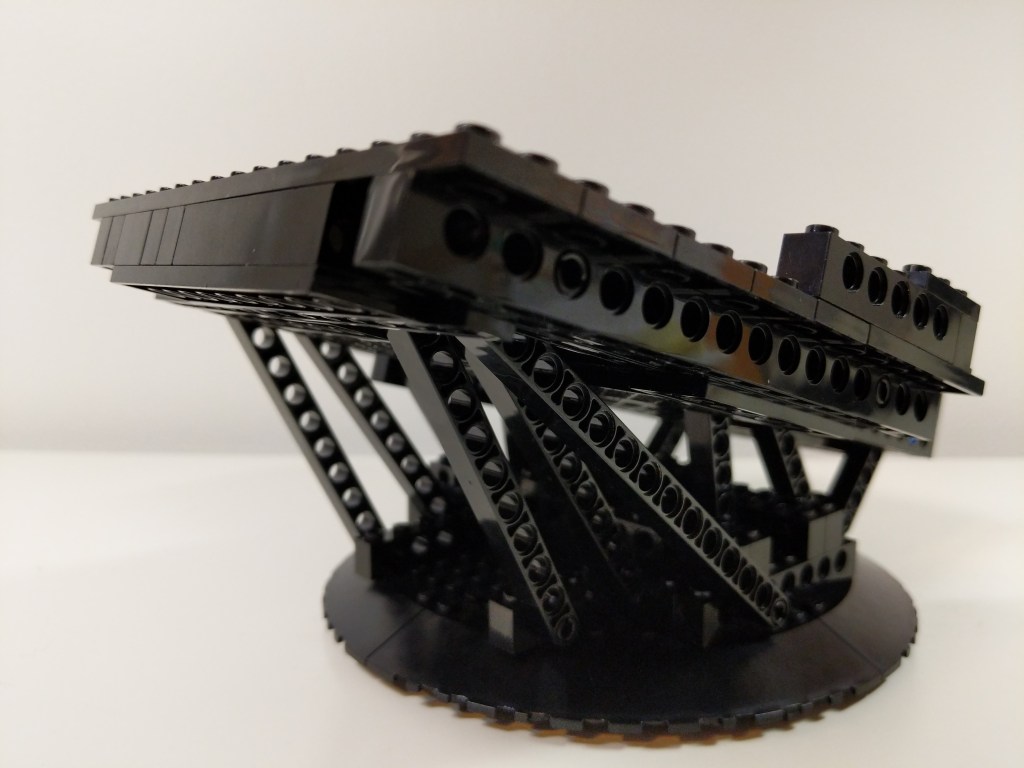
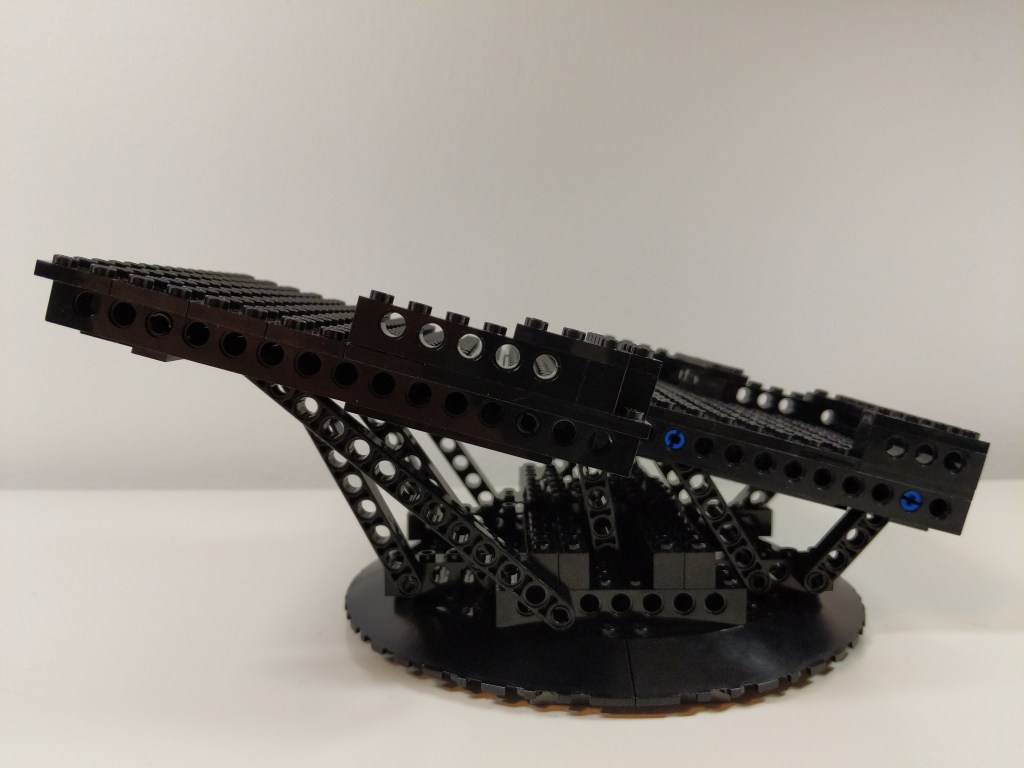
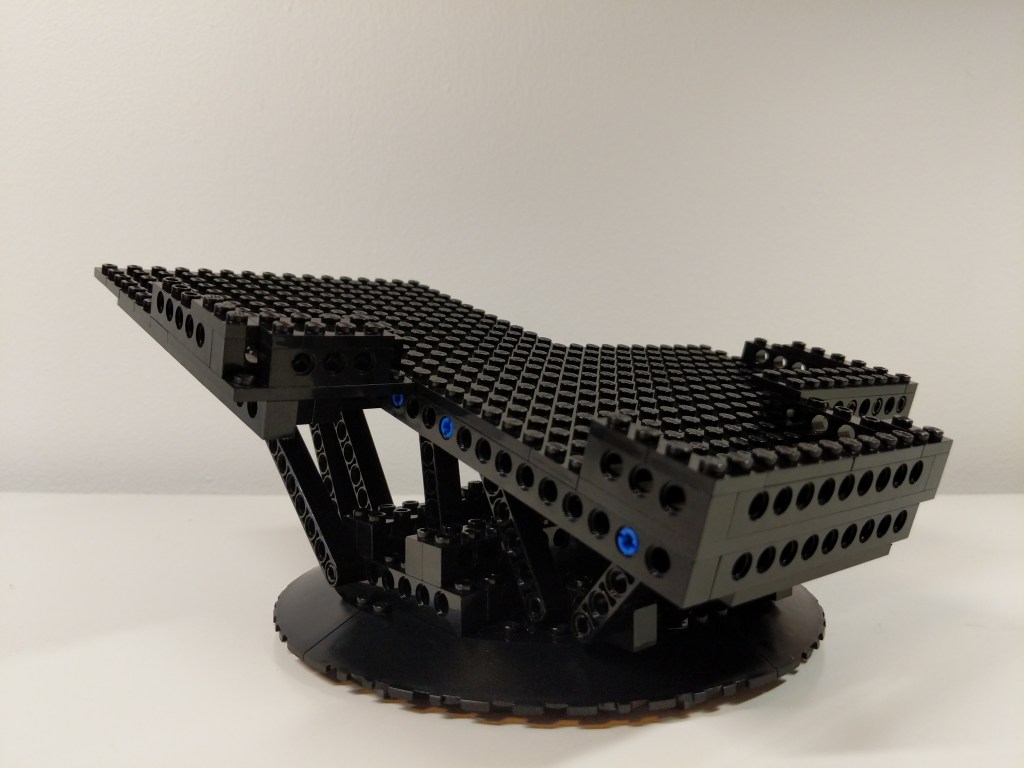
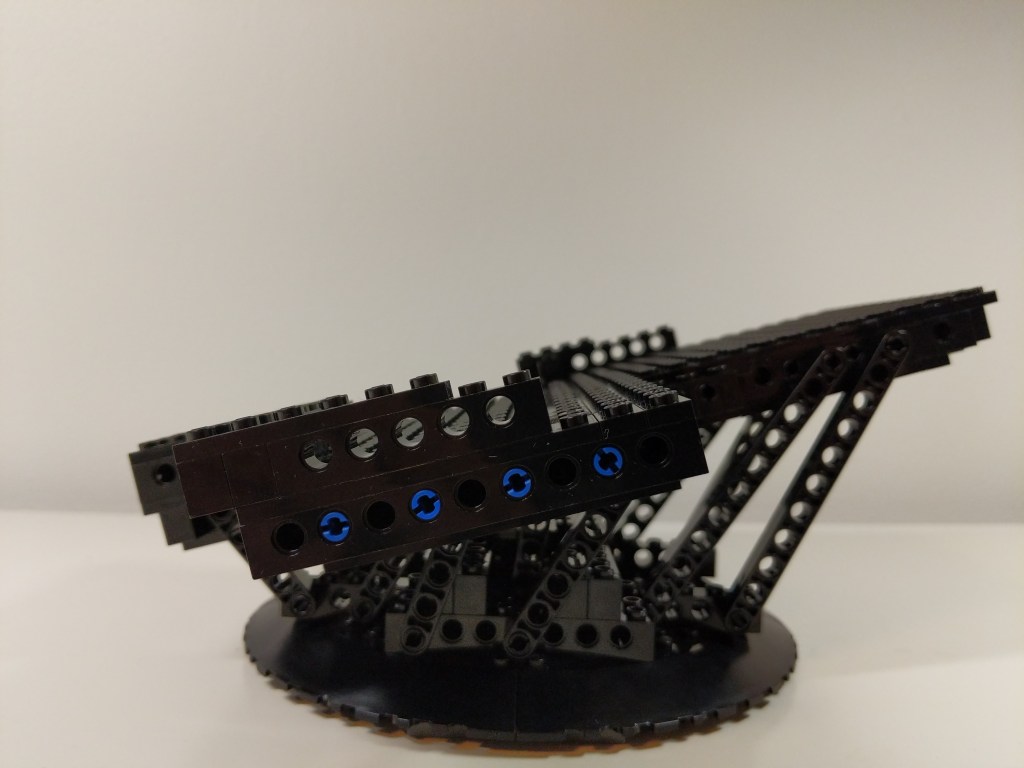
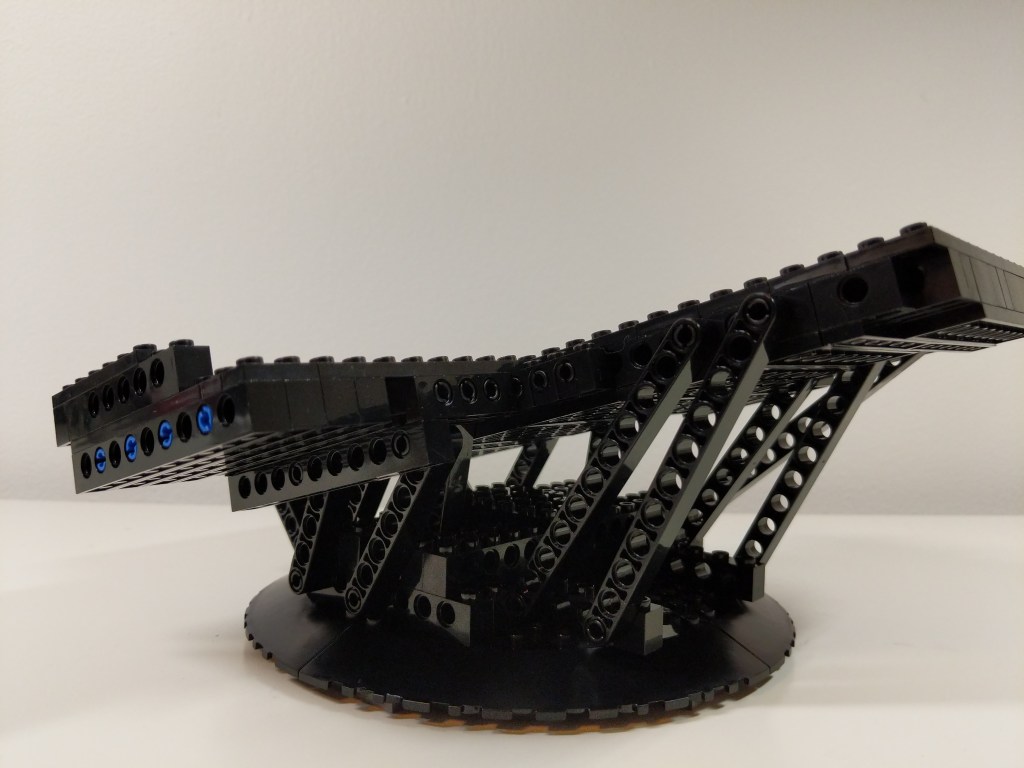
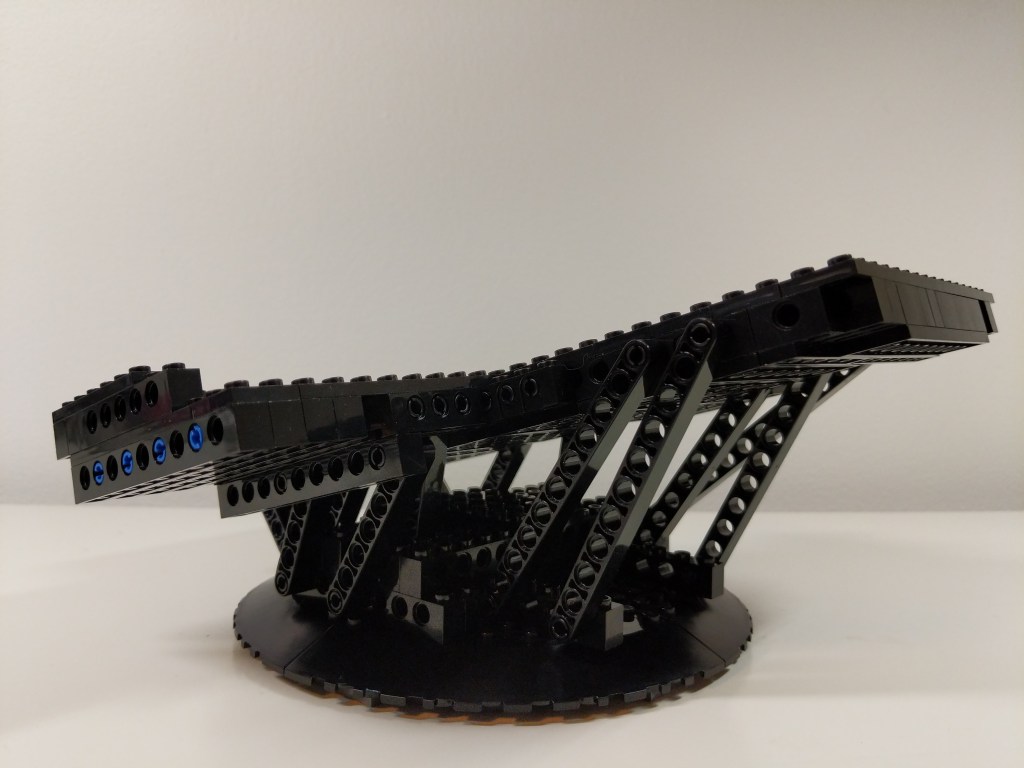
Also, I built an upward sloping display stand for the Falcon shown below. It’s shape combined with gravity locks the Falcon’s landing gear in place so that it can’t move in the display stand. It has a lot of Technic reinforcement due to the weight of the Falcon, which is more than the stock 75257 set.
Yet Another Remodel
A few months later, I took another stab at the Falcon’s interior with an intention of making the rear passage way more circular and making the engine compartment less busy but with thought out detailing. I stripped down the interior and began again. True revision in practice (i.e., throw out your first draft and begin again).
Next Steps
I disassembled this Falcon before Y and I moved to our new apartment in 2022. Since then, I’ve rebuilt 75105 (The Force Awakens) and 75257 (Rise of Skywalker) using the assembly instructions. They sit on either side of my desk at home. I have plans to build a larger Falcon of my own design that fits between the size of these playable sets and the much larger 75192 and 10179 sets. It will have a 2-stud side wall to give it a sleeker look than the chunky playable models. I’ll provide updates when this new build gets underway!
This week, I created the composite image above of the Millennium Falcon midflight among the stars. This most recent exercise in making was made possible by the Falcon model at the center of the composition that I assembled in June 2021 while healing from a broke toe.
I like to think about how one project links to another, how one kind of making supports another kind of making. Making and culture go hand-in-hand. One new thing makes possible countless new things given tools, materials, and know-how.
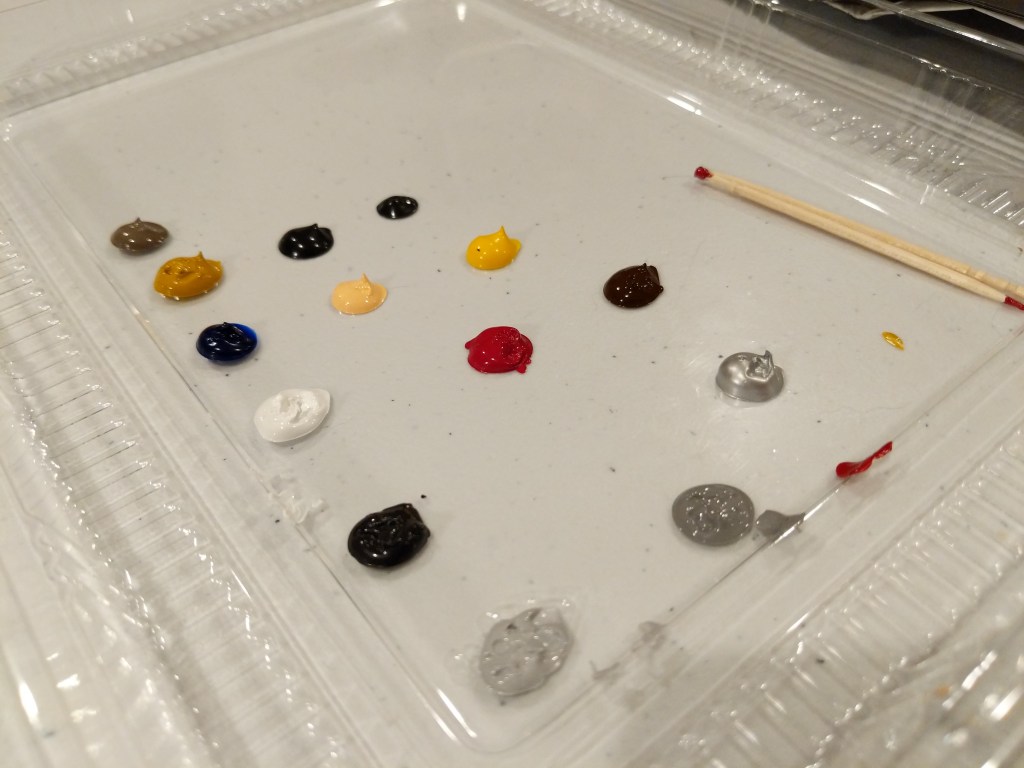
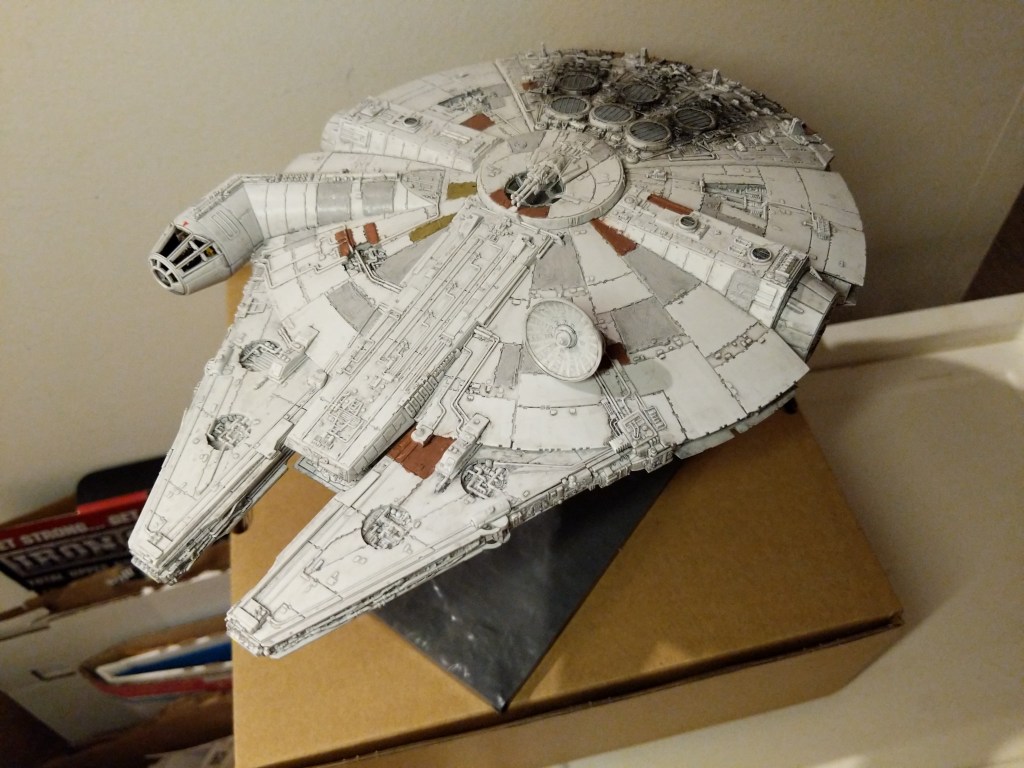
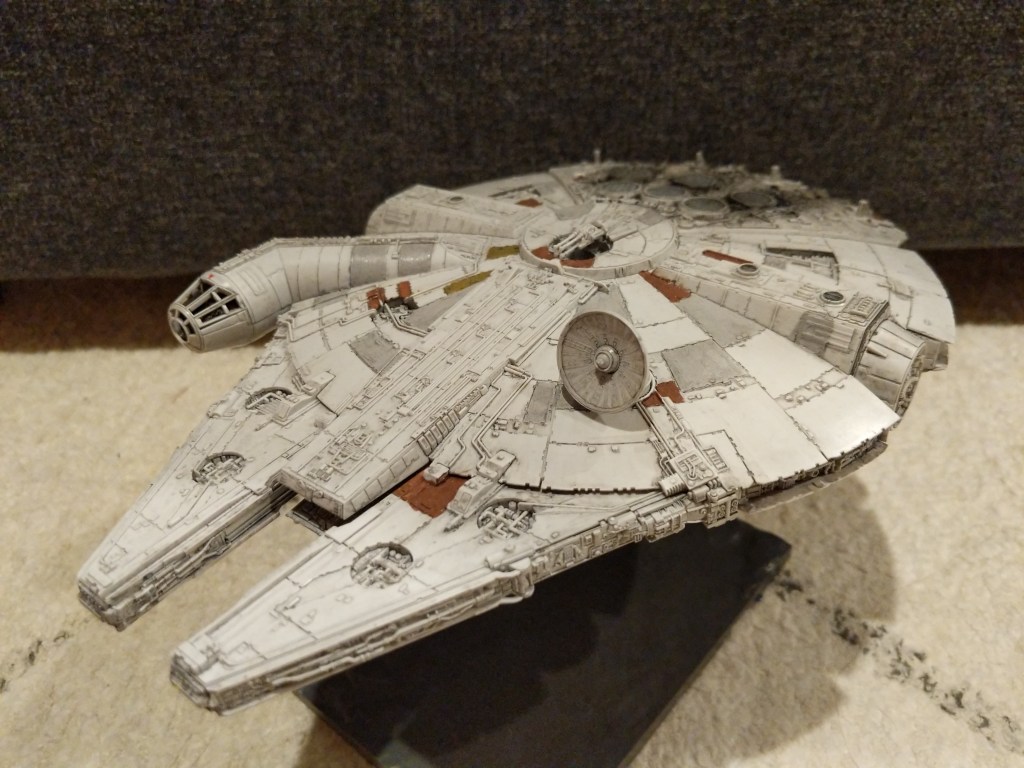
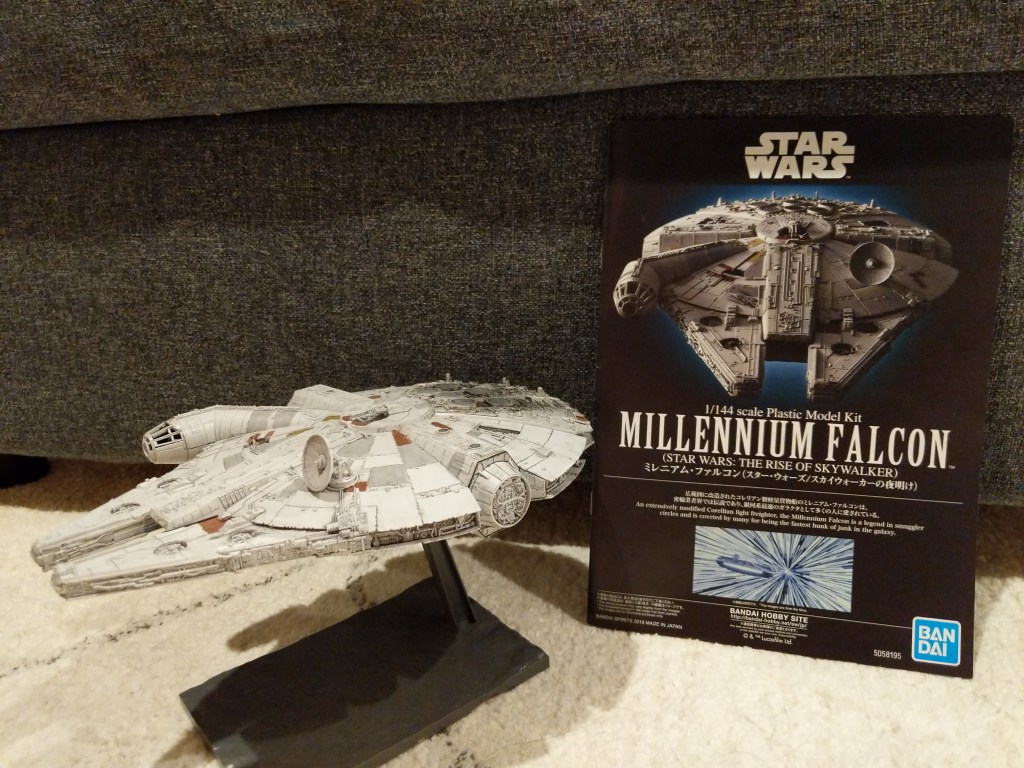
In this case, I assembled and painted a Bandai 1/144-scale Millennium Falcon plastic model set from Star Wars: The Rise of Skywalker. Proper assembly, though by no means professional, required tools (e.g., sprue cutter, paint brushes, and toothpicks), materials (e.g., plastic model glue, acrylic paints, and tape), and know-how (e.g., cutting, filing, gluing, and mixing paints and washes).
A year later, I created the science fictional composite image above. Its production required tools (e.g., Linux Mint-running desktop computer, GNU Image Manipulation Program, or aka GIMP, and the Internet), materials (e.g., the assembled model, a photo of the model in an orientation appropriate for the composite image, and a public domain photo of a star field), and know-how (e.g., an idea for what the finished product will look like, a workflow for using GIMP to achieve it, and an understanding of how to use GIMP’s affordances including layers, opacity, and filters for each stage of the workflow).
Assembling the Model
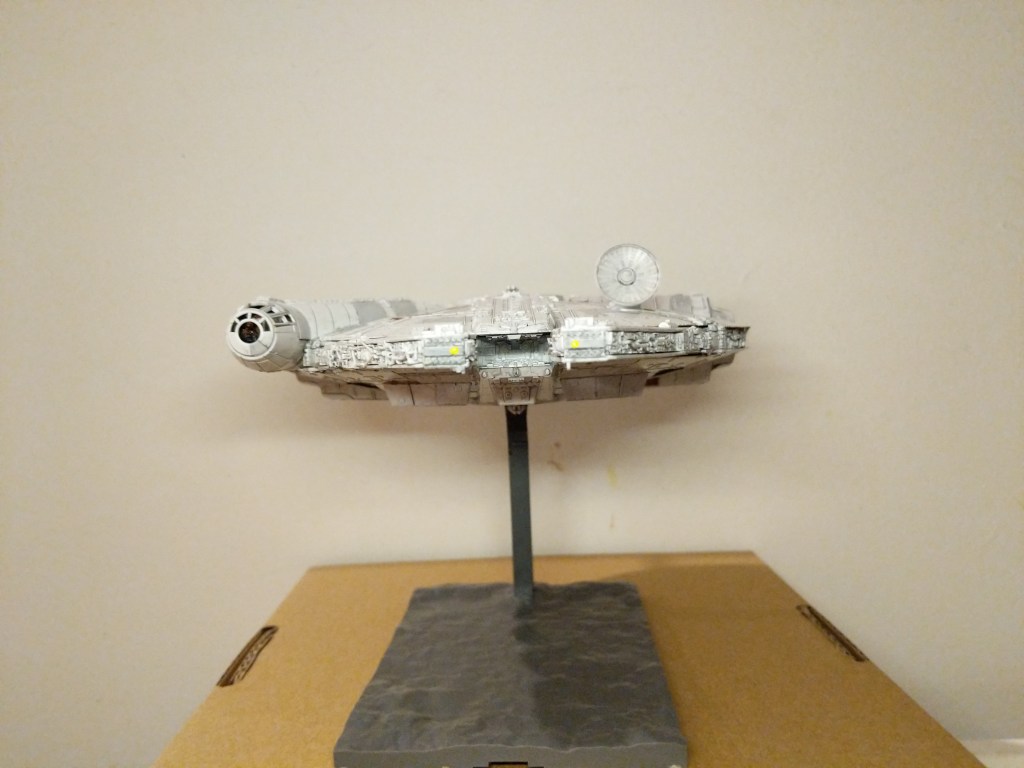
The completed Bandai 1/144 Millennium Falcon model is only about 9 1/4″ long. Hence, it and its constituent parts are very tiny. I built and painted the model over the course of a week. Given more time and equipment, I would have liked to have done a more professional job with lots of masking and airbrushed paint. Given my limitations, I decided to have fun and use what I had at hand to assemble and paint the model.
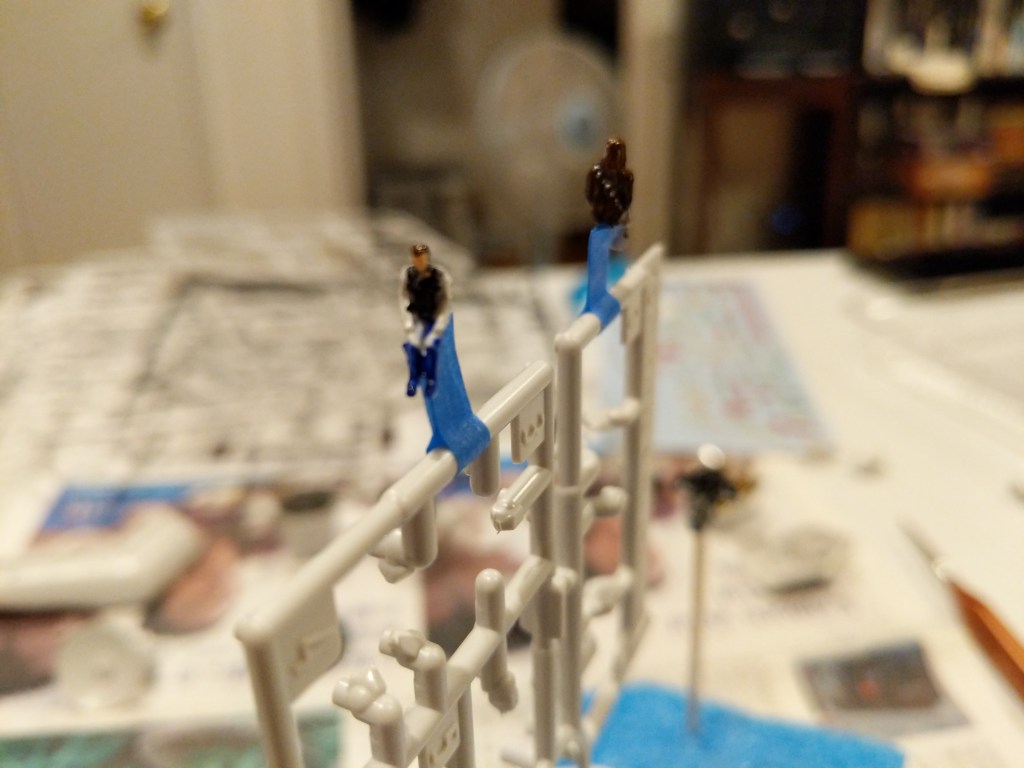
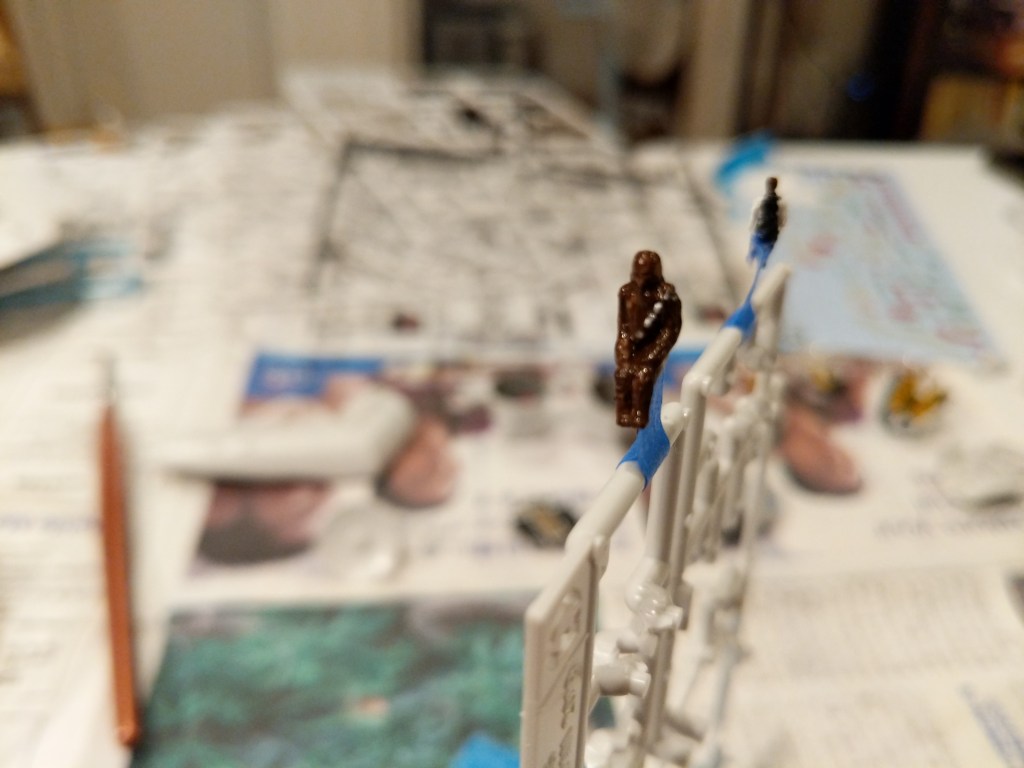
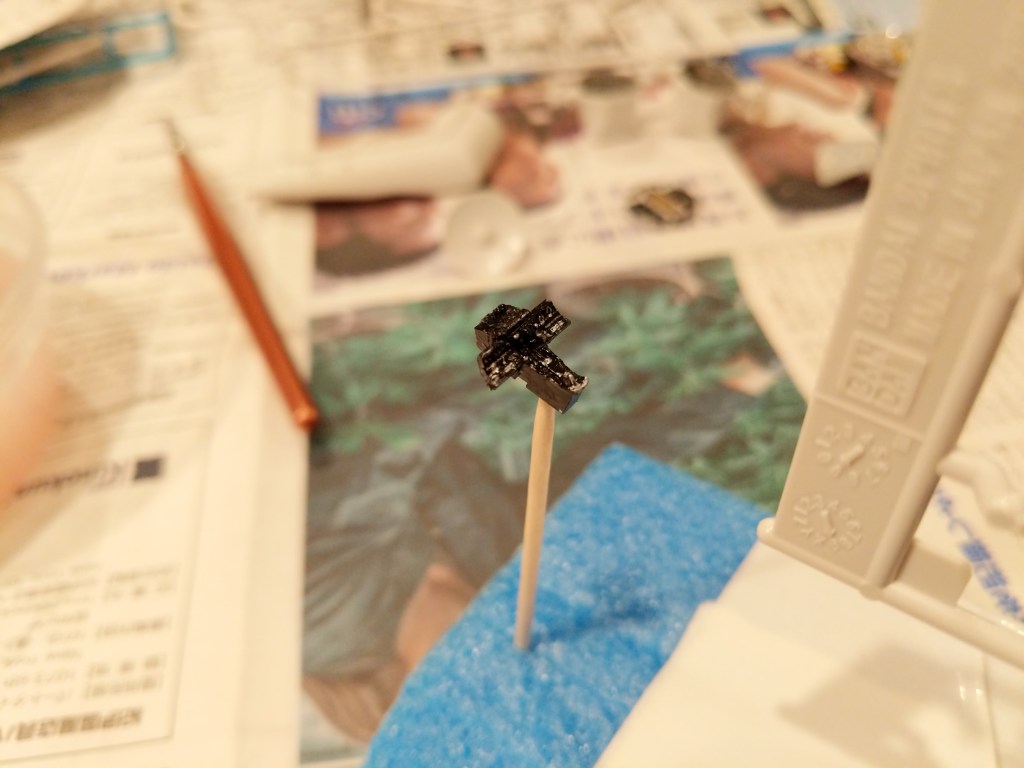
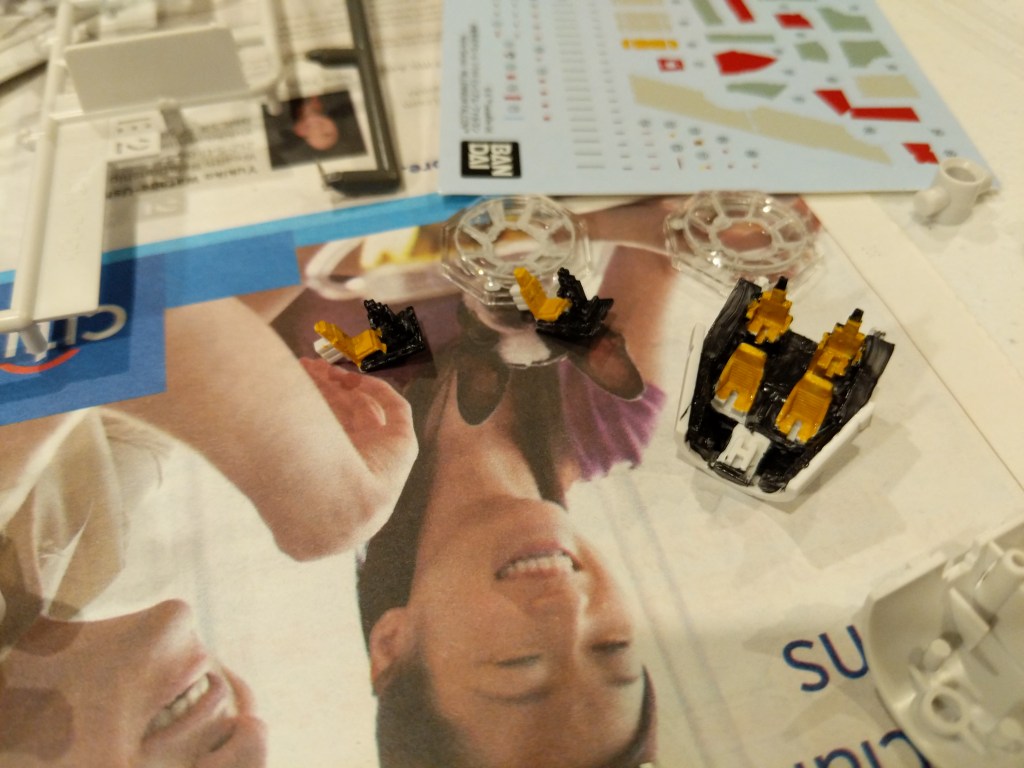
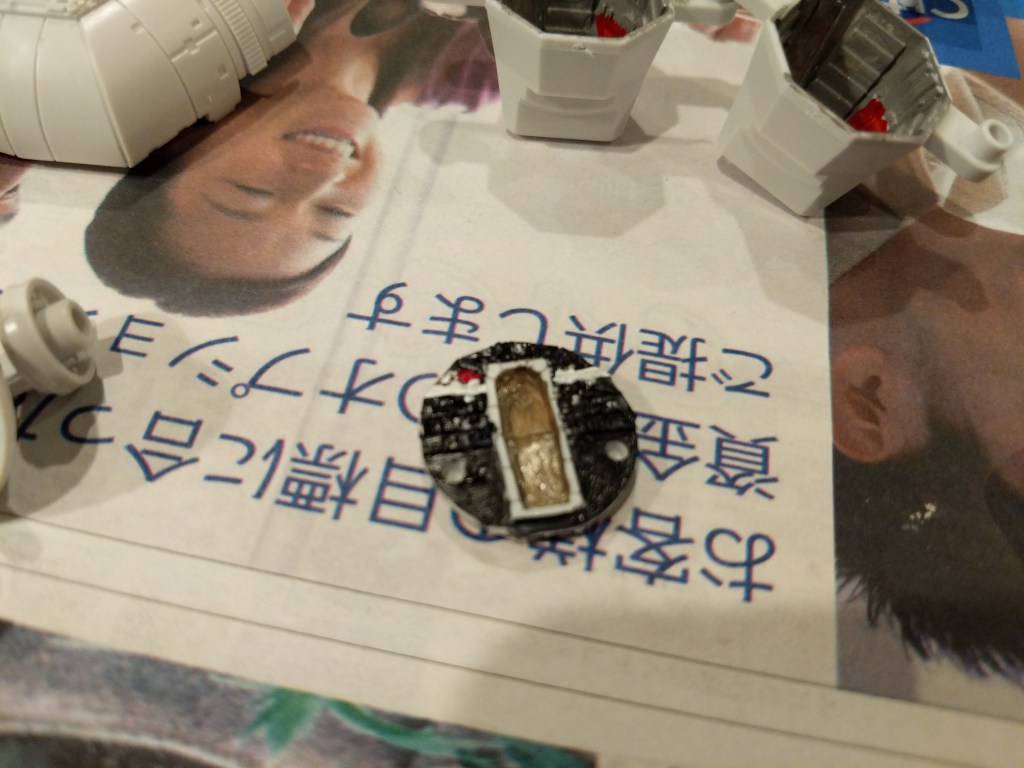
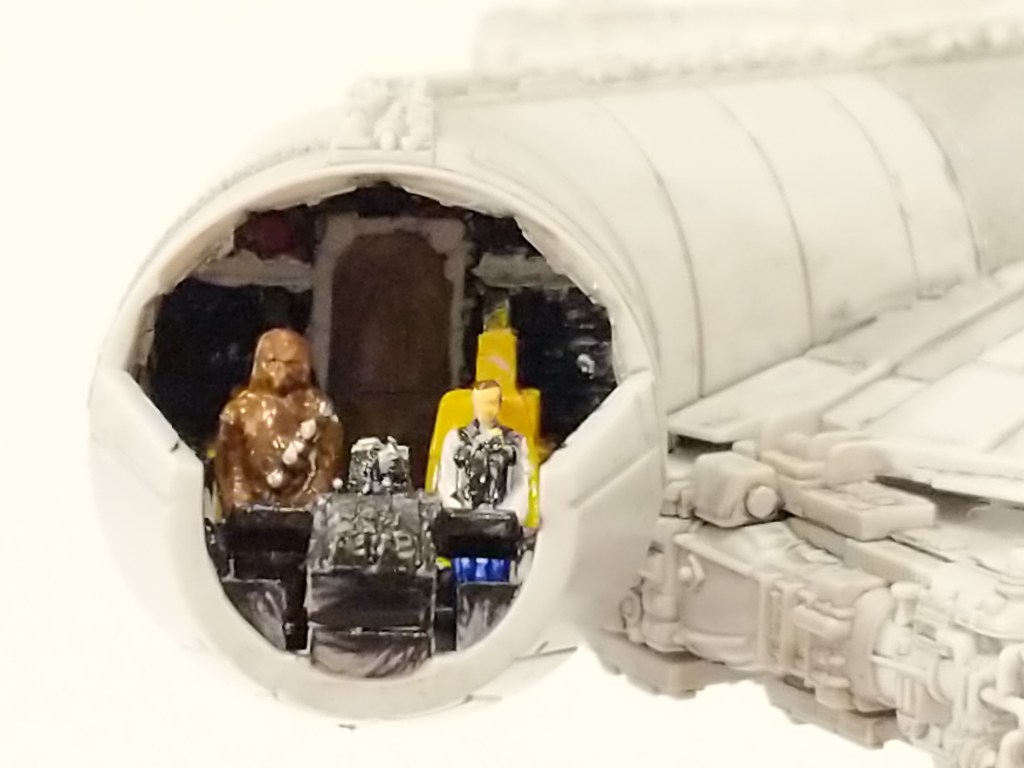
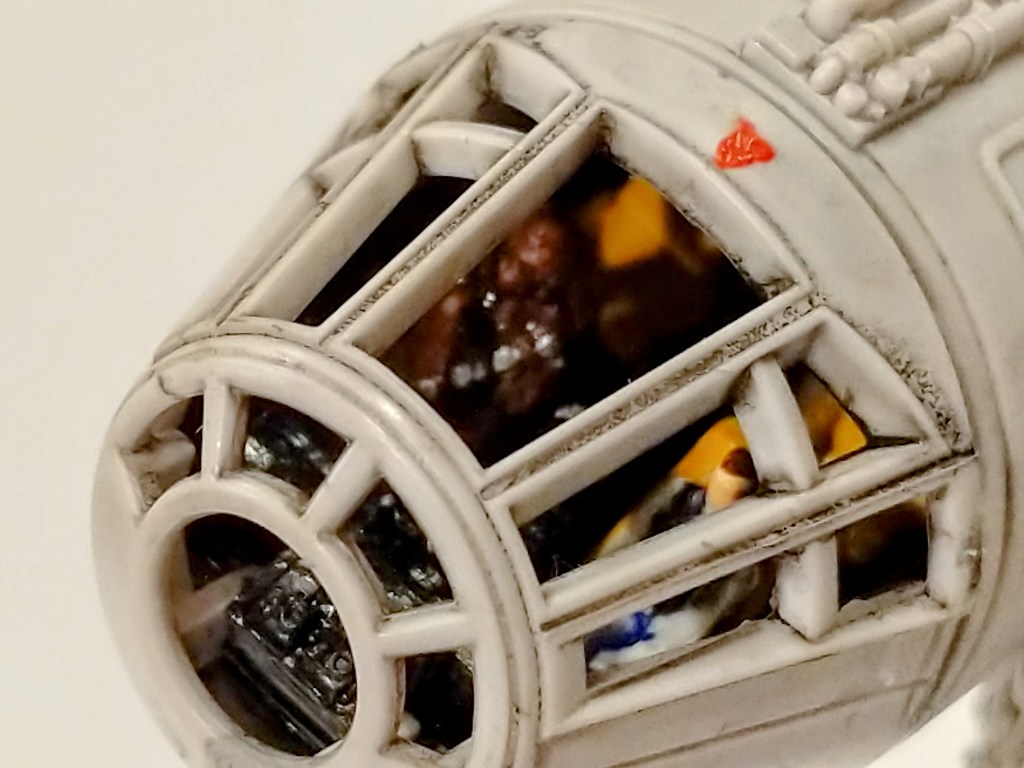
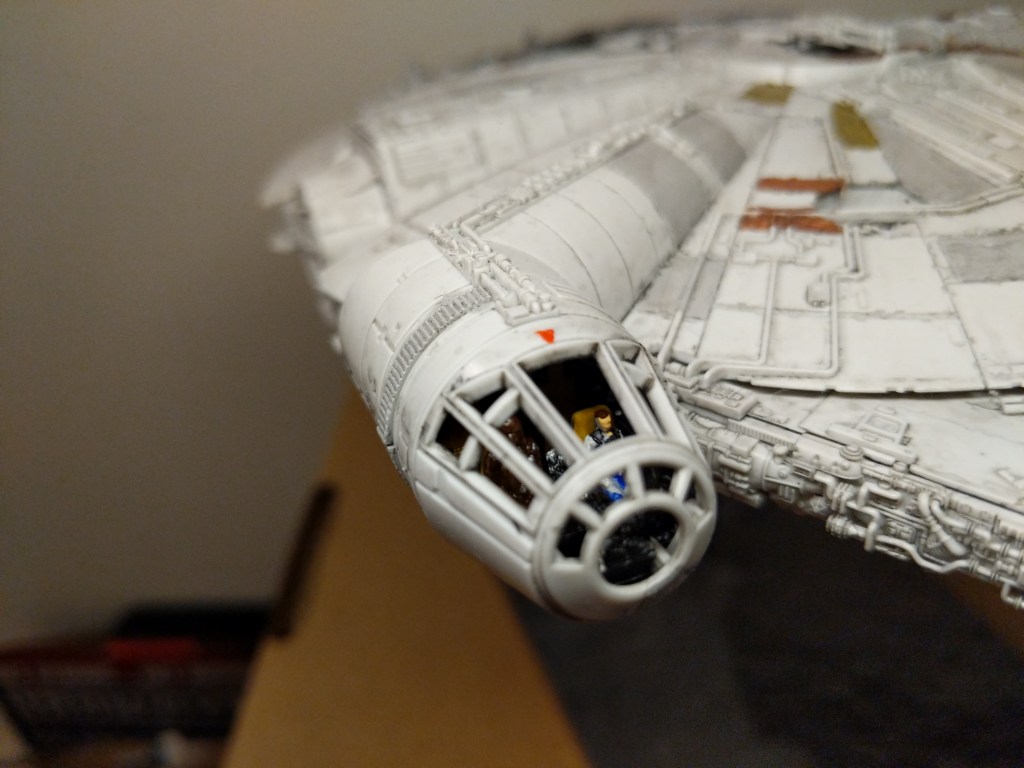
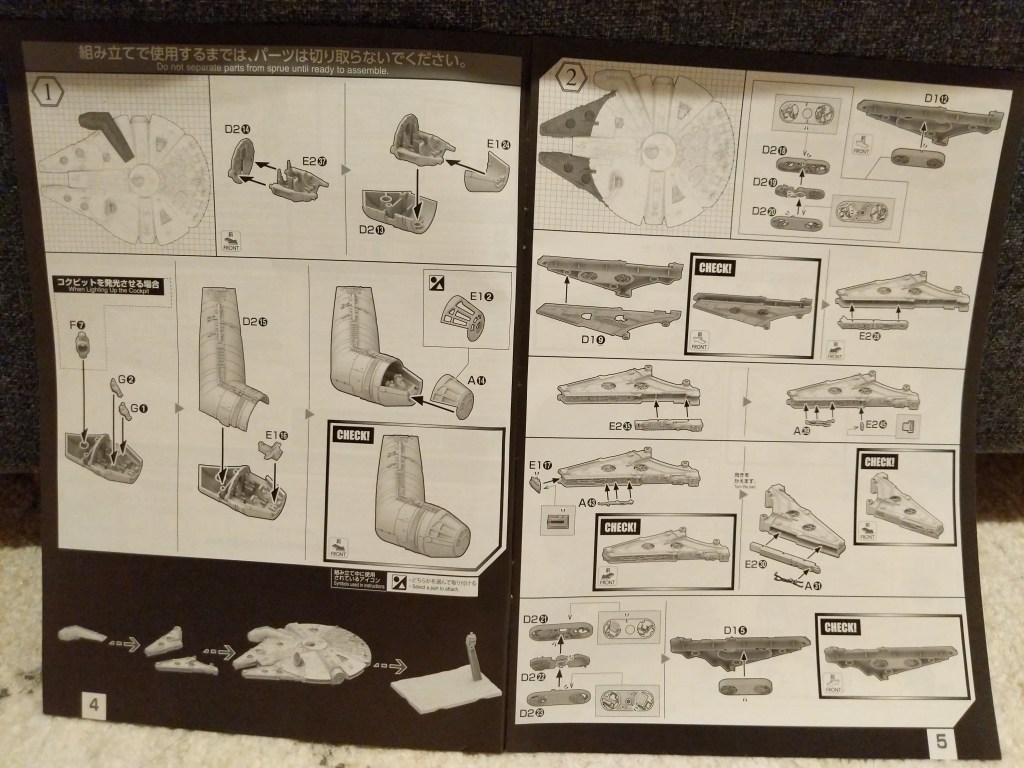
One example of the assembly process is pictured below. It involves the cockpit. Even though the model is sold as the Falcon from The Rise of Skywalker, it included Han Solo and Chewbacca figures, which I decided to use instead of the other cast miniatures. For these detailed elements of the model, I used a combination of toothpicks, very fine brushes, and dabs of paint to achieve the intended effect.
The pictures below show the assembled cockpit with shaky, imperfect paint application on the left and remnants of the dark wash that I applied to age and highlight lines on the model’s surface on the right.
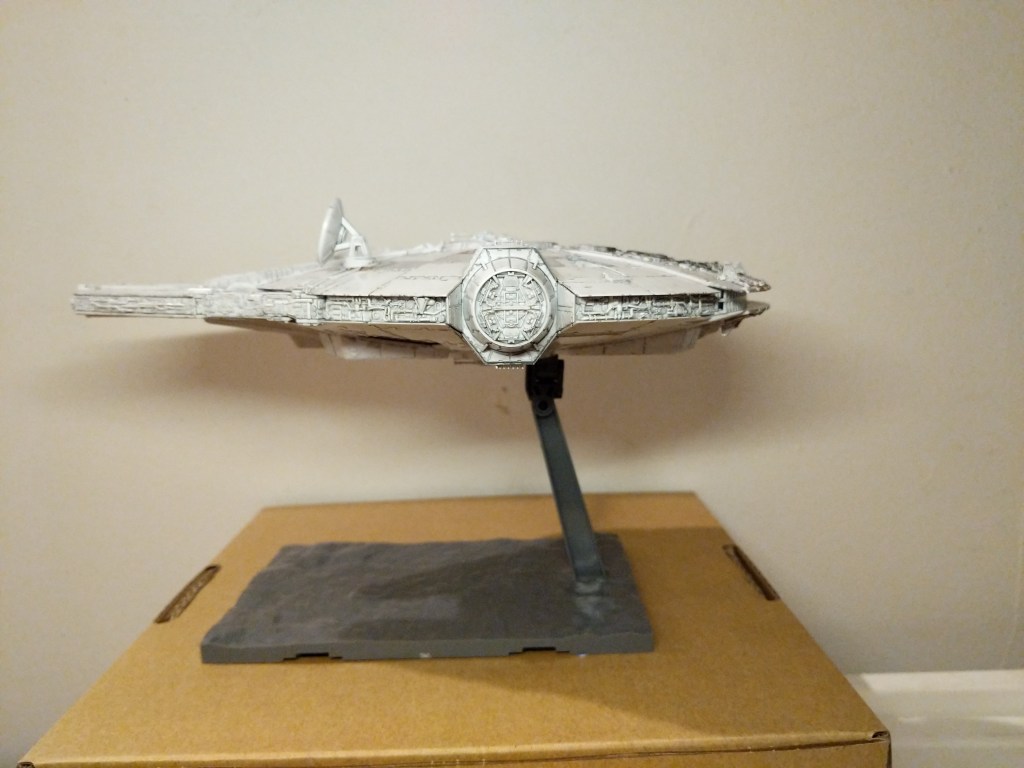
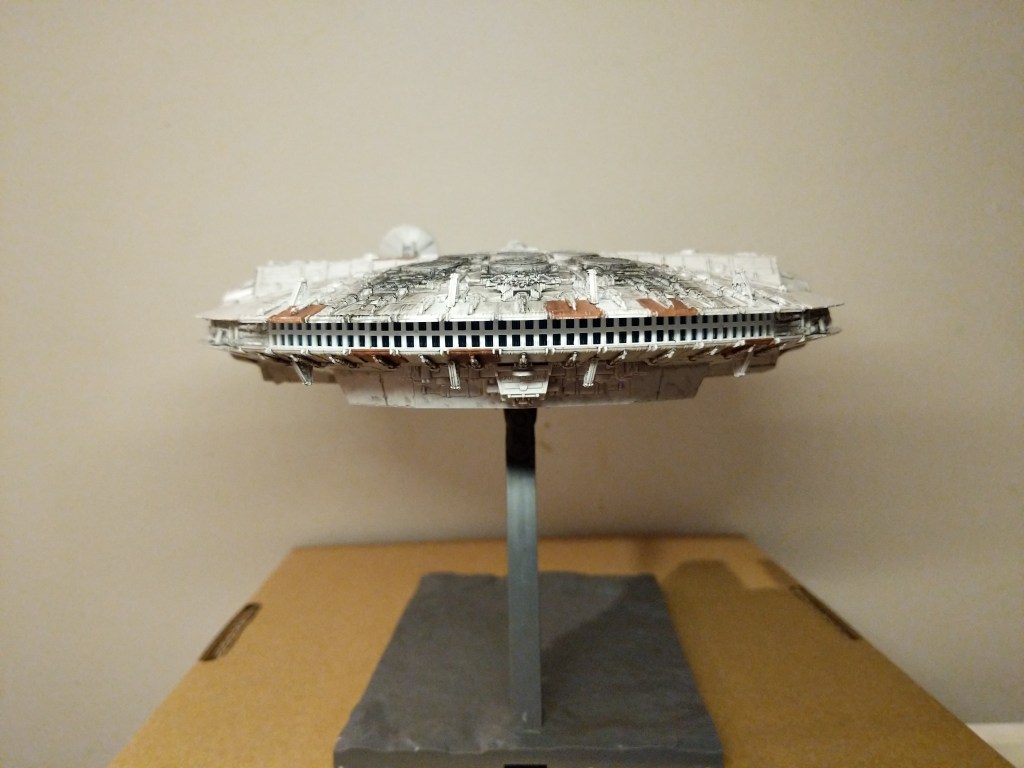
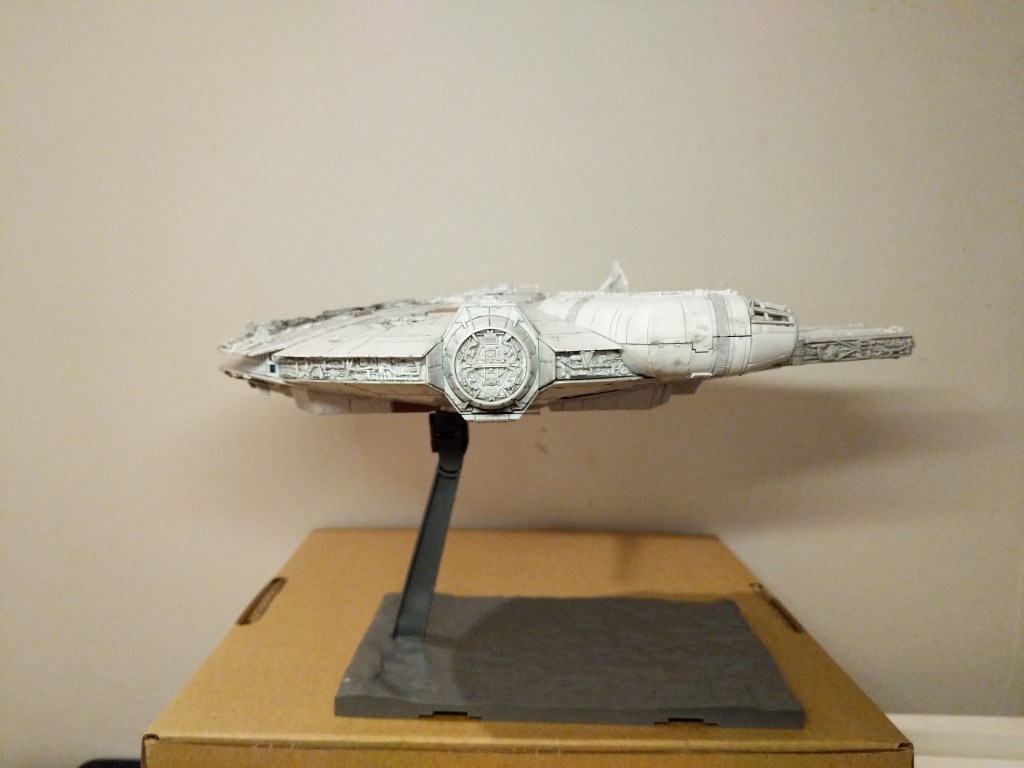
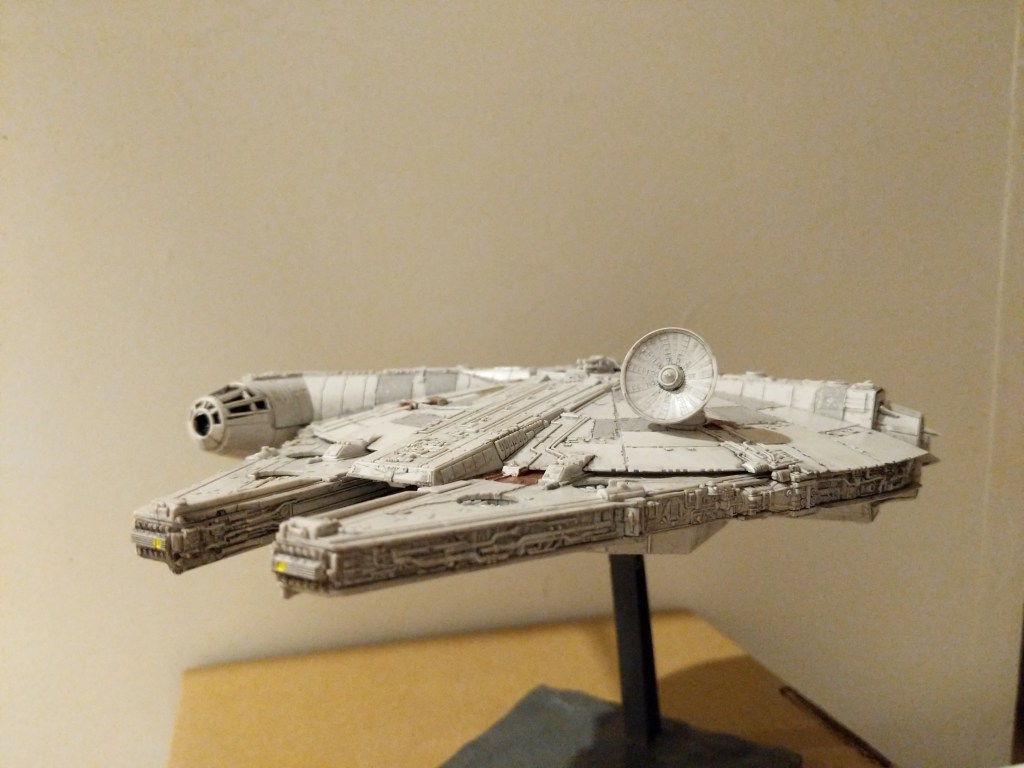
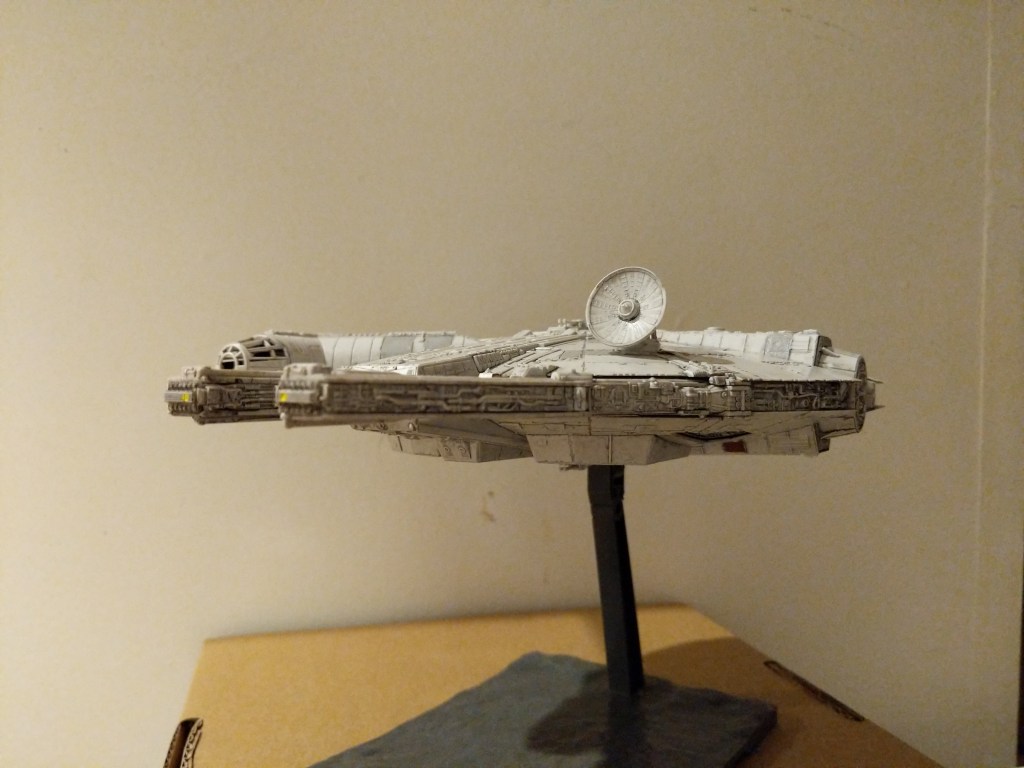
The photos below show the completed model perched on its included, adjustable stand.
Overall, Bandai’s model was expertly designed, easy to assemble, and highly respectful of its source material.
Creating the Composite Image in GIMP
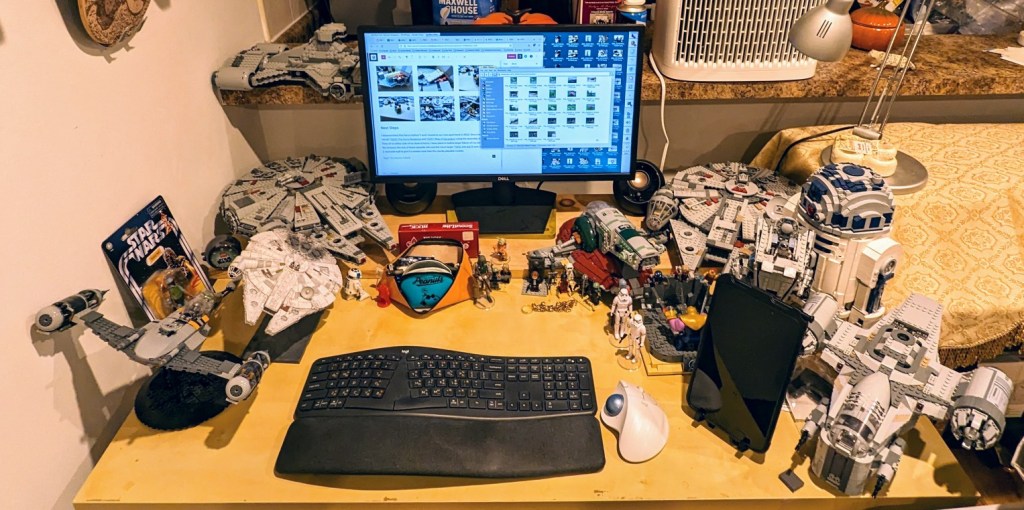
The Bandai 1/144-scale Falcon sits on my desk to the left of my keyboard between LEGO models of The Mandalorian’s N-1 and the Millennium Falcon from The Force Awakens (It’s safe to say that I aspire to have as cluttered and interesting workspace as Ray Bradbury has in the opening to Ray Bradbury Theater shown here). So, I see it everyday.
Recently, I was thinking wouldn’t it be fun to use it to create an in-flight image using the model. That stray thought picked up the thread from making the model and began creating a linkage to using the model to create something new–a fantastic image of the Falcon flying in outerspace.
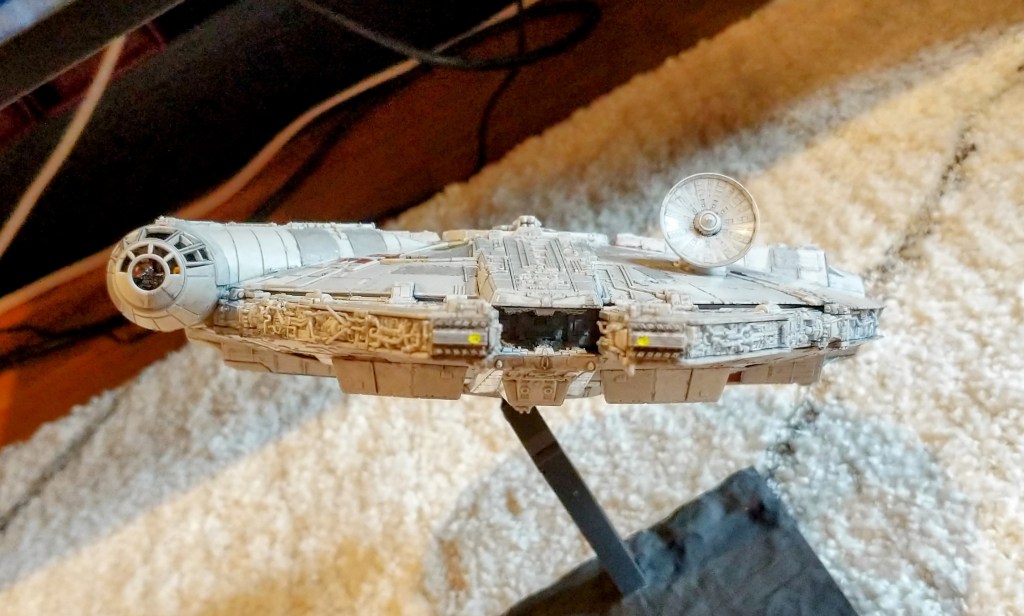
Looking through my photos, I selected the one below due to it’s orientation and composition within the photo’s rectangular frame.
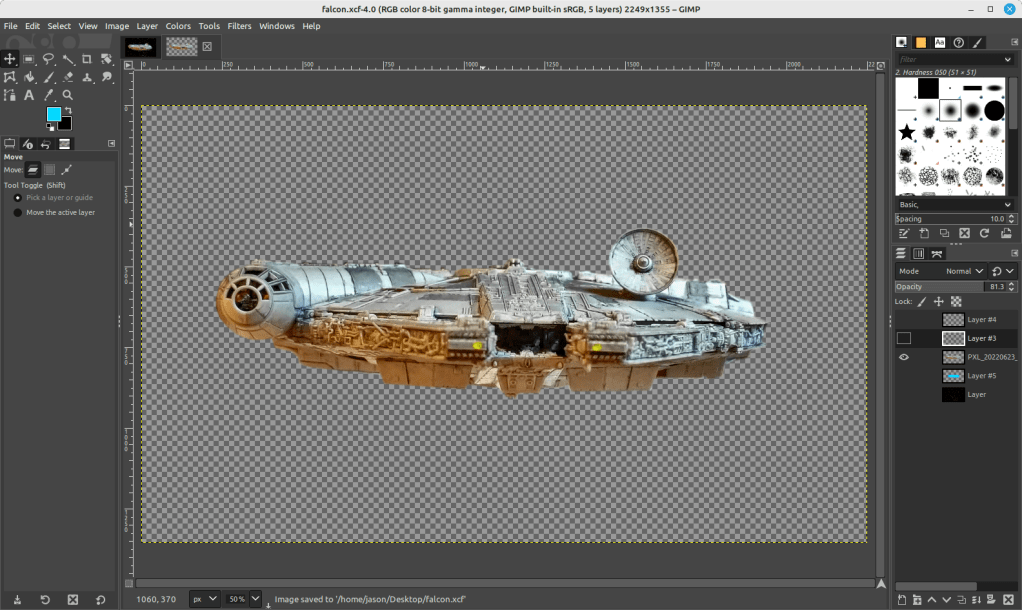
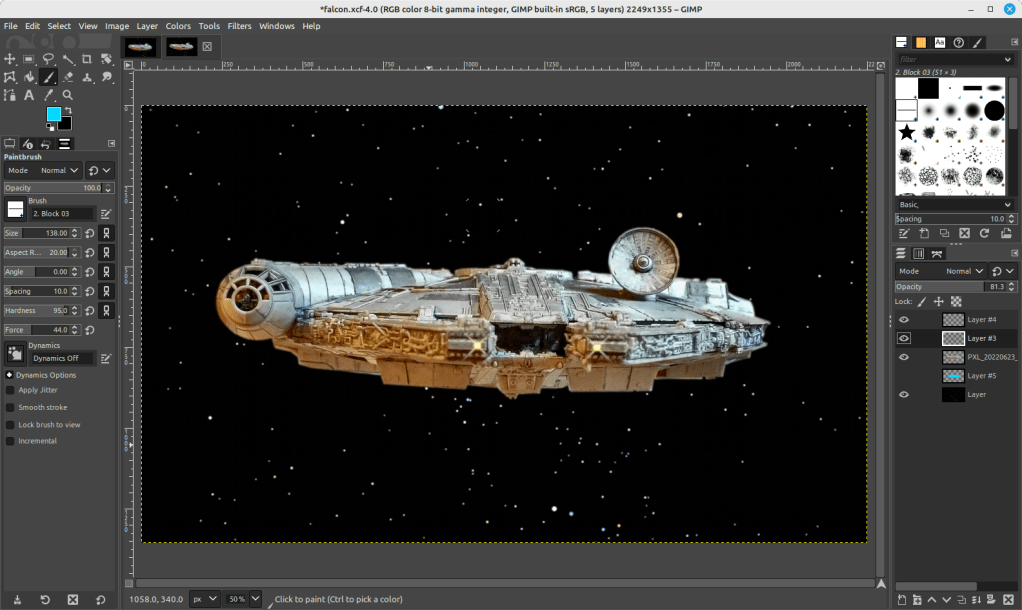
I cut out the Falcon and added it to its own layer with a translucent background in GIMP. I selected all of the window areas in the cockpit and adjusted the brightness and contrast to make the interior a little more recognizable. Then, I adjusted the shadows and exposure to make the Falcon’s exterior “pop.” Next, I used the clone tool to copy matte colors to hide some of the shinier/mirrored spots (especially in the dish and in the panels directly beneath the dish). And, I used the clone and smudge tools to fill in a gap between top and bottom parts of the cockpit (the black line as seen above).
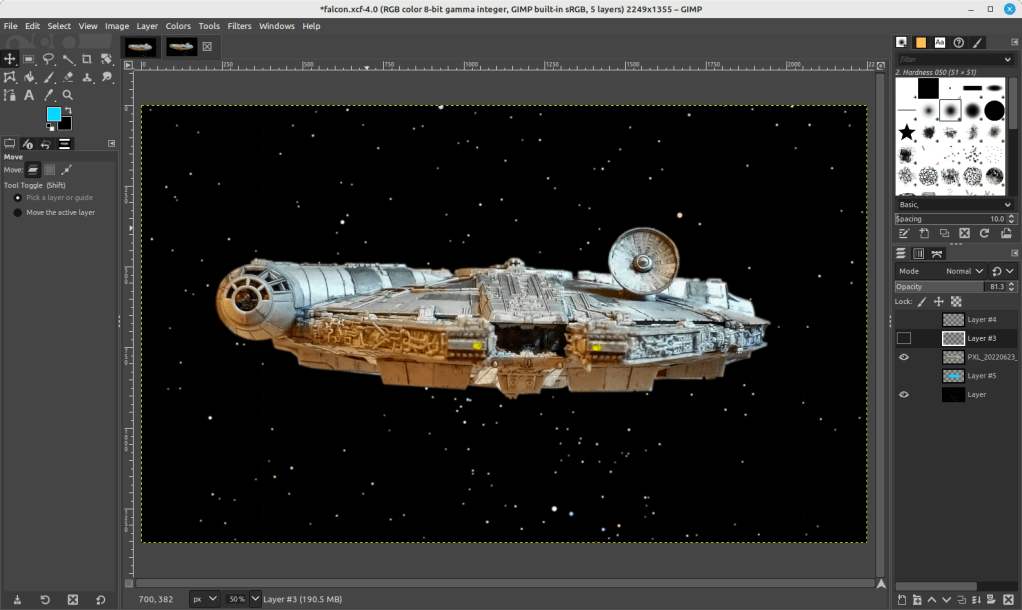
To put the Falcon in outer space, I created a base layer and pasted a star field image from NASA (found here).
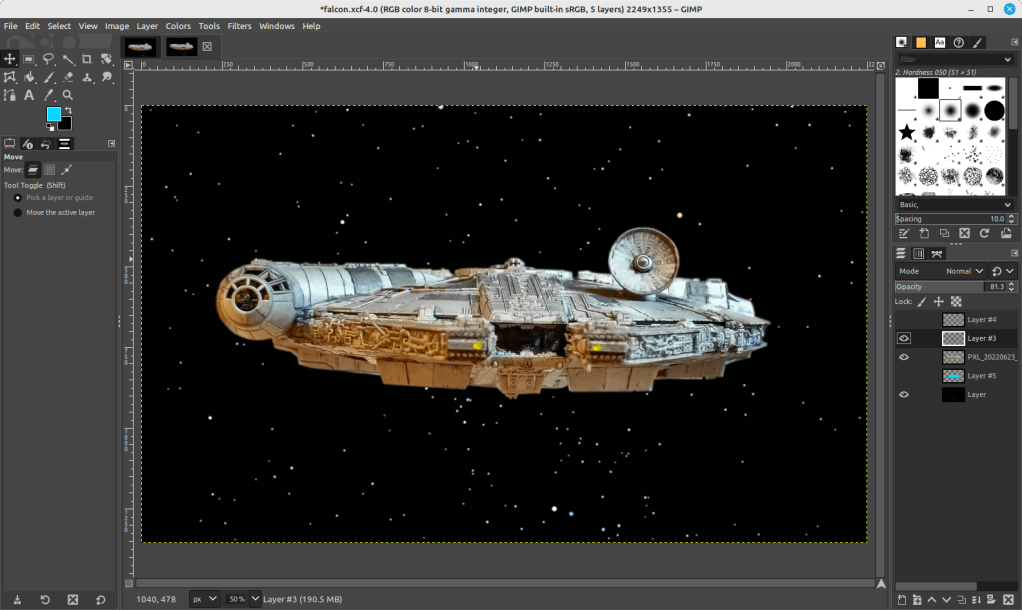
On the ventral side of the Falcon, you can see that the sides of the lower mandible are catching light that throws off the image if we’re imagining one light source (e.g., a star–of course, there could be two stars, but most of the ventral side of the Falcon is in shadow, so I wanted to stick to that). So I selected those bright areas and then used the clone tool to copy that coloration from either side–the left side looks redder and the right side more neutral–onto its own layer. I set the clone tool to 50% opacity to control the shade as shown below.
To make the scene appear more alive, I added layers for the headlights (a center circle of very bright yellow with crossed Block 03 brushes at 45 and 135 degrees for the diffraction spikes with a smidge of Gaussian blur).
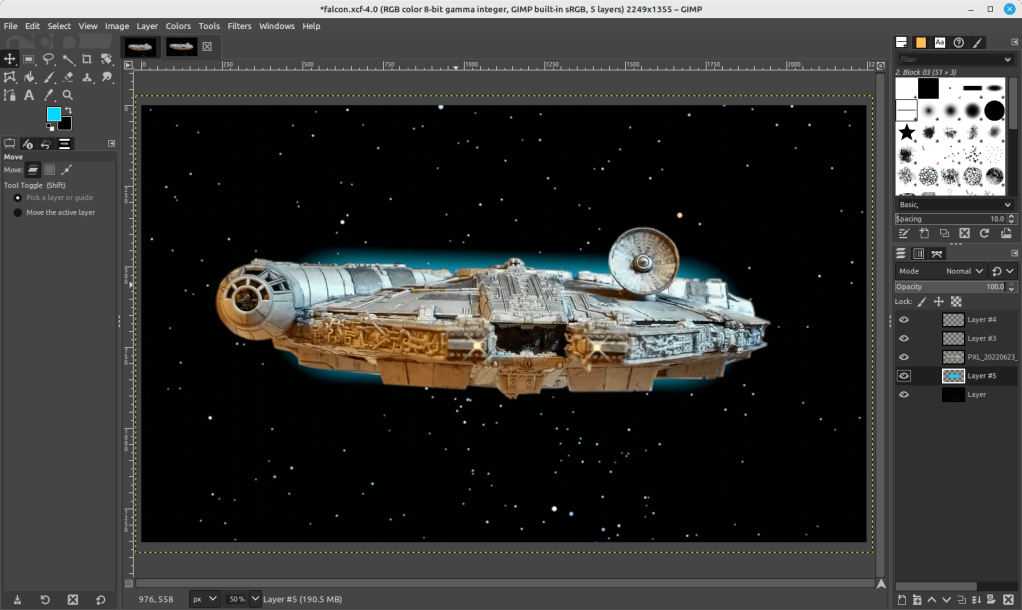
And finally, the Falcon needs its engines, which I created with a large, single brush stroke with neon blue light (##04d9ff) with 95% hardness but only 44% force (not that kind!).
Conclusion
A plastic model building project from the past makes another project of science fictional image manipulation possible. Making in the present is linked to making in the past. This is the general work of culture–linkages up and down time, across geographies and nations, circuitous and not always obvious. This blog post is a microcosm of the macrocosmic work of inhabiting and building our culture. I suggest in closing that we should all reflect and chart these linkages. We might not be able to map them all, but those that we do, pays a debt of gratitude perhaps both ways–we in the present rely on that we are given from the past and the past lives on through the work that we do today.
Download the full size composite Falcon image here.
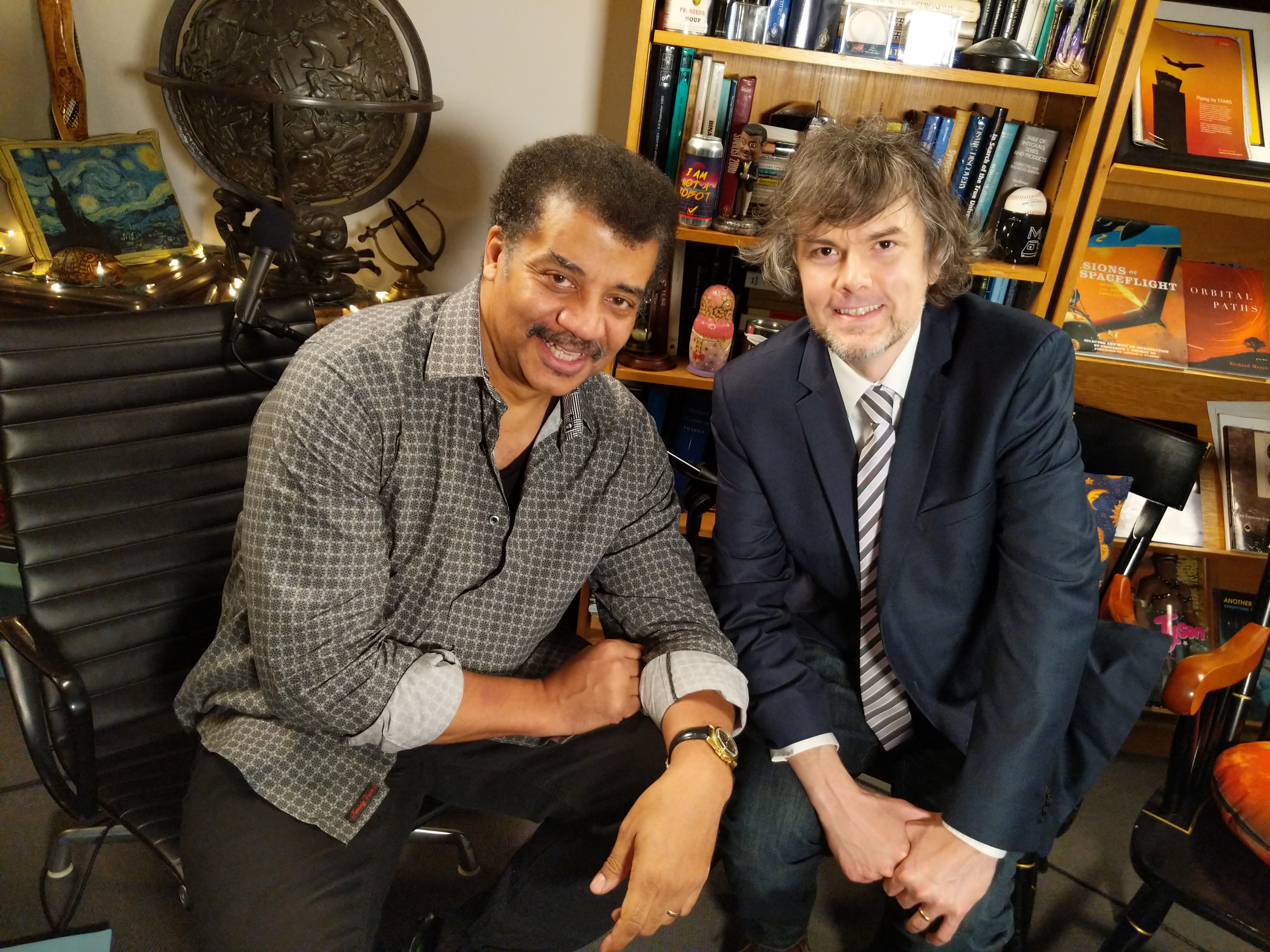
Neil deGrasse Tyson and Jason Ellis in Dr. Tyson’s Office at the AMNH Planetarium.
I had the distinct honor to join the conversation about science fiction and society on Dr. Neil deGrasse Tyson’s StarTalk Radio Show on May 30, 2019 (season 10, episode 22). The episode is about Creating Science Fiction, with Gale Anne Hurd, the producer of The Terminator and The Walking Dead. I shared some thoughts on Hugo Gernsback’s formula for “scientifiction,” H.G. Wells and Sir Ernest Swinton’s legal fight over the modern battle tank, the power of SF to engage social issues and debate, and my personal, lifelong relationship to SF. You can listen to the episode here or embedded below:
The Terminator, The Walking Dead, Aliens, and a lot more. Those are just some of the producing credits for this week’s main guest on StarTalk Radio. Neil deGrasse Tyson sits down with producer-extraordinaire Gale Anne Hurd to explore what it takes to bring great science fiction to life. Neil is joined by comic co-host Chuck Nice, science fiction expert Jason Ellis, PhD, and volcanologist Janine Krippner, PhD.
Because science fiction comes in many different forms and through many different avenues, there are many ways to get into it. You’ll learn how Gale’s childhood love of Marvel comic books and science fiction novels translated into a career “making what she likes to see.” She tells us how she served as a science fiction consultant to her local library to make sure their stock was up to date. Jason shares why not being able to see Star Wars in the theater sparked a rebellious love for science fiction.
You’ll hear about the history of science fiction and how it combines the STEM fields and the humanities. We debate if science fiction informs the future of every technological invention. You’ll find out about a lawsuit H.G Wells brought upon military figureheads because he claimed they stole his idea from one of his science fiction stories. Explore using science fiction as social commentary. Discover more about the famous kiss between Captain Kirk and Lt. Uhura, and how William Shatner and Nichelle Nichols purposely flubbed takes to make sure it stayed in the episode.
We take a deep dive into Dante’s Peak as volcanologist Janine Krippner stops by to share her take on the film. She explains why she thinks it’s still the best volcano movie even with its flaws. Gale gives us a behind-the-scenes look on how she fought for even more scientific realism to be in the film but encountered pushback from the studio. Neil also confronts Gale on the famous scientific inaccuracies of Armageddon. Chuck shares his love for The Expanse, we discuss Interstellar, and Neil tells us about his involvement in The Europa Report.
Lastly, you’ll also find out the differences between creating science fiction for television and film. According to Hugo Gernsback, the father of science fiction, sci-fi should be 75% romance and 25% science – is that still the goal? All that, plus, Jason caps it off with a story on how he was criticizing the film Sunshine right in front of director Danny Boyle’s family.
Yesterday, I deleted my EA Origin account, because I was fed up with how things were “going according to plan.” EA’s and other forced online game portals plan seems to be two fold: 1) require players to login to a service to play a local-instance, single-player video game, and 2) waste as much time and bandwidth resources of players as possible in the function of updating the front end portal and the games accessed via the portal by denying users the choice to update if and when they choose to do so.
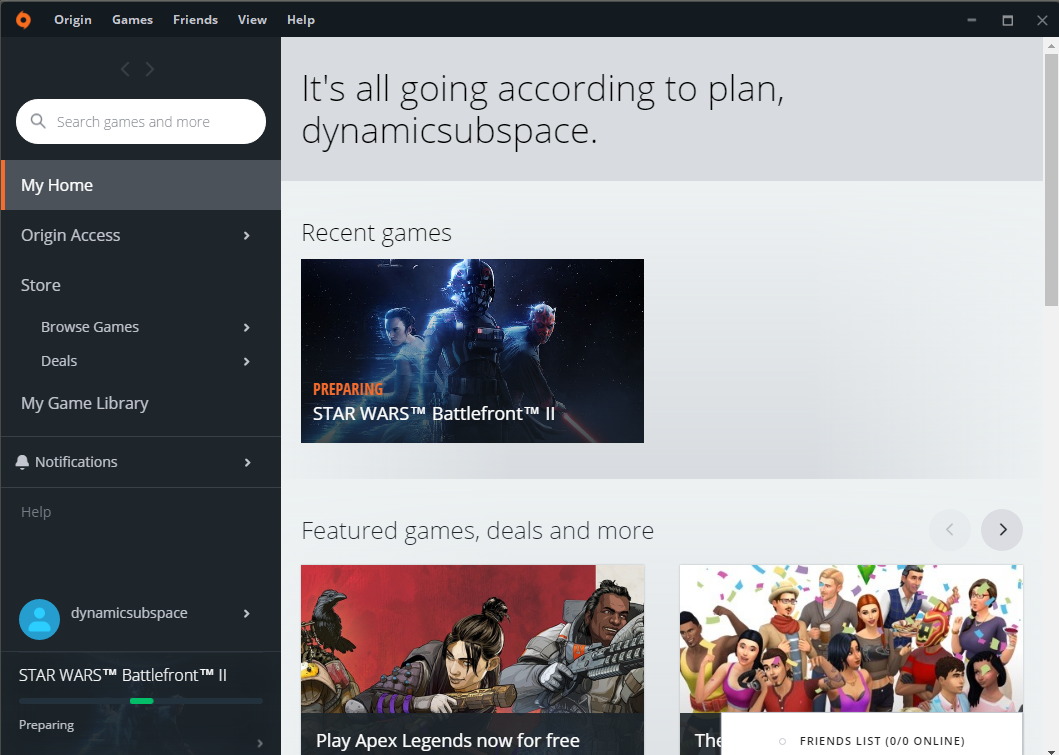
The straw that broke the camel’s back for me was the above message from EA–“it’s all going according to plan” and the unending “preparing” to download a very large, required update for Star Wars: Battlefront II.
Finding a few free minutes before bed, I wanted to fly the Millennium Falcon through the wreckage of blasted cruisers and obliterate as many TIE Fighters as possible. I play against computer-controlled adversaries. I don’t play against other players over the Internet. Everything regarding my game play experience takes place locally on my PC.
Nevertheless, EA requires me to login to Origin before playing Star Wars: Battlefront II. Before logging in, Origin required a software update. I did this. Since I hadn’t logged in for a few months, I had forgotten my password. I had to reset it. I logged in. Then, Origin required a large update to Star Wars: Battlefront II before I could play the game. I waited. I waited some more. I only wanted to play the game for about 10 minutes before bed time. Now, I had invested about 20 minutes on updating software and resetting passwords.
While it was “preparing to update” as seen above, I began researching how to delete my EA Origin account. I discovered that they make this as difficult as possible. You have to chat with a representative instead of clicking a link after logging into your account. I began doing this while still Origin was still “preparing.” The representative, who was nice enough, followed his script to try to dissuade me from deleting my account and instead deactivate it. I persisted with deletion and after another 10 minutes, I was told that it would take some additional time to delete my account but I didn’t need to stay on the chat while this was done.
Finally, the representative asked me if I would like to share why I wanted to leave EA Origin. I told him this:
I simply don’t like having to login to a service to play a game–especially when logging in might involve downloading gigabytes of installation updates. I understand why EA and other game publishers do this, but I don’t want to have to do this. I should be able to launch the game that I want to play and just play it. So, I wanted to delete my account and give up on EA Origin and Star Wars Battlefront II. I’ll seek out those games that let me play them on my terms.
I am vociferously against the shift to enforced online-only gaming for games that have a single-player mode. Games should be able to be enjoyed locally without hindrance if there is a single-player mode built into the game as there is with Star Wars: Battlefront II. Of course, I understand the need to login to a service when the game is enjoyed in multiplayer mode, but not all players opt for this kind of game play experience. Some of us enjoy playing the various single-player experiences within the game.
I purchased the game when it was on sale, so I will consider the money that I spent on it already invested in the times that I was able to fly the Millennium Falcon through the blasted wrecks of space battles.
However, I will never purchase another single-player option game from EA or any other video game publisher that doesn’t give me a modicum of respect to enjoy the game on my terms–no logging into online services (if I’m not playing against others online, I don’t need to login) and no required updates (I should be able to choose how and when I update the software on my computer).
I encourage others to avoid these games and seek out those made by publishers who respect players who value single-player game experiences.
When I built my desktop PC last year, I opted for a low-end video card, because my graphics requirements were modest and it helped keep the cost of computer parts down. Since then, I’ve wanted to experience a better visual experience on my computer in games and graphics simulations, meaning more detail and effects, and higher frame rates at 1080p resolution.
Unfortunately, video card prices were outrageously inflated due to high demand from Etherium and other easy-entry cryptocurrency miners. With the welcome crash of electricity-wasting cryptocurrency markets and the anticipated announcement of a new generation of video cards from nVidia, the prices of video cards began to return to lower prices, which prompted me to begin looking for an upgrade.
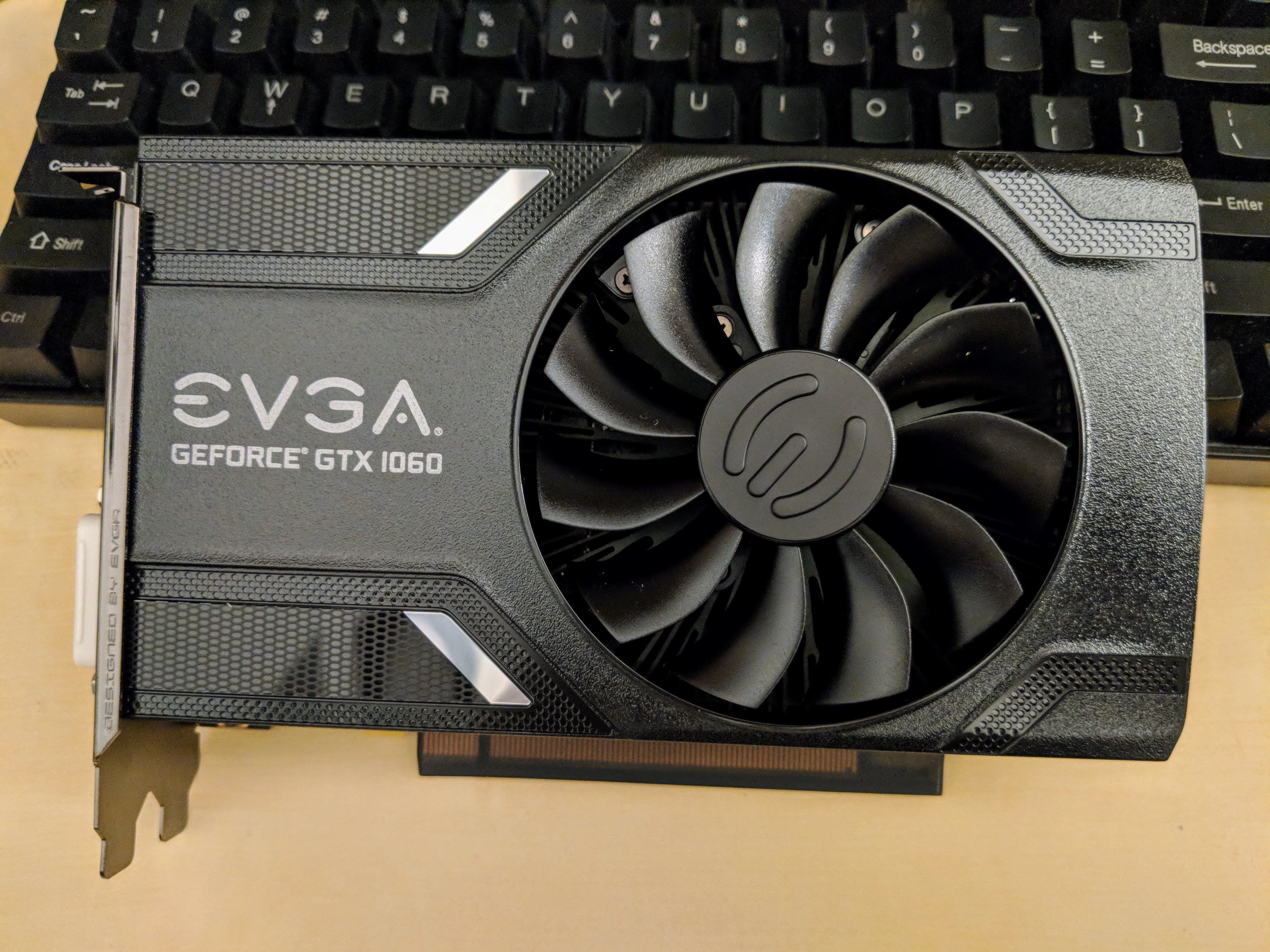
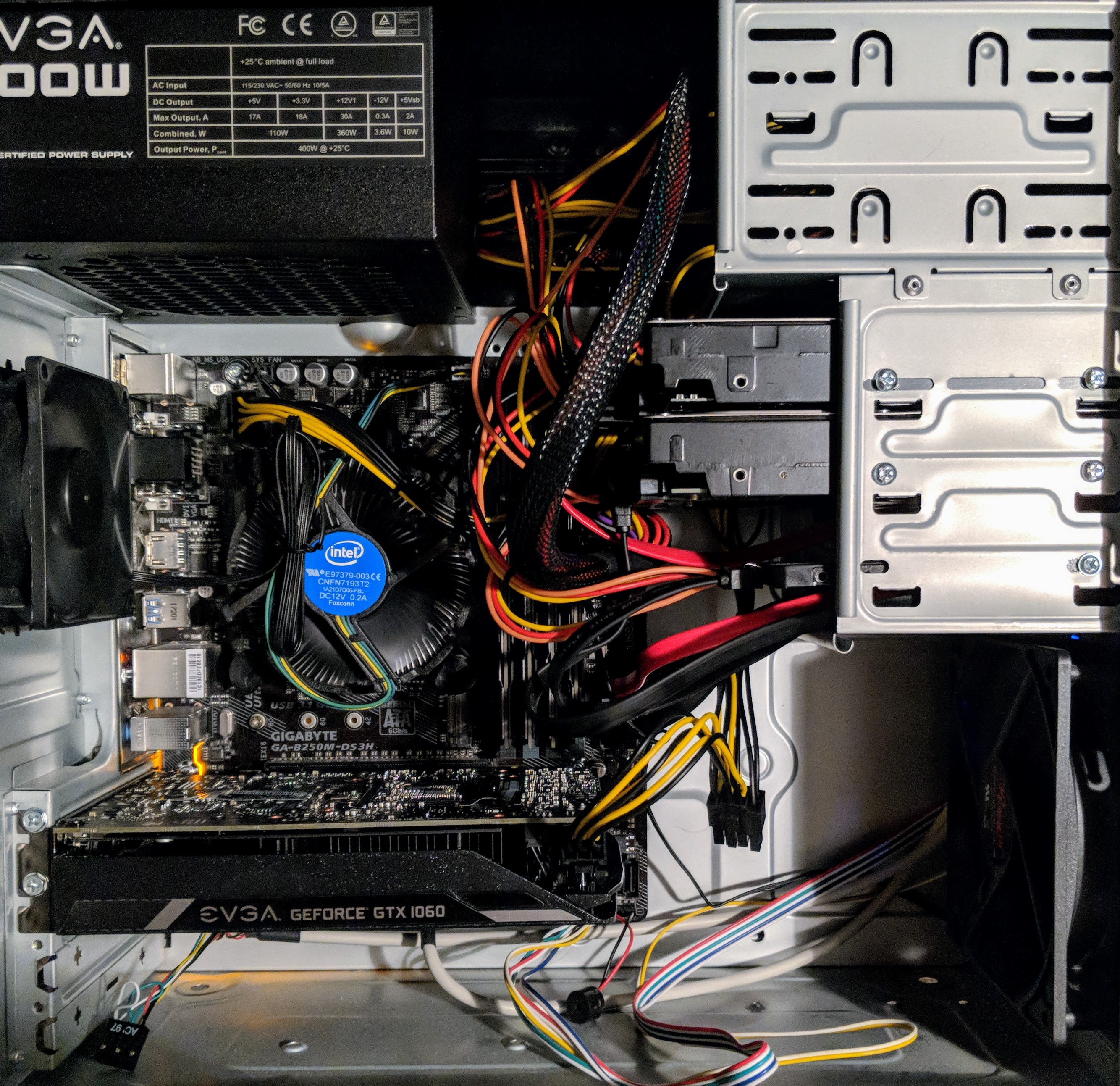
Considering that I have a 400-watt EVGA PSU and my monitor is 1080p, I focused on nVidia’s GeForce GTX 1060, because despite its Pascal architecture’s very modest power requirements (recommended 400 watt PSU and 6-pin PCIe auxiliary power), it pushes very high-quality graphics at 1080p resolution. While the 3GB model was less expensive than the 6GB model, I chose the latter, because it has more CUDA cores (1280 vs. 1152), more texture mapping units/TMU (80 vs. 72), and more streaming multiprocessors/SM (10 vs. 9). These enhancements coupled with twice as much GDDR5 video ram justified its slightly higher price for better performance and hopefully greater use lifespan. I went with EVGA’s single fan version of the 1060, because I have had good experiences with their products and I appreciate their streamlined, unostentatious, and quiet design on this video card.
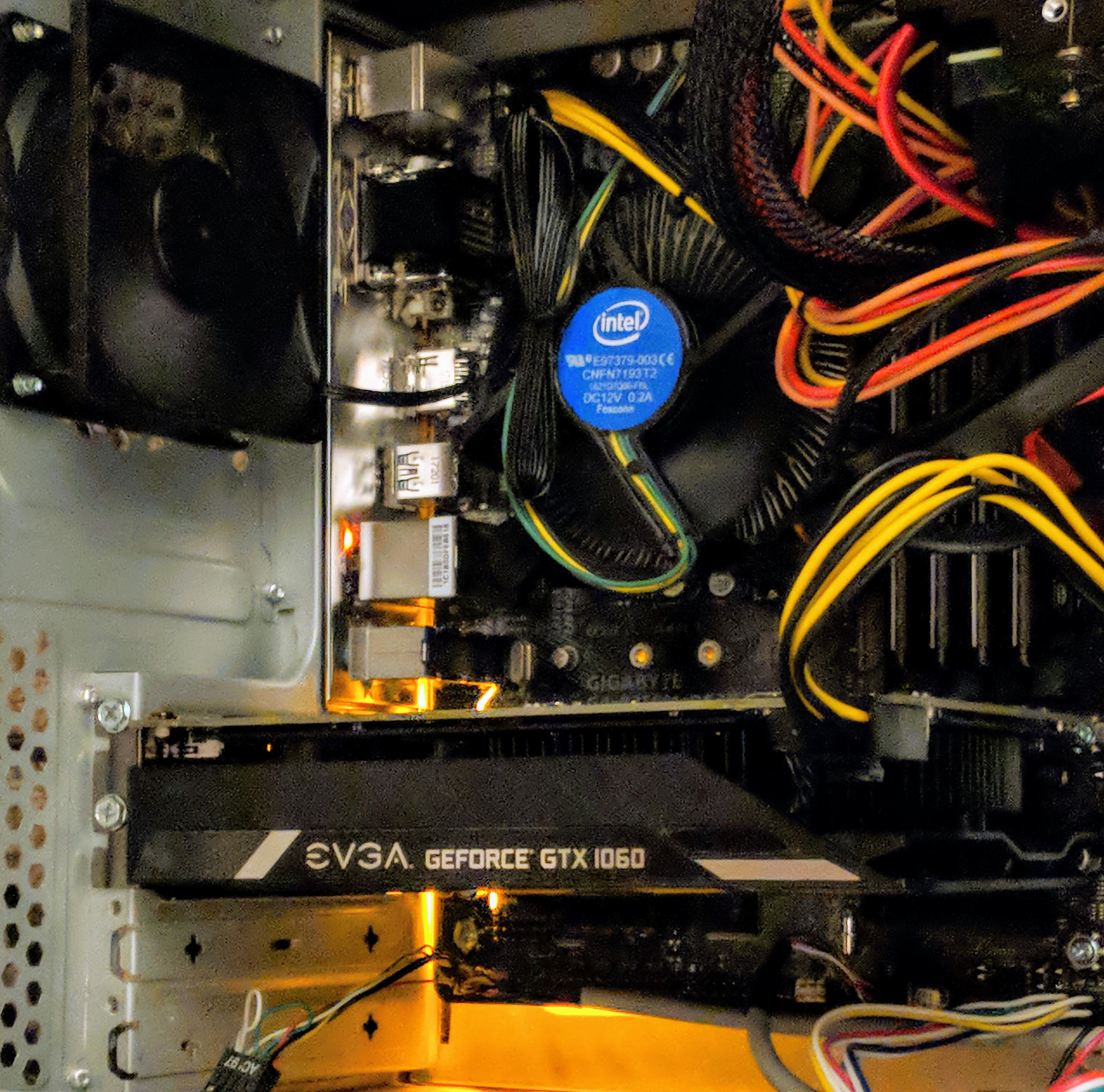
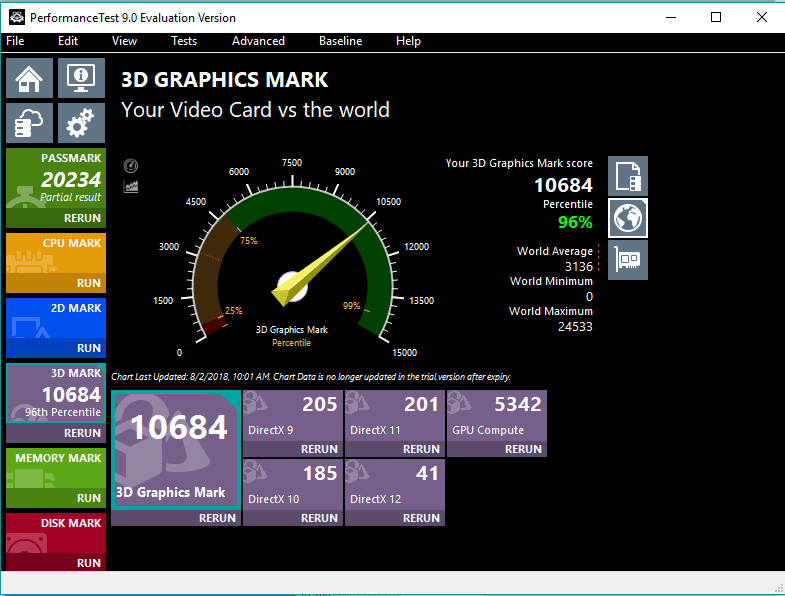
After purchasing the GeForce GTX 1060 6GB video card for $280 from Microcenter and installing it in my PC, I stress tested it and ran benchmarks to verify that everything was okay after the upgrade. As you can see above, it scored a 3D Graphics Mark of 10684, which is more than twice as high as the 3,954 scored by my old Radeon RX 550 4GB video card.
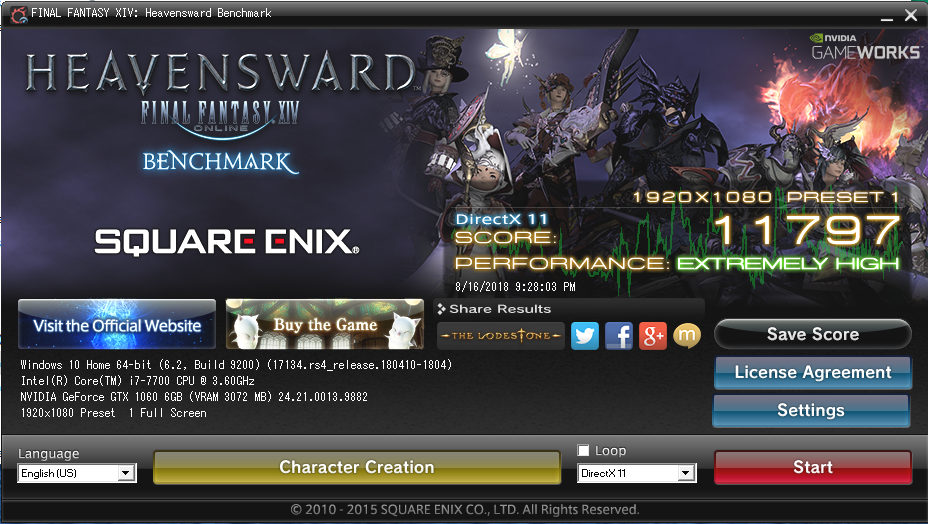
In the Final Fantasy XiV Heavensward benchmark, the GTX 1060 GB scored an 11,797 at 1080p, while the RX 550 4GB scored only 4,416 at the same resolution.
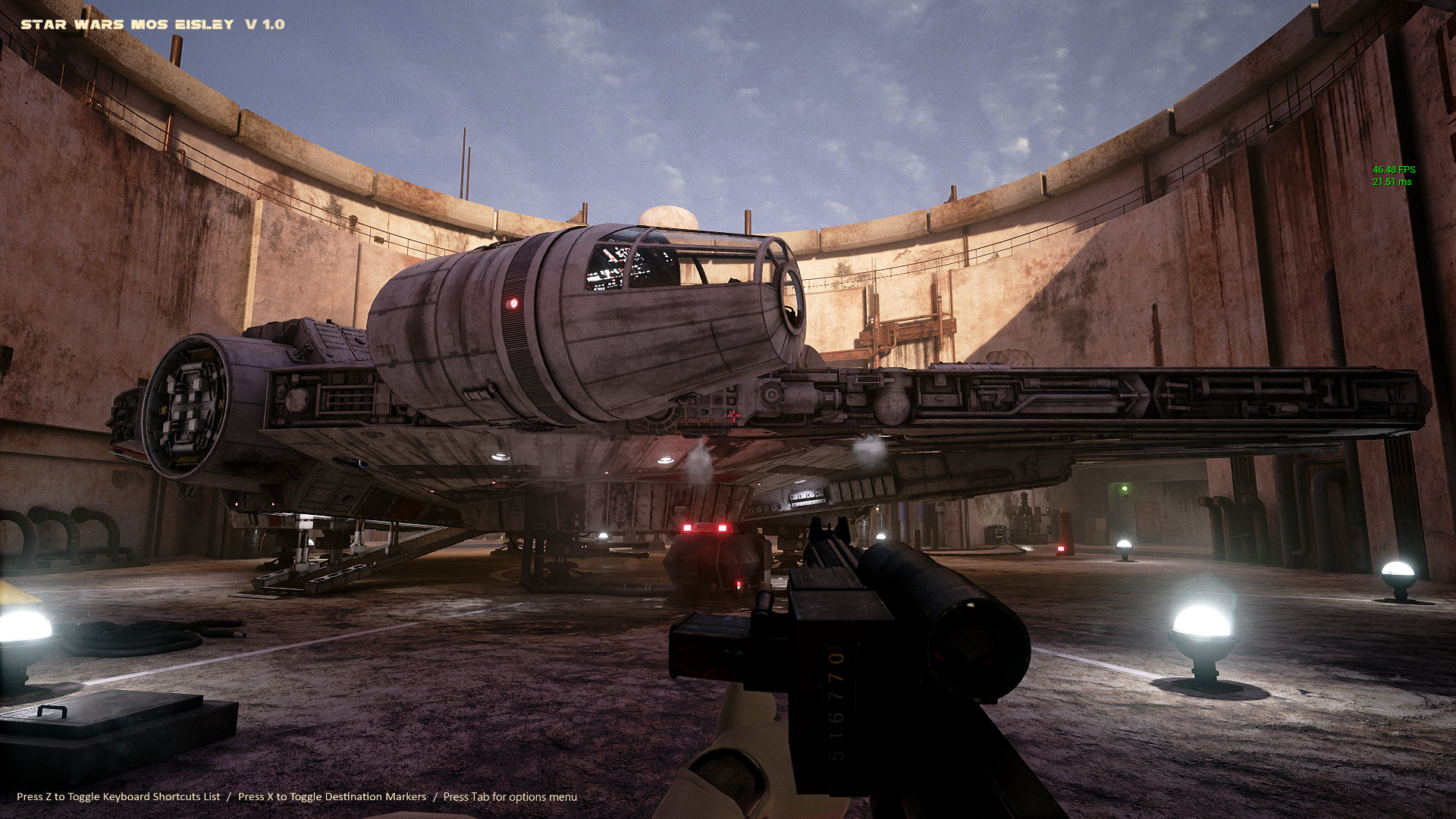
In the Docking Bay 94 Unreal Engine 4 simulation, I get well over 40 fps with the settings maxed out at 1080p. Read about how the simulation was made and find download links on 80 level.
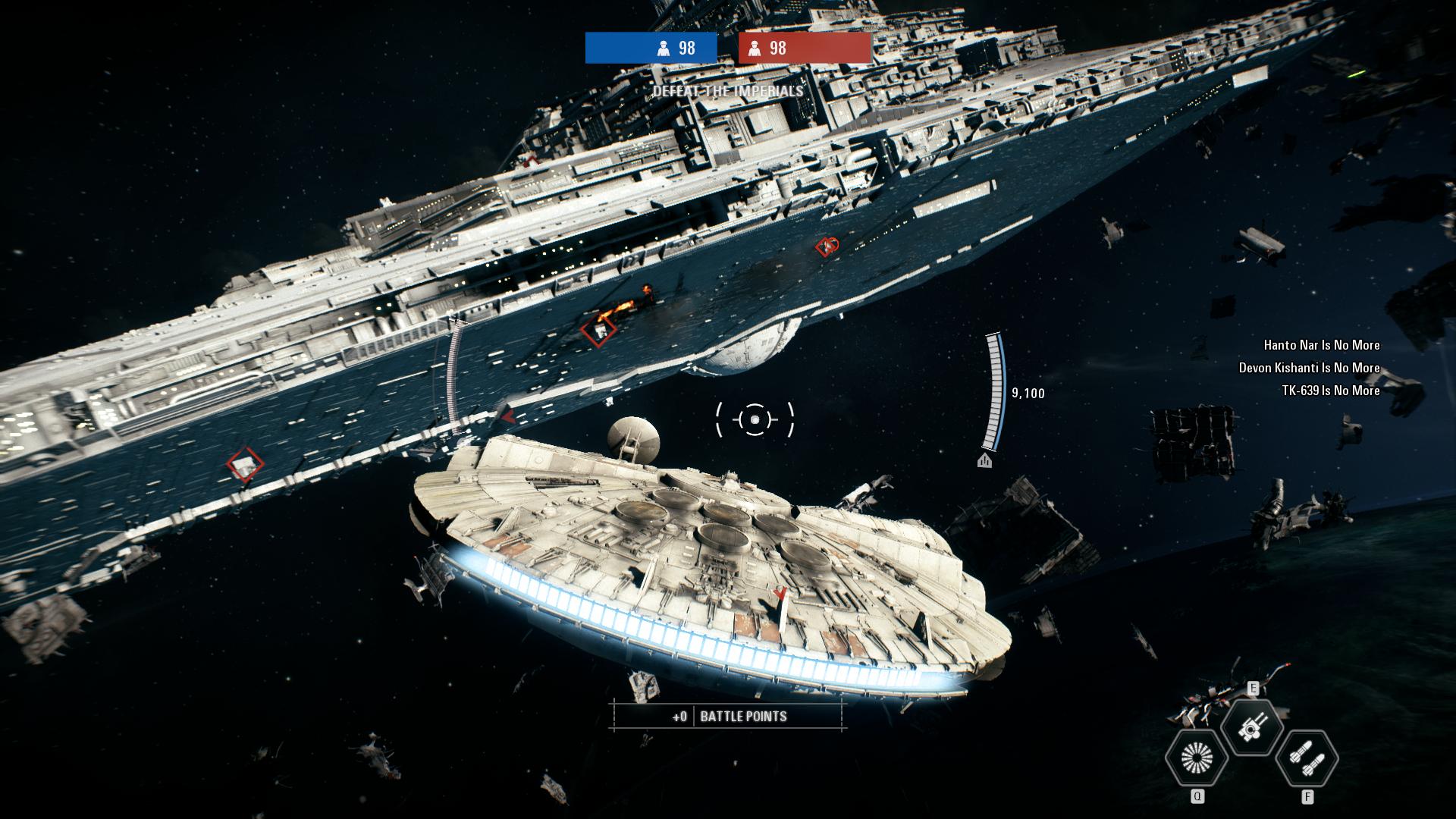
And, I get to fly the Millennium Falcon in EA’s Star Wars: Battlefront 2 video game. While the game’s graphics are amazing, I was reticent to purchase it after its launch debacle with in-game purchases and loot crates. Thankfully, EA backtracked on those things after the gaming and Star Wars fan communities collectively denounced these greedy and unethical practices.
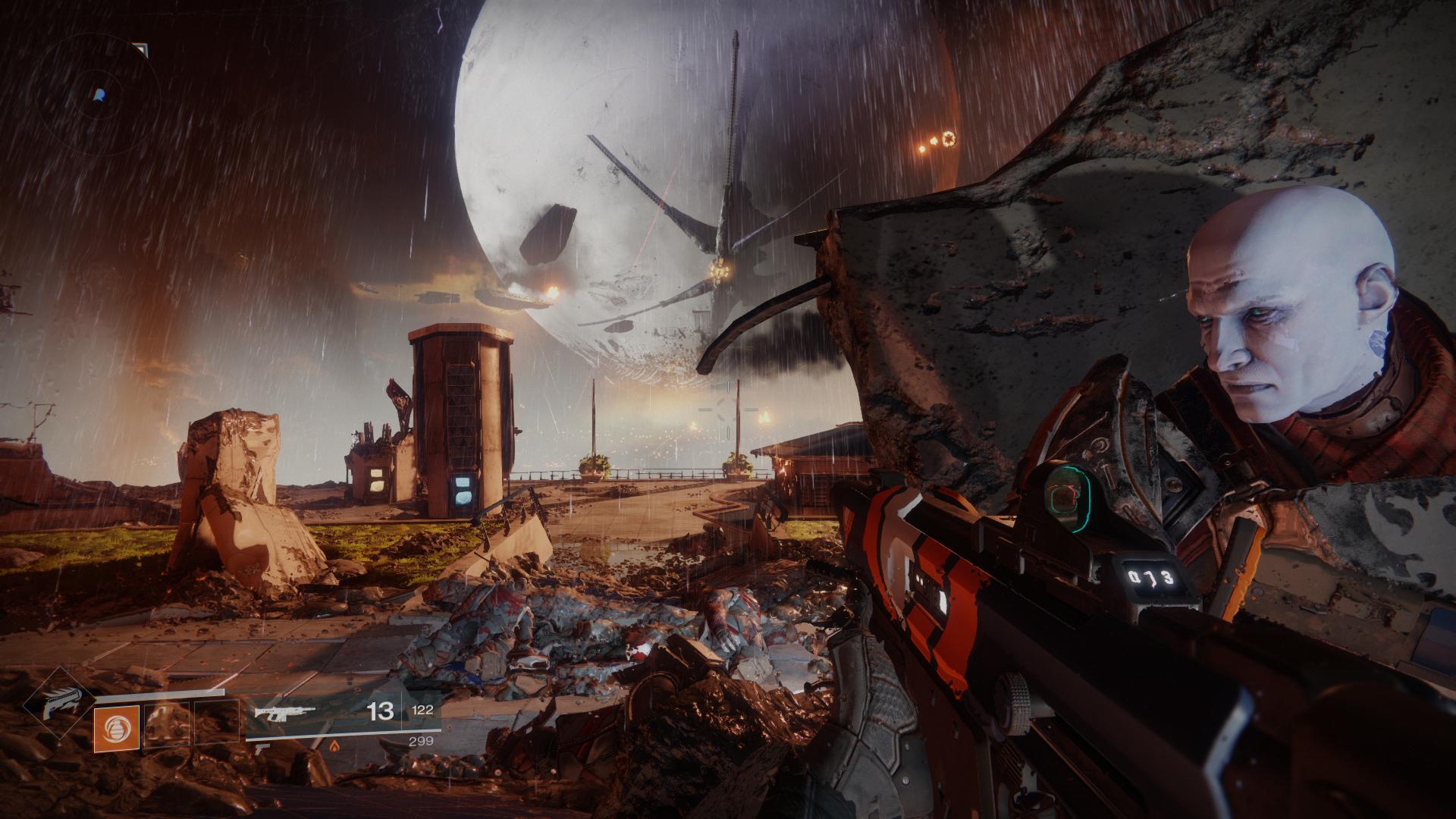
Finally, EVGA’s current video game promotion includes a free copy of Destiny 2 with the purchase of a GTX 1060 or higher video card. After redeeming my copy, I’ve played a little of it, and I like it. I’m a big fan of the original Halo by Bungie, and this game reminds me of that game without the story relying on a single archtype hero, such as Master Chief. In Destiny 2, you can create your own character based on class (Titan, Hunter, or Warlock), species, sex, and appearance. For my first experience in the game, I created a Hunter. The GTX 1060 6GB video card makes this game run smooth and look beautiful at 1080p.
Overall, I’m very glad that I made this upgrade to my PC. If you’re considering an upgrade now rather than waiting for nVidia’s recently announced RTX line of video cards, I strongly recommend the GTX 1060 6GB as a lower cost, high performance video card.